
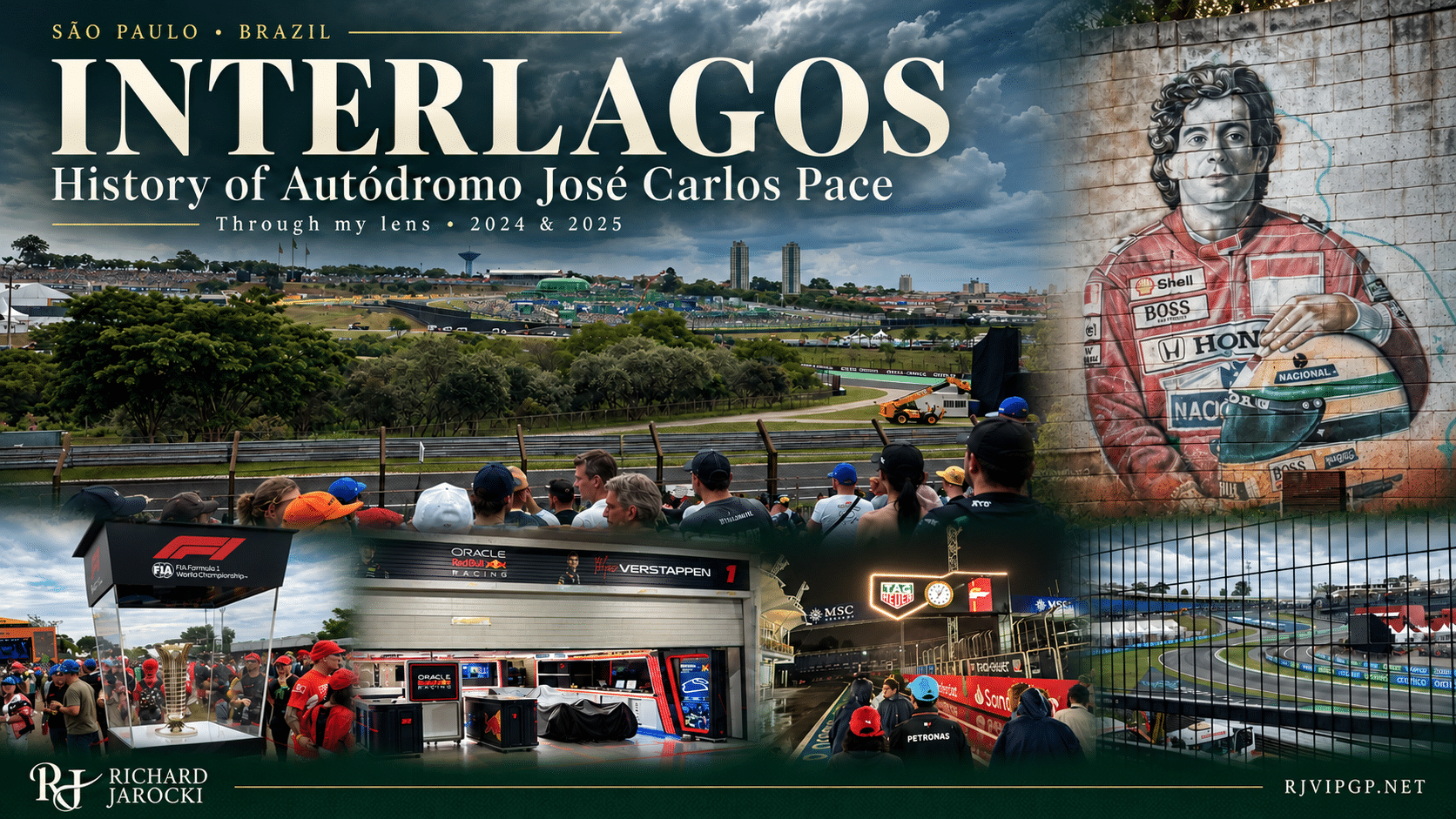
History of Autodromo Jose Carlos Pace: From Its 1940 Opening to Formula 1 Glory
By Richard Jarocki | Updated September 2026
The history of Autodromo Jose Carlos Pace stretches back to 1940, but my connection to Interlagos comes from the racing, the fans and the city that keeps bringing me back.
São Paulo has become a place I want to keep exploring. The restaurants, the cocktails and the people all play a part. So does a racetrack in the south of the city where an ordinary-looking stretch of asphalt carries more than eight decades of stories.
Its official name is Autódromo José Carlos Pace. Most Formula 1 fans know it as Interlagos.
This is where Brazilian drivers won in front of their home crowd, where championships changed hands in the final moments and where Ayrton Senna finally achieved the home victory he wanted so badly.
It is also a place for concerts, festivals and an annual running event honoring Senna. The more I learn about Interlagos, the more I appreciate how much it means beyond a Grand Prix weekend.
The History of Autodromo Jose Carlos Pace Begins Before Formula 1
The story starts in the 1920s, when British engineer and developer Louis Romero Sanson had plans for land between the Guarapiranga and Billings reservoirs in southern São Paulo.
According to the city’s official history of Interlagos, the original vision included a resort community, with French urbanist Alfred Agache involved in its development.
A permanent motorsport circuit eventually became part of the area’s story. Construction began in 1938, and Interlagos officially opened on May 12, 1940.
The opening program included motorcycle and car racing. Approximately 15,000 people attended, according to the city’s account.
That date matters. People were coming here to watch racing a full decade before the Formula 1 World Championship began in 1950.
The facilities have changed, the course has been redesigned and generations of cars have competed here. But the connection between this part of São Paulo and motorsport has endured.
I like knowing that the circuit’s story began with ambitions for the city itself. Formula 1 would eventually introduce Interlagos to a worldwide audience, but its history was already underway.
Why Is It Called Interlagos—and Who Was José Carlos Pace?
The two names tell different parts of the story.
Interlagos means “between lakes.” It refers to the area between the Guarapiranga and Billings reservoirs. The city’s history explains that Alfred Agache saw a resemblance to the area around Interlaken in Switzerland, helping inspire the name.
That geographical name became inseparable from the racetrack. Even after its official name changed, Interlagos remained the name fans used.
Autódromo José Carlos Pace honors the Brazilian Formula 1 driver José Carlos Pace.
Pace won the 1975 Brazilian Grand Prix at Interlagos, earning what would be his only Formula 1 victory. For a Brazilian driver to achieve that win at home gives the result a significance that goes beyond the statistics.
He died in a plane crash in 1977. In 1985, the circuit was officially renamed in his memory.
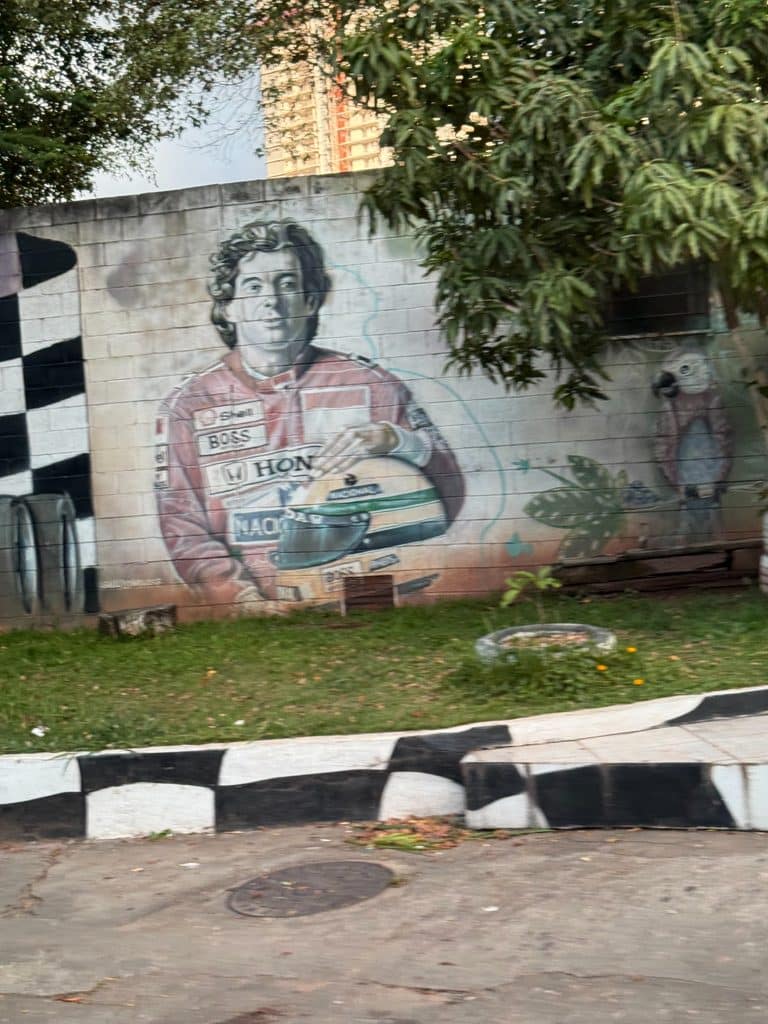
So, although Senna is closely associated with Interlagos, the circuit itself is named for Pace. Senna’s name belongs to its famous opening corner sequence, the S do Senna, among other tributes connected to the venue.
I think Pace deserves that explanation. It is easy to repeat a circuit’s official name without stopping to consider the person behind it.
Interlagos tells you about the place. José Carlos Pace tells you about a driver whose achievement there became part of Brazil’s racing history.
Formula 1 Arrives, and Brazil Gets Its Own Stage
Formula 1 first raced at Interlagos in 1972, but that event did not count toward the World Championship.
The first championship Brazilian Grand Prix at the circuit followed in 1973. Emerson Fittipaldi won in front of his home crowd, then won again in 1974. Pace’s victory followed in 1975.
Three consecutive Brazilian winners at the first three championship Grands Prix held there. That must have been something to experience.
Formula 1’s circuit guide records those victories, which helped establish the connection between the race and Brazil’s growing presence in the sport.
The Grand Prix did not stay at Interlagos continuously. It moved to Rio de Janeiro in 1978, returned to São Paulo for 1979 and 1980, and then spent the rest of the 1980s in Rio.
Interlagos continued hosting other racing during that period. It remained part of Brazilian motorsport even when Formula 1 was elsewhere.
The 1990 Redesign That Shaped Modern Interlagos
Formula 1 returned in 1990, following a substantial redesign and improvements to the circuit’s facilities.
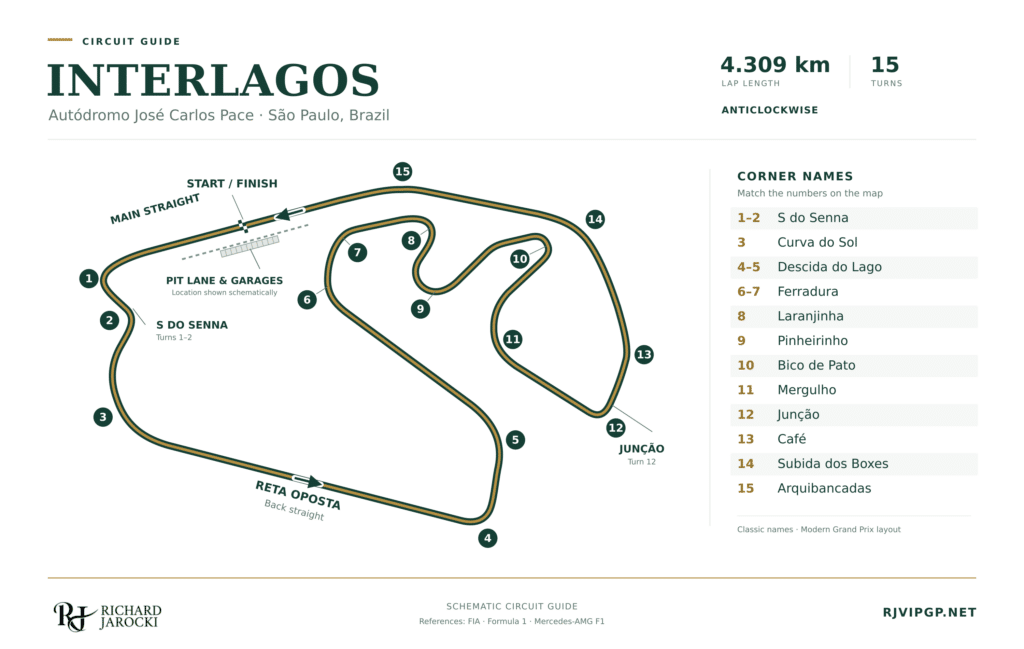
The old course had been nearly eight kilometers long. Today’s configuration measures approximately 4.309 kilometers.
The shorter layout retained the elevation changes and varied rhythm that make a lap here distinctive. The city’s circuit history documents the transformation.
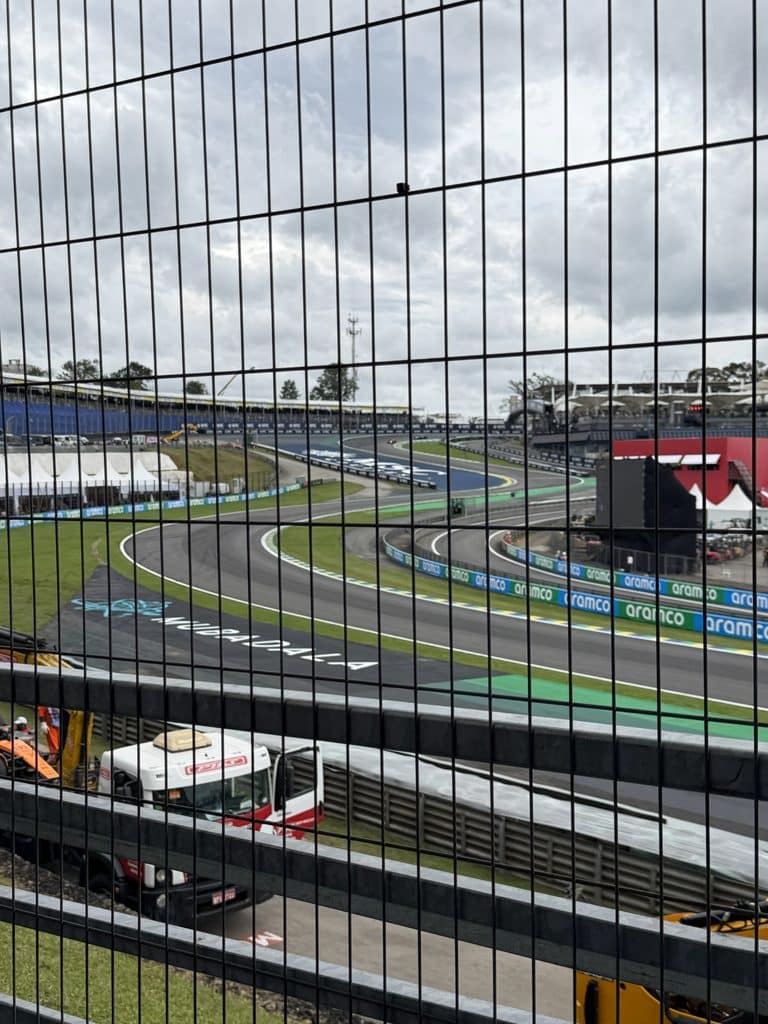
On a map, Interlagos looks compact. Watching cars descend through the opening corners and climb back toward the main straight gives you a better understanding of its character.
The circuit runs counterclockwise. Its opening sequence, the S do Senna, leads into Curva do Sol, then the back straight and the braking zone at Descida do Lago.
Later come tighter corners through the infield before the uphill run toward the finish.
A driver has to manage changing demands throughout the lap. When rain arrives, grip, tire choices and timing add another layer of uncertainty.
That combination helps explain why Interlagos has produced so many races that refuse to follow expectations.
Interlagos History: The Victories and Heartbreak That Built the Legend
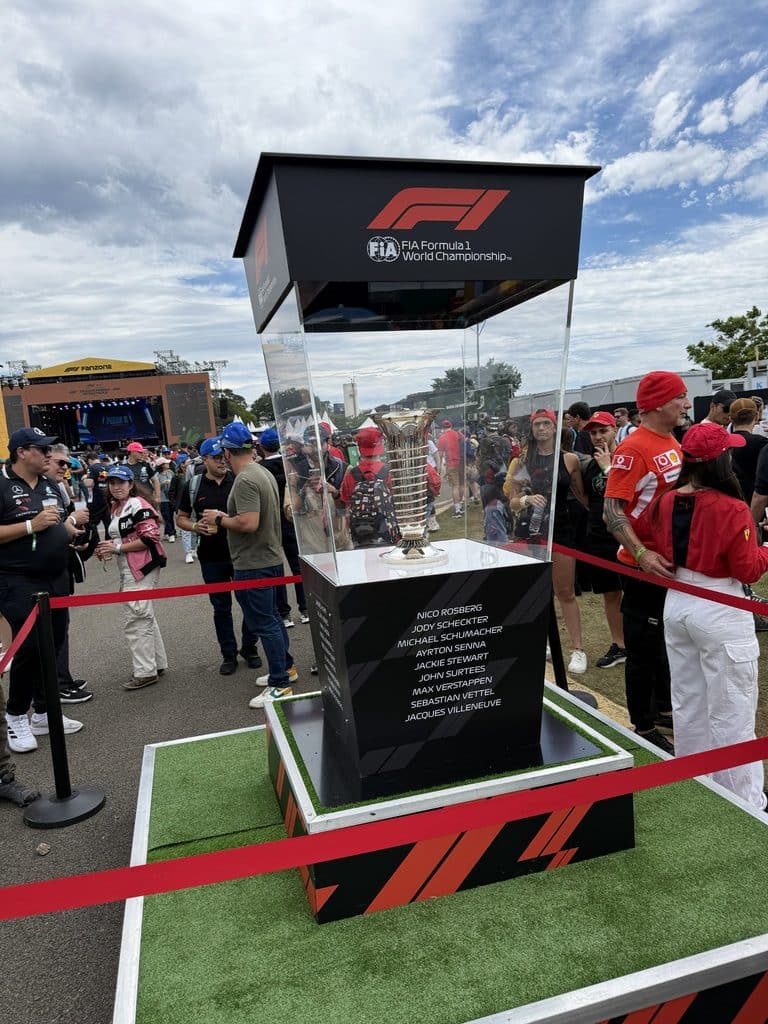
Some of the most memorable moments in Interlagos history came when a home victory, a world championship or an unexpected comeback was still in doubt until the final laps.
You could write an entire article about the memorable races here. A few explain why this circuit means so much to Formula 1 fans.
Senna Finally Wins at Home: 1991
Ayrton Senna had already won World Championships, but he had never won his home Grand Prix.
At Interlagos in 1991, a failing gearbox threatened to take that opportunity away again. He fought to keep his McLaren going and held on for a victory that meant far more than another result.
Formula 1’s account of the race describes the expectations around him and the effort it took to finish.
Senna won at Interlagos again in 1993. Those two home victories remain central to the circuit’s identity.
Massa, Hamilton and the Final Lap: 2008
Felipe Massa won the 2008 Brazilian Grand Prix for Ferrari. For a brief moment, it appeared that he had also won the World Championship at home.
Then Lewis Hamilton passed Timo Glock near the end of the final lap, taking fifth place and securing the championship by one point.
If you are a Ferrari fan, that finish hurts to watch. If you love racing, you have to acknowledge what an extraordinary ending it was.
An entire season changed in those last moments. Formula 1 revisits the finish here.
Another Championship Decider: 2012
Changing weather helped turn the 2012 season finale into another tense championship fight.
Jenson Button won the race. Sebastian Vettel finished sixth and secured the championship over Fernando Alonso.
Once again, Interlagos was the setting where a season’s worth of work came down to what happened over the final laps.
Verstappen’s Interlagos Comebacks: I Was There in 2024 and 2025
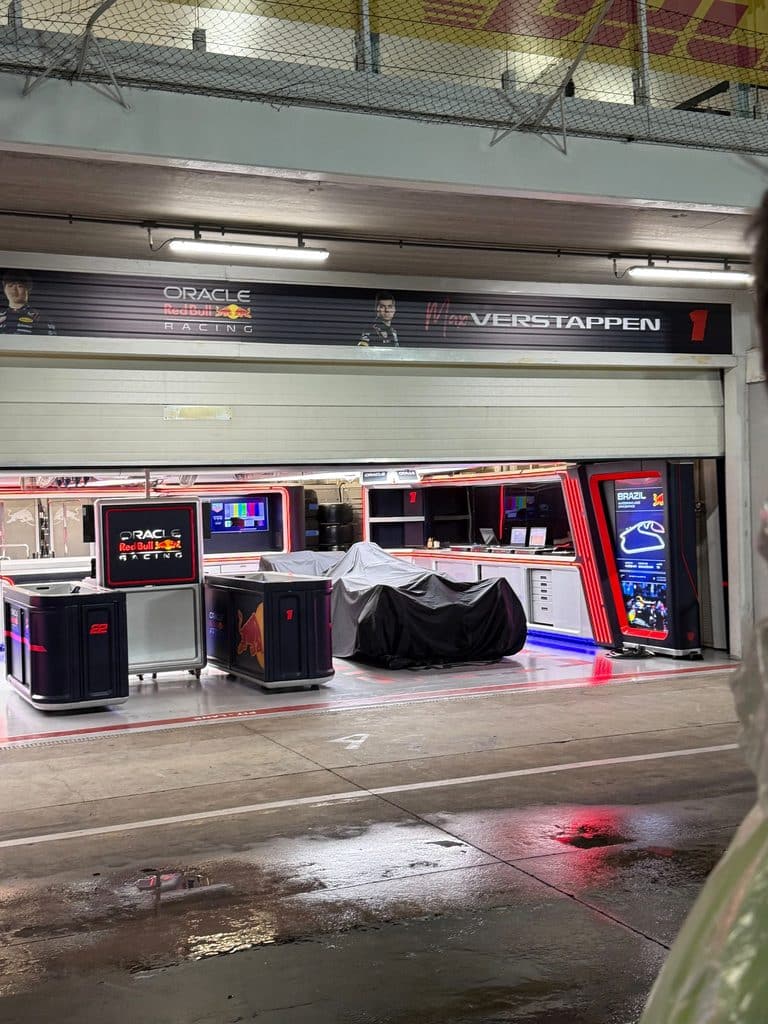
I was at Interlagos in 2024 when Max Verstappen started 17th and won a rain-affected São Paulo Grand Prix. Esteban Ocon and Pierre Gasly completed the podium for Alpine.
That race is part of my own connection to Interlagos history. I can read about Senna’s home victories or revisit footage of the 2008 championship finish, but Verstappen’s 2024 comeback is one I was there to witness.
I returned in 2025 and watched him deliver another remarkable recovery. This time, he started from the pit lane, suffered an early puncture and still fought his way onto the podium in third, behind Lando Norris and Kimi Antonelli.
From 17th to victory in 2024, then from the pit lane to third in 2025—I was there for both. Those two races are part of why this circuit means something personal to me.
There are plenty more: Giancarlo Fisichella’s delayed recognition as the 2003 winner, Kimi Räikkönen securing the 2007 title and Hamilton’s charge through the field in 2021.
Interlagos keeps giving us races worth discussing long after the teams have packed up.
Why the Grandstands Matter to Me
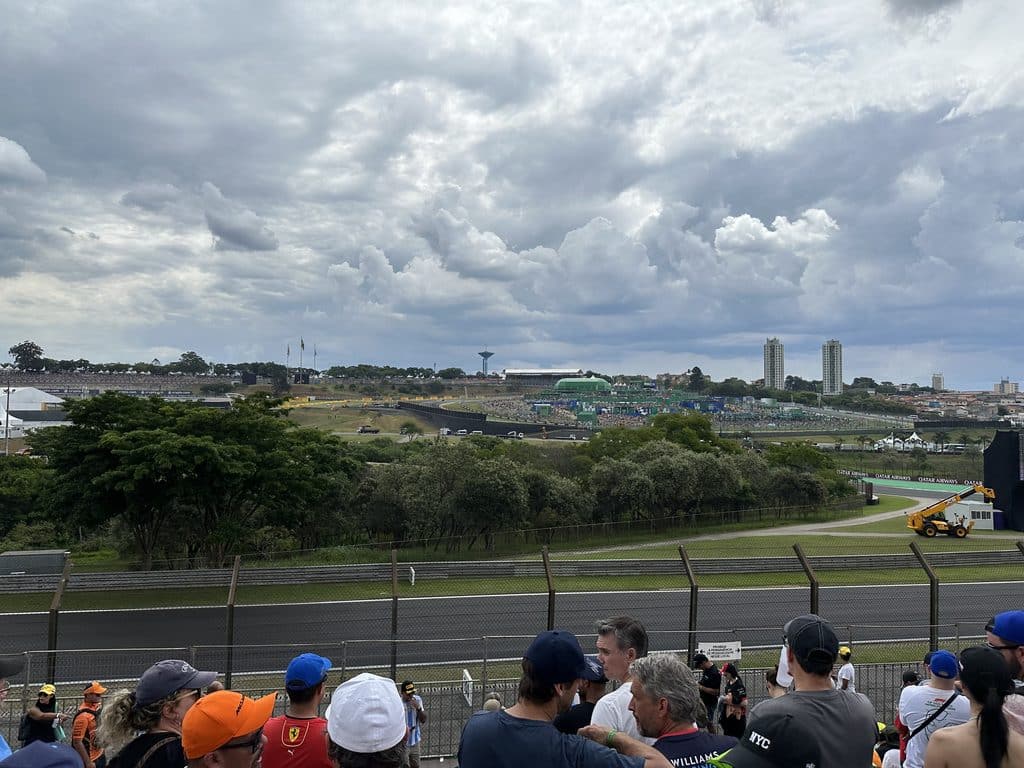
I usually prefer a grandstand to a hospitality suite because I want to watch the race unfold and feel the crowd react.
Interlagos makes that preference easy to understand. A driver gains a place, someone runs wide or the rain arrives, and the energy around you changes.
The television broadcast gives you information that can be difficult to follow at the circuit. Being there gives you the sound, anticipation and shared reaction of thousands of people experiencing the same moment.
That crowd has generations of Brazilian racing history behind it. Fittipaldi, Pace, Senna and Massa are part of the connection.
I want a good view and a screen so I can follow the action, but I also want to feel where I am. At Interlagos, São Paulo is very much part of the experience.
What Happens at Interlagos Beyond Formula 1?
Formula 1 may be the international headline, but the circuit has a much broader motorsport life.
Interlagos has hosted Brazilian categories including Stock Car, junior formula racing and motorcycle competition. Driving schools and training also use the facilities, as the circuit operator explains.
Endurance racing has a place here as well. The FIA World Endurance Championship held its 6 Hours of São Paulo at Interlagos in July 2026.
Different cars, different classes and a different race rhythm—all taking on the same hills and corners.
Knowing how much happens here throughout the year changes the way I think about it. Formula 1 arrives for a weekend. Interlagos belongs to São Paulo every day.
Concerts and Festivals at Interlagos
The circuit’s grounds have hosted Lollapalooza Brasil, The Town and Primavera Sound, along with performances including Iron Maiden.
These events give people who may never buy a Grand Prix ticket their own connection to Interlagos.
The city describes its outdoor event spaces as areas capable of accommodating major concerts, festivals and large temporary structures.
The venue also hosts exhibitions, corporate gatherings and other events.
Imagine knowing these grounds through Formula 1, then returning for music with a completely different crowd. The setting is familiar, but the reason everyone has gathered has changed.
That wider life matters. Interlagos is one of São Paulo’s gathering places. Motorsport built its reputation, and the city continues finding more ways to use it.
Ayrton Senna Racing Day: Running on Historic Ground
The annual Ayrton Senna Racing Day brings runners to Interlagos to celebrate his life and legacy.
There is something powerful about covering that circuit on foot. The hills you watch drivers tackle at speed become something you feel in your own legs. The S do Senna becomes part of your route.
The 2025 edition drew approximately 11,000 participants, according to the Instituto Ayrton Senna.
The 2026 event announcement described the 21st edition, scheduled for May 1, with a tribute marking 35 years since Senna’s first Interlagos victory. Participants could choose one, two or three laps of the event’s course.
It gives people another way to experience the circuit and connect with its history.
Supporting Senna’s Education Legacy
The run has a documented charitable history, although its format and organizers have changed over time.
For the 2016 relay marathon, the city stated that a substantial portion of registration proceeds went to the Instituto Ayrton Senna and its education work.
In 2025, the institute participated with an education campaign and sold advance McDia Feliz tickets at the event. Proceeds from those particular tickets supported its programs.
Those are different fundraising arrangements. Anyone entering a future edition specifically to support the institute should check that year’s terms rather than assume the entire entry fee is a donation.
Senna’s legacy includes what continues to happen for children and young people through the institute, as well as what he accomplished in a race car.
The Instituto Ayrton Senna’s website explains its current education work and provides ways to contribute directly.
At Interlagos, his memory remains visible in the opening corners, the stories of his home victories and the thousands of people who gather to run in his honor.
Why I Keep Coming Back to Interlagos
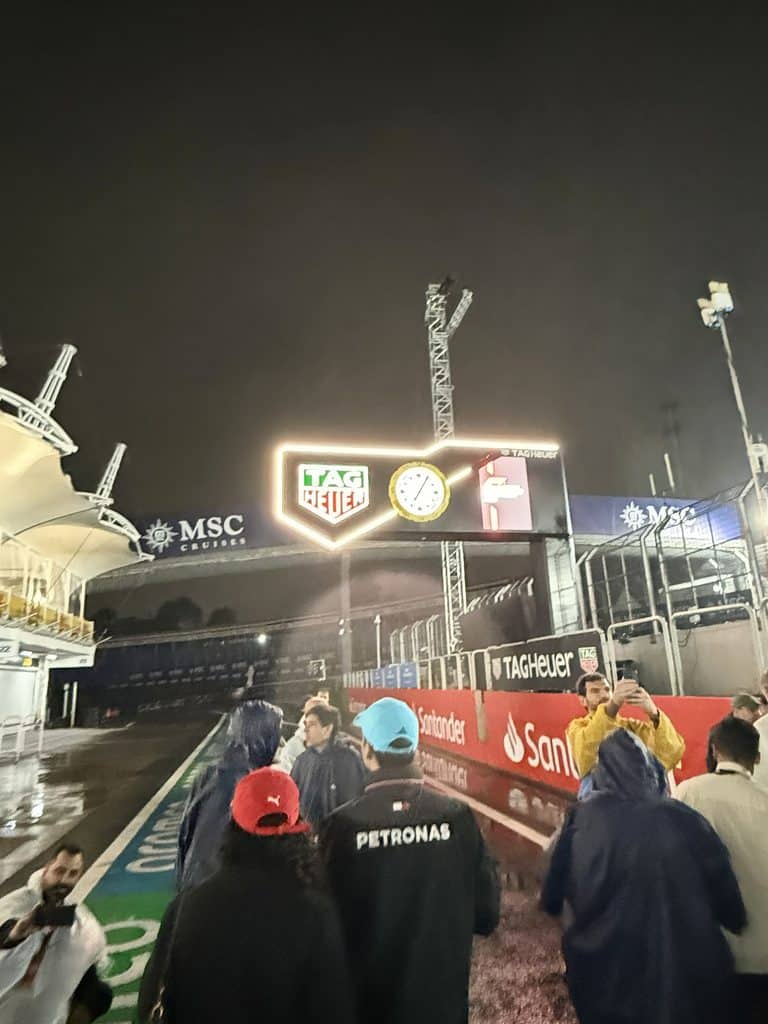
My relationship with Formula 1 started later than it did for many lifelong fans. I came to the sport through Ferrari, and the races pulled me into the cities around them.
São Paulo became a place I wanted to know through its restaurants, people and neighborhoods, as well as its Grand Prix. Interlagos is a big reason I want to keep returning.
The more I learn about the history of Autodromo Jose Carlos Pace, the more I appreciate what it represents.
It opened in 1940. It carries the name of a Brazilian driver who won there. It gave Senna two home victories and became the setting for championship celebrations and heartbreak.
It continues bringing people together for racing, music and events that reach beyond motorsport.
You can buy an expensive race weekend almost anywhere Formula 1 goes. You cannot buy eighty-six years of stories or manufacture the feeling of a crowd with such a deep connection to the place.
For my next visit, I will still study the timetable and the weather. I will still think about where to sit and what to do after leaving the circuit.
But I also want to remember what this place means between Grands Prix.
Interlagos is part of São Paulo’s history, and São Paulo is part of what makes Interlagos worth the trip.
Completely Unnecessary. Absolutely Worth It.
Explore Interlagos and Plan Your São Paulo Experience
For circuit information and events, visit the official Autódromo de Interlagos website. For race weekend details and official ticket information, head to the São Paulo Grand Prix website.
For more of my experiences at the track, around São Paulo and wherever the next trip takes me, follow @Richard.Jarocki on Instagram.
You can also explore my Formula 1 stories or get in touch about planning your next race trip, food-focused getaway or memorable dinner.
Decades of history. Generations of fans. And plenty of reasons to keep coming back.
Completely Unnecessary. Absolutely Worth It.