
São Paulo Travel Guide: The City Beyond the Circuit
Formula 1 brought me here. São Paulo gave me a reason to return.
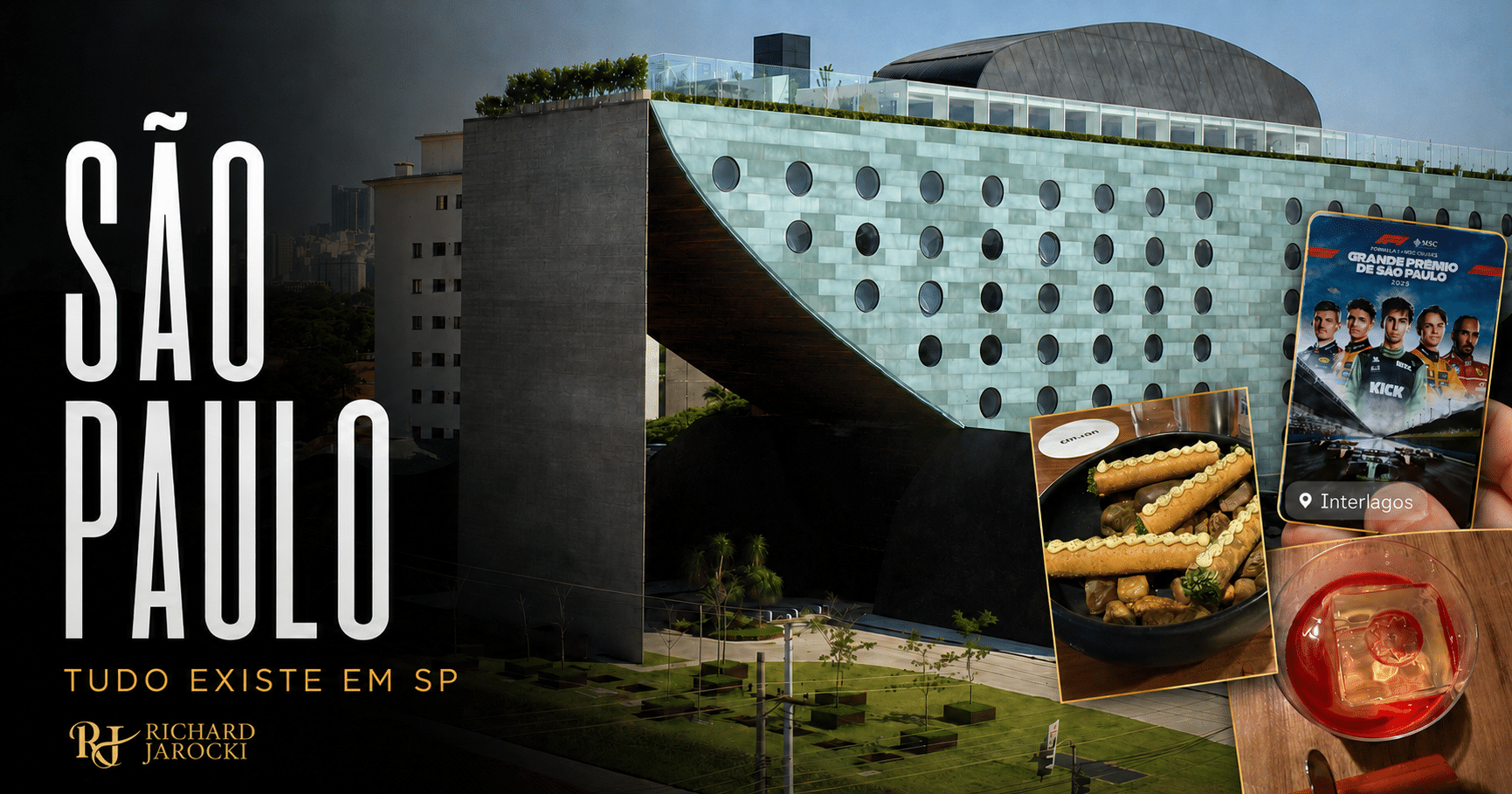
This São Paulo travel guide starts with the trip that changed my expectations. I first came for the 2024 Grand Prix, expecting the race to be the part I talked about most when I got home.
Interlagos delivered everything I hoped for: noise, history, unpredictable weather, passionate Brazilian fans, and the presence of Ayrton Senna everywhere. But when I returned home and looked through my photographs, many of the moments I wanted to relive had happened away from the circuit.
A lot of those memories came from restaurant tables.
Others came from cocktail bars, where someone took the time to explain an unfamiliar ingredient, or from exploring neighborhoods that felt completely different from one another. The hotels became part of the experience too, rather than just somewhere to leave my bags.
The race brought me to São Paulo. The city changed the way I travel.
That is what I want this guide to help you find. I cannot cover every corner of a city this large, and I would not try to see everything in one visit. These are the neighborhoods, restaurants, hotels and cultural stops I would use to build a trip with enough time to enjoy it.

TUDO EXISTE EM SP. Everything exists in São Paulo.
The more time I spend here, the more accurate that phrase feels.
Why São Paulo Is Worth the Trip
São Paulo is not the kind of place where one famous view tells you what the trip is going to be. There is no beach at the center of the itinerary. For me, the appeal is deciding where to eat, discovering what is around that reservation and finding another reason to come back.
São Paulo asks for more effort.
The city is enormous. Traffic changes every plan. Its best experiences are spread across distinct neighborhoods, and many of its most memorable rooms hide behind understated entrances. You have to research, make reservations, and leave enough space for a recommendation to change the day.
For someone who enjoys food, cocktails and exploring a city, the research pays off.
Brazilian, Italian, Japanese, Lebanese, Portuguese, Indigenous, African, and Latin American influences overlap here in ways that feel natural rather than staged. A tasting menu can introduce ingredients from the Amazon. A neighborhood bar can serve technically ambitious cocktails without losing its energy. A museum visit can lead directly into one of the best lunches of the trip.
I keep returning because there is always something I have not tried. I would rather leave with a few places still on my list than spend the whole visit rushing between them.
São Paulo at a Glance
Best for: Food-focused travel, cocktail bars, contemporary art, architecture, distinctive hotels, shopping, and Formula 1 weekends.
How long to stay: Three full days for a first visit. Allow at least four or five days if the Grand Prix is part of the trip, and longer for a relaxed city itinerary.
Where to stay: Jardins and the Paulista area for a practical first base; Pinheiros for restaurants and creative energy; Itaim Bibi or Vila Nova Conceição for polished dining and access to Ibirapuera.
Arrival airport: São Paulo/Guarulhos International Airport (GRU). I prefer a pre-arranged executive transfer after an overnight flight. Airport rail is another option; allow for connections and variable road travel times.
Getting around: Plan each day around one or two nearby neighborhoods. App-based rides are useful between areas; repeated cross-city trips can turn a manageable itinerary into a day in traffic.
Food and reservations: Book the meal you care about most before filling the day. Evvai is my first reservation; leave space for neighborhood lunches, cocktails at Tan Tan, and spontaneous discoveries.
Weather and packing: Summer is generally hotter and wetter; winter is cooler and drier. Pack light layers and rain protection, and check the forecast before planning outdoor time or a circuit day.
Everyday essentials: Portuguese is the local language; the currency is the Brazilian real. Cards are common, but some cash is useful. Keep phones and valuables discreet.
Grand Prix planning: Book your hotel, destination dinners, and transport ahead. Interlagos needs its own travel plan, with generous buffers and no tightly timed dinner immediately after the track.
The quick verdict: São Paulo rewards a little planning and a lot of appetite. Give its restaurants, neighborhoods, museums, and hotels time to become the reason for the trip.
Choosing your São Paulo neighborhood
Jardins
Jardins is one of the easiest areas for a first-time visitor to understand. It combines polished hotels, serious restaurants, international shopping, leafy residential streets, and access to Avenida Paulista.
Rua Oscar Freire runs through the neighborhood’s luxury-shopping core, but Jardins is more useful than a shopping address. It is a strong base because so many excellent restaurants and bars sit within a relatively compact area. If your trip is organized around dining, staying here reduces unnecessary travel and gives the day a more relaxed rhythm.
Pinheiros
Pinheiros is where I would send someone who wants to feel São Paulo’s creative energy through food and drinks. The neighborhood is dense with independent restaurants, cocktail bars, cafés, galleries, and design-focused businesses.
My suggestion is to treat a Pinheiros reservation as the center of a neighborhood visit. Leave some time for a café, shop or drink nearby instead of crossing the city for every part of the day. Check the actual distances before assuming two places in the same neighborhood are close enough to walk.
Vila Madalena
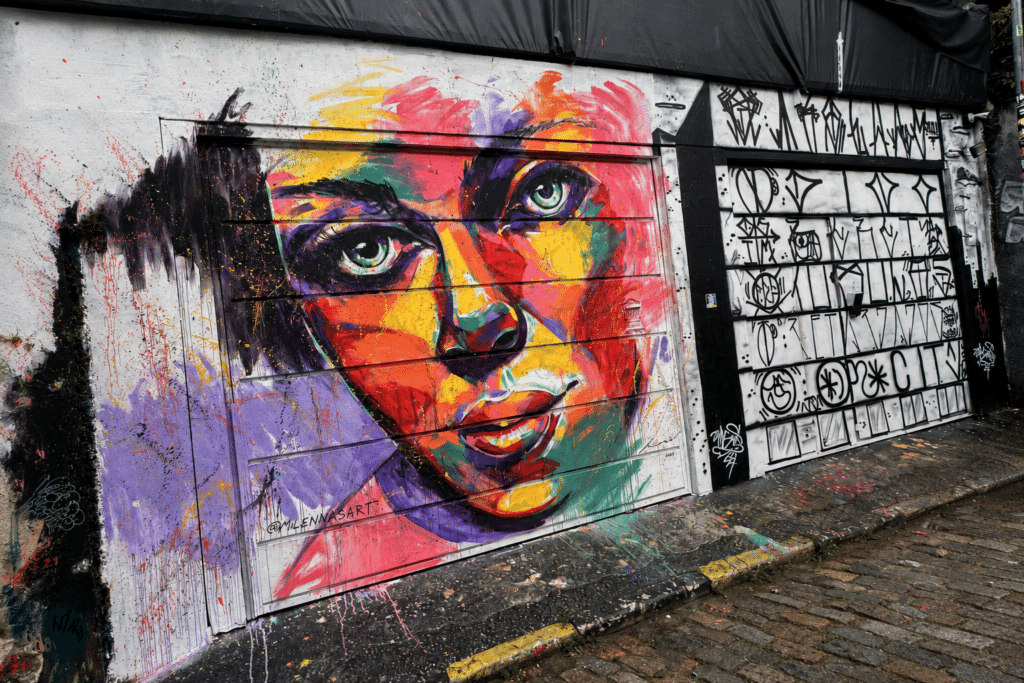
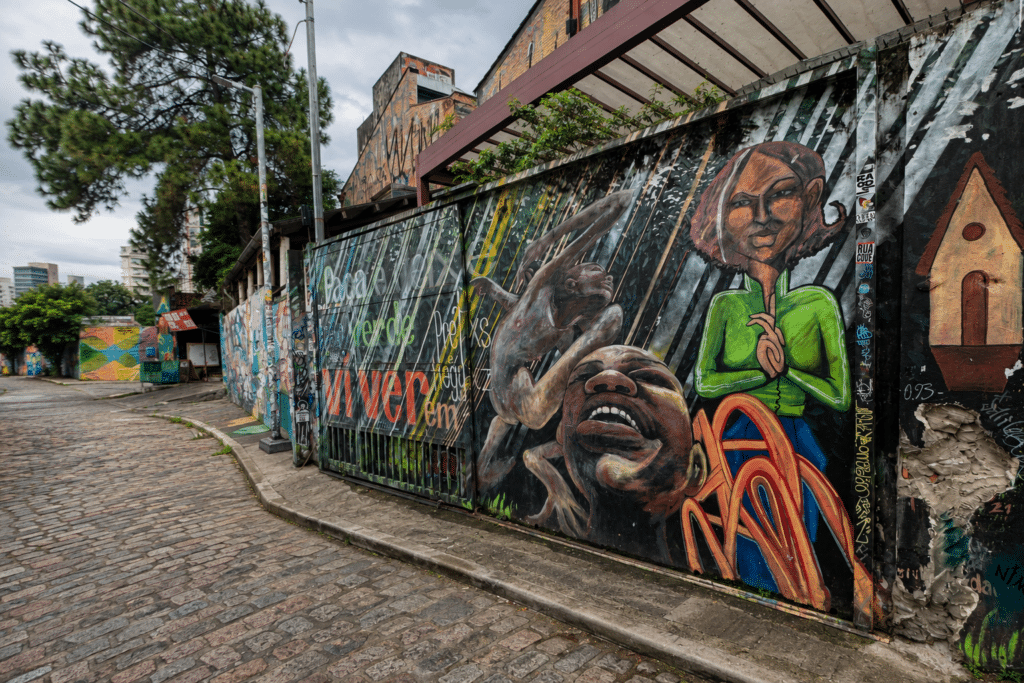
Vila Madalena is closely associated with nightlife and street art. Its best-known visual landmark is Beco do Batman, a constantly changing network of graffiti-covered lanes.
Visit during daylight, preferably when the area is active. The art is the attraction, but the surrounding neighborhood adds context through small shops, cafés, bars, and the relaxed pace of the residential streets nearby.
Liberdade
Liberdade reflects the importance of Japanese immigration to São Paulo and the city’s wider Asian-Brazilian identity. The neighborhood rewards curiosity: markets, bakeries, restaurants, specialty stores, and cultural references sit close together.
It can become crowded, especially on weekends. Go earlier in the day if your priority is exploring rather than joining the busiest street activity.
Itaim Bibi and Vila Nova Conceição
These neighborhoods offer a polished, contemporary version of São Paulo, with luxury hotels, destination restaurants, fashionable bars, and convenient access to Ibirapuera Park.
Consider these areas if restaurants, hotel comfort and access to the park matter more to you than staying beside the historic center. The right base depends on your actual reservations, so put your hotel and planned stops on a map before choosing.
Art, parks and places to explore
Avenida Paulista and MASP
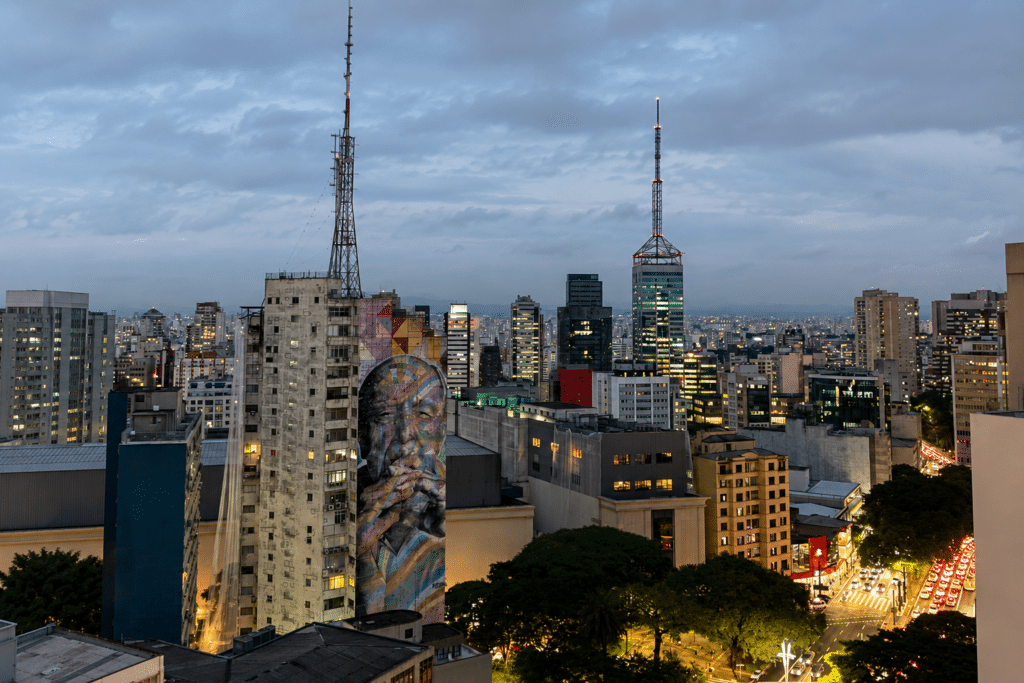
Avenida Paulista is one of the city’s defining urban spaces. Office towers, cultural institutions, shopping, restaurants, and public life all compete for attention along the same corridor.
The essential stop is the Museu de Arte de São Paulo, better known as MASP. Lina Bo Bardi’s building is as important as the collection: a bold structure suspended above an open public span. Inside, the museum’s presentation encourages visitors to move around the art rather than follow a rigid sequence.
My approach: reserve enough time for the museum, then walk part of Paulista rather than treating MASP as a car-to-door visit. Sunday changes the atmosphere when sections of the avenue are commonly given over to pedestrians, cyclists, performers, and families. Confirm current street programming before planning around it.
Ibirapuera Park
Ibirapuera gives São Paulo room to breathe. It combines landscape, modernist architecture, museums, pavilions, monuments, running paths, and everyday local life.
I would make this a morning outing and leave time to enjoy the park instead of treating it as a quick photo stop. Its Oscar Niemeyer-designed cultural buildings are another reason to look beyond the paths and greenery. Choose the entrance nearest the places you want to see; Ibirapuera is much larger than a single pin on a map suggests.
Pinacoteca and Estação da Luz
Pinacoteca de São Paulo is one of the country’s most important art institutions and one of the strongest reasons to include the historic center in a first visit. The museum’s brick architecture, courtyards, and focus on Brazilian art create a different experience from MASP.
Pair it with the nearby Museu da Língua Portuguesa at Estação da Luz when schedules allow. This is an area where I prefer to arrange direct transportation and keep the cultural itinerary deliberate rather than wandering without a plan.
Beco do Batman
Beco do Batman is São Paulo’s best-known open-air street-art destination. The murals change, which means the experience never stays frozen as a single attraction.
Visit in daylight, avoid displaying expensive equipment unnecessarily, and continue into Vila Madalena or Pinheiros rather than leaving immediately after the photographs. The surrounding neighborhoods are what make the stop feel connected to the city.
Mercado Municipal
The Mercado Municipal is visually impressive and offers an introduction to Brazilian produce, spices, preserved foods, and the city’s market culture. It is also heavily visited, and some of its most famous dishes have become attractions in their own right.
Go for the architecture and the sensory experience, not because a famous sandwich must automatically become lunch. Visit during the day, understand prices before ordering, and use arranged transportation if it makes the rest of the itinerary more efficient.
Where I would plan a meal in São Paulo
Food is the strongest reason I continue returning to São Paulo.
The range is a big part of the appeal. I can plan an evening around a tasting menu, then enjoy a much more casual meal the next day without feeling that I have settled for something less interesting. Brazilian ingredients and the city’s many cultural influences give me plenty to explore.
For more of the meals that keep bringing me back, read my São Paulo restaurant guide.
Evvai
Evvai is my favorite restaurant in the world.
Chef Luiz Filipe Souza describes the approach as Oriundi, bringing Italian heritage and Brazilian ingredients together. What matters to me is how that idea comes through at the table. There is a story behind the food, but the dishes still have to taste good. At Evvai, that is why I keep coming back.
The tasting menu has both precision and personality. The team works with remarkable coordination, while the illustrated course cards give me something to take home and remember. Evvai and Tuju received three stars in the 2026 MICHELIN Guide, a milestone worth acknowledging without letting it replace the reasons I enjoy the meal.
This is the reservation I make first.
Related story: Why Evvai Is My Favorite Restaurant in the World
Tuju
Tuju was a different kind of experience for me. I had the Rain Season menu, and the presentation was one of the things that stayed with me. Chef Ivan Ralston’s focus on seasonality gives the meal a clear connection to its ingredients and their origins.
The experience moves through different spaces in the restaurant. I would set aside the evening for it rather than put another fixed plan immediately afterward. As with any seasonal tasting menu, check what is being served when you book rather than expecting the dishes from my visit.
If you enjoy meals that ask you to pay attention to unfamiliar ingredients and presentation, Tuju belongs on your shortlist.
D.O.M.
Alex Atala helped change the international conversation around Brazilian gastronomy. D.O.M. remains essential for travelers who want to understand how ingredients from the Amazon and other regions of Brazil entered the global fine-dining conversation.
D.O.M. holds two stars in the 2026 MICHELIN Guide. My interest goes beyond the award: the chance to encounter ingredients from Brazil, including some I had never eaten before, made the experience worth discussing long afterward.
Maní
Maní, led by chef Helena Rizzo, balances creativity with warmth. The restaurant is polished without becoming intimidating, and its cooking often gives Brazilian ingredients a lighter, highly personal expression.
Consider Maní if its current menu appeals to you and you want to build an evening around Brazilian cooking. I would check its own menu and booking information rather than assume a recommendation means every restaurant will suit every diner.
Nelita
Nelita is one of the places I would recommend to someone who loves pasta and wants an evening that feels welcoming as well as carefully put together.
I visited in January 2025 and found a restaurant that felt both cozy and refined. Chef Tássia Magalhães uses Italian technique as a foundation, then gives the food a distinctly Brazilian identity through local ingredients and flavors connected to her roots in the Vale do Paraíba.
The pão de queijo gougère, pumpkin cappelletti, eggplant and smoked-tomato ravioli, and beef tongue with polenta gave me plenty to remember. The passionfruit sorbet was a welcome change of pace. I appreciated wine pairings that made sense with the food, and the personal connection with chef Tássia Magalhães and her husband, sommelier Daniel, added to the evening.
The dishes I describe are from that visit, not a promise about the current menu. What would bring me back is the combination of food, warmth and the people behind it.
Metzi
Metzi brings Mexican cooking and Brazilian ingredients together. Chefs Luana Sabino and Eduardo Ortiz draw on their different backgrounds, and the result gives me a reason to order beyond the dishes I already know.
Do not arrive expecting a conventional Tex-Mex menu. I would go with some curiosity about the ingredients and let the current menu guide the meal. The restaurant’s own descriptions are a better starting point than trying to fit it into a familiar category.
I dined at Metzi and found the space relaxed and welcoming, with the feeling of a neighborhood restaurant even as the cooking reached far beyond the familiar. Pork belly tacos with fermented chili, seafood tostadas, smoky and acidic flavors, and agave-forward cocktails showed how confidently the kitchen moves between Mexican heritage and Brazilian ingredients. I also had the opportunity to meet chef Eduardo Ortiz and enjoyed his energy and our conversation.
I enjoyed meeting chef Eduardo Ortiz and hearing more about the food. That is the kind of conversation that makes a meal feel personal, and one of the reasons I would include Metzi in a food-focused trip.
Tan Tan
Tan Tan is both a restaurant and one of São Paulo’s essential cocktail destinations. Thiago Bañares approaches it as a modern izakaya, combining Japanese-influenced food with a drinks program that is every bit as ambitious as the kitchen.
The Spring Rolls Royce, filled with tuna tartare, is a dish I remember clearly. So is the Tsukemono cocktail, with tequila, wasabi, cucumber and orange bitters: savory, fresh and different from the drink I might have ordered automatically elsewhere.
The room has a lively but intimate energy. A soundtrack built around 1990s hip-hop: Nas, A Tribe Called Quest, and Wu-Tang Clan: gives the evening personality without making the music feel like decoration. Tan Tan is the kind of place that works for dinner, cocktails, or both, and I make a point of returning to at least one of Bañares’s venues whenever I am in São Paulo.
A Casa do Porco
At A Casa do Porco, I sat at the bar during my November 2024 visit. The crispy roasted pork belly and the pig-head-shaped cloche are among the details I still remember. It is a serious food experience without feeling like a quiet, formal dining room.
The restaurant’s focus on pork and whole-animal cooking gives it a clear identity. I would read the current menu before booking, particularly if someone in your group has dietary restrictions. The experience I enjoyed is described in the full review below.
Plan ahead. Prime-time walk-ins can involve a long wait.
Related story: A Casa do Porco: Is São Paulo’s Famous Pork Restaurant Worth It?
Kotori
Kotori brings Japanese yōshoku influence together with Brazilian ingredients in Pinheiros. It is compact, contemporary, and especially useful for travelers who want a meal that reflects São Paulo’s Japanese heritage without defaulting to a conventional sushi experience.
I have visited Kotori once. Check the current menu and service times when comparing it with the other restaurants in Pinheiros; it can make sense for a different kind of evening from a long tasting menu.
Cocktails and a good reason to stay out
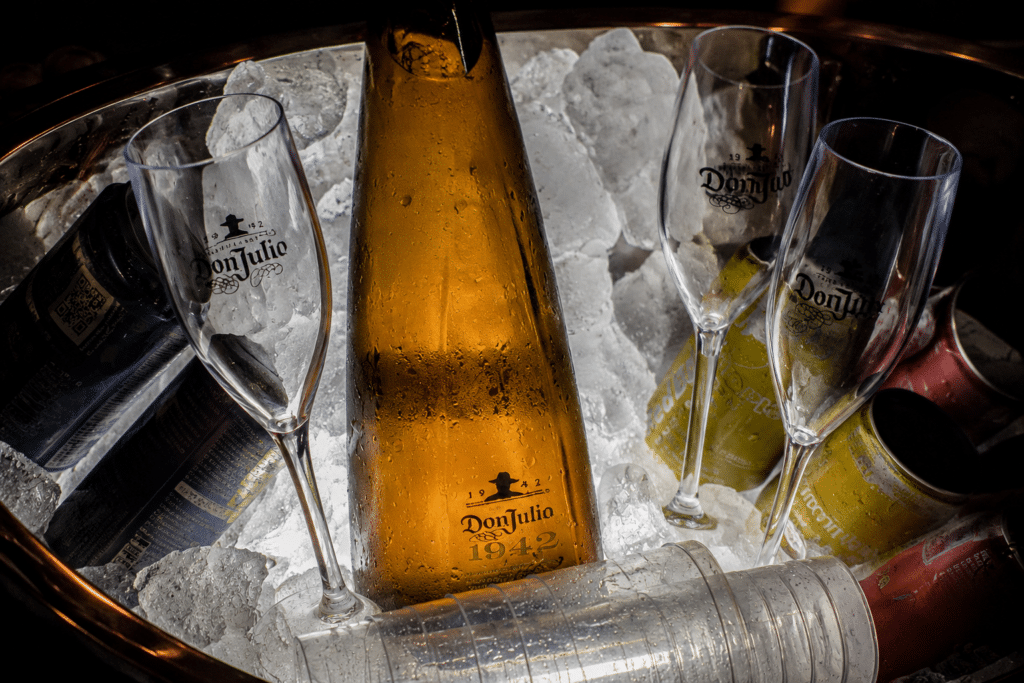
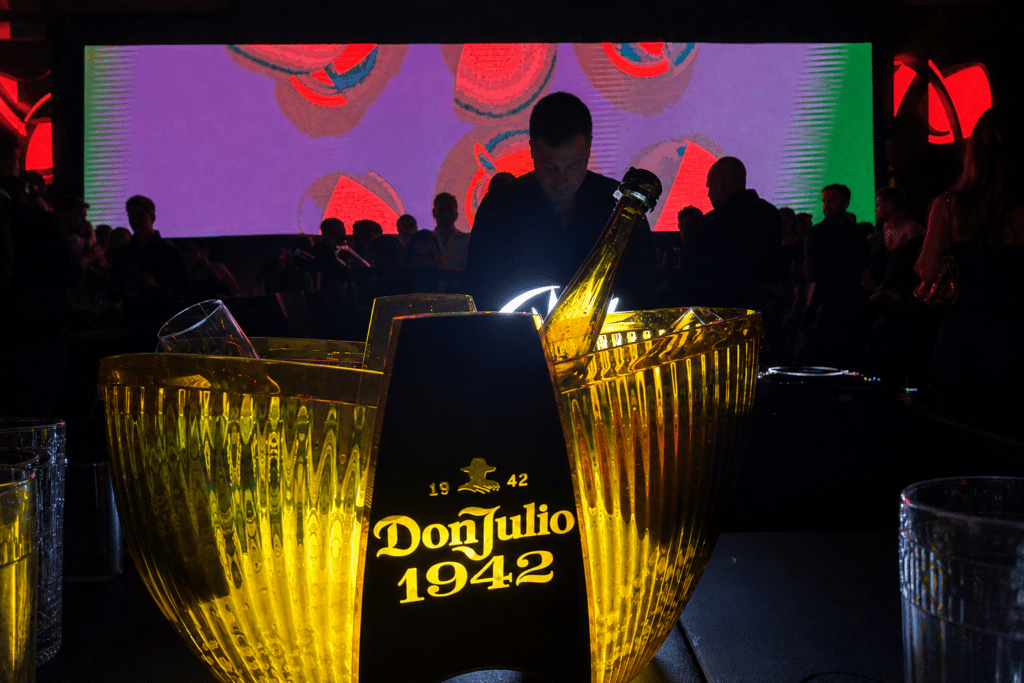
São Paulo’s cocktail scene deserves the same attention as its restaurants. The best bars are not simply places to fill time after dinner. They are part of the destination.
Tan Tan
If I have already planned dinner elsewhere, Tan Tan is still worth considering for cocktails. If the schedule allows, I prefer giving it enough time for both. The food, drinks and 1990s hip-hop are all part of why I return.
Check reservations and the current service arrangements before building a late-night stop around it. A favorite place is more enjoyable when the evening is not a race against the clock.
Skye at Hotel Unique
Skye is the rooftop experience to choose when the view matters. Hotel Unique’s architecture already creates a sense of arrival; the rooftop adds a broad look across the São Paulo skyline.
Sunset is a sensible time to aim for if you want to watch the city change from daylight to evening. Check the current reservation and access arrangements with Skye, especially during busy weekends.
Rabo di Galo at Rosewood São Paulo
Rabo di Galo gives the hotel-bar experience a Brazilian identity. It is polished, musical, and connected to the wider Cidade Matarazzo atmosphere rather than feeling like an interchangeable luxury lounge.
This is an easy recommendation before or after dinner near Paulista and Jardins, particularly for travelers already staying at Rosewood.
São Paulo travel guide: choosing your hotel
A quick way to narrow the choice
Which hotel fits this trip?
- A practical first visit near Paulista
- Renaissance, InterContinental or Tivoli. Start here if city exploring and restaurant plans matter more than spending the day inside the hotel.
- The hotel is part of the experience
- Rosewood for its design, art and broader setting; Fasano Jardins for a smaller, more discreet atmosphere.
- Design and a rooftop view
- Hotel Unique near Ibirapuera, or W if Vila Olímpia fits the rest of your plans.
- A quieter retreat
- Palácio Tangará. Allow for its distance from the neighborhoods you plan to visit.
These are different kinds of stays, not a ranking from best to worst. My first check would be the route between the hotel and the reservations I care about.
Across my São Paulo trips, I have stayed at eight very different hotels: Rosewood São Paulo, Hotel Fasano São Paulo in Jardins, Renaissance São Paulo Hotel, InterContinental São Paulo, Tivoli Mofarrej São Paulo, Hotel Unique, W São Paulo, and Palácio Tangará. Each solves a different kind of trip: Rosewood for a complete luxury environment; Fasano for discreet Italian-rooted hospitality; Renaissance, InterContinental, and Tivoli for convenience near Avenida Paulista; Hotel Unique for design and access to Ibirapuera Park; W for a contemporary, social stay in Vila Olímpia; and Palácio Tangará for a resort-like retreat surrounded by greenery.
Rosewood São Paulo
Rosewood is the strongest choice for travelers who want the hotel itself to become part of the destination. Located within Cidade Matarazzo near Avenida Paulista, it brings together preserved architecture, contemporary art, restaurants, bars, gardens, and Jean Nouvel’s vertical-tower design.
I would choose it when spending time at the hotel is part of the point of the trip. If you are visiting rather than staying, check the arrangements for Le Jardin or Rabo di Galo instead of assuming every part of the property is open to non-guests.
Hotel Fasano São Paulo : Jardins
I stayed at the original Hotel Fasano São Paulo in Jardins in January 2025. This distinction matters now that the brand also operates a separate Fasano São Paulo Itaim property.
The Jardins hotel feels intimate and understated. Its position near Rua Oscar Freire makes it useful for a trip involving restaurants, galleries and shopping. I would choose it for the atmosphere and location rather than expect the scale of a large resort.
Fasano’s identity is inseparable from food and music. The formal Fasano restaurant represents the family’s Italian fine-dining tradition; Nonno Ruggero offers a more relaxed trattoria setting; and Baretto is the hotel’s intimate piano and jazz bar. Choose Fasano when privacy, atmosphere, and the ritual of returning to a smaller hotel matter more than a large collection of resort-style facilities.
Renaissance São Paulo Hotel
Renaissance was the practical base of the three hotels I experienced during the 2024 Grand Prix trip. It sits in Jardins, steps from Avenida Paulista and within easy reach of MASP, Rua Oscar Freire, restaurants, and city transportation.
It does not have the architectural drama of Hotel Unique or the self-contained luxury world of Rosewood. Its strength is location. For travelers who plan to spend most of the day exploring and want a comfortable, internationally familiar hotel in one of the city’s most useful neighborhoods, Renaissance makes the logistics easier.
InterContinental São Paulo
Booking check, October 27, 2026: The hotel’s official site currently warns of renovation noise and a temporarily closed pool. Confirm the impact on your dates before booking.
I have also stayed at InterContinental São Paulo, another strong location-first option near Avenida Paulista. The hotel sits on Alameda Santos, within practical reach of MASP, Trianon Park, Jardins dining, and the city’s major commercial corridor.
InterContinental offers a more traditional expression of luxury than Rosewood, Hotel Unique, or W. That familiarity can be an advantage during a demanding itinerary or Formula 1 weekend: the hotel provides a calm, full-service base while much of the city experience happens outside its doors.
Tivoli Mofarrej São Paulo
Booking check, October 27, 2026: Tivoli’s official notice lists lobby renovations from October 5 to November 5, 2026. Check directly for any changes to that schedule.
I stayed at Tivoli Mofarrej São Paulo in January 2025. Located in Jardins one block from Avenida Paulista, the hotel combines the practical location of a business-oriented luxury property with a stronger food, nightlife, and wellness component.
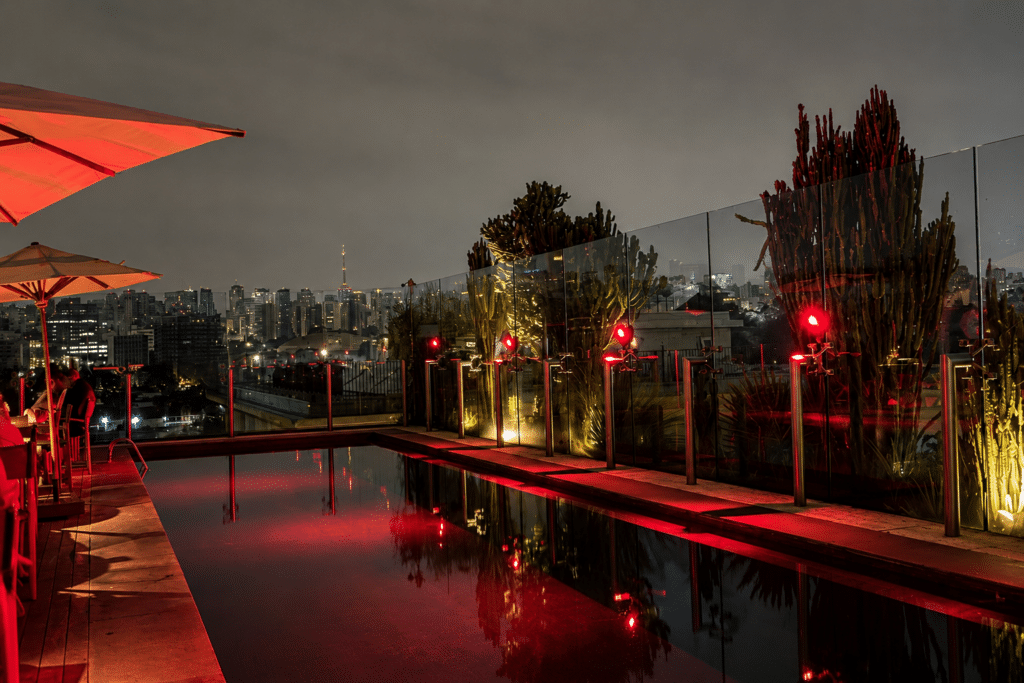
Its most recognizable feature is the view from the upper floors. The hotel rises above the neighborhood, while SEEN São Paulo turns the rooftop into a destination for dinner, cocktails, music, and a wide view across the city. The property also includes an outdoor pool and Anantara Spa.
Tivoli works well for travelers who want to stay near Paulista and MASP but still want a hotel with its own evening energy. It is a different proposition from Fasano’s discretion or Rosewood’s immersive design: larger, more vertical, and closely connected to the pace of the city below.
Hotel Unique
Hotel Unique is the design choice. Ruy Ohtake’s curved building is one of the city’s most recognizable works of contemporary architecture, and the circular windows make the rooms feel unlike those in a conventional luxury hotel.
The location near Ibirapuera Park works well for travelers who want access to Jardins and Vila Nova Conceição. Skye adds the rooftop view that turns the hotel into a destination even for non-guests.
W São Paulo
W São Paulo is the most contemporary and nightlife-oriented of the hotels I have experienced in the city. Located in Vila Olímpia, it places guests near the Faria Lima business district, JK Iguatemi, Parque do Povo, restaurants, and a more modern side of São Paulo.
The restaurants, bars and rooftop setting are part of W’s appeal. I would compare its Vila Olímpia location with the dinners and neighborhoods on the itinerary before booking. Check the hotel’s current dining venues and access policies directly, because a rooftop photograph alone cannot tell you what is available during your stay.
Palácio Tangará
I have also stayed at Palácio Tangará, the escape from the city without leaving it. Surrounded by the greenery of Burle Marx Park, the hotel offers a slower, more private atmosphere than properties closer to Paulista.
Choose it for resort-like calm, spacious accommodations, a serious spa experience, and access to Tangará Jean-Georges. The tradeoff is distance: this is not the most efficient base for a tightly scheduled restaurant itinerary across Jardins and Pinheiros.
Formula 1 at Interlagos
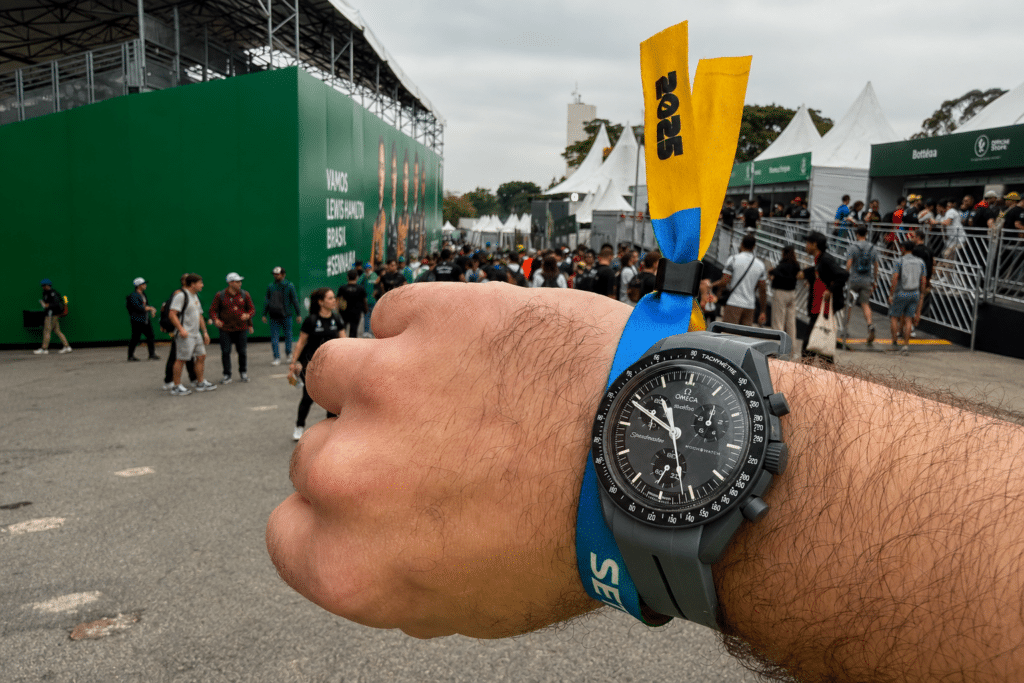
The São Paulo Grand Prix is not simply another race on the calendar. Interlagos carries history, emotion, elevation changes, fast weather shifts, and a crowd that understands the sport deeply.
The circuit is officially named Autódromo José Carlos Pace, but the planning detail that matters most here is its distance from the neighborhoods where many visitors stay and eat. Treat race days differently from ordinary sightseeing days.
Brazilian motorsport history is present everywhere. Ayrton Senna’s legacy is part of the city, not just the circuit branding. The crowd reacts to every change in the race, and the compact layout keeps much of the action feeling close.
The key to planning is accepting that Interlagos sits well south of the neighborhoods where many visitors stay and dine. Do not schedule a tightly timed luxury dinner immediately after a major circuit session. Build in a real buffer for crowds, security, transportation, weather, and the possibility that you will want to stay longer than expected.
For the race weekend itself, my São Paulo Grand Prix travel guide covers my experiences in Grandstands G and N, getting to and from Interlagos, preparing for rain, and leaving enough time for dinner afterward.
How I would spend three days in São Paulo
This is a suggested city itinerary, not a race-weekend schedule. Move the days to match museum openings and restaurant availability. On Grand Prix days, protect the track and transport time rather than trying to fit this plan around them.
Day One: Paulista, Jardins, and a Destination Dinner
Begin with Avenida Paulista and MASP, then move into Jardins for a relaxed lunch or time along Rua Oscar Freire. Return to the hotel before dinner rather than filling the afternoon with another major attraction.
Make Evvai the centerpiece of the evening. A tasting menu of this scale should be the plan, not the final item on an exhausting checklist.
Day Two: Ibirapuera, Architecture, and the Skyline
Start at Ibirapuera Park while the day is cooler and the paths are less crowded. Continue with lunch near Vila Nova Conceição or at one of the city’s design hotels.
Use the late afternoon to reset, then have a rooftop drink at Skye near sunset. Continue to dinner in Jardins, Itaim Bibi, or Pinheiros depending on the reservation.
Day Three: Pinheiros, Vila Madalena, and Cocktails
Visit Beco do Batman during daylight and allow time for the surrounding streets of Vila Madalena. Move into Pinheiros for lunch, cafés, shops, or galleries rather than crossing the city unnecessarily.
Build the evening around a Pinheiros restaurant and finish at Tan Tan. This is the day when the neighborhood itself should connect the experiences.
Alternative cultural day: Replace the Pinheiros morning with Pinacoteca and the Museu da Língua Portuguesa, using direct transportation and confirming current museum schedules before departure.
Practical São Paulo travel advice
Transportation
I recommend Rhino and Uber Black, but they are different services. Rhino provides armored cars with professional drivers. The chauffeur-style service is closer to what I associate with Uber Black in New York City; that comparison is about the service, not the vehicle’s armor.
The Uber Black cars I’ve used in São Paulo have been regular, non-armored vehicles. Most of my drivers had hundreds, if not thousands, of completed rides and ratings close to five stars. I’ve never had a bad experience with either option.
I prefer a pre-arranged executive transfer from Guarulhos International Airport, especially after an overnight flight. Airport rail is another option for travelers comfortable navigating the broader train and metro network.
Within São Paulo, organize days by neighborhood. Crossing the city repeatedly wastes time and makes reservations harder to manage. During the Grand Prix, transportation requires its own plan; normal drive-time assumptions do not apply around Interlagos.
Reservations
Reserve destination restaurants before building the sightseeing schedule. Evvai, Tuju, D.O.M., and other tasting-menu restaurants can define an entire evening. Confirm menus, dietary policies, cancellation terms, and current pricing directly with each restaurant.
Rooftop bars and hotel restaurants also deserve reservations during race week and major city events.
Safety and Awareness
São Paulo should be experienced with awareness, not fear. Keep phones and expensive items discreet on busy streets, use direct transportation at night or in unfamiliar areas, and avoid displaying watches, jewelry, or camera equipment unnecessarily.
Before traveling, read the current U.S. travel advice for Brazil and ask your hotel or a trusted local contact about the route you have planned. Conditions and recommendations can change; no neighborhood description in a guide is a guarantee of safety.
Language and Payments
Portuguese is the language of daily life. English is common in many luxury hotels and internationally oriented restaurants, but it should not be assumed everywhere. Learning a few Portuguese phrases improves the experience and shows respect.
Cards and contactless payments are common. Carrying a modest amount of Brazilian reais is still useful for smaller purchases, tips where appropriate, and situations where a foreign card does not process.
Timing
Do not overbook São Paulo. The city is better when each day has one cultural anchor, one neighborhood focus, and one important meal.
Leave room for the bartender’s recommendation, the chef who wants to explain an ingredient, or the friend who tells you about a place you had never considered.
That is usually where the best part of the trip begins.
Addresses to save
Always confirm the current entrance, reservation instructions, and operating hours before leaving the hotel.
| Place | Address |
|---|---|
| MASP | Avenida Paulista, 1578, Bela Vista |
| Pinacoteca : Pina Luz | Praça da Luz, 2, Bom Retiro |
| Ibirapuera Park | Avenida Pedro Álvares Cabral, s/n; use the entrance closest to the day’s itinerary |
| Evvai | Rua Joaquim Antunes, 108, Pinheiros |
| Tuju | Rua Frei Galvão, 135, Jardim Paulistano |
| D.O.M. | Rua Barão de Capanema, 549, Jardins |
| Maní | Rua Joaquim Antunes, 210, Jardim Paulistano |
| Nelita | Rua Ferreira de Araújo, 330, Pinheiros |
| Metzi | Rua João Moura, 861, Pinheiros |
| A Casa do Porco | Rua Araújo, 124, República |
| Kotori | Rua Cônego Eugênio Leite, 639, Pinheiros |
| Tan Tan | Rua Fradique Coutinho, 153, Pinheiros |
| Rosewood São Paulo | Rua Itapeva, 435, Bela Vista |
| Hotel Fasano São Paulo : Jardins | Rua Vittorio Fasano, 88, Jardins |
| Renaissance São Paulo Hotel | Alameda Santos, 2233, Jardim Paulista |
| InterContinental São Paulo | Alameda Santos, 1123, Jardim Paulista |
| Tivoli Mofarrej São Paulo | Alameda Santos, 1437, Cerqueira César |
| Hotel Unique / Skye | Avenida Brigadeiro Luís Antônio, 4700, Jardim Paulista |
| W São Paulo | Rua Funchal, 65, Vila Olímpia |
| Palácio Tangará | Rua Deputado Laércio Corte, 1501, Panamby |
Why I keep coming back
São Paulo taught me that a destination does not need to reveal itself immediately to become unforgettable.
A little preparation helps: understand where you are staying, leave room for traffic and book the meals that matter most. Then give yourself permission to enjoy what you actually came to do.
What I found was a city full of meals I wanted to talk about, bars I wanted to revisit and people who made the experience feel personal. That is more useful to me than trying to tick off every famous address.
Formula 1 gave me the original reason to visit.
Food gave me a way to understand the city.
The people gave me a reason to keep returning.
São Paulo is not a stop between the airport and Interlagos. It is the destination.