Tag: ferrari

  • Why I Love Formula 1: Our Sport. Our Passion. Our People.
    Why I Love Formula 1: Our Sport. Our Passion. Our People.
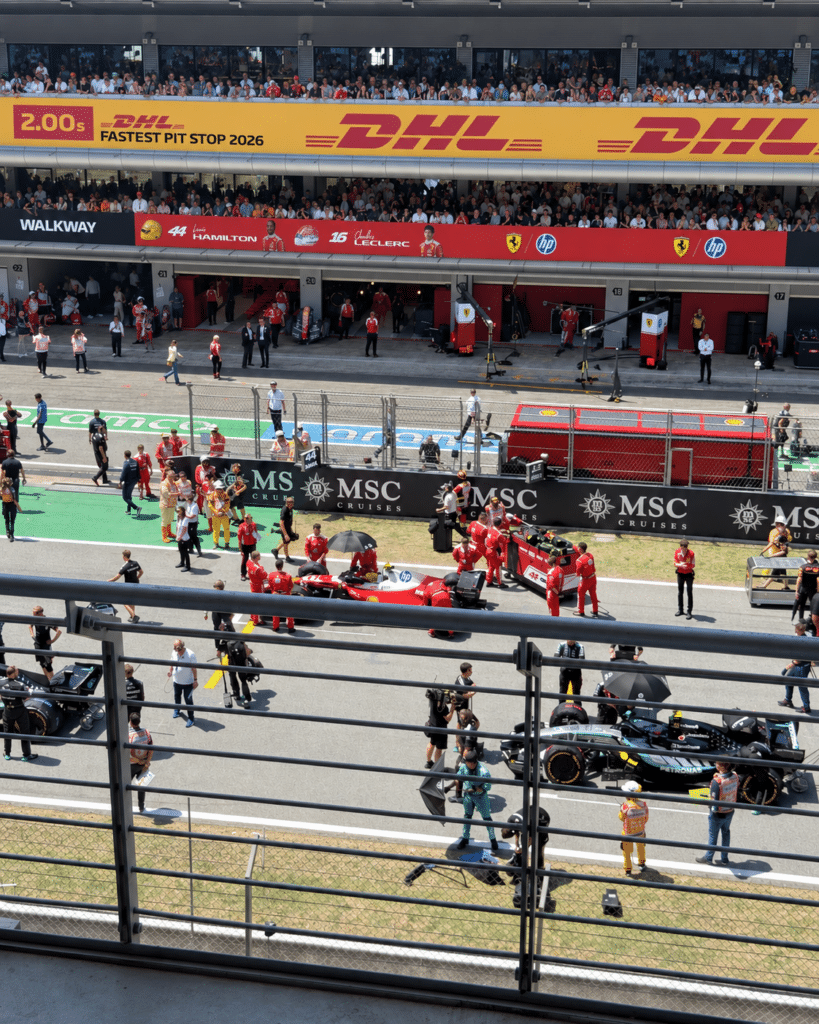
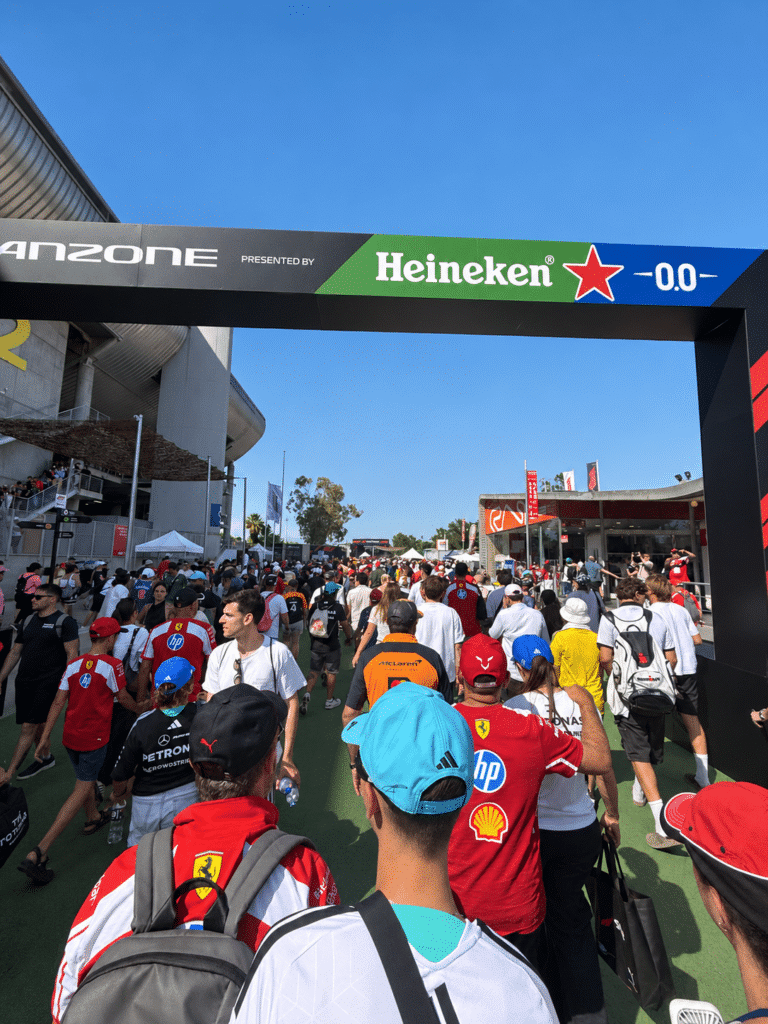
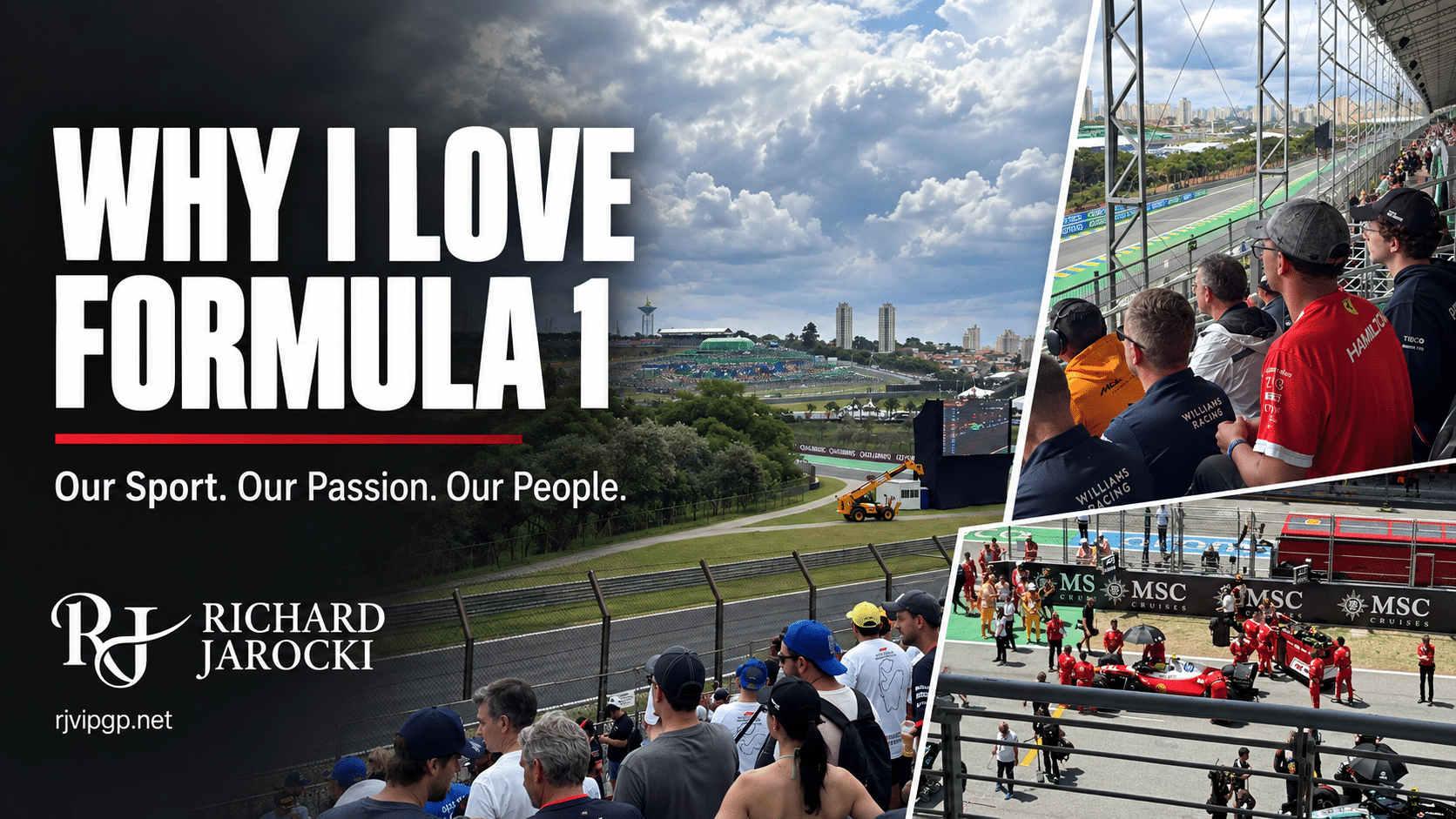
    Why I Love Formula 1: Formula 1 blog cover featuring Interlagos, fans in team shirts, Ferrari grid preparations in Barcelona, and Richard Jarocki’s logo.
    Why I Love Formula 1:

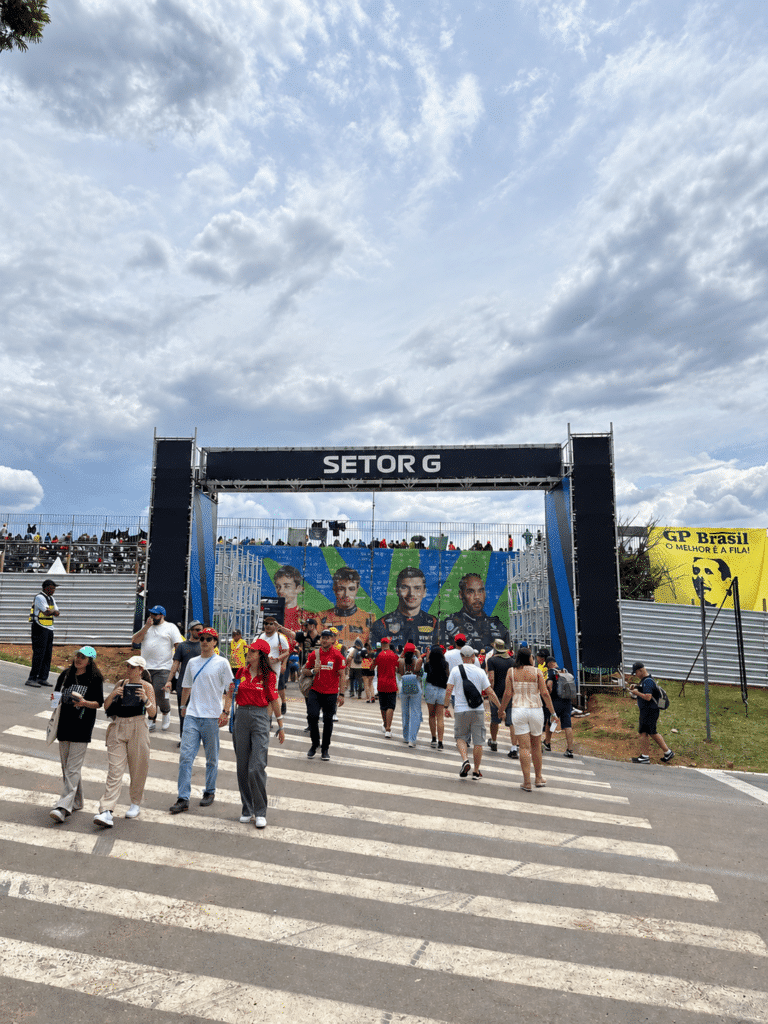
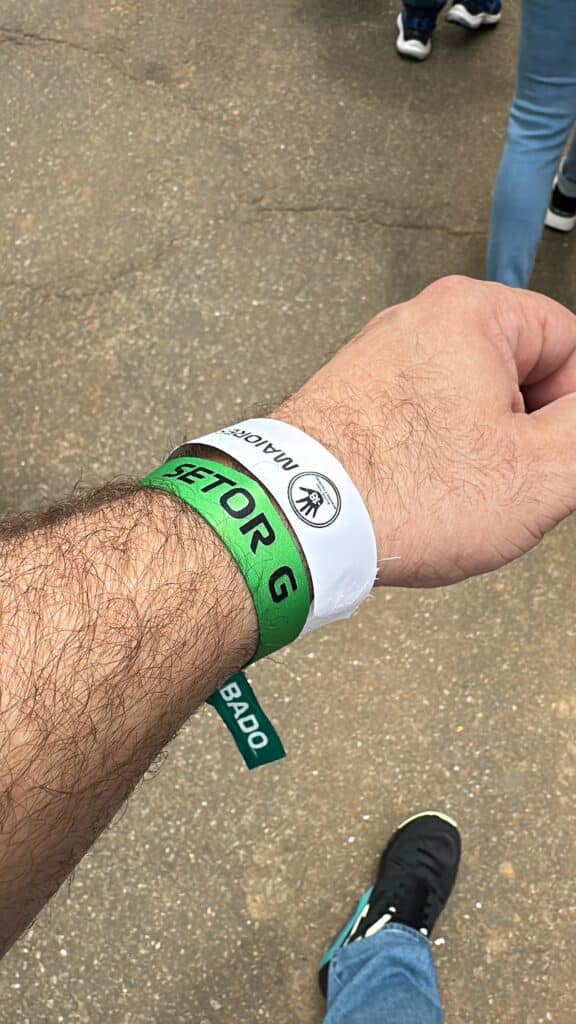
    My São Paulo Grand Prix Experience Started in Sector G

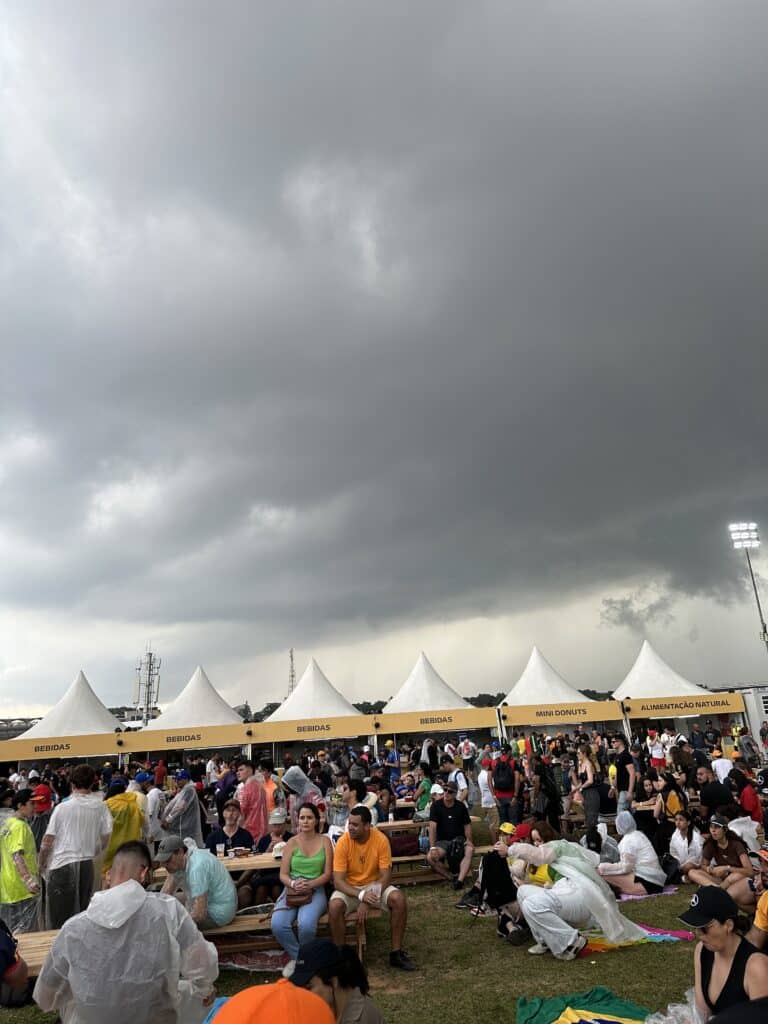
    My first real Formula 1 experience was in Sector G at Interlagos, getting poured on for hours in a plastic poncho.

    I was drinking beer and canned Jack and Coke with people I had never met. First, we were trying to hide from the rain. Later, we were dancing together in muddy fields.

    Half the people around me didn’t speak the same language I did. Somehow, we still found ways to connect.

    What I remember most is how they made room for me. When we were sheltering under a tent or gazebo, people shifted over and squeezed together so I could get underneath with them. They didn’t know me, but they welcomed me like family.

    The F1 fan experience became personal for me right there: people I had never met making room for me like I belonged

    That weekend made me fall in love with Formula 1. It also made me fall in love with Brazil.

    I appreciate comfortable seats, air conditioning, and a beautiful hospitality space. But when I think about why this sport means so much to me, I still think about that plastic poncho, the mud, and the strangers who made me feel I belonged.

    Our sport. Our passion. Our people.

    The São Paulo trip that changed everything

    I Wish I Had Found Formula 1 Earlier

    Growing up in the United States with American parents, Formula 1 wasn’t something I heard much about at home. It wasn’t part of my world.

    I had Arab and Italian friends growing up, and later Brazilian, Portuguese, Spanish, and South American friends. Some of their family members watched Formula 1 and talked about it. Looking back, I realize the sport was around me. I just wasn’t paying attention.

    That changed when I went to work at a Ferrari dealership.

    The training manuals and modules taught me about Ferrari’s history and heritage, including its connection to racing. Understanding the brand meant learning why all of this mattered so much to people.

    Attending events was part of my job. I also attended races personally, outside my capacity as an employee. What began as something I needed to understand gradually became something I wanted to spend my own time learning about.

    Now I get the questions. Friends call me about the current race, upcoming events, and things happening in Formula 1. I went from barely noticing the sport to being the person people associate with it.

    The history pulled me in, too. The races, the parties, the personalities, the circuits, and the heritage behind the teams.

    I hated history in school. Now I’ll voluntarily spend a night reading about it.

    Apparently, I needed race cars involved.

    Before working at Ferrari, I never really understood why someone would name their son Enzo.

    Now I do.
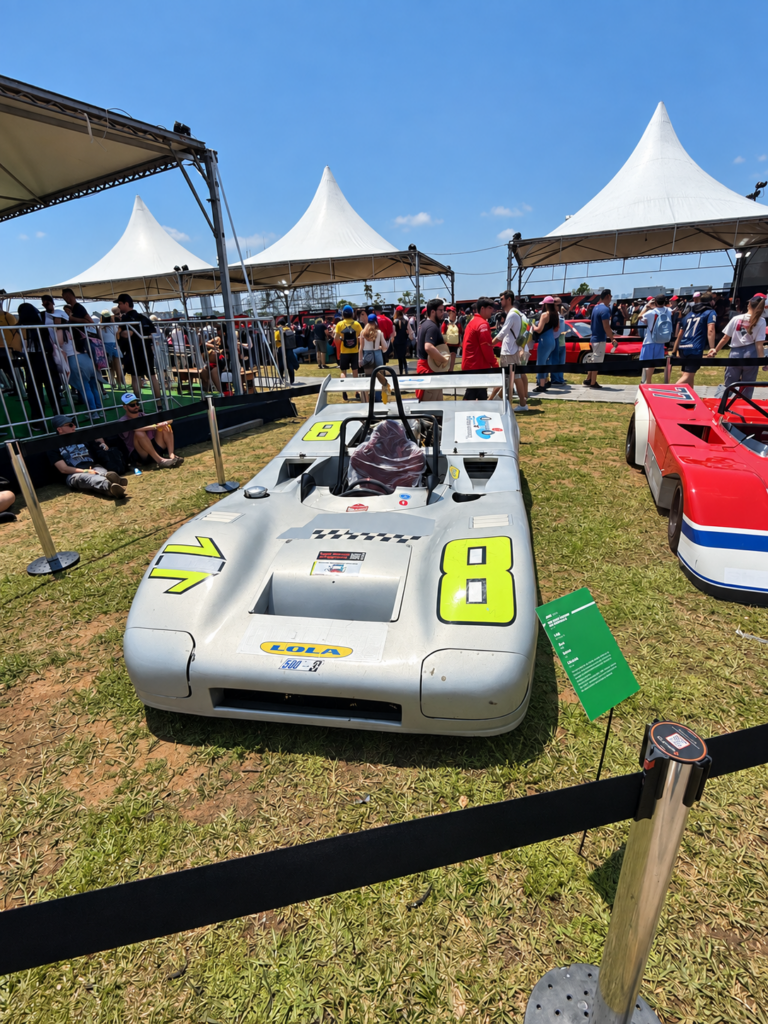
    A silver Lola racing car with a bright number 8 displayed beside another racing car and white tents.
    I used to hate history. Now I stop for the cars, the stories and everything that came before.

    The Formula 1 Community is Why I Keep Coming Back: You Don’t Have to Support the Same Driver to Belong
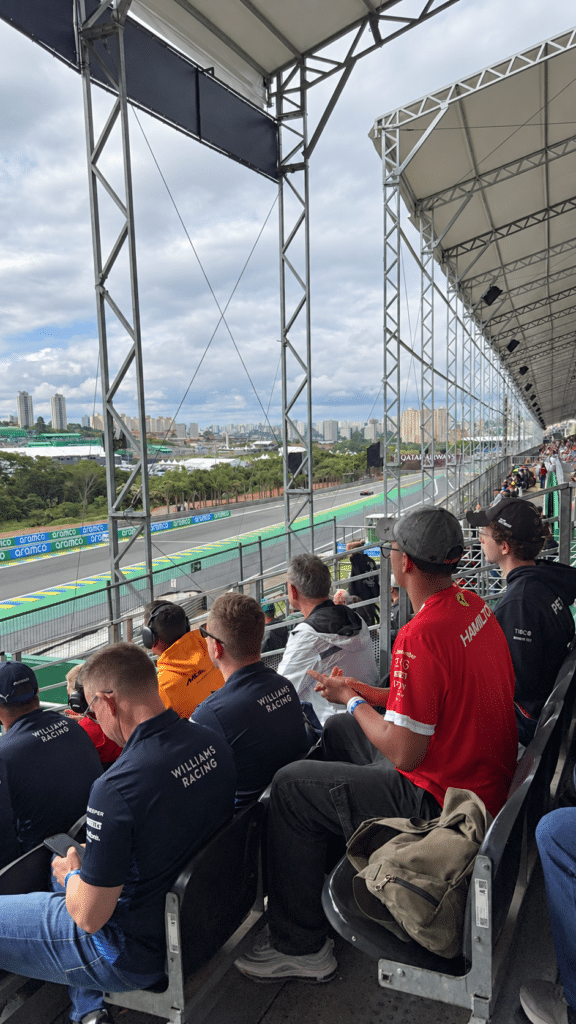
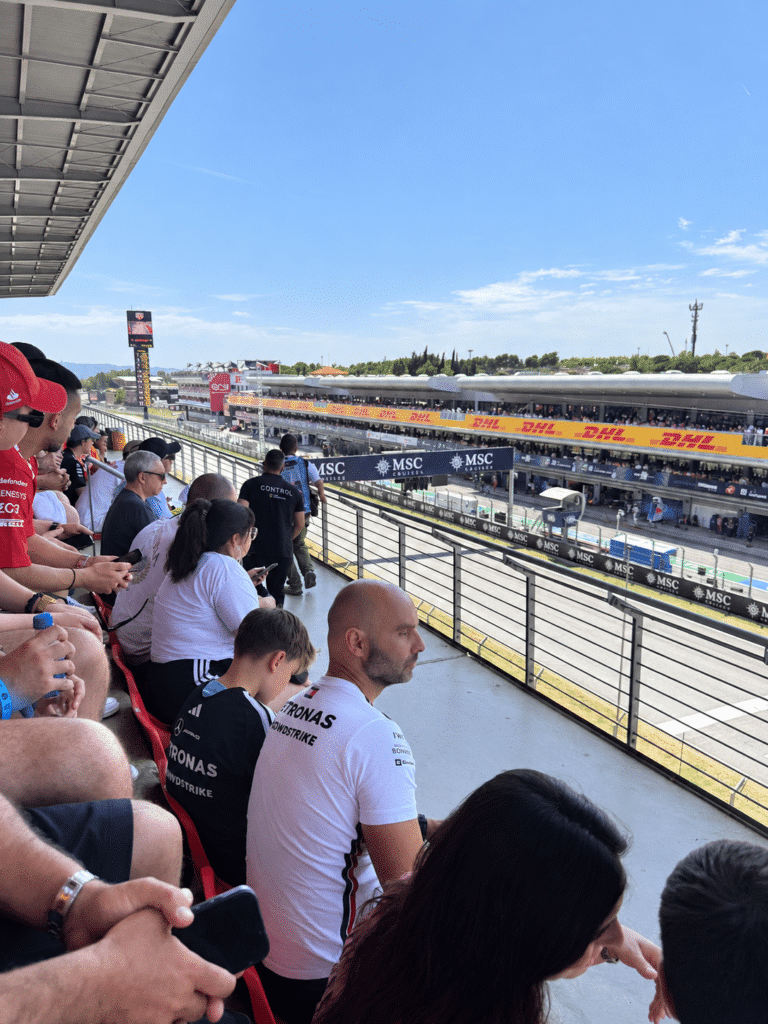
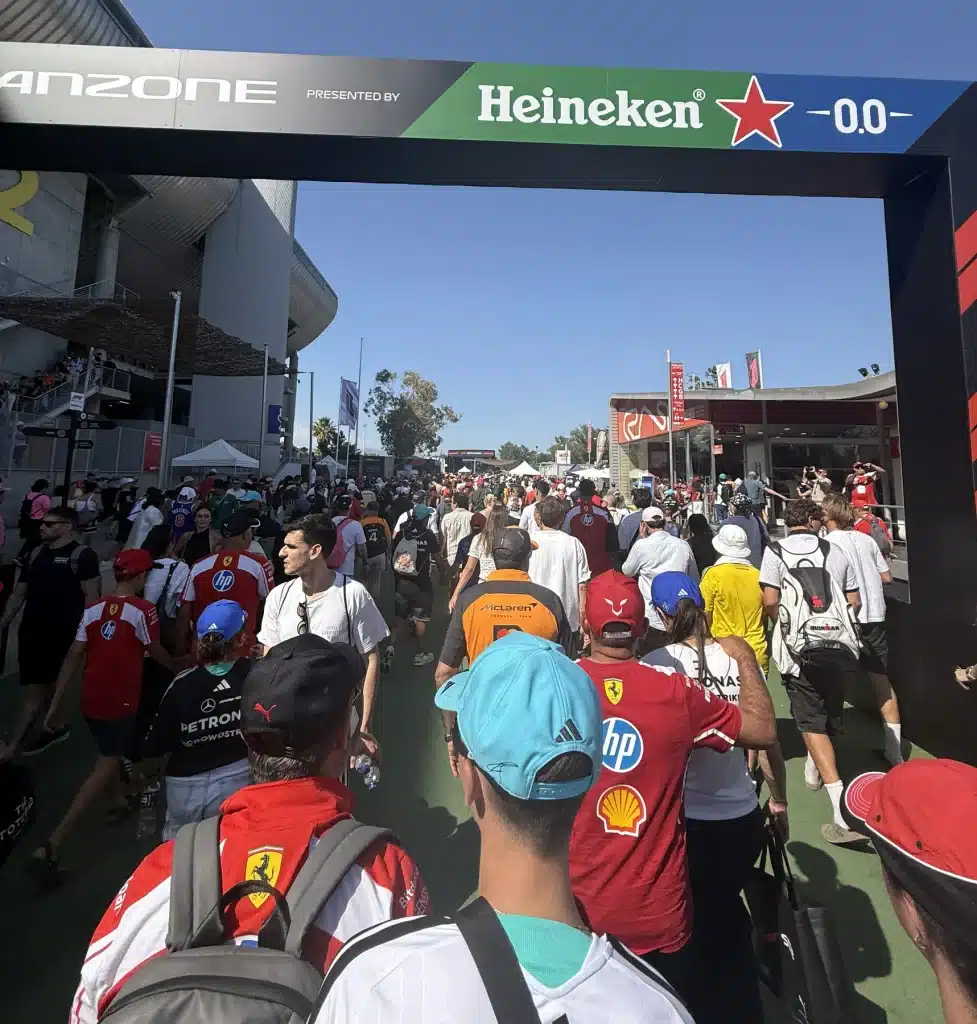
    Why I Love Formula 1 Fans wearing clothing from different Formula 1 teams gather in a covered grandstand at Interlagos.
    It doesn’t matter who you support. It matters that you love F1.

    I’ve attended races in the United States, Canada, Brazil, and Spain. One thing that keeps standing out is how people treat each other.

    I have never personally seen a fight at a race over which team someone supports. You hear about rivalries turning ugly in football, soccer, baseball, and basketball. My experience at Formula 1 has been people supporting different teams and still enjoying the weekend together.

    I’m describing what I’ve experienced. It’s a big part of why I keep going back.

    It doesn’t matter who you support. Being an F1 fan is enough.

    Sometimes a conversation starts with, “Did you see Senna back in the day?” Suddenly, someone is sharing a race they’ll never forget, and you’re telling them about yours.

    For me, a race is one of the few places where I meet people from across the world simply by sitting beside them or waiting in line. For someone who doesn’t always find it easy to strike up a conversation, that matters.

    The connection is already there.

    In the grandstands, you might have someone on one side whose net worth has more zeros than you can imagine, and someone on the other who saved for months and made real sacrifices to attend.

    You might never know which is which.

    For those three days, they’re discussing the same drivers, debating the same decisions, and jumping out of their seats for the same overtake. People whose lives might rarely intersect outside the circuit can spend an entire weekend bonding.

    A person’s budget doesn’t tell you how much they love the sport.

    Why I Love Formula 1: The People Are Part of the Experience
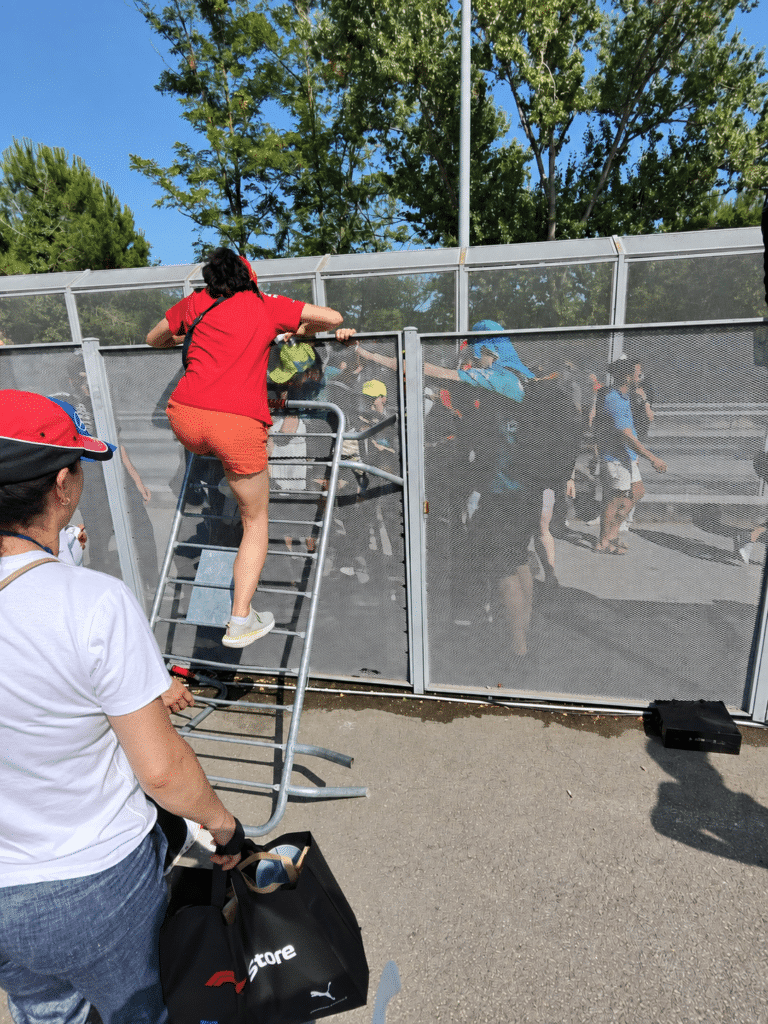
    Why I Love Formula 1 Spectators helping one another cross a circuit fence using a metal divider in Barcelona.
    Barcelona, strangers helped each other through a chaotic exit. That part of the weekend stayed with me too.

    In Spain, we got caught in the congestion of people trying to get onto the track while we were trying to leave. We ended up using a divider as a makeshift ladder to get over a fence.

    It was chaotic. What stayed with me was how everyone helped each other get out.

    In São Paulo, when I joined the crowd going onto the track, people around me made sure the little kids didn’t get crushed in the rush. Even in all that excitement, they were looking out for the children around them.

    And the connections don’t end at the circuit.

    On a flight back to Brazil, I made friends with a man about ten years older than me. He has three daughters and takes each of them individually to races. We talked for most of the flight.

    That stayed with me. Each daughter gets her own trip with her dad, her own time with him, and memories they can share.

    There we were, two people on a plane who found enough common ground through Formula 1to spend hours talking.

    I feel that same connection at watch parties and car shows. We talk about the cars, the drivers, and the racing. People who might otherwise walk past each other suddenly have a reason to stop and talk.

    Sometimes All It Takes Is a Pair of Ferrari Shoes

    I don’t have to be at a circuit for Formula 1 to connect me with someone.

    I own Ferrari, Red Bull, Mercedes, and McLaren gear, and I wear it a lot. I wear Ferrari Puma shoes to work every day.

    People notice. A shirt, a logo, or a pair of shoes can start a conversation with someone I’ve never met.

    It even helped me get invited to an invitation-only omakase experience. The person involved in arranging access had seen my Instagram and wanted to talk about Formula 1. That shared interest helped open the door.

    That’s my world coming together: racing, food, and meeting people through something we both enjoy.

    It doesn’t matter whether we support the same team. We already have something to talk about.

    Even My NASCAR Customers Understand

    I work at a Ford dealership in a very blue-collar area. A lot of my customers are big NASCAR and IndyCar fans. They love American cars and American racing, and they’re proud of it.

    When I tell them I love Formula 1, they respect it. Would they rather get me watching more of the racing they follow? Absolutely.

    But it gives us something to talk about. We can appreciate each other’s enthusiasm without having to choose the same favorite.

    I understand their attachment to American racing. For me, the international side of Formula 1 is a huge part of the attraction.

    I want to experience the world. I want to sit next to someone from another country, hear their story, and share a race weekend with them.

    Formula 1 gives me a reason to do that.

    One Driver, an Entire Team
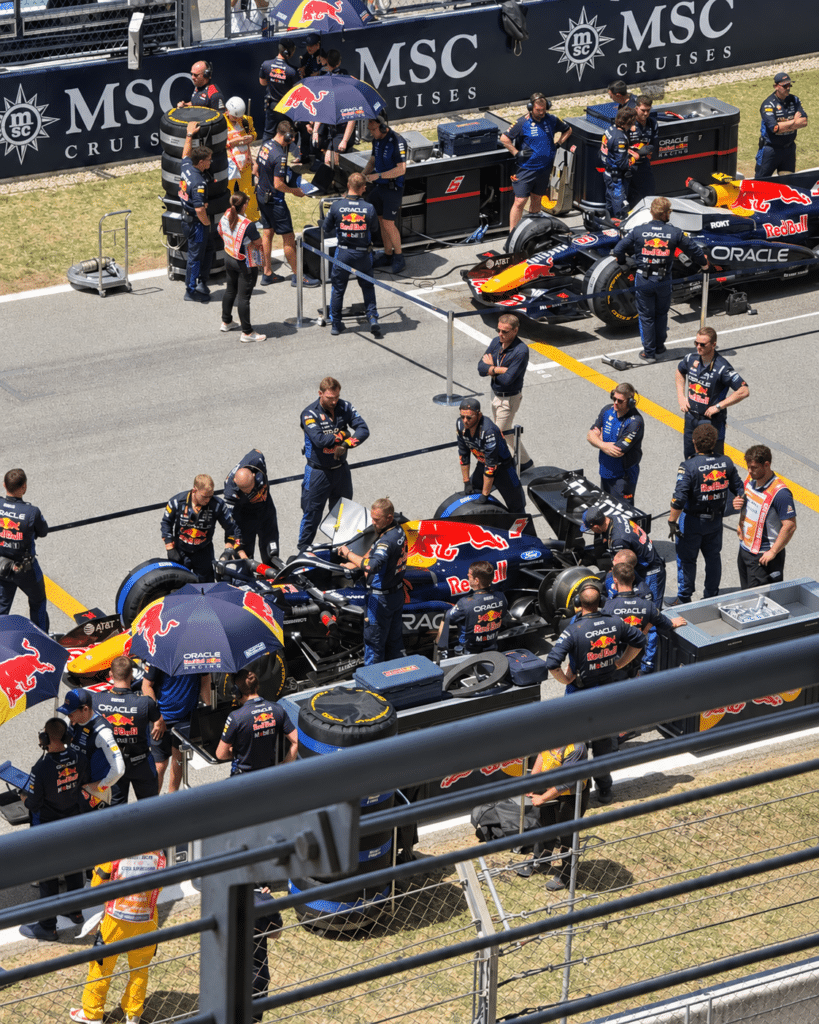
    What makes the racing exciting to me is how many people have to get things right.

    The driver is an athlete competing against some of the best in the world, with someone in their ear helping them make decisions. Behind that driver are the mechanics, engineers, strategists, pit crew, and people back at the factory.

    Then there’s everything happening with the car.

    Tire temperature. Tire wear. Reliability. Setup. When to pit. When to push. When to hold something back.

    The driver has to deliver while processing all of that. The team has to provide the equipment, information, and opportunities to make it possible.

    Other sports depend on teamwork, too. What fascinates me about Formula 1 is how closely the human performance and engineering depend on each other.

    One incorrectly secured wheel or one miscalculation can undo a weekend’s work.

    A fast car can help win a race. A great driver can produce an extraordinary result. Winning a world championship takes a team delivering again and again across a season.

    That’s why I have trouble with dismissing a driver’s success by saying, “They just have the best car.” Building, preparing, and extracting performance from that car is part of the competition.

    The achievement belongs to more people than the person holding the trophy.
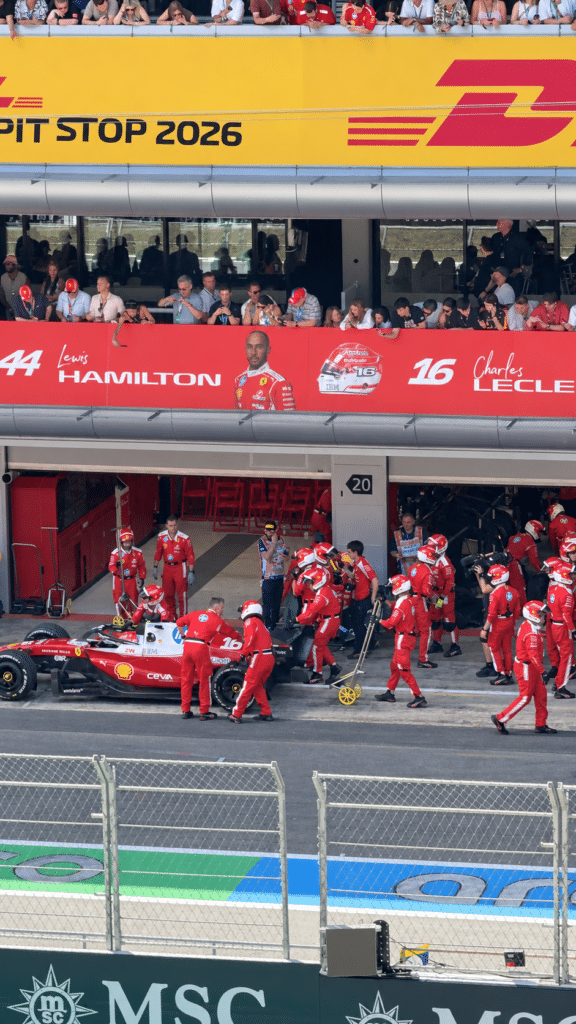
    Why I Love Formula 1 Ferrari mechanics working around a car outside garages marked for Lewis Hamilton and Charles Leclerc.
    There is a whole team behind every lap.

    Why I Relate to Max

    I’m a Ferrari fan. Lewis Hamilton and Charles Leclerc are my drivers. But I’ve also become a huge Max Verstappen fan.

    I can be a no-nonsense person in business and in life. That’s part of what I relate to in the way Max comes across. He’s direct, fiercely competitive, and sometimes an asshole about it. I can appreciate that personality.

    Obviously, I don’t know him personally. But he strikes me as someone I could spend a night bullshitting with over drinks—gin and tonics, or preferably tequila for me.

    Then he could beat my drunk ass on a simulator over and over again.

    I’d love a chance at something like Max versus 100 in karts, too. The aggressive New York–New Jersey driver in me would want to give him a fight for position. Realistically, I suspect he’d be disappearing into the distance while I was still figuring out the first corner.

    But that’s part of being a fan: imagining what it would be like to share the thing you love with someone who does it at a level you can barely comprehend.
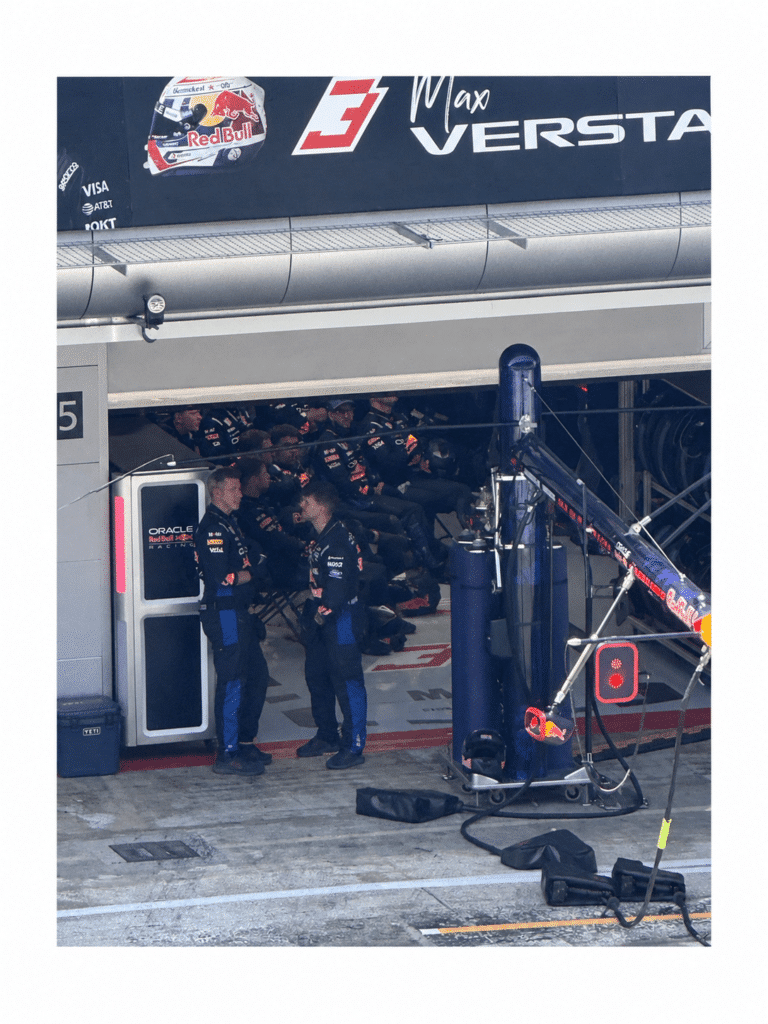
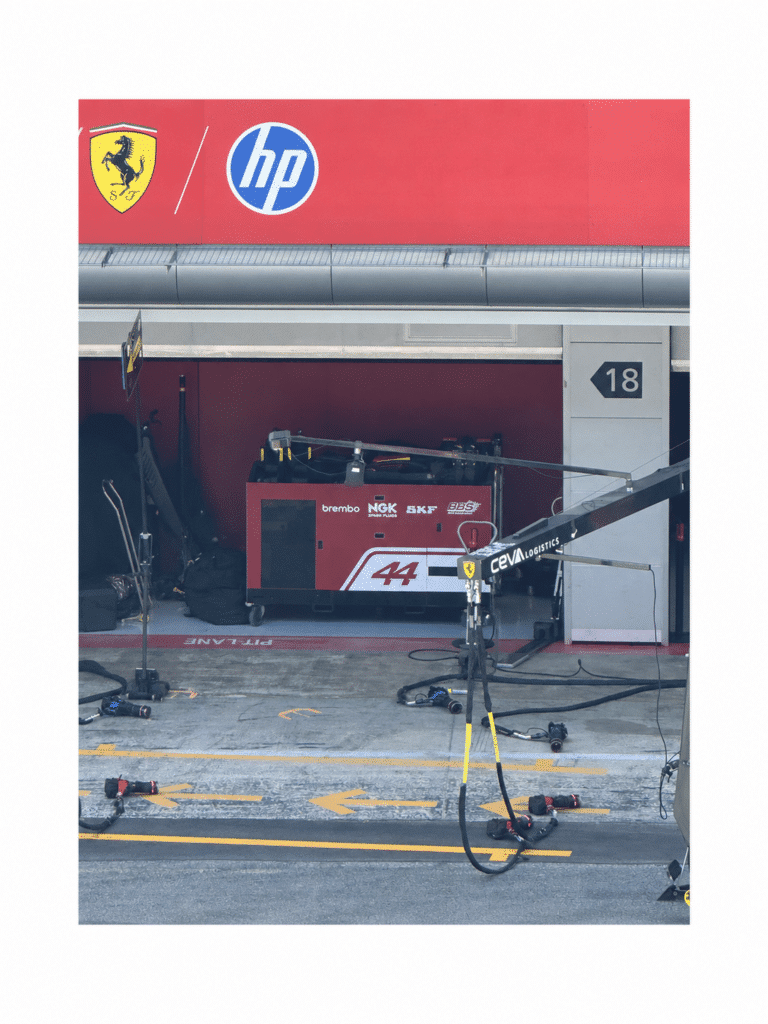
    I Was There for Both Comebacks

    I was at Interlagos in 2024 when Max won from 17th on the grid.

    I was there again in 2025 when he started from the pit lane and finished third.

    Two different races. Two extraordinary recovery drives. I got to witness both in person. Formula 1’s São Paulo recap

    Those are the races I’ll tell my grandnephews about. I’ll be able to say, “I was there.”

    And now I’m going back in 2026.

    I don’t know what this year’s race will bring. That’s part of the excitement. But I know how much it means to return to the place where I fell in love with the sport and the country.

    Why I Love Formula 1: You Can Be Moved by Someone Else’s Win
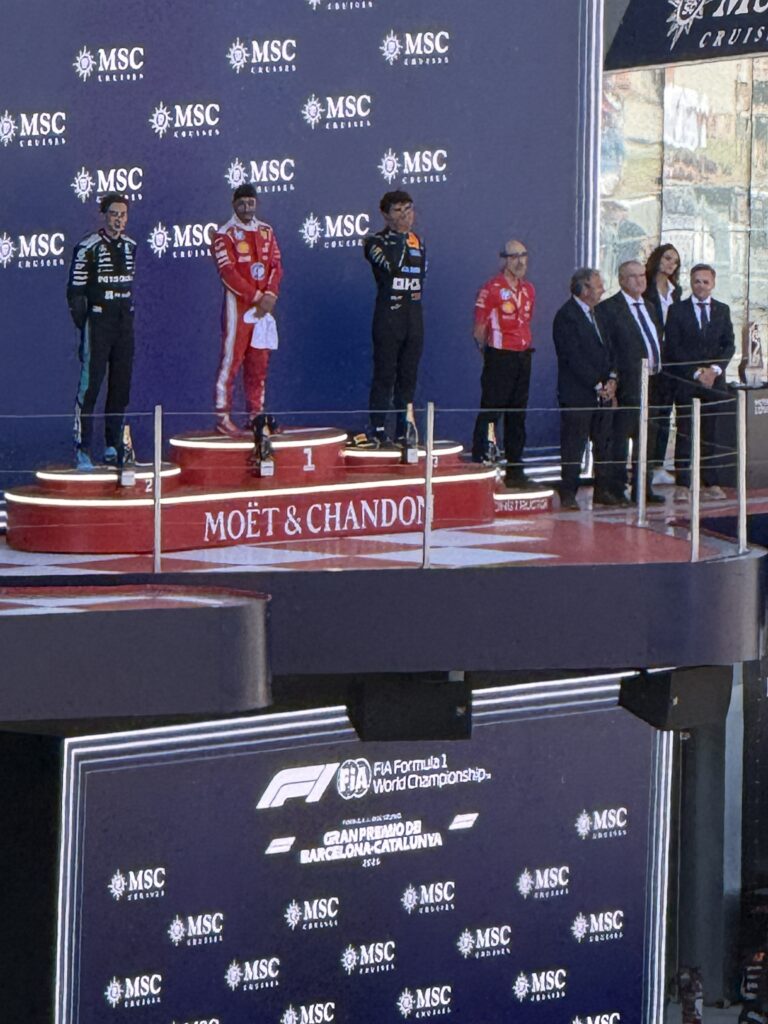
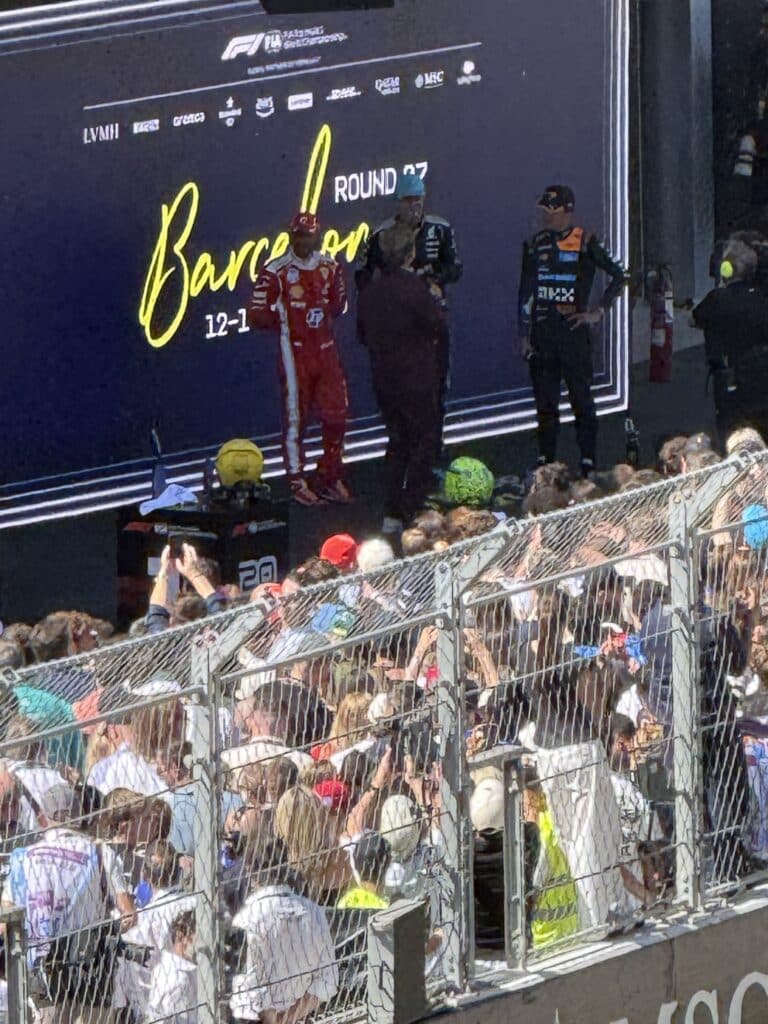
    In Barcelona in June 2026, I teared up watching Lewis win his first Grand Prix in Ferrari red. I was there for a moment I’ll always associate with that trip. FIA’s Barcelona race report

    Then Kimi Antonelli won at Monza from 19th on the grid, becoming the first Italian to win there in 60 years, since Ludovico Scarfiotti in 1966. He was just 20 years old. Formula 1’s Monza report, Reuters

    Would I have preferred Ferrari to win? Of course. It hurt a little that this Italian victory at Monza wasn’t in a red car. I would have loved a Max win, too.

    But Kimi’s moment still touched me.

    I respect Mercedes and McLaren. Kimi, George Russell, Lando Norris, and Oscar Piastri are talented drivers. Recognizing the strength of their cars doesn’t stop me from appreciating what they contribute.

    I’ve also personally watched Max and Lewis go over to congratulate a winner after a long race. When you’ve spent all that time fighting for a result, acknowledging the person who beat you means something.

    There are rivalries, tempers, and disagreements. Of course there are. But I’ve seen respect alongside them.

    I can want my drivers to win and still feel something when someone else achieves an extraordinary result.

    Learning About the Greats

    The more history I read, the more I appreciate the different qualities that make a great driver.

    Michael Schumacher is a perfect example of what I mean about teamwork. Seven world championships tell you about his results. His relationship with Ferrari tells you about his leadership.

    He spent time at the factory, worked closely with engineers, encouraged the people around him, and set an example through his preparation. Alongside the team’s leadership and technical staff, he helped build an extraordinary period of Ferrari success. Schumacher’s career

    Ayrton Senna brings another dimension: intensity, commitment, and skill in difficult conditions. His second-place drive in the rain at Monaco in 1984, racing for the small Toleman team, showed his ability before he became a three-time world champion.

    What stands out to me in his approach is the belief in his abilities and the relentless desire to improve. That’s my interpretation of what I’m learning about him: someone who took his talent seriously and kept asking how much further he could go. Senna’s career and approach

    Niki Lauda returned to racing just six weeks after his near-fatal accident in 1976 and went on to win two more championships. Later, he helped bring Lewis Hamilton to Mercedes. His influence continued long after he stopped driving. Lauda’s life and career

    Jackie Stewart won three world championships and used his position to fight for a safer sport. Looking after the people who race alongside you, and those who will come after you, is a legacy worth respecting. Stewart’s contribution

    And remarkable comeback drives didn’t begin with the drivers I follow today. John Watson won from 22nd at Long Beach in 1983. Rubens Barrichello took his first F1 victory for Ferrari from 18th in Germany in 2000. Kimi Räikkönen won from 17th in Japan in 2005, taking the lead on the final lap. Formula 1’s historic comeback victories

    I’m still learning these stories. That’s part of the enjoyment. Every one gives me another reason to appreciate what I’m watching now.

    Why I Love Formula 1: I Found Athletes Whose Minds Interest Me

    I never really idolized athletes growing up.

    The people who caught my attention were people like Warren Buffett, Steve Jobs, and Bill Gates. I was interested in how they thought, what they built, and how they made decisions.

    Formula 1 gave me athletes whose minds interested me as much as their physical abilities.

    A driver has to process what the car is doing and explain it clearly enough for engineers to act on it, while competing at extraordinary speed. That combination of concentration, judgment, and communication fascinates me.

    Then you learn about their lives outside the cockpit.

    Charles Leclerc plays piano and composes music. He released Dreamers, a collaboration with pianist Sofiane Pamart. That’s another side of someone I already enjoy watching race. Charles’s music

    Nico Rosberg turned down a place to study aeronautical engineering at Imperial College London to pursue racing. He also achieved the highest score recorded at the time on Williams’s engineering aptitude test. Rosberg’s background

    You don’t need a university degree to be intelligent. What interests me is how many different abilities these people bring to their lives and their work.

    What They Give Back Matters

    These drivers live extraordinary lives. There’s money, luxury, travel, and access most people will never experience. I enjoy that side of Formula 1, too.

    I also respect what they choose to give back.

    Senna’s legacy includes his concern for opportunities for children in Brazil. The Instituto Ayrton Senna carries that forward through work supporting public education, educators, and young people’s development. His name continues to mean something beyond the races he won. Instituto Ayrton Senna

    That’s something I admire about Lewis Hamilton, too. I can get emotional watching Lewis win in Ferrari red and also respect what he’s building outside racing.

    Through Mission 44, the charity he founded, he supports efforts to help young people overcome barriers in education and employment. His own experiences helped shape that mission: creating opportunities for people who might otherwise be overlooked. Mission 44

    Max has supported Wings for Life, which funds spinal cord injury research, including through charity memorabilia auctions. A helmet auction is one documented example of turning the demand for something connected to him into support for that work. Wings for Life

    Sebastian Vettel has worked to expand opportunities for women in karting through Race 4 Women. Helping people find a way into the sport is a contribution I appreciate. Vettel’s work

    Lando Norris, the reigning world champion, announced LN4 Fusion and a funded young-driver development programme in September 2026. The programme is intended to provide financial support, coaching, and guidance. Running a team is a business, but helping young talent overcome financial barriers is still worth recognizing. Reuters’ report

    Lando has also spoken openly about his own mental-health struggles through Mind. That work predates his championship. I respect someone who lets people see that success and self-doubt can exist in the same person. Lando’s words for Mind

    We don’t see every private act of generosity. I won’t pretend to know everything these drivers do away from the cameras. The work we can see gives me plenty to admire.

    And the next generation is already developing. Kimi Räikkönen’s 11-year-old son, Robin, has signed with Red Bull’s driver development programme, with his involvement officially beginning in 2027. He’s still a kid in karting, with his own path ahead of him, but the possibility of watching another Räikkönen work toward Formula 1 is exciting. Formula 1’s announcement

    Someday, my grandnephews might be telling me about the drivers they follow. I’ll have my own stories to share.

    Ferrari Opened the Door. The Whole Sport’s Heritage Keeps Me Interested.

    The more I learn, the more I appreciate the history beyond Ferrari.

    Lotus deserves a place in that conversation. Colin Chapman’s team combined talented drivers with engineering ideas that changed the sport. Seven Constructors’ Championships demonstrate its success; its pioneering ground-effect work shows its influence. Drivers including Jim Clark, Graham Hill, Emerson Fittipaldi, and Mario Andretti became world champions in Lotus cars. Lotus’s heritage, Its engineering influence

    McLaren began with Bruce McLaren establishing his own team in 1963. Decades later, people are still working, racing, and winning under his name. McLaren’s heritage

    Some of today’s teams also have histories you wouldn’t guess from the name on the garage.

    The modern Mercedes operation’s ownership lineage runs through Tyrrell, BAR, Honda, and Brawn GP. Brawn competed for one season in 2009 and won both championships before becoming Mercedes.

    Today’s Aston Martin operation traces its roots through Jordan, Midland, Spyker, Force India, and Racing Point.

    And here’s a connection I particularly appreciate working at a Ford dealership: Red Bull’s operation began as Ford-backed Stewart Grand Prix before becoming Jaguar Racing under Ford’s ownership. Red Bull took over and began racing under its own name in 2005. Formula 1’s team histories

    Learning those connections changes how I look at the grid. Behind a team can be decades of ambition, difficult seasons, new owners, breakthroughs, and people determined to keep racing.

    The same happens when I read about a circuit. Knowing what happened there gives the place meaning before I even arrive.

    When Ferrari’s Cars Became a Gesture of Respect

    Sometimes a team’s most memorable gesture has nothing to do with winning.

    At Monza in September 2001, just five days after the attacks in the United States, Ferrari removed its sponsor logos and painted the noses of its cars black. Michael Schumacher and Rubens Barrichello raced those cars as a tribute to the victims. The story of Ferrari’s tribute

    An Italian team, at its home Grand Prix, made a visible gesture of mourning for people across the Atlantic.

    That means something to me.

    In a sport surrounded by advertising, prestige, and celebration, those cars expressed grief and respect. It’s another part of the history that helps me understand why people form such deep attachments to these teams.

    I Love Hospitality. I’m Beginning to Prefer the Grandstands: Why I Love the Grandstand Experience

    I’ve paid for paddock access and hospitality. I enjoy those experiences.

    I like air conditioning. I like comfortable seats. Put me at a hot circuit for an entire weekend and I will absolutely appreciate somewhere cool to sit down.

    I’ve also found that even the higher-end hospitality crowd, which can sometimes feel stuffy in other settings, loosens up around Formula 1. There’s a race to discuss, a driver to cheer for, or a strategy decision everyone has an opinion on.

    That shared interest makes conversation easier.

    But I’m beginning to prefer the grandstands.

    I love being around the other fans. The conversations, the camaraderie, the shared excitement. I also get to experience something of the country through the people who call it home.

    I can’t always afford tickets costing $10,000, $20,000, or $30,000. And the more races I attend, the more I realize that the grandstands give me something I actively want.

    You don’t need a hospitality package to feel part of Formula 1. I’ve experienced that in Sector G at Interlagos and seen it among the fans watching from the grass in Barcelona.

    There are different ways to experience a race at different budgets. Travel still takes planning, and affordability varies from person to person. But the most expensive ticket doesn’t buy you more passion.

    I’ve experienced F1 travel on different budgets, and the most expensive ticket hasn’t always given me the best memories.

    My Mont Bar Barcelona Experience -Blog

    Give Me a View of the Track
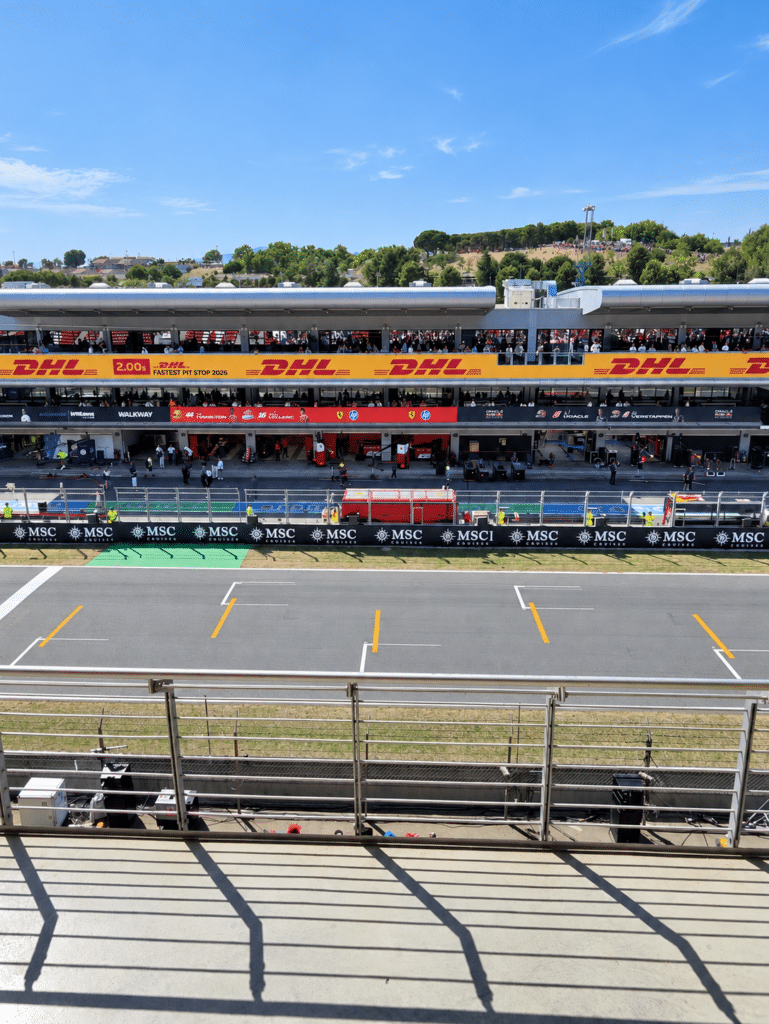
    The people I went to Barcelona with were counting rows, working out where we should sit next time to get more shade.

    I understood what they were doing. But my reaction was: fuck that, I loved our seats.

    We were in the second row of the grandstand’s second level. There was only one row of people in front of us. I wanted a view of the track, a screen if possible, and a fun trip wrapped around the race.

    I’ll sweat in the Spanish summer sun for that.

    And I made the most of being there. I walked more than 12 miles on each of those days. There was roughly a two-mile walk to the circuit, and I spent hours walking around once I was inside.

    When the cars weren’t running, I was exploring. Looking around the circuit, checking out different areas, and taking in the people and atmosphere.

    I loved that part just as much.

    What I particularly enjoyed in Barcelona was how much of the spectator grounds I could explore with my ticket. Compared with my experience in São Paulo, I had much more freedom to wander. That didn’t mean access to the paddock or every restricted area, but it gave me a lot to discover beyond my own seat.

    For me, a race weekend includes all of that. I want to watch the racing, walk around, meet people, and experience the place.

    The circuit, the crowd, the city. This is the view I keep coming back for.

    Turning My Passion into Grand Prix Travel Planning: I Tried to Build a São Paulo Group Trip. It Didn’t Happen.

    I’ve tried to turn this passion into something I can share with other people.

    I put together a high-end São Paulo trip built around Formula 1. I wanted to bring a group there and show them the city, the food, the culture, and the people who made me fall in love with it.

    Why Evvai is my favorite restaurant in the world – Blog Post

    I didn’t get that group trip off the ground.

    I failed at that attempt, and I’m not going to pretend otherwise. But I’m not stopping. I still offer that trip and help planning it.

    Along the way, I’ve been able to plan trips for people to Montreal, Texas, São Paulo, Barcelona, Monza, and a few other circuits. Even without bringing a whole group to Brazil, I’ve helped people experience the sport and the destinations around it.

    Now I’m reworking and rebranding what I offer. My goal is eventually to help people travel to every race, with options across a much wider range of budgets.

    Give me a $2,000 budget or a $200,000 budget, and I want to explore what’s possible. Those are very different trips. The race, departure point, flights, and number of travelers will determine what works.

    I won’t promise every race fits every budget. I want to find the opportunities.

    I know what a beautiful hotel and a hospitality suite can add to a weekend. I also know what it feels like to stand in Sector G in a plastic poncho and have the experience change your life.

    I want to help other people find their version of that.

    Spain Was Amazing. I Also Spent Way Too Much.

    My personal goal is to return to São Paulo for the race every year and visit at least one other circuit.

    Family, finances, and schedules will have a say. I won’t always be able to do everything I want. But I’ll do what I can.

    This year, I had an amazing nine days in Spain. I ate at incredible restaurants, explored some great places, and experienced a race weekend I’ll never forget.

    I also spent way too much money. If I put the total here, plenty of people would think I’d lost my mind.

    The race tickets were less than €1,000. I spent more than that at the track on helmets and souvenirs alone.

    That’s worth admitting in a conversation about Formula 1 travel. The race ticket wasn’t what sent my spending through the roof. My choices did.

    The restaurants, shopping, and extras were things I wanted. They weren’t requirements for enjoying the race.

    I spent enough that I nearly had to miss Brazil.

    At one point, I was prepared to go to São Paulo and watch the race on television. I wanted my feet on the ground in a city I love, feeling the energy of race weekend, even if I couldn’t get to the circuit.

    But I worked my ass off and made it happen. I’m going.

    Live the Fuck Out of Life as You Can

    If I want more race weekends, I can make different spending decisions—or find ways to make more money.

    Honestly, I prefer the second option.

    That’s how I’ve approached most of my life. I’ve worked my ass off, sometimes way too much. Now I want that work to fund something I love. Hopefully, I can build a way to earn a living through that passion, too.

    Over the last five years, Formula 1, travel, and food have changed what I want.

    I’m less interested in accumulating possessions, buying a bigger house, or owning more land. I want time in places I haven’t been. Meals I’ll remember. Race weekends with people I haven’t met yet.

    You can’t take any of this with you. But while you’re here?

    Live the fuck out of life as you can.

    “As you can” matters. I have family responsibilities, bills, a job, and limits like everyone else. Some years will allow more than others. I want to make the most of the opportunities I do have, while working toward more.

    Learning about Senna’s commitment and seeing Hamilton use his success to create opportunities makes me think about what I want to do with my own life.

    I’m not comparing planning someone’s vacation to changing access to education. But I understand the desire to take something that matters to you and make it useful to someone else.

    For me, that can start with helping someone experience a race, discover a country, or feel confident taking a trip they’ve been putting off.

    And it starts with allowing myself to live, too.

    Sometimes that means a beautiful hotel and an incredible dinner. Sometimes it means sweating in a grandstand, walking miles around a circuit, or dancing in the mud with people whose language I don’t speak.

    I’ve felt completely alive doing all of those things.

    I’m 44. My goal is to spend three to five weeks a year traveling internationally and grow that over time. Local exploring is something I can do on weekends. I want more opportunities to experience other countries and continents.

    If I had work I could do from anywhere, I’d love to follow the calendar and attend every race. I’d even stay in hostels to make it happen.

    Private room and private bathroom, of course. Let’s not get carried away.

    I still prefer a nice hotel.

    Eventually, I’d love a life where home is a small base: somewhere to keep my seasonal clothes, recharge for a weekend or a week, and prepare for the next trip.

    I may have to keep working for the rest of my life. I hope I can make that work something I love, something that brings me closer to the experiences I want.

    I don’t want to keep postponing them until some perfect future when I finally have enough money or enough free time.

    Something Worth Carrying Forever

    I don’t have any tattoos.

    I could never think of something I wanted on my body forever. I don’t have children. I could definitely see myself getting a tattoo of the pets who have meant so much to me, but until now, I haven’t taken that step.

    Now I want to start marking the places and experiences that have become part of my life.

    Flags of countries I’ve visited. The outlines of circuits where I’ve attended races. Something I can look at and remember being there.

    Maybe a 44, for Lewis Hamilton and the age when I really began to understand the man I’ve become. Maybe a 3, for Max and the relentless competitive mentality I relate to. Maybe Senna’s helmet or Schumacher’s.

    I’m still deciding what those tattoos will look like. But for the first time, I have things I want to carry that way.

    One Senna quote that speaks to me is:

    “I have no idols. I admire work, dedication and competence.”

    That wording appears in McLaren’s tribute to him. It puts into words something I’ve been trying to explain about the people I admire: the work, the ability, and the commitment behind their achievements. McLaren’s Senna tribute

    His insistence on giving something your full effort resonates with me, too. I believe in my abilities. I also believe I can improve, and I intend to keep finding out how much further I can go.

    About ten years ago, I took a step back in my career to build my property management and cleaning company.

    That business has been doing well, and it no longer needs me to be as involved in the day-to-day work. That gives me a choice about where I put my time and energy next.

    I could pursue the same kinds of positions I held before. I know what it takes to build a successful operation because I’ve done it.

    Instead, I’m choosing to build my Formula 1, travel, and food blog into a career because I truly love it.

    The results may take longer. The money may be less immediate. But I want to put my experience, intelligence, and drive into something I’m excited to keep building—something that brings together racing, travel, food, hospitality, and helping other people experience the world.

    There will still be hard work. I’m comfortable with that. What’s different is how much I want to do this work and where I hope it will take me.

    That’s why “Live the fuck out of life as you can” means so much to me. I’ve spent years building businesses and a career. Now I want to use what I’ve learned to build a life around the things I love.

    A flag or a circuit outline would remind me of somewhere I actually went. People I met. A weekend I made happen. A moment when I felt fully present.

    For years, I couldn’t think of anything I wanted on my body forever.

    Now I’m building a life full of things I don’t want to forget.

    The Career I built and passion I found – Blog

    Formula 1 beyond the circuit – Blog

    No Regrets. More Races.

    Sometimes I wish I’d discovered this passion in my teens. Maybe I would have made different career decisions. Maybe my life would have taken a completely different direction.

    But working at Ferrari helped bring me here. So did the people I met, the jobs I held, and the trips I eventually took.

    The life I’ve lived made me the person who appreciates all of this today.

    I wish I’d found it earlier. I don’t regret the life that led me to it.

    Now I want to keep going for as long as I can. Another race. Another country. Another continent.

    Maybe another planet.

    Hopefully Elon gets Formula 1 to Mars before I die. It doesn’t even have to be cars. I’ll watch them race space shuttles.

    Just give me a grandstand and some people who love it as much as I do.

    And until then, I’ll keep trying to get back to São Paulo—to the place where strangers made room for me under a tent and helped turn an interest into a passion.

    Our sport. Our passion. Our people.
    Ponchos on. Nobody was done enjoying the weekend. Our sport. Our passion. Our people.
  • Unveiling the 2025 Formula 1 Car Liveries: A Spectacular Fusion of Innovation and Tradition

    The 2025 Formula 1 Season: A Thrilling New Chapter

    The countdown to the 2025 Formula 1 season has ignited excitement across the motorsport community. Teams are showcasing futuristic car designs and liveries that blend a proud legacy with cutting-edge technology. If you’ve been eagerly following every sneak peek, here’s your all-in-one guide to the biggest announcements—complete with links to official galleries and insider analysis.

    1. From Silver Arrows to the W16: Mercedes’ 2025 Challenger
    Mercedes Unveil New 2025 Car as W16 Breaks Cover

    Mercedes has pulled back the curtain on the W16, signaling another step forward in aerodynamics and powertrain technology. Building on the team’s championship-winning pedigree, the W16 features:

    • Sleek sidepods sculpted to minimize drag
    • Refined hybrid power unit that promises greater efficiency without sacrificing performance
    • Iconic livery that merges the heritage silver base with teal highlights, giving a nod to its Petronas partnership

    With Mercedes’ consistent record of championship success, the W16 is poised to spark an intense battle at the front of the grid throughout 2025.

    2. Aston Martin’s AMR25: Elegance Meets Aggression
    Gallery: Check Out All the Angles of Aston Martin’s New AMR25 Car

    Continuing its mission to become a top contender, Aston Martin has rolled out the AMR25, marked by:

    • Signature British Racing Green with neon-lime accents that emphasize aerodynamic contours
    • Fluid aerodynamic features aimed at maximizing downforce while trimming unnecessary drag
    • Luxury design elements that reflect Aston Martin’s refined brand image

    Fans looking to get up-close and personal with every curve and detail will appreciate the extensive photo gallery linked above.

    3. Ferrari’s 2025 Debut – With a Twist
    Ferrari F1 2025 Car Debut: Lewis Hamilton & Charles Leclerc – What We Learned

    Ferrari has always commanded a special place in F1 lore, and the 2025 season is no exception. This in-depth piece from The Race sheds light on key points:

    • Car Launch Takeaways: How the newest Ferrari incorporates next-gen aerodynamic elements and a bold evolution of the Rosso Corsa livery
    • Driver Line-up Analysis: Speculation around Lewis Hamilton and Charles Leclerc underscores Ferrari’s ambition to reclaim championship glory
    • Technical Innovations: Insights into engine developments, rumored performance gains, and how the team plans to bridge any gaps to its top rivals

    With a storied history behind them, the Scuderia’s 2025 outlook is bound to stir plenty of debate—and excitement—among Tifosi worldwide.

    4. Complete 2025 Livery Overview
    In Photos: Every 2025 F1 Car Livery After Their Spectacular Launch

    If you’re a fan who needs to see every car in one place, this comprehensive roundup delivers high-resolution images of every 2025 livery. The gallery provides:

    • Close-up angles that highlight new design elements and sponsors
    • Under-the-lights shots showing how reflective and matte paint finishes look during night races
    • Team-by-team comparisons so you can decide which livery truly stands out this season

    From McLaren’s unmistakable papaya-and-blue combo to Red Bull’s signature navy with fluorescent accents, this showcase has something for every style preference.

    Key Features Defining the 2025 Liveries

    1. Aerodynamic Emphasis
      Teams now use livery stripes and color gradients not just as decorative elements, but also to underscore critical airflow paths.
    2. High-Tech Paint and Materials
      Lightweight paints, reflective decals, and matte finishes help reduce weight and improve the car’s aerodynamic profile.
    3. Brand Heritage, Modern Execution
      Most teams blend legacy color schemes with futuristic design elements, striking a balance that resonates with both new fans and long-time supporters.
    4. Driver Line-up Synergy
      The presence of established world champions and rising stars generates excitement and influences how each brand positions its livery to reflect driver personalities.

    Why These Reveals Matter for F1 Fans and SEO

    • Timely Coverage: Blog posts on the latest F1 car reveals rank well when people are actively searching for news and photos of upcoming seasons.
    • Authoritative Links: Referencing official sources (Formula1.com) and respected outlets (The Race) signals credibility to both readers and search engines.
    • Engaging Visuals: High-quality images keep visitors on your page longer—a factor that can boost your site’s search engine ranking.

    Looking Ahead to 2025

    With these spectacular liveries now public, the stage is set for a competitive and visually stunning 2025 Formula 1 season. As technical regulations evolve, teams will push aerodynamic and powertrain innovations to gain that elusive performance edge. Whether you’re rooting for Mercedes’ polished Silver Arrows, Aston Martin’s refined green machine, or a resurgent Ferrari team, one thing is certain: the battles ahead promise to be as fierce as ever.

    Stay tuned for more updates, interviews, and insights as we head toward the first Grand Prix of 2025—where these remarkable cars will finally unleash their potential on the track!

  • Lewis Hamilton’s “Red-Letter” Start: How the Seven-Time Champion Is Adapting to Ferrari in 2025

    Lewis Hamilton’s highly publicized move to Ferrari for the 2025 Formula 1 season has taken center stage once again, as the British driver begins preseason testing with the iconic Scuderia. Early reports from The Guardian, Formula1.com, and The New Indian Express shed light on how the seven-time world champion is settling into his new surroundings—and how those red overalls feel after years in Silver.

    1. A “Red-Letter Day” for Hamilton

    Rejuvenated and Raring to Go

    According to The Guardian, Hamilton’s first official outing in the Ferrari was nothing short of a “red-letter day.” Despite his storied success at Mercedes, Hamilton appears invigorated by the new environment, relishing the chance to chase an eighth world title with Formula 1’s most famous team.

    Fan Reaction

    • Tifosi Delight: Ferrari’s passionate fanbase—known as the Tifosi—has eagerly awaited the arrival of a proven champion to help restore the team’s winning legacy. Hamilton’s presence has already ramped up energy levels around Maranello.
    • Driver’s Own Words: Hamilton told reporters he feels “refreshed” and “energized,” hinting that the new challenge aligns perfectly with his competitive spirit.

    2. Meticulous Preparation on Display

    Behind the Scenes at Maranello

    In a feature by Formula1.com, insiders detail Hamilton’s approach to this transitional phase—studying Ferrari’s simulator data, collaborating closely with engineers, and fine-tuning his driving style to suit the team’s 2025 car design.

    Key Takeaways

    • Technical Adaptations: Reports suggest Hamilton is eager to apply lessons learned from his Mercedes days to optimize Ferrari’s chassis and power unit.
    • Team Synergy: Hamilton’s ability to foster quick rapport with the Ferrari mechanics and staff has impressed both the paddock and the fans. Observers note a palpable excitement radiating from the garage.

    3. Preseason Testing Begins

    A Fresh Start on Track

    As The New Indian Express reports, Hamilton officially kicked off 2025 preseason testing in Ferrari’s red machine. Early lap times looked promising, though insiders caution that raw testing data can be misleading.

    What to Watch

    1. Car Reliability: Ferrari has invested heavily in engine reliability improvements after a few hiccups in past seasons.
    2. Hamilton-Leclerc Dynamic: With teammate Charles Leclerc also on hand for testing, fans are eyeing the on-track chemistry between these two title contenders.
    3. Long-Run Pace: While single-lap times often grab headlines, extended stints give a clearer indication of a car’s race-day performance.

    4. Hamilton’s Goals and Ferrari’s Title Aspirations

    Championship Hopes

    Hamilton’s arrival symbolizes a renewed push for a Drivers’ Championship that has eluded Ferrari for over a decade. With the Brit eager to claim an eighth title—surpassing Michael Schumacher’s record—the stakes could hardly be higher.

    Potential Shifts in the Grid

    • Mercedes’ Response: After losing their star driver, the Silver Arrows face a rebuilding challenge in the wake of Hamilton’s departure.
    • Red Bull and Others: With Hamilton stirring competition at Ferrari, teams like Red Bull, Aston Martin, and McLaren will aim to rise to the occasion, adding another layer of excitement to 2025.

    5. Tips for Following Preseason Action

    1. Monitor Multiple Sources: Compare updates from outlets like The Guardian, Formula1.com, and The New Indian Express for a well-rounded perspective.
    2. Look Beyond Headlines: Lap times in testing don’t always translate into race-day success. Car setups, tire compounds, and weather conditions can influence performance.
    3. Focus on Hamilton’s Feedback: The driver’s early impressions on car balance and handling often predict in-season development strategies.

    Final Thoughts

    Lewis Hamilton’s move to Ferrari for 2025 has already injected fresh intrigue into Formula 1’s preseason. With encouraging early feedback, methodical prep work, and new dynamics in the Ferrari camp, the seven-time champion seems poised to make an impact. Whether this collaboration can deliver Ferrari’s long-awaited championship remains to be seen, but the early signs point to an electrifying season ahead.

    Stay tuned for more in-depth analyses and day-to-day coverage from:

    No matter how the final standings shake out, Hamilton’s first laps in Ferrari red signal a fascinating new chapter for both driver and team—one that could reshape the competitive landscape of F1 for years to come

  • F1 2025 Pre-Season Testing Day One: Key Insights and Takeaways

    The 2025 Formula 1 pre-season testing has kicked off with a flurry of activity, and day one is already offering a glimpse into what the new season might hold. Motorsport experts and fans alike are buzzing with excitement as teams fine-tune their machines ahead of the championship battles. In this post, we compile and analyze insights from leading sources to give you a comprehensive recap of day one.

    Key Takeaways from Day One Testing

    Nine Things We Learned – Insights from The Race

    The Race detailed nine pivotal takeaways from the opening session. Their analysis highlights:

    • Performance Trends: Early indicators of car performance, with certain teams showcasing improved aerodynamic efficiency.
    • Setup Innovations: How teams are experimenting with new setups that could play a crucial role once the season starts.
    • Reliability Issues: Initial testing also revealed areas where teams need to focus on reliability as they push the limits of the 2025 regulations.

    Bahrain’s Day One – What Formula1.com Has to Say

    According to Formula1.com, Bahrain’s testing session provided valuable data on:

    • Thermal Management: How teams are tackling the challenges of managing tire temperatures in Bahrain’s climate.
    • Driver Feedback: Early comments from drivers that could hint at mid-season development paths.
    • Competitive Parity: The session underscored that while some teams appear ahead in certain areas, the field remains closely contested.

    Five Essential Observations from DMarge

    DMarge distilled the testing action into five key observations:

    • Aerodynamic Shifts: Notable changes in aerodynamic packages, suggesting teams are adapting to new technical regulations.
    • Power Unit Performance: A closer look at the performance of hybrid power units, with some teams finding a better balance between power and efficiency.
    • Data-Driven Adjustments: How engineers are leveraging simulation data to make rapid in-field adjustments.

    Detailed Analysis by Total Motorsport

    For those wanting a deeper dive, Total Motorsport provided a comprehensive review of the session’s technical and strategic insights:

    • Chassis and Handling: Observations on chassis stiffness and handling characteristics that may set the stage for future developments.
    • Team Strategies: An analysis of how different teams are approaching testing with a focus on long-run performance versus qualifying pace.

    Live Updates from BBC Sport

    Finally, BBC Sport’s live coverage kept fans updated in real time, capturing the dynamic environment of day one:

    • On-Track Developments: Continuous updates on lap times, weather conditions, and any unexpected technical issues.
    • Fan Engagement: Real-time commentary that brought the excitement of the track directly to fans worldwide.

    What Does This Mean for the 2025 Season?

    Building Momentum:
    The early data from testing suggests that teams are on the right track in adapting to the new 2025 regulations. With innovative setups and engine improvements already in play, the groundwork is being laid for an intensely competitive season.

    Areas of Focus:
    While performance gains are evident, reliability remains a crucial area. Teams that balance raw speed with durable engineering will likely emerge as the season progresses.

    Competitive Edge:
    The close performance margins seen during testing indicate that the title fight could be as unpredictable as ever. With every team making strategic tweaks, fans can expect fierce battles on race day.

    Final Thoughts

    Day one of F1 2025 pre-season testing has set the stage for what promises to be an exhilarating season. From aerodynamic innovations and power unit adjustments to real-time live updates, the insights gathered across multiple expert sources provide a solid foundation for predicting how the season might unfold. Whether you’re a dedicated fan or a casual observer, these early signals point to a season full of strategic battles and breakthrough performances.

    For ongoing updates and detailed analysis, be sure to follow the live coverage on BBC Sport and revisit expert insights from The Race, Formula1.com, DMarge, and Total Motorsport.

    Stay tuned for more insights as the 2025 F1 season approaches!

  • Lewis Hamilton Paintball Story: The Real Mercedes Goodbye

    Lewis Hamilton Paintball Story: The Real Mercedes Goodbye

    Editorial illustration of Lewis Hamilton aiming a paintball marker at a paint-splashed Mercedes sign, with Richard Jarocki branding.

    Telling your colleagues you’re leaving is awkward enough. Playing paintball with them straight afterward adds a fairly obvious complication.

    The Lewis Hamilton paintball story began in early 2024, after his decision to join Ferrari. A difficult conversation with his Mercedes colleagues was followed by a team outing that left him with bruises.

    Before getting carried away with the “revenge” angle, though, the timing matters. Hamilton still had an entire season with Mercedes ahead of him.

    Lewis Hamilton Paintball Story: When Did Hamilton’s Paintball Outing Happen?

    Ferrari announced Hamilton’s signing on February 1, 2024, for a move in 2025. That distinction gets lost when the paintball story is described as a farewell party.

    The Mercedes announcement explained that Hamilton had used a release option in the contract announced the previous year. He was leaving at the end of 2024, rather than completing another season with the team in 2025. His statement acknowledged how difficult the decision had been and committed him to giving Mercedes his best for the year still to come.

    That made the situation unusual. The next destination was public, but the current job continued. There were still cars to develop, races to prepare for and points to score together. Everyone knew how the partnership would end without knowing how its final season would unfold.

    Speaking at the Abu Dhabi press conference on December 5, 2024, Hamilton placed the outing the day after his awkward conversation with Toto Wolff at the start of the year. Some of the team had just learned he was going.

    “Yeah, people went in on me that day!” he recalled.

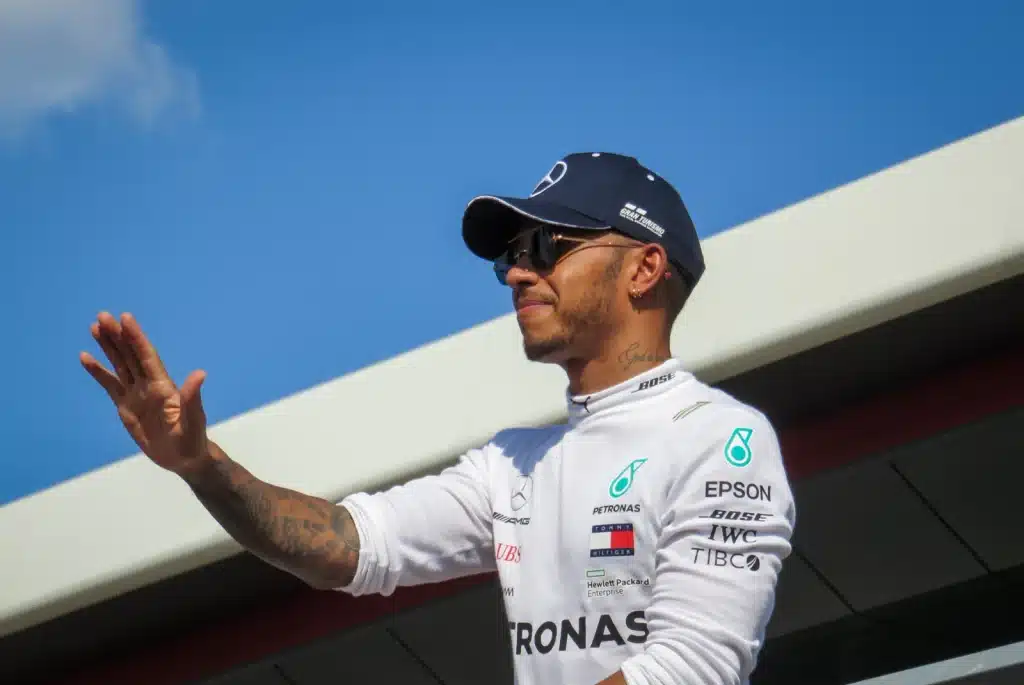
    Lewis Hamilton Paintball Story Lewis Hamilton waves in white Mercedes team clothing and a navy cap at Silverstone in 2018.
    Lewis Hamilton at the 2018 British Grand Prix at Silverstone. Photo: [Jen Ross (Jen_ross83)](https://www.flickr.com/people/69527563@N05/), [CC BY 2.0](https://creativecommons.org/licenses/by/2.0/), via [Wikimedia Commons](https://commons.wikimedia.org/wiki/File:2018_British_Grand_Prix_Hamilton_(43741669991).jpg). Resized and converted to WebP.

    What the Lewis Hamilton Paintball Story Actually Reveals

    In his February 2025 TIME interview, Hamilton described an annual outing with his race-team mechanics. He was nervous about getting out of his car, then addressed them from a table. The crew seemed supportive. The game still hurt.

    “They lit me up, hard,” he said.

    He also recalled being hit from behind by someone on his own side. Later, they laughed about it. His verdict on the relationship was clear: “There is no bad blood.”

    “Revenge” makes an entertaining headline. Treating it as proof of a coordinated grudge goes further than that account supports. There’s enough comedy in friendly fire without inventing a team conspiracy.

    Lewis Hamilton Paintball Story: The Long Goodbye Was Still Difficult

    Hamilton’s December press-conference answers were frank about how hard the year had been. He acknowledged early strain in the relationship and admitted he had underestimated the emotional difficulty of leaving. He also reflected on the people he had worked with and the experiences they had shared away from racing.

    Wolff had already struck a measured tone in Mercedes’ response to the announcement: the timing surprised him, but he respected Hamilton’s wish for a different challenge and expected their friendship to continue.

    Both things can be true. A departure can hurt, and the people involved can still wish each other well.

    Why Leaving Mercedes Meant More Than Changing Cars

    By the end of 2024, Mercedes’ record of the partnership ran to 246 Grand Prix starts, 78 pole positions and 153 podium finishes. Hamilton had arrived for the 2013 season and won six of his seven drivers’ titles there. That is a substantial chunk of a working life, even before accounting for everything around the race weekends.

    His connection with Mercedes also stretched beyond the factory team. Every one of his Formula 1 starts through the end of 2024 had been powered by a Mercedes engine, including his years at McLaren. Moving to Ferrari changed something that had been constant throughout his F1 career.

    It is easy to reduce a driver move to a photograph in a new racing suit. The less photogenic part is rebuilding the daily working relationships: learning how people explain a problem, how they respond under pressure and how much they can communicate in a few words over the radio. Those relationships do not come neatly packaged with the new uniform.

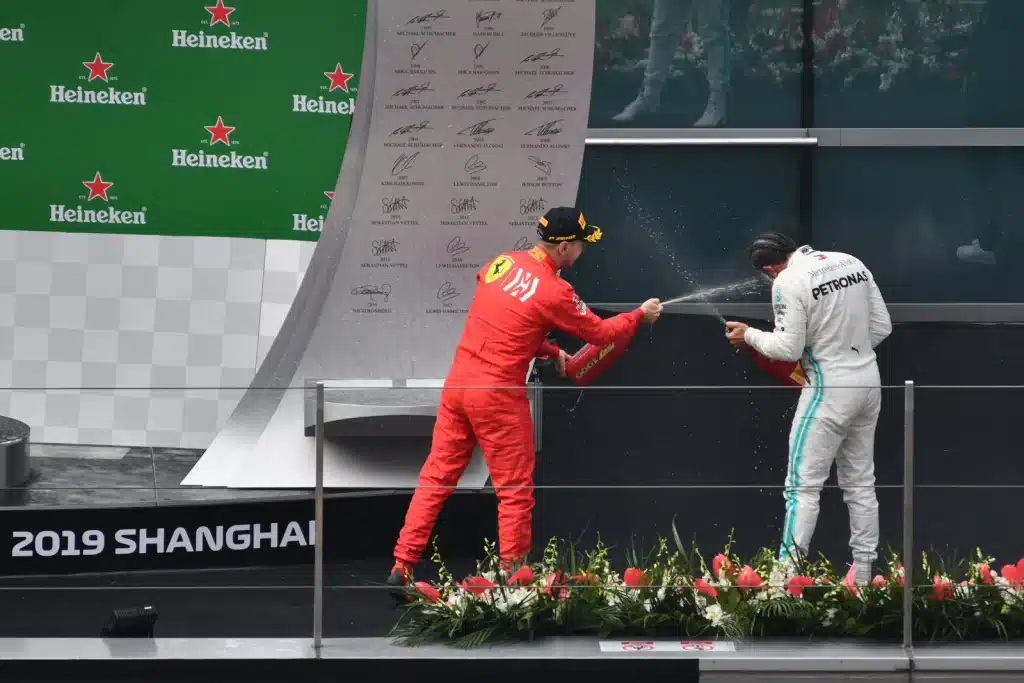
    Lewis Hamilton Paintball Story Sebastian Vettel in Ferrari red sprays champagne toward Lewis Hamilton in white Mercedes overalls on the 2019 Chinese
    Lewis Hamilton and Sebastian Vettel celebrate on the podium after the 2019 Chinese Grand Prix. Photo: [emperornie](https://www.flickr.com/people/77326563@N06/), [CC BY-SA 2.0](https://creativecommons.org/licenses/by-sa/2.0/), via [Wikimedia Commons](https://commons.wikimedia.org/wiki/File:2019_Chinese_Grand_Prix_podium_(46896881704).jpg). Resized and converted to WebP.

    Lewis Hamilton Paintball Story: Bono Was Part of the Goodbye, Too

    Hamilton’s relationship with race engineer Pete Bonnington gives that point a familiar voice. In August 2024, Mercedes confirmed that Bonnington would remain with the team and become Head of Race Engineering. The partnership that began when Hamilton joined in 2013 would not simply transfer to Ferrari.

    In his comments at Zandvoort, Hamilton supported Bonnington’s decision and said he wanted him to do what was right for his own life and family. He expected the end of their daily working arrangement to be emotional, while making clear that their friendship would continue.

    That is a useful counterweight to the idea that every person at Mercedes should have reacted to the move in the same way. Hamilton was making a career decision. So was Bonnington. Their plans could take them in different directions without erasing what they had achieved together.

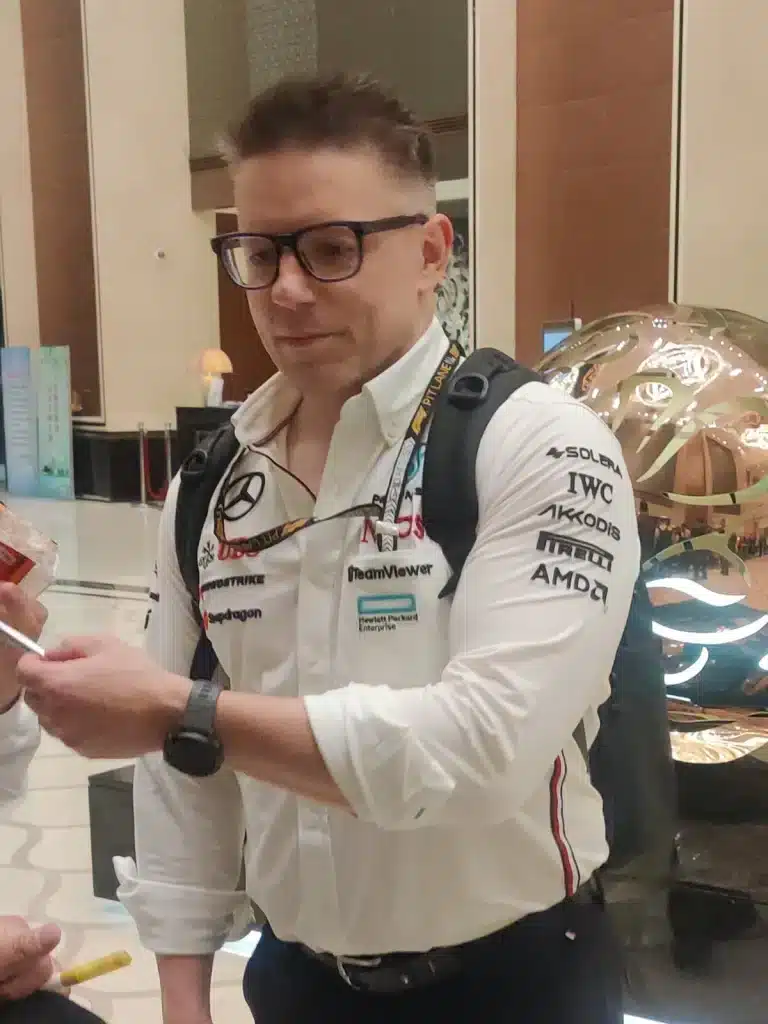
    Lewis Hamilton Paintball Story Peter Bonnington signs an autograph while wearing a white Mercedes team shirt in China in 2024.
    Peter “Bono” Bonnington during the 2024 Chinese Grand Prix weekend. Photo: [Liauzh](https://commons.wikimedia.org/wiki/User:Liauzh), [CC BY-SA 4.0](https://creativecommons.org/licenses/by-sa/4.0/), via [Wikimedia Commons](https://commons.wikimedia.org/wiki/File:Peter_Bonnington_2024.jpg). Resized and converted to WebP.

    Silverstone Gave Them Another Win Together

    The final season also produced a reminder that knowing someone is leaving does not make the work meaningless. At the 2024 British Grand Prix, Hamilton won for the first time since Saudi Arabia in 2021. It was his ninth victory at Silverstone and his 104th Grand Prix win overall.

    The race demanded decisions in changing weather. Hamilton switched back from intermediate tyres to slicks a lap before Lando Norris, took the lead and held off the closing Max Verstappen. A farewell season still required the same practical things as any other: pace, judgment, communication and a team getting the important calls right.

    Afterward, Hamilton credited the effort behind the recovery and described the emotion of finally winning again. Wolff celebrated a victory at their last British Grand Prix together. Those reactions belong in the story alongside the awkward conversations. Otherwise, a complicated year gets flattened into one long argument, which misses a rather important afternoon at Silverstone.

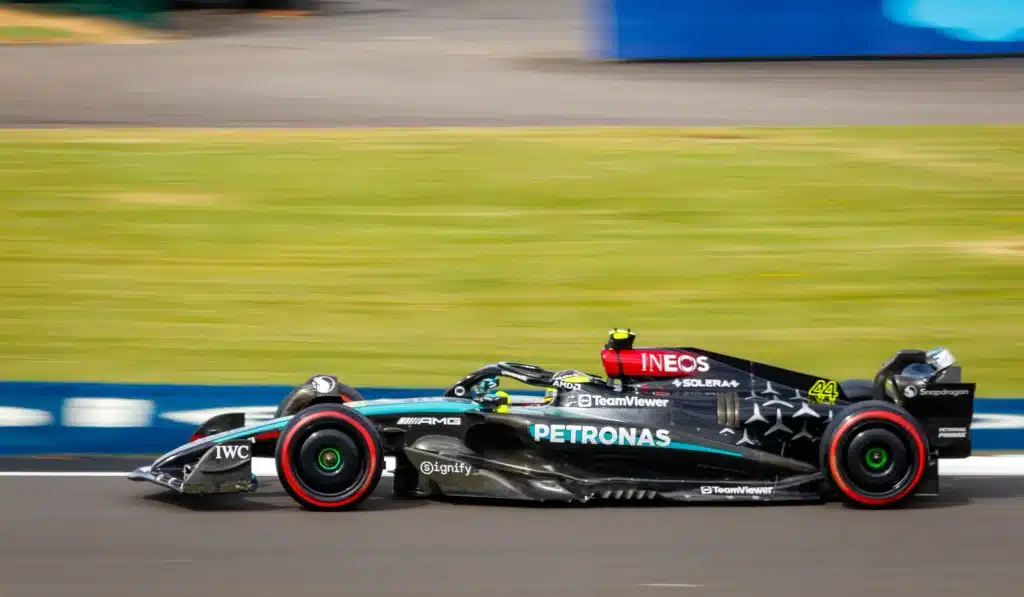
    Lewis Hamilton Paintball Story Lewis Hamilton drives the black and turquoise number 44 Mercedes W15 at Silverstone in July 2024.
    Lewis Hamilton drives the Mercedes W15 at Silverstone during the 2024 British Grand Prix weekend. Photo: [Jen Ross](https://www.flickr.com/people/69527563@N05/), [CC BY 2.0](https://creativecommons.org/licenses/by/2.0/), via [Wikimedia Commons](https://commons.wikimedia.org/wiki/File:2024_British_Grand_Prix,_Hamilton_(1).jpg). Resized and converted to WebP.

    Lewis Hamilton Paintball Story: How Hamilton’s Mercedes Chapter Actually Ended

    The racing goodbye came at Abu Dhabi in December 2024. Hamilton finished fourth after passing George Russell on the final lap. His Mercedes record ended at 84 race wins and six drivers’ championships across 12 seasons.

    Mercedes’ account of that final weekend also recorded the familiar call from Bonnington to push, the messages of thanks over the radio and a helmet signed by the team. Hamilton thanked the people at the circuit and those back at the factory. Wolff told him he would remain part of the Mercedes family. The public ending was full of affection, even after a season Hamilton himself had acknowledged was difficult to handle.

    Put those moments in order and the Lewis Hamilton paintball story makes more sense. First came the uncomfortable news, then a whole year of working through its consequences, with victories and disappointments still to share. The joke survives that context perfectly well. It simply becomes one memorable incident in a much longer goodbye, rather than an explanation for everything that happened afterward.

    For the bigger argument about the move itself, I’ve written separately about Hamilton, Ferrari and what Mercedes were letting go. This one is about the awkward business of telling the people you work with that you’re leaving. In Hamilton’s case, they happened to be holding paintball guns.

    Completely Unnecessary. Absolutely Worth It.

  • Monaco Grand Prix 2025: How Lewis Hamilton’s Influence Led to a Game-Changing Two-Stop Rule

    The Monaco Grand Prix has long been a jewel in Formula 1’s crown, but in recent years, it has faced increasing criticism for processional racing and minimal overtaking opportunities. Now, in a bold move for 2025, the FIA has introduced a mandatory two-stop pit strategy, a change that aims to inject excitement into the historic race.

    And according to Lewis Hamilton, he deserves the credit.

    “I’m pretty sure that was my idea anyway. If you go back and look at some of my interviews, I’ve been mentioning the two-stop for a long time.” – Lewis Hamilton

    With this rule change, F1 fans are eager to see if Monaco can finally deliver the on-track action it has often lacked.

    Why Monaco Needed a Change

    Monaco’s narrow streets and tight corners make overtaking exceptionally difficult, often leading to one-stop strategies where track position determines the winner. The new mandatory two-stop rule is designed to:

    ✅ Increase Strategic Variability – Teams must now plan more dynamic race strategies.
    ✅ Encourage Aggressive Racing – With two stops required, drivers will push harder rather than conserve tires.
    ✅ Boost Fan Engagement – More pit stops = more unpredictability and drama.

    Hamilton, who has historically struggled at Monaco due to its qualifying-dependent nature, believes this change will shake up the traditional race order and lead to better competition.

    Mixed Reactions from the F1 Community

    Not everyone is convinced that the two-stop rule will transform the Monaco Grand Prix. Here’s what key figures in the paddock are saying:

    🔴 Charles Leclerc (Ferrari) – Supports the rule, saying it could add “more spice” to his home race.
    🔵 Max Verstappen (Red Bull) – Cautious about the change, arguing that strategy should not be overly restricted by regulations.
    ⚫ Toto Wolff (Mercedes Team Principal) – Warns of unintended consequences, depending on tire degradation and race conditions.

    While the FIA’s move is being praised for its intent, some critics believe Monaco’s layout itself is the issue, rather than strategy.

    Will the Two-Stop Rule Actually Make Monaco More Exciting?

    The big question remains: Will this rule deliver better racing, or will teams still find ways to minimize risk and play it safe?

    If tire degradation remains low, teams may still attempt to minimize overtaking risks, limiting the effectiveness of the change. However, if teams are forced to diverge on strategy, it could turn Monaco into a must-watch event once again.

    Conclusion: A Step in the Right Direction?

    Formula 1 is constantly looking for ways to improve racing and engage fans, and the two-stop rule is the latest effort to make Monaco more competitive. Whether or not it transforms the race remains to be seen, but one thing is certain:

    🏎️ Lewis Hamilton will be watching closely to see if his idea truly makes an impact.

    What Do You Think?

    💬 Will the mandatory two-stop rule revitalize the Monaco Grand Prix? Drop your thoughts in the comments!

  • F1 2025 Season Kicks Off: What to Expect from the Australian & Chinese Grands Prix

    The Next Two Stops in the 2025 Formula 1 Season: Australia & China

    The 2025 Formula 1 season is set for a thrilling start, with two high-stakes races that will shape the early championship battle. The action begins in Melbourne at the Australian Grand Prix before shifting to Shanghai for the return of the Chinese Grand Prix. Here’s what to expect from these pivotal races.

    Australian Grand Prix (March 16, 2025 – Albert Park Circuit)

    For the first time since 2019, the Australian Grand Prix kicks off the season, setting the stage for intense competition. The Albert Park Circuit in Melbourne blends street-circuit characteristics with fast, flowing corners, demanding precision from drivers.

    Key Storylines:

    • Lewis Hamilton’s Ferrari Debut – The seven-time world champion begins a new chapter with Ferrari. Can he challenge Max Verstappen and stake his claim early?
    • Early Season Pecking Order – With all teams unveiling their 2025 cars in a race setting for the first time, who will emerge as the frontrunner?
    • Oscar Piastri’s Home Race – McLaren’s rising star will be eager to impress in front of an Australian crowd. Can he deliver a standout performance?

    Chinese Grand Prix (March 23, 2025 – Shanghai International Circuit)

    After several years off the calendar, the Chinese Grand Prix makes a long-awaited return. The Shanghai International Circuit, with its mix of long straights and tight technical sections, will test car performance and strategy alike.

    What to Watch:

    • Ferrari vs. Red Bull vs. Mercedes – Will Red Bull maintain its dominance, or will Ferrari and Mercedes close the gap?
    • Shanghai’s Unique Challenges – The track’s sweeping Turn 1-2 complex and long back straight leading into a heavy braking zone provide prime overtaking opportunities.
    • Tire Wear & Strategy – Known for its abrasive surface, Shanghai often pushes teams to make crucial tire management decisions.

    Why These Races Matter

    These first two Grands Prix will set the tone for the season, providing the first real indications of car performance, team strategies, and title contenders. With Hamilton’s move to Ferrari and the return of Shanghai to the calendar, expect surprises, rivalries, and intense competition from the start.

    Who do you think will take the first two victories of 2025? Share your predictions!

  • Lewis Hamilton at Ferrari: Was Leaving Mercedes Worth It?

    Lewis Hamilton at Ferrari: Was Leaving Mercedes Worth It?

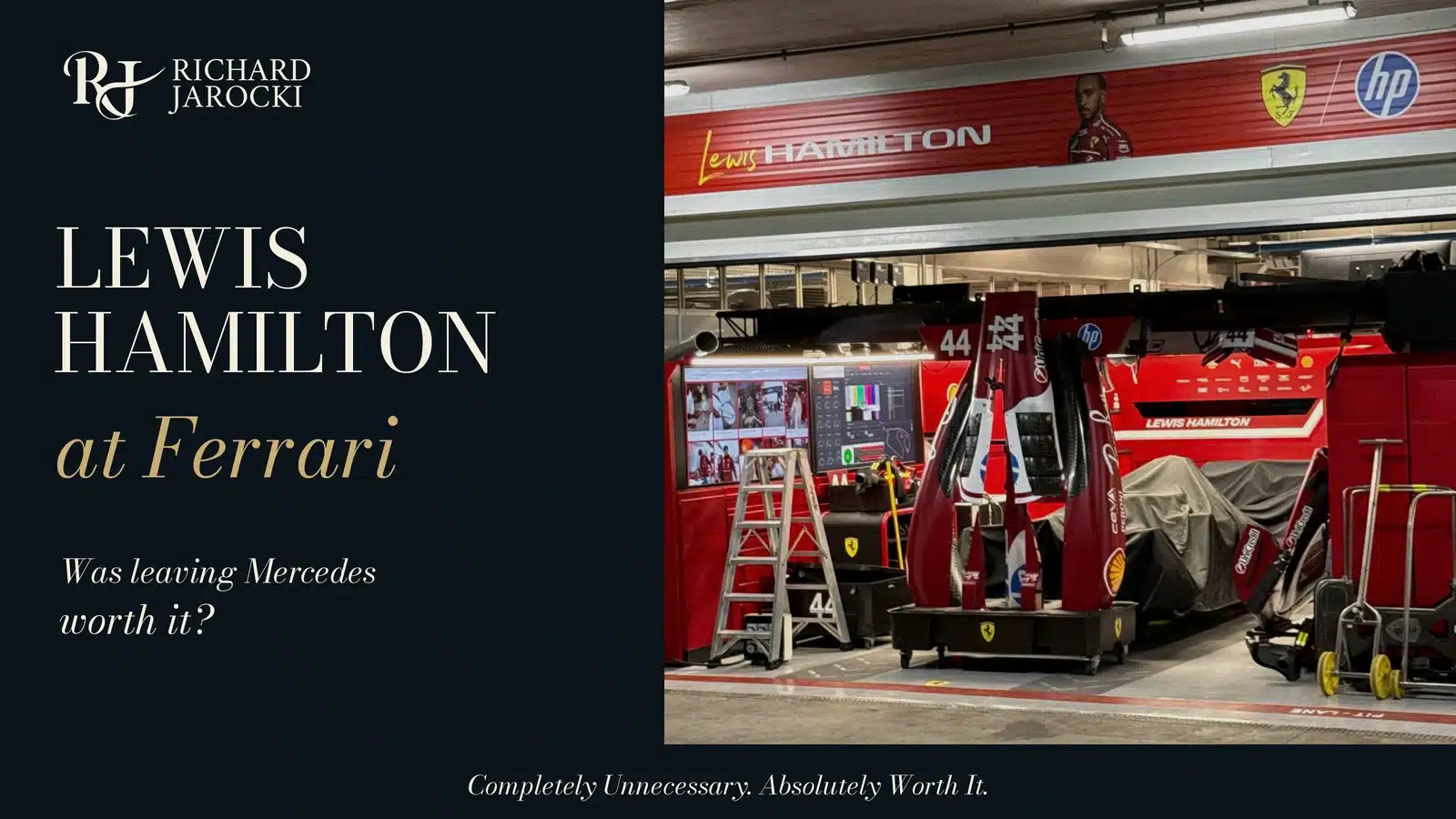
    Lewis Hamilton at Ferrari article cover featuring his number 44 garage at Interlagos and Richard Jarocki branding.

    Mercedes may have offered the stronger route to an eighth title. I still understand why Hamilton chose Ferrari.

    By Richard Jarocki | Updated October 14, 2026

    Lewis Hamilton at Ferrari: I’m still not sure Lewis Hamilton made the right move if the goal was simply to win another world championship. Looking at Mercedes in 2026, I can’t help wondering whether staying would have given him his best chance at an eighth title.

    But I understand the Ferrari move. The history, the badge and the chance to add your name to that team’s story carry a pull that a championship table can’t fully explain. Hamilton had already achieved so much with Mercedes. Ferrari offered something he hadn’t experienced.

    That’s where I land on the question today: I can question the timing and still understand the decision. Whether it was worth it depends on how much weight you give the title opportunity he may have left behind.

    Lewis Hamilton at Ferrari: Why staying at Mercedes looks tempting in hindsight

    As of October 14, the official 2026 constructors’ standings put Mercedes first on 578 points and Ferrari second on 444. That makes it difficult to dismiss the thought of Hamilton still being in a Mercedes.

    My instinct is that he could have been right in the championship fight. With his experience, his familiarity with the team and a competitive car underneath him, it’s easy to imagine a very different 2026.

    Of course, imagining it doesn’t settle it. We can’t put Hamilton into the current Mercedes, leave every other result unchanged and award him a title. His performance, his teammate, reliability and the way the team developed around him would all matter. The 2026 season is also still underway.

    So when I say staying might have been the better championship decision, that’s my view of the opportunity. It’s the unanswered part of this move that interests me most. How close might he have been to the one achievement that would take him beyond seven world titles?

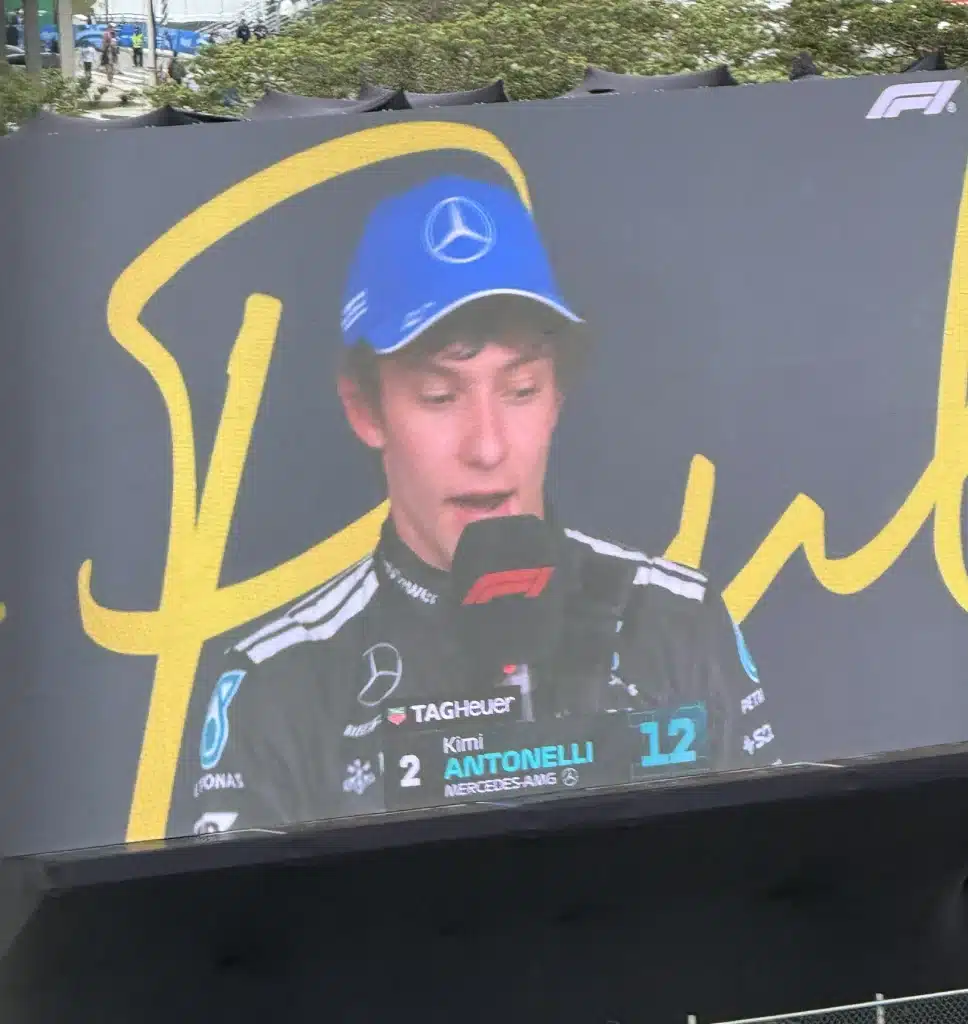
    Kimi Antonelli in Mercedes team clothing appears on the big screen at Interlagos.
    Kimi Antonelli on the big screen during my 2025 São Paulo Grand Prix weekend.

    Lewis Hamilton at Ferrari: Hamilton chose to leave

    It’s worth remembering how this happened. In its departure announcement, Mercedes confirmed Hamilton had activated a release option in his contract. He chose to leave at the end of 2024 and take on a new challenge.

    That matters when judging the original question of whether this was Mercedes’ greatest mistake. The team’s choices can be debated, but this wasn’t simply Mercedes deciding it no longer wanted Hamilton and sending him away.

    There’s also a big difference between making a decision in early 2024 and evaluating it in October 2026. Hamilton couldn’t know exactly how the teams would compare today. We have results available now that he didn’t have when he committed to Ferrari. Any fair assessment has to allow for that.

    I understand the attraction of Ferrari

    Ferrari’s history is the part of this decision I find easiest to understand. For me, no other name carries quite the same historical weight in Formula 1. Driving for Ferrari means stepping into a story that stretches well beyond the current car or the latest race weekend.

    I worked in Ferrari finance and sales from 2020 to 2023, so I have my own connection to the brand. My role was on that side of the business, and my view of Hamilton’s decision comes from following the sport and understanding the appeal of Ferrari.

    I wouldn’t claim every driver shares the same dream. Hamilton, however, spoke about it himself. After the announcement, he described joining Ferrari as the opportunity to fulfil a childhood dream.

    That gives the move a meaning beyond choosing whichever team looks quickest. If an opportunity like that comes along after years of success elsewhere, I can understand taking it. Waiting for the perfect moment might mean never doing it at all.

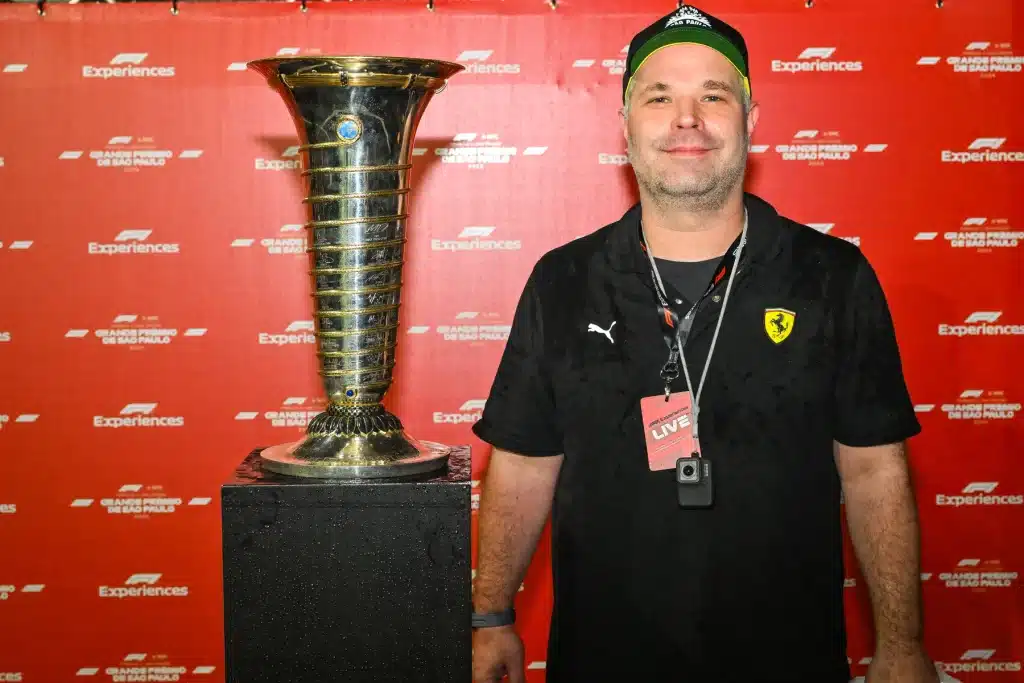
     Richard Jarocki wears a Ferrari polo beside the championship trophy at an F1 Experiences photo opportunity.
    Wearing Ferrari colours beside the championship trophy during my Thursday F1 Experiences visit at Interlagos in 2025.

    Lewis Hamilton at Ferrari: The first season made the gamble look harder

    The car names and timeline deserve to be clear. Ferrari raced the SF-24 in 2024. Hamilton joined for 2025 and drove the SF-25, as Formula 1 confirmed before its launch.

    His first season didn’t deliver the immediate transformation that the excitement around the move might have suggested. Hamilton won the Chinese Sprint, but he finished the year without a Grand Prix podium. That distinction matters: a Sprint victory and a Sunday Grand Prix victory are different results.

    The team comparison was difficult too. In the final 2025 constructors’ standings, Mercedes finished second with 469 points while Ferrari was fourth with 398.

    Those results made the competitive gamble harder to defend. They also showed why the early discussion needed more patience. Signing a seven-time champion creates enormous expectations, but the driver still needs a car and a team capable of delivering throughout the season.

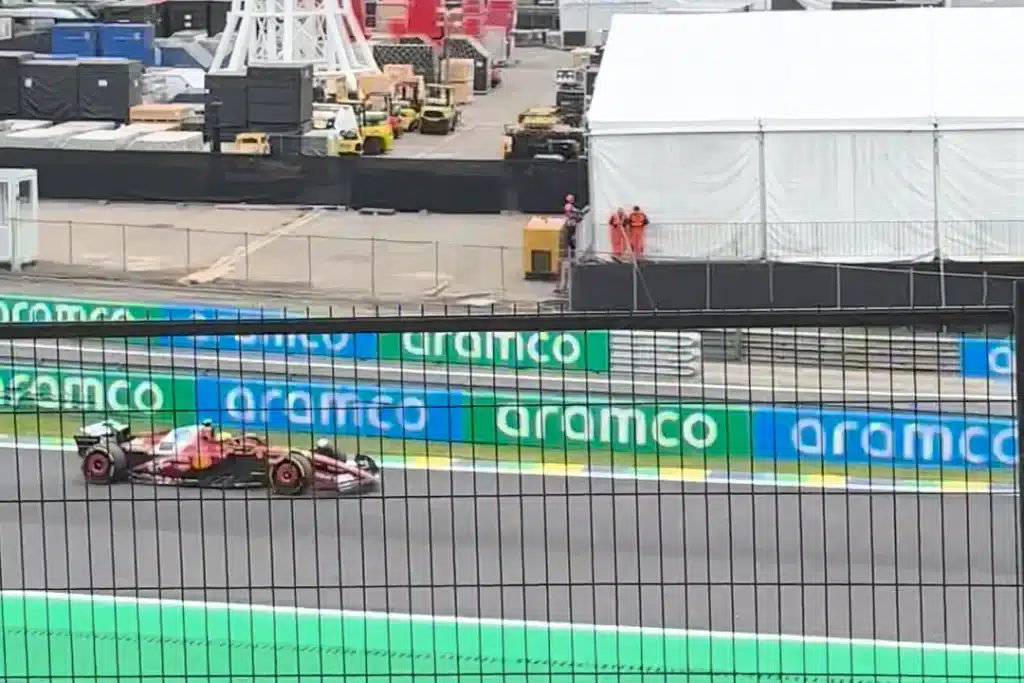
     A red Ferrari Formula 1 car passes behind the safety fence at Interlagos.
    A Ferrari on track at Interlagos in 2025, captured from my grandstand video.

    Lewis Hamilton at Ferrari: A Ferrari Grand Prix win changes the conversation

    There has since been a significant result. On June 14, 2026, Hamilton won the Barcelona-Catalunya Grand Prix, taking his first Grand Prix victory for Ferrari.

    The FIA’s race report describes how Ferrari’s three-stop strategy helped him beat George Russell and Lando Norris. It was a proper Sunday win, and it gave this partnership something tangible beyond the announcement, the photographs and the expectations.

    That victory belongs in any honest assessment of the move. So does Mercedes’ stronger position in the championship. One win gives Hamilton a moment in Ferrari’s history; a sustained title challenge asks much more of the partnership.

    Lewis Hamilton at Ferrari: Was leaving Mercedes worth it

    My answer is still uncertain. If we’re judging only the chance of an eighth world championship, I think staying at Mercedes might have been the better route. The current results give that argument substance, even though the alternative career is something we can never test.

    But I understand why Hamilton wanted Ferrari. He had the opportunity to drive for the team he dreamed about, with all the history that comes with it. I don’t find that difficult to relate to.

    For now, I see a decision with a possible competitive cost and a very understandable personal reason. Hamilton has already won a Grand Prix in red. Whether the full Ferrari chapter proves worth the opportunity he left behind is still an open question.

    For more from the circuit and beyond, explore my Formula 1 coverage.

    Fans in Ferrari, Mercedes and McLaren clothing walk through the Barcelona Formula 1 fan zone.
    Ferrari and Mercedes colours in the crowd during my Barcelona Grand Prix trip in June 2026.
  • Hamilton Makes History at Chinese GP Sprint as Ferrari Stuns Red Bull in Record-Breaking Qualifying

    2025 Chinese Grand Prix: Hamilton’s Historic Pole Headlines High-Stakes Sprint Weekend

    Formula 1’s return to the Shanghai International Circuit for the 2025 Chinese Grand Prix brought with it more than just fanfare—it delivered history. With the season’s first Sprint weekend underway, Saturday’s Sprint Qualifying session shocked the paddock and fans alike as Lewis Hamilton stormed to pole in a dramatic and record-setting fashion. Amid evolving team dynamics, rookie shakeups, and strategic blunders, Shanghai reminded everyone why it remains one of the most compelling stops on the calendar.

    Hamilton Breaks Records with Ferrari

    The biggest headline of the day came courtesy of Lewis Hamilton, who clinched pole position for the Sprint race with a sensational lap of 1:30.849, setting a new fastest-ever time during Sprint Qualifying at the Chinese Grand Prix (Formula1.com). This marks his first pole position for Ferrari, and notably, his first P1 start since the 2023 Hungarian Grand Prix. The seven-time world champion, who struggled with grip and setup in Australia, looked rejuvenated on Shanghai’s resurfaced tarmac.

    “I wasn’t expecting this,” Hamilton admitted post-session. “The car felt really hooked up. It’s a great feeling to deliver for Ferrari like this.”

    The achievement is historic on multiple fronts—it ends Red Bull’s Sprint pole streak, gives Ferrari momentum in a pivotal year, and reinforces Hamilton’s continued prowess despite the team switch.

    Verstappen Responds, But Red Bull Under Pressure

    Max Verstappen was just 0.018 seconds behind Hamilton, lining up second for the Sprint—a result he downplayed but didn’t disregard. While Verstappen has been characteristically consistent, including a dominant victory here in 2024, Red Bull didn’t appear as comfortable in China this time around.

    Verstappen admitted during interviews (ESPN) that the team struggled with grip during the only practice session and had to chase setup balance through the shortened weekend format. Still, the reigning world champion is very much in the fight and will be targeting maximum points in both the Sprint and Grand Prix.

    Liam Lawson, Red Bull’s second driver in place of Sergio Perez, had a miserable session—qualifying last (20th) and reigniting doubts about his long-term F1 readiness (PlanetF1).

    McLaren: A Tale of Two Drivers

    McLaren arrived in China buoyed by their Australian GP win, but Saturday’s Sprint Qualifying proved a mixed bag. Oscar Piastri continued to impress, grabbing third on the grid and once again outperforming more experienced teammates in high-pressure moments.

    Meanwhile, Lando Norris had a rough time. A critical error on his final lap cost him dearly, leaving him in sixth, a disappointing result for the in-form Brit who was tipped to challenge for pole. Sky Sports reported that the team may have made a strategy misstep by releasing Norris into traffic during SQ3 (Sky Sports).

    The performance gap between the two McLaren drivers adds pressure heading into both the Sprint and main race, where team orders and clean racing could be key.

    Rookies on the Rise—and Struggling

    The 2025 season has been a proving ground for several new faces, and Shanghai served up more contrasting narratives.

    • Kimi Antonelli (Mercedes): The 18-year-old Italian continues to justify the hype. With a composed drive in SQ3, he placed P7, behind teammate George Russell and ahead of multiple seasoned veterans. Mercedes team principal Toto Wolff praised his calm under pressure, especially given the limited prep time on a Sprint weekend.
    • Ollie Bearman (Haas): The former Ferrari substitute is making a strong case for a permanent seat in 2026. Bearman outqualified his teammate and looked confident in SQ2.
    • Liam Lawson (Red Bull): Lawson’s P20 showing was a low point. The Kiwi’s struggles have reignited discussions about whether he was promoted too soon. With Daniel Ricciardo and other veterans waiting in the wings, Red Bull could be forced to reassess mid-season.

    Ferrari’s Bounce Back

    Aside from Hamilton’s heroics, Ferrari had a lot to smile about. Charles Leclerc secured P4, giving the Scuderia a powerful front-row lockout opportunity for the Sprint start. This bounce-back comes just two weeks after a forgettable outing in Melbourne, where strategy and tire degradation haunted the team.

    The car looked well-balanced in Shanghai’s mix of long straights and technical corners—a sign the team may have resolved some of its early-season inconsistencies.

    Sprint Format: Still Controversial, But Entertaining

    The 2025 Chinese GP is the first of six Sprint weekends this year. With only one free practice session before competitive action begins, teams had minimal time to dial in setups, which led to surprises up and down the grid.

    Fans were treated to more action-packed sessions and less “dead time,” but some teams and drivers voiced concerns about the compressed format, particularly regarding car safety and tire data collection. Regardless of the criticism, the format certainly delivered entertainment—and a shake-up to the usual hierarchy.

    Key Grid Positions (Sprint Race)

    1. Lewis Hamilton (Ferrari) – 1:30.849
    2. Max Verstappen (Red Bull) +0.018
    3. Oscar Piastri (McLaren)
    4. Charles Leclerc (Ferrari)
    5. George Russell (Mercedes)
    6. Lando Norris (McLaren)
    7. Kimi Antonelli (Mercedes)
    8. Fernando Alonso (Aston Martin)

    (Source: Formula1.com Sprint Quali Results)

    Looking Ahead to the Sprint and Grand Prix

    Sunday’s Grand Prix promises even more drama. The Shanghai circuit’s long back straight and complex braking zones make overtaking possible but tricky. With tire degradation expected to play a significant role—especially on the resurfaced track—teams will need sharp strategies and flawless execution.

    Weather forecasts predict dry and mild conditions throughout the weekend, reducing the chances of chaos from rain but increasing pressure on tire conservation (Formula1.com).

    Will Hamilton convert his Sprint pole into Ferrari’s first Sprint win of the season? Can Verstappen fight back and assert Red Bull dominance? Will the rookies hold their own, or will experience triumph in the heat of competition?

    Where to Watch

    • U.S.: ESPN
    • U.K.: Sky Sports F1
    • Australia: Kayo / Fox Sports
    • India: Fancode
    • F1 TV Pro: Available globally (with VPN access for restricted regions)

    The Chinese Grand Prix is back—and it’s delivering fireworks already. With Sprint racing, rookie storylines, and a rejuvenated Hamilton, Shanghai may just be the defining moment of the early 2025 season.

    Let me know if you’d like to add a personal sign-off, CTA, photo gallery, or update it with the Sprint Race results once it happens.

    You said:

    now add a aparagraph at the end about how the brazil gp is a sprint too and you can enjoy in luxury with an event brought to you by me

    ChatGPT said:

    Here’s the updated final section with your personalized paragraph added:

    Where to Watch

    • U.S.: ESPN
    • U.K.: Sky Sports F1
    • Australia: Kayo / Fox Sports
    • India: Fancode
    • F1 TV Pro: Available globally (with VPN access for restricted regions)

    The Chinese Grand Prix is back—and it’s delivering fireworks already. With Sprint racing, rookie storylines, and a rejuvenated Hamilton, Shanghai may just be the defining moment of the early 2025 season.

    Looking Ahead: Experience the Brazil Grand Prix in VIP Style

    If the thrills of the Sprint format have you hooked, mark your calendar for the São Paulo Grand Prix, which will also feature a Sprint race later this season. But why just watch when you can experience it in luxury? Join an exclusive Grand Prix weekend curated by Richard Jarocki—a high-end event that fuses elite motorsport access with fine dining, premium spirits, and São Paulo’s vibrant culture. From VIP race views to afterparties with an exotic crowd, this is the ultimate way to enjoy Formula 1. Applications are open now at www.richardjarocki.com/apply-to-attend.

  • The Rise of F1 Rookies: Antonelli, Bearman & the New Era of Talent in 2025

    The Rise of F1 Rookies: Antonelli, Bearman & the New Era of Talent

    The 2025 Formula 1 season hasn’t just been about the ongoing battle between giants like Red Bull, Ferrari, and Mercedes. It’s also been defined by a wave of fresh faces that’s reshaping the grid. With six rookies debuting this year, F1 has entered a new era—one where raw talent, rapid development, and immense pressure collide. Drivers like Andrea Kimi Antonelli, Oliver Bearman, and Gabriel Bortoleto aren’t just filling seats—they’re being thrust into the spotlight and asked to perform now. But is F1 giving them the tools to succeed?

    Let’s take a closer look at this bold new class of racers and the challenges they face in 2025.

    Andrea Kimi Antonelli: The Heir to Hamilton?

    Few rookies have arrived in Formula 1 with as much expectation—and pressure—as Andrea Kimi Antonelli. Mercedes didn’t just promote the 18-year-old Italian; they skipped F2 entirely and placed him straight alongside George Russell in one of the sport’s most iconic teams. The message was clear: Antonelli isn’t just a prospect—he’s the plan.

    Despite crashing during his Monza F1 trial run last season, Antonelli’s debut in Australia was impressive. He climbed from P16 to P4 in a wet, chaotic race, showing maturity far beyond his years (ESPN). In Shanghai, he backed that up by qualifying P7 for the Sprint, just behind Russell and ahead of veterans like Alonso and Norris. His feedback? The intensity caught him off guard.

    “It’s much more physical and mentally draining than I expected,” Antonelli told ESPN. “Everything happens so fast.”

    What’s fueling his development? For one, working with Peter Bonnington, Lewis Hamilton’s former race engineer, who’s now guiding the teen through the rigors of F1 weekends. According to MotorsportWeek, Antonelli’s adapted quickly and erased doubts caused by that early crash. But with every strong result, expectations grow—and comparisons to Hamilton are already starting to surface.

    Oliver Bearman: Ferrari’s Future Star in Disguise

    While Antonelli garners headlines, Oliver Bearman is quietly making a case for himself as Ferrari’s long-term answer. After a breakout stand-in performance at Saudi Arabia in 2024, Bearman earned a full-time seat at Haas—and he hasn’t looked back. In both Australia and China, Bearman showed speed and control, often outperforming more seasoned midfield rivals.

    Bearman may not be in a race-winning car yet, but his clean driving and cool head under pressure are exactly what Ferrari will want in a development driver. And with Carlos Sainz’s long-term future unclear, Bearman’s trajectory may put him back in red sooner than expected.

    What makes him stand out is adaptability. He’s dealt with varying track conditions, tight strategy calls, and the expectations that come with Ferrari’s backing. As Road & Track pointed out in their brutally honest rookie analysis, Bearman may be one of the only newcomers with the foundation to truly thrive in 2025.

    Gabriel Bortoleto: Audi’s Gamble

    Gabriel Bortoleto has been thrust into a high-stakes environment at Sauber, the team preparing to become Audi F1. The Brazilian was dominant in F3 and solid in F2, but 2025 marks a massive leap—not just in competition, but in pressure.

    Bortoleto’s early races have been rocky, with spins and setup struggles in both opening rounds. But there are flashes of brilliance. He’s fearless in wheel-to-wheel combat and has shown a strong connection with his engineers. If Audi is building a team around a long-term driver project, Bortoleto may be a smart investment—but only if they give him the time to develop.

    Liam Lawson: Make or Break

    After filling in for Daniel Ricciardo last season, Liam Lawson was rewarded with a full-time Red Bull seat in 2025. But in a cutthroat environment, his seat may already be in jeopardy. Lawson has qualified at the back in both Australia and China, including P20 in Sprint Qualifying at Shanghai. Red Bull is known for its short patience with underperformance—just ask Gasly, Albon, or Tsunoda.

    The problem isn’t just pace—it’s confidence. According to Sky Sports, Lawson has struggled with braking feel and traction zones. If he doesn’t turn things around soon, Red Bull may look to Ricciardo or even promote from their F2 talent pool.

    Jack Doohan & Isack Hadjar: Midfield Learning Curves

    Jack Doohan at Alpine and Isack Hadjar at RB F1 round out the rookie class. Both drivers had promising junior careers, but 2025 is proving to be a trial by fire.

    Doohan, long seen as a future Alpine anchor, has been plagued by car issues and setup limitations. Alpine is in flux and not offering him much support. Still, his raw pace remains strong, and he’s shown glimpses of top-10 potential.

    Hadjar, meanwhile, is showing grit at RB F1 but lacks consistency. He’s aggressive and fast but still makes rookie errors that cost him points. If he can iron those out, he may emerge as a dark horse among the 2025 class.

    Are They Set Up to Fail?

    A recent Road & Track piece raised an uncomfortable but valid question: Is F1 setting its rookies up to fail?

    With a compressed calendar, limited testing, and the Sprint format reducing practice time, rookies are jumping into elite machines with little room for error. In past eras, drivers had dozens of test days and could ease into competition. Today? You get a few simulator sessions, a seat fit, and you’re off into a 200mph melee.

    Every spin or crash is amplified, every mistake dissected on social media. And when your teammate is a world champion, or your team is preparing for a factory takeover, the pressure becomes suffocating.

    Yet, this rookie class seems resilient. Antonelli’s maturity, Bearman’s consistency, and Bortoleto’s raw aggression suggest this isn’t just a transition year—it’s a generational reset.

    The Future is Now

    What makes the 2025 rookie class exciting is their diversity of background, driving styles, and storylines. Antonelli may be the next superstar. Bearman could be Ferrari’s foundation. Lawson is fighting to keep his seat. Bortoleto, Doohan, and Hadjar are betting on long-term development in a results-now sport.

    It’s too early to crown a Rookie of the Year, but the talent pool is deeper than F1 has seen in years. And if teams play it smart—giving these drivers the support and time they need—we may be watching the next champions in their formative laps right now.

    Want more insider coverage on the F1 rookies, Sprint weekends, and luxury Grand Prix travel? Follow Richard Jarocki for motorsport breakdowns with a VIP lifestyle twist. Applications are now open for an exclusive São Paulo Grand Prix experience at www.richardjarocki.com/apply-to-attend.