Tag: Restaurant Review

  • Viaggio Ristorante Review: Is the Chef’s Counter in Wayne Worth It?

    Viaggio Ristorante Review: Is the Chef’s Counter in Wayne Worth It?

    Viaggio Ristorante review featuring a chef’s-counter dinner with Chef Rabbit

    Three handmade pastas, Sicilian influence, and a front-row dinner with Chef Matthew “Rabbit” McCormick in Wayne, New Jersey

    By Richard Jarocki
    August 13, 2026

    My Viaggio Ristorante Review

    I did not mean to book the chef’s counter at Viaggio Ristorante.

    The original plan was to order Viaggio’s pasta tasting, which was available throughout the dining room. Somewhere during the reservation process, I chose the chef’s counter instead.

    By the time we realized the mistake, we decided to keep the seats.

    Good decision.

    Earlier that afternoon, we had stopped at Bar Franco in Montclair to kill some time before dinner. Four cocktails later, that unplanned stop had nearly become the destination.

    Viaggio still had to follow it.

    Our accidental booking placed us directly in front of the kitchen, where Chef Matthew “Rabbit” McCormick cooked, plated, explained and served the tasting menu.

    It turned a dinner I was already looking forward to into one of the most personal restaurant experiences I have had in New Jersey.

    At a chef’s counter, there is nowhere for a restaurant to hide. You see the timing, communication, adjustments and hands finishing every plate. You also learn quickly whether the person cooking your food genuinely wants you there.

    Chef Rabbit did.

    He knew every ingredient, understood every decision behind the menu and seemed genuinely proud to share the food. There was no canned speech or forced performance. He cooked, answered our questions and allowed the meal to speak for itself.

    Viaggio means “journey,” which can sound like predictable restaurant marketing until the courses begin.

    This meal actually traveled: cured seafood, Spanish ham, octopus, three completely different pastas, swordfish, beef, layered chocolate and a final bowl of gelato that turned a simple kitchen snack into one of my favorite bites of the night.

    The quick verdict: Viaggio’s chef’s counter is worth booking for anyone who cares about handmade pasta, regional Italian cooking and direct interaction with the kitchen. The three pasta courses justified the $110 price, while Chef Rabbit made the evening memorable.

    Robbie Felice, Sicily and Viaggio’s Point of View

    Robbie Felice had recently returned from Sicily, and Viaggio was rebuilding parts of its menu around those roots.

    The influence was clear, but the kitchen was not treating tradition like a museum exhibit. The food looked backward while continuing to move forward.

    Felice’s restaurants have become my go-to choices for Italian food because he is not trying to reproduce the same red-sauce menu found throughout North Jersey.

    I grew up with that food and still love it. There is nothing wrong with chicken parm, baked ziti or a bowl of Sunday sauce.

    Viaggio is simply playing a different game.

    The restaurant focuses on handmade pasta, serious technique, excellent products and regional Italian flavors that remain generous and recognizable.

    Felice opened Viaggio with his father in 2016, when he was only 26. Osteria Crescendo followed in 2019, and Felice was named a 2020 James Beard Award semifinalist for Rising Star Chef of the Year.

    He later expanded his approach with pastaRAMEN, the Wafu-Italian concept created with partner Luck Sarabhayavanija, and Bar Mutz, his mozzarella and cocktail bar.

    The common thread is not one fixed style. It is Felice’s willingness to respect tradition without becoming trapped by it.

    Viaggio may be the purest expression of that idea: a neighborhood restaurant with ambitious cooking, a serious pasta program and enough warmth to keep a long tasting menu from feeling stiff.

    What Is Viaggio’s Chef’s Counter Like?

    The chef’s counter changes the rhythm of dinner.

    Instead of waiting for a finished plate to appear from somewhere behind a wall, you watch it become a dish.

    I watched Chef Rabbit move between preparation, flame, sauce, seasoning and plating before turning around to explain what he had made.

    That access never felt rehearsed.

    If I had a question, he answered it. When I wanted the exact dish descriptions later, he helped me identify every course.

    That may sound like a small detail, but it says a lot.

    A chef’s counter should offer more than an expensive seat near the stove. It should bring guests into the process and make the interaction feel worthwhile.

    This one did.

    The Opening Courses

    Cured Aquanaria Sea Bass Crostini

    Cured Aquanaria sea bass crostini served beside an Occidental wine bottle and glass at Viaggio Ristorante.
    Cured Aquanaria sea bass crostini opened the chef’s-counter tasting at Viaggio Ristorante.

    The first bite was cured Aquanaria sea bass on crostini: clean, salty and delicate.

    The toast provided exactly the crunch the fish needed and kept the bite from becoming too soft or precious. It was small, focused and a smart opening statement.

    Instead of beginning the tasting with something unnecessarily complicated, the kitchen started with a good product and gave it just enough support.

    Ibérico Prosciutto “5 Jotas”

    Next came Cinco Jotas Ibérico ham.

    I had recently returned from Spain, so the quality and freshness caught me by surprise. After eating excellent Ibérico in its home country, I did not expect a restaurant in Wayne to serve something that immediately brought me back there.

    The kitchen showed restraint and let the product do the work.

    The fat softened almost immediately on the tongue, leaving a flavor that was nutty, savory and deep without becoming heavy.

    When ham is this good, the smartest thing a chef can do is stay out of its way.

    Viaggio did.

    Olive Oil-Fried Octopus

    The octopus arrived with roasted fingerling potatoes, garlic, herbs and white wine.

    Its edges were crisp, the center stayed tender and the potatoes absorbed the sauce underneath.

    This was rustic food in the best sense of the word: direct, satisfying and free of unnecessary tricks.

    Octopus can become rubbery when it is mishandled or buried beneath too many competing flavors. Viaggio avoided both problems.

    The texture was right, and the supporting ingredients made the dish feel complete without distracting from the octopus.

    Three Handmade Pastas with Three Different Personalities

    Then came the heart of the tasting—not two pasta courses, but three.

    That could easily have become repetitive.

    It did not.

    Each pasta had a different shape, sauce, weight and personality. Together, they made the strongest argument of the night for why handmade pasta sits at the center of Robbie Felice’s restaurants.

    Braised Oxtail Tortellini

    The braised oxtail tortellini rested in a vibrant tomato passata.

    The filling was dark, rich and slow-cooked, while the tomato provided enough acidity to keep the dish moving. The pasta was tender but still had the structure required to contain both the filling and the sauce.

    This was the deepest and most comforting of the three pasta courses.

    In less careful hands, oxtail, stuffed pasta and tomato sauce could have become excessively heavy. This version delivered all the expected richness without stopping the progression of the meal.

    It was familiar enough to feel comforting but refined enough to justify its place in the tasting.

    House-Made Spaghetti with Summer Squash and Duck Prosciutto

    The house-made spaghetti with summer squash and duck prosciutto changed direction completely.

    The squash added sweetness and freshness, while the duck prosciutto provided salt and depth.

    This was the most relaxed pasta of the group and perhaps the most revealing.

    It demonstrated that the kitchen did not need a dozen ingredients or an elaborate presentation to make a plate feel complete. A few thoughtfully selected components, properly handled, were enough.

    The pasta remained the focus, which is exactly how it should be.

    Ravioli del Sol

    The Ravioli del Sol—the “sun ravioli”—was the visual showpiece.

    The five-cheese ravioli arrived surrounded by orange-lemon butter and basil oil. The citrus cut through the richness of the cheese, while the basil contributed fragrance, freshness and color.

    The dish landed somewhere between comfort food and fine dining.

    It looked dramatic, but it did not taste like a stunt. The flavors remained controlled, and that balance made the presentation worthwhile.

    A dish shaped like the sun and filled with five cheeses could easily become more about the photograph than the food.

    This one earned the photograph.

    The three pastas were different enough to avoid repetition but connected enough to feel like a deliberate sequence. If I had to identify the defining portion of the chef’s-counter experience, this was it.

    From Sea to Land to the Fire

    Fire-Roasted Swordfish

    After three pasta courses, the fire-roasted swordfish reset the meal.

    It arrived with heirloom cherry tomatoes, scallion and leek.

    Swordfish can become dry in a hurry. This did not. It remained moist and meaty, with acidity from the tomatoes and sweetness and smoke from the alliums.

    The plate gave the meal a second wind without feeling like an intermission.

    Following three consecutive pastas with another rich dish would have been a mistake. The swordfish provided contrast while maintaining the menu’s Sicilian direction.

    Involtini di Manzo

    The savory finale was involtini di manzo with provolone, garlic potato purée and jus.

    This was the richest plate of the night: beef wrapped around melted cheese, smooth potato underneath and a glossy sauce tying everything together.

    Subtle?

    No.

    Satisfying?

    Completely.

    The kitchen understood that the dish needed balance, not restraint. The result was indulgent without becoming clumsy.

    It also gave the savory portion of the tasting a decisive ending. After the lighter swordfish, the beef returned the menu to something deeper and more comforting before dessert.

    Dessert Was Not an Afterthought

    Seven Veils Cake

    The Seven Veils cake came with hazelnut crema and hot fudge poured tableside.

    Layered, chocolate-forward and unapologetically rich, it delivered exactly the kind of indulgence its name promised.

    The hazelnut crema softened the intensity of the chocolate, while the hot fudge pushed the plate firmly back toward decadence.

    I appreciated that the kitchen did not finish a generous meal with a tiny, overly intellectual dessert.

    This was polished, but it was still dessert.

    It was supposed to be pleasurable, and it was.

    The Chef’s Snack

    Just when we thought the tasting had ended, the kitchen sent out one final course: the “chef’s snack.”

    It was a scoop of vanilla gelato finished with Frantoia olive oil, fennel pollen and Maldon sea salt.

    On paper, it was the simplest dish of the night.

    At the counter, it was the perfect ending.

    The olive oil made the gelato taste rounder and more luxurious. The fennel pollen contributed a delicate floral note, while the sea salt sharpened everything around it.

    It proved that a memorable final bite does not need to be complicated.

    It only needs to be right.

    Viaggio Is BYOB

    Viaggio’s BYOB policy made the tasting feel even more personal.

    Our bottles, the open kitchen and the measured pace of service turned dinner into an extended conversation.

    Even as the cooking became more technical, the atmosphere remained warm because Chef Rabbit was directly in front of us, guiding the experience without dominating it.

    BYOB is especially useful during a tasting menu because you can bring bottles you already know and enjoy instead of navigating an unfamiliar restaurant list.

    The obvious tradeoff is that you need to plan ahead.

    Bring enough wine for the table, but remember that this is a long menu. You want bottles that can work across seafood, pasta, meat and dessert without overwhelming the early courses.

    The Advantage of Sitting at the Counter

    At the counter, the food does not arrive as a mystery.

    You see the work behind it and begin to understand how many small decisions must align before each plate reaches a guest.

    You also see the pressure.

    The kitchen must execute while diners watch from only a few feet away. Every delay, adjustment and moment of communication happens in front of you.

    Viaggio looked comfortable under that scrutiny.

    The experience never became dinner theater. Chef Rabbit did not perform for attention or interrupt every bite with a long explanation.

    He provided enough information to make each dish more meaningful and then allowed us to eat.

    That balance matters.

    Some chef’s counters become more about the chef than the guest. This one remained focused on the food while still creating a personal connection.

    Where Viaggio Fits in Robbie Felice’s Restaurant Group

    Viaggio reinforced something I already knew: Robbie Felice’s restaurants share a creative point of view, but each has its own identity.

    Osteria Crescendo is the more formal experience, complete with a bar and a serious cocktail program. It is polished and refined without losing the personality that makes Felice’s restaurants distinctive.

    Bar Mutz is more modern, experimental and energetic—a restaurant with a genuine bar scene rather than a dining room that merely happens to have a bar.

    Even though I do not usually tell restaurants I am lactose intolerant, Bar Mutz is one of those places where I knowingly accept the consequences.

    I will gladly suffer to eat there again.

    PastaRAMEN has become one of my essential restaurants. It is my Christmas Eve destination and somewhere I return two to four times a year.

    Its combination of the Italian food I grew up eating in North Jersey and the Japanese cooking I love makes it an easy choice whenever the menu changes.

    The concept could have been a gimmick in less capable hands. Instead, it feels natural, personal and endlessly creative.

    Then there is Viaggio: rooted in regional Italian cooking, driven by handmade pasta and brought to life by the intimacy of the chef’s counter.

    It may be the most revealing expression of the restaurant group because you can sit close enough to see the technique, pressure, discipline and personality behind every plate.

    Is Viaggio Ristorante Worth $110 Per Person?

    Yes.

    A $110 tasting menu is not inexpensive, but the experience delivered enough food, variety and direct interaction with the chef to justify the price.

    The three handmade pasta courses alone made this tasting worth remembering:

    • Braised oxtail tortellini in tomato passata
    • House-made spaghetti with summer squash and duck prosciutto
    • Five-cheese Ravioli del Sol with orange-lemon butter and basil oil

    Add the cured sea bass, Ibérico ham, octopus, fire-roasted swordfish, involtini di manzo and two desserts, and the menu felt complete rather than merely long.

    Every course had a reason to be there.

    The BYOB policy also adds value. We could bring wines we already wanted to drink without paying restaurant-list markups.

    Most importantly, the chef’s counter provided something beyond the food. Chef Rabbit prepared, explained and personally served the menu directly in front of us.

    That interaction turned a $110 tasting into an experience rather than simply a long dinner.

    Frequently Asked Questions

    Where is Viaggio Ristorante?

    Viaggio Ristorante is located at 1055 Hamburg Turnpike in Wayne, New Jersey.

    Is Viaggio Ristorante BYOB?

    Yes. Viaggio is a BYOB restaurant, so guests can bring their own wine.

    Does Viaggio offer a chef’s counter?

    Yes. Viaggio offers chef’s-counter tasting experiences, although availability and menus can change. Reserve the counter specifically when booking.

    How much does Viaggio’s chef’s counter cost?

    The chef’s-counter tasting menu cost $110 per person during my August 2, 2026 visit. Current pricing may vary, so confirm the price directly with Viaggio when booking.

    Does Viaggio serve handmade pasta?

    Yes. Handmade pasta is one of the restaurant’s defining strengths. Our tasting included three different pasta courses.

    Do you need a reservation?

    Reservations are strongly recommended, especially for weekends and the chef’s counter.

    Is Viaggio good for a special occasion?

    Yes. The chef’s counter works particularly well for a birthday, anniversary or dinner where direct interaction with the kitchen adds value to the experience.

    Would I choose the chef’s counter again?

    Absolutely. The interaction with Chef Rabbit transformed a very good tasting menu into a memorable evening.

    The Verdict

    Would I return?

    Absolutely—and I would sit at the chef’s counter again.

    Viaggio is the kind of Italian restaurant I want to see more of in New Jersey.

    It respects the food many of us grew up eating without repeating the same familiar menu forever. Robbie Felice and his team use handmade pasta, excellent ingredients and modern technique to present a broader vision of Italian cooking—one that can begin in Sicily, draw inspiration from elsewhere and still return home without losing its identity.

    The food was precise and confident, but Chef Rabbit’s presence prevented the counter from ever feeling formal or distant.

    We were not simply served by the chef.

    We were invited into the process.

    We could watch the kitchen work, understand the thinking behind each dish and experience the meal as a conversation instead of a one-way presentation.

    A sincere thank-you to Chef Rabbit for the food, hospitality and time he gave us throughout the evening.

    I followed him on Instagram before leaving because I want to see where his cooking goes next. Robbie Felice is already one of New Jersey’s standout chefs, while Chef Rabbit feels like an emerging talent ready to make his own mark.

    Put those two creative forces together, and it is easy to believe that more exciting things are coming.

    If you care about handmade pasta, serious Italian cooking and where New Jersey dining is heading beyond the classics, Viaggio belongs on your list.

    I will dine there again, and when I return, I hope Chef Rabbit is behind the counter.

    This is not the chicken parm many of us grew up eating.

    It is the next chapter.

    And I will be back.

    Sources and Useful Links

    Chef Rabbit pours hot fudge over layered Seven Veils chocolate cake with hazelnut crema and chopped hazelnuts at Viaggio Restaurant.

    My Viaggio Ristorante Review

    My Viaggio Ristorante Review

    My Viaggio Ristorante Review

    My Viaggio Ristorante Review

    My Viaggio Ristorante Review

    My Viaggio Ristorante Review

    My Viaggio Ristorante Review

    My Viaggio Ristorante Review

    My Viaggio Ristorante Review

  • A Casa do Porco Review: São Paulo Tasting Menu & My Verdict

    A Casa do Porco Review: São Paulo Tasting Menu & My Verdict

    A Casa do Porco São Paulo restaurant review featuring pork dishes and the restaurant’s pink pig presentation

    A Casa do Porco at a Glance

    Location: Rua Araújo 124, República, São Paulo, Brazil

    Price during my visit: The eight-course IN.TE.RI.OR tasting menu was R$290, with an optional R$210 wine pairing. Prices and menus may have changed since my visit.

    Menu ordered: The eight-course IN.TE.RI.OR tasting menu, plus the off-menu sushi de papada served in the restaurant’s memorable pink pig presentation.

    Standout courses: San Zé Pork, the “Using Your Hands” sequence, Pork + Shrimp and the pork-loin carpaccio.

    Drinks: Cachaça Amorosa Chef’s Reserve was served with my opening course, but the drinks experience went well beyond that one pour. The cocktail menu was excellent—creative, distinctly Brazilian and strong enough to deserve attention alongside the food.

    Reservations or walk-ins: Reservations are accepted, with some tables retained for walk-ins. Prime weekend times can involve long waits, so reserve ahead or arrive early.

    My verdict: In my opinion, A Casa do Porco serves food worthy of one or even two Michelin stars. But it does not feel like a restaurant built around chasing stars. It feels committed to something more important: making exceptional Brazilian food that remains reasonably priced, energetic and accessible to the Brazilians who live there.

    Date visited: November 2024


    A Casa do Porco in São Paulo was absolutely worth visiting for its creative pork dishes, lively atmosphere, and distinctly Brazilian cooking. During my November 2024 visit, I ordered the eight-course IN.TE.RI.OR tasting menu, priced at R$290 at the time. San Zé Pork and the “Using Your Hands” sequence were highlights, while an extra order of sushi de papada arrived in a memorable pink pig presentation. This review covers what I ate, what stood out, and why the experience justified the attention. Menus and prices may have changed since my visit.
    The name translates to “House of the Pig,” and the restaurant makes no attempt to disguise its obsession. Pork is not simply the featured protein. It is the organizing principle behind the menu, the sourcing and the story chef Jefferson Rueda wants to tell about Brazil.

    That could easily become a gimmick.

    It doesn’t.

    A Restaurant Built Around the Whole Animal

    Jefferson Rueda approaches pork with the instincts of both a chef and a butcher. His cooking is rooted in the countryside of São Paulo state, but it is shaped by serious technique, experimentation and a commitment to using the entire animal.

    The result is food that can move from rustic to refined without losing its identity. Different cuts, textures and preparations appear across the menu, demonstrating how much range one ingredient can have when the kitchen refuses to treat it as a single idea.

    That whole-animal philosophy is also connected to the restaurant’s wider approach to sourcing. Rueda raises free-range Brazilian pig breeds and grows many of the vegetables used by the kitchen. The operation supports smaller producers and works to reduce waste across the supply chain.

    This is not sustainability added to the marketing after the fact. It is part of how the restaurant functions.

    Michelin currently recognizes A Casa do Porco with both a Bib Gourmand, for strong cooking at a comparatively accessible price, and a Green Star for its sustainability practices. That distinction is more accurate—and more interesting—than simply calling it a Michelin-starred restaurant.

    Serious Cooking Without the Usual Fine-Dining Theater

    What I appreciate most about A Casa do Porco is the lack of stiffness.

    The room is casual, energetic and sometimes loud. The open kitchen makes the cooking part of the atmosphere, while the mix of indoor seating, counter seats and outdoor tables reflects the pace of downtown São Paulo.

    This is not the kind of restaurant where everyone whispers over white tablecloths while servers deliver rehearsed speeches. It feels alive.

    The contrast is part of the appeal. The technique is serious, but the restaurant does not demand that guests treat dinner like a ceremony. You can commit to a tasting menu, order à la carte or approach the experience more casually, depending on how much time—and pork—you want.

    That accessibility is central to the restaurant’s identity. A Casa do Porco delivers ambitious cooking without building an intimidating wall around it.

    A Casa do Porco Tasting Menu: What I Ate in November 2024

    Menus evolve, so this should be read as a record of my November 2024 visit rather than a promise of what will be served today.

    I ordered the eight-course IN.TE.RI.OR menu. At the time, the printed price was R$290, with an optional R$210 wine pairing. The menu was presented as a journey through Jefferson Rueda’s childhood, countryside memories and the flavors of Brazil’s interior.

    The opening Countryside Flavors sequence immediately established that this would not be a conventional progression of plated courses. It included pork-shank terrine with cambuci and gherkins; pork tartare with radish and caruru leaf; Porco Real mortadella with brown butter and pork-crackling bread; and ora-pro-nóbis with ginger and turmeric. With my first course, I was also served a complimentary pour of Cachaça Amorosa Chef’s Reserve. I cannot say whether that pour was formally included with the tasting menu or offered more broadly, but it was a welcome start to my meal.

    The spread looked generous and intentionally informal—glazed roasted pork, sausage, tartare, greens, beans and accompaniments arriving together across the wooden counter. It felt closer to an abundant Brazilian table than a precious fine-dining arrangement.

    Next came Using Your Hands, a playful set that included a sweet-potato steamed bun with Milanese pork and beetroot mayonnaise; roasted-pork empadinha with hard cream cheese and couscous farofa; and “pork in a can” with cassava, banana, pork broth, miso and tucupi.

    The Raw Pork course combined pork-loin carpaccio with anchovies, capers and fermented mustard, accompanied by pork crackling with tomato powder and a tangerine-and-fresh-leaf salad. One presentation arrived as glossy pieces of raw pork on crisp bases, finished with small leaves and flowers. It was visually striking without losing sight of what the course was supposed to taste like.

    Pork + Shrimp brought together pasta, cotechino and shrimp with braised spinach, toasted-vegetable broth, shrimp oil and turmeric oil. Fond Memories followed with ground maize, braised pork rib, fried chicory, pickled vegetables and corn-and-cheese foam.

    The menu then reached San Zé Pork, one of the restaurant’s defining preparations: roasted pork, pork-and-sweetbread sausage and freshly harvested vegetables from the farm. This was the clearest expression of why the restaurant is called the House of the Pig. The pork was not treated as one heavy centerpiece; different cuts, textures and supporting flavors showed how much range the animal could offer.

    Dessert, titled “From the Cow’s Udders,” explored milk through toasted bread, rice pudding, toffee caramel, milk foam, fresh vanilla ice cream and crunchy peanuts. Homemade sweets and black coffee closed the meal, including strawberry sorbet with strawberry jam and whipped cream, cured cheese with pumpkin jam and pumpkin sprout, Rueda’s farm bananada, and chocolate with pork crackling.

    There was also one off-menu order that had nothing to do with completing the tasting-menu narrative. It arrived inside an oversized pink pig-head vessel, and I ordered it mainly because the presentation was too postable to ignore.

    Was it necessary?

    Not remotely.

    Did it belong in the photos?

    Absolutely.

    That moment captured the restaurant’s playful side—and, honestly, my own willingness to order something simply because it would make memorable content.

    The Drinks Should Not Be an Afterthought

    Rich food needs contrast, and the beverage program matters here.

    Brazilian ingredients and spirits—especially cachaça—give the drinks a sense of place, while wine and beer provide options for navigating a pork-heavy meal. The complimentary Cachaça Amorosa Chef’s Reserve served with my first course reinforced that connection to Brazil. Because I did not confirm the restaurant’s policy, I would treat it as part of my individual November 2024 experience rather than something every guest should automatically expect.

    This is one of those restaurants where ordering thoughtfully across the table makes more sense than defaulting to whatever sounds strongest or most expensive.

    Recognition That Still Means Something

    A Casa do Porco has spent years earning international attention, but its relevance is not based on one old award.

    In 2025, A Casa do Porco ranked No. 83 on The World’s 50 Best Restaurants and No. 25 on Latin America’s 50 Best Restaurants.

    It helped prove that a globally important dining destination could be casual, culturally specific, sustainability-minded and relatively accessible at the same time.

    That combination is rare.

    In my opinion, the cooking at A Casa do Porco is worthy of one or even two traditional Michelin stars. At the same time, it does not feel like a restaurant built around chasing stars. The room is lively, the atmosphere is informal and the pricing remains far more accessible than at many internationally celebrated tasting-menu restaurants.

    That may be the greater accomplishment. A Casa do Porco has earned global attention without turning itself into a restaurant designed primarily for awards, wealthy tourists or special-occasion dining. It still feels connected to São Paulo and accessible to the Brazilians who made it matter in the first place.

    A Casa do Porco Reservations: Planning Your Visit

    A Casa do Porco is located at Rua Araújo 124 in São Paulo’s República neighborhood.

    The restaurant accepts reservations, but it also keeps tables available for walk-ins each day. According to its current guidance, quieter periods are generally Monday through Thursday from 3:00 p.m. to 6:30 p.m. Weekends and holidays are considerably busier; without a reservation, arriving before 11:00 a.m. or preparing for a wait of two to three hours is advised.

    In other words: do not treat this as a place you can casually walk into at prime time and expect immediate seating.

    Plan ahead.

    Is A Casa do Porco Worth It?

    Yes—but not simply because it appears on famous lists.

    A Casa do Porco is worth visiting because it communicates a clear idea from beginning to end. The sourcing, whole-animal cooking, Brazilian identity, open kitchen and informal room all support the same point of view.

    It is creative without becoming detached from flavor. It is serious without becoming self-important. Most importantly, it feels specific to São Paulo and to Jefferson Rueda rather than like a fine-dining concept that could have been placed in any major city.

    Not every celebrated restaurant earns the hype. Some deliver more reputation than experience.

    A Casa do Porco remains one of the places that matters—not because pork is fashionable, but because the restaurant has found something meaningful to say with it.

    Absolutely worth it.

    A Casa do Porco is absolutely worth visiting for its creative pork preparations, distinctly Brazilian perspective and memorable presentation. Go for the tasting experience, but expect a lively restaurant rather than stiff traditional fine dining.

    Menus, prices and inclusions may have changed since my visit in November 2024. The complimentary cachaça described here was served with my first course, although I cannot confirm whether it accompanies every tasting experience.

    A Casa do Porco Website

    A Casa do Porco Instagram

    My Blog

    My Instagram

    IN.TE.RI.OR tasting menu at A Casa do Porco in São Paulo, photographed in November 2024.San Zé Pork tasting-menu course with roasted pork, sausage, beans and accompaniments at A Casa do Porco.Sushi de papada pork jowl sushi served in a pink pig-shaped vessel at A Casa do Porco.Porco Real mortadella with brown butter and pork-crackling bread at A Casa do Porco.
    Cachaça Amorosa Chef’s Reserve served at A Casa do Porco in São Paulo.Using Your Hands tasting-menu course with three pork bites at A Casa do Porco in São Paulo.Pork-loin carpaccio with pork crackling and fresh-leaf salad at A Casa do Porco in São Paulo.A Casa do Porco restaurant sign featuring its signature pig logo in São Paulo.Pork and Shrimp tasting-menu course served in toasted-vegetable broth at A Casa do Porco.
  • Why Evvai Is My Favorite Restaurant in the World

    Why Evvai Is My Favorite Restaurant in the World

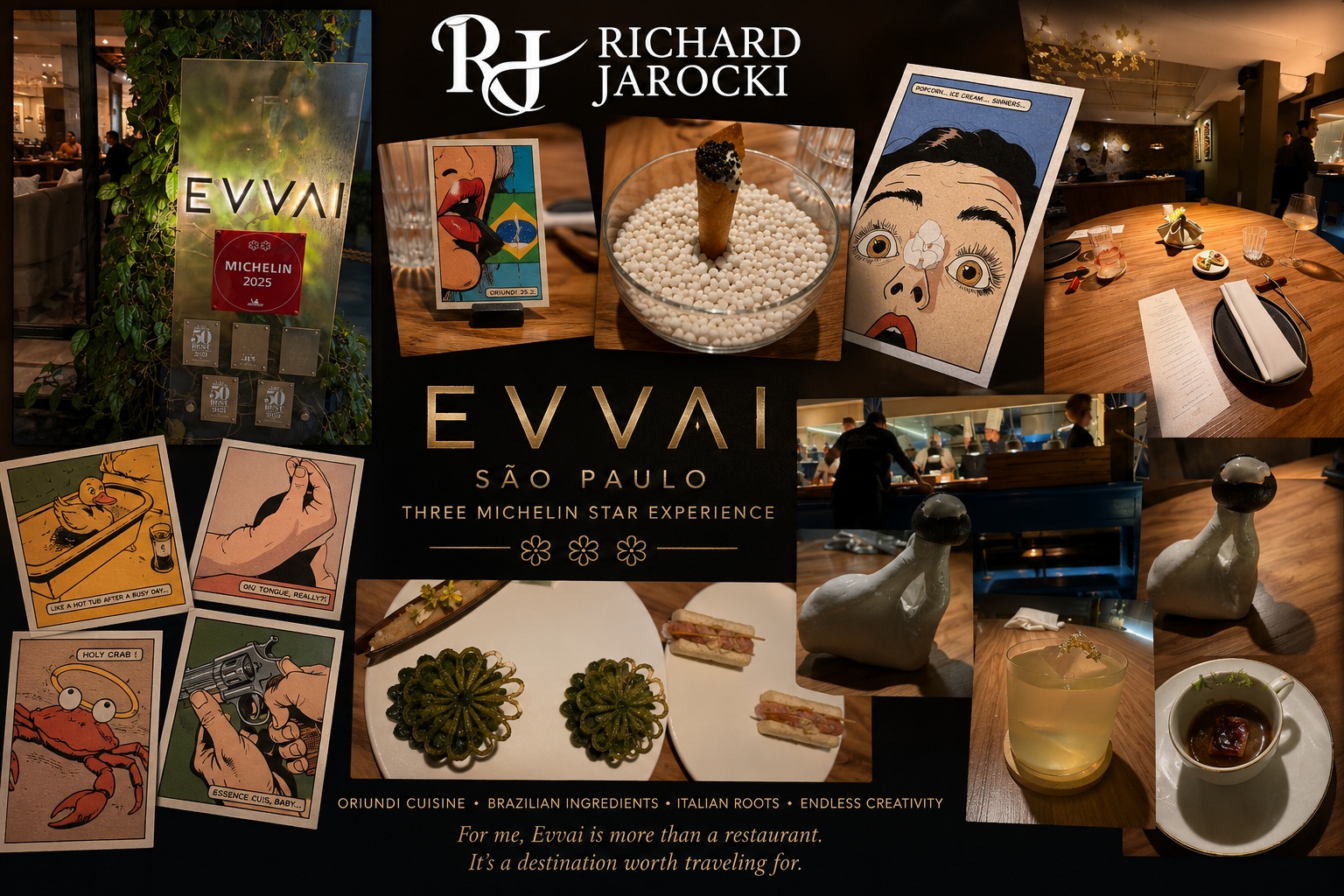
    Collage featuring Evvai, the three Michelin-starred restaurant in São Paulo, showcasing the restaurant entrance, tasting menu, signature dishes, collectible comic-style course cards, cocktails, the open kitchen, and Richard Jarocki branding.

    People often ask me what my favorite restaurant in the world is. Considering how much I travel for food, it’s a fair question. I’ve been fortunate enough to dine at Michelin-starred restaurants, experience many of the World’s 50 Best Restaurants, and eat my way through some of the greatest culinary destinations on earth.

    My answer never changes: Evvai in São Paulo.

    This restaurant is one of the biggest reasons I look forward to returning to the city. The food matters, of course. But so do the explanations, the illustrated course cards I still keep, the disciplined kitchen, and the fact that a meal this carefully put together can still be so much fun.

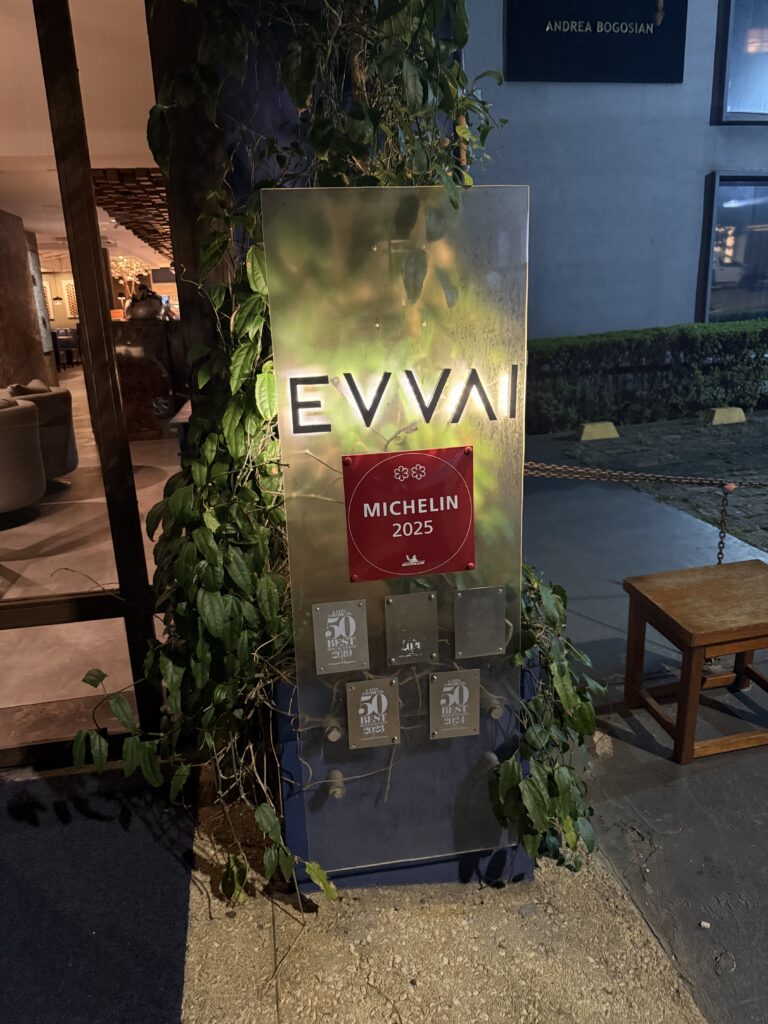
    Entrance sign at Evvai, a three-Michelin-starred restaurant in São Paulo, Brazil
    Evvai in São Paulo. It is one of the biggest reasons I look forward to returning to the city.
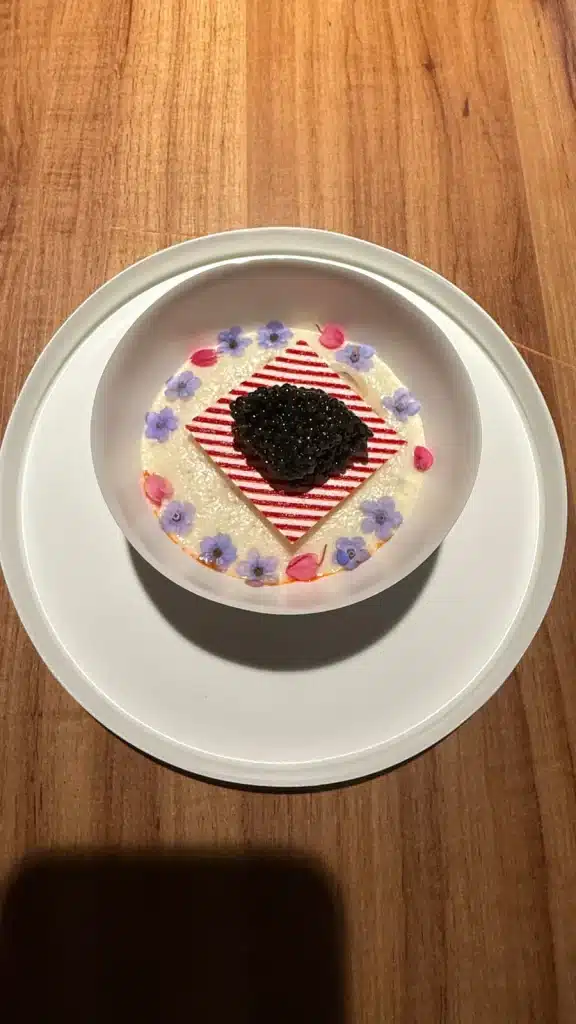
    Caviar on a red-and-white striped centerpiece surrounded by colorful details at Evvai in São Paulo
    A caviar-topped course from my November 2025 meal at Evvai.

    More Than Italian. More Than Brazilian.

    Chef Luiz Filipe Souza describes Evvai’s cuisine as Oriundi, a philosophy inspired by the Italian immigrants who helped shape Brazil’s culinary identity.

    It’s not Italian. It’s not Brazilian. It’s both.

    Throughout the tasting menu, classic Italian techniques meet ingredients native to Brazil. Jambu, tucupi, cupuaçu, priprioca, native honeys, heart of palm, Amazonian fish, and regional fruits become the foundation for dishes that feel both familiar and completely new.

    Nothing is included simply because it’s unusual. Every ingredient has a purpose. Every course tells a story.

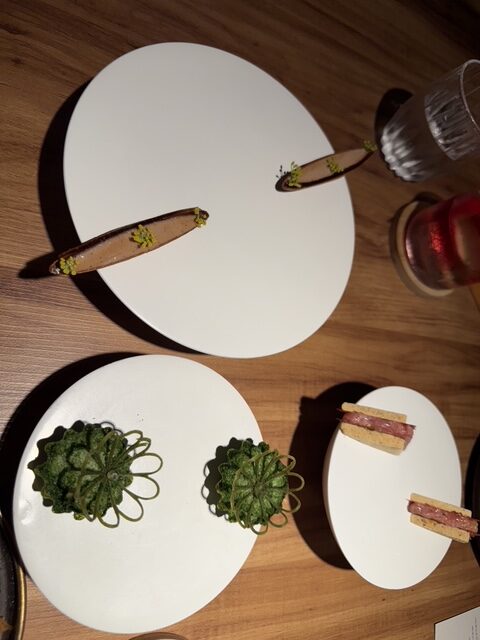
    Selection of artistic opening bites served during the tasting menu at Evvai São Paulo
    Opening bites from an earlier Evvai tasting menu.
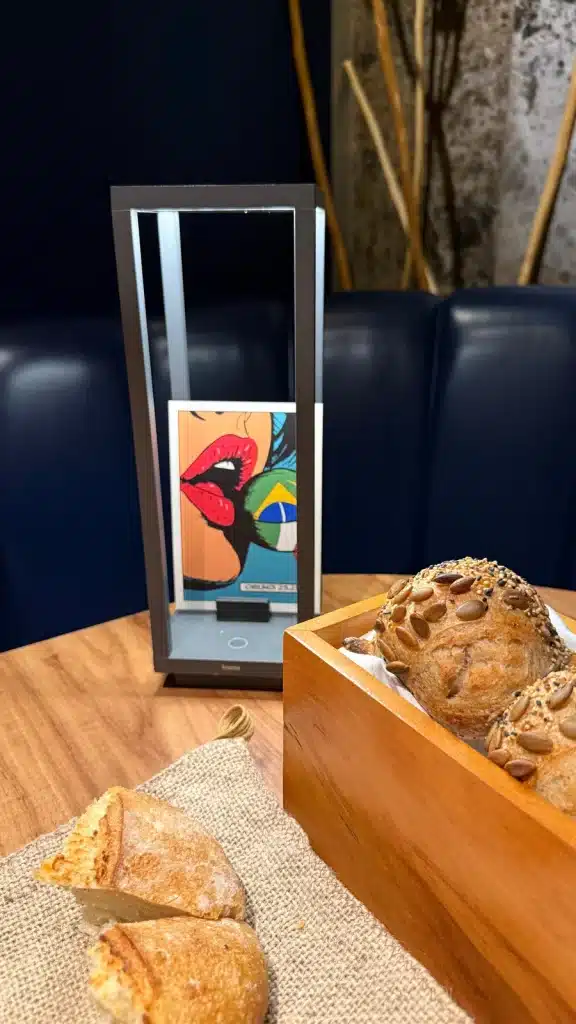
    Bread selection beside a wooden serving box at Evvai in São Paulo
    Bread service during my November 2025 tasting menu.

    A Menu That Never Stops Evolving

    One of the reasons I continue returning is because no two meals have ever been alike.

    Chef Luiz isn’t interested in creating a menu that stays the same year after year. Every visit brings new ideas, new ingredients, and new interpretations while remaining unmistakably Evvai.
    I’ve compared the menus and collectible cards from each visit, and it’s remarkable how much they evolve.

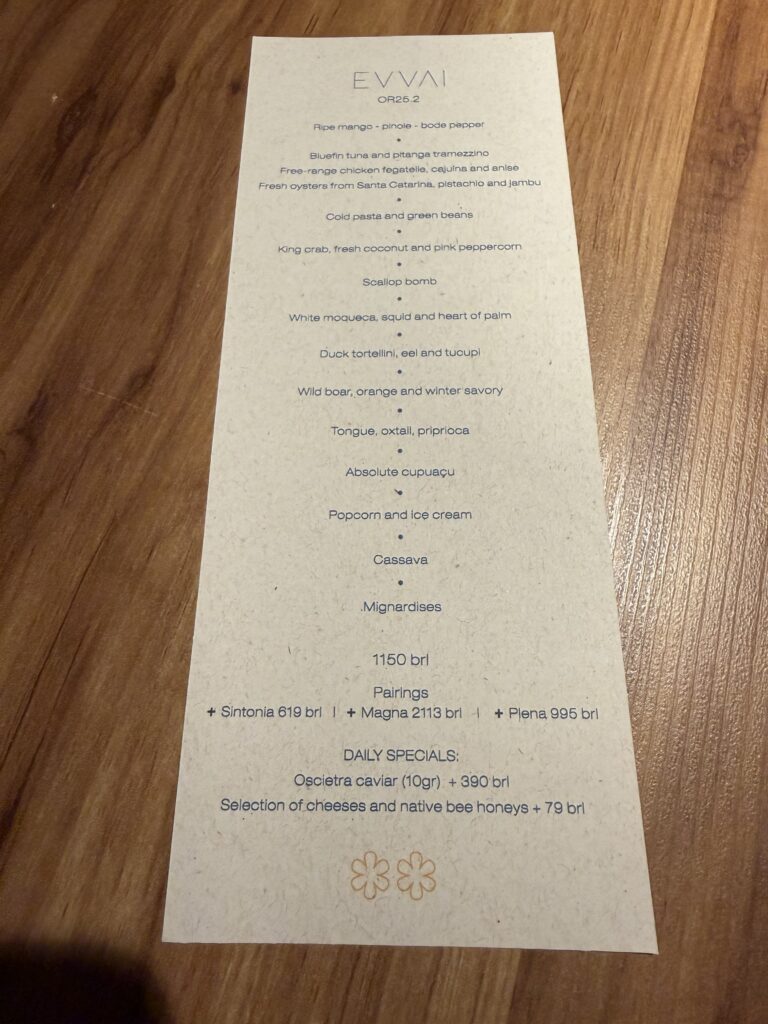
    One visit introduced me to King Crab with fresh coconut and caviar, White Moqueca with squid and heart of palm, Duck Tortellini with eel and tucupi, Wild Boar with savage orange, Tongue with oxtail and priprioca, and the unforgettable Popcorn and Ice Cream dessert.

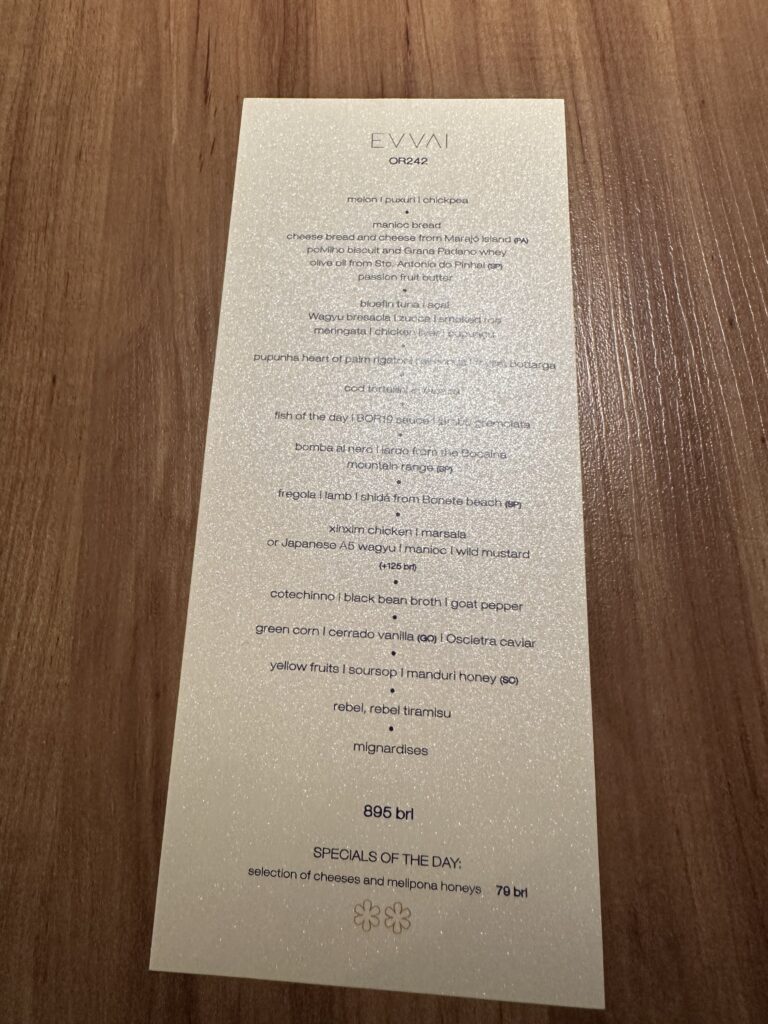
    Another visit featured Bluefin Tuna with wagyu bresaola, Cod Tortellini, Fish of the Day with moqueca, Lamb with fregola, Green Corn with Oscietra caviar, Rebel Tiramisu, and a choice between Xinxim Chicken or Japanese A5 Wagyu.

    The philosophy never changes. The creativity never stops. Every return feels like discovering Evvai all over again.

    Evvai ORI25.2 tasting menu featuring Brazilian seafood, pasta, wild boar and desserts
    The ORI25.2 menu from a previous visit. This is a keepsake, not the current menu.
    Evvai OR24.2 tasting menu featuring Brazilian ingredients, seafood, pasta and Wagyu
    The OR24.2 menu from another visit, showing how much the experience changes.

    Every Dish Has a Personality

    I’ve had tasting menus where every course was technically perfect, yet by the end of the evening I struggled to remember what I had actually eaten.

    That has never happened at Evvai.

    The King Crab with fresh coconut, delicately topped with caviar, perfectly balanced sweetness, richness, and salinity while proving that elegance doesn’t have to be complicated.

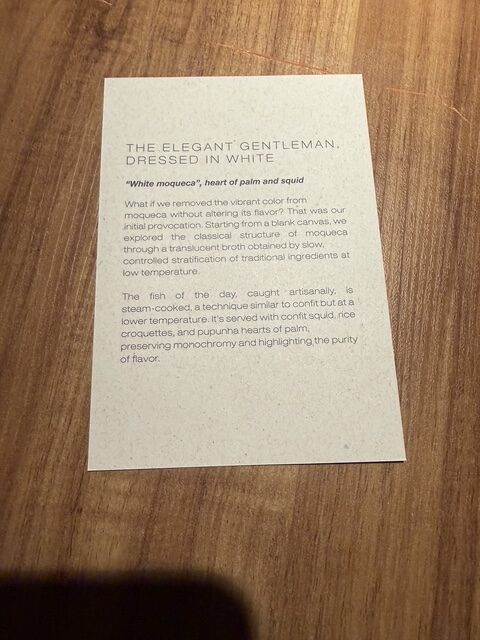
    The White Moqueca challenged everything I thought I knew about one of Brazil’s most iconic dishes. By removing its vibrant colors, Chef Luiz created something visually unexpected while preserving every bit of the soul and flavor that makes moqueca so beloved.

    The Duck Tortellini with eel and tucupi remains one of the most memorable pasta courses I’ve ever eaten.

    One of my favorite surprises was a playful green corn ice cream cone topped with Oscietra caviar. At first glance, it makes you smile. Then you taste it. Sweet corn and luxurious caviar shouldn’t work together as well as they do, yet somehow the combination feels completely natural. It’s whimsical, technically brilliant, and unmistakably Evvai.

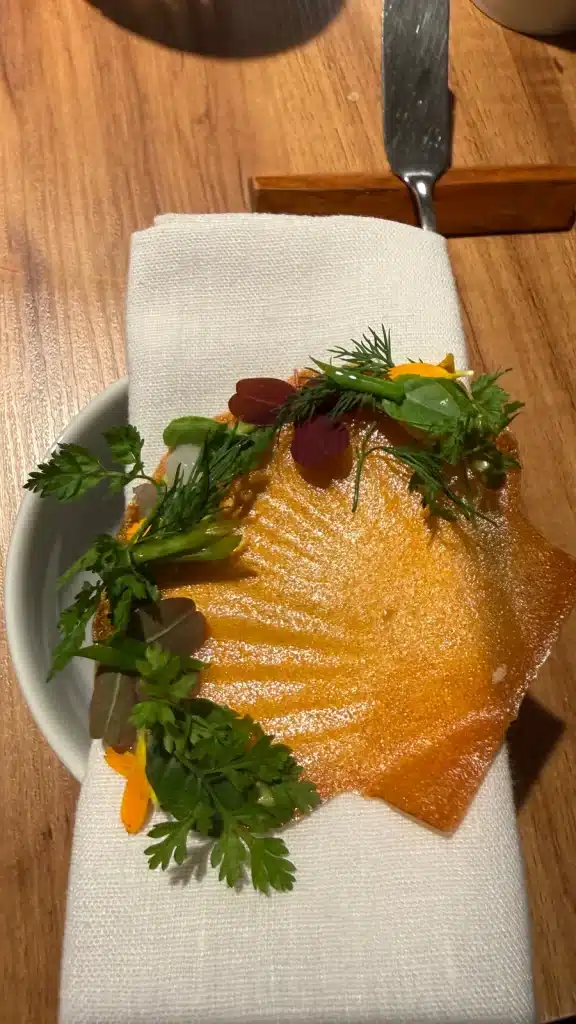
    Golden scallop crisp with greens at Evvai in São Paulo.
    A scallop crisp served with greens during my tasting menu at Evvai.
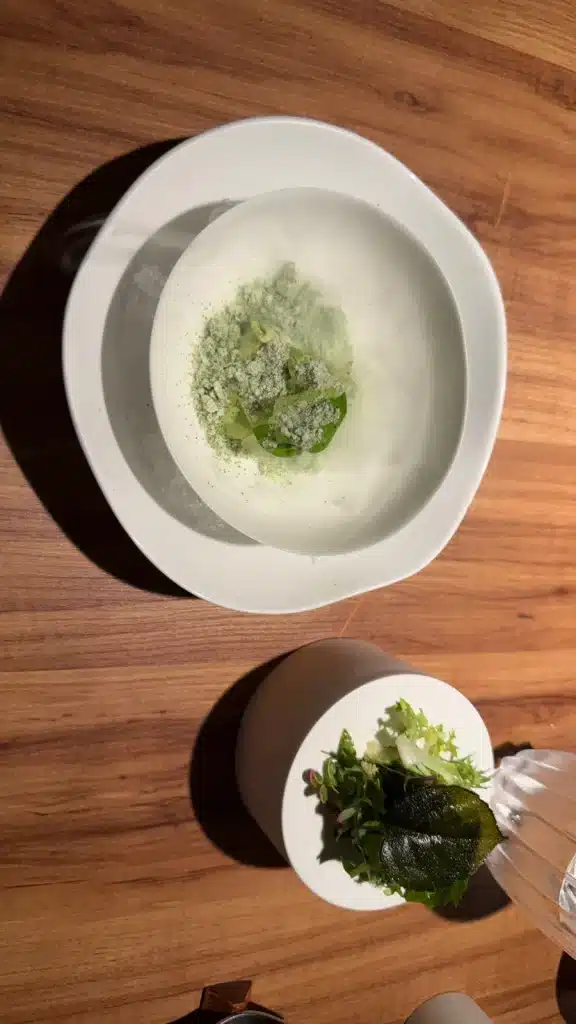
     Green course in a white bowl with a separate small plate of greens at Evvai in São Paulo
    A green tasting-menu course from my November 2025 visit.

    The scallop crisp pictured here is another example of how much there is to look at during the meal. The crisp itself is scallop-based, rather than simply a garnish beside a scallop.

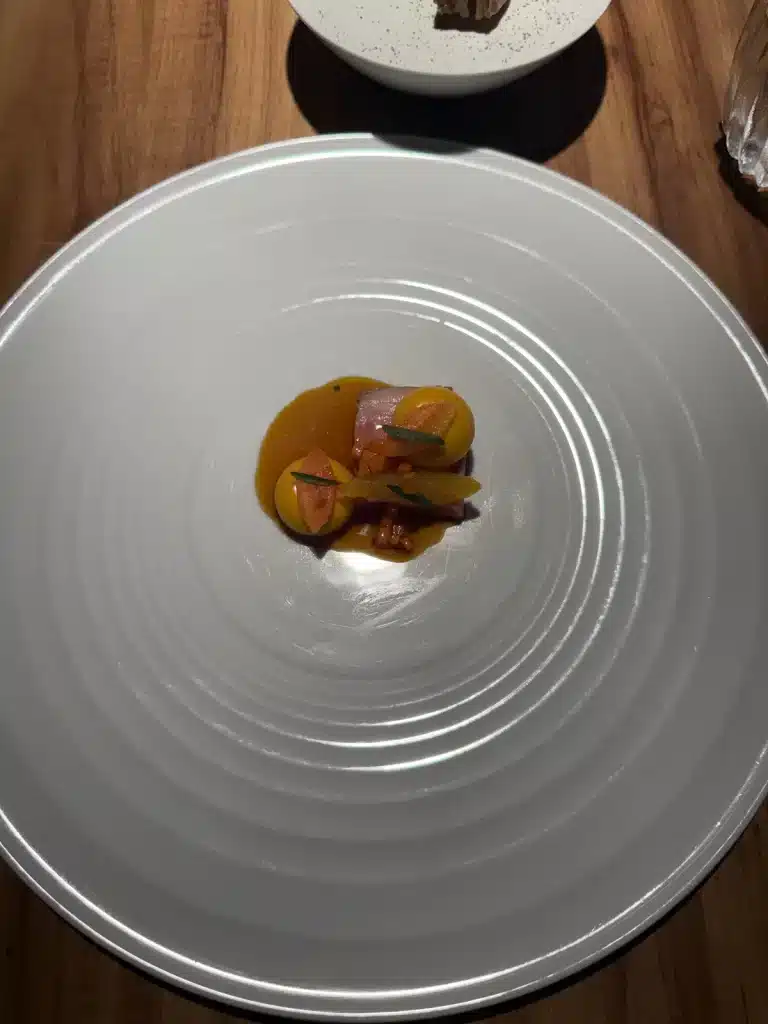
    Small plated savory course with orange sauce in a wide white bowl at Evvai in São Paulo
    A savory course with orange sauce, photographed during my November 2025 meal.
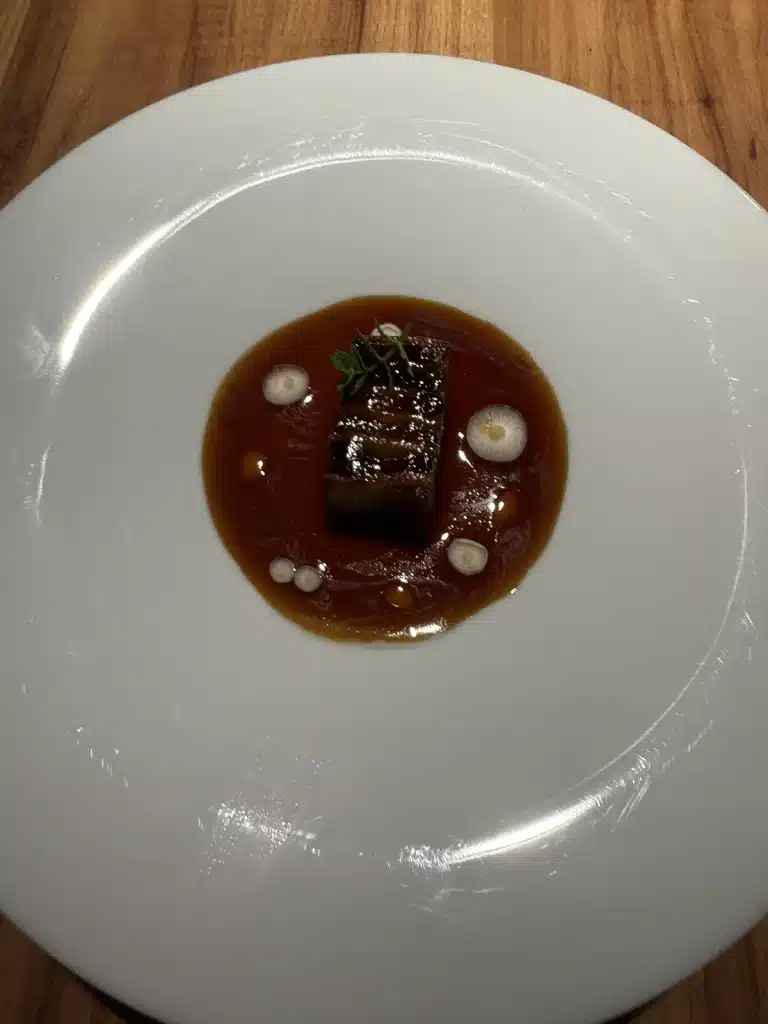
    Rectangular plated course in dark sauce with small pale garnishes at Evvai in São Paulo
    A plated course with dark sauce from my November 2025 meal.

    Desserts That Remember to Have Fun

    Popcorn and ice cream doesn’t sound like something you’d expect from one of the world’s best restaurants. Until it arrives.

    Finished with popping candy, every bite combines creamy sweetness, buttery popcorn, and the crackling sensation of Pop Rocks. It’s nostalgic, interactive, and impossible not to smile while eating it.

    That perfectly sums up my experience. Now recognized with three Michelin stars. World-class technique. Yet it never forgets that dining should be fun.

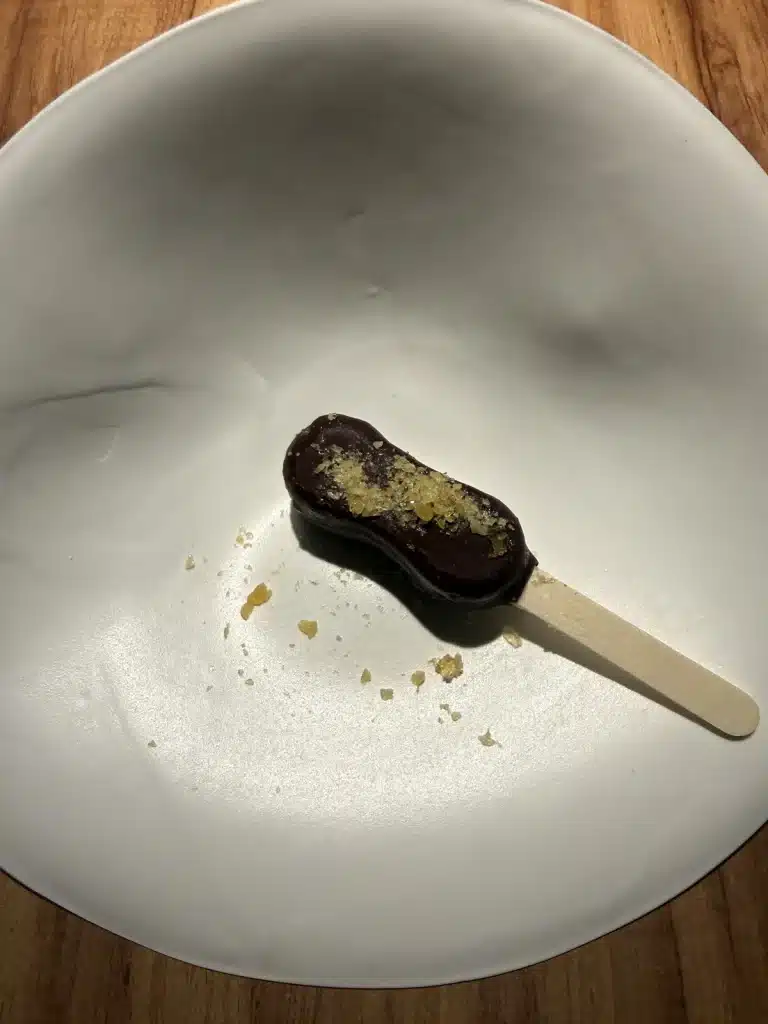
    Pop Rocks ice cream bar on a stick, served on a white plate at Evvai.
    The Pop Rocks ice cream bar during my tasting menu at Evvai.
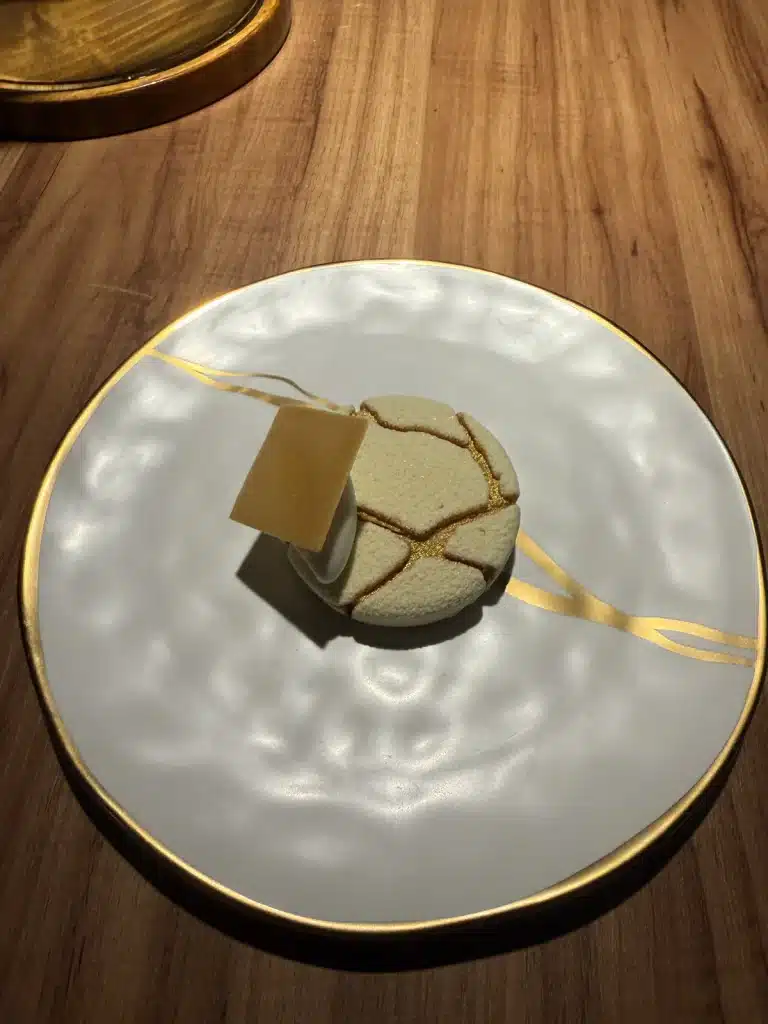
    Round decorated dessert with a thin square garnish at Evvai in São Paulo
    A decorated dessert from my November 2025 tasting menu.

    The frozen dessert pictured above is the Pop Rocks ice cream bar. That playful presentation belongs in this story just as much as the pasta, the caviar, and the technique. It is part of why I remember the experience so clearly.

    Illustrated card introducing the popcorn ice cream dessert at Evvai São Paulo
    “Popcorn… Ice Cream… Sinners…”: even dessert has its own story.
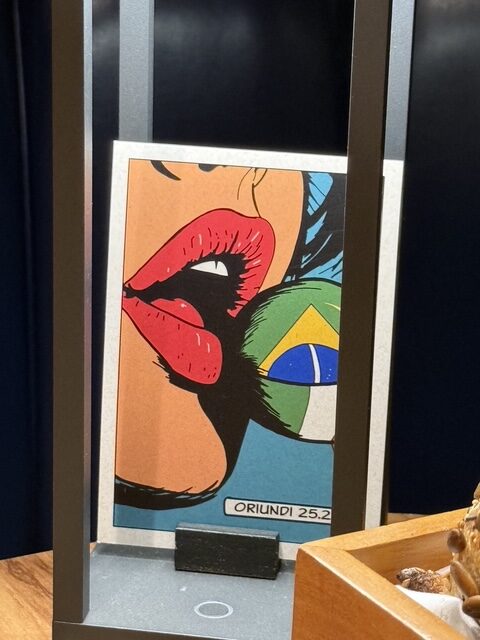
    Pop-art Oriundi 25.2 tasting-menu artwork displayed at Evvai São Paulo
    Oriundi 25.2 artwork: the visual storytelling begins before the first course.

    Every Course Tells a Story

    Every course begins before the plate ever reaches your table.

    The service team introduces each dish, explaining the ingredients, techniques, and inspiration behind Chef Luiz Filipe Souza’s vision. Their knowledge is remarkable, and they present every course with the same care and precision that went into creating it.

    Then the storytelling continues.

    Throughout the meal, you’re handed beautifully designed collectible cards inspired by vintage comic books and pop art. Each card corresponds to one of the courses you’ve just experienced.

    Some make you laugh before you’ve even taken the first bite.

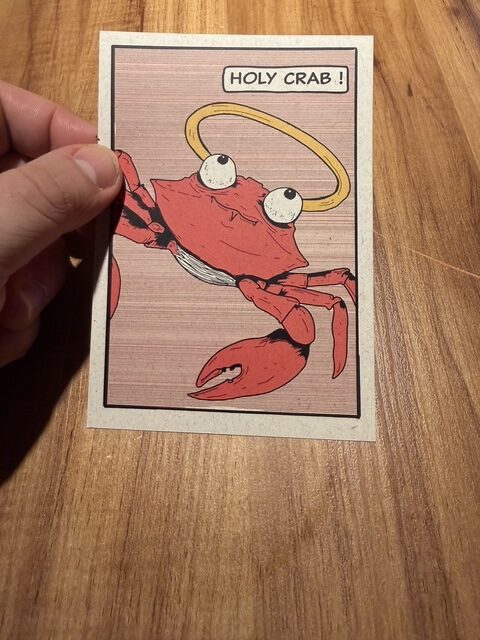
    A halo-wearing crab proclaims “Holy Crab!”

    A revolver loaded with pasta reads “Pasta La Vista, Baby…”

    A duck relaxing in tucupi jokes, “Like a Hot Tub After a Busy Day…”

    Others challenge your expectations with “No Tongue, Really?!”, “Popcorn… Ice Cream… Sinners…”, and “Give Me That Hand!”

    Then you flip the card over.

    Instead of simply listing ingredients, Chef Luiz explains the thought process behind the dish, the techniques used, and the inspiration behind its creation.

    It’s one of the most thoughtful touches I’ve experienced in any restaurant. I still have every single card from every visit to Evvai. They’re more than souvenirs. They’re a collection of memories.

    Every time I flip through them, I remember not only the dish itself, but the conversations, the presentation, and exactly how I felt experiencing it.

    Most restaurants leave you with photographs. Evvai also gives me something I can hold onto and revisit long after dinner.

    Illustrated “Holy Crab” tasting-menu card featuring a red crab at Evvai São Paulo
    “Holy Crab!”: one of the cards I kept from the meal.
    Pop-art “Pasta La Vista, Baby” tasting-menu card presented at Evvai São Paulo
    “Pasta La Vista, Baby…”: pasta with a sense of humor.
    Illustrated duck and tucupi tasting-menu card presented at Evvai São Paulo
    A duck relaxing in tucupi: “Like a Hot Tub After a Busy Day…”
    Illustrated card for “The Elegant Gentleman, Dressed in White” moqueca course at Evvai São Paulo
    “The Elegant Gentleman, Dressed in White”: the illustrated introduction to white moqueca.
    Menu card for Evvai’s white moqueca with fish, squid and heart of palm
    Turn the card over and the explanation continues: white moqueca with fish, squid and heart of palm.
    Pop-art “No Tongue, Really?” tasting-menu card presented at Evvai São Paulo
    “No Tongue, Really?”: Evvai does not take its storytelling too seriously.
    Illustrated Savage Orange tasting-menu card presented at Evvai São Paulo
    The “Savage Orange” course card.
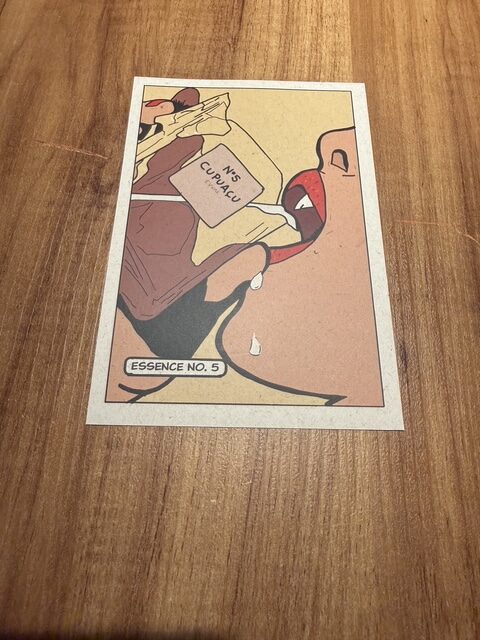
    Illustrated Essence No. 5 presentation card from the tasting menu at Evvai São Paulo
    The illustrated Essence No. 5 card.
    Pop-art “Give Me That Hand” tasting-menu card presented at Evvai São Paulo
    The “Give Me That Hand” illustrated card.

    Fine Dining Without the Pretension

    At some fine-dining restaurants, the formality can take over the evening. The room becomes silent. Guests whisper. Everyone seems afraid of making too much noise. While I appreciate that level of refinement, it can sometimes feel more like attending a ceremony than enjoying dinner.

    Evvai feels alive. Everything about the restaurant is polished, professional, and worthy of three Michelin stars. Yet it never feels intimidating. Guests laugh. Servers joke with the tables. Courses surprise you. The playful comic-book cards become conversation starters.

    An ice cream cone topped with caviar appears. A dessert crackles with Pop Rocks. The atmosphere is relaxed without ever sacrificing professionalism.

    That balance is incredibly difficult to achieve, and I honestly can’t think of another Michelin-starred restaurant that does it quite the same way.

    Chef Luiz Filipe Souza’s Leadership

    I believe that atmosphere starts with Chef Luiz Filipe Souza.

    His creativity is obvious in every dish, but what impressed me just as much was the culture he’s built inside the restaurant.

    One of my favorite moments at Evvai doesn’t happen at the table. It happens in the kitchen. Throughout service you’ll hear Chef Luiz, or whoever is leading the brigade that evening,calling commands. Instantly, the kitchen responds together with a loud, unified:

    “YES, CHEF!”

    It’s authentic. It’s disciplined. It’s organized. You can hear the respect the team has for one another and the pride they take in their craft. That passion extends beyond Chef Luiz himself.

    The pastry program is led by Bianca Mirabili, whose creativity perfectly complements the rest of the tasting menu. In 2025, she was recognized as Latin America’s Best Pastry Chef, an honor that feels completely deserved after experiencing her work.

    Together, they have built something incredibly special.

    The kitchen’s call-and-response has a military precision to it, but the experience at the table stays warm. The team explains what is arriving and why it matters. That combination of discipline and personality is a big part of what makes Evvai feel different to me.

    More Than Just a Restaurant

    Over time, Evvai has become much more than my favorite restaurant. It’s become one of those rare places that feels familiar every time I walk through the door.

    I make restaurant reservations all over the world whenever I think there’s even the slightest chance I can get away. Sometimes work wins, plans change, and I end up cancelling.

    But Evvai is different.

    When I started planning my return to São Paulo for Formula 1 in November 2026, there was one reservation I refused to leave to chance.

    Evvai.

    In fact, I confirmed my dinner reservation before I even purchased my Formula 1 ticket. That probably tells you everything you need to know. If Formula 1 were cancelled tomorrow…

    I’d still make the trip.

    That’s the highest compliment I can give any restaurant. The service is impeccable. The food is extraordinary. The storytelling is unlike anything I’ve experienced anywhere else. Most importantly, despite now standing among the very best restaurants in the world, it has never lost its personality.

    It remains warm. It remains welcoming. It remains creative. It remains fun.

    I’ve traveled thousands of miles chasing unforgettable meals and have been fortunate enough to experience some of the finest restaurants on the planet.

    Only one has ever made me say, without hesitation, that I’d book a flight just for dinner.

    That restaurant is Evvai.

    Planning Your Own Evvai Dinner

    The menus photographed here are from my previous visits, and that distinction matters. Part of the reason I return is that the cooking keeps changing. Go for the experience rather than expecting every dish in these photographs to appear in exactly the same form.

    Start with the restaurant’s official website for the current offering and reservation process. If you have dietary restrictions or a particular question about the meal, confirm it directly before booking.

    For more of my firsthand restaurant stories, explore Food & Drink. If you are building a trip around a meal, my travel page is a place to keep exploring. And if you have eaten at Evvai, I would love to hear which course stayed with you.