Category: Travel Insights

Travel insights from the planning, decisions, and occasional mistakes behind my trips. I share how I research destinations, choose hotels and experiences, balance a budget, and decide when spending more is worth it. These posts explore what I’ve learned along the way and what I’d do differently next time, so you can make more informed choices for your own travels.

  • 5 Grand Prix Destinations Worth Building a Luxury Trip Around

    5 Grand Prix Destinations Worth Building a Luxury Trip Around

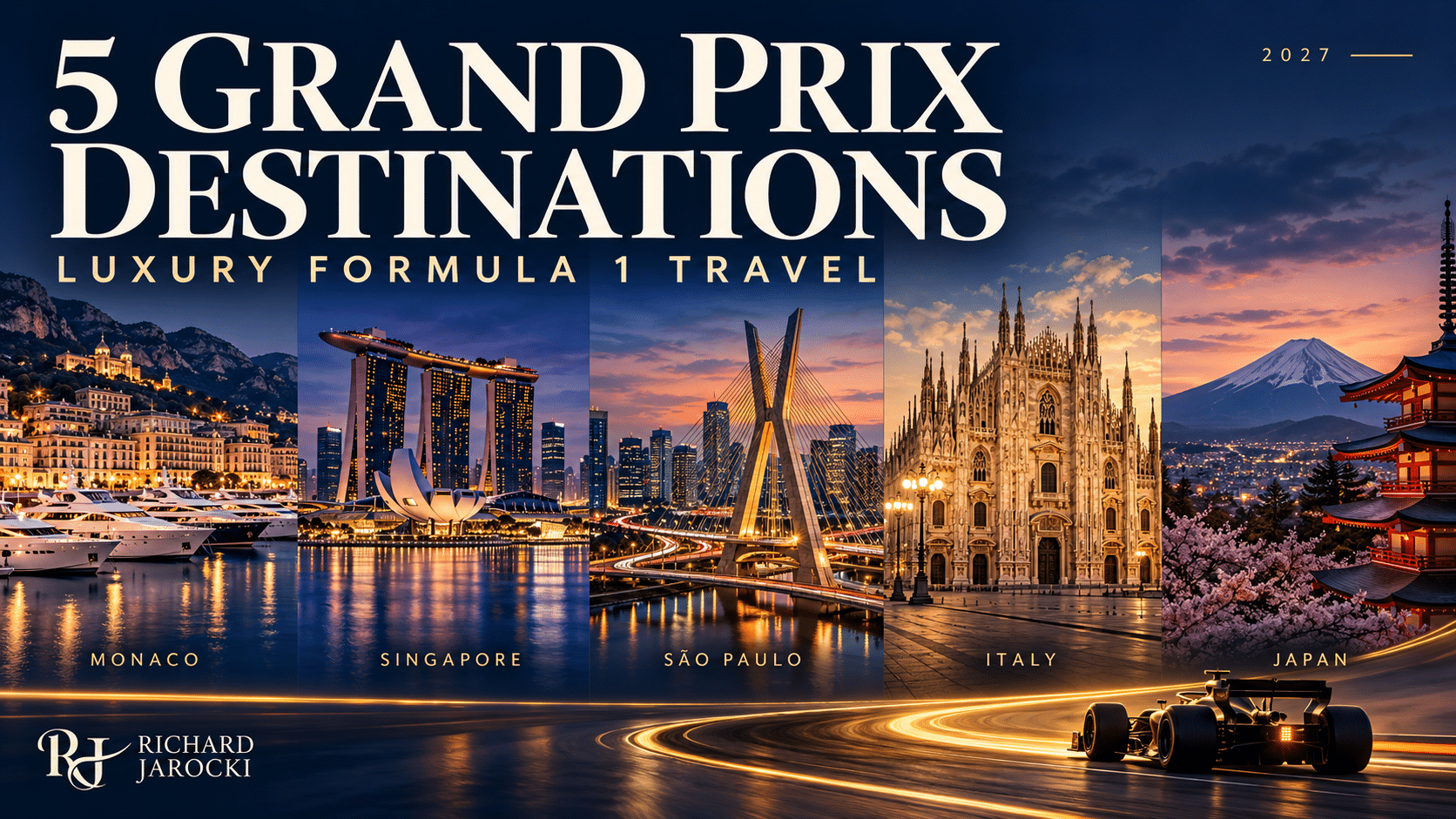
    Luxury Formula 1 travel collage featuring Monaco, Singapore, São Paulo, Italy and Japan.

    Updated October 23, 2026

    Luxury Formula 1 Travel: Some people choose a Grand Prix and then find somewhere to stay. I do it the other way around.

    Where am I having dinner? Which hotel will I actually enjoy coming back to? Is there enough time around the race to make the trip feel like more than a weekend at a circuit?

    That is how I think about luxury Formula 1 travel. I want a good seat and a great race, but I also want a trip I would be happy to take even if the cars were not there.

    São Paulo taught me that. I first went for the Grand Prix in 2024, returned in 2025, and am heading back again in November 2026. The racing is the reason I book the trip. The restaurants, hotels and city are why I keep returning.
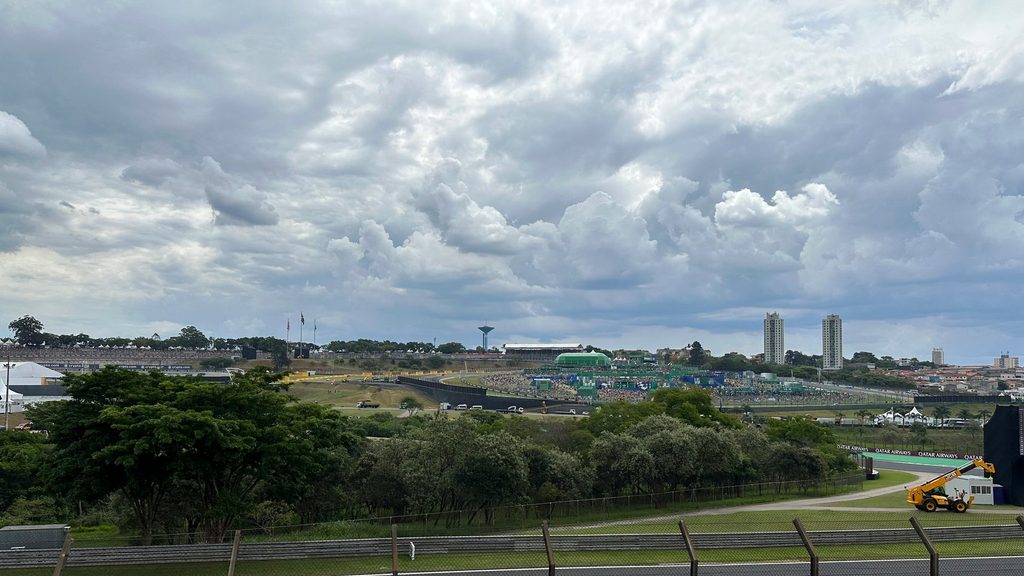
    Luxury Formula 1 Travel Interlagos circuit and tree-lined infield beneath dramatic clouds, with grandstands in the distance.
    The view across Interlagos during my 2024 São Paulo Grand Prix weekend.

    There are plenty of Grand Prix destinations I would build an entire trip around. For this article, I picked five that offer something beyond the circuit.

    Luxury Formula 1 Travel: Five Destinations at a Glance

    Monaco: For the setting, the racing history and a Riviera trip that extends beyond the circuit. Choose your race view carefully, then leave time for waterfront meals, a special hotel stay and exploring the coast.

    Singapore: For night racing paired with restaurants, cocktail bars and time to explore the city. Mix a memorable dinner with hawker-center meals, choose a hotel around your circuit access and leave room for slower mornings after late nights.

    São Paulo: My firsthand choice for combining Formula 1 with exceptional dining. Interlagos brings me there, but Evvai, Tan Tan and the hotels keep me coming back. Give the restaurants their own place in the itinerary, with realistic time for traffic and getting ready after the race.

    Italy: For Monza, Milan and a longer journey through food and Ferrari country. Build the race weekend around Milan, then consider Lake Como for a slower pace or Bologna, Modena and Maranello for pasta, regional specialties and Ferrari history.

    Japan: For Suzuka followed by a food journey worth allowing at least two weeks to enjoy. My plan would start in Tokyo, move to Nagoya for the race, then continue through Kyoto and Osaka. Think sushi, ramen, grilled eel, traditional Kyoto dining and Osaka street food, with time to enjoy each stop rather than rush between reservations.

    2027 dates to plan around

    Japan: April 9–11. Monaco: June 4–6. Italy (Monza): September 3–5. Singapore: October 8–10. São Paulo: November 5–7.

    These are the published 2027 race weekends, also listed in McLaren’s calendar and the FIA’s 2027 schedule.

    Still planning for this year? The 2026 São Paulo Grand Prix takes place November 6–8.

    Booking research: Prices and sales status below were checked October 23, 2026. Always confirm current availability and terms directly with the hotel, circuit or official ticket seller before booking.

    Official 2027 Formula 1 calendar

    1. Monaco for the setting and the occasion
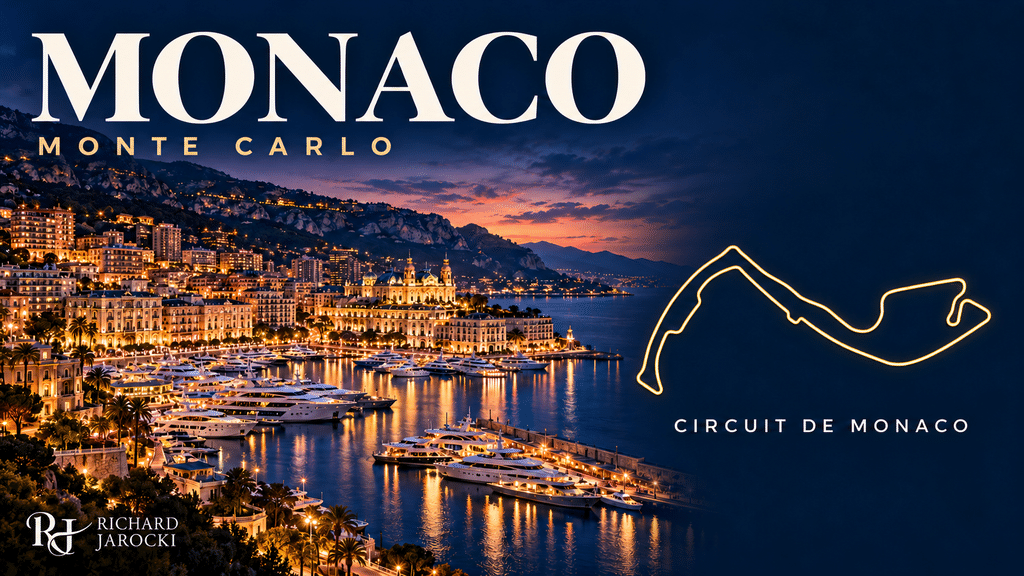
    Luxury Formula 1 Travel Illustration of Monaco’s yacht-filled harbour at dusk beside a gold stylized Circuit de Monaco outline.
    Monaco’s harbour at dusk, paired with a stylized Circuit de Monaco outline. AI-generated editorial illustration.

    Monaco is the obvious luxury Grand Prix choice, but I would look past the yacht photos and focus on what actually makes the trip work: a race view you understand, a hotel that fits your pace and enough time to enjoy the coast.

    The attraction is the setting: Formula 1 running through Monte Carlo, with the harbor, hillsides and old town all within reach. It is a race weekend where the city itself is part of the experience.

    A yacht, a terrace and a grandstand can offer three very different days. Before booking, I would look closely at sightlines, shade, access and what is actually included.

    Hôtel de Paris Monte-Carlo is a hotel I would research for a stay centered on Casino Square. It is close to the action, but the bigger question is whether the room, terrace or package gives you the race experience you want.

    Beyond the circuit, leave time for a proper dinner and a few days on the coast. Nice, Cap d’Antibes and the villages above the water are all easy additions if you do not try to do everything in one weekend.

    Where I would spend: a viewing location I have researched carefully, followed by a hotel and meals that make the trip feel complete.

    What I would check: exact race views, access routes during closures, minimum hotel stays and whether a terrace or hospitality package is worth the premium.

    Hotels and tickets for June 3–7, 2027

    The Fairmont Monte Carlo’s official Grand Prix package makes the cost of staying in Monaco clear: a five-night minimum, with 2027 packages beginning at €7,500 per room for two guests, including breakfast and a three-day grandstand ticket. The hotel also notes that rates vary by room category and availability.

    For tickets, the Automobile Club de Monaco’s official 2027 price sheet lists three-day grandstand tickets from €780 to €1,360, depending on the stand. Hospitality and terrace options are separate products, so I would compare them against the actual view and access rather than assuming they are automatically better.

    2. Singapore for a complete city break
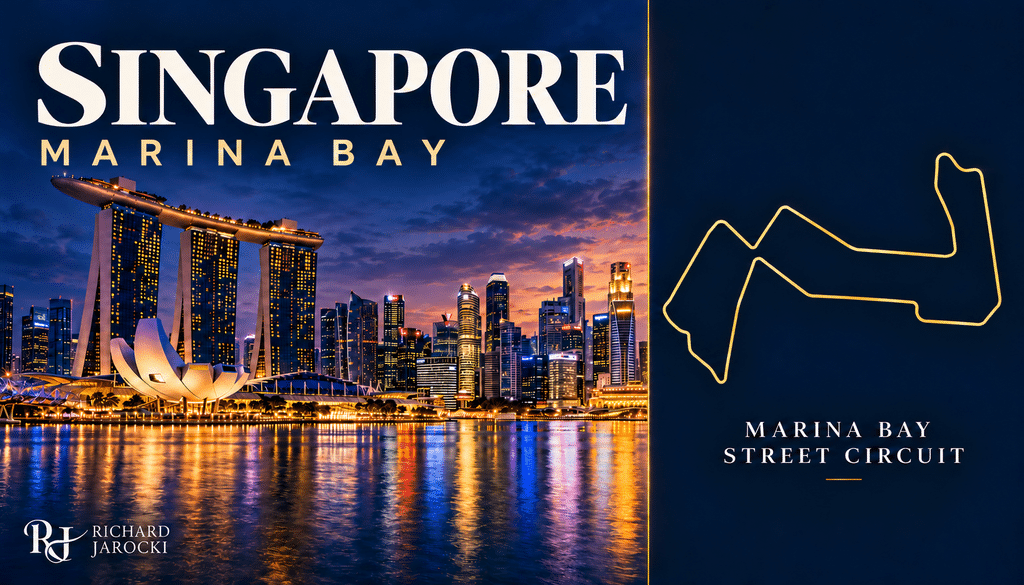
    Luxury Formula 1 Travel Illustration of Singapore’s Marina Bay skyline at blue hour beside a gold stylized Marina Bay Street Circuit outline.
    Singapore’s Marina Bay skyline, paired with a stylized Marina Bay Street Circuit outline. AI-generated editorial illustration.

    Singapore appeals to me because the race and the city can both be substantial parts of the trip. The night race gives you daylight hours for food, museums, walks and a slower hotel morning if you plan it well.

    Resist the temptation to schedule every daytime hour because the racing happens at night. A long lunch, a swim, a nap and a good dinner can make the weekend better than trying to see every neighborhood between sessions.

    Marina Bay Sands is an obvious hotel to research, particularly if the rooftop pool and circuit proximity matter to you. I would also look at hotels in the Civic District or along Orchard Road if I wanted a different rhythm away from the circuit.

    For food, I would build in both a special dinner and time for hawker-center eating. Singapore works best when you let the formal and casual meals sit alongside each other.

    Where I would spend: a hotel location that works with the circuit gates I will use, then meals that range from a serious reservation to a late-night hawker stop.

    What I would check: ticket zones, gate access, road closures and the late-night transport plan back to the hotel.

    Singapore’s rules are part of planning the trip

    Singapore’s race-weekend nightlife comes with rules worth checking before you pack. The city is easy to enjoy, but it is not a place to assume that rules from home apply.

    Do not bring recreational drugs, cannabis or CBD products, even if legal where you live. Singapore’s laws are strict, and the safest approach is to leave them at home.

    Public drinking rules differ from licensed-bar hours: public consumption is generally restricted from 10:30 p.m. to 7 a.m., with additional restrictions in designated zones. Check the current rules before the trip, especially if you are planning to drink outdoors after the race.

    Hotels and tickets for October 7–11, 2027

    Alongside Marina Bay Sands, price The Ritz-Carlton, Millenia Singapore. Neither is a budget choice on race weekend, but both are worth comparing for location, views and how much time you expect to spend at the hotel.

    The promoter says the early-bird allocation is sold out, with regular tickets due to go on sale later. That means the practical move is to join the official mailing list and decide in advance which ticket zone you want.

    Read the room description carefully: Lounge @ Turn 3 pairs outdoor grandstand seating with an air-conditioned lounge, while some hospitality products include food and drinks. The right choice depends on whether you value a better view, a place to cool down or a more social setting.

    3. São Paulo for the trip beyond Interlagos
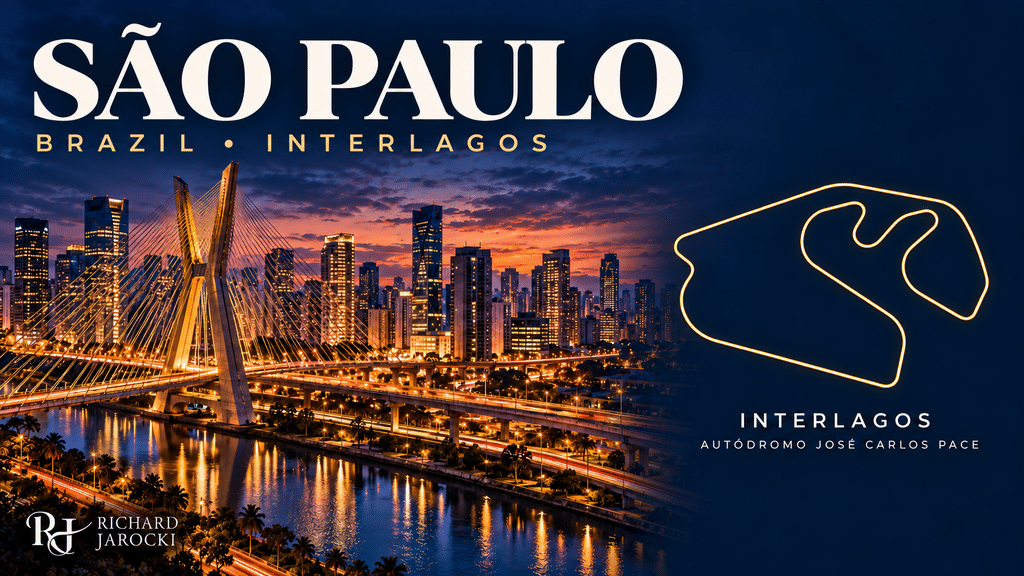
    Luxury Formula 1 Travel Illustration of São Paulo’s illuminated cable-stayed bridge and skyline beside a gold stylized Interlagos circuit outline.
    São Paulo’s Octávio Frias de Oliveira bridge and skyline, paired with a stylized Interlagos outline. AI-generated editorial illustration.

    This is the destination on the list I can talk about from repeated experience.

    I sat in Sector G in 2024 and Sector N in 2025. For 2026, I have chosen Sector M. Each has a different balance of view, atmosphere and comfort, and I have learned that the best choice depends on what you want from the day.
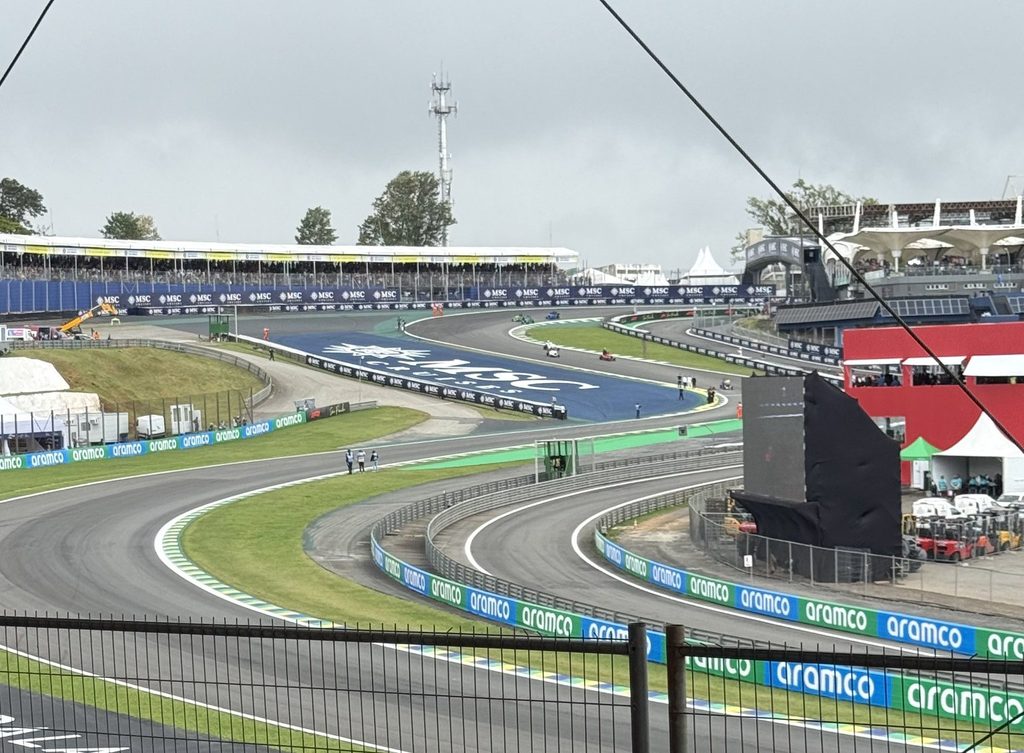
    Luxury Formula 1 Travel The Senna S at Interlagos viewed from Grandstand N, with safety fencing, support cables and surrounding stands.
    The Senna S from Grandstand N during my 2025 São Paulo Grand Prix weekend.

    That is an important part of how I spend on Formula 1. I am happy to choose a grandstand that is not the most expensive if it gives me the experience I want, then put more of the budget toward the restaurants and hotels that make the trip memorable.

    Evvai is my favorite restaurant worldwide. The precision of the service and the food make it a place I would plan a São Paulo trip around, not just add to a list. Evvai’s current menu
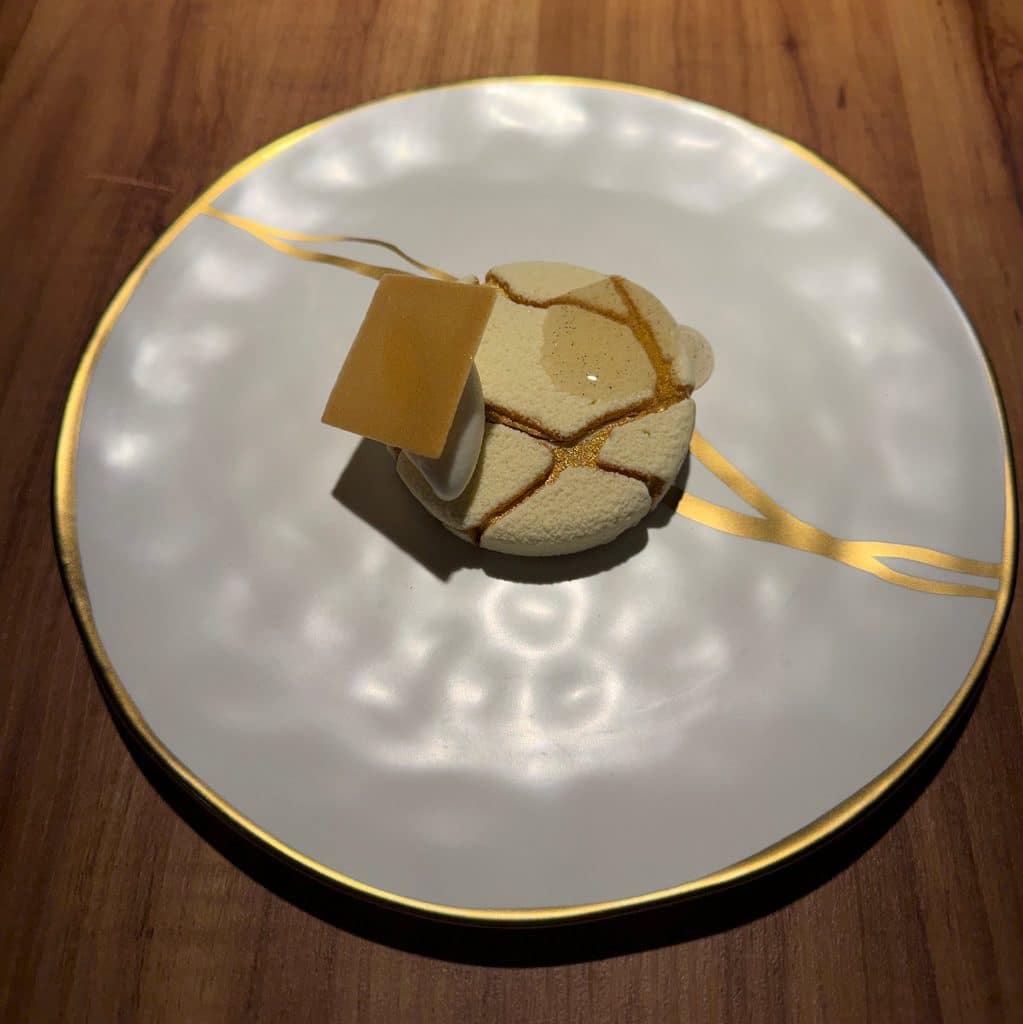
    Luxury Formula 1 Travel A small tasting-menu dish on a white plate with gold decoration at Evvai in São Paulo.
    A course at Evvai during my November 2025 São Paulo trip.

    I have stayed at several São Paulo hotels across my visits, including Hotel Unique, Rosewood São Paulo and W São Paulo. Each works differently depending on where you want to spend time and how you plan to get to Interlagos.

    That traffic is one of the biggest practical lessons I have brought home from Interlagos. The circuit is far from the main hotel districts, and race-day travel can take longer than you expect.
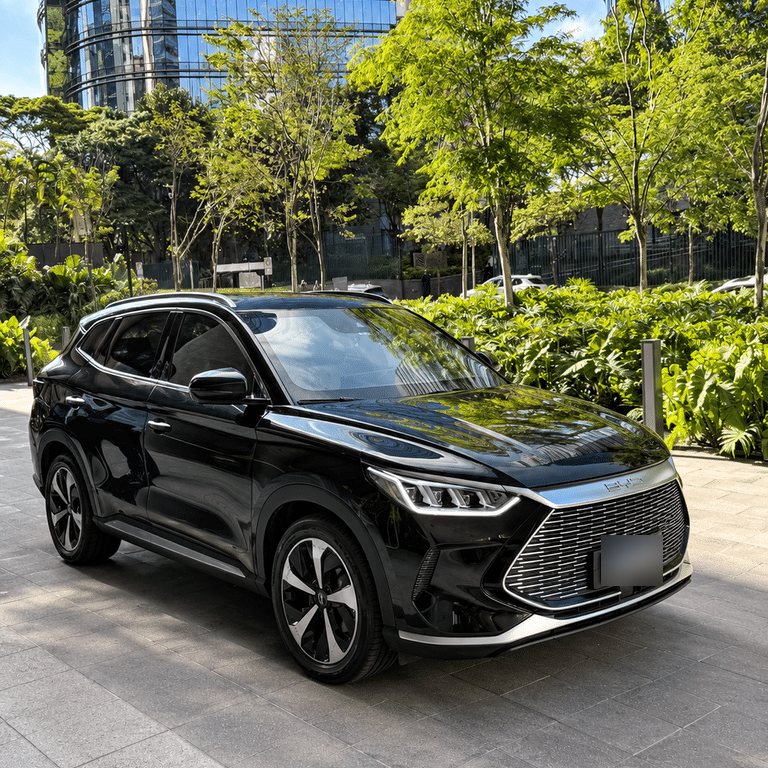
    Luxury Formula 1 Travel Black SUV outside W São Paulo, surrounded by trees and glass buildings, with its license plate blurred.
    My Rhino ride at W São Paulo during my 2025 trip.

    I would rather allow enough time to get back, change and arrive at a restaurant relaxed than try to squeeze in one more stop and spend the evening watching the clock.

    Where I would spend: the restaurants I genuinely want to experience, a hotel I will enjoy returning to and a race ticket that fits how I like to watch.

    What I would check: the exact grandstand, weather protection, pickup location and the route back to the hotel after the race.

    For more detail, start with my São Paulo travel guide and my guide to choosing a grandstand at Interlagos.
    Hotels and tickets for November 4–8, 2027

    Rosewood São Paulo and Hotel Unique stay on my shortlist, alongside W São Paulo. I would compare them based on the restaurants and neighborhoods I want to use, not just the room rate.

    The official F1 ticket store currently shows a 2027 waitlist, so there is no verified public price to quote yet. I would join the official waitlist and avoid treating resale listings as a reliable price signal until the promoter releases inventory.

    4. Italy for Monza, Ferrari heritage and the meals afterward
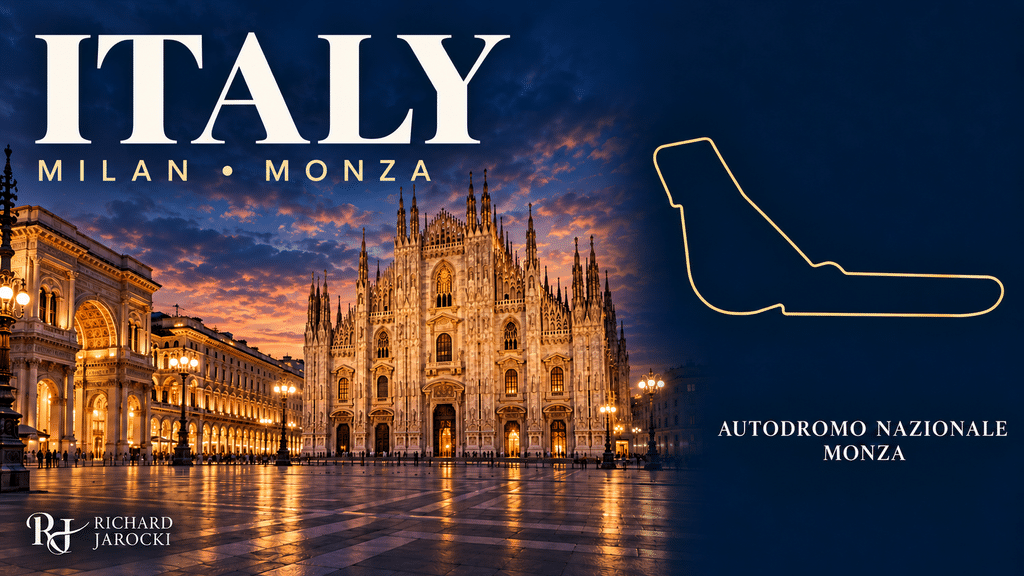
    Luxury Formula 1 Travel Illustration of Milan’s Duomo at dusk beside a gold stylized Monza circuit outline.
    Milan as a city base, paired with a stylized outline of the race circuit in Monza. AI-generated editorial illustration.

    Italy is the trip I would choose for the combination of racing, food and everything around the circuit. Monza is the anchor, but Milan, Lake Como and Emilia-Romagna can turn the weekend into a much bigger journey.

    Base the race weekend in Milan, then change pace with a Lake Como extension: lake walks, long lunches and a hotel stay that feels separate from the crowds around the circuit.

    For a stronger food-and-motorsport trip, continue to Emilia-Romagna. The Enzo Ferrari Museum in Modena, the Ferrari Museum in Maranello and the region’s pasta, balsamic vinegar and cured meats make a good counterpoint to the race.

    Hotels and tickets for September 2–6, 2027

    Mandarin Oriental, Milan is the food-and-design choice I would research, with Seta by Antonio Guida in the hotel. I would also compare it with a Lake Como stay if I wanted the trip to feel less city-focused.

    Monza’s 2027 tickets are on sale. The official three-day adult price list includes grandstands from €450 to €1,100, with general admission from €210. The higher-priced grandstands are not automatically the right choice, so I would compare the view, shade and access before paying more.

    What I would check: the precise grandstand section, shade, station-to-gate route and whether I want to stay in Milan, near the circuit or split the trip with Lake Como.

    5. Japan for Suzuka and a proper food journey
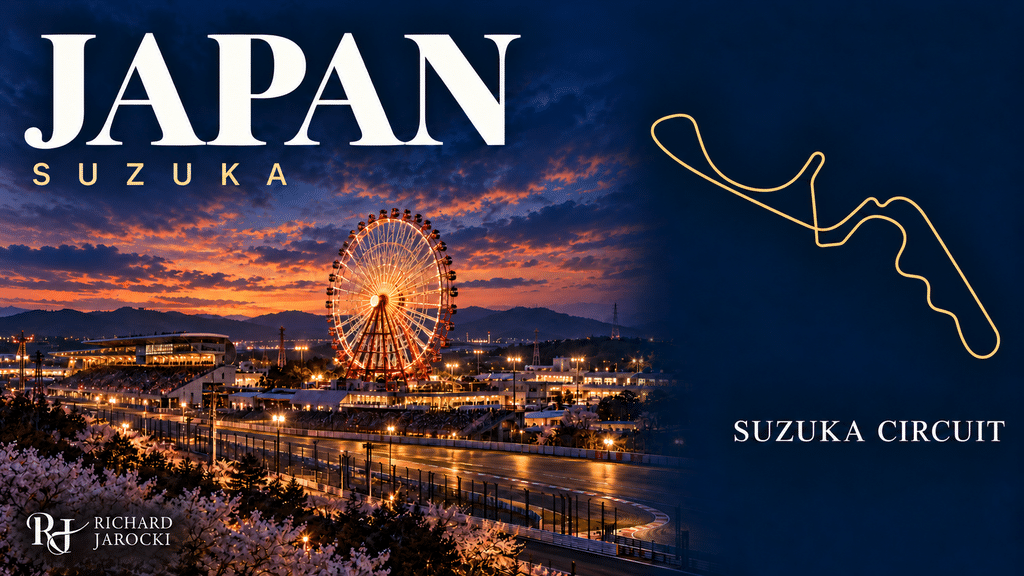
    Luxury Formula 1 Travel Illustration of Suzuka’s illuminated Ferris wheel and grandstands at dusk beside a gold stylized Suzuka Circuit outline.
    Suzuka’s Ferris wheel and grandstands at dusk, paired with a stylized Suzuka Circuit outline. AI-generated editorial illustration.

    For Suzuka, I would want at least two weeks in Japan. That is my minimum for enjoying the race and the food without turning the whole trip into a checklist.

    Start in Tokyo, travel west through Nagoya and Kyoto, and look at flying home from Osaka. The route is straightforward, but the value is in giving each stop enough time.

    Tokyo: April 5–8, three nights

    I would keep arrival day forgiving: a neighborhood meal, an early night and no pressure to see the whole city immediately.

    Ginza Hachigou is one specific target for ramen, with duck, chicken, scallops and truffle in the broth. It is the kind of meal I would plan around, then leave the rest of the day open.

    Nagoya and Suzuka: April 8–12, four nights

    Arrive in Nagoya on Thursday, settle in and give the city a proper meal before the race weekend begins.

    Across the weekend, look for Nagoya’s miso katsu, miso-nikomi udon and tebasaki chicken wings. The city has a strong food identity that is easy to miss if you treat it only as a base for Suzuka.

    Nagoya Marriott Associa, directly connected to Nagoya Station, is a practical hotel to research for the race. It makes the train to Suzuka easier and gives you a comfortable base after a long day at the circuit.

    Race-weekend hotel and ticket reality

    For April 8–12, 2027, two adults and one room, Nagoya Marriott Associa’s official site showed a four-night total of ¥259,600 including taxes and fees when checked October 23, 2026. That is a useful benchmark, not a guarantee, because race-weekend inventory and rates move quickly.

    Suzuka’s official sale is scheduled for November 15, 2026 at 11 a.m. local time, with ticket prices not yet published. I would decide on a grandstand before that date and buy only through the official circuit channel.

    Kyoto: April 12–16, four nights

    This is where I would slow down and make room for one ambitious meal. Kikunoi Honten is the kind of reservation I would build a Kyoto stay around, then balance it with markets, coffee and simpler neighborhood meals.

    The other days can explore Kyoto’s yuba, tofu, pickles, seasonal vegetables and sweets. I would rather return to a few neighborhoods than spend every day crossing the city.

    Osaka: April 16–20, four nights

    Finish with a less rigid eating schedule: takoyaki, okonomiyaki and kushikatsu, plus one or two restaurants you have researched in advance.

    I would resist adding three more cities just because the trains make it possible. The best version of this trip is still one where you have time to sit down and enjoy dinner.

    Choosing a Luxury Formula 1 Travel Destination

    The best Formula 1 trip is not necessarily the most expensive one. It is the one where the race, hotel, meals and pace all work together.

    Monaco is the choice for spectacle and the Riviera. Singapore is for a city break with a night race at the center. São Paulo is for a trip where the restaurants can be as memorable as the circuit. Italy is for Monza, Milan and a longer food-and-Ferrari route. Japan is for the most complete journey, with Suzuka as one stop in a much bigger food trip.

    My own approach is simple: choose the race that gives you the trip you want, then spend on the parts you will remember after the podium ceremony.

    Completely Unnecessary. Absolutely Worth It.

    Before booking, check official race dates, ticket terms, hotel cancellation policies and local rules. Prices, availability and schedules change quickly around Grand Prix weekends.

    For more Formula 1 travel planning, explore my guides to São Paulo, Interlagos grandstands and the restaurants I would build a race weekend around.

    Disclosure: This article contains no paid placements. If I add affiliate links in the future, I will disclose them clearly.

    Sources: FIA Formula One World Championship 2027 calendar; McLaren 2027 F1 calendar; Automobile Club de Monaco 2027 ticket prices; Fairmont Monte Carlo Grand Prix package; Singapore GP official ticket information; Singapore Police Force public drinking rules; Singapore Central Narcotics Bureau guidance; Formula 1 ticket store; Autodromo Nazionale Monza ticket information; Suzuka Circuit ticket information; official hotel websites.

    Plan Your Grand Prix Trip

    More from RJVIPGP

    São Paulo Grand Prix Travel Guide

    São Paulo Luxury Travel Guide

    My Evvai Restaurant Review

    Official Planning Resources

    2027 Formula 1 Calendar

    Monaco Grand Prix Ticket Prices

    Monza Tickets

    São Paulo Grand Prix Grandstands

    Evvai’s Current Menu

    Check dates, availability, inclusions and cancellation terms directly with each provider before booking.
  • Why the Ultra-Rich Prefer Experiences Over Things

    The Psychology of Elite Spending: Why Experiences Beat Things

    In the world of luxury and high-net-worth individuals, the way money is spent reveals far more than financial capacity. It reveals psychology, identity, and priorities. While society at large often associates wealth with material items—mansions, exotic cars, designer clothes—the ultra-wealthy tend to operate differently. For them, experiences trump things.

    So why do the ultra-rich lean toward immersive experiences over high-ticket items? The answer lies in emotional ROI, access to exclusivity, legacy creation, and a deep understanding of what money can and cannot buy.

    The Shift: From Possessions to Meaning

    As wealth increases, so does the awareness that possessions have limits. A person can only wear so many watches or drive so many cars. The ultra-rich, especially those who have been wealthy for decades or inherited generational wealth, often reach a saturation point with material goods. Instead of chasing more, they seek deeper meaning.

    Experiences—such as dining at a three-Michelin-star restaurant in Kyoto, attending a private concert by a favorite artist, or exploring Antarctica on a luxury expedition yacht—offer stories, memories, and emotions. These are not assets that depreciate, but moments that compound in personal value.

    Emotional ROI: The Ultimate Luxury Currency

    Emotional ROI (return on investment) refers to the intangible emotional value derived from an experience. Luxury travelers and elite spenders are constantly looking for moments that provide:

    • Connection (with family, culture, or self)
    • Elevation (a sense of being part of something rare)
    • Transformation (a shift in mindset or perspective)

    Whether it’s a spiritual retreat in Bhutan or a custom-designed wine-tasting weekend in Bordeaux led by a master sommelier, these experiences resonate more deeply than the latest Hermès drop.

    Access as the New Status Symbol

    In previous decades, ownership was the ultimate flex. Today, access and exclusivity have taken the throne. Private invites to art auctions, closed-door chef’s tables, early access to hypercars, and member-only global clubs signal a higher tier of wealth.

    Spending on experiences often grants access to people, places, and events that most can’t buy their way into. This sense of insider status is powerful. It conveys not just wealth, but influence and cultural capital.

    Experiences Are More Shareable and Story-Worthy

    In an age where social signaling happens on Instagram, TikTok, and curated WhatsApp groups, experiences provide richer storytelling opportunities than static assets. A trip to the Monaco Grand Prix with behind-the-scenes access or attending Milan Fashion Week as a VIP guest creates social content, personal pride, and a deeper imprint.

    Elite spending is as much about how wealth is perceived as it is about how it’s used.

    Legacy Creation: Memories That Outlive Objects

    For many HNWIs, particularly those with families, investing in experiences is a form of legacy building. Family trips that span continents, private art and culture tours, and moments of shared wonder become stories that pass down generations.

    Possessions can be sold, stolen, or forgotten. But the emotional imprints of extraordinary experiences become part of a family narrative.

    Less Maintenance, More Fulfillment

    A Bugatti requires maintenance, insurance, and storage. A rare bottle of Japanese whisky, once consumed in celebration, needs none of that—but provides a moment that lingers in memory. The ultra-wealthy often calculate the “friction” associated with a purchase and lean toward what brings joy with minimal upkeep.

    This is why luxury experiences—whether Michelin dining, global wellness retreats, or once-in-a-lifetime adventures—win.

    The Rise of Experience Curators and Luxury Concierges

    The trend has fueled entire industries around bespoke experience curation. Whether it’s a private dinner on an Icelandic glacier, a fragrance creation session with a Parisian maison, or tracking mountain gorillas in Rwanda with elite guides, curated experiences have become the new investment-grade purchases.

    Brands and individuals who can deliver on this expectation are becoming essential partners to the UHNW lifestyle.

    Final Thoughts: Why This Matters

    For brands, service providers, and curators looking to engage high-net-worth individuals, understanding the psychology of elite spending is critical. It’s not just about offering luxury products—it’s about offering emotionally significant experiences that spark connection, elevate status, and tell a compelling story.

    Because at the highest level of wealth, it’s not about what you own. It’s about what you feel.

  • Michelin-Star Dining: A Global Guide for the Discerning Traveler

    A Guide to Michelin-Star Dining for the Discerning Traveler

    For high-net-worth individuals and passionate gourmands, dining isn’t just about food—it’s about theater, storytelling, exclusivity, and artistry. In the world of Michelin-starred restaurants, meals become experiences that stir the soul as much as they satisfy the palate.

    This guide is curated for the discerning traveler who views fine dining as a cultural and sensory pursuit—where every course tells a story, and every reservation marks a memory.

    What Michelin Stars Actually Mean

    Michelin awards stars based on five main criteria:

    1. Quality of the ingredients
    2. Mastery of flavor and cooking techniques
    3. Personality of the chef in the cuisine
    4. Value for money
    5. Consistency across visits
    • 1 Star = A very good restaurant in its category
    • 2 Stars = Excellent cooking, worth a detour
    • 3 Stars = Exceptional cuisine, worth a special journey

    Understanding this framework helps travelers set expectations and appreciate the unique artistry behind each experience.

    Global Destinations Worth the Journey

    For elite diners who travel to eat, here are a few destinations that consistently deliver:

    • Tokyo, Japan – Home to the most Michelin stars in the world; a perfect mix of tradition and innovation.
    • San Sebastián, Spain – A gastronomic playground with the highest concentration of Michelin stars per capita.
    • Paris, France – The birthplace of haute cuisine; elegance and history served on every plate.
    • New York City, USA – Diversity and creativity define its Michelin map.
    • São Paulo, Brazil – A rising star in fine dining with a strong blend of local ingredients and global techniques.
    • Copenhagen, Denmark – The epicenter of New Nordic cuisine, with restaurants like Noma leading culinary innovation.
    • Bangkok, Thailand – A growing culinary capital blending tradition and creativity.
    • Dubai, UAE – Rapidly ascending in the fine dining world, offering multicultural Michelin experiences.

    Booking the Best: Insider Tips

    • Plan Early: Some 3-star restaurants open bookings 3–6 months in advance.
    • Use a Luxury Concierge: Amex Platinum, Centurion, or Black Card services can unlock “fully booked” tables.
    • Stay in Partner Hotels: Luxury hotels often have priority access for guests.
    • Leverage Chefs’ Networks: A sommelier or chef friend can sometimes open doors.
    • Use Apps Like Tock or Resy: Many Michelin-starred spots now use tech-forward booking systems.

    Not Just Dinner: The Full Experience

    Top-tier restaurants now offer more than just meals:

    • Kitchen Tours & Chef Meet-and-Greets
    • Wine Cellar Tastings with head sommeliers
    • Immersive Storytelling Menus that evolve seasonally or around global themes
    • Culinary Retreats: Weekend programs where guests cook, dine, and engage with chefs
    • Restaurant-Branded Suites: Some restaurants now have exclusive hotel rooms for a full immersion

    Many also partner with art galleries, wineries, or boutique hotels to create multi-day culinary journeys.

    Signature Michelin Experiences Worth Chasing

    • Osteria Francescana (Modena, Italy): Chef Massimo Bottura’s artful blend of nostalgia and avant-garde.
    • Evvai (São Paulo, Brazil): Italian-Brazilian fusion with flair, by Chef Luiz Filipe Souza.
    • Eleven Madison Park (New York, USA): A plant-based reinvention of fine dining with theatrical flair.
    • Sukiyabashi Jiro (Tokyo, Japan): The legendary sushi temple with unmatched technique.
    • Central (Lima, Peru): Elevation-focused Peruvian cuisine connecting nature and plate.
    • Noma (Copenhagen, Denmark): Innovation at its finest, often topping World’s 50 Best.
    • Mirazur (Menton, France): Chef Mauro Colagreco’s Mediterranean masterpiece.
    • Gaggan Anand (Bangkok, Thailand): Progressive Indian cuisine with emotion and performance.
    • Atelier Crenn (San Francisco, USA): Poetic, artistic tasting menus by Chef Dominique Crenn.

    How to Dine Like a Global Insider

    • Don’t Just Order à la Carte: Always go with the tasting menu—it’s the chef’s vision.
    • Let the Sommelier Guide You: From rare vintages to unexpected pairings, trust the expert.
    • Dress Accordingly: Most Michelin-starred restaurants expect smart attire, even if not strictly formal.
    • Be Present: These are meals that deserve full attention—put the phone down, savor, and engage.
    • Request the Chef’s Counter: For a front-row seat to culinary magic.
    • Engage with the Staff: Great dining is elevated through dialogue and curiosity.
    • Note Food Allergies or Preferences in Advance: Michelin chefs are meticulous planners.

    Michelin Dining and the Rise of Culinary Tourism

    Culinary tourism is booming—more HNWIs are designing their travel plans around food. In this trend:

    • Restaurants become destinations.
    • Dining becomes the central event, not a side attraction.
    • Travelers stay longer in culinary cities to enjoy multiple experiences.

    Luxury travel companies now offer “Michelin Itineraries” that include curated reservations, chef meetups, and wine-pairing excursions. These elevated food journeys blur the line between nourishment and narrative.

    Beyond the Stars: Other Guides That Matter

    While the Michelin Guide is the gold standard, savvy diners also follow:

    • World’s 50 Best Restaurants
    • La Liste
    • Gault & Millau
    • Opinionated About Dining (OAD)

    Combining sources helps form a complete picture of culinary excellence, especially in regions where Michelin’s coverage is limited.

    Final Thoughts: Dining as Art & Memory

    For the discerning traveler, dining at a Michelin-starred restaurant isn’t about indulgence—it’s about immersion. It’s about celebrating mastery, connecting with culture, and tasting the extraordinary.

    Each restaurant is a stage, each course a performance, and each chef an artist telling their story in flavors, textures, and plating.

    When food becomes art, and dinner becomes theater, it leaves a mark far deeper than a social media post—it becomes part of your story.

    Bon appétit.

  • Experience Modern Mexican Cuisine at Metzi

    Experience Modern Mexican Cuisine at Metzi

    by Richard Jarocki

    A Dynamic Duo Behind the Kitchen

    Metzi is the creation of Eduardo Nava Ortiz and Luana Sabino, two visionary chefs who bring their unique expertise and passion to the restaurant’s ever-evolving menu. Eduardo Nava Ortiz, a Mexican-born chef, brings an authentic and modern perspective to traditional Mexican flavors, while Luana Sabino, a talented Brazilian chef, infuses the menu with fresh local ingredients and creative techniques. Together, they craft dishes that beautifully merge Mexican tradition with Brazil’s rich culinary landscape.

    A Cozy and Inviting Atmosphere

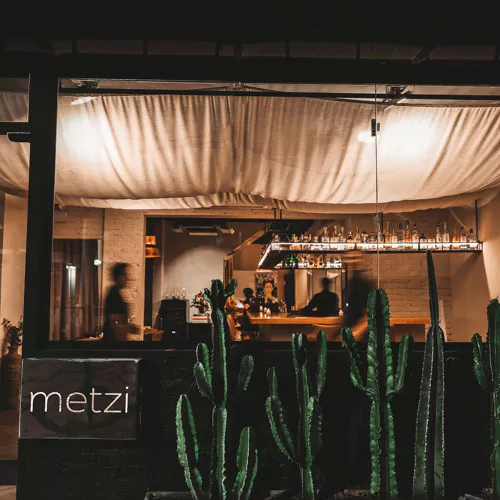
    Located in São Paulo’s Pinheiros district, Metzi offers a warm and intimate setting, with minimalist decor that allows the food to take center stage. The ambiance is casual yet refined, making it an ideal destination for those seeking a sophisticated dining experience without the formality of a fine-dining establishment. With limited seating, Metzi fosters an exclusive feel, ensuring personalized service and a memorable gastronomic journey.

    The Menu: Tradition Meets Innovation

    Metzi’s menu is a thoughtful and ever-evolving showcase of modern Mexican cuisine, with a particular emphasis on local and seasonal ingredients. While dishes change frequently, here are some signature highlights that capture the essence of Metzi’s culinary philosophy:

    • Tostada de Atún – A beautifully crafted dish featuring fresh tuna, avocado, and vibrant citrus notes, highlighting the balance of freshness and umami.
    • Mole Poblano with Duck – A refined take on the classic mole poblano, with complex layers of smoky, sweet, and spicy flavors complementing tender duck.
    • Tacos de Pescado – Light, crispy battered fish tacos served with housemade tortillas and an exquisite selection of salsas.
    • Tamales de Elote – A nod to Mexican heritage, these delicate corn tamales are a must-try, showcasing the restaurant’s dedication to traditional techniques.
    • Huitlacoche Risotto – A unique fusion of Mexican and European influences, featuring earthy huitlacoche (corn truffle) in a rich, creamy risotto.
    • Churros with Spiced Chocolate Sauce – A playful yet refined dessert that pays homage to a beloved classic.

    An Impressive Beverage Selection

    Metzi’s drink menu is just as carefully curated as its food offerings, featuring an outstanding selection of:

    • Mexican Spirits – A diverse range of mezcal and tequila options, perfect for sipping or enjoying in crafted cocktails.
    • Natural & Organic Wines – Thoughtfully selected wines that enhance the dining experience, complementing the restaurant’s bold yet delicate flavors.
    • Signature Cocktails – Inventive creations that incorporate fresh fruits, Mexican spices, and artisanal spirits, offering a refreshing pairing for every dish.

    Accolades & Recognition

    Metzi has quickly risen to prominence within São Paulo’s fine-dining landscape, earning a Michelin Guide recommendation and securing a spot on Latin America’s 50 Best Restaurants list. This recognition solidifies Metzi’s reputation as one of the top destinations for contemporary Mexican cuisine in the region.

    Why Metzi Should Be on Your Culinary Radar

    What sets Metzi apart is its ability to take authentic Mexican flavors and present them in an elevated, artful manner while still maintaining the soul of the cuisine. With Eduardo Nava Ortiz and Luana Sabino’s expertise, a meticulously designed menu, and an intimate atmosphere, Metzi offers a truly unique gastronomic experience in São Paulo.

    Final Thoughts

    Whether you’re a fan of Mexican cuisine, an adventurous foodie, or someone looking for a sophisticated yet approachable dining experience, Metzi is a restaurant you won’t want to miss. Its commitment to tradition, innovation, and top-tier ingredients makes it a standout in São Paulo’s competitive dining scene. Be sure to book a reservation in advance, as this culinary gem is in high demand!

    Have you been to Metzi? Share your thoughts and favorite dishes in the comments below!

  • Tan Tan São Paulo Review: An Unforgettable Night of Cocktails, Food & 90s Hip-Hop

    Tan Tan São Paulo Review: An Unforgettable Night of Cocktails, Food & 90s Hip-Hop

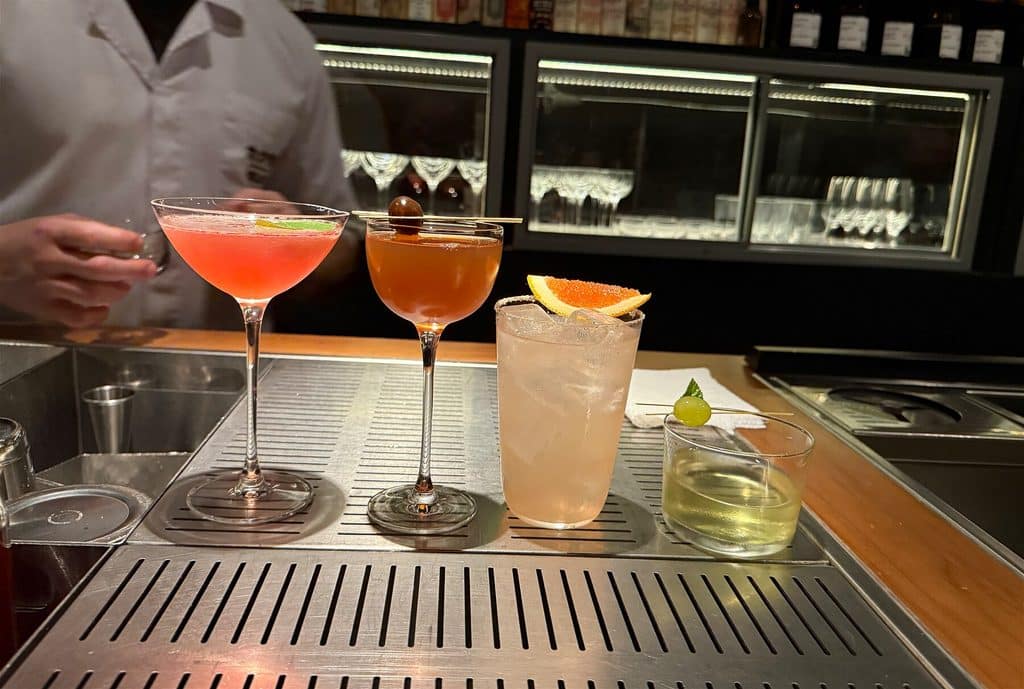
    Tan Tan São Paulo review featuring cocktails, Japanese-inspired food and 90s hip-hop

    In this Tan Tan São Paulo review, I’m going back to one of the places in the city that made sense to me almost immediately. I originally went because of the cocktails, but what keeps me coming back is the combination of everything else: Japanese-influenced food, a serious bar program, 1990s hip-hop, and a room that feels energetic without trying too hard.

    I have been to Tan Tan more than once, and at this point I make a point of visiting at least one of chef Thiago Bañares’s places whenever I am back in São Paulo.

    Tan Tan is still the one I associate most with the side of São Paulo nightlife I enjoy: very good food, interesting drinks, music with some personality, and none of the stiffness that can come with highly regarded bars and restaurants.

    I travel for restaurants and cocktails, but I do not need every night to be a tasting menu, white tablecloths, or a three-hour production. Sometimes I want a great drink, a few dishes I actually want to eat, good music, and a room that feels alive.

    Tan Tan does that very well.


    Tan Tan São Paulo — At a Glance

    Neighborhood:

    Pinheiros, São Paulo

    Style:

    Japanese-influenced bar food and cocktails

    Best For:

    Dinner, cocktails, bar snacks, late-night energy

    Atmosphere:

    Lively, casual, music-driven

    Music:

    1990s hip-hop

    What I Had:

    Yardbird Katsu Sando, Kaki Ponzu, Aka Teba, Ajillo, Wonton Shio Ramen, Chocolate Pie

    What I’d Order Again:

    Yardbird Katsu Sando, Aka Teba

    Cocktail I Remember Most:

    Tsukemono

    What I Want to Try Next:

    Ikura Fries

    Current Recognition:

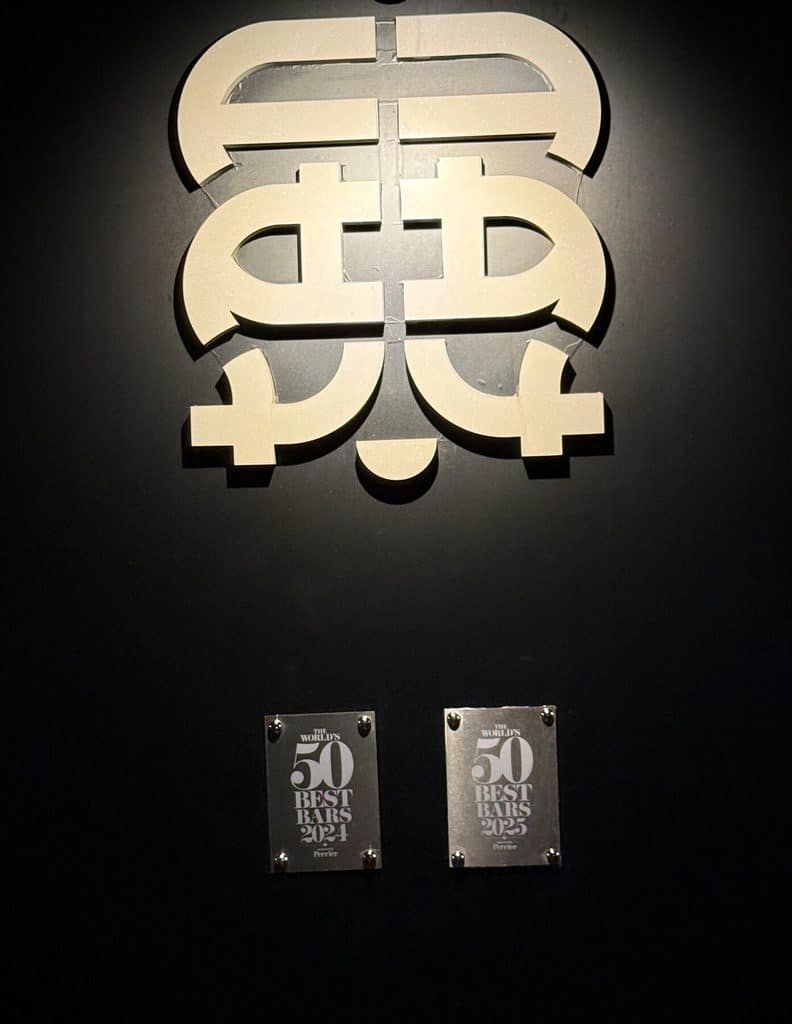
    #24, The World’s 50 Best Bars 2025

    Would I Return?:

    Absolutely.


    My Take: Tan Tan gets the food, cocktails, music, and atmosphere right without trying too hard.


    Why Tan Tan São Paulo Keeps Me Coming Back

    There are restaurants I remember because of one dish, and there are bars I remember because of one cocktail.

    Tan Tan is different because I remember the whole night.

    The bar matters. The kitchen matters. The music matters. The crowd matters.

    It feels like a place where you can have a genuinely good meal without the night becoming formal. That balance is harder to pull off than it sounds.

    A lot of restaurants try very hard to look cool. Tan Tan does not feel like it is constantly reminding you how cool it is.

    It just works.

    The room gets busy, the music is part of the experience, cocktails keep moving across the bar, and the food fits naturally into the night.

    That is probably the biggest reason I like it.

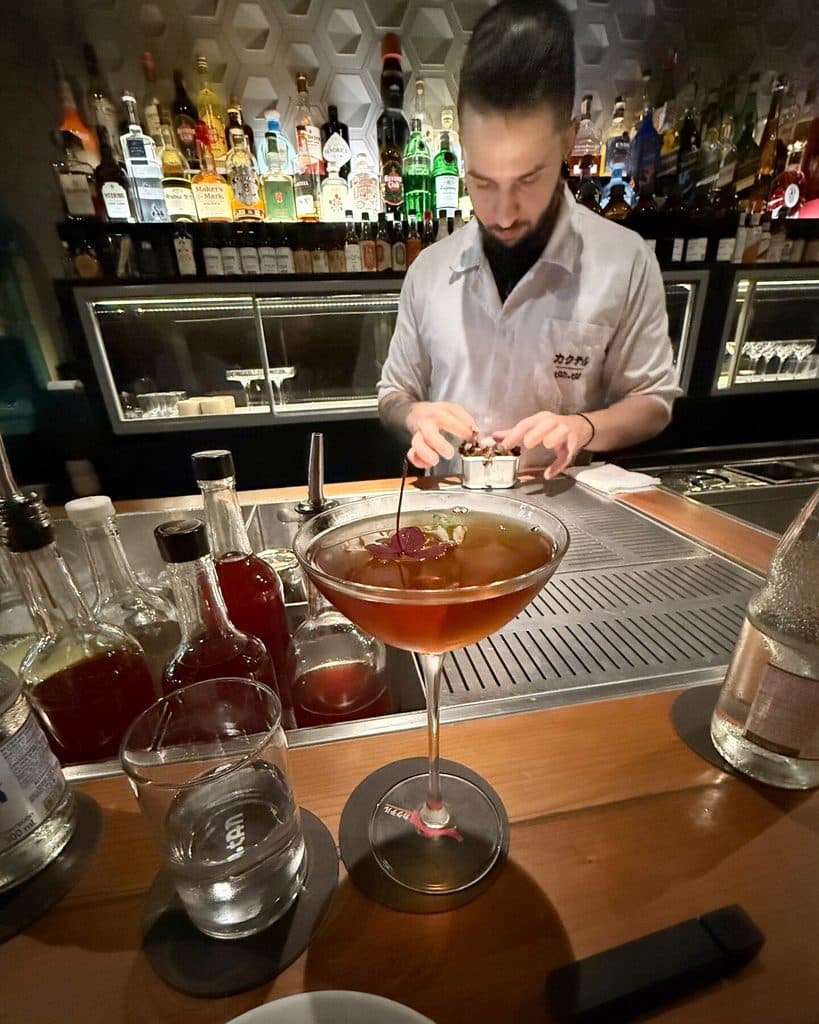
    A bartender works behind the Tan Tan bar, with an amber cocktail in the foreground and bottles behind him.
    A bartender preparing drinks at Tan Tan São Paulo, photographed from a seat at the bar.

    The Cocktail I Remember Most: Tsukemono

    One of the drinks I still associate with Tan Tan is the Tsukemono.

    It combined tequila, wasabi, cucumber, and orange bitters.

    That combination sounds like it could easily become one of those cocktails that is more interesting to read about than it is to drink.

    It wasn’t.

    The cucumber kept it fresh, the wasabi gave it enough edge to make it different, and the tequila kept the drink grounded.

    It was one of those cocktails where the ingredient list makes much more sense once you actually taste it.

    The cocktail menu has moved on since those earlier visits, which is one reason I wanted to update this review instead of leaving an old menu frozen online forever.


    Tan Tan’s Current Cocktail Menu: Perspective

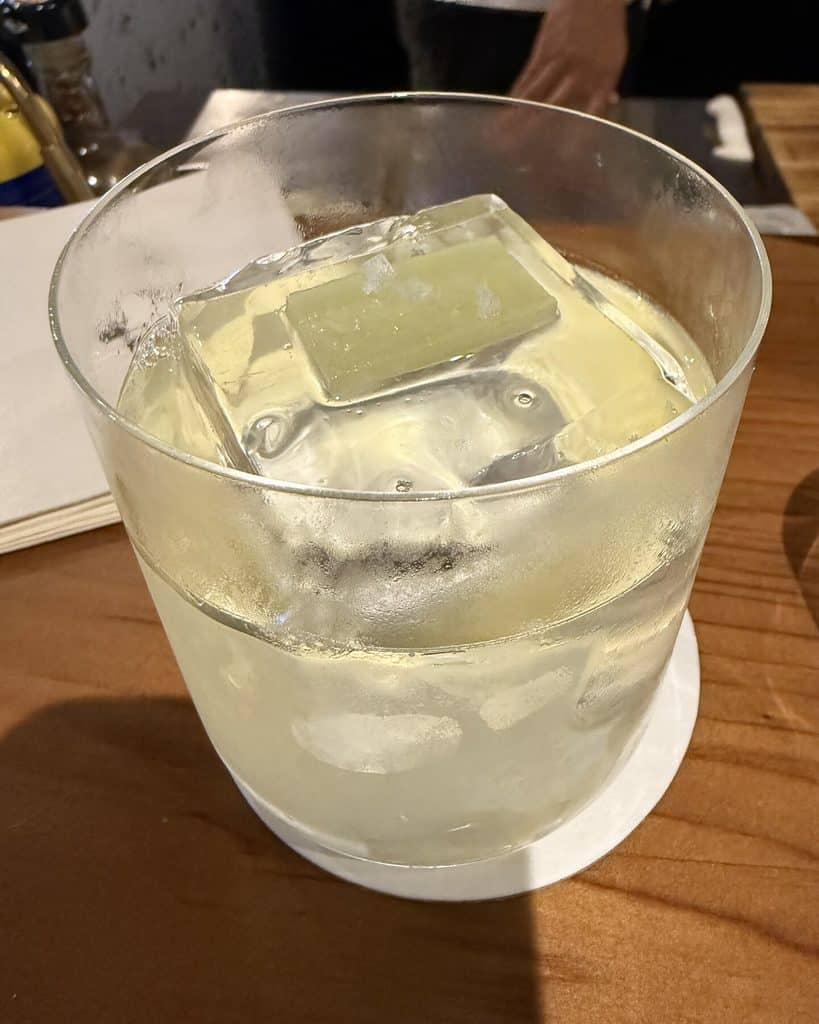
    A pale cocktail with a large rectangular ice block in a rounded glass on the wooden bar at Tan Tan.
    cocktail photographed during an earlier visit to Tan Tan São Paulo.

    The current cocktail menu is called Perspective.

    The idea is built around ingredients connected to Brazil’s five regions, translating climates, flavors, and cultural references into cocktails through taste, texture, and contrast. ce37d670-997c-4145-8e8b-54168fa…

    That interests me more than another menu full of complicated drinks with no real connection to where you are.

    If I am drinking in Brazil, I like when the bar gives me something that could only really make sense there.

    The current menu uses ingredients including black tucupi, cupuaçu, cashew, malagueta pepper, passion fruit, yerba mate, baru nut, cambuci, and cachaça.

    Ramos Tucufizz

    Amburana-aged cachaça, cupuaçu, black tucupi cordial, cashew-nut orgeat, and egg white. ce37d670-997c-4145-8e8b-54168fa…

    That is the kind of drink I would want at Tan Tan because it pushes beyond the familiar without sounding random.

    Caipora

    Cachaça, cupuaçu cordial, black tucupi soda, and cashew nut. ce37d670-997c-4145-8e8b-54168fa…

    This one sounds even more directly Brazilian and would probably be one of my first orders on another visit.

    Amor & Café

    Don Julio añejo, Ketel One, Cynar, passion-fruit cold-brew coffee, blue cheese, and honey. ce37d670-997c-4145-8e8b-54168fa…

    Blue cheese in a cocktail is exactly the kind of thing that makes me stop and read the menu twice.

    I have eaten and drunk enough unusual things that I am not interested in ordering something strange just because it is strange.

    It still has to taste good.

    But I would absolutely try that once.

    Mi Mi Mi

    Ketel One, Don Julio añejo, dry vermouth, and pickled baby-corn brine. ce37d670-997c-4145-8e8b-54168fa…

    Again, very Tan Tan.


    Tan Tan Still Keeps Some of Its Greatest Hits

    The current menu also has a Hall of Fame section.

    That tells you something about the bar.

    Tan Tan is willing to change the menu, but it also understands when something has earned the right to stay.

    The Hall of Fame currently includes Hello Suckers, Curupira, Dirty Dance, Libertine, and Cavagna Kakigori. ce37d670-997c-4145-8e8b-54168fa…

    I like that approach.

    There is nothing wrong with creating a new menu, but there is also nothing wrong with admitting you made something worth keeping.


    What I Ate at Tan Tan

    The food is a major reason I would not describe Tan Tan simply as a cocktail bar.

    Some of the dishes I had on earlier visits are still on the menu. Others have changed or disappeared.

    I would rather tell you exactly what I ate and then separate that from what is available now.

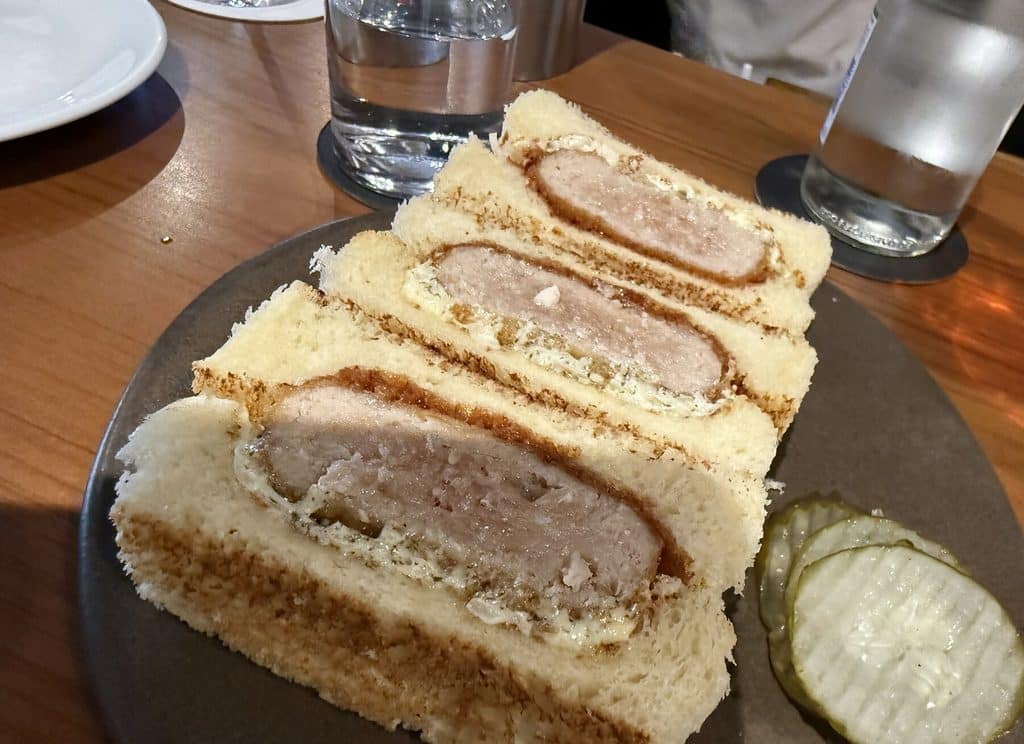
    Yardbird Katsu Sando

    Three pieces of breaded katsu sandwich on soft white bread, served with a pickle slice at Tan Tan.
    Yardbird Katsu Sando photographed during an earlier visit to Tan Tan São Paulo, featured in Richard Jarocki’s restaurant review.

    The Yardbird Katsu Sando was one of the dishes I had, and it is still on the current menu.

    It is a breaded ground-pork patty with chuno sauce on shokupan. ce37d670-997c-4145-8e8b-54168fa…

    This is exactly the kind of food I like with cocktails.

    It is rich, crispy, easy to eat, and not remotely precious.

    There is a time for tweezers and perfect plating.

    There is also a time for a fried pork sandwich.

    Tan Tan understands both sides of that equation.

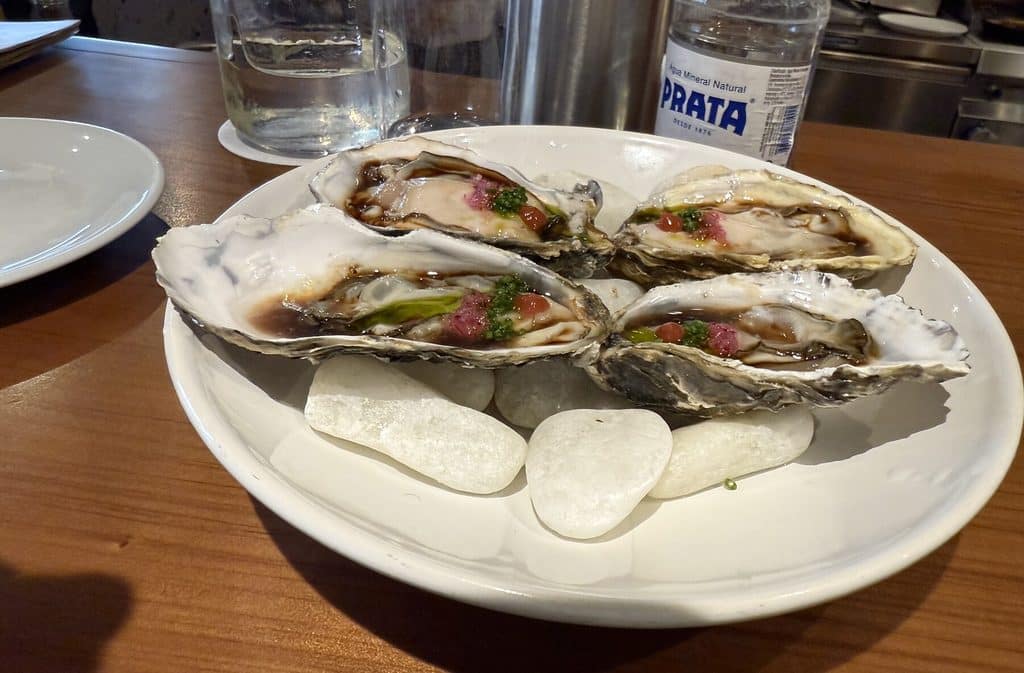
    Kaki Ponzu

    Four dressed oysters on the half shell arranged on a white plate at Tan Tan.
    Kaki Ponzu oysters photographed during Richard Jarocki’s visit to Tan Tan São Paulo.

    I also had the Kaki Ponzu.

    The current menu still serves fresh Santa Catarina oysters with ponzu and mignonette. ce37d670-997c-4145-8e8b-54168fa…

    Oysters make sense in a restaurant like this because they reset your palate after something fried or rich.

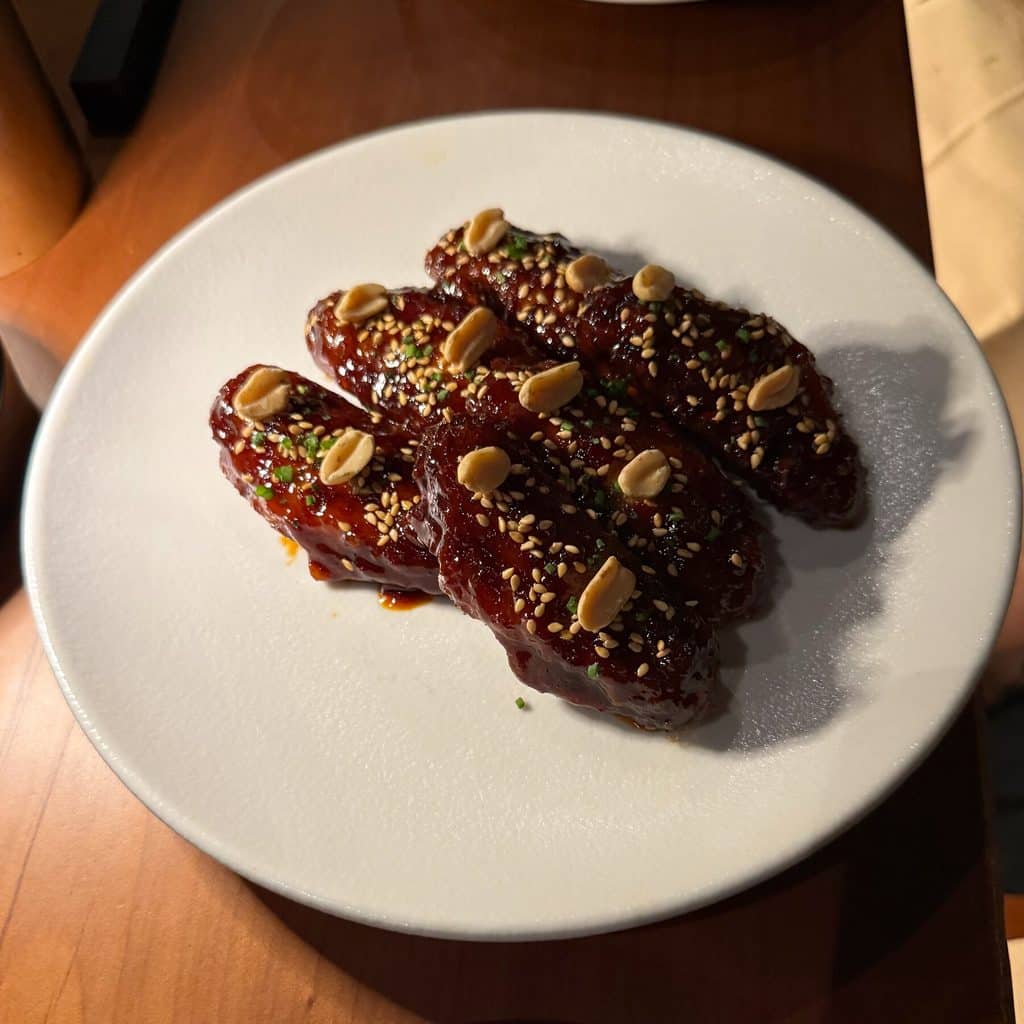
    Aka Teba

    Glossy chicken wings topped with sesame seeds and peanuts on a white plate at Tan Tan.
    Aka Teba chicken wings with sesame seeds and peanuts, photographed during Richard Jarocki’s visit to Tan Tan São Paulo.

    The Aka Teba was another dish I tried.

    It remains on the menu as crispy fried chicken wings with homemade sweet chili, sesame seeds, and peanuts. ce37d670-997c-4145-8e8b-54168fa…

    It is straightforward bar food, but that is not a criticism.

    A great bar does not need to reinvent every single thing on the plate.

    Sometimes wings should just be really good wings.

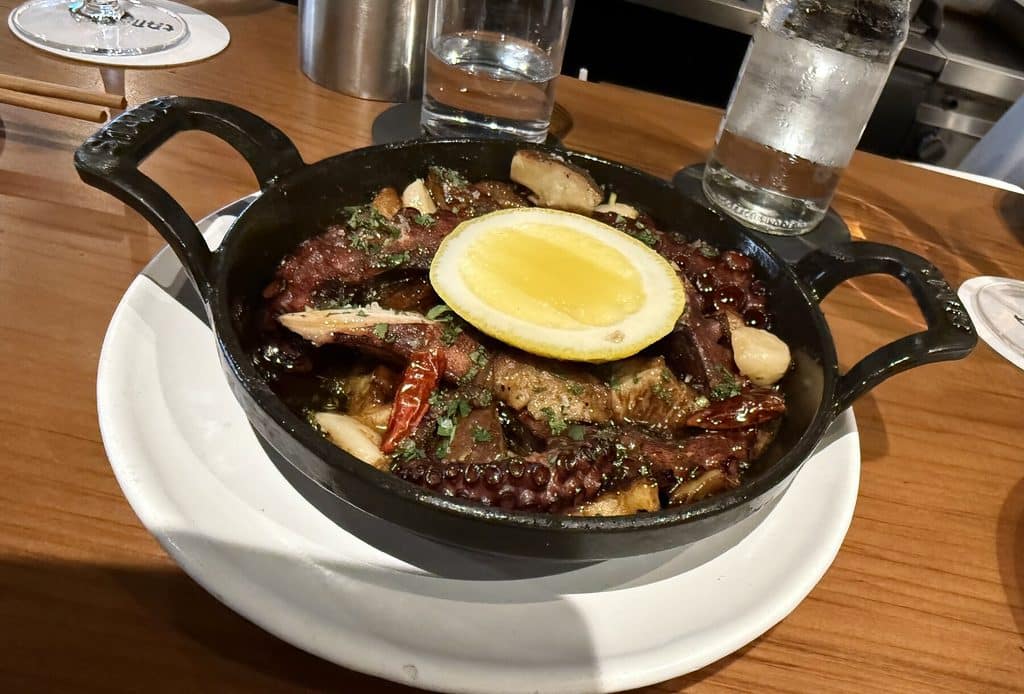
    Octopus and Mushrooms Ajillo

    Octopus and mushrooms topped with a lemon slice in a black handled pan at Tan Tan.
    Octopus and mushrooms ajillo in a black handled pan, photographed during a visit to Tan Tan São Paulo.

    I remember this as the Ajillo: mushrooms, garlic confit, octopus, and olive oil.

    The current menu calls it Octopus and Mushrooms Ajillo and serves it in an iron pan. ce37d670-997c-4145-8e8b-54168fa…

    This was one of the more savory dishes I had and exactly the kind of thing that stands up well next to a stronger cocktail.

    Wonton Shio Ramen

    On an earlier visit, I had the Wonton Shio Ramen with chicken broth, pork wonton, chicken chashu, and ajitama egg.

    That exact ramen is no longer on the current menu.

    The noodle section has changed, which is another reason this old review needed to be updated.

    Chocolate Pie

    I also had the Chocolate Pie.

    The current menu still offers Chocolate Pie, now described as milk-chocolate custard with English cream, along with a Daily Sorbet. ce37d670-997c-4145-8e8b-54168fa…

    A bar like Tan Tan does not need a twelve-item dessert program.

    Two options are plenty if they are good.

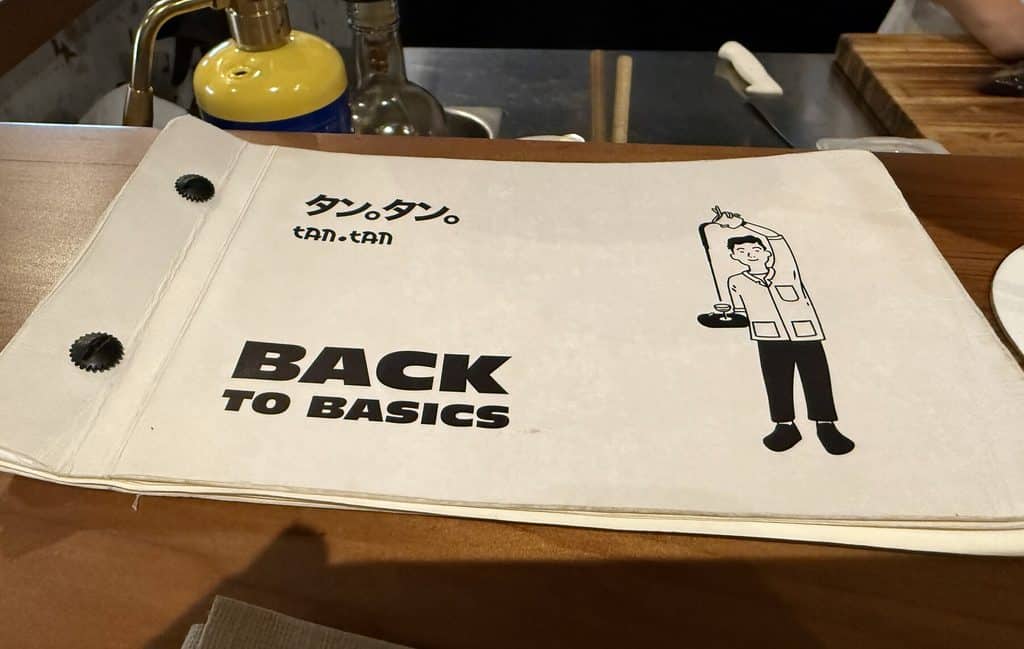
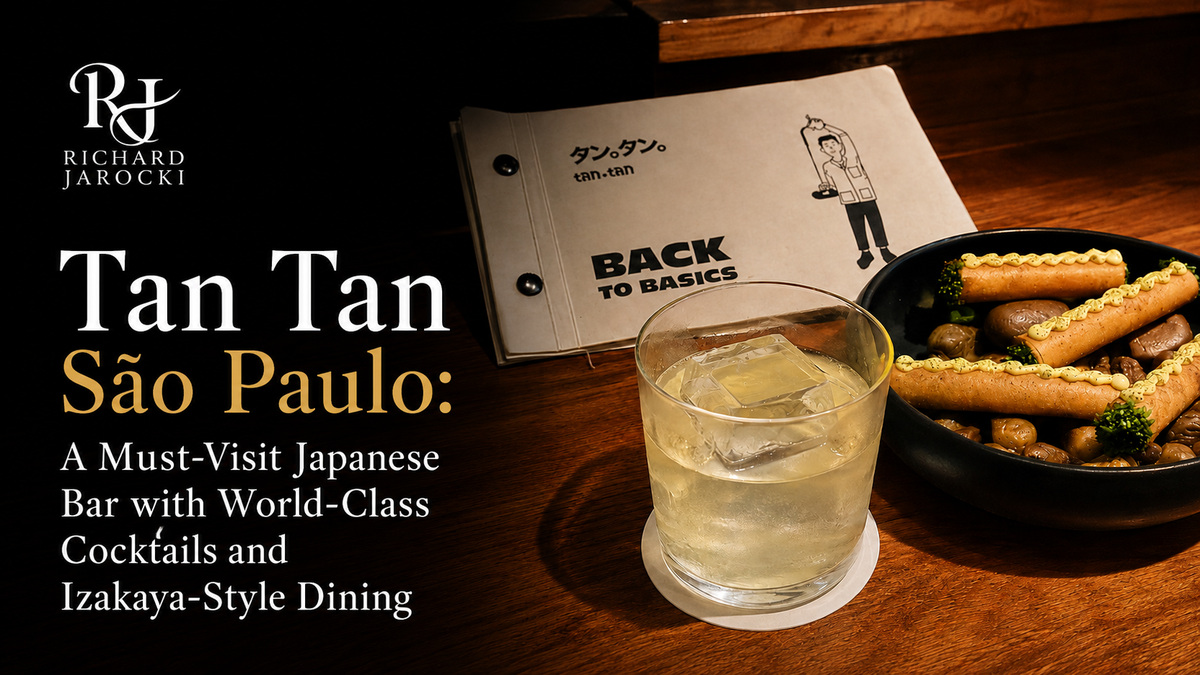
    Tan Tan’s Back to Basics menu booklet resting on the wooden bar.
    Tan Tan’s earlier Back to Basics menu, photographed before the Perspective menu discussed in the updated review.

    What’s New on the Tan Tan Menu

    The current menu gives me several reasons to go back.

    Spring Rolls Royce

    The Spring Rolls Royce is a cold harumaki with tuna tartare, sesame seeds, mayonnaise, and nori powder. ce37d670-997c-4145-8e8b-54168fa…

    The name alone tells you something about the personality of the place.

    It sounds playful, but the ingredients still make sense.

    This would probably be one of the first things I order on my next visit.

    Pork Gyoza

    The current Pork Gyoza is filled with pork and vegetables and served with soy sauce and vinegar. ce37d670-997c-4145-8e8b-54168fa…

    Simple, familiar, and probably very easy to order another plate of after the first one disappears.

    Shrimp Wonton

    The Shrimp Wonton comes with chili crunch, soy sauce, and sesame. ce37d670-997c-4145-8e8b-54168fa…

    I find this particularly interesting because the wonton has moved from the older ramen I ate into its own snack.

    Ikura Fries

    The Ikura Fries might be the new dish I am most curious about.

    They are tempura-style fries with salmon roe, mayonnaise, and aonori. ce37d670-997c-4145-8e8b-54168fa…

    Fries and ikura sounds completely unnecessary.

    Which obviously means I need to order them.

    Squid Roll

    The Squid Roll is fried squid with red onion, pickles, and nirá mayonnaise on a bun. ce37d670-997c-4145-8e8b-54168fa…

    Again, this is the kind of food that makes sense here.

    You are not being asked to sit silently and analyze every bite.

    You are supposed to eat, drink, talk, listen to the music, and enjoy yourself.

    Unadon and Ikuradon

    The larger dishes now include Unadon, with unagi, teriyaki eggs, and rice, and Ikuradon, with salmon roe, marinated soft egg yolk, green onion, wasabi, and roasted seaweed. ce37d670-997c-4145-8e8b-54168fa…

    Those make Tan Tan more viable as a full dinner rather than simply somewhere you stop for drinks and snacks.


    The Noodle Menu Has Changed Too

    The older Wonton Shio Ramen I had is gone, but noodles are definitely not gone from Tan Tan.

    The current lineup includes:

    Chashumen

    Chicken broth seasoned with mushrooms and shoyu tare, pork-belly chashu, ajitama egg, scallions, and sesame.

    Kinoko Men

    Stir-fried noodles with mushroom sauce and Cantonese broccoli.

    Dan Dan Mian

    Noodles with ground pork, Asian peppers, oyster sauce, and vegetables. ce37d670-997c-4145-8e8b-54168fa…

    That gives me another reason to revisit the kitchen instead of going back and simply ordering the same things I already know.


    The 90s Hip-Hop Is Part of the Experience

    One of the things I remember most about Tan Tan has nothing to do with food or cocktails.

    It is the music.

    The 1990s hip-hop gives the room personality.

    It helps keep Tan Tan from feeling like one of those cocktail bars where everyone whispers because the drinks are too important.

    The atmosphere is lively, but I would not describe it as chaotic.

    I like serious food and serious drinks.

    I just do not always want them served in a serious room.

    Tan Tan gives you quality without draining the fun out of the night.


    Why Tan Tan Feels Like São Paulo to Me

    São Paulo has changed the way I think about food cities.

    My relationship with the city originally grew out of Formula 1.

    Now Formula 1 is only part of the reason I keep going back.

    The restaurant and cocktail scene has become just as important to me, and places like Tan Tan are a big reason why.

    It is not trying to feel like New York.

    It is not trying to feel like London.

    It is not trying to recreate Tokyo.

    There are influences from all of those places and more, but the final result still feels connected to São Paulo.

    That is what makes a city interesting to me.

    I do not travel halfway around the world because I want exactly what I already have at home.

    You can read more about how São Paulo changed the way I travel in The Trip That Changed Everything.

    For more restaurants I have actually eaten at in the city, see São Paulo Restaurants: 10 Memorable Places I’ve Eaten.


    One of the World’s Best Bars

    Tan Tan’s current menu notes its #24 ranking in The World’s 50 Best Bars 2025. ce37d670-997c-4145-8e8b-54168fa…

    That recognition matters.

    But it is not the reason I would go.

    Rankings can get you through the door once.

    They do not make you come back.

    The repeat visits matter more to me.


    Who Should Go to Tan Tan?

    I would recommend Tan Tan if you like:

    • serious cocktails without an overly serious atmosphere
    • Japanese-influenced food
    • dishes designed to share
    • bars where you can actually eat a full meal
    • music that contributes to the room
    • places with enough personality that you remember them after the trip

    If you are looking for a quiet, formal dining room, this probably is not the place.

    That is also exactly why I like it.


    Would I Go Back?

    Yes.

    And I already have.

    That is usually the simplest answer I can give in a restaurant review.

    I can talk about rankings, ingredients, technique, cocktails, atmosphere, or service.

    But repeat visits tell you more than any score ever will.

    Tan Tan is one of the places I continue to associate with São Paulo.

    And when I return to the city, there is a very good chance I will end up back here again.

    Completely Unnecessary. Absolutely Worth It.


    Useful Links

    Tan Tan Official Website:
    https://www.tantan.com.br/

    Tan Tan Instagram:
    https://www.instagram.com/tantannb/

    Tan Tan Reservations / Linktree:
    https://linktr.ee/tantan.sp

    Richard Jarocki Instagram:
    https://www.instagram.com/richard.jarocki/

    RJVIPGP:
    https://rjvipgp.net/

    São Paulo Restaurant Guide:
    https://rjvipgp.net/sao-paulo-restaurants/

    The Trip That Changed Everything:
    https://rjvipgp.net/the-trip-that-changed-everything/

    Formula 1:
    https://rjvipgp.net/formula-1/