An omakase in Hyde Park became my best sushi experience in the Hudson Valley—and gave me a very good reason to return.
Dassai Blue Omakase at a Glance
Location: 5 St. Andrews Road, Hyde Park, New York, across Route 9 from the Culinary Institute of America
Experience ordered: Chef Tasuku Murakami’s omakase with Dassai sake pairings
Pricing: This was a ticketed omakase experience. Pricing varies by event, menu format and whether a sake pairing is included, so confirm the current price when booking.
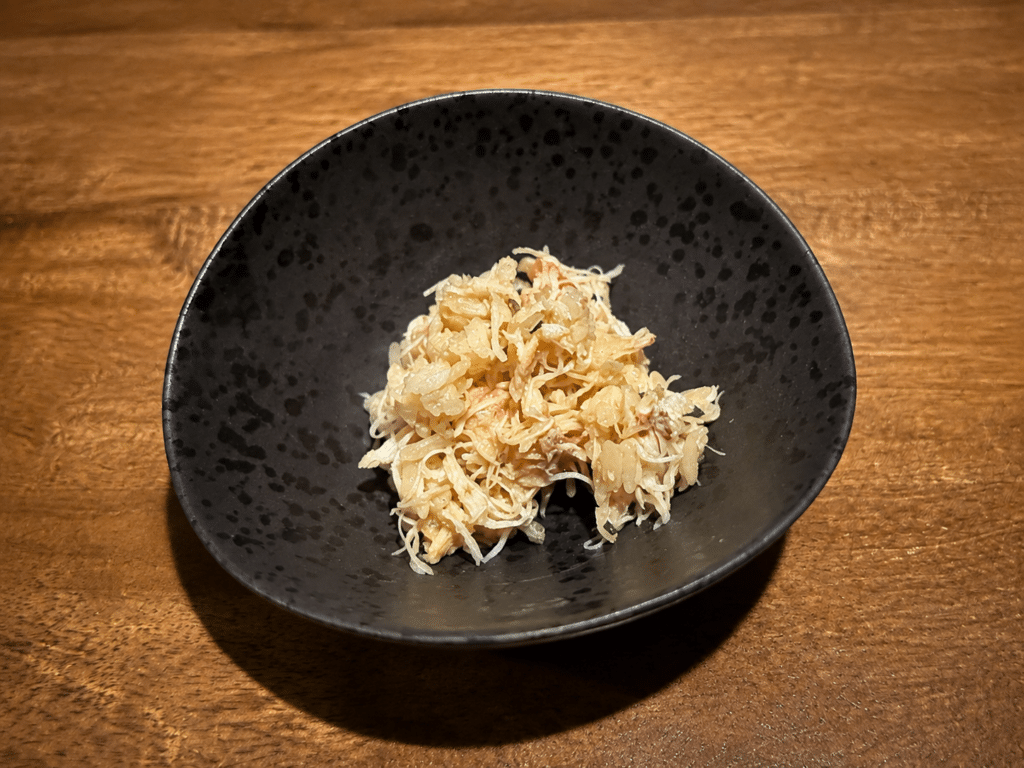
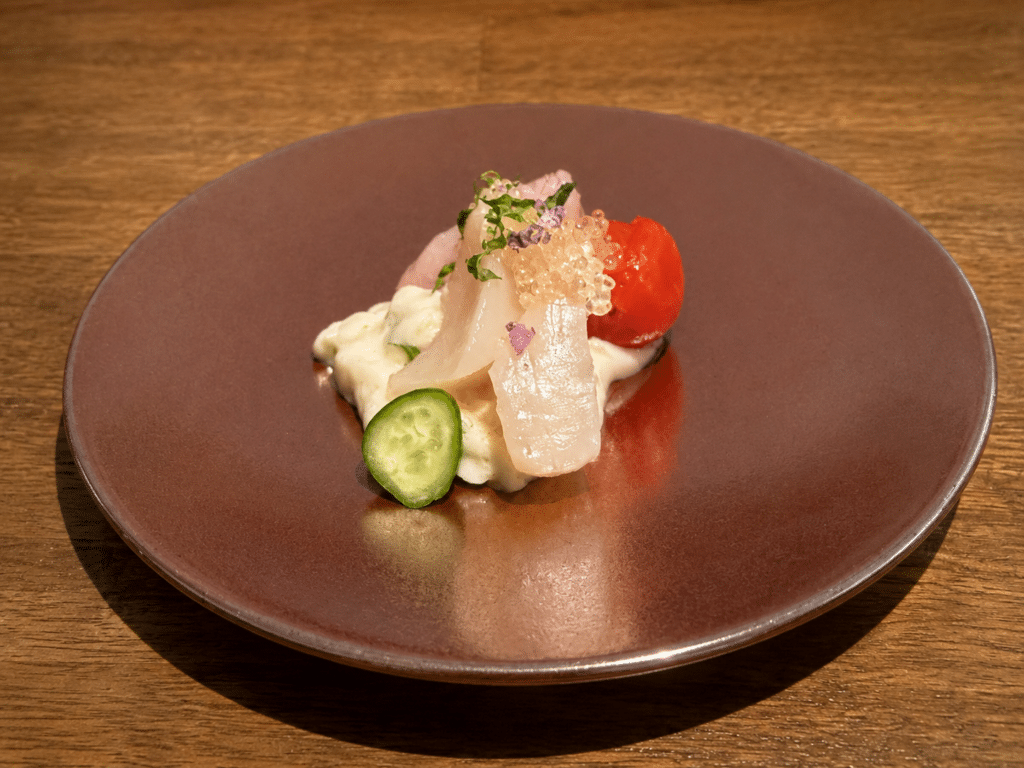
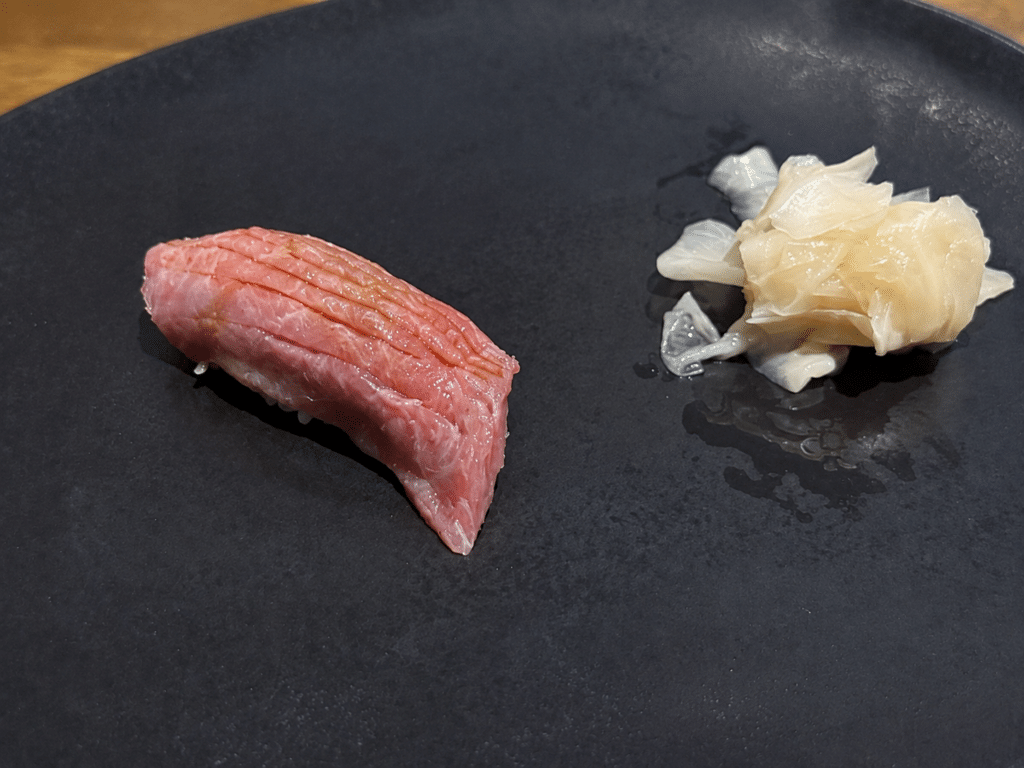
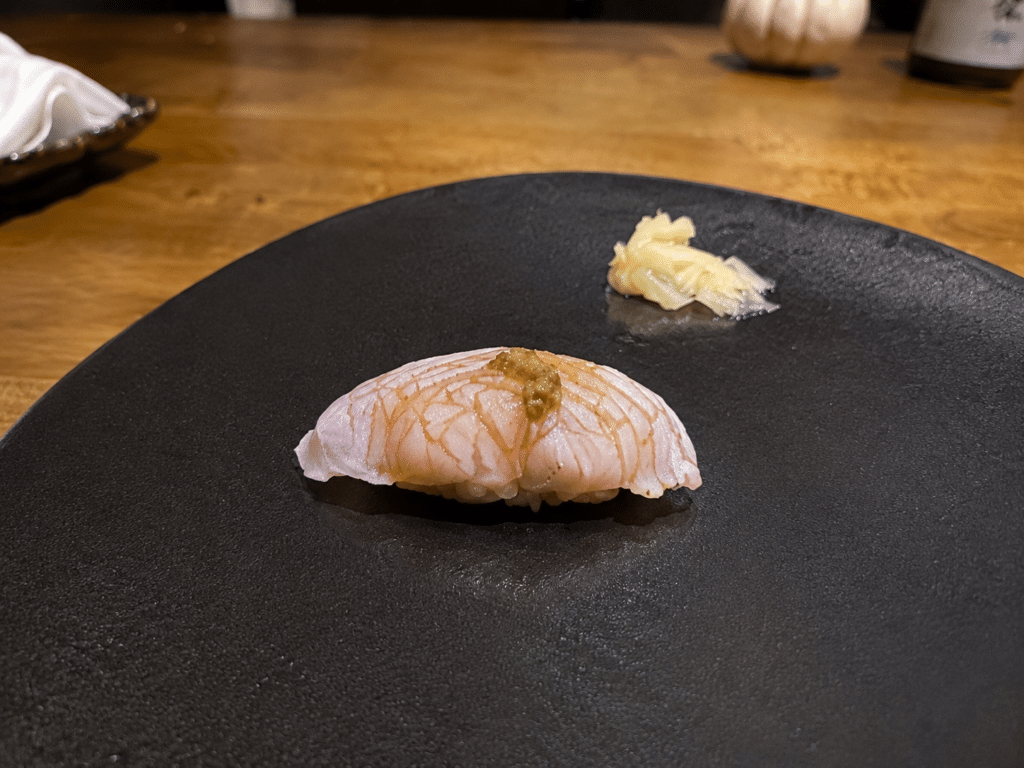
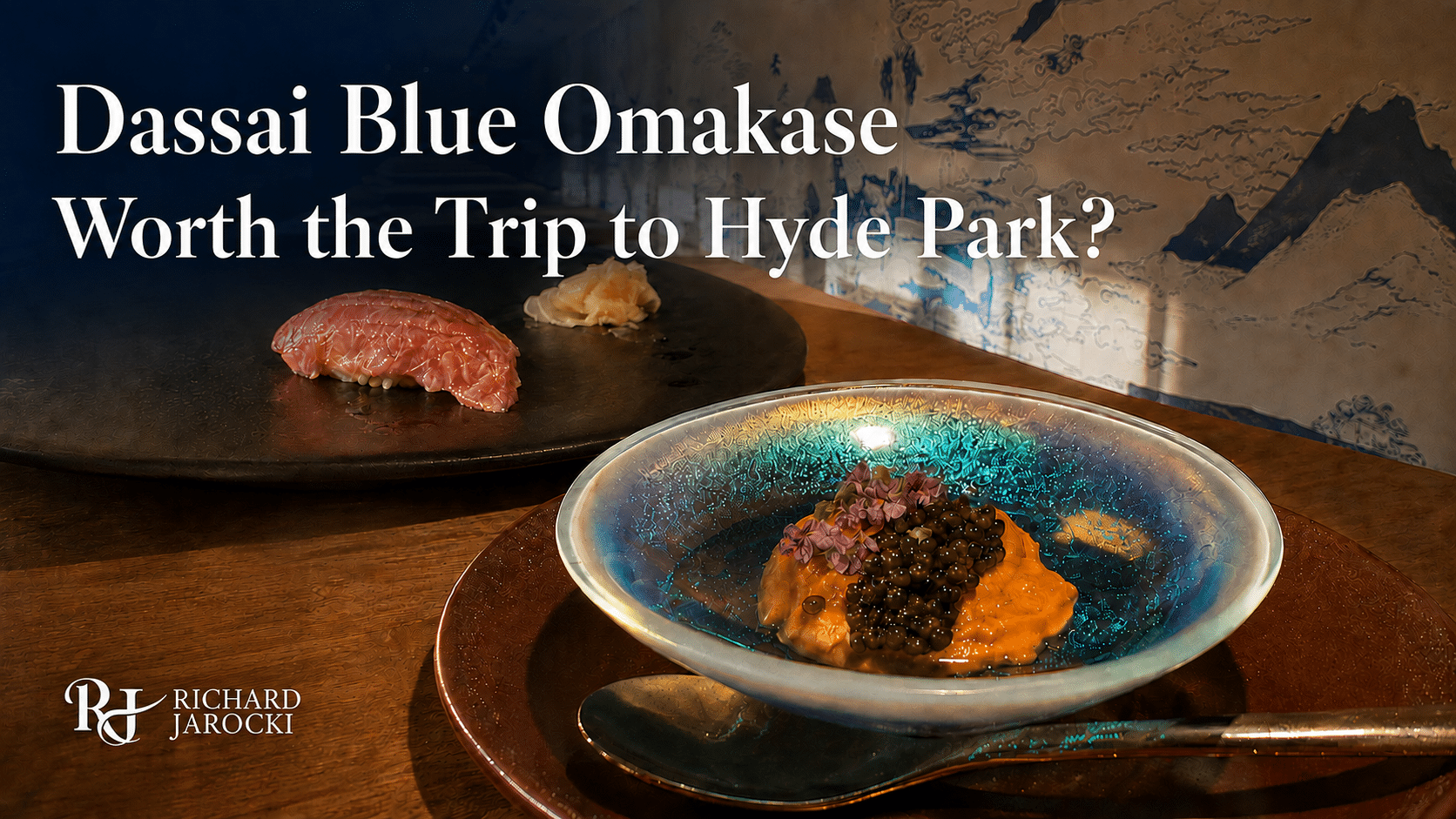
Standout dishes: Uni cream with caviar, toro nigiri, medai snapper ceviche with sake lees, grilled buri with teriyaki sauce and the brûléed cheesecake
Best sake: Dassai Blue Type 35 is my personal go-to, while Dassai Beyond was the most memorable pour of the evening.
Reservations: Advance reservations are required for omakase lunches, dinners and special events. Availability is limited and should be checked through Dassai Blue’s official event listings.
My verdict: This was the best sushi experience I have had in the Hudson Valley and a meal worth traveling to Hyde Park for.
Date visited: October 2025
In October 2025, I went to Dassai Blue Sake Brewery in Hyde Park for an omakase by Chef Tasuku Murakami. I expected a good dinner. What I experienced was the best sushi I have had in the Hudson Valley—and easily one of my top five omakase meals anywhere.
That is a big statement, but the meal earned it.
What is Dassai Blue?
Dassai Blue is the American chapter of Dassai, the Japanese premium sake maker operated by Asahi Shuzo. The original brewery is in Iwakuni, in Japan’s Yamaguchi Prefecture, and its history stretches back to the 1700s. Dassai built its reputation around Junmai Daiginjo, a premium category of sake made from highly polished rice.
In 2023, the company opened its first American brewery in Hyde Park, across Route 9 from the Culinary Institute of America. The goal was bigger than simply importing a famous Japanese label. Dassai created a new American-made line—Dassai Blue—and built a brewery where visitors can see the production process, taste the sake and learn how rice polishing, brewing and food pairing shape what is in the glass.
That educational mission is not just marketing. Dassai partnered with the CIA to develop sake curriculum, certification programs, workshops, tastings and public classes. The idea is to make sake easier to understand in the United States and to show how naturally it works at the table. Dassai’s announcement of the Hyde Park brewery explains the company’s history and its partnership with the CIA.
The Dassai Blue Omakase Experience
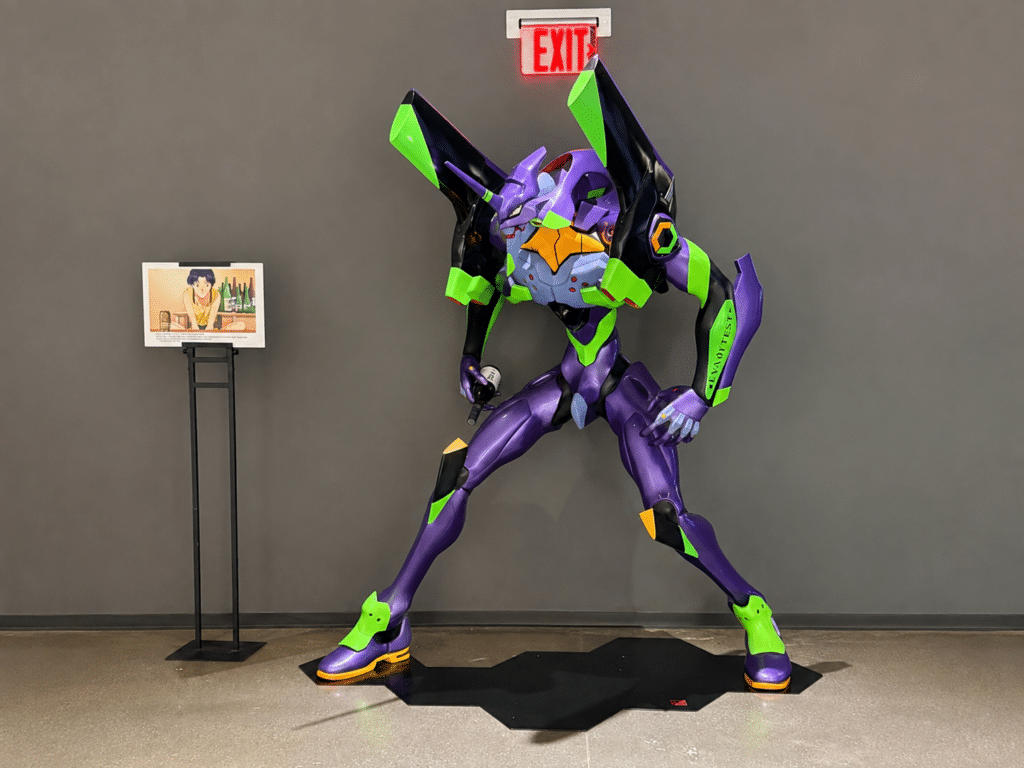
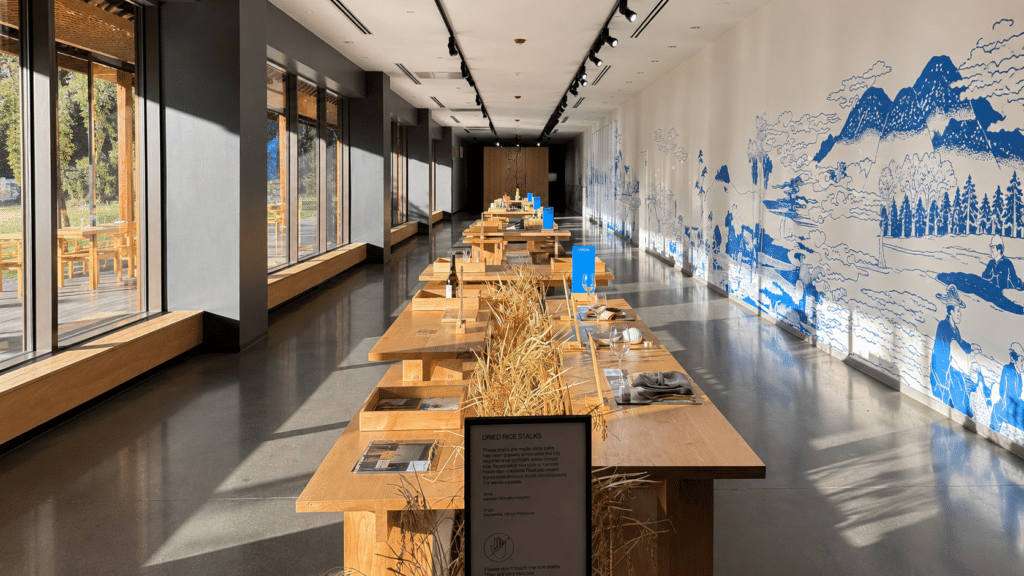
Dassai Blue is not a typical setting for omakase. Before dinner, the brewery’s main foyer makes a strong first impression: a long, light-filled exhibition area with wooden display tables, rice stalks, clean architectural lines and large windows. It is not the omakase dining room, but it immediately introduces the ingredients, craftsmanship and educational purpose behind the brewery.
The omakase itself took place in a more intimate setting built around direct interaction with the chef. That contrast worked—the expansive foyer established Dassai Blue’s larger story, while the meal narrowed the focus to each piece of fish, each movement at the counter and each sake pairing.
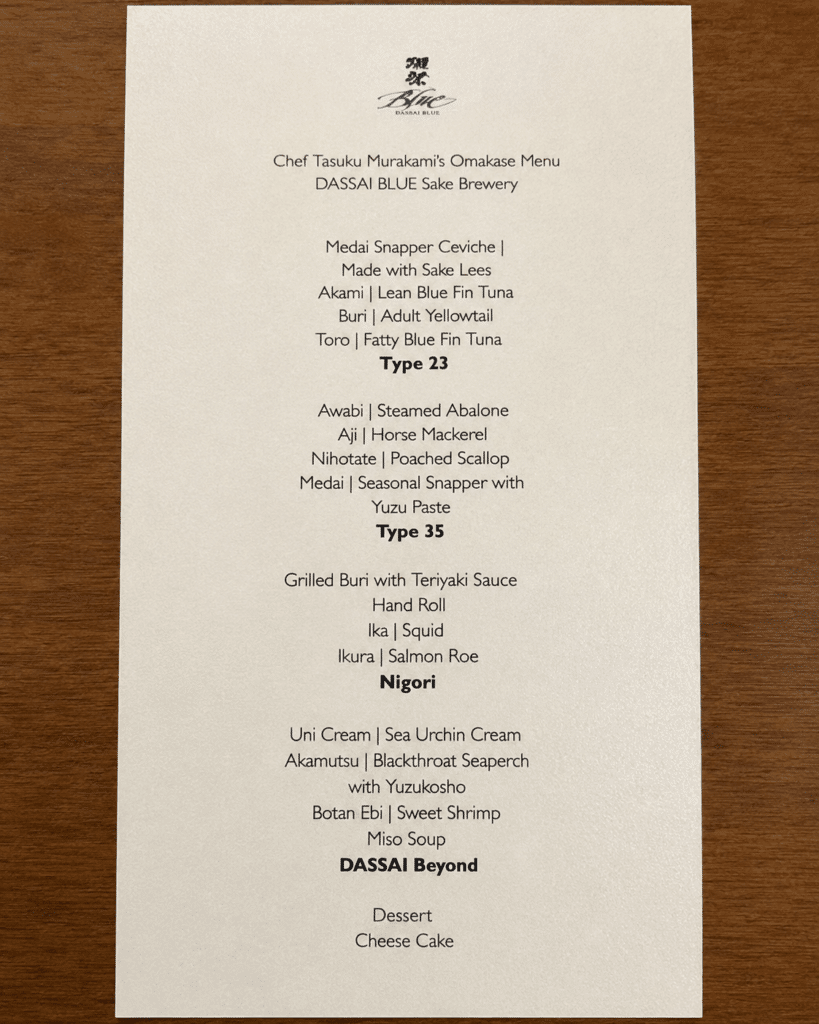
The menu moved through seasonal seafood, nigiri, a hand roll, a grilled course and dessert. Just as important, the courses were paired with different expressions of Dassai Blue sake—including Type 23, Type 35 and Dassai Beyond. The sake was part of the structure of the evening, not something added on afterward.
Chef Tasuku Murakami
Chef Tasuku Murakami was not simply serving sushi inside a brewery. Dassai Blue describes him as a Michelin-starred chef who trained classically in Tokyo, with an omakase style rooted in Edomae tradition and refined with a modern touch. His background also includes time at Michelin-starred Ginza Iwa in Tokyo and Sushi Azabu in New York, and he now leads the intimate M by Tasuku Murakami in Atlanta.
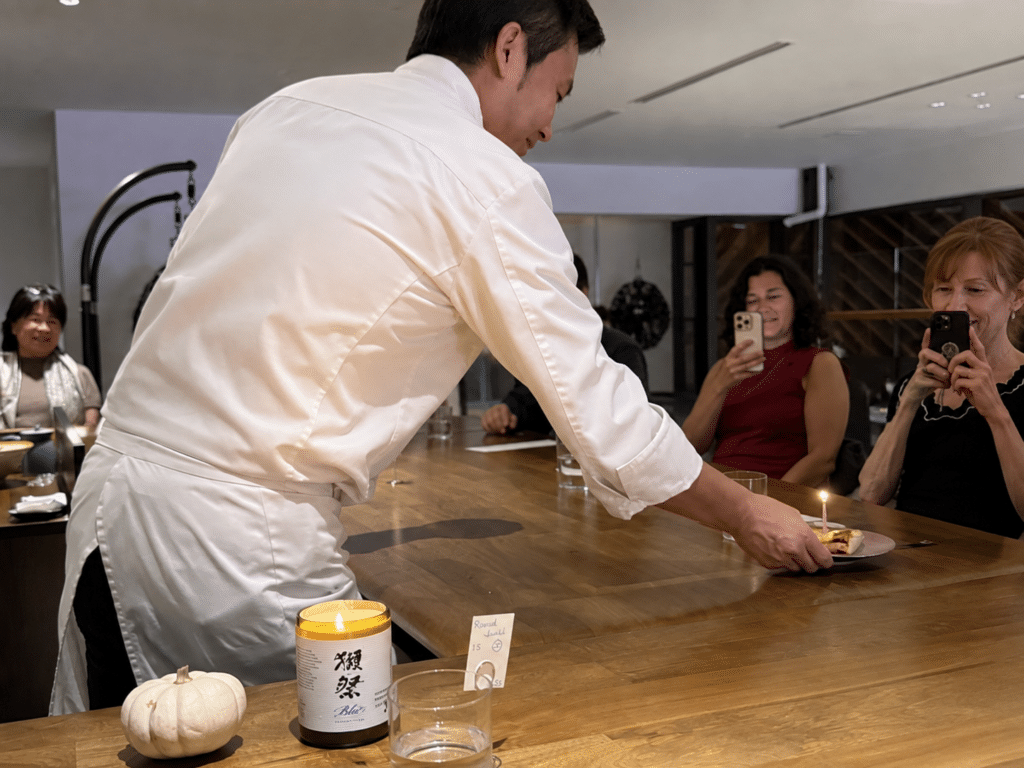
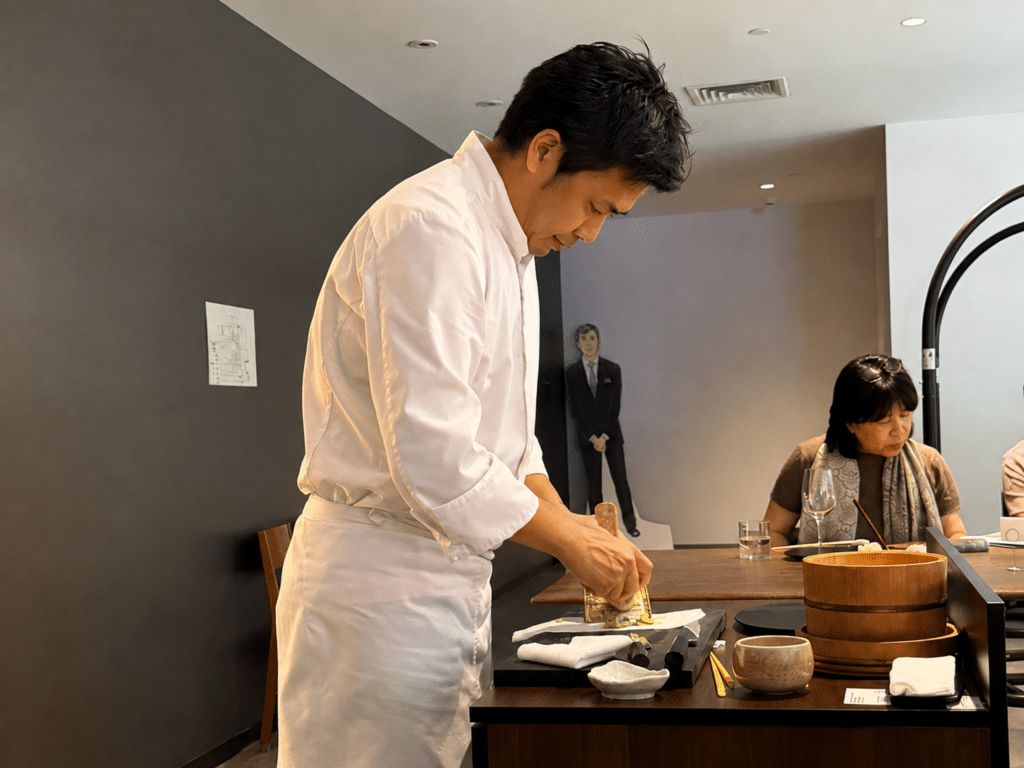
That experience was visible at the counter. Omakase is most compelling when you can watch the decisions happen—the knife work, seasoning, temperature, timing and the exact moment each bite is handed over. Murakami made the interaction feel focused rather than theatrical. The pacing allowed the snapper ceviche, tuna progression, grilled buri and uni cream to build into one coherent meal instead of feeling like a collection of unrelated luxury ingredients.
Dassai Blue has offered interactive counter omakase dinners with optional sake pairings, along with shorter omakase lunch experiences. Formats, course counts and pricing can change by date, so check the official event listings before booking. The combination of disciplined sushi and guided sake tasting is what makes the program distinctive.
What I Ate at the Dassai Blue Omakase
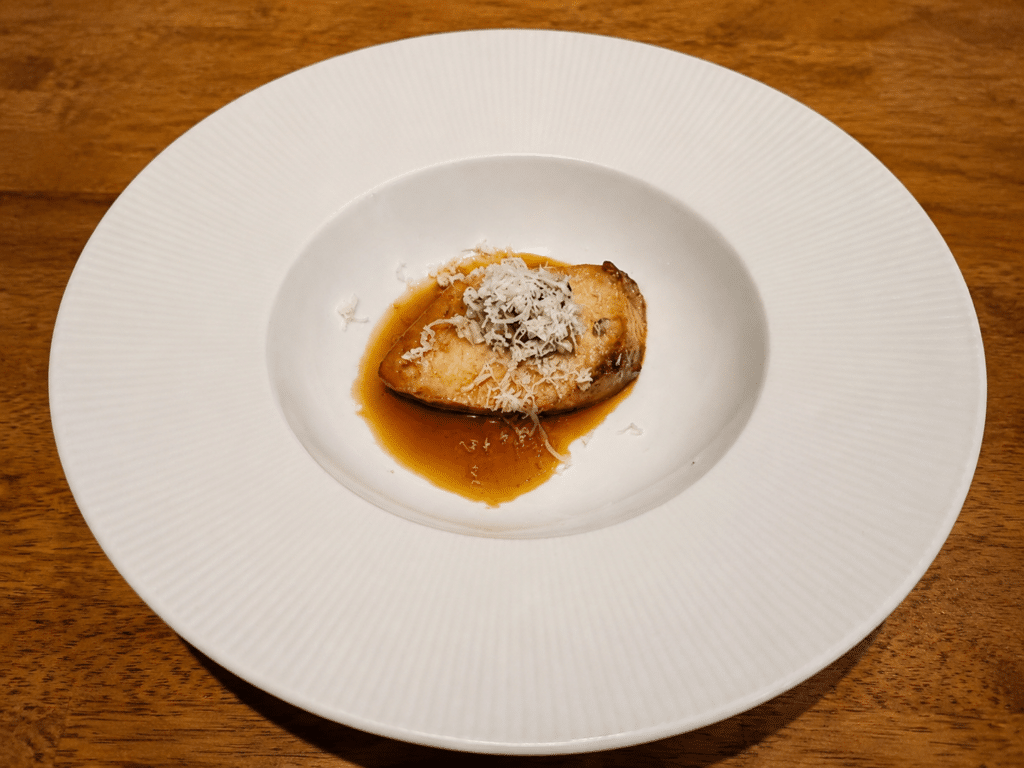
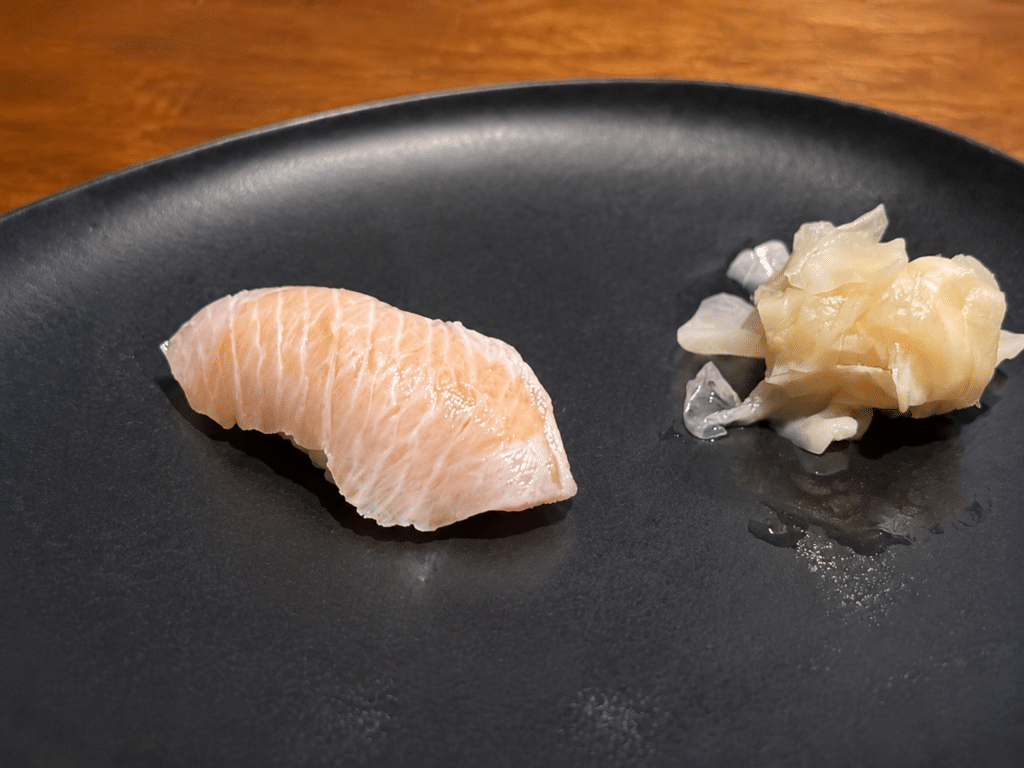
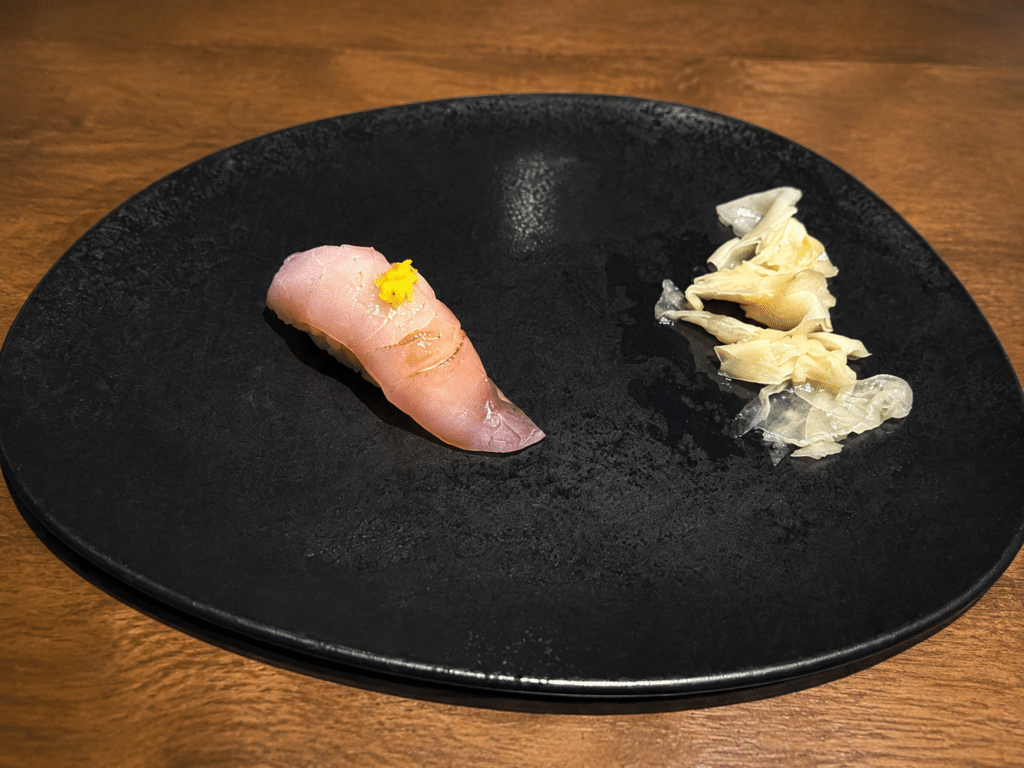
The medai snapper ceviche made with sake lees was one of the dishes I kept thinking about after the meal. It was a strong opening—bright and clean, with the sake lees tying the food directly to the brewery. From there, the menu moved into akami, buri and toro, shifting from delicate to rich without losing its balance.
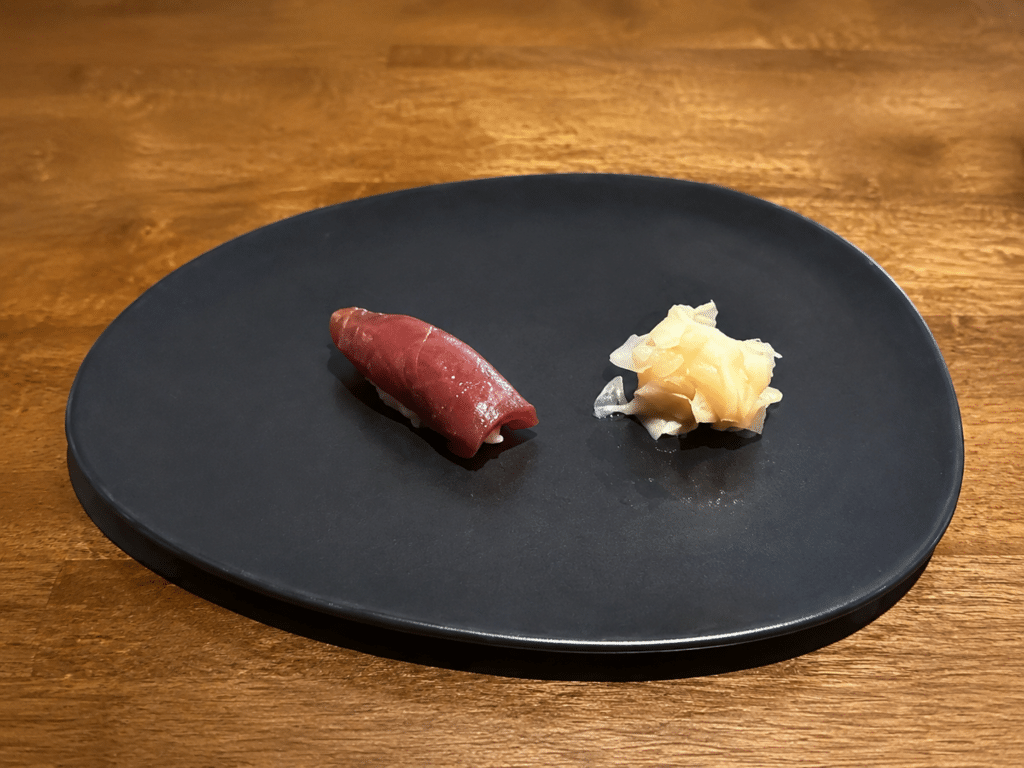
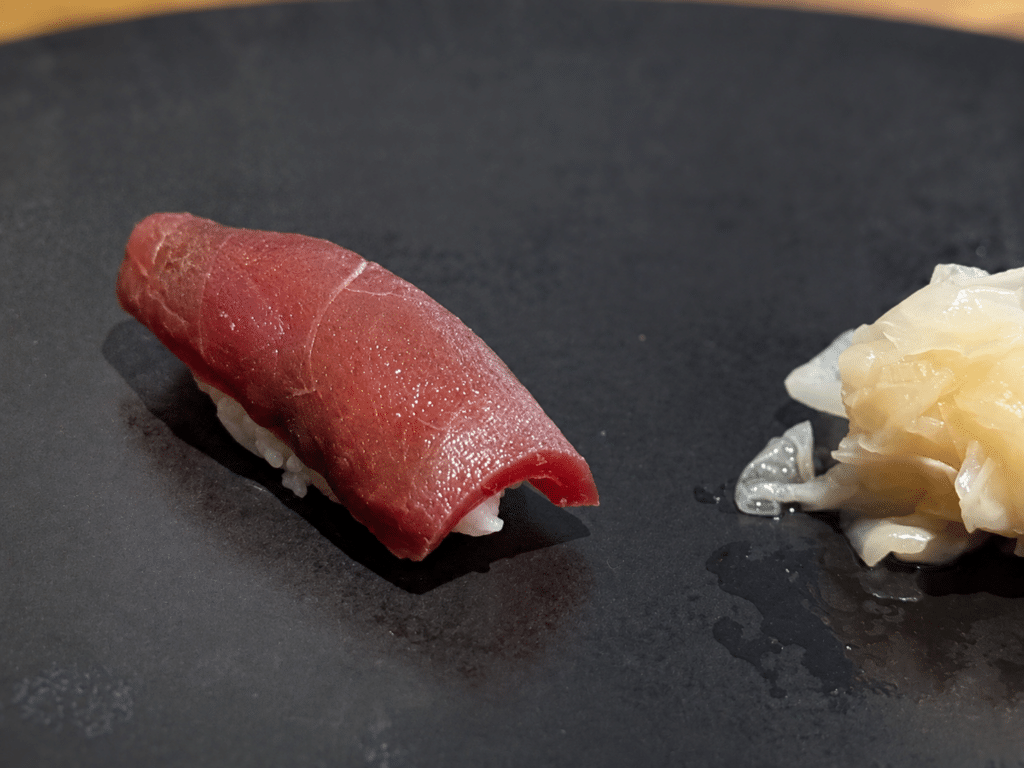
The tuna progression was a highlight. The lean akami was focused and clean, while the toro had the deep marbling and soft texture that makes great fatty tuna memorable. The rice, temperature and proportions mattered as much as the fish. Nothing felt oversized or overloaded.
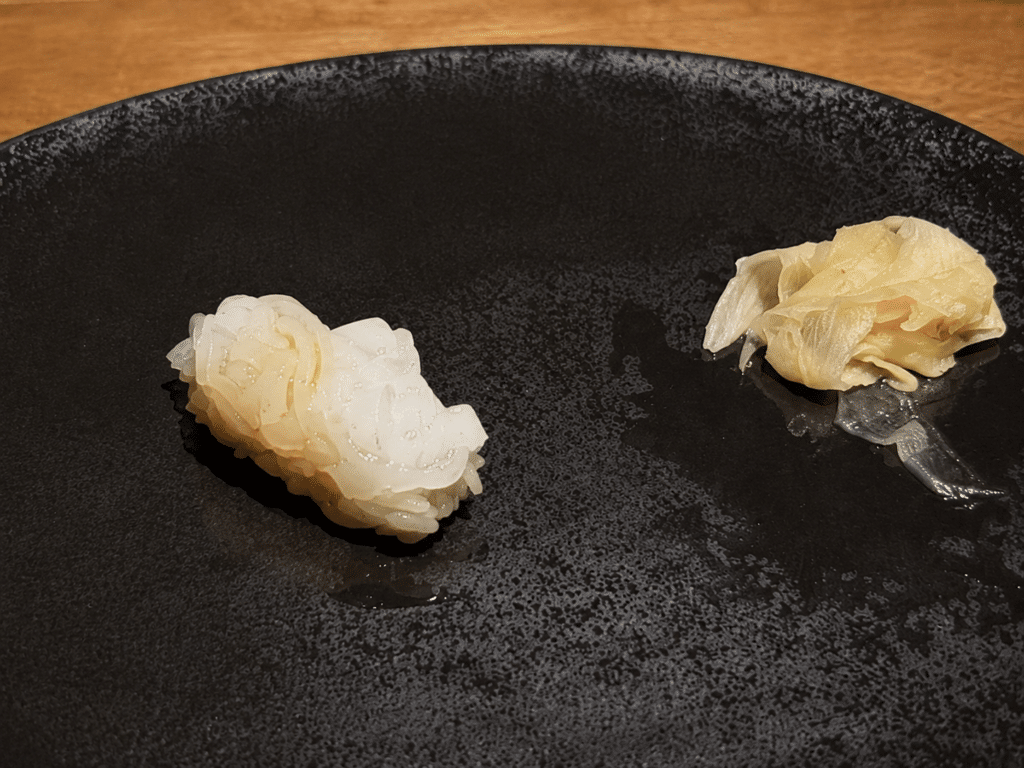
Later courses included steamed abalone, horse mackerel, poached scallop and seasonal snapper with yuzu paste. Then came another personal highlight: grilled buri with teriyaki sauce. Serving the buri warm changed the rhythm of the dinner and brought a deeper, more savory note into a menu that had been led by raw and gently prepared seafood. The sequence never felt repetitive. Each course changed the texture, temperature or intensity before the next bite arrived.
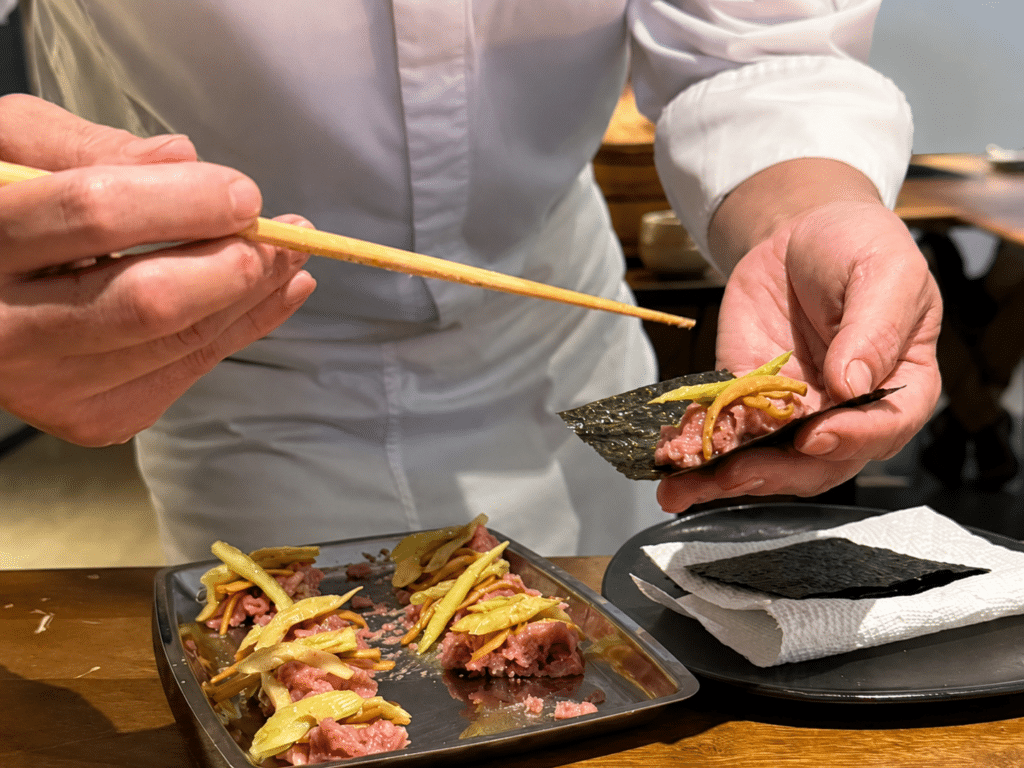
One of the most memorable moments was watching the hand roll come together in front of us. That interaction is part of what makes omakase special: the meal is not hidden in a kitchen. You see the chef’s movements, timing and attention up close.
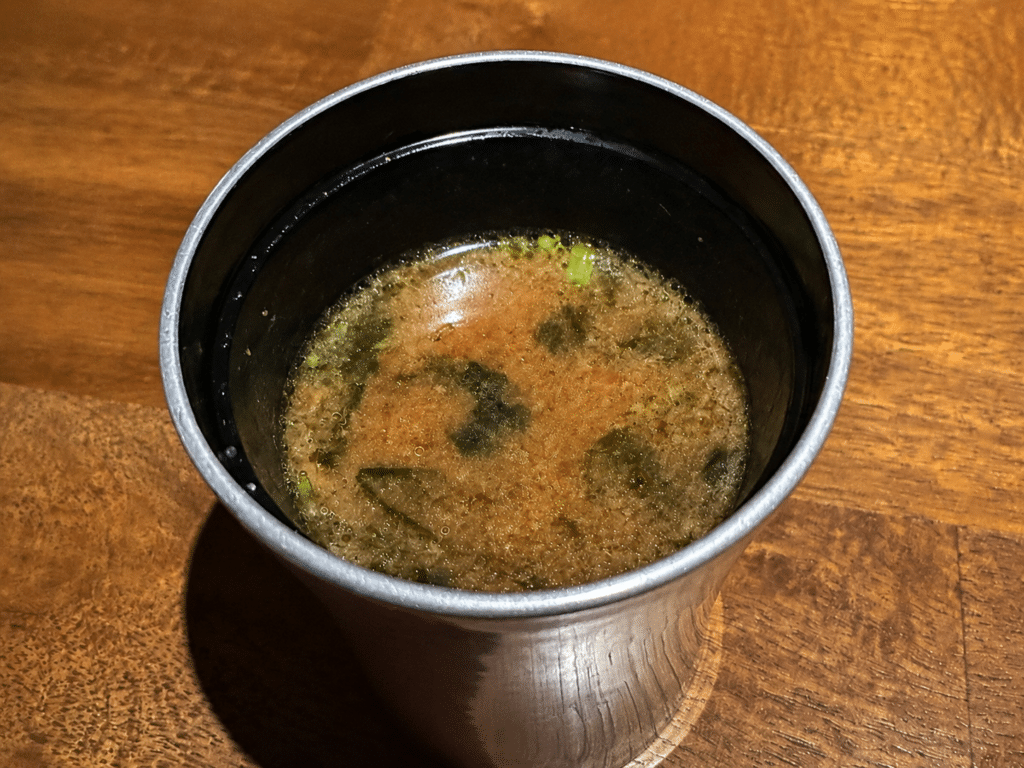
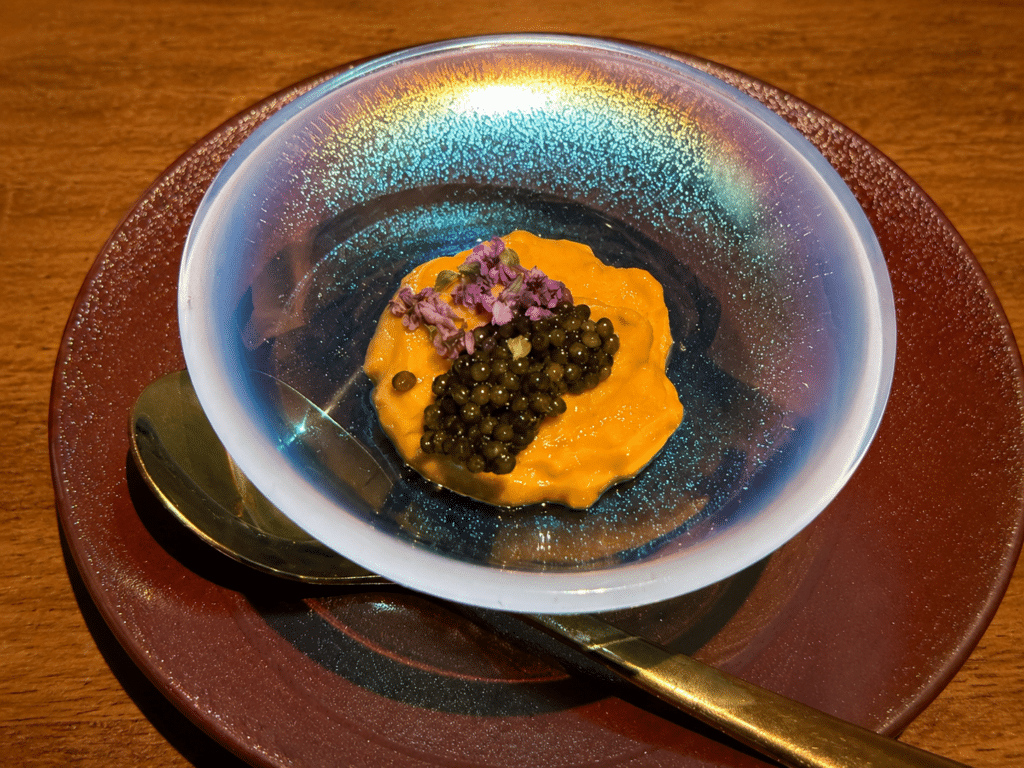
The uni cream was the course that stood out most. It was rich, concentrated and unmistakably luxurious—the kind of dish that makes the entire room go quiet for a moment. From there, the menu continued through blackthroat seaperch with yuzukosho, sweet shrimp and miso soup before finishing with cheesecake.
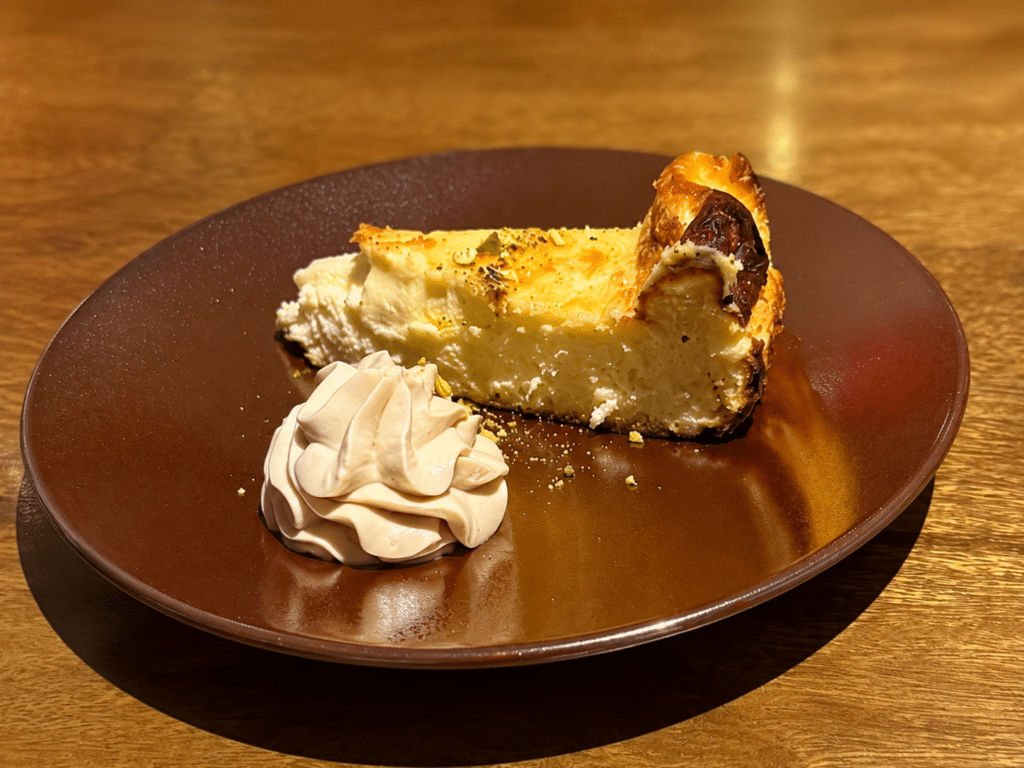
I do not eat cheesecake. I ate every bite of this one. That may be the simplest—and most honest—compliment I can give it. After a long, carefully paced sushi dinner, dessert can feel like an afterthought. This one absolutely did not.
Dassai Blue Sake: Type 50, 35, 23 and Beyond
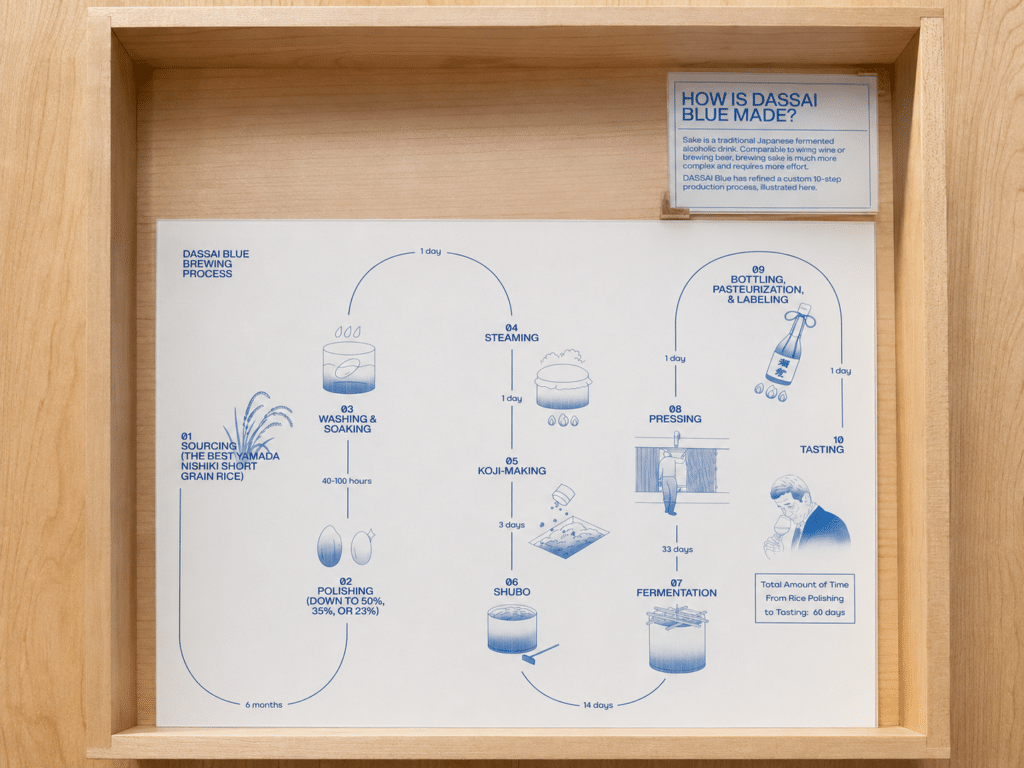
The numbers on Dassai bottles are not scores or rankings. They refer to the percentage of each rice grain that remains after polishing. A Type 50 uses rice polished until 50 percent remains; Type 35 leaves 35 percent; and Type 23 leaves only 23 percent. Removing more of the grain’s outer layers generally produces a more delicate, aromatic and refined sake, but the lowest number is not automatically the right bottle for every meal or every occasion.
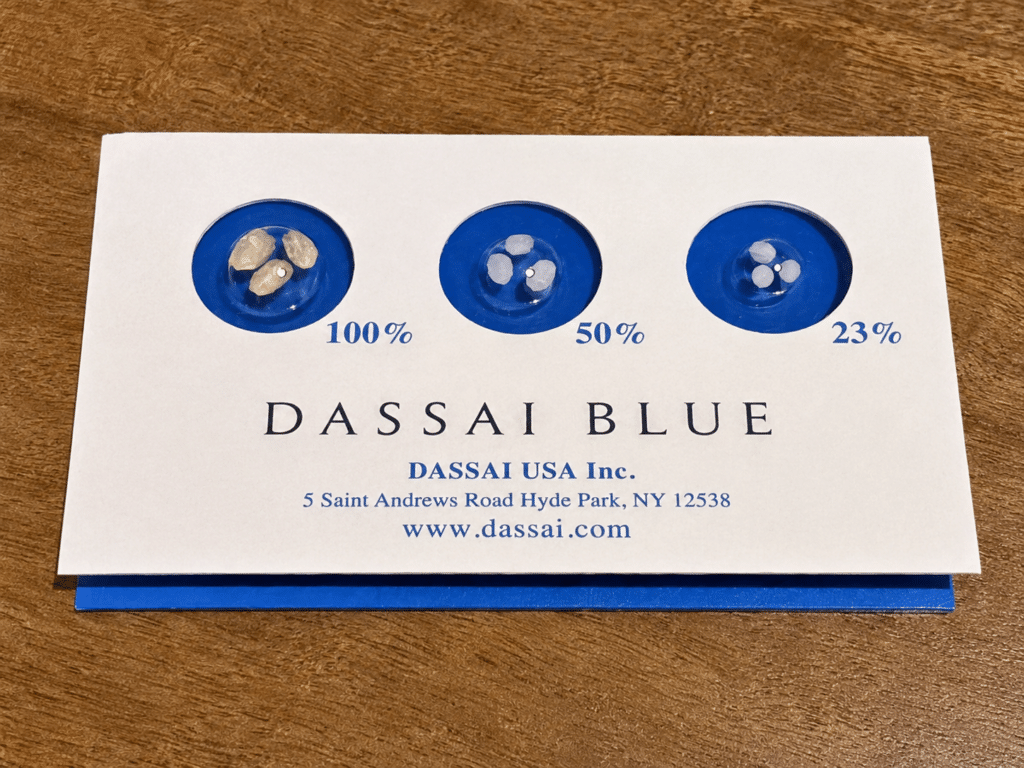
The Dassai Blue collection is brewed in Hyde Park with Yamada Nishiki—the prized rice often called the king of sake rice—and Hudson Valley water. Its core lineup gives visitors a practical way to taste what rice polishing changes:
Dassai Blue Type 50 is the most approachable starting point. Its profile moves through melon, pineapple, lemon curd and vanilla, with enough body to make it versatile at the table. The brewery also sells a crisper Type 50 Dry, an unpasteurized Nama, a lightly sweet and textured Cloudy Nigori, and a sparkling Nigori expression.
Dassai Blue Type 35 is the middle ground and my personal go-to. It is made with American-grown Yamada Nishiki cultivated from Japanese seed and has notes of white peach and ripe papaya, balanced by subtle sweetness and refreshing acidity. It has noticeably more polish and finesse than Type 50, but it is still relaxed enough to open with dinner instead of saving for a ceremony.
Dassai Blue Type 23 is the American brewery’s flagship. With only 23 percent of the grain remaining, it is more intricate and aromatic, moving from pear and anise toward honeysuckle, stone fruit and a mineral finish. This is the bottle for someone who wants to see how far Dassai can push precision while still producing a sake meant to accompany food.
Dassai Blue Beyond goes further still. The rice is polished to 19 percent, the sake is stored frozen to protect it and the bottle itself is titanium. At the time I checked, Dassai Blue Beyond was listed at $1,200, making it as much a collector’s bottle as a dinner purchase. Prices may change.
Dassai Blue Yuzu takes the Type 50 base in a different direction, blending it with yuzu juice, water and a touch of sugar. At 11 percent alcohol, it is lighter, citrus-driven and more immediately approachable than the core Junmai Daiginjo bottlings.
There is also an important distinction between Dassai Blue, made in New York, and the original Dassai, made in Japan. The Japanese core range is Dassai 45, Dassai 39, Dassai 23 and Dassai Beyond. The family resemblance is clear—fruit, floral aromatics, smooth texture and precise polishing—but they are not identical bottles. The rice, water and place of production matter. That is why recognizing Japanese Dassai at the omakase in Brazil felt familiar without simply repeating what I had tasted in Hyde Park.
The Dassai Blue Sake Pairing
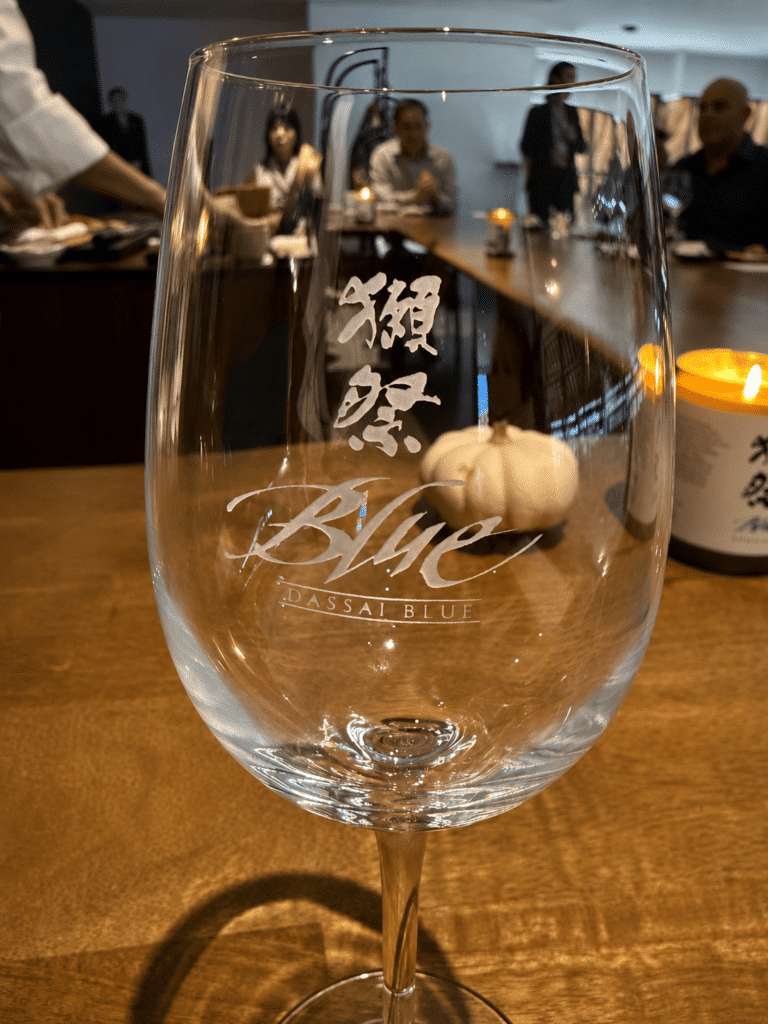
Dassai Blue produces Junmai Daiginjo sake in Hyde Park, so the omakase felt connected to the place rather than simply hosted there. The pairings also gave the meal a clear progression. Type 23 accompanied the early fish courses, Type 35 carried the middle of the menu, and Dassai Beyond arrived later in the experience.
Type 35 is my go-to. It is the Dassai Blue I would reach for most often—the bottle that feels at home with dinner without requiring a special occasion. That familiarity also made the jump to Dassai Beyond later in the meal feel even more dramatic.
The Dassai Beyond was exceptional. It also sells for more than $1,000 a bottle, so tasting it as part of the pairing made the evening feel even more special. The price alone is not what made it memorable—the sake had the refinement and presence to stand beside the richest courses without overwhelming them.
I did not leave thinking only about one perfect piece of fish or one glass of sake. I remembered the full arc of the meal: the room, the pacing, the transitions and the feeling that every part belonged there.
What I Learned About Dassai Sake
The best proof that the evening worked came later, on a trip to Brazil. I went to a traditional omakase and was asked to handle the wine and sake order for the table. Before my experience at Dassai Blue, I might not have felt confident making that choice for everyone.
This time, I did.
The restaurant carried Japanese-made Dassai rather than Dassai Blue, the American-made line I had tasted in Hyde Park. But the education carried over. I understood the name, the different expressions and how sake could progress with an omakase meal. I ordered several bottles for the table, and everyone I was dining with was impressed.
That moment changed the way I thought about the October dinner. It had not only given me the best sushi experience I’ve had in the Hudson Valley. It had given me enough knowledge and confidence to walk into a traditional omakase in another country, choose the sake for the table and get it right.
Dassai Blue Tours, Tastings and Special Events
The omakase is part of a broader program that makes Dassai Blue feel like more than a brewery tasting room. Its event calendar and news page bring together food, sake, art and Japanese culture through chef collaborations, pairing dinners, omakase lunches and dinners, gallery exhibitions, festivals and educational tastings.
The annual Tanabata Star Festival, for example, has included taiko performances, a live tuna cutting, kagami biraki sake-barrel opening, Japanese food vendors, art and family activities. Murakami has also participated, serving sushi, tuna sashimi and Wagyu. Other events have ranged from contemporary Japanese art exhibitions to special dinners that pair guest chefs with Dassai Blue sake.
That variety supports the brewery’s educational mission. Some guests may arrive for a tour or tasting; others for sushi, a cultural festival or a visiting chef. Either way, the experience gives them another way to understand sake through the food, craft and traditions around it.
Is the Dassai Blue Omakase Worth It?
Yes. The Dassai Blue omakase is worth traveling to Hyde Park for—especially if you care about sushi, sake or the connection between the two.
Chef Tasuku Murakami delivered the best sushi experience I have had in the Hudson Valley. The toro, grilled buri and uni cream with caviar were memorable, but the meal worked because of its pacing, precision and interaction at the counter. Nothing felt included simply because it was expensive or luxurious.
The sake pairings made the experience distinctive. Tasting Type 23, Type 35 and Dassai Beyond alongside the food turned dinner into an education without making it feel like a class. I left understanding Dassai better and feeling more confident ordering sake elsewhere.
This is not an everyday dinner, and the changing event format means you should review the current menu and price before booking. But for a special occasion or a food-focused Hudson Valley trip, my answer is simple: I would book it again.
Why I Returned to Dassai Blue
A good experience makes you recommend a place. A great one makes you return.
The October omakase set a high enough bar that I returned to Dassai Blue on August 16, 2026, for the Four Corners Pop-Up Dinner. Chef David Israelow and his team presented a seasonal four-course menu with Japanese and French influences, once again paired with Dassai Blue sake.
It was a different format from the omakase, but it confirmed what makes the brewery special. Dassai Blue is not simply producing sake in the Hudson Valley—it is building thoughtful food experiences around it.
Read my full review of the Four Corners Pop-Up Dinner at Dassai Blue.