Travel Research Process: Most people start planning a vacation by looking for flights.
I usually start with a restaurant.
Sometimes it’s a Michelin-starred dining room that’s been on my list for years. Sometimes it’s a cocktail bar tucked away on a quiet side street that only holds a dozen people. Other times it’s a Formula 1 race that gives me the excuse to explore a city I might not have visited otherwise.
Wherever it begins, the process is almost always the same.
I become obsessed.
What starts as a simple weekend getaway slowly transforms into dozens of browser tabs, spreadsheets, reservation alerts, Google Maps pins, YouTube videos, travel forums, restaurant menus, hotel reviews, and enough research to write a small travel guide before I’ve even boarded the plane.
Most people would probably call it overkill.
They’re probably right.
But that’s also why I rarely leave a destination wishing I had done more.
Travel Is More Than a Destination
For me, traveling has never been about checking countries off a list.
I don’t travel simply to say I’ve been somewhere.
I travel to understand why people love a place.
That means learning about its neighborhoods, understanding its food culture, discovering its cocktail scene, finding the hotels that actually live up to their reputation, and talking to the people who spend their lives creating memorable experiences.
The destination is important.
But the experience is everything.
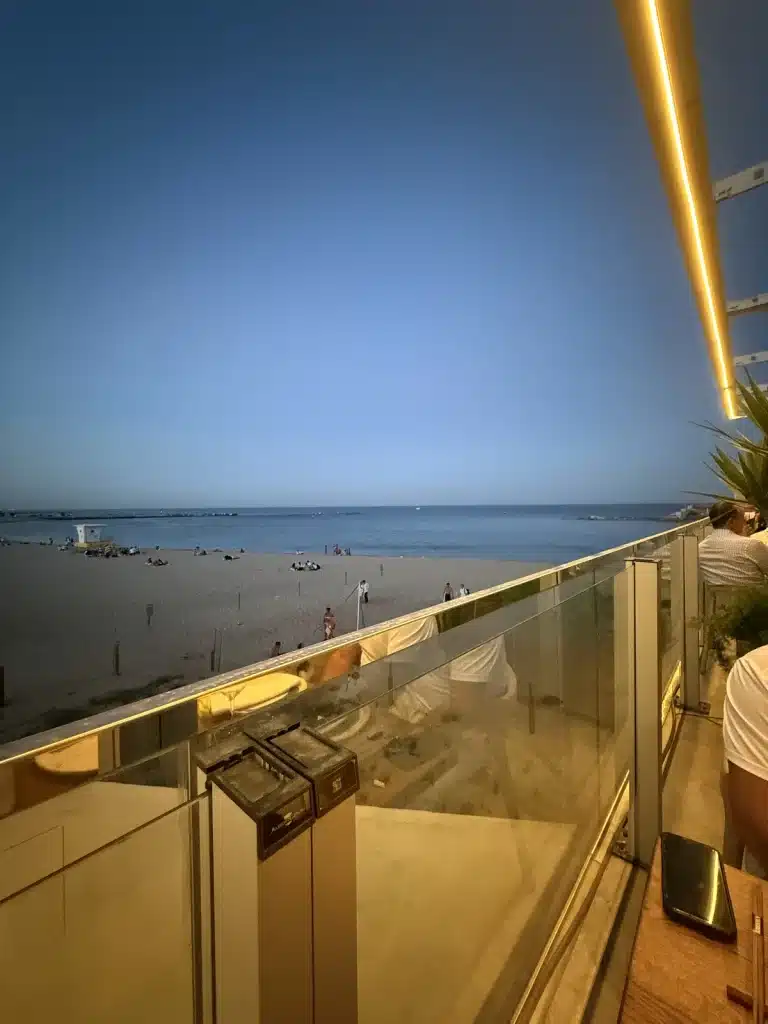
The beach view from Kresala, Barcelona, June 2026.
Travel Research Process Step One: Find a Reason to Go
Every trip needs a centerpiece.
Sometimes it’s Formula 1.
Sometimes it’s a restaurant reservation that seemed impossible to get.
Sometimes it’s a city I’ve wanted to explore for years.
That one experience becomes the anchor around which everything else is built.
When I planned my trip to Barcelona, the original goal was the Spanish Grand Prix.
Suddenly the race weekend wasn’t the only reason I was excited.
The restaurants became just as important as the racing.
When I travel to São Paulo, it starts with Formula 1—but quickly expands into researching Michelin-starred restaurants, hidden cocktail bars, local neighborhoods, and experiences that most visitors never discover.
One great reservation can change the entire direction of a trip.
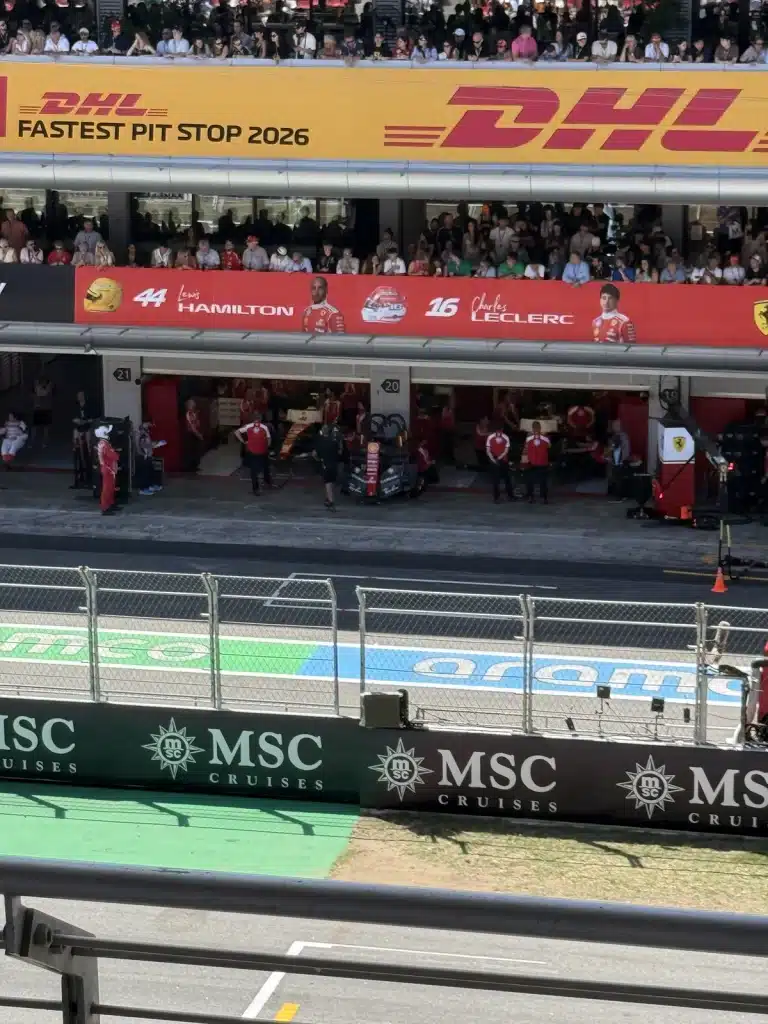
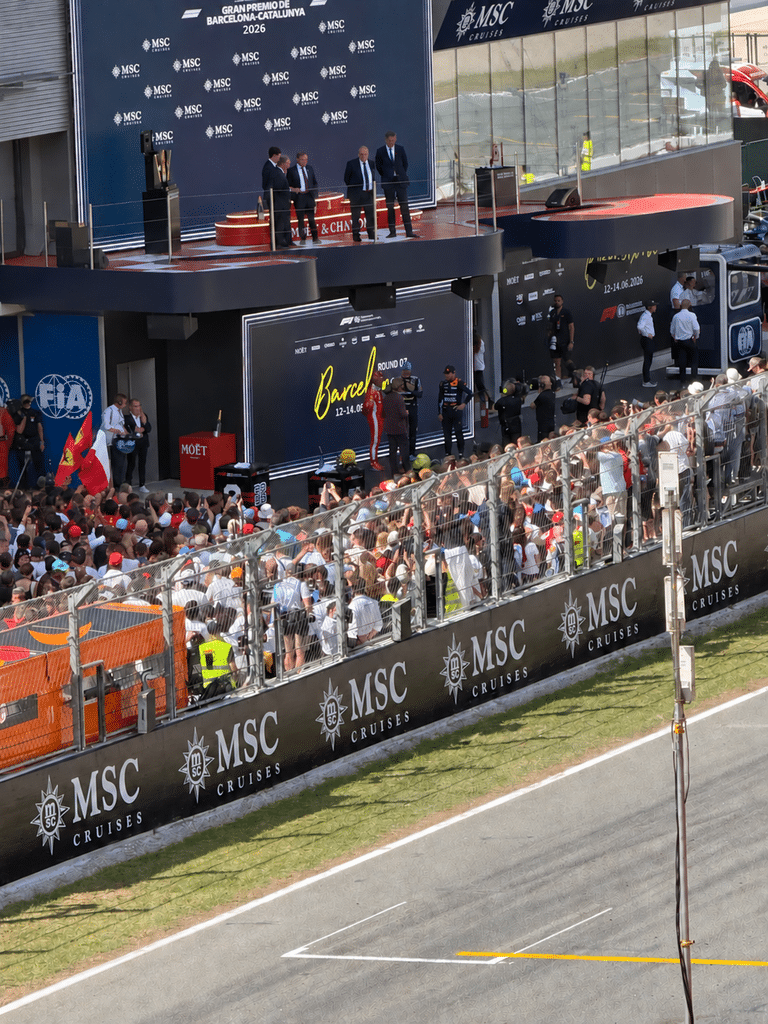
The Ferrari garages during the Barcelona Grand Prix weekend, June 13, 2026.
Travel Research Process Step Two: Ignore the “Top 10 Things to Do”
The internet loves lists.
Top 10 attractions.
Top 20 restaurants.
Five hidden gems.
Those lists are useful—but only as a starting point.
Most of the truly memorable experiences I’ve had weren’t at the top of those articles.
Instead, I dig deeper.
I read chef interviews.
I study restaurant menus months before arriving.
I look at cocktail programs instead of just drink photos.
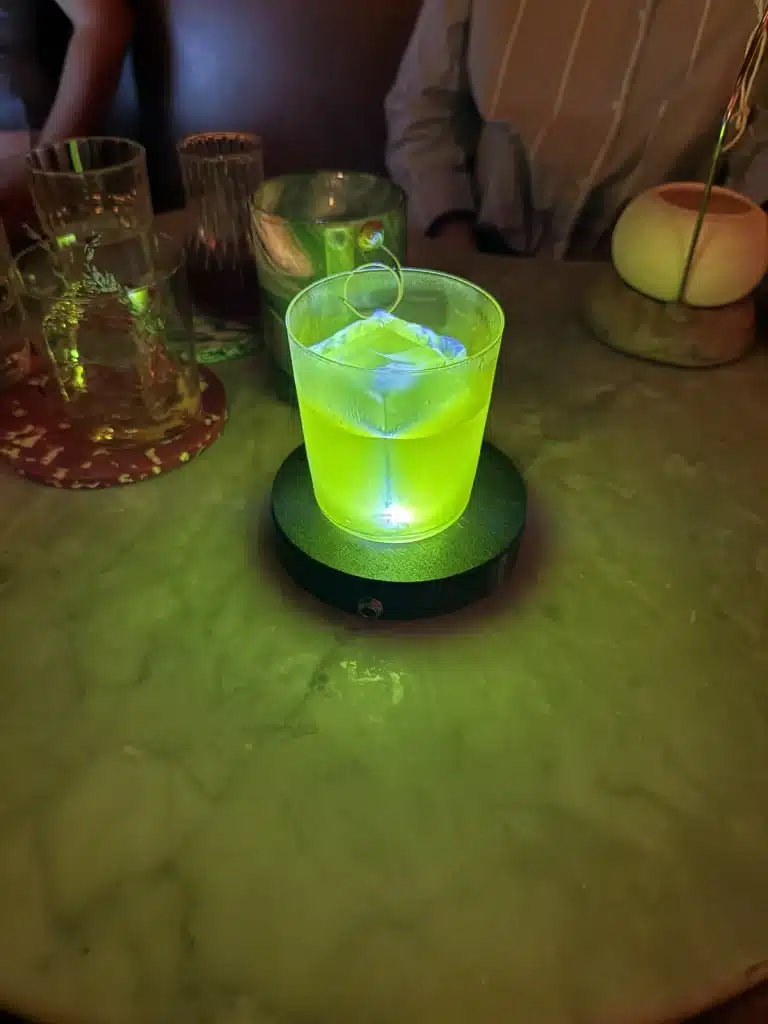
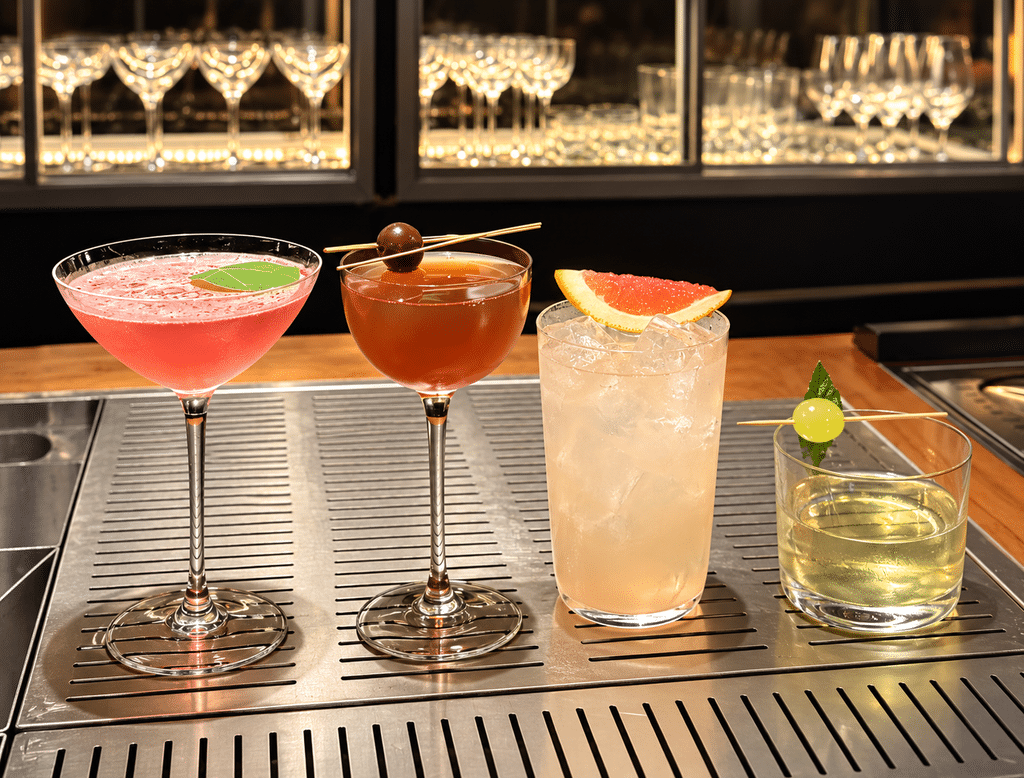
A cocktail at Paradiso, Barcelona, June 2026.
I search Reddit to see what locals actually recommend.
I browse Google Maps until I find places with hundreds of reviews but almost no social media attention.
I’ll spend hours comparing neighborhoods because staying in the right location can completely change how a city feels.
Research isn’t about finding the most famous place.
It’s about finding the place that’s right for you.
Travel Research Process Step Three: Build the Trip Around Food
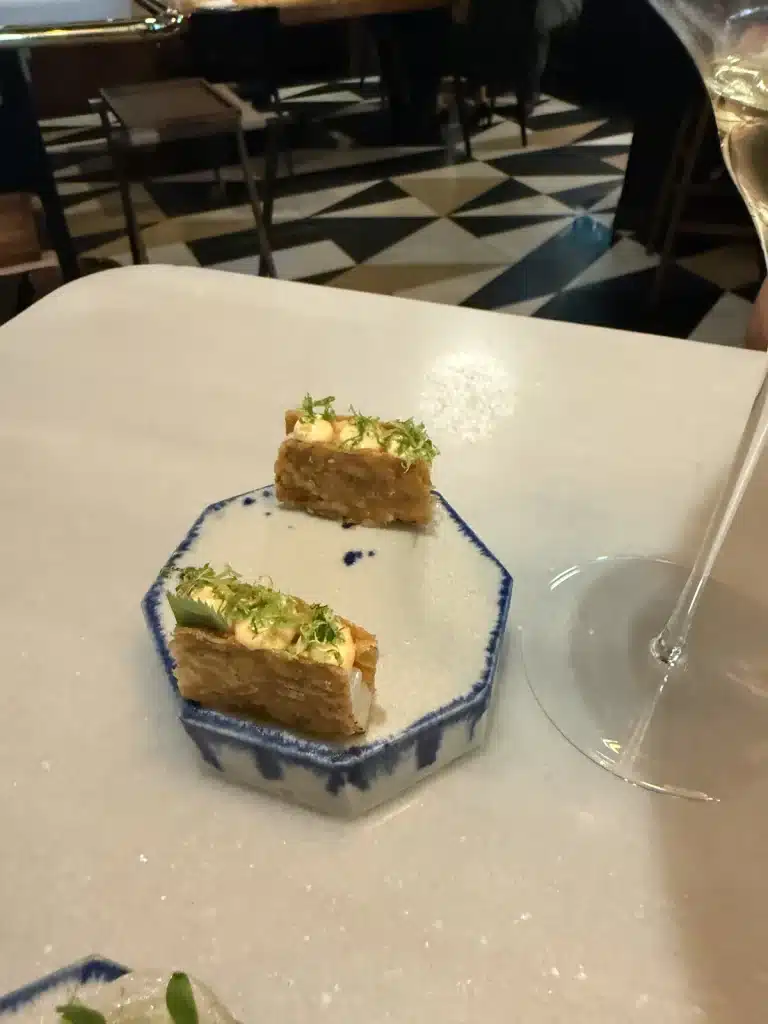
Small bites at Mont Bar, Barcelona, June 2026.
Some people eat wherever they happen to be.
I’m the opposite.
Meals often determine my daily schedule.
If dinner is on the opposite side of the city, I’ll spend the afternoon exploring that neighborhood.
If lunch finishes near a famous cocktail bar, I’ll stop in for one drink before continuing the day.
If there’s an incredible bakery nearby, breakfast is already planned.
The best itineraries flow naturally.
You’re not bouncing back and forth across the city.
You’re letting restaurants, museums, parks, and bars complement one another.
Planning this way creates better days—and a lot less time sitting in traffic.
Travel Research Process Step Four: Walk Whenever Possible
One of my favorite discoveries has nothing to do with reservations.
It’s walking.
Some of the best memories I’ve made happened between destinations.
Finding a neighborhood café.
Watching locals gather in a small square.
Discovering a cocktail bar that wasn’t on my list.
Seeing architecture I’d never have noticed from the back seat of a taxi.
Walking slows everything down.
It forces you to notice details.
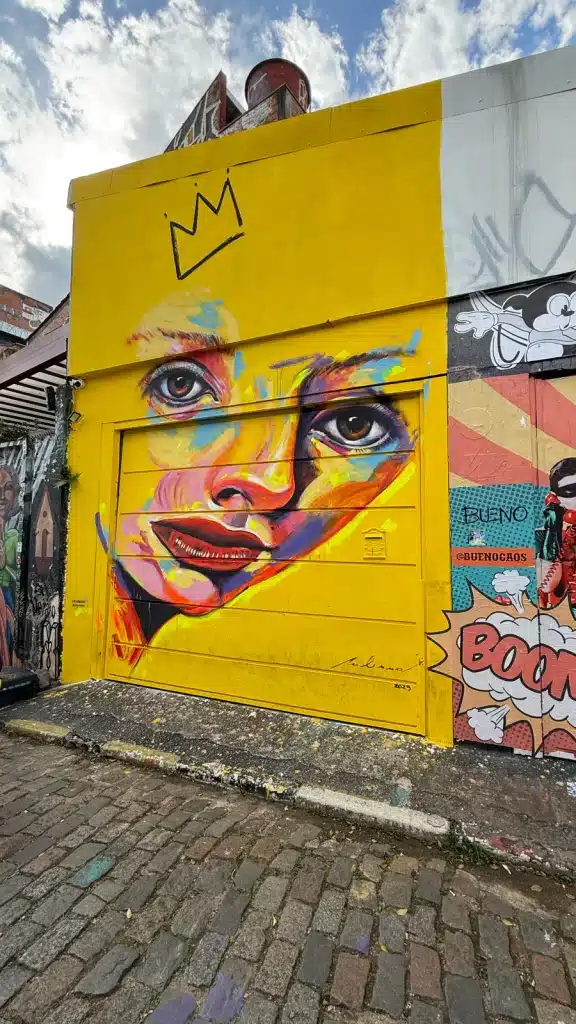
Street art at Beco do Batman, São Paulo, November 2025
Those unexpected moments often become the stories you remember years later.
Travel Research Process Step Five: Talk to People
This is probably the most underrated part of travel.
Talk to bartenders.
Talk to servers.
Talk to hotel concierges.
Talk to chefs if they’re available.
Ask what they eat on their day off.
Ask where they send visiting friends.
Ask what everyone else misses.
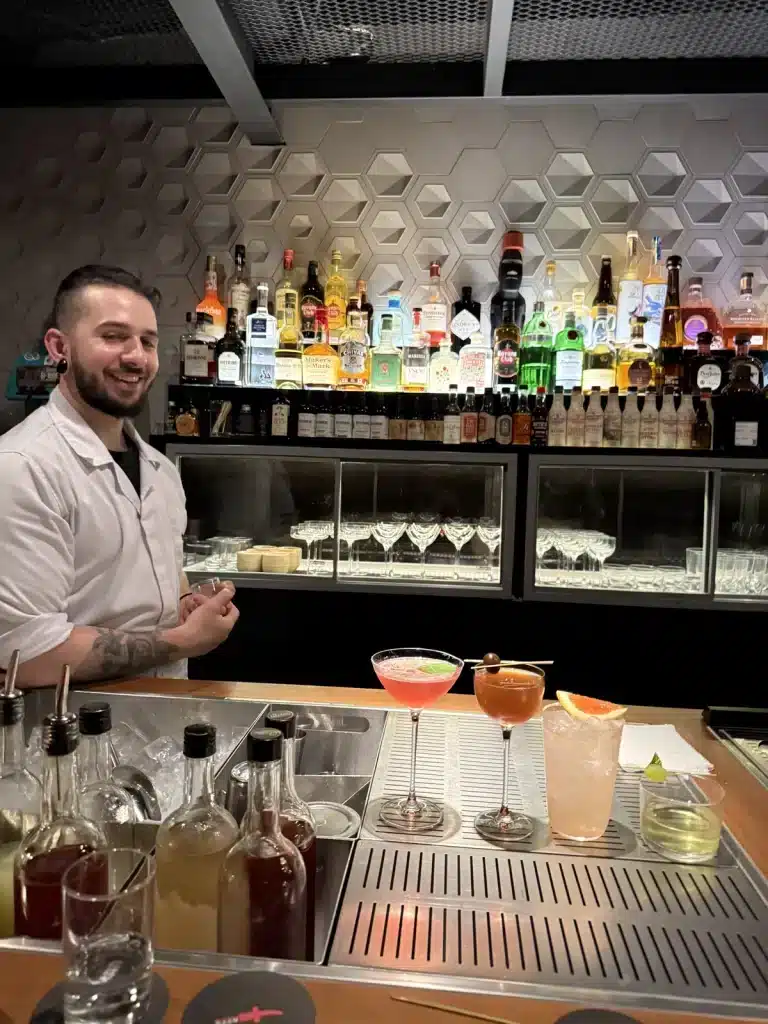
Behind the bar at Tan Tan, São Paulo, November 2025.
Those conversations have led me to restaurants that never appeared in any guidebook.
They’ve introduced me to local specialties I wouldn’t have ordered otherwise.
They’ve changed entire afternoons because someone pointed me toward a neighborhood I hadn’t planned to visit.
The people who live there usually know the city better than any influencer ever will.
Travel Research Process Step Six: Leave Room for the Unexpected
Research is important.
Flexibility is just as important.
Not every reservation works out.
Weather changes.
Flights get delayed.
A local recommendation might completely reshape your plans.
That’s okay.
Some of my favorite travel memories happened because something unexpected forced me to change direction.
The goal isn’t to execute the perfect itinerary.
The goal is to create opportunities for unforgettable experiences.
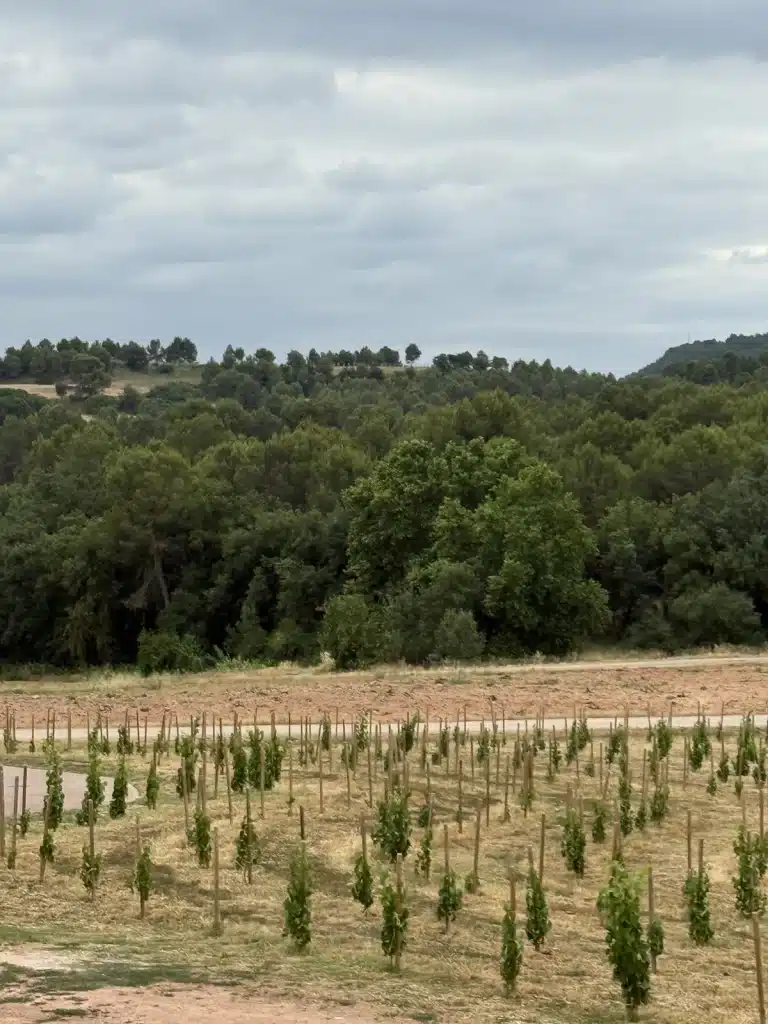
A vineyard during a winery visit in Spain, June 2026.
Travel Research Process: Luxury Doesn’t Always Mean Expensive
People often assume luxury travel means spending as much money as possible.
I don’t see it that way.
Luxury is value.
A perfectly made cocktail served by someone passionate about their craft can feel more luxurious than a five-star hotel with mediocre service.
A neighborhood restaurant where the chef personally introduces each course can leave a stronger impression than the world’s most expensive tasting menu.
Price matters.
Quality matters more.
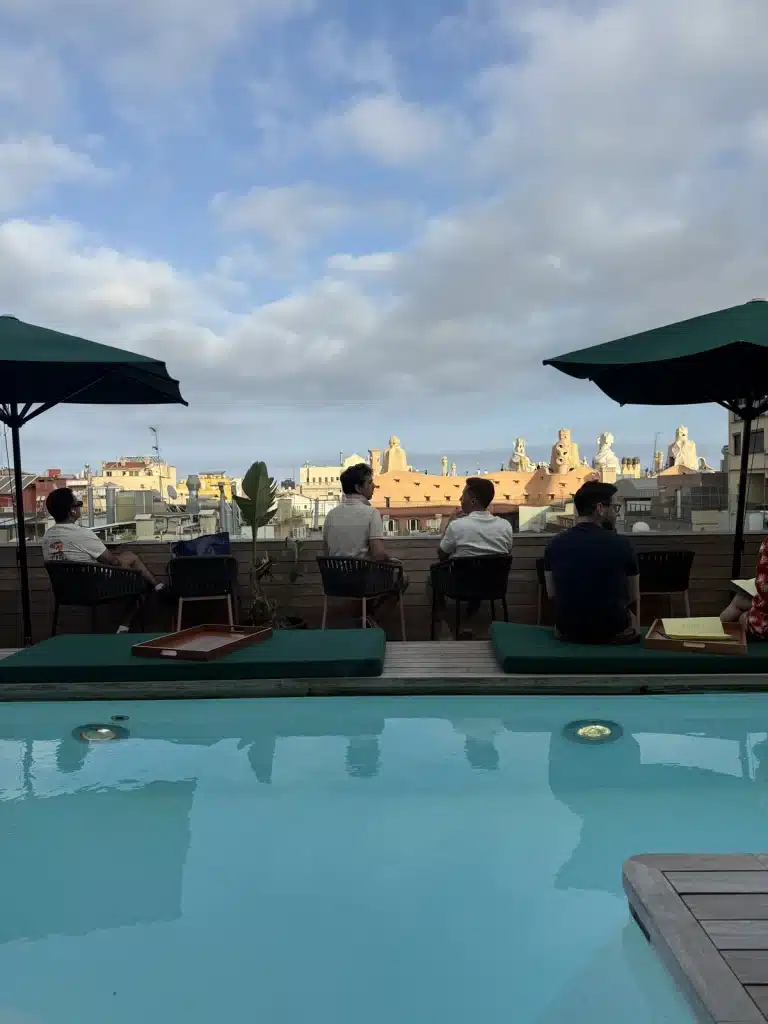
The rooftop at Sir Victor, Barcelona, June 2026.
That’s why I don’t recommend places because they’re expensive.
I recommend them because they’re exceptional.
Why I Share These Experiences
People often ask me where they should eat in a city.
Which hotel I’d book.
Which cocktail bar is actually worth visiting.
Or whether a famous restaurant deserves all the attention it gets.
Those questions made me realize I’d already done thousands of hours of research over the years.
Instead of keeping those discoveries to myself, I decided to document them here.
Everything you’ll read comes from firsthand experience.
If I recommend a restaurant, I’ve eaten there.
If I recommend a hotel, I’ve stayed there.
If I tell you to order a particular cocktail, it’s because I’ve probably spent far too much time talking to the bartender about how they made it.
Travel Research Process: The Research Never Stops
Every trip teaches me something new.
A better restaurant.
A hidden cocktail bar.
A neighborhood I’d never considered.
A hotel that exceeded expectations—or one that didn’t.
The list keeps growing.
So does the curiosity.
That’s what this website is about.
Not collecting passport stamps.
Collecting experiences worth remembering.
If these stories help you discover one unforgettable meal, one incredible cocktail, one remarkable hotel, or one destination you might otherwise have overlooked, then every hour of research was worth it.
Usually.
The research is finished. The itinerary is set. Now it’s time to see if the destination lives up to the planning.
By Richard Jarocki · Travel Stories · July 20, 2026 · Updated September 25, 2026
Food-focused trips usually start with a restaurant for me. Most people start planning a vacation by searching for flights; I start by figuring out where I want to eat.
Or maybe it’s a cocktail bar I’ve been reading about for months. Sometimes it’s a Formula 1 race. Other times it’s a hotel I want to experience for myself.
Whatever it is, that’s where the research begins. One reason to go becomes dozens of browser tabs, Google Maps pins, menus, videos, conversations, and questions. By the time I leave, I’ve usually learned enough about a place to write a guide before I’ve packed my suitcase.
Normal? Probably not. Worth it? Usually.
I Start With a Reason to Go
Formula 1 brought me to Barcelona. The food, hotels, and city made it a full trip.
Even my food-focused trips sometimes begin with something other than food. Barcelona started with a race; the restaurants helped shape the rest.
Barcelona started with Formula 1. New York started with restaurants I’d been trying to book for years. São Paulo began with Interlagos, then grew into a much bigger interest in its dining scene, cocktail bars, neighborhoods, and hotels.
I don’t build a trip around a checklist of famous sights. I start with what genuinely interests me, then learn what else is nearby and worth my time.
I Research the Details—and Ask People
When planning food-focused trips, I read menus months before I arrive.. I compare hotels to understand which ones deliver on their promises and which ones simply charge luxury prices. I read reviews for patterns rather than star ratings: What do people consistently love? What disappoints experienced travelers? Is a restaurant exceptional, or just everywhere on Instagram?
I also talk to people. A review can tell me a lot, but a conversation can point me toward a place I would never have found on a list.
São Paulo is a good example of how far I’ll take that research. I read about the hotels and spoke with people while figuring out where to stay. Across three trips, I stayed at different hotels for two or three nights at a time, then moved on to the next. I wanted to experience them myself before deciding which ones were actually worth recommending.
For my own trips, I also use the Marriott Bonvoy app. I tend to prefer Marriott properties because I like the service, though I still want to know how a particular hotel feels in person. In Barcelona, I chose Sir Victor for its location and its connection to Marriott Bonvoy. On my next São Paulo trip, I’m staying at the W. I’ve stayed there before, but I spent so much of that visit out in the city or at the race that I didn’t get much time to explore the hotel itself. This return will give me a better chance to get to know it.
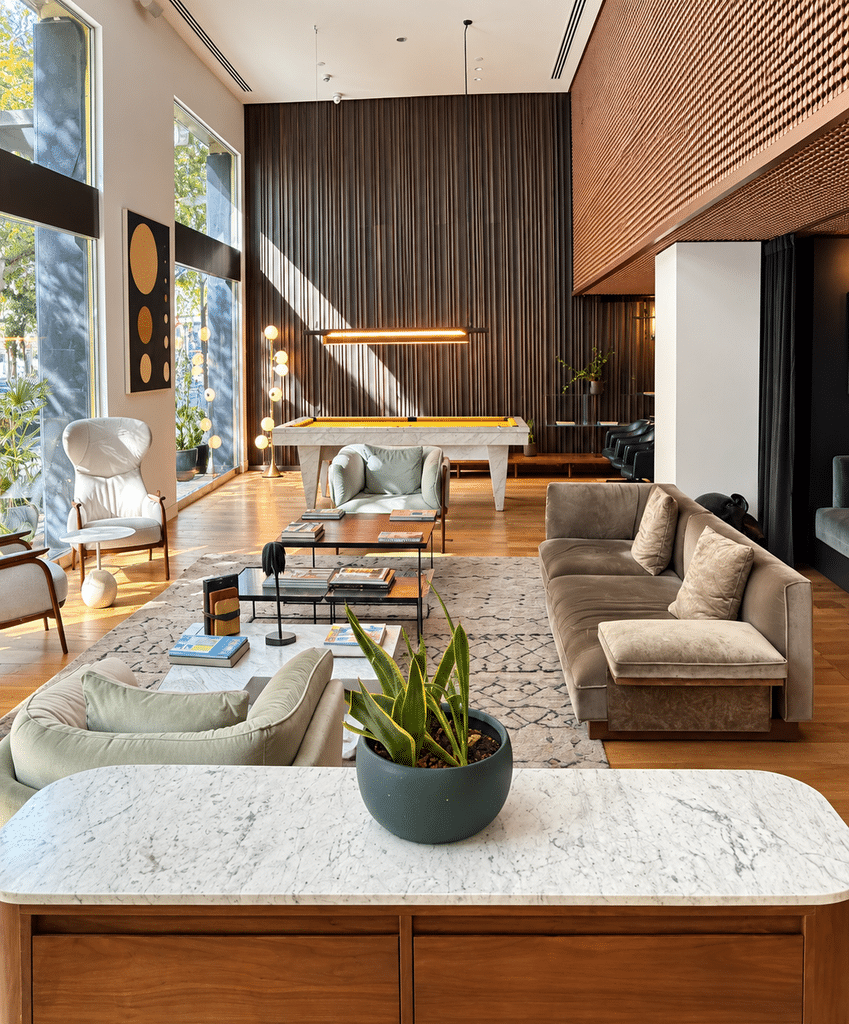
Sir Victor’s lobby lounge by day—the beginning of the MR PORTER experience in the evening.
Those lists give me names to investigate. Then I look at Instagram posts, reviews, and photos to get a better sense of the food and the experience. I narrow it down to two or three places I really want to try.
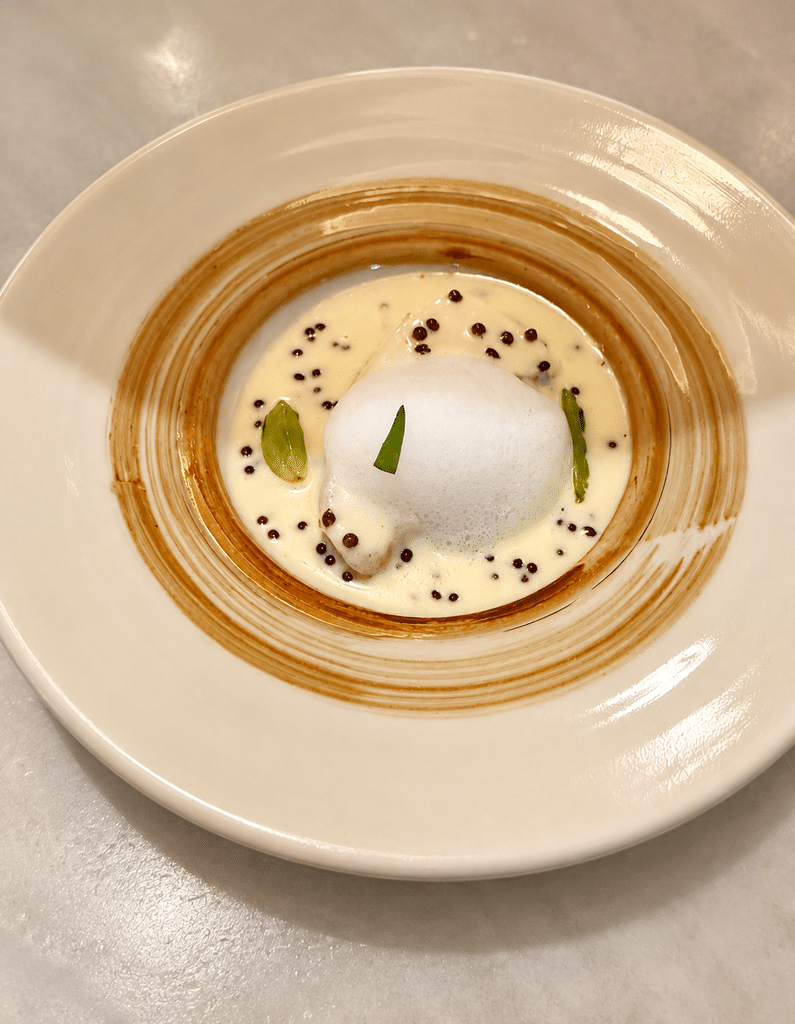
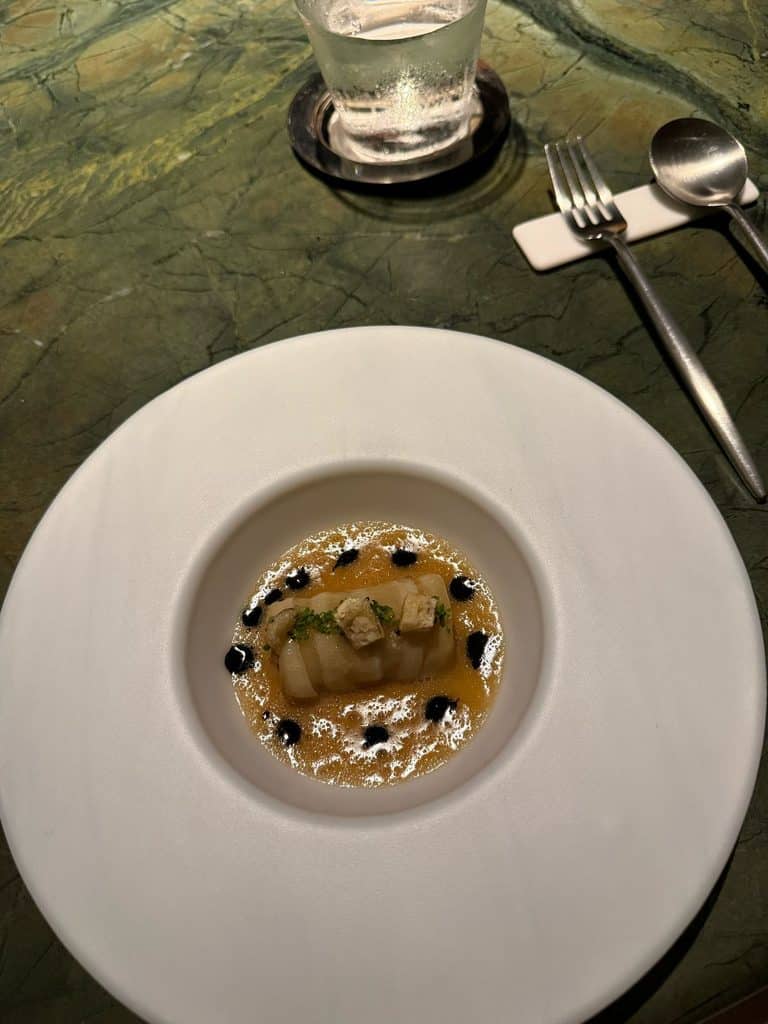
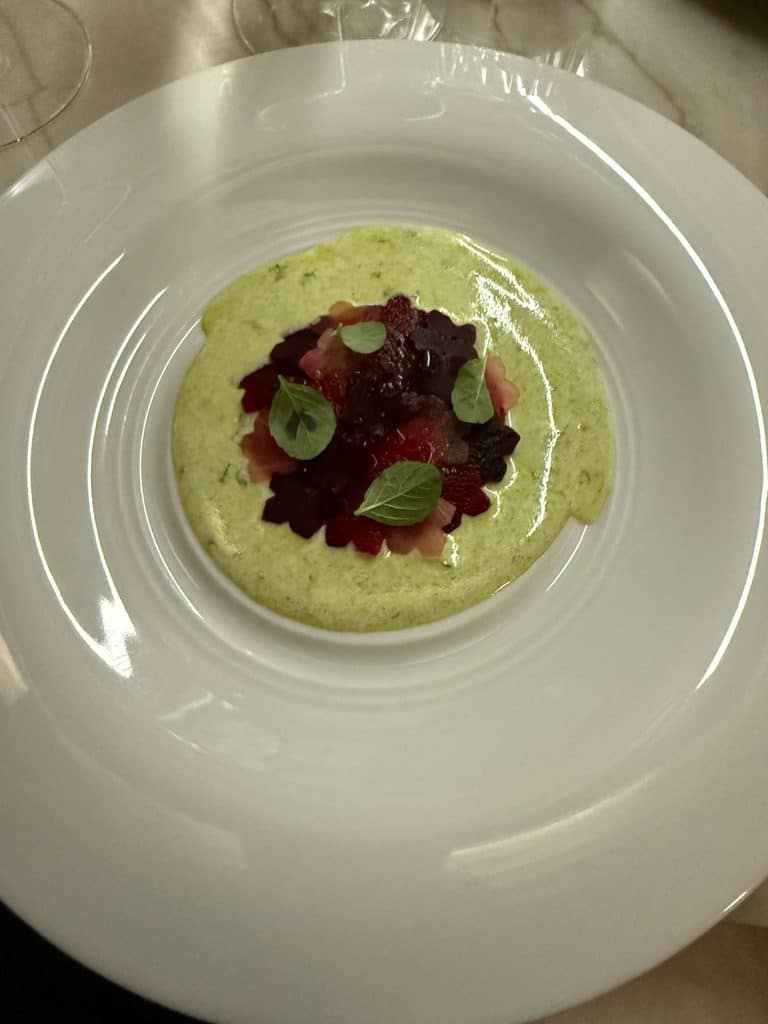
A course at Mont Bar, one of the Barcelona reservations I made room for.
Those meals give my food-focused trips a starting point. I build the rest around them, especially more local places I find through research or conversations once I’m there. I want to experience the city, not just eat through a list of awards.
I Build the Days Around the Experiences
My food-focused trips start to take shape once I know which reservations are fixed and how much time I have between them.
A bakery in the morning. A neighborhood or museum to explore. An afternoon cocktail. Dinner somewhere I’ve spent months trying to reserve. Maybe late-night drinks at a place someone recommended along the way.
I think about how the experiences fit together. I’d rather spend three days getting to know one neighborhood than race across a city trying to see everything.
I leave room for the unexpected, too. Food-focused trips need enough flexibility to follow a good recommendation. Some of my favorite memories came from a bartender pointing me to another bar, a chef recommending a restaurant, a concierge sending me somewhere I hadn’t considered, or a walk between two reservations that became the best part of the day.
Between meals, I make time to experience the city itself.
I can help you plan a trip this way, too. If you’re deciding where to stay, which restaurants are worth reserving, or how to fit everything together without rushing, tell me what you’re planning.
I Judge the Experience for Myself
Luxury isn’t about spending the most. It’s attention to detail: service that feels effortless, a perfectly balanced cocktail, a hotel that lives up to the promise.
Sometimes that means a Michelin-starred tasting menu. Sometimes it means a twelve-seat neighborhood wine bar. Price doesn’t impress me. Quality does.
Cocktails at Tan Tan in São Paulo.
That’s why I go beyond collecting recommendations. If I tell you a restaurant is worth visiting, I’ve eaten there. If I recommend a hotel, I’ve slept there. My own experience is what turns all that research into an opinion I can stand behind. No sponsored rankings. No recycled lists.
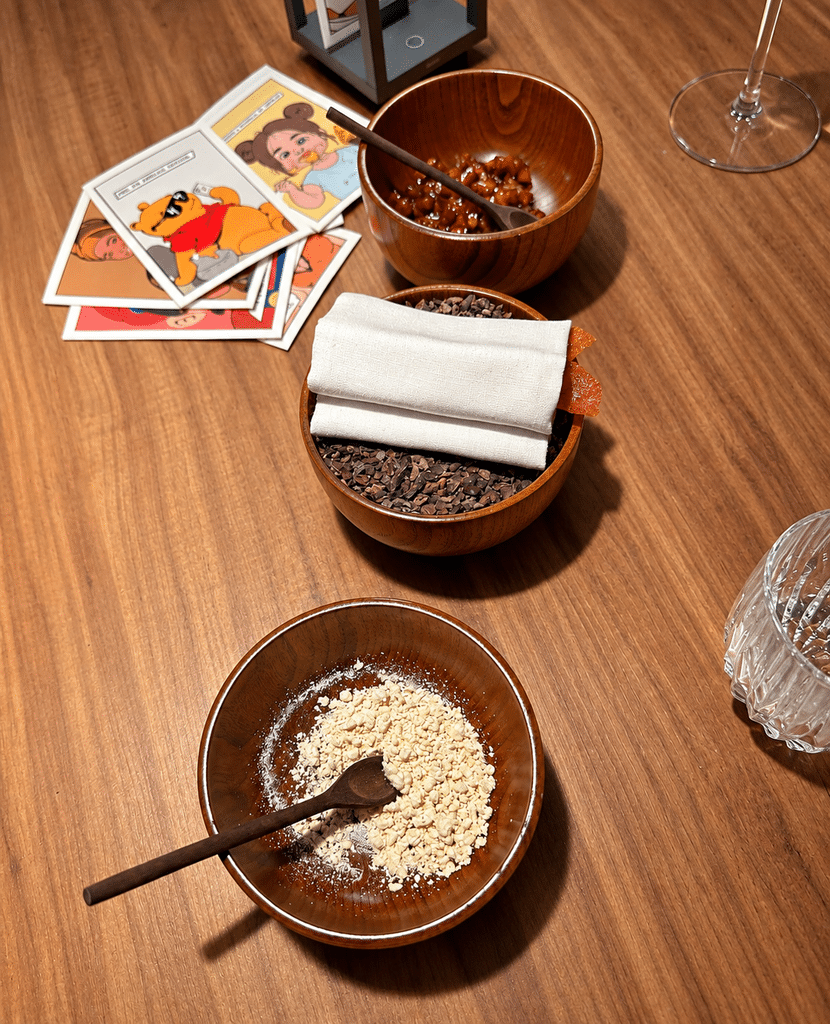
At Evvai, details around the meal stayed with me as much as the courses.
The Research Never Stops
Friends have always asked me where to eat, which hotel I’d book, and whether a place deserves the hype. This website is where I share what I learn from planning, going, asking questions, and sometimes going back again.
Every trip adds something: a better restaurant, a hotel I’d return to, a hidden cocktail bar, a neighborhood I didn’t expect to love. The list keeps growing. So does the curiosity.
If all those hours of research help you find one unforgettable meal, one perfect cocktail, or one place you might otherwise have missed, they were time well spent.
Follow me on Instagram @Richard.Jarocki for more food, cocktails, hotels, and Formula 1 from my travels.
Completely Unnecessary. Absolutely Worth It.
Let’s Plan Your Next Trip
Have a destination in mind—or a restaurant worth building a trip around? Tell me where you want to go, your dates, approximate budget, and what you enjoy. Whether it’s food, cocktails, hotels, or a Formula 1 weekend, I can help you work out how it all fits together.
Fill out the form below, and I’ll get back to you to discuss your trip.
By Richard Jarocki | Research and booking information checkedSep 27, 2026
Exclusive restaurants interest me because of what can happen once you sit down: the cooking, the attention to detail, the room, and the way the evening comes together.
I have eaten at Disfrutar in Barcelona and at Evvai and Tuju in São Paulo. Those experiences give me a personal starting point. I also share what happened when I tried to book Cote and ended up at Bar Chimera. For places I have not visited, the profiles draw on research into what makes them distinctive and how their published booking or membership arrangements work.
A reservation at a small tasting-menu restaurant and an invitation to a private club involve different kinds of access. Understanding that difference makes planning much easier.
This guide profiles 20 restaurants and clubs across Europe, the Americas and Asia, without ranking them. It also looks at hotel connections, card benefits and culinary events that can open up other ways to experience their food and meet the teams behind it. Prices below retain the restaurant’s or club’s local currency, with approximate U.S. dollar equivalents beside foreign-currency amounts. Restaurant prices are per person, and drinks are separate unless stated. Check the current menu and terms before committing.
Currency note: USD estimates use Sep 25, 2026 reference rates, checked Sep 27, 2026, and are rounded to the nearest dollar. They help with planning; your card’s exchange rate and any fees may change the amount you pay. Sources: European Central Bank and Central Reserve Bank of Peru.
How Access to Exclusive Restaurants Actually Works
There are four main access arrangements to understand:
Public reservations: You book through the restaurant or its designated platform, subject to availability.
Tickets or deposits: You secure a specific experience under the restaurant’s payment and cancellation terms.
Private membership or hosted access: A club approves membership, admits a member’s guests, or offers another explicitly documented route.
Established table arrangements: A restaurant such as Rao’s allocates recurring tables to longstanding patrons. An invitation through that circle is a different proposition from a public reservation release.
A famous name does not automatically mean a private club. For example, The Polo Bar’s restaurant listing publishes a telephone reservation process. Describing it as members-only gives readers the wrong starting point.
For exclusive restaurants, the useful questions are when reservations open, which booking channel is official, and how flexible you can be.
Exclusive Restaurants Worth Knowing
Disfrutar — Barcelona, Spain
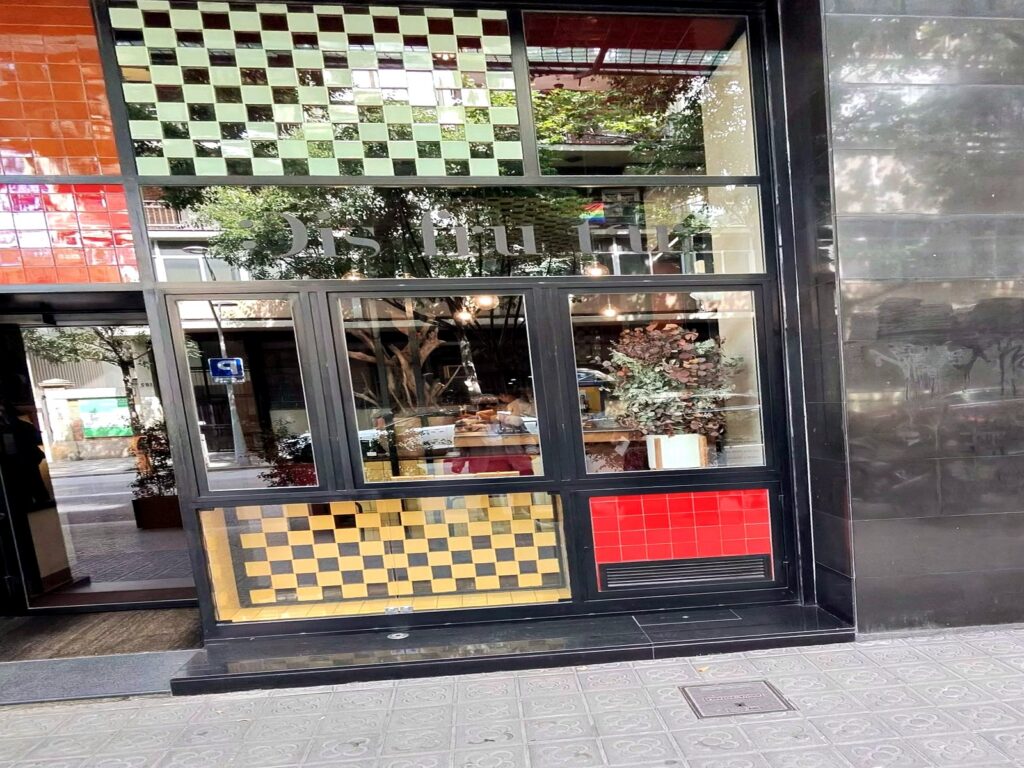
Entrance to Disfrutar in Barcelona, photographed by Richard Jarocki in June 2026 for his guide to exclusive restaurants and remarkable dining experiences.
Disfrutar is one of the restaurants in this guide that I have experienced personally. The cooking of Mateu Casañas, Oriol Castro and Eduard Xatruch makes it a compelling choice for someone interested in inventive tasting menus and the possibilities of food.
The restaurant offers a Classic menu built around established creations and a Festival menu focused on seasonal work. Its separate Living Table experience takes place in the research and development kitchen.
Published menu price: €325 (about US$371) for either main tasting menu; the listed wine pairing is €180 (about US$205).
Getting into Disfrutar took persistence. When I was trying to book, it was booked almost a year ahead. I kept calling the reservations team, stayed polite and eventually they found me a spot. That is how I got in. It is a good reason to speak to the people handling reservations when the online calendar seems to have ruled you out.
How to book: Reservations open up to 12 months ahead, and the restaurant offers a waiting list. Start with the official website; its booking information also provides a telephone contact for the reservations team. Ask about your dates and whether they welcome follow-up calls.
Evvai’s playful Bomba de Vieira — a signature scallop course served directly onto the diner’s hand.
Evvai is my favorite restaurant in the world. That is my personal opinion, built on the meals I have had there.
Chef Luiz Filipe Souza’s Oriundi approach connects Italian heritage with Brazilian ingredients and influences. What stays with me includes the illustrated dish cards, the playfulness of the food and the precision of the service. The details give the meal a personality of its own.
Evvai received three Michelin stars in the 2026 Brazil selection.
Published menu price: R$1,650 (about US$318). Pairings and supplements are additional; confirm service charges and the complete total when booking.
How to book: Use the Meitre reservation link on the restaurant’s official website.
A course from Richard Jarocki’s Rain Season visit to Tuju. Photograph by Richard Jarocki.
Tuju feels like couture applied to gastronomy. The presentation, architecture and attention to detail give it a character that deserves its own place in a conversation about destination dining.
My visit was during its Rain Season menu. Chef Ivan Ralston’s approach draws on Brazilian ingredients and the changing climate, with research playing a central role in the kitchen.
Tuju also received three Michelin stars in 2026. Alongside Evvai, it helped make that year a landmark for Brazilian dining.
How to book: Follow the reservation link from Tuju’s website to Tock. Confirm the menu price, beverage options and terms for your chosen service.
Frantzén in Stockholm, where the dining room and open kitchen are integral to the three-Michelin-star experience.
Frantzén combines three Michelin stars with a deliberately small setting: the restaurant describes 23 seats spread within a three-floor townhouse experience.
That scale is a useful reason to research it early. It is also a clear example of a celebrated restaurant with a published public reservation system.
Published menu price: SEK 5,500 (about US$556), with the same menu at lunch and dinner. Beverages are additional.
How to book: Tables for the following month open on the first of each month at 10 a.m. Stockholm time. Frantzén states that it does not require advance payment for reservations.
For larger occasions, the separate Frantzén Group Test Kitchen advertises private dining for 8–16 guests. Request that experience directly.
Alchemist belongs on the list for the format as much as the food. The experience combines up to 50 “impressions,” including edible and other experiential elements, across an evening lasting approximately four to six hours.
That is a substantial commitment of time and attention. Consider it when you want the restaurant to be the main event of the evening.
Published menu price: DKK 5,600 (about US$854). Listed pairings begin at DKK 3,000 (about US$458), including the nonalcoholic option.
How to book: Tickets are generally released about every three months for the next two to three months. Join the official release newsletter or waiting list. Tables are offered for parties of two, four and six; the restaurant itself notes that larger groups may find availability more easily.
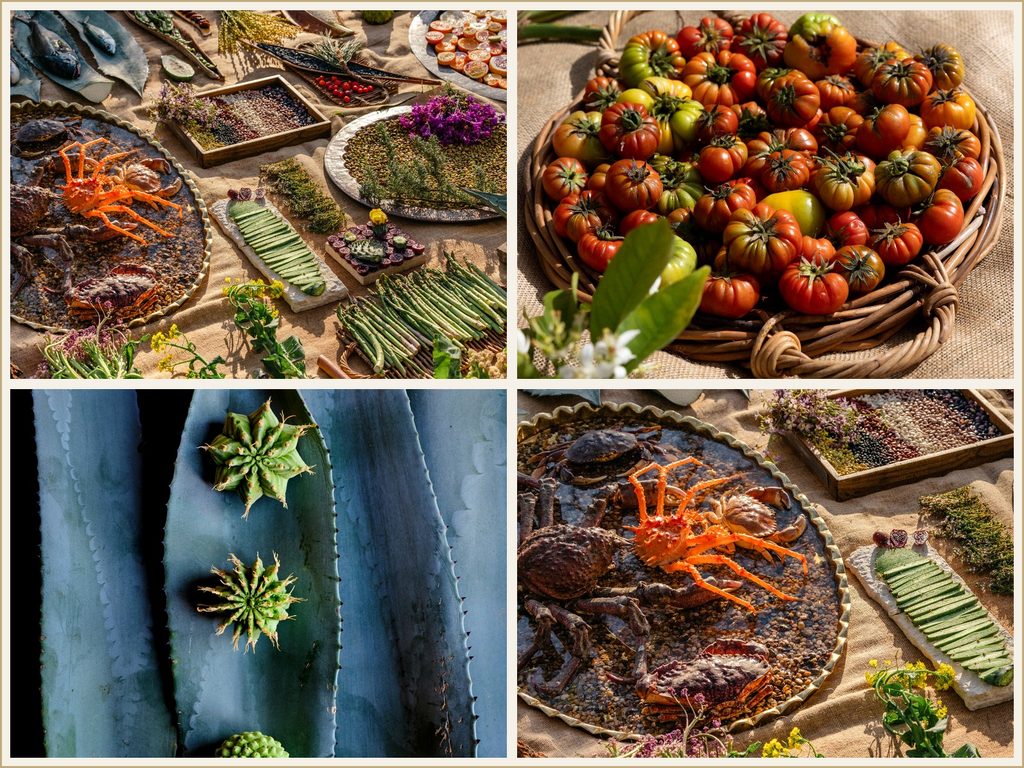
Ingredients from Noma’s 2026 Los Angeles residency, where the Copenhagen team built a menu around Southern California produce, seafood, and local landscapes.
Noma’s 2026 story includes a costly Los Angeles residency, serious scrutiny of its workplace culture and a return to Copenhagen.
The Los Angeles pop-up: Noma’s residency ran from Mar 11, 2026 to Jun 26, 2026. The advertised package cost US$1,500 per person, including the menu, beverage pairing, hospitality and tax. That put dinner for two at US$3,000 before travel or accommodation. The LA run has ended; those dates and prices describe that residency.
The reporting about staff and interns: Its opening coincided with renewed scrutiny of working conditions. In March 2026, The New York Times published former employees’ allegations of physical and psychological abuse by René Redzepi, including accounts concerning 2009–2017. Eater reported protests outside the LA venue and the withdrawal of sponsors American Express and Blackbird. Earlier reporting had also examined Noma’s reliance on unpaid interns, or stagiaires. Associated Press reported that Noma began fully paying interns in 2022.
Redzepi said he did not recognize every detail in the reports, while acknowledging that his actions had harmed employees and apologizing. He stepped back from daily operations. Noma now identifies Pablo Soto as executive head chef, with Mette Brink Søberg leading research and development and Annika de Las Heras as CEO.
That history is part of the context for deciding whether to dine there, alongside the food, reputation and price.
Current Copenhagen experience: Noma reopened on Aug 5, 2026, with a menu designed to evolve through twelve seasons over the year. Its published menu is DKK 4,500 (about US$686), with wine pairing at DKK 2,000 (about US$305) or juice pairing at DKK 1,500 (about US$229).
How to book: Use the Copenhagen reservation link on Noma’s official website and follow its newsletter for releases. Read the current terms: Noma explicitly restricts commercial use of reservations by travel or concierge services.
Atomix in New York City, where the intimate counter and open-kitchen format make the dining experience feel highly personal.
Atomix gives this guide a New York restaurant centered on contemporary Korean cooking. Chef Junghyun Park and Ellia Park’s restaurant builds its tasting-menu identity around Korean traditions and technique.
The Chef’s Counter is arranged around a U-shaped counter with views into the kitchen. It has two Michelin stars in the guide reviewed for this article.
How to book: Check Atomix’s official Tock listing for current releases and payment terms. For a private counter dinner, the restaurant requests at least two months’ notice. If you have Amex Platinum, you can also ask its concierge about assistance for your dates; the card-access section below explains what is currently verified.
Before committing: Its published dietary policy is restrictive, including exclusions involving seafood, dairy, gluten and other ingredients. Check compatibility with your entire party before paying.
Tatiana by Kwame Onwuachi — New York City, United States
I want to eat at Tatiana. Every time I’m in New York City and look for a table, it’s booked. It remains on my list.
Chef Kwame Onwuachi’s restaurant is inside David Geffen Hall at Lincoln Center. Named for his sister, it draws on his Afro-Caribbean heritage and New York upbringing, bringing influences from neighborhood bakeries, takeout shops, Caribbean kitchens and bodegas into the dining room.
The published menu includes Egusi Tortellini, Curried Goat Patties and Short Rib Pastrami Suya. Those dishes give a sense of its cooking; I’ll have my own verdict when I finally get there.
How to book: Reservations open on Resy 28 days ahead at noon New York time, according to Resy’s current booking guide. Put that release in your calendar before your planned visit and use Resy Notify for cancellations.
Another possibility: Resy says bar seats are held for walk-ins for parties of up to two people, with outdoor seating also available for walk-ins when weather permits. Its advice is to arrive at the 5 p.m. opening and ask about the waiting list. Availability still depends on the evening.
The original Rao’s in East Harlem belongs in a conversation about exclusive restaurants. Open since 1896, it combines Southern Italian cooking with a dining room shaped by generations of regulars. Lemon chicken and meatballs are part of its identity; so are its jukebox and Christmas decorations.
Its scarcity comes from the way tables are allocated. Rao’s own history describes “table rights” granted to longstanding patrons. Recurring table arrangements have stayed within the same circles for decades and can pass down through generations. When people say they “own” a table, they mean that longstanding access.
The demand is enormous relative to the tiny dining room, and those established arrangements leave very little room for newcomers. Acquiring a recurring spot depends on an exceptional opening or an arrangement being relinquished and reassigned. There is no ordinary public queue for that privilege.
How access works: Hopefully, you have a friend—or a friend of a friend—with access who can invite you along. That is the most realistic route. The Infatuation’s 2025 firsthand report confirms that there is no online reservation platform or walk-in waiting list.
A polite inquiry through the restaurant’s published contact channels can establish whether it is willing to consider a request. Respect the answer. Any exceptional opening remains at the restaurant’s discretion; the cancellation strategy that can work at publicly bookable restaurants should not be mistaken for a standard route into Rao’s.
Know which Rao’s you mean: This profile concerns the original at 455 East 114th Street. A booking at another Rao’s location is a separate dining experience with its own access arrangements.
Blue Hill at Stone Barns — Pocantico Hills, New York, United States
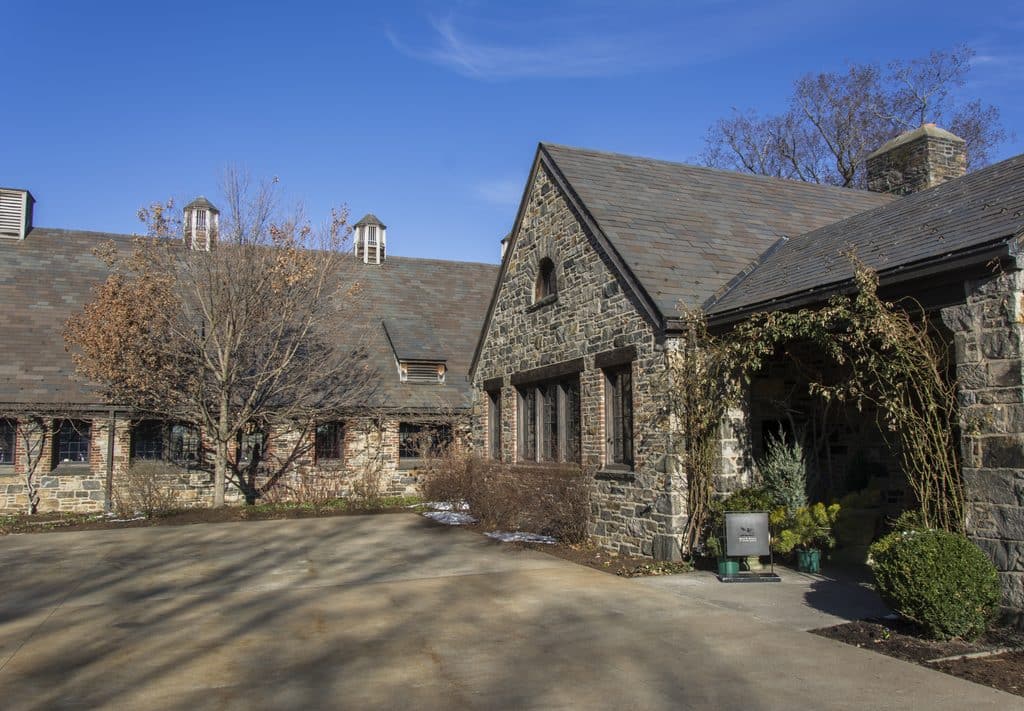
Blue Hill at Stone Barns in Pocantico Hills, where the restaurant experience is rooted in the surrounding farm and landscape.
Blue Hill at Stone Barns makes sense when the meal is the reason for the trip. Chef Dan Barber’s restaurant sits within the Stone Barns Center for Food and Agriculture, drawing on its fields, pasture and other local farms for a tasting experience shaped by what they produce.
The restaurant holds two Michelin stars and a Green Star in the 2025 New York selection. Its connection between farming and cooking gives it a distinctive place among destination restaurants.
Published menu price: US$458 per person, plus tax and a 22% administrative fee. Beverages cost extra. The administrative fee is not a gratuity; the restaurant does not accept tips.
How to book: Reserve through Tock. New reservations for each month are released on the 15th of the previous month. The menu is prepaid, and the published terms say sales are final and reservations cannot be canceled. A waiting list is available.
Most reservations include a property tour before the meal. Allow time for the visit and travel from Manhattan. For a group, the separate private dining room accommodates up to 12 guests and is also offered through Tock.
Maido earned the No. 1 position in The World’s 50 Best Restaurants 2025. The year matters: it is a specific award, rather than a permanent claim to being the best restaurant on earth.
Chef Mitsuharu “Micha” Tsumura’s Nikkei cooking brings together Japanese techniques and Peruvian ingredients. For someone planning a trip around food, that cultural relationship gives the restaurant a clear reason to be on the itinerary.
Published menu price: S/1,295 (about US$378) for the 12-course Maido Experience without beverages, including tax and service. A nonalcoholic pairing package is listed at S/1,659 (about US$485).
How to book: The restaurant says reservations open two months ahead on the first day of each month. Its website handles parties of 1–10, subject to availability.
Sorn’s appeal is its focus on Southern Thai food: regional ingredients, traditional techniques and the work of chef Supaksorn “Ice” Jongsiri. Its three-star status is confirmed in the Michelin Guide Thailand 2026.
The booking details are particularly useful because the restaurant publishes a separate route for international guests.
How to book: International reservation requests open by email at midnight Bangkok time on the 15th of each month for the following month. Online bookings open through TableCheck at noon Bangkok time on the 25th; when the 25th falls on a Saturday, the published rule moves that release to the 24th.
Use the exact instructions on Sorn’s reservation page and ask the team to confirm the current menu price and requirements.
Sézanne, at Four Seasons Hotel Tokyo at Marunouchi, combines French technique with Japanese ingredients and offers a separate Chef’s Table private dining room.
It also illustrates why current research matters. Stephen Lancaster became executive chef in April 2026. Older accounts of Daniel Calvert’s cooking describe an earlier chapter, so read them with that distinction in mind.
Published menu prices: JPY 56,925 (about US$361) for Menu Sézanne and JPY 27,830 (about US$177) for the shorter lunch menu. The restaurant’s TableCheck listing identifies these amounts as including service and tax.
How to book: Follow the current reservation link from Sézanne’s own website, which directs diners to OMAKASE. Contact the restaurant for private dining. Its published dietary restrictions are substantial, so check those first.
Private Dining Clubs With Distinct Reasons to Visit
A private club’s appeal can include its dining rooms, wine collection, music, privacy and the ability to return regularly. Membership deserves consideration in that wider context. An expensive application does not tell you whether the food or the club will suit you.
These are researched club profiles. Access always depends on the club’s current rules and approval.
Annabel’s — London, England
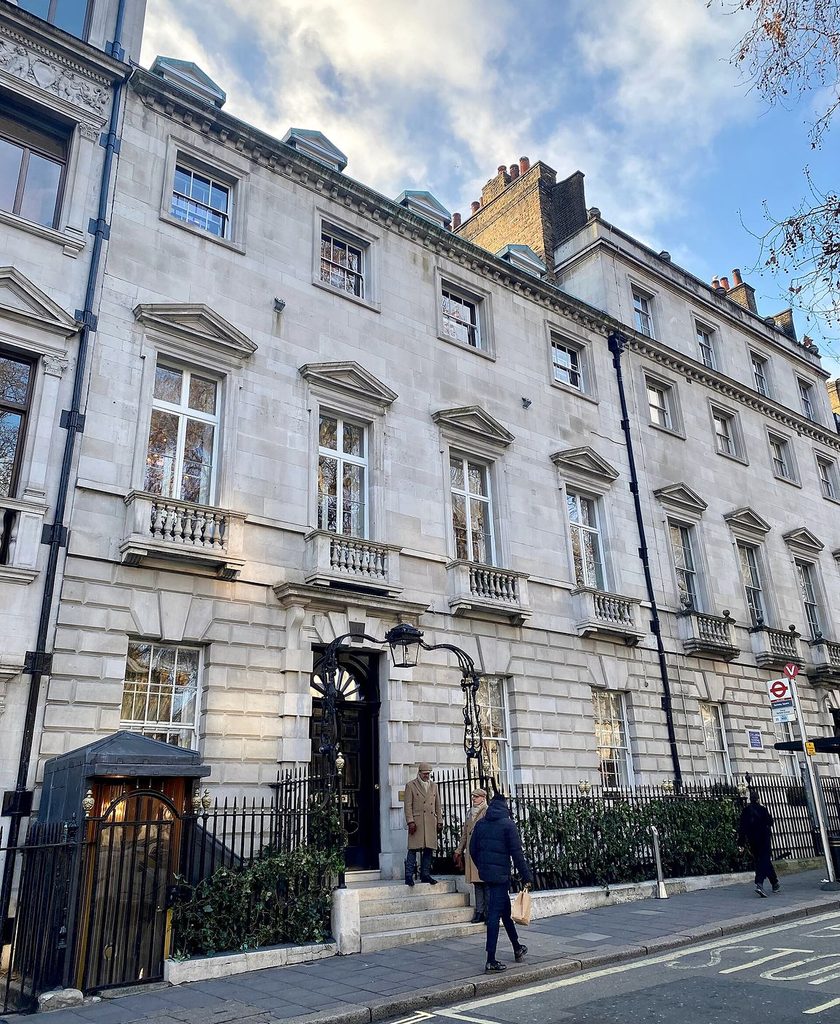
The exterior of 46 Berkeley Square, home to Annabels private members club in London, photographed in January 2022. Use beside the Annabels profile. Photo: No Swan So Fine / Wikimedia Commons, CC BY-SA 4.0. Cropped; tone and color adjusted; sharpened and optimized for web. https://commons.wikimedia.org/wiki/File:46_Berkeley_Square,_Mayfair,_January_2022_02.jpg
Annabel’s offers several dining and drinking settings within its Berkeley Square home. Its published rulebook describes the Mediterranean Brasserie, Italian restaurant Matteo’s and South American-inspired Bolívar, alongside its bars and nightclub.
How access works: Apply through the club’s official membership channel or visit as a member’s guest under its rules.
A particularly important detail: the published rulebook prohibits selling access and obtaining entry or membership through third-party concierge services. It also generally prohibits photography and video, with limited event exceptions announced by the club.
Confirm current fees directly; I would not build a budget around an old magazine’s membership figure.
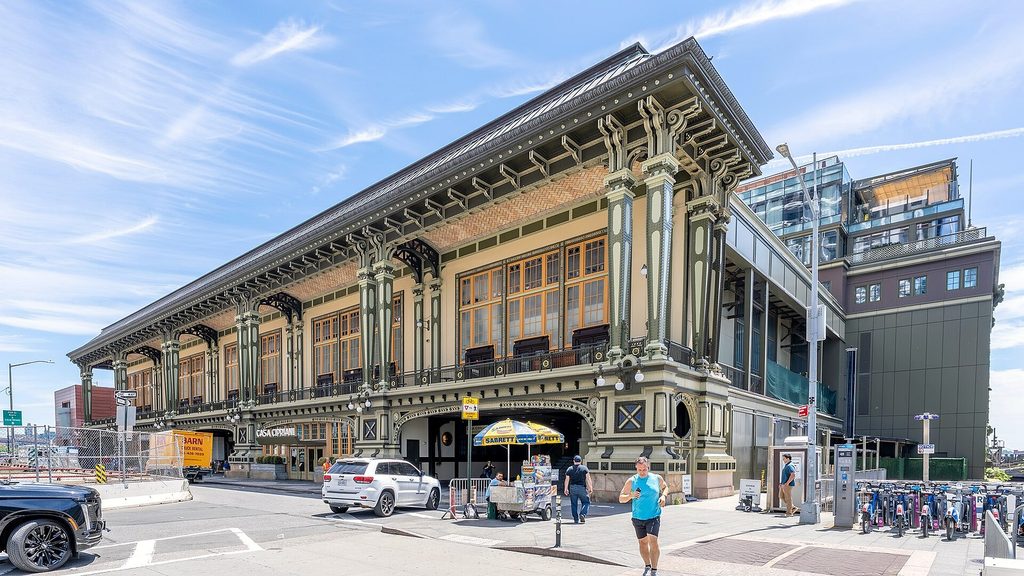
The Battery Maritime Building in New York City, home to Casa Cipriani, photographed in May 2026. This is an exterior view for the private clubs section. Photo: Ajay Suresh / Wikimedia Commons, CC BY 4.0. tone and color adjusted; sharpened and optimized for web. https://commons.wikimedia.org/wiki/File:Battery_Maritime_Building_-_Casa_Cipriani_(55313844251).jpg
Casa Cipriani pairs waterfront views with Cipriani dining, terraces and a Jazz Café. Its formal restaurant draws on Harry’s Bar classics, including carpaccio and baked tagliolini with ham.
The combination of dinner, music and the waterfront makes it a useful example of a club offering a complete evening.
How access works: Membership is one route; the club also publishes policies for members’ guests and guests staying in its hotel. Standard room and suite guests may bring a total party of up to four, including the room occupants, under the published policy.
Know before you go: Photography and video are prohibited throughout the club. Confirm hotel-related access and dining arrangements before booking a stay specifically for that purpose.
ZZ’s is Major Food Group’s private membership club. Its New York location at Hudson Yards includes a private Carbone restaurant, giving it a particularly clear connection to the group’s dining identity.
It is a relevant choice for readers interested in a restaurant-led club rather than membership built primarily around accommodation or workspace.
How access works: This is private membership dining. Confirm current eligibility, fees and guest privileges directly with the club. The public official pages reviewed did not provide a complete current fee schedule.
Take care to distinguish the New York club from its Miami counterpart when making inquiries.
Flyfish is the New York dining club co-founded by Gary Vaynerchuk alongside David Rodolitz, Josh Capon and Conor Hanlon through VCR Group. It gives this list a contemporary Lower East Side club built around food and social life.
The club occupies three levels and more than 12,000 square feet, with a main restaurant, a speakeasy lounge, a private dining room and an omakase counter reserved for select members. That last distinction matters when choosing a membership category.
Published membership fees: Individual membership lists a US$2,500 initiation fee and US$3,500 annual dues. The Omakase category lists a US$2,500 initiation fee and US$5,500 annual dues, with preferred rates and food-and-beverage credits in the omakase room.
How access works: At the time of research, Flyfish states that memberships are at capacity and applications are accepted for waitlist consideration. Its current website offers conventional membership categories alongside a separate blockchain membership process. Older descriptions of an NFT-only club are incomplete.
Confirm admission, guest privileges, dining charges and the precise benefits of your category directly before committing.
67 Pall Mall has a specific purpose: wine. Its London club advertises more than 1,000 wines by the glass and nearly 5,000 bottles, alongside dining, tastings and masterclasses.
For a wine enthusiast, that is a more useful basis for evaluating membership than celebrity sightings.
Published London fees: Standard annual membership is £2,750 (about US$3,644) with a £2,000 (about US$2,650) joining fee. An overseas category is listed at £1,250 (about US$1,657) annually, also with a £2,000 (about US$2,650) joining fee, and allows 15 visits in total across the group’s clubs.
How access works: Applicants need a proposer and seconder, but the club says its membership team can help identify sponsors. Members may host guests under the club’s rules.
The Arts Club combines art and cultural programming with several dining and drinking options. These include the Brasserie, Japanese restaurant Kyubi, Ofelia and the late-night music and cocktail setting of Leo’s.
That variety makes it worth examining for someone who would use a club across different occasions.
Published fees: Full membership for applicants aged 33 and above lists an annual subscription of £3,200 (about US$4,241) and a £1,600 (about US$2,120) member assessment fee. Other membership categories have different rates.
How access works: Begin with the official membership inquiry. Existing London members can also explore the separately priced international option for access to The Arts Club Dubai.
Mandala Club adds a Singapore option with a social and cultural focus. Its dining spaces include POPI’s, with Mediterranean-inspired food, and BAR MORI, its Japanese concept, alongside spaces for music and member events.
Its appeal is the mix of dining and club life. Readers should assess the current venues and calendar against the way they would actually use membership.
How access works: The club reviews membership applications. Its FAQ states that nonmembers can use members’ areas only when accompanied by a member, and that there is no guest fee for entertaining a guest.
Confirm the current membership tier, dues and any event charges directly.
How Hotel Connections Can Help With Exclusive Restaurants
Some hotels house destination restaurants or work with prominent chefs, making the hotel team a useful place to start when planning a special meal. A concierge can coordinate a dining request with your stay, explain the restaurant’s booking process and tell you whether a specific package or guest arrangement is available.
The useful question is what the hotel can actually confirm for your dates. Send your party size, preferred services, dietary requirements and flexibility before arrival. If your stay includes a butler, that person can help coordinate the request too.
There are several concrete connections worth understanding:
Ritz Paris and Espadon: Chef Eugénie Béziat’s restaurant is inside the hotel and is listed with one Michelin star. Contact the hotel or restaurant about dining alongside your stay and watch its calendar for visiting-chef dinners. Official Espadon information
Mandarin Oriental, Tokyo and Sushi Shin by Miyakawa: The hotel’s current sushi restaurant is on the 38th floor, with its own reservation contact and TableCheck link. Ask the hotel team to help coordinate the arrangements. Official Sushi Shin information
Le Bristol Paris and Epicure: The hotel sells a gastronomic-stay gift package combining a Deluxe Room for two, breakfast and an eight-course dinner for two at three-Michelin-starred Epicure. Beverages are excluded, and the offer is subject to availability. Confirm both the room and dining date before purchasing for a specific trip. Official gastronomic-stay package
Sézanne’s home at Four Seasons Hotel Tokyo at Marunouchi, and Casa Cipriani’s published hotel-guest club access, are further examples already covered in this guide.
Ask directly whether the restaurant keeps any inventory for hotel guests and whether your booking includes a confirmed table. A room reservation on its own should never be treated as a dining confirmation.
Use Amex Dining Benefits and Understand What You Still Pay
Eligible American Express Platinum Card Members can add their card to a Resy profile to access Global Dining Access reservations and Priority Notify at participating restaurants. Platinum Nights by Resy is another route, with reservations on selected dates reserved for eligible Platinum Card Members.
These benefits can create opportunities beyond the ordinary reservation search. You still pay for the meal and must complete any required deposit or prepayment. Read the restaurant’s cancellation terms before confirming; a statement credit, where eligible, has separate rules.
Atomix needs a specific distinction. Its published booking route is Tock. Resy’s current FAQ says Tock venues are not part of Global Dining Access, do not receive Priority Notify and have no nightly tables allocated to Amex Card Members. An Amex Concierge inquiry may still be worth making, but any Atomix-specific offer needs confirmation for your date. The current evidence does not support promising a standing Platinum-only table there.
A documented example from this guide is Tatiana, which appeared in Resy’s published Platinum Nights schedule for Mar 5, 2026. That date has passed, but it shows why checking the current Platinum calendar can be worthwhile alongside the normal reservation release.
Buying a ticket to a collaboration dinner or culinary event can give you another way to experience a chef’s work. Depending on the format, it can also create an opportunity to speak with the chef, sommelier or restaurant team and begin a relationship.
Look for events that identify who will actually attend and what is included. A hosted dinner, chef conversation or small tasting can offer different opportunities from a large walk-around festival.
Four-Hands Dinners and Signature Sessions
A four-hands dinner brings two chefs together for a shared menu; larger collaborations can involve several kitchens. Many are offered through public reservations or ticket sales.
One current example is Espadon’s advertised dinner with Anne-Sophie Pic and Eugénie Béziat on Oct 23, 2026 at the Ritz Paris. Its official page publishes the event and its prepayment cancellation terms. Check directly for remaining availability. Espadon’s collaboration dinner
The 50 Signature Sessions are another useful series to follow. The organiser describes ticketed collaborations between visiting chefs and local restaurants, with public dining events planned around the November 2026 programme in Lima. Watch the official experience page for the announced chefs, releases and prices. The 50’s dining experiences · Lima programme announcement
For Madrid Fusión, look closely at the pass and programme. Its 2026 registration included access to chef presentations, wine and pastry programming and exhibition areas. That is a different format from a seated collaboration dinner, so choose according to whether you want a meal, a demonstration or a broader industry event. Official congress registration and inclusions
Theodora Beach Club on Governors Island
Theodora Beach Club is a useful New York example of this approach. The summer 2026 pop-up brought Theodora and Taco Vista together on Governors Island, presented by Resy with VinePair as media partner. Its programme ran Fridays and Saturdays from Jun 5, 2026 through Aug 29, 2026, combining cooking over live fire with ticketed events and guest-chef collaborations.
VinePair also documented guest-bar collaborations involving names such as Sip & Guzzle and Bar Bambi. That mix offered another way to encounter the food, drinks and teams behind established restaurants and bars.
There was a card-access connection too: Resy advertised Platinum Nights on Jul 24, 2026 and Jul 25, 2026, plus early access for Global Dining Access members to the first chef collaboration. These were opportunities to book; guests still needed to buy their tickets.
The 2026 season has ended. Follow Theodora and Resy for future announcements rather than assuming the same dates or format will return.
Building a Relationship With the People Behind the Meal
If there is a natural moment to introduce yourself, take it. Ask a thoughtful question about a dish or ingredient, listen, and respect the team’s time during service. If you enjoy their work, return, attend another event or send a brief thank-you through the restaurant’s public contact channel.
Over time, being a considerate, interested guest can make the relationship more personal. You learn the team’s approach, and they may come to recognise yours. Sometimes the first visit is the hardest one to arrange. Being known to the team can make the conversation about returning easier.
That might mean a note attached to your guest profile, a direct reservations contact or, if a staff member chooses to share it, a mobile number for future booking requests. Use any personal contact in the way they invite you to. The relationship still needs care, and the next table still needs confirmation.
What Cote and Bar Chimera Taught Me About Being a Returning Guest
I wanted to try Cote but could not get a reservation. I was able to secure bar seats at Bar Chimera instead. The team then emailed me, recognised that I had visited their restaurants before and indicated that, if Cote was what I wanted, they would find a way to help.
I chose to keep the Bar Chimera booking because I wanted to experience it, and it was great. I still need to try Cote.
That exchange showed me how a previous visit within a restaurant group can matter. My dining history had been recognised, and it opened a conversation that the reservation calendar alone had not offered. It also gave me a reason to want to return.
How I Would Plan a Dinner at an Exclusive Restaurant
Start With the Meal You Actually Want
Choose the cooking, format and atmosphere before deciding how much effort to put into access.
A four-to-six-hour evening at Alchemist requires a different plan from dinner and jazz at Casa Cipriani. Think about who you are traveling with, what they enjoy and how much time you want to spend at the table.
For an important dinner during a Formula 1 trip, allow enough room between leaving the circuit and arriving at the restaurant. A reservation should fit the day you can realistically have.
Put the Release Date in Your Calendar
Record the restaurant’s local time zone, booking platform, party size and any payment requirements. Recheck the official instructions close to the release.
Join a waiting list if one is offered. Flexibility can help, but the restaurant’s own guidance should determine the approach. Alchemist’s note about larger parties is a good reminder that the smallest table is not always the easiest to obtain.
Be Persistent, Polite and Ready to Change Your Plans
If the restaurant accepts reservation inquiries by phone or email, use them. Give the team your dates, party size and any genuine flexibility. Ask whether they keep a cancellation list, whether they welcome a follow-up and when it would be useful to check again.
You can be relentless about pursuing a meal while remaining considerate of the person answering the phone. Keep follow-ups brief, use the channel they prefer and respect a request to wait. You want the reservations team to remember you as someone they would enjoy helping. My Disfrutar experience is why I take that approach seriously.
Then be ready when an opening appears. A cancellation might come through that afternoon for dinner that night, leaving you very little time to decide. You may have to change the evening’s plans, take an earlier or later sitting and confirm promptly with whatever payment the restaurant requires. Give an honest arrival time and handle any existing booking under its cancellation terms.
For a restaurant you have wanted to experience for years, that flexibility can be the difference between another sold-out search and sitting down at the table of a lifetime.
Understand the Whole Bill
Add up the menu, drinks, supplements, service, tax and transportation wherever applicable.
Pairings and premium ingredients can change the total substantially. Decide what you actually want before the excitement of the evening makes every extra sound essential.
For clubs, work out how often you would visit and what the membership gives you. Keep joining costs, annual dues and dining spend separate in your budget.
Check the Conditions Before You Commit
Read cancellation rules, dietary restrictions, dress codes and guest policies.
Private clubs may also have strict rules about photographs and filming. A beautiful room can be a place to enjoy quietly; any content plans need to fit the venue’s policy.
If you use a hotel concierge or a service already available to you, ask what it is permitted to arrange. A request is only a request until the venue confirms it.
Ask About Private Dining When the Occasion Justifies It
A private room can make sense for a celebration or a group that wants time together.
Confirm the actual setup, capacity, menu, minimum spend and cancellation terms. A chef’s table description alone does not promise a private room or a meal personally cooked by the head chef.
I am willing to make room in a trip and in my budget for a meal that matters to me. The food, service and feeling of the evening need to justify that decision.
Evvai has done that for me. Tuju has its own place in my memory. Those are personal judgments earned at the table.
For the places I am still researching, the next step is the same: understand the current experience, check the practical details and decide whether it fits the trip.
If you want help choosing a special dinner or building meals into a larger itinerary, work with me on your travel and dining plans. Share your destination, dates, party size, budget and the kind of experience you want. I can help you build a considered shortlist and a workable plan; reservations remain subject to the venue’s availability and approval.
When I think about Hotel Unique São Paulo, I think about the rooftop view, but I also remember the service. It was great, and one small moment at Skye sums up why.
I ordered a bottle of a mixed drink to bring home. The staff wouldn’t let me carry it myself. They immediately had it delivered to my room with glasses and ice. I could have carried a bottle, but they took care of it before I needed to think about anything else. That’s the kind of detail I remember after a stay.
They offered me Champagne at check-in, the room was nice and the service was great. Those details, along with the rooftop, are what make this more than an interesting building to me.
São Paulo has plenty of hotels I want to spend time in. I’ve stayed at several, and I don’t choose them only because I need a bed. The hotel is part of the trip for me, along with the restaurants, the cocktails and, when the timing works, Formula 1.
Unique has a personality you can see from the street. The shape of the building, the round windows and the red rooftop pool are hard to confuse with anywhere else. My photos from the stay bring those details back much more clearly than a list of room amenities would.
Would I go back? Yes. I’d also make sure I left enough time to enjoy being there. I can fill a São Paulo itinerary with restaurants very easily. Booking a hotel like this and then spending every available hour somewhere else would miss part of the point.
My take on Hotel Unique São Paulo
What stays with me: The rooftop view, distinctive design and great service.
The welcome: I was offered Champagne at check-in.
Breakfast: A buffet with both Brazilian and American breakfast options during my stay.
Why it fits my kind of trip: I enjoy a hotel that gives me somewhere worth spending time between meals, exploring and race days.
Would I return? Yes, with time set aside for the property itself.
Location: Avenida Brigadeiro Luís Antônio, 4700, in the Jardins area.
One planning point: Choose it for the hotel and the city experience. Don’t assume that staying here makes Interlagos a quick drive.
1. A hotel I can recognize immediately
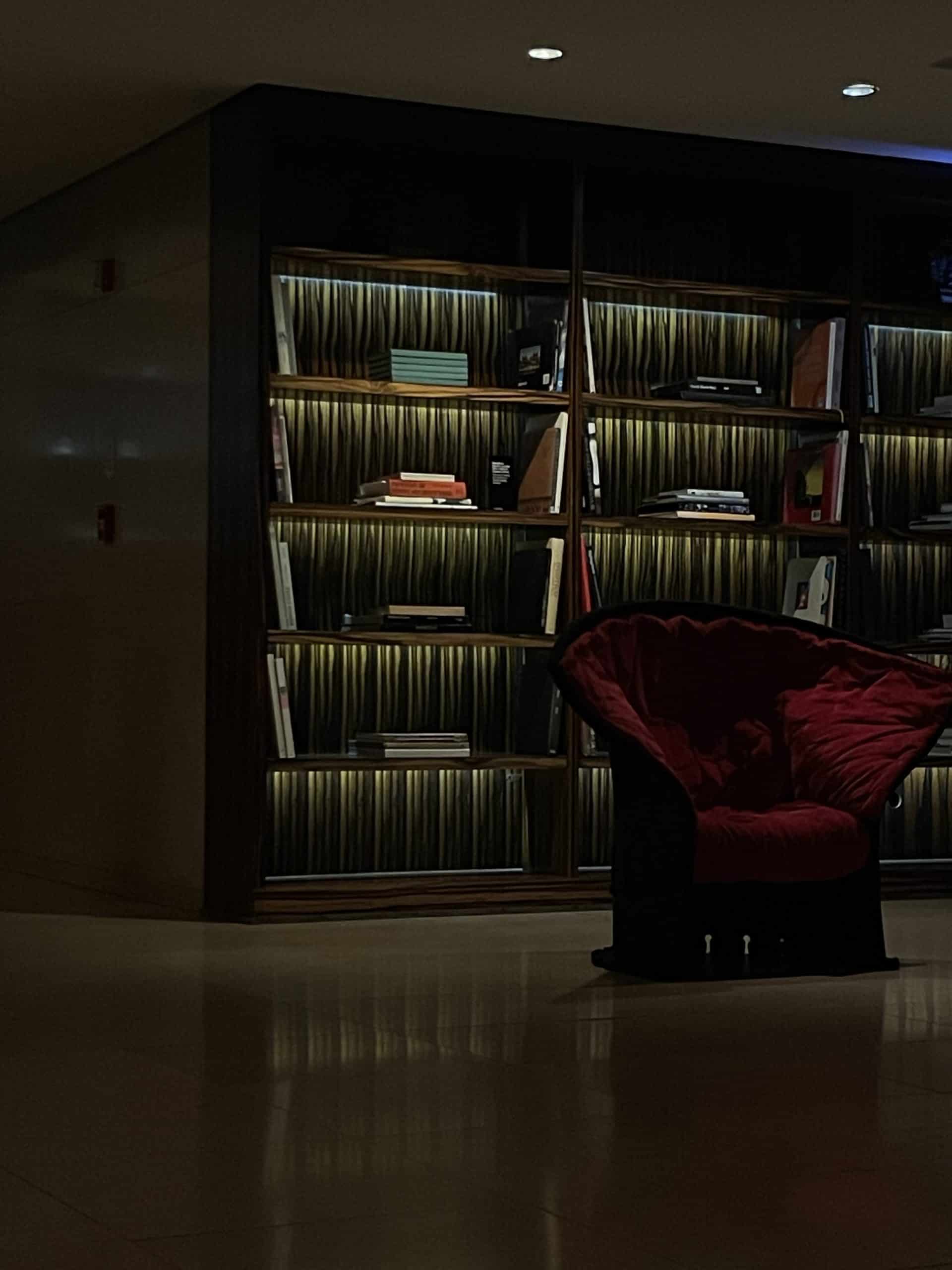
A quieter corner of the lobby at Hotel Unique.
I notice design. It’s part of what draws me to cars, clothes and hotels in the first place. I’m interested in how something looks and the quality behind it, not simply the name attached to it.
Hotel Unique gives you plenty to look at. The curved building and circular windows make a much stronger impression than another glass tower. Inside, my lobby photo shows a different side of it: bookshelves, warm light and a red chair rather than the rooftop scene everyone expects.
The architecture is by Ruy Ohtake, with interiors by João Armentano. The hotel opened in 2002, and its official architecture and history page explains the thinking behind the building.
I like knowing that background, but the appeal doesn’t require a lecture. This is a place that looks like itself. That’s a good start.
2. The room is part of the experience
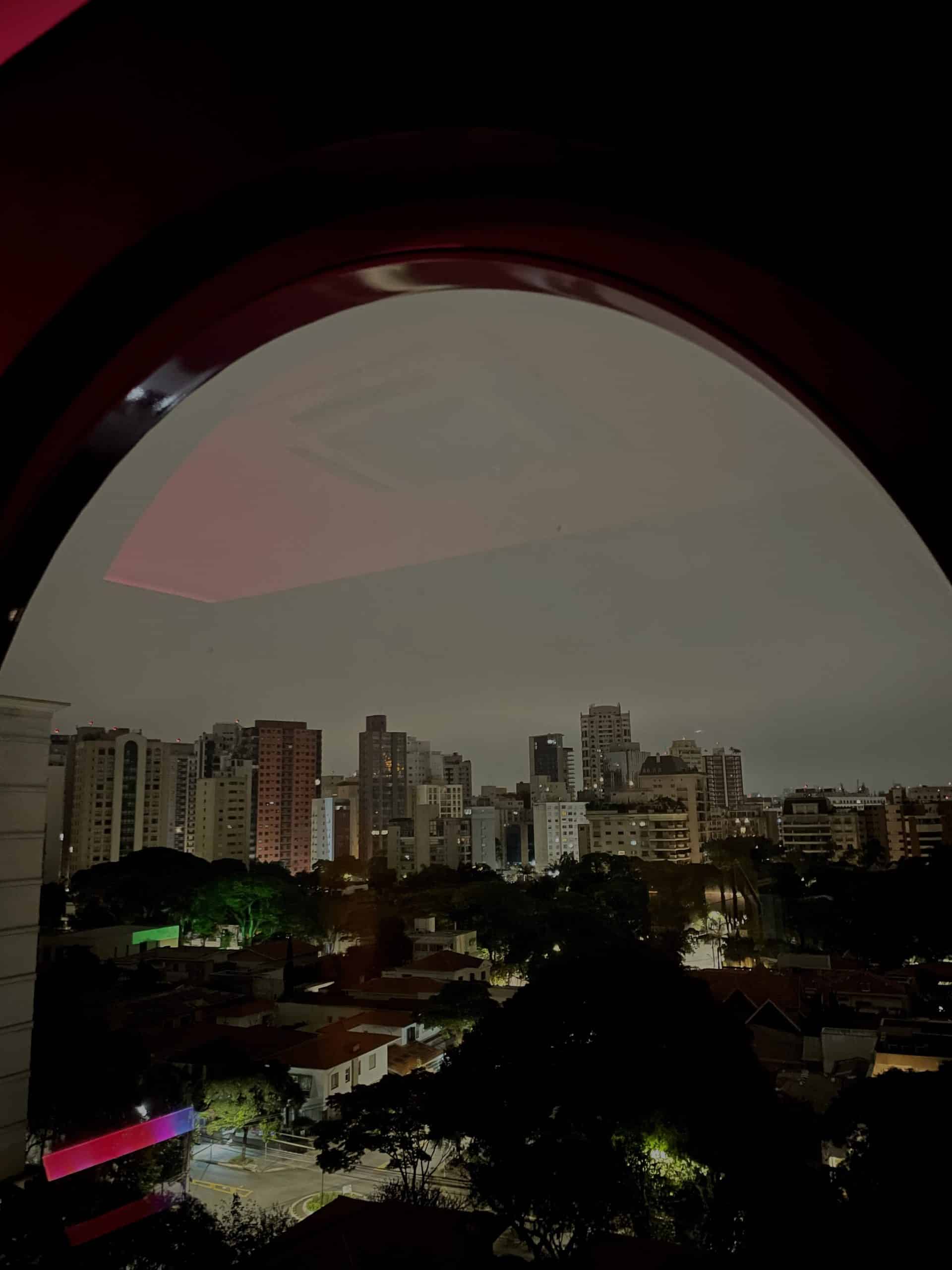
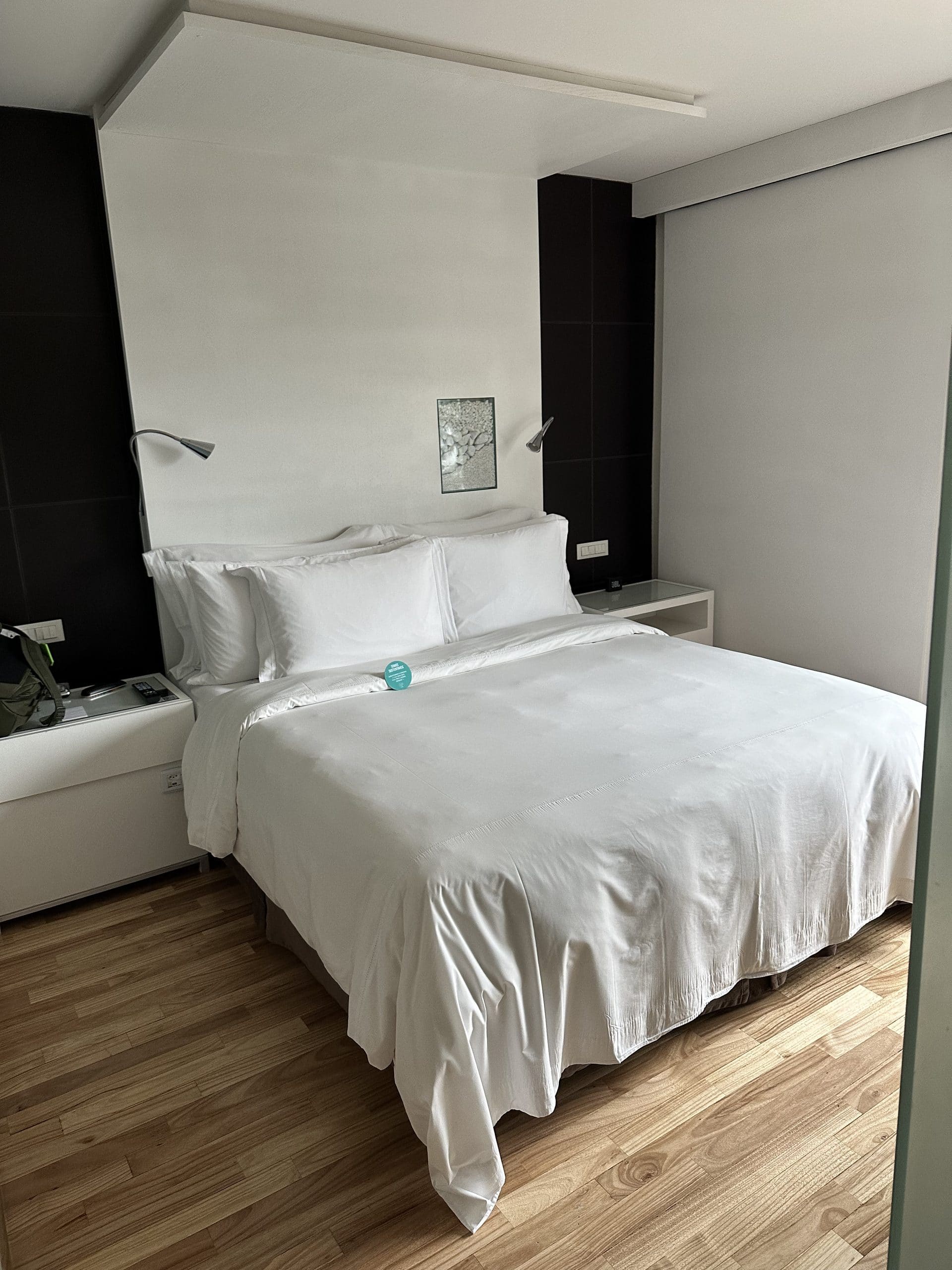
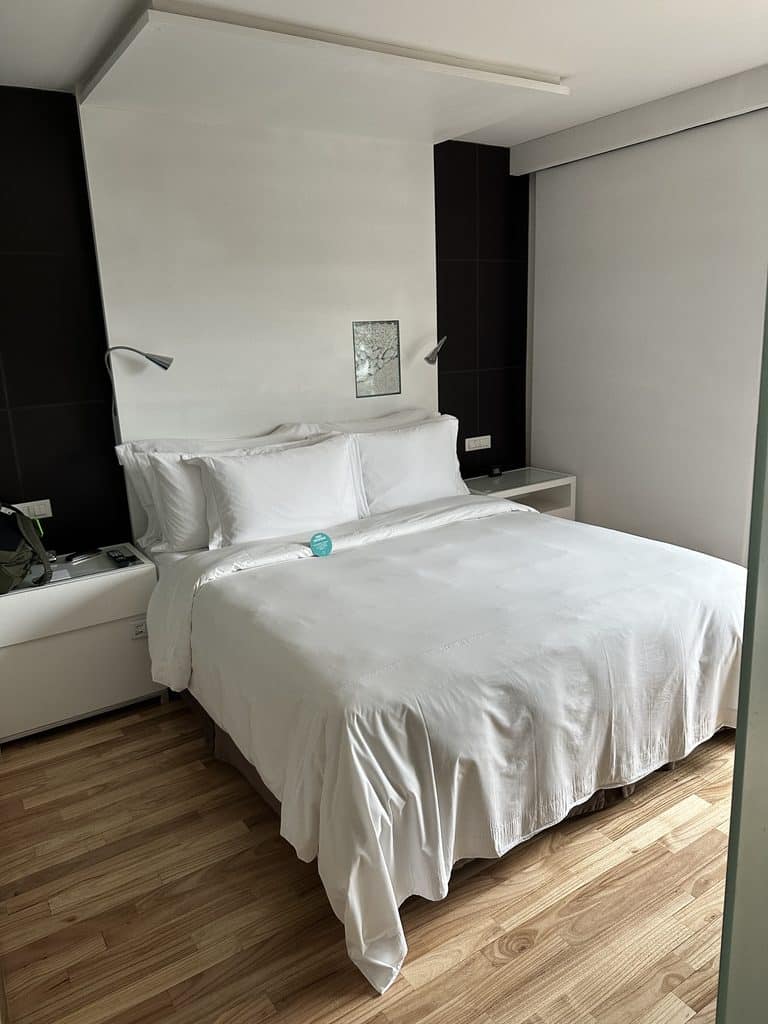
The city through one of Hotel Unique’s circular windows.A guest room from my stay at Hotel Unique. Photo: Richard Jarocki.
Those round windows are part of the experience inside, too. I took the photo above looking out at São Paulo through one of them. It’s a small detail, but it gives a room a sense of place that a standard window doesn’t.
I thought the room was nice. The photographs here are from my stay, so you can see it for yourself rather than rely on a room description that could belong to almost any expensive hotel. The circular window is one of the details that makes it feel distinctly like Unique.
If I were booking Hotel Unique São Paulo again, I’d still compare the exact room categories. The hotel currently lists Deluxe rooms at 30 square meters, Premium rooms at 35 and Paulista rooms at 58, with other suite options. The official accommodation page makes those differences easier to compare.
For the way I travel, space has a practical side. There’s luggage, clothes for dinner and whatever I’ve brought back during the trip. I’d look at the layout and the upgrade price together, rather than assume a more expensive category is automatically the right choice.
3. Skye is where I’d leave room in the schedule
The rooftop is a big part of why Hotel Unique São Paulo remains on my list. When I’m home thinking about another trip, the view is one of the things I remember.
The service at Skye added to that impression. The bottle being delivered to my room, complete with glasses and ice, was a small thing handled properly. It showed me the attention I want from a hotel at this level.
I enjoy finding restaurants and bars around the city, sometimes to the point that there are more reservations than open evenings. But I also like being able to come back to the hotel and still have somewhere interesting to spend time.
That’s where Skye fits. The rooftop, the red pool and the city beyond it make the setting part of the evening. I’d leave room for it instead of treating it as something to squeeze in before rushing somewhere else.
The hotel identifies Emmanuel Bassoleil as the chef behind Skye. For the current menu and visiting arrangements, I’d use the official Skye page. Menus change, and I don’t want to send someone there expecting a particular dish because it appeared in an old description.
If you’re visiting without staying, check the seating policy before you go. A rooftop worth visiting can also be a busy rooftop. I’d give the evening some flexibility rather than promise myself a table at an exact time.
4. Breakfast gave me Brazilian and American options
The breakfast buffet covered both Brazilian and American breakfast options. I liked having that choice. When I travel, I want the opportunity to try local food, but I also appreciate being able to have something familiar.
It’s worth mentioning because breakfast is part of the stay, especially when you’re heading out for a full day. My opinion of a hotel isn’t formed only by the room and the view. The service and the way the morning starts matter, too.
That describes the breakfast offered during my visit. Check whether it’s included in the rate you book rather than assuming every room package comes with it.
5. Make time to enjoy the hotel
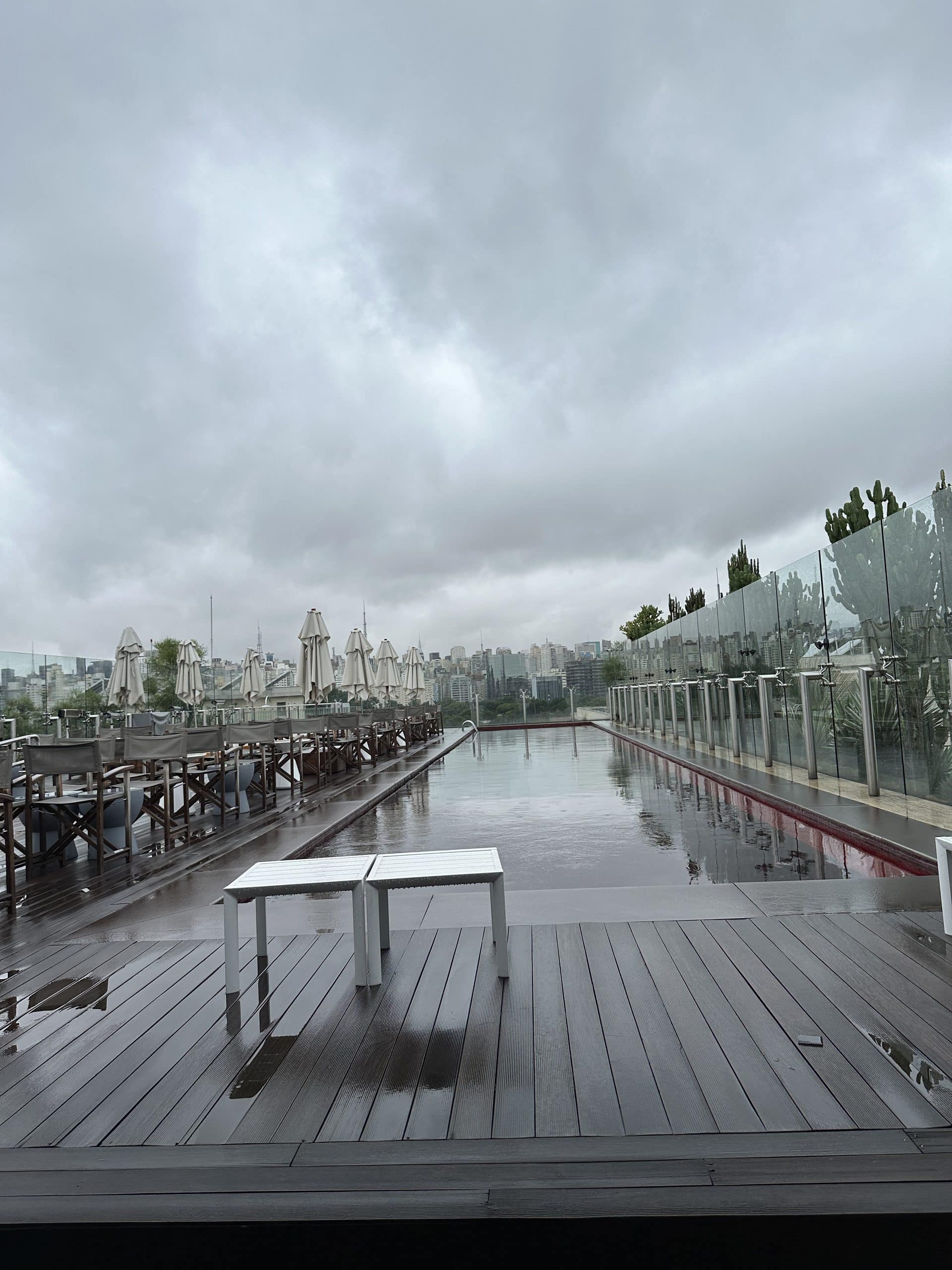
The rooftop pool on an overcast day in São Paulo.
Not every hotel photograph needs perfect sunshine. This one shows the rooftop on an overcast day, which is a useful reminder when planning São Paulo: leave yourself options.
The red pool is the best-known feature, but the hotel also lists indoor pools, a waterslide, saunas, a fitness center and massage treatments on its wellness page. I’m including those as facilities to consider, not as a list of things I personally tried.
There’s also a difference between visiting Skye and using the pool. The hotel reserves swimming in the rooftop pool for staying guests. Check the current arrangements if that’s an important part of your plans.
For me, this comes back to time. I can spend all day out and still have a dinner reservation that night. Sometimes the better plan is to leave an afternoon open and actually enjoy the hotel I chose.
6. I plan the hotel around the rest of São Paulo
A nice hotel doesn’t make the rest of the city smaller. Before booking, I look at where my dinners and other plans are, then think about how the days will actually work.
Hotel Unique São Paulo is in the Jardins area, near Ibirapuera Park. That gives me a starting point for a quieter part of the trip, but I’d still check the route to each place I want to visit.
I don’t want to cross the city for an afternoon stop, come back to change and then travel back toward the same area for dinner. I also want enough time to get ready without turning a good reservation into a stressful evening.
My São Paulo restaurant guide is where I’d start with the food. Then I’d put the rest of the day around the reservations that matter most.
7. Things to do at Hotel Unique São Paulo and nearby
If I were putting together a stay here now, these are the options I’d consider. The park and museum ideas below are suggestions for planning, not claims that I visited them during my stay.
Give Skye an evening
Start with the hotel itself. I’d set aside time for the rooftop rather than trying to fit it into the last half hour of an already full day. If dinner elsewhere is the priority, a separate evening at Skye makes more sense than watching the clock.
Spend part of a day in Ibirapuera Park
Ibirapuera Park offers walking and running areas, green space and bicycle rentals. It’s a practical nearby option when you want time outside between restaurant reservations. Check the entrance and route that work best from the hotel rather than navigating to the park’s general map pin.
Add Museu Afro Brasil to the park visit
Museu Afro Brasil Emanoel Araujo is inside Ibirapuera Park, near Gate 10. It gives you a cultural stop to consider alongside the park. Check current opening days, exhibitions and admission before setting the rest of the day around it.
Build one evening around a meal you really want
Food is a major reason I keep returning to São Paulo. Evvai remains my favorite restaurant in the world, and Tan Tan is a place I return to for food, cocktails and the music. Those are city outings to plan separately, not places I’m presenting as next door to the hotel.
I’d choose the reservation first, check the journey from Unique and leave enough time to get ready. Trying to fit every restaurant into one visit is how I end up planning the next visit before I’ve left.
The 2026 Posh Grand Prix party at Hotel Unique
There’s another reason to have Hotel Unique on the list during this year’s race weekend. Posh Club is advertising its Interlagos GP Official Party 2026 at the hotel on November 6 and 7, 2026.
That is an event to consider if you want nightlife alongside the racing, not something I’m describing from personal attendance. Check tickets and current event details directly with the organizer. Don’t assume a standard hotel reservation includes party admission or that a party ticket includes access to the Grand Prix.
Leave an afternoon unbooked
This is the suggestion I need to remember myself. Between researching restaurants, exploring and following a race schedule, it’s easy to fill every gap. A hotel afternoon gives the stay room to be enjoyable instead of becoming another stop to rush through.
8. For the Grand Prix, I’d plan the return as carefully as the morning
I’d consider Hotel Unique São Paulo for an F1 trip that includes time in the city and dinners after the circuit. I wouldn’t choose it because someone described Interlagos as a short drive away.
After attending the São Paulo Grand Prix in 2024 and 2025, I pay much more attention to the whole journey. Leaving the grandstand, getting out of the circuit and reaching the pickup point all take time before the drive even begins.
Then there’s dinner. I want time to return, shower and change. I’d rather make a later reservation I can enjoy than spend the ride back wondering whether I’m going to lose the table.
9. Would I stay at Hotel Unique São Paulo again?
Yes. The view and design stayed with me, but the service gives me another reason to return. The breakfast offered a good range of Brazilian and American options, and the way the Skye staff handled the bottle for me is exactly the sort of thoughtful detail I appreciate.
I’d still compare the price for my actual dates, the room category and what the rate includes. A hotel can appeal to me without every available rate making sense. The amount of time I’ll have there matters, too.
If the entire trip is early departures and late returns, I’d think carefully about what I’m paying to enjoy. If there’s time for the rooftop, the city and a less rushed afternoon, Unique becomes a much more interesting part of the plan.
My São Paulo trips usually start with a race or a restaurant that I want to experience. The places I stay help turn that into a complete trip. Hotel Unique is one I still think about afterward.
Plan your São Paulo stay
Hotel: Hotel Unique, Avenida Brigadeiro Luís Antônio, 4700, São Paulo.
Before booking: Check the exact room, rate inclusions, cancellation terms and rooftop arrangements for your dates.
The Ultimate Guide to First-Class Travel in 2025 – Luxury Airlines, Exclusive Perks & Best Routes
Why Fly First Class?
First-class travel in 2025 is more than just luxury—it’s about exclusive service, unparalleled comfort, and world-class experiences. From private suites and lie-flat beds to Michelin-star dining and VIP lounge access, airlines continue to redefine premium air travel. Whether you’re a luxury traveler, business executive, or frequent flyer, this guide explores the best first-class airlines, must-fly routes, and expert booking tips to help you maximize your experience.
Best First-Class Airlines for 2025
1. Emirates First Class – The Ultimate Luxury Experience
Fully enclosed suites for complete privacy.
Shower spa and caviar service onboard.
Dom Pérignon champagne & gourmet dining.
2. Singapore Airlines Suites – Five-Star Comfort in the Sky
Full double beds in select suites.
Personalized butler service.
Fine dining from Michelin-starred chefs.
3. Qatar Airways First Class – Award-Winning Luxury
Lie-flat beds with designer linens.
Exclusive VIP lounges with spa treatments.
World-class wine selection.
4. Etihad Airways The Residence – The Ultimate VIP Suite
Three-room suite with a private bedroom, living area, and bathroom.
Dedicated personal butler and onboard chef.
Ultra-exclusive luxury experience.
5. Air France La Première – French Elegance in the Sky
Leather reclining seats transforming into full beds.
Lounge Access: First-class passengers get access to VIP lounges with spa treatments, fine dining, and private suites.
Best First-Class Routes to Fly in 2025
New York (JFK) – Dubai (DXB) on Emirates – Features shower spa and Dom Pérignon service.
Los Angeles (LAX) – Singapore (SIN) on Singapore Airlines – Offers double bed suites and Michelin-star dining.
Paris (CDG) – Abu Dhabi (AUH) on Etihad – One of the few routes featuring The Residence suite.
London (LHR) – Tokyo (HND) on Japan Airlines – A mix of Japanese hospitality and gourmet cuisine.
How to Book First-Class for Less
Use Points & Miles – Emirates, Qatar, and Singapore Airlines offer excellent first-class redemptions.
Look for Upgrades – Some airlines offer discounted first-class upgrades close to departure.
Leverage Credit Cards – Cards like Amex Platinum or Chase Sapphire Reserve provide luxury travel perks and companion tickets.
Final Thoughts
First-class travel in 2025 offers the best in aviation luxury, blending exclusive experiences, personalized service, and top-tier comfort. Whether flying for business or leisure, knowing how to book the best first-class seats at the best prices will elevate your travel experience.
Ready to experience first-class luxury? Explore premium airlines and book your exclusive flight today.
São Paulo Luxury Travel Guide: Where I Stay, Eat and Keep Going Back
RJVIPGP · TRAVEL & DINING
Updated October 24, 2026
I first went to São Paulo for Formula 1. Now I look forward to the restaurants, hotels and nights out as much as the racing.
That is what keeps bringing me back. I can spend a day at Interlagos, come back to a hotel I genuinely enjoy, and have a dinner I will still be talking about months later. On another night, I can go to Tan Tan for food, cocktails and a soundtrack that is much more my speed than a formal dining room.
For me, a luxury trip to São Paulo starts with deciding what is worth making time for. The city is enormous, traffic changes the shape of a day, and booking the most expensive room does not automatically put you in the best location for your plans.
This guide brings together places I have stayed, meals I have eaten and the practical lessons I would use to plan another visit. It is a selection, not a claim that these are the only hotels or restaurants worth considering.
São Paulo Luxury Travel at a Glance
My biggest reason to return: The food. Evvai remains my favorite restaurant worldwide, but São Paulo also gives me reasons to come back for pork, pasta, sushi and less formal nights out.
Hotels to compare: Rosewood for a hotel-centered stay, Hotel Unique for design and Skye, W São Paulo for its rooftop, Fasano for a Jardins base, and Palácio Tangará for greenery and a slower pace.
A recurring night out: Tan Tan for food, inventive cocktails and 1990s hip-hop. It is a stop I look forward to on every visit.
More cocktail bars to consider: Kotori, SubAstor, Bar dos Arcos and Rabo di Galo offer different settings and menus. Choose by neighborhood and atmosphere, not just the name.
Cocktail value: São Paulo offers the creativity I look for in NYC, often at a lower dollar cost. Check the exchange rate and service charges before comparing the final bill.
Beyond the restaurants: Leave time for Ibirapuera Park, exhibitions at MASP or shopping around Jardins. Pick what interests you rather than filling every hour.
Planning tip: Group stops by area, allow for traffic and leave time to get ready before dinner. A good hotel is worth enjoying, not just sleeping in.
Choose the hotel around your actual trip
I have stayed at several São Paulo hotels across my visits, including Rosewood, Hotel Unique, W São Paulo, Fasano and Palácio Tangará. I would not choose between them from a list of amenities alone. Put the hotel on the same map as your restaurants, daytime plans and, if relevant, the circuit.
Rosewood São Paulo for a hotel-centered stay
Rosewood São Paulo is in Bela Vista, near Avenida Paulista. It is one of the places I would consider when I want the hotel itself to be a substantial part of the trip rather than simply somewhere to sleep.
Art-filled interiors at Rosewood São Paulo. Photo: Richard Jarocki.
Its restaurants and bars give you reasons to stay on the property, including Le Jardin, Blaise and Rabo di Galo. That can be useful on an arrival day or an evening when another journey across the city is not appealing. Check the current dining arrangements separately from the room booking; a hotel reservation does not reserve a restaurant table.
Hotel Unique for design and Skye
Hotel Unique is the distinctive Ruy Ohtake-designed hotel near Ibirapuera Park. The architecture is part of its identity, and Skye adds a rooftop restaurant and bar with city views.
A guest room from Richard’s stay at Hotel Unique. Photo: Richard Jarocki.
It is a hotel I have stayed at and written about, not just an attractive building I have seen in photographs. If the rooftop is a major reason for choosing it, check current restaurant access, reservations and pool rules. Going for dinner and having access as a hotel guest are different arrangements.
W São Paulo is in Vila Olímpia, on Rua Funchal. I chose it for my 2026 return because the rooftop and overall hotel experience appeal to me.
The WET Deck and L40 rooftop restaurant are on the 40th floor; Yōso is a separate cocktail bar and café on the 24th. Its location needs to work with your plans. Do not assume that staying at the W puts you next to every restaurant in Pinheiros or Jardins. Compare the journeys you will actually make, then decide how much the hotel itself matters to you.
Inside W São Paulo, with city views beyond the seating and dining areas. Photo: Richard Jarocki.
Fasano São Paulo for a Jardins base
For the original Fasano São Paulo, think Jardins and Rua Vittorio Fasano. It is a different property from Fasano São Paulo Itaim, so check the full hotel name and address before reserving.
The original Fasano makes sense to compare when Jardins is central to the trip. I would still work out the route to each important dinner rather than treating a neighborhood name as a guarantee that everything is a short walk away.
Palácio Tangará for time at the hotel
Palácio Tangará overlooks the greenery of Burle Marx Park, with a setting that feels different from the denser parts of the city. It belongs on the shortlist when the hotel, its grounds and a slower pace are priorities.
The trade-off is distance from some of the restaurants and neighborhoods you may want to explore. I would choose it with time to enjoy the property, rather than book it and then spend the entire stay crossing São Paulo.
Build the trip around meals you really want
São Paulo has given me some of my most memorable dining experiences. I like the stories behind the dishes and the chance to understand why a chef chose a particular ingredient. I also want enough variety that every evening does not feel like another version of the same tasting menu.
One important update to the earlier version of this guide: Evvai and Tuju received three Michelin stars in 2026. D.O.M. retained two. Ratings are useful context, but my own reasons to return are the meals and experiences below.
Evvai
Evvai is my favorite restaurant worldwide. The precision of the service is a major part of that opinion. I have described it as military precision, and that is how the meal felt: a team paying attention to the details without losing the enjoyment of dinner.
A course from Richard’s meal at Evvai, with illustrated cards on the table. Photo: Richard Jarocki.
Duck tortellini with eel and tucupi, and a green-corn ice-cream cone with caviar, are among the dishes I remember from my visits. Those are memories of meals I ate, not a promise that they will appear on your menu.
Chef Luiz Filipe Souza’s Oriundi menu brings Italian and Brazilian influences together. The current published menu lists R$1,650 per person as checked October 24, 2026; pairings are additional. Confirm the current menu, service charge and reservation conditions before booking rather than treating that figure as an all-inclusive bill.
Tuju gave me a different kind of experience. I remember the Rain Season menu and the care in its presentation. It is a restaurant I would consider when I want another ambitious dinner with a distinct identity, rather than simply trying to repeat Evvai.
A course from Richard’s meal at Tuju. Photo: Richard Jarocki.
Menus change. Check Tuju’s current offering before making plans, and give the meal enough time in your itinerary.
D.O.M.
At D.O.M., the appeal for me was discovery, including Amazonian ingredients and flavors outside my normal experience. It belongs in the conversation for travelers who want dinner to introduce them to something unfamiliar.
Look at the current restaurant information and discuss dietary requirements before reserving. A tasting menu built around unfamiliar ingredients is worth understanding before you sit down.
A course from Richard’s dinner at Nelita. Photo: Richard Jarocki.
I have visited Kazuo three times, including lunch, and the dessert was a particular highlight for me. Kazuo currently holds one Michelin star. It is another option for giving the trip variety rather than booking only long evening tasting menus.
A Casa do Porco and Metzi
A Casa do Porco deserves a place beyond a simple “luxury restaurant” label. I ate at the bar on my November 2024 visit, and the crispy roasted pork belly and pig-head presentation stayed with me. Read my A Casa do Porco review for the firsthand account.
At Metzi, the Mexican-Brazilian connection brings a different direction to dinner. Pork-belly tacos, seafood tostadas and agave cocktails are among the things I remember. These are places I would work into a varied stay rather than judge only by how formal the dining room feels.
Leave a night for Tan Tan
Tan Tan has become a stop on every São Paulo trip for me. The Spring Rolls Royce, Tsukemono cocktail and 1990s hip-hop are all part of why I return.
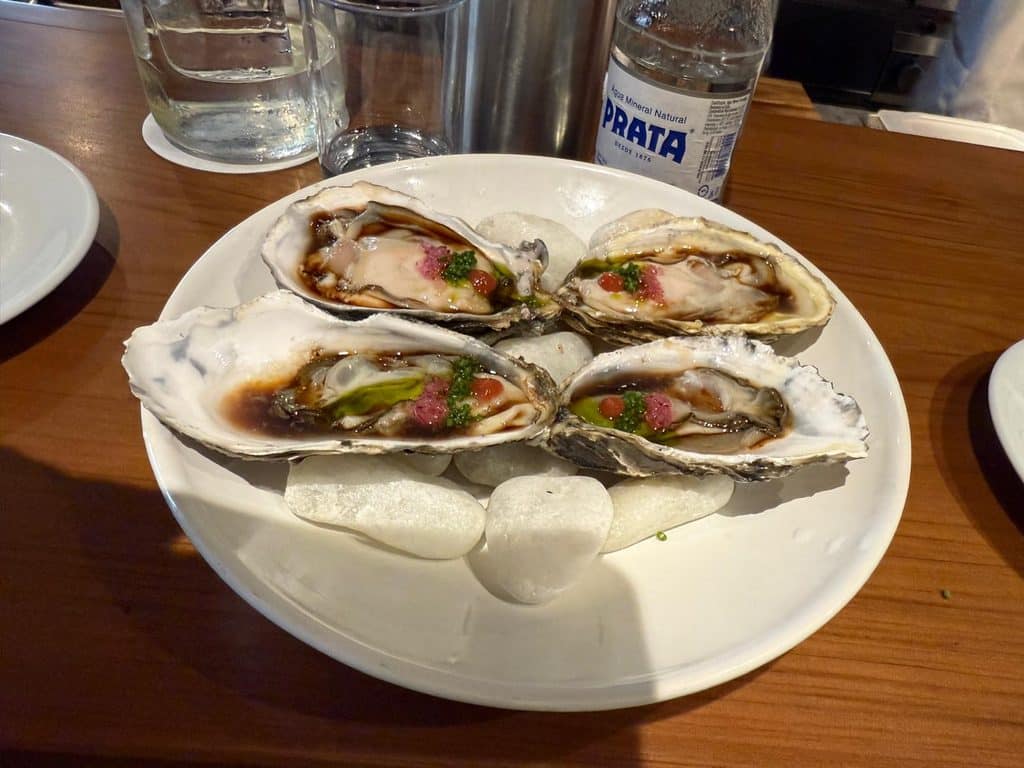
Oysters from a visit to Tan Tan, where the food is part of the draw. Photo: Richard Jarocki.
I like a serious dinner, but I also want nights like this: food I enjoy, good drinks and an atmosphere that suits me. Tan Tan is a reminder that a memorable evening does not have to follow the same format as a tasting-menu reservation.
Read my Tan Tan review. The dishes and cocktails mentioned there reflect my visits; check the current menu before arriving with your heart set on one item.
Cocktails worth making time for, with more value for your dollars
One of the things I enjoy about going out in São Paulo is finding the quality and creativity I look for in New York, often at a much more approachable price in dollars. Brazilian ingredients give the drinks their own identity, too. I want to try what a bartender does with cupuaçu, cambuci, cachaça or cajá, not simply order the same thing I would at home.
Tan Tan is my established favorite for this kind of evening, and I have also visited Kotori. SubAstor, Bar dos Arcos and Rabo di Galo are additional options to consider based on their current menus and settings.
SubAstor Vila Madalena gives its signature menu a Brazilian-biome theme. That is a more interesting starting point for me than another list of familiar classics. On the current official menu, Mata Atlântica combines cambuci cordial, bourbon, pear eau-de-vie and orange bitters for R$52, about US$10.32. Pantanal brings together pequi, tomato water, awamori, sake and chamomile for R$58, about US$11.51. Those are the kinds of combinations that make a dedicated cocktail stop worthwhile.
Bar dos Arcos for a different setting
Bar dos Arcos is beneath the Theatro Municipal, making it a different kind of evening from another hotel bar. Its signature menu has plenty to explore: Restaurante Leite combines caramelized cashew fruit, cachaça and aged rum in a milk-clarified drink for R$43, about US$8.54. La Guarida, with añejo tequila, tamarind, hibiscus and coconut-and-coffee bitters, is R$53, about US$10.52. The menu lists an optional 13% service charge, so those conversions are drink prices before service.
Rabo di Galo for a hotel-bar evening
Rabo di Galo at Rosewood adds live music and an old-world bar setting. It sits at the more expensive end of these examples, which is worth saying rather than pretending every São Paulo cocktail is a bargain.
The menu currently linked by the hotel lists Pari, with cachaça, cupuaçu, amaro, lime and cashew, at R$75, about US$14.89. Cidade Roxa, with rum, jabuticaba, lime and vanilla, is R$90, about US$17.87. A discretionary 10% service charge is listed. Rosewood currently describes the bar as walk-in only, with no reservations.
Kotori for another stop I have visited
I have been to Kotori once, and its current menu gives me a few reasons to consider another visit. Full Collins combines gin, vodka, olive, yuzu, cumaru and honey for R$55, about US$10.92. Coffee Boulevardier, with whisky, Campari, a red-vermouth blend and cold brew, is R$65, about US$12.90. Those are current menu examples, not claims that I ordered these exact drinks on my earlier visit.
Food and a cocktail from Richard’s visit to Kotori. Photo: Richard Jarocki.
I have also been to The Liquor Store twice. One practical update before planning a return: The Liquor Store’s official profile currently says it is moving and will return soon. Confirm the reopening and new address before making a trip there.
Compare the final bill: these are selected menu prices checked October 24, 2026, not a claim that every bar is cheaper than every New York bar. Check service charges and any cover or live-music charge, and remember that your card’s exchange rate and foreign-transaction fees may differ. For a fair New York comparison, include sales tax and tip there as well. My point is the opportunity to enjoy serious, inventive cocktails for the money, rather than choosing a bar only because the converted price is low.
Give the city some daylight
It is easy to let restaurant reservations take over a São Paulo itinerary. I would still leave room for an afternoon that is not built around another meal.
MASP is a useful anchor for time around Avenida Paulista. Check its current exhibitions, tickets and opening arrangements rather than trying to squeeze a museum into whatever hour happens to remain.
Ibirapuera Park offers a different pace. These are suggestions for building out the trip, not claims that I have personally completed every museum or park itinerary.
For shopping, compare JK Iguatemi, Shopping Cidade Jardim and the streets around Oscar Freire according to where you will already be. Check the actual store directory before making a special journey. I would not cross the city because an old guide promised a particular designer boutique on a particular street.
Transportation is part of the experience
I prefer arranging a car, especially around the Grand Prix. Having air-conditioning and a clear pickup plan matters to me after a long day. That is a personal preference, not a claim that everyone needs the same service.
The subway is another option; I have found São Paulo’s system well signed. Choose transport around the route, time of day, comfort you want and what you are carrying. For an arranged car, confirm the pickup location, waiting policy, included hours and how to reach the driver.
No car booking removes the traffic. Give airport arrivals room for immigration and baggage, and do not build dinner plans around the best possible journey time. After Interlagos, I want enough margin to get back, change and arrive at dinner properly.
For sightseeing, group stops by area. For evenings out, arrange the return journey before leaving and keep valuables discreet. Ask your hotel for current, route-specific advice rather than relying on a blanket claim that a whole neighborhood is either safe or unsafe.
How I would organize a few days
Arrival day: allow time for the journey from the airport, rest and a flexible first meal. Do not make an expensive prepaid lunch depend on everything running perfectly.
A food-focused day: one daytime neighborhood or cultural stop, then a dinner you have deliberately left time to enjoy.
A less formal day: shopping or the park, time at the hotel, then food and cocktails rather than another long tasting menu.
A spare day: return to a place you liked or leave space for a recommendation you pick up during the trip.
If you are visiting for Formula 1, give the race its own schedule. I have experienced Sector G in 2024 and Sector N in 2025, and those trips taught me to take weather, return transport and dinner timing seriously. My São Paulo Grand Prix travel guide covers that side in more detail.
Planning Your São Paulo Luxury Travel Budget
My approach to São Paulo luxury travel is to spend on the things I will remember: a hotel I enjoy, meals worth planning around and transportation that makes the trip easier.
For my kind of trip, the important spending is straightforward: a hotel I will actually enjoy, the meals I really want to experience and transport that makes the plan workable.
Compare the full room price for your dates, including taxes, breakfast and cancellation conditions. For restaurants, check what the menu includes, the cost of drinks and pairings, service and any deposit or cancellation policy. Grand Prix dates need their own quotes; an ordinary-weekend rate is not a reliable substitute.
I would also keep an excursion to the coast separate from a quick city afternoon. São Paulo is inland. A trip to Ilhabela needs its own travel time and planning, not a passing mention as an effortless yacht outing.
Why I keep coming back
São Paulo gives me plenty of reasons to return before I even look at the race schedule. Evvai, Tan Tan, the hotels and the meals I still want to try all contribute to that.
My advice is to choose the experiences you care about, leave enough time between them and resist filling every gap. The city is much more enjoyable when you can sit down to dinner thinking about the food instead of how late you are going to be.
São Paulo luxury travel does not have to mean choosing the most expensive option every time. For me, it means making room for memorable food, creative cocktails and places I genuinely want to return to.
Completely Unnecessary. Absolutely Worth It.
Cookie Consent
We use cookies to improve your experience on our site. By using our site, you consent to cookies.
Essential cookies enable basic functions and are necessary for the proper function of the website.
Name
Description
Duration
trustedsite_visit
-
trustedsite_tm_float_seen
-
Cookie Preferences
This cookie is used to store the user's cookie consent preferences.
30 days
These cookies are needed for adding comments on this website.
Name
Description
Duration
comment_author_email
Used to track the user across multiple sessions.
Session
comment_author_url
Used to track the user across multiple sessions.
Session
comment_author
Used to track the user across multiple sessions.
Session
Google Tag Manager simplifies the management of marketing tags on your website without code changes.
Name
Description
Duration
cookiePreferences
Registers cookie preferences of a user
2 years
td
Registers statistical data on users' behaviour on the website. Used for internal analytics by the website operator.
session
These cookies are used for managing login functionality on this website.
Name
Description
Duration
wordpress_logged_in
Used to store logged-in users.
Persistent
wordpress_sec
Used to track the user across multiple sessions.
15 days
wordpress_test_cookie
Used to determine if cookies are enabled.
Session
Statistics cookies collect information anonymously. This information helps us understand how visitors use our website.
GoDaddy's visitor traffic tracking, added automatically to sites hosted with GoDaddy and to sites built with GoDaddy Website Builder. It records page views, clicks, and page timing, and sends them to GoDaddy to measure traffic and site performance.
Holds the number of pages viewed in the current visit and the time of the last interaction, so GoDaddy's traffic tracking can tell when a visit has ended.
20 minutes
_tccl_visitor
Stores a randomly generated visitor ID so GoDaddy's traffic tracking recognizes a returning visitor across sessions.
1 year
_tccl_visit
Stores a randomly generated ID for the current visit so page views and clicks can be grouped into one session.
30 minutes
Google Analytics is a powerful tool that tracks and analyzes website traffic for informed marketing decisions.
Used to monitor number of Google Analytics server requests when using Google Tag Manager
1 minute
_gid
ID used to identify users for 24 hours after last activity
24 hours
_ga_
ID used to identify users
2 years
_gali
Used by Google Analytics to determine which links on a page are being clicked
30 seconds
_ga
ID used to identify users
2 years
__utmx
Used to determine whether a user is included in an A / B or Multivariate test.
18 months
__utmc
Used only with old Urchin versions of Google Analytics and not with GA.js. Was used to distinguish between new sessions and visits at the end of a session.
End of session (browser)
__utmv
Contains custom information set by the web developer via the _setCustomVar method in Google Analytics. This cookie is updated every time new data is sent to the Google Analytics server.
2 years after last activity
__utmz
Contains information about the traffic source or campaign that directed user to the website. The cookie is set when the GA.js javascript is loaded and updated when data is sent to the Google Anaytics server
6 months after last activity
__utmb
Used to distinguish new sessions and visits. This cookie is set when the GA.js javascript library is loaded and there is no existing __utmb cookie. The cookie is updated every time data is sent to the Google Analytics server.
30 minutes after last activity
__utmt
Used to monitor number of Google Analytics server requests
10 minutes
__utma
ID used to identify users and sessions
2 years after last activity
_gac_
Contains information related to marketing campaigns of the user. These are shared with Google AdWords / Google Ads when the Google Ads and Google Analytics accounts are linked together.