Tag: Trip Planning

  • São Paulo Travel Story: The Trip That Changed Everything

    São Paulo Travel Story: The Trip That Changed Everything

    How the 2024 São Paulo Grand Prix Made Me Fall in Love with Travel
    How the 2024 São Paulo Grand Prix Made Me Fall in Love with Travel | Richard Jarock

    My São Paulo travel story

    For more than twenty years, my life revolved around one thing: the automotive business.

    Long hours. Endless weekends. Sales goals. Deliveries. Finance paperwork. It was a career I genuinely loved, but it didn’t leave much room for travel.

    Vacations weren’t really adventures.

    They were opportunities to recharge before going back to work.

    Travel was never something I obsessed over.

    It was simply something you did.

    Then Formula 1 entered my life.

    Working with Ferrari introduced me to an entirely different world. At first, I fell in love with the engineering. Then the history. Then the competition. Before long, every race weekend became must-watch television.

    Eventually watching wasn’t enough.

    I wanted to experience Formula 1 in person.

    That decision would eventually take me somewhere I never expected.

    São Paulo.

    I Thought I Was Going for Formula 1

    When I booked my trip to the 2024 Brazilian Grand Prix, I thought I knew exactly why I was going.

    Interlagos.

    The home of Ayrton Senna.

    One of Formula 1’s most historic circuits.

    The incredible Brazilian fans.

    That was the reason I bought the plane ticket.

    At least that’s what I told myself.

    Looking back, Formula 1 was only the beginning.

    I Had Something to Prove

    There was another reason I planned that trip so obsessively.

    I wanted to impress someone who lived in São Paulo. This is what started my São Paulo Travel Story

    That might sound strange.

    Most people visit a city and rely on the locals to show them around.

    I wanted to do the opposite.

    I wanted to arrive knowing the city well enough that I could contribute to the experience—not just follow someone else’s itinerary.

    Maybe I could even introduce them to a restaurant or cocktail bar they hadn’t discovered themselves.

    That became the challenge.

    Could someone living nearly 5,000 miles away learn another person’s city well enough to surprise them?

    So I started researching.

    Then I researched even more.

    Restaurant menus.

    Chef interviews.

    Google Maps.

    Neighborhoods.

    Cocktail bars.

    Luxury hotels.

    Food blogs.

    YouTube walking tours.

    Reddit threads.

    I translated menus written entirely in Portuguese just to understand what chefs were creating.

    I learned which neighborhoods had the best restaurants.

    Which cocktail bars were worth visiting.

    Which hotels truly justified their prices.

    I wasn’t building a vacation anymore.

    I was studying a city.

    Of course, I quickly learned something important.

    No matter how much research you do, you can never truly know a place until you’re standing in it.

    But the research gave me confidence.

    Instead of arriving completely unfamiliar with São Paulo, I landed feeling like I already knew its neighborhoods, its restaurants, and its rhythm.

    That completely changed the trip.

    More Than a Race

    Interlagos was everything I’d imagined.

    The noise.

    The atmosphere.

    The energy.

    The passion of Brazilian Formula 1 fans is unlike anything I’d experienced before.

    You could feel Ayrton Senna’s legacy everywhere.

    For one weekend, the entire city seemed connected by Formula 1.

    It was unforgettable.

    But what surprised me most wasn’t what happened inside the circuit.

    It was everything outside of it.

    The City That Changed My Perspective

    Like many Americans, I didn’t know much about São Paulo before arriving.

    I expected traffic and crime.

    Skyscrapers.

    A huge city.

    But my experience during my São Paulo Travel Story.

    I found was one of the most exciting culinary destinations I’d ever experienced.

    Restaurants operating at an astonishing level.

    Cocktail bars that could compete with any city in the world.

    Neighborhoods that each felt completely different.

    Every day became another excuse to explore.

    One reservation turned into another recommendation.

    One cocktail bar led to another neighborhood.

    One conversation led to another unforgettable meal.

    The itinerary I’d spent months creating suddenly became secondary.

    The city was creating its own itinerary for me.

    The People Changed Everything

    The restaurants were incredible.

    The cocktails were unforgettable.

    But the people are what made me fall in love with Brazil.

    Brazilians welcomed me in a way I hadn’t experienced anywhere else.

    Everyone seemed genuinely proud of their city and excited to share it.

    Hotel staff.

    Drivers.

    Servers.

    Bartenders.

    Chefs.

    Complete strangers.

    There was an openness that immediately made me feel comfortable.

    The culinary world surprised me even more.

    In cities like New York, it’s easy for celebrated chefs and mixologists to feel almost untouchable.

    People line up for months to eat their food.

    Social media turns them into celebrities.

    Sometimes there’s an invisible wall between the guest and the person creating the experience.

    São Paulo felt different.

    The chefs I met wanted to talk.

    The bartenders were genuinely curious.

    The mixologists explained why they built a cocktail a certain way.

    Nobody acted like they were above the people sitting at their tables.

    They were world-class professionals who still felt approachable.

    That made every meal feel personal.

    And honestly?

    Some of the talent I experienced in São Paulo was every bit as impressive as anything I’ve found in New York.

    In some cases, even better.

    Not because they were trying harder.

    Because there was no ego attached to it.

    Just pride.

    Passion.

    Hospitality.

    That combination completely changed the way I look at restaurants today.

    Luxury Isn’t What I Thought It Was

    Brazil also changed my definition of luxury.

    Luxury isn’t simply paying the highest price.

    Luxury is attention to detail.

    It’s thoughtful hospitality.

    It’s a bartender remembering what you ordered yesterday.

    It’s a chef explaining why a dish matters.

    It’s a hotel that makes every interaction feel effortless.

    The most expensive experience isn’t always the best one.

    The most memorable usually comes down to the people.

    That lesson has stayed with me ever since.

    The Research Never Stopped My São Paulo Travel Story

    When I came home, something had changed.

    I wasn’t looking at travel the same way anymore.

    Now every destination became a puzzle.

    Where should I stay?

    Which restaurants actually deserve the hype?

    Which cocktail bars are worth crossing a city for?

    Which neighborhoods should I spend an afternoon wandering?

    The research itself became part of the excitement.

    The trip no longer started at the airport.

    It started months earlier.

    Why This Website Exists

    Friends started asking for recommendations.

    Where should we stay?

    Which hotel is actually worth the money?

    Where should we eat?

    What shouldn’t we waste time on?

    I realized I’d already spent hundreds—eventually thousands—of hours researching destinations before every trip.

    Why not share it?

    That’s how this website was born.

    Not because I wanted to become a travel blogger.

    Because I wanted to help people experience cities the way I had learned to.

    Not through checklists.

    Not through influencers.

    Through curiosity.

    Through incredible meals.

    Through conversations.

    Through neighborhoods.

    Through the people who make every destination unique.

    Looking Back

    When I booked a ticket to the 2024 São Paulo Grand Prix, I thought I was buying admission to a Formula 1 race.

    Instead, I discovered a city that completely changed how I travel.

    I arrived hoping to impress someone who already knew São Paulo.

    I left realizing I had only scratched the surface.

    I learned that great restaurants are about more than food.

    Great cocktail bars are about more than drinks.

    Luxury is about people.

    Hospitality is about connection.

    And travel isn’t about how many places you visit.

    It’s about how deeply you experience them.

    Formula 1 got me on the plane.

    São Paulo made me fall in love with travel.

    Everything I’ve built since—from the restaurants I visit to the hotels I book, the cocktail bars I seek out, and even this website—can be traced back to that one trip.

    The race lasted one weekend.

    The impact is still shaping every journey I take today.

    This is my São Paulo Travel Story
    Follow My Instagram

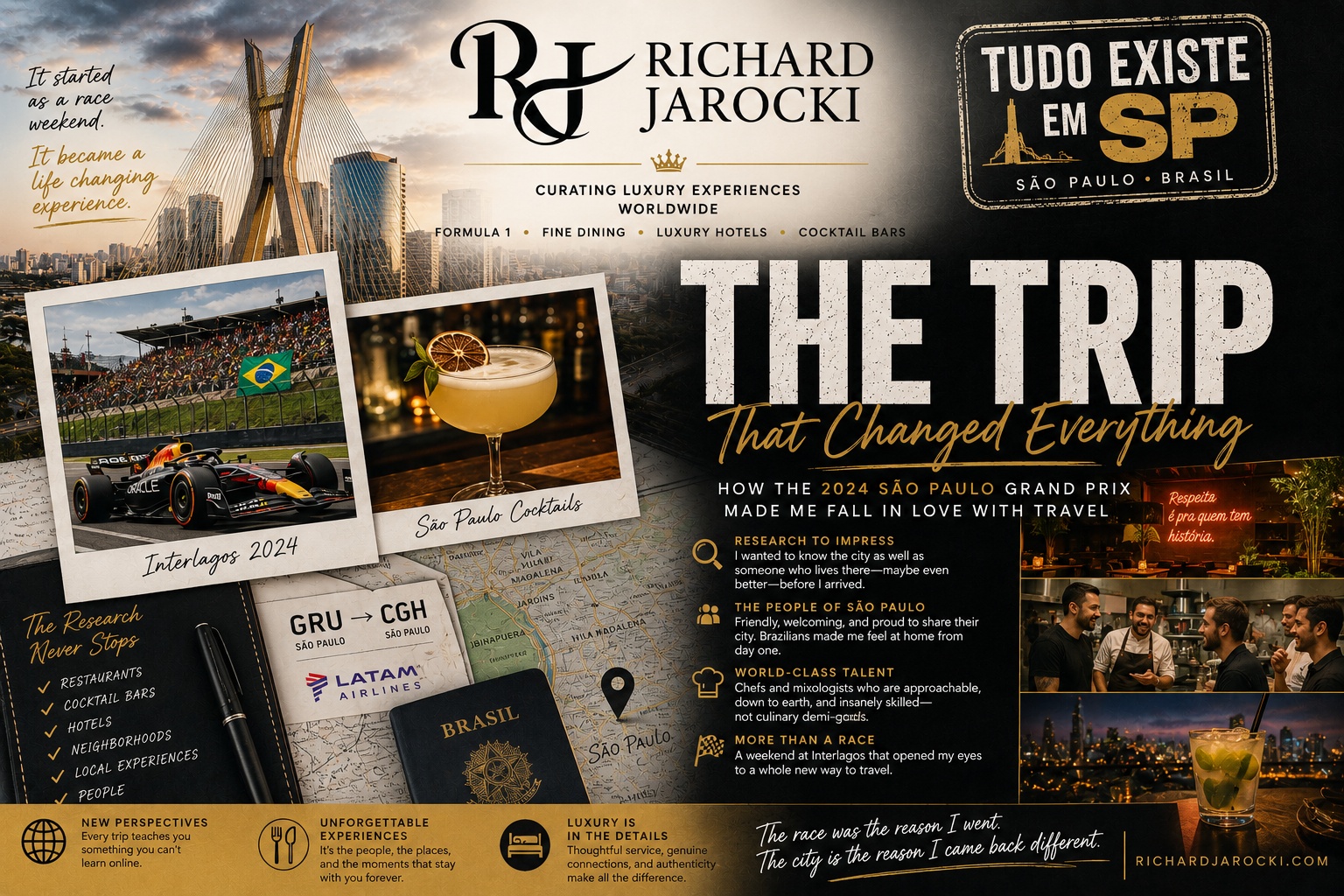
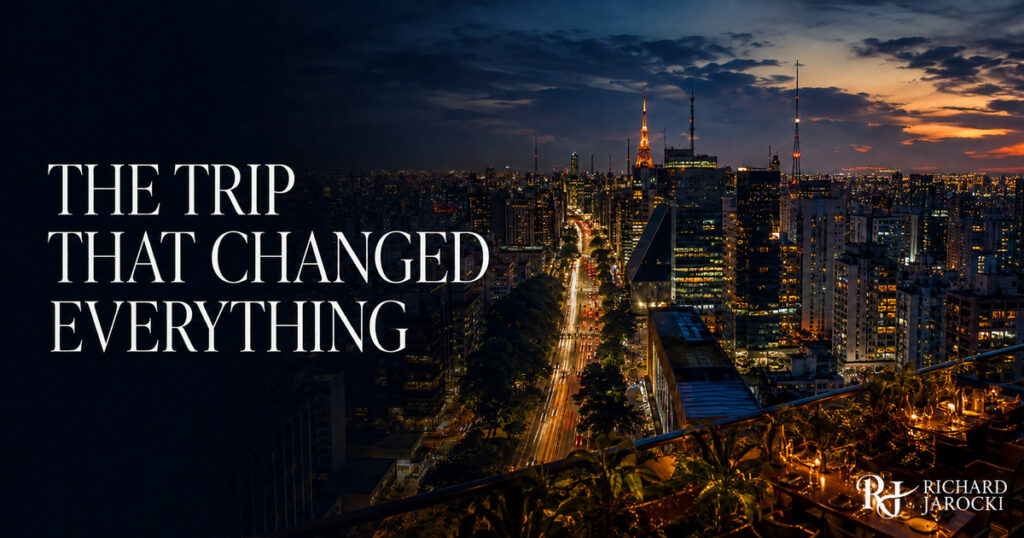
    São Paulo Travel Story, The skyline at night for Richard Jarocki’s The Trip That Changed Everything
    The trip to São Paulo that changed how I experienced food, culture and travel—and ultimately changed the direction of my life.

  • Travel Research Process, The Research Never Stops: How I Plan Every Trip

    Travel Research Process, The Research Never Stops: How I Plan Every Trip

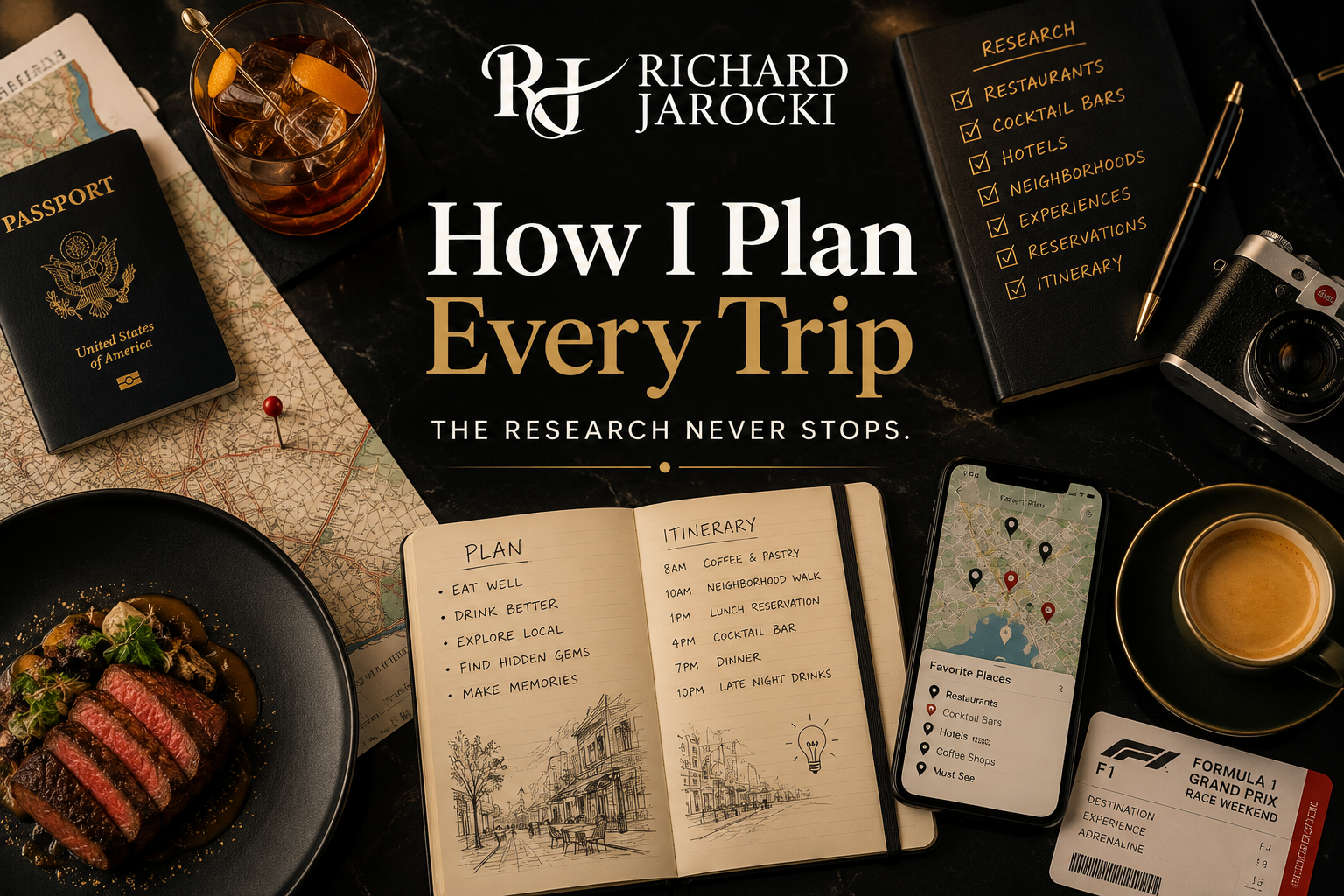
    Travel Research Process: Luxury travel planning flat lay featuring a passport, travel notebook, cocktail, Formula 1 ticket, camera, map, smartphone, and Richard Jarocki branding, representing the research behind every trip.

    Travel Research Process

    Most people start planning a vacation by looking for flights.

    I usually start with a restaurant.

    Sometimes it’s a Michelin-starred dining room that’s been on my list for years. Sometimes it’s a cocktail bar tucked away on a quiet side street that only holds a dozen people. Other times it’s a Formula 1 race that gives me the excuse to explore a city I might not have visited otherwise.

    Wherever it begins, the process is almost always the same.

    I become obsessed.

    What starts as a simple weekend getaway slowly transforms into dozens of browser tabs, spreadsheets, reservation alerts, Google Maps pins, YouTube videos, travel forums, restaurant menus, hotel reviews, and enough research to write a small travel guide before I’ve even boarded the plane.

    Most people would probably call it overkill.

    They’re probably right.

    But that’s also why I rarely leave a destination wishing I had done more.

    Travel Is More Than a Destination

    For me, traveling has never been about checking countries off a list.

    I don’t travel simply to say I’ve been somewhere.

    I travel to understand why people love a place.

    That means learning about its neighborhoods, understanding its food culture, discovering its cocktail scene, finding the hotels that actually live up to their reputation, and talking to the people who spend their lives creating memorable experiences.

    The destination is important.

    But the experience is everything.

    Travel Research Process Step One: Find a Reason to Go

    Every trip needs a centerpiece.

    Sometimes it’s Formula 1.

    Sometimes it’s a restaurant reservation that seemed impossible to get.

    Sometimes it’s a city I’ve wanted to explore for years.

    That one experience becomes the anchor around which everything else is built.

    When I planned my trip to Barcelona, the original goal was the Spanish Grand Prix.

    Then came reservations at Disfrutar, Mont Bar, and Kresala.

    Suddenly the race weekend wasn’t the only reason I was excited.

    The restaurants became just as important as the racing.

    When I travel to São Paulo, it starts with Formula 1—but quickly expands into researching Michelin-starred restaurants, hidden cocktail bars, local neighborhoods, and experiences that most visitors never discover.

    One great reservation can change the entire direction of a trip.

    Travel Research Process Step Two: Ignore the “Top 10 Things to Do”

    The internet loves lists.

    Top 10 attractions.

    Top 20 restaurants.

    Five hidden gems.

    Those lists are useful—but only as a starting point.

    Most of the truly memorable experiences I’ve had weren’t at the top of those articles.

    Instead, I dig deeper.

    I read chef interviews.

    I study restaurant menus months before arriving.

    I look at cocktail programs instead of just drink photos.

    I search Reddit to see what locals actually recommend.

    I browse Google Maps until I find places with hundreds of reviews but almost no social media attention.

    I’ll spend hours comparing neighborhoods because staying in the right location can completely change how a city feels.

    Research isn’t about finding the most famous place.

    It’s about finding the place that’s right for you.

    Travel Research Process Step Three: Build the Trip Around Food

    Some people eat wherever they happen to be.

    I’m the opposite.

    Meals often determine my daily schedule.

    If dinner is on the opposite side of the city, I’ll spend the afternoon exploring that neighborhood.

    If lunch finishes near a famous cocktail bar, I’ll stop in for one drink before continuing the day.

    If there’s an incredible bakery nearby, breakfast is already planned.

    The best itineraries flow naturally.

    You’re not bouncing back and forth across the city.

    You’re letting restaurants, museums, parks, and bars complement one another.

    Planning this way creates better days—and a lot less time sitting in traffic.

    Travel Research Process Step Four: Walk Whenever Possible

    One of my favorite discoveries has nothing to do with reservations.

    It’s walking.

    Some of the best memories I’ve made happened between destinations.

    Finding a neighborhood café.

    Watching locals gather in a small square.

    Discovering a cocktail bar that wasn’t on my list.

    Seeing architecture I’d never have noticed from the back seat of a taxi.

    Walking slows everything down.

    It forces you to notice details.

    Those unexpected moments often become the stories you remember years later.

    Travel Research Process Step Five: Talk to People

    This is probably the most underrated part of travel.

    Talk to bartenders.

    Talk to servers.

    Talk to hotel concierges.

    Talk to chefs if they’re available.

    Ask what they eat on their day off.

    Ask where they send visiting friends.

    Ask what everyone else misses.

    Those conversations have led me to restaurants that never appeared in any guidebook.

    They’ve introduced me to local specialties I wouldn’t have ordered otherwise.

    They’ve changed entire afternoons because someone pointed me toward a neighborhood I hadn’t planned to visit.

    The people who live there usually know the city better than any influencer ever will.

    Travel Research Process Step Six: Leave Room for the Unexpected

    Research is important.

    Flexibility is just as important.

    Not every reservation works out.

    Weather changes.

    Flights get delayed.

    A local recommendation might completely reshape your plans.

    That’s okay.

    Some of my favorite travel memories happened because something unexpected forced me to change direction.

    The goal isn’t to execute the perfect itinerary.

    The goal is to create opportunities for unforgettable experiences.

    Luxury Doesn’t Always Mean Expensive

    People often assume luxury travel means spending as much money as possible.

    I don’t see it that way.

    Luxury is value.

    A perfectly made cocktail served by someone passionate about their craft can feel more luxurious than a five-star hotel with mediocre service.

    A neighborhood restaurant where the chef personally introduces each course can leave a stronger impression than the world’s most expensive tasting menu.

    Price matters.

    Quality matters more.

    That’s why I don’t recommend places because they’re expensive.

    I recommend them because they’re exceptional.

    Why I Share These Experiences

    People often ask me where they should eat in a city.

    Which hotel I’d book.

    Which cocktail bar is actually worth visiting.

    Or whether a famous restaurant deserves all the attention it gets.

    Those questions made me realize I’d already done thousands of hours of research over the years.

    Instead of keeping those discoveries to myself, I decided to document them here.

    Everything you’ll read comes from firsthand experience.

    If I recommend a restaurant, I’ve eaten there.

    If I recommend a hotel, I’ve stayed there.

    If I tell you to order a particular cocktail, it’s because I’ve probably spent far too much time talking to the bartender about how they made it.

    The Research Never Stops

    Every trip teaches me something new.

    A better restaurant.

    A hidden cocktail bar.

    A neighborhood I’d never considered.

    A hotel that exceeded expectations—or one that didn’t.

    The list keeps growing.

    So does the curiosity.

    That’s what this website is about.

    Not collecting passport stamps.

    Collecting experiences worth remembering.

    If these stories help you discover one unforgettable meal, one incredible cocktail, one remarkable hotel, or one destination you might otherwise have overlooked, then every hour of research was worth it.

    Usually.

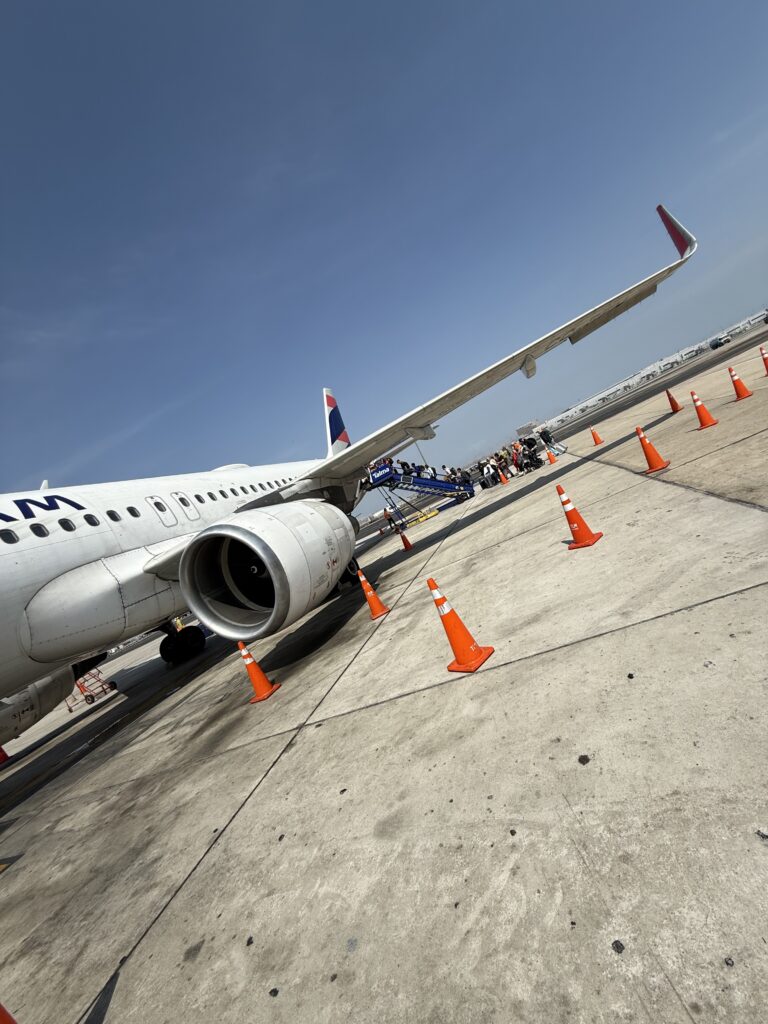
    Travel Research Process LATAM Airlines aircraft on the airport tarmac during passenger boarding, marking the beginning of a carefully planned travel experience.
    The research is finished. The itinerary is set. Now it’s time to see if the destination lives up to the planning.

    Follow my Instagram

  • How I Plan Every Trip

    How I Plan Every Trip

    Richard Jarocki planning a luxury trip with travel maps, passport, notebook, cocktail, Formula 1 ticket, camera, and research notes for a travel planning blog.

    The Research Never Stops.

    July 20, 2026

    Most people start planning a vacation by searching for flights.

    I usually start with a restaurant.

    Or maybe it’s a cocktail bar I’ve been reading about for months. Sometimes it’s a Formula 1 race. Other times it’s a luxury hotel that everyone swears is worth the money—or isn’t.

    Whatever it is, that’s where the obsession begins.

    What starts as a simple weekend away quickly turns into dozens of browser tabs, Google Maps pins, restaurant menus, YouTube videos, Reddit threads, and enough research to write a travel guide before I’ve even packed my suitcase.

    Normal?

    Probably not.

    Worth it?

    Usually.

    Travel Isn’t About Checking Boxes

    I’ve never been interested in collecting passport stamps just to say I’ve been somewhere.

    I’d rather spend three days getting to know one neighborhood than race across an entire city trying to hit every attraction.

    The best memories rarely come from standing in line for the most famous landmark.

    They come from the bartender who tells you about a hidden cocktail bar.

    The chef who recommends another restaurant across town.

    The concierge who sends you somewhere tourists never think to visit.

    Or the walk between two reservations where you accidentally discover your favorite street in the city.

    Those are the moments I remember.

    Every Trip Starts With One Thing

    Every trip has a reason.

    Barcelona started with Formula 1.

    New York started with restaurants I’d been trying to book for years.

    São Paulo began with Interlagos but quickly became about its incredible dining scene, cocktail bars, and neighborhoods.

    Once I have that one reason to go, everything else starts falling into place.

    I build my days around experiences that make sense together.

    A bakery in the morning.

    A museum or neighborhood to explore.

    An afternoon cocktail.

    Dinner somewhere I’ve spent months trying to reserve.

    Late-night drinks recommended by the bartender from dinner.

    The itinerary almost creates itself.

    I Research Everything

    I’ll read menus months before I arrive.

    I’ll compare hotels until I understand which ones actually deliver value instead of just charging luxury prices.

    I’ll spend hours reading reviews—not looking at star ratings, but looking for patterns.

    What do locals love?

    What disappoints experienced travelers?

    Is a restaurant famous because it’s genuinely exceptional, or because it’s all over Instagram?

    The internet gives everyone the same recommendations.

    I spend my time trying to find the ones it doesn’t.

    Luxury Isn’t About Spending the Most

    People often mistake luxury for expensive.

    I don’t.

    Luxury is attention to detail.

    It’s flawless service.

    It’s a perfectly balanced cocktail.

    It’s a hotel that makes your stay effortless.

    Sometimes that’s a Michelin-starred tasting menu.

    Sometimes it’s a neighborhood wine bar with twelve seats.

    Price doesn’t impress me.

    Quality does.

    Why I Started This Website

    Friends constantly ask me where they should eat.

    Which hotel I’d book.

    Whether a restaurant actually deserves the hype.

    Or what they shouldn’t waste their money on.

    Eventually I realized I’d already spent thousands of hours doing this research for myself.

    Why not share it?

    Everything you’ll read here comes from firsthand experience.

    No sponsored rankings.

    No recycled lists.

    No recommendations based on someone else’s opinion.

    If I tell you a restaurant is worth visiting, I’ve eaten there.

    If I recommend a hotel, I’ve slept there.

    If I rave about a cocktail bar, there’s a good chance I spent half the night talking to the bartender.

    The Research Never Stops

    Every trip teaches me something.

    A better restaurant.

    A better hotel.

    A hidden cocktail bar.

    A neighborhood I never expected to love.

    The list keeps growing.

    So does the curiosity.

    This website is where I document that journey.

    If it helps you find one unforgettable meal, one incredible hotel, one perfect cocktail, or one destination that changes the way you travel, then every hour of research was time well spent.

    Usually.