Tag: restaurant

  • São Paulo Restaurants: 10 Memorable Places I’ve Eaten

    São Paulo Restaurants: 10 Memorable Places I’ve Eaten

    Follow me on Instagram @Richard.Jarocki for more restaurant experiences, cocktails, travel and Formula 1 adventures—including my next trip to São Paulo.
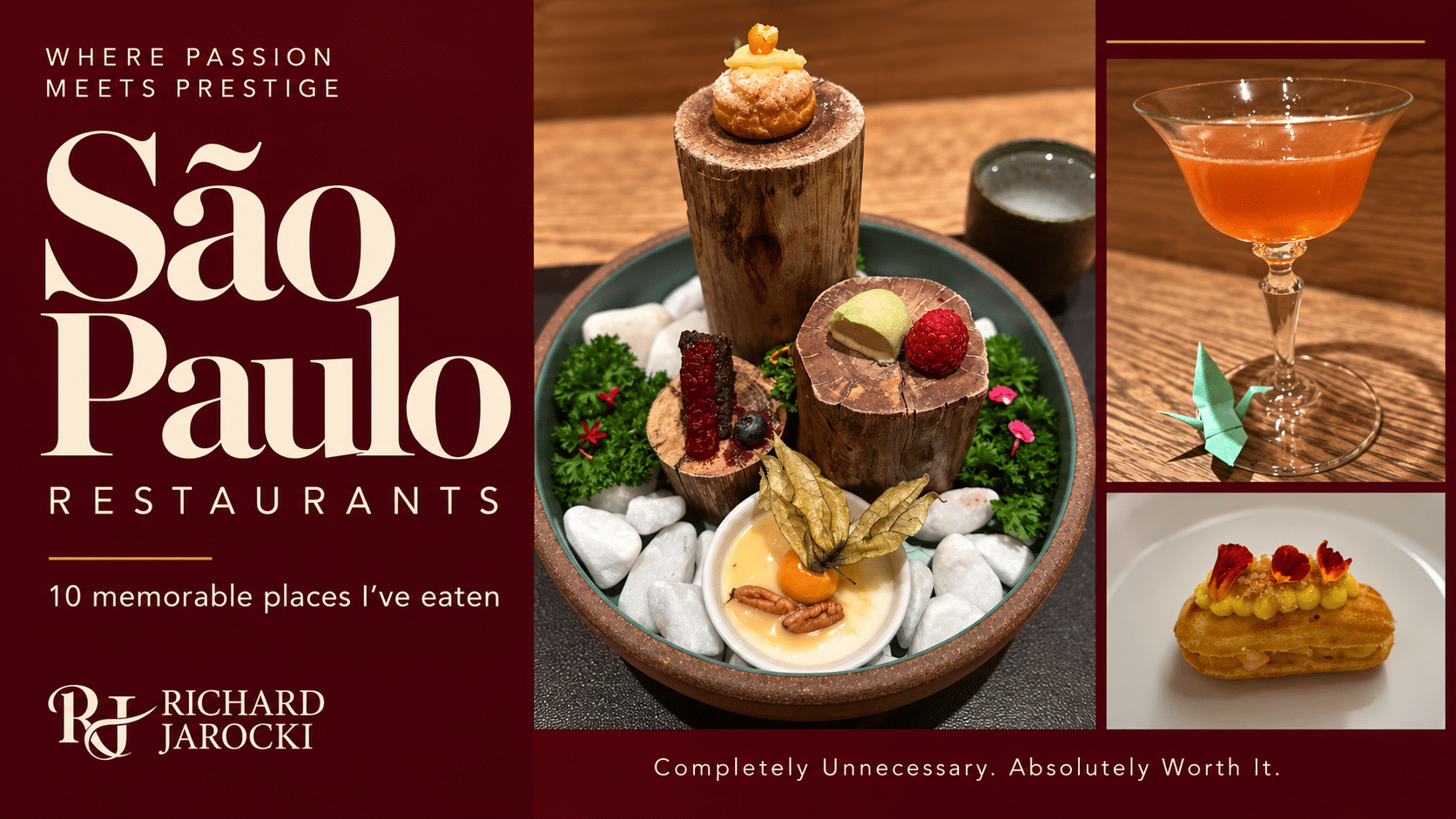
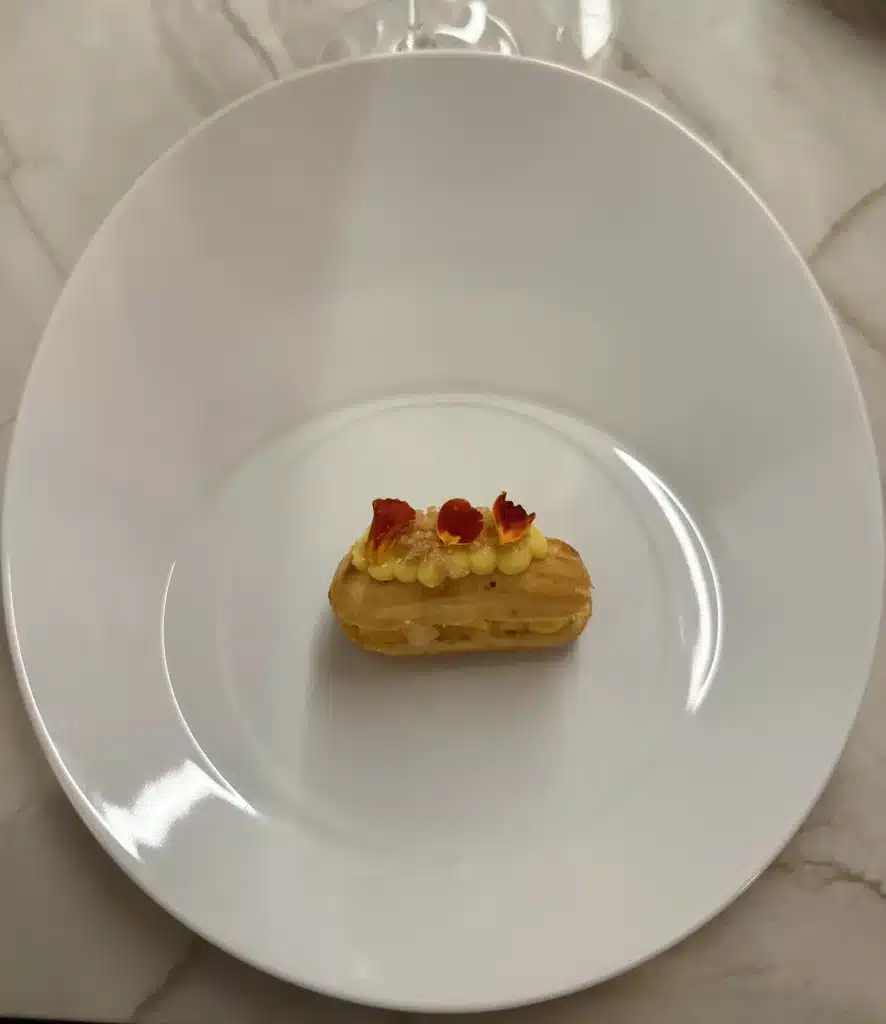
    São Paulo restaurants guide featuring Kazuo’s dessert presentation and cocktail, a Nelita pastry, and Richard Jarocki’s logo.

    São Paulo · Food & Drink · Firsthand Reviews

    Updated September 2026

    Formula 1 brought me to São Paulo in 2024. The food became one of the reasons I kept returning. My reservations now get as much attention as my race tickets, sometimes more. Evvai alone has become a reason to get on a plane.

    When I first wrote about São Paulo restaurants, this article covered four places. I’ve spent a lot more time eating in the city since then, and that original list no longer tells the whole story.

    What keeps me interested is the range. I can spend an evening following a tasting menu, another working through cocktails and Japanese-inspired food, and another discovering how Mexican traditions and Brazilian ingredients fit together. Each meal gives me a different reason to come back.

    These are ten places from my own dining experiences. They serve different purposes, so this isn’t a ranking from best to worst. Evvai is my personal favorite, but choosing dinner also depends on the kind of evening you want. Kazuo was my first meal in São Paulo, and it opened my eyes to how much there was to discover.

    1. Evvai: My Favorite Restaurant in the World
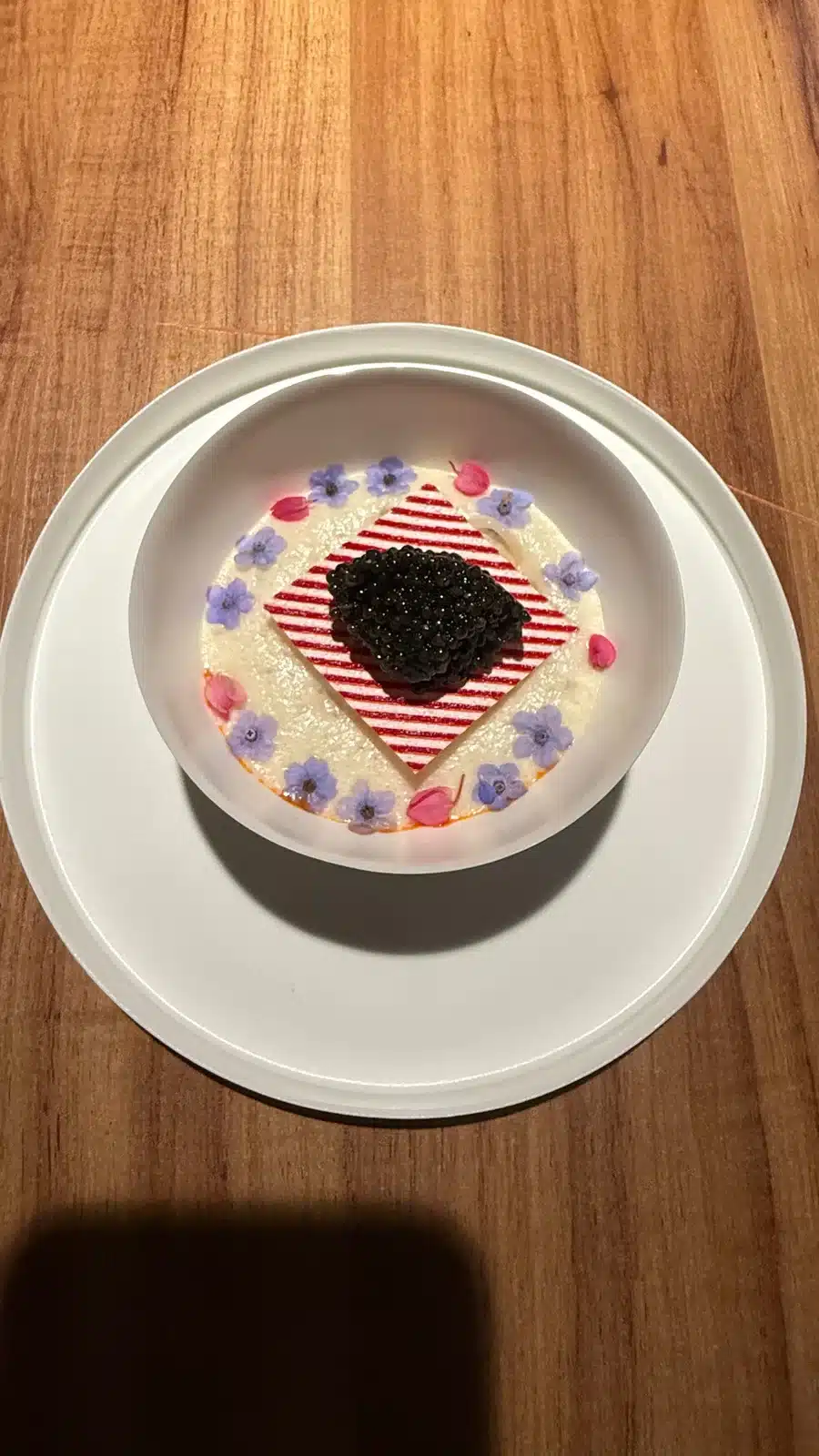
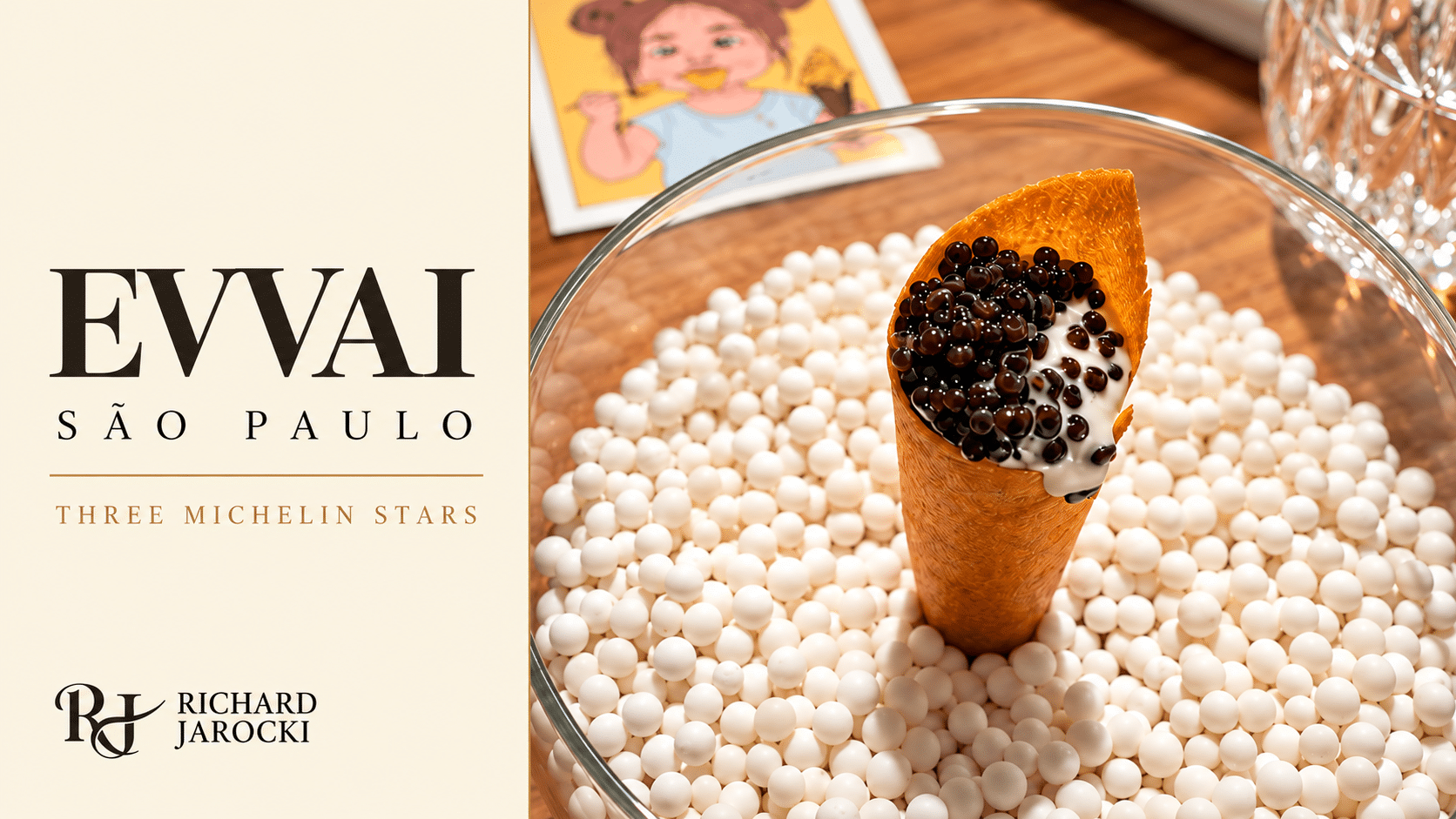
    Caviar on a red-and-white striped centerpiece surrounded by colorful details at Evvai in São Paulo.
    A caviar-topped course from my November 2025 meal at Evvai.

    Evvai — Official Website

    Evvai is the easiest recommendation on this list for me to explain: it is my favorite restaurant in the world.

    In April 2026, Evvai earned its third Michelin star. Seeing that recognition go to a restaurant that means so much to me was particularly satisfying. In my opinion, it is thoroughly deserved.

    Chef Luiz Filipe Souza and his partner, pastry chef Bianca Mirabili, are central to what makes Evvai special. Partners in life and in the kitchen, both deserve recognition for the creativity and precision they bring to the experience.

    The food gives me plenty to talk about, but the personality keeps the experience with me. The illustrated course cards, the explanations from the team and the playful presentations make dinner feel like something I’m participating in. I still have the cards from my visits.

    There is a wonderful balance between the fun at the table and the almost military precision in the kitchen. You can laugh, ask questions and enjoy yourself while watching a team work with extraordinary concentration. The timing, coordination and attention to detail are serious.

    Yes, chef.

    Dishes such as duck tortellini with eel and tucupi, and the green corn ice cream cone with caviar, show how much imagination goes into the cooking. The playful presentations draw you in, and the flavors give you something to remember. These are examples from my visits; the menu continues to evolve.

    I’m going back in November, and that reservation is one of the parts of the trip I’m most looking forward to. Evvai has become a reason to return to São Paulo all on its own.

    Read why Evvai is my favorite restaurant in the world.

    Back to the restaurant shortlist ↑

    2. Tuju: A Temple of Gastronomy and Couture
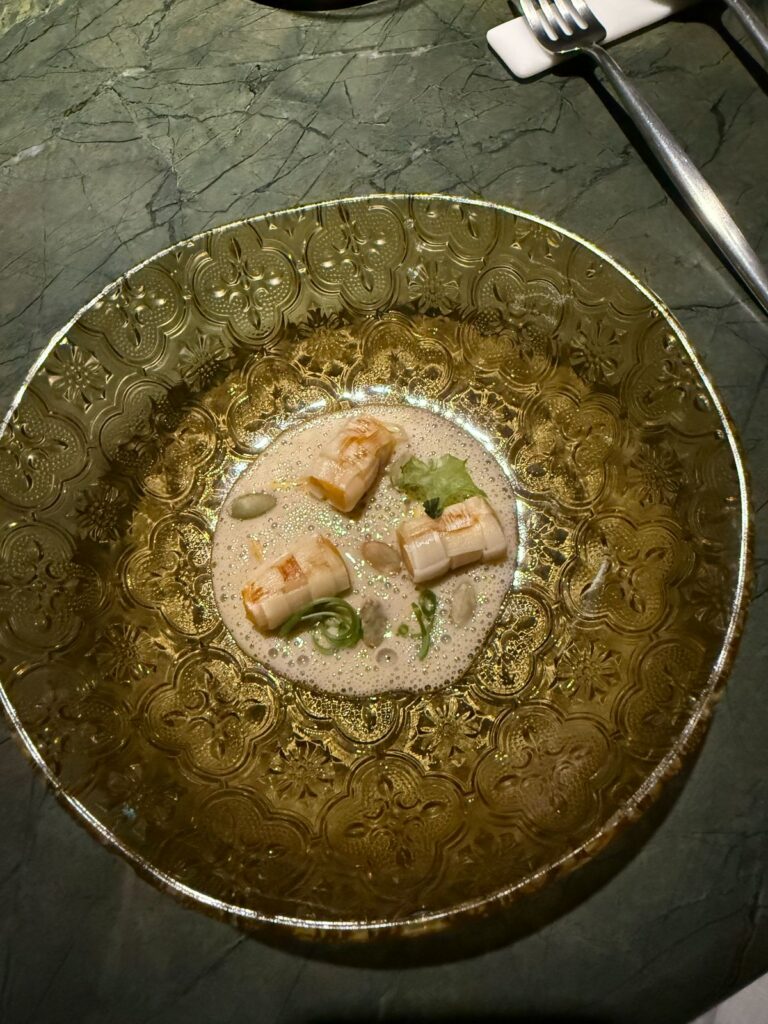
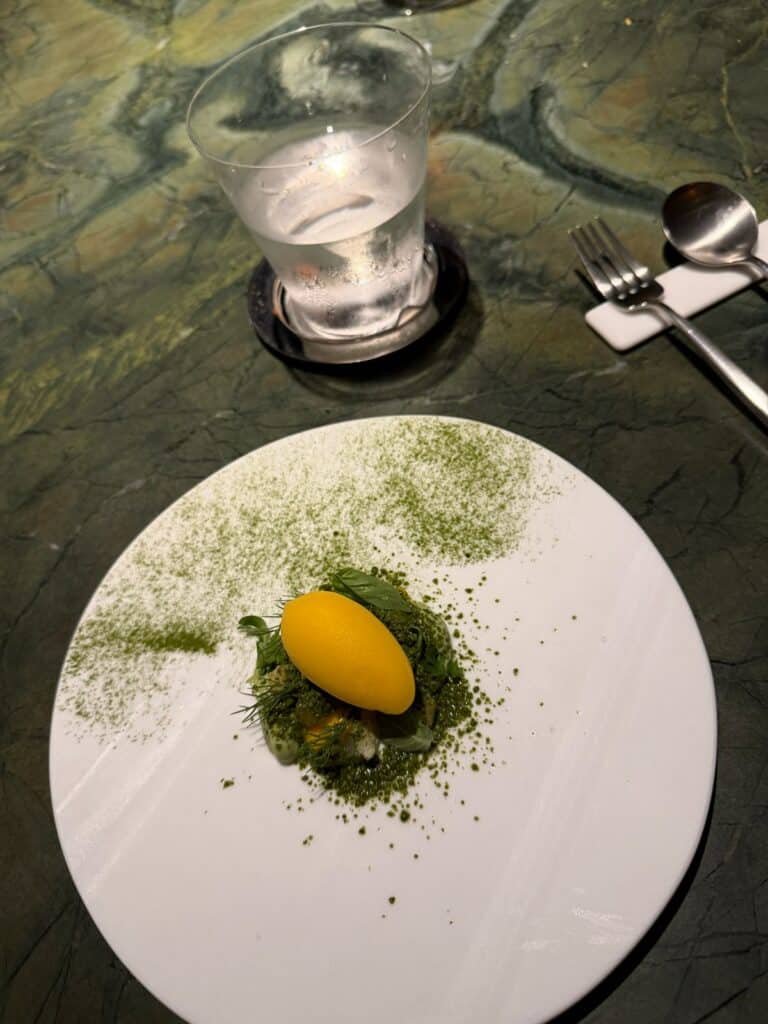
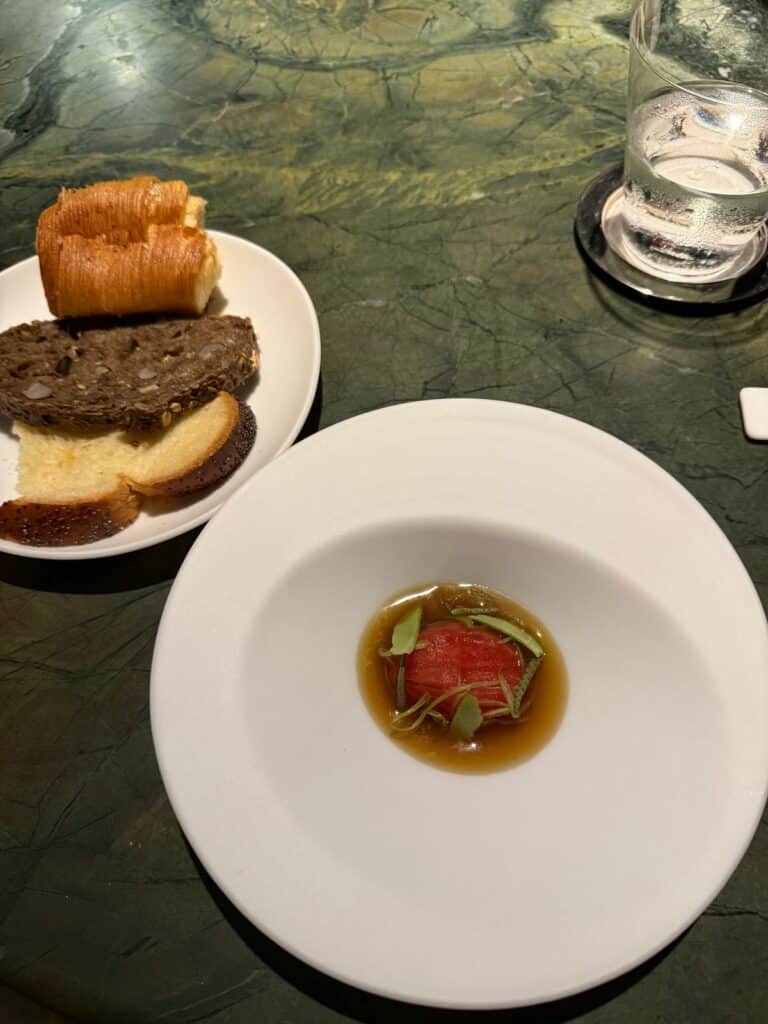
    A plated course in a textured green glass bowl on a green marble table at Tuju.
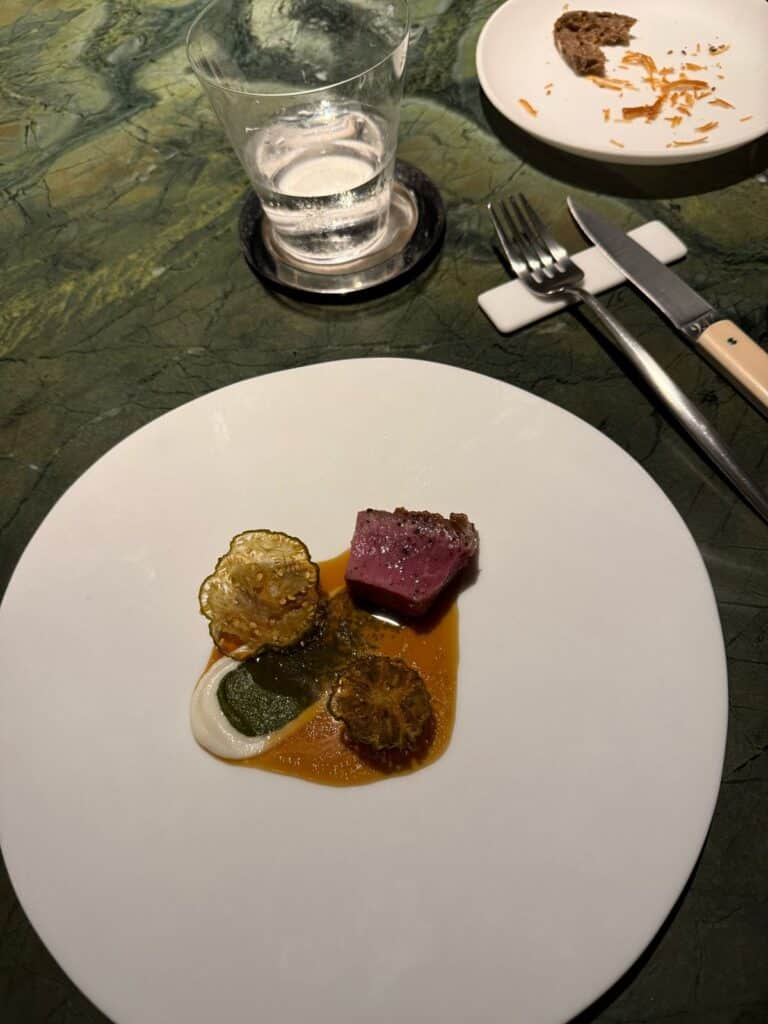
    A course from my Tuju visit — January 2025.

    Tuju — Official Website

    Tuju felt like a temple of gastronomy and couture to me—a place where the care given to the food and its presentation became part of the experience itself. In a city I feel is too often misrepresented, it showed me another side of São Paulo’s creativity and sophistication.

    My January 2025 visit centered on the Rain Season menu. Oyster, yellowtail, crab, tomato, lamb and mango formed part of a meal with a clear seasonal identity. The presentation was sleek and precise, and the menu gave the evening a sense of purpose.

    Chef Ivan Ralston and his wife, Katherina Cordás, Tuju’s director of hospitality and research, bring an extraordinary combination of knowledge and care to the restaurant. Their understanding of ingredients and seasonality feels scientific in its precision. They give that same attention to hospitality, and for me, the way they look after their guests is every bit as impressive as the cooking.

    Couture is the word that comes to mind for the attention to detail: individual dishes carefully composed within a larger experience. That care extends beyond the plate to how the evening feels. It is how I remember Tuju, and why it deserves an evening of its own.

    When Tuju received its third Michelin star in April 2026, I wasn’t surprised. Having experienced the restaurant, that recognition made complete sense to me. Its Art of Hospitality Award from The 50 Best Restaurants 2026, announced in September, feels equally deserved. Ivan, Katherina and their team understand how much the people looking after you contribute to a memorable meal.

    Restaurants like this are part of why I wish more people would look beyond their assumptions about São Paulo. There is a depth of gastronomy here that has made the city a destination I return to with real anticipation.

    Read more about my January 2025 meal at Tuju.

    Read my comparison of Evvai and Tuju.

    Back to the restaurant shortlist ↑

    3. D.O.M.: Tasting Brazil and Understanding It a Little Better
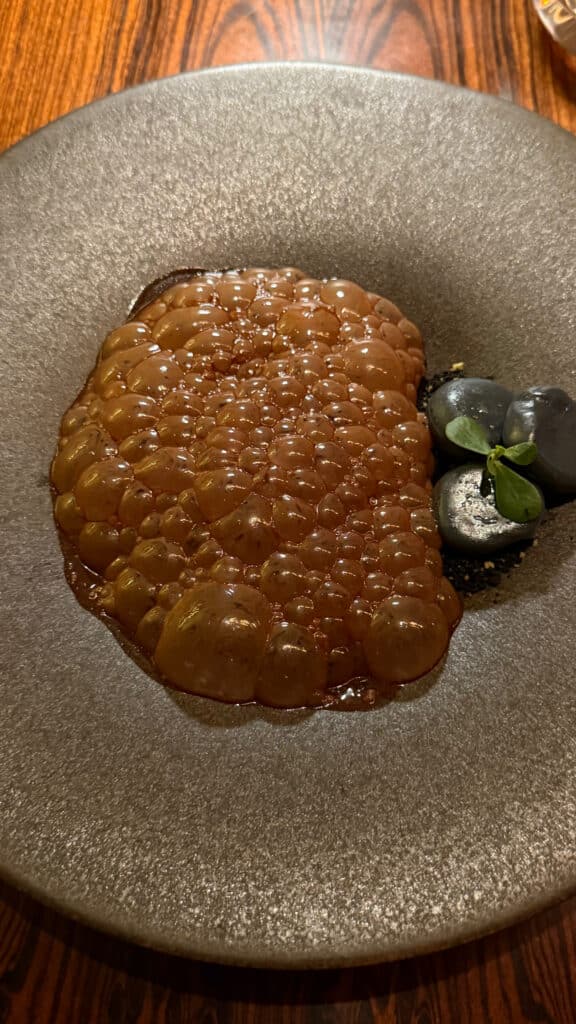
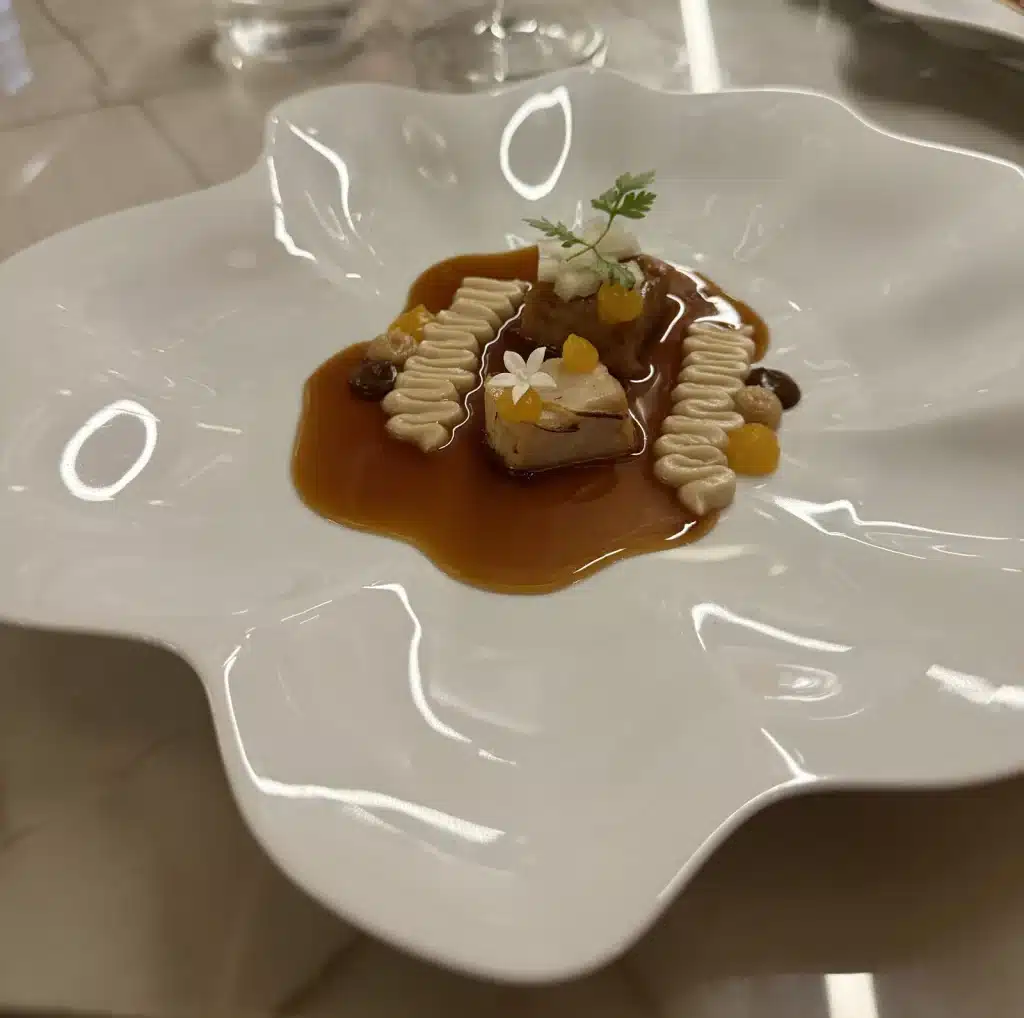
    A golden textured course with a small garnish on a grey ceramic plate at D.O.M.
    A plated course at D.O.M., São Paulo.

    D.O.M. — Official Website

    Eating at D.O.M. helped me understand why Alex Atala has been such an influential figure in Brazilian fine dining. The restaurant opened in 1999 and has held two Michelin stars since 2015. That kind of longevity carries weight, and my meal gave me a clearer appreciation of the work behind it.

    The foundation is research into Brazil’s ingredients, biodiversity and food traditions. Atala and chef Geovane Carneiro develop the menus through exploration of the country’s different regions and biomes, working with producers and learning about the places those ingredients come from.

    As a diner, you get to taste some of that discovery. An unfamiliar ingredient becomes a reason to ask questions, hear its story and understand a little more about Brazil. That is a big part of why I travel to eat.

    I ate insects at both D.O.M. and Metzi during the same weekend. Those meals pushed me beyond familiar choices and reminded me how much there is to discover when I’m willing to try something different. Ingredients I might never have sought out became part of meals I still remember.

    And the food was deeply satisfying. The research and explanations gave it context, while the flavors made the experience worth remembering. I could learn something about the country and enjoy an exceptional dinner at the same time.

    D.O.M. broadened my understanding of what Brazilian cooking can be. After eating there, I could appreciate why Atala’s work has earned so much recognition—and why this restaurant has remained relevant for so long.

    Back to the restaurant shortlist ↑

    4. Nelita: Talent, Humility and a Meal Worth Remembering
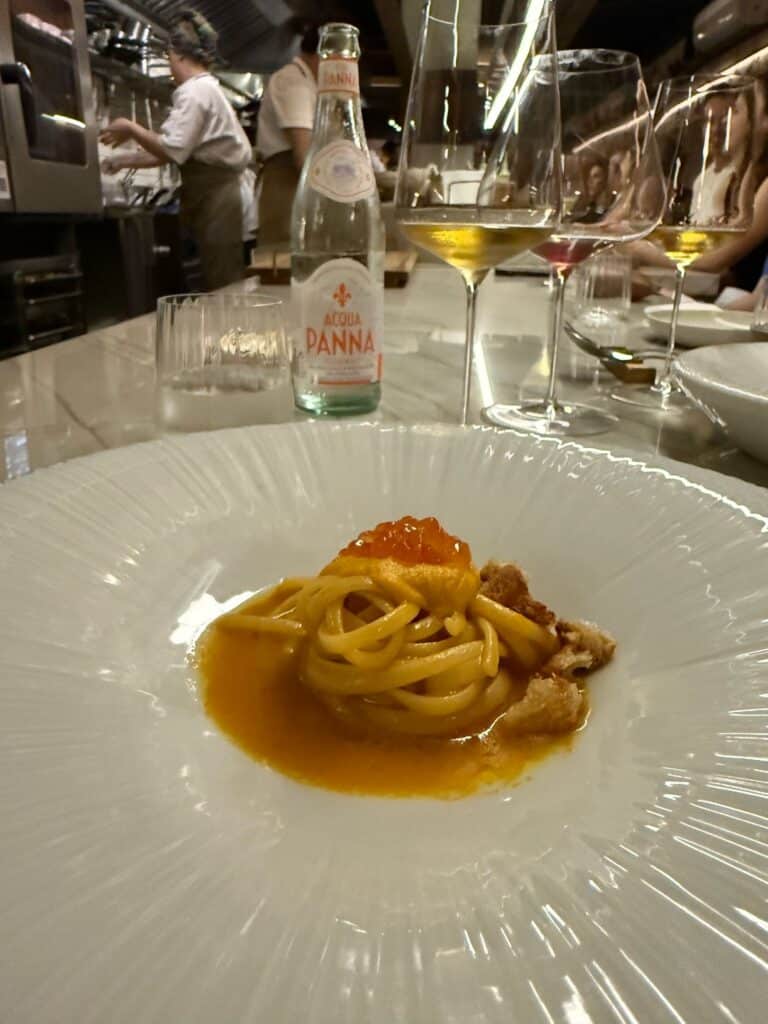
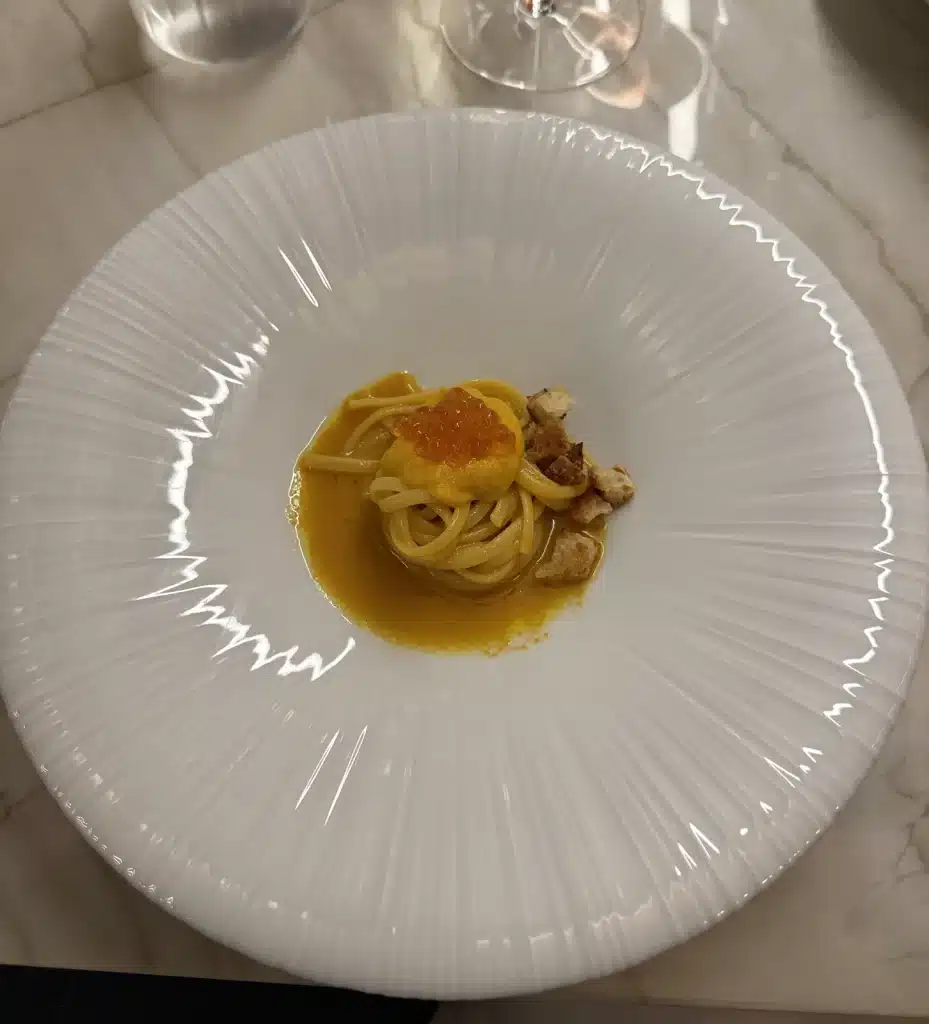
    Pasta with an orange topping in a wide white bowl at Nelita, with wine glasses and the kitchen behind.
    Pasta at Nelita’s dining counter.

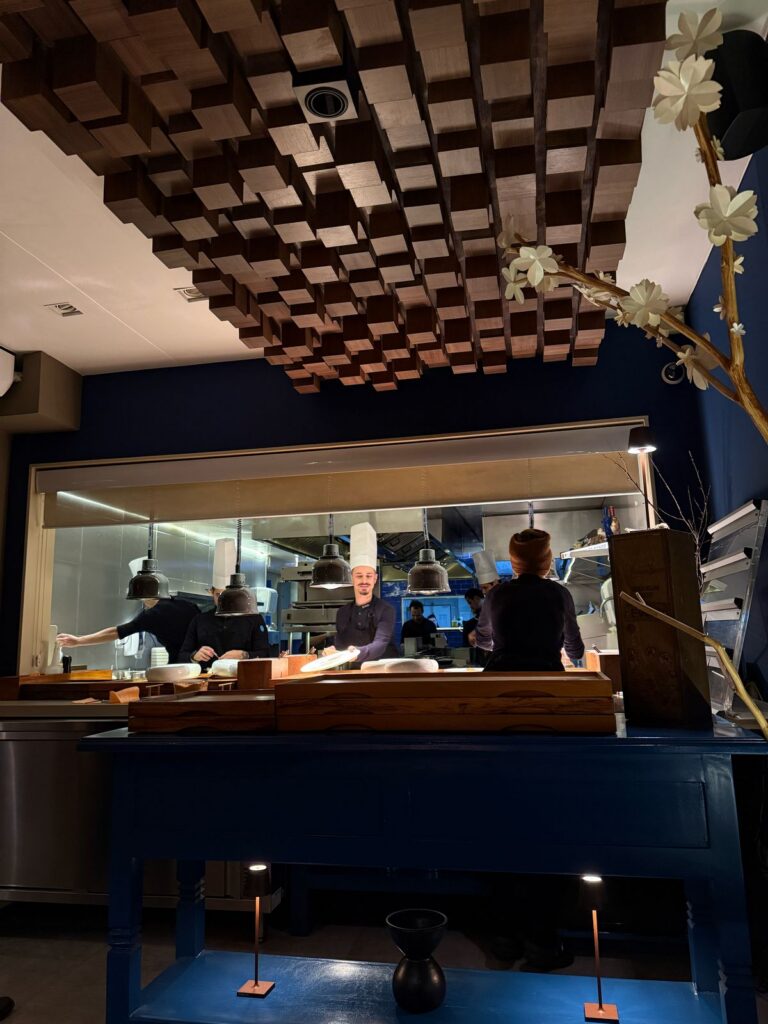
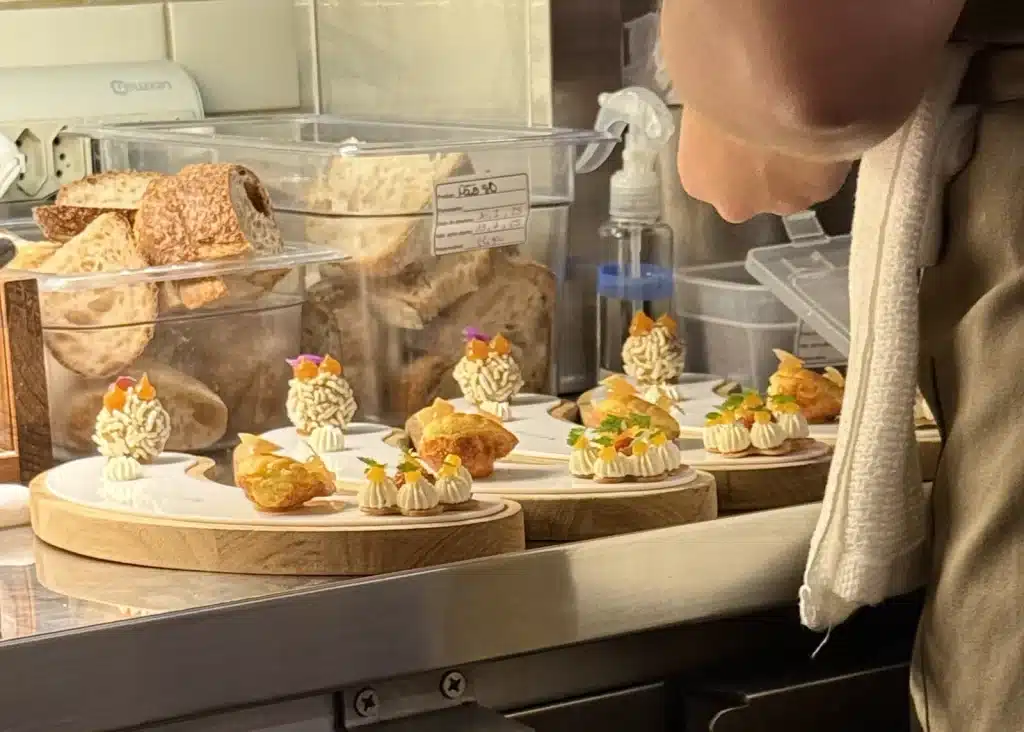
    My January 2025 meal at Nelita was one of the best I’ve had in São Paulo. Sitting at the counter directly in front of the kitchen made it even more memorable. Watching the team work, I could see the care that went into every plate.

    Chef Tássia Magalhães left as much of an impression as her cooking. I’ve never met someone who combines so much talent with so much humility. Her love of cooking and flavor comes through in the food, and her warmth makes you feel comfortable in a restaurant doing work at this level.

    The pão de queijo gougère set the tone. Pumpkin cappelletti, eggplant and smoked-tomato ravioli, and beef tongue with polenta gave me plenty to remember, while passionfruit sorbet brought a fresh finish. The Italian influences were clear, but the Brazilian ingredients and character gave the meal its own identity.

    Her husband, sommelier Danyel Steinle, helped make the experience complete. Watching them work together, you can feel their connection, and that teamwork carries through to the food and wine. The pairings brought out flavors in the dishes that I might not have appreciated as much on their own. Each glass had a purpose. This was a meal where choosing the right pairings genuinely added to the experience, and the attention given to the wine matched the care on the plate.

    The recognition they’ve received since my visit feels thoroughly deserved. Tássia was named Latin America’s Best Female Chef for 2025 and Chef of the Year at Prazeres da Mesa’s 2026 awards. Nelita also won Best Italian Restaurant in VEJA São Paulo’s 2026 COMER & BEBER awards, while Danyel took Sommelier of the Year. After experiencing their work firsthand, I expect there will be plenty more recognition to come.

    When I return in November, I also want to visit Lita, their wine bar across the street, which won Best Wine Bar in the same 2026 VEJA awards. After seeing how much the food and wine complemented each other at Nelita, I’m curious to experience what they’ve created there.

    Nelita — Official Website

    Back to the restaurant shortlist ↑

    5. Metzi: Mexico and Brazil on the Same Table
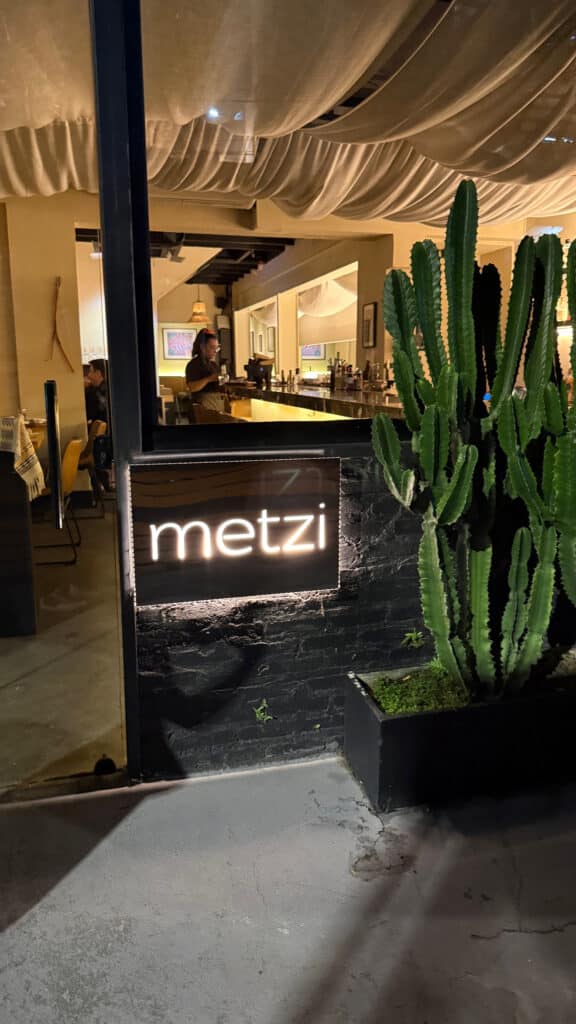
    Illuminated Metzi entrance sign beside tall cacti outside the restaurant at night.
    Arriving at Metzi in São Paulo.

    Metzi — Official Website

    I met chef Eduardo Ortiz before dining at Metzi. We connected over our ties to New York, and I was impressed by his energy and enjoyed our conversation. When I later ate at his restaurant, I felt that same personality coming through in the food.

    Metzi brings Mexican cooking and Brazilian ingredients together with an attention to detail that made the meal memorable. Pork belly tacos with fermented chili, seafood tostadas, smoky and acidic flavors, and agave-forward cocktails are part of what I remember. The execution showed how much care had gone into the experience.

    I haven’t had the opportunity to meet his co-chef, Luana Sabino, but the cooking she and Eduardo have developed—and the restaurant they have built together—left an impression. Both deserve credit for an excellent Mexican fine-dining experience with a clear personality of its own.

    The room felt relaxed and welcoming, with the ease of a neighborhood restaurant. That warmth was part of the appeal: I could appreciate the precision of the food while feeling comfortable enough to settle in and enjoy the evening.

    Metzi is one of the reasons I leave room for different styles of restaurant when planning a trip. The connection between the people, the food and the atmosphere gave me another reason to appreciate how much São Paulo has to offer.

    Back to the restaurant shortlist ↑

    6. Tan Tan: Give the Cocktails as Much Attention as the Food
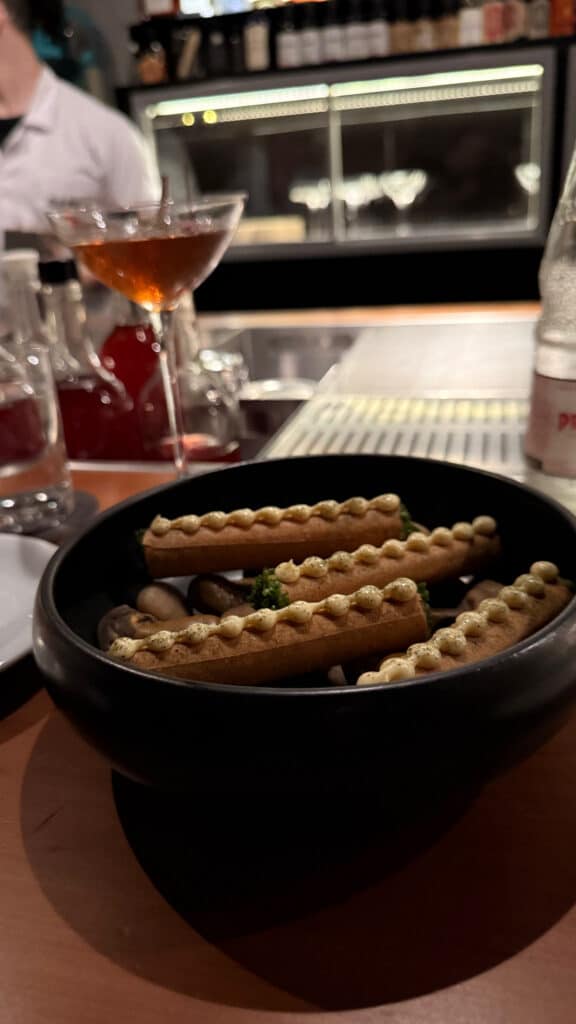
    Food served in a black bowl beside a stemmed cocktail at the Tan Tan bar.
    A seat at the bar at Tan Tan.

    Tan Tan — Official Website

    I’ve been to Tan Tan every time I’ve visited São Paulo. It belongs on both my dining list and my cocktail list, and it has become a regular part of my trips.

    The Spring Rolls Royce, filled with tuna tartare, captures the playful side of the food. The Tsukemono cocktail, with tequila, wasabi, cucumber and orange bitters, is the kind of drink that makes me pay attention to what the bar is doing. Both give me reasons to look forward to another visit.

    Then there’s the music. The 1990s hip-hop soundtrack is very much my kind of atmosphere. The room feels lively without losing its intimacy, and the combination of music, food and drinks makes it easy to settle in.

    I’ve also been to The Liquor Store twice, another of Thiago Bañares’s venues. The personal service there has stayed with me. They remember me when I come back—or they have excellent record-keeping. Either way, it makes me feel special. Being welcomed like a familiar face in a city thousands of miles from home means something.

    As of this September 2026 update, The Liquor Store is still relocating and hasn’t reopened. I’m hoping that changes before I return to São Paulo in November, because I’d like another evening at its bar.

    I’ve been to Kotori once as well, and I want to go back. It’s another return visit to fit into a São Paulo itinerary that never seems to have enough room.

    Tan Tan is a place I look forward to returning to before I even land in São Paulo. Give yourself enough time for both the food and cocktails. For me, both are part of the reason to go.

    Read my full Tan Tan review

    Back to the restaurant shortlist ↑

    7. A Casa do Porco: Brazilian Food and Culture, from Nose to Tail
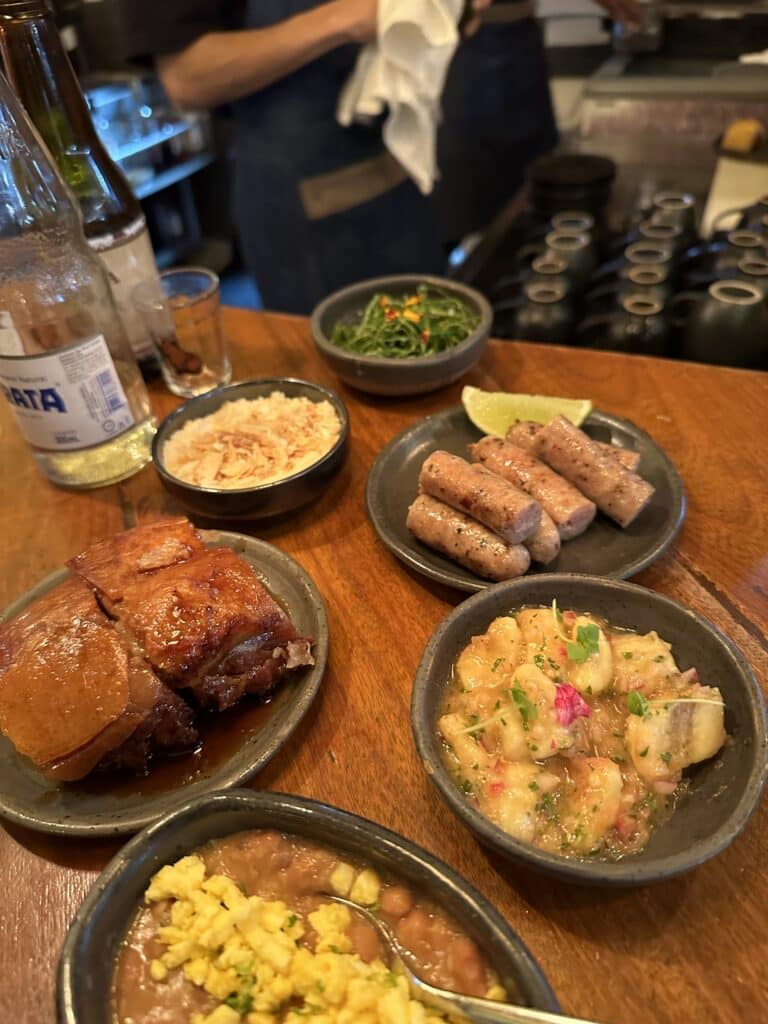
    Roasted pork and bowls of side dishes spread across a wooden table at A Casa do Porco in São Paulo.
    Brazilian food and culture, from nose to tail, at A Casa do Porco.

    A Casa do Porco — Official Website

    A Casa do Porco gives you a look into Brazilian food and culture through an ingredient the kitchen understands completely: pork. From nose to tail, the preparations show how much creativity, flavor and variety can come from using the whole animal.

    Founded by chefs Jefferson Rueda and Janaína Torres, the restaurant takes its cooking seriously while keeping the experience approachable. What I appreciate is the commitment to making exceptional food accessible to a broader audience, including the Brazilians who live there. A restaurant can earn international attention and still feel connected to its own people.

    In my opinion, the cooking is worthy of a Michelin star. But the part I respect just as much is that A Casa do Porco feels like a place built to feed people well. Tourists and destination diners are welcome, but the experience doesn’t feel designed exclusively for them.

    And the food is ridiculously good. It’s interesting, creative and full of flavor—the kind of meal that makes you pay attention to what you’re eating and appreciate the culture behind it. The whole-animal approach gives you plenty to think about, but the pleasure of eating it is what stays with me.

    A Casa do Porco absolutely belongs on this list.

    Read my full A Casa do Porco review.

    Back to the restaurant shortlist ↑

    8. Jean-Georges: A Great Meal That Changed the Mood
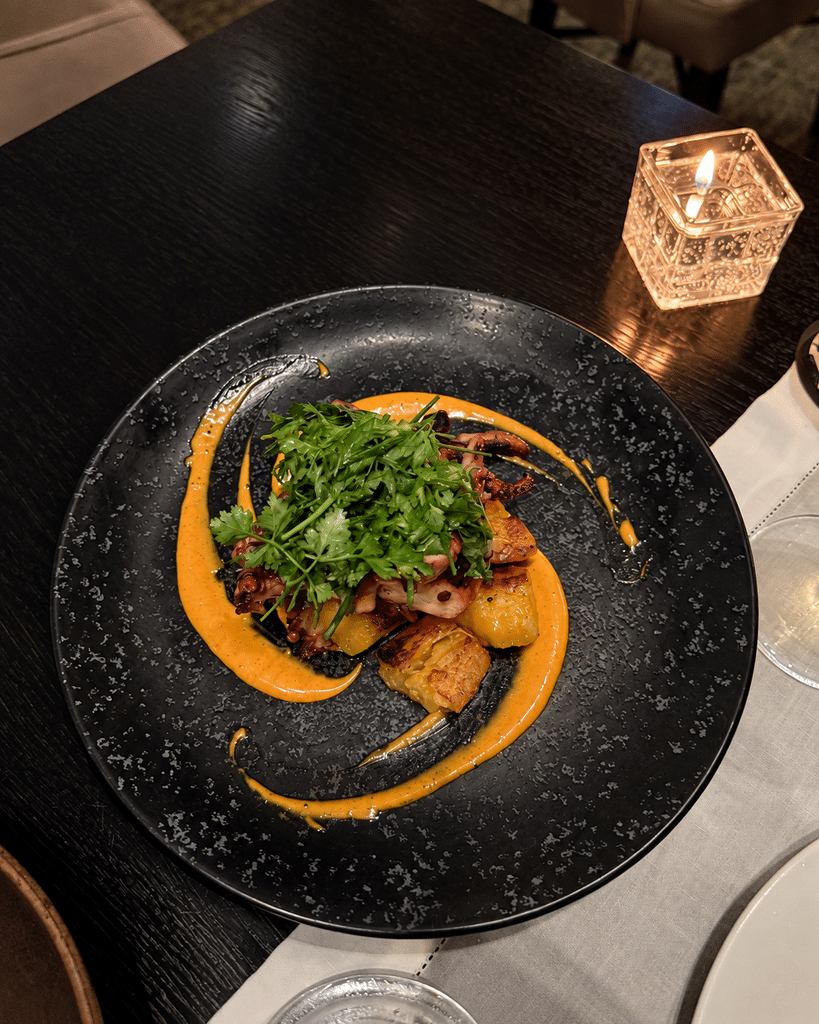
    Dish with fresh herbs and orange sauce on a black plate beside a candle at Tangará Jean-Georges.
    À la carte dining at Tangará Jean-Georges in Palácio Tangará.

    Tangará Jean-Georges — Official Website

    Jean-Georges Vongerichten is a chef whose cooking I’ve followed, studied and enjoyed for years. His name carries real weight with me, so I arrived at Tangará Jean-Georges with high expectations and my heart set on the tasting menu.

    Some personal drama within our party changed the plan. That had absolutely nothing to do with the restaurant or its team, but we decided to order à la carte instead.

    The food delivered. It lived up to what I expect from Jean-Georges and felt entirely worthy of the Palácio Tangará setting. Although the evening hadn’t started the way I’d hoped, it turned into a great meal.

    What I remember just as clearly is how the food changed the mood at our table. As we ate, the tension eased, people relaxed, and we could enjoy being there. Sometimes a good meal does more than satisfy your appetite. This one helped bring the evening back together.

    I’ve also stayed at Palácio Tangará, so the restaurant is part of my broader experience of the property. The greenery surrounding the hotel and the more formal dining atmosphere give the evening a different feel from many of the other places on this list.

    It deserves time in your itinerary. Check the journey from your hotel and give yourself room to enjoy dinner without rushing. I still want to return for the tasting menu, but ordering à la carte gave me plenty of reason to appreciate the kitchen.

    Back to the restaurant shortlist ↑

    9. Kazuo: The First Meal That Opened My Eyes

    Chef Kazuo Harada preparing sushi at the omakase counter at Kazuo in São Paulo.
    Chef Kazuo Harada preparing sushi at the counter at Kazuo in São Paulo.

    Kazuo — Instagram

    Kazuo was my first meal in São Paulo, and my first omakase in a few years. Looking back, it was quite an introduction to eating in this city.

    Chef Kazuo Harada kept putting courses and dishes on the counter, and I kept eating. By the end, I had practically eaten myself into a food coma. The freshness and flavor made it very easy to keep going.

    I’ve now been to Kazuo three times, including once for lunch, and my verdict is straightforward: it is on point. That first meal kept bringing me back, and the restaurant belongs in this guide for much more than sentimental reasons.

    What stands out is Kazuo’s range. His cooking extends beyond sushi into several Asian cuisines, including Thai and Malaysian influences. I see him as a master of different styles, and the variety is backed up by what matters most to me: how fresh the ingredients taste and how well the dishes come together.

    The drinks program can hold its own, too. It deserves attention alongside the food and adds another reason to settle in and enjoy the evening. Even dessert impressed me. It felt like a considered part of the meal, with the same care given to it as the courses that came before.

    I also like seeing Kazuo behind the counter. Having the chef right there is part of what makes the experience memorable, and he strikes me as someone I’d enjoy sitting down with over a few drinks and having a proper conversation.

    Before I had a list of São Paulo favorites or started planning return trips around reservations, there was Kazuo. It opened my eyes to what dining in this city could be. After three visits, it still gives me plenty of reasons to return.

    Explore Kazuo’s menu and reservations.

    Back to the restaurant shortlist ↑

    10. Jun Sakamoto: A True Sushi Master

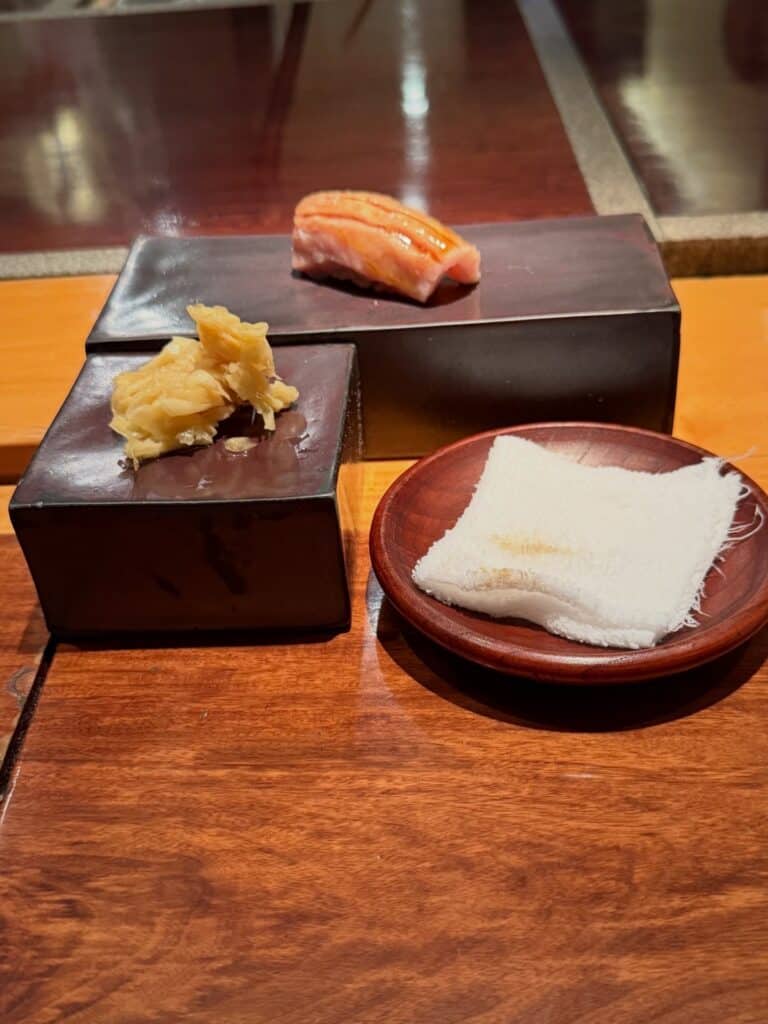
    Nigiri on a dark serving block beside pickled ginger at Jun Sakamoto’s sushi counter in São Paulo.
    Sushi at Jun Sakamoto’s counter, where I could watch a master at work.

    Jun Sakamoto — Official Website & Reservations

    I’ve been to Jun Sakamoto once. After that meal, I understood why I think of him as something like the godfather of omakase in São Paulo.

    His namesake restaurant opened in September 2000, and he has spent decades establishing himself as one of Brazil’s leading sushi chefs. Sitting at his counter gave me a chance to appreciate the skill behind that reputation.

    I was lucky enough to sit beside a few regulars at the small counter, and Jun kept the conversation going as he worked. Being able to talk with him while watching him prepare the meal made the experience feel personal. That interaction became as much a part of my memory as the sushi itself.

    The freshness of the fish and his knife skills stood out. Watching him work at such close range gave me another level of appreciation for what arrived in front of me. You could see the experience in his hands, and the quality of the fish gave that work something worthy of the attention.

    My meal was largely focused on sushi, and that focus is part of what I appreciate about Jun Sakamoto. The fish, the preparation and the man behind the counter gave the evening its identity.

    One visit was enough to leave a lasting impression. Jun is a true sushi master in my eyes, and sharing that small counter with him and some of his regulars gave me another reason to appreciate the depth of São Paulo’s dining scene.

    Jun Sakamoto — Official Website & Reservations

    Back to the restaurant shortlist ↑

    Make the trip work

    Planning Meals Without Overloading the Trip

    Start with the restaurant you would be most disappointed to miss, then work outward. Check reservation release dates directly with each venue, and leave room for changes in the rest of the itinerary.

    Keep lunch lighter when dinner is a substantial tasting menu. Think about cocktails, wine pairings and supplements as part of the total experience and spend. You don’t have to order every optional extra to have a memorable meal.

    For Grand Prix trips, protect the evening after the circuit. Allow time to get back, change and arrive ready to enjoy dinner. I would rather appreciate one meal properly than squeeze two experiences together and rush both.

    For more on the race-weekend logistics, read my São Paulo Grand Prix travel guide before locking in a tightly timed dinner after Interlagos.

    Menus change. The dishes I describe are memories from my visits, so use them to understand what interested me rather than as a current ordering guide.

    Use the restaurants’ own websites below to confirm the current menu, price, booking policy and dietary accommodations. A dish I enjoyed on a past visit may not be on the menu when you go.

    Why This List Keeps Growing

    For hotels, neighborhoods and things to do between reservations, read my São Paulo travel guide.

    The more time I spend in São Paulo, the harder it becomes to fit everything into one trip. Returning to a favorite means one less opportunity to try somewhere new. That is a good problem to have.

    This expanded list reflects how much more of the city I have experienced since the original article. It will keep changing as I eat, learn and return.

    Some people collect watches. Some collect cars. I collect experiences.

    São Paulo keeps giving me reasons to add another.

    Completely Unnecessary. Absolutely Worth It.
    Follow me on Instagram @Richard.Jarocki for more restaurant experiences, cocktails, travel and Formula 1 adventures—including my next trip to São Paulo.

  • Evvai and Tuju: Two São Paulo Tasting Menus, Two Personalities

    Evvai and Tuju: Two São Paulo Tasting Menus, Two Personalities

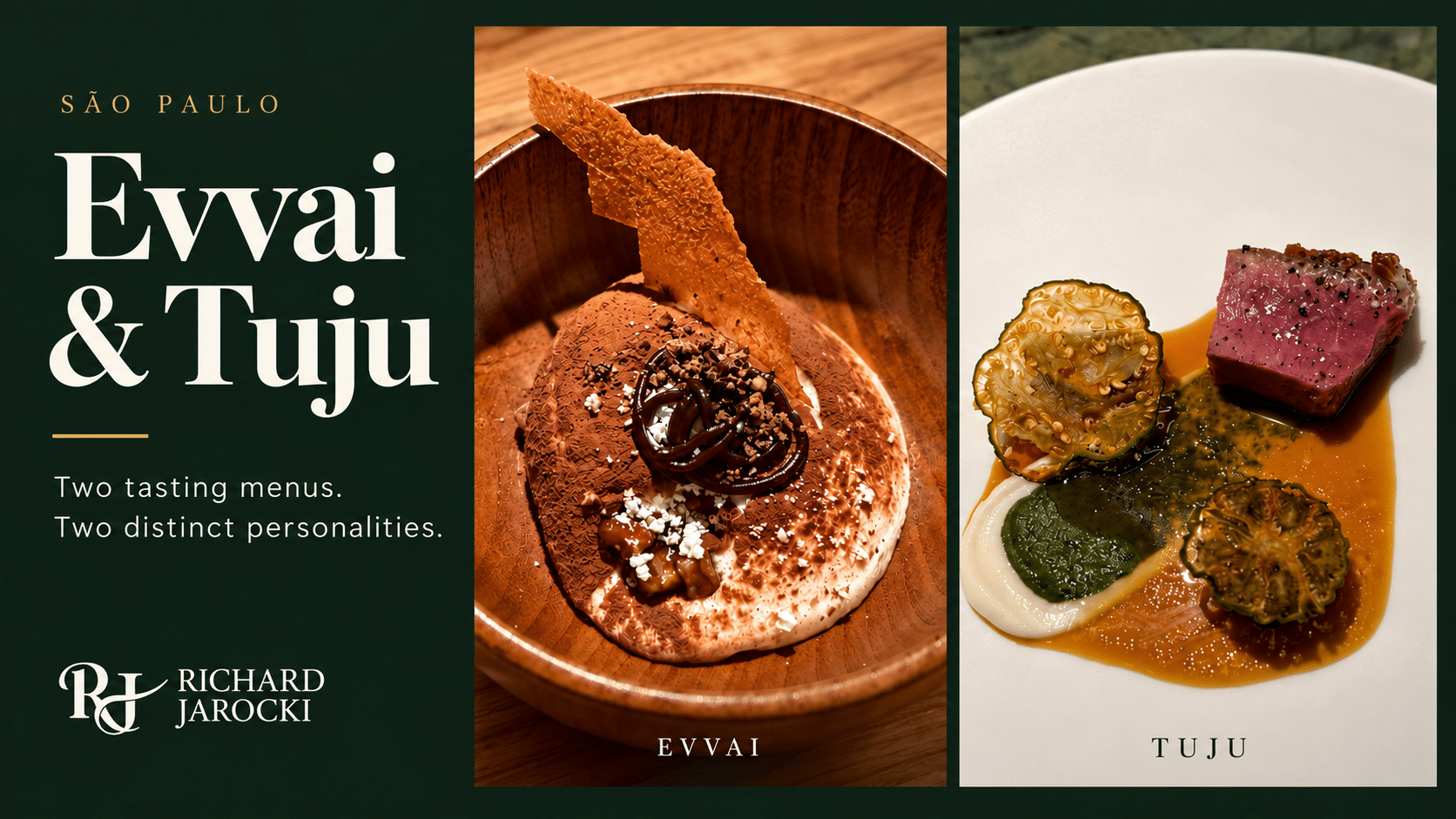
    Evvai and Tuju Evvai dessert and Tuju lamb dish side by side with Richard Jarocki’s logo.

    Visits: Evvai in November 2024; Tuju in January 2025. Originally published March 23, 2025. Menus and prices below reflect those visits, not current offerings.

    Evvai and Tuju gave me two of the finest dining experiences I’ve ever had in São Paulo. Both delivered the ambition and creativity I look for in a tasting menu, but they left very different impressions.

    Tuju felt like a temple of high-end gastronomy: precise, sleek, and driven by experimentation. Evvai brought just as much refinement, with a dose of punk rock energy that connected with me on a more personal level.

    I slightly preferred Evvai. The difference wasn’t simply what arrived on the plate. It was the personality of the experience.

    Evvai and Tuju at a Glance

    EvvaiTuju
    LocationSão Paulo, BrazilSão Paulo, Brazil
    Visit dateNovember 2024January 2025
    ChefLuiz Filipe SouzaIvan Ralston
    Menu discussedOriundi, OR242Rain Season
    Culinary approachItalian traditions and Brazilian influencesBrazilian ingredients and seasonal experimentation
    Historical menu priceR$895; Japanese A5 Wagyu alternative +R$125R$1,100 plus 15% service
    My impressionRefined, playful, rebelliousPrecise, sleek, luxurious
    My preferenceA slight edge for its personalityAn exceptional experience in its own right

    Evvai: Italian Heritage, Brazilian Ingredients

    At Evvai, Chef Luiz Filipe Souza brings Italian traditions and Brazilian influences together through his Oriundi cuisine. The connection to immigrant heritage gives the menu a point of view beyond simply combining ingredients from two countries.

    During my November 2024 visit, the OR242 menu moved through bread, seafood, meat, pasta-inspired preparations, and desserts. Heart of palm became tagliatelle. Cotechino met black bean broth. Corn, vanilla, and caviar shared a course.

    Those combinations reflect what I enjoyed about Evvai: respect for tradition, with a willingness to reshape it. The experience was elegant and contemporary, but there was room for storytelling and playfulness.

    For more on my connection to the restaurant, read why Evvai is my favorite restaurant in the world.

    Evvai’s November 2024 Menu

    These are the dishes recorded in my original account, rather than a current menu or a ranking of my favorite courses:

    • Melon, Puxuri & Chickpea
    • Manioc Bread & Cheese Selection — my notes mention cheeses from Marajó Island, polvilho biscuit, and Grana Padano whey.
    • Pupunha Heart of Palm Tagliatelle & Bottarga
    • Fish of the Day with BORI Special Urucum & Pancetta
    • Xinxin Chicken & Marsala
    • Cotechino with Black Bean Broth & Goat Pepper
    • Green Corn & Cerrado Vanilla with Oscietra Caviar
    • Yellow Fruits, Soursop & Manduri Honey
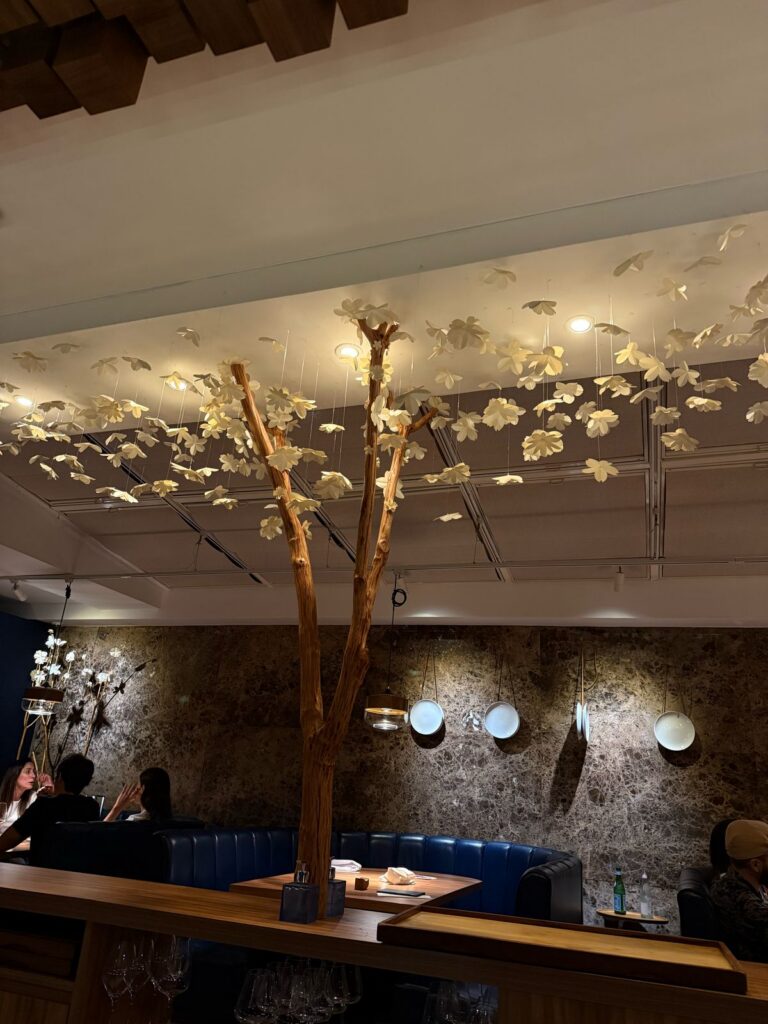
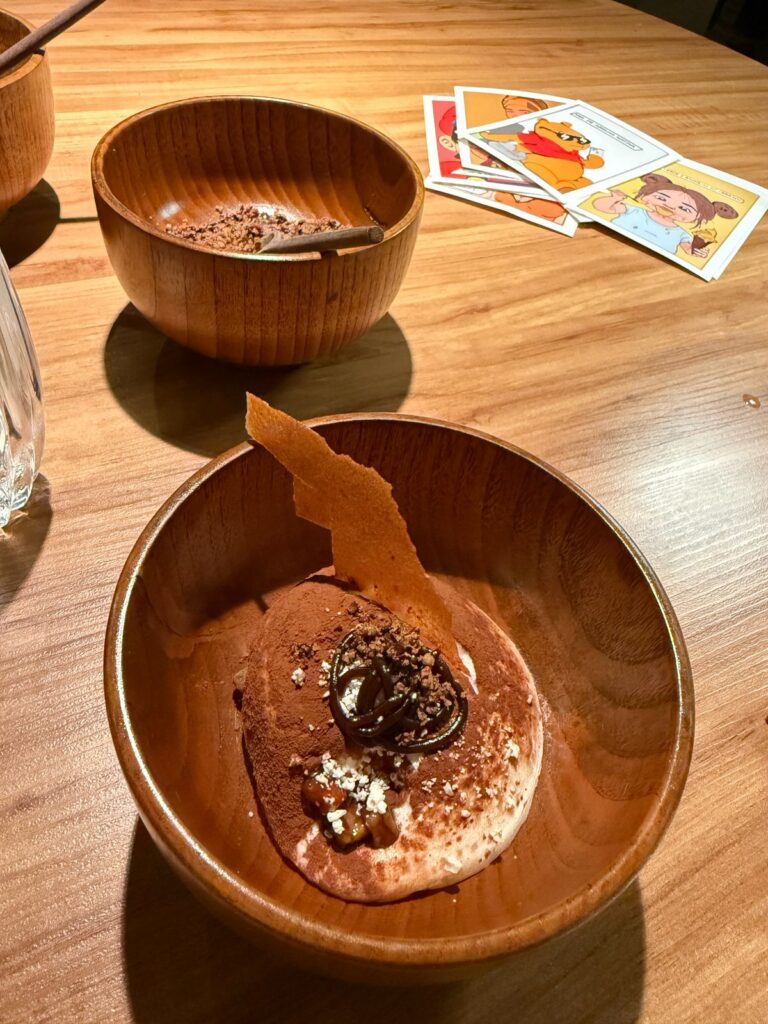
    • Rebel, Rebel Tiramisu
    • Mignardises

    The photographed OR242 menu also includes a Wagyu bresaola preparation with smoked tea. One ingredient in that line is obscured by glare, so this is a partial description rather than an exact transcription.

    The menu was priced at R$895, with Japanese A5 Wagyu, manioc, and wild mustard offered as an alternative to the chicken course for an additional R$125. A separate cheese and melipona honey selection was listed at R$79. These are historical menu prices, not current prices or a record of which supplements I ordered.

    Tuju: Precision and Brazilian Biodiversity

    Chef Ivan Ralston’s Tuju offered a different expression of São Paulo dining. During my January 2025 visit, the Rain Season menu centered on Brazilian ingredients, with combinations that ranged from oyster and watermelon to lamb with scarlet eggplant and watercress.

    What stayed with me was the sense of precision and experimentation. I described the chef as a mad scientist in my original account, and I meant it with respect: someone constantly exploring what technique and ingredients can do together.

    The restaurant itself felt upscale, sleek, and luxurious. That setting suited the food and the overall impression of carefully controlled, ambitious cooking.

    Tuju’s January 2025 Rain Season Menu

    • Oyster with Watermelon & Cucurbitaceae
    • Yellowtail with Cambuci, Turnip & Seaweed
    • Crab with Corn & Avocado — the photographed menu offers an optional 10 g caviar supplement for R$450; it does not specify the caviar variety, and yes I ordered it.
    • Pumpkin with Palm Heart & White Curry
    • Tomato with Eggplant & Yuzu
    • Squid with Caruncho Pork & Shell Jus Gras
    • Fish of the Day with Fragrant-Pepper Pil Pil & Asparagus Bean
    • Lamb with Scarlet Eggplant & Watercress
    • Mango with Pesto & Mate
    • Cocoa with Cardamom & Baru Nut

    Historical Tuju Menu Prices

    The photographed Rain Season menu lists R$1,100 plus a 15% service charge. That makes the menu alone R$1,265 with the stated service charge, before drinks or supplements.

    The listed pairing options were:

    • Discoveries wine pairing: R$790
    • Classics wine pairing: R$1,790
    • Non-alcoholic pairing: R$420

    I added the R$450 caviar supplement to the crab course. The pairing prices above show the options available at the time; they aren’t a record of my drinks order. The menu photograph doesn’t make clear how the 15% service charge applied to drinks or supplements.

    Seasonality and Sourcing

    Tuju’s attention to seasonality is part of its identity. Michelin’s current description explains that the restaurant’s tasting menus follow climatic seasons and that its sourcing includes small-scale producers, particularly in São Paulo state.

    That gives more concrete context to the restaurant’s approach than the broad sustainability language in my original article. For current restaurant details, see Tuju in the Michelin Guide.

    Evvai vs. Tuju: Why Evvai Had the Edge for Me

    Both restaurants gave me some of the finest dining experiences I’ve had. Having a favorite doesn’t take anything away from the other.

    Tuju delivered the kind of luxury I’ve always enjoyed: precise cooking, experimentation and a polished setting. I admired the focus behind the food and the care that went into the experience.

    Evvai had that same ambition, with a rebellious streak that connected with me. Its personality reminded me of David Bowie’s willingness to experiment and Andy Warhol’s embrace of pop culture. The illustrated course cards, the storytelling and the playful presentations made the meal feel personal and fun.

    That gave Evvai the edge for me. I’ve always liked the idea of respecting tradition while questioning how things should be done. Fine dining can take the food seriously and still have a sense of humor. Evvai made that part of the experience.

    Evvai and Tuju: Which Would I Choose Again?

    If I had to choose one based on these experiences, I would choose Evvai, by a small margin. Its playful, rebellious personality was the deciding factor.

    For someone drawn to a sleek setting and cooking that emphasizes precision and experimentation, Tuju would be a compelling choice. I have immense respect for both chefs and their different approaches.

    The photographed menus list R$895 at Evvai and R$1,100 at Tuju, a R$205 difference before Tuju’s stated 15% service charge. Evvai’s photographed menu does not state its service charge, so these are base-menu comparisons, not final-bill comparisons. Without the full bills and beverage choices, I won’t claim one delivered better value for money. My preference here is about the dining experience and how each restaurant made its personality felt.

    Both gave me more reasons to keep exploring São Paulo through its restaurants.

    More São Paulo Dining and Evvai-Inspired Cooking

  • São Paulo’s Michelin-Starred & 50 Best Restaurants: The Complete 2026 Dining Guide

    By Richard Jarocki | Updated September 2026

    São Paulo Michelin Starred & 50 Best Restaurants 2026 guide: .São Paulo is one of the best food cities I have ever visited. I say that after eating my way through plenty of cities that get much more attention internationally. What keeps bringing me back is the range: you can have a serious three-star tasting menu one night, sushi at a tiny counter the next, a pork-focused tasting menu in Centro the night after that, and then finish the trip with cocktails and izakaya-style food somewhere completely different.

    This guide started as a list of Michelin-starred and World’s 50 Best restaurants in São Paulo. It needed a full update. The city’s restaurant scene has changed, the Michelin rankings have changed, and the 50 Best lists need to be separated correctly. Michelin, The World’s 50 Best Restaurants and Latin America’s 50 Best Restaurants are three different systems, and they should not be mixed together.

    I have personally eaten at many of the restaurants in this guide, including Evvai, Tuju, D.O.M., A Casa do Porco, Nelita, Kazuo, Jun Sakamoto, Metzi, Kotori and Tangará Jean-Georges. Where I have been, I will tell you what stood out to me. Where I have not been, I will keep it factual and let the rankings speak for themselves.

    Michelin-Starred Restaurants in São Paulo — 2026

    The 2026 Michelin Guide was a major moment for São Paulo. Evvai and Tuju became the first restaurants in Brazil — and the first in Latin America — to receive three Michelin stars. D.O.M. holds two stars, and São Paulo currently has 13 one-star restaurants.

    Three Michelin Stars

    Evvai

    Official website: Evvai

    Chef Luiz Filipe Souza’s Evvai is my favorite restaurant in São Paulo and, at this point, one of my favorite restaurants anywhere. I have been more than once, and I am returning again because the experience keeps evolving instead of feeling like a tasting menu that simply repeats its greatest hits.

    The Oriundi menu connects Brazil and Italy without making either side feel forced. The technical precision is obvious, but what I remember most is that the food still has personality. The Bomba de Vieira — the scallop course served directly onto your hand — is playful without becoming a gimmick. On another visit, dishes like duck tortellini with eel and tucupi and a green-corn ice cream cone with caviar showed exactly why this restaurant is operating at such a high level.

    The illustrated cards that accompany the courses are another detail I love. They give you context without turning dinner into a lecture. Evvai feels serious about food while still remembering that dinner is supposed to be fun.

    Tuju

    Official website: Tuju

    Tuju is a completely different experience from Evvai, which is exactly why I do not like comparing the two as if one needs to beat the other. Tuju feels like a temple of gastronomy. The building, service, pacing and menu are designed as one experience rather than a dining room with a tasting menu dropped into it.

    Chef Ivan Ralston builds the menu around São Paulo’s seasons and rainfall patterns. When I visited, the Rain Season menu felt highly considered from beginning to end. The presentations were some of the most polished I have seen anywhere — almost couture-level — but the experience never felt cold. The restaurant’s three-floor progression, open kitchen and hospitality program are a major part of what makes Tuju different.

    Two Michelin Stars

    D.O.M.

    Official website: D.O.M.

    D.O.M. is one of the restaurants that helped put modern Brazilian fine dining on the international map. Chef Alex Atala built a restaurant around ingredients, traditions and ideas that many international diners had never encountered before.

    My meal at D.O.M. felt more like discovery than simple luxury. I tried ingredients I would not normally order on my own, including insects, and I came away feeling like I understood a little more about Brazil than I did when I walked in. That is what makes D.O.M. important to me. It is not just about refinement; it is about teaching you something through the meal.

    One Michelin Star

    São Paulo’s current one-star restaurants are:

    Fame Osteria

    Jun Sakamoto

    Kan Suke

    KANOE

    Kazuo

    Kinoshita

    Kuro

    Maní

    Murakami

    Oizumi Sushi

    Picchi

    Ryo Gastronomia

    Tangará Jean-Georges

    Jun Sakamoto

    Official website: Jun Sakamoto

    I have been to Jun Sakamoto once, and the easiest way I can describe it is that you understand very quickly why he has the reputation he does. He is one of the names that comes up when people talk about the foundation of serious omakase in São Paulo. The counter is small, the focus is tight and the experience is about sushi craft rather than spectacle.

    Kazuo

    Official website: Kazuo

    Kazuo was my first meal in São Paulo, which gives it a permanent place in my memory of the city. I have returned multiple times, including for lunch. What makes Kazuo different from Jun Sakamoto is range. Kazuo is not only about sushi; the menu moves across several Asian cooking traditions, and the kitchen is comfortable doing much more than one thing well. Even dessert surprised me there.

    Tangará Jean-Georges

    Official website: Tangará Jean-Georges

    Tangará Jean-Georges is the more formal hotel dining experience on this list. I have followed Jean-Georges restaurants for years, so I wanted to experience his São Paulo restaurant inside Palácio Tangará. I ended up ordering à la carte rather than doing the tasting menu because of a table issue during that visit, but the setting and level of service are exactly what you would expect from a restaurant inside one of the city’s grandest hotels.

    The World’s 50 Best Restaurants — São Paulo

    The World’s 50 Best Restaurants global list is separate from Latin America’s 50 Best. That distinction matters because older articles — including the previous version of this one — can make it look like a restaurant’s Latin American ranking is its global ranking.

    As of September 2026, the latest global list published by The World’s 50 Best Restaurants is the 2025 edition. No São Paulo restaurant appears in the global top 50, but two São Paulo restaurants appear in the extended 51–100 list:

    A Casa do Porco — No. 83

    Evvai — No. 95

    A Casa do Porco

    Official website: A Casa do Porco

    A Casa do Porco is one of the clearest examples of why São Paulo dining is so interesting. It has international recognition, but it does not behave like an inaccessible luxury restaurant. Jefferson Rueda built the restaurant around pork and whole-animal cooking, and the experience is energetic, fun and approachable.

    I visited in November 2024 and sat at the bar. There was a cachaça welcome, a full tasting menu and one of the most memorable presentations of the trip: crispy pork belly revealed beneath the restaurant’s colorful pig-head cloche. The point of the restaurant is not luxury for luxury’s sake. It is taking an ingredient many people think they know and showing how much can actually be done with it.

    Latin America’s 50 Best Restaurants — São Paulo

    For someone planning a food trip to São Paulo, the Latin America list is just as useful as the global ranking because it captures more of the city’s depth. The latest published Latin America ranking includes four São Paulo restaurants in the top 50:

    No. 8 — Tuju

    No. 12 — Nelita

    No. 20 — Evvai

    No. 25 — A Casa do Porco

    São Paulo also has six restaurants in the extended 51–100 list:

    No. 55 — Kotori

    No. 56 — Metzi

    No. 67 — Maní

    No. 73 — Cepa

    No. 74 — D.O.M.

    No. 93 — Notiê

    Nelita

    Official website: Nelita

    Nelita is one of the São Paulo restaurants I recommend often because it feels personal. Chef Tássia Magalhães is especially strong with pasta, but the meal I had there was not limited to one style. Beef tongue was one of the courses that stood out, and I still remember the passion-fruit sorbet at the end.

    The hospitality also mattered. Tássia and her husband, sommelier Daniel, made the restaurant feel connected to the people behind it rather than like a concept created in a boardroom. That matters to me more and more as I travel.

    Metzi

    Official website: Metzi

    Metzi brings Mexican and Brazilian cooking together in a way that feels natural rather than like fusion for the sake of calling something fusion. I remember the pork-belly tacos, seafood tostadas and agave-based cocktails. I also had the chance to meet chef Eduardo Ortiz, which added another layer to the experience.

    Kotori

    Official website: Kotori

    Kotori is smaller and more casual than several restaurants above it on this page, and that is part of the appeal. I have been once, and it fits perfectly into a São Paulo trip when you want excellent food without another long formal tasting menu.

    How I Would Actually Plan a São Paulo Fine-Dining Trip

    I would not book seven tasting menus in seven nights. I have made versions of that mistake before. At some point the meals start competing with one another, and you stop appreciating what is in front of you.

    If this were a first serious food trip to São Paulo, I would build it around contrast. One night at Evvai or Tuju. One meal at D.O.M. for the Brazilian and Amazonian discovery side of the city. A Casa do Porco for something completely different. Then add a Japanese meal — Kazuo, Jun Sakamoto or another strong sushi counter — and leave room for places like Nelita, Metzi, Kotori or Tan Tan.

    Tan Tan official website

    That mix gives you a much better picture of São Paulo than simply chasing stars.

    Michelin vs. 50 Best: Which Ranking Matters More?

    I do not think one ranking is automatically better than the other. Michelin is built around anonymous inspections and evaluates the cooking through a defined set of criteria. The 50 Best lists are voting-based and tend to capture restaurants generating excitement across the international dining community.

    For me, they are both useful tools, not commandments. A star does not guarantee that you personally will love a meal, and a high ranking does not mean a restaurant is automatically better than the one below it. Some of my favorite restaurant memories came from places where the food, hospitality, city and timing all came together. That is impossible to reduce to a number.

    Final Thoughts

    São Paulo has become one of the cities I return to for the food as much as anything else. It now has Latin America’s first three-Michelin-star restaurants, a deep bench of one-star restaurants, and a strong presence across the 50 Best rankings. More importantly, it has range.

    You can have military-level precision at Evvai, move through the different floors of Tuju, learn about Amazonian ingredients at D.O.M., sit at the counter at A Casa do Porco, eat pasta at Nelita, have sushi from Jun Sakamoto and finish another night at Tan Tan with a cocktail and 1990s hip-hop.

    That is why I keep going back.

    If you are planning a São Paulo food trip, Formula 1 weekend or a trip built around restaurants, I can help you narrow the list, balance the reservations and build the experience around how you actually like to travel.

    Plan your trip with me: https://rjvipgp.net/work-with-me/

    Completely Unnecessary. Absolutely Worth It.
  • The Best Michelin-Starred & World’s 50 Best Restaurants in Latin America

    The Best Michelin-Starred & World’s 50 Best Restaurants in Latin America

    Latin America is a culinary paradise, boasting some of the most innovative and highly acclaimed restaurants in the world. Across the region, chefs are redefining fine dining by blending local traditions with modern techniques, creating unique gastronomic experiences. Whether you’re traveling for an F1 Grand Prix or indulging in a luxury getaway, these Michelin-starred and World’s 50 Best restaurants in São Paulo, Buenos Aires, Lima, Mexico City, and Santiago offer unforgettable dining experiences.

    São Paulo, Brazil

    D.O.M. (🌟🌟 Michelin Stars | World’s 50 Best #11)

    • Chef: Alex Atala
    • Why Go: A globally recognized fine dining institution that highlights indigenous Brazilian ingredients with avant-garde techniques.
    • Must-Try Dish: Tapioca with Amazonian ants and native herbs.

    Evvai (🌟🌟 Michelin Stars | World’s 50 Best #16)

    • Chef: Luiz Filipe Souza
    • Why Go: A masterful fusion of Italian and Brazilian flavors, showcasing innovation and elegance in every dish.
    • Must-Try Dish: Oriundi Menu – a refined tasting experience highlighting Brazilian ingredients with Italian influences.

    A Casa do Porco (World’s 50 Best #4)

    • Chef: Jefferson Rueda
    • Why Go: A revolutionary pork-centric concept that elevates Brazilian cuisine with inventive, flavorful dishes.
    • Must-Try Dish: Pork sushi – an unexpected yet outstanding creation.

    Buenos Aires, Argentina

    Don Julio (🌟 Michelin Star | World’s 50 Best #10)

    • Chef: Pablo Rivero
    • Why Go: An iconic Argentinian steakhouse that offers some of the best grass-fed beef in the world.
    • Must-Try Dish: Bife de chorizo (sirloin steak) cooked over wood fire.

    Chila (🌟 Michelin Star | World’s 50 Best #33)

    • Chef: Pedro Bargero
    • Why Go: A contemporary Argentine dining experience featuring seasonal, ingredient-driven tasting menus.
    • Must-Try Dish: Patagonia lamb with black garlic and native herbs.

    Tegui (🌟 Michelin Star)

    • Chef: Germán Martitegui
    • Why Go: A refined yet bold take on Argentine flavors, offering a sleek and intimate setting.
    • Must-Try Dish: Patagonian lamb with Malbec reduction.

    Lima, Peru

    Central (🌟🌟 Michelin Stars | World’s 50 Best #1)

    • Chef: Virgilio Martínez
    • Why Go: The reigning #1 restaurant in the world, offering a tasting menu inspired by Peru’s diverse landscapes and ecosystems.
    • Must-Try Dish: “Altitude Tasting Menu” – featuring ingredients sourced from the Amazon to the Andes.

    Kjolle (🌟 Michelin Star | World’s 50 Best #8)

    • Chef: Pía León
    • Why Go: A fresh, ingredient-focused perspective on Peruvian cuisine from the former head chef of Central.
    • Must-Try Dish: Seasonal tasting menu inspired by Peru’s diverse ecosystems.

    Maido (🌟🌟 Michelin Stars | World’s 50 Best #6)

    • Chef: Mitsuharu Tsumura
    • Why Go: The pinnacle of Nikkei cuisine, seamlessly blending Japanese techniques with bold Peruvian flavors.
    • Must-Try Dish: “Cuy San” – a creative fusion of Peruvian guinea pig with Japanese culinary artistry.

    Mexico City, Mexico

    Pujol (🌟🌟 Michelin Stars | World’s 50 Best #5)

    • Chef: Enrique Olvera
    • Why Go: A legendary restaurant that reinvents Mexican cuisine with a focus on sustainability and tradition.
    • Must-Try Dish: “Mole Madre, Mole Nuevo” – a 2,000-day-aged mole sauce.

    Rosetta (🌟 Michelin Star | World’s 50 Best #49)

    • Chef: Elena Reygadas
    • Why Go: A charming, ingredient-driven restaurant where Mexican flavors meet European refinement.
    • Must-Try Dish: Hoja santa ravioli with requesón cheese.

    Quintonil (🌟 Michelin Star | World’s 50 Best #9)

    • Chef: Jorge Vallejo
    • Why Go: A cutting-edge take on contemporary Mexican cuisine, celebrating hyper-local ingredients and sustainability.
    • Must-Try Dish: Avocado tartare with escamoles (ant larvae).

    Santiago, Chile

    Boragó (🌟 Michelin Star | World’s 50 Best #29)

    • Chef: Rodolfo Guzmán
    • Why Go: Hyper-local cuisine inspired by Chile’s diverse ecosystems, using native ingredients in groundbreaking ways.
    • Must-Try Dish: “Endemic menu” featuring Patagonian ingredients.

    Ambrosía (🌟 Michelin Star | World’s 50 Best #38)

    • Chef: Carolina Bazán
    • Why Go: A French-Chilean fusion that brings a relaxed yet refined take on contemporary dining.
    • Must-Try Dish: Seafood ceviche with indigenous Mapuche spices.

    99 Restaurante (🌟 Michelin Star)

    • Chef: Kurt Schmidt
    • Why Go: A forward-thinking restaurant that blends Chilean flavors with international techniques.
    • Must-Try Dish: Sea urchin tart with crispy quinoa.

    Final Thoughts

    In May, I will be in Lima, Peru, and I am excited to experience these world-class dining establishments firsthand. Latin America’s fine dining scene is unlike any other, offering bold flavors, innovative techniques, and immersive culinary storytelling. Whether you’re craving a Michelin-starred steakhouse in Buenos Aires, a Nikkei masterpiece in Lima, or an avant-garde dining adventure in Mexico City, these restaurants define what it means to dine in luxury.

  • Tuju São Paulo: Michelin-Star Fine Dining & Luxury Gastronomic Experience

    Fine dining is more than just food—it’s an immersive journey. My recent experience at Tuju in São Paulo set a new benchmark for what a restaurant can offer, blending art, nature, world-class gastronomy, and award-winning hospitality in a three-level dining adventure.

    ### Michelin-Star Dining at Tuju São Paulo: A Nature-Inspired Experience
    From the moment you step into Tuju, the design captivates you. The space is a seamless fusion of modern architecture and nature, featuring:
    ✔️ A lush vertical garden creating a serene, almost otherworldly atmosphere
    ✔️ An open kitchen, allowing guests to witness the magic behind the dishes
    ✔️ Multi-level dining that transforms the meal into an interactive experience

    ### Tuju’s Cocktail Bar: House-Made Ingredients & Sustainable Mixology
    At Tuju’s bar, the same farm-to-table ethos that defines the kitchen extends into every cocktail. The bar team crafts signature drinks using ingredients sourced directly from the restaurant’s own garden and trusted local producers. Every syrup, infusion, and garnish is made in-house, ensuring zero waste and maximum flavor.

    This commitment to sustainability and craft has helped Tuju stand out as a leader in Brazilian mixology. The cocktails reflect the seasonality of ingredients, with flavors that seamlessly complement the tasting menu. Whether it’s a citrus-forward gin infusion or a smoky, barrel-aged creation, the attention to detail is second to none.

    ### The Ultimate Tuju São Paulo Tasting Menu Experience
    #### First Stop: The Bar – A Chilled Start
    The experience began downstairs at the bar, where the first course was dramatically served over ice. It was an instant sensory delight—fresh, crisp, and paired with a cocktail that set the tone for what was to come.

    #### Main Dining Level: An Artful Tasting Menu
    Once seated in the main dining area, the true culinary showcase began. Every dish was stunningly plated, balancing textures and flavors with precision. Standouts included:

    🦪 Oyster with Watermelon & Cucurbitaceae – A refreshing and unexpected contrast of briny and fruity notes
    🦀 Crab with Avocado, Corn & Caviar – A rich yet delicate dish, further elevated by the optional caviar
    🦑 Squid with Caruncho Pork & Shell Jus Gras – A deeply umami-packed dish that was perfectly balanced
    🐟 Fish of the Day with Brazilian Pepper Pil Pil & Asparagus Beans – Silky, flavorful, and paired with a natural white wine that cut through the richness
    🥩 Lamb with Scarlet Eggplant & Watercress – Bold and earthy, bringing the meal into heartier territory

    To wrap up the meal, desserts were served in the main dining area—each dish a work of art with vibrant flavors:

    🍨 Mango with Pesto & Mate – A fresh and herbal twist on a tropical sorbet
    🍫 Cocoa, Cardamom & Baru Nuts – Served in a cacao pod-shaped bowl, this dessert was a textural masterpiece

    #### Final Stop: Rooftop Lounge – The Perfect Ending
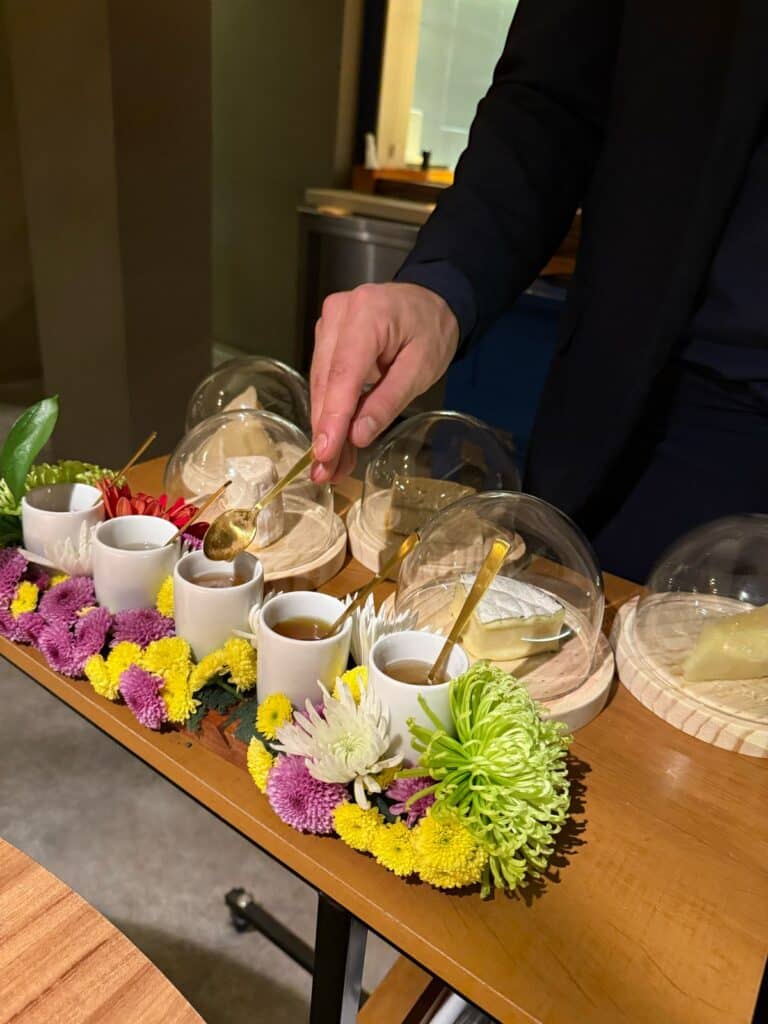
    After dinner, we were invited up to the rooftop for an elegant closing experience featuring a curated cheese selection and after-dinner drinks. With one side open to the São Paulo skyline, it was the perfect way to let the night linger.

    ### Seasonal Menu, Wine List & Chef Ivan Ralston
    Tuju offers a dynamic and evolving dining experience under the leadership of **Chef Ivan Ralston**. The restaurant’s menu is deeply influenced by the seasonal availability of local ingredients, ensuring that each visit provides a unique culinary journey.

    #### Seasonal Menu Changes
    Chef Ralston emphasizes the use of seasonal Brazilian products, particularly from the São Paulo region. The tasting menu is determined by the weather conditions of each season, allowing the restaurant to showcase the freshest ingredients. This approach highlights the diversity of Brazilian produce while ensuring constant innovation and sustainability in the menu.

    #### Wine List
    Tuju boasts an extensive wine list featuring over **5,000 labels**, including a selection of Brazilian varieties. This diverse collection is curated to complement the evolving menu, ensuring that each wine pairing enhances the dining experience. The inclusion of local wines allows guests to explore Brazil’s burgeoning wine industry alongside international classics.

    #### Chef Ivan Ralston
    Born in São Paulo in 1985, **Chef Ivan Ralston** comes from a family deeply connected to the culinary world. After initially studying music, he shifted his focus to gastronomy, training at esteemed institutions and working in renowned kitchens such as **El Celler de Can Roca** and **Mugaritz** in Spain, and **RyuGin** in Tokyo. In 2014, he returned to Brazil to open Tuju, where he combines his international experience with a passion for responsible sourcing.

    The restaurant features **in-house organic gardens cultivating over 200 species of unconventional edible plants**, many of which are used creatively in the dishes. Chef Ralston’s culinary philosophy honors the cosmopolitan nature of São Paulo, drawing influences from various cultures, including **Japanese, Italian, Spanish, and Jewish**, as well as regions across Brazil. This diverse inspiration is evident in Tuju’s menu, which evolves to reflect the seasons and the chef’s ongoing research into local ingredients.

    ### Tuju São Paulo’s Awards: Michelin Stars & Top Culinary Accolades
    Tuju’s reputation as one of São Paulo’s most prestigious fine dining destinations is well-earned. Its dedication to hospitality, sustainability, and innovation has led to multiple accolades:

    🏆 **Gin Mare Art of Hospitality Award (2024)** – Recognized by *Latin America’s 50 Best Restaurants* for outstanding service
    ⭐ **Two Michelin Stars (2024)** – Awarded in the *Michelin Guide Rio de Janeiro & São Paulo*, a testament to Tuju’s world-class culinary achievements
    🥇 **Brazil’s Best Restaurant (2024)** – Voted **Best Restaurant in Brazil** by the *World Culinary Awards*, further cementing its legacy

    ### Is Tuju São Paulo Worth It? Final Thoughts on This Michelin-Starred Restaurant
    Tuju delivered one of the most immersive, visually stunning, and well-curated dining experiences I’ve had. From the progressive journey across three levels to the artistic plating, innovative cocktails, and bold wine pairings, every detail was perfection.

    ⭐ **If you’re in São Paulo and want a next-level fine dining experience, Tuju is a must.**

  • Evvai São Paulo Review: Three Michelin Stars, Plenty of Personality

    Evvai São Paulo Review: Three Michelin Stars, Plenty of Personality

    Evvai São Paulo review cover featuring a cone-shaped course, an illustrated yellow menu card and the dining room.

    Updated October 24, 2026.

    Evvai is my favorite restaurant in the world. The food is a big part of that, but so is how much I enjoy being there.

    The kitchen takes its work seriously. The meal still makes room for a sense of humor, illustrated cards, unexpected ingredients and dishes I remember long after I have gone home. That combination is what keeps bringing me back to São Paulo.

    When I first published this review in March 2025, Evvai held two Michelin stars. It earned its third in the 2026 Michelin Guide. The practical information below is current as of this update; the food memories come from my earlier visits, not a claim that every dish is still on the menu.

    Evvai at a glance

    Where: Rua Joaquim Antunes 108, São Paulo, Brazil.

    Chef: Luiz Filipe Souza.

    Recognition: Three Michelin stars in the 2026 guide.

    Format: Oriundi tasting menu, with Brazilian and Italian influences.

    Current menu price: R$1,650 per person, checked October 24, 2026. Pairings and optional supplements are additional. Confirm any service charge and final total when booking.

    Reservations: Use the reservation link on Evvai’s official website.

    What Oriundi means at the table

    Evvai describes its cooking as Oriundi, drawing on Italian immigrant traditions and their relationship with Brazilian ingredients and producers. Under Luiz Filipe Souza, that gives the menu room to move between the two countries rather than stay inside a familiar definition of Italian food.

    For me, the interest is in how that idea becomes dinner. Pasta can arrive with ingredients I associate with Brazil. A familiar dish can look completely different. Something as simple-looking as an ice cream cone can become one of the bites I talk about most afterward.

    I want to understand what I am eating and why it has been put together that way. Evvai gives me plenty to ask about.

    The dishes I still think about

    One of the reasons I return is that the menu changes. These are highlights from meals I have already had, not a checklist of what a future reservation will include.

    Duck tortellini with eel and tucupi

    This remains one of the most memorable pasta courses I have eaten. Duck tortellini, eel and tucupi brought together the Italian and Brazilian sides of the restaurant in a way that made the idea of Oriundi very clear to me.

    It is the kind of course that stays in my head when I start planning the next trip.

    Green corn ice cream with Oscietra caviar

    A little ice cream cone topped with caviar is going to get my attention. The presentation made me smile, and the combination of sweet corn and caviar gave me a reason to keep thinking about it beyond the photograph.

    That playful side matters. There is a lot of technique behind the meal, but the experience never needs to become humorless.

    White moqueca and king crab

    The white moqueca with squid and heart of palm was another memorable example of a familiar idea presented differently. The appearance was unexpected, while the dish still connected with what I enjoy about Brazilian cooking.

    I also remember king crab with fresh coconut and caviar. Those dishes gave the meal variety without making it feel like a collection of unrelated demonstrations.

    Popcorn and ice cream

    Popcorn, ice cream and popping candy sound like they should belong to a very different kind of evening. At Evvai, the combination fit perfectly. The creamy dessert, popcorn and crackling candy made it fun to eat, not just interesting to look at.

    It is a good example of why this restaurant connects with me. I appreciate precision, but I also want to enjoy myself.

    The illustrated cards are part of the experience

    The course cards deserve their own mention because they add something I genuinely value to dinner.

    The team explains the food, and the illustrations carry that story further. Cards such as “Holy Crab!” and “Pasta La Vista, Baby…” give the courses personality before you even turn them over to read more about the ideas behind them.

    I have kept the cards from my visits. Looking through them brings back the food and the conversations, rather than leaving me with a collection of photographs I have to struggle to identify.

    In my earlier review, I also wrote about a Pantone-style card for a pupunha dish and the Campbell’s soup-style illustration accompanying bean soup with cotechino. The visual references are part of what made those meals feel distinctive. I would not assume the same card format or dishes will be used on every return.

    Precise service, without taking the fun out of dinner

    I have described the kitchen’s coordination as military precision. You hear a call from the person leading the brigade and the response from the team. Watching and hearing that organization is part of the experience.

    At the table, the explanations give the dishes context. I enjoy the chance to learn about ingredients and the thinking behind a course instead of being left to admire the plate and guess.

    What I especially like is that the professionalism leaves room for personality. The cards, the playful dishes and the interaction make the meal feel welcoming rather than intimidating.

    I have compared Evvai’s spirit to David Bowie’s willingness to experiment and Warhol’s relationship with pop culture. Those are my comparisons, not claims about the chef’s stated influences. The restaurant feels ambitious and willing to have some fun with tradition, which is a large part of its appeal to me.

    What the current menu costs

    The official menu currently lists the tasting experience at R$1,650 per person. That is the published menu price, not the amount I am claiming to have paid for an earlier visit and not an all-inclusive bill.

    The current drinks options include Euforia, a nonalcoholic pairing, at an additional R$561; Sintonia at R$1,159; and Magna at R$2,259. Optional food supplements cost extra as well. Check the current menu and confirm service charges before deciding on the full evening.

    I would choose drinks according to what I actually want to enjoy that night. A full wine pairing plus cocktails is not a requirement for getting the most out of the meal. Ask about the current choices, decide how much you want to drink, and give yourself room to enjoy the food.

    The menu evolves, so I would also avoid booking around a fixed course count or a photograph of one particular dish. Ask about dietary needs in advance rather than assume every course can be changed.

    Is Evvai worth building a dinner around?

    For me, absolutely. It is a place I look forward to returning to because the meal combines food I remember, service I appreciate and an atmosphere I enjoy.

    It is an expensive dinner, especially once drinks and supplements are added. The reason I recommend it is the experience I have had there, not the number of stars beside its name. If you enjoy tasting menus, learning about ingredients and seeing a kitchen give its food a personality, it belongs on your São Paulo shortlist.

    I already have another visit planned for November 2026. I will update my food impressions after that meal rather than pretend I have tasted the current menu in advance.

    For the more personal story behind that attachment, read why Evvai is my favorite restaurant in the world. To build the rest of the trip, start with my São Paulo hotel, dining and travel guide.

    Completely Unnecessary. Absolutely Worth It.
  • North America’s 50 Best Restaurants: A New Culinary Benchmark for 2025

    The World’s 50 Best Restaurants organization, known for its prestigious global rankings, is launching an exciting new initiative—the inaugural North America’s 50 Best Restaurants list in 2025. This highly anticipated ranking will highlight the top dining establishments across the United States, Canada, and the Caribbean, celebrating the region’s diverse culinary excellence.

    Why This List Matters

    For years, The World’s 50 Best Restaurants list has influenced global dining trends, recognizing innovative chefs and top-tier restaurants. Now, with a dedicated North American ranking, the region’s rich and evolving food scene will be put on a global stage.

    What This Means for the Culinary World

    ✔ Spotlighting the Best in North American Cuisine – From Michelin-starred fine dining in Quebec to farm-to-table restaurants in California and bold Caribbean flavors, this list will celebrate regional culinary diversity.
    ✔ Global Recognition for North American Chefs – The list will elevate chefs and restaurants, giving them international exposure.
    ✔ Curated by Industry Experts – The rankings will be determined by a panel of 300 independent restaurant experts, ensuring credibility and diversity.

    What to Expect from the 2025 Ranking

    🔹 Live Awards Ceremony – The first-ever North America’s 50 Best Restaurants list will be revealed at a prestigious awards event later this year.
    🔹 Diverse Culinary Representation – The list will feature a mix of Michelin-starred fine dining, hidden gems, and pioneering culinary innovators.
    🔹 A Must-Read Guide for Food Enthusiasts – This ranking will become an essential culinary roadmap for travelers, critics, and passionate food lovers.

    With North America’s fast-growing influence on the global food scene, this ranking will be a game-changer for restaurants, chefs, and food lovers alike.

    North America’s Culinary Scene Finally Gets Its Due

    With its thriving culinary landscape, the U.S., Canada, and the Caribbean are home to some of the world’s most dynamic food cultures. This list will celebrate the best and most exciting dining experiences across the region, ensuring that North America gets the recognition it deserves.

    🍽 Which restaurants do you think will make the list? Stay tuned for the official announcement and prepare to explore North America’s finest dining destinations!

    📍 For more details, visit: The World’s 50 Best Restaurants

  • Michelin-Star Dining: A Global Guide for the Discerning Traveler

    A Guide to Michelin-Star Dining for the Discerning Traveler

    For high-net-worth individuals and passionate gourmands, dining isn’t just about food—it’s about theater, storytelling, exclusivity, and artistry. In the world of Michelin-starred restaurants, meals become experiences that stir the soul as much as they satisfy the palate.

    This guide is curated for the discerning traveler who views fine dining as a cultural and sensory pursuit—where every course tells a story, and every reservation marks a memory.

    What Michelin Stars Actually Mean

    Michelin awards stars based on five main criteria:

    1. Quality of the ingredients
    2. Mastery of flavor and cooking techniques
    3. Personality of the chef in the cuisine
    4. Value for money
    5. Consistency across visits
    • 1 Star = A very good restaurant in its category
    • 2 Stars = Excellent cooking, worth a detour
    • 3 Stars = Exceptional cuisine, worth a special journey

    Understanding this framework helps travelers set expectations and appreciate the unique artistry behind each experience.

    Global Destinations Worth the Journey

    For elite diners who travel to eat, here are a few destinations that consistently deliver:

    • Tokyo, Japan – Home to the most Michelin stars in the world; a perfect mix of tradition and innovation.
    • San Sebastián, Spain – A gastronomic playground with the highest concentration of Michelin stars per capita.
    • Paris, France – The birthplace of haute cuisine; elegance and history served on every plate.
    • New York City, USA – Diversity and creativity define its Michelin map.
    • São Paulo, Brazil – A rising star in fine dining with a strong blend of local ingredients and global techniques.
    • Copenhagen, Denmark – The epicenter of New Nordic cuisine, with restaurants like Noma leading culinary innovation.
    • Bangkok, Thailand – A growing culinary capital blending tradition and creativity.
    • Dubai, UAE – Rapidly ascending in the fine dining world, offering multicultural Michelin experiences.

    Booking the Best: Insider Tips

    • Plan Early: Some 3-star restaurants open bookings 3–6 months in advance.
    • Use a Luxury Concierge: Amex Platinum, Centurion, or Black Card services can unlock “fully booked” tables.
    • Stay in Partner Hotels: Luxury hotels often have priority access for guests.
    • Leverage Chefs’ Networks: A sommelier or chef friend can sometimes open doors.
    • Use Apps Like Tock or Resy: Many Michelin-starred spots now use tech-forward booking systems.

    Not Just Dinner: The Full Experience

    Top-tier restaurants now offer more than just meals:

    • Kitchen Tours & Chef Meet-and-Greets
    • Wine Cellar Tastings with head sommeliers
    • Immersive Storytelling Menus that evolve seasonally or around global themes
    • Culinary Retreats: Weekend programs where guests cook, dine, and engage with chefs
    • Restaurant-Branded Suites: Some restaurants now have exclusive hotel rooms for a full immersion

    Many also partner with art galleries, wineries, or boutique hotels to create multi-day culinary journeys.

    Signature Michelin Experiences Worth Chasing

    • Osteria Francescana (Modena, Italy): Chef Massimo Bottura’s artful blend of nostalgia and avant-garde.
    • Evvai (São Paulo, Brazil): Italian-Brazilian fusion with flair, by Chef Luiz Filipe Souza.
    • Eleven Madison Park (New York, USA): A plant-based reinvention of fine dining with theatrical flair.
    • Sukiyabashi Jiro (Tokyo, Japan): The legendary sushi temple with unmatched technique.
    • Central (Lima, Peru): Elevation-focused Peruvian cuisine connecting nature and plate.
    • Noma (Copenhagen, Denmark): Innovation at its finest, often topping World’s 50 Best.
    • Mirazur (Menton, France): Chef Mauro Colagreco’s Mediterranean masterpiece.
    • Gaggan Anand (Bangkok, Thailand): Progressive Indian cuisine with emotion and performance.
    • Atelier Crenn (San Francisco, USA): Poetic, artistic tasting menus by Chef Dominique Crenn.

    How to Dine Like a Global Insider

    • Don’t Just Order à la Carte: Always go with the tasting menu—it’s the chef’s vision.
    • Let the Sommelier Guide You: From rare vintages to unexpected pairings, trust the expert.
    • Dress Accordingly: Most Michelin-starred restaurants expect smart attire, even if not strictly formal.
    • Be Present: These are meals that deserve full attention—put the phone down, savor, and engage.
    • Request the Chef’s Counter: For a front-row seat to culinary magic.
    • Engage with the Staff: Great dining is elevated through dialogue and curiosity.
    • Note Food Allergies or Preferences in Advance: Michelin chefs are meticulous planners.

    Michelin Dining and the Rise of Culinary Tourism

    Culinary tourism is booming—more HNWIs are designing their travel plans around food. In this trend:

    • Restaurants become destinations.
    • Dining becomes the central event, not a side attraction.
    • Travelers stay longer in culinary cities to enjoy multiple experiences.

    Luxury travel companies now offer “Michelin Itineraries” that include curated reservations, chef meetups, and wine-pairing excursions. These elevated food journeys blur the line between nourishment and narrative.

    Beyond the Stars: Other Guides That Matter

    While the Michelin Guide is the gold standard, savvy diners also follow:

    • World’s 50 Best Restaurants
    • La Liste
    • Gault & Millau
    • Opinionated About Dining (OAD)

    Combining sources helps form a complete picture of culinary excellence, especially in regions where Michelin’s coverage is limited.

    Final Thoughts: Dining as Art & Memory

    For the discerning traveler, dining at a Michelin-starred restaurant isn’t about indulgence—it’s about immersion. It’s about celebrating mastery, connecting with culture, and tasting the extraordinary.

    Each restaurant is a stage, each course a performance, and each chef an artist telling their story in flavors, textures, and plating.

    When food becomes art, and dinner becomes theater, it leaves a mark far deeper than a social media post—it becomes part of your story.

    Bon appétit.

  • F1 2025 Season Kicks Off: What to Expect from the Australian & Chinese Grands Prix

    by Richard Jarocki

    The Next Two Stops in the 2025 Formula 1 Season: Australia & China

    The 2025 Formula 1 season is set for a thrilling start, with two high-stakes races that will shape the early championship battle. The action begins in Melbourne at the Australian Grand Prix before shifting to Shanghai for the return of the Chinese Grand Prix. Here’s what to expect from these pivotal races.

    Australian Grand Prix (March 16, 2025 – Albert Park Circuit)

    For the first time since 2019, the Australian Grand Prix kicks off the season, setting the stage for intense competition. The Albert Park Circuit in Melbourne blends street-circuit characteristics with fast, flowing corners, demanding precision from drivers.

    Key Storylines:

    • Lewis Hamilton’s Ferrari Debut – The seven-time world champion begins a new chapter with Ferrari. Can he challenge Max Verstappen and stake his claim early?
    • Early Season Pecking Order – With all teams unveiling their 2025 cars in a race setting for the first time, who will emerge as the frontrunner?
    • Oscar Piastri’s Home Race – McLaren’s rising star will be eager to impress in front of an Australian crowd. Can he deliver a standout performance?

    Chinese Grand Prix (March 23, 2025 – Shanghai International Circuit)

    After several years off the calendar, the Chinese Grand Prix makes a long-awaited return. The Shanghai International Circuit, with its mix of long straights and tight technical sections, will test car performance and strategy alike.

    What to Watch:

    • Ferrari vs. Red Bull vs. Mercedes – Will Red Bull maintain its dominance, or will Ferrari and Mercedes close the gap?
    • Shanghai’s Unique Challenges – The track’s sweeping Turn 1-2 complex and long back straight leading into a heavy braking zone provide prime overtaking opportunities.
    • Tire Wear & Strategy – Known for its abrasive surface, Shanghai often pushes teams to make crucial tire management decisions.

    Why These Races Matter

    These first two Grands Prix will set the tone for the season, providing the first real indications of car performance, team strategies, and title contenders. With Hamilton’s move to Ferrari and the return of Shanghai to the calendar, expect surprises, rivalries, and intense competition from the start.

    Who do you think will take the first two victories of 2025? Share your predictions!

  • Nelita São Paulo Review of a Meal Worth Remembering

    Nelita São Paulo Review of a Meal Worth Remembering

    Nelita São Paulo review cover featuring a pasta dish from Richard Jarocki’s meal and his logo.

    My January 2025 meal at Nelita São Paulo was one of the best I’ve had in the city. I sat at the counter directly in front of the kitchen, watching chef Tássia Magalhães and her team work. The food gave me plenty to remember. So did the people behind it.

    Tássia is exceptionally talented, yet she is also one of the most humble and warm chefs I’ve met. Her love of cooking and flavor came through in the meal. Sommelier Danyel Steinle brought the same care to the wine pairings, making the food even more enjoyable.

    That connection between kitchen, wine and hospitality is what makes me want to return.

    Visit: January 2025. Updated October 2026. The dishes below describe my visit; awards and practical information have been checked separately for this update.

    My seat at the Nelita São Paulo kitchen counter

    Nelita São Paulo  Small bites arranged on serving boards as a cook works at the Nelita kitchen counter.
    A view of the kitchen at work from my counter seat at Nelita, January 2025.

    The counter was a big part of the experience. Being directly in front of the kitchen let me see the work going into the dishes as the evening unfolded. I could appreciate the food and the people making it at the same time.

    Nelita felt cozy and refined. Tássia’s warmth made it easy to feel comfortable, and watching the kitchen added another reason to pay attention. It is a seat I would ask for again.

    The restaurant is in Pinheiros, a neighborhood with plenty of reasons to plan an evening around dinner. For more of the places I’ve personally eaten, my São Paulo restaurant guide puts Nelita alongside other meals that have stayed with me.

    Tássia Magalhães and the food I remember

    The Italian influence was clear in the pasta and other dishes, while Brazilian ingredients gave the meal its own character. Nelita’s own description of the kitchen connects that approach to Tássia’s roots in Guaratinguetá, in the Vale do Paraíba, and to the memories and ingredients of the region.

    These are the dishes I remember from my meal at Nelita São Paulo. They are a record of that evening, rather than a promise of what will be on the menu when you visit.

    Pão de queijo gougère

    The pão de queijo gougère introduced the restaurant’s personality early. It was a memorable way to bring a Brazilian reference into the meal, and it belongs among the details I still associate with Nelita.

    Pumpkin cappelletti and eggplant ravioli

    Pumpkin cappelletti and ravioli with eggplant and smoked tomato were two of the pasta dishes that stayed with me. There was comfort in those combinations, with the precision I want from a restaurant cooking at this level. The pasta was an important part of what made the meal so satisfying.

    Beef tongue with polenta and passionfruit sorbet

    Beef tongue with polenta gave me another dish to remember beyond the pasta. The passionfruit sorbet brought a welcome freshness to the meal. Together with the earlier courses, these are the flavors and combinations I think of when someone asks me about Nelita.

    Danyel Steinle and the wine pairings

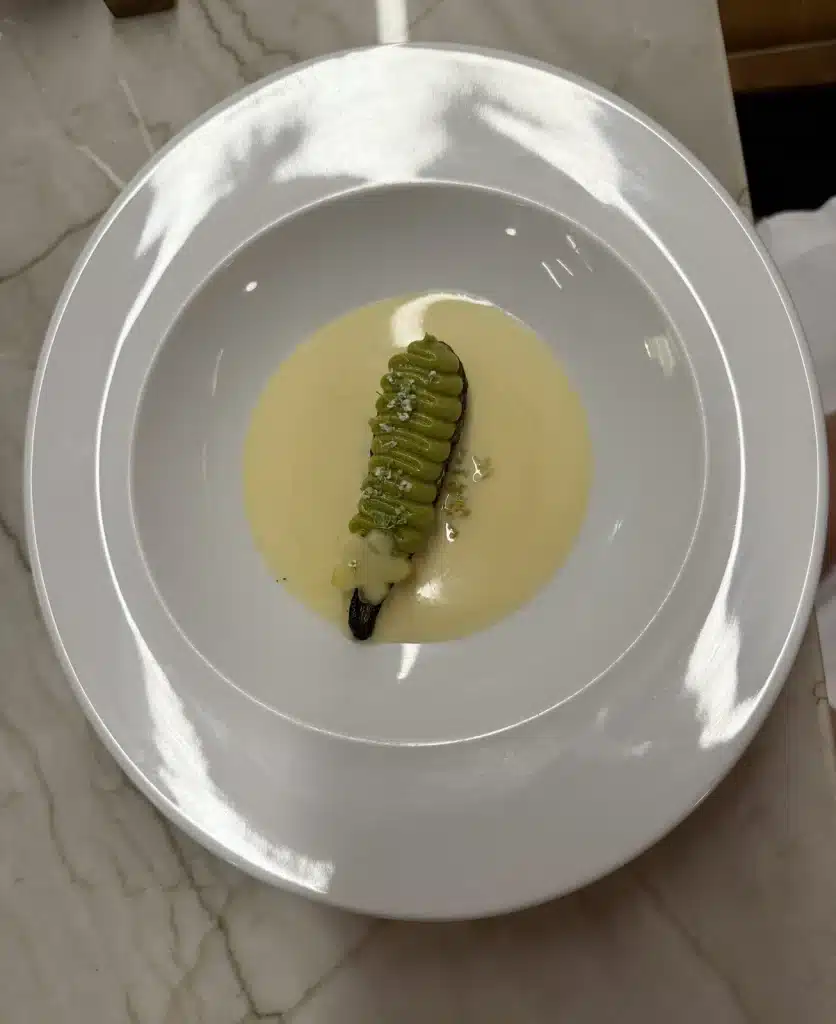
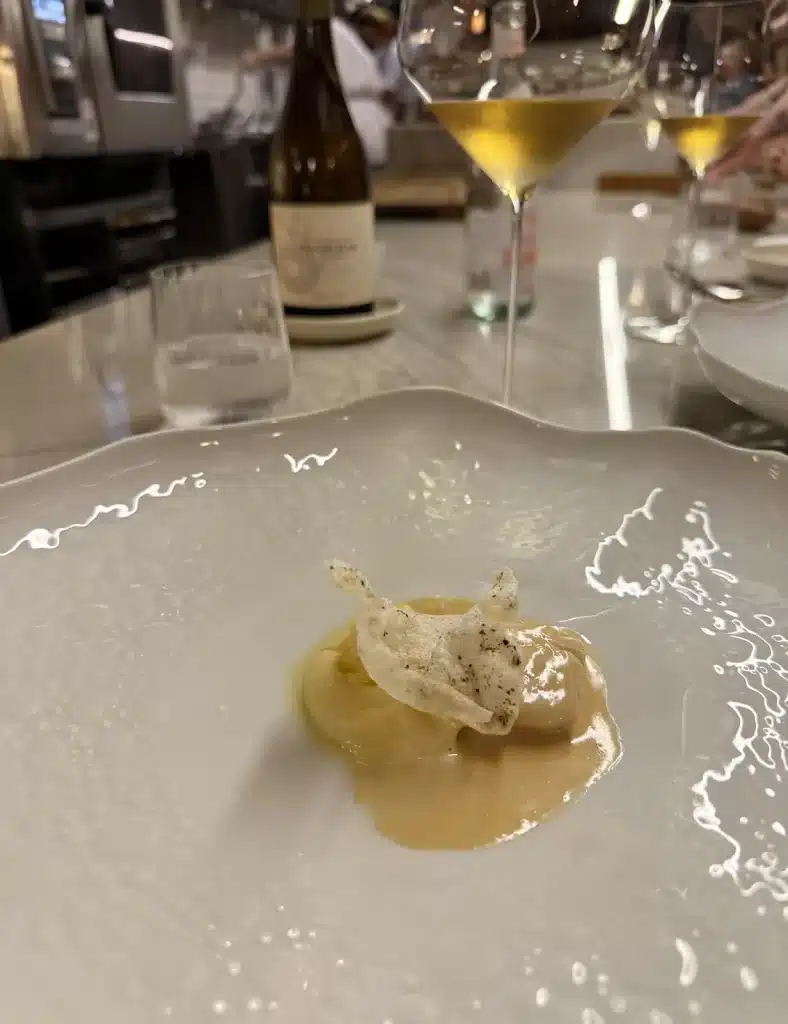
    Nelita São Paulo A plated course in pale sauce with a crisp garnish, with white wine and a bottle behind it at Nelita.
    Food and wine together at the Nelita counter, January 2025.

    The wines deserve real space in this review. Danyel, Tássia’s partner in the restaurant and now her husband, was an essential part of what made the evening work.

    I loved seeing the connection between them. Their teamwork carried through to the pairings: the wines brought more out of the food and made an already excellent meal feel more complete. The attention given to the glass matched the attention given to the plate.

    That is what I want from a pairing. I want to enjoy the wine, of course, but I also want it to help me appreciate the dish. At Nelita São Paulo, the two belonged together, and Danyel’s contribution deserves as much attention as the cooking.

    The recognition since my visit

    The awards Tássia, Danyel and their restaurants have received since my January 2025 visit feel thoroughly deserved.

    Tássia was named Latin America’s Best Female Chef 2025 and Chef of the Year at Prazeres da Mesa’s 2026 awards. Nelita reached No. 12 on Latin America’s 50 Best Restaurants list for 2025.

    In the 2026 VEJA SÃO PAULO COMER & BEBER awards, Nelita won Best Italian Restaurant and Danyel was named Sommelier of the Year. Their wine bar, Lita, also won Best Wine Bar in the same edition.

    I’m happy to see their work recognized. My enthusiasm started with the meal itself, and the awards give me another reason to look forward to seeing what they do next.

    Why Lita is on my list for November

    When I return to São Paulo in November 2026, I also want to visit Lita, Tássia and Danyel’s wine bar across the street. It opened in September 2025, after my Nelita visit.

    I haven’t been yet. After experiencing their cooking, wine pairings and teamwork at Nelita, I’m curious to see how that partnership translates to a wine bar. It is one more place to fit into a trip that already has plenty of meals I’m looking forward to.

    Planning a meal at Nelita São Paulo

    Nelita is at Rua Ferreira de Araújo, 330, in Pinheiros. The restaurant says tasting-menu visits require a reservation. Use Nelita’s official website for the current menu and booking options, and ask about counter seating if you want the perspective I enjoyed.

    Confirm the available menu, pairing options, price and cancellation terms before booking. My January 2025 dishes are memories of that visit, and menus can change.

    If you’re building a longer trip, my São Paulo travel guide covers the wider city. For two other very different tasting-menu experiences, read my Evvai and Tuju comparison.

    Would I return to Nelita

    Absolutely. I remember the food, the counter and the way Tássia and Danyel worked together to make the evening feel complete. Tássia’s warmth and humility stayed with me just as clearly as her talent.

    Nelita gave me one of my best meals in São Paulo. I would happily go back for the cooking and the wine pairings, and for another chance to sit in front of that kitchen.