Visits: Evvai in November 2024; Tuju in January 2025. Originally published March 23, 2025. Menus and prices below reflect those visits, not current offerings.
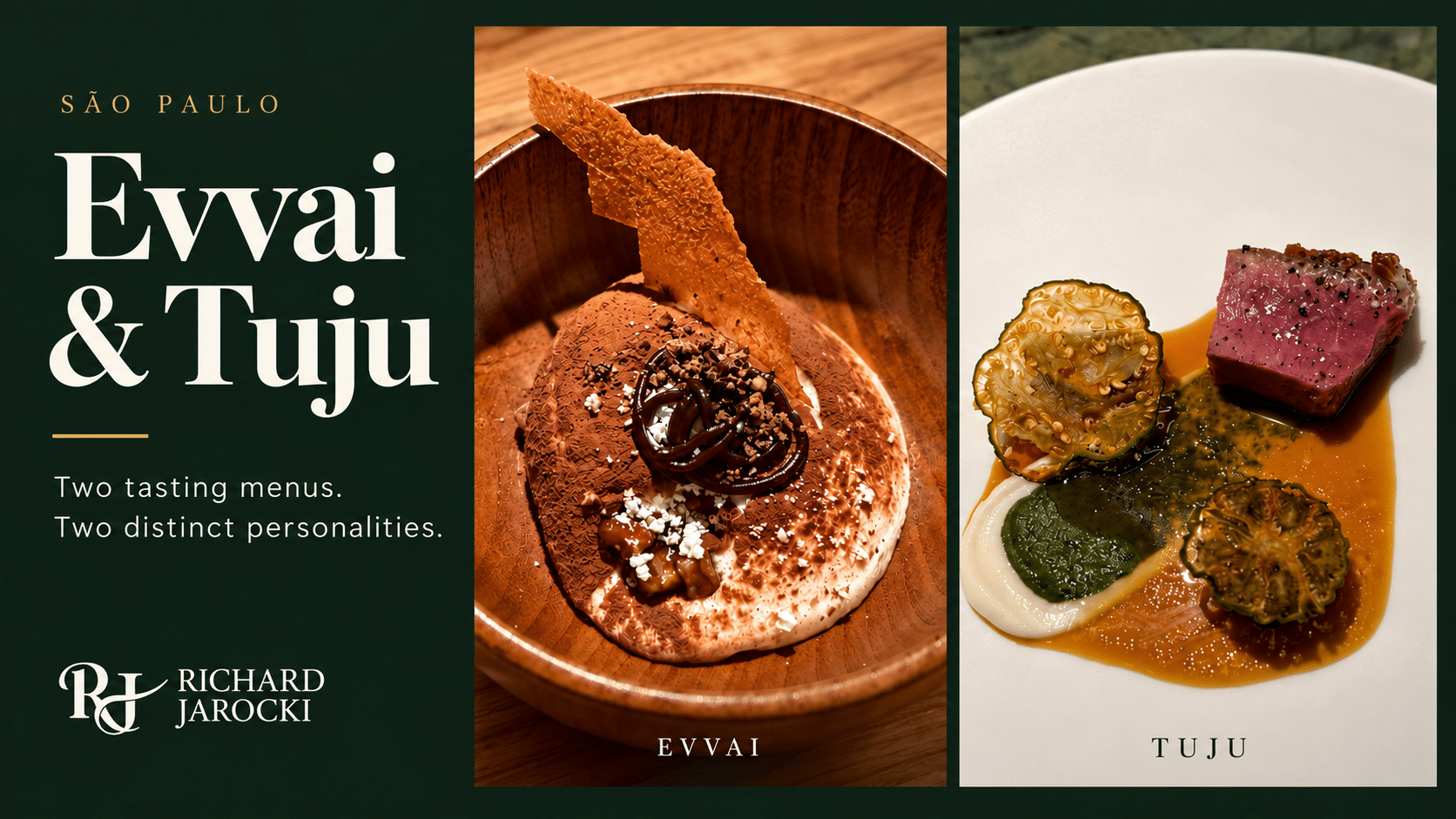
Evvai and Tuju gave me two of the finest dining experiences I’ve ever had in São Paulo. Both delivered the ambition and creativity I look for in a tasting menu, but they left very different impressions.
Tuju felt like a temple of high-end gastronomy: precise, sleek, and driven by experimentation. Evvai brought just as much refinement, with a dose of punk rock energy that connected with me on a more personal level.
I slightly preferred Evvai. The difference wasn’t simply what arrived on the plate. It was the personality of the experience.
Evvai and Tuju at a Glance
| Evvai | Tuju | |
|---|---|---|
| Location | São Paulo, Brazil | São Paulo, Brazil |
| Visit date | November 2024 | January 2025 |
| Chef | Luiz Filipe Souza | Ivan Ralston |
| Menu discussed | Oriundi, OR242 | Rain Season |
| Culinary approach | Italian traditions and Brazilian influences | Brazilian ingredients and seasonal experimentation |
| Historical menu price | R$895; Japanese A5 Wagyu alternative +R$125 | R$1,100 plus 15% service |
| My impression | Refined, playful, rebellious | Precise, sleek, luxurious |
| My preference | A slight edge for its personality | An exceptional experience in its own right |
Evvai: Italian Heritage, Brazilian Ingredients
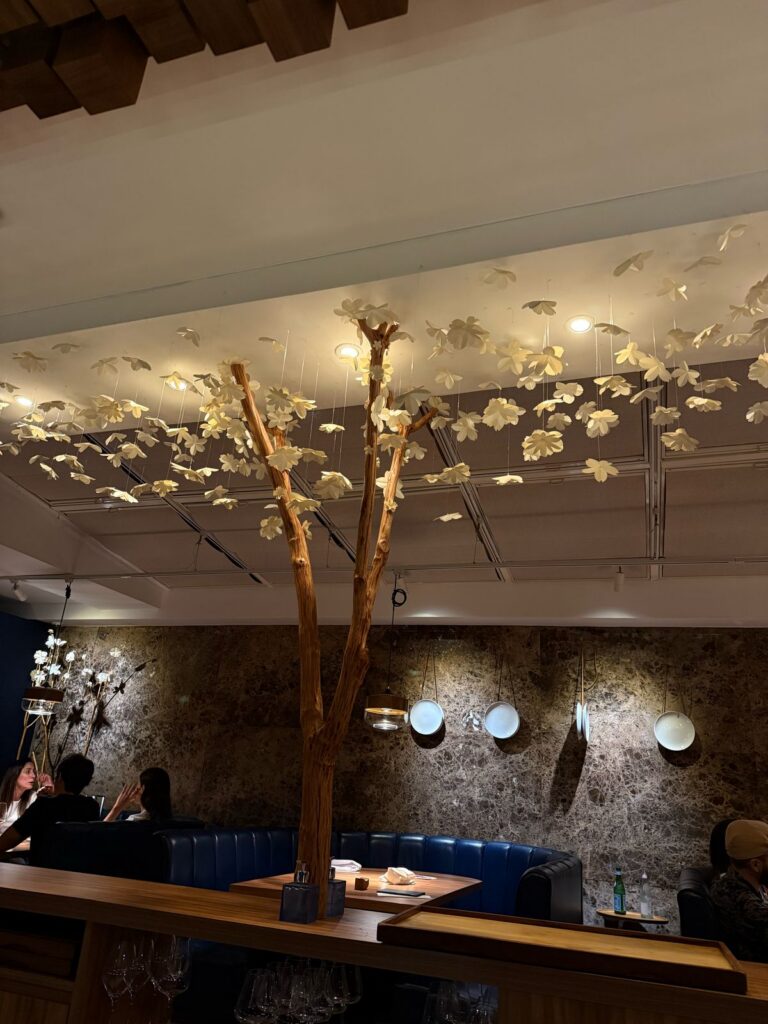
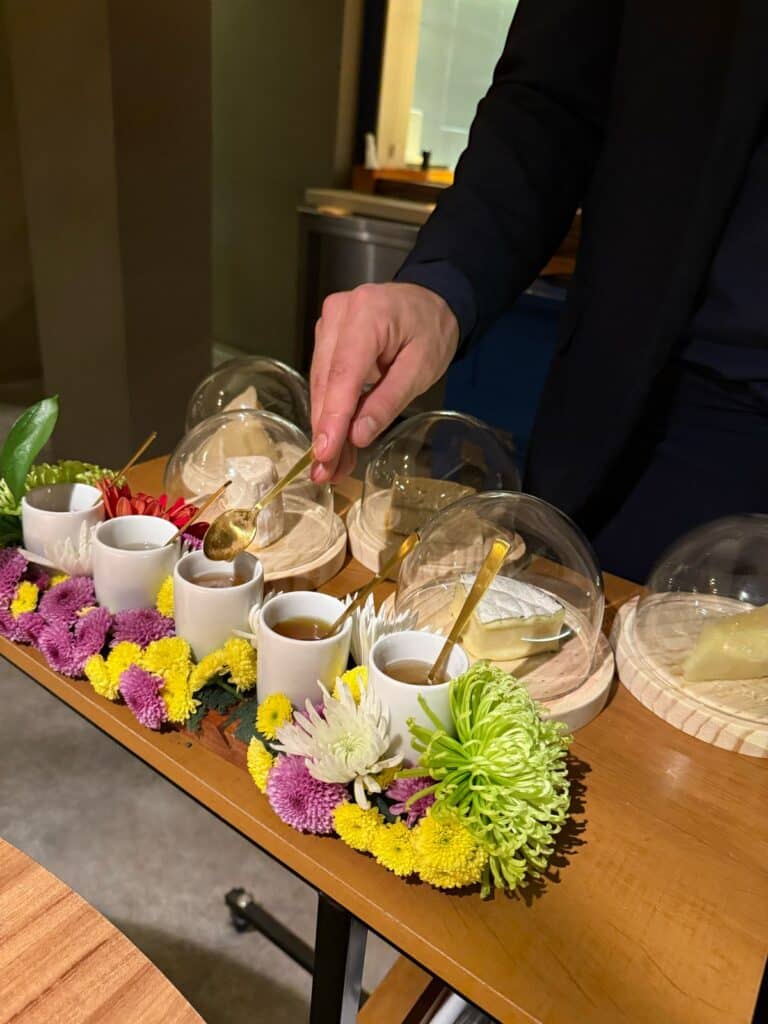
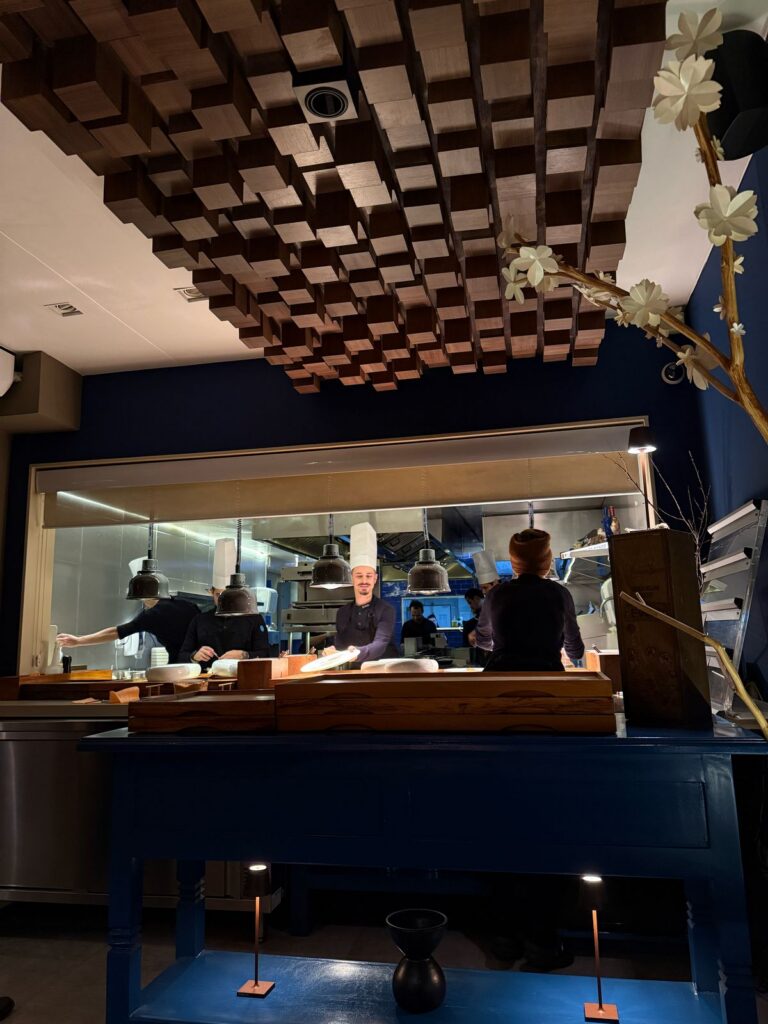
At Evvai, Chef Luiz Filipe Souza brings Italian traditions and Brazilian influences together through his Oriundi cuisine. The connection to immigrant heritage gives the menu a point of view beyond simply combining ingredients from two countries.
During my November 2024 visit, the OR242 menu moved through bread, seafood, meat, pasta-inspired preparations, and desserts. Heart of palm became tagliatelle. Cotechino met black bean broth. Corn, vanilla, and caviar shared a course.
Those combinations reflect what I enjoyed about Evvai: respect for tradition, with a willingness to reshape it. The experience was elegant and contemporary, but there was room for storytelling and playfulness.
For more on my connection to the restaurant, read why Evvai is my favorite restaurant in the world.
Evvai’s November 2024 Menu
These are the dishes recorded in my original account, rather than a current menu or a ranking of my favorite courses:
- Melon, Puxuri & Chickpea
- Manioc Bread & Cheese Selection — my notes mention cheeses from Marajó Island, polvilho biscuit, and Grana Padano whey.
- Pupunha Heart of Palm Tagliatelle & Bottarga
- Fish of the Day with BORI Special Urucum & Pancetta
- Xinxin Chicken & Marsala
- Cotechino with Black Bean Broth & Goat Pepper
- Green Corn & Cerrado Vanilla with Oscietra Caviar
- Yellow Fruits, Soursop & Manduri Honey
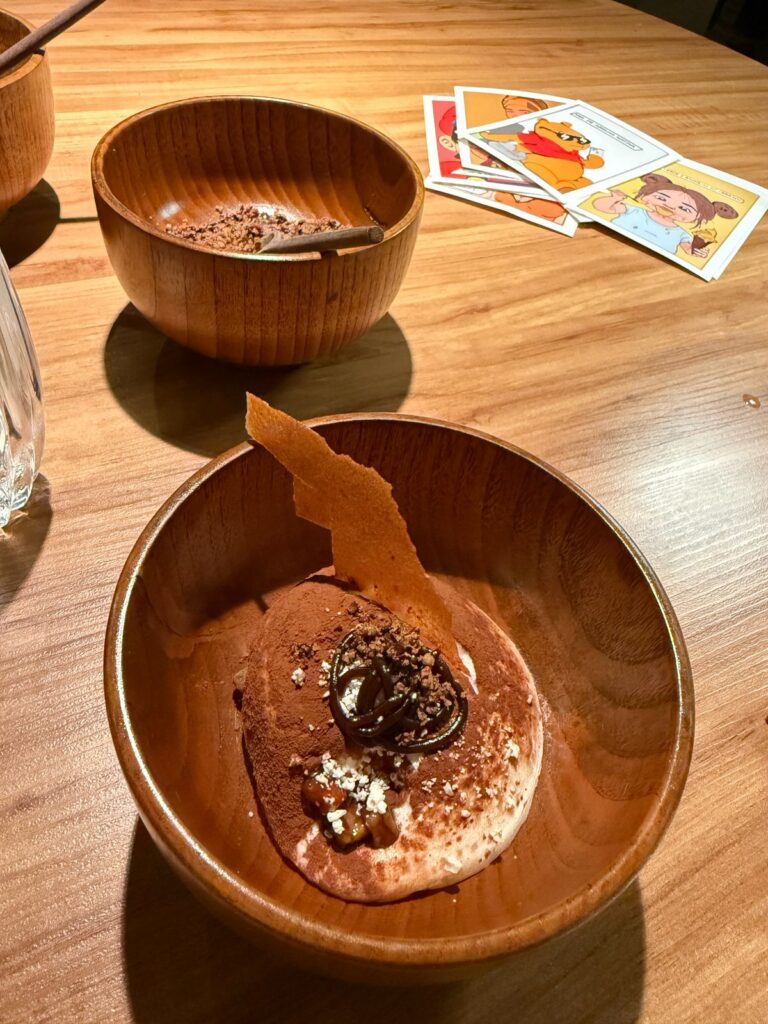
- Rebel, Rebel Tiramisu
- Mignardises
The photographed OR242 menu also includes a Wagyu bresaola preparation with smoked tea. One ingredient in that line is obscured by glare, so this is a partial description rather than an exact transcription.
The menu was priced at R$895, with Japanese A5 Wagyu, manioc, and wild mustard offered as an alternative to the chicken course for an additional R$125. A separate cheese and melipona honey selection was listed at R$79. These are historical menu prices, not current prices or a record of which supplements I ordered.
Tuju: Precision and Brazilian Biodiversity
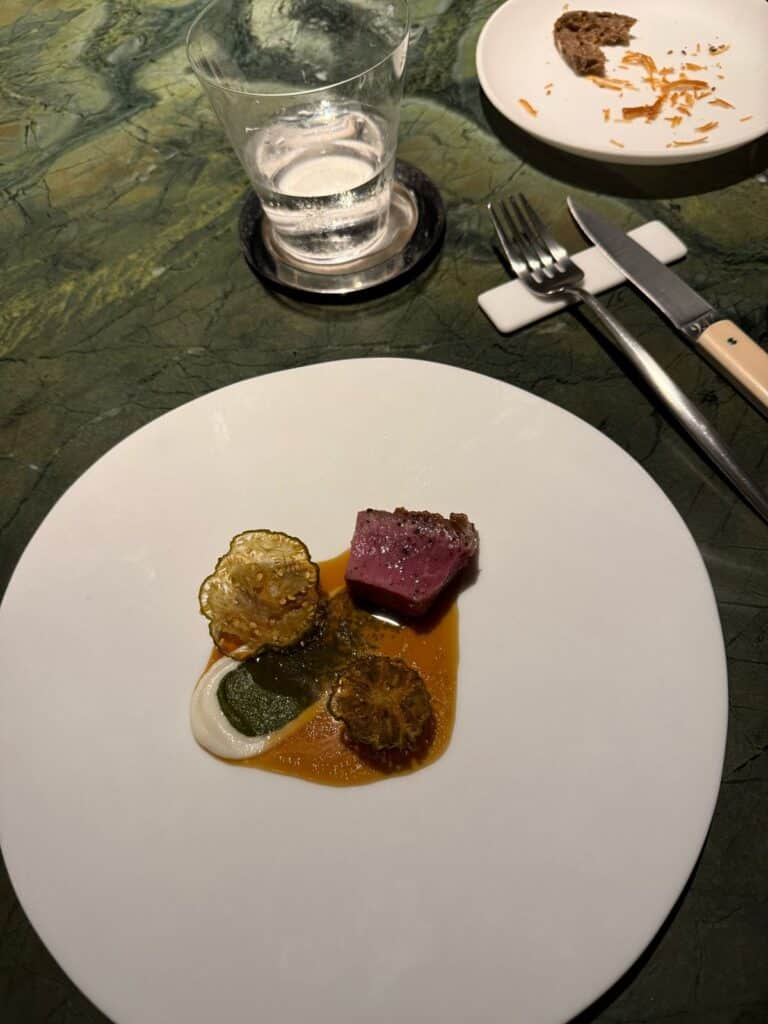
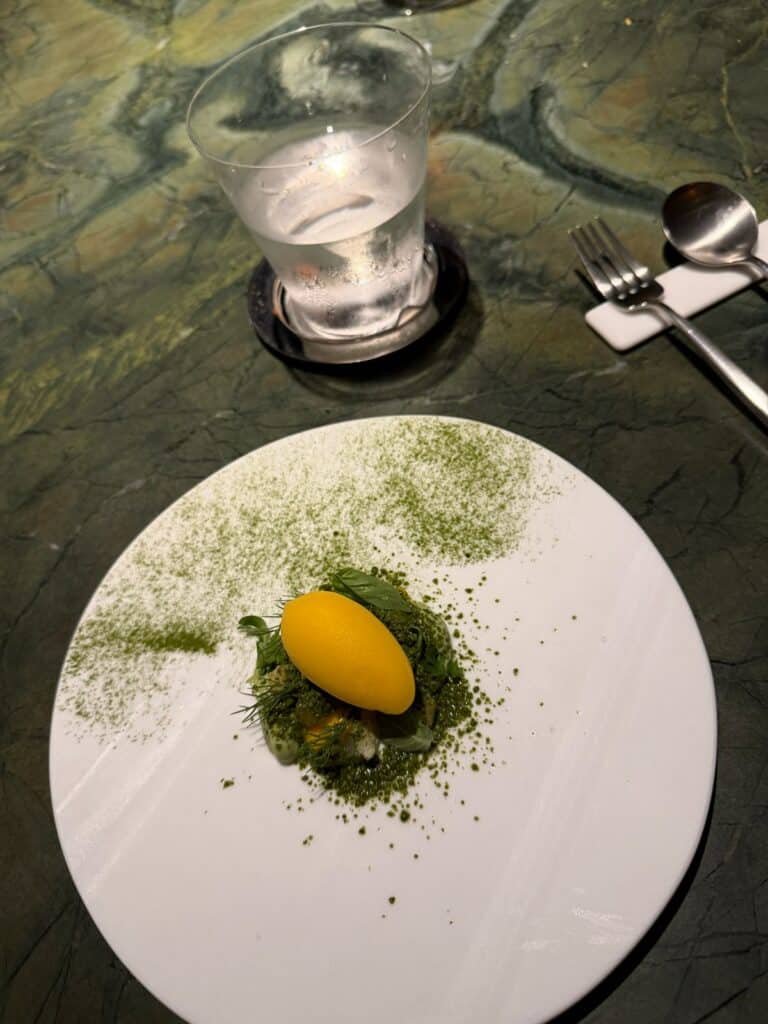
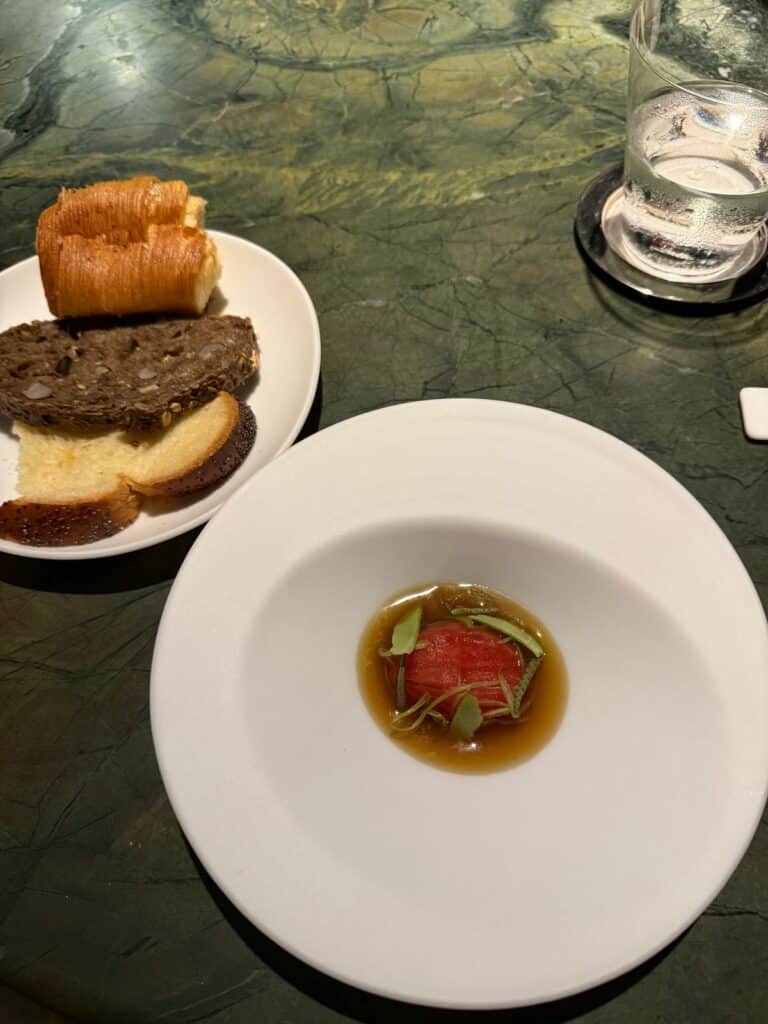
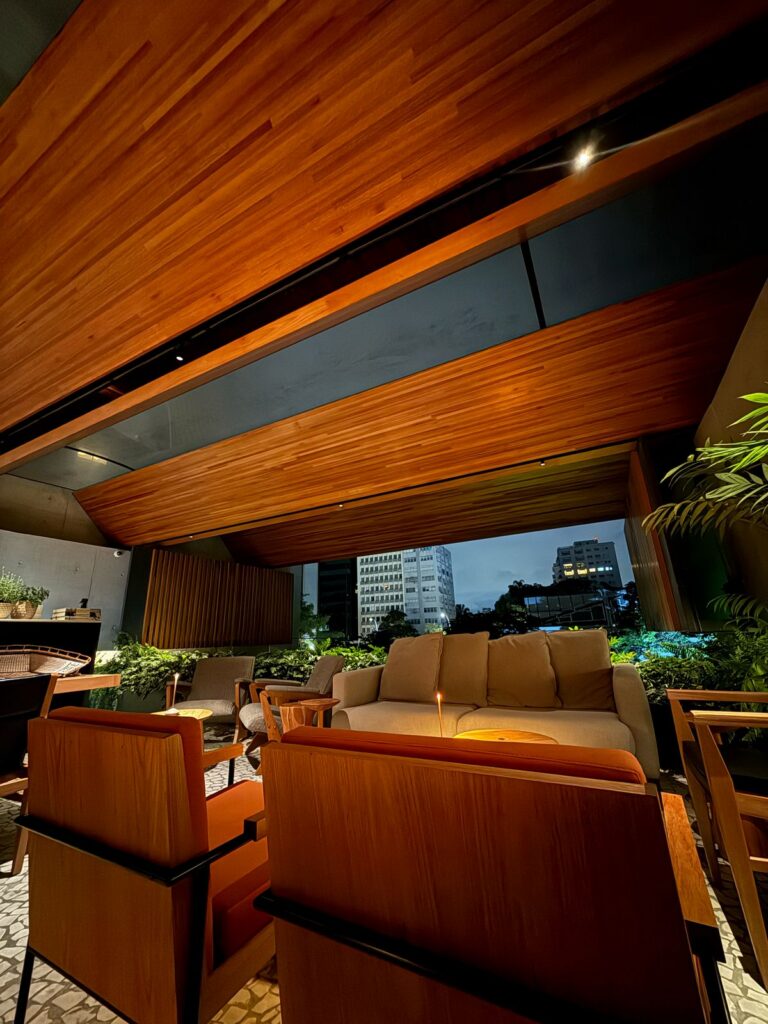
Chef Ivan Ralston’s Tuju offered a different expression of São Paulo dining. During my January 2025 visit, the Rain Season menu centered on Brazilian ingredients, with combinations that ranged from oyster and watermelon to lamb with scarlet eggplant and watercress.
What stayed with me was the sense of precision and experimentation. I described the chef as a mad scientist in my original account, and I meant it with respect: someone constantly exploring what technique and ingredients can do together.
The restaurant itself felt upscale, sleek, and luxurious. That setting suited the food and the overall impression of carefully controlled, ambitious cooking.
Tuju’s January 2025 Rain Season Menu
- Oyster with Watermelon & Cucurbitaceae
- Yellowtail with Cambuci, Turnip & Seaweed
- Crab with Corn & Avocado — the photographed menu offers an optional 10 g caviar supplement for R$450; it does not specify the caviar variety, and yes I ordered it.
- Pumpkin with Palm Heart & White Curry
- Tomato with Eggplant & Yuzu
- Squid with Caruncho Pork & Shell Jus Gras
- Fish of the Day with Fragrant-Pepper Pil Pil & Asparagus Bean
- Lamb with Scarlet Eggplant & Watercress
- Mango with Pesto & Mate
- Cocoa with Cardamom & Baru Nut
Historical Tuju Menu Prices
The photographed Rain Season menu lists R$1,100 plus a 15% service charge. That makes the menu alone R$1,265 with the stated service charge, before drinks or supplements.
The listed pairing options were:
- Discoveries wine pairing: R$790
- Classics wine pairing: R$1,790
- Non-alcoholic pairing: R$420
I added the R$450 caviar supplement to the crab course. The pairing prices above show the options available at the time; they aren’t a record of my drinks order. The menu photograph doesn’t make clear how the 15% service charge applied to drinks or supplements.
Seasonality and Sourcing
Tuju’s attention to seasonality is part of its identity. Michelin’s current description explains that the restaurant’s tasting menus follow climatic seasons and that its sourcing includes small-scale producers, particularly in São Paulo state.
That gives more concrete context to the restaurant’s approach than the broad sustainability language in my original article. For current restaurant details, see Tuju in the Michelin Guide.
Evvai vs. Tuju: Why Evvai Had the Edge for Me
Both restaurants gave me some of the finest dining experiences I’ve had. Having a favorite doesn’t take anything away from the other.
Tuju delivered the kind of luxury I’ve always enjoyed: precise cooking, experimentation and a polished setting. I admired the focus behind the food and the care that went into the experience.
Evvai had that same ambition, with a rebellious streak that connected with me. Its personality reminded me of David Bowie’s willingness to experiment and Andy Warhol’s embrace of pop culture. The illustrated course cards, the storytelling and the playful presentations made the meal feel personal and fun.
That gave Evvai the edge for me. I’ve always liked the idea of respecting tradition while questioning how things should be done. Fine dining can take the food seriously and still have a sense of humor. Evvai made that part of the experience.
Evvai and Tuju: Which Would I Choose Again?
If I had to choose one based on these experiences, I would choose Evvai, by a small margin. Its playful, rebellious personality was the deciding factor.
For someone drawn to a sleek setting and cooking that emphasizes precision and experimentation, Tuju would be a compelling choice. I have immense respect for both chefs and their different approaches.
The photographed menus list R$895 at Evvai and R$1,100 at Tuju, a R$205 difference before Tuju’s stated 15% service charge. Evvai’s photographed menu does not state its service charge, so these are base-menu comparisons, not final-bill comparisons. Without the full bills and beverage choices, I won’t claim one delivered better value for money. My preference here is about the dining experience and how each restaurant made its personality felt.
Both gave me more reasons to keep exploring São Paulo through its restaurants.