Category: Michelin Stars

Michelin stars get my attention, but the meal still has to deliver. Here I share firsthand experiences at Michelin-starred restaurants, from the dishes and pairings to the service and details that make an evening memorable. I want to understand the thinking behind the food—and decide for myself whether the experience lives up to its reputation and price.

  • Sushi by Sea: A Secret Worth Sharing, a Seat Worth Getting

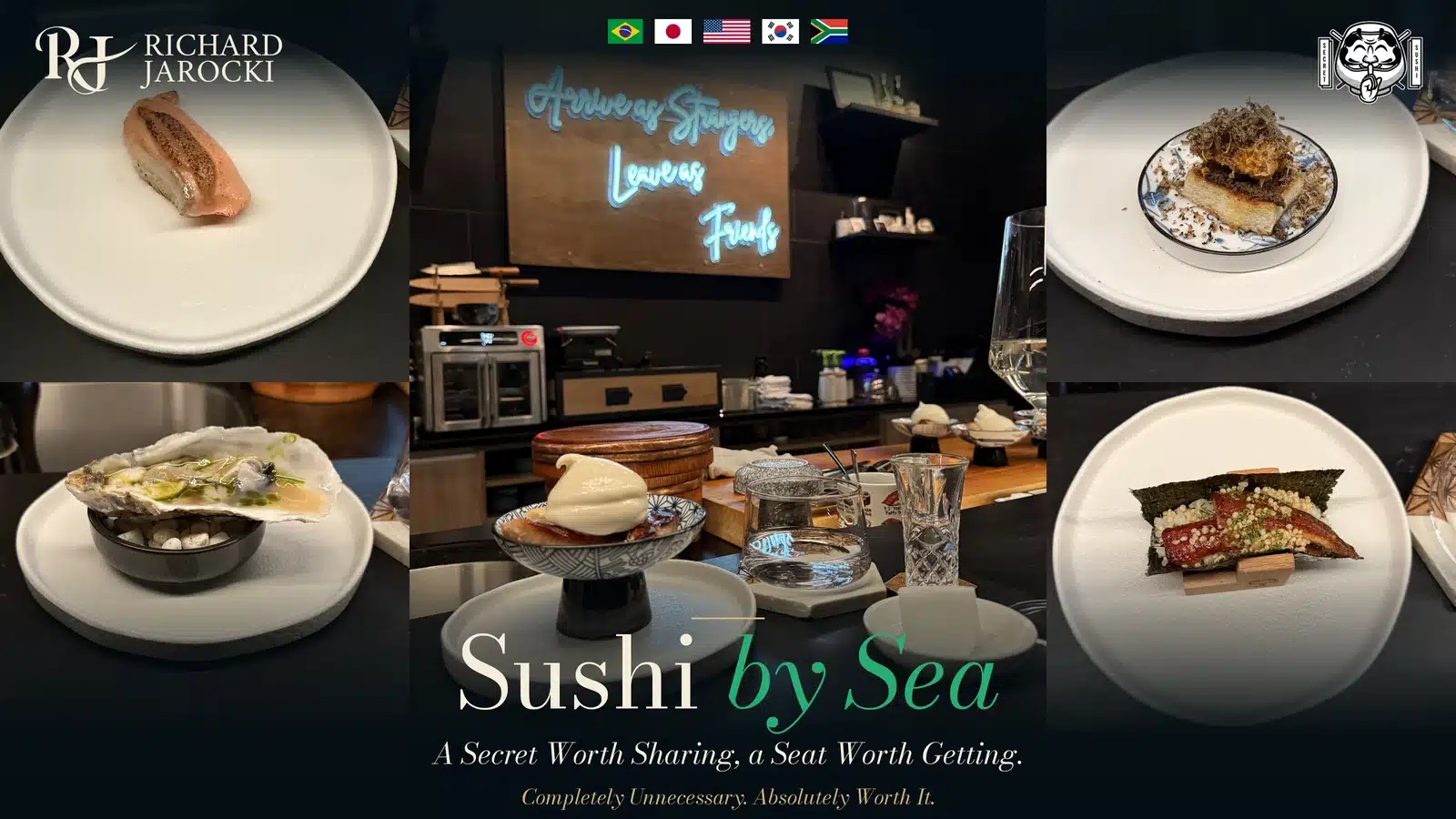
    Sushi by Sea: A Secret Worth Sharing, a Seat Worth Getting

    Sushi by Sea review collage with salmon, oyster, uni milk bread and eel surrounding the counter and neon welcome sign.

    Sushi by Sea Review: Sushi by Sea in Ridgefield, New Jersey, gave me the kind of dinner where I kept thinking the next bite could not possibly be better. Then it was. The fish was high quality throughout, and the eel belongs among the best I have ever eaten. By the end of the evening, my wife also had an invitation to feijoada.
    That is a pretty good Saturday night.

    We visited on October 17, 2026. Dinner was $225 per person, and we brought Dassai sake. We are already planning to go back with my sister. There is plenty to explain between those facts, including a connection to Maido in Lima and a conversation in Portuguese that continued throughout the night.

    Sushi by Sea at a Glance

    Location: Ridgefield, New Jersey

    Experience: Omakase at the chef’s counter

    Booking: By invitation or referral; I reached out to arrange our reservation

    Our visit: October 17, 2026

    Dinner price: $225 per person at our visit

    BYOB: I brought one bottle each of Dassai Blue Type 23, Type 50 Nama and Type 50 Nigori.

    Highlights: Slow-baked eel, seared miso salmon and uni milk bread

    Going back: Yes, we are planning a return with my sister

    A Private Omakase Counter in Ridgefield
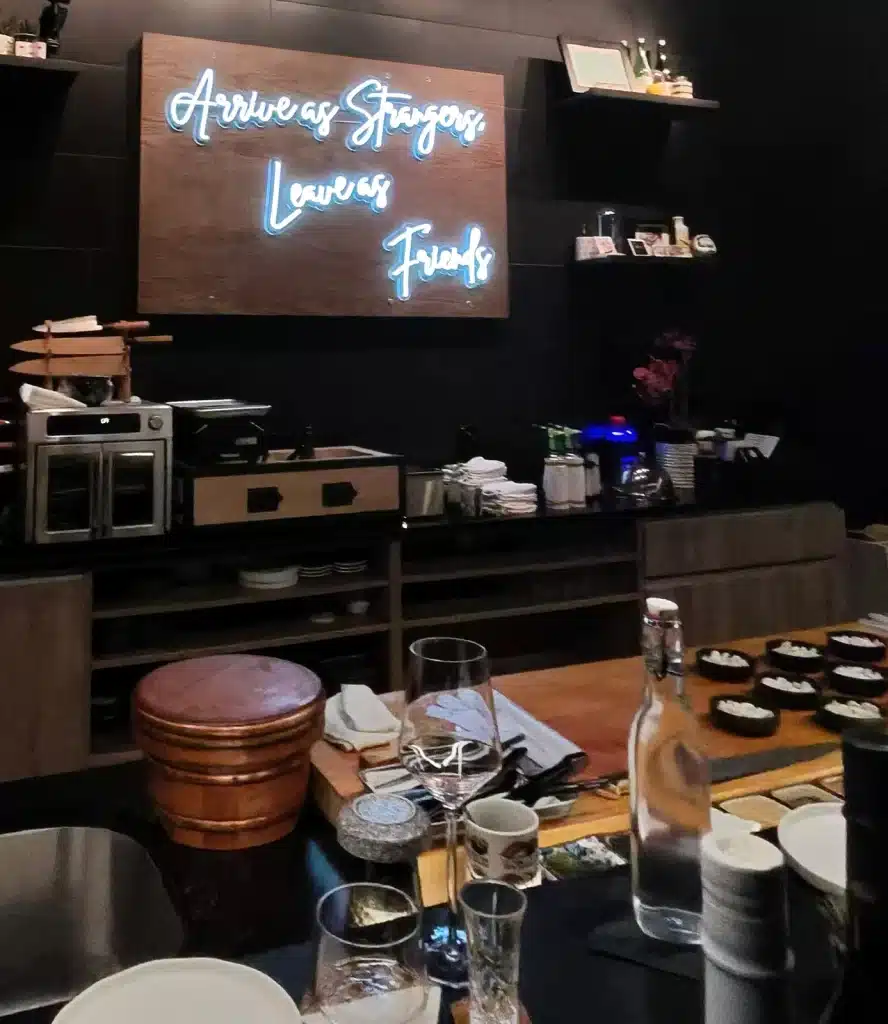
    The neon “Arrive as Strangers, Leave as Friends” motto above the Sushi by Sea counter.
    The counter beneath the neon welcome motto.

    Sushi by Sea is a speakeasy-style omakase experience in Ridgefield, New Jersey, built around a 12-seat chef’s counter. Reservations are invitation- or referral-based, and I had to reach out to arrange ours. The address and a secret password are shared before your visit, which adds to the feeling that you’re being let in on something. Dinner lasts roughly two hours, with the chef working directly across from you. You can find more about the experience on the official Sushi by Sea website.

    The format gives the people across the counter an important part in the evening. You are spending time with the chef while the meal unfolds. In our case, that brought together excellent fish and a conversation that connected New Jersey to São Paulo and Lima.

    The restaurant grew out of pandemic-era pop-ups. Boozy Burbs reported its permanent opening in October 2022, describing an approach built around the chef’s Korean, Brazilian and Japanese experiences and the owner’s South African hospitality. That background makes the mix of influences easier to understand. The personal connection we found at the counter gave it meaning beyond a description on a website.

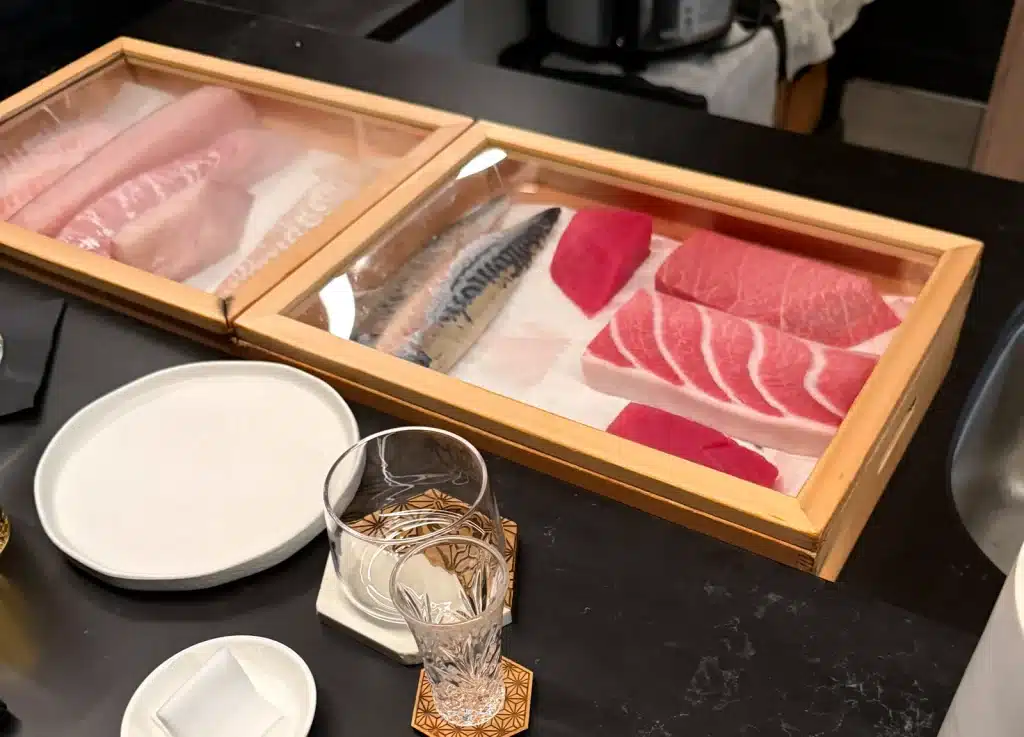
    High Quality Fish From One Bite to the Next
    Every bite seemed better than the one before it. That was my reaction throughout dinner. The fish was excellent, but so much of what made the meal memorable came down to how Chef C handled it. Dry-aging is part of his approach, along with curing, smoking, searing and carefully chosen accompaniments. The preparations gave each course its own character while keeping the fish at the center of the experience.

    The cuts were generous, too, noticeably larger than the fish on an average piece of nigiri. I appreciated that. You had enough of each fish to really enjoy its texture and flavor, with the rice and accompaniments bringing it all together.

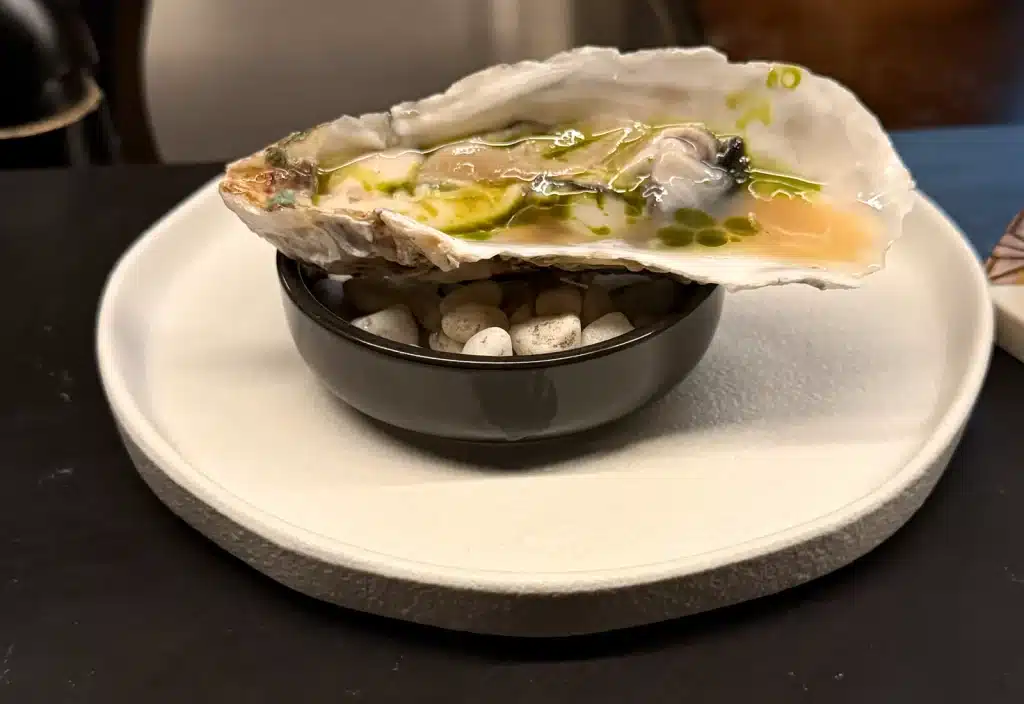
    We began with an oyster with chive parsley oil and yuzu soy. It was a great opening bite. My only complaint? There was only one. I could happily have eaten a few more before moving on to the fluke with shiso and Himalayan salt.

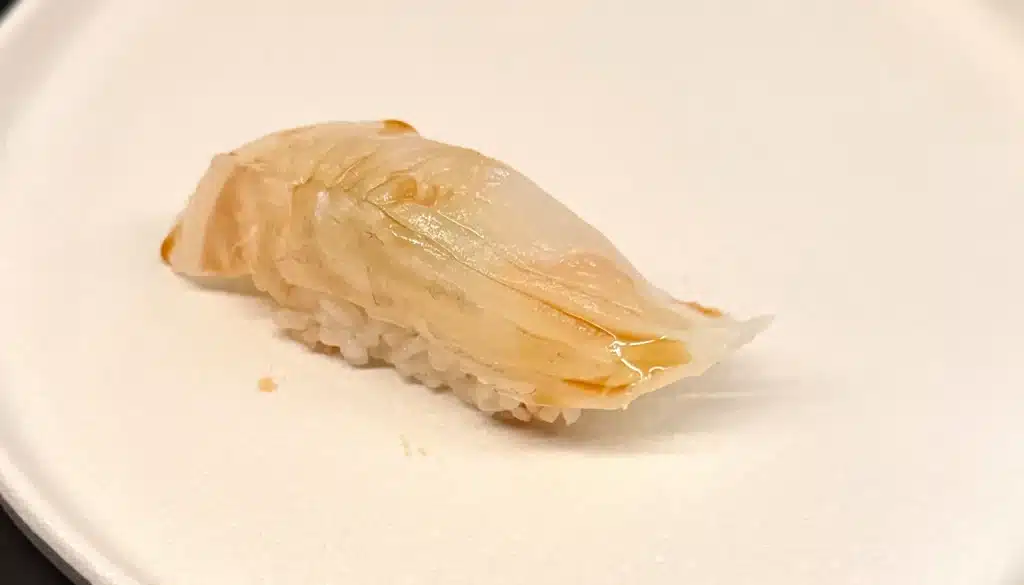
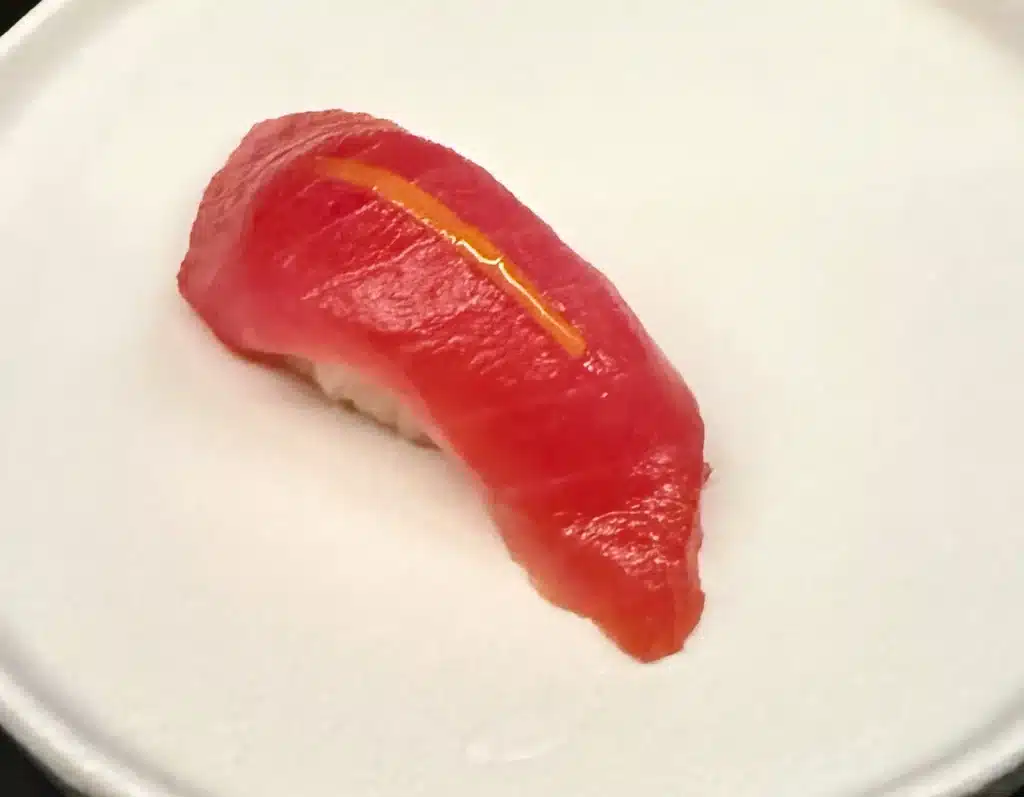
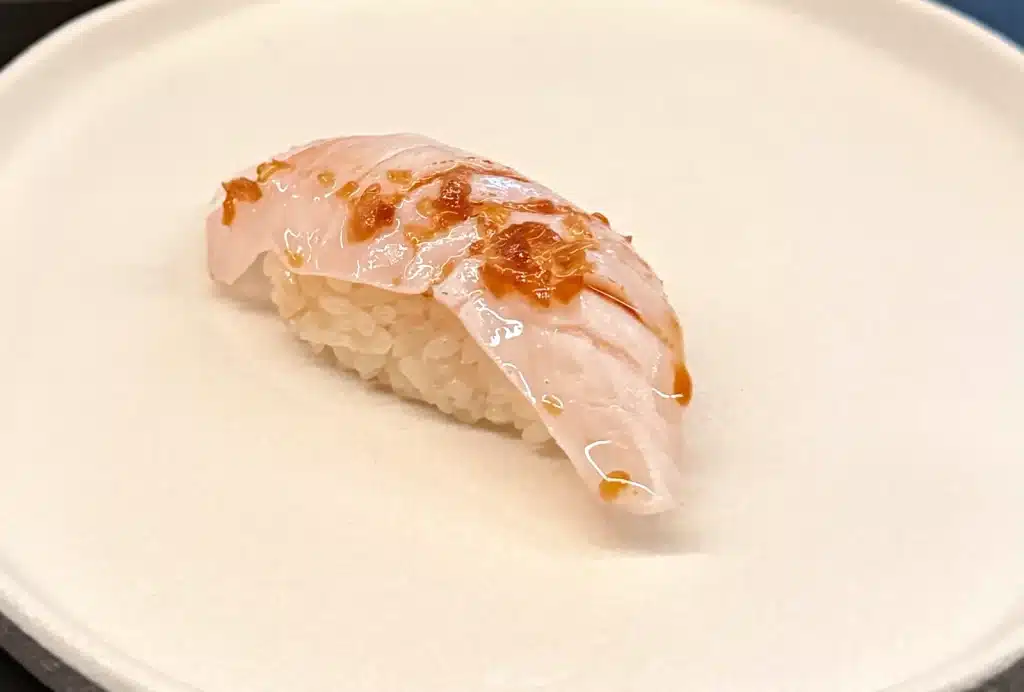
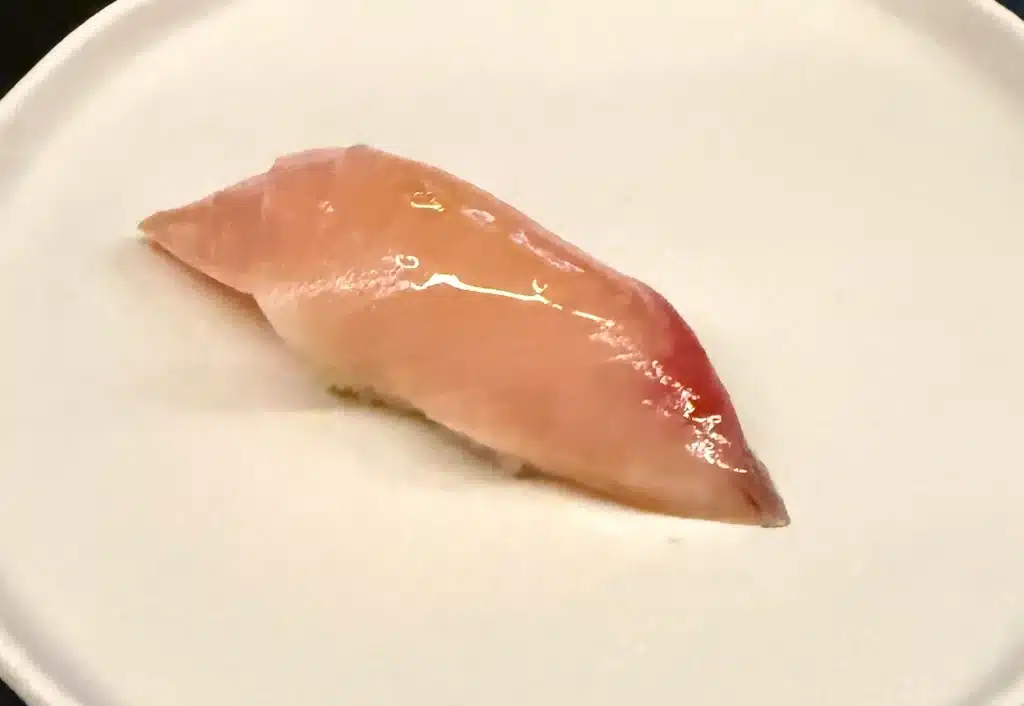
    The akami came with salted, cured orange peel washed in vodka. Madai followed with garlic-scallion soy, then hamachi with yuzu marmalade. The accompaniments changed from one fish to the next, giving me something different to pay attention to with every course.

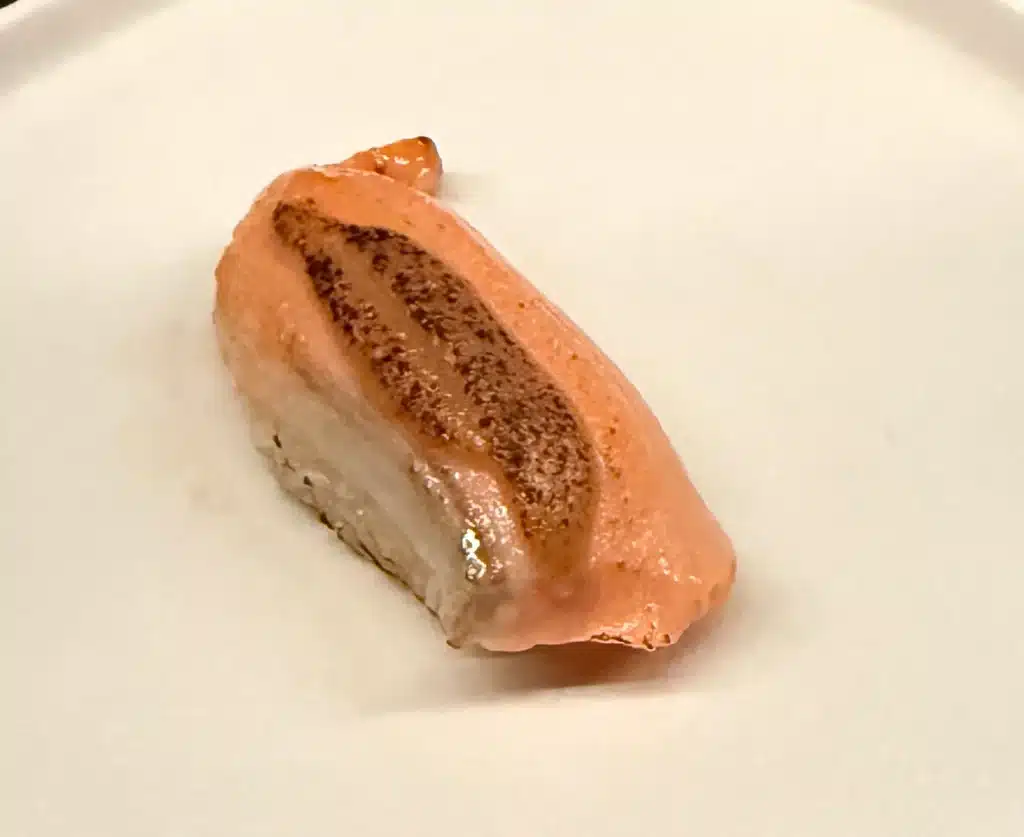
    Then came the seared miso salmon smoked in Japanese applewood. I don’t even like salmon, and this was the best salmon sushi I’ve ever had. That deserves some emphasis. A fish I generally wouldn’t choose became one of the highlights of the evening. It’s the kind of course that makes you reconsider what you think you don’t like.

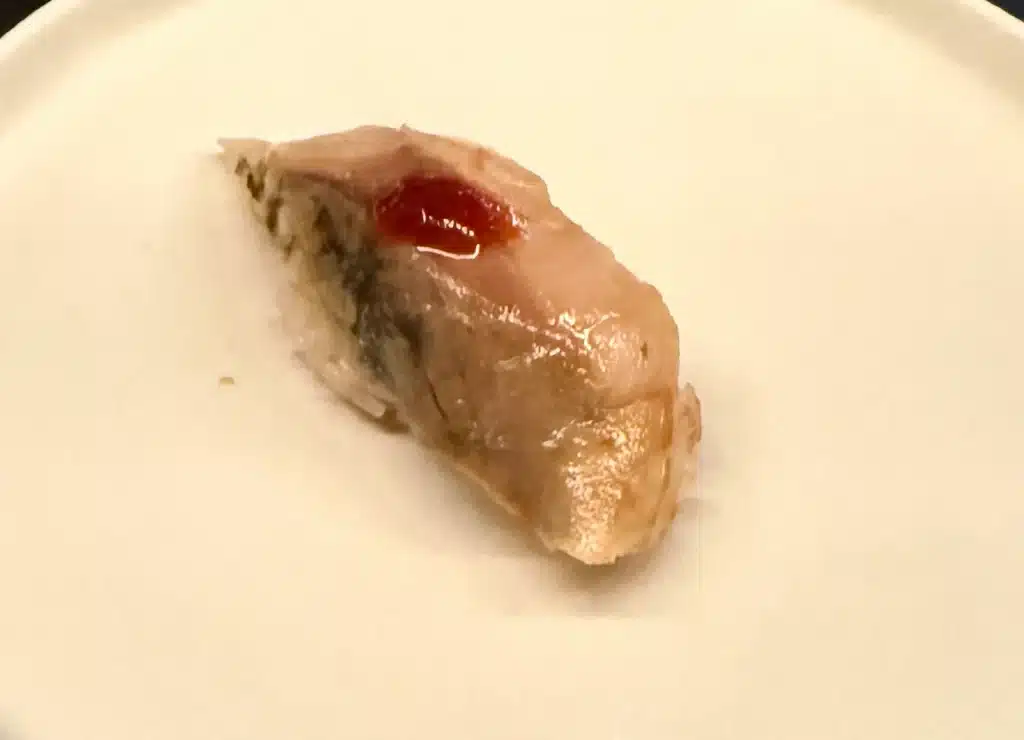
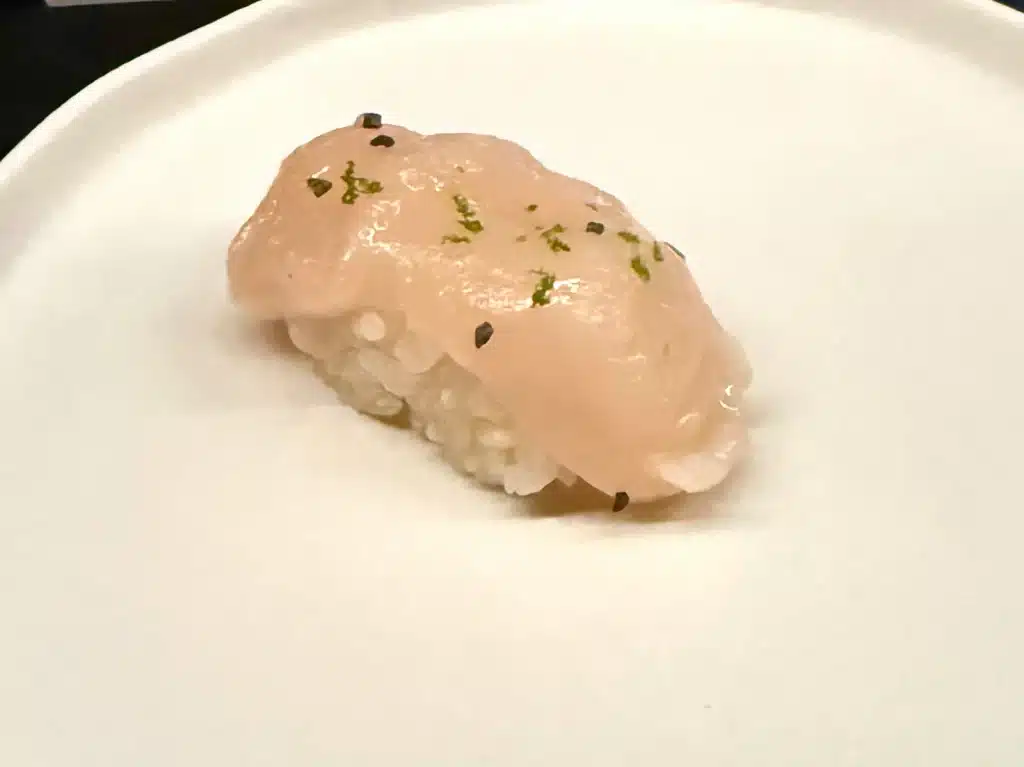
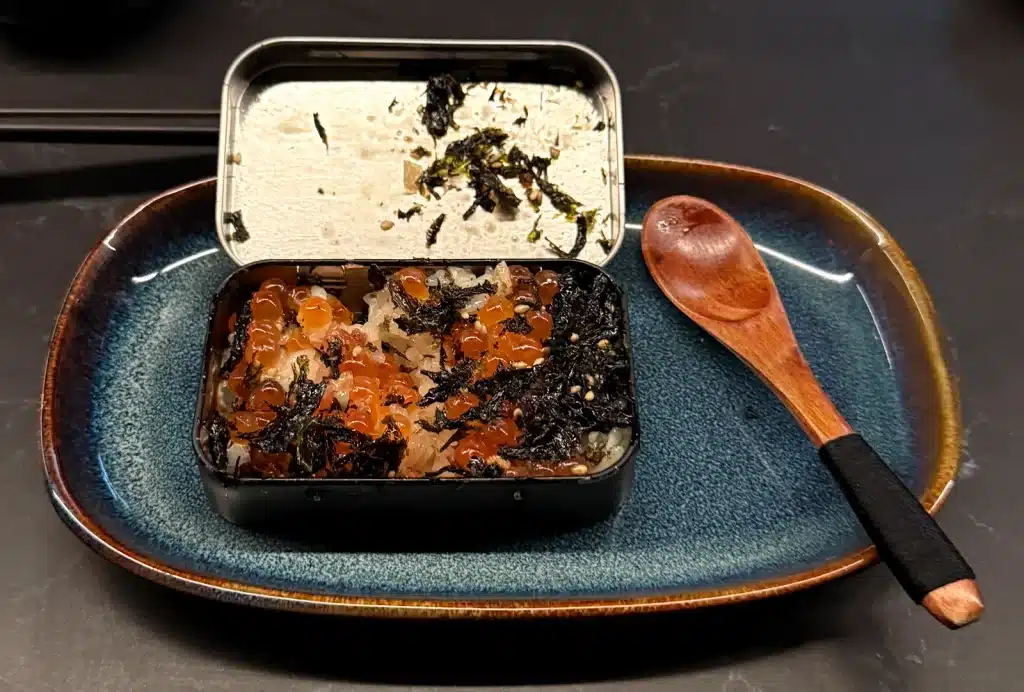
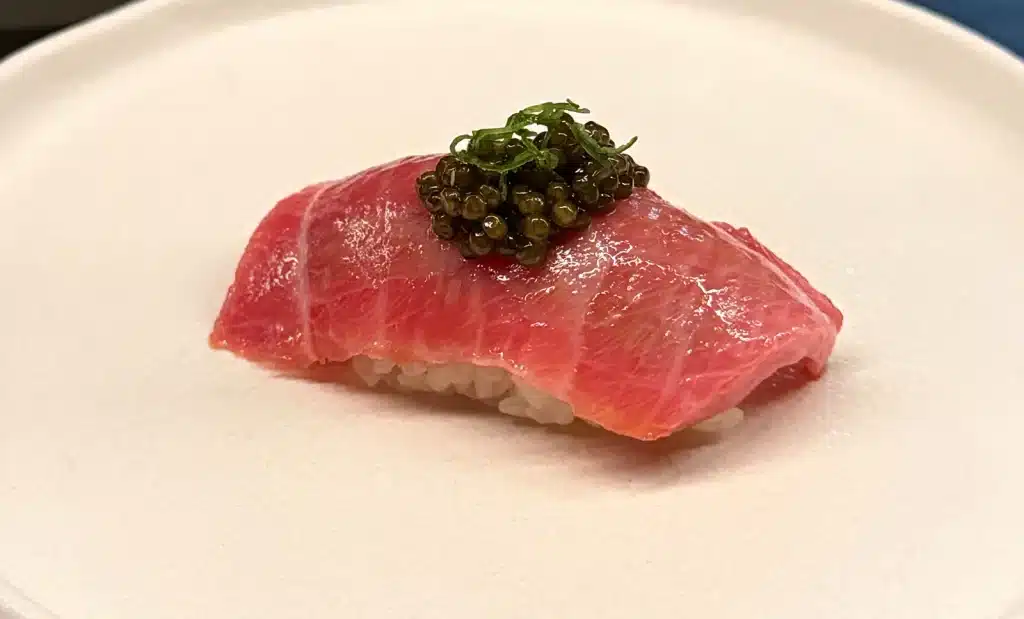
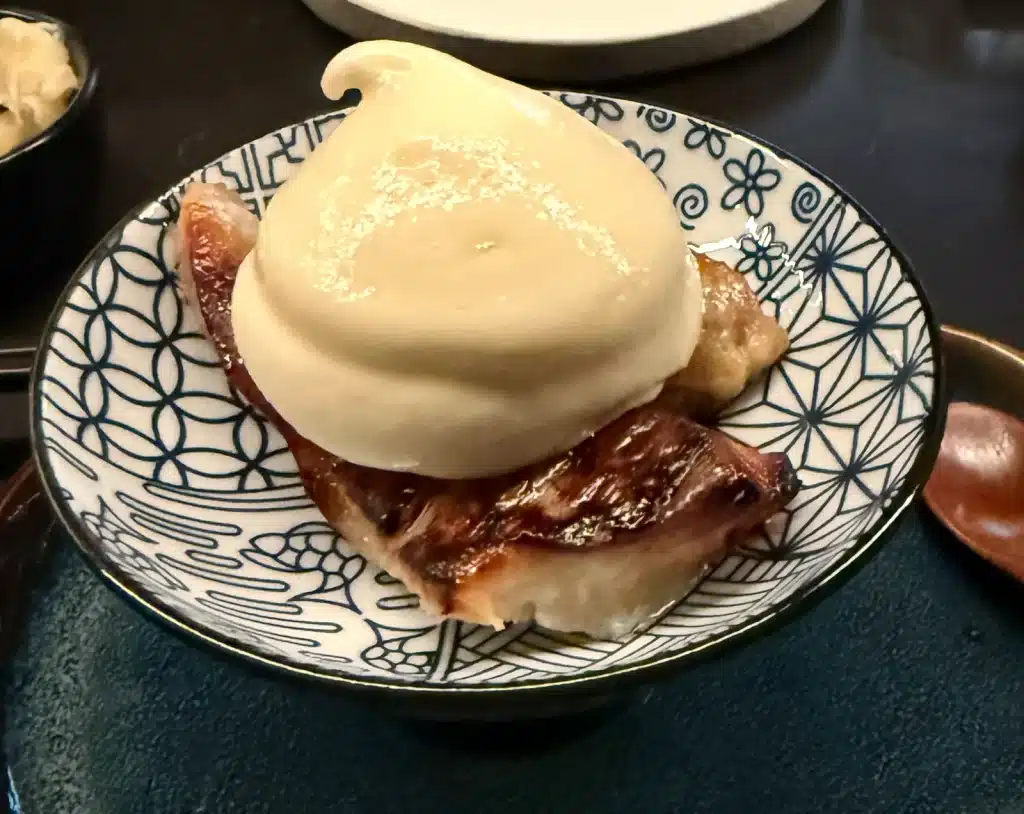
    Japanese mackerel with savory kimchi chili sauce followed, then Hokkaido scallop with lava salt and lime. The mini ikura bento box came next, followed by chutoro with caviar and black miso cod with foam. By this point, I kept wondering what would arrive next and whether it could live up to the last bite.

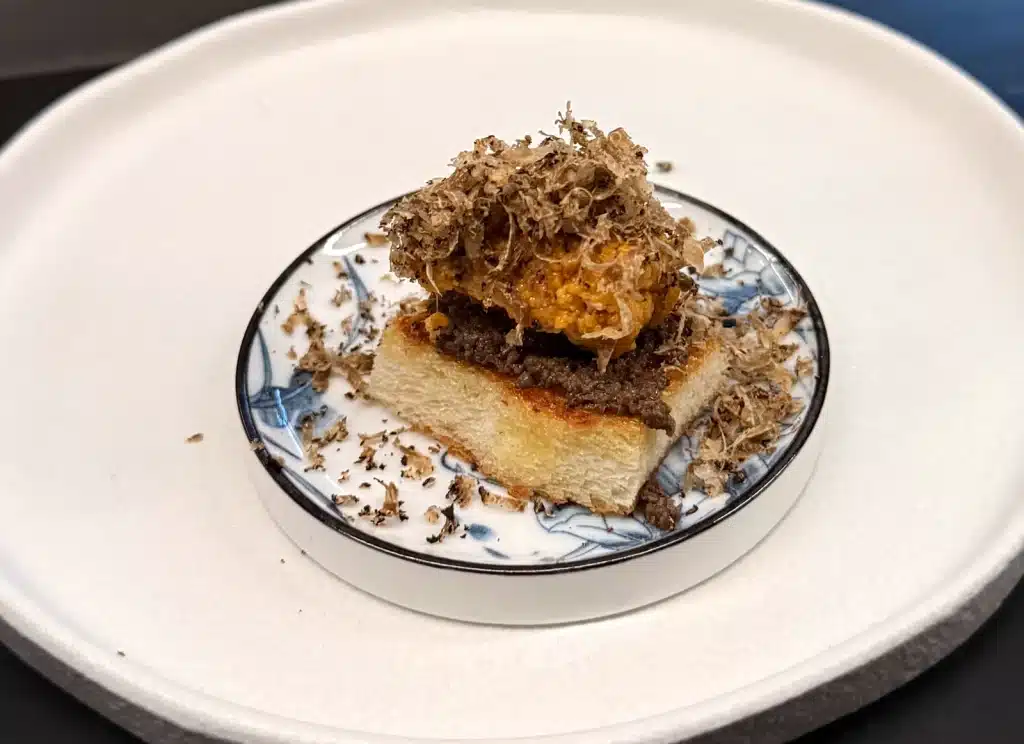
    The uni milk bread with truffle gave my wife her own surprise. She doesn’t normally like uni, so after taking a bite, she went to hand it over to me. I asked, “Are you sure?” She quickly took it back. “No, I like this one,” she said, and ate it herself. So much for my extra bite. Between her keeping the uni and me loving the salmon, Chef C had won us both over with ingredients we usually wouldn’t choose.

    Close-up of truffle being grated over uni milk bread on patterned oval plates.

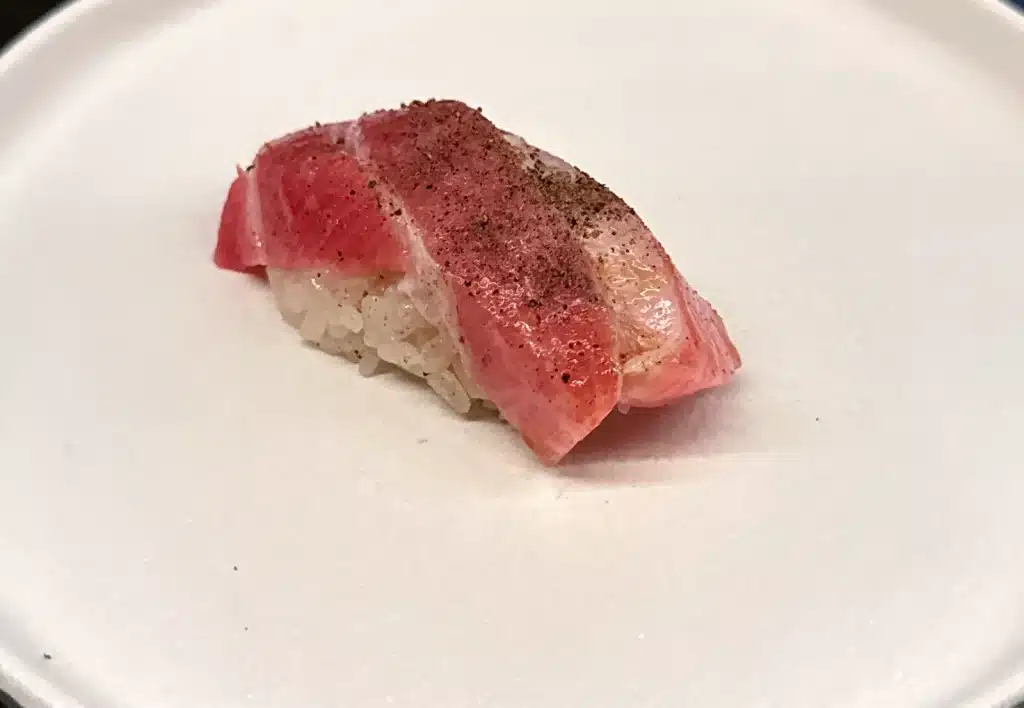
    Otoro is my favorite sushi, so I was especially looking forward to that course. Chef C finished it with charcoal, and watching him work added to the anticipation. This is part of why I love sitting at a counter: you get to see the attention behind the bite you’re about to eat.

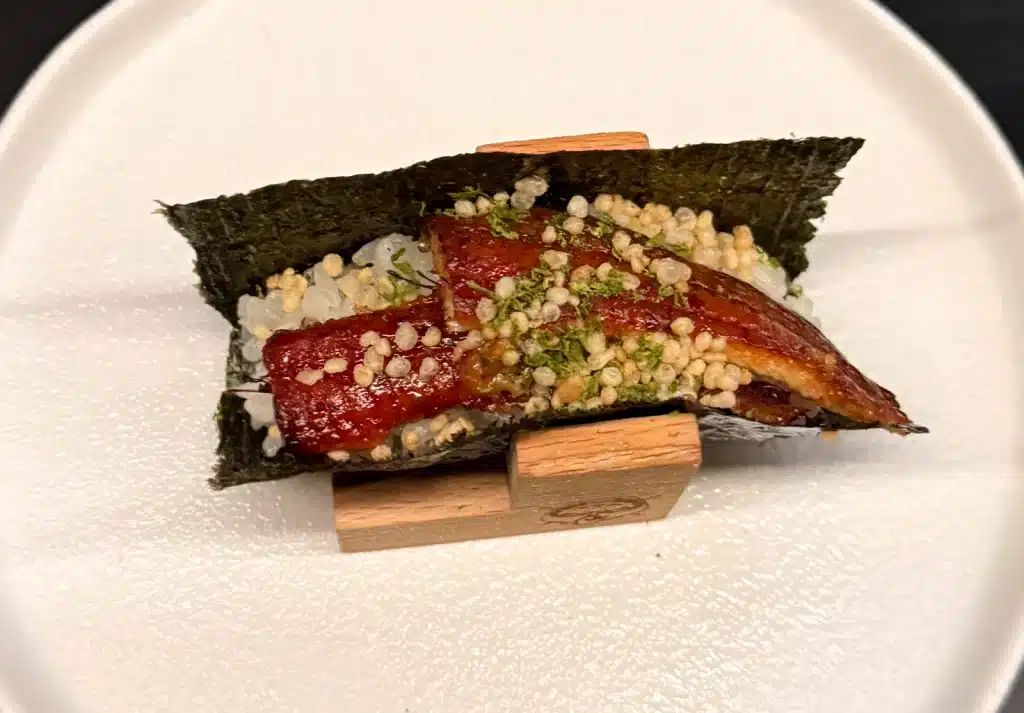
    Then came the slow-baked eel with cacao and matcha lime. It was amazing. There was none of the fishy taste I sometimes associate with eel. The flavor was clean, and the preparation let me enjoy everything I love about it. I can’t isolate which technique made the difference, but I could absolutely taste the result.

    It belongs among the best eel I’ve ever had. The other meal that comes to mind is Maido in Lima, where I had eel with tuna belly. That’s the company this course is keeping in my memory.

    What stayed with me was how much thought went into each preparation. The generous cuts, the different techniques and the accompaniments all contributed to the meal. I wasn’t just enjoying my favorite fish. I was enjoying fish I usually wouldn’t order, and my wife was doing the same. That says more about the dinner than a list of expensive ingredients ever could.

    A chef finishes otoro with a tong-held piece of charcoal as wisps of smoke rise.

    The Work Behind the Counter

    A chef directs two flames at a row of salmon nigiri

    There is useful context behind that impression of quality. In a May 2025 interview with New Jersey Digest, co-owner Jay Powles discussed sourcing fish directly from Japan and dry-aging fish in-house. That interview offers background on the kitchen’s approach.

    Sushi by Sea also gives rice a central place in its own explanation of the food. On its website, the restaurant identifies rice as fundamental to what it does. It is an important reminder when so much attention naturally goes to the fish.

    A chef lifts the dome, releasing smoke over the seared miso salmon.

    Eel That Brought Maido to Mind

    The slow-baked eel with cacao and matcha lime deserves its own section. It was among the best I have ever had, with the other immediate comparison being the eel I ate with tuna belly at Maido in Lima.

    I could go back and forth over which one takes first place. Putting Sushi by Sea in that company is already a serious compliment. The Maido dish remains one of those bites I can use as a point of comparison long after the trip is over.

    There was another connection. While we were sitting at the counter, Chef C told us he had worked at Maido in Lima for about six months. Hearing that gave us something very specific to talk about beyond the food directly in front of us.

    It also made the comparison more interesting. I am describing two eel dishes that impressed me enormously, with a chef connecting the restaurants through his own experience. I do not need to settle the ranking to know that Sushi by Sea’s eel is going to stay in my memory.

    Chef C and a São Paulo Connection

    Chef C is from São Paulo. The restaurant identifies Chef Cris as its head chef and co-owner. The 2022 opening report also lists experience at Masa, Neta, Shuko, Sushi Agari and Torien. Those names provide some context for the experience he brings to the counter. The Maido detail came directly from our conversation with him, which made it particularly interesting given my own meal there.

    For us, his São Paulo connection became especially personal because he spoke Portuguese with my wife throughout the night. The conversation continued as we ate, and it became one of the things I remembered most clearly afterward.
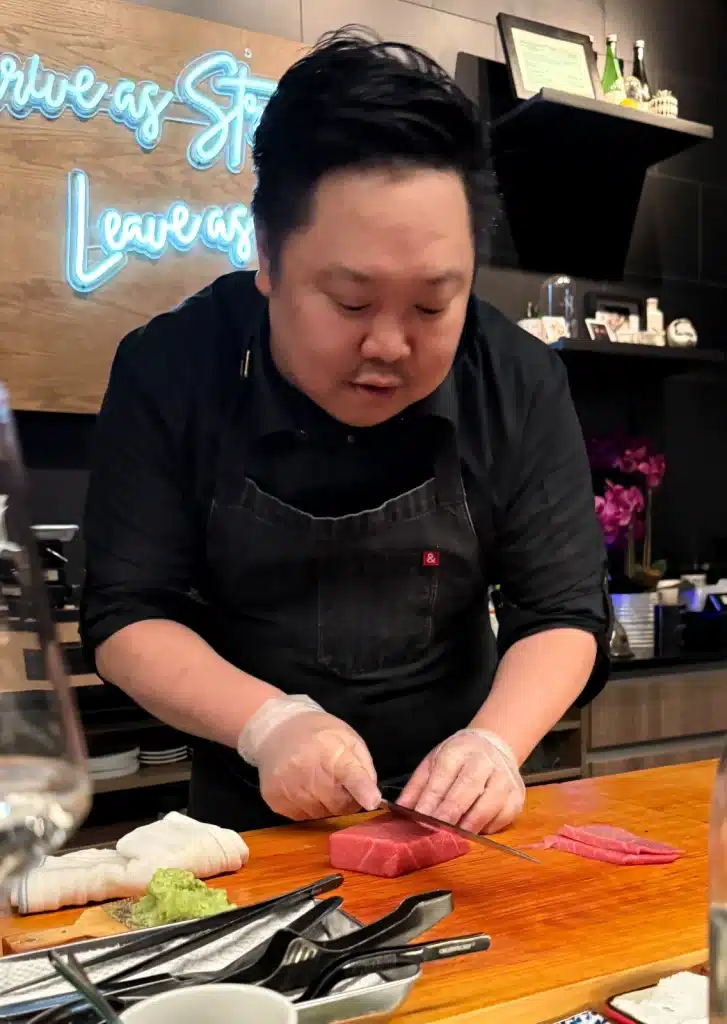
    A chef slices a red piece of fish on the wooden counter, with the neon motto behind him.
    Knife work at the counter during the meal.

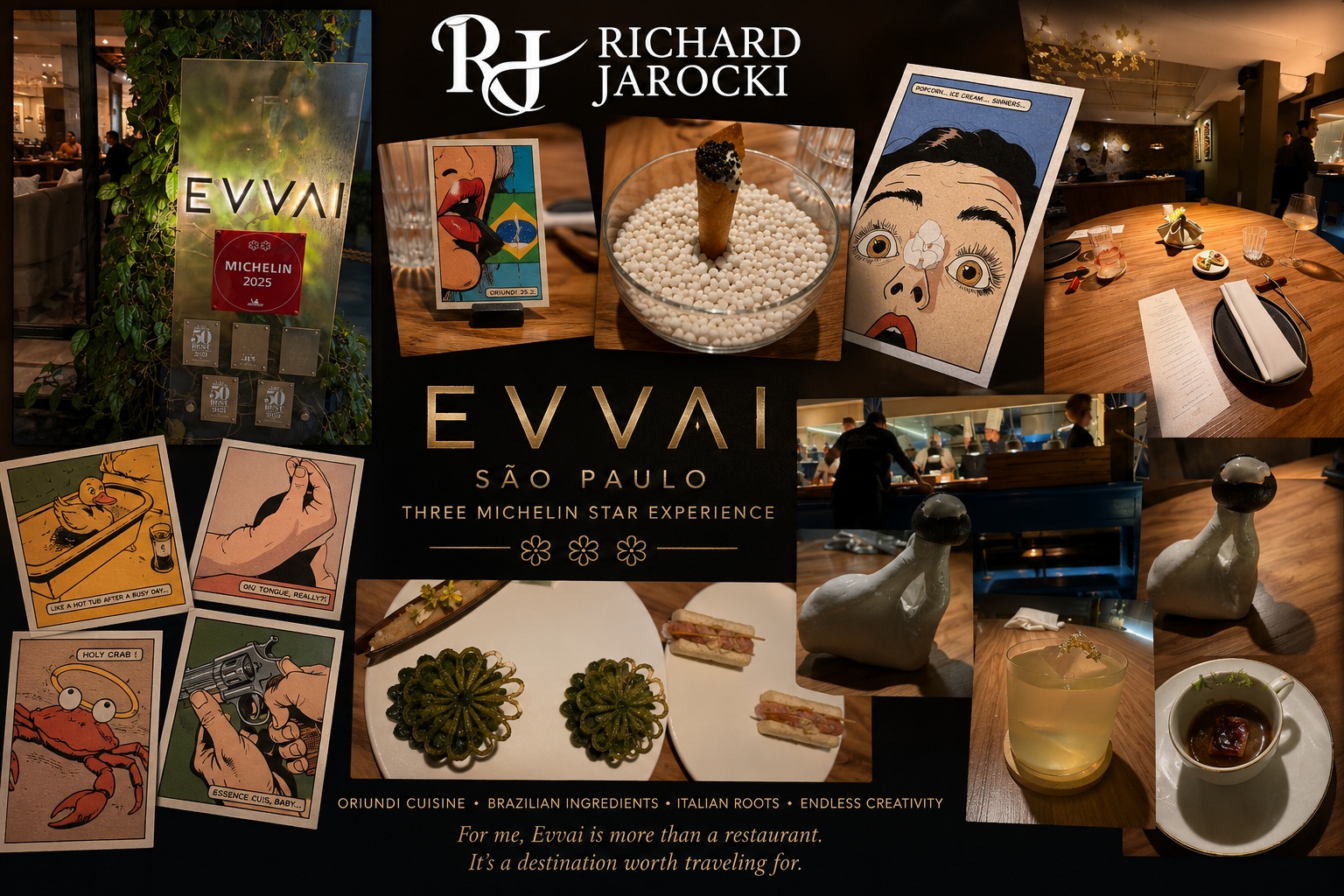
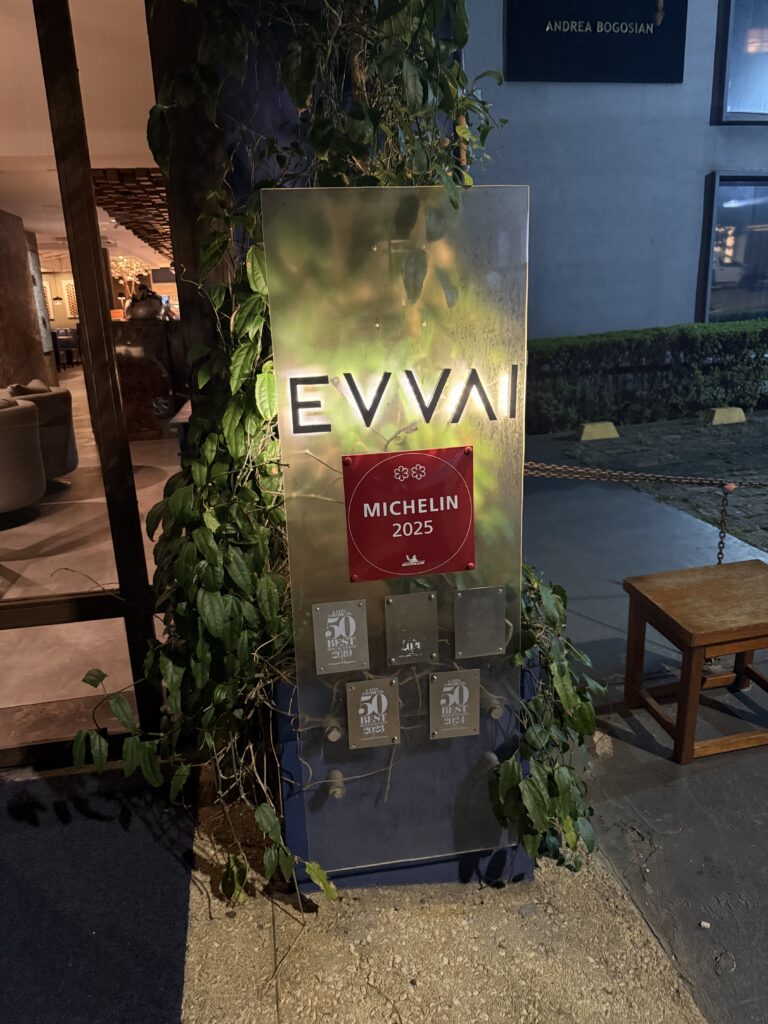
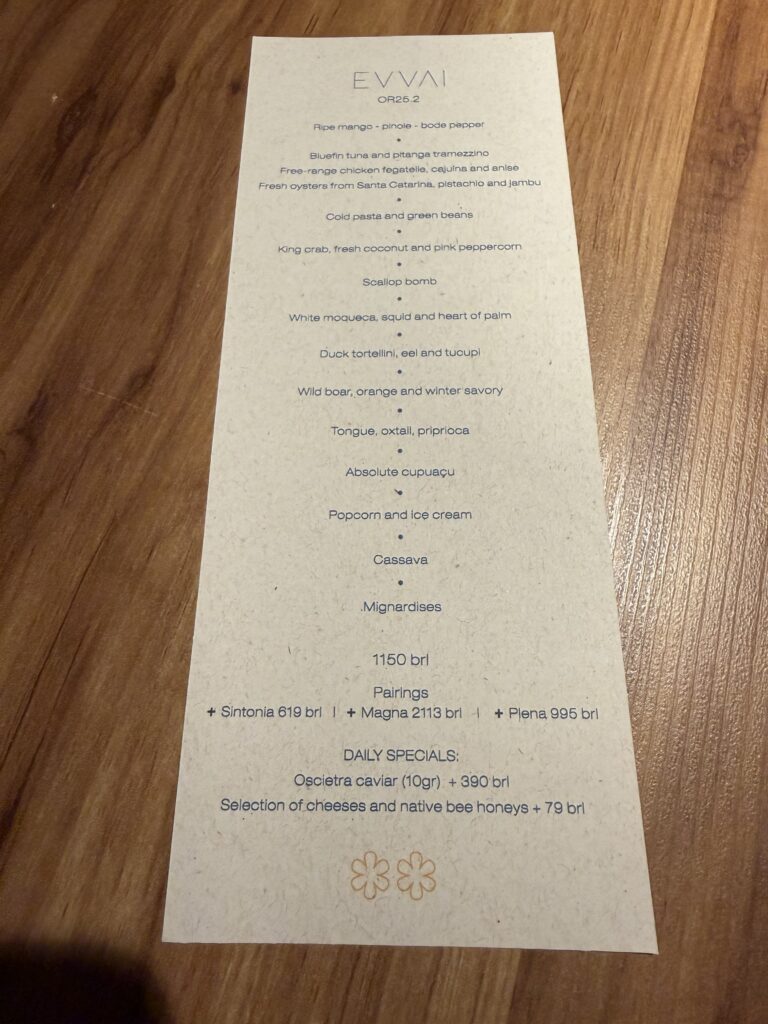
    São Paulo is a city I return to often. It is also home to Evvai, my favorite restaurant in the world. Finding that connection during an omakase dinner in New Jersey brought a familiar part of our lives into the evening.

    Chef C even invited my wife to feijoada, a Brazilian stew, and we plan to go. That is a wonderful detail to come away with after dinner. We went to eat sushi and ended up talking about another meal altogether. Their motto is “Arrive as strangers, leave as friends.” After that invitation, it made perfect sense to me.

    It is the kind of interaction that makes the chef’s counter feel like the right place for this meal. We had time to talk while enjoying the food. The Portuguese conversation and the feijoada invitation are details I will remember when thinking about the evening.
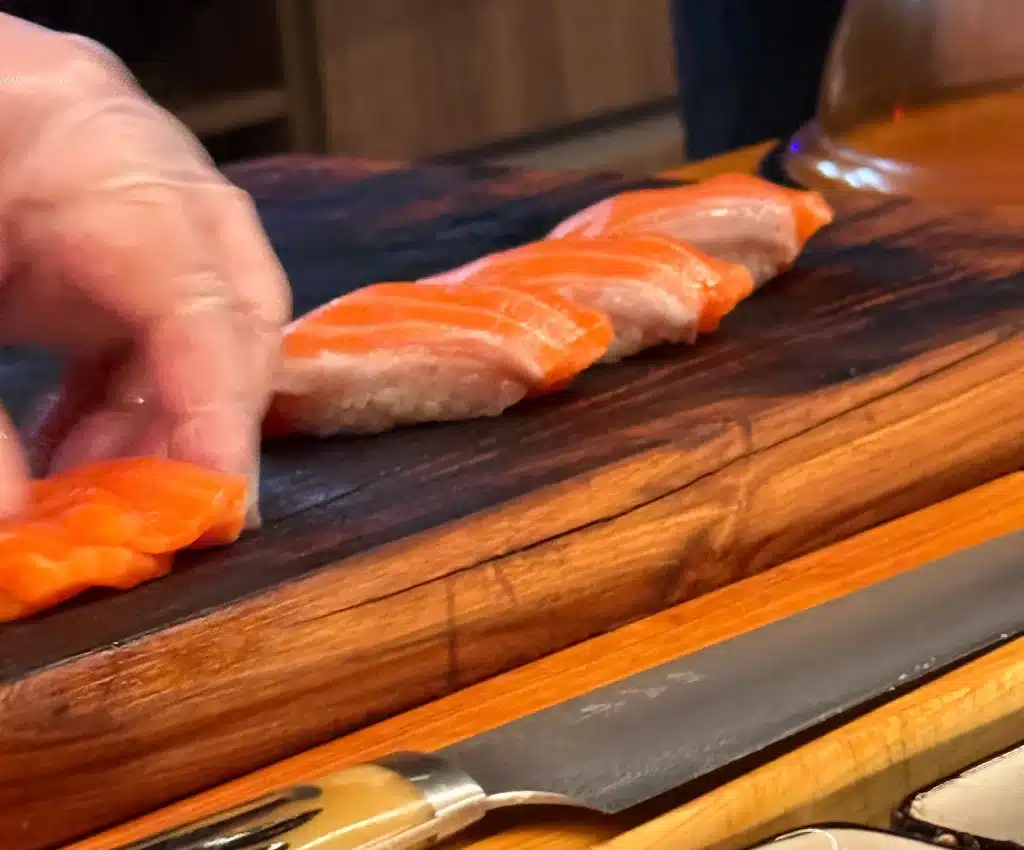
    A gloved hand arranges a row of orange salmon nigiri on a wooden board.
    Salmon nigiri being arranged before the searing and smoking sequence.

    BYOB With Three Bottles of Dassai

    Sushi by Sea is BYOB, and I brought three different bottles for our dinner: Dassai Blue Type 23, Dassai Blue Type 50 Nama and Dassai Blue Type 50 Nigori. One bottle of each.

    That’s one of the things I appreciate about BYOB. You can bring the sake, wine or beer you want to drink instead of choosing only from a restaurant’s selection. You have more control over both the bottles and what you spend on them.

    Living close to Dassai Blue has taught me a lot about sake, and I’ve become more confident choosing it to accompany sushi. I’m still learning, but that’s part of the enjoyment. Thinking about what to drink adds another layer to planning a meal like this.

    Before you go, spend a little time researching wine or sake pairings for sushi. Think about the range of flavors you might encounter throughout an omakase, and ask questions when choosing your bottles. You don’t need to become an expert to put some thought into what you bring.

    For our evening, the $225 per-person dinner price and the bottles were separate expenses. BYOB gave me the freedom to make those choices myself, and I liked being able to bring something I’d taken an interest in learning about.
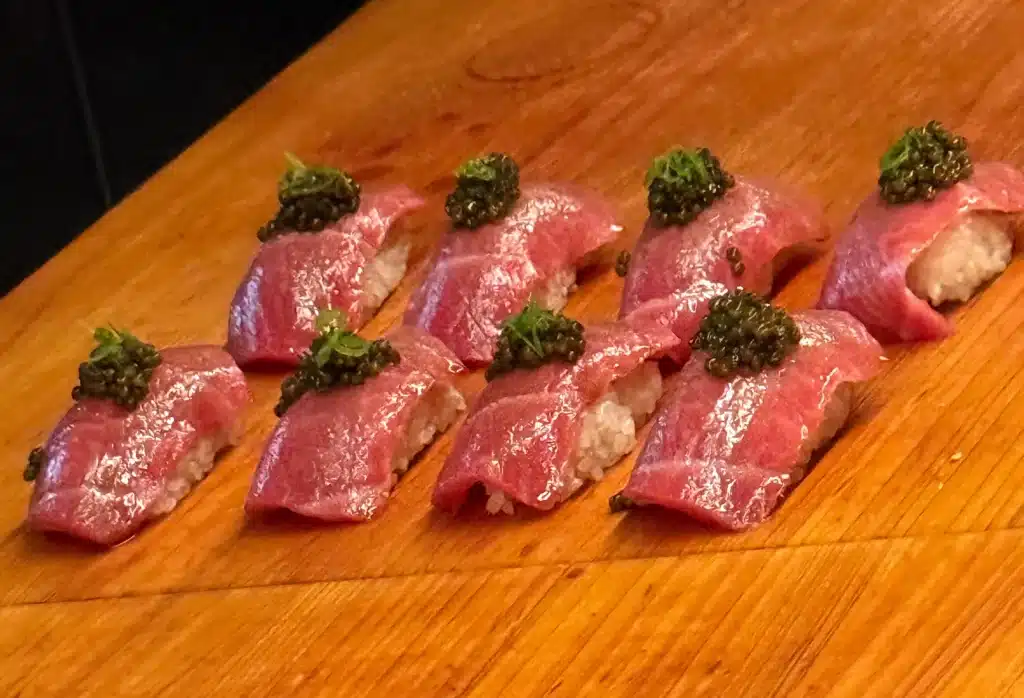
    Rows of pink chutoro nigiri topped with caviar on the wooden counter.
    Chutoro with caviar lined up before individual plating.
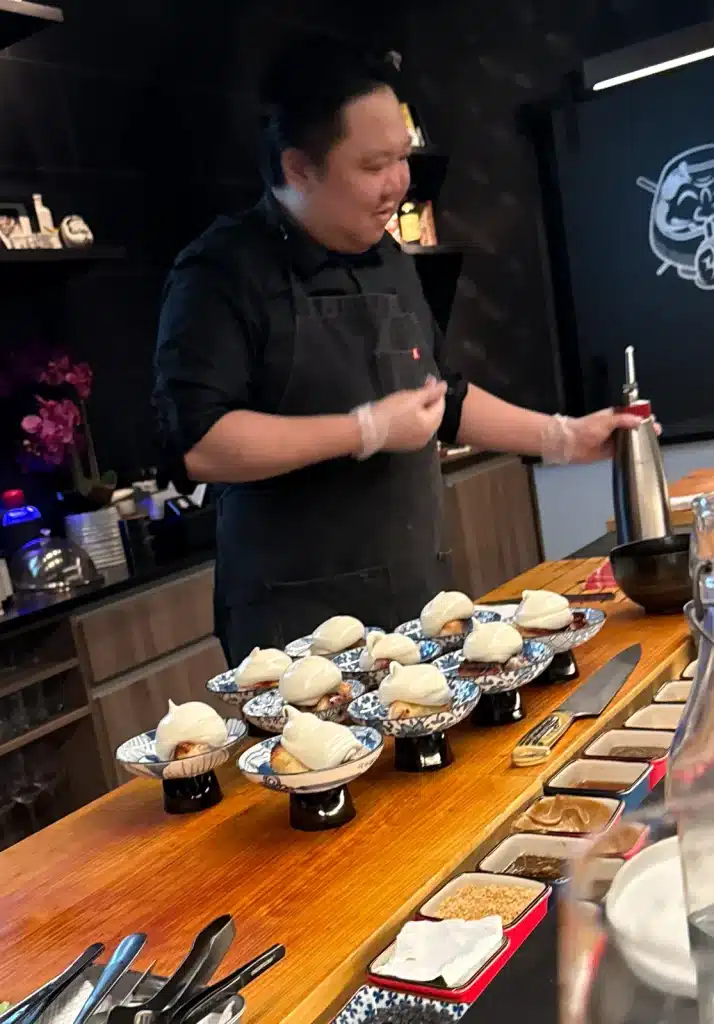
     A chef stands behind a row of patterned bowls topped with pale foam, holding a siphon.
    Black miso cod and foam being prepared at the counter.

    Ice Cream Without the Photograph

    I didn’t get a picture of the ice cream, but it was great too. After so much good fish, dessert gave us one more reason to leave happy.

    I also like that Sushi by Sea works with local bakeries, bakers and pastry chefs to showcase their desserts. It gives other people’s work a place in the experience and gives me another reason to be curious about what might arrive on a future visit.

    Chef C told us his wife is a retired pastry chef, which made me wonder whether she has a hand in the desserts. I didn’t ask, so that’s a question for next time. What I can say is that the sweet finish deserved its place in the meal, even if I missed the photograph.

    The Price and Planning Your Visit

    Our dinner was $225 per person, before any additional charges. For current pricing and booking terms, check directly with Sushi by Sea.

    If you’re planning a weekend dinner, Friday and Saturday offer two seatings: 6:00 PM and 8:30 PM. Wednesday and Thursday have a 7:30 PM seating, while Sunday dinner starts at 6:00 PM. The restaurant is closed on Mondays and Tuesdays. Each experience lasts roughly two hours, so choose a time that lets you settle in and enjoy it.

    Reservations open up to three weeks ahead. Let the restaurant know about dietary requests at least 72 hours before your seating, and read the cancellation terms carefully. Cancellations, changes or no-shows within 72 hours incur the full seating fee per guest plus processing fees. Check the official reservation information for the latest schedule and policies, and follow the arrival instructions in your confirmation.

    At this price, returning is a considered choice. For me, the strongest answer is that we’re planning another dinner with my sister. I enjoyed the experience enough to want to share it with someone else.

    My Take on Sushi by Sea

    My only regret is that I didn’t make more of an effort to go two years ago, when I first heard about Sushi by Sea. After finally getting there, I know I waited too long.

    I’ve been to about eight omakase experiences over the last three years, and this ranks at the top for me. It was worth every penny. The quality of the fish, the care behind each preparation and the people across the counter made it an evening I want to experience again.

    Some of the connections made it even more memorable. An eel course in New Jersey brought back one of my favorite bites at Maido in Lima. A chef from São Paulo spent the evening speaking Portuguese with my wife. We left planning a return with my sister and looking forward to feijoada. That’s a lot to take home from one dinner.

    Sushi by Sea is going into my regular restaurant rotation, and I’m going to make a point of returning when the menu changes. I want to see what Chef C does next and share the experience with my sister. I also missed the co-owner that evening, so there’s still a Formula 1 conversation to look forward to. Great sushi and some F1 talk would suit me very well.

    For more meals from New Jersey and my travels, explore my Food & Drink reviews.

    Completely Unnecessary. Absolutely Worth It.

    Explore More

  • Mont Bar Barcelona Review: The Two-Star Meal That Never Felt Like Fine Dining

    Mont Bar Barcelona Review: The Two-Star Meal That Never Felt Like Fine Dining

    Mont Bar Barcelona Review Smoked tuna belly with pine nut emulsion at Mont Bar Barcelona

    Some meals are excellent while you are sitting at the table and begin to fade as soon as the next reservation comes along. Mont Bar did the opposite.

    This Mont Bar Barcelona review covers the full tasting menu, wine pairing, service and why the experience ultimately ranked among my five best meals ever.

    The more I thought about it; and the more ambitious restaurants I visited afterward; the higher it moved on my list. Months later, I can say it without exaggeration: Mont Bar is one of the five best meals I have ever had.

    Mont Bar Barcelona Review: At a Glance

    • Location: Carrer de la Diputació, 220, in Barcelona’s Eixample neighborhood.
    • My visit: June 8, 2026, for the full Mont tasting menu with more than twelve wine and sake pours.
    • Recognition: Two Michelin stars in the 2026 guide.
    • Menu prices: The official menu currently lists Classic at €190 and Mont at €240 per person, before optional pairings.
    • What stood out: Smoked tuna belly, warm mochi, razor clams, lobster, mushroom ice cream and Bresse pigeon, alongside the wine pairing and warm service.
    • Time: The restaurant estimates about three hours for Mont. I would leave the evening open rather than rush to another reservation.
    • My verdict: One of my five best meals ever, and somewhere I would return without hesitation.

    Planning information checked October 27, 2026. The dishes, photographs and wine bottles below describe my June visit, not a guarantee of the current menu.

    Mont Bar Menu, Prices and Reservations

    The official tasting-menu page, checked October 27, 2026, lists the Classic Menu at €190 and the longer Mont Menu at €240 per person. These are current planning prices, not a reconstruction of my June bill.

    Optional pairings are listed separately: alcohol-free 0.0 at €95, Signature at €160, Spain at €290 and World at €650. Compare the options with your budget before booking rather than assuming the menu includes drinks. The courses change with the season, so use my meal as a sense of the experience, not an exact order list for your visit.

    According to the restaurant FAQ, dinner is tasting-menu only. Lunch also offers à la carte, with a minimum of three snacks and two main dishes per person. Everyone in a reservation must choose the same dining option. Classic is estimated at two and a half hours; Mont at three.

    Book through Mont Bar’s official reservation page. Review the terms for your party size: changes within 72 hours can trigger menu-price charges, and prepayments have separate conditions. Tell the restaurant about dietary needs before committing; it does not offer vegetarian or vegan tasting menus. I would also confirm any seating preference directly rather than assume a particular table or counter seat is guaranteed.

    That is a serious statement for me. I have eaten tasting menus around the world, traveled specifically for restaurants and spent amounts of money on dinner that no rational person needs to spend. I have experienced bigger dining rooms, more theatrical presentations and restaurants with more famous names. Very few have put food, wine, hospitality and atmosphere together as naturally as Mont Bar.

    It was my first day in Spain. I had just arrived in Barcelona, visited the Sagrada Família and could have made the safe choice by keeping dinner simple. Instead, I booked the full Mont tasting experience with the wine pairing.

    It turned out to be exactly the right way to begin the trip.

    Mont Bar Barcelona Review: A Two-Michelin-Star Restaurant That Still Feels Like a Bar

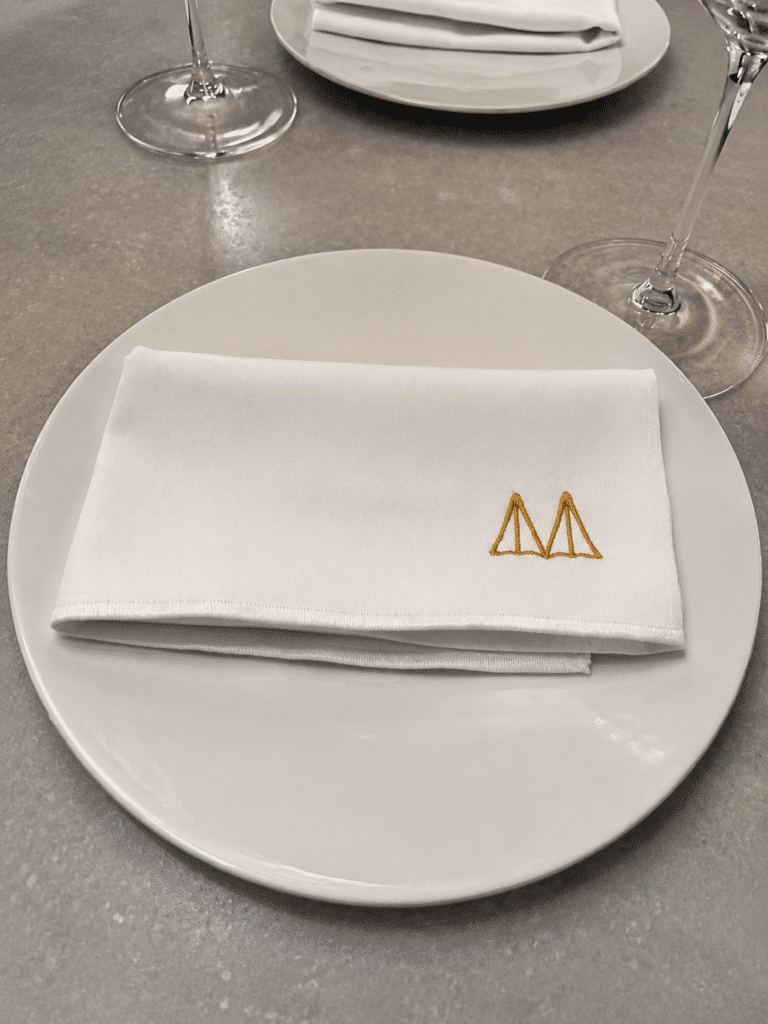
    Mont Bar place setting with an embroidered napkin inside the Barcelona restaurant
    Mont Bar feels more like an energetic neighborhood bar than a formal two-Michelin-star dining room.

    Mont Bar sits on a corner in Barcelona’s Eixample district. The room is small, the music has energy and the bar remains visually and emotionally central to the restaurant. It does not feel like a formal dining room that happens to serve small plates. It feels like an excellent neighborhood bar that somehow learned how to cook at an extraordinary level.

    That difference matters.

    Mont Bar was created by Iván Castro, whose family roots are in the small village of Mont in the Val d’Aran. He opened the restaurant in 2013 and built it around the idea that serious cooking and serious wine do not need to come with a stiff or intimidating experience. Today, Castro and Kasaundra Williams lead the restaurant with chef Fran Agudo, whose cooking blends tradition, modern technique and a clear willingness to borrow intelligently from Japanese flavors and methods.

    The restaurant received its second Michelin star in the 2026 Michelin Guide. Michelin describes it as a gastro-bar using fresh, seasonal and locally sourced ingredients, but even that accurate description does not fully explain why the restaurant works.

    The real achievement is that Mont Bar has continued to feel personal as its reputation has grown.

    Iván was not hidden in an office. He was present as a host. Fran was accessible, and both of them took the time to speak with us during dinner. The service team was polished without becoming robotic. There was great music, conversation in the room and the sense that the people running the restaurant actually wanted you to have fun.

    It was two-star execution without the two-star attitude.

    Why the Relaxed Service Mattered

    The conversations with Iván and Fran were part of the meal, not a substitute for the meal. That distinction matters to me. A restaurant can be friendly and still leave the cooking feeling secondary, just as it can deliver technically excellent food while making the evening feel impersonal. Here, the attention to the guest and the attention to the plate supported each other.

    For someone arriving in Barcelona on the first day of a trip, that combination was especially welcome. I had chosen an ambitious dinner rather than an easy first-night option, but the room never made that choice feel like work. I could enjoy the music, ask about what was being served and let the meal unfold without feeling that there was a correct way to behave.

    The Mont Tasting Menu: Small Bites With a Lot to Say

    The menu began with mushroom and Jerusalem artichoke: first as a crisp, then as a broth with butter emulsion. That opening told me almost everything I needed to know about the kitchen. The flavors were recognizable and comforting, but the textures and concentration were far more precise than the casual room suggested.

    Then came a long sequence of snacks:

    • Cockle soufflé with sourdough and hondashi
    • Quisquilla shrimp vol-au-vent with ajillo sauce and tosazu
    • Sea bass ceviche toast with avocado
    • Chicken skin and squid sandwich
    • Wagyu terrine with foie gras and horseradish
    • Crispy brioche with pickled foie gras
    • Warm mochi with sobrasada and Mahón cheese
    Opening snacks served on blue-and-white ceramics at Mont Bar Barcelona
    At Mont Bar, the smallest snacks receive the same precision as the main courses.
    Assorted opening snacks from the Mont tasting menu at Mont Bar Barcelona
    At Mont Bar, the smallest snacks received the same precision and attention as the main courses.

    This is where Mont Bar’s identity became clear. The restaurant treats snacks with the seriousness other kitchens reserve for their centerpiece courses. Each bite had to arrive with the correct temperature, texture and balance because there was nowhere for a weak idea to hide.

    The quisquilla shrimp vol-au-vent captured that approach perfectly: delicate pastry, sweet shrimp, the familiar pull of ajillo and a brighter Japanese-influenced finish from the tosazu. The chicken skin and squid sandwich was even more direct; crisp, savory and genuinely fun to eat. The warm mochi with sobrasada and Mahón cheese could have become a gimmick in a less disciplined kitchen. Instead, its warmth softened the chewy mochi and brought out the richness of the spiced pork and salty cheese. It was creative, comforting and completely coherent.

    That is one of Fran Agudo’s strengths. The food is creative, but it is not creative merely to prove that the kitchen can be clever. The techniques serve flavor.

    Looking back across those snacks, what stands out is how many different forms the kitchen used without losing its direction. A vol-au-vent, a sandwich and mochi are very different things to put in front of someone. Here, they belonged to the same meal because each offered a direct, enjoyable bite rather than an explanation that was more interesting than the food. That is why the opening sequence deserves space in this review instead of being reduced to “a selection of amuse-bouches.”

    From White Asparagus to Smoked Tuna Belly

    After the opening snacks, the menu widened into more composed dishes.

    The white asparagus with oyster escabeche and béarnaise brought together richness, acidity and a subtle marine character. The idea sounds busy on paper, yet the dish remained focused.

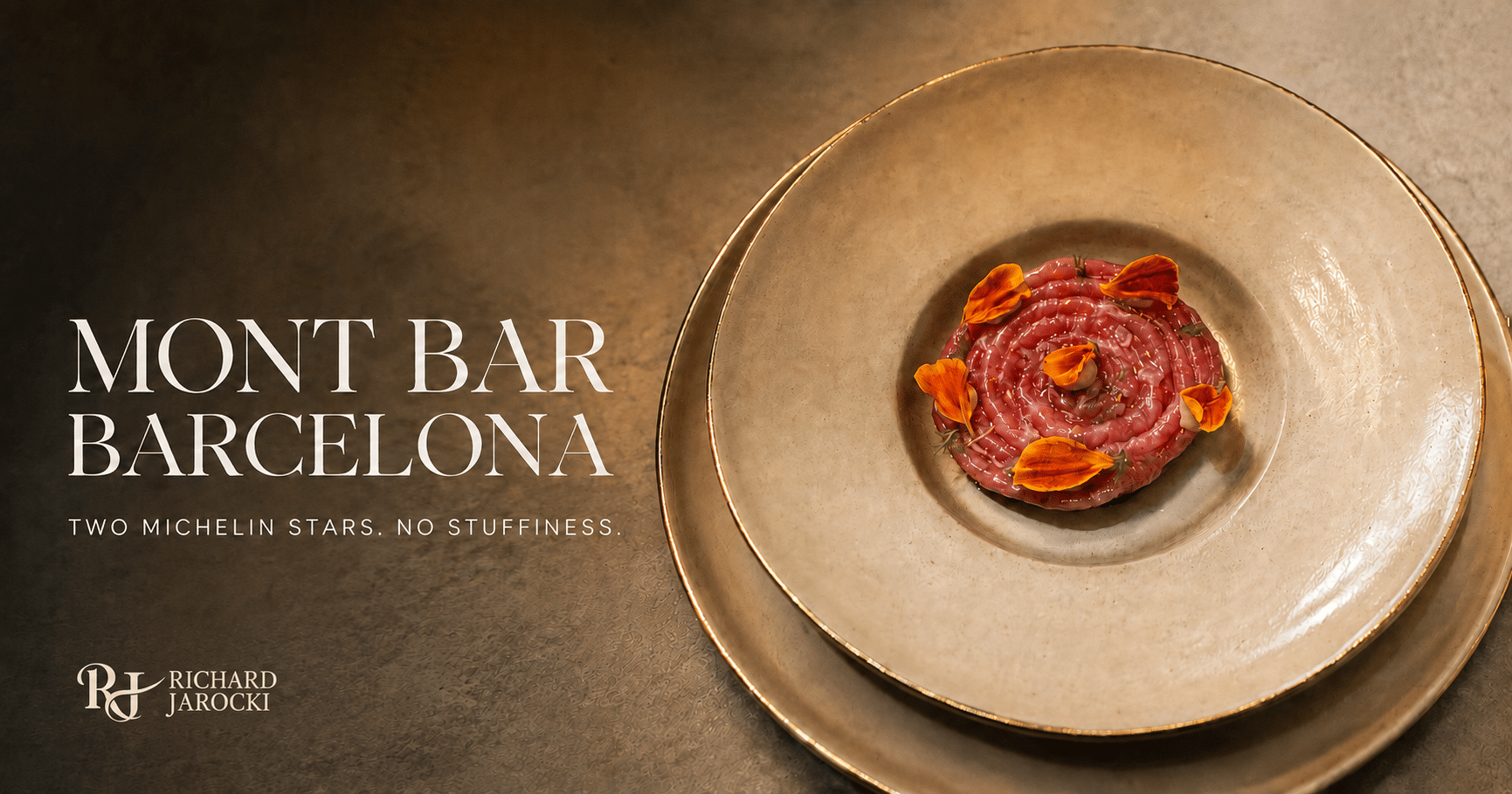
    The smoked tuna belly with pine nut emulsion was one of my favorite dishes of the entire meal. It was also one of the plates that visually defined Mont Bar for me. The tuna arrived arranged in a precise spiral, finished with small orange flowers, but it ate even better than it photographed. The gentle smokiness deepened the richness of the belly without masking it, while the pine nut emulsion brought a creamy, nutty balance that never became heavy.

    Then came razor clams with ponzu à la donostiarra, prepared at the table. This was another example of the kitchen crossing Spanish and Japanese references without losing the identity of either. It had the garlic-and-pepper energy associated with the Basque-style donostiarra preparation, sharpened by ponzu.

    The seafood continued with turbot in beurre blanc with caviar and lobster with noisette and consommé. These were luxurious ingredients, but the meal never felt like a checklist of expensive products. The caviar had a reason to be there. The lobster was treated as an ingredient, not a status symbol.

    That sounds obvious, but it is not. Too many tasting menus lean on caviar, wagyu and truffles as shortcuts. Mont Bar used luxury where it added something and moved on when it did not.

    The Plates I Would Point Someone Toward First

    If someone asked me to explain this dinner using only a few dishes, I would start with the smoked tuna belly, the razor clams and the warm mochi. The tuna captured the visual precision and balance; the clams made the Spanish and Japanese references easy to understand; the mochi showed that a serious kitchen could still serve something immediately comforting and fun. They were different expressions of the same approach, not three unrelated attempts to surprise the table.

    That does not mean I would arrive expecting those exact plates again. This was my June menu. The useful takeaway is the way the kitchen handled them: technique, richness and presentation all had a purpose beyond making the meal look expensive.

    Mont Bar Barcelona Review White asparagus with oyster escabeche and béarnaise at Mont Bar Barcelona
    White asparagus with oyster escabeche and béarnaise balanced richness, acidity and subtle marine flavor.
    Razor clams with ponzu prepared tableside at Mont Bar Barcelona
    Razor clams with ponzu à la donostiarra were finished at the table.
    Turbot with beurre blanc and caviar at Mont Bar Barcelona
    Turbot with beurre blanc and caviar showed how Mont Bar uses luxurious ingredients without allowing them to overwhelm the dish.
    Lobster with noisette and consommé at Mont Bar Barcelona
    Lobster with noisette and consommé was refined, focused and treated as more than another luxury ingredient.

    The Course I Did Not Expect: Mushroom Ice Cream

    One of the most unusual savory courses paired perrechico mushroom, mushroom ice cream and white miso.

    Mushroom ice cream can sound like the kind of idea a restaurant creates because it wants diners to talk about it. This was different. The cold temperature changed the way the earthy mushroom flavor registered, while white miso added depth and seasoning. It created a bridge between the seafood courses and the final meat course without simply repeating the richness that came before it.

    It was strange enough to be memorable and good enough to justify being strange.

    Its place in the sequence also helped explain why the full menu worked for me. After the seafood, another conventionally rich savory plate could have made the dinner feel repetitive. The mushroom course changed the temperature and the expression of earthiness before the pigeon arrived. It gave the meal a different direction without feeling disconnected from everything around it.

    Perrechico mushroom course with mushroom ice cream and white miso at Mont Bar
    Perrechico mushroom, mushroom ice cream and white miso was strange enough to be memorable and good enough to justify being strange.

    Bresse Pigeon, Morels and Cacao

    The final savory course was Bresse pigeon cooked two ways with morels and cacao.

    Pigeon and cacao can easily become dark, dense and exhausting at the end of a long meal. Mont Bar kept the dish controlled. The pigeon was deeply flavored, the morels added earthiness and the cacao reinforced the savory elements instead of making the plate taste like dessert.

    The presentation was restrained compared with some of the earlier courses. That restraint felt right. By this point, the kitchen no longer needed to prove anything.

    There was also an optional Miyazaki A5 wagyu supplement, but the pigeon was the more interesting choice for this menu. It carried the personality of the restaurant and gave the savory portion of the meal a proper finish.

    Bresse pigeon cooked two ways with morels and cacao at Mont Bar Barcelona
    Bresse pigeon cooked two ways brought the savory menu to a focused finish.

    Mont Bar Barcelona Review: Desserts That Continued the Story

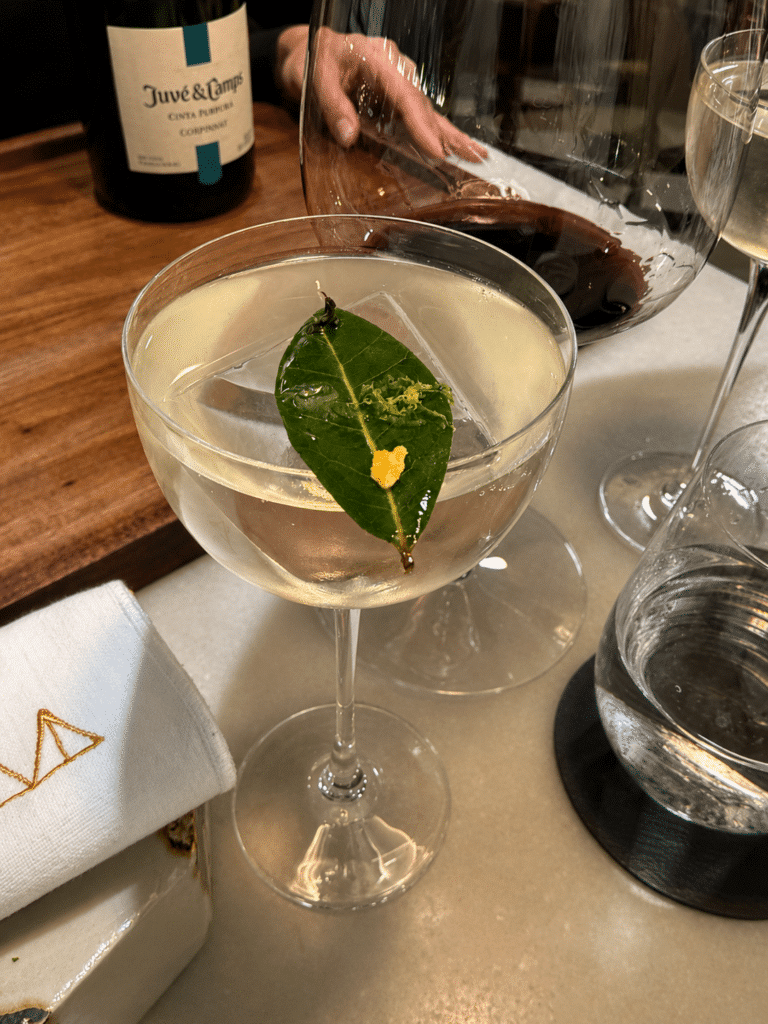
    The first transition into dessert was a drink combining gin, bay leaf, lime and smoked black tea. It was delicious and remarkably smooth, with the lime and tea keeping the gin bright instead of sharp. Even the bay leaf itself tasted incredible; a genuine wow moment from a detail that could easily have been treated as nothing more than garnish. It reset the palate without falling back on the predictable citrus sorbet.

    Then came one of the menu’s most distinctive combinations: nori seaweed, rice ice cream and caviar. Sweet, salty and oceanic, it reflected the same Spanish-meets-Japanese thinking that had appeared throughout dinner.

    Gin, bay leaf, lime and smoked black tea drink at Mont Bar Barcelona
    The smooth gin, bay leaf, lime and smoked black tea drink included an edible leaf that became an unexpected wow moment.
    Nori seaweed with rice ice cream and caviar at Mont Bar Barcelona
    Nori, rice ice cream and caviar continued Mont Bar’s confident combination of sweet, salty and oceanic flavors.

    The final sequence included:

    • Bordaloue millefeuille with Saint-Germain
    • Cherries with rose, hibiscus and genmaicha tea
    • Coffee with mucilage and umeboshi
    • Petits fours

    The desserts did not feel like a separate pastry menu attached to the end of the meal. They continued the restaurant’s point of view: sharp contrasts, savory accents and enough acidity to keep a long tasting menu alive through the final bite.

    Cherry dessert with rose, hibiscus and genmaicha tea at Mont Bar Barcelona
    Cherries with rose, hibiscus and genmaicha brought fruit, acidity and floral flavor to the final dessert sequence.
    Coffee, mucilage and umeboshi dessert at Mont Bar Barcelona
    The desserts continued the menu’s mix of sweetness, acidity and savory accents.
    Coffee dessert with mucilage and umeboshi at Mont Bar Barcelona
    Coffee, mucilage and umeboshi completed the meal with another unexpected balance of sweetness and acidity.
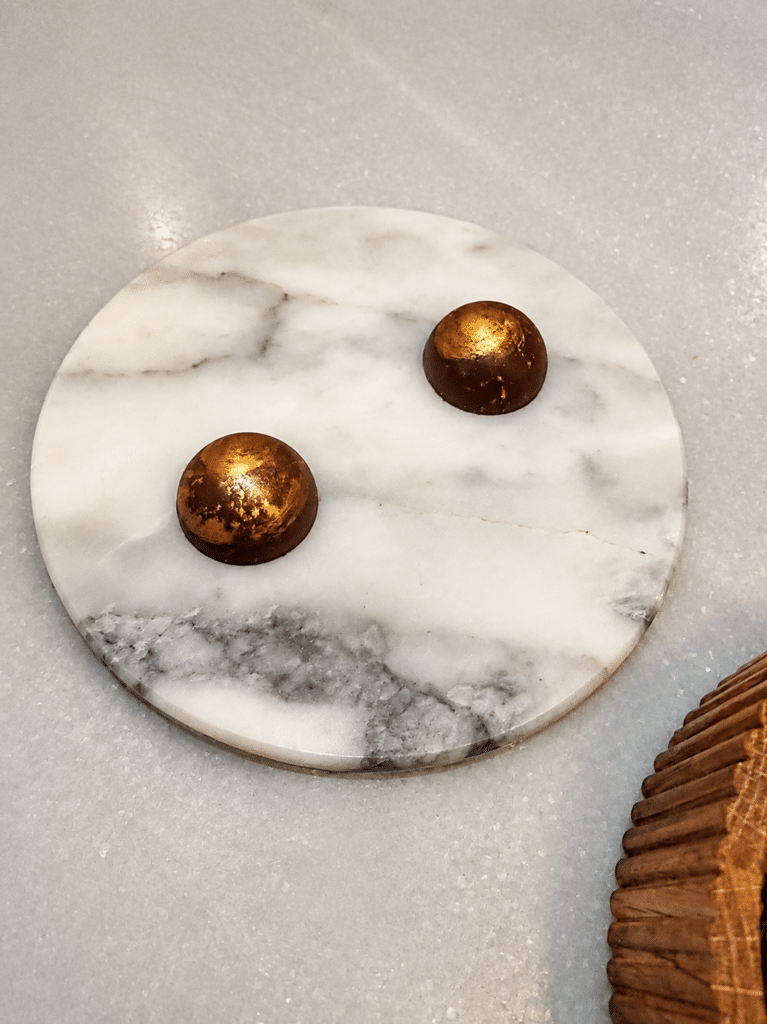
    Chocolate petits fours with gold detailing at Mont Bar Barcelona
    The final bites of one of my five best meals ever.

    The Spanish Wine Pairing Was an Education

    The wine pairing deserves its own review.

    More Than a List of Impressive Labels

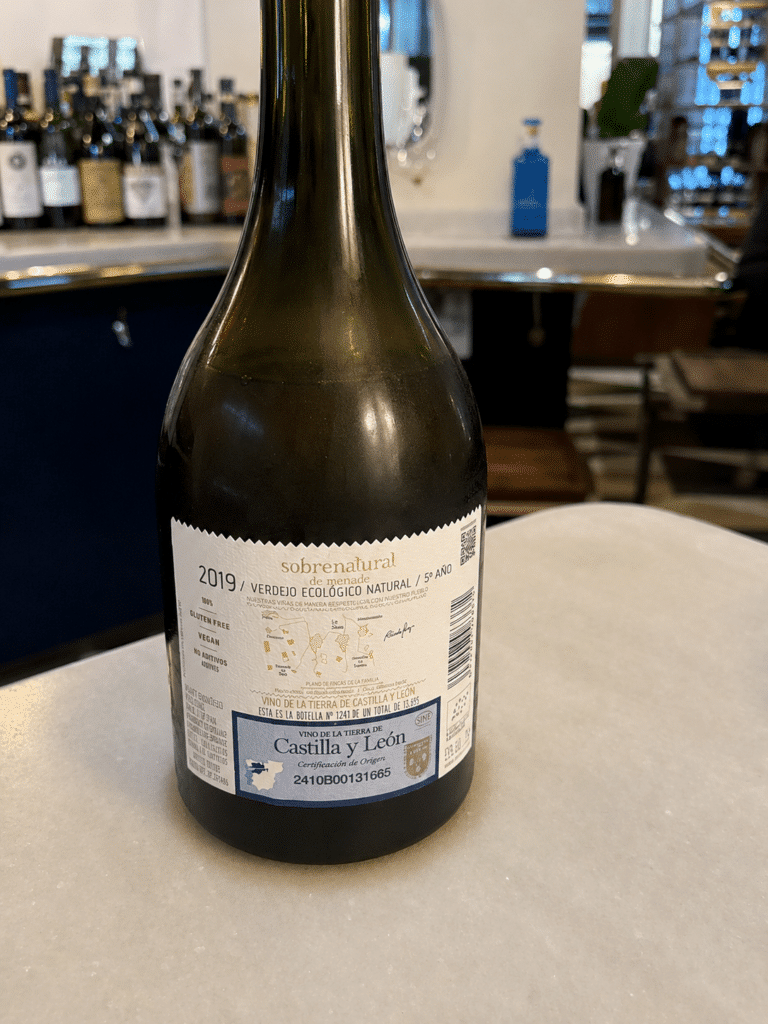
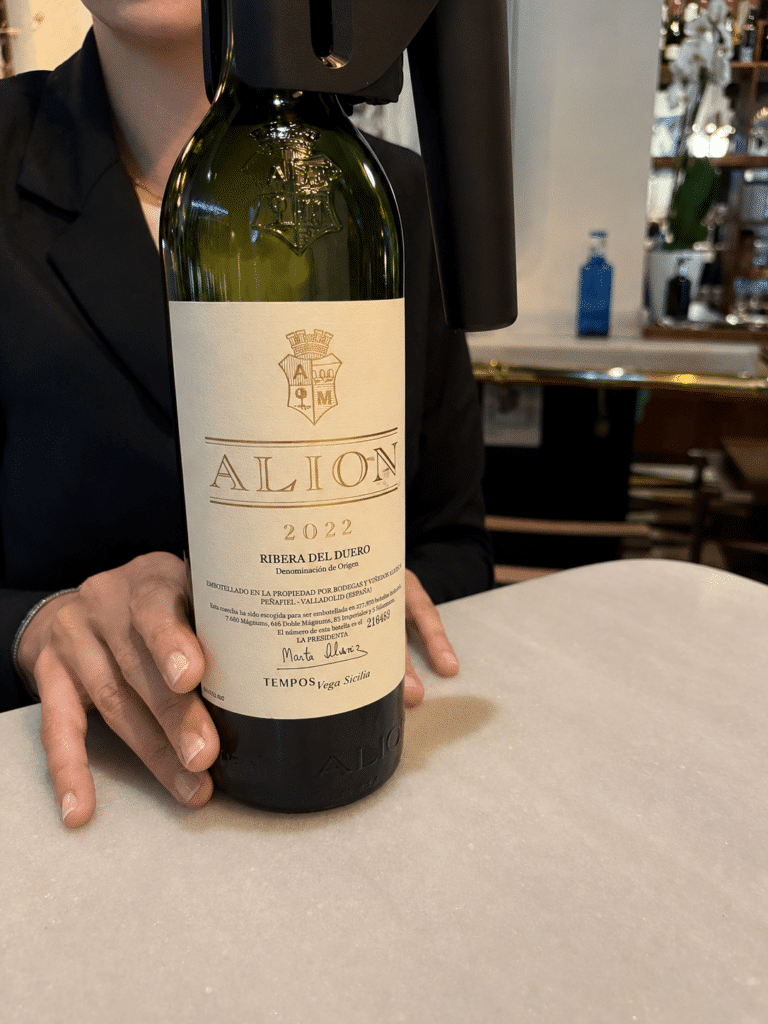
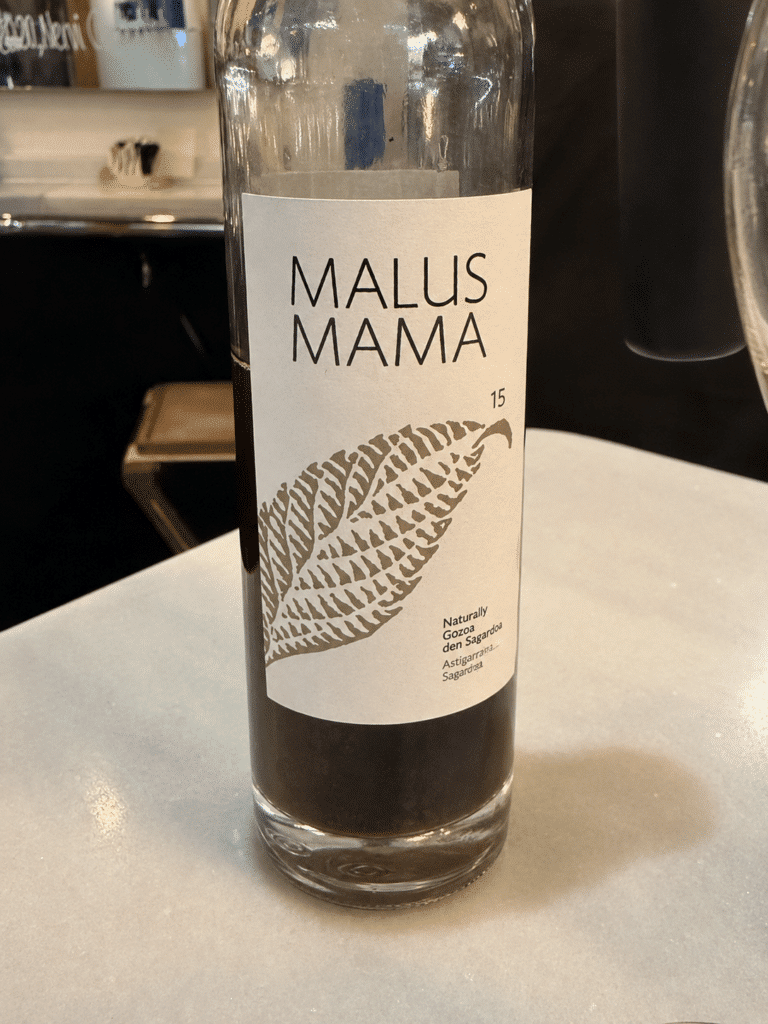
    The bottle photographs below are worth looking at alongside the food, because the wine was not simply background to dinner. A Palo Cortado from Jerez, a Garnacha Blanca, a Verdejo, a Ribera del Duero wine and a sweet Basque cider tell a much broader story than “Spanish red and white.” Seeing those names again helps explain why I came away interested in exploring more, rather than merely pleased that the glasses had been refilled.

    I enjoy wine, but I am not interested in being talked down to or sitting through a lecture before every sip. Mont Bar found the right balance. The team explained the place, producer and reason for each selection, then allowed the wine to do the rest.

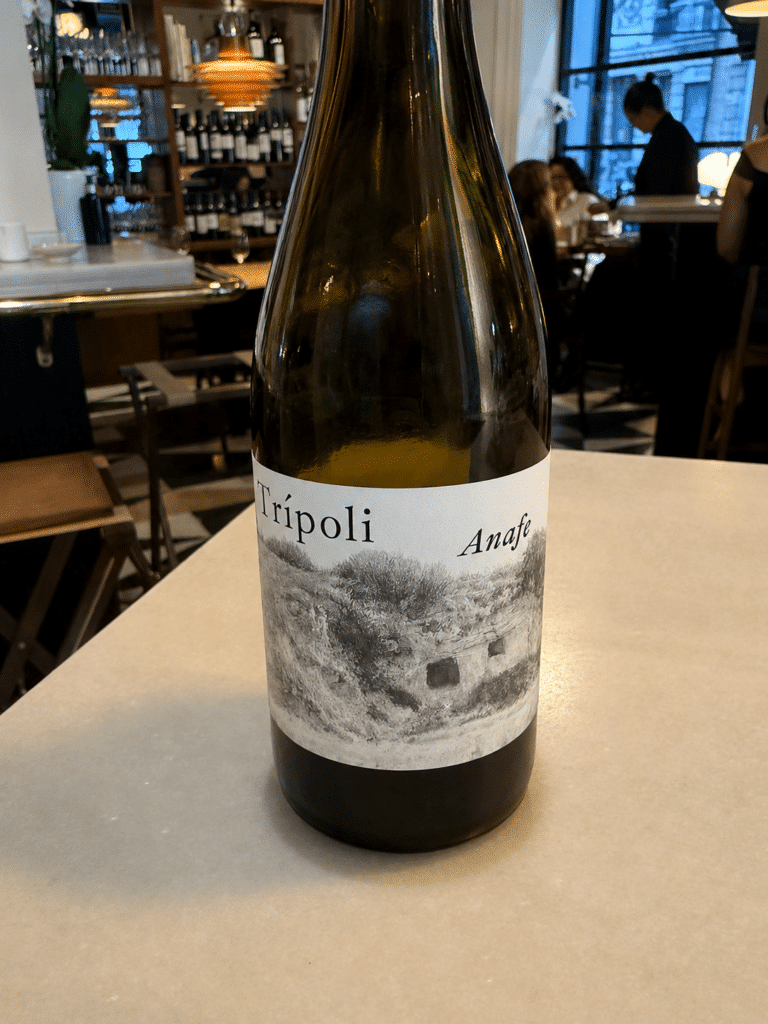
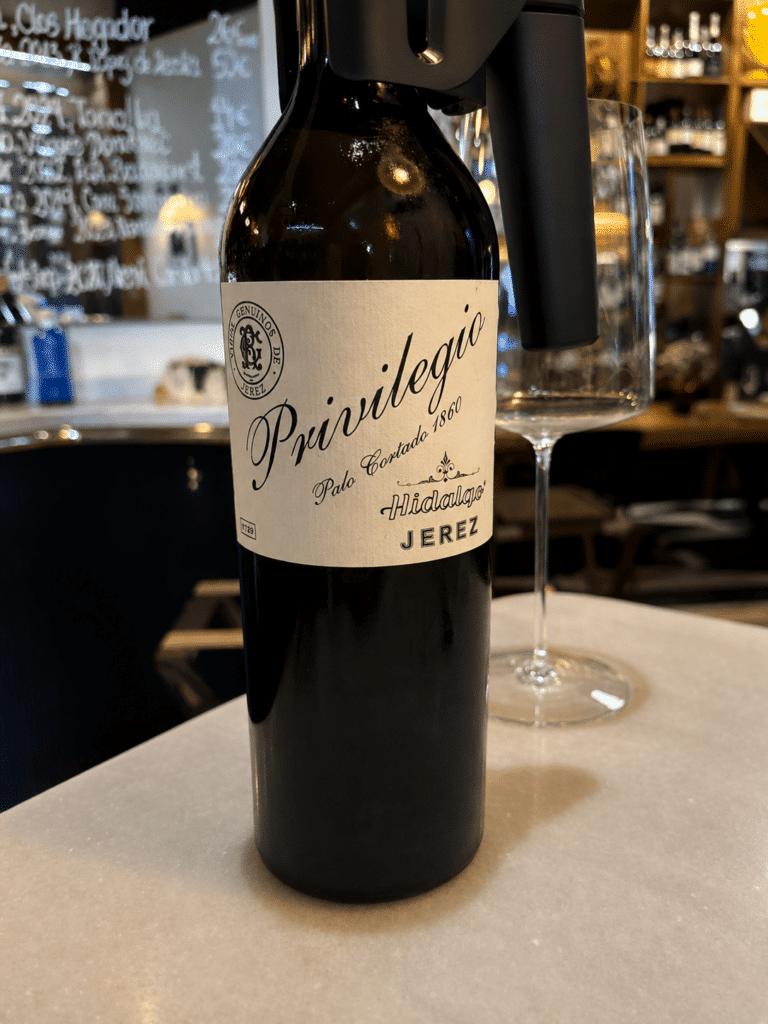
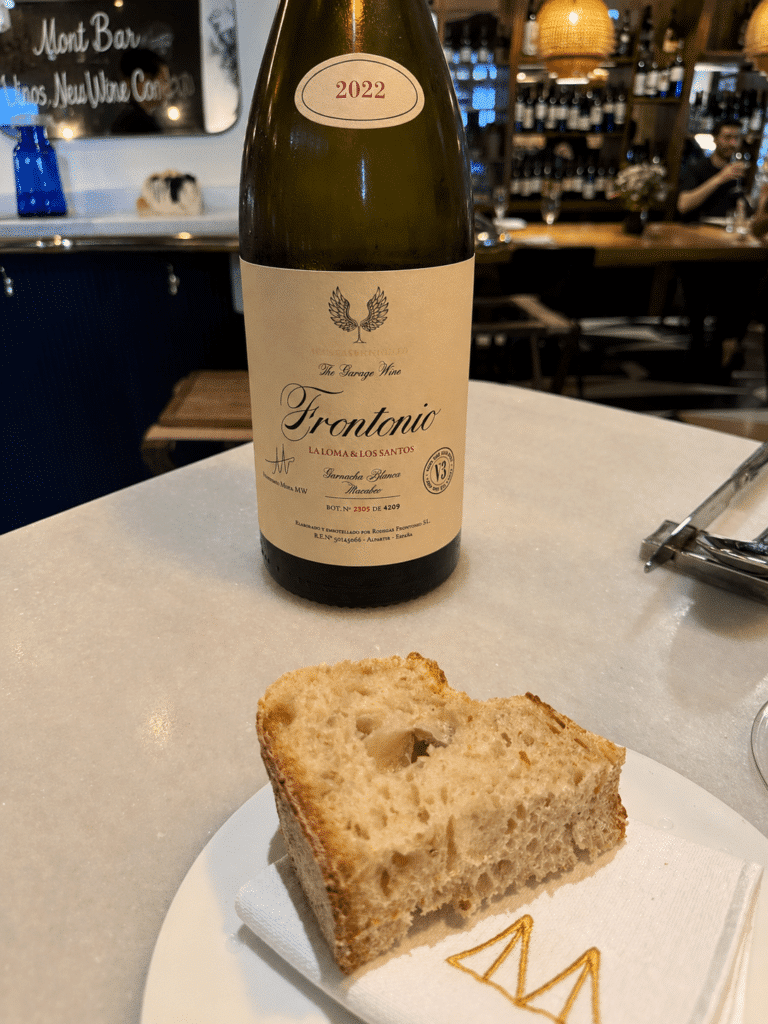
    The pours moved through less predictable Spanish producers and styles rather than relying on a parade of expensive, recognizable labels. I photographed most of the bottles as they arrived, and looking back at those labels feels like retracing the meal. The sequence included Trípoli Anafe, Privilegio 1860 Palo Cortado from Hidalgo in Jerez, Frontonio The Garage Wine La Loma & Los Santos Garnacha Blanca 2022, Sobrenatural de Menade Verdejo 2019, Alión 2022 from Ribera del Duero and the naturally sweet Basque cider Malus Mama 15.

    That range was the point. The pairing was not only about matching acidity to seafood or weight to pigeon. It showed how broad Spanish wine can be; from fresh, mineral whites and characterful natural wines to Garnacha and a complex sweet cider that functioned more like a wine.

    There were more than twelve pours over the course of dinner, yet the pacing remained controlled. That number matters. In America, when I do a pairing with twelve or more wines, I usually expect to feel it the next morning; even when the individual pours are not large. After this dinner in Spain, I woke up with no hangover at all.

    I am not going to pretend I can prove why. It could have been the pour sizes, the pacing, the amount of food, the water, the wine choices or some combination of all of it. I can only report what happened: I tasted more than a dozen different pours, learned a tremendous amount about Spanish wine and felt completely fine the next day.

    Trípoli Anafe served during the Mont Bar wine pairing in Barcelona
    Trípoli Anafe was one of the early discoveries in a pairing built around less-predictable Spanish wines.
    Privilegio 1860 Palo Cortado from Hidalgo in Jerez at Mont Bar Barcelona
    A Palo Cortado from Jerez showed how far the pairing moved beyond conventional still wines.
    Frontonio La Loma and Los Santos Garnacha Blanca 2022 at Mont Bar Barcelona
    Frontonio’s Garnacha Blanca was part of an education in Spanish producers I would not have discovered on my own.
    Sobrenatural de Menade Verdejo 2019 served during the Mont Bar wine pairing
    The naturally made Verdejo added another texture and personality to a pairing that never became repetitive.
    Alión 2022 Ribera del Duero served during the Mont Bar wine pairing
    Alión brought Ribera del Duero depth as the menu moved into its final savory courses.
    Malus Mama 15 naturally sweet Basque cider at Mont Bar Barcelona
    Malus Mama 15 functioned more like a complex dessert wine than a conventional cider.

    If wine is part of what you enjoy about a meal, I would give the pairing serious consideration here. It expanded my willingness to explore wine, and the explanations added to dinner without taking it over. The current pairing choices and prices are listed above; the bottles pictured here are the ones from my visit, not a promised selection for another date.

    A Custom Cocktail Outside to End the Night

    Mont Bar gave the evening one final personal touch after dinner. The team made me a custom cocktail on the house, and I took it outside to one of the seats along the restaurant. After a long tasting menu and more than twelve wine pours, there was no need for the restaurant to add anything else. That is exactly why the gesture stayed with me.

    Sitting outside in Barcelona with a drink made specifically for me was the right ending. It did not feel like another formal course or a rehearsed luxury-service routine. It felt generous and spontaneous; the kind of hospitality that makes you remember the people behind a restaurant as clearly as the food.

    Why Mont Bar Ranked Above More Famous Meals

    I ate at major restaurants during this trip. Some had more stars. Some had more elaborate service rituals. Some were more expensive.

    Mont Bar was the meal I kept thinking about.

    Part of that was the food. There was not one single course carrying the entire dinner; the kitchen delivered across a very long menu. The snacks were as carefully considered as the pigeon. The desserts continued the same ideas instead of abandoning them. The wine pairing opened a door into Spanish producers I did not know.

    But food alone does not place a restaurant in my top five.

    What separated Mont Bar was how the evening felt. The room had life. The service was serious but relaxed. Iván hosted like someone welcoming people into a place he genuinely cared about. Fran’s food was ambitious without being self-important. I never felt as though I needed to sit up straighter, speak more quietly or pretend to understand something to earn my place at the table.

    It felt like home; if home had better food than almost anyone could cook.

    That combination is much rarer than technical perfection.

    Why This Became My Favorite Barcelona Meal

    I am not ranking every restaurant in Barcelona or suggesting that another diner should value the same things I do. This is a personal judgment about the meals I experienced. Mont Bar brought together the parts I care about most: food that held my attention throughout, wine that taught me something, and people who made an expensive evening feel welcoming rather than ceremonial. The custom cocktail was a lovely final detail, but it was the whole dinner that earned the place in my memory.

    Is Mont Bar Worth It?

    Absolutely.

    Mont Bar is not a casual tapas dinner, despite the word “bar” in its name. The full menu and pairing represent a major expense, and dinner will occupy most of your evening. If you only want a few traditional dishes and a bottle of wine, Barcelona has many excellent places better suited to that plan.

    But if you want one destination meal in Barcelona that combines technique, creativity, wine and personality, Mont Bar belongs near the top of the list.

    The restaurant currently offers a shorter Classic Menu and the longer Mont Menu. For a first visit, I would choose the Mont Menu. The opening snack sequence is essential to understanding the restaurant, and the progression into seafood, pigeon and dessert is what turns a collection of excellent bites into a complete experience.

    Would I return? Without hesitation.

    Mont Bar did not merely meet the expectations of a two-Michelin-star restaurant. It reminded me why I chase these meals in the first place; not to collect stars, but to find places that create a memory strong enough to compete with every reservation that comes after it.

    For me, this was one of those places.

    I paid for the meal myself; there was no invitation or sponsored arrangement. The complimentary custom cocktail after dinner was the hospitality gesture described above.

    Completely unnecessary. Absolutely worth it.

    For more of the trip, read my Barcelona travel guide. You can also follow @Richard.Jarocki on Instagram for more of the food and travel behind these stories.

    Mont Bar Barcelona review

  • Oiji Mi Review NYC: Tasting Menu & My Verdict

    Oiji Mi Review NYC: Tasting Menu & My Verdict

    Oiji Mi tasting menu dishes featuring the Oiji Bowl, sea bass, galbi and Korean appetizers in New York City.


    Oiji Mi’s five-course Korean tasting menu made dinner worth keeping, even after a day of eating and drinking at two rooftop parties. During my visit to the restaurant in Manhattan’s Flatiron District, the menu was $150 per person before optional supplements. The beef tartare and scallop were highlights, but the Oiji Bowl was my favorite; and the dish I would order again. This Oiji Mi review covers what we ate, the atmosphere, and whether the experience was worth it. Menus and prices may have changed since my visit.

    I had been eating and drinking throughout the day. Canceling dinner briefly crossed my mind, but I had been looking forward to this reservation and did not want to miss it. My dining partner and I sat down wondering how we would possibly finish a five-course tasting menu.

    Somehow, we ate everything.

    That may be the strongest endorsement I can give Oiji Mi. We arrived without much appetite, yet the kitchen kept placing food in front of us that we genuinely wanted to finish.

    Oiji Mi at a Glance

    • Location: 17 West 19th Street, Manhattan’s Flatiron District.
    • What I came for: A five-course contemporary Korean dinner. The Oiji Bowl was my favorite, with the beef tartare and scallop close behind.
    • My visit price: $150 per person before supplements, drinks, tax and gratuity. My Oiji Bowl supplement was $35.
    • Current menu check: The official menu lists $155 per person and a $35 Oiji Bowl supplement as of October 27, 2026. Check your selected date before booking.
    • Where to sit: The main dining room serves the prix-fixe menu. À la carte is offered in the bar and lounge.
    • Reservations: Released 30 days ahead according to the restaurant. Bar walk-ins are first come, first served.
    • My verdict: I would return, and I would order the Oiji Bowl again without hesitation.

    Planning details checked against the official menu and restaurant FAQ. The meal and photographs below describe my visit, not a promise of today’s dishes.

    Oiji Mi Menu, Prices and Reservations

    If you are deciding whether to book, start with the kind of evening you want. The main dining room is for the five-course prix-fixe experience. The bar and lounge offer à la carte, which is a different way to approach the restaurant if you do not want to commit to the full dinner.

    The current Oiji Mi menu, checked October 27, 2026, lists the dining-room menu at $155 per person. The Oiji Bowl remains a $35 supplement. Those two items would total $190 per person before anything else you order, tax or gratuity. That is a planning calculation, not the price of my earlier meal.

    I paid $150 for the menu during my visit, with optional supplements. The restaurant’s FAQ still uses “starting at $150,” while the dedicated menu page says $155. I would use the menu page to plan and confirm the amount shown for the reservation you actually select. Special-date menus can differ.

    The restaurant’s FAQ says reservations open 30 days in advance for the dining room and lounge. Bar seating welcomes walk-ins on a first-come basis. If the full tasting menu is the reason for your visit, book the dining room rather than assuming an available bar seat will give you the same evening.

    At the time of this check, the stated cancellation charge was $50 per guest for cancellations within 24 hours. Read the terms attached to your booking, and discuss dietary needs directly before committing; the restaurant warns that some restrictions significantly limit its options.

    The photographs below are the menus from my visit. They help explain what I ordered, but seasonal preparations and drinks can change. Follow the official menu link for the current selection.

    Oiji Mi five-course prix fixe menu with modern Korean dishes, supplements and beverage pairings.
    The $150 five-course menu photographed during my visit. This is a historical menu, not the current price.
    Oiji Mi cocktail menu listing effervescent, shaken, stirred and reserve drinks.
    The cocktail menu from my visit. Names, ingredients and prices may change.

    Oiji Mi Tasting Menu: Prices and the Flatiron Setting

    Located at 17 West 19th Street in Manhattan’s Flatiron District, Oiji Mi describes itself as a contemporary Korean restaurant created specifically for New York City.

    Owner and Executive Chef Brian Kim takes recognizable Korean ingredients and preparations and presents them through the structure and precision of a modern tasting menu. The cooking is polished and ambitious, but its Korean identity remains clear.

    For a different Korean dining experience in Manhattan, read my COQODAQ brunch review.

    The restaurant itself feels refined without becoming cold. Warm wood, softly illuminated lanterns, pink banquettes and carefully selected tableware give the dining room a sense of occasion. It is sophisticated enough for a celebration but comfortable enough to let the evening unfold naturally.

    Metal plate, Korean-style spoons, chopsticks and clear glassware arranged on a wooden table at Oiji Mi.
    Oiji Mi’s understated modern table setting.
    Oiji Mi dining room with sculptural lanterns, red banquette seating and a view into the open kitchen.
    Sculptural lighting and a clear view into Oiji Mi’s open kitchen.

    A Meal That Began with Caviar

    We added the caviar donuts before the tasting officially began.

    These were small fried pastries topped with crème fraîche, caviar and chives. The contrast worked immediately: a warm, crisp exterior, a soft center, cool cream and the clean salinity of the roe.

    They were playful, luxurious and easy to eat. More importantly, they established the tone for the rest of the evening. Oiji Mi uses premium ingredients, but the kitchen does not treat them as museum pieces. The food is meant to be enjoyed.

    Two savory donuts topped with crème fraîche, caviar and chopped chives at Oiji Mi.
    Oiji Mi’s two-piece caviar donut supplement.

    Oiji Mi Review: Three Introductions to the Kitchen

    Three opening bites from Oiji Mi’s modern Korean tasting menu served in brass bowls.
    Oiji Mi’s beautifully presented trio of opening bites.

    The first course arrived as a trio: spotted prawn, beef tartare and gyeran jjim.

    Spotted Prawn

    The spotted prawn was served in a shell with a gochujang panna cotta, pearl rice and a bright accompanying sauce. The presentation was delicate, but the flavors had enough acidity and spice to keep the dish from becoming overly sweet.

    It was a light beginning and a smart way to wake up an appetite I was not sure I still had.

    Beef Tartare

    The beef tartare was one of my favorite dishes of the entire dinner.

    The beef delivered the expected richness, but pickled radish and caviar gave the dish contrast. The acidity of the radish cut through the meat, while the caviar brought salinity without dominating the plate.

    This was technically polished food that still tasted satisfying. It did not disappear under unnecessary decoration or technique. The kitchen understood that excellent beef should remain the focus.

    Gyeran Jjim

    Gyeran jjim is traditionally a comforting Korean steamed-egg dish. Oiji Mi’s version elevated that familiarity with king crab, anchovy and roe.

    It was soft, warm and deeply savory, with the seafood adding layers of sweetness and salinity. Of the three opening preparations, this was the most comforting; a refined interpretation of something that still felt rooted in home cooking.

    Together, the three dishes introduced Oiji Mi’s point of view: recognizable Korean flavors presented with fine-dining precision.

    Scallop and Spicy BBQ Squid

    Seared scallop with its accompaniments on a textured glass plate at Oiji Mi.
    The seared scallop, one of my favorite dishes of the evening.
    Spicy BBQ squid with green strawberry, tomatillo, dubu and fresh greens on a textured glass plate at Oiji Mi.
    Oiji Mi’s Spicy BBQ Squid with green strawberry, tomatillo and dubu.

    For the second course, we chose two different preparations so we could try both sides of the kitchen’s approach.

    Scallop

    The scallop was another highlight of the night.

    It arrived beautifully seared, with a deeply caramelized exterior protecting a tender center. The scallop’s natural sweetness remained intact, while the sauce and accompanying vegetables added richness and an earthy edge.

    A restaurant can surround a scallop with expensive ingredients and complicated technique, but none of that matters if the scallop itself is overcooked. This one was handled properly.

    Along with the beef tartare, it was one of the best dishes before the meal reached its undeniable high point.

    Spicy BBQ Squid

    The spicy barbecue squid offered a more assertive counterpoint. It arrived beneath a generous layer of greens, with heat and sweetness working underneath.

    The dish showed another side of the kitchen. Where the scallop was controlled and delicate, the squid leaned into char, spice and stronger seasoning. Ordering both allowed us to see how comfortably Oiji Mi moves between restraint and intensity.

    The Oiji Bowl: My Favorite Dish of the Night

    Oiji Bowl with uni, spotted prawn, ikura and spicy cucumber at Oiji Mi in New York City.
    The signature Oiji Bowl with uni, spotted prawn, ikura and spicy cucumber.

    The Oiji Bowl was my favorite course of the evening. It combined uni, spotted prawn, eel, ikura, cucumber, pickled elements, and seasoned rice. The uni was exceptionally sweet and creamy, while the other ingredients brought richness, salinity, and freshness without competing with it.

    At a $35 supplement during my visit, it was an extra expense; but also the dish I would order again without hesitation. Even after a full day of eating and drinking, I finished every bite.

    Sea Bass and Galbi

    Crispy-skinned fish with mushrooms, puffed rice and savory sauce at Oiji Mi in New York City.
    The sea bass course from my dinner at Oiji Mi.
    Sliced medium-rare galbi with seaweed, vegetables and savory sauce at Oiji Mi.
    Oiji Mi’s tender medium-rare galbi with seaweed and seasonal accompaniments.

    The fourth course moved the tasting into heavier territory with sea bass and galbi.

    Sea Bass

    The sea bass arrived with octopus, crispy rice and a truffle-scented seafood broth.

    The fish had a crisp, properly rendered skin and a moist interior. Crispy rice added texture, while the broth gave the dish depth. The octopus made it feel substantial enough to serve as a main course rather than another delicate seafood tasting.

    Truffle and seafood can compete if the kitchen is not careful. Here, the broth connected the components and allowed the fish to remain central.

    Galbi

    The galbi was sliced to reveal a beautifully pink center and served with a smooth pommes purée, dark vegetables and jus.

    This was the richer of the two main courses. The beef was cooked with precision, and the sauce provided the savory finish the course needed after several seafood-forward plates.

    By this point in the evening, I had no logical reason to still be eating. Neither did my dining partner.

    We finished it anyway.

    Chamoe Bingsu and Oksusu

    Chamoe bingsu with Korean melon, honey-oat crumble and cashew served in a brass bowl at Oiji Mi.
    Chamoe bingsu with Korean melon, honey-oat crumble and cashew.
    Oiji Mi Review: Oksusu dessert with grilled corn, dulce de leche, and sesame at Oiji Mi in New York City.
    Oksusu; Oiji Mi’s grilled-corn dessert with dulce de leche and sesame.

    Dessert continued the restaurant’s practice of using familiar Korean ingredients in polished, contemporary ways.

    Chamoe Bingsu

    The chamoe bingsu was built around Korean melon, honey-oat crumble and cashew.

    After the richness of the Oiji Bowl and galbi, the cool shaved ice and fresh melon were welcome. The crumble was served separately, allowing us to add texture without losing the lightness that made the dessert work.

    It was refreshing without feeling like an obligatory palate cleanser.

    Oksusu

    The oksusu dessert explored grilled corn with dulce de leche and sesame.

    Corn’s natural sweetness made it an easy fit for dessert, while the toasted flavors gave the plate more depth than a conventional sweet ending. The presentation separated the components, encouraging us to combine the creamy, crisp, sweet and savory elements in each bite.

    The two desserts approached the finish from opposite directions: one cool and refreshing, the other richer and more roasted.

    Cocktails and the Dining Room

    Oiji Mi’s beverage program follows the same creative approach as the food. The cocktail list incorporates ingredients such as makgeolli, soju, bokbunja, omija, yuja and shiso alongside spirits and techniques associated with contemporary cocktail bars.

    The drinks look playful, but the menu is clearly serious about structure and balance. Oiji Mi also offers wine pairings and nonalcoholic options for the tasting menu.

    Visually, the dining room occupies an appealing middle ground between a formal tasting-menu restaurant and an energetic Manhattan night out. The lantern-like lighting and warm color palette make the room feel elegant, while the open layout keeps it from becoming stiff or overly ceremonial.

    Oiji Mi Review: Pink foamy Ode to CDMX cocktail beside blue Saratoga bottles in the Oiji Mi dining room.
    Ode to CDMX combines mezcal, pineapple tepache, cranberry, genepy and chili tincture.
    Amber Arsonist cocktail with foam, green leaf and charred pineapple garnish at Oiji Mi.
    The Arsonist pairs añejo tequila with charred pineapple, Cappelletti and clairin Milot.
    Alternate view of the cloudy Melon Eight Milk 2.0 cocktail with orange melon garnishes at Oiji Mi.
    An alternate view of Oiji Mi’s Melon Eight Milk 2.0.
    Cloudy Melon Eight Milk 2.0 cocktail served in a ceramic bowl with orange melon garnishes at Oiji Mi.
    Melon Eight Milk 2.0 combines makgeolli, melon, soju, Yakult and Chilsung Cider.
    Oiji Mi dining room with sculptural pendant lights, red banquettes, marble tables and warm wood details.
    Oiji Mi’s dining room blends dramatic lighting with warm wood and red leather seating.
    Oiji Mi dining room with wooden tables and a view of chefs working in the open kitchen.
    The open kitchen brings energy into Oiji Mi’s intimate dining room.
    Oiji Mi bar displaying Michelin figures, a 2025 Michelin plaque, Krug bottles and glassware.
    Michelin recognition displayed behind the bar during my visit.

    Service

    The service was excellent from beginning to end. The staff was polished, attentive and knowledgeable without making the experience feel stiff. Courses were paced well, each dish was clearly explained, and the team made the tasting menu feel welcoming rather than overly formal.

    Oiji Mi Review: The Verdict

    We arrived at Oiji Mi after a Formula 1 party, a World Cup party and an entire day of eating and drinking. Neither of us was hungry when the first course reached the table, yet we both finished everything.

    That does not happen because a restaurant is fashionable, expensive or beautifully designed. It happens because the kitchen understands pacing and knows how to keep each course distinct enough to renew your interest in the meal.

    The beef tartare was rich, balanced and precise. The scallop was beautifully cooked. The sea bass and galbi gave the tasting enough substance to feel complete, while the two desserts ended the evening from entirely different directions.

    But the Oiji Bowl was the reason this meal became memorable.

    The combination of sea urchin, spotted prawn, eel, ikura and seasoned rice could easily have become excessive. Instead, it was focused, balanced and genuinely delicious. The uni alone ranked among the best I have ever tasted.

    Oiji Mi presents Korean food through the language of a modern New York tasting menu, but the cooking does not lose its identity in the process. Technique supports the ingredients rather than replacing them.

    Would I order the Oiji Bowl again? Without hesitation.

    Would I return to Oiji Mi? The fact that I am still thinking about that uni answers the question.

    Planning Your Own Oiji Mi Dinner

    My strongest recommendation is to arrive with more appetite than I did. The kitchen held my attention even after two rooftop parties, but I would rather give a dinner like this room in the day than ask it to compete with everything I had already eaten.

    Choose the dining format before choosing individual dishes. My review is of the five-course experience, with the pacing, choices and supplements that were available that night. It is not a separate review of an à la carte evening at the bar.

    The Oiji Bowl is the dish I keep coming back to in my memory. If it is available when you visit, it is the supplement I would personally prioritize. The beef tartare and scallop also deserve the praise they received here. I would check the current preparations rather than expect every accompaniment in my photographs to be reproduced exactly.

    For the latest menu and booking route, visit Oiji Mi’s official website. The restaurant is at 17 West 19th Street, New York, NY 10011; its published phone number is 212-256-1259.

    More NYC Dining Experiences

    For a different side of Korean dining, read my COQODAQ brunch review. You can also compare this dinner with my Blue Box Café experience or explore the wider collection of food and drink stories.

  • Four Corners Dassai Blue Pop-Up

    Four Corners Dassai Blue Pop-Up

    Four Corners Dassai Blue Pop-Up

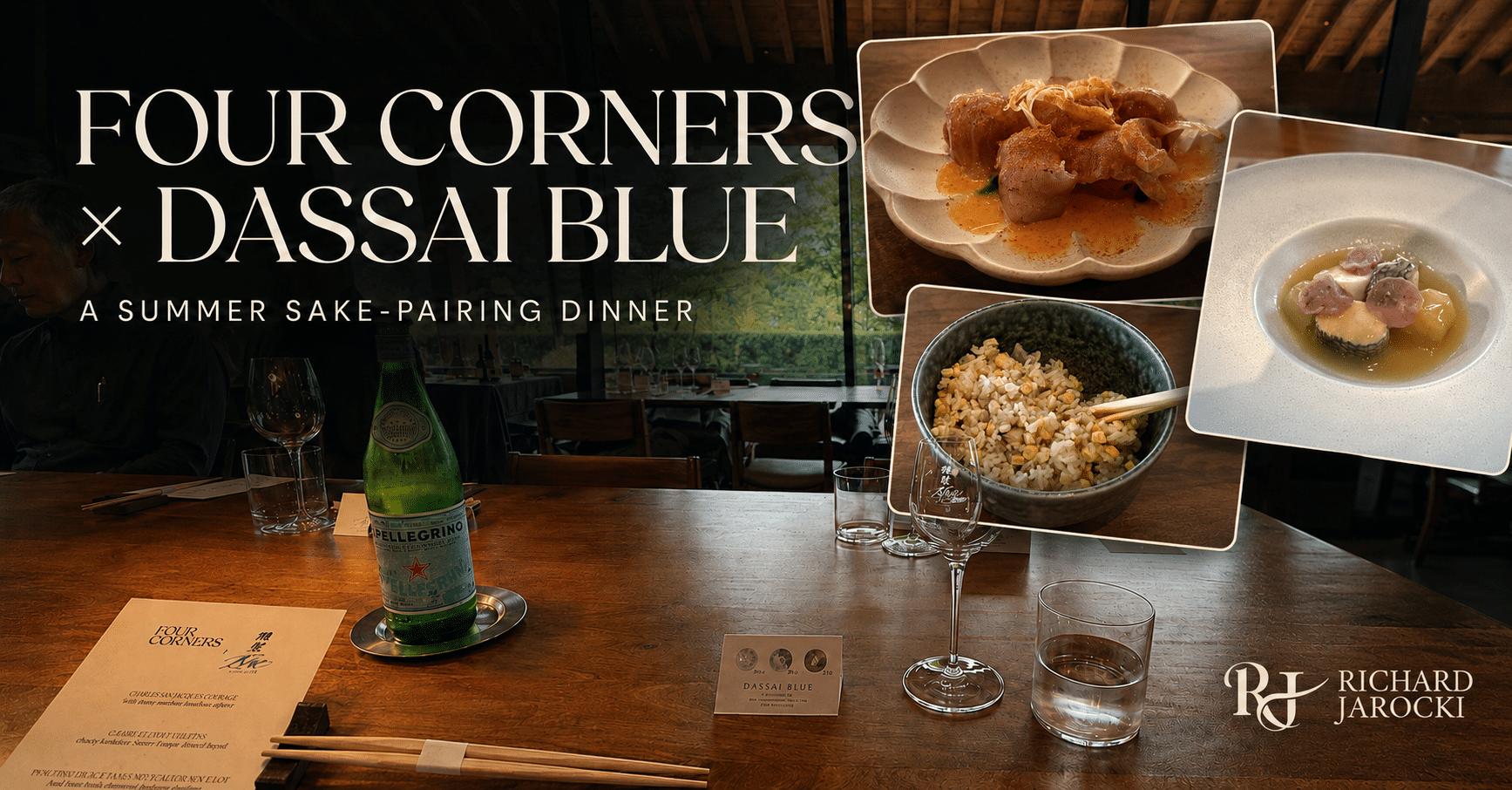
    Four Corners and Dassai Blue dining room with three featured dishes from the sake-pairing dinner.

    Four Corners at Dassai Blue: The Pop-Up Was Worth the Return

    I went back to Dassai Blue one day after publishing that I was returning. Chef David Israelow and Four Corners gave me another reason to keep watching what this Hyde Park brewery does next.

    A different dinner, the same reason to return

    My first meal at Dassai Blue was an omakase built around sushi, close interaction with the chef and a progression of sake pairings. The Four Corners pop-up was completely different: four composed courses, peak-summer produce and a menu shaped by Japanese and French technique.

    That difference was the point. Dassai Blue is strongest when it acts as more than a tasting room. It gives chefs a setting where sake can help structure the food instead of sitting on the side as an optional pour.

    A preview of Four Corners before Chatham

    Four Corners is the first restaurant of Chef David Israelow and is now expected to open in Chatham, New York, in 2027. Israelow previously served as culinary director and head chef at Michelin-starred One White Street in Tribeca. He is also a graduate of the French Culinary Institute and the Tokyo Sushi Academy, a combination that helps explain the French and Japanese framework of this pop-up menu.

    The restaurant is taking over the historic former Blue Plate building on Chatham’s traffic circle, a property dating to the 1850s. Israelow has described the project as a restoration rather than a renovation, with the goal of respecting a building that spent decades as a community dining room. The Four Corners name also reaches into local history: Chatham was once known as Chatham Four Corners.

    Israelow’s connection to the region goes beyond opening a restaurant upstate. He apprenticed at Hawthorne Valley Farm in 2017 and has described a microseasonal approach built around nearby farms, producers and what is available right now. His Hudson Valley pop-ups are the proof of concept—an introduction to the cooking, the approach and the restaurant before the doors officially open.

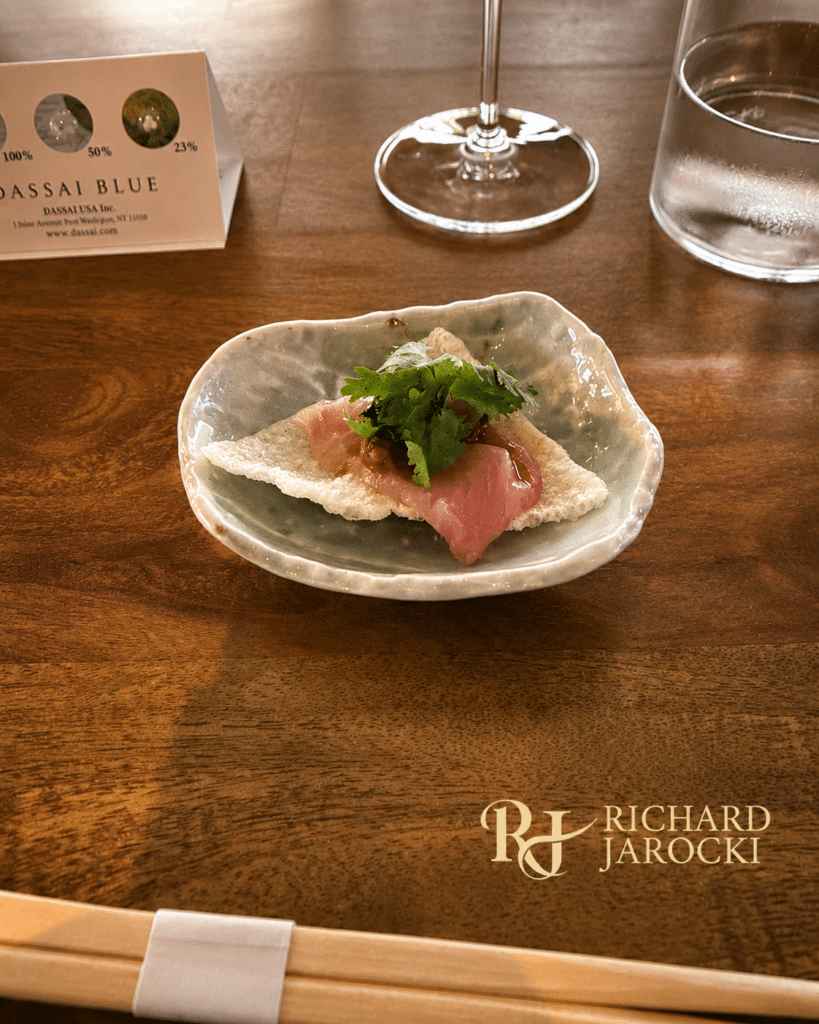
    The meal began with an bite of hamachi on crispy rice with cilantro.

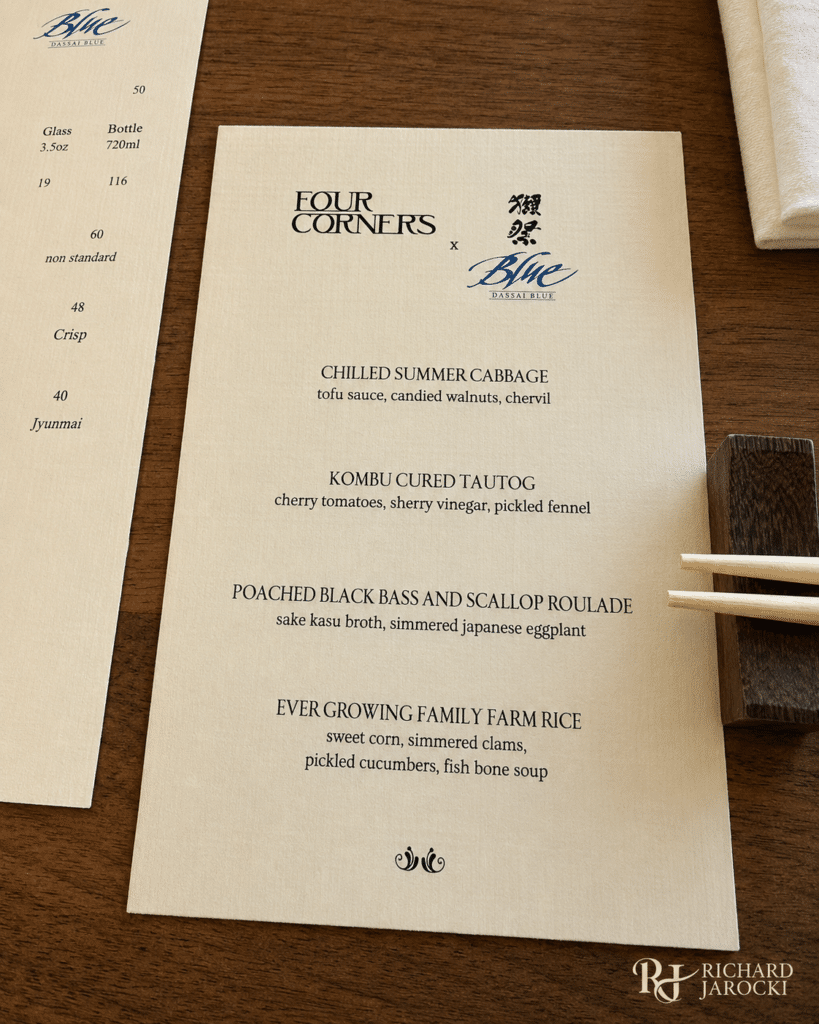
    The printed savory menu was concise, followed by dessert:

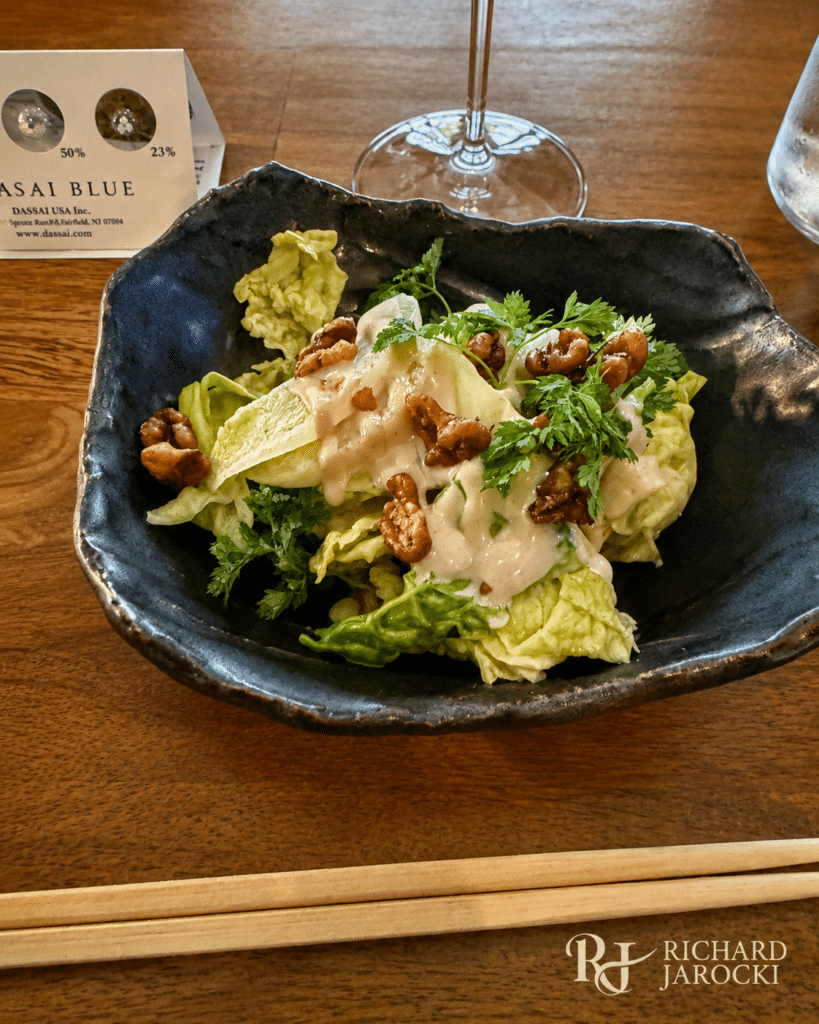
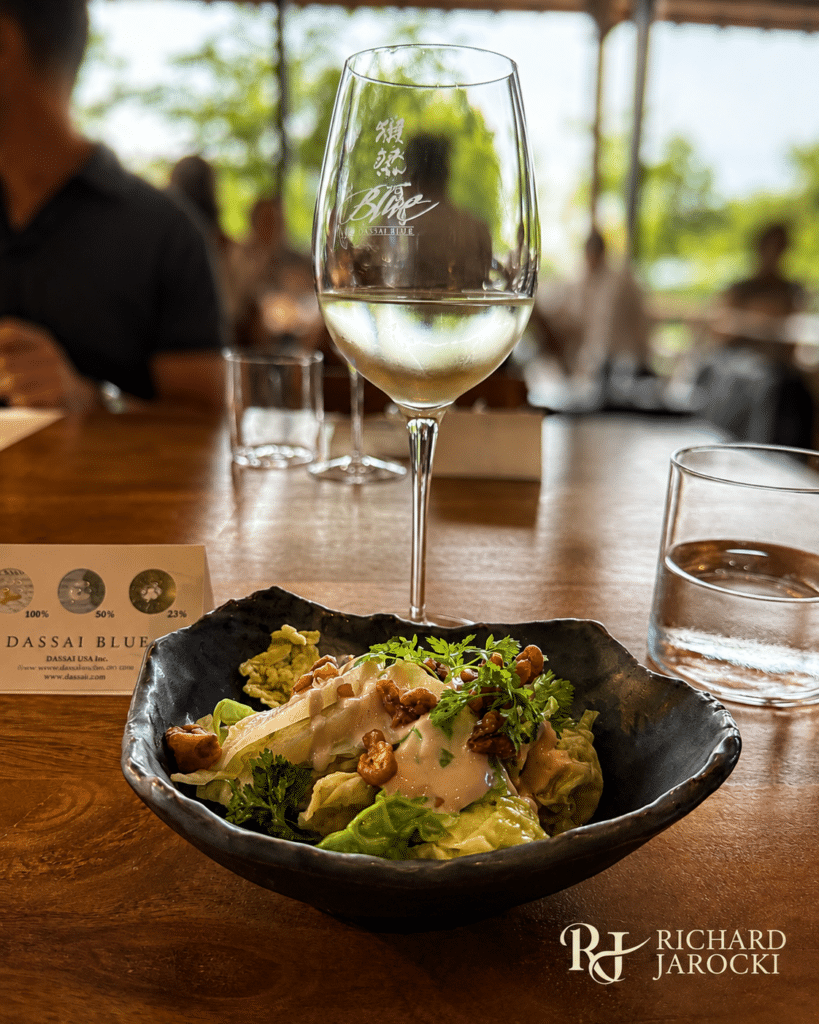
    Chilled summer cabbage with tofu sauce, candied walnuts and chervil

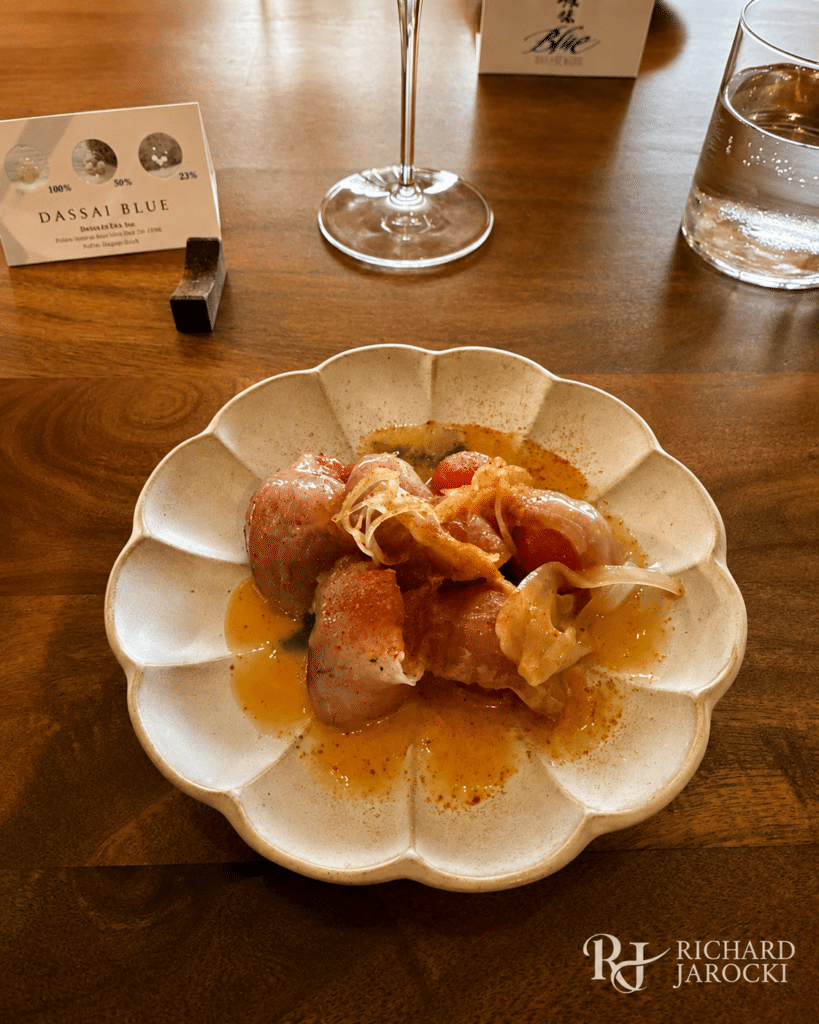
    Kombu-cured tautog with cherry tomatoes, sherry vinegar and pickled fennel

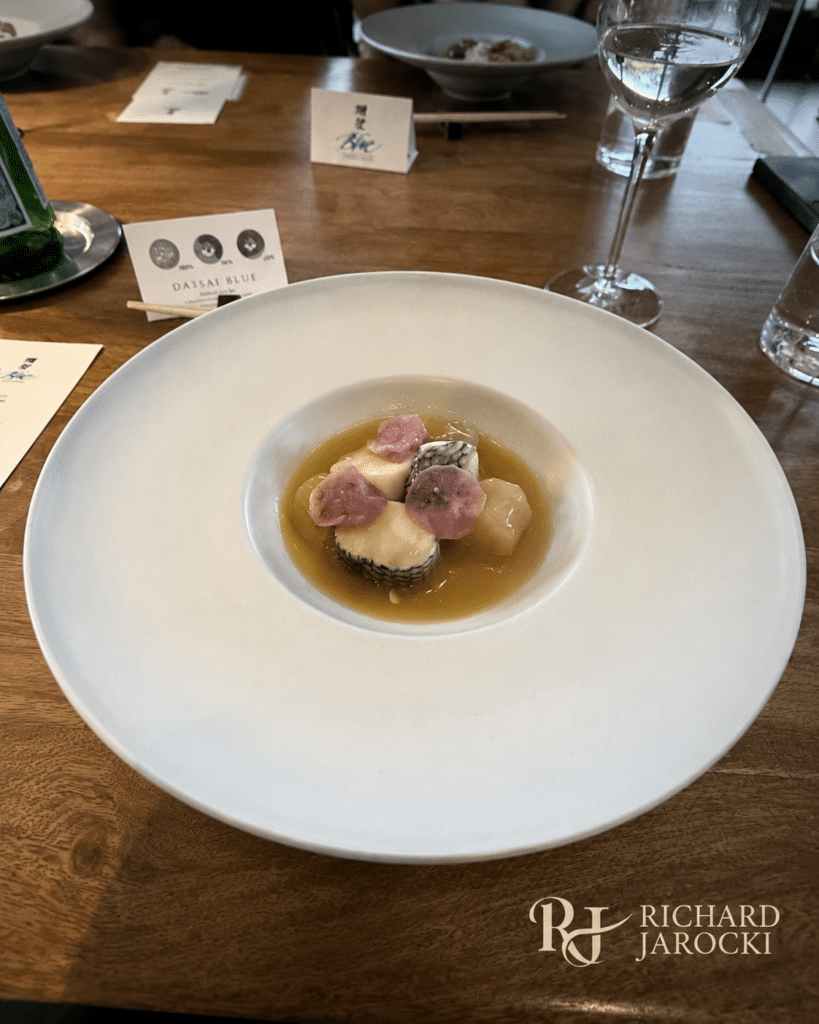
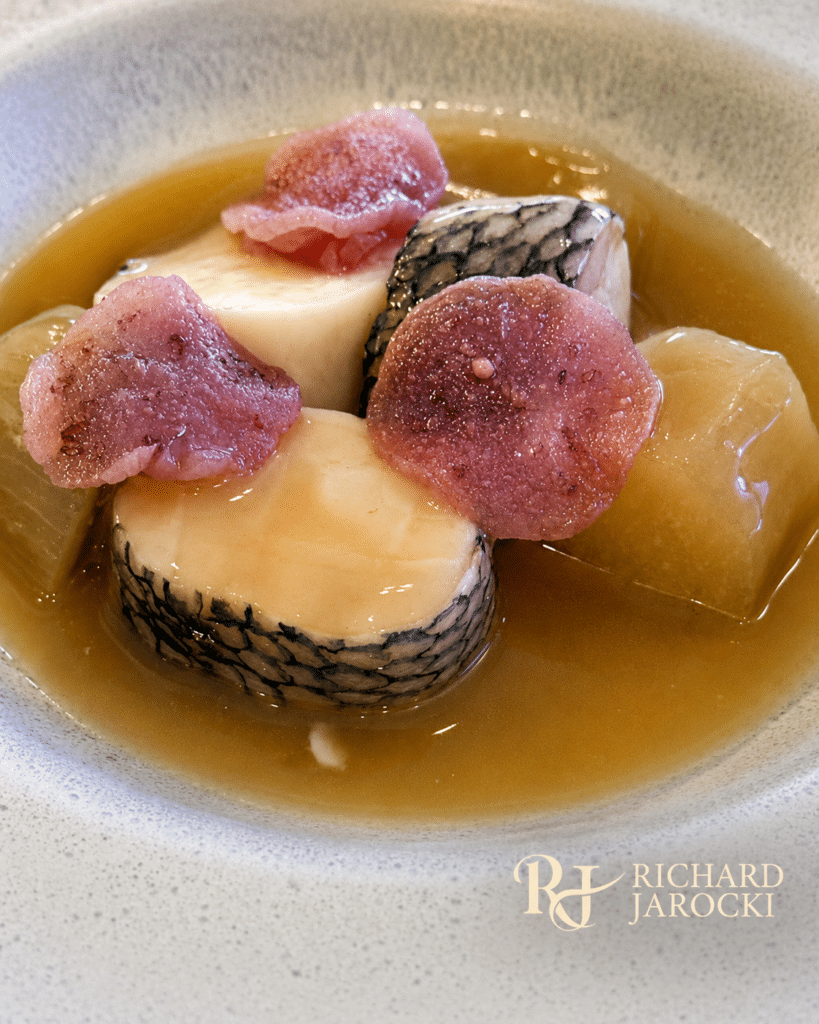
    Poached black bass and scallop roulade with sake kasu broth and simmered Japanese eggplant

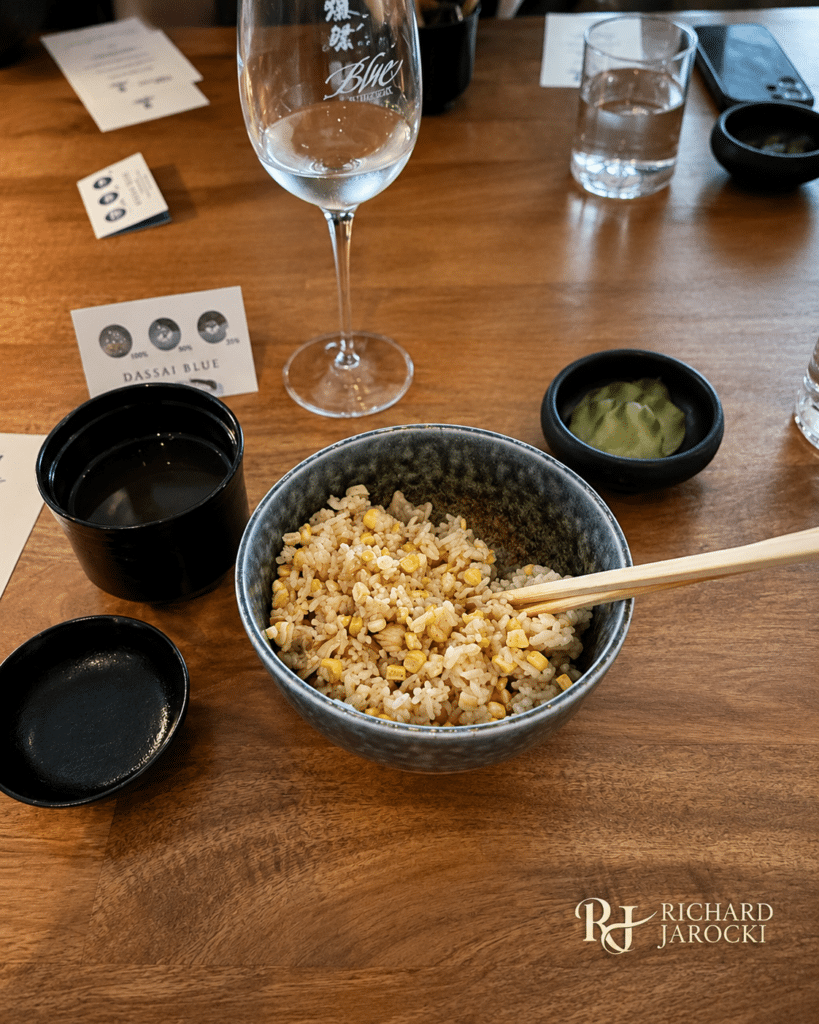
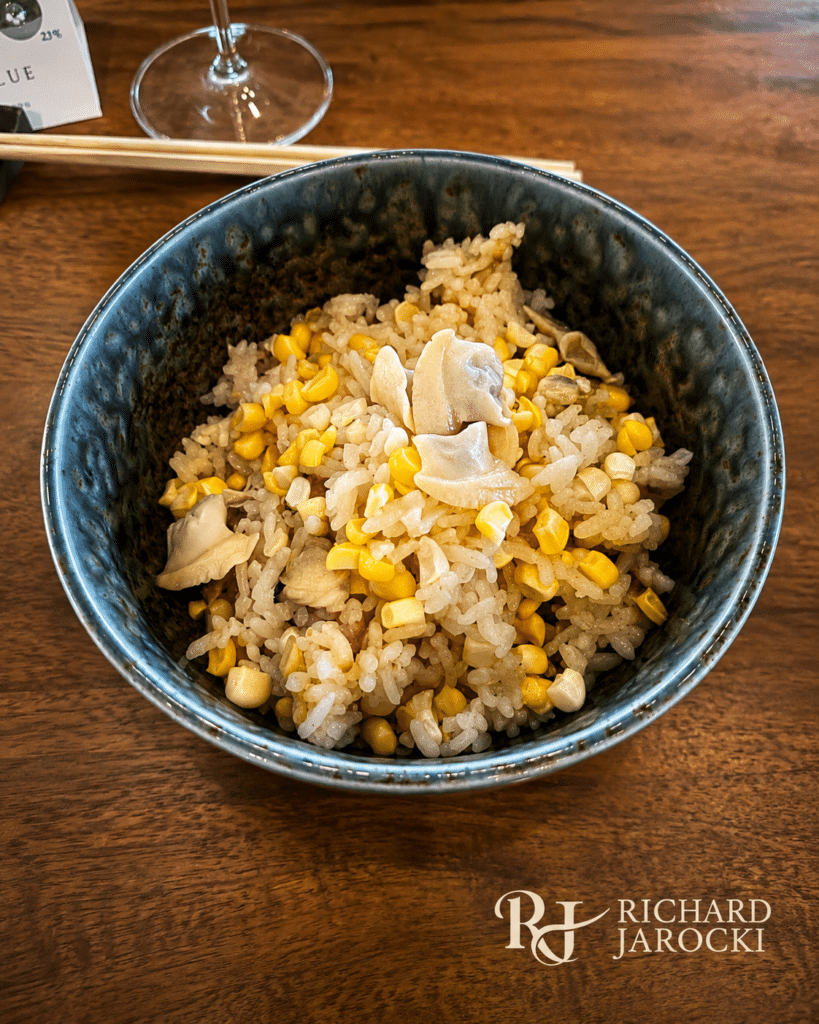
    Locally grown rice from Ever-Growing Family Farm with sweet corn, simmered clams, pickled cucumbers and fish-bone soup

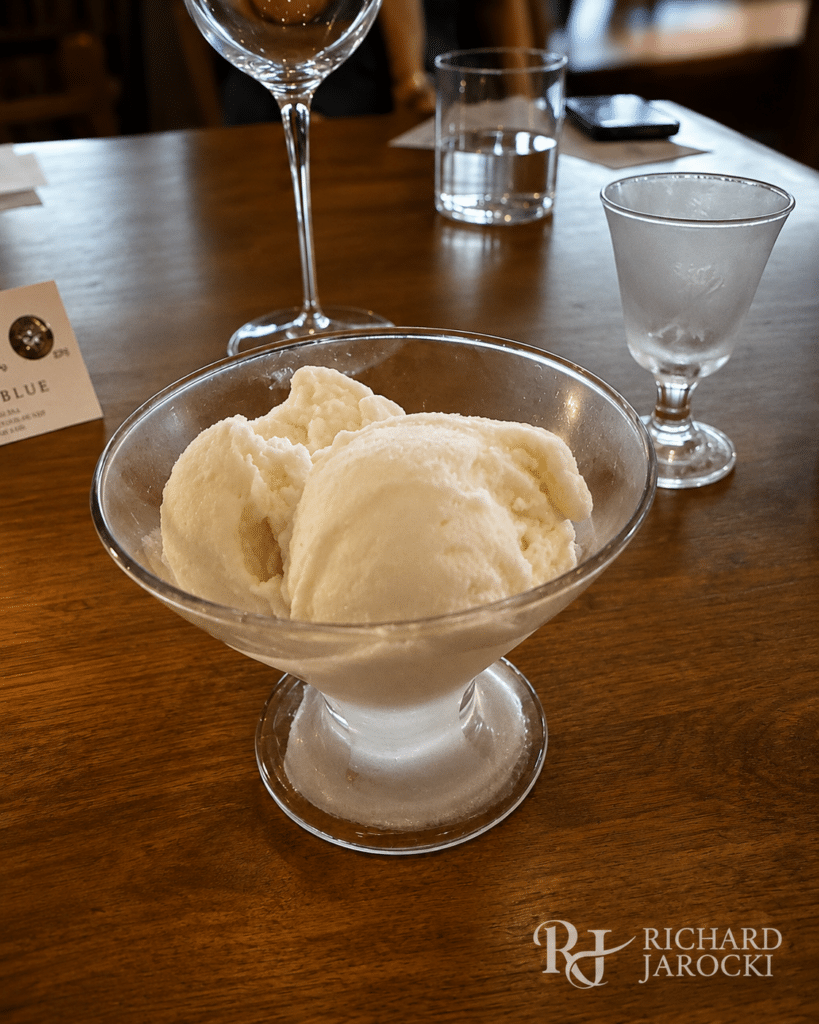
    Dassai Blue sake gelato ($6.50 add-on)

    The opening cabbage course was the outlier: more salad-like and less focused than the courses that followed. The off-menu hamachi bite was a welcome start, but courses two, three and four were the strongest stretch of the dinner.

    Courses two through four were the meal’s best stretch

    The kombu-cured tautog was amazing and the clearest expression of what this collaboration was trying to do. Cherry tomatoes, sherry vinegar and pickled fennel kept the fish bright, while a basil-like green herb oil pooled on the plate. I made sure to soak up every last bit.

    The black bass and scallop roulade was just as memorable. The sake-kasu broth had the kind of depth that made me want to drink it straight from the bowl—especially because there was no spoon. The rice course was simpler but still satisfying: locally grown rice from Ever-Growing Family Farm, improved by sweet corn and clams, with a deeply savory fish-bone broth. The pickled cucumbers were the part I could have eaten all night.

    The sake was part of the dinner

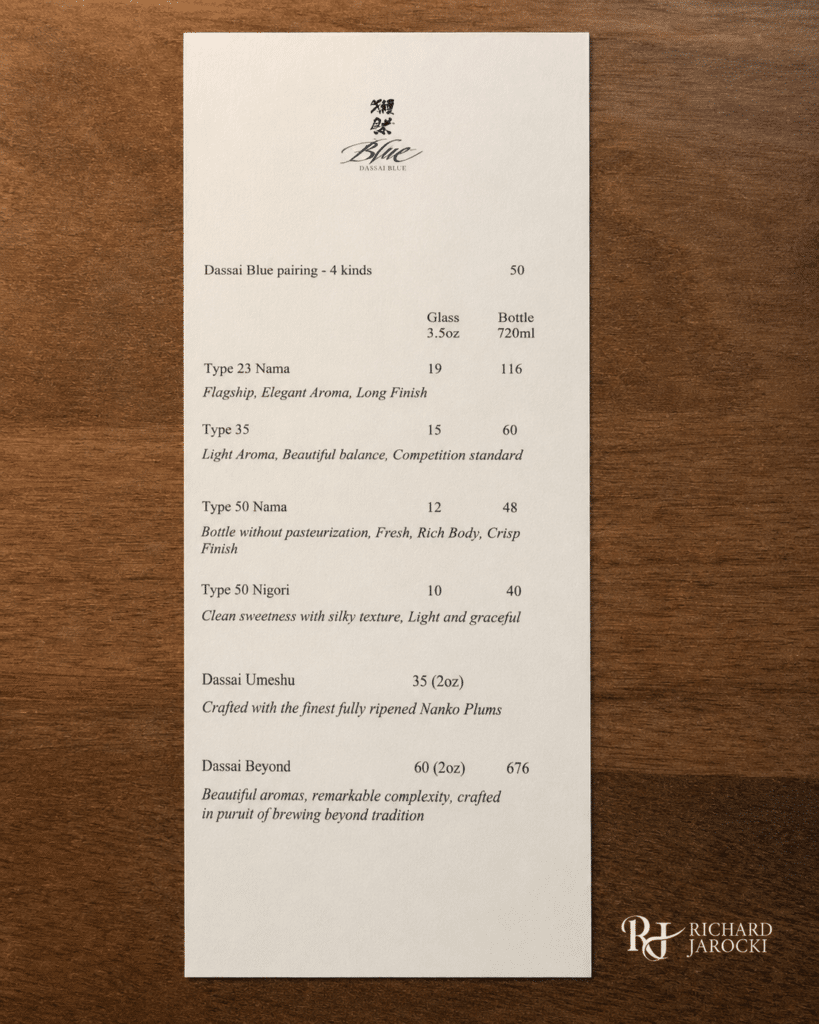
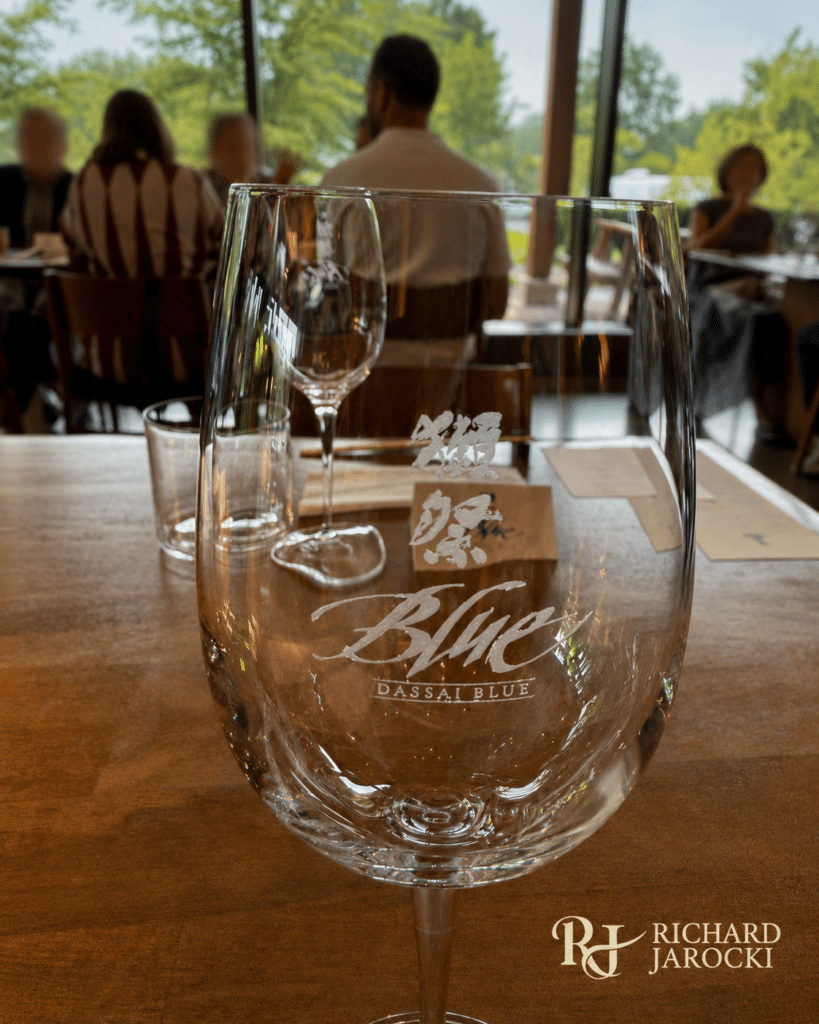
    The chilled summer cabbage opened with Dassai Blue Type 23 Nama. Across the remaining three savory courses, the pairings moved through Type 35, Type 50 Nama and Type 50 Nigori. The dinner then finished with Dassai Blue’s sake gelato, offered as a $6.50 add-on and paired with Dassai Yuzu sake.

    That order made the pairing feel intentional rather than repetitive. The delicate Type 23 set a polished opening, while the 35 and two different Type 50 expressions gave the fish, broth and rice courses distinct weight and texture. The gelato tasted clearly of citrus—enough that some diners compared it to limoncello—but the sake flavor remained present. Paired with Dassai Yuzu, it closed the meal with brightness instead of more richness.

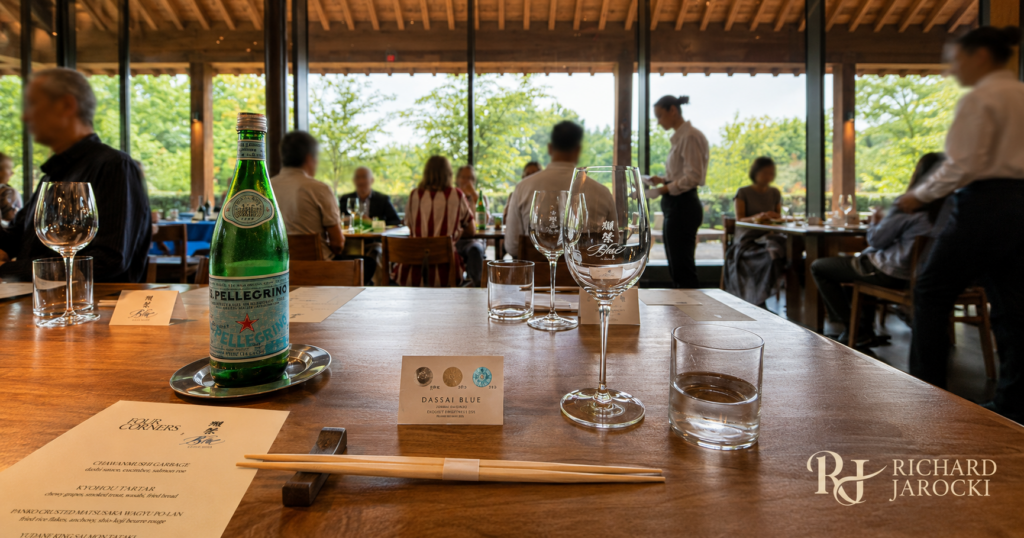
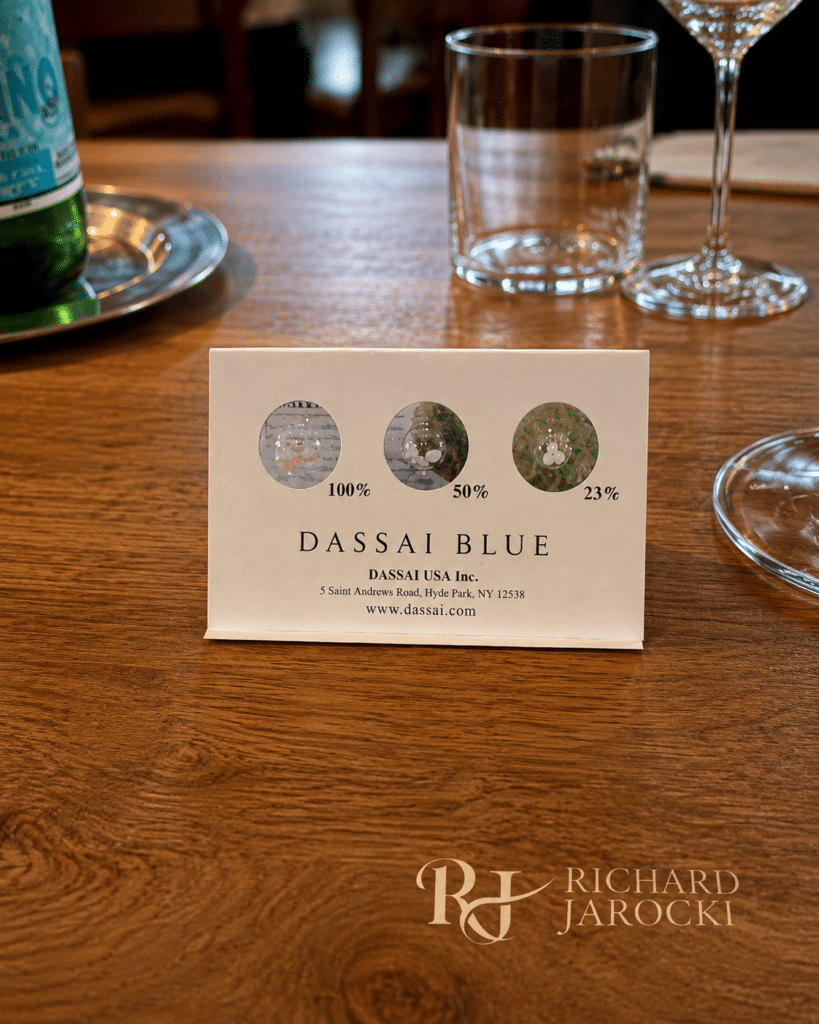
    That is what Dassai Blue does well. Staff explained the rice-polishing percentages, and cards on the table showed the rice at 100, 50 and 23 percent. The explanation gave useful context, but the food did the convincing: each glass changed how the next course tasted.

    The verdict

    The Four Corners pop-up was worth the return. It also did exactly what a good pop-up should do: it made me more interested in the permanent restaurant.

    Israelow’s cooking felt thoughtful without becoming overly complicated. The menu respected the season, the brewery and the ingredients. Just as important, the collaboration did not feel like Four Corners borrowing Dassai Blue’s room or Dassai Blue borrowing a chef’s name. The two ideas actually worked together.

    My first Dassai Blue dinner made me recommend the brewery. This one proved why I am going to keep watching its event calendar.

    Four Corners is not open yet. After this preview, I will be paying attention when it is.

    Dassai Blue Website

    Four Corners Website

  • The Modern NYC Review: Is MoMA’s Two-Michelin-Star Restaurant Worth It?

    The Modern NYC Review: Is MoMA’s Two-Michelin-Star Restaurant Worth It?

    The Modern NYC Review: Inside a two-Michelin-starred meal beside MoMA, where caviar, truffles, sculptural plates—and one very strange spoon—made fine dining feel less formal than expected.

    The Modern NYC review collage with tasting-menu dishes, black-truffle service and a tequila Old-Fashioned

    Location: 9 West 53rd Street, beside the Museum of Modern Art in Midtown Manhattan

    Cuisine: Contemporary American fine dining

    Price during my visit: The tasting menu cost $275 per person. The Discovery wine pairing was $195, the Reserve pairing was $350, and the black-truffle risotto supplement was $50. Prices and menus may have changed.

    Standout dishes: Eggs on Eggs on Eggs, lobster with shiso and radish, black-truffle risotto, sea bass with squid, and crusted venison with morels and bacon

    Best cocktail: The Kaleidoscopic—a reposado tequila Old-Fashioned with cacao, Calvados and chile

    Reservations: Strongly recommended for the main dining room. The Bar Room offers a more relaxed and less expensive introduction to The Modern.

    Best for: Special occasions, Michelin-starred dining and visitors who want a memorable meal beside MoMA’s sculpture garden

    My verdict: The Modern delivers precise cooking, impeccable service and enough playful moments to keep its formal dining room from feeling like a museum exhibit.

    Date visited: July 2026

    What to Expect at The Modern NYC

    The plaques outside The Modern do not leave much room for a casual entrance. Two Michelin stars are displayed before you sit down, and the message is clear: this is supposed to be serious food.

    Inside, the mood softens. The dining room overlooks MoMA’s Abby Aldrich Rockefeller Sculpture Garden, and Chef Thomas Allan’s cooking follows the same tension as the setting—clean and controlled, but never cold. The meal I photographed was meticulous without feeling trapped by its own prestige.

    Inside The Modern NYC Tasting Menu

    The tasting began with two compact bites: a smoked salmon tartlet and tuna with celery. From there came lobster with shiso and radish, presented on long black spoons over crushed ice. The menu names were spare, but the plates carried several textures and temperatures at once.

    Then came “eggs on eggs on eggs,” and I immediately understood why it is one of The Modern’s signature dishes. It arrived in a smooth, white, egg-shaped porcelain vessel with a crisp brioche “soldier” beside it. The presentation was so clean and sculptural that I almost did not want to disturb it. Almost. This is a dish you have to break into, stir together and scoop up, and that is where the fun begins.

    Inside was fried-egg sauce, a poached hen’s egg, Schrenckii caviar, dill oil and pickled shallots. The name sounds playful, but the cooking was serious. The egg was rich and creamy, the caviar added salt and that delicate pop, and the pickled shallots cut through everything at exactly the right moment. The brioche brought the crunch and made sure none of the sauce was left behind. It was luxurious without being ridiculous—although “eggs on eggs on eggs” is still a wonderfully ridiculous name.

    What I loved most was that the dish came from something so simple. Chef Thomas Allan based it on egg and soldiers, the childhood breakfast he ate growing up in Sarnia, Ontario. The Modern turns that memory into a two-Michelin-starred caviar course, but the basic pleasure has not changed: break the egg, dip the toast and get every last bit. That connection between comfort food and fine dining made the course feel personal instead of showy.

    The Modern NYC Review: Precision from chef to server

    The Modern is a restaurant of precision, from the chef in the kitchen to the server standing at the table. Before the meal even got going, I watched a staff member iron a tablecloth right on the table—I have the video to prove it. My server knew every dish inside and out. She could explain the ingredients, the technique and how each course fit into the menu, but it never sounded memorized. You could tell she took real pride in her job. That kind of knowledge changes the meal: it makes the service feel like part of the cooking rather than something happening around it.

    This is exactly what I would expect from Danny Meyer’s Union Square Hospitality Group. I have eaten my way through that family tree: Union Square Cafe, Gramercy Tavern, Shake Shack and Eleven Madison Park, which Meyer opened under USHG before selling it in 2011. Each restaurant has its own personality, but the same hospitality DNA runs through them. The range is the point—from a burger eaten outside in Madison Square Park to a tasting menu overlooking MoMA’s sculpture garden. The Modern is the museum version of that idea: more polished, more formal and more ceremonial.

    I even met Danny Meyer at the New York City Wine & Food Festival’s Burger Bash during Shake Shack’s early expansion years. I remembered it as the period when Shake Shack was first opening, but the records point most strongly to 2010: Shake Shack won the judges’ choice that year, while Bobby Flay won the people’s choice. The original Madison Square Park kiosk had opened in 2004, but in 2010 Shake Shack was just beginning to grow beyond its early New York footprint. That makes the memory feel even better now. I met Meyer when the little park burger stand was starting to become something much bigger, and the same idea was already there: take the food seriously, make people feel welcome and never confuse formality with hospitality.

    It also drew a line for me between dining downtown and uptown. Downtown can be laid-back, relaxed and fun while still taking the food completely seriously. Uptown, depending on the room, everything can become serious—the food, the service, the tablecloth and even the way people speak. The Modern runs right along that edge. It has become a fine-dining temple, and it has the screen presence to match: this is where Carrie tells Charlotte and Miranda she is marrying Big in the first Sex and the City movie. The restaurant can feel almost reverential, but the flavor, the pride of the staff and flashes of humor keep it from becoming a museum piece. It is in a museum, after all.

    Truffle Risotto and Tableside Theater

    The most memorable service moment belonged to the black truffle risotto, offered as a $50 supplement in place of dry-aged duck with mango and peanuts. A wooden truffle box arrived complete with its own gauge and a small metal slicer. The lid opened like a jewelry case, revealing dark, knobbly truffles. It was pure restaurant theater, but it also made the ingredient feel tangible before it reached the plate.

    That sense of play kept the meal from becoming stiff. My drink was the Kaleidoscopic: a Reposado Tequila Old-Fashioned with Cacao, Calvados and Chile. It arrived with a thin piece of chocolate painted like abstract art across the rim—an edible garnish that looked at home beside MoMA. It was amazing: the kind of cocktail that could hold its own beside the food. A smooth, egg-shaped vessel appeared at the table with no immediate explanation. The Modern clearly understands that anticipation is an ingredient too.

    The Best Dishes at The Modern

    As the meal progressed, the flavors deepened. Sea bass and squid arrived with the fish’s skin rendered into a crisp, burnished sheet, set in a savory broth edged with green oil. The menu then moved through dry-aged duck with mango and peanuts—or the truffle-risotto supplement—and crusted venison with morels and bacon. The plating stayed restrained, but the food became warmer, darker and more grounded.

    Dessert brought the focus back to flavor. The rhubarb and champagne was bright, tart and exact, with enough acidity to wake everything up after the heavier savory courses. Dark chocolate followed with deeper, richer flavors and the same level of control. Both plates were beautiful, but they were not just there to be admired—the flavors earned the presentation.

    About that spoon

    Fine dining is full of objects that make you wonder whether you are holding them correctly. At the end of the meal, I looked down at one of the spoons and realized it resembled my landscaper’s shovel. After paying fine-dining money, the comparison was impossible to ignore.

    It was ridiculous. It was also amazing.

    That is probably the best summary of the night. The precision was undeniable and the flavors delivered, but the experience ran right along the edge of stuffy. Imagine putting a fine-dining restaurant inside a library: quiet, polished and so controlled that everyone instinctively lowers their voice. Then remember that The Modern is actually inside a museum. Oh wait—of course the food looks like art. What saves it from becoming too precious are the moments that break the formality: the truffle box, the sculptural cocktail and, yes, the shovel spoon.

    The Modern NYC Review: Is It Worth It?

    The Modern is not simply a parade of expensive ingredients. It is a carefully paced experience built on contrast—cool and warm, crisp and soft, elegant and playful. The room may sit beside a museum, but the food does not feel like something you are only meant to admire from a distance.

    It invites attention, then rewards it. And by the time the final plate is cleared, the meal feels less like a checklist of courses than a collection of small, sharply composed memories.

    Absolutely—I would go back. The Modern is what a Michelin-starred restaurant should be. Yes, it can feel a little uptight and stuffy, but this is fine dining inside one of New York City’s most famous and prestigious museums. A certain level of seriousness comes with the territory.

    The food was precise, the service was impeccable, and every detail—from the cooking to the specialized flatware—felt intentional. The Modern should be a stop on any high-end foodie’s trip to New York City.

    If the full tasting menu feels like too much, visit the Bar Room for a more relaxed introduction. And if you have already experienced the main dining room, return to the bar for Simon Kim’s fried chicken or the hot dog topped with caviar. Pair it with the tequila-and-mezcal Old-Fashioned, which was one of the best Old-Fashioneds I have ever had.

    Whether it is for the full tasting menu or a more relaxed night at the bar, I will be back.

    Tuna and celery tartlets served as an opening course at The Modern restaurant inside MoMA in New York City.The Modern NYC Review featuring the lobster, shiso and radish course presented on spoons over crushed ice. Photo by Richard JarockiThe Modern NYC Review showing the closed ceramic egg presentation before the Eggs on Eggs on Eggs course is revealed.The Modern NYC Review featuring the revealed Eggs on Eggs on Eggs course with caviar, egg yolk, pickled onions, herbs and crisp toast.The Modern NYC Review featuring crisp-skinned sea bass and squid served in broth with bright green herb oil.
    Tuna and celery tartlets served as an opening course at The Modern restaurant inside MoMA in New York City.The Modern NYC Review featuring the lobster, shiso and radish course presented on spoons over crushed ice. Photo by Richard JarockiThe Modern NYC Review showing the closed ceramic egg presentation before the Eggs on Eggs on Eggs course is revealed.The Modern NYC Review featuring the revealed Eggs on Eggs on Eggs course with caviar, egg yolk, pickled onions, herbs and crisp toast.The Modern NYC Review featuring crisp-skinned sea bass and squid served in broth with bright green herb oil.
    Tuna and celery tartlets served as an opening course at The Modern restaurant inside MoMA in New York City.The Modern NYC Review featuring the lobster, shiso and radish course presented on spoons over crushed ice. Photo by Richard JarockiThe Modern NYC Review showing the closed ceramic egg presentation before the Eggs on Eggs on Eggs course is revealed.The Modern NYC Review featuring the revealed Eggs on Eggs on Eggs course with caviar, egg yolk, pickled onions, herbs and crisp toast.The Modern NYC Review featuring crisp-skinned sea bass and squid served in broth with bright green herb oil.
    Tuna and celery tartlets served as an opening course at The Modern restaurant inside MoMA in New York City.The Modern NYC Review featuring the lobster, shiso and radish course presented on spoons over crushed ice. Photo by Richard JarockiThe Modern NYC Review showing the closed ceramic egg presentation before the Eggs on Eggs on Eggs course is revealed.The Modern NYC Review featuring the revealed Eggs on Eggs on Eggs course with caviar, egg yolk, pickled onions, herbs and crisp toast.The Modern NYC Review featuring crisp-skinned sea bass and squid served in broth with bright green herb oil.
    Tuna and celery tartlets served as an opening course at The Modern restaurant inside MoMA in New York City.The Modern NYC Review featuring the lobster, shiso and radish course presented on spoons over crushed ice. Photo by Richard JarockiThe Modern NYC Review showing the closed ceramic egg presentation before the Eggs on Eggs on Eggs course is revealed.The Modern NYC Review featuring the revealed Eggs on Eggs on Eggs course with caviar, egg yolk, pickled onions, herbs and crisp toast.The Modern NYC Review featuring crisp-skinned sea bass and squid served in broth with bright green herb oil.
    Tuna and celery tartlets served as an opening course at The Modern restaurant inside MoMA in New York City.The Modern NYC Review featuring the lobster, shiso and radish course presented on spoons over crushed ice. Photo by Richard JarockiThe Modern NYC Review showing the closed ceramic egg presentation before the Eggs on Eggs on Eggs course is revealed.The Modern NYC Review featuring the revealed Eggs on Eggs on Eggs course with caviar, egg yolk, pickled onions, herbs and crisp toast.The Modern NYC Review featuring crisp-skinned sea bass and squid served in broth with bright green herb oil.
    The Modern NYC Review showing a server presenting whole black truffles tableside in a wooden display box.The Modern NYC Review featuring a Kaleidoscopic reposado tequila Old-Fashioned with cacao, Calvados, chile and an abstract chocolate card.The Modern NYC Review featuring dry-aged duck with mango and peanuts from The Modern tasting menu.The Modern NYC Review featuring lobster wrapped with translucent radish and shiso, served with yellow sauce.The Modern NYC Review featuring crusted venison with morels, bacon, glazed vegetables and a rich sauce.The Modern NYC Review showing a seeded bread loaf and sculpted butter served on white table linens.
    The Modern NYC Review showing a server presenting whole black truffles tableside in a wooden display box.The Modern NYC Review featuring a Kaleidoscopic reposado tequila Old-Fashioned with cacao, Calvados, chile and an abstract chocolate card.The Modern NYC Review featuring dry-aged duck with mango and peanuts from The Modern tasting menu.The Modern NYC Review featuring lobster wrapped with translucent radish and shiso, served with yellow sauce.The Modern NYC Review featuring crusted venison with morels, bacon, glazed vegetables and a rich sauce.The Modern NYC Review showing a seeded bread loaf and sculpted butter served on white table linens.
    The Modern NYC Review showing a server presenting whole black truffles tableside in a wooden display box.The Modern NYC Review featuring a Kaleidoscopic reposado tequila Old-Fashioned with cacao, Calvados, chile and an abstract chocolate card.The Modern NYC Review featuring dry-aged duck with mango and peanuts from The Modern tasting menu.The Modern NYC Review featuring lobster wrapped with translucent radish and shiso, served with yellow sauce.The Modern NYC Review featuring crusted venison with morels, bacon, glazed vegetables and a rich sauce.The Modern NYC Review showing a seeded bread loaf and sculpted butter served on white table linens.
    The Modern NYC Review showing a server presenting whole black truffles tableside in a wooden display box.The Modern NYC Review featuring a Kaleidoscopic reposado tequila Old-Fashioned with cacao, Calvados, chile and an abstract chocolate card.The Modern NYC Review featuring dry-aged duck with mango and peanuts from The Modern tasting menu.The Modern NYC Review featuring lobster wrapped with translucent radish and shiso, served with yellow sauce.The Modern NYC Review featuring crusted venison with morels, bacon, glazed vegetables and a rich sauce.The Modern NYC Review showing a seeded bread loaf and sculpted butter served on white table linens.
    The Modern NYC Review showing a server presenting whole black truffles tableside in a wooden display box.The Modern NYC Review featuring a Kaleidoscopic reposado tequila Old-Fashioned with cacao, Calvados, chile and an abstract chocolate card.The Modern NYC Review featuring dry-aged duck with mango and peanuts from The Modern tasting menu.The Modern NYC Review featuring lobster wrapped with translucent radish and shiso, served with yellow sauce.The Modern NYC Review featuring crusted venison with morels, bacon, glazed vegetables and a rich sauce.The Modern NYC Review showing a seeded bread loaf and sculpted butter served on white table linens.
    The Modern NYC Review showing a server presenting whole black truffles tableside in a wooden display box.The Modern NYC Review featuring a Kaleidoscopic reposado tequila Old-Fashioned with cacao, Calvados, chile and an abstract chocolate card.The Modern NYC Review featuring dry-aged duck with mango and peanuts from The Modern tasting menu.The Modern NYC Review featuring lobster wrapped with translucent radish and shiso, served with yellow sauce.The Modern NYC Review featuring crusted venison with morels, bacon, glazed vegetables and a rich sauce.The Modern NYC Review showing a seeded bread loaf and sculpted butter served on white table linens.
    The Modern NYC Review featuring a rhubarb and champagne dessert with pale green sorbet and jewel-toned rhubarb.The Modern NYC Review featuring a dark chocolate tart with cream, chocolate shards and glossy jewel-toned fruit.The Modern NYC Review featuring an assortment of colorful petits fours served at the end of the tasting menu.A distinctive flat sauce spoon set on the white tablecloth during dinner for The Modern NYC Review.Modern NYC Review showing the restaurant’s two-star Michelin plaque for 2025 and Relais & Châteaux recognition.Illuminated MoMA sign outside the museum near The Modern restaurant in Midtown Manhattan.The Modern NYC Review showing the restaurant’s Midtown location beside MoMA on a nighttime Manhattan street.The Modern NYC Review showing the illuminated restaurant and Bar Room menus displayed at the entrance.
    The Modern NYC Review featuring a rhubarb and champagne dessert with pale green sorbet and jewel-toned rhubarb.The Modern NYC Review featuring a dark chocolate tart with cream, chocolate shards and glossy jewel-toned fruit.The Modern NYC Review featuring an assortment of colorful petits fours served at the end of the tasting menu.A distinctive flat sauce spoon set on the white tablecloth during dinner for The Modern NYC Review.Modern NYC Review showing the restaurant’s two-star Michelin plaque for 2025 and Relais & Châteaux recognition.Illuminated MoMA sign outside the museum near The Modern restaurant in Midtown Manhattan.The Modern NYC Review showing the restaurant’s Midtown location beside MoMA on a nighttime Manhattan street.The Modern NYC Review showing the illuminated restaurant and Bar Room menus displayed at the entrance.
    The Modern NYC Review featuring a rhubarb and champagne dessert with pale green sorbet and jewel-toned rhubarb.The Modern NYC Review featuring a dark chocolate tart with cream, chocolate shards and glossy jewel-toned fruit.The Modern NYC Review featuring an assortment of colorful petits fours served at the end of the tasting menu.A distinctive flat sauce spoon set on the white tablecloth during dinner for The Modern NYC Review.Modern NYC Review showing the restaurant’s two-star Michelin plaque for 2025 and Relais & Châteaux recognition.Illuminated MoMA sign outside the museum near The Modern restaurant in Midtown Manhattan.The Modern NYC Review showing the restaurant’s Midtown location beside MoMA on a nighttime Manhattan street.The Modern NYC Review showing the illuminated restaurant and Bar Room menus displayed at the entrance.
    The Modern NYC Review featuring a rhubarb and champagne dessert with pale green sorbet and jewel-toned rhubarb.The Modern NYC Review featuring a dark chocolate tart with cream, chocolate shards and glossy jewel-toned fruit.The Modern NYC Review featuring an assortment of colorful petits fours served at the end of the tasting menu.A distinctive flat sauce spoon set on the white tablecloth during dinner for The Modern NYC Review.Modern NYC Review showing the restaurant’s two-star Michelin plaque for 2025 and Relais & Châteaux recognition.Illuminated MoMA sign outside the museum near The Modern restaurant in Midtown Manhattan.The Modern NYC Review showing the restaurant’s Midtown location beside MoMA on a nighttime Manhattan street.The Modern NYC Review showing the illuminated restaurant and Bar Room menus displayed at the entrance.
    The Modern NYC Review featuring a rhubarb and champagne dessert with pale green sorbet and jewel-toned rhubarb.The Modern NYC Review featuring a dark chocolate tart with cream, chocolate shards and glossy jewel-toned fruit.The Modern NYC Review featuring an assortment of colorful petits fours served at the end of the tasting menu.A distinctive flat sauce spoon set on the white tablecloth during dinner for The Modern NYC Review.Modern NYC Review showing the restaurant’s two-star Michelin plaque for 2025 and Relais & Châteaux recognition.Illuminated MoMA sign outside the museum near The Modern restaurant in Midtown Manhattan.The Modern NYC Review showing the restaurant’s Midtown location beside MoMA on a nighttime Manhattan street.The Modern NYC Review showing the illuminated restaurant and Bar Room menus displayed at the entrance.
    The Modern NYC Review featuring a rhubarb and champagne dessert with pale green sorbet and jewel-toned rhubarb.The Modern NYC Review featuring a dark chocolate tart with cream, chocolate shards and glossy jewel-toned fruit.The Modern NYC Review featuring an assortment of colorful petits fours served at the end of the tasting menu.A distinctive flat sauce spoon set on the white tablecloth during dinner for The Modern NYC Review.Modern NYC Review showing the restaurant’s two-star Michelin plaque for 2025 and Relais & Châteaux recognition.Illuminated MoMA sign outside the museum near The Modern restaurant in Midtown Manhattan.The Modern NYC Review showing the restaurant’s Midtown location beside MoMA on a nighttime Manhattan street.The Modern NYC Review showing the illuminated restaurant and Bar Room menus displayed at the entrance.

    Videos From The Modern NYC

    A server finishes The Modern’s sea bass and squid course by pouring the sauce tableside.
    At The Modern, precision extends beyond the plate—even the tablecloth is ironed before service.
    A server finishes The Modern’s dry-aged duck by pouring the sauce tableside.
    A server shaves fresh black truffle over the risotto tableside at The Modern.

    Frequently Asked Questions About The Modern NYC

    Is The Modern NYC worth it?

    The Modern is worth it for diners who appreciate precise cooking, polished service and a formal Michelin-starred experience. The price makes it a special-occasion restaurant, but the tasting menu, tableside presentations and sculpture-garden setting create an experience that goes beyond dinner. If you prefer something less formal, try the Bar Room.

    How much does dinner at The Modern NYC cost?

    During my visit, The Modern’s tasting menu cost $275 per person. The Discovery wine pairing was $195, the Reserve pairing was $350, and the black-truffle risotto supplement was $50. Menus and prices change, so confirm the current cost before booking.

    What should you order at The Modern?

    Eggs on Eggs on Eggs was the signature course and one of the clearest expressions of the restaurant’s style: luxurious, precise and playful. The black-truffle risotto was another standout, while the Kaleidoscopic tequila Old-Fashioned was one of the best cocktails of the evening.

    Is The Modern restaurant inside MoMA?

    The Modern is located at 9 West 53rd Street beside the Museum of Modern Art. Its main dining room overlooks MoMA’s Abby Aldrich Rockefeller Sculpture Garden, making the museum setting an important part of the experience.

    The Modern NYC Prices, Reservations and Location

    This The Modern NYC review covers the $275 tasting menu, two-Michelin-star cooking, Eggs on Eggs on Eggs, cocktails, service, the Bar Room and whether dining beside MoMA is worth the price.; the menu listed a $195 Discovery pairing and a $350 Reserve pairing.

    Follow my Instagram

    Reservations

    The Modern Website

    Sources

    The Modern official site

    The Modern’s Michelin Guide listing

    “Eggs on Eggs on Eggs” ingredients

    Chef Thomas Allan’s egg-and-soldiers inspiration

    Danny Meyer and Union Square Hospitality Group

    The Modern in Sex and the City

    Shake Shack’s origin story

    Shake Shack’s 2010 NYCWFF Burger Bash win

    Eleven Madison Park’s Danny Meyer-era history

    The Modern NYC Review

    The Modern NYC Review

    The Modern NYC Review

    The Modern NYC Review

    The Modern NYC Review

    The Modern NYC Review

    The Modern NYC Review

    The Modern NYC Review

    The Modern NYC Review

    The Modern NYC Review

    The Modern NYC Review

  • Why Evvai Is My Favorite Restaurant in the World

    Why Evvai Is My Favorite Restaurant in the World

    Collage featuring Evvai, the three Michelin-starred restaurant in São Paulo, showcasing the restaurant entrance, tasting menu, signature dishes, collectible comic-style course cards, cocktails, the open kitchen, and Richard Jarocki branding.

    People often ask me what my favorite restaurant in the world is. Considering how much I travel for food, it’s a fair question. I’ve been fortunate enough to dine at Michelin-starred restaurants, experience many of the World’s 50 Best Restaurants, and eat my way through some of the greatest culinary destinations on earth.

    My answer never changes: Evvai in São Paulo.

    This restaurant is one of the biggest reasons I look forward to returning to the city. The food matters, of course. But so do the explanations, the illustrated course cards I still keep, the disciplined kitchen, and the fact that a meal this carefully put together can still be so much fun.

    Entrance sign at Evvai, a three-Michelin-starred restaurant in São Paulo, Brazil
    Evvai in São Paulo. It is one of the biggest reasons I look forward to returning to the city.
    Caviar on a red-and-white striped centerpiece surrounded by colorful details at Evvai in São Paulo
    A caviar-topped course from my November 2025 meal at Evvai.

    More Than Italian. More Than Brazilian.

    Chef Luiz Filipe Souza describes Evvai’s cuisine as Oriundi, a philosophy inspired by the Italian immigrants who helped shape Brazil’s culinary identity.

    It’s not Italian. It’s not Brazilian. It’s both.

    Throughout the tasting menu, classic Italian techniques meet ingredients native to Brazil. Jambu, tucupi, cupuaçu, priprioca, native honeys, heart of palm, Amazonian fish, and regional fruits become the foundation for dishes that feel both familiar and completely new.

    Nothing is included simply because it’s unusual. Every ingredient has a purpose. Every course tells a story.

    Selection of artistic opening bites served during the tasting menu at Evvai São Paulo
    Opening bites from an earlier Evvai tasting menu.
    Bread selection beside a wooden serving box at Evvai in São Paulo
    Bread service during my November 2025 tasting menu.

    A Menu That Never Stops Evolving

    One of the reasons I continue returning is because no two meals have ever been alike.

    Chef Luiz isn’t interested in creating a menu that stays the same year after year. Every visit brings new ideas, new ingredients, and new interpretations while remaining unmistakably Evvai.

    I’ve compared the menus and collectible cards from each visit, and it’s remarkable how much they evolve.

    One visit introduced me to King Crab with fresh coconut and caviar, White Moqueca with squid and heart of palm, Duck Tortellini with eel and tucupi, Wild Boar with savage orange, Tongue with oxtail and priprioca, and the unforgettable Popcorn and Ice Cream dessert.

    Another visit featured Bluefin Tuna with wagyu bresaola, Cod Tortellini, Fish of the Day with moqueca, Lamb with fregola, Green Corn with Oscietra caviar, Rebel Tiramisu, and a choice between Xinxim Chicken or Japanese A5 Wagyu.

    The philosophy never changes. The creativity never stops. Every return feels like discovering Evvai all over again.

    Evvai ORI25.2 tasting menu featuring Brazilian seafood, pasta, wild boar and desserts
    The ORI25.2 menu from a previous visit. This is a keepsake, not the current menu.
    Evvai OR24.2 tasting menu featuring Brazilian ingredients, seafood, pasta and Wagyu
    The OR24.2 menu from another visit, showing how much the experience changes.

    Every Dish Has a Personality

    I’ve had tasting menus where every course was technically perfect, yet by the end of the evening I struggled to remember what I had actually eaten.

    That has never happened at Evvai.

    The King Crab with fresh coconut, delicately topped with caviar, perfectly balanced sweetness, richness, and salinity while proving that elegance doesn’t have to be complicated.

    The White Moqueca challenged everything I thought I knew about one of Brazil’s most iconic dishes. By removing its vibrant colors, Chef Luiz created something visually unexpected while preserving every bit of the soul and flavor that makes moqueca so beloved.

    The Duck Tortellini with eel and tucupi remains one of the most memorable pasta courses I’ve ever eaten.

    One of my favorite surprises was a playful green corn ice cream cone topped with Oscietra caviar. At first glance, it makes you smile. Then you taste it. Sweet corn and luxurious caviar shouldn’t work together as well as they do, yet somehow the combination feels completely natural. It’s whimsical, technically brilliant, and unmistakably Evvai.

    Golden scallop crisp with greens at Evvai in São Paulo.
    A scallop crisp served with greens during my tasting menu at Evvai.
     Green course in a white bowl with a separate small plate of greens at Evvai in São Paulo
    A green tasting-menu course from my November 2025 visit.

    The scallop crisp pictured here is another example of how much there is to look at during the meal. The crisp itself is scallop-based, rather than simply a garnish beside a scallop.

    Small plated savory course with orange sauce in a wide white bowl at Evvai in São Paulo
    A savory course with orange sauce, photographed during my November 2025 meal.
    Rectangular plated course in dark sauce with small pale garnishes at Evvai in São Paulo
    A plated course with dark sauce from my November 2025 meal.

    Desserts That Remember to Have Fun

    Popcorn and ice cream doesn’t sound like something you’d expect from one of the world’s best restaurants. Until it arrives.

    Finished with popping candy, every bite combines creamy sweetness, buttery popcorn, and the crackling sensation of Pop Rocks. It’s nostalgic, interactive, and impossible not to smile while eating it.

    That perfectly sums up my experience. Now recognized with three Michelin stars. World-class technique. Yet it never forgets that dining should be fun.

    Pop Rocks ice cream bar on a stick, served on a white plate at Evvai.
    The Pop Rocks ice cream bar during my tasting menu at Evvai.
    Round decorated dessert with a thin square garnish at Evvai in São Paulo
    A decorated dessert from my November 2025 tasting menu.

    The frozen dessert pictured above is the Pop Rocks ice cream bar. That playful presentation belongs in this story just as much as the pasta, the caviar, and the technique. It is part of why I remember the experience so clearly.

    Illustrated card introducing the popcorn ice cream dessert at Evvai São Paulo
    “Popcorn… Ice Cream… Sinners…”: even dessert has its own story.
    Pop-art Oriundi 25.2 tasting-menu artwork displayed at Evvai São Paulo
    Oriundi 25.2 artwork: the visual storytelling begins before the first course.

    Every Course Tells a Story

    Every course begins before the plate ever reaches your table.

    The service team introduces each dish, explaining the ingredients, techniques, and inspiration behind Chef Luiz Filipe Souza’s vision. Their knowledge is remarkable, and they present every course with the same care and precision that went into creating it.

    Then the storytelling continues.

    Throughout the meal, you’re handed beautifully designed collectible cards inspired by vintage comic books and pop art. Each card corresponds to one of the courses you’ve just experienced.

    Some make you laugh before you’ve even taken the first bite.

    A halo-wearing crab proclaims “Holy Crab!”

    A revolver loaded with pasta reads “Pasta La Vista, Baby…”

    A duck relaxing in tucupi jokes, “Like a Hot Tub After a Busy Day…”

    Others challenge your expectations with “No Tongue, Really?!”, “Popcorn… Ice Cream… Sinners…”, and “Give Me That Hand!”

    Then you flip the card over.

    Instead of simply listing ingredients, Chef Luiz explains the thought process behind the dish, the techniques used, and the inspiration behind its creation.

    It’s one of the most thoughtful touches I’ve experienced in any restaurant. I still have every single card from every visit to Evvai. They’re more than souvenirs. They’re a collection of memories.

    Every time I flip through them, I remember not only the dish itself, but the conversations, the presentation, and exactly how I felt experiencing it.

    Most restaurants leave you with photographs. Evvai also gives me something I can hold onto and revisit long after dinner.

    Illustrated “Holy Crab” tasting-menu card featuring a red crab at Evvai São Paulo
    “Holy Crab!”: one of the cards I kept from the meal.
    Pop-art “Pasta La Vista, Baby” tasting-menu card presented at Evvai São Paulo
    “Pasta La Vista, Baby…”: pasta with a sense of humor.
    Illustrated duck and tucupi tasting-menu card presented at Evvai São Paulo
    A duck relaxing in tucupi: “Like a Hot Tub After a Busy Day…”
    Illustrated card for “The Elegant Gentleman, Dressed in White” moqueca course at Evvai São Paulo
    “The Elegant Gentleman, Dressed in White”: the illustrated introduction to white moqueca.
    Menu card for Evvai’s white moqueca with fish, squid and heart of palm
    Turn the card over and the explanation continues: white moqueca with fish, squid and heart of palm.
    Pop-art “No Tongue, Really?” tasting-menu card presented at Evvai São Paulo
    “No Tongue, Really?”: Evvai does not take its storytelling too seriously.
    Illustrated Savage Orange tasting-menu card presented at Evvai São Paulo
    The “Savage Orange” course card.
    Illustrated Essence No. 5 presentation card from the tasting menu at Evvai São Paulo
    The illustrated Essence No. 5 card.
    Pop-art “Give Me That Hand” tasting-menu card presented at Evvai São Paulo
    The “Give Me That Hand” illustrated card.

    Fine Dining Without the Pretension

    At some fine-dining restaurants, the formality can take over the evening. The room becomes silent. Guests whisper. Everyone seems afraid of making too much noise. While I appreciate that level of refinement, it can sometimes feel more like attending a ceremony than enjoying dinner.

    Evvai feels alive. Everything about the restaurant is polished, professional, and worthy of three Michelin stars. Yet it never feels intimidating. Guests laugh. Servers joke with the tables. Courses surprise you. The playful comic-book cards become conversation starters.

    An ice cream cone topped with caviar appears. A dessert crackles with Pop Rocks. The atmosphere is relaxed without ever sacrificing professionalism.

    That balance is incredibly difficult to achieve, and I honestly can’t think of another Michelin-starred restaurant that does it quite the same way.

    Chef Luiz Filipe Souza’s Leadership

    I believe that atmosphere starts with Chef Luiz Filipe Souza.

    His creativity is obvious in every dish, but what impressed me just as much was the culture he’s built inside the restaurant.

    One of my favorite moments at Evvai doesn’t happen at the table. It happens in the kitchen. Throughout service you’ll hear Chef Luiz, or whoever is leading the brigade that evening,calling commands. Instantly, the kitchen responds together with a loud, unified:

    “YES, CHEF!”

    It’s authentic. It’s disciplined. It’s organized. You can hear the respect the team has for one another and the pride they take in their craft. That passion extends beyond Chef Luiz himself.

    The pastry program is led by Bianca Mirabili, whose creativity perfectly complements the rest of the tasting menu. In 2025, she was recognized as Latin America’s Best Pastry Chef, an honor that feels completely deserved after experiencing her work.

    Together, they have built something incredibly special.

    The kitchen’s call-and-response has a military precision to it, but the experience at the table stays warm. The team explains what is arriving and why it matters. That combination of discipline and personality is a big part of what makes Evvai feel different to me.

    More Than Just a Restaurant

    Over time, Evvai has become much more than my favorite restaurant. It’s become one of those rare places that feels familiar every time I walk through the door.

    I make restaurant reservations all over the world whenever I think there’s even the slightest chance I can get away. Sometimes work wins, plans change, and I end up cancelling.

    But Evvai is different.

    When I started planning my return to São Paulo for Formula 1 in November 2026, there was one reservation I refused to leave to chance.

    Evvai.

    In fact, I confirmed my dinner reservation before I even purchased my Formula 1 ticket. That probably tells you everything you need to know. If Formula 1 were cancelled tomorrow…

    I’d still make the trip.

    That’s the highest compliment I can give any restaurant. The service is impeccable. The food is extraordinary. The storytelling is unlike anything I’ve experienced anywhere else. Most importantly, despite now standing among the very best restaurants in the world, it has never lost its personality.

    It remains warm. It remains welcoming. It remains creative. It remains fun.

    I’ve traveled thousands of miles chasing unforgettable meals and have been fortunate enough to experience some of the finest restaurants on the planet.

    Only one has ever made me say, without hesitation, that I’d book a flight just for dinner.

    That restaurant is Evvai.

    Planning Your Own Evvai Dinner

    The menus photographed here are from my previous visits, and that distinction matters. Part of the reason I return is that the cooking keeps changing. Go for the experience rather than expecting every dish in these photographs to appear in exactly the same form.

    Start with the restaurant’s official website for the current offering and reservation process. If you have dietary restrictions or a particular question about the meal, confirm it directly before booking.

    For more of my firsthand restaurant stories, explore Food & Drink. If you are building a trip around a meal, my travel page is a place to keep exploring. And if you have eaten at Evvai, I would love to hear which course stayed with you.

  • Why I’m Heading to Peru: Lima, Cusco & Machu Picchu

    Why I’m Heading to Peru: Lima, Cusco & Machu Picchu

    Peru travel plans cover showing Machu Picchu’s stone terraces and cloud-covered mountains beside the title “Why I’m Heading to Peru.”

    Destination Guides, Culinary Finds, and Travel Inspiration

    My Peru Travel Plans: f you know me, you know I don’t just travel for scenery or checklists — I travel for connection, culture, and the kind of inspiration you can’t Google. I curate experiences that leave an impression, not just on the photo roll, but on your memory. And Peru? It’s been on my radar for a long time.

    This May, I’m finally making it happen — a deeply intentional journey across Lima, Cusco, and the iconic wonder that is Machu Picchu. I’m flying into Peru with LATAM Airlines (first time), touching down in Lima before heading into the Sacred Valley. I’ve handpicked where I’m staying, where I’m dining, and the energy I want to absorb — because this isn’t just a trip. It’s a reset.

    Let me take you inside why Peru is next on my list.


    It Starts with a Flight

    Let’s begin with the air. I’m flying LATAM Airlines for the first time — JFK to Lima, and later Lima to Cusco and back. I’ve heard great things about LATAM’s service and how it sets the tone for a refined South American journey. The goal? Smooth, seamless travel, so I land ready to explore.

    This isn’t one of those quick weekend hops. It’s a full immersion — and that begins in the clouds, en route to a culture unlike any other.


    My Peru Travel Plans: Stop One: Lima — Where the Flavor is as Bold as the City

    Lima is a culinary mecca, full stop. This city has carved out a global reputation as one of the world’s great food capitals. When the World’s 50 Best Restaurants named Central the #1 restaurant in the world, the spotlight got even brighter. But beyond the headlines, Lima is layered with depth: neighborhoods like Barranco and Miraflores, coastal energy, historic charm, and an obsession with ingredients that matter.

    I’ll be staying at two distinct properties to experience different sides of the city:

    • Souma Hotel – Barranco

    This boutique hotel is modern, minimal, and deeply rooted in its artsy neighborhood. Think morning walks to art galleries, intimate coffee shops, and a real sense of place.

    • JW Marriott Lima – Miraflores

    For the ocean views, high-end amenities, and perfect service. This is where I’ll relax, recharge, and indulge in world-class hospitality between culinary stops.

    While in Lima, I’m planning meals at a few of the most celebrated spots — but I’m also leaving room for the unexpected. That’s the key. A meal in a tucked-away cevichería, a rooftop bar recommendation from a local bartender, or a late-night anticucho plate from a street vendor with a crowd around it. The real Lima reveals itself between the reservations.


    Peru Travel Plans Map of Peru marking Lima on the Pacific coast and Cusco and Machu Picchu in the Andes, with a close-up of the Cusco area.
    The three destinations in my Peru travel plans: Lima, Cusco and Machu Picchu. Locations and boundaries are approximate. Map data: Natural Earth and GeoNames.

    Culinary Curiosity Meets Curated Dining

    Beyond Central, I’ll be diving into Peru’s Nikkei cuisine (Japanese-Peruvian fusion), Amazonian ingredients, and the creative reinvention of traditional dishes. From high-end omakase to hidden pisco bars, this city doesn’t just feed you — it tells you a story with every plate.

    And yes, expect full reports. I’m treating this as both exploration and research. Peru’s culinary culture is going to reshape how I think about flavor, balance, and storytelling through food.


    Then It’s Onward — to Cusco and the Sacred Valley

    From Lima, I’ll fly into Cusco — a city that sits at over 11,000 feet above sea level and feels like you’ve stepped into a living museum. But don’t let the altitude fool you. Cusco is alive. Colorful markets, cobblestone streets, Andean traditions, and a magnetic energy that you just feel in your bones.

    My Peru Travel Plans: Staying at: Palacio del Inka, a Luxury Collection Hotel

    This is a property I’ve had my eye on for years. Built into a 500-year-old mansion, Palacio del Inka is luxury infused with Incan heritage. Walls that tell stories. Courtyards that hold silence. Service that’s seamless. It’s not just about where I sleep — it’s about staying somewhere that anchors you to the place.

    From this base, I’ll explore the city’s museums, sip coca tea in hidden courtyards, browse handwoven alpaca textiles, and adjust to the altitude — slowly and deliberately.

    Because after Cusco comes the crown jewel.


    Peru Travel Plans Stone terraces and Inca ruins at Machu Picchu beneath steep, cloud-covered mountains in Peru.
    Machu Picchu, one of the places at the heart of my Peru travel plans.

    Machu Picchu — A Journey, Not Just a Destination

    Let’s be honest: Machu Picchu doesn’t need much of an introduction. It’s one of the most iconic destinations on Earth. But while millions have visited, very few experience it intentionally. I plan to do just that.

    I’m taking the scenic route — literally — with a train ride through the Sacred Valley, passing small villages, waterfalls, and mountain landscapes that feel unreal. I want to absorb every detail on the way in. The buildup matters. The approach is part of the magic.

    When I arrive, I’m not just going for the photo. I’m going for the feeling — to stand in a place built centuries ago with purpose, alignment, and spiritual meaning. I want to breathe in the air and feel the enormity of what was created there — without machinery, without shortcuts, with only vision and will.

    Machu Picchu isn’t just about what you see. It’s about what you sense.


    Why Now? Why Peru?

    Because I believe in intentional travel — and I’ve been craving something grounded. Something real. After spending the last few years immersed in luxury cars, fine dining, Grand Prix weekends, and curated experiences around the world, I wanted a journey that connects earth with elevation, flavor with soul, and heritage with personal growth.

    Peru is that.

    It’s a country of contrasts:
    Urban and ancient.
    Refined and raw.
    Coastal and mountainous.
    Mystical and modern.

    And it’s been whispering to me for a while now.


    Travel as a Reset

    This trip isn’t about escape — it’s about returning to curiosity.

    It’s about recalibrating creativity, finding new sensory inspiration, and experiencing a place that’s built on layers. I’m going to connect with chefs, explore sacred spaces, take in panoramic views, and travel inward, even as I travel outward.

    As always, I’ll be doing it with intention — and a little style.


    My Peru Travel Plans: What to Expect

    I’ll be documenting the journey as I go — expect highlights from hotel stays, restaurant deep dives, cultural moments, and maybe a few unfiltered thoughts about what it feels like to slow down in places that make you feel alive.

    There will be:

    • Insider looks at both boutique and luxury hotels
    • Culinary recaps and restaurant features
    • Cultural insights from both modern Lima and ancient Cusco
    • Scenic vignettes from Machu Picchu
    • Notes on flying LATAM and travel logistics for anyone planning a similar trip

    Final Thoughts

    I’ve traveled a lot. But this one’s different.

    This isn’t about luxury for the sake of luxury — it’s about choosing depth over excess, meaning over motion. Peru has something most destinations don’t: soul. And I’m going there to feel it fully.

    I’m not going to check it off a list. I’m going to let it change me.

    Follow along.

    Explore More Travel and Food

    For more ideas, explore my destination travel guides and food and drink stories.

    Follow me on Instagram at @Richard.Jarocki for more meals, places and moments from my travels.

    Official Peru Planning Resources

    For destination information, visit Peru’s official tourism website. Learn more about Machu Picchu’s history and significance through UNESCO’s World Heritage listing.

    Completely Unnecessary. Absolutely Worth It.

  • Tan Tan São Paulo: A Must-Visit Japanese Bar with World-Class Cocktails and Izakaya-Style Dining

    Looking for the best cocktail bar in São Paulo? If you appreciate high-quality mixology, Japanese-inspired cuisine, and a lively atmosphere with 90s hip-hop, Tan Tan Bar & Izakaya should be at the top of your list.

    Ranked No. 31 on The World’s 50 Best Bars in 2024, Tan Tan is one of the best bars in São Paulo, blending craft cocktails with bold, umami-packed dishes. Whether you’re a cocktail enthusiast, a foodie, or a traveler exploring São Paulo’s nightlife, Tan Tan offers an unforgettable experience.

    ## Why Tan Tan is One of São Paulo’s Best Bars

    Tan Tan is the brainchild of Thiago Bañares, a leading chef in São Paulo’s culinary scene. His expertise in Japanese cuisine and cocktail culture has resulted in three standout establishments in São Paulo:

    – Tan Tan Bar & Izakaya – A cocktail-forward izakaya with inventive small plates.
    – Kotori – A yakitori-focused restaurant specializing in grilled skewers.
    – The Liquor Store – A speakeasy-style bar with a refined selection of spirits and classic cocktails.

    By visiting Tan Tan, Kotori, and The Liquor Store, I’ve experienced firsthand the quality, innovation, and attention to detail that defines Bañares’ restaurants. If you’re a cocktail and food lover in São Paulo, Tan Tan is a must-visit.

    ## Cocktail Menu: A Fusion of Japanese and Brazilian Flavors

    One of the main reasons Tan Tan is among the best cocktail bars in São Paulo is its expert mixology. Their signature cocktails combine premium spirits with local Brazilian ingredients, resulting in unique, well-balanced drinks.

    ### Best Cocktails to Try at Tan Tan

    1. **Tsukemono (Citrus)**
    – Don Julio Blanco
    – Wasabi
    – Cucumber
    – Orange bitters

    2. **Ilha do Medo (Fruity)**
    – Princesa Isabel Amburana
    – Cocoa honey
    – Lime
    – Spices

    3. **Highball de Galo (Bitter)**
    – Princesa Isabel Amburana
    – Cynar
    – Red vermouth
    – Sparkling wine

    Tan Tan also offers expertly crafted classic cocktails like the Dry Martini, Black Manhattan, and Negroni.

    ## Food Menu: Japanese Comfort Food with a Brazilian Twist

    Beyond its cocktails, Tan Tan’s food menu features Japanese-inspired izakaya dishes, perfect for pairing with their drinks.

    ### Best Dishes to Try at Tan Tan São Paulo

    1. **Yardbird Katsu Sando**
    – Breaded pork burger
    – Chuno sauce
    – Served on fluffy shokupan bread

    2. **Kaki Ponzu**
    – Fresh Santa Catarina oysters
    – Ponzu and mignonette sauce

    3. **Aka Teba**
    – Crispy chicken wings
    – Sweet chili sauce, sesame, and peanuts

    4. **Ajillo**
    – Eryngii mushrooms
    – Garlic confit
    – Octopus in olive oil

    5. **Wonton Shio Ramen**
    – Chicken broth
    – Pork wonton
    – Chicken chashu and ajitama egg

    For dessert, try the Chocolate Pie or the Sorbet of the Day.

    ## The Atmosphere: Hip-Hop Vibes & Trendy São Paulo Nightlife

    Beyond the food and drinks, what sets Tan Tan apart from other São Paulo cocktail bars is its atmosphere.

    – **90s Hip-Hop Soundtrack** – Expect Nas, A Tribe Called Quest, Wu-Tang Clan, and more.
    – **Modern Izakaya Aesthetic** – Industrial-chic decor with warm wood, granite, and metal accents.
    – **Lively, Yet Intimate** – A perfect balance of upscale cocktail bar and laid-back izakaya.

    ## Why Tan Tan is One of the Best Bars in São Paulo

    ✔️ Ranked No. 31 on The World’s 50 Best Bars
    ✔️ Craft cocktails with premium ingredients
    ✔️ Authentic Japanese comfort food with a Brazilian twist
    ✔️ A top nightlife destination in São Paulo
    ✔️ A unique blend of mixology, fine dining, and hip-hop culture

    If you’re exploring São Paulo’s best cocktail bars, Tan Tan is an essential stop.

    ## Location

    📍 **Tan Tan Bar & Izakaya**
    📍 **Rua Fradique Coutinho, 153 – Pinheiros, São Paulo – SP**

    ## Final Thoughts: Is Tan Tan Worth Visiting?

    Absolutely. Whether you’re visiting São Paulo for the first time or you’re a local looking for a world-class cocktail experience, Tan Tan delivers.

    Between its expertly crafted drinks, inventive Japanese-Brazilian dishes, and nostalgic hip-hop playlist, this is one of the best bars in São Paulo for an unforgettable night out.

    Would I return? Without a doubt.

    If you’re a cocktail lover or foodie, Tan Tan is a must-visit São Paulo destination. Make a reservation and experience it for yourself!

  • São Paulo Restaurants: 10 Memorable Places I’ve Eaten

    São Paulo Restaurants: 10 Memorable Places I’ve Eaten

    Follow me on Instagram @Richard.Jarocki for more restaurant experiences, cocktails, travel and Formula 1 adventures—including my next trip to São Paulo.

    São Paulo restaurants guide featuring Kazuo’s dessert presentation and cocktail, a Nelita pastry, and Richard Jarocki’s logo.

    São Paulo · Food & Drink · Firsthand Reviews

    Updated September 2026

    Formula 1 brought me to São Paulo in 2024. The food became one of the reasons I kept returning. My reservations now get as much attention as my race tickets, sometimes more. Evvai alone has become a reason to get on a plane.

    When I first wrote about São Paulo restaurants, this article covered four places. I’ve spent a lot more time eating in the city since then, and that original list no longer tells the whole story.

    What keeps me interested is the range. I can spend an evening following a tasting menu, another working through cocktails and Japanese-inspired food, and another discovering how Mexican traditions and Brazilian ingredients fit together. Each meal gives me a different reason to come back.

    These are ten places from my own dining experiences. They serve different purposes, so this isn’t a ranking from best to worst. Evvai is my personal favorite, but choosing dinner also depends on the kind of evening you want. Kazuo was my first meal in São Paulo, and it opened my eyes to how much there was to discover.

    1. Evvai: My Favorite Restaurant in the World

    Caviar on a red-and-white striped centerpiece surrounded by colorful details at Evvai in São Paulo.
    A caviar-topped course from my November 2025 meal at Evvai.

    Evvai — Official Website

    Evvai is the easiest recommendation on this list for me to explain: it is my favorite restaurant in the world.

    In April 2026, Evvai earned its third Michelin star. Seeing that recognition go to a restaurant that means so much to me was particularly satisfying. In my opinion, it is thoroughly deserved.

    Chef Luiz Filipe Souza and his partner, pastry chef Bianca Mirabili, are central to what makes Evvai special. Partners in life and in the kitchen, both deserve recognition for the creativity and precision they bring to the experience.

    The food gives me plenty to talk about, but the personality keeps the experience with me. The illustrated course cards, the explanations from the team and the playful presentations make dinner feel like something I’m participating in. I still have the cards from my visits.

    There is a wonderful balance between the fun at the table and the almost military precision in the kitchen. You can laugh, ask questions and enjoy yourself while watching a team work with extraordinary concentration. The timing, coordination and attention to detail are serious.

    Yes, chef.

    Dishes such as duck tortellini with eel and tucupi, and the green corn ice cream cone with caviar, show how much imagination goes into the cooking. The playful presentations draw you in, and the flavors give you something to remember. These are examples from my visits; the menu continues to evolve.

    I’m going back in November, and that reservation is one of the parts of the trip I’m most looking forward to. Evvai has become a reason to return to São Paulo all on its own.

    Read why Evvai is my favorite restaurant in the world.

    Back to the restaurant shortlist ↑

    2. Tuju: A Temple of Gastronomy and Couture

    A plated course in a textured green glass bowl on a green marble table at Tuju.
    A course from my Tuju visit — January 2025.

    Tuju — Official Website

    Tuju felt like a temple of gastronomy and couture to me—a place where the care given to the food and its presentation became part of the experience itself. In a city I feel is too often misrepresented, it showed me another side of São Paulo’s creativity and sophistication.

    My January 2025 visit centered on the Rain Season menu. Oyster, yellowtail, crab, tomato, lamb and mango formed part of a meal with a clear seasonal identity. The presentation was sleek and precise, and the menu gave the evening a sense of purpose.

    Chef Ivan Ralston and his wife, Katherina Cordás, Tuju’s director of hospitality and research, bring an extraordinary combination of knowledge and care to the restaurant. Their understanding of ingredients and seasonality feels scientific in its precision. They give that same attention to hospitality, and for me, the way they look after their guests is every bit as impressive as the cooking.

    Couture is the word that comes to mind for the attention to detail: individual dishes carefully composed within a larger experience. That care extends beyond the plate to how the evening feels. It is how I remember Tuju, and why it deserves an evening of its own.

    When Tuju received its third Michelin star in April 2026, I wasn’t surprised. Having experienced the restaurant, that recognition made complete sense to me. Its Art of Hospitality Award from The 50 Best Restaurants 2026, announced in September, feels equally deserved. Ivan, Katherina and their team understand how much the people looking after you contribute to a memorable meal.

    Restaurants like this are part of why I wish more people would look beyond their assumptions about São Paulo. There is a depth of gastronomy here that has made the city a destination I return to with real anticipation.

    Read more about my January 2025 meal at Tuju.

    Read my comparison of Evvai and Tuju.

    Back to the restaurant shortlist ↑

    3. D.O.M.: Tasting Brazil and Understanding It a Little Better

    A golden textured course with a small garnish on a grey ceramic plate at D.O.M.
    A plated course at D.O.M., São Paulo.

    D.O.M. — Official Website

    Eating at D.O.M. helped me understand why Alex Atala has been such an influential figure in Brazilian fine dining. The restaurant opened in 1999 and has held two Michelin stars since 2015. That kind of longevity carries weight, and my meal gave me a clearer appreciation of the work behind it.

    The foundation is research into Brazil’s ingredients, biodiversity and food traditions. Atala and chef Geovane Carneiro develop the menus through exploration of the country’s different regions and biomes, working with producers and learning about the places those ingredients come from.

    As a diner, you get to taste some of that discovery. An unfamiliar ingredient becomes a reason to ask questions, hear its story and understand a little more about Brazil. That is a big part of why I travel to eat.

    I ate insects at both D.O.M. and Metzi during the same weekend. Those meals pushed me beyond familiar choices and reminded me how much there is to discover when I’m willing to try something different. Ingredients I might never have sought out became part of meals I still remember.

    And the food was deeply satisfying. The research and explanations gave it context, while the flavors made the experience worth remembering. I could learn something about the country and enjoy an exceptional dinner at the same time.

    D.O.M. broadened my understanding of what Brazilian cooking can be. After eating there, I could appreciate why Atala’s work has earned so much recognition—and why this restaurant has remained relevant for so long.

    Back to the restaurant shortlist ↑

    4. Nelita: Talent, Humility and a Meal Worth Remembering

    Pasta with an orange topping in a wide white bowl at Nelita, with wine glasses and the kitchen behind.
    Pasta at Nelita’s dining counter.

    My January 2025 meal at Nelita was one of the best I’ve had in São Paulo. Sitting at the counter directly in front of the kitchen made it even more memorable. Watching the team work, I could see the care that went into every plate.

    Chef Tássia Magalhães left as much of an impression as her cooking. I’ve never met someone who combines so much talent with so much humility. Her love of cooking and flavor comes through in the food, and her warmth makes you feel comfortable in a restaurant doing work at this level.

    The pão de queijo gougère set the tone. Pumpkin cappelletti, eggplant and smoked-tomato ravioli, and beef tongue with polenta gave me plenty to remember, while passionfruit sorbet brought a fresh finish. The Italian influences were clear, but the Brazilian ingredients and character gave the meal its own identity.

    Her husband, sommelier Danyel Steinle, helped make the experience complete. Watching them work together, you can feel their connection, and that teamwork carries through to the food and wine. The pairings brought out flavors in the dishes that I might not have appreciated as much on their own. Each glass had a purpose. This was a meal where choosing the right pairings genuinely added to the experience, and the attention given to the wine matched the care on the plate.

    The recognition they’ve received since my visit feels thoroughly deserved. Tássia was named Latin America’s Best Female Chef for 2025 and Chef of the Year at Prazeres da Mesa’s 2026 awards. Nelita also won Best Italian Restaurant in VEJA São Paulo’s 2026 COMER & BEBER awards, while Danyel took Sommelier of the Year. After experiencing their work firsthand, I expect there will be plenty more recognition to come.

    When I return in November, I also want to visit Lita, their wine bar across the street, which won Best Wine Bar in the same 2026 VEJA awards. After seeing how much the food and wine complemented each other at Nelita, I’m curious to experience what they’ve created there.

    Nelita — Official Website

    Back to the restaurant shortlist ↑

    5. Metzi: Mexico and Brazil on the Same Table

    Illuminated Metzi entrance sign beside tall cacti outside the restaurant at night.
    Arriving at Metzi in São Paulo.

    Metzi — Official Website

    I met chef Eduardo Ortiz before dining at Metzi. We connected over our ties to New York, and I was impressed by his energy and enjoyed our conversation. When I later ate at his restaurant, I felt that same personality coming through in the food.

    Metzi brings Mexican cooking and Brazilian ingredients together with an attention to detail that made the meal memorable. Pork belly tacos with fermented chili, seafood tostadas, smoky and acidic flavors, and agave-forward cocktails are part of what I remember. The execution showed how much care had gone into the experience.

    I haven’t had the opportunity to meet his co-chef, Luana Sabino, but the cooking she and Eduardo have developed—and the restaurant they have built together—left an impression. Both deserve credit for an excellent Mexican fine-dining experience with a clear personality of its own.

    The room felt relaxed and welcoming, with the ease of a neighborhood restaurant. That warmth was part of the appeal: I could appreciate the precision of the food while feeling comfortable enough to settle in and enjoy the evening.

    Metzi is one of the reasons I leave room for different styles of restaurant when planning a trip. The connection between the people, the food and the atmosphere gave me another reason to appreciate how much São Paulo has to offer.

    Back to the restaurant shortlist ↑

    6. Tan Tan: Give the Cocktails as Much Attention as the Food

    Food served in a black bowl beside a stemmed cocktail at the Tan Tan bar.
    A seat at the bar at Tan Tan.

    Tan Tan — Official Website

    I’ve been to Tan Tan every time I’ve visited São Paulo. It belongs on both my dining list and my cocktail list, and it has become a regular part of my trips.

    The Spring Rolls Royce, filled with tuna tartare, captures the playful side of the food. The Tsukemono cocktail, with tequila, wasabi, cucumber and orange bitters, is the kind of drink that makes me pay attention to what the bar is doing. Both give me reasons to look forward to another visit.

    Then there’s the music. The 1990s hip-hop soundtrack is very much my kind of atmosphere. The room feels lively without losing its intimacy, and the combination of music, food and drinks makes it easy to settle in.

    I’ve also been to The Liquor Store twice, another of Thiago Bañares’s venues. The personal service there has stayed with me. They remember me when I come back—or they have excellent record-keeping. Either way, it makes me feel special. Being welcomed like a familiar face in a city thousands of miles from home means something.

    As of this September 2026 update, The Liquor Store is still relocating and hasn’t reopened. I’m hoping that changes before I return to São Paulo in November, because I’d like another evening at its bar.

    I’ve been to Kotori once as well, and I want to go back. It’s another return visit to fit into a São Paulo itinerary that never seems to have enough room.

    Tan Tan is a place I look forward to returning to before I even land in São Paulo. Give yourself enough time for both the food and cocktails. For me, both are part of the reason to go.

    Read my full Tan Tan review

    Back to the restaurant shortlist ↑

    7. A Casa do Porco: Brazilian Food and Culture, from Nose to Tail

    Roasted pork and bowls of side dishes spread across a wooden table at A Casa do Porco in São Paulo.
    Brazilian food and culture, from nose to tail, at A Casa do Porco.

    A Casa do Porco — Official Website

    A Casa do Porco gives you a look into Brazilian food and culture through an ingredient the kitchen understands completely: pork. From nose to tail, the preparations show how much creativity, flavor and variety can come from using the whole animal.

    Founded by chefs Jefferson Rueda and Janaína Torres, the restaurant takes its cooking seriously while keeping the experience approachable. What I appreciate is the commitment to making exceptional food accessible to a broader audience, including the Brazilians who live there. A restaurant can earn international attention and still feel connected to its own people.

    In my opinion, the cooking is worthy of a Michelin star. But the part I respect just as much is that A Casa do Porco feels like a place built to feed people well. Tourists and destination diners are welcome, but the experience doesn’t feel designed exclusively for them.

    And the food is ridiculously good. It’s interesting, creative and full of flavor—the kind of meal that makes you pay attention to what you’re eating and appreciate the culture behind it. The whole-animal approach gives you plenty to think about, but the pleasure of eating it is what stays with me.

    A Casa do Porco absolutely belongs on this list.

    Read my full A Casa do Porco review.

    Back to the restaurant shortlist ↑

    8. Jean-Georges: A Great Meal That Changed the Mood

    Dish with fresh herbs and orange sauce on a black plate beside a candle at Tangará Jean-Georges.
    À la carte dining at Tangará Jean-Georges in Palácio Tangará.

    Tangará Jean-Georges — Official Website

    Jean-Georges Vongerichten is a chef whose cooking I’ve followed, studied and enjoyed for years. His name carries real weight with me, so I arrived at Tangará Jean-Georges with high expectations and my heart set on the tasting menu.

    Some personal drama within our party changed the plan. That had absolutely nothing to do with the restaurant or its team, but we decided to order à la carte instead.

    The food delivered. It lived up to what I expect from Jean-Georges and felt entirely worthy of the Palácio Tangará setting. Although the evening hadn’t started the way I’d hoped, it turned into a great meal.

    What I remember just as clearly is how the food changed the mood at our table. As we ate, the tension eased, people relaxed, and we could enjoy being there. Sometimes a good meal does more than satisfy your appetite. This one helped bring the evening back together.

    I’ve also stayed at Palácio Tangará, so the restaurant is part of my broader experience of the property. The greenery surrounding the hotel and the more formal dining atmosphere give the evening a different feel from many of the other places on this list.

    It deserves time in your itinerary. Check the journey from your hotel and give yourself room to enjoy dinner without rushing. I still want to return for the tasting menu, but ordering à la carte gave me plenty of reason to appreciate the kitchen.

    Back to the restaurant shortlist ↑

    9. Kazuo: The First Meal That Opened My Eyes

    Chef Kazuo Harada preparing sushi at the omakase counter at Kazuo in São Paulo.
    Chef Kazuo Harada preparing sushi at the counter at Kazuo in São Paulo.

    Kazuo — Instagram

    Kazuo was my first meal in São Paulo, and my first omakase in a few years. Looking back, it was quite an introduction to eating in this city.

    Chef Kazuo Harada kept putting courses and dishes on the counter, and I kept eating. By the end, I had practically eaten myself into a food coma. The freshness and flavor made it very easy to keep going.

    I’ve now been to Kazuo three times, including once for lunch, and my verdict is straightforward: it is on point. That first meal kept bringing me back, and the restaurant belongs in this guide for much more than sentimental reasons.

    What stands out is Kazuo’s range. His cooking extends beyond sushi into several Asian cuisines, including Thai and Malaysian influences. I see him as a master of different styles, and the variety is backed up by what matters most to me: how fresh the ingredients taste and how well the dishes come together.

    The drinks program can hold its own, too. It deserves attention alongside the food and adds another reason to settle in and enjoy the evening. Even dessert impressed me. It felt like a considered part of the meal, with the same care given to it as the courses that came before.

    I also like seeing Kazuo behind the counter. Having the chef right there is part of what makes the experience memorable, and he strikes me as someone I’d enjoy sitting down with over a few drinks and having a proper conversation.

    Before I had a list of São Paulo favorites or started planning return trips around reservations, there was Kazuo. It opened my eyes to what dining in this city could be. After three visits, it still gives me plenty of reasons to return.

    Explore Kazuo’s menu and reservations.

    Back to the restaurant shortlist ↑

    10. Jun Sakamoto: A True Sushi Master

    Nigiri on a dark serving block beside pickled ginger at Jun Sakamoto’s sushi counter in São Paulo.
    Sushi at Jun Sakamoto’s counter, where I could watch a master at work.

    Jun Sakamoto — Official Website & Reservations
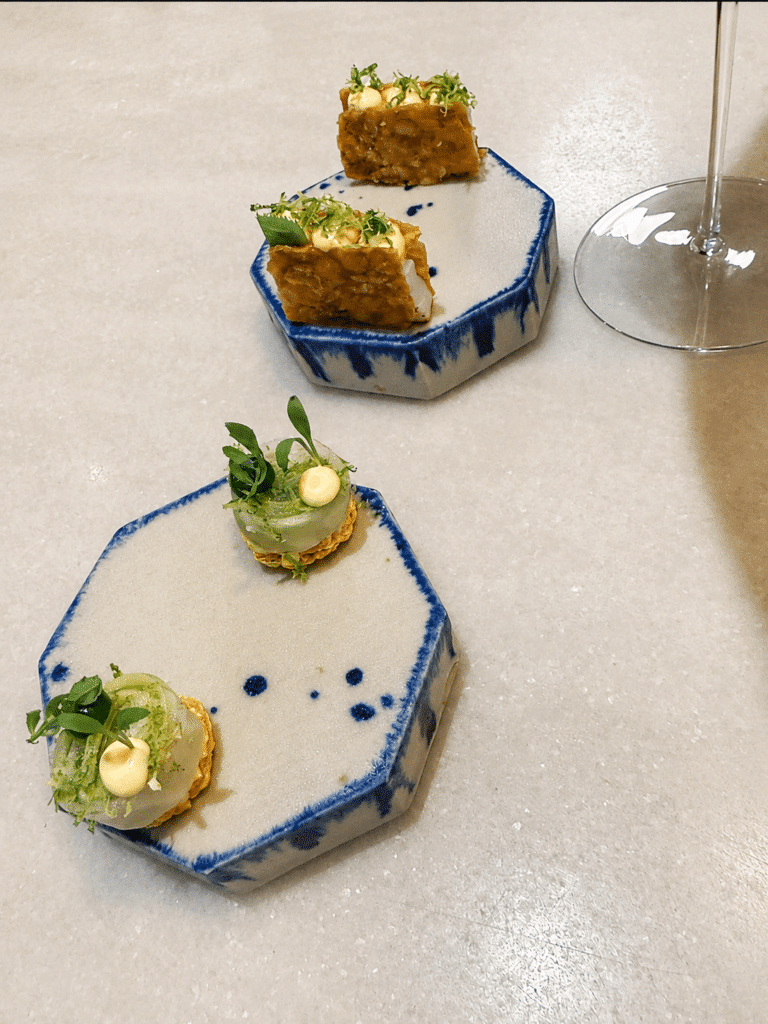
    I’ve been to Jun Sakamoto once. After that meal, I understood why I think of him as something like the godfather of omakase in São Paulo.

    His namesake restaurant opened in September 2000, and he has spent decades establishing himself as one of Brazil’s leading sushi chefs. Sitting at his counter gave me a chance to appreciate the skill behind that reputation.

    I was lucky enough to sit beside a few regulars at the small counter, and Jun kept the conversation going as he worked. Being able to talk with him while watching him prepare the meal made the experience feel personal. That interaction became as much a part of my memory as the sushi itself.

    The freshness of the fish and his knife skills stood out. Watching him work at such close range gave me another level of appreciation for what arrived in front of me. You could see the experience in his hands, and the quality of the fish gave that work something worthy of the attention.

    My meal was largely focused on sushi, and that focus is part of what I appreciate about Jun Sakamoto. The fish, the preparation and the man behind the counter gave the evening its identity.

    One visit was enough to leave a lasting impression. Jun is a true sushi master in my eyes, and sharing that small counter with him and some of his regulars gave me another reason to appreciate the depth of São Paulo’s dining scene.

    Jun Sakamoto — Official Website & Reservations
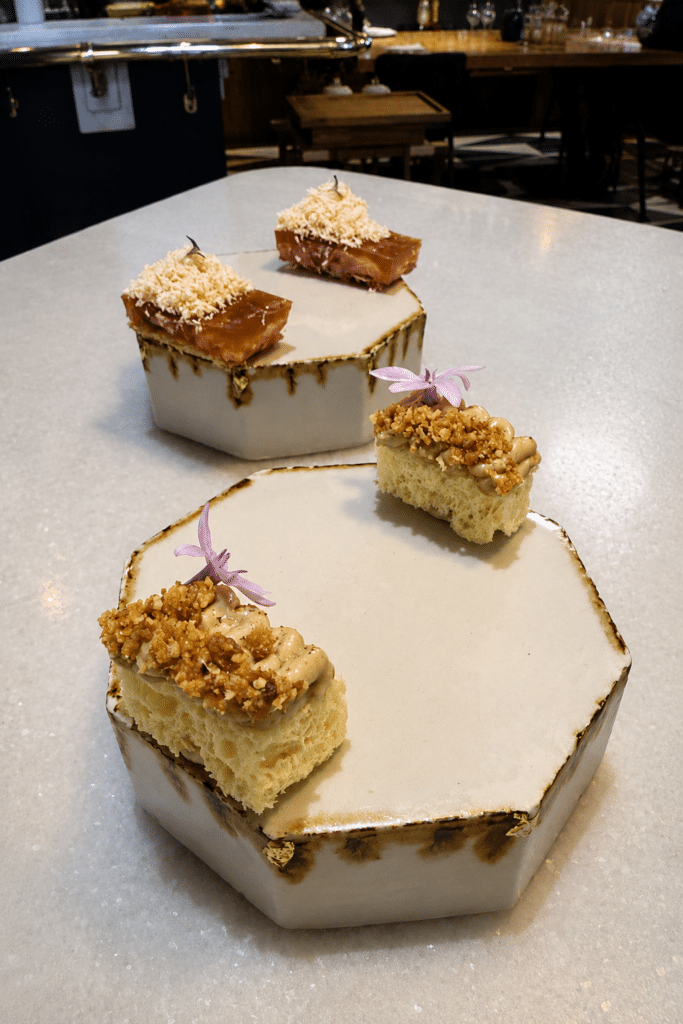
    Back to the restaurant shortlist ↑

    Make the trip work

    Planning Meals Without Overloading the Trip

    Start with the restaurant you would be most disappointed to miss, then work outward. Check reservation release dates directly with each venue, and leave room for changes in the rest of the itinerary.

    Keep lunch lighter when dinner is a substantial tasting menu. Think about cocktails, wine pairings and supplements as part of the total experience and spend. You don’t have to order every optional extra to have a memorable meal.

    For Grand Prix trips, protect the evening after the circuit. Allow time to get back, change and arrive ready to enjoy dinner. I would rather appreciate one meal properly than squeeze two experiences together and rush both.

    For more on the race-weekend logistics, read my São Paulo Grand Prix travel guide before locking in a tightly timed dinner after Interlagos.

    Menus change. The dishes I describe are memories from my visits, so use them to understand what interested me rather than as a current ordering guide.

    Use the restaurants’ own websites below to confirm the current menu, price, booking policy and dietary accommodations. A dish I enjoyed on a past visit may not be on the menu when you go.

    Why This List Keeps Growing

    For hotels, neighborhoods and things to do between reservations, read my São Paulo travel guide.

    The more time I spend in São Paulo, the harder it becomes to fit everything into one trip. Returning to a favorite means one less opportunity to try somewhere new. That is a good problem to have.

    This expanded list reflects how much more of the city I have experienced since the original article. It will keep changing as I eat, learn and return.

    Some people collect watches. Some collect cars. I collect experiences.

    São Paulo keeps giving me reasons to add another.

    Completely Unnecessary. Absolutely Worth It.

    Follow me on Instagram @Richard.Jarocki for more restaurant experiences, cocktails, travel and Formula 1 adventures—including my next trip to São Paulo.

  • Evvai and Tuju: Two São Paulo Tasting Menus, Two Personalities

    Evvai and Tuju: Two São Paulo Tasting Menus, Two Personalities

    Evvai and Tuju Evvai dessert and Tuju lamb dish side by side with Richard Jarocki’s logo.

    Visits: Evvai in November 2024; Tuju in January 2025. Originally published March 23, 2025. Menus and prices below reflect those visits, not current offerings.

    Evvai and Tuju gave me two of the finest dining experiences I’ve ever had in São Paulo. Both delivered the ambition and creativity I look for in a tasting menu, but they left very different impressions.

    Tuju felt like a temple of high-end gastronomy: precise, sleek, and driven by experimentation. Evvai brought just as much refinement, with a dose of punk rock energy that connected with me on a more personal level.

    I slightly preferred Evvai. The difference wasn’t simply what arrived on the plate. It was the personality of the experience.

    Evvai and Tuju at a Glance

    EvvaiTuju
    LocationSão Paulo, BrazilSão Paulo, Brazil
    Visit dateNovember 2024January 2025
    ChefLuiz Filipe SouzaIvan Ralston
    Menu discussedOriundi, OR242Rain Season
    Culinary approachItalian traditions and Brazilian influencesBrazilian ingredients and seasonal experimentation
    Historical menu priceR$895; Japanese A5 Wagyu alternative +R$125R$1,100 plus 15% service
    My impressionRefined, playful, rebelliousPrecise, sleek, luxurious
    My preferenceA slight edge for its personalityAn exceptional experience in its own right

    Evvai: Italian Heritage, Brazilian Ingredients

    At Evvai, Chef Luiz Filipe Souza brings Italian traditions and Brazilian influences together through his Oriundi cuisine. The connection to immigrant heritage gives the menu a point of view beyond simply combining ingredients from two countries.

    During my November 2024 visit, the OR242 menu moved through bread, seafood, meat, pasta-inspired preparations, and desserts. Heart of palm became tagliatelle. Cotechino met black bean broth. Corn, vanilla, and caviar shared a course.

    Those combinations reflect what I enjoyed about Evvai: respect for tradition, with a willingness to reshape it. The experience was elegant and contemporary, but there was room for storytelling and playfulness.

    For more on my connection to the restaurant, read why Evvai is my favorite restaurant in the world.

    Evvai’s November 2024 Menu

    These are the dishes recorded in my original account, rather than a current menu or a ranking of my favorite courses:

    • Melon, Puxuri & Chickpea
    • Manioc Bread & Cheese Selection — my notes mention cheeses from Marajó Island, polvilho biscuit, and Grana Padano whey.
    • Pupunha Heart of Palm Tagliatelle & Bottarga
    • Fish of the Day with BORI Special Urucum & Pancetta
    • Xinxin Chicken & Marsala
    • Cotechino with Black Bean Broth & Goat Pepper
    • Green Corn & Cerrado Vanilla with Oscietra Caviar
    • Yellow Fruits, Soursop & Manduri Honey
    • Rebel, Rebel Tiramisu
    • Mignardises

    The photographed OR242 menu also includes a Wagyu bresaola preparation with smoked tea. One ingredient in that line is obscured by glare, so this is a partial description rather than an exact transcription.

    The menu was priced at R$895, with Japanese A5 Wagyu, manioc, and wild mustard offered as an alternative to the chicken course for an additional R$125. A separate cheese and melipona honey selection was listed at R$79. These are historical menu prices, not current prices or a record of which supplements I ordered.

    Tuju: Precision and Brazilian Biodiversity

    Chef Ivan Ralston’s Tuju offered a different expression of São Paulo dining. During my January 2025 visit, the Rain Season menu centered on Brazilian ingredients, with combinations that ranged from oyster and watermelon to lamb with scarlet eggplant and watercress.

    What stayed with me was the sense of precision and experimentation. I described the chef as a mad scientist in my original account, and I meant it with respect: someone constantly exploring what technique and ingredients can do together.

    The restaurant itself felt upscale, sleek, and luxurious. That setting suited the food and the overall impression of carefully controlled, ambitious cooking.

    Tuju’s January 2025 Rain Season Menu

    • Oyster with Watermelon & Cucurbitaceae
    • Yellowtail with Cambuci, Turnip & Seaweed
    • Crab with Corn & Avocado — the photographed menu offers an optional 10 g caviar supplement for R$450; it does not specify the caviar variety, and yes I ordered it.
    • Pumpkin with Palm Heart & White Curry
    • Tomato with Eggplant & Yuzu
    • Squid with Caruncho Pork & Shell Jus Gras
    • Fish of the Day with Fragrant-Pepper Pil Pil & Asparagus Bean
    • Lamb with Scarlet Eggplant & Watercress
    • Mango with Pesto & Mate
    • Cocoa with Cardamom & Baru Nut

    Historical Tuju Menu Prices

    The photographed Rain Season menu lists R$1,100 plus a 15% service charge. That makes the menu alone R$1,265 with the stated service charge, before drinks or supplements.

    The listed pairing options were:

    • Discoveries wine pairing: R$790
    • Classics wine pairing: R$1,790
    • Non-alcoholic pairing: R$420

    I added the R$450 caviar supplement to the crab course. The pairing prices above show the options available at the time; they aren’t a record of my drinks order. The menu photograph doesn’t make clear how the 15% service charge applied to drinks or supplements.

    Seasonality and Sourcing

    Tuju’s attention to seasonality is part of its identity. Michelin’s current description explains that the restaurant’s tasting menus follow climatic seasons and that its sourcing includes small-scale producers, particularly in São Paulo state.

    That gives more concrete context to the restaurant’s approach than the broad sustainability language in my original article. For current restaurant details, see Tuju in the Michelin Guide.

    Evvai vs. Tuju: Why Evvai Had the Edge for Me

    Both restaurants gave me some of the finest dining experiences I’ve had. Having a favorite doesn’t take anything away from the other.

    Tuju delivered the kind of luxury I’ve always enjoyed: precise cooking, experimentation and a polished setting. I admired the focus behind the food and the care that went into the experience.

    Evvai had that same ambition, with a rebellious streak that connected with me. Its personality reminded me of David Bowie’s willingness to experiment and Andy Warhol’s embrace of pop culture. The illustrated course cards, the storytelling and the playful presentations made the meal feel personal and fun.
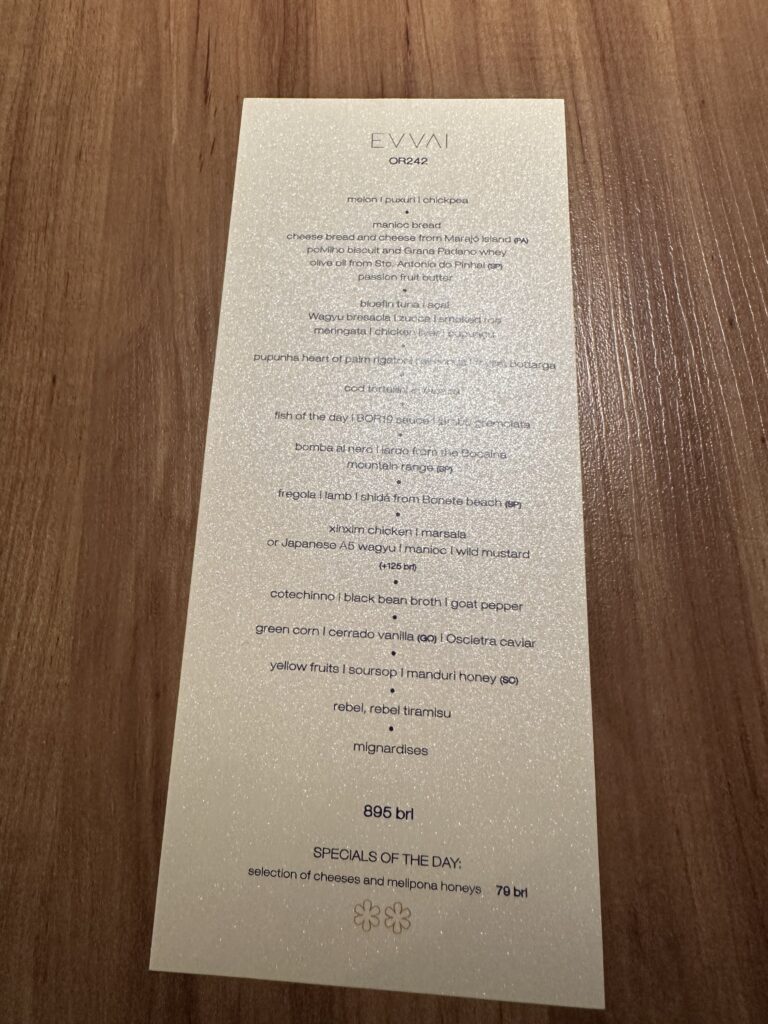
    That gave Evvai the edge for me. I’ve always liked the idea of respecting tradition while questioning how things should be done. Fine dining can take the food seriously and still have a sense of humor. Evvai made that part of the experience.

    Evvai and Tuju: Which Would I Choose Again?

    If I had to choose one based on these experiences, I would choose Evvai, by a small margin. Its playful, rebellious personality was the deciding factor.

    For someone drawn to a sleek setting and cooking that emphasizes precision and experimentation, Tuju would be a compelling choice. I have immense respect for both chefs and their different approaches.

    The photographed menus list R$895 at Evvai and R$1,100 at Tuju, a R$205 difference before Tuju’s stated 15% service charge. Evvai’s photographed menu does not state its service charge, so these are base-menu comparisons, not final-bill comparisons. Without the full bills and beverage choices, I won’t claim one delivered better value for money. My preference here is about the dining experience and how each restaurant made its personality felt.

    Both gave me more reasons to keep exploring São Paulo through its restaurants.
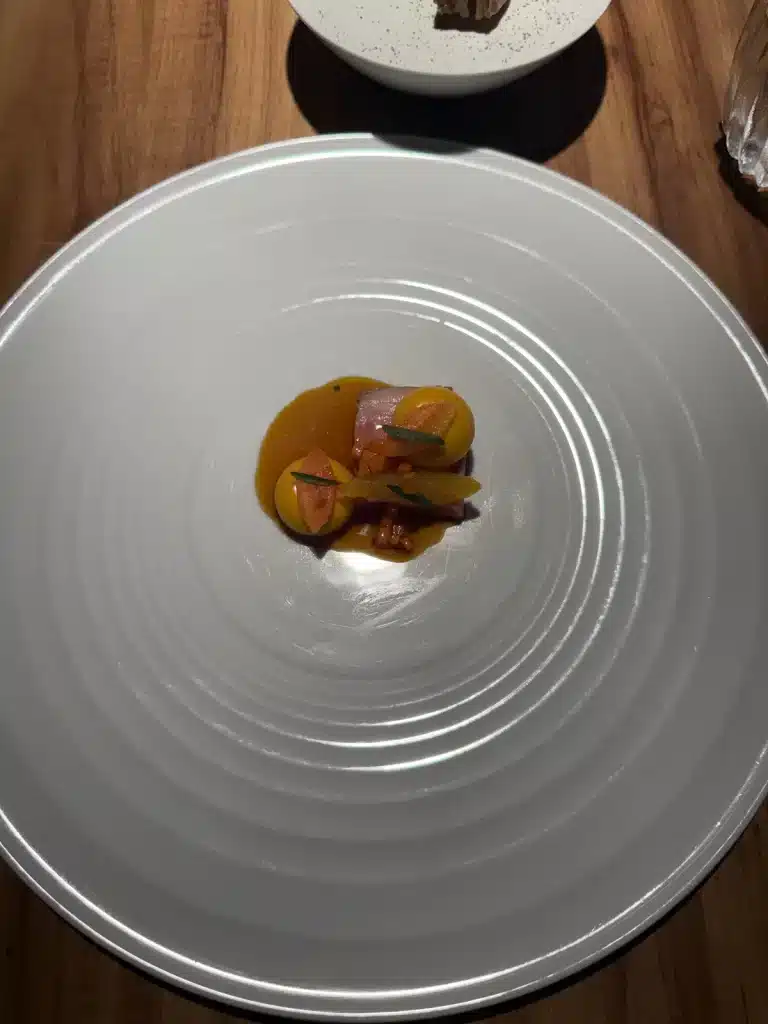
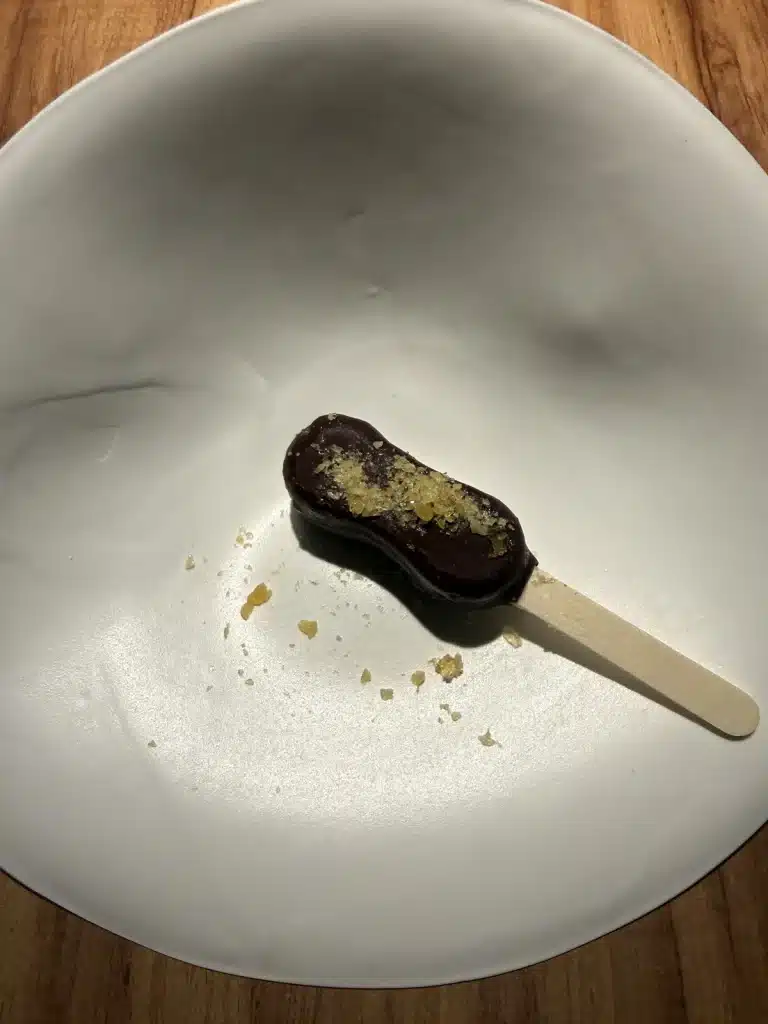
    More São Paulo Dining and Evvai-Inspired Cooking