Michelin stars get my attention, but the meal still has to deliver. Here I share firsthand experiences at Michelin-starred restaurants, from the dishes and pairings to the service and details that make an evening memorable. I want to understand the thinking behind the food—and decide for myself whether the experience lives up to its reputation and price.
São Paulo Michelin Starred & 50 Best Restaurants 2026 guide: .São Paulo is one of the best food cities I have ever visited. I say that after eating my way through plenty of cities that get much more attention internationally. What keeps bringing me back is the range: you can have a serious three-star tasting menu one night, sushi at a tiny counter the next, a pork-focused tasting menu in Centro the night after that, and then finish the trip with cocktails and izakaya-style food somewhere completely different.
This guide started as a list of Michelin-starred and World’s 50 Best restaurants in São Paulo. It needed a full update. The city’s restaurant scene has changed, the Michelin rankings have changed, and the 50 Best lists need to be separated correctly. Michelin, The World’s 50 Best Restaurants and Latin America’s 50 Best Restaurants are three different systems, and they should not be mixed together.
I have personally eaten at many of the restaurants in this guide, including Evvai, Tuju, D.O.M., A Casa do Porco, Nelita, Kazuo, Jun Sakamoto, Metzi, Kotori and Tangará Jean-Georges. Where I have been, I will tell you what stood out to me. Where I have not been, I will keep it factual and let the rankings speak for themselves.
Michelin-Starred Restaurants in São Paulo — 2026
The 2026 Michelin Guide was a major moment for São Paulo. Evvai and Tuju became the first restaurants in Brazil — and the first in Latin America — to receive three Michelin stars. D.O.M. holds two stars, and São Paulo currently has 13 one-star restaurants.
Chef Luiz Filipe Souza’s Evvai is my favorite restaurant in São Paulo and, at this point, one of my favorite restaurants anywhere. I have been more than once, and I am returning again because the experience keeps evolving instead of feeling like a tasting menu that simply repeats its greatest hits.
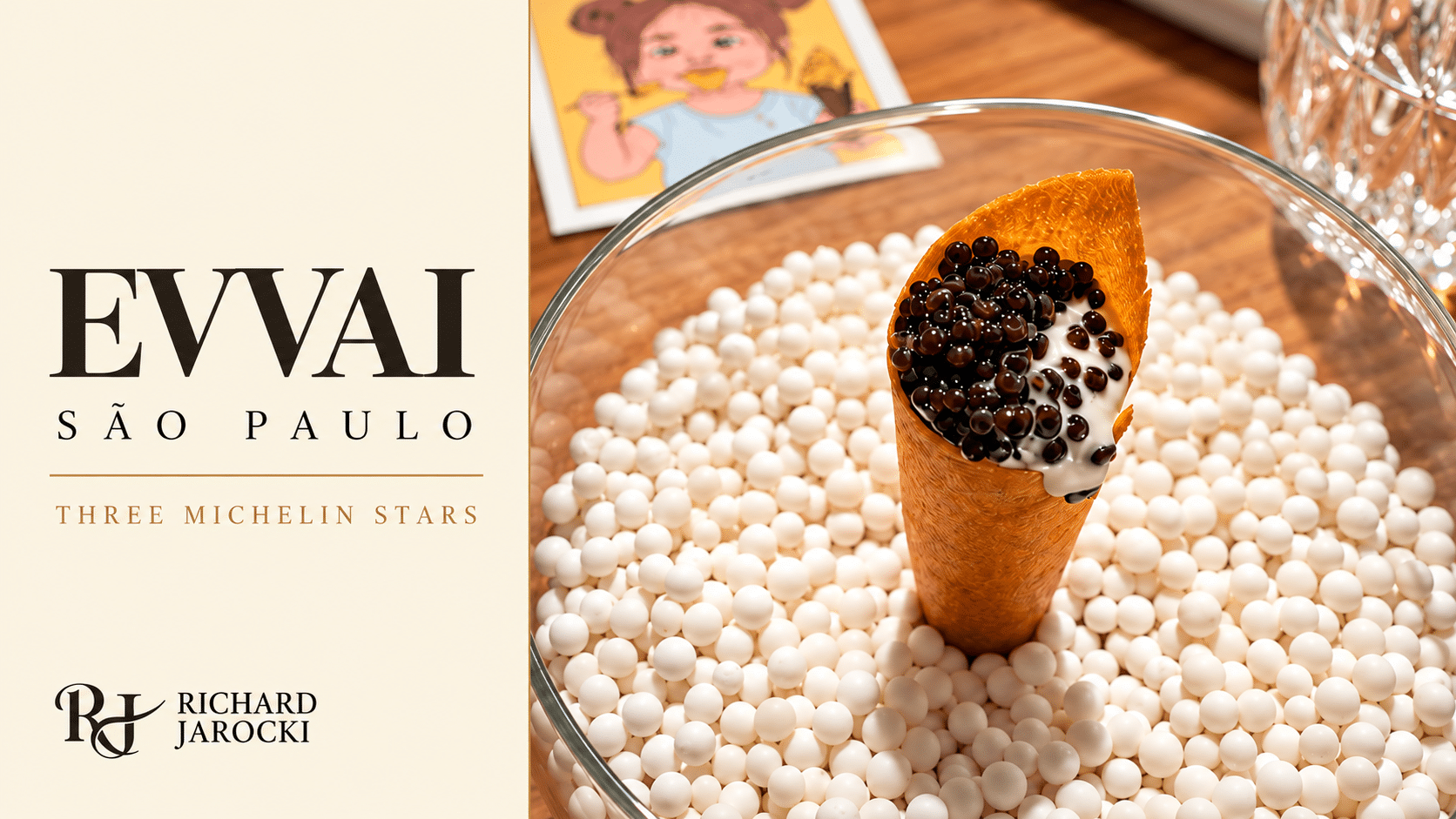
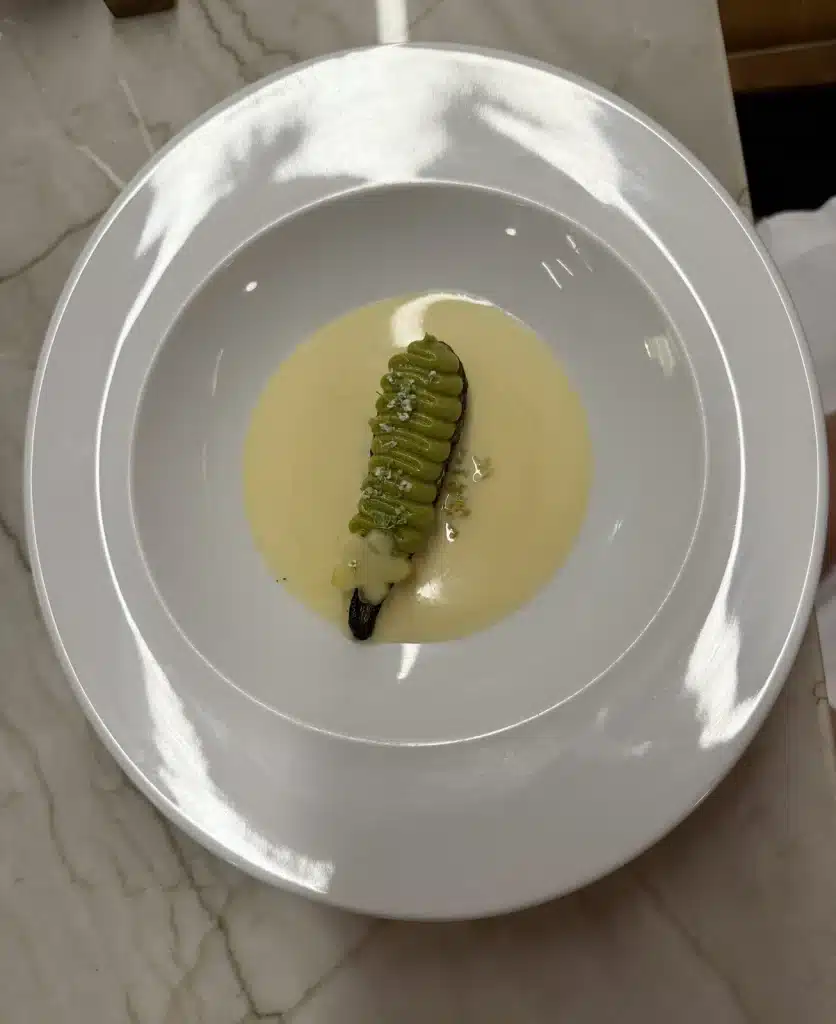
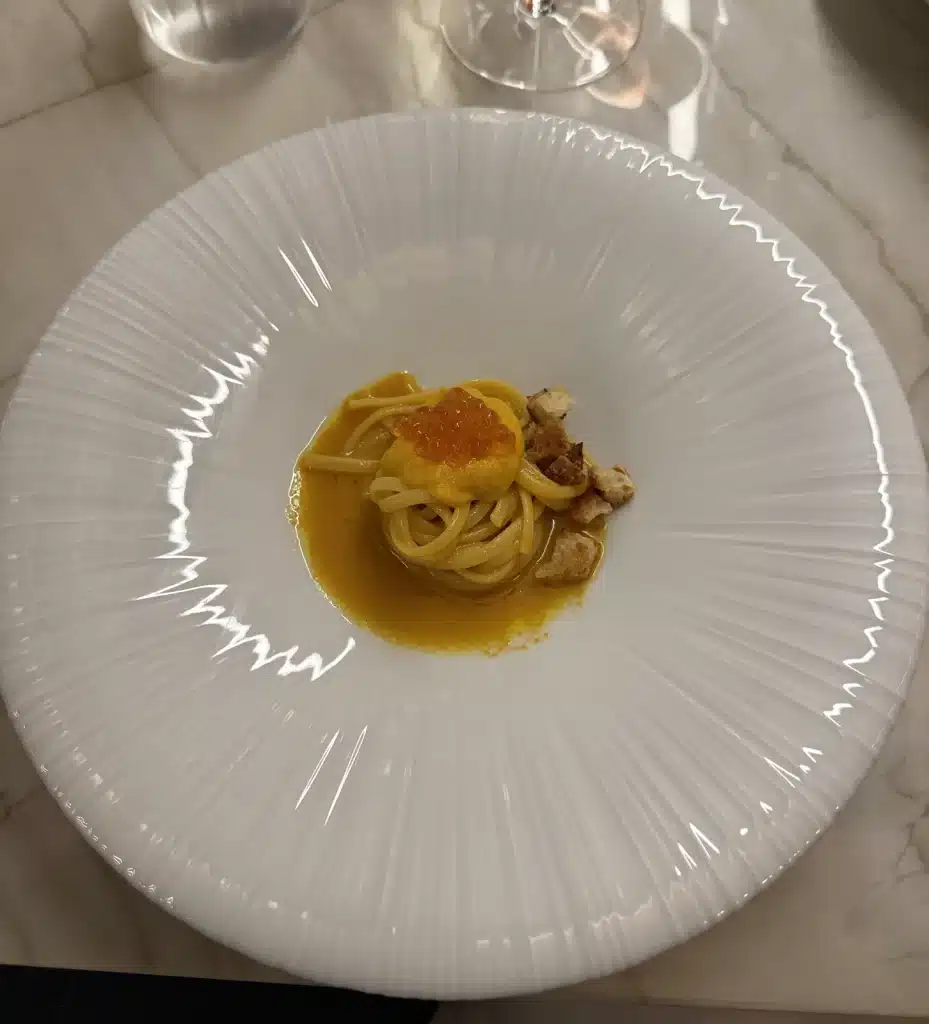
The Oriundi menu connects Brazil and Italy without making either side feel forced. The technical precision is obvious, but what I remember most is that the food still has personality. The Bomba de Vieira — the scallop course served directly onto your hand — is playful without becoming a gimmick. On another visit, dishes like duck tortellini with eel and tucupi and a green-corn ice cream cone with caviar showed exactly why this restaurant is operating at such a high level.
The illustrated cards that accompany the courses are another detail I love. They give you context without turning dinner into a lecture. Evvai feels serious about food while still remembering that dinner is supposed to be fun.
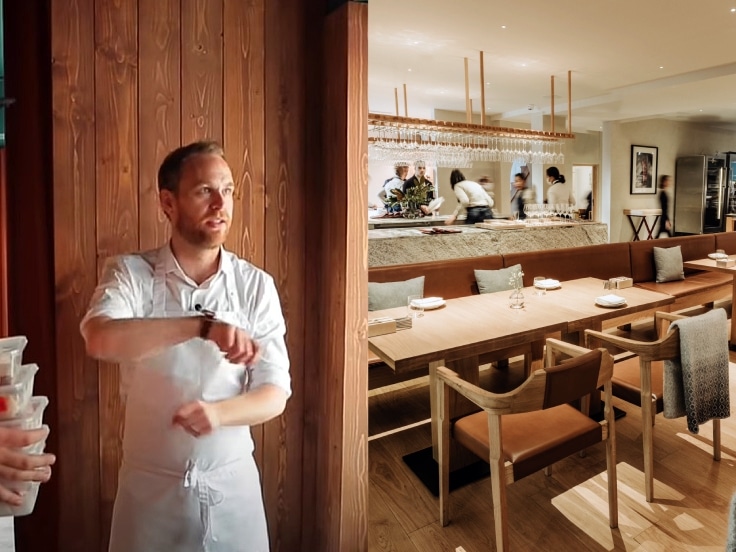
Tuju is a completely different experience from Evvai, which is exactly why I do not like comparing the two as if one needs to beat the other. Tuju feels like a temple of gastronomy. The building, service, pacing and menu are designed as one experience rather than a dining room with a tasting menu dropped into it.
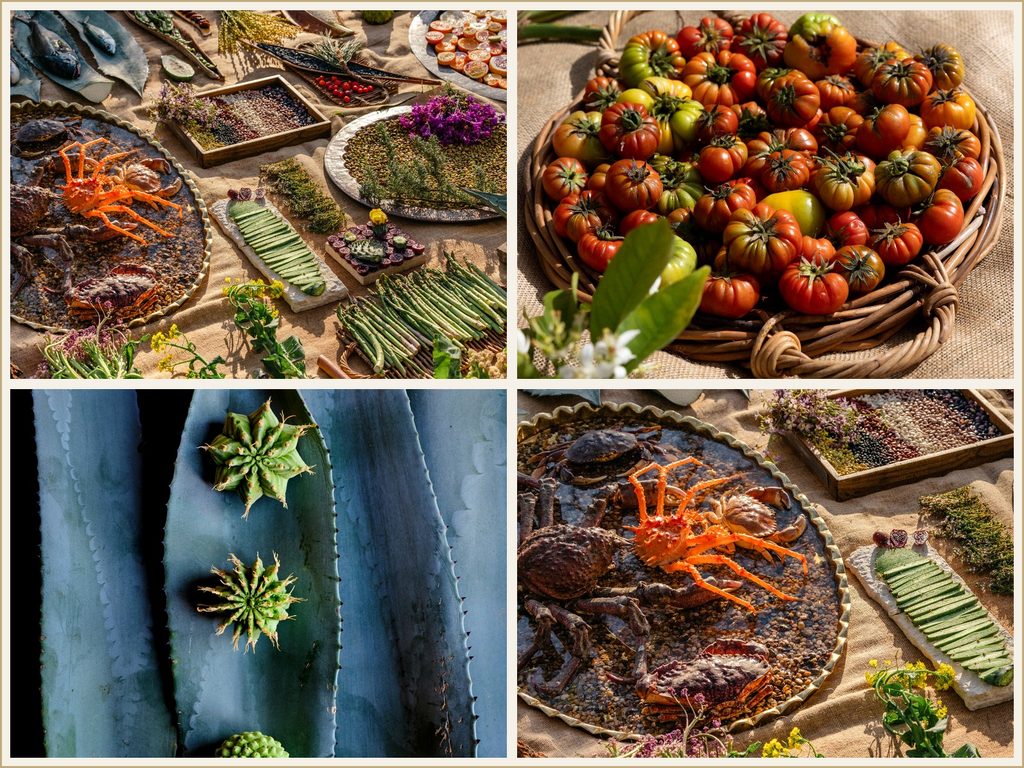
Chef Ivan Ralston builds the menu around São Paulo’s seasons and rainfall patterns. When I visited, the Rain Season menu felt highly considered from beginning to end. The presentations were some of the most polished I have seen anywhere — almost couture-level — but the experience never felt cold. The restaurant’s three-floor progression, open kitchen and hospitality program are a major part of what makes Tuju different.
D.O.M. is one of the restaurants that helped put modern Brazilian fine dining on the international map. Chef Alex Atala built a restaurant around ingredients, traditions and ideas that many international diners had never encountered before.
My meal at D.O.M. felt more like discovery than simple luxury. I tried ingredients I would not normally order on my own, including insects, and I came away feeling like I understood a little more about Brazil than I did when I walked in. That is what makes D.O.M. important to me. It is not just about refinement; it is about teaching you something through the meal.
I have been to Jun Sakamoto once, and the easiest way I can describe it is that you understand very quickly why he has the reputation he does. He is one of the names that comes up when people talk about the foundation of serious omakase in São Paulo. The counter is small, the focus is tight and the experience is about sushi craft rather than spectacle.
Kazuo was my first meal in São Paulo, which gives it a permanent place in my memory of the city. I have returned multiple times, including for lunch. What makes Kazuo different from Jun Sakamoto is range. Kazuo is not only about sushi; the menu moves across several Asian cooking traditions, and the kitchen is comfortable doing much more than one thing well. Even dessert surprised me there.
Tangará Jean-Georges is the more formal hotel dining experience on this list. I have followed Jean-Georges restaurants for years, so I wanted to experience his São Paulo restaurant inside Palácio Tangará. I ended up ordering à la carte rather than doing the tasting menu because of a table issue during that visit, but the setting and level of service are exactly what you would expect from a restaurant inside one of the city’s grandest hotels.
The World’s 50 Best Restaurants — São Paulo
The World’s 50 Best Restaurants global list is separate from Latin America’s 50 Best. That distinction matters because older articles — including the previous version of this one — can make it look like a restaurant’s Latin American ranking is its global ranking.
As of September 2026, the latest global list published by The World’s 50 Best Restaurants is the 2025 edition. No São Paulo restaurant appears in the global top 50, but two São Paulo restaurants appear in the extended 51–100 list:
A Casa do Porco is one of the clearest examples of why São Paulo dining is so interesting. It has international recognition, but it does not behave like an inaccessible luxury restaurant. Jefferson Rueda built the restaurant around pork and whole-animal cooking, and the experience is energetic, fun and approachable.
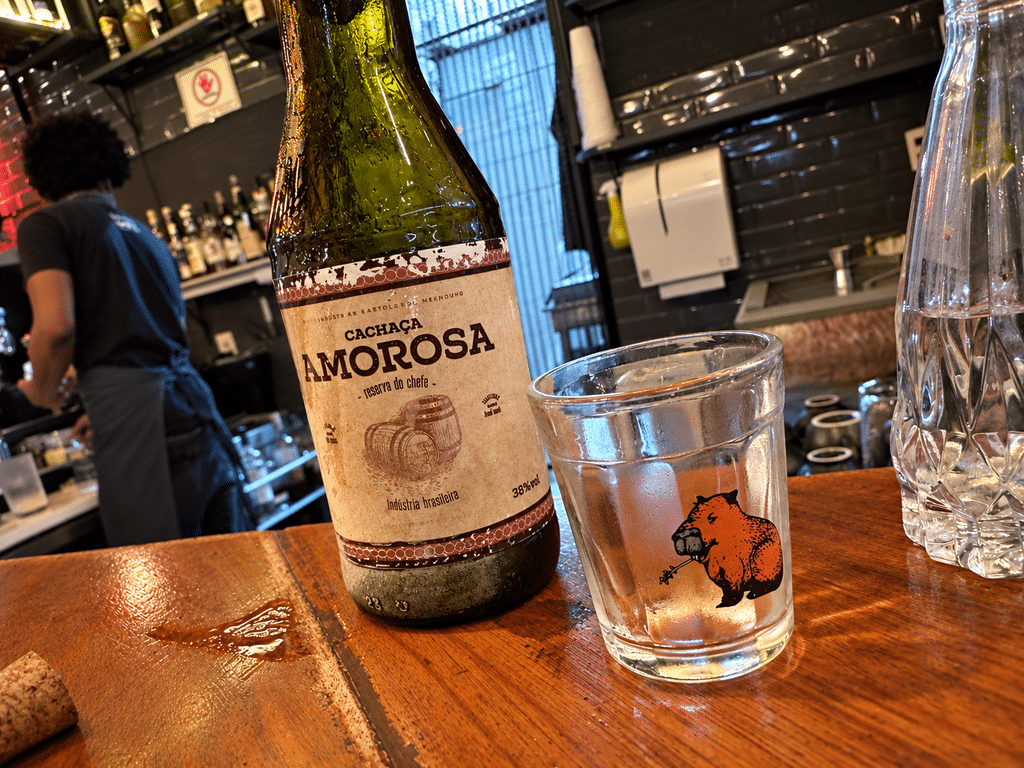
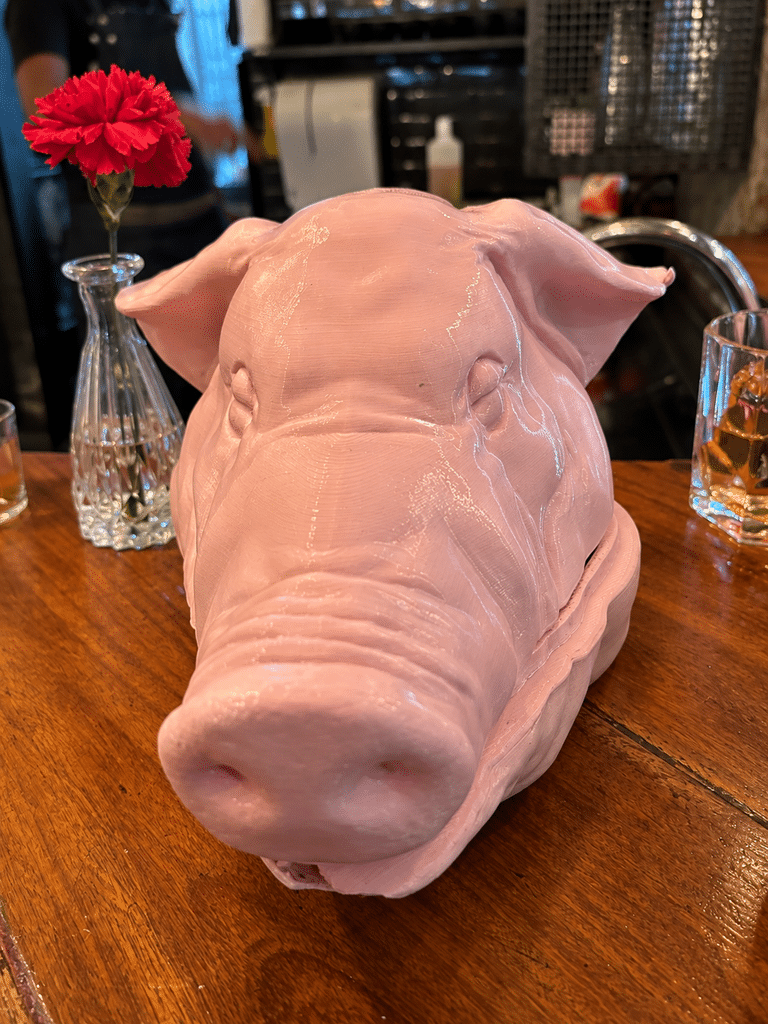
I visited in November 2024 and sat at the bar. There was a cachaça welcome, a full tasting menu and one of the most memorable presentations of the trip: crispy pork belly revealed beneath the restaurant’s colorful pig-head cloche. The point of the restaurant is not luxury for luxury’s sake. It is taking an ingredient many people think they know and showing how much can actually be done with it.
Latin America’s 50 Best Restaurants — São Paulo
For someone planning a food trip to São Paulo, the Latin America list is just as useful as the global ranking because it captures more of the city’s depth. The latest published Latin America ranking includes four São Paulo restaurants in the top 50:
No. 8 — Tuju
No. 12 — Nelita
No. 20 — Evvai
No. 25 — A Casa do Porco
São Paulo also has six restaurants in the extended 51–100 list:
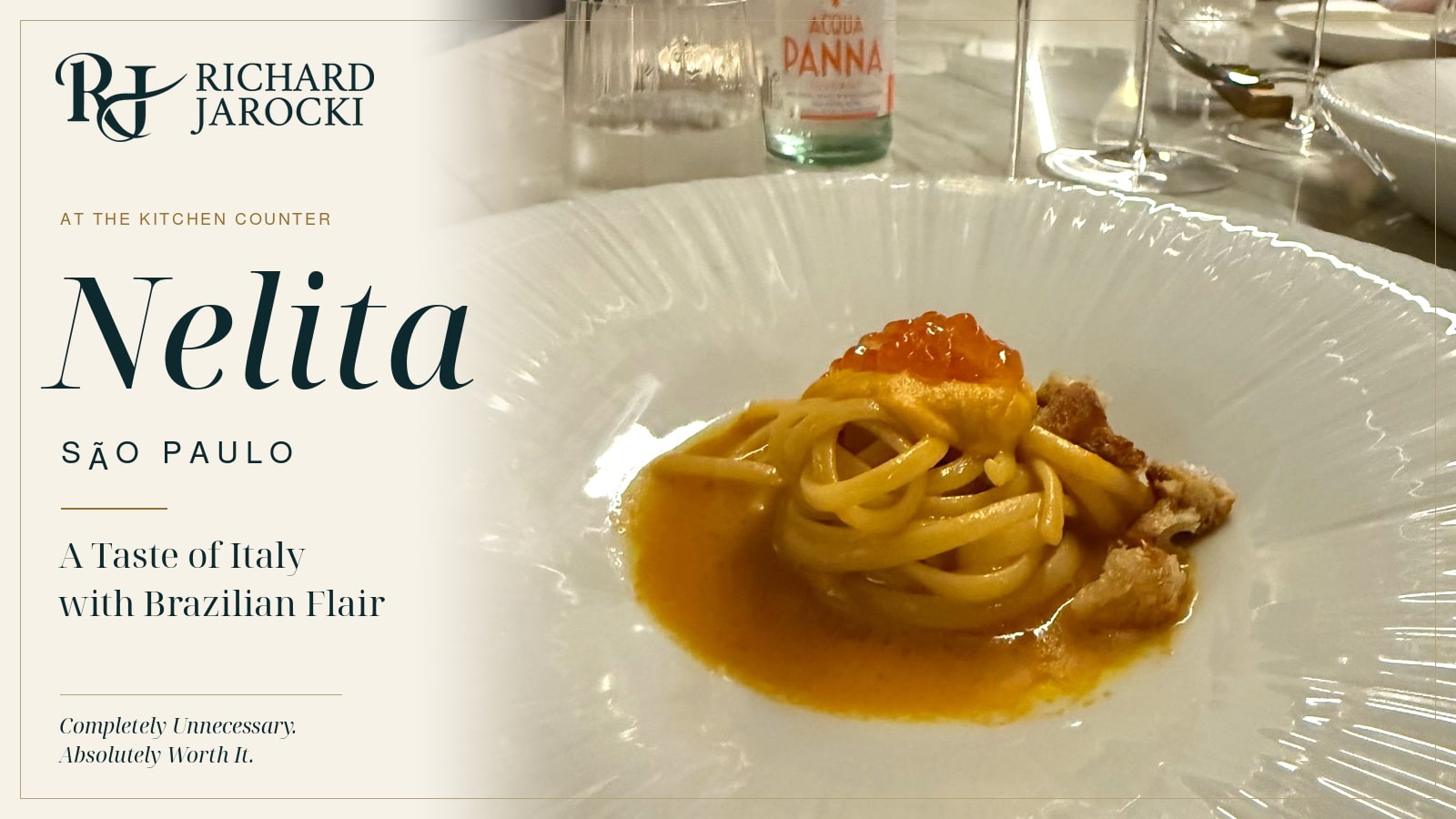
Nelita is one of the São Paulo restaurants I recommend often because it feels personal. Chef Tássia Magalhães is especially strong with pasta, but the meal I had there was not limited to one style. Beef tongue was one of the courses that stood out, and I still remember the passion-fruit sorbet at the end.
The hospitality also mattered. Tássia and her husband, sommelier Daniel, made the restaurant feel connected to the people behind it rather than like a concept created in a boardroom. That matters to me more and more as I travel.
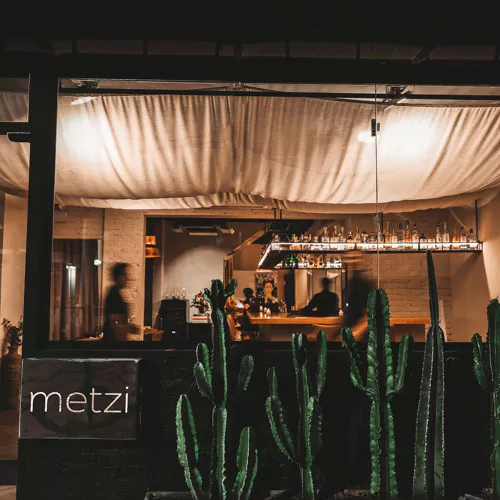
Metzi brings Mexican and Brazilian cooking together in a way that feels natural rather than like fusion for the sake of calling something fusion. I remember the pork-belly tacos, seafood tostadas and agave-based cocktails. I also had the chance to meet chef Eduardo Ortiz, which added another layer to the experience.
Kotori is smaller and more casual than several restaurants above it on this page, and that is part of the appeal. I have been once, and it fits perfectly into a São Paulo trip when you want excellent food without another long formal tasting menu.
How I Would Actually Plan a São Paulo Fine-Dining Trip
I would not book seven tasting menus in seven nights. I have made versions of that mistake before. At some point the meals start competing with one another, and you stop appreciating what is in front of you.
If this were a first serious food trip to São Paulo, I would build it around contrast. One night at Evvai or Tuju. One meal at D.O.M. for the Brazilian and Amazonian discovery side of the city. A Casa do Porco for something completely different. Then add a Japanese meal — Kazuo, Jun Sakamoto or another strong sushi counter — and leave room for places like Nelita, Metzi, Kotori or Tan Tan.
That mix gives you a much better picture of São Paulo than simply chasing stars.
Michelin vs. 50 Best: Which Ranking Matters More?
I do not think one ranking is automatically better than the other. Michelin is built around anonymous inspections and evaluates the cooking through a defined set of criteria. The 50 Best lists are voting-based and tend to capture restaurants generating excitement across the international dining community.
For me, they are both useful tools, not commandments. A star does not guarantee that you personally will love a meal, and a high ranking does not mean a restaurant is automatically better than the one below it. Some of my favorite restaurant memories came from places where the food, hospitality, city and timing all came together. That is impossible to reduce to a number.
Final Thoughts
São Paulo has become one of the cities I return to for the food as much as anything else. It now has Latin America’s first three-Michelin-star restaurants, a deep bench of one-star restaurants, and a strong presence across the 50 Best rankings. More importantly, it has range.
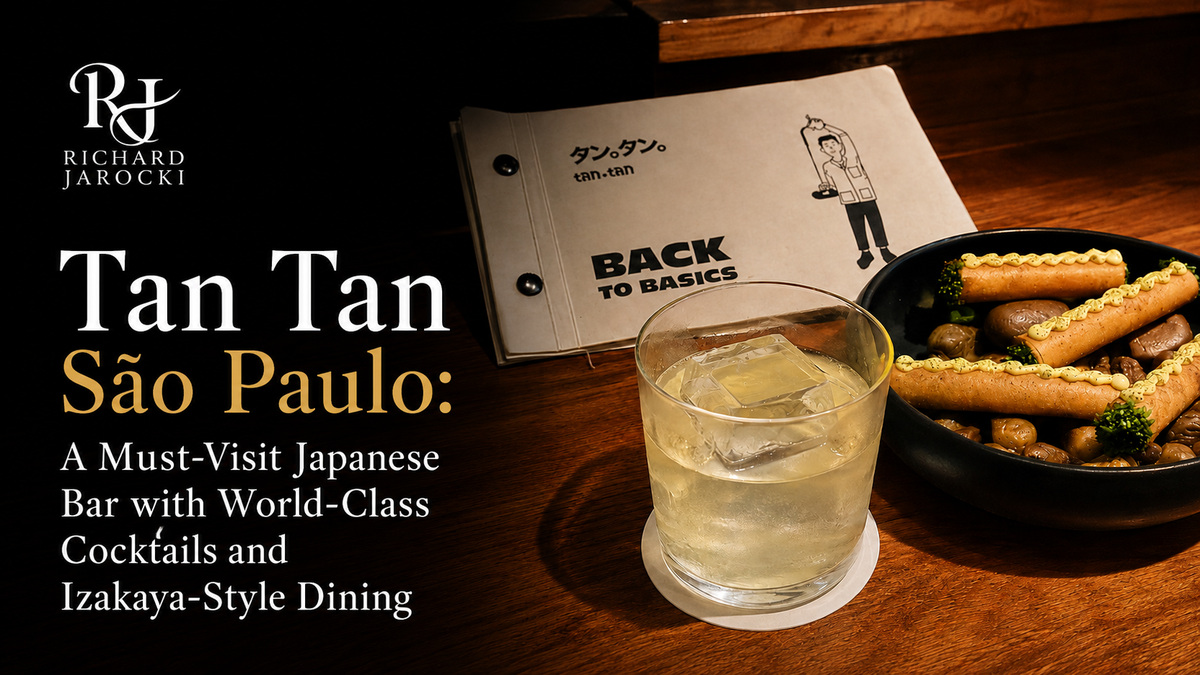
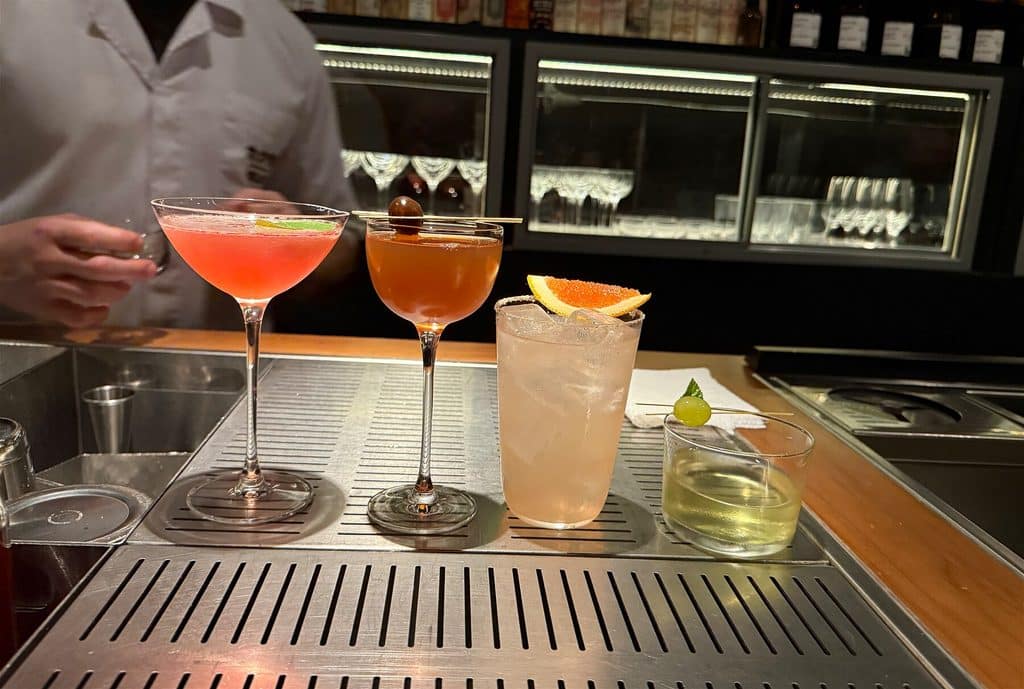
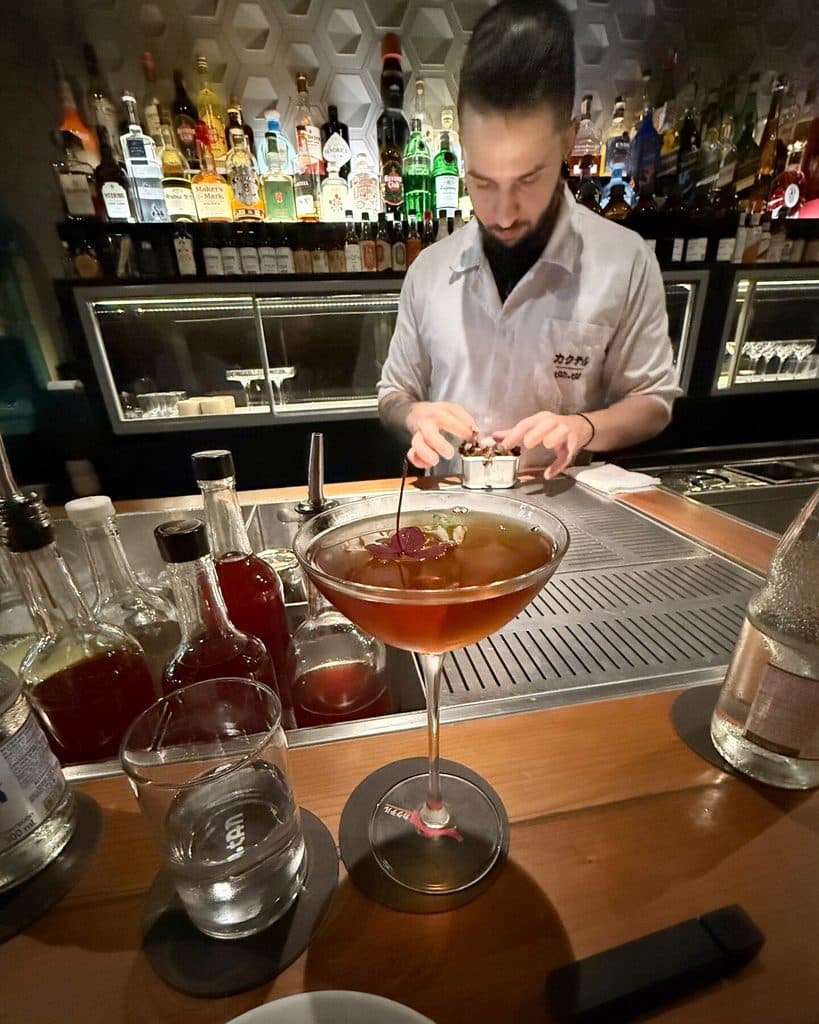
You can have military-level precision at Evvai, move through the different floors of Tuju, learn about Amazonian ingredients at D.O.M., sit at the counter at A Casa do Porco, eat pasta at Nelita, have sushi from Jun Sakamoto and finish another night at Tan Tan with a cocktail and 1990s hip-hop.
That is why I keep going back.
If you are planning a São Paulo food trip, Formula 1 weekend or a trip built around restaurants, I can help you narrow the list, balance the reservations and build the experience around how you actually like to travel.
Plan your trip with me: https://rjvipgp.net/work-with-me/
By Richard Jarocki | Research and booking information checkedSep 27, 2026
Exclusive restaurants interest me because of what can happen once you sit down: the cooking, the attention to detail, the room, and the way the evening comes together.
I have eaten at Disfrutar in Barcelona and at Evvai and Tuju in São Paulo. Those experiences give me a personal starting point. I also share what happened when I tried to book Cote and ended up at Bar Chimera. For places I have not visited, the profiles draw on research into what makes them distinctive and how their published booking or membership arrangements work.
A reservation at a small tasting-menu restaurant and an invitation to a private club involve different kinds of access. Understanding that difference makes planning much easier.
This guide profiles 20 restaurants and clubs across Europe, the Americas and Asia, without ranking them. It also looks at hotel connections, card benefits and culinary events that can open up other ways to experience their food and meet the teams behind it. Prices below retain the restaurant’s or club’s local currency, with approximate U.S. dollar equivalents beside foreign-currency amounts. Restaurant prices are per person, and drinks are separate unless stated. Check the current menu and terms before committing.
Currency note: USD estimates use Sep 25, 2026 reference rates, checked Sep 27, 2026, and are rounded to the nearest dollar. They help with planning; your card’s exchange rate and any fees may change the amount you pay. Sources: European Central Bank and Central Reserve Bank of Peru.
How Access to Exclusive Restaurants Actually Works
There are four main access arrangements to understand:
Public reservations: You book through the restaurant or its designated platform, subject to availability.
Tickets or deposits: You secure a specific experience under the restaurant’s payment and cancellation terms.
Private membership or hosted access: A club approves membership, admits a member’s guests, or offers another explicitly documented route.
Established table arrangements: A restaurant such as Rao’s allocates recurring tables to longstanding patrons. An invitation through that circle is a different proposition from a public reservation release.
A famous name does not automatically mean a private club. For example, The Polo Bar’s restaurant listing publishes a telephone reservation process. Describing it as members-only gives readers the wrong starting point.
For exclusive restaurants, the useful questions are when reservations open, which booking channel is official, and how flexible you can be.
Exclusive Restaurants Worth Knowing
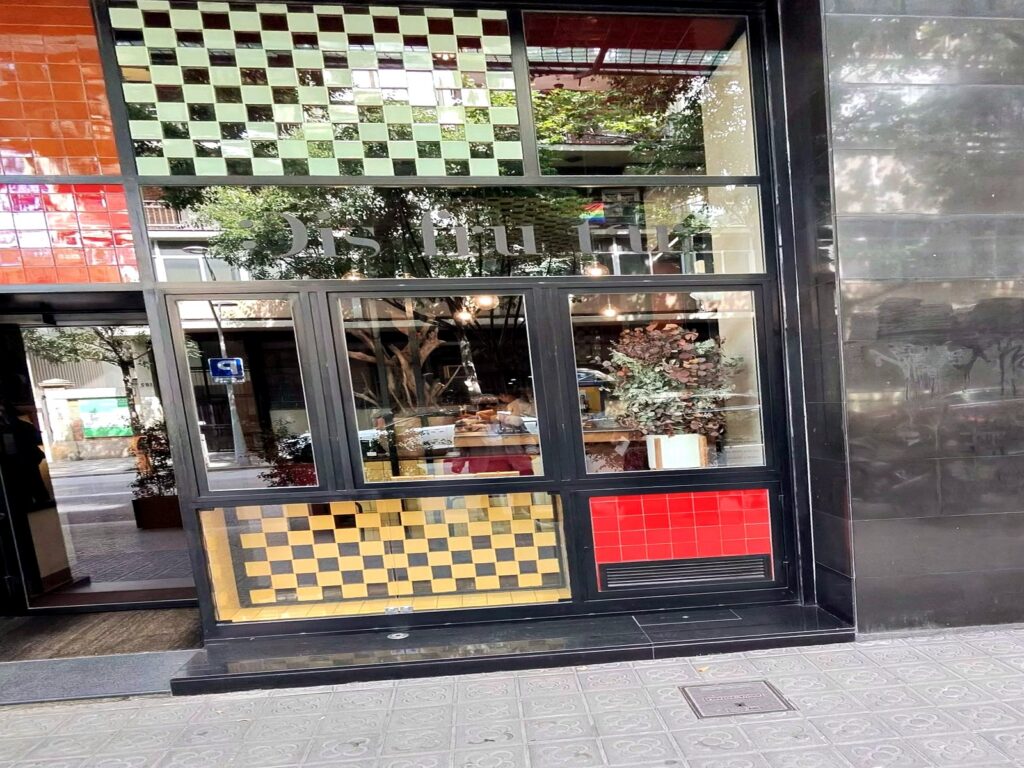
Disfrutar — Barcelona, Spain
Entrance to Disfrutar in Barcelona, photographed by Richard Jarocki in June 2026 for his guide to exclusive restaurants and remarkable dining experiences.
Disfrutar is one of the restaurants in this guide that I have experienced personally. The cooking of Mateu Casañas, Oriol Castro and Eduard Xatruch makes it a compelling choice for someone interested in inventive tasting menus and the possibilities of food.
The restaurant offers a Classic menu built around established creations and a Festival menu focused on seasonal work. Its separate Living Table experience takes place in the research and development kitchen.
Published menu price: €325 (about US$371) for either main tasting menu; the listed wine pairing is €180 (about US$205).
Getting into Disfrutar took persistence. When I was trying to book, it was booked almost a year ahead. I kept calling the reservations team, stayed polite and eventually they found me a spot. That is how I got in. It is a good reason to speak to the people handling reservations when the online calendar seems to have ruled you out.
How to book: Reservations open up to 12 months ahead, and the restaurant offers a waiting list. Start with the official website; its booking information also provides a telephone contact for the reservations team. Ask about your dates and whether they welcome follow-up calls.
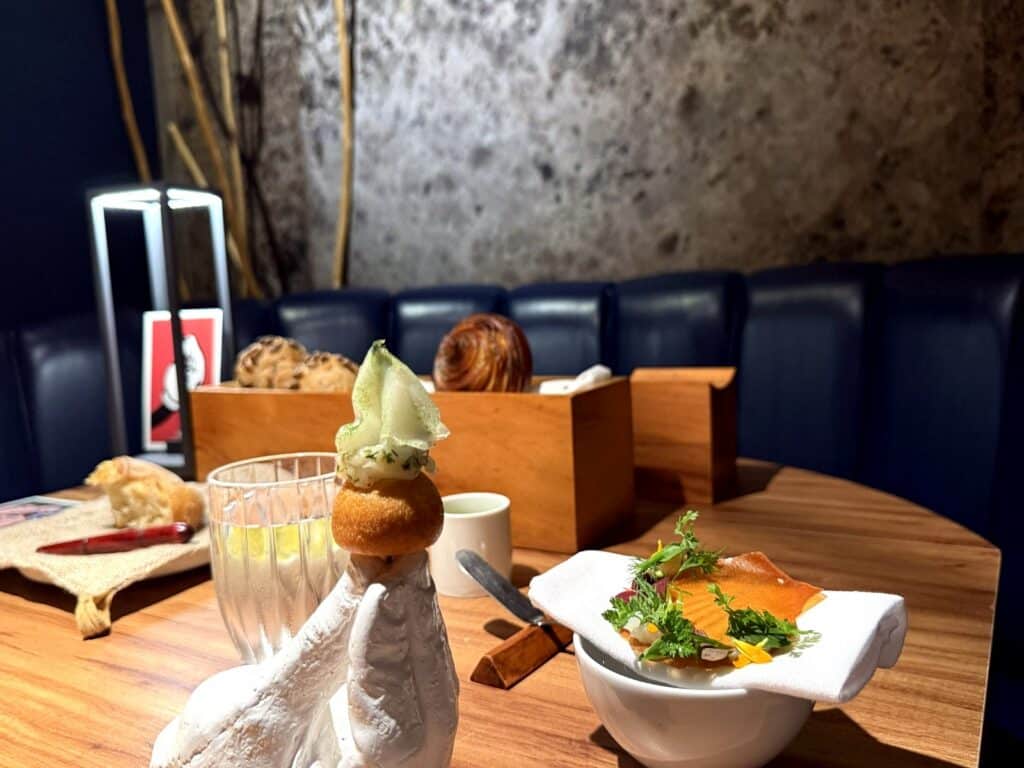
Evvai’s playful Bomba de Vieira — a signature scallop course served directly onto the diner’s hand.
Evvai is my favorite restaurant in the world. That is my personal opinion, built on the meals I have had there.
Chef Luiz Filipe Souza’s Oriundi approach connects Italian heritage with Brazilian ingredients and influences. What stays with me includes the illustrated dish cards, the playfulness of the food and the precision of the service. The details give the meal a personality of its own.
Evvai received three Michelin stars in the 2026 Brazil selection.
Published menu price: R$1,650 (about US$318). Pairings and supplements are additional; confirm service charges and the complete total when booking.
How to book: Use the Meitre reservation link on the restaurant’s official website.
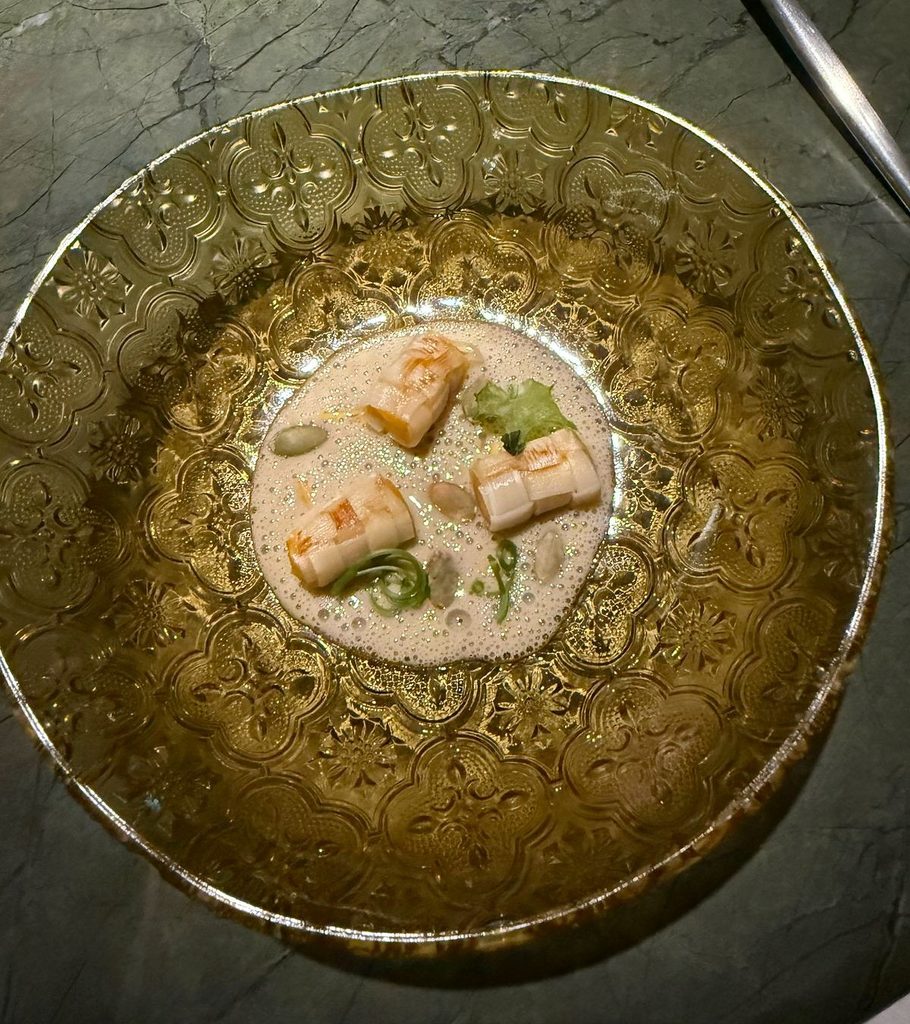
A course from Richard Jarocki’s Rain Season visit to Tuju. Photograph by Richard Jarocki.
Tuju feels like couture applied to gastronomy. The presentation, architecture and attention to detail give it a character that deserves its own place in a conversation about destination dining.
My visit was during its Rain Season menu. Chef Ivan Ralston’s approach draws on Brazilian ingredients and the changing climate, with research playing a central role in the kitchen.
Tuju also received three Michelin stars in 2026. Alongside Evvai, it helped make that year a landmark for Brazilian dining.
How to book: Follow the reservation link from Tuju’s website to Tock. Confirm the menu price, beverage options and terms for your chosen service.
Frantzén in Stockholm, where the dining room and open kitchen are integral to the three-Michelin-star experience.
Frantzén combines three Michelin stars with a deliberately small setting: the restaurant describes 23 seats spread within a three-floor townhouse experience.
That scale is a useful reason to research it early. It is also a clear example of a celebrated restaurant with a published public reservation system.
Published menu price: SEK 5,500 (about US$556), with the same menu at lunch and dinner. Beverages are additional.
How to book: Tables for the following month open on the first of each month at 10 a.m. Stockholm time. Frantzén states that it does not require advance payment for reservations.
For larger occasions, the separate Frantzén Group Test Kitchen advertises private dining for 8–16 guests. Request that experience directly.
Alchemist belongs on the list for the format as much as the food. The experience combines up to 50 “impressions,” including edible and other experiential elements, across an evening lasting approximately four to six hours.
That is a substantial commitment of time and attention. Consider it when you want the restaurant to be the main event of the evening.
Published menu price: DKK 5,600 (about US$854). Listed pairings begin at DKK 3,000 (about US$458), including the nonalcoholic option.
How to book: Tickets are generally released about every three months for the next two to three months. Join the official release newsletter or waiting list. Tables are offered for parties of two, four and six; the restaurant itself notes that larger groups may find availability more easily.
Ingredients from Noma’s 2026 Los Angeles residency, where the Copenhagen team built a menu around Southern California produce, seafood, and local landscapes.
Noma’s 2026 story includes a costly Los Angeles residency, serious scrutiny of its workplace culture and a return to Copenhagen.
The Los Angeles pop-up: Noma’s residency ran from Mar 11, 2026 to Jun 26, 2026. The advertised package cost US$1,500 per person, including the menu, beverage pairing, hospitality and tax. That put dinner for two at US$3,000 before travel or accommodation. The LA run has ended; those dates and prices describe that residency.
The reporting about staff and interns: Its opening coincided with renewed scrutiny of working conditions. In March 2026, The New York Times published former employees’ allegations of physical and psychological abuse by René Redzepi, including accounts concerning 2009–2017. Eater reported protests outside the LA venue and the withdrawal of sponsors American Express and Blackbird. Earlier reporting had also examined Noma’s reliance on unpaid interns, or stagiaires. Associated Press reported that Noma began fully paying interns in 2022.
Redzepi said he did not recognize every detail in the reports, while acknowledging that his actions had harmed employees and apologizing. He stepped back from daily operations. Noma now identifies Pablo Soto as executive head chef, with Mette Brink Søberg leading research and development and Annika de Las Heras as CEO.
That history is part of the context for deciding whether to dine there, alongside the food, reputation and price.
Current Copenhagen experience: Noma reopened on Aug 5, 2026, with a menu designed to evolve through twelve seasons over the year. Its published menu is DKK 4,500 (about US$686), with wine pairing at DKK 2,000 (about US$305) or juice pairing at DKK 1,500 (about US$229).
How to book: Use the Copenhagen reservation link on Noma’s official website and follow its newsletter for releases. Read the current terms: Noma explicitly restricts commercial use of reservations by travel or concierge services.
Atomix in New York City, where the intimate counter and open-kitchen format make the dining experience feel highly personal.
Atomix gives this guide a New York restaurant centered on contemporary Korean cooking. Chef Junghyun Park and Ellia Park’s restaurant builds its tasting-menu identity around Korean traditions and technique.
The Chef’s Counter is arranged around a U-shaped counter with views into the kitchen. It has two Michelin stars in the guide reviewed for this article.
How to book: Check Atomix’s official Tock listing for current releases and payment terms. For a private counter dinner, the restaurant requests at least two months’ notice. If you have Amex Platinum, you can also ask its concierge about assistance for your dates; the card-access section below explains what is currently verified.
Before committing: Its published dietary policy is restrictive, including exclusions involving seafood, dairy, gluten and other ingredients. Check compatibility with your entire party before paying.
Tatiana by Kwame Onwuachi — New York City, United States
I want to eat at Tatiana. Every time I’m in New York City and look for a table, it’s booked. It remains on my list.
Chef Kwame Onwuachi’s restaurant is inside David Geffen Hall at Lincoln Center. Named for his sister, it draws on his Afro-Caribbean heritage and New York upbringing, bringing influences from neighborhood bakeries, takeout shops, Caribbean kitchens and bodegas into the dining room.
The published menu includes Egusi Tortellini, Curried Goat Patties and Short Rib Pastrami Suya. Those dishes give a sense of its cooking; I’ll have my own verdict when I finally get there.
How to book: Reservations open on Resy 28 days ahead at noon New York time, according to Resy’s current booking guide. Put that release in your calendar before your planned visit and use Resy Notify for cancellations.
Another possibility: Resy says bar seats are held for walk-ins for parties of up to two people, with outdoor seating also available for walk-ins when weather permits. Its advice is to arrive at the 5 p.m. opening and ask about the waiting list. Availability still depends on the evening.
The original Rao’s in East Harlem belongs in a conversation about exclusive restaurants. Open since 1896, it combines Southern Italian cooking with a dining room shaped by generations of regulars. Lemon chicken and meatballs are part of its identity; so are its jukebox and Christmas decorations.
Its scarcity comes from the way tables are allocated. Rao’s own history describes “table rights” granted to longstanding patrons. Recurring table arrangements have stayed within the same circles for decades and can pass down through generations. When people say they “own” a table, they mean that longstanding access.
The demand is enormous relative to the tiny dining room, and those established arrangements leave very little room for newcomers. Acquiring a recurring spot depends on an exceptional opening or an arrangement being relinquished and reassigned. There is no ordinary public queue for that privilege.
How access works: Hopefully, you have a friend—or a friend of a friend—with access who can invite you along. That is the most realistic route. The Infatuation’s 2025 firsthand report confirms that there is no online reservation platform or walk-in waiting list.
A polite inquiry through the restaurant’s published contact channels can establish whether it is willing to consider a request. Respect the answer. Any exceptional opening remains at the restaurant’s discretion; the cancellation strategy that can work at publicly bookable restaurants should not be mistaken for a standard route into Rao’s.
Know which Rao’s you mean: This profile concerns the original at 455 East 114th Street. A booking at another Rao’s location is a separate dining experience with its own access arrangements.
Blue Hill at Stone Barns — Pocantico Hills, New York, United States
Blue Hill at Stone Barns in Pocantico Hills, where the restaurant experience is rooted in the surrounding farm and landscape.
Blue Hill at Stone Barns makes sense when the meal is the reason for the trip. Chef Dan Barber’s restaurant sits within the Stone Barns Center for Food and Agriculture, drawing on its fields, pasture and other local farms for a tasting experience shaped by what they produce.
The restaurant holds two Michelin stars and a Green Star in the 2025 New York selection. Its connection between farming and cooking gives it a distinctive place among destination restaurants.
Published menu price: US$458 per person, plus tax and a 22% administrative fee. Beverages cost extra. The administrative fee is not a gratuity; the restaurant does not accept tips.
How to book: Reserve through Tock. New reservations for each month are released on the 15th of the previous month. The menu is prepaid, and the published terms say sales are final and reservations cannot be canceled. A waiting list is available.
Most reservations include a property tour before the meal. Allow time for the visit and travel from Manhattan. For a group, the separate private dining room accommodates up to 12 guests and is also offered through Tock.
Maido earned the No. 1 position in The World’s 50 Best Restaurants 2025. The year matters: it is a specific award, rather than a permanent claim to being the best restaurant on earth.
Chef Mitsuharu “Micha” Tsumura’s Nikkei cooking brings together Japanese techniques and Peruvian ingredients. For someone planning a trip around food, that cultural relationship gives the restaurant a clear reason to be on the itinerary.
Published menu price: S/1,295 (about US$378) for the 12-course Maido Experience without beverages, including tax and service. A nonalcoholic pairing package is listed at S/1,659 (about US$485).
How to book: The restaurant says reservations open two months ahead on the first day of each month. Its website handles parties of 1–10, subject to availability.
Sorn’s appeal is its focus on Southern Thai food: regional ingredients, traditional techniques and the work of chef Supaksorn “Ice” Jongsiri. Its three-star status is confirmed in the Michelin Guide Thailand 2026.
The booking details are particularly useful because the restaurant publishes a separate route for international guests.
How to book: International reservation requests open by email at midnight Bangkok time on the 15th of each month for the following month. Online bookings open through TableCheck at noon Bangkok time on the 25th; when the 25th falls on a Saturday, the published rule moves that release to the 24th.
Use the exact instructions on Sorn’s reservation page and ask the team to confirm the current menu price and requirements.
Sézanne, at Four Seasons Hotel Tokyo at Marunouchi, combines French technique with Japanese ingredients and offers a separate Chef’s Table private dining room.
It also illustrates why current research matters. Stephen Lancaster became executive chef in April 2026. Older accounts of Daniel Calvert’s cooking describe an earlier chapter, so read them with that distinction in mind.
Published menu prices: JPY 56,925 (about US$361) for Menu Sézanne and JPY 27,830 (about US$177) for the shorter lunch menu. The restaurant’s TableCheck listing identifies these amounts as including service and tax.
How to book: Follow the current reservation link from Sézanne’s own website, which directs diners to OMAKASE. Contact the restaurant for private dining. Its published dietary restrictions are substantial, so check those first.
Private Dining Clubs With Distinct Reasons to Visit
A private club’s appeal can include its dining rooms, wine collection, music, privacy and the ability to return regularly. Membership deserves consideration in that wider context. An expensive application does not tell you whether the food or the club will suit you.
These are researched club profiles. Access always depends on the club’s current rules and approval.
Annabel’s — London, England
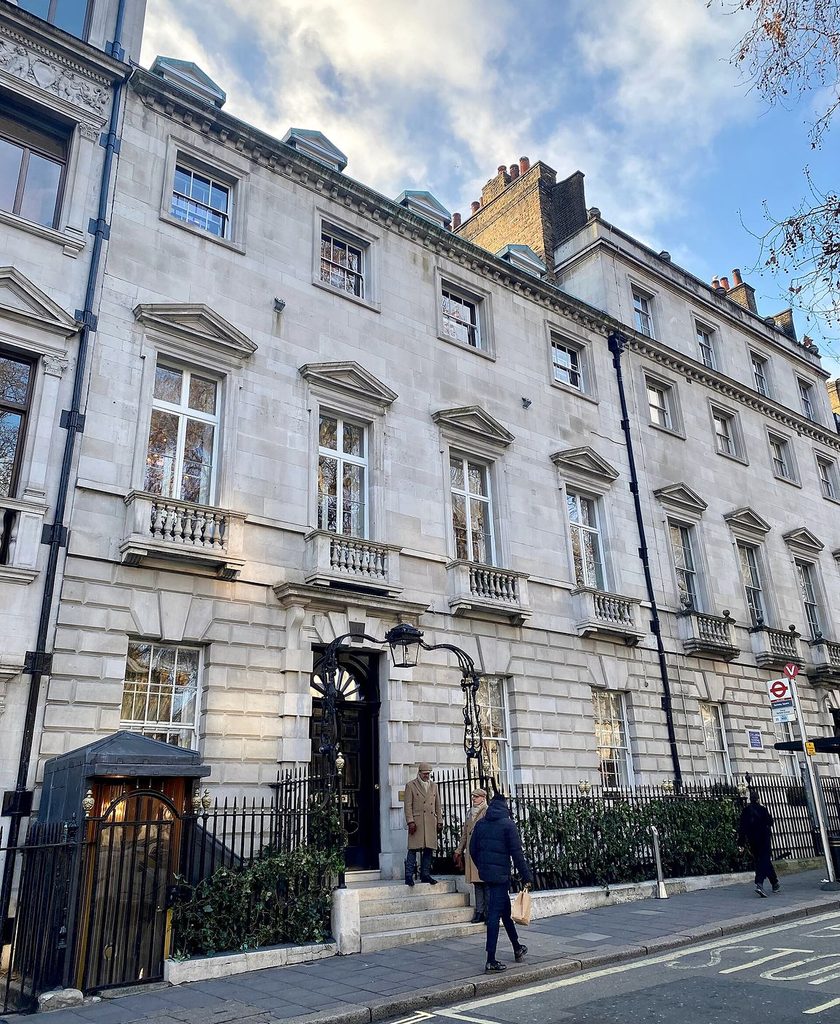
The exterior of 46 Berkeley Square, home to Annabels private members club in London, photographed in January 2022. Use beside the Annabels profile. Photo: No Swan So Fine / Wikimedia Commons, CC BY-SA 4.0. Cropped; tone and color adjusted; sharpened and optimized for web. https://commons.wikimedia.org/wiki/File:46_Berkeley_Square,_Mayfair,_January_2022_02.jpg
Annabel’s offers several dining and drinking settings within its Berkeley Square home. Its published rulebook describes the Mediterranean Brasserie, Italian restaurant Matteo’s and South American-inspired Bolívar, alongside its bars and nightclub.
How access works: Apply through the club’s official membership channel or visit as a member’s guest under its rules.
A particularly important detail: the published rulebook prohibits selling access and obtaining entry or membership through third-party concierge services. It also generally prohibits photography and video, with limited event exceptions announced by the club.
Confirm current fees directly; I would not build a budget around an old magazine’s membership figure.
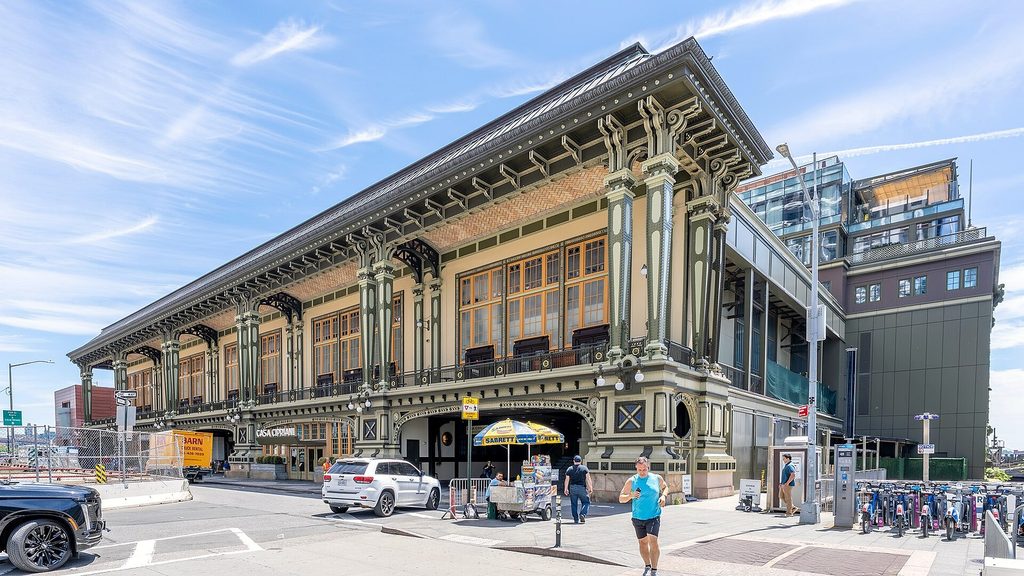
The Battery Maritime Building in New York City, home to Casa Cipriani, photographed in May 2026. This is an exterior view for the private clubs section. Photo: Ajay Suresh / Wikimedia Commons, CC BY 4.0. tone and color adjusted; sharpened and optimized for web. https://commons.wikimedia.org/wiki/File:Battery_Maritime_Building_-_Casa_Cipriani_(55313844251).jpg
Casa Cipriani pairs waterfront views with Cipriani dining, terraces and a Jazz Café. Its formal restaurant draws on Harry’s Bar classics, including carpaccio and baked tagliolini with ham.
The combination of dinner, music and the waterfront makes it a useful example of a club offering a complete evening.
How access works: Membership is one route; the club also publishes policies for members’ guests and guests staying in its hotel. Standard room and suite guests may bring a total party of up to four, including the room occupants, under the published policy.
Know before you go: Photography and video are prohibited throughout the club. Confirm hotel-related access and dining arrangements before booking a stay specifically for that purpose.
ZZ’s is Major Food Group’s private membership club. Its New York location at Hudson Yards includes a private Carbone restaurant, giving it a particularly clear connection to the group’s dining identity.
It is a relevant choice for readers interested in a restaurant-led club rather than membership built primarily around accommodation or workspace.
How access works: This is private membership dining. Confirm current eligibility, fees and guest privileges directly with the club. The public official pages reviewed did not provide a complete current fee schedule.
Take care to distinguish the New York club from its Miami counterpart when making inquiries.
Flyfish is the New York dining club co-founded by Gary Vaynerchuk alongside David Rodolitz, Josh Capon and Conor Hanlon through VCR Group. It gives this list a contemporary Lower East Side club built around food and social life.
The club occupies three levels and more than 12,000 square feet, with a main restaurant, a speakeasy lounge, a private dining room and an omakase counter reserved for select members. That last distinction matters when choosing a membership category.
Published membership fees: Individual membership lists a US$2,500 initiation fee and US$3,500 annual dues. The Omakase category lists a US$2,500 initiation fee and US$5,500 annual dues, with preferred rates and food-and-beverage credits in the omakase room.
How access works: At the time of research, Flyfish states that memberships are at capacity and applications are accepted for waitlist consideration. Its current website offers conventional membership categories alongside a separate blockchain membership process. Older descriptions of an NFT-only club are incomplete.
Confirm admission, guest privileges, dining charges and the precise benefits of your category directly before committing.
67 Pall Mall has a specific purpose: wine. Its London club advertises more than 1,000 wines by the glass and nearly 5,000 bottles, alongside dining, tastings and masterclasses.
For a wine enthusiast, that is a more useful basis for evaluating membership than celebrity sightings.
Published London fees: Standard annual membership is £2,750 (about US$3,644) with a £2,000 (about US$2,650) joining fee. An overseas category is listed at £1,250 (about US$1,657) annually, also with a £2,000 (about US$2,650) joining fee, and allows 15 visits in total across the group’s clubs.
How access works: Applicants need a proposer and seconder, but the club says its membership team can help identify sponsors. Members may host guests under the club’s rules.
The Arts Club combines art and cultural programming with several dining and drinking options. These include the Brasserie, Japanese restaurant Kyubi, Ofelia and the late-night music and cocktail setting of Leo’s.
That variety makes it worth examining for someone who would use a club across different occasions.
Published fees: Full membership for applicants aged 33 and above lists an annual subscription of £3,200 (about US$4,241) and a £1,600 (about US$2,120) member assessment fee. Other membership categories have different rates.
How access works: Begin with the official membership inquiry. Existing London members can also explore the separately priced international option for access to The Arts Club Dubai.
Mandala Club adds a Singapore option with a social and cultural focus. Its dining spaces include POPI’s, with Mediterranean-inspired food, and BAR MORI, its Japanese concept, alongside spaces for music and member events.
Its appeal is the mix of dining and club life. Readers should assess the current venues and calendar against the way they would actually use membership.
How access works: The club reviews membership applications. Its FAQ states that nonmembers can use members’ areas only when accompanied by a member, and that there is no guest fee for entertaining a guest.
Confirm the current membership tier, dues and any event charges directly.
How Hotel Connections Can Help With Exclusive Restaurants
Some hotels house destination restaurants or work with prominent chefs, making the hotel team a useful place to start when planning a special meal. A concierge can coordinate a dining request with your stay, explain the restaurant’s booking process and tell you whether a specific package or guest arrangement is available.
The useful question is what the hotel can actually confirm for your dates. Send your party size, preferred services, dietary requirements and flexibility before arrival. If your stay includes a butler, that person can help coordinate the request too.
There are several concrete connections worth understanding:
Ritz Paris and Espadon: Chef Eugénie Béziat’s restaurant is inside the hotel and is listed with one Michelin star. Contact the hotel or restaurant about dining alongside your stay and watch its calendar for visiting-chef dinners. Official Espadon information
Mandarin Oriental, Tokyo and Sushi Shin by Miyakawa: The hotel’s current sushi restaurant is on the 38th floor, with its own reservation contact and TableCheck link. Ask the hotel team to help coordinate the arrangements. Official Sushi Shin information
Le Bristol Paris and Epicure: The hotel sells a gastronomic-stay gift package combining a Deluxe Room for two, breakfast and an eight-course dinner for two at three-Michelin-starred Epicure. Beverages are excluded, and the offer is subject to availability. Confirm both the room and dining date before purchasing for a specific trip. Official gastronomic-stay package
Sézanne’s home at Four Seasons Hotel Tokyo at Marunouchi, and Casa Cipriani’s published hotel-guest club access, are further examples already covered in this guide.
Ask directly whether the restaurant keeps any inventory for hotel guests and whether your booking includes a confirmed table. A room reservation on its own should never be treated as a dining confirmation.
Use Amex Dining Benefits and Understand What You Still Pay
Eligible American Express Platinum Card Members can add their card to a Resy profile to access Global Dining Access reservations and Priority Notify at participating restaurants. Platinum Nights by Resy is another route, with reservations on selected dates reserved for eligible Platinum Card Members.
These benefits can create opportunities beyond the ordinary reservation search. You still pay for the meal and must complete any required deposit or prepayment. Read the restaurant’s cancellation terms before confirming; a statement credit, where eligible, has separate rules.
Atomix needs a specific distinction. Its published booking route is Tock. Resy’s current FAQ says Tock venues are not part of Global Dining Access, do not receive Priority Notify and have no nightly tables allocated to Amex Card Members. An Amex Concierge inquiry may still be worth making, but any Atomix-specific offer needs confirmation for your date. The current evidence does not support promising a standing Platinum-only table there.
A documented example from this guide is Tatiana, which appeared in Resy’s published Platinum Nights schedule for Mar 5, 2026. That date has passed, but it shows why checking the current Platinum calendar can be worthwhile alongside the normal reservation release.
Buying a ticket to a collaboration dinner or culinary event can give you another way to experience a chef’s work. Depending on the format, it can also create an opportunity to speak with the chef, sommelier or restaurant team and begin a relationship.
Look for events that identify who will actually attend and what is included. A hosted dinner, chef conversation or small tasting can offer different opportunities from a large walk-around festival.
Four-Hands Dinners and Signature Sessions
A four-hands dinner brings two chefs together for a shared menu; larger collaborations can involve several kitchens. Many are offered through public reservations or ticket sales.
One current example is Espadon’s advertised dinner with Anne-Sophie Pic and Eugénie Béziat on Oct 23, 2026 at the Ritz Paris. Its official page publishes the event and its prepayment cancellation terms. Check directly for remaining availability. Espadon’s collaboration dinner
The 50 Signature Sessions are another useful series to follow. The organiser describes ticketed collaborations between visiting chefs and local restaurants, with public dining events planned around the November 2026 programme in Lima. Watch the official experience page for the announced chefs, releases and prices. The 50’s dining experiences · Lima programme announcement
For Madrid Fusión, look closely at the pass and programme. Its 2026 registration included access to chef presentations, wine and pastry programming and exhibition areas. That is a different format from a seated collaboration dinner, so choose according to whether you want a meal, a demonstration or a broader industry event. Official congress registration and inclusions
Theodora Beach Club on Governors Island
Theodora Beach Club is a useful New York example of this approach. The summer 2026 pop-up brought Theodora and Taco Vista together on Governors Island, presented by Resy with VinePair as media partner. Its programme ran Fridays and Saturdays from Jun 5, 2026 through Aug 29, 2026, combining cooking over live fire with ticketed events and guest-chef collaborations.
VinePair also documented guest-bar collaborations involving names such as Sip & Guzzle and Bar Bambi. That mix offered another way to encounter the food, drinks and teams behind established restaurants and bars.
There was a card-access connection too: Resy advertised Platinum Nights on Jul 24, 2026 and Jul 25, 2026, plus early access for Global Dining Access members to the first chef collaboration. These were opportunities to book; guests still needed to buy their tickets.
The 2026 season has ended. Follow Theodora and Resy for future announcements rather than assuming the same dates or format will return.
Building a Relationship With the People Behind the Meal
If there is a natural moment to introduce yourself, take it. Ask a thoughtful question about a dish or ingredient, listen, and respect the team’s time during service. If you enjoy their work, return, attend another event or send a brief thank-you through the restaurant’s public contact channel.
Over time, being a considerate, interested guest can make the relationship more personal. You learn the team’s approach, and they may come to recognise yours. Sometimes the first visit is the hardest one to arrange. Being known to the team can make the conversation about returning easier.
That might mean a note attached to your guest profile, a direct reservations contact or, if a staff member chooses to share it, a mobile number for future booking requests. Use any personal contact in the way they invite you to. The relationship still needs care, and the next table still needs confirmation.
What Cote and Bar Chimera Taught Me About Being a Returning Guest
I wanted to try Cote but could not get a reservation. I was able to secure bar seats at Bar Chimera instead. The team then emailed me, recognised that I had visited their restaurants before and indicated that, if Cote was what I wanted, they would find a way to help.
I chose to keep the Bar Chimera booking because I wanted to experience it, and it was great. I still need to try Cote.
That exchange showed me how a previous visit within a restaurant group can matter. My dining history had been recognised, and it opened a conversation that the reservation calendar alone had not offered. It also gave me a reason to want to return.
How I Would Plan a Dinner at an Exclusive Restaurant
Start With the Meal You Actually Want
Choose the cooking, format and atmosphere before deciding how much effort to put into access.
A four-to-six-hour evening at Alchemist requires a different plan from dinner and jazz at Casa Cipriani. Think about who you are traveling with, what they enjoy and how much time you want to spend at the table.
For an important dinner during a Formula 1 trip, allow enough room between leaving the circuit and arriving at the restaurant. A reservation should fit the day you can realistically have.
Put the Release Date in Your Calendar
Record the restaurant’s local time zone, booking platform, party size and any payment requirements. Recheck the official instructions close to the release.
Join a waiting list if one is offered. Flexibility can help, but the restaurant’s own guidance should determine the approach. Alchemist’s note about larger parties is a good reminder that the smallest table is not always the easiest to obtain.
Be Persistent, Polite and Ready to Change Your Plans
If the restaurant accepts reservation inquiries by phone or email, use them. Give the team your dates, party size and any genuine flexibility. Ask whether they keep a cancellation list, whether they welcome a follow-up and when it would be useful to check again.
You can be relentless about pursuing a meal while remaining considerate of the person answering the phone. Keep follow-ups brief, use the channel they prefer and respect a request to wait. You want the reservations team to remember you as someone they would enjoy helping. My Disfrutar experience is why I take that approach seriously.
Then be ready when an opening appears. A cancellation might come through that afternoon for dinner that night, leaving you very little time to decide. You may have to change the evening’s plans, take an earlier or later sitting and confirm promptly with whatever payment the restaurant requires. Give an honest arrival time and handle any existing booking under its cancellation terms.
For a restaurant you have wanted to experience for years, that flexibility can be the difference between another sold-out search and sitting down at the table of a lifetime.
Understand the Whole Bill
Add up the menu, drinks, supplements, service, tax and transportation wherever applicable.
Pairings and premium ingredients can change the total substantially. Decide what you actually want before the excitement of the evening makes every extra sound essential.
For clubs, work out how often you would visit and what the membership gives you. Keep joining costs, annual dues and dining spend separate in your budget.
Check the Conditions Before You Commit
Read cancellation rules, dietary restrictions, dress codes and guest policies.
Private clubs may also have strict rules about photographs and filming. A beautiful room can be a place to enjoy quietly; any content plans need to fit the venue’s policy.
If you use a hotel concierge or a service already available to you, ask what it is permitted to arrange. A request is only a request until the venue confirms it.
Ask About Private Dining When the Occasion Justifies It
A private room can make sense for a celebration or a group that wants time together.
Confirm the actual setup, capacity, menu, minimum spend and cancellation terms. A chef’s table description alone does not promise a private room or a meal personally cooked by the head chef.
I am willing to make room in a trip and in my budget for a meal that matters to me. The food, service and feeling of the evening need to justify that decision.
Evvai has done that for me. Tuju has its own place in my memory. Those are personal judgments earned at the table.
For the places I am still researching, the next step is the same: understand the current experience, check the practical details and decide whether it fits the trip.
If you want help choosing a special dinner or building meals into a larger itinerary, work with me on your travel and dining plans. Share your destination, dates, party size, budget and the kind of experience you want. I can help you build a considered shortlist and a workable plan; reservations remain subject to the venue’s availability and approval.
Fine dining is more than just food—it’s an immersive journey. My recent experience at Tuju in São Paulo set a new benchmark for what a restaurant can offer, blending art, nature, world-class gastronomy, and award-winning hospitality in a three-level dining adventure.
### Michelin-Star Dining at Tuju São Paulo: A Nature-Inspired Experience From the moment you step into Tuju, the design captivates you. The space is a seamless fusion of modern architecture and nature, featuring: ✔️ A lush vertical garden creating a serene, almost otherworldly atmosphere ✔️ An open kitchen, allowing guests to witness the magic behind the dishes ✔️ Multi-level dining that transforms the meal into an interactive experience
### Tuju’s Cocktail Bar: House-Made Ingredients & Sustainable Mixology At Tuju’s bar, the same farm-to-table ethos that defines the kitchen extends into every cocktail. The bar team crafts signature drinks using ingredients sourced directly from the restaurant’s own garden and trusted local producers. Every syrup, infusion, and garnish is made in-house, ensuring zero waste and maximum flavor.
This commitment to sustainability and craft has helped Tuju stand out as a leader in Brazilian mixology. The cocktails reflect the seasonality of ingredients, with flavors that seamlessly complement the tasting menu. Whether it’s a citrus-forward gin infusion or a smoky, barrel-aged creation, the attention to detail is second to none.
### The Ultimate Tuju São Paulo Tasting Menu Experience #### First Stop: The Bar – A Chilled Start The experience began downstairs at the bar, where the first course was dramatically served over ice. It was an instant sensory delight—fresh, crisp, and paired with a cocktail that set the tone for what was to come.
#### Main Dining Level: An Artful Tasting Menu Once seated in the main dining area, the true culinary showcase began. Every dish was stunningly plated, balancing textures and flavors with precision. Standouts included:
🦪 Oyster with Watermelon & Cucurbitaceae – A refreshing and unexpected contrast of briny and fruity notes 🦀 Crab with Avocado, Corn & Caviar – A rich yet delicate dish, further elevated by the optional caviar 🦑 Squid with Caruncho Pork & Shell Jus Gras – A deeply umami-packed dish that was perfectly balanced 🐟 Fish of the Day with Brazilian Pepper Pil Pil & Asparagus Beans – Silky, flavorful, and paired with a natural white wine that cut through the richness 🥩 Lamb with Scarlet Eggplant & Watercress – Bold and earthy, bringing the meal into heartier territory
To wrap up the meal, desserts were served in the main dining area—each dish a work of art with vibrant flavors:
🍨 Mango with Pesto & Mate – A fresh and herbal twist on a tropical sorbet 🍫 Cocoa, Cardamom & Baru Nuts – Served in a cacao pod-shaped bowl, this dessert was a textural masterpiece
#### Final Stop: Rooftop Lounge – The Perfect Ending After dinner, we were invited up to the rooftop for an elegant closing experience featuring a curated cheese selection and after-dinner drinks. With one side open to the São Paulo skyline, it was the perfect way to let the night linger.
### Seasonal Menu, Wine List & Chef Ivan Ralston Tuju offers a dynamic and evolving dining experience under the leadership of **Chef Ivan Ralston**. The restaurant’s menu is deeply influenced by the seasonal availability of local ingredients, ensuring that each visit provides a unique culinary journey.
#### Seasonal Menu Changes Chef Ralston emphasizes the use of seasonal Brazilian products, particularly from the São Paulo region. The tasting menu is determined by the weather conditions of each season, allowing the restaurant to showcase the freshest ingredients. This approach highlights the diversity of Brazilian produce while ensuring constant innovation and sustainability in the menu.
#### Wine List Tuju boasts an extensive wine list featuring over **5,000 labels**, including a selection of Brazilian varieties. This diverse collection is curated to complement the evolving menu, ensuring that each wine pairing enhances the dining experience. The inclusion of local wines allows guests to explore Brazil’s burgeoning wine industry alongside international classics.
#### Chef Ivan Ralston Born in São Paulo in 1985, **Chef Ivan Ralston** comes from a family deeply connected to the culinary world. After initially studying music, he shifted his focus to gastronomy, training at esteemed institutions and working in renowned kitchens such as **El Celler de Can Roca** and **Mugaritz** in Spain, and **RyuGin** in Tokyo. In 2014, he returned to Brazil to open Tuju, where he combines his international experience with a passion for responsible sourcing.
The restaurant features **in-house organic gardens cultivating over 200 species of unconventional edible plants**, many of which are used creatively in the dishes. Chef Ralston’s culinary philosophy honors the cosmopolitan nature of São Paulo, drawing influences from various cultures, including **Japanese, Italian, Spanish, and Jewish**, as well as regions across Brazil. This diverse inspiration is evident in Tuju’s menu, which evolves to reflect the seasons and the chef’s ongoing research into local ingredients.
### Tuju São Paulo’s Awards: Michelin Stars & Top Culinary Accolades Tuju’s reputation as one of São Paulo’s most prestigious fine dining destinations is well-earned. Its dedication to hospitality, sustainability, and innovation has led to multiple accolades:
🏆 **Gin Mare Art of Hospitality Award (2024)** – Recognized by *Latin America’s 50 Best Restaurants* for outstanding service ⭐ **Two Michelin Stars (2024)** – Awarded in the *Michelin Guide Rio de Janeiro & São Paulo*, a testament to Tuju’s world-class culinary achievements 🥇 **Brazil’s Best Restaurant (2024)** – Voted **Best Restaurant in Brazil** by the *World Culinary Awards*, further cementing its legacy
### Is Tuju São Paulo Worth It? Final Thoughts on This Michelin-Starred Restaurant Tuju delivered one of the most immersive, visually stunning, and well-curated dining experiences I’ve had. From the progressive journey across three levels to the artistic plating, innovative cocktails, and bold wine pairings, every detail was perfection.
⭐ **If you’re in São Paulo and want a next-level fine dining experience, Tuju is a must.**
Evvai is my favorite restaurant in the world. The food is a big part of that, but so is how much I enjoy being there.
The kitchen takes its work seriously. The meal still makes room for a sense of humor, illustrated cards, unexpected ingredients and dishes I remember long after I have gone home. That combination is what keeps bringing me back to São Paulo.
When I first published this review in March 2025, Evvai held two Michelin stars. It earned its third in the 2026 Michelin Guide. The practical information below is current as of this update; the food memories come from my earlier visits, not a claim that every dish is still on the menu.
Evvai at a glance
Where: Rua Joaquim Antunes 108, São Paulo, Brazil.
Chef: Luiz Filipe Souza.
Recognition: Three Michelin stars in the 2026 guide.
Format: Oriundi tasting menu, with Brazilian and Italian influences.
Current menu price: R$1,650 per person, checked October 24, 2026. Pairings and optional supplements are additional. Confirm any service charge and final total when booking.
Evvai describes its cooking as Oriundi, drawing on Italian immigrant traditions and their relationship with Brazilian ingredients and producers. Under Luiz Filipe Souza, that gives the menu room to move between the two countries rather than stay inside a familiar definition of Italian food.
For me, the interest is in how that idea becomes dinner. Pasta can arrive with ingredients I associate with Brazil. A familiar dish can look completely different. Something as simple-looking as an ice cream cone can become one of the bites I talk about most afterward.
I want to understand what I am eating and why it has been put together that way. Evvai gives me plenty to ask about.
The dishes I still think about
One of the reasons I return is that the menu changes. These are highlights from meals I have already had, not a checklist of what a future reservation will include.
Duck tortellini with eel and tucupi
This remains one of the most memorable pasta courses I have eaten. Duck tortellini, eel and tucupi brought together the Italian and Brazilian sides of the restaurant in a way that made the idea of Oriundi very clear to me.
It is the kind of course that stays in my head when I start planning the next trip.
Green corn ice cream with Oscietra caviar
A little ice cream cone topped with caviar is going to get my attention. The presentation made me smile, and the combination of sweet corn and caviar gave me a reason to keep thinking about it beyond the photograph.
That playful side matters. There is a lot of technique behind the meal, but the experience never needs to become humorless.
White moqueca and king crab
The white moqueca with squid and heart of palm was another memorable example of a familiar idea presented differently. The appearance was unexpected, while the dish still connected with what I enjoy about Brazilian cooking.
I also remember king crab with fresh coconut and caviar. Those dishes gave the meal variety without making it feel like a collection of unrelated demonstrations.
Popcorn and ice cream
Popcorn, ice cream and popping candy sound like they should belong to a very different kind of evening. At Evvai, the combination fit perfectly. The creamy dessert, popcorn and crackling candy made it fun to eat, not just interesting to look at.
It is a good example of why this restaurant connects with me. I appreciate precision, but I also want to enjoy myself.
The illustrated cards are part of the experience
The course cards deserve their own mention because they add something I genuinely value to dinner.
The team explains the food, and the illustrations carry that story further. Cards such as “Holy Crab!” and “Pasta La Vista, Baby…” give the courses personality before you even turn them over to read more about the ideas behind them.
I have kept the cards from my visits. Looking through them brings back the food and the conversations, rather than leaving me with a collection of photographs I have to struggle to identify.
In my earlier review, I also wrote about a Pantone-style card for a pupunha dish and the Campbell’s soup-style illustration accompanying bean soup with cotechino. The visual references are part of what made those meals feel distinctive. I would not assume the same card format or dishes will be used on every return.
Precise service, without taking the fun out of dinner
I have described the kitchen’s coordination as military precision. You hear a call from the person leading the brigade and the response from the team. Watching and hearing that organization is part of the experience.
At the table, the explanations give the dishes context. I enjoy the chance to learn about ingredients and the thinking behind a course instead of being left to admire the plate and guess.
What I especially like is that the professionalism leaves room for personality. The cards, the playful dishes and the interaction make the meal feel welcoming rather than intimidating.
I have compared Evvai’s spirit to David Bowie’s willingness to experiment and Warhol’s relationship with pop culture. Those are my comparisons, not claims about the chef’s stated influences. The restaurant feels ambitious and willing to have some fun with tradition, which is a large part of its appeal to me.
What the current menu costs
The official menu currently lists the tasting experience at R$1,650 per person. That is the published menu price, not the amount I am claiming to have paid for an earlier visit and not an all-inclusive bill.
The current drinks options include Euforia, a nonalcoholic pairing, at an additional R$561; Sintonia at R$1,159; and Magna at R$2,259. Optional food supplements cost extra as well. Check the current menu and confirm service charges before deciding on the full evening.
I would choose drinks according to what I actually want to enjoy that night. A full wine pairing plus cocktails is not a requirement for getting the most out of the meal. Ask about the current choices, decide how much you want to drink, and give yourself room to enjoy the food.
The menu evolves, so I would also avoid booking around a fixed course count or a photograph of one particular dish. Ask about dietary needs in advance rather than assume every course can be changed.
Is Evvai worth building a dinner around?
For me, absolutely. It is a place I look forward to returning to because the meal combines food I remember, service I appreciate and an atmosphere I enjoy.
It is an expensive dinner, especially once drinks and supplements are added. The reason I recommend it is the experience I have had there, not the number of stars beside its name. If you enjoy tasting menus, learning about ingredients and seeing a kitchen give its food a personality, it belongs on your São Paulo shortlist.
I already have another visit planned for November 2026. I will update my food impressions after that meal rather than pretend I have tasted the current menu in advance.
The World’s 50 Best Restaurants organization, known for its prestigious global rankings, is launching an exciting new initiative—the inaugural North America’s 50 Best Restaurants list in 2025. This highly anticipated ranking will highlight the top dining establishments across the United States, Canada, and the Caribbean, celebrating the region’s diverse culinary excellence.
Why This List Matters
For years, The World’s 50 Best Restaurants list has influenced global dining trends, recognizing innovative chefs and top-tier restaurants. Now, with a dedicated North American ranking, the region’s rich and evolving food scene will be put on a global stage.
What This Means for the Culinary World
✔ Spotlighting the Best in North American Cuisine – From Michelin-starred fine dining in Quebec to farm-to-table restaurants in California and bold Caribbean flavors, this list will celebrate regional culinary diversity. ✔ Global Recognition for North American Chefs – The list will elevate chefs and restaurants, giving them international exposure. ✔ Curated by Industry Experts – The rankings will be determined by a panel of 300 independent restaurant experts, ensuring credibility and diversity.
What to Expect from the 2025 Ranking
🔹 Live Awards Ceremony – The first-ever North America’s 50 Best Restaurants list will be revealed at a prestigious awards event later this year. 🔹 Diverse Culinary Representation – The list will feature a mix of Michelin-starred fine dining, hidden gems, and pioneering culinary innovators. 🔹 A Must-Read Guide for Food Enthusiasts – This ranking will become an essential culinary roadmap for travelers, critics, and passionate food lovers.
With North America’s fast-growing influence on the global food scene, this ranking will be a game-changer for restaurants, chefs, and food lovers alike.
North America’s Culinary Scene Finally Gets Its Due
With its thriving culinary landscape, the U.S., Canada, and the Caribbean are home to some of the world’s most dynamic food cultures. This list will celebrate the best and most exciting dining experiences across the region, ensuring that North America gets the recognition it deserves.
🍽 Which restaurants do you think will make the list? Stay tuned for the official announcement and prepare to explore North America’s finest dining destinations!
A Guide to Michelin-Star Dining for the Discerning Traveler
For high-net-worth individuals and passionate gourmands, dining isn’t just about food—it’s about theater, storytelling, exclusivity, and artistry. In the world of Michelin-starred restaurants, meals become experiences that stir the soul as much as they satisfy the palate.
This guide is curated for the discerning traveler who views fine dining as a cultural and sensory pursuit—where every course tells a story, and every reservation marks a memory.
What Michelin Stars Actually Mean
Michelin awards stars based on five main criteria:
Quality of the ingredients
Mastery of flavor and cooking techniques
Personality of the chef in the cuisine
Value for money
Consistency across visits
1 Star = A very good restaurant in its category
2 Stars = Excellent cooking, worth a detour
3 Stars = Exceptional cuisine, worth a special journey
Understanding this framework helps travelers set expectations and appreciate the unique artistry behind each experience.
Global Destinations Worth the Journey
For elite diners who travel to eat, here are a few destinations that consistently deliver:
Tokyo, Japan – Home to the most Michelin stars in the world; a perfect mix of tradition and innovation.
San Sebastián, Spain – A gastronomic playground with the highest concentration of Michelin stars per capita.
Paris, France – The birthplace of haute cuisine; elegance and history served on every plate.
New York City, USA – Diversity and creativity define its Michelin map.
São Paulo, Brazil – A rising star in fine dining with a strong blend of local ingredients and global techniques.
Copenhagen, Denmark – The epicenter of New Nordic cuisine, with restaurants like Noma leading culinary innovation.
Bangkok, Thailand – A growing culinary capital blending tradition and creativity.
Dubai, UAE – Rapidly ascending in the fine dining world, offering multicultural Michelin experiences.
Booking the Best: Insider Tips
Plan Early: Some 3-star restaurants open bookings 3–6 months in advance.
Use a Luxury Concierge: Amex Platinum, Centurion, or Black Card services can unlock “fully booked” tables.
Stay in Partner Hotels: Luxury hotels often have priority access for guests.
Leverage Chefs’ Networks: A sommelier or chef friend can sometimes open doors.
Use Apps Like Tock or Resy: Many Michelin-starred spots now use tech-forward booking systems.
Not Just Dinner: The Full Experience
Top-tier restaurants now offer more than just meals:
Kitchen Tours & Chef Meet-and-Greets
Wine Cellar Tastings with head sommeliers
Immersive Storytelling Menus that evolve seasonally or around global themes
Culinary Retreats: Weekend programs where guests cook, dine, and engage with chefs
Restaurant-Branded Suites: Some restaurants now have exclusive hotel rooms for a full immersion
Many also partner with art galleries, wineries, or boutique hotels to create multi-day culinary journeys.
Signature Michelin Experiences Worth Chasing
Osteria Francescana (Modena, Italy): Chef Massimo Bottura’s artful blend of nostalgia and avant-garde.
Evvai (São Paulo, Brazil): Italian-Brazilian fusion with flair, by Chef Luiz Filipe Souza.
Eleven Madison Park (New York, USA): A plant-based reinvention of fine dining with theatrical flair.
Sukiyabashi Jiro (Tokyo, Japan): The legendary sushi temple with unmatched technique.
Central (Lima, Peru): Elevation-focused Peruvian cuisine connecting nature and plate.
Noma (Copenhagen, Denmark): Innovation at its finest, often topping World’s 50 Best.
Mirazur (Menton, France): Chef Mauro Colagreco’s Mediterranean masterpiece.
Gaggan Anand (Bangkok, Thailand): Progressive Indian cuisine with emotion and performance.
Atelier Crenn (San Francisco, USA): Poetic, artistic tasting menus by Chef Dominique Crenn.
How to Dine Like a Global Insider
Don’t Just Order à la Carte: Always go with the tasting menu—it’s the chef’s vision.
Let the Sommelier Guide You: From rare vintages to unexpected pairings, trust the expert.
Dress Accordingly: Most Michelin-starred restaurants expect smart attire, even if not strictly formal.
Be Present: These are meals that deserve full attention—put the phone down, savor, and engage.
Request the Chef’s Counter: For a front-row seat to culinary magic.
Engage with the Staff: Great dining is elevated through dialogue and curiosity.
Note Food Allergies or Preferences in Advance: Michelin chefs are meticulous planners.
Michelin Dining and the Rise of Culinary Tourism
Culinary tourism is booming—more HNWIs are designing their travel plans around food. In this trend:
Restaurants become destinations.
Dining becomes the central event, not a side attraction.
Travelers stay longer in culinary cities to enjoy multiple experiences.
Luxury travel companies now offer “Michelin Itineraries” that include curated reservations, chef meetups, and wine-pairing excursions. These elevated food journeys blur the line between nourishment and narrative.
Beyond the Stars: Other Guides That Matter
While the Michelin Guide is the gold standard, savvy diners also follow:
World’s 50 Best Restaurants
La Liste
Gault & Millau
Opinionated About Dining (OAD)
Combining sources helps form a complete picture of culinary excellence, especially in regions where Michelin’s coverage is limited.
Final Thoughts: Dining as Art & Memory
For the discerning traveler, dining at a Michelin-starred restaurant isn’t about indulgence—it’s about immersion. It’s about celebrating mastery, connecting with culture, and tasting the extraordinary.
Each restaurant is a stage, each course a performance, and each chef an artist telling their story in flavors, textures, and plating.
When food becomes art, and dinner becomes theater, it leaves a mark far deeper than a social media post—it becomes part of your story.
My January 2025 meal at Nelita São Paulo was one of the best I’ve had in the city. I sat at the counter directly in front of the kitchen, watching chef Tássia Magalhães and her team work. The food gave me plenty to remember. So did the people behind it.
Tássia is exceptionally talented, yet she is also one of the most humble and warm chefs I’ve met. Her love of cooking and flavor came through in the meal. Sommelier Danyel Steinle brought the same care to the wine pairings, making the food even more enjoyable.
That connection between kitchen, wine and hospitality is what makes me want to return.
Visit: January 2025. Updated October 2026. The dishes below describe my visit; awards and practical information have been checked separately for this update.
My seat at the Nelita São Paulo kitchen counter
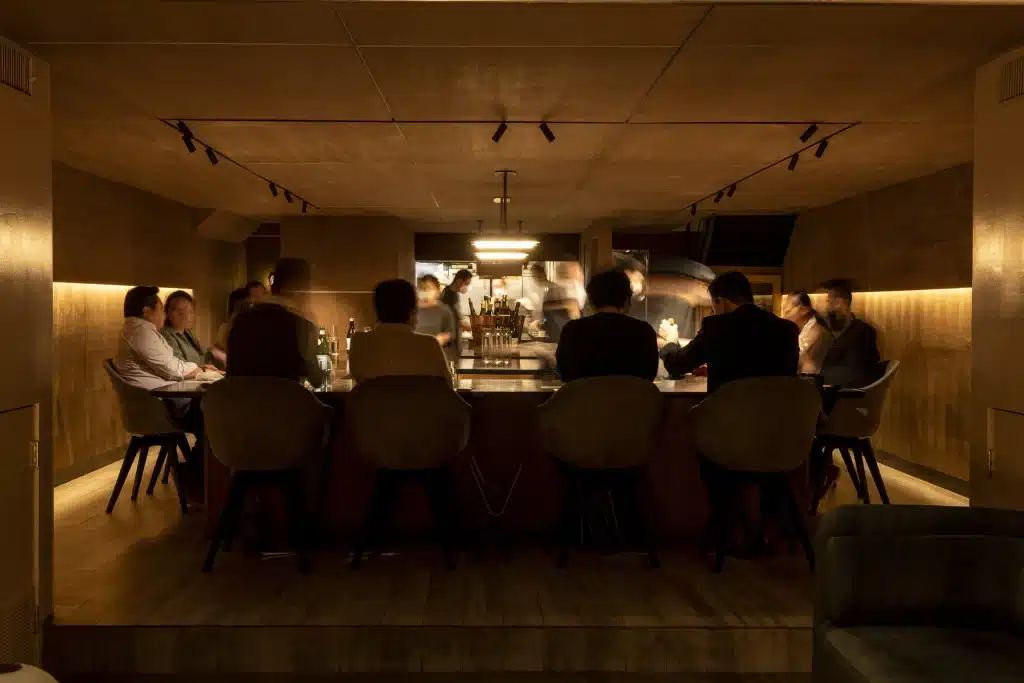
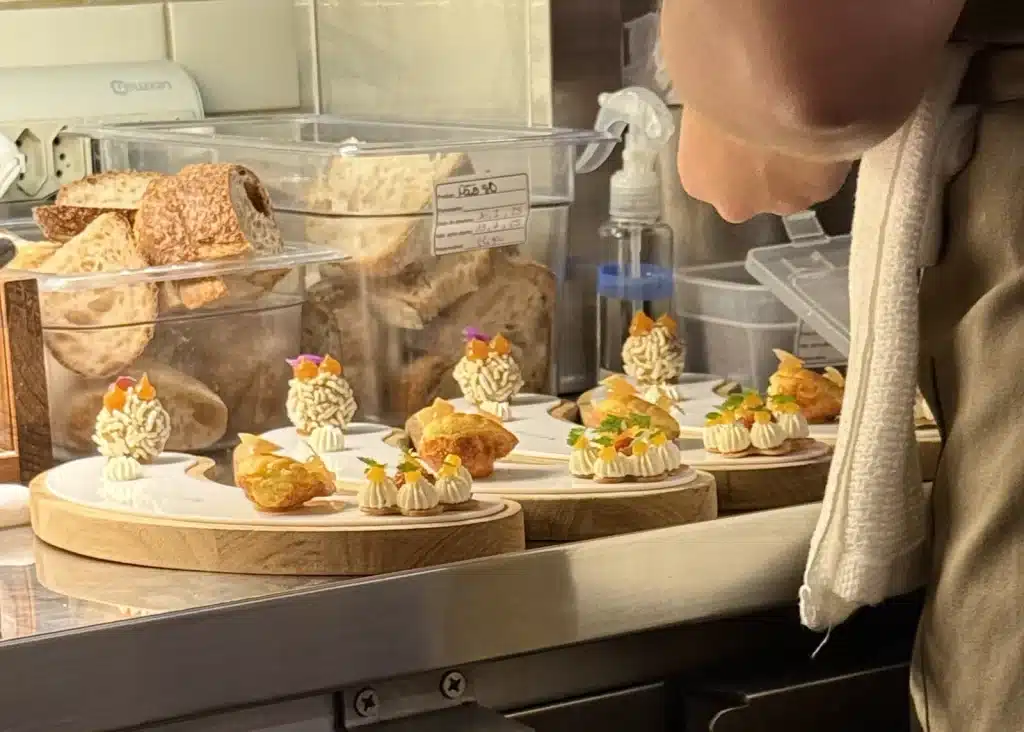
A view of the kitchen at work from my counter seat at Nelita, January 2025.
The counter was a big part of the experience. Being directly in front of the kitchen let me see the work going into the dishes as the evening unfolded. I could appreciate the food and the people making it at the same time.
Nelita felt cozy and refined. Tássia’s warmth made it easy to feel comfortable, and watching the kitchen added another reason to pay attention. It is a seat I would ask for again.
The restaurant is in Pinheiros, a neighborhood with plenty of reasons to plan an evening around dinner. For more of the places I’ve personally eaten, my São Paulo restaurant guide puts Nelita alongside other meals that have stayed with me.
Tássia Magalhães and the food I remember
One of the courses from my January 2025 meal at Nelita. Pasta from my January 2025 dinner at Nelita, photographed from above.
The Italian influence was clear in the pasta and other dishes, while Brazilian ingredients gave the meal its own character. Nelita’s own description of the kitchen connects that approach to Tássia’s roots in Guaratinguetá, in the Vale do Paraíba, and to the memories and ingredients of the region.
These are the dishes I remember from my meal at Nelita São Paulo. They are a record of that evening, rather than a promise of what will be on the menu when you visit.
Pão de queijo gougère
The pão de queijo gougère introduced the restaurant’s personality early. It was a memorable way to bring a Brazilian reference into the meal, and it belongs among the details I still associate with Nelita.
Pumpkin cappelletti and eggplant ravioli
Pumpkin cappelletti and ravioli with eggplant and smoked tomato were two of the pasta dishes that stayed with me. There was comfort in those combinations, with the precision I want from a restaurant cooking at this level. The pasta was an important part of what made the meal so satisfying.
Beef tongue with polenta and passionfruit sorbet
Beef tongue with polenta gave me another dish to remember beyond the pasta. The passionfruit sorbet brought a welcome freshness to the meal. Together with the earlier courses, these are the flavors and combinations I think of when someone asks me about Nelita.
Danyel Steinle and the wine pairings
Food and wine together at the Nelita counter, January 2025.
The wines deserve real space in this review. Danyel, Tássia’s partner in the restaurant and now her husband, was an essential part of what made the evening work.
I loved seeing the connection between them. Their teamwork carried through to the pairings: the wines brought more out of the food and made an already excellent meal feel more complete. The attention given to the glass matched the attention given to the plate.
That is what I want from a pairing. I want to enjoy the wine, of course, but I also want it to help me appreciate the dish. At Nelita São Paulo, the two belonged together, and Danyel’s contribution deserves as much attention as the cooking.
The recognition since my visit
The awards Tássia, Danyel and their restaurants have received since my January 2025 visit feel thoroughly deserved.
I’m happy to see their work recognized. My enthusiasm started with the meal itself, and the awards give me another reason to look forward to seeing what they do next.
Why Lita is on my list for November
When I return to São Paulo in November 2026, I also want to visit Lita, Tássia and Danyel’s wine bar across the street. It opened in September 2025, after my Nelita visit.
I haven’t been yet. After experiencing their cooking, wine pairings and teamwork at Nelita, I’m curious to see how that partnership translates to a wine bar. It is one more place to fit into a trip that already has plenty of meals I’m looking forward to.
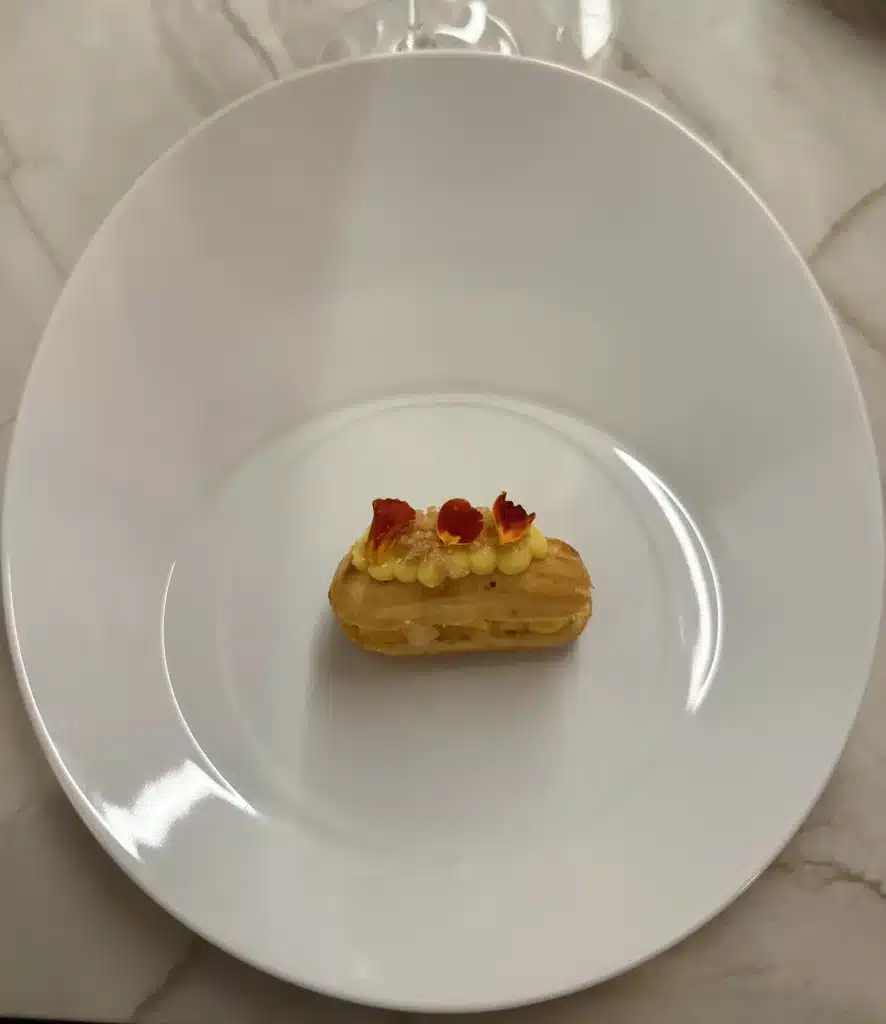
A richly sauced course from my January 2025 dinner at Nelita.A petal-topped pastry from my January 2025 meal at Nelita.
Planning a meal at Nelita São Paulo
Nelita is at Rua Ferreira de Araújo, 330, in Pinheiros. The restaurant says tasting-menu visits require a reservation. Use Nelita’s official website for the current menu and booking options, and ask about counter seating if you want the perspective I enjoyed.
Confirm the available menu, pairing options, price and cancellation terms before booking. My January 2025 dishes are memories of that visit, and menus can change.
Absolutely. I remember the food, the counter and the way Tássia and Danyel worked together to make the evening feel complete. Tássia’s warmth and humility stayed with me just as clearly as her talent.
Nelita gave me one of my best meals in São Paulo. I would happily go back for the cooking and the wine pairings, and for another chance to sit in front of that kitchen.
Metzi is the creation of Eduardo Nava Ortiz and Luana Sabino, two visionary chefs who bring their unique expertise and passion to the restaurant’s ever-evolving menu. Eduardo Nava Ortiz, a Mexican-born chef, brings an authentic and modern perspective to traditional Mexican flavors, while Luana Sabino, a talented Brazilian chef, infuses the menu with fresh local ingredients and creative techniques. Together, they craft dishes that beautifully merge Mexican tradition with Brazil’s rich culinary landscape.
A Cozy and Inviting Atmosphere
Located in São Paulo’s Pinheiros district, Metzi offers a warm and intimate setting, with minimalist decor that allows the food to take center stage. The ambiance is casual yet refined, making it an ideal destination for those seeking a sophisticated dining experience without the formality of a fine-dining establishment. With limited seating, Metzi fosters an exclusive feel, ensuring personalized service and a memorable gastronomic journey.
The Menu: Tradition Meets Innovation
Metzi’s menu is a thoughtful and ever-evolving showcase of modern Mexican cuisine, with a particular emphasis on local and seasonal ingredients. While dishes change frequently, here are some signature highlights that capture the essence of Metzi’s culinary philosophy:
Tostada de Atún – A beautifully crafted dish featuring fresh tuna, avocado, and vibrant citrus notes, highlighting the balance of freshness and umami.
Mole Poblano with Duck – A refined take on the classic mole poblano, with complex layers of smoky, sweet, and spicy flavors complementing tender duck.
Tacos de Pescado – Light, crispy battered fish tacos served with housemade tortillas and an exquisite selection of salsas.
Tamales de Elote – A nod to Mexican heritage, these delicate corn tamales are a must-try, showcasing the restaurant’s dedication to traditional techniques.
Huitlacoche Risotto – A unique fusion of Mexican and European influences, featuring earthy huitlacoche (corn truffle) in a rich, creamy risotto.
Churros with Spiced Chocolate Sauce – A playful yet refined dessert that pays homage to a beloved classic.
An Impressive Beverage Selection
Metzi’s drink menu is just as carefully curated as its food offerings, featuring an outstanding selection of:
Mexican Spirits – A diverse range of mezcal and tequila options, perfect for sipping or enjoying in crafted cocktails.
Natural & Organic Wines – Thoughtfully selected wines that enhance the dining experience, complementing the restaurant’s bold yet delicate flavors.
Signature Cocktails – Inventive creations that incorporate fresh fruits, Mexican spices, and artisanal spirits, offering a refreshing pairing for every dish.
Accolades & Recognition
Metzi has quickly risen to prominence within São Paulo’s fine-dining landscape, earning a Michelin Guide recommendation and securing a spot on Latin America’s 50 Best Restaurants list. This recognition solidifies Metzi’s reputation as one of the top destinations for contemporary Mexican cuisine in the region.
Why Metzi Should Be on Your Culinary Radar
What sets Metzi apart is its ability to take authentic Mexican flavors and present them in an elevated, artful manner while still maintaining the soul of the cuisine. With Eduardo Nava Ortiz and Luana Sabino’s expertise, a meticulously designed menu, and an intimate atmosphere, Metzi offers a truly unique gastronomic experience in São Paulo.
Final Thoughts
Whether you’re a fan of Mexican cuisine, an adventurous foodie, or someone looking for a sophisticated yet approachable dining experience, Metzi is a restaurant you won’t want to miss. Its commitment to tradition, innovation, and top-tier ingredients makes it a standout in São Paulo’s competitive dining scene. Be sure to book a reservation in advance, as this culinary gem is in high demand!
Have you been to Metzi? Share your thoughts and favorite dishes in the comments below!
By Richard Jarocki | Visited November 2024 | Pricing researched September 24, 2026 | Updated September 25, 2026
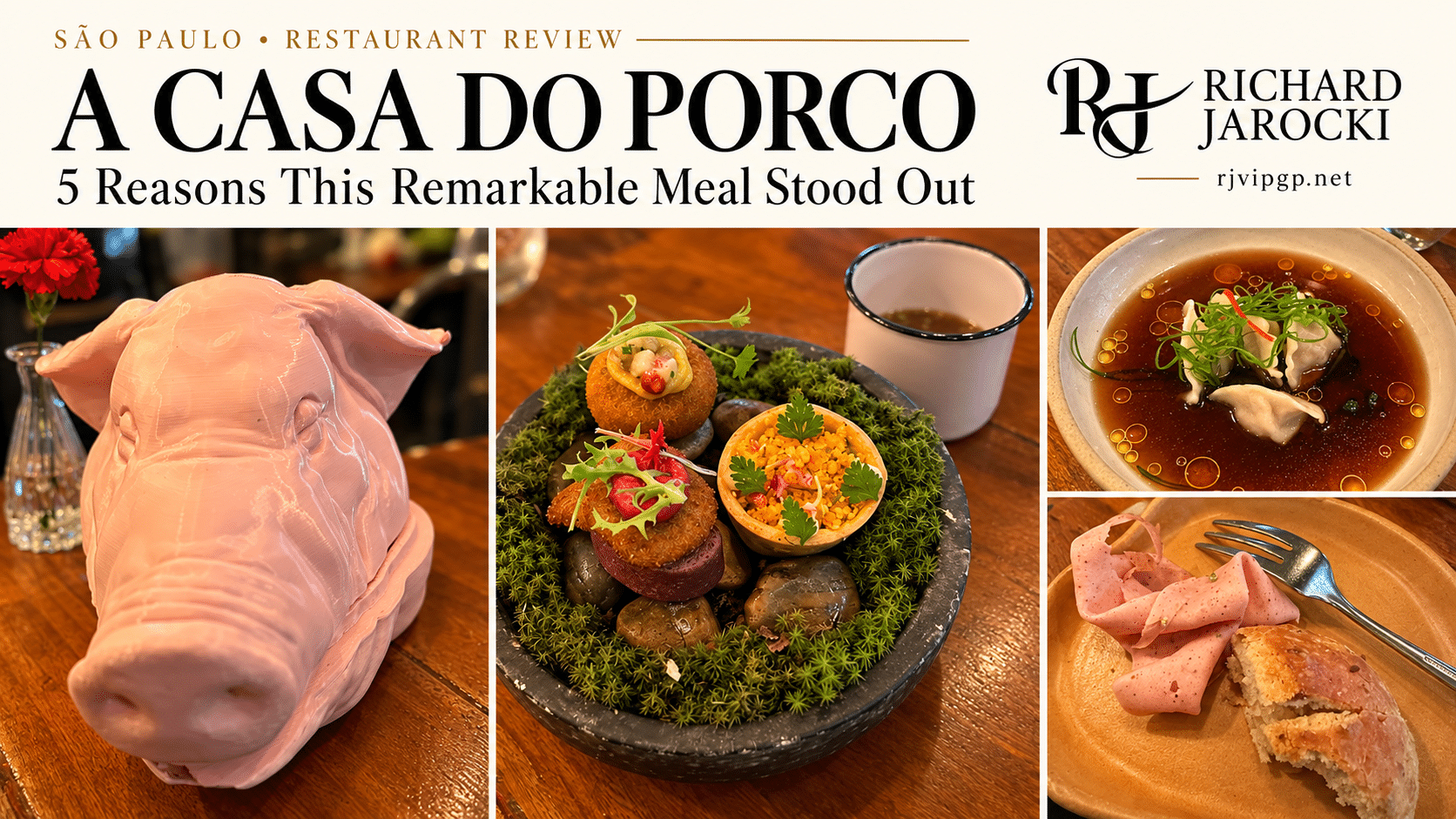
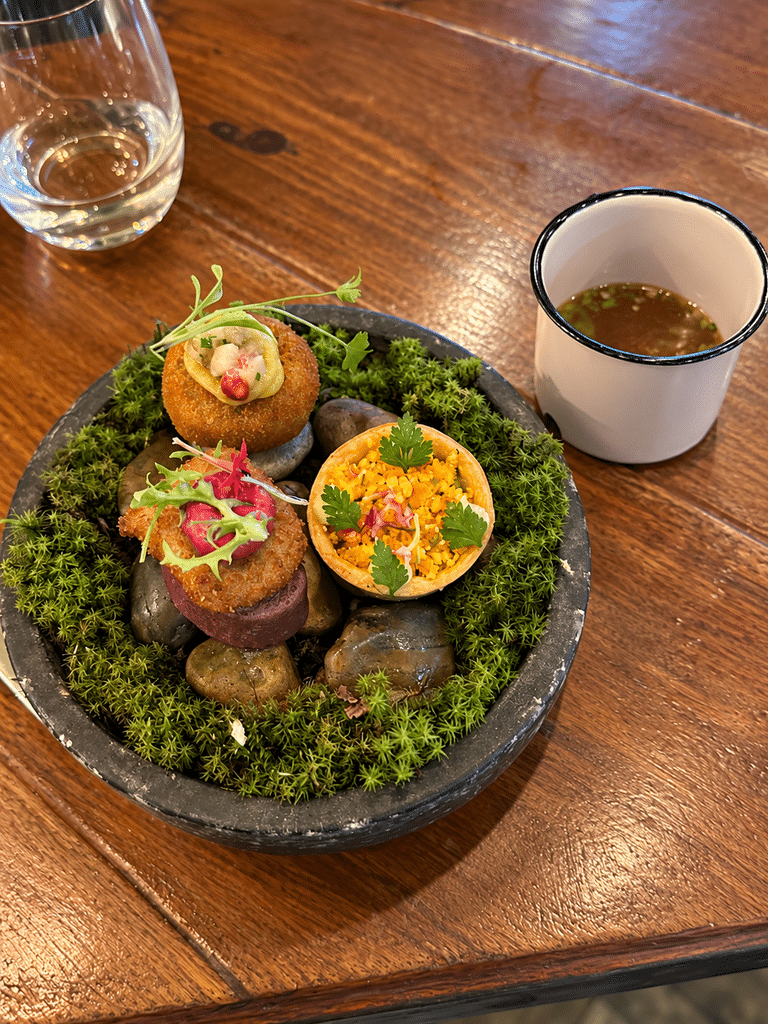
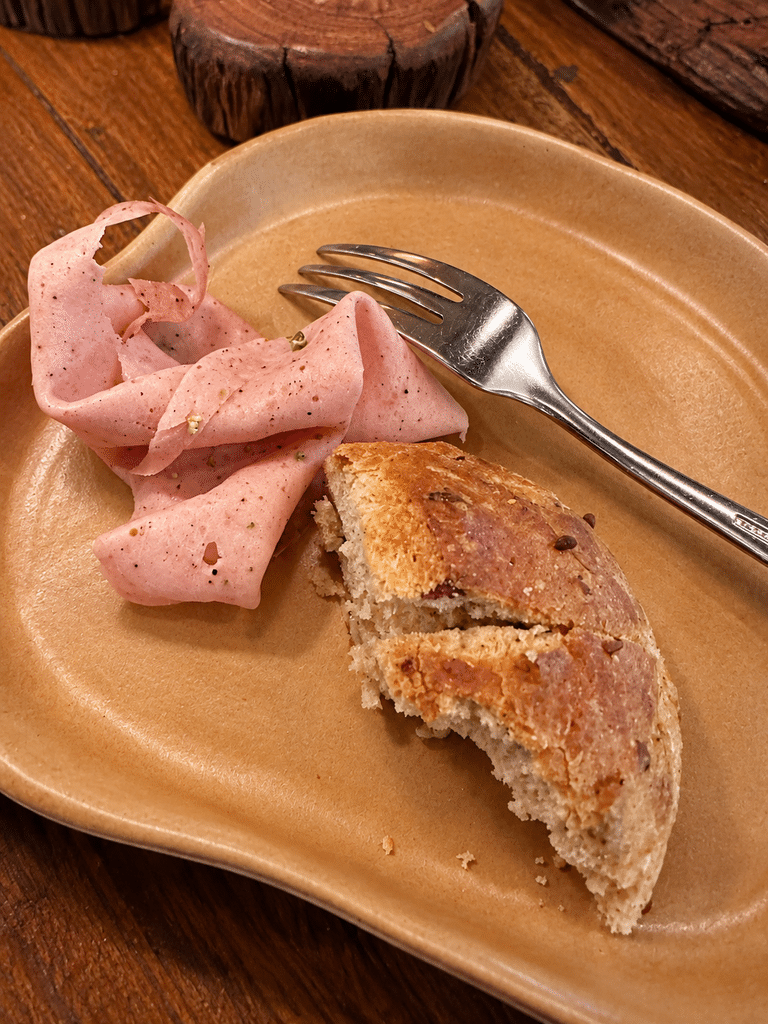
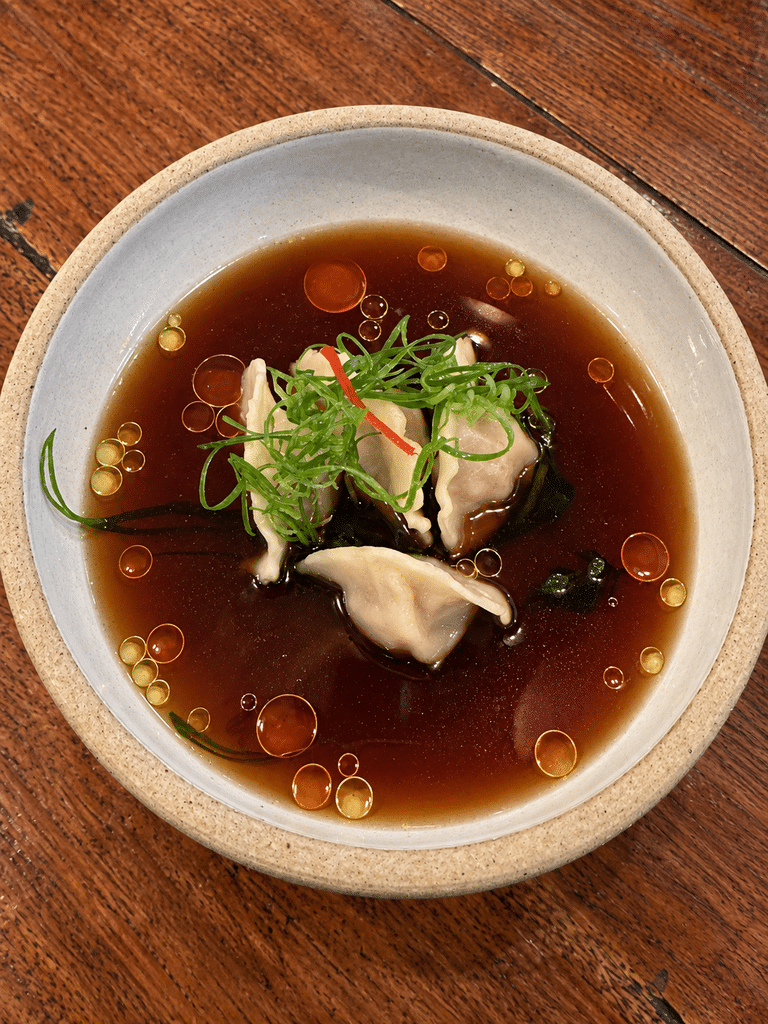
A Casa do Porco review: Five things stood out from my November 2024 visit—the food, the whole-animal approach to cooking, the drinks, the relaxed atmosphere, and the commitment to keeping ambitious food accessible. I sat at the bar for the tasting menu, started with complimentary cachaça shots, and left wanting to return.
An extra order of crispy roasted pork belly with guava, served inside a ceramic pig’s head, also gave the evening its Instagram moment.
There is a lot to appreciate here. The cooking is creative, the whole-animal approach gives the restaurant a clear identity, and the experience remains approachable. As I wrote in my São Paulo restaurant guide, the food is ridiculously good.
Published 2024 menu price: R$290 per person; optional wine pairing R$210 extra
Latest published price found: R$348 per person; optional pairing R$269 extra, reported August 2026
Where we sat: At the bar
Drinks: Great; complimentary cachaça shots to start
Atmosphere: Relaxed
Additional order: Crispy roasted pork belly with guava jam, served in a porcelain pig’s-head presentation
Would I return? Yes—I want to go back
Michelin recognition: Bib Gourmand and Green Star
My take: Creative cooking that offers a look into Brazilian food culture in an approachable setting
Small bites from my November 2024 tasting menu at A Casa do Porco.
1. The Food That Makes Me Want to Return
I chose the tasting menu on my November 2024 visit. Menus change, so this review describes that experience rather than a promise of the exact dishes served today.
For a restaurant built around whole-animal cooking, that format gives the kitchen room to show its range. It also gives you a broader view of the approach than choosing a single pork dish.
What stays with me is the creativity, flavor, and connection to Brazilian food culture. The cooking makes you pay attention to what you are eating and appreciate how much can be done with an ingredient you might otherwise think you already know.
That is one of the reasons I travel for food. I want experiences that give me a better understanding of a place through what is served.
A Casa do Porco belongs in that conversation.
Bread and mortadella at the bar at A Casa do Porco.A course from the tasting menu: dumplings in broth with fresh herbs.
2. Whole-Animal Cooking with a Brazilian Identity
Chef Jefferson Rueda’s approach gives A Casa do Porco a clear purpose. The restaurant explores how much can be done with the whole animal, drawing on Brazilian cooking and ingredients.
The connection to the ingredients runs deeper than what appears on the plate. The Michelin Guide describes Rueda’s involvement in raising the pigs and growing much of the produce used in the restaurant.
That context helps explain the menu. Different cuts and preparations become opportunities to show how much variety one ingredient can offer.
What I appreciate is that the pleasure of eating remains central to it. There is a concept worth understanding, and there is very good food to enjoy.
3. Great Drinks, Starting with Cachaça
Complimentary cachaça shots started our evening at the bar.
We started with complimentary cachaça shots, and the drinks were great throughout the experience. They deserve attention alongside the food because they were part of what made the evening enjoyable. The complimentary shots were part of my visit, something I would assume comes with every booking.
4. A Relaxed Atmosphere at the Bar
We sat at the bar, and the atmosphere was relaxed. I appreciate that in a restaurant with this level of recognition. An ambitious menu can still be served in a setting where you feel comfortable, and that was part of the appeal here.
For me, the combination worked: creative cooking, a comfortable seat at the bar, and an evening that felt easy.
“Our mission is to give people access to good food, even if it means making less money.”
That philosophy gives me another reason to respect the restaurant. I enjoy the attention to detail that comes with fine-dining service, but I also appreciate being able to sit at the bar, have a great drink, and eat ambitious food in a relaxed setting. Keeping that experience within reach of more people is a choice worth recognizing in its own right.
The Pig’s Head Had an Instagram Assignment
The pig’s head had an Instagram assignment: crispy roasted pork belly with guava waited inside.
Alongside the tasting menu, an extra order of crispy roasted pork belly with guava jam arrived in a porcelain pig’s head. The head was the serving piece, with the food inside.
That order had a very specific purpose: getting the pictures for Instagram.
I appreciate a good food photo myself, so I am hardly in a position to judge. At a restaurant called A Casa do Porco—the House of the Pig—it was certainly an appropriate subject.
How Much Does A Casa do Porco Cost?
For context around my November 2024 visit, Exame’s July 2024 reporting listed the tasting menu at R$290 per person, with an optional Brazilian wine pairing for R$210 extra. The menu and pairing together came to R$500 per person.
Those are the published menu prices from that period, rather than a reconstruction of my final bill with drinks and the additional order.
For anyone planning a visit now, the latest published pricing I found was R$348 for the tasting menu, plus R$269 for the optional pairing—R$617 together. Those figures were reported in Folha de S.Paulo’s August 2026 restaurant guide.
The totals above are the menu-plus-pairing sums; they do not include any additional orders or service charges. Check the restaurant’s current menu before booking.
That price context matters when discussing accessibility. A tasting menu is still a meaningful expense. What I appreciate here is the ambition of the cooking and the commitment to keeping the experience approachable.
Michelin Recognition—and My Own Opinion
A factual distinction matters here: A Casa do Porco holds a Michelin Bib Gourmand and a Michelin Green Star. Those recognize value and sustainability respectively; they are different from the conventional Michelin stars awarded for cooking.
In my opinion, if A Casa do Porco paired this cooking with a more formal fine-dining style of service, I could see it earning a Michelin star. The food is already worthy of that recognition to me. That is my impression as a diner; Michelin itself says that service style does not determine whether a restaurant receives a star.
Is A Casa do Porco Worth Visiting?
Yes. A Casa do Porco belongs in my São Paulo restaurant recommendations, and I want to go back.
The whole-animal approach gives the meal substance, and the cooking makes the experience enjoyable. I also respect the restaurant’s commitment to keeping ambitious food approachable and connected to the people who live in the city.
My visit brought together a tasting menu, great drinks, and relaxed bar seating. Those are the details that matter to me when deciding what to recommend.
If you enjoy pork and want to explore Brazilian food through a kitchen with a clear point of view, this is a restaurant I would put on your list.
The food, drinks, and relaxed atmosphere give me plenty of reason to return. The Instagram photos were a bonus.
My verdict in this A Casa do Porco review is simple: great food, great drinks, and a relaxed experience I want to repeat.
Chef Robbie Felice Expands His Culinary Empire with Bar Mutz in Westwood, NJ Chef Robbie Felice, a James Beard Rising Star Chef semifinalist, continues to make waves in the New Jersey dining scene with his latest venture, Bar Mutz. This modern Italian trattoria and mozzarella bar, located in downtown Westwood, brings a fresh and interactive take on classic Italian cuisine, further solidifying Felice’s […]
People often ask me what my favorite restaurant in the world is. Considering how much I travel for food, it’s a fair question. I’ve been fortunate enough to dine at Michelin-starred restaurants, experience many of the World’s 50 Best Restaurants, and eat my way through some of the greatest culinary destinations on earth. My answer […]
Fine dining is more than just food—it’s an immersive journey. My recent experience at Tuju in São Paulo set a new benchmark for what a restaurant can offer, blending art, nature, world-class gastronomy, and award-winning hospitality in a three-level dining adventure. ### Michelin-Star Dining at Tuju São Paulo: A Nature-Inspired ExperienceFrom the moment you step […]
In this Tan Tan São Paulo review, I’m going back to one of the places in the city that made sense to me almost immediately. I originally went because of the cocktails, but what keeps me coming back is the combination of everything else: Japanese-influenced food, a serious bar program, 1990s hip-hop, and a room that feels energetic without trying too hard.
I have been to Tan Tan more than once, and at this point I make a point of visiting at least one of chef Thiago Bañares’s places whenever I am back in São Paulo.
Tan Tan is still the one I associate most with the side of São Paulo nightlife I enjoy: very good food, interesting drinks, music with some personality, and none of the stiffness that can come with highly regarded bars and restaurants.
I travel for restaurants and cocktails, but I do not need every night to be a tasting menu, white tablecloths, or a three-hour production. Sometimes I want a great drink, a few dishes I actually want to eat, good music, and a room that feels alive.
Tan Tan does that very well.
Four cocktails photographed during Richard Jarocki’s visit to Tan Tan in Pinheiros, São Paulo.
Tan Tan São Paulo — At a Glance
Neighborhood:
Pinheiros, São Paulo
Style:
Japanese-influenced bar food and cocktails
Best For:
Dinner, cocktails, bar snacks, late-night energy
Atmosphere:
Lively, casual, music-driven
Music:
1990s hip-hop
What I Had:
Yardbird Katsu Sando, Kaki Ponzu, Aka Teba, Ajillo, Wonton Shio Ramen, Chocolate Pie
What I’d Order Again:
Yardbird Katsu Sando, Aka Teba
Cocktail I Remember Most:
Tsukemono
What I Want to Try Next:
Ikura Fries
Current Recognition:
#24, The World’s 50 Best Bars 2025
Would I Return?:
Absolutely.
My Take: Tan Tan gets the food, cocktails, music, and atmosphere right without trying too hard.
Why Tan Tan São Paulo Keeps Me Coming Back
There are restaurants I remember because of one dish, and there are bars I remember because of one cocktail.
Tan Tan is different because I remember the whole night.
The bar matters. The kitchen matters. The music matters. The crowd matters.
It feels like a place where you can have a genuinely good meal without the night becoming formal. That balance is harder to pull off than it sounds.
A lot of restaurants try very hard to look cool. Tan Tan does not feel like it is constantly reminding you how cool it is.
It just works.
The room gets busy, the music is part of the experience, cocktails keep moving across the bar, and the food fits naturally into the night.
That is probably the biggest reason I like it.
A bartender preparing drinks at Tan Tan São Paulo, photographed from a seat at the bar.
The Cocktail I Remember Most: Tsukemono
One of the drinks I still associate with Tan Tan is the Tsukemono.
It combined tequila, wasabi, cucumber, and orange bitters.
That combination sounds like it could easily become one of those cocktails that is more interesting to read about than it is to drink.
It wasn’t.
The cucumber kept it fresh, the wasabi gave it enough edge to make it different, and the tequila kept the drink grounded.
It was one of those cocktails where the ingredient list makes much more sense once you actually taste it.
The cocktail menu has moved on since those earlier visits, which is one reason I wanted to update this review instead of leaving an old menu frozen online forever.
Tan Tan’s Current Cocktail Menu: Perspective
cocktail photographed during an earlier visit to Tan Tan São Paulo.
The current cocktail menu is called Perspective.
The idea is built around ingredients connected to Brazil’s five regions, translating climates, flavors, and cultural references into cocktails through taste, texture, and contrast. ce37d670-997c-4145-8e8b-54168fa…
That interests me more than another menu full of complicated drinks with no real connection to where you are.
If I am drinking in Brazil, I like when the bar gives me something that could only really make sense there.
The current menu uses ingredients including black tucupi, cupuaçu, cashew, malagueta pepper, passion fruit, yerba mate, baru nut, cambuci, and cachaça.
Ramos Tucufizz
Amburana-aged cachaça, cupuaçu, black tucupi cordial, cashew-nut orgeat, and egg white. ce37d670-997c-4145-8e8b-54168fa…
That is the kind of drink I would want at Tan Tan because it pushes beyond the familiar without sounding random.
Caipora
Cachaça, cupuaçu cordial, black tucupi soda, and cashew nut. ce37d670-997c-4145-8e8b-54168fa…
This one sounds even more directly Brazilian and would probably be one of my first orders on another visit.
Amor & Café
Don Julio añejo, Ketel One, Cynar, passion-fruit cold-brew coffee, blue cheese, and honey. ce37d670-997c-4145-8e8b-54168fa…
Blue cheese in a cocktail is exactly the kind of thing that makes me stop and read the menu twice.
I have eaten and drunk enough unusual things that I am not interested in ordering something strange just because it is strange.
It still has to taste good.
But I would absolutely try that once.
Mi Mi Mi
Ketel One, Don Julio añejo, dry vermouth, and pickled baby-corn brine. ce37d670-997c-4145-8e8b-54168fa…
Again, very Tan Tan.
Tan Tan Still Keeps Some of Its Greatest Hits
The current menu also has a Hall of Fame section.
That tells you something about the bar.
Tan Tan is willing to change the menu, but it also understands when something has earned the right to stay.
The Hall of Fame currently includes Hello Suckers, Curupira, Dirty Dance, Libertine, and Cavagna Kakigori. ce37d670-997c-4145-8e8b-54168fa…
I like that approach.
There is nothing wrong with creating a new menu, but there is also nothing wrong with admitting you made something worth keeping.
What I Ate at Tan Tan
The food is a major reason I would not describe Tan Tan simply as a cocktail bar.
Some of the dishes I had on earlier visits are still on the menu. Others have changed or disappeared.
I would rather tell you exactly what I ate and then separate that from what is available now.
Yardbird Katsu Sando
Yardbird Katsu Sando photographed during an earlier visit to Tan Tan São Paulo, featured in Richard Jarocki’s restaurant review.
The Yardbird Katsu Sando was one of the dishes I had, and it is still on the current menu.
It is a breaded ground-pork patty with chuno sauce on shokupan. ce37d670-997c-4145-8e8b-54168fa…
This is exactly the kind of food I like with cocktails.
It is rich, crispy, easy to eat, and not remotely precious.
There is a time for tweezers and perfect plating.
There is also a time for a fried pork sandwich.
Tan Tan understands both sides of that equation.
Kaki Ponzu
Kaki Ponzu oysters photographed during Richard Jarocki’s visit to Tan Tan São Paulo.
I also had the Kaki Ponzu.
The current menu still serves fresh Santa Catarina oysters with ponzu and mignonette. ce37d670-997c-4145-8e8b-54168fa…
Oysters make sense in a restaurant like this because they reset your palate after something fried or rich.
Aka Teba
Aka Teba chicken wings with sesame seeds and peanuts, photographed during Richard Jarocki’s visit to Tan Tan São Paulo.
The Aka Teba was another dish I tried.
It remains on the menu as crispy fried chicken wings with homemade sweet chili, sesame seeds, and peanuts. ce37d670-997c-4145-8e8b-54168fa…
It is straightforward bar food, but that is not a criticism.
A great bar does not need to reinvent every single thing on the plate.
Sometimes wings should just be really good wings.
Octopus and Mushrooms Ajillo
Octopus and mushrooms ajillo in a black handled pan, photographed during a visit to Tan Tan São Paulo.
I remember this as the Ajillo: mushrooms, garlic confit, octopus, and olive oil.
The current menu calls it Octopus and Mushrooms Ajillo and serves it in an iron pan. ce37d670-997c-4145-8e8b-54168fa…
This was one of the more savory dishes I had and exactly the kind of thing that stands up well next to a stronger cocktail.
Wonton Shio Ramen
On an earlier visit, I had the Wonton Shio Ramen with chicken broth, pork wonton, chicken chashu, and ajitama egg.
That exact ramen is no longer on the current menu.
The noodle section has changed, which is another reason this old review needed to be updated.
Chocolate Pie
I also had the Chocolate Pie.
The current menu still offers Chocolate Pie, now described as milk-chocolate custard with English cream, along with a Daily Sorbet. ce37d670-997c-4145-8e8b-54168fa…
A bar like Tan Tan does not need a twelve-item dessert program.
Two options are plenty if they are good.
Tan Tan’s earlier Back to Basics menu, photographed before the Perspective menu discussed in the updated review.
What’s New on the Tan Tan Menu
The current menu gives me several reasons to go back.
Spring Rolls Royce
The Spring Rolls Royce is a cold harumaki with tuna tartare, sesame seeds, mayonnaise, and nori powder. ce37d670-997c-4145-8e8b-54168fa…
The name alone tells you something about the personality of the place.
It sounds playful, but the ingredients still make sense.
This would probably be one of the first things I order on my next visit.
Pork Gyoza
The current Pork Gyoza is filled with pork and vegetables and served with soy sauce and vinegar. ce37d670-997c-4145-8e8b-54168fa…
Simple, familiar, and probably very easy to order another plate of after the first one disappears.
Shrimp Wonton
The Shrimp Wonton comes with chili crunch, soy sauce, and sesame. ce37d670-997c-4145-8e8b-54168fa…
I find this particularly interesting because the wonton has moved from the older ramen I ate into its own snack.
Ikura Fries
The Ikura Fries might be the new dish I am most curious about.
They are tempura-style fries with salmon roe, mayonnaise, and aonori. ce37d670-997c-4145-8e8b-54168fa…
Fries and ikura sounds completely unnecessary.
Which obviously means I need to order them.
Squid Roll
The Squid Roll is fried squid with red onion, pickles, and nirá mayonnaise on a bun. ce37d670-997c-4145-8e8b-54168fa…
Again, this is the kind of food that makes sense here.
You are not being asked to sit silently and analyze every bite.
You are supposed to eat, drink, talk, listen to the music, and enjoy yourself.
Unadon and Ikuradon
The larger dishes now include Unadon, with unagi, teriyaki eggs, and rice, and Ikuradon, with salmon roe, marinated soft egg yolk, green onion, wasabi, and roasted seaweed. ce37d670-997c-4145-8e8b-54168fa…
Those make Tan Tan more viable as a full dinner rather than simply somewhere you stop for drinks and snacks.
The Noodle Menu Has Changed Too
The older Wonton Shio Ramen I had is gone, but noodles are definitely not gone from Tan Tan.
The current lineup includes:
Chashumen
Chicken broth seasoned with mushrooms and shoyu tare, pork-belly chashu, ajitama egg, scallions, and sesame.
Kinoko Men
Stir-fried noodles with mushroom sauce and Cantonese broccoli.
Dan Dan Mian
Noodles with ground pork, Asian peppers, oyster sauce, and vegetables. ce37d670-997c-4145-8e8b-54168fa…
That gives me another reason to revisit the kitchen instead of going back and simply ordering the same things I already know.
The 90s Hip-Hop Is Part of the Experience
One of the things I remember most about Tan Tan has nothing to do with food or cocktails.
It is the music.
The 1990s hip-hop gives the room personality.
It helps keep Tan Tan from feeling like one of those cocktail bars where everyone whispers because the drinks are too important.
The atmosphere is lively, but I would not describe it as chaotic.
I like serious food and serious drinks.
I just do not always want them served in a serious room.
Tan Tan gives you quality without draining the fun out of the night.
Why Tan Tan Feels Like São Paulo to Me
São Paulo has changed the way I think about food cities.
My relationship with the city originally grew out of Formula 1.
Now Formula 1 is only part of the reason I keep going back.
The restaurant and cocktail scene has become just as important to me, and places like Tan Tan are a big reason why.
It is not trying to feel like New York.
It is not trying to feel like London.
It is not trying to recreate Tokyo.
There are influences from all of those places and more, but the final result still feels connected to São Paulo.
That is what makes a city interesting to me.
I do not travel halfway around the world because I want exactly what I already have at home.
Essential cookies enable basic functions and are necessary for the proper function of the website.
Name
Description
Duration
trustedsite_visit
-
trustedsite_tm_float_seen
-
Cookie Preferences
This cookie is used to store the user's cookie consent preferences.
30 days
These cookies are needed for adding comments on this website.
Name
Description
Duration
comment_author_email
Used to track the user across multiple sessions.
Session
comment_author_url
Used to track the user across multiple sessions.
Session
comment_author
Used to track the user across multiple sessions.
Session
Google Tag Manager simplifies the management of marketing tags on your website without code changes.
Name
Description
Duration
cookiePreferences
Registers cookie preferences of a user
2 years
td
Registers statistical data on users' behaviour on the website. Used for internal analytics by the website operator.
session
These cookies are used for managing login functionality on this website.
Name
Description
Duration
wordpress_logged_in
Used to store logged-in users.
Persistent
wordpress_sec
Used to track the user across multiple sessions.
15 days
wordpress_test_cookie
Used to determine if cookies are enabled.
Session
Statistics cookies collect information anonymously. This information helps us understand how visitors use our website.
GoDaddy's visitor traffic tracking, added automatically to sites hosted with GoDaddy and to sites built with GoDaddy Website Builder. It records page views, clicks, and page timing, and sends them to GoDaddy to measure traffic and site performance.
Holds the number of pages viewed in the current visit and the time of the last interaction, so GoDaddy's traffic tracking can tell when a visit has ended.
20 minutes
_tccl_visitor
Stores a randomly generated visitor ID so GoDaddy's traffic tracking recognizes a returning visitor across sessions.
1 year
_tccl_visit
Stores a randomly generated ID for the current visit so page views and clicks can be grouped into one session.
30 minutes
Google Analytics is a powerful tool that tracks and analyzes website traffic for informed marketing decisions.
Used to monitor number of Google Analytics server requests when using Google Tag Manager
1 minute
_gid
ID used to identify users for 24 hours after last activity
24 hours
_ga_
ID used to identify users
2 years
_gali
Used by Google Analytics to determine which links on a page are being clicked
30 seconds
_ga
ID used to identify users
2 years
__utmx
Used to determine whether a user is included in an A / B or Multivariate test.
18 months
__utmc
Used only with old Urchin versions of Google Analytics and not with GA.js. Was used to distinguish between new sessions and visits at the end of a session.
End of session (browser)
__utmv
Contains custom information set by the web developer via the _setCustomVar method in Google Analytics. This cookie is updated every time new data is sent to the Google Analytics server.
2 years after last activity
__utmz
Contains information about the traffic source or campaign that directed user to the website. The cookie is set when the GA.js javascript is loaded and updated when data is sent to the Google Anaytics server
6 months after last activity
__utmb
Used to distinguish new sessions and visits. This cookie is set when the GA.js javascript library is loaded and there is no existing __utmb cookie. The cookie is updated every time data is sent to the Google Analytics server.
30 minutes after last activity
__utmt
Used to monitor number of Google Analytics server requests
10 minutes
__utma
ID used to identify users and sessions
2 years after last activity
_gac_
Contains information related to marketing campaigns of the user. These are shared with Google AdWords / Google Ads when the Google Ads and Google Analytics accounts are linked together.