Four Corners Dassai Blue Pop-Up
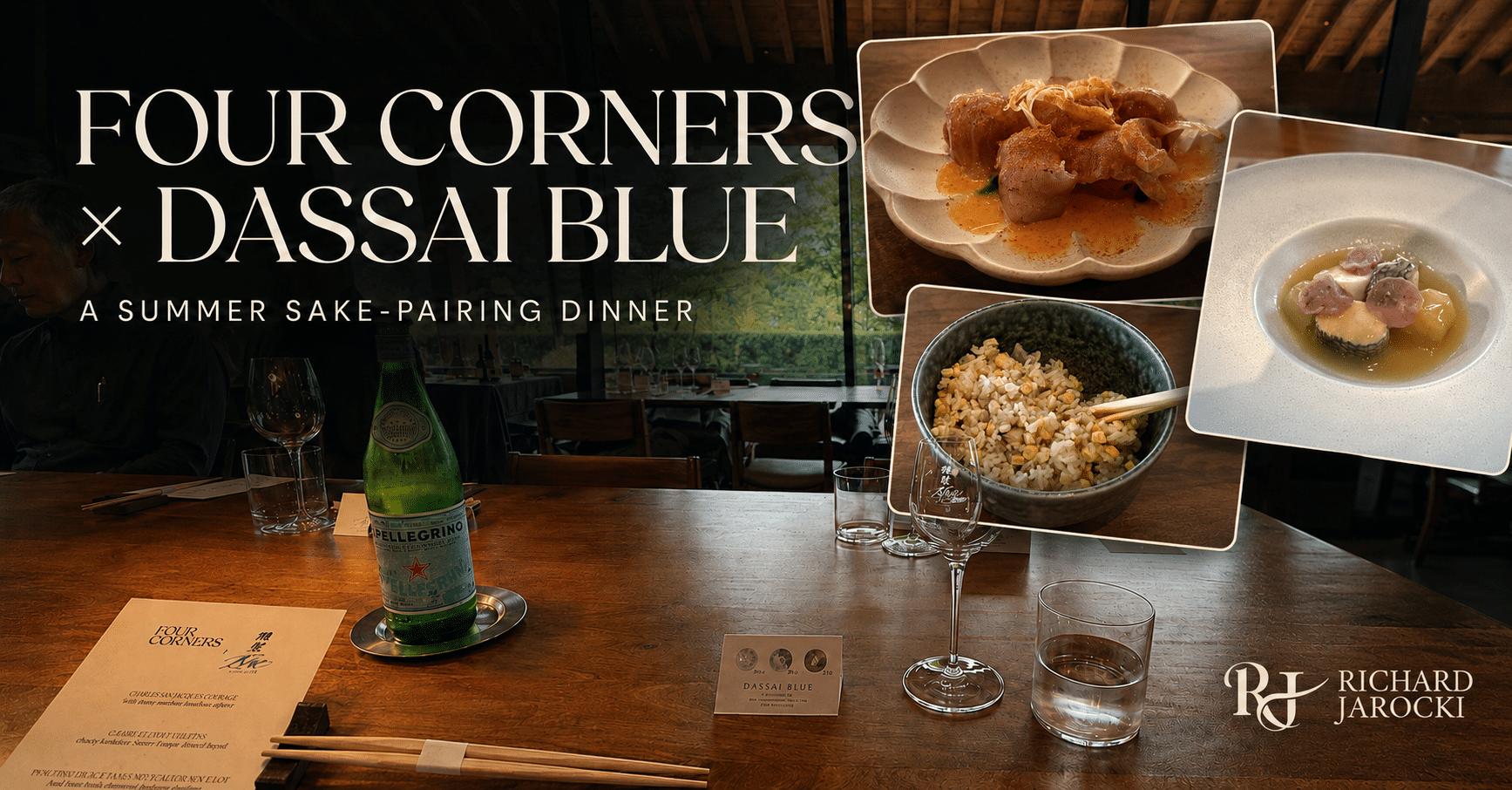
Four Corners at Dassai Blue: The Pop-Up Was Worth the Return
I went back to Dassai Blue one day after publishing that I was returning. Chef David Israelow and Four Corners gave me another reason to keep watching what this Hyde Park brewery does next.
A different dinner, the same reason to return
My first meal at Dassai Blue was an omakase built around sushi, close interaction with the chef and a progression of sake pairings. The Four Corners pop-up was completely different: four composed courses, peak-summer produce and a menu shaped by Japanese and French technique.
That difference was the point. Dassai Blue is strongest when it acts as more than a tasting room. It gives chefs a setting where sake can help structure the food instead of sitting on the side as an optional pour.
A preview of Four Corners before Chatham
Four Corners is the first restaurant of Chef David Israelow and is now expected to open in Chatham, New York, in 2027. Israelow previously served as culinary director and head chef at Michelin-starred One White Street in Tribeca. He is also a graduate of the French Culinary Institute and the Tokyo Sushi Academy, a combination that helps explain the French and Japanese framework of this pop-up menu.
The restaurant is taking over the historic former Blue Plate building on Chatham’s traffic circle, a property dating to the 1850s. Israelow has described the project as a restoration rather than a renovation, with the goal of respecting a building that spent decades as a community dining room. The Four Corners name also reaches into local history: Chatham was once known as Chatham Four Corners.
Israelow’s connection to the region goes beyond opening a restaurant upstate. He apprenticed at Hawthorne Valley Farm in 2017 and has described a microseasonal approach built around nearby farms, producers and what is available right now. His Hudson Valley pop-ups are the proof of concept—an introduction to the cooking, the approach and the restaurant before the doors officially open.
The meal began with an bite of hamachi on crispy rice with cilantro.
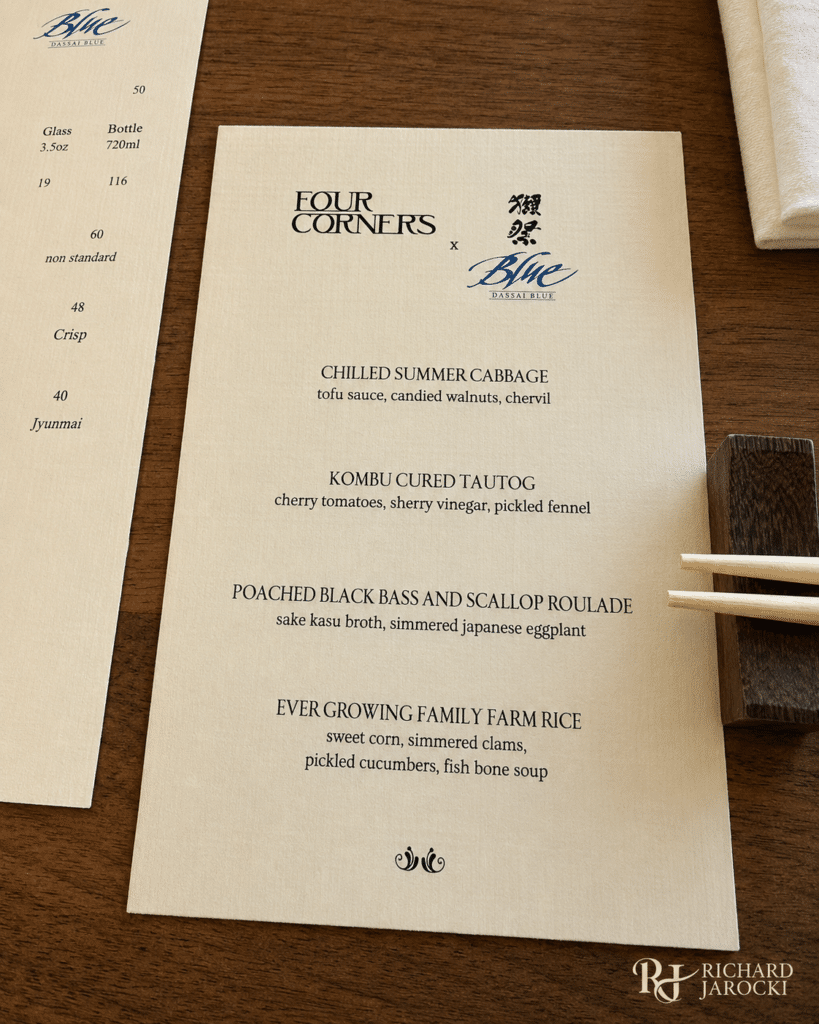
The printed savory menu was concise, followed by dessert:
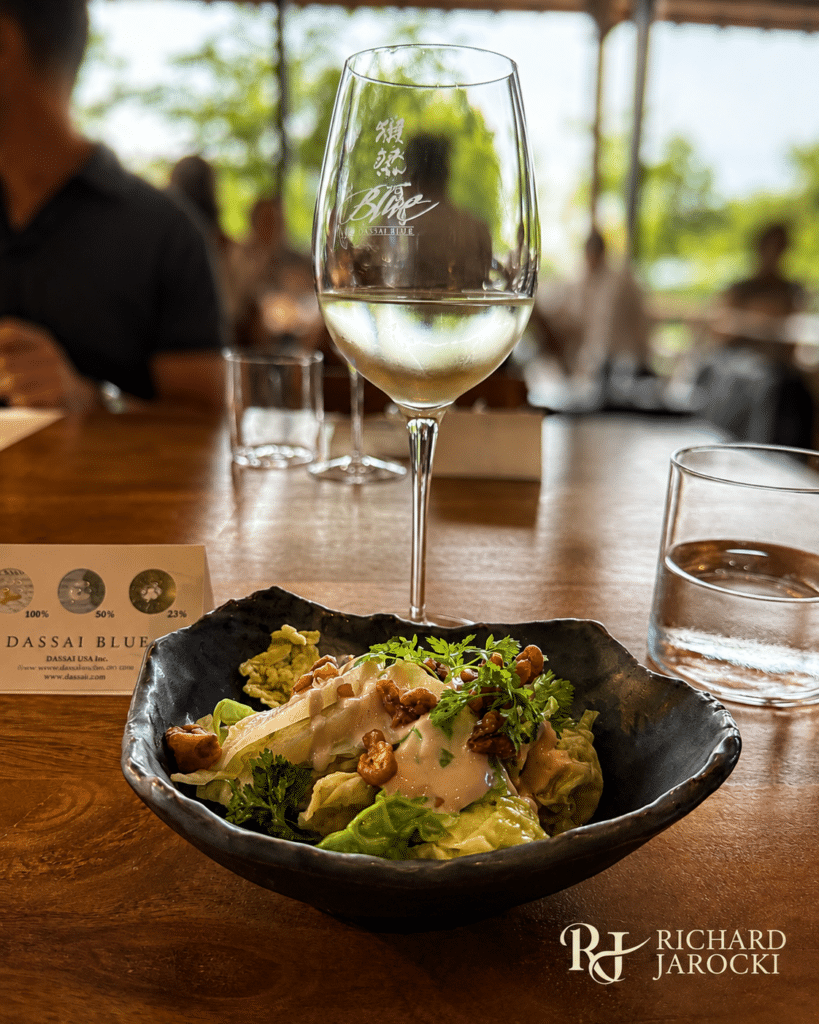
Chilled summer cabbage with tofu sauce, candied walnuts and chervil
Kombu-cured tautog with cherry tomatoes, sherry vinegar and pickled fennel
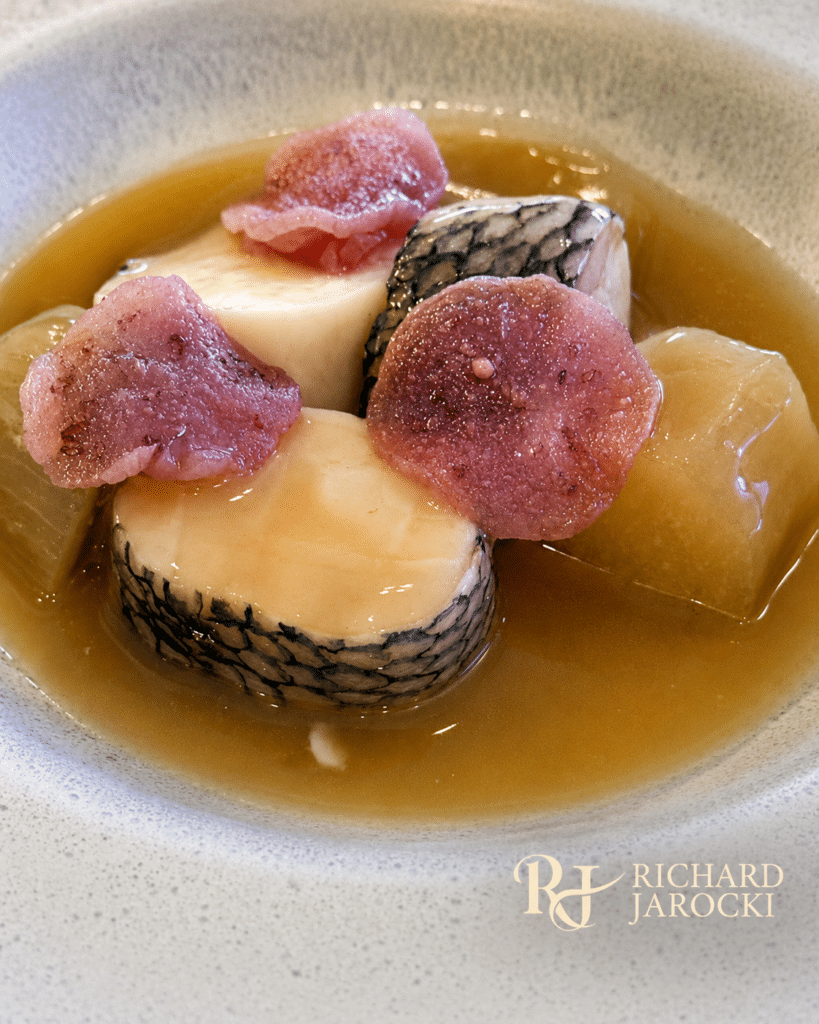
Poached black bass and scallop roulade with sake kasu broth and simmered Japanese eggplant
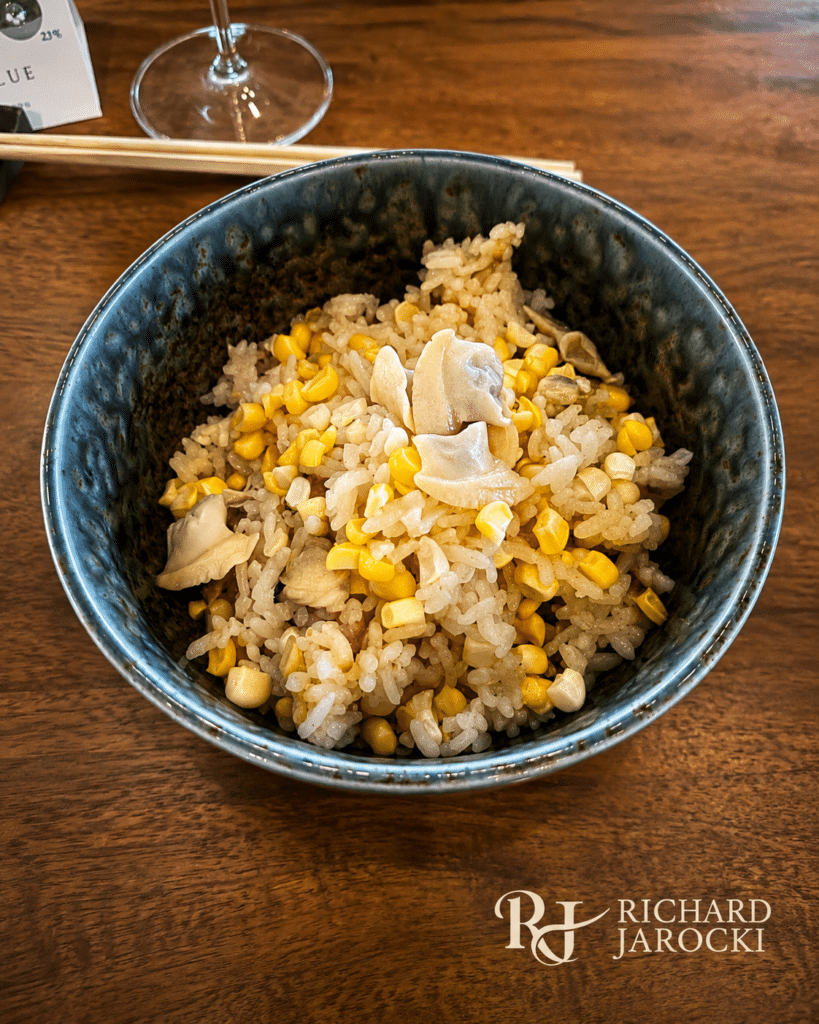
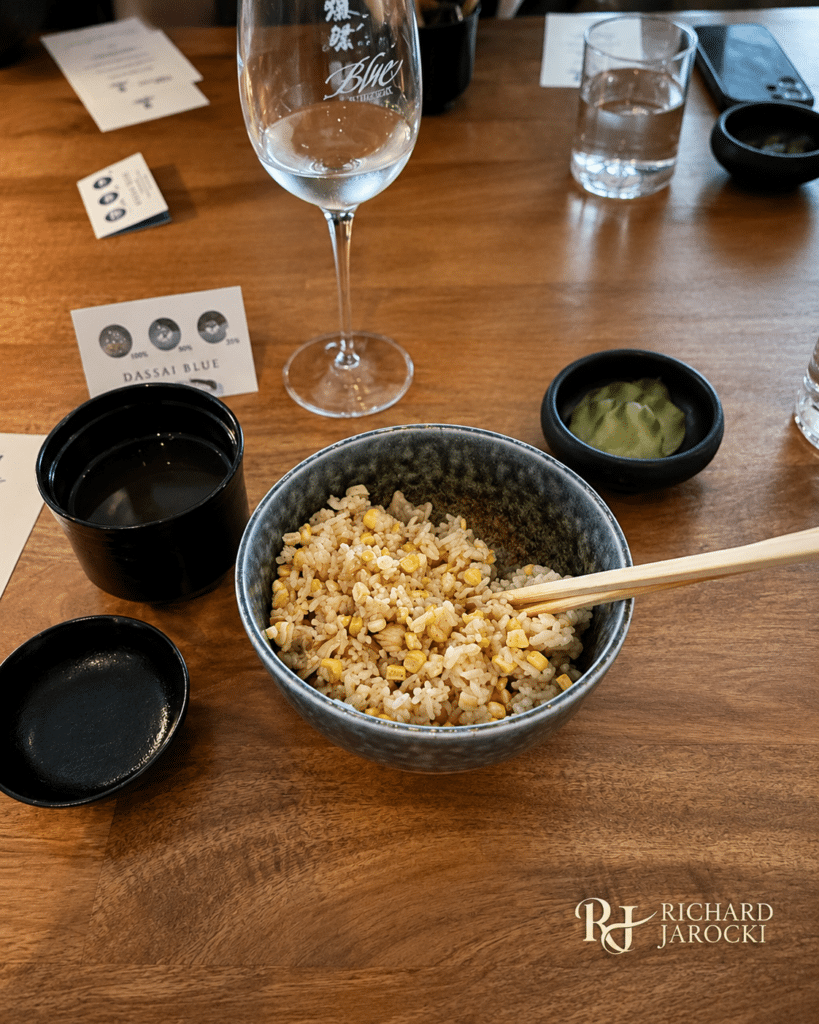
Locally grown rice from Ever-Growing Family Farm with sweet corn, simmered clams, pickled cucumbers and fish-bone soup
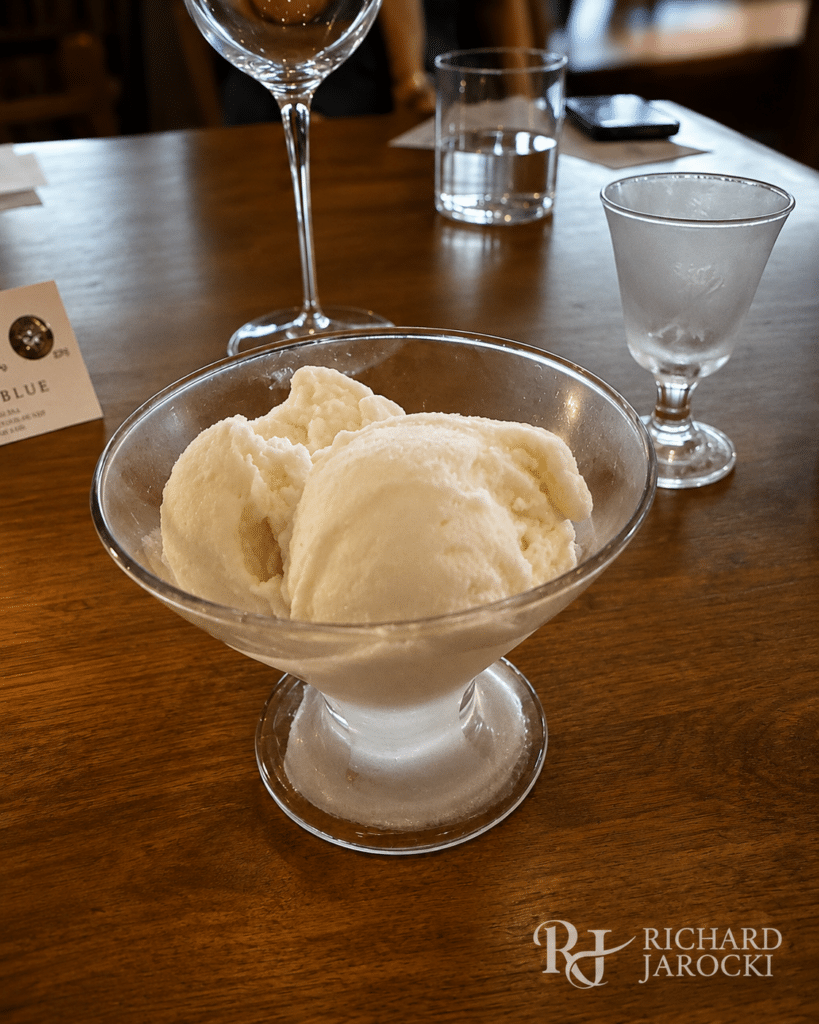
Dassai Blue sake gelato ($6.50 add-on)
The opening cabbage course was the outlier: more salad-like and less focused than the courses that followed. The off-menu hamachi bite was a welcome start, but courses two, three and four were the strongest stretch of the dinner.
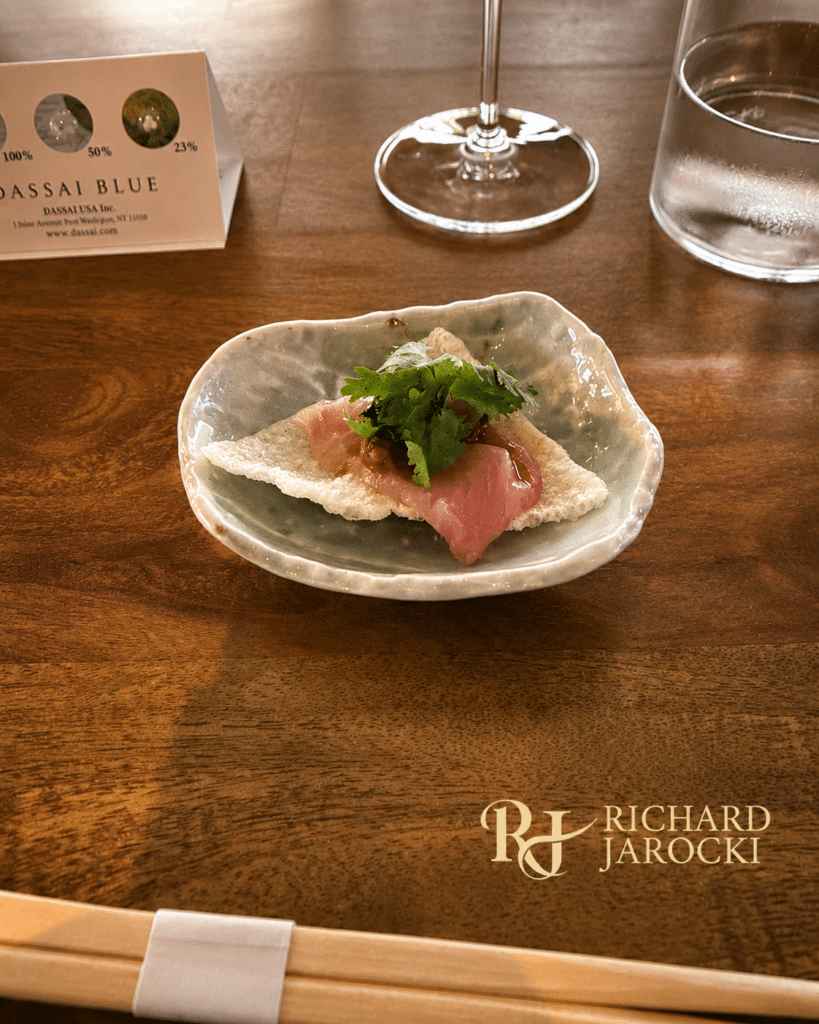
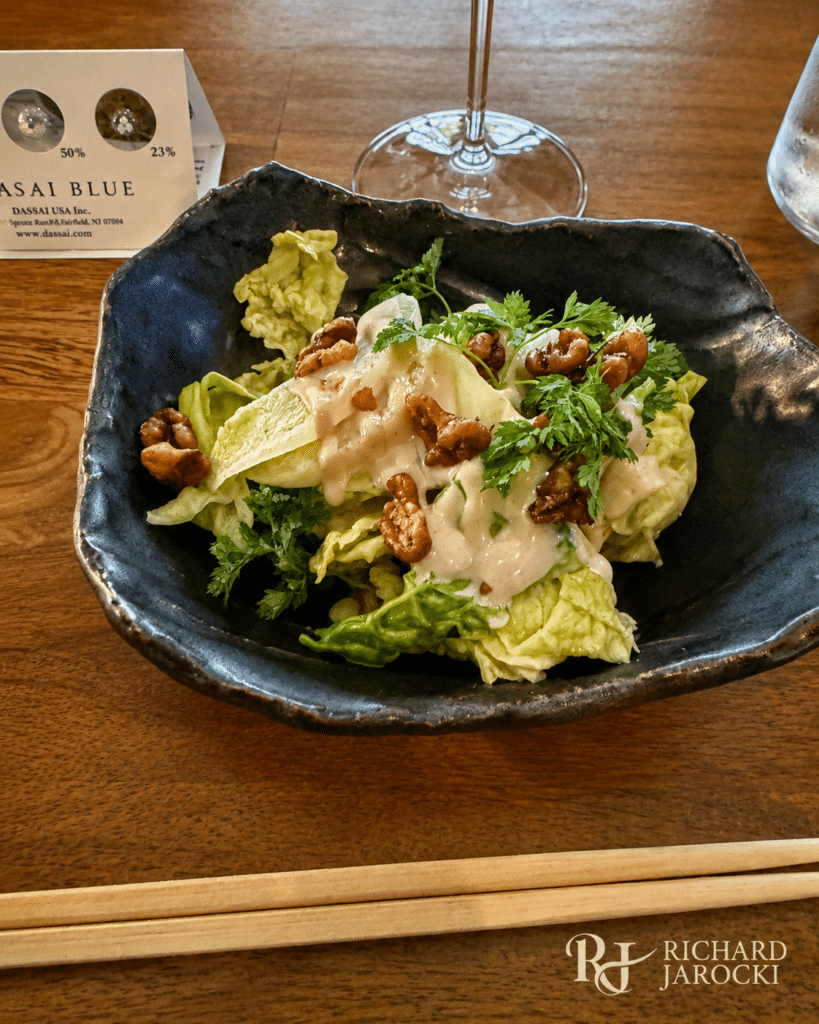
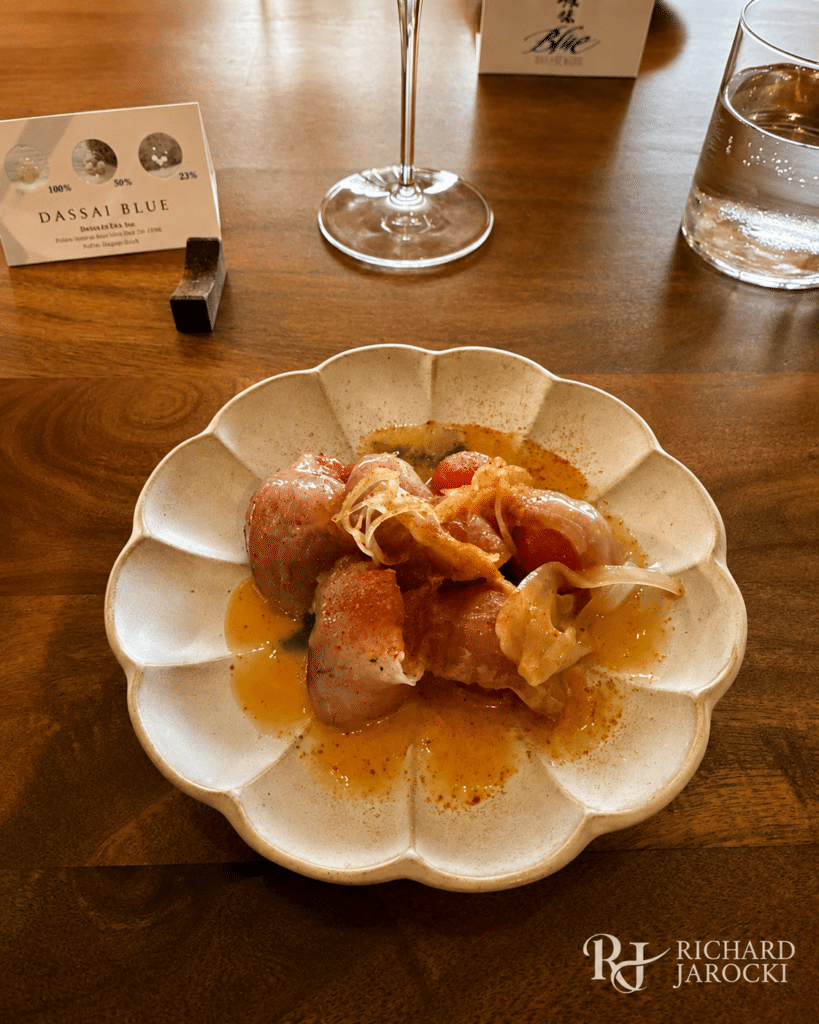
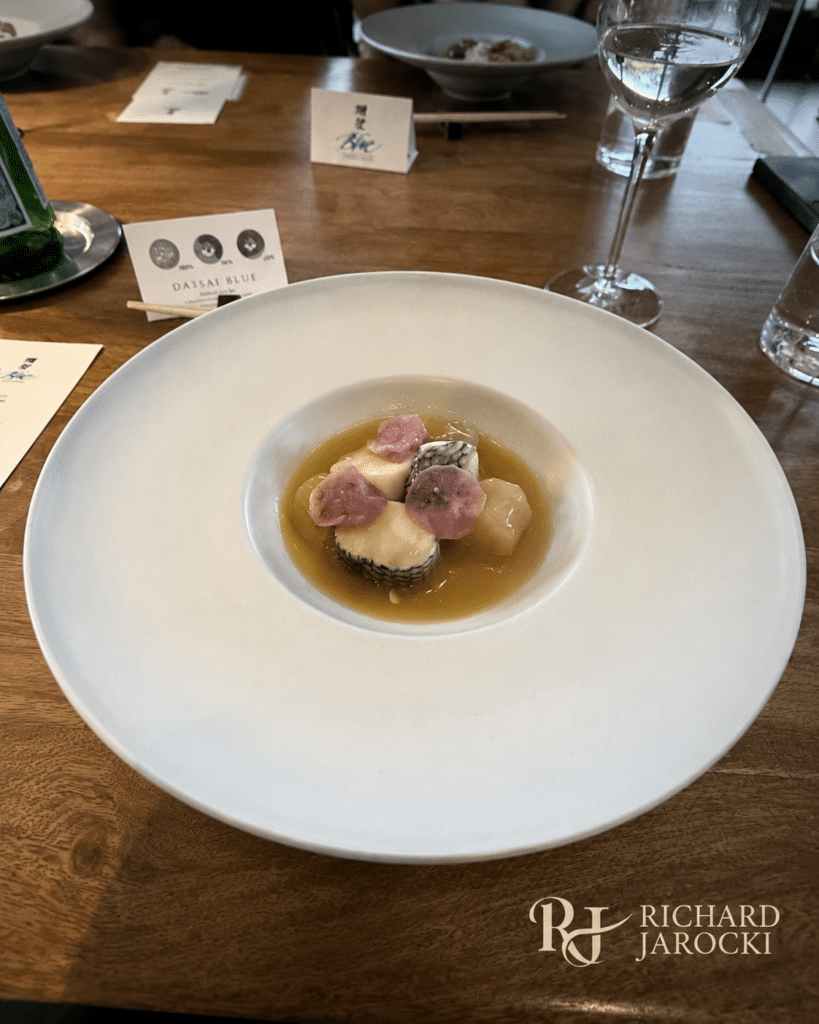
Courses two through four were the meal’s best stretch
The kombu-cured tautog was amazing and the clearest expression of what this collaboration was trying to do. Cherry tomatoes, sherry vinegar and pickled fennel kept the fish bright, while a basil-like green herb oil pooled on the plate. I made sure to soak up every last bit.
The black bass and scallop roulade was just as memorable. The sake-kasu broth had the kind of depth that made me want to drink it straight from the bowl—especially because there was no spoon. The rice course was simpler but still satisfying: locally grown rice from Ever-Growing Family Farm, improved by sweet corn and clams, with a deeply savory fish-bone broth. The pickled cucumbers were the part I could have eaten all night.
The sake was part of the dinner
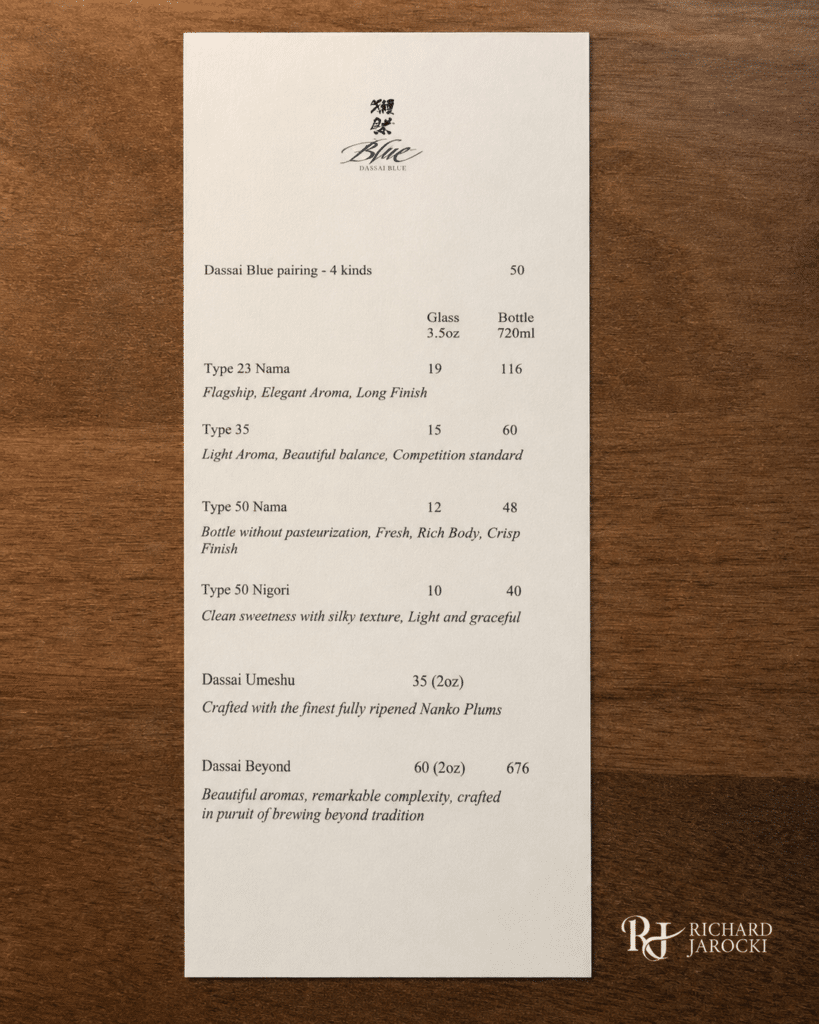
The chilled summer cabbage opened with Dassai Blue Type 23 Nama. Across the remaining three savory courses, the pairings moved through Type 35, Type 50 Nama and Type 50 Nigori. The dinner then finished with Dassai Blue’s sake gelato, offered as a $6.50 add-on and paired with Dassai Yuzu sake.
That order made the pairing feel intentional rather than repetitive. The delicate Type 23 set a polished opening, while the 35 and two different Type 50 expressions gave the fish, broth and rice courses distinct weight and texture. The gelato tasted clearly of citrus—enough that some diners compared it to limoncello—but the sake flavor remained present. Paired with Dassai Yuzu, it closed the meal with brightness instead of more richness.
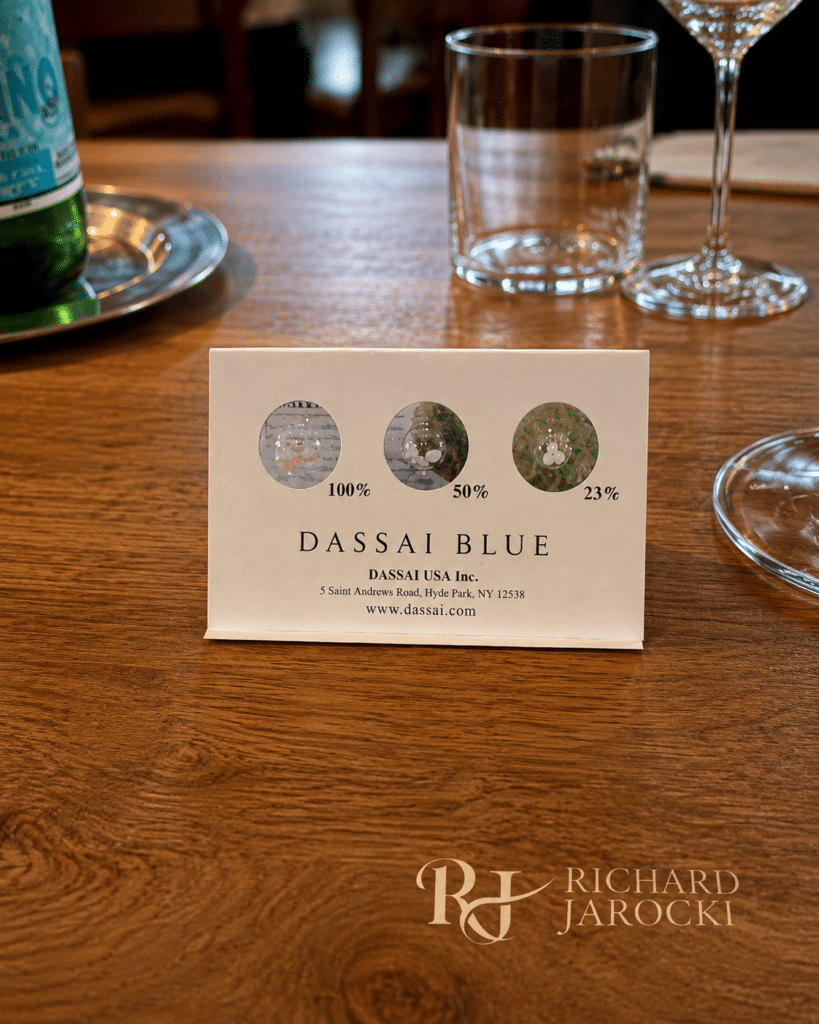
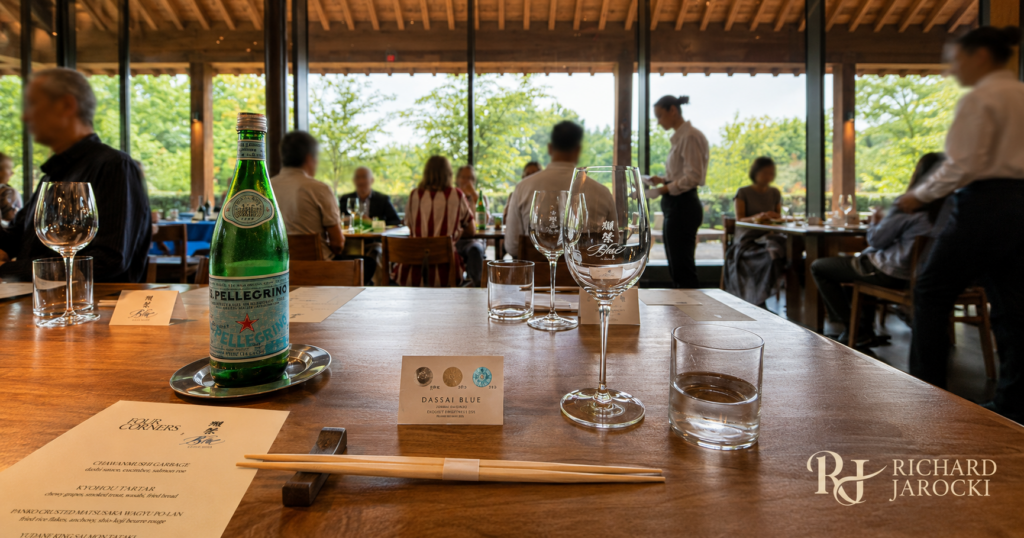
That is what Dassai Blue does well. Staff explained the rice-polishing percentages, and cards on the table showed the rice at 100, 50 and 23 percent. The explanation gave useful context, but the food did the convincing: each glass changed how the next course tasted.
The verdict
The Four Corners pop-up was worth the return. It also did exactly what a good pop-up should do: it made me more interested in the permanent restaurant.
Israelow’s cooking felt thoughtful without becoming overly complicated. The menu respected the season, the brewery and the ingredients. Just as important, the collaboration did not feel like Four Corners borrowing Dassai Blue’s room or Dassai Blue borrowing a chef’s name. The two ideas actually worked together.
My first Dassai Blue dinner made me recommend the brewery. This one proved why I am going to keep watching its event calendar.
Four Corners is not open yet. After this preview, I will be paying attention when it is.