Tag: Cocktail Bars

  • Formula 1 Luxury Travel: 7 Reasons Every Grand Prix Is More Than Just a Race

    Formula 1 Luxury Travel: 7 Reasons Every Grand Prix Is More Than Just a Race

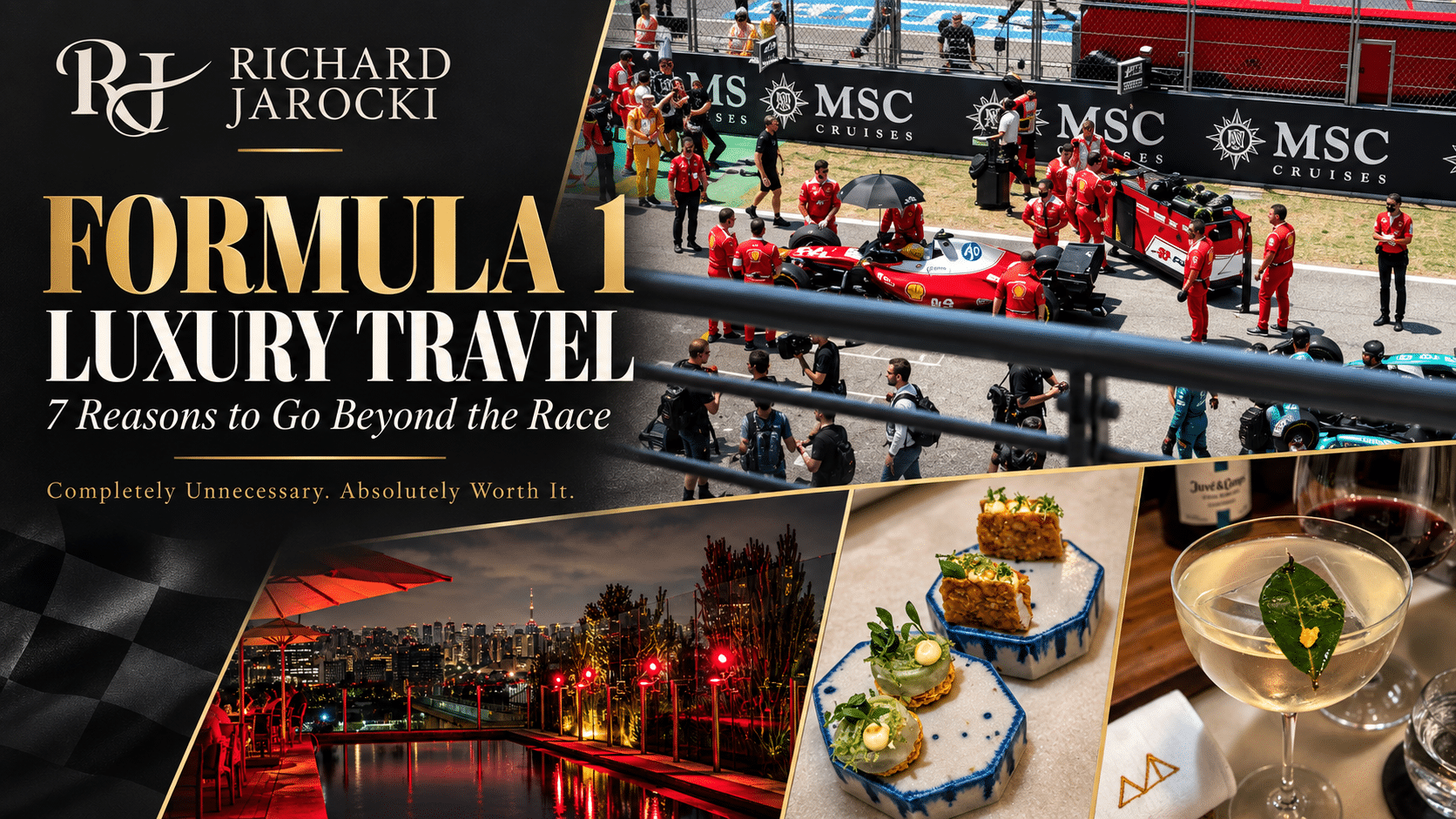
    Formula 1 Luxury Travel: 7 Reasons to Go Beyond the Race Formula 1 luxury travel collage featuring a Ferrari race-grid scene, Hotel Unique’s rooftop, Mont Bar dishes, and a cocktail.

    Formula 1 luxury travel started with an interest in racing and turned into a reason to explore whole cities. Working at Ferrari got me interested in Formula 1. Traveling for races turned that interest into something much bigger. Now, booking a Grand Prix means a lot more than choosing a flight and buying a ticket. I am researching restaurants, comparing hotels, figuring out which cocktail bars I can fit in, and deciding how many extra days I can justify taking off work. Usually, I can justify a few.

    Formula 1 luxury travel brings together most of the things I enjoy: racing, food, cocktails, hotels, and getting to know a city well enough that I want to come back.

    The race still matters. I care who wins. But when I look back on these trips, I remember much more than what happened on Sunday. I remember the meal I am still talking about months later. The bartender who took the time to explain a drink. The hotel that became part of the experience. The people sitting around me at the circuit.

    I collect watches, sneakers, T-shirts, and hats. I still enjoy all of them. But experiences have become my favorite thing to collect. The way I think about spending money has changed because of that. I still buy things, but now I find myself asking how much I want something compared with another trip, another dinner, or another few days somewhere I love. Travel has become a much bigger part of what I work for and what I look forward to.

    I also have a full-time job and a limited amount of time away from it. When I take a race trip, I want those days to count. That means thinking about where the money goes, what is actually worth paying for, and how much I can realistically fit into a week without turning a vacation into another job.

    Formula 1 gives me the reason to book the trip. Everything around it is what turns that trip into something I remember.

    If you want to understand where that really started for me, read The Trip That Changed Everything. My first São Paulo Grand Prix ended up changing much more than where I wanted to watch Formula 1.

    1. It Gives Me a Reason to Go Somewhere—and Go Back

    São Paulo helped renew my love of gastronomy. The city introduced me to restaurants that are now among my favorites anywhere in the world, and it quickly became somewhere I wanted to keep returning to. I have written much more about the city in my São Paulo restaurant guide and my São Paulo destination coverage.

    Barcelona taught me something different. It made me think more about the history behind the food and wine I was enjoying. You can sit down to dinner and have hundreds of years of tradition behind what ends up on the table. Then you walk outside and find yourself surrounded by buildings and neighborhoods that existed centuries before the United States was even a country. That puts things in perspective.

    I have always appreciated a great meal and a good glass of wine. Barcelona made me appreciate how much more there can be behind both—the people, the traditions, the history, and the culture that helped create them.

    That is one of the biggest reasons I like returning to places instead of treating every trip as a checklist. The second visit is different. There is less pressure to see everything. I can go back to a restaurant I already love, try somewhere new, spend more time in a neighborhood that interested me the first time, or simply leave part of the day open. Having favorites gives me a starting point without making me feel like I have finished exploring the city.

    I already have restaurants and places I am excited to return to, but I do not feel remotely finished with the city. Every trip becomes a decision between going back to somewhere I already know I love and making room for somewhere new.

    It is a good problem to have. My restaurant list just has very little respect for the number of days I actually have available.

    That is what Formula 1 luxury travel has become for me. The race gets me to the city, but everything I discover around it gives me a reason to return.

    2. The Food Can Be as Memorable as the Race
    I take restaurant reservations seriously. Anyone who has traveled with me—or looked at one of my itineraries—can probably figure that out.

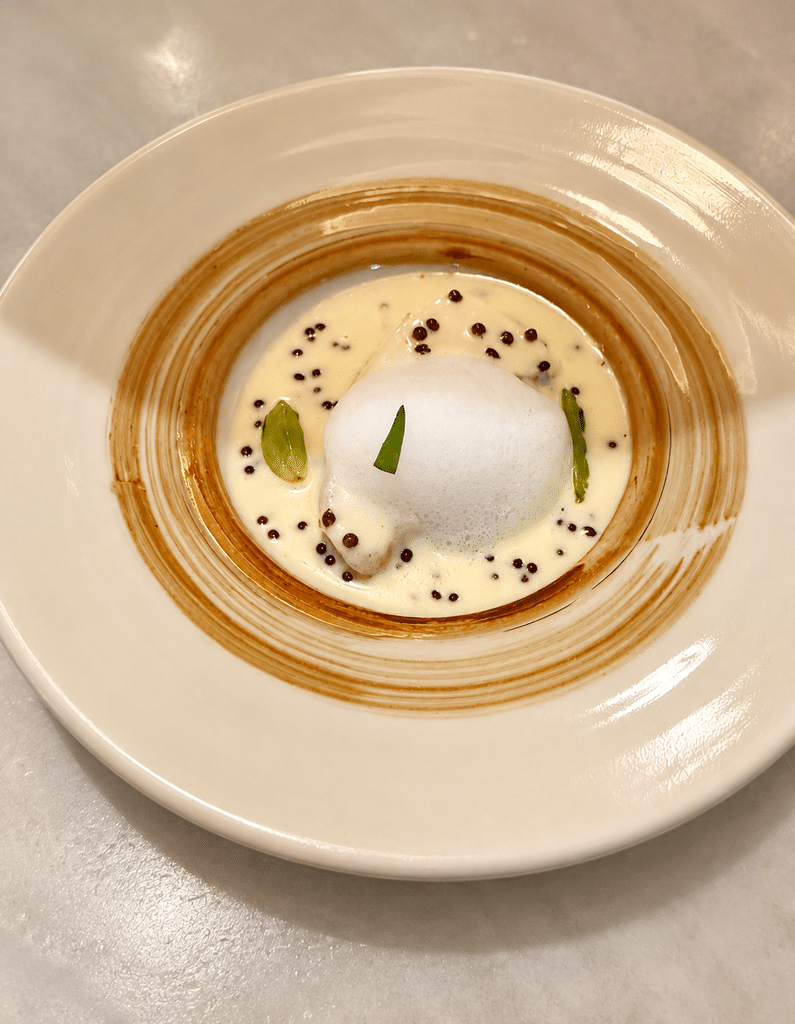
    In Barcelona, Mont Bar became one of my favorite meals anywhere, while Disfrutar was a completely different kind of experience. I would not really compare the two directly. Mont Bar felt more relaxed, intimate and personal. Disfrutar was more theatrical, technical and built around a much longer progression of courses. Both stood out for very different reasons.

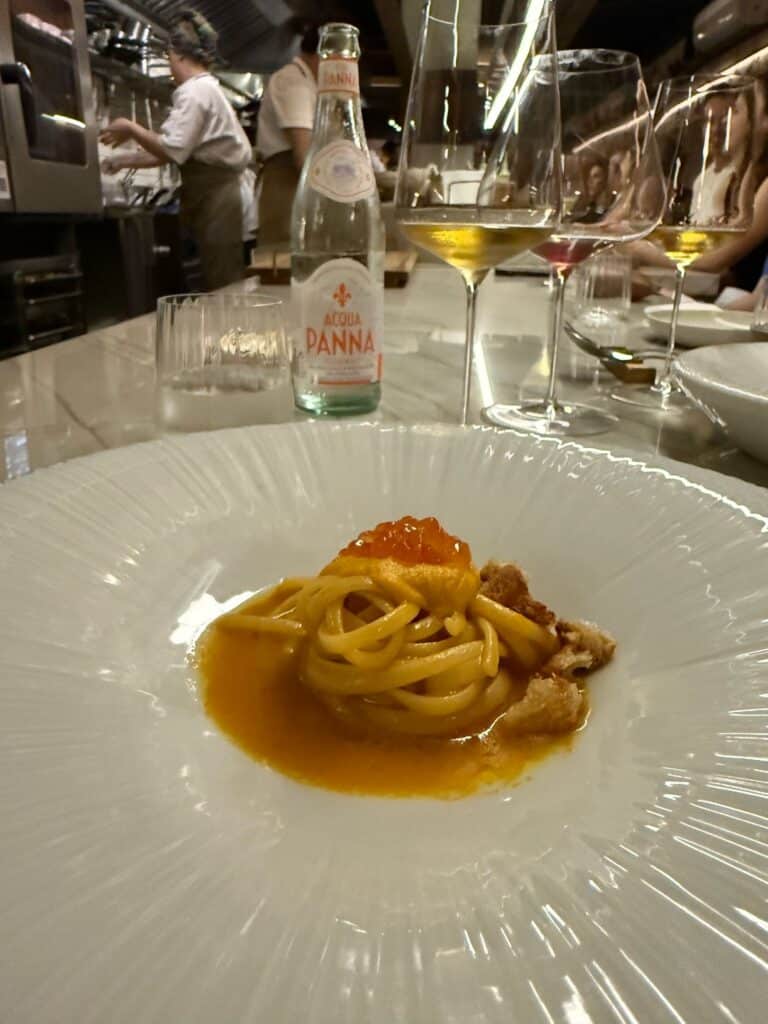
    In São Paulo, Evvai remains my favorite restaurant in the world. D.O.M., Tuju, A Casa do Porco and Tan Tan have all been part of the reason I keep wanting to explore more of the city’s food. These meals become things I look forward to for months.

    A meal that changes your mind

    I want to see what a chef is doing, try ingredients I might never order on my own, and understand why a dish works. Sometimes the kitchen puts something in front of me that I would have skipped on a menu, and it ends up being one of the best things I eat all trip.

    Evvai managed that with its take on feijoada. I do not generally like beans, yet I loved that dish. That is a pretty convincing argument for occasionally letting someone who knows what they are doing choose dinner.

    Staying with familiar ingredients would have cost me an experience I still remember. I explain more about that in my take on whether tasting menus are worth it.

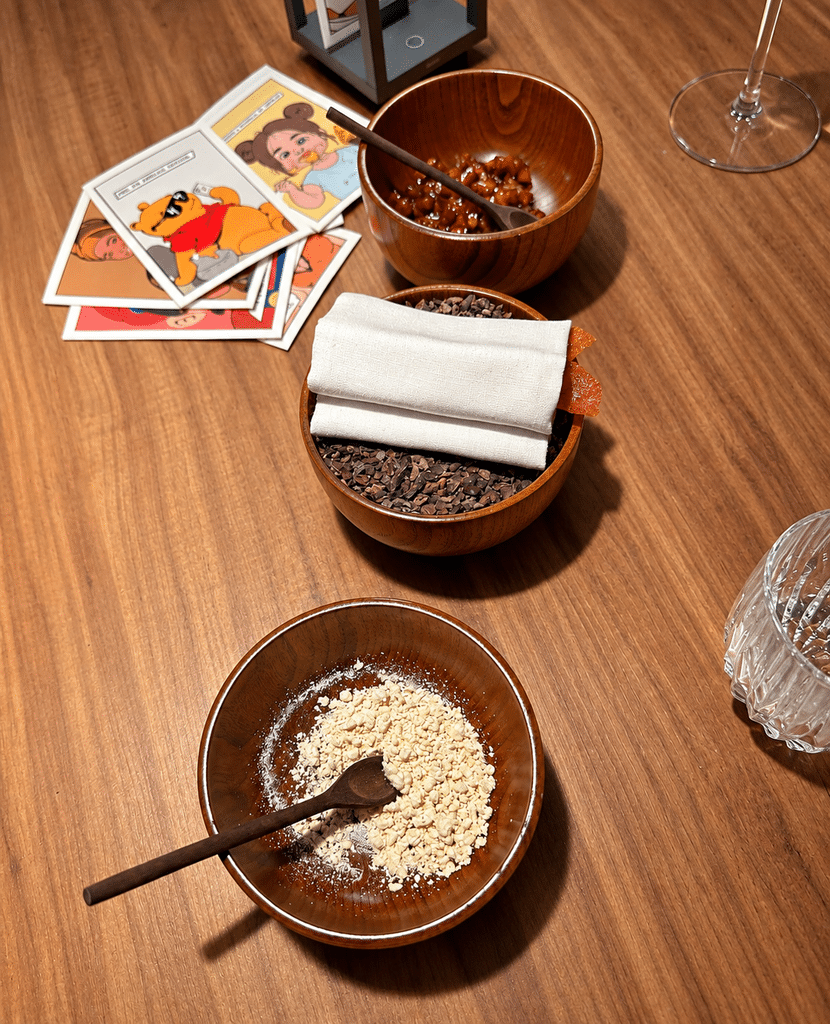
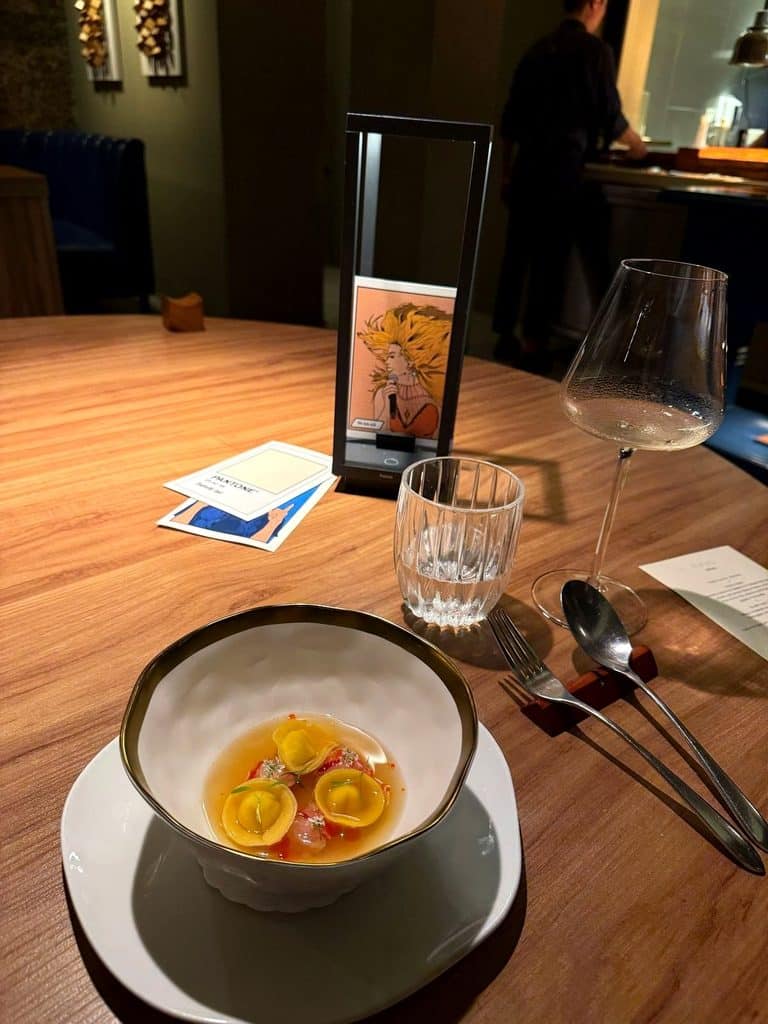
    The explanation matters, too. Evvai’s pop-art course cards gave me something to connect with as the dishes arrived and something to take home afterward. I enjoy knowing what inspired a preparation and why the ingredients belong together. It makes me pay closer attention to what I am eating.

    Mont Bar also showed me how much the people and the room contribute to dinner. The team took time to talk with us, the music helped give the place personality, and the service felt comfortable. It was ambitious food without the experience ever feeling stiff.

    Returning favorites and the next reservation

    For my upcoming November 2026 trip to São Paulo, I am planning a little of both: returning to places I already know I love and making room for somewhere new. I am going back to Evvai and Tan Tan, and I want to try Goya Zushi and Jacó.

    If I can make the timing work, I also want to get back to A Casa do Porco. That may even end up being lunch before my flight home, which would be a pretty good way to finish the trip.

    I also plan to spend another evening at Rosewood São Paulo, even though I am staying elsewhere for this trip. Taraz and Rabo di Galo are both places I enjoyed enough to want to return to, and Rosewood has become one of those hotels where I am happy to spend an evening even when I am not staying there.

    I may also make my way back to Palácio Tangará during Grand Prix week.

    On my previous visits during Grand Prix week, the security presence at Palácio Tangará was noticeable. Race-week access is something I would confirm with the hotel before making plans. If I book dinner there, I will confirm the reservation, arrival instructions and any restrictions directly. A restaurant reservation should never be treated as a promise of access to teams, drivers or private areas.

    That gives me another excuse to go back, have dinner or a drink, enjoy the hotel, and take in some of the atmosphere surrounding race week.

    The race is obviously the center of the trip, but Formula 1 spills into the hotels, restaurants, bars, and the rest of the city. You start noticing teams, sponsors, and fans everywhere, and places that are already interesting take on a completely different energy for the week.

    A famous restaurant name may get me researching, but the full experience is what makes me want another reservation: the cooking, the drinks, the room, the people, and the feeling of being somewhere I know I will think about again after I get home.

    For me, food is a major part of Formula 1 luxury travel. A Grand Prix weekend might start with the race schedule, but some of the restaurant reservations become experiences I anticipate just as much.

    3. The Hotel Has to Earn Its Place in the Trip
    I enjoy a great hotel, but I also want it to make sense for the trip I am actually taking. São Paulo is a good example because I have stayed at several of the city’s top hotels, and they each offer something different.

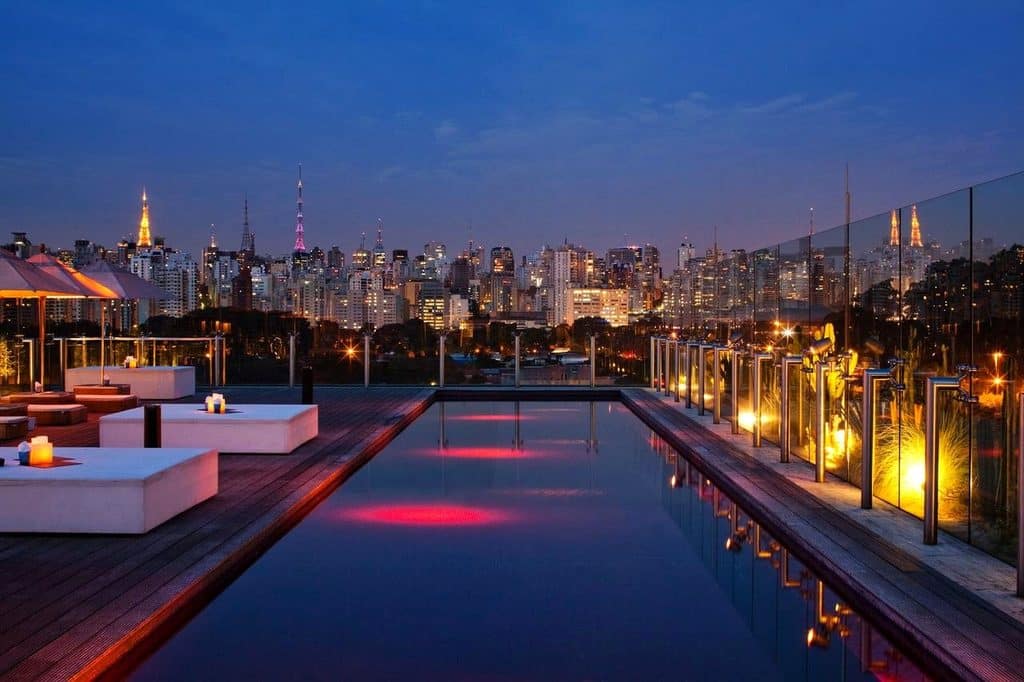
    For a Formula 1 weekend, Hotel Unique is still my best overall pick. It has the atmosphere, the rooftop, the crowd, and the energy that fit the São Paulo Grand Prix weekend especially well.

    I have also been looking at Posh Club Grand Prix parties for my November 2026 trip. Before building an evening around one, I would check the organizer’s current venue, dates, ticket requirements and hotel access rules before booking.

    A future stay is not a finished review

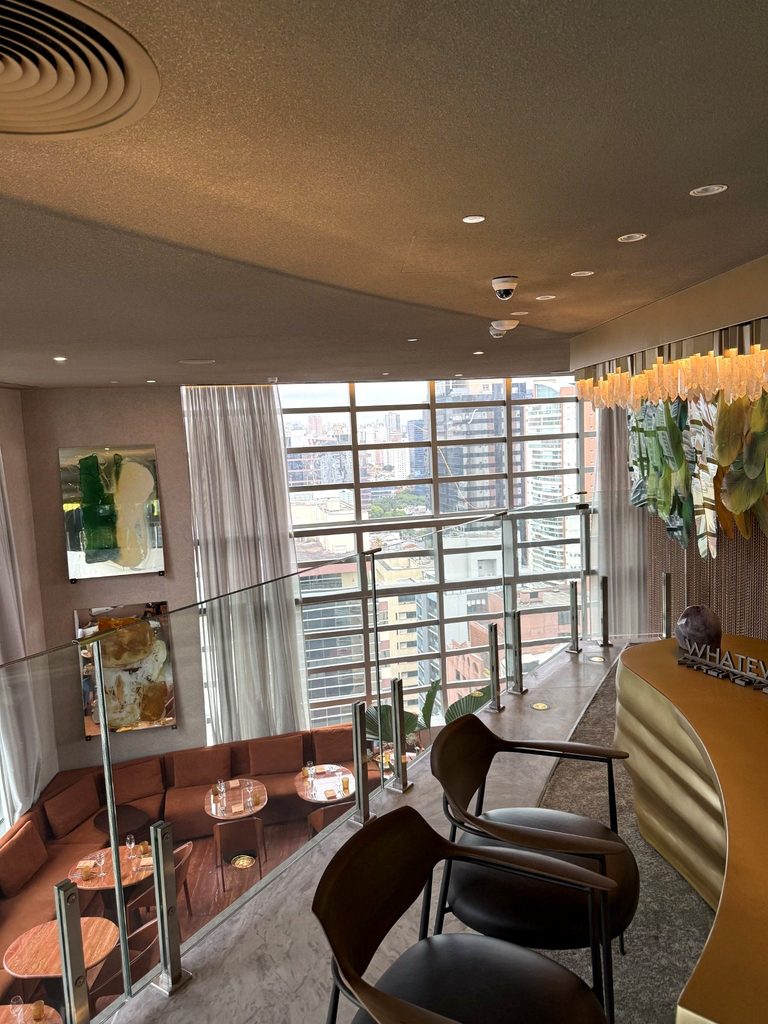
    For my upcoming November 2026 trip, though, I decided to stay at W São Paulo. Part of the reason is the rooftop.

    I like having somewhere at the hotel where I can come back after a long day, have a drink, and still feel like the night is not over. But I also want to experience the W as a complete hotel and get to know it better.

    I have spent enough time comparing São Paulo hotels that sometimes the only real way to understand one is to stay there and see how it fits into the trip.

    That does not mean I think the W is the most luxurious hotel in São Paulo. If we are talking about pure luxury, Rosewood São Paulo is on another level. The rooms, design, and overall experience make it one of the most impressive hotels I have stayed at in the city.

    Palácio Tangará belongs in that conversation as well. It offers a very different kind of luxury—quieter, more traditional, and removed from some of the energy of the city center.

    And then there is Emiliano, which is still on my list. I have not stayed there yet, so I am not going to pretend I can rank it against hotels I have actually experienced. But based on its reputation and location, it is one I want to get to know for myself.

    The most luxurious hotel is not automatically the best hotel for every trip.

    That is especially true with Formula 1 luxury travel, where the right hotel can become part of the race-week experience rather than simply somewhere to sleep.

    A beautiful room matters. So do the service, the crowd, the bars, the location, and what happens when I come back at the end of the night. That is what I am really paying for.

    4. There Is Usually a Cocktail Worth Finding
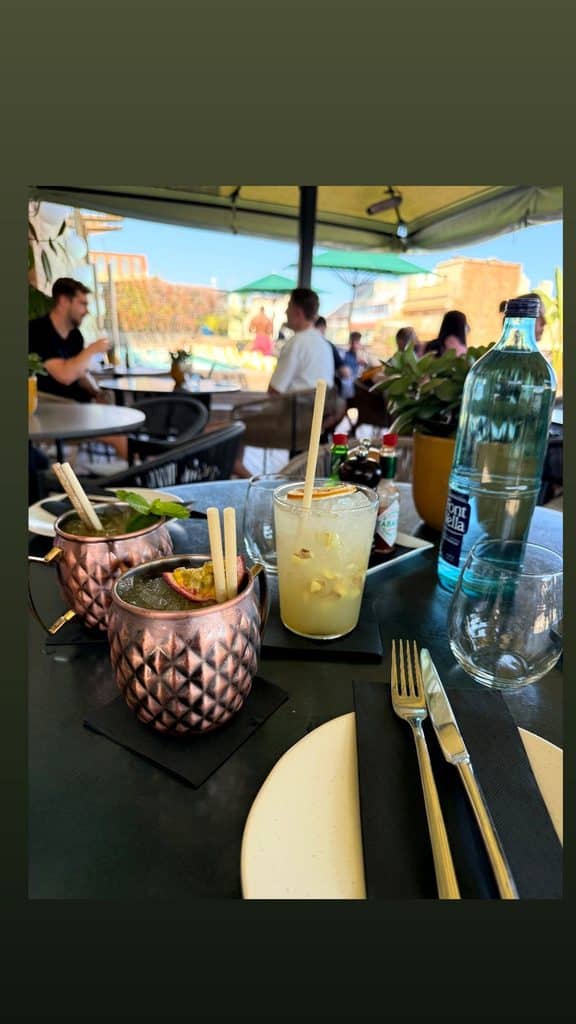
    My research rarely ends with the restaurant. Cocktail bars become part of the trip too, but I do not choose every bar because it appears on a World’s 50 Best list or because someone considers it a temple of mixology. Sometimes I want that experience. Sometimes I just want a good drink and somewhere comfortable to sit down.

    In São Paulo, Tan Tan is one of the places I keep going back to. I like that it works as both a restaurant and a serious cocktail bar. The Tsukemono I enjoyed was a good example: tequila, wasabi, cucumber and orange bitters may not sound like an obvious combination, but it worked for me. That is a memory of the drink I had, rather than a promise about the current menu.

    The Liquor Store gave me something completely different. On my visit, it felt like a very small, intimate bar, and that changed the experience. The bartenders can spend more time talking with you, figuring out what you actually like, and adjusting drinks around your preferences.

    That is one of the things I appreciate most about a great cocktail bar. The drink matters, but so does the person making it.

    Destination bars and the hotel rooftop

    Paradiso in Barcelona was another kind of experience. The creativity, presentation, and atmosphere make the bar a destination in itself. It is the type of place I specifically plan around because I want to see what they are doing.

    But not every memorable drink needs that kind of production.

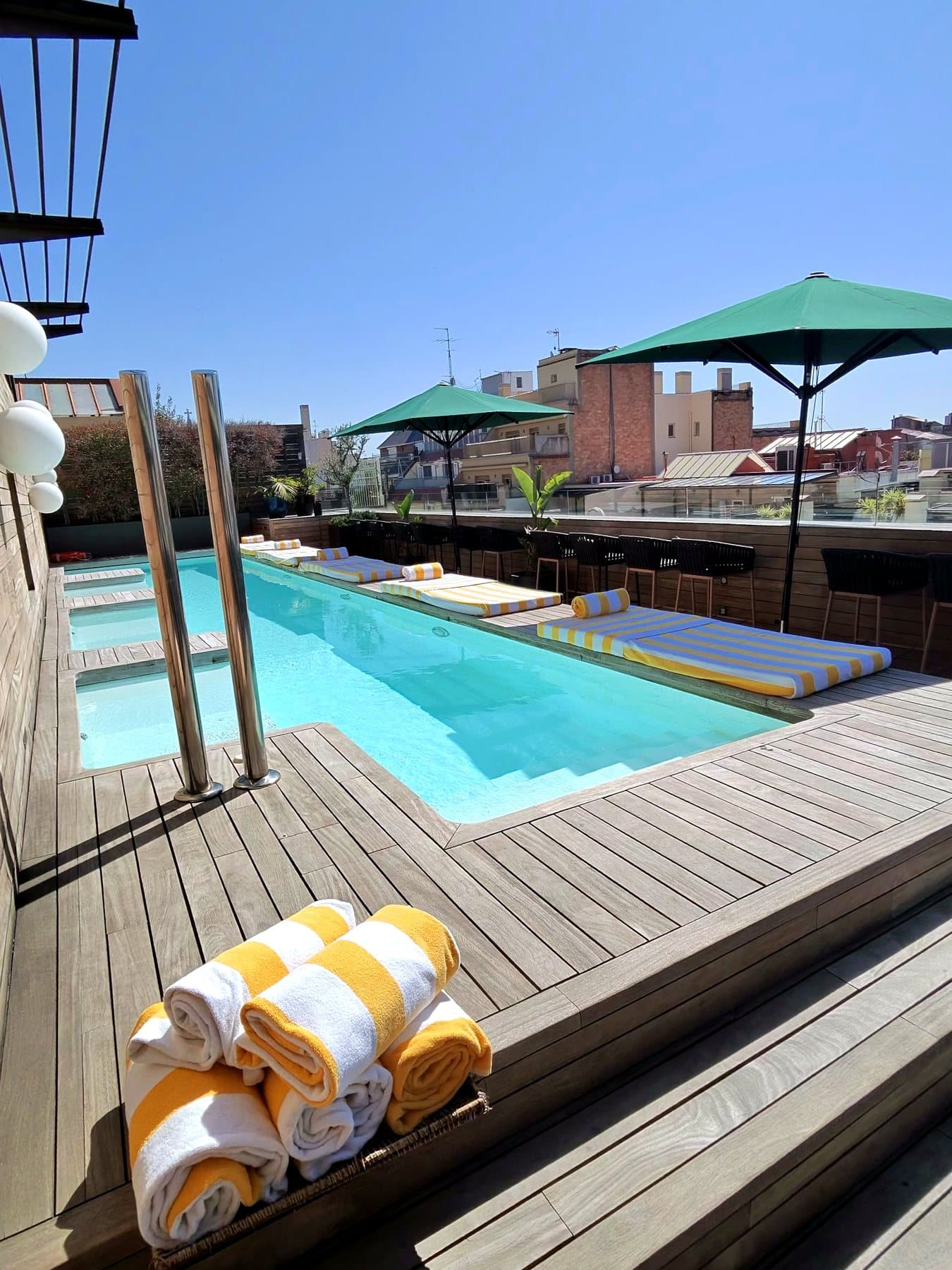
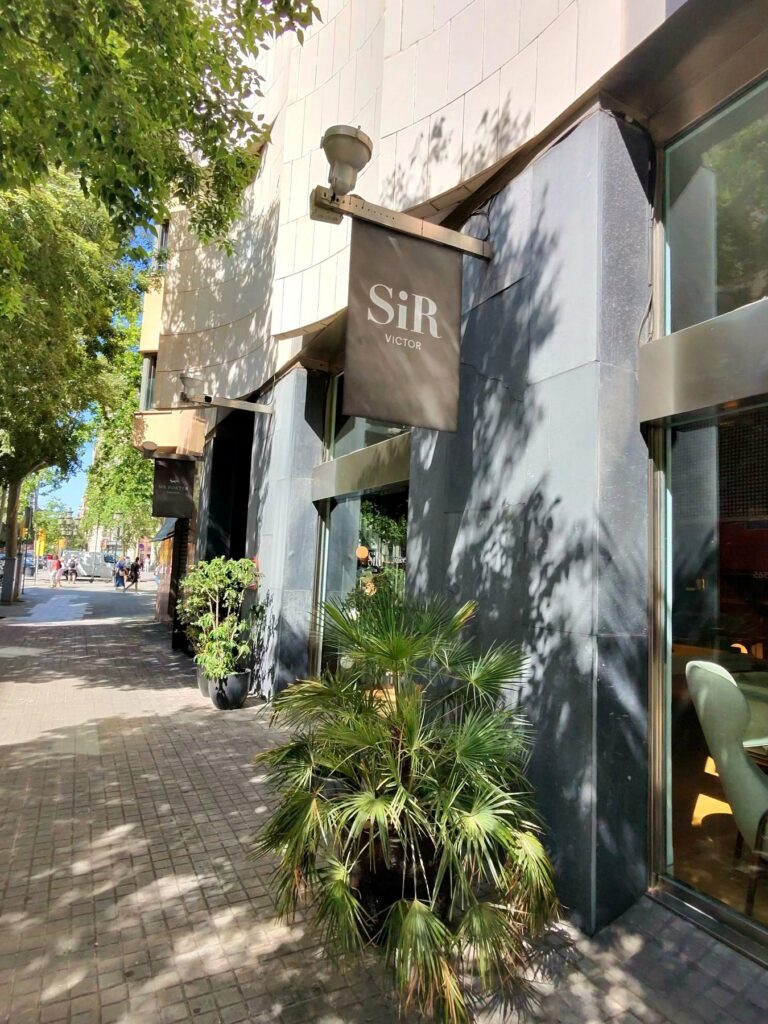
    While staying at Sir Victor in Barcelona, the rooftop became my go-to after a long day exploring the city. After walking all day, a few liters of water and a couple of drinks up there became part of the routine. It was not about chasing another famous cocktail bar or checking another place off a list. Sometimes I just wanted somewhere comfortable to sit, cool down, look out over Barcelona, and relax before deciding what came next.

    I found the same thing in São Paulo. After spending an entire day at Interlagos, sometimes the last thing I want to do is immediately rush somewhere else.

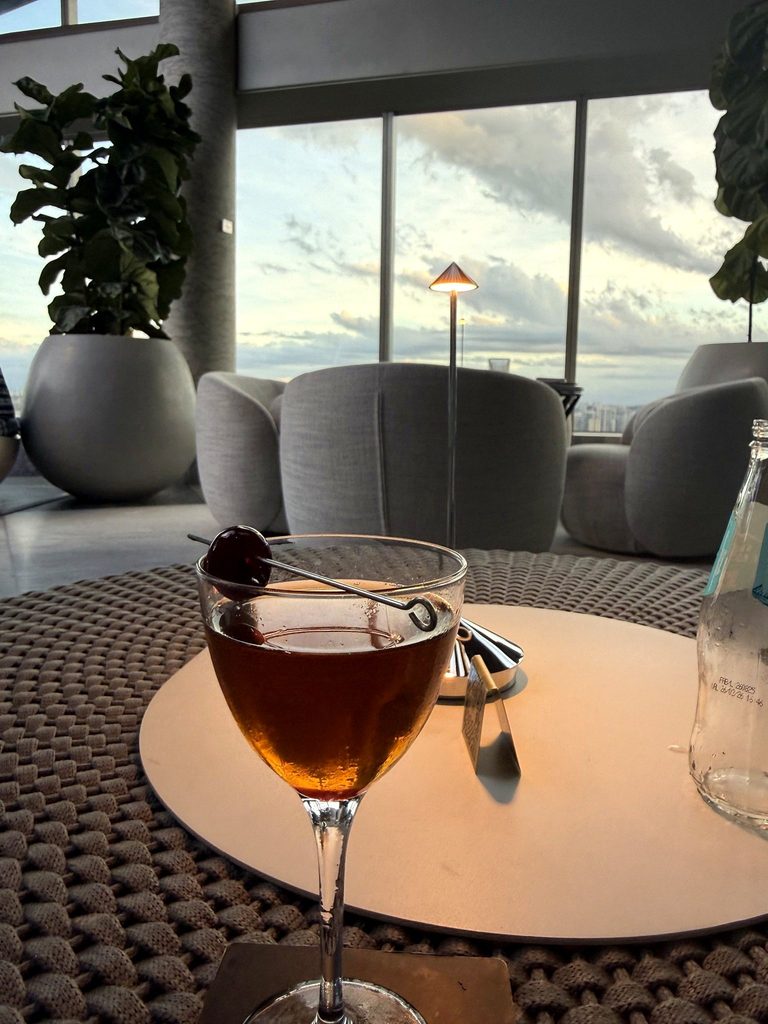
    The bar at the InterContinental São Paulo became a good place to sit down, have a drink, and relax for a while before getting ready for dinner. I have used the W São Paulo the same way. Sometimes a hotel bar is exactly what I need after a race day: somewhere comfortable, a good cocktail, and an hour when I do not have to be anywhere.

    Then there are places like Overstory in New York, where the setting becomes part of the experience. You are there for the cocktails, but being high above Manhattan with that view turns a drink into something bigger.

    I do not need every cocktail bar to have an award, a complicated concept, or a place on a global ranking.

    I also have to be realistic about how much I try to fit into one night. A cocktail before dinner, a long wine pairing, and several bars afterward can sound like a great plan when I am sitting at home building the itinerary. Then I remember there is usually another full day waiting for me.

    At this point, I would rather give one or two places enough time to enjoy them than spend the entire night watching the clock and rushing to the next reservation.

    The problem is that the list never gets shorter. There are only so many dinners, cocktails, and evenings in one trip, and somehow I always find more places than I have time for.

    5. I Want to See More Than the Circuit

    If I am taking time off work and flying to another country, I want time to experience the place beyond the race. That means leaving room for neighborhoods, architecture, museums, food, and sometimes just walking around without every hour assigned to something.

    Barcelona made that especially clear to me. There is so much history built into the city that even a normal walk can become part of the experience. Gaudí’s architecture, the Gothic Quarter, the old streets, the cafés, and the markets all gave me reasons to keep exploring beyond the race itself.

    São Paulo has been different, but just as interesting. I love the street art at Beco do Batman. I have spent time exploring Ibirapuera Park, one of the city’s major cultural and green spaces, and I have visited the Ayrton Senna memorial there. Ibirapuera is the kind of place where you can spend hours walking and still feel like you have only seen part of it.

    The places still on my list

    There are still parts of São Paulo I want to experience more deeply. One of them is Liberdade, the neighborhood most closely associated with São Paulo’s Japanese community. I especially want to experience it on a weekend, when the streets are busier and the neighborhood has more of that festival and street-market atmosphere.

    Another experience on my wish list is a Sunday morning exploring the car scene around Avenida Europa. Classic cars, Ferraris, Porsches and other exotics are very much my kind of Sunday morning.

    Of course, there is one problem. During Grand Prix weekend, Sunday morning is not going to happen. I will be at Interlagos.

    Every trip gives me another list of places I want to return to and things I still have not managed to fit in.

    Give yourself time to enjoy the city

    Race days themselves can take more out of you than the itinerary suggests. In Barcelona, I walked more than twelve miles on each of those days, including getting to the circuit and exploring once I was inside. I loved it, but that is a substantial day before dinner even enters the conversation.

    I wrote more about that weekend in Why I Love Formula 1: Racing, Travel & Belonging.

    So when I say to allow extra days, part of the reason is simply having enough energy to enjoy where you are. I do not want to fly to another country, spend every day at the circuit, eat dinner, go back to the hotel, and then head to the airport. That would feel like I attended a race in another country without really experiencing the country.

    I want time to stop for a coffee, walk into a shop, take a longer route because something caught my attention, or change the plan because someone gave me a recommendation that sounds better than what I had scheduled.

    But I also know there is a point where too much planning can start working against the trip. If every hour is assigned to something, then a spontaneous drink, an unexpected conversation, a neighborhood you want to keep exploring, or a restaurant you did not know about suddenly becomes a problem.

    The best version of these trips, for me, has both: enough planning that I do not miss the experiences I really care about, and enough open time that I can actually enjoy being somewhere new.

    To me, Formula 1 luxury travel should include enough time to experience the destination, not just the circuit.

    6. The Research Starts Long Before the Flight

    I spend a ridiculous amount of time planning these trips. And I mean hours. Possibly days.

    I search social media, read food blogs and travel sites, look through restaurant and bar accounts, ask chefs and bartenders for recommendations, and talk to other travelers about what they loved, what they would skip, and what they would actually do again.

    I also go through Reddit travel boards and local discussions, then use ChatGPT to keep researching the city’s restaurant, hotel, cocktail, and Formula 1 scenes from different angles.

    I want enough different sources and opinions that, by the time I start booking, I am not relying on one list or one person’s idea of what is worth doing. For dates, reservations, admission rules and package inclusions, I check the current information with the venue or official organizer.

    By the time I leave, I usually have a pretty good idea of what I want to do, what has to be booked in advance, and what can stay flexible.

    Build around the hardest bookings

    Restaurant reservations usually take the most attention. Some places open months ahead. Others release tables much closer to the date. Some require a credit card guarantee. Some disappear almost immediately. Wanting to eat somewhere and actually getting a reservation are two completely different things.

    Then there is the circuit. Getting there, getting back, deciding how early I need to leave, and figuring out what is realistic afterward all matter. A race day that looks simple on paper can become a very long day once transportation, walking, crowds, and weather are added to it.

    That is why I usually build the trip around the things that are hardest to move. The published race sessions are the starting point. A restaurant I really want may have only one reservation time available. A hotel event, party, or special experience may happen on one specific night.

    Once those pieces are in place, I can work the other meals, bars, neighborhoods, and sightseeing around them.

    The challenge is making those ideas work together. Every individual idea may sound easy enough on its own. Then I start putting everything on a map and matching it against race sessions, restaurant times, traffic, transportation, and how tired I am realistically going to be after a full day at the track.

    Geography, time and the whole budget

    Geography matters just as much as availability. Two reservations can both technically work and still make for a miserable evening if getting from one to the other takes too much time. I would rather spend that time enjoying where I am than sitting in traffic or watching the clock because I tried to force too much into one night.

    My time on the trip has value too.

    I also try to look at the full cost instead of convincing myself that every individual upgrade is reasonable. Flights, the hotel, race tickets, transportation, restaurants, drinks, shopping, and everything else all come out of the same budget.

    Looking at each purchase separately makes it very easy to say, “It is only a little more.” Then you add everything together. That is when the trip becomes expensive very quickly.

    The best itinerary protects the experiences I care about most while still leaving enough room to enjoy where I am.

    For me, good planning is part of Formula 1 luxury travel. I do all of that research so that once I get there, I can spend less time worrying about what I should be doing next.

    The goal is not to complete an itinerary. The goal is to enjoy the trip.

    7. The People Make the Weekend
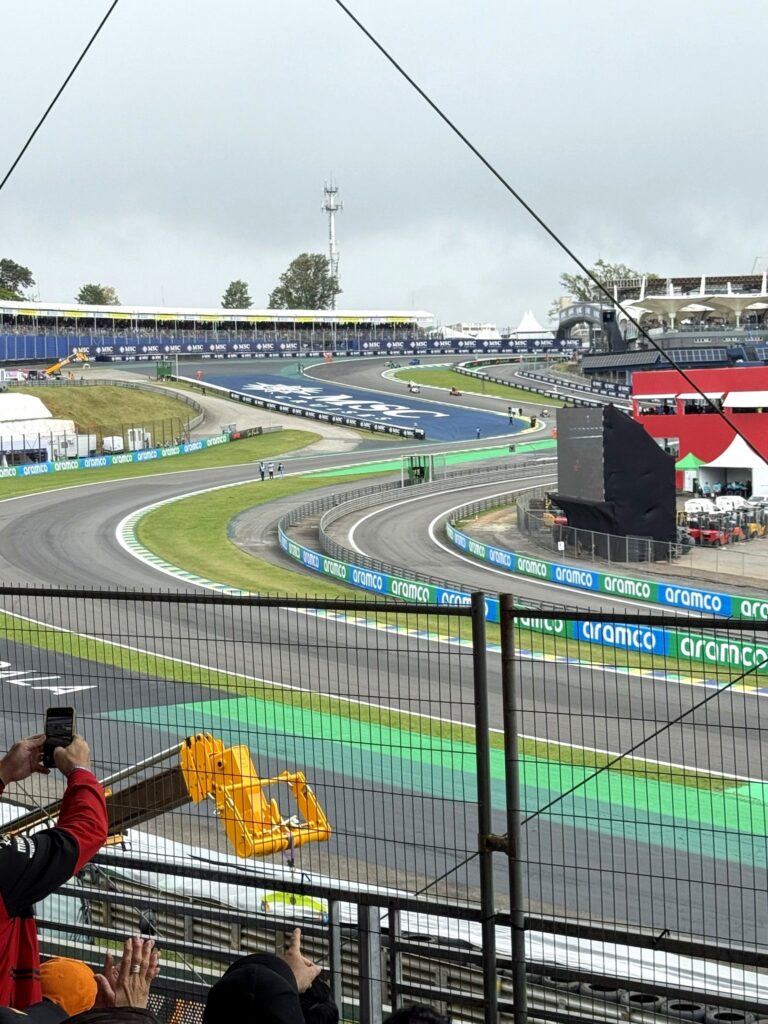
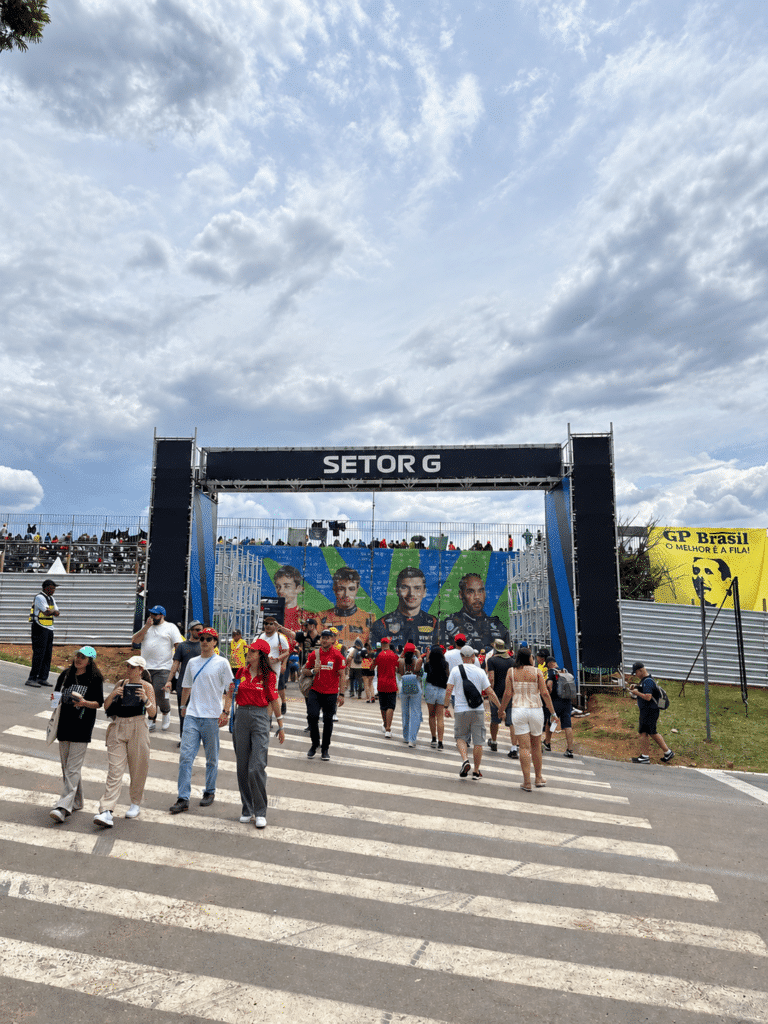
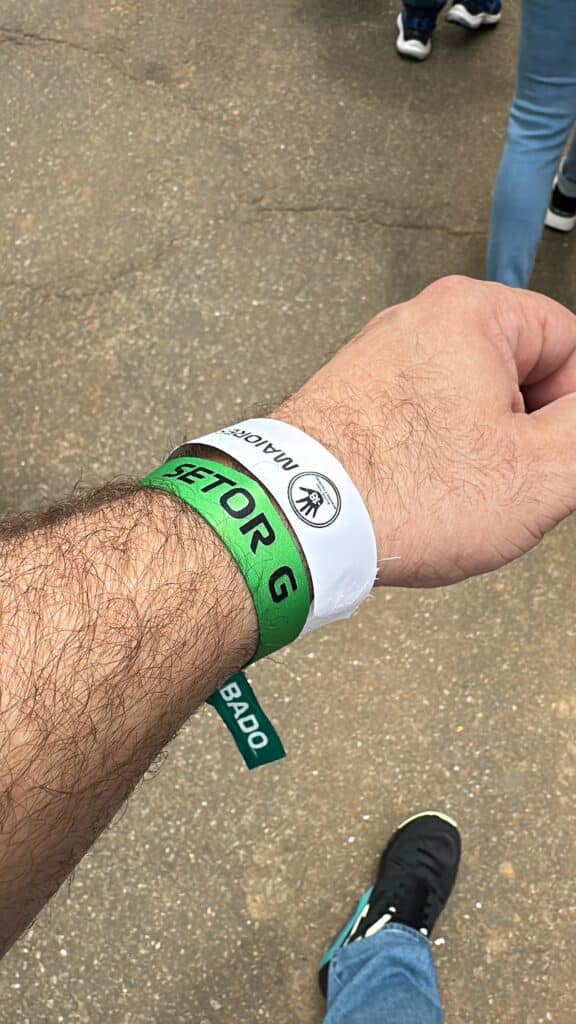
    Some of my strongest Formula 1 memories involve getting soaked in Sector G at Interlagos, drinking beer and canned Jack and Coke, and talking with people I had never met before. We were there for the same reason. Different teams. Different drivers. Different countries. Same sport.

    When people made room for me under shelter from the rain, that small gesture stayed with me. We did not all speak the same language, but it did not matter much. Formula 1 already gave us something to talk about.

    For someone who does not always find it easy to start a conversation, that shared interest makes a difference. I have written more about those connections in Why I Love Formula 1: Racing, Travel & Belonging.

    Hospitality is a choice, not a requirement

    I have also done hospitality and paddock experiences, and I enjoy them. In the experiences I tried, I appreciated the additional access. The added comfort, food and drinks were part of the appeal too. I would happily do those experiences again when they make sense for the trip.

    But I have also become more realistic about what I want to spend on them.

    If upgrading to hospitality means giving up a great hotel, several dinners, extra days in the city, or another trip entirely, then I have to decide what matters more. Sometimes the answer is hospitality. Sometimes it is not. And that does not make the grandstands feel like a compromise.

    I genuinely enjoy being surrounded by fans who care about what is happening on the track as much as I do. When an overtake happens, someone crashes, the weather changes, or a favorite driver comes past, the reaction around you becomes part of the race. That atmosphere is hard to recreate anywhere else.

    To me, that belongs in a conversation about luxury travel too. Luxury does not always mean being separated from everyone else.

    Sometimes it is a beautiful hotel, an exceptional tasting menu, and a great cocktail. Sometimes it is standing in a packed grandstand in the rain with thousands of people losing their minds over what just happened on track. A great Formula 1 trip can have both.

    That mix is one of the things I like most about Formula 1 luxury travel. Luxury can mean hospitality and five-star hotels, but it can also mean having the freedom to choose the experiences that matter most to me.

    I want to enjoy the whole trip and make the budget work across all of it.

    Hospitality is still on the wish list. But so is another great weekend in the grandstands.

    If you want more of my thinking on experiencing the city beyond the race itself, I wrote about that in Formula 1 Beyond the Circuit.

    The Race Gets Me There. The Whole Trip Brings Me Back.

    Formula 1 has changed where I travel, how I plan, and what I want from a trip. I still look forward to race day. But I also look forward to the dinner reservation I made months earlier, going back to a bar I loved, spending time in a hotel that became part of the experience, and finding another reason to return to a city I thought I already knew.

    That is also why I write about these trips. I want to give people more than a photograph of an expensive room, a beautiful plate, or a race ticket.

    What made the experience memorable? Would I spend the money again? Would I stay there again? Would I make the reservation again? Where would I sit at the circuit, and would I choose those seats again?

    What I would want to know before booking

    That last question is something I have learned to take much more seriously.

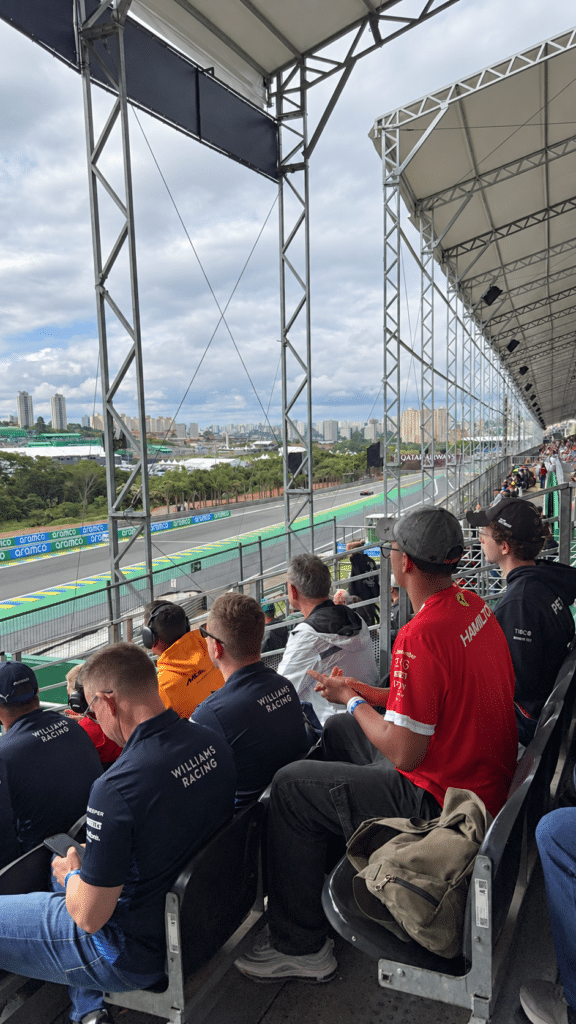
    At my first São Paulo Grand Prix, I learned the value of a covered grandstand. It does not rain every São Paulo Grand Prix, but São Paulo weather can be strange. You can go from looking at a sky without a cloud in it to standing in a downpour. I know that from experience.

    Getting soaked at Interlagos gave me some great memories, but it also taught me that when I am choosing seats there again, having a roof over my head matters.

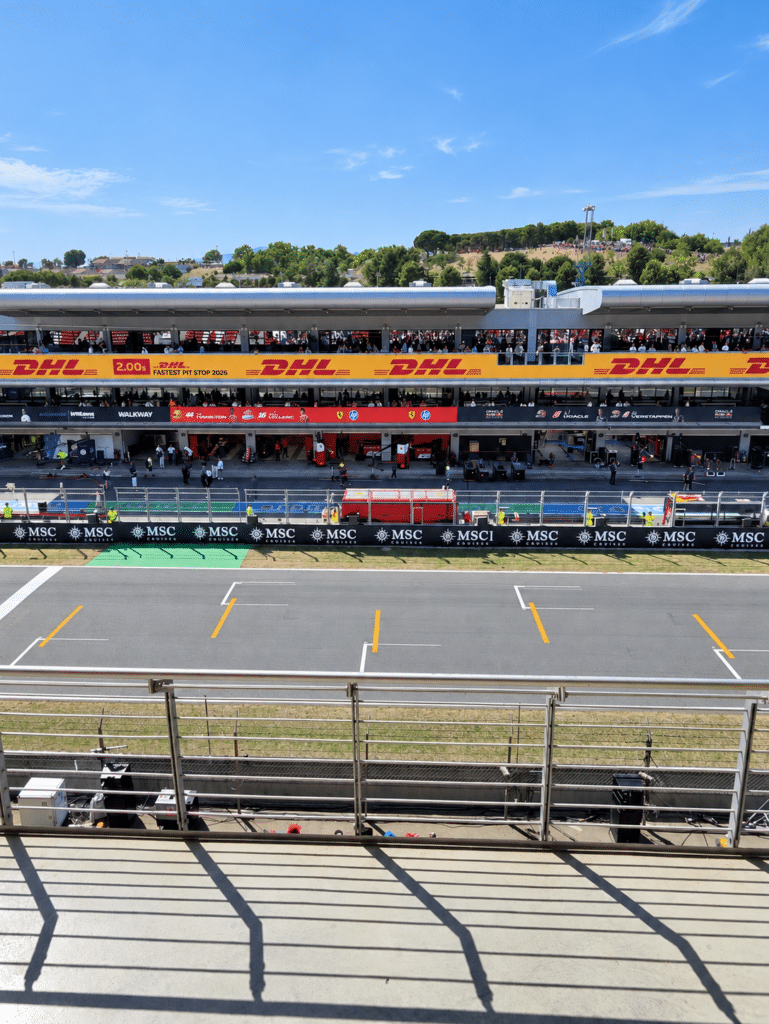
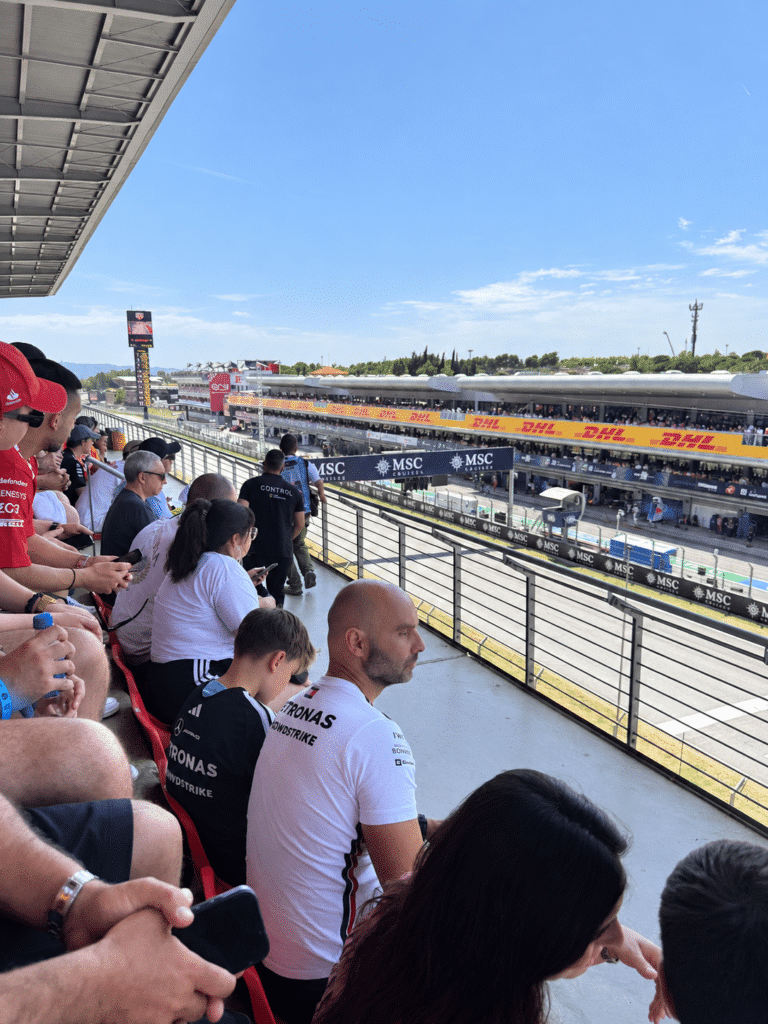
    Barcelona taught me the opposite weather lesson. My grandstand seats there were directly in the sun during the race. After spending hours at the circuit, that makes a difference too.

    Those experiences changed how I look at tickets. I am not only asking whether a grandstand has a good view of the track anymore.

    Is it covered? Where will the sun be during the race? Can I see a screen? What section of the circuit am I actually watching? How easy is it to get in and out? And after experiencing it once, would I pay to sit there again?

    Those details can matter just as much as the section number printed on the ticket. They are also exactly the kind of details I want to include when I write about these trips, because they are the things I wish I knew before buying the ticket myself.

    If you are planning your first Grand Prix trip, give yourself time around the race if you can. Pick a few experiences you genuinely care about. Book the things that are hardest to replace, then leave some room to explore.

    And when you buy the race ticket, do not just look at a circuit map and assume every grandstand experience is the same.

    Your version of Formula 1 luxury travel should reflect what you actually enjoy. Mine usually involves a great hotel, too many restaurant reservations, a few good cocktails, a lot of walking, and plenty of time around people who love Formula 1 as much as I do.

    It adds up. I am very aware of that.

    But when I look back at the races, the cities, the meals, the hotels, the people I met—and even the lessons learned from getting soaked in Brazil or cooked by the sun in Barcelona—I usually come to the same conclusion.

    Completely Unnecessary. Absolutely Worth It.

    Planning your own Interlagos weekend? My São Paulo Grand Prix Travel Guide covers my experiences with grandstands, transport, rain, food at the circuit, and fitting dinner into a race weekend.
  • São Paulo Travel Story: My Life-Changing 2024 Trip

    São Paulo Travel Story: My Life-Changing 2024 Trip

    How the 2024 São Paulo Grand Prix Made Me Fall in Love with Travel

    How the 2024 São Paulo Grand Prix Made Me Fall in Love with Travel | Richard Jarock

    My São Paulo travel story

    For more than twenty years, my life revolved around one thing: the automotive business.

    Long hours. Endless weekends. Sales goals. Deliveries. Finance paperwork. It was a career I genuinely loved, but it didn’t leave much room for travel.

    Vacations weren’t really adventures.

    They were opportunities to recharge before going back to work.

    Travel was never something I obsessed over.

    It was simply something you did.

    Then Formula 1 entered my life.

    Working with Ferrari introduced me to an entirely different world. At first, I fell in love with the engineering. Then the history. Then the competition. Before long, every race weekend became must-watch television.

    Eventually watching wasn’t enough.

    I wanted to experience Formula 1 in person.

    That decision would eventually take me somewhere I never expected.

    São Paulo.

    I Thought I Was Going for Formula 1

    When I booked my trip to the 2024 Brazilian Grand Prix, I thought I knew exactly why I was going.

    Interlagos.

    The home of Ayrton Senna.

    One of Formula 1’s most historic circuits.

    The incredible Brazilian fans.

    That was the reason I bought the plane ticket.

    At least that’s what I told myself.

    Looking back, Formula 1 was only the beginning.

    I Had Something to Prove

    There was another reason I planned that trip so obsessively.

    I wanted to impress someone who lived in São Paulo. This is what started my São Paulo Travel Story

    That might sound strange.

    Most people visit a city and rely on the locals to show them around.

    I wanted to do the opposite.

    I wanted to arrive knowing the city well enough that I could contribute to the experience—not just follow someone else’s itinerary.

    Maybe I could even introduce them to a restaurant or cocktail bar they hadn’t discovered themselves.

    That became the challenge.

    Could someone living nearly 5,000 miles away learn another person’s city well enough to surprise them?

    So I started researching.

    Then I researched even more.

    Restaurant menus.

    Chef interviews.

    Google Maps.

    Neighborhoods.

    Cocktail bars.

    Luxury hotels.

    Food blogs.

    YouTube walking tours.

    Reddit threads.

    I translated menus written entirely in Portuguese just to understand what chefs were creating.

    I learned which neighborhoods had the best restaurants.

    Which cocktail bars were worth visiting.

    Which hotels truly justified their prices.

    I wasn’t building a vacation anymore.

    I was studying a city.

    Of course, I quickly learned something important.

    No matter how much research you do, you can never truly know a place until you’re standing in it.

    But the research gave me confidence.

    Instead of arriving completely unfamiliar with São Paulo, I landed feeling like I already knew its neighborhoods, its restaurants, and its rhythm.

    That completely changed the trip.

    More Than a Race

    Interlagos was everything I’d imagined.

    The noise.

    The atmosphere.

    The energy.

    The passion of Brazilian Formula 1 fans is unlike anything I’d experienced before.

    You could feel Ayrton Senna’s legacy everywhere.

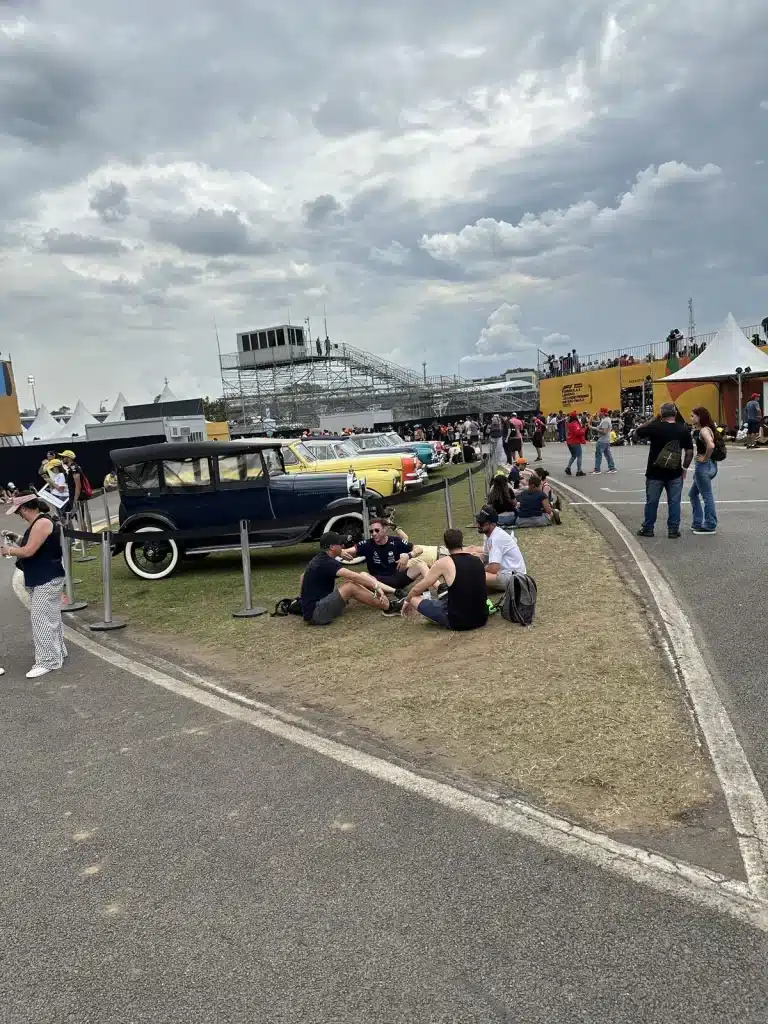
    São Paulo Travel Story:  Visitors relaxing beside a vintage vehicle display in the Interlagos fan zone.
    The atmosphere beyond the grandstands at Interlagos, November 2, 2024.

    For one weekend, the entire city seemed connected by Formula 1.

    It was unforgettable.

    But what surprised me most wasn’t what happened inside the circuit.

    It was everything outside of it.

    The City That Changed My Perspective

    Like many Americans, I didn’t know much about São Paulo before arriving.

    I expected traffic and crime.

    Skyscrapers.

    A huge city.

    But my experience during my São Paulo Travel Story.

    What I found was one of the most exciting culinary destinations I’d ever experienced.

    Restaurants operating at an astonishing level.

    Cocktail bars that could compete with any city in the world.

    Neighborhoods that each felt completely different.

    Every day became another excuse to explore.

    One reservation turned into another recommendation.

    One cocktail bar led to another neighborhood.

    One conversation led to another unforgettable meal.

    The itinerary I’d spent months creating suddenly became secondary.

    The city was creating its own itinerary for me.

    I’ve since put together a guide to the São Paulo restaurants I’ve experienced.

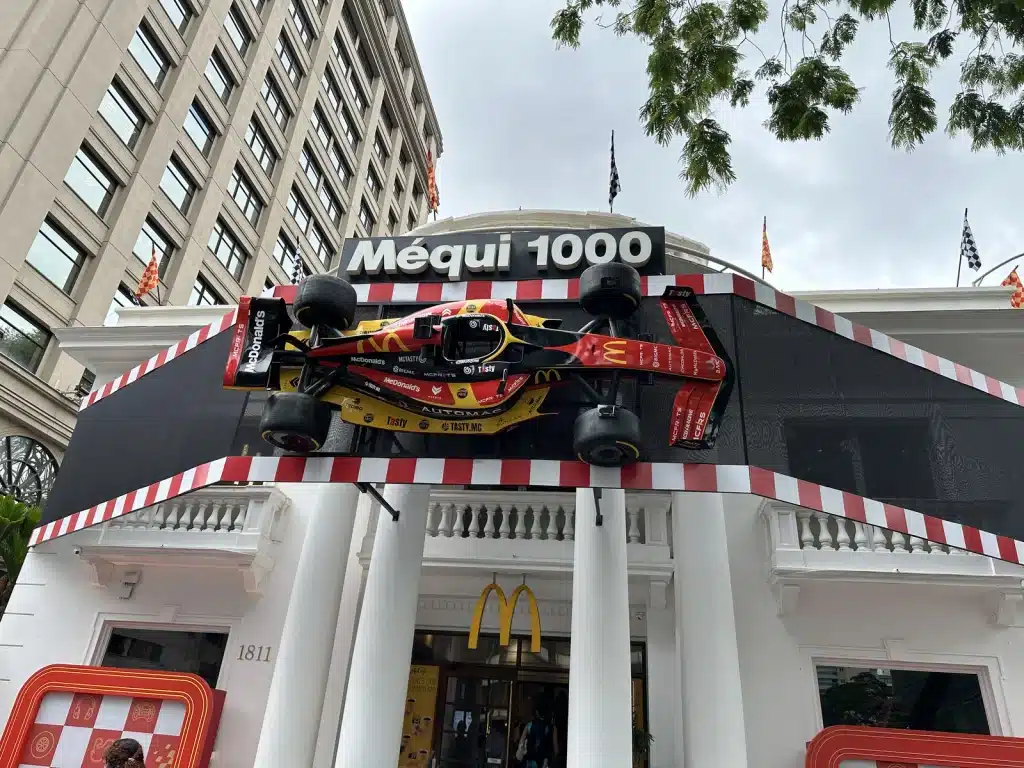
    São Paulo Travel Story:
    Formula 1 followed me into the city: Méqui 1000, November 4, 2024.

    The People Changed Everything

    The restaurants were incredible.

    The cocktails were unforgettable.

    But the people are what made me fall in love with Brazil.

    Brazilians welcomed me in a way I hadn’t experienced anywhere else.

    Everyone seemed genuinely proud of their city and excited to share it.

    Hotel staff.

    Drivers.

    Servers.

    Bartenders.

    Chefs.

    Complete strangers.

    There was an openness that immediately made me feel comfortable.

    The culinary world surprised me even more.

    In cities like New York, it’s easy for celebrated chefs and mixologists to feel almost untouchable.

    People line up for months to eat their food.

    Social media turns them into celebrities.

    Sometimes there’s an invisible wall between the guest and the person creating the experience.

    São Paulo felt different.

    The chefs I met wanted to talk.

    The bartenders were genuinely curious.

    The mixologists explained why they built a cocktail a certain way.

    Nobody acted like they were above the people sitting at their tables.

    They were world-class professionals who still felt approachable.

    That made every meal feel personal.

    And honestly?

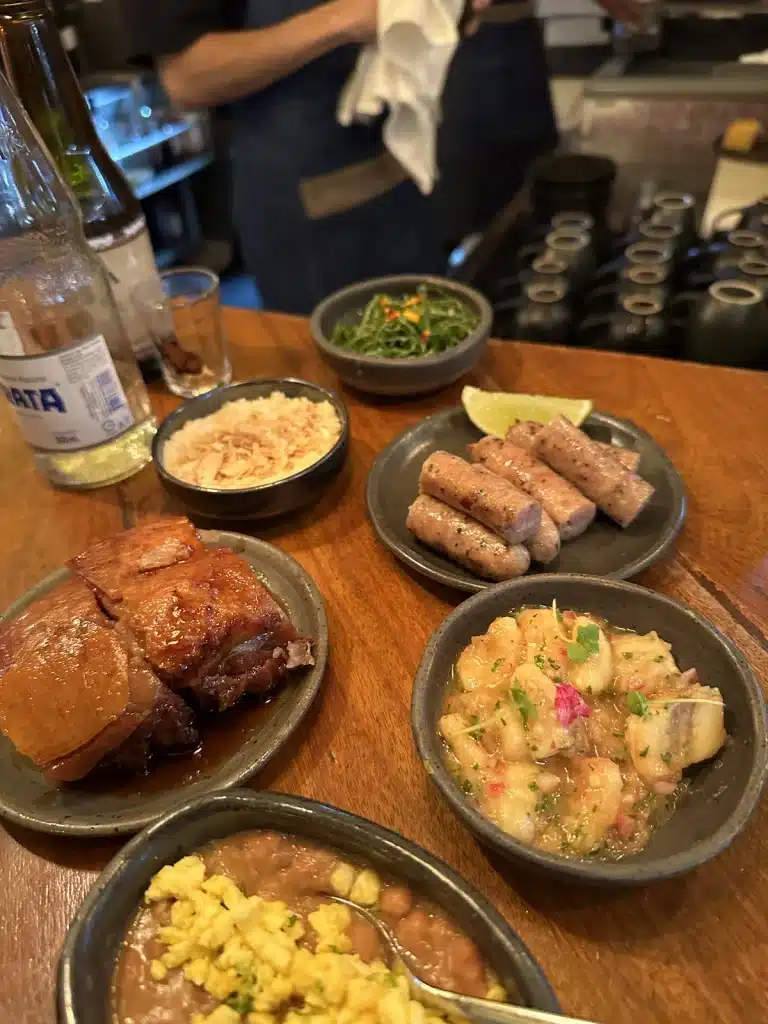
    São Paulo Travel Story: Pork and several side dishes arranged on the wooden counter at A Casa do Porco.
    A Casa do Porco, November 3, 2024: one of the meals beyond the race weekend.

    Some of the talent I experienced in São Paulo was every bit as impressive as anything I’ve found in New York.

    In some cases, even better.

    Not because they were trying harder.

    Because there was no ego attached to it.

    Just pride.

    Passion.

    Hospitality.

    That combination completely changed the way I look at restaurants today.

    Evvai is one of the clearest examples of why those details matter to me.

    Luxury Isn’t What I Thought It Was

    Brazil also changed my definition of luxury.

    Luxury isn’t simply paying the highest price.

    Luxury is attention to detail.

    It’s thoughtful hospitality.

    It’s a bartender remembering what you ordered yesterday.

    It’s a chef explaining why a dish matters.

    It’s a hotel that makes every interaction feel effortless.

    The most expensive experience isn’t always the best one.

    The most memorable usually comes down to the people.

    That lesson has stayed with me ever since.

    That lesson also shapes how I approach Formula 1 luxury travel today.

    The Research Never Stopped My São Paulo Travel Story

    When I came home, something had changed.

    I wasn’t looking at travel the same way anymore.

    Now every destination became a puzzle.

    Where should I stay?

    Which restaurants actually deserve the hype?

    Which cocktail bars are worth crossing a city for?

    Which neighborhoods should I spend an afternoon wandering?

    The research itself became part of the excitement.

    The trip no longer started at the airport.

    It started months earlier.

    Why This Website Exists

    Friends started asking for recommendations.

    Where should we stay?

    Which hotel is actually worth the money?

    Where should we eat?

    What shouldn’t we waste time on?

    I realized I’d already spent hundreds—eventually thousands—of hours researching destinations before every trip.

    Why not share it?

    That’s how this website was born.

    Not because I wanted to become a travel blogger.

    Because I wanted to help people experience cities the way I had learned to.

    Not through checklists.

    Not through influencers.

    Through curiosity.

    Through incredible meals.

    Through conversations.

    Through neighborhoods.

    Through the people who make every destination unique.

    My São Paulo travel guide brings together more of what I’ve discovered since that first trip.

    Looking Back

    When I booked a ticket to the 2024 São Paulo Grand Prix, I thought I was buying admission to a Formula 1 race.

    Instead, I discovered a city that completely changed how I travel.

    I arrived hoping to impress someone who already knew São Paulo.

    I left realizing I had only scratched the surface.

    I learned that great restaurants are about more than food.

    Great cocktail bars are about more than drinks.

    Luxury is about people.

    Hospitality is about connection.

    And travel isn’t about how many places you visit.

    It’s about how deeply you experience them.

    Formula 1 got me on the plane.

    São Paulo made me fall in love with travel.

    Everything I’ve built since—from the restaurants I visit to the hotels I book, the cocktail bars I seek out, and even this website—can be traced back to that one trip.

    The race lasted one weekend.

    The impact is still shaping every journey I take today.

    This is my São Paulo Travel Story

    Follow My Instagram

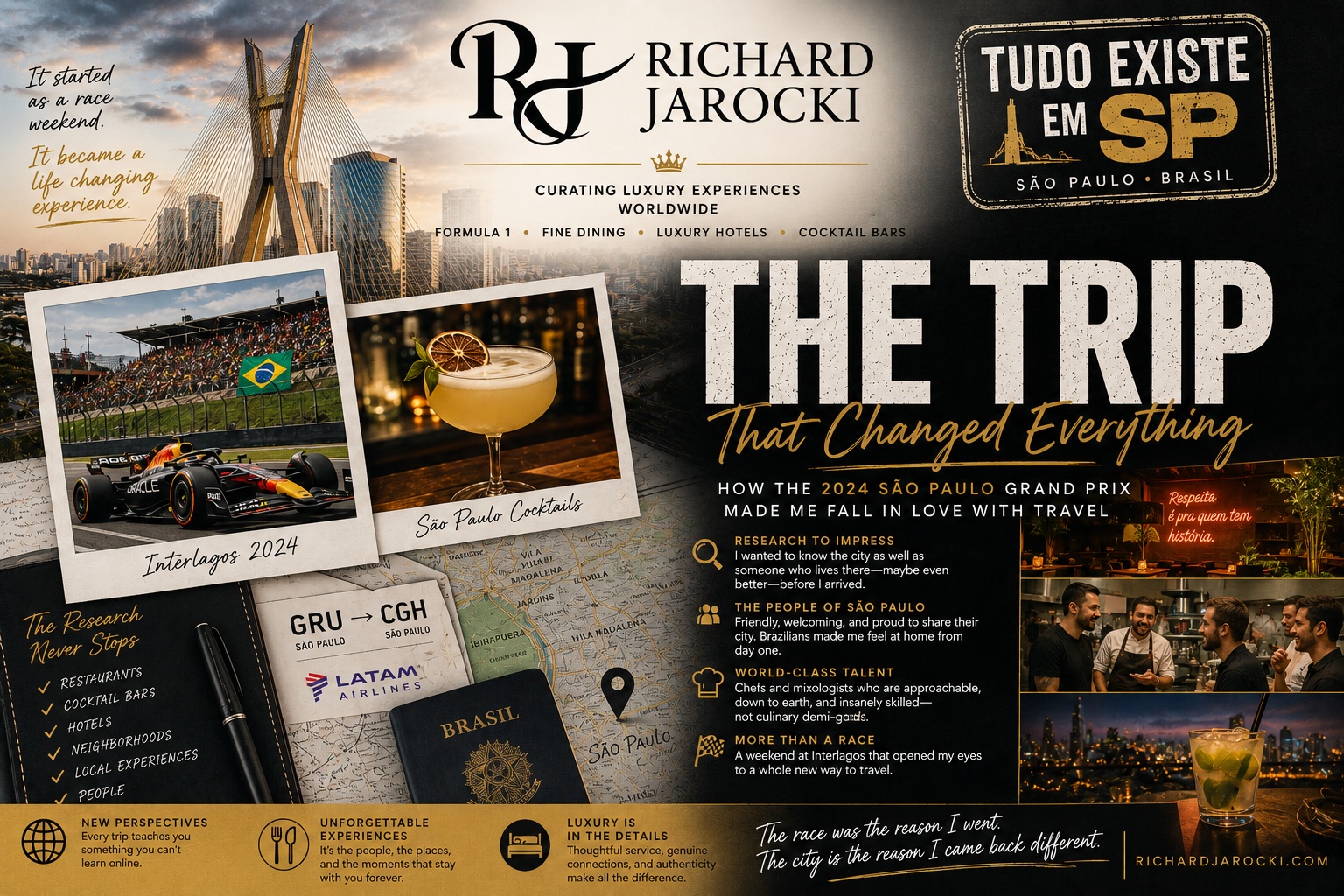
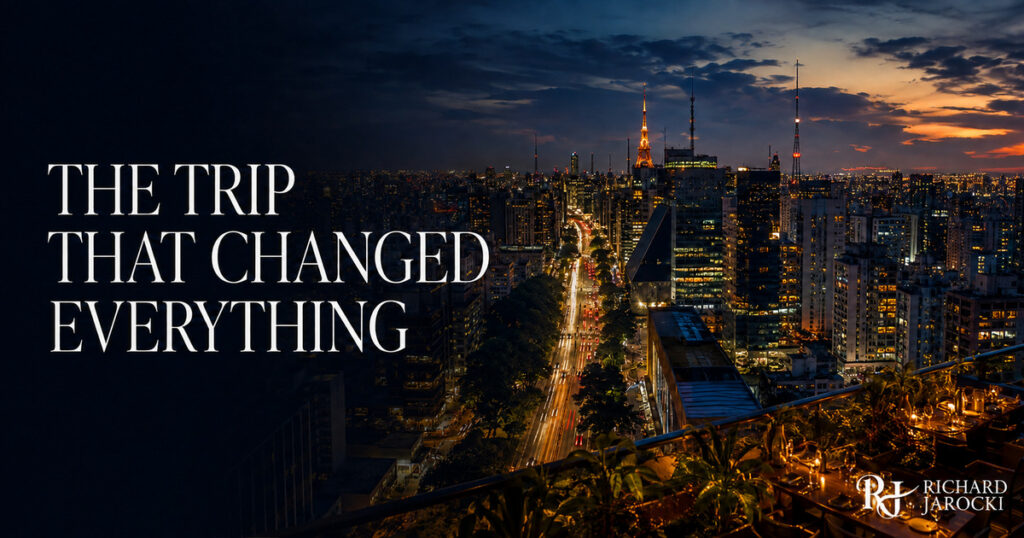
    São Paulo Travel Story, The skyline at night for Richard Jarocki’s The Trip That Changed Everything
    The trip to São Paulo that changed how I experienced food, culture and travel—and ultimately changed the direction of my life.

  • Travel Research Process: 6 Steps to Unforgettable Trips

    Travel Research Process: 6 Steps to Unforgettable Trips

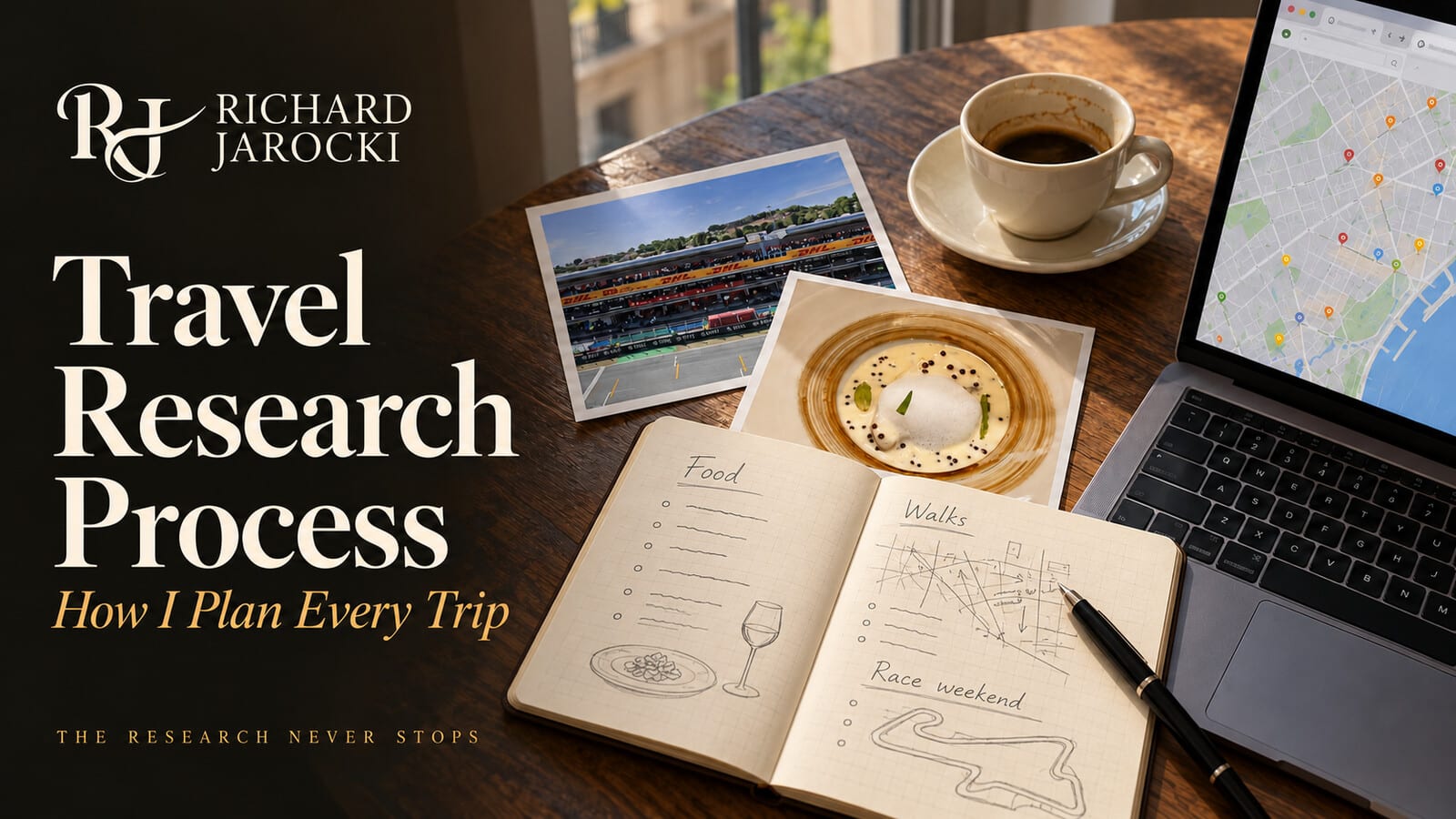
    Travel research process illustrated with a laptop map, planning notebook, coffee and photographs of racing and food.

    Travel Research Process: Most people start planning a vacation by looking for flights.

    I usually start with a restaurant.

    Sometimes it’s a Michelin-starred dining room that’s been on my list for years. Sometimes it’s a cocktail bar tucked away on a quiet side street that only holds a dozen people. Other times it’s a Formula 1 race that gives me the excuse to explore a city I might not have visited otherwise.

    Wherever it begins, the process is almost always the same.

    I become obsessed.

    What starts as a simple weekend getaway slowly transforms into dozens of browser tabs, spreadsheets, reservation alerts, Google Maps pins, YouTube videos, travel forums, restaurant menus, hotel reviews, and enough research to write a small travel guide before I’ve even boarded the plane.

    Most people would probably call it overkill.

    They’re probably right.

    But that’s also why I rarely leave a destination wishing I had done more.

    Travel Is More Than a Destination

    For me, traveling has never been about checking countries off a list.

    I don’t travel simply to say I’ve been somewhere.

    I travel to understand why people love a place.

    That means learning about its neighborhoods, understanding its food culture, discovering its cocktail scene, finding the hotels that actually live up to their reputation, and talking to the people who spend their lives creating memorable experiences.

    The destination is important.

    But the experience is everything.

    Travel Research Process Step One: Find a Reason to Go

    Every trip needs a centerpiece.

    Sometimes it’s Formula 1.

    Sometimes it’s a restaurant reservation that seemed impossible to get.

    Sometimes it’s a city I’ve wanted to explore for years.

    That one experience becomes the anchor around which everything else is built.

    When I planned my trip to Barcelona, the original goal was the Spanish Grand Prix.

    Then came reservations at Disfrutar, Mont Bar, and Kresala.

    Suddenly the race weekend wasn’t the only reason I was excited.

    The restaurants became just as important as the racing.

    When I travel to São Paulo, it starts with Formula 1—but quickly expands into researching Michelin-starred restaurants, hidden cocktail bars, local neighborhoods, and experiences that most visitors never discover.

    One great reservation can change the entire direction of a trip.

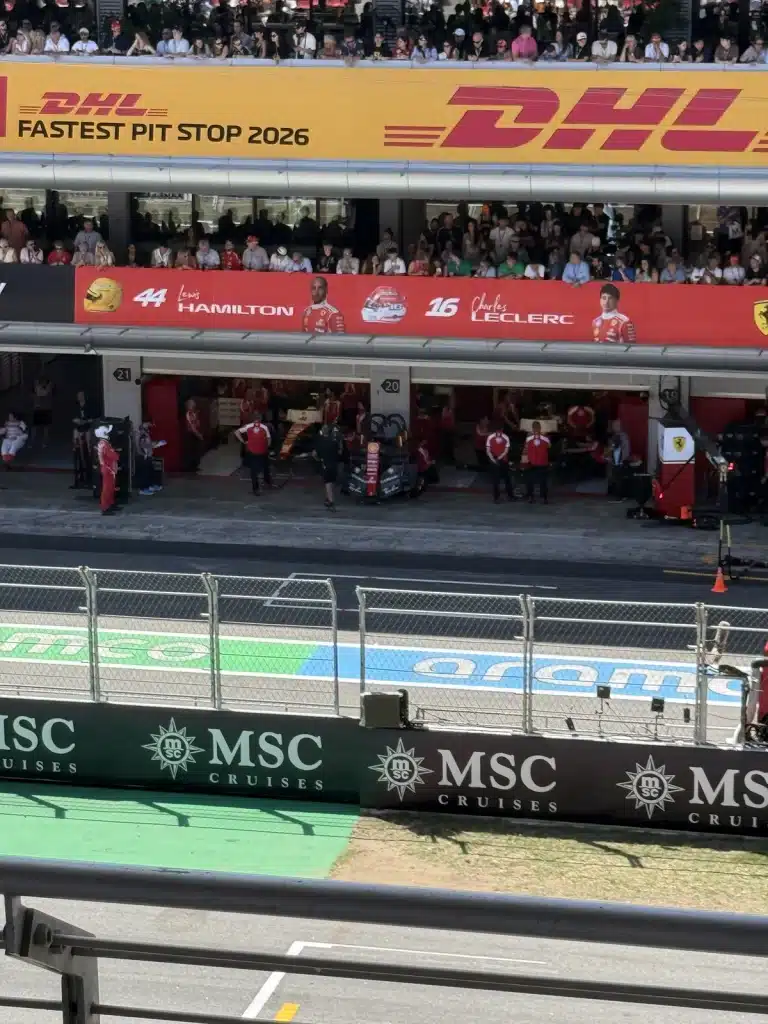
    Travel Research Ferrari garages and the pit lane at the Barcelona circuit, viewed from spectator seating behind fencing and a rail.
    The Ferrari garages during the Barcelona Grand Prix weekend, June 13, 2026.

    Travel Research Process Step Two: Ignore the “Top 10 Things to Do”

    The internet loves lists.

    Top 10 attractions.

    Top 20 restaurants.

    Five hidden gems.

    Those lists are useful—but only as a starting point.

    Most of the truly memorable experiences I’ve had weren’t at the top of those articles.

    Instead, I dig deeper.

    I read chef interviews.

    I study restaurant menus months before arriving.

    I look at cocktail programs instead of just drink photos.

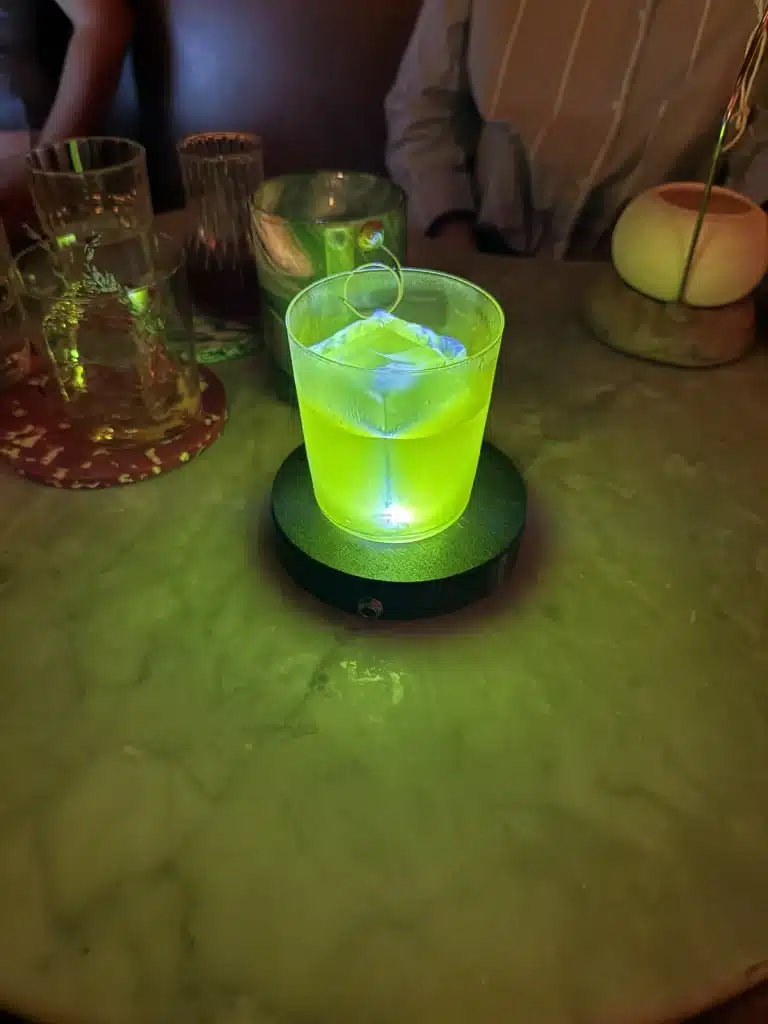
    Travel Research A bright green cocktail illuminated from below on a table at Paradiso in Barcelona.
    A cocktail at Paradiso, Barcelona, June 2026.

    I search Reddit to see what locals actually recommend.

    I browse Google Maps until I find places with hundreds of reviews but almost no social media attention.

    I’ll spend hours comparing neighborhoods because staying in the right location can completely change how a city feels.

    Research isn’t about finding the most famous place.

    It’s about finding the place that’s right for you.

    Travel Research Process Step Three: Build the Trip Around Food

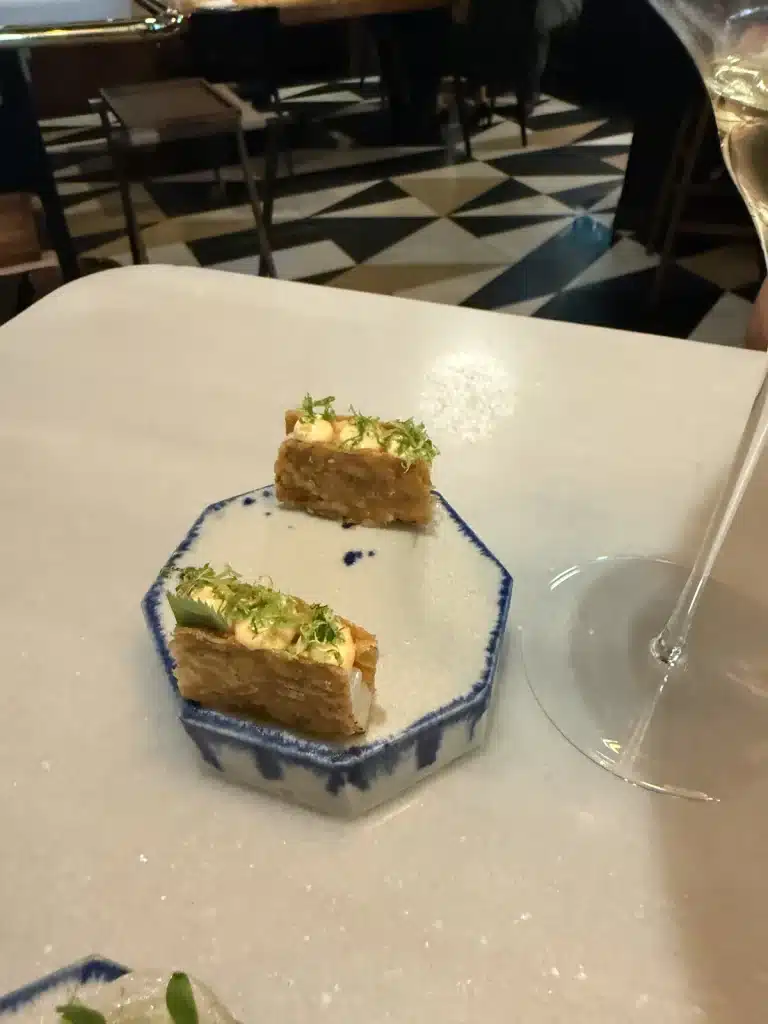
    Travel Research Two rectangular small bites on a blue-edged ceramic plate at Mont Bar in Barcelona.
    Small bites at Mont Bar, Barcelona, June 2026.

    Some people eat wherever they happen to be.

    I’m the opposite.

    Meals often determine my daily schedule.

    If dinner is on the opposite side of the city, I’ll spend the afternoon exploring that neighborhood.

    If lunch finishes near a famous cocktail bar, I’ll stop in for one drink before continuing the day.

    If there’s an incredible bakery nearby, breakfast is already planned.

    The best itineraries flow naturally.

    You’re not bouncing back and forth across the city.

    You’re letting restaurants, museums, parks, and bars complement one another.

    Planning this way creates better days—and a lot less time sitting in traffic.

    Travel Research Process Step Four: Walk Whenever Possible

    One of my favorite discoveries has nothing to do with reservations.

    It’s walking.

    Some of the best memories I’ve made happened between destinations.

    Finding a neighborhood café.

    Watching locals gather in a small square.

    Discovering a cocktail bar that wasn’t on my list.

    Seeing architecture I’d never have noticed from the back seat of a taxi.

    Walking slows everything down.

    It forces you to notice details.

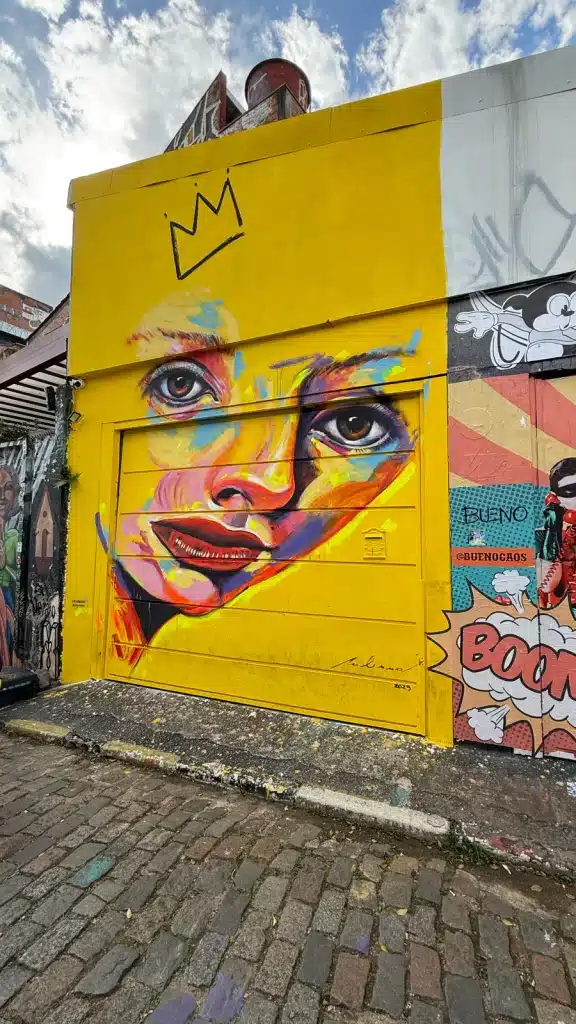
    Travel Research A colorful face painted on a bright yellow wall beside the cobbled lane at Beco do Batman in São Paulo.
    Street art at Beco do Batman, São Paulo, November 2025

    Those unexpected moments often become the stories you remember years later.

    Travel Research Process Step Five: Talk to People

    This is probably the most underrated part of travel.

    Talk to bartenders.

    Talk to servers.

    Talk to hotel concierges.

    Talk to chefs if they’re available.

    Ask what they eat on their day off.

    Ask where they send visiting friends.

    Ask what everyone else misses.

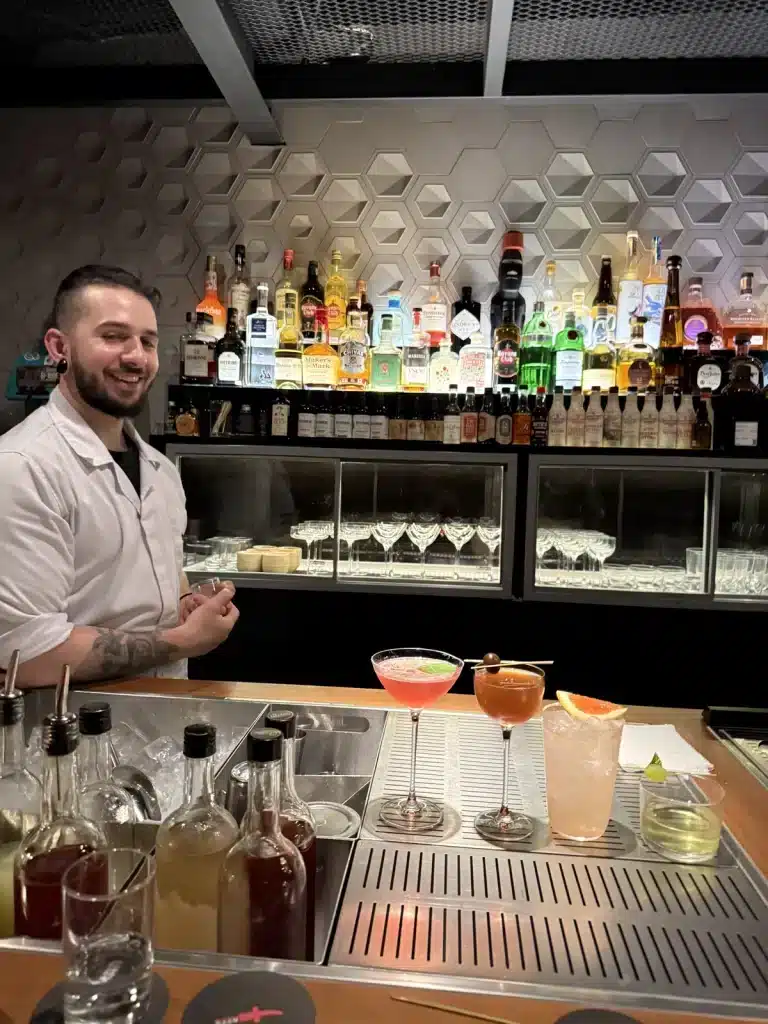
    Travel Research A bartender behind the counter at Tan Tan in São Paulo, with bottles, glasses and prepared drinks around him.
    Behind the bar at Tan Tan, São Paulo, November 2025.

    Those conversations have led me to restaurants that never appeared in any guidebook.

    They’ve introduced me to local specialties I wouldn’t have ordered otherwise.

    They’ve changed entire afternoons because someone pointed me toward a neighborhood I hadn’t planned to visit.

    The people who live there usually know the city better than any influencer ever will.

    Travel Research Process Step Six: Leave Room for the Unexpected

    Research is important.

    Flexibility is just as important.

    Not every reservation works out.

    Weather changes.

    Flights get delayed.

    A local recommendation might completely reshape your plans.

    That’s okay.

    Some of my favorite travel memories happened because something unexpected forced me to change direction.

    The goal isn’t to execute the perfect itinerary.

    The goal is to create opportunities for unforgettable experiences.

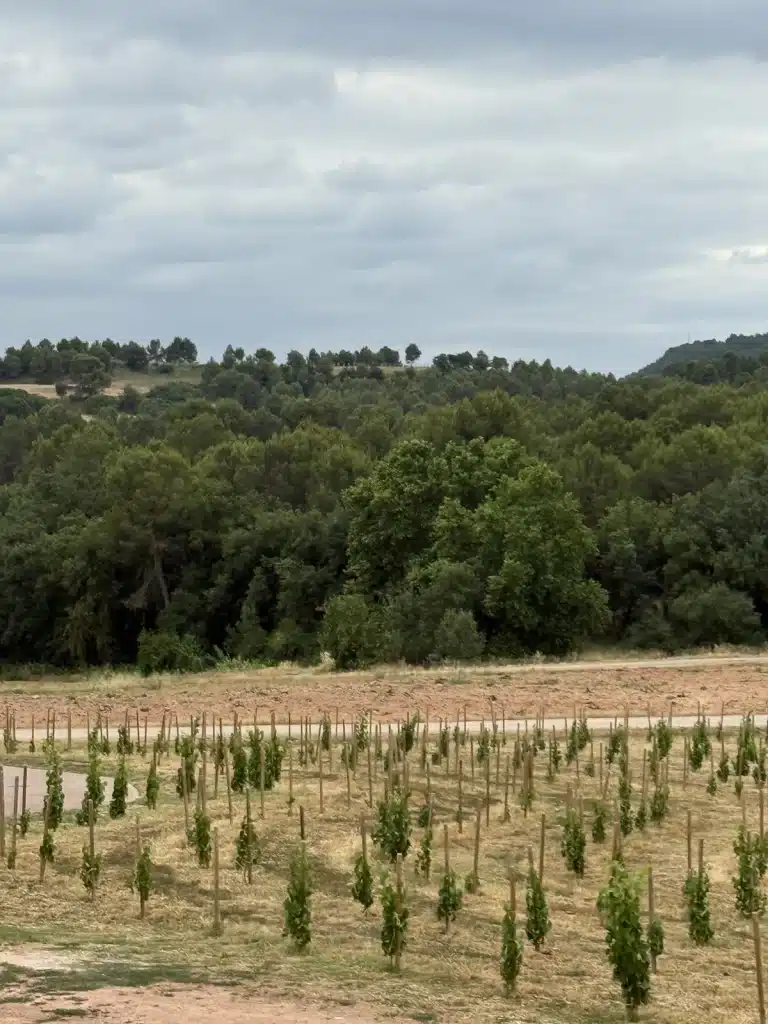
    Travel Research Rows of young grapevines with green woodland and a cloudy sky beyond them in Spain.
    A vineyard during a winery visit in Spain, June 2026.

    Travel Research Process: Luxury Doesn’t Always Mean Expensive

    People often assume luxury travel means spending as much money as possible.

    I don’t see it that way.

    Luxury is value.

    A perfectly made cocktail served by someone passionate about their craft can feel more luxurious than a five-star hotel with mediocre service.

    A neighborhood restaurant where the chef personally introduces each course can leave a stronger impression than the world’s most expensive tasting menu.

    Price matters.

    Quality matters more.

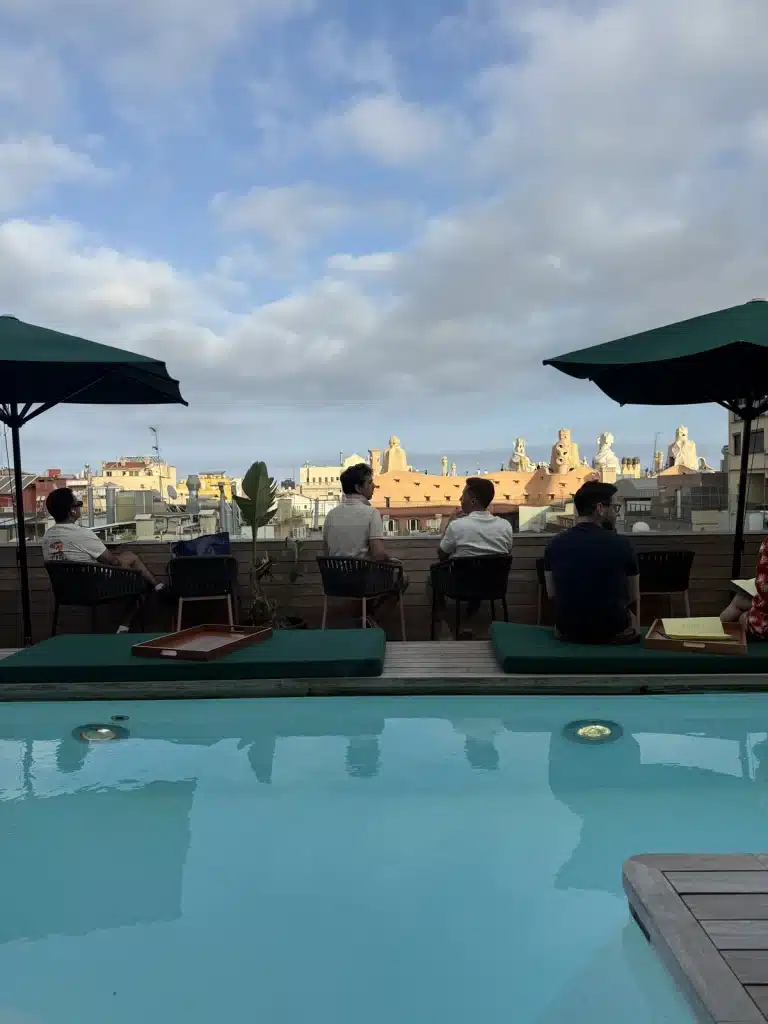
    Travel Research  The rooftop pool and terrace at Sir Victor in Barcelona, with seated guests and city buildings beyond.
    The rooftop at Sir Victor, Barcelona, June 2026.

    That’s why I don’t recommend places because they’re expensive.

    I recommend them because they’re exceptional.

    Why I Share These Experiences

    People often ask me where they should eat in a city.

    Which hotel I’d book.

    Which cocktail bar is actually worth visiting.

    Or whether a famous restaurant deserves all the attention it gets.

    Those questions made me realize I’d already done thousands of hours of research over the years.

    Instead of keeping those discoveries to myself, I decided to document them here.

    Everything you’ll read comes from firsthand experience.

    If I recommend a restaurant, I’ve eaten there.

    If I recommend a hotel, I’ve stayed there.

    If I tell you to order a particular cocktail, it’s because I’ve probably spent far too much time talking to the bartender about how they made it.

    Travel Research Process: The Research Never Stops

    Every trip teaches me something new.

    A better restaurant.

    A hidden cocktail bar.

    A neighborhood I’d never considered.

    A hotel that exceeded expectations—or one that didn’t.

    The list keeps growing.

    So does the curiosity.

    That’s what this website is about.

    Not collecting passport stamps.

    Collecting experiences worth remembering.

    If these stories help you discover one unforgettable meal, one incredible cocktail, one remarkable hotel, or one destination you might otherwise have overlooked, then every hour of research was worth it.

    Usually.

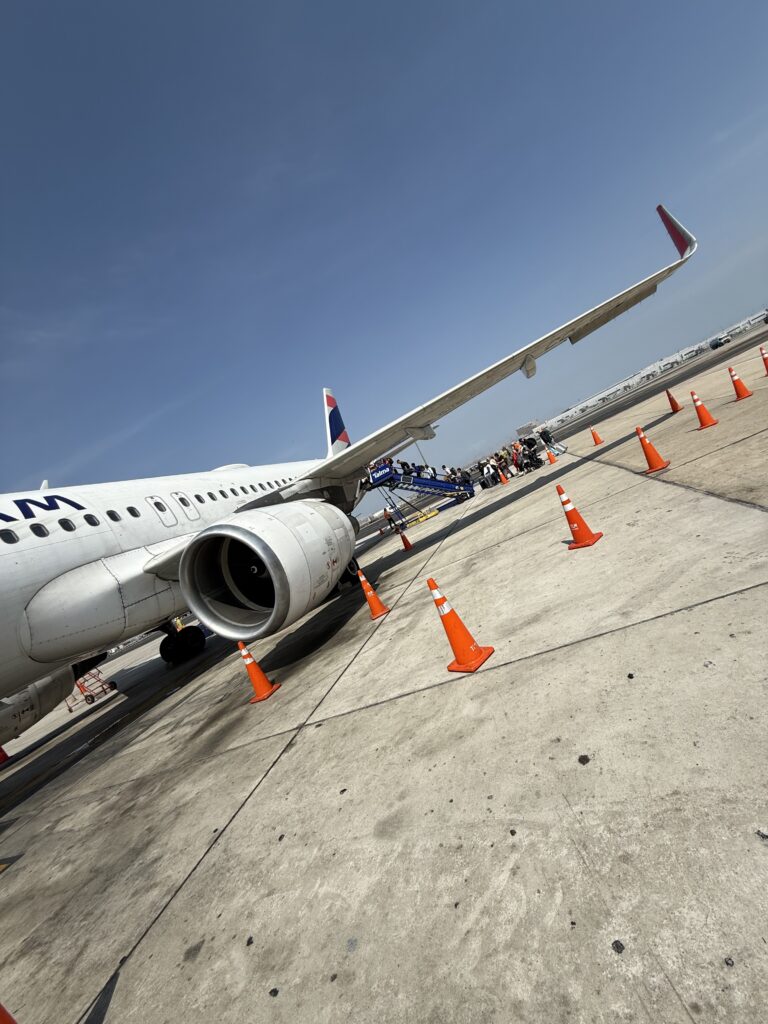
    Travel Research Process LATAM Airlines aircraft on the airport tarmac during passenger boarding, marking the beginning of a carefully planned travel experience.
    The research is finished. The itinerary is set. Now it’s time to see if the destination lives up to the planning.

    Follow my Instagram

  • How I Plan Food-Focused Trips That Feel Local | RJVIPGP

    How I Plan Food-Focused Trips That Feel Local | RJVIPGP

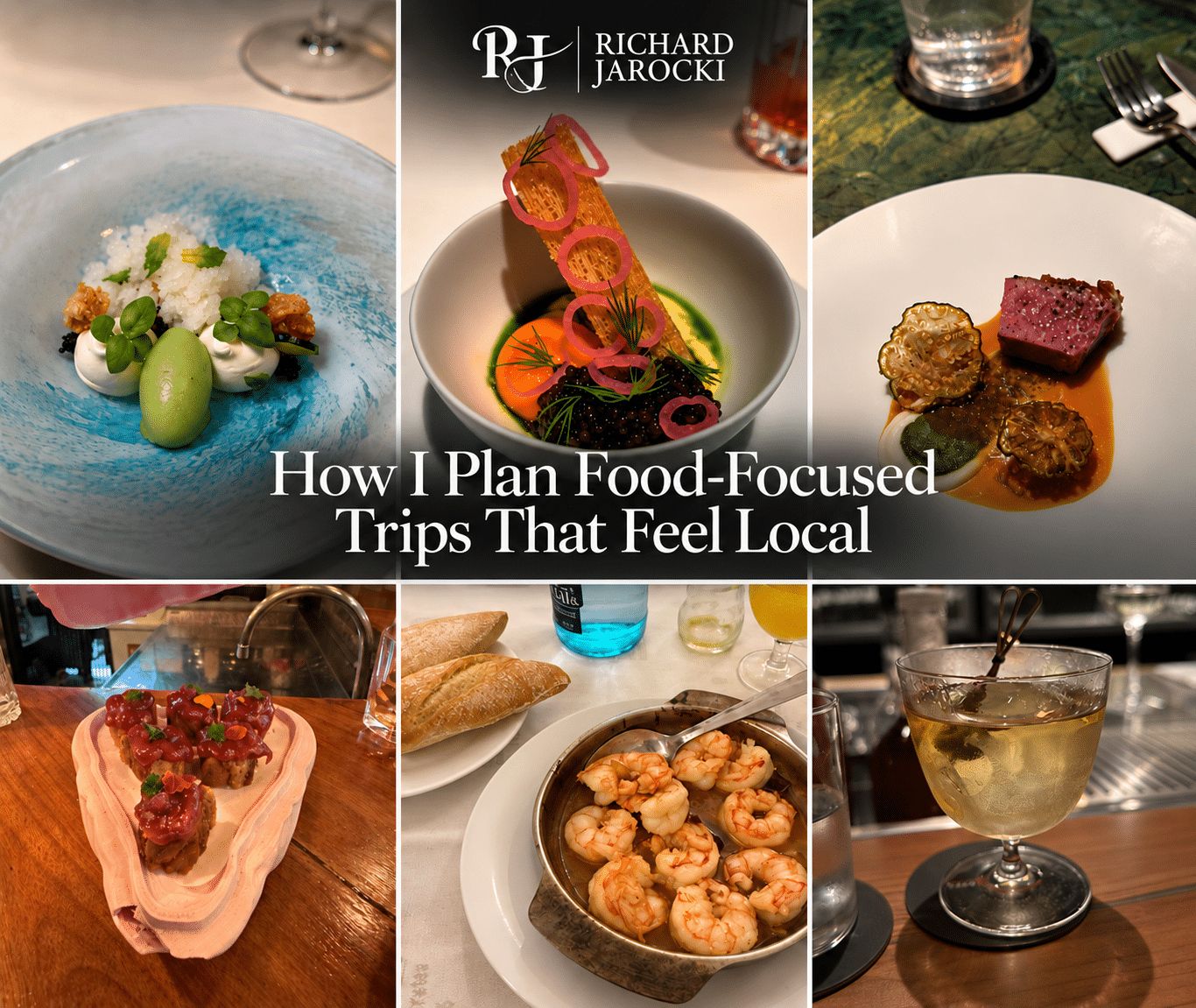
    Food-focused trips collage depicting dishes from Disfrutar, The Modern, Tuju, A Casa do Porco and Can Culleretes, plus a Tan Tan cocktail.

    The Research Never Stops.

    By Richard Jarocki · Travel Stories · July 20, 2026 · Updated September 25, 2026

    Food-focused trips usually start with a restaurant for me. Most people start planning a vacation by searching for flights; I start by figuring out where I want to eat.

    Or maybe it’s a cocktail bar I’ve been reading about for months. Sometimes it’s a Formula 1 race. Other times it’s a hotel I want to experience for myself.

    Whatever it is, that’s where the research begins. One reason to go becomes dozens of browser tabs, Google Maps pins, menus, videos, conversations, and questions. By the time I leave, I’ve usually learned enough about a place to write a guide before I’ve packed my suitcase.

    Normal? Probably not. Worth it? Usually.

    I Start With a Reason to Go

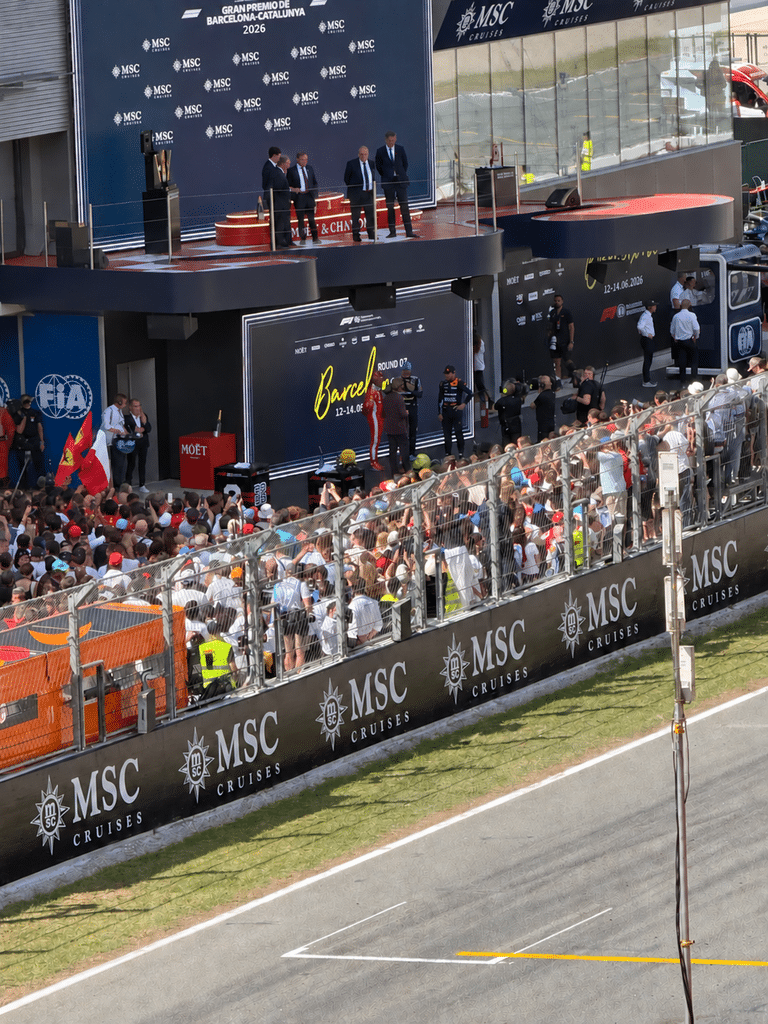
    Food-Focused Trips Fans gathered beside the track beneath the podium at the 2026 Barcelona Grand Prix.
    Formula 1 brought me to Barcelona. The food, hotels, and city made it a full trip.

    Even my food-focused trips sometimes begin with something other than food. Barcelona started with a race; the restaurants helped shape the rest.

    Barcelona started with Formula 1. New York started with restaurants I’d been trying to book for years. São Paulo began with Interlagos, then grew into a much bigger interest in its dining scene, cocktail bars, neighborhoods, and hotels.

    I don’t build a trip around a checklist of famous sights. I start with what genuinely interests me, then learn what else is nearby and worth my time.

    I Research the Details—and Ask People

    When planning food-focused trips, I read menus months before I arrive.. I compare hotels to understand which ones deliver on their promises and which ones simply charge luxury prices. I read reviews for patterns rather than star ratings: What do people consistently love? What disappoints experienced travelers? Is a restaurant exceptional, or just everywhere on Instagram?

    I also talk to people. A review can tell me a lot, but a conversation can point me toward a place I would never have found on a list.

    São Paulo is a good example of how far I’ll take that research. I read about the hotels and spoke with people while figuring out where to stay. Across three trips, I stayed at different hotels for two or three nights at a time, then moved on to the next. I wanted to experience them myself before deciding which ones were actually worth recommending.

    For my own trips, I also use the Marriott Bonvoy app. I tend to prefer Marriott properties because I like the service, though I still want to know how a particular hotel feels in person. In Barcelona, I chose Sir Victor for its location and its connection to Marriott Bonvoy. On my next São Paulo trip, I’m staying at the W. I’ve stayed there before, but I spent so much of that visit out in the city or at the race that I didn’t get much time to explore the hotel itself. This return will give me a better chance to get to know it.

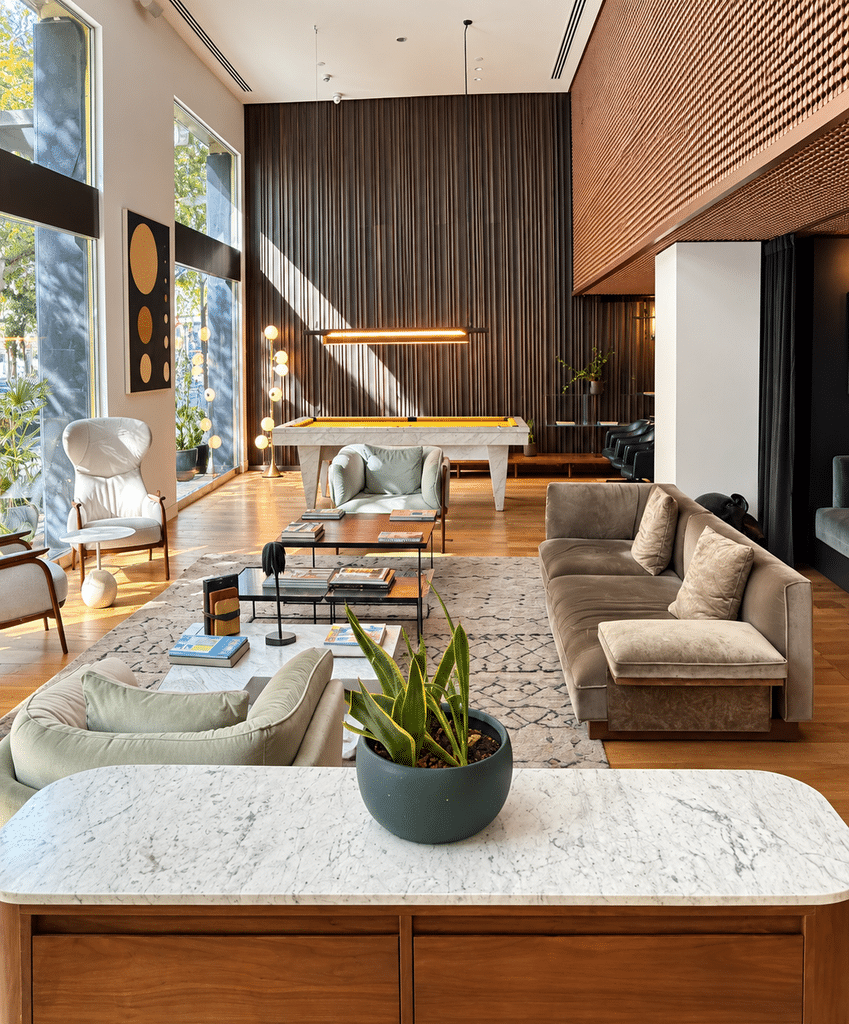
    Food-Focused Trips Sofas, a billiards table and wood-paneled walls in Sir Victor’s lobby lounge in Barcelona.
    Sir Victor’s lobby lounge by day—the beginning of the MR PORTER experience in the evening.

    I Pick a Few Restaurants I Don’t Want to Miss

    For restaurants, I start with the Michelin Guide and The World’s 50 Best Restaurants. Depending on the destination, I can broaden the search with:

    Latin America’s 50 Best Restaurants when I’m planning São Paulo

    La Liste’s Top 1000 Restaurants

    Opinionated About Dining’s Europe Top Restaurants for a trip like Barcelona

    Those lists give me names to investigate. Then I look at Instagram posts, reviews, and photos to get a better sense of the food and the experience. I narrow it down to two or three places I really want to try.

    That approach is behind my Barcelona travel guide and São Paulo restaurants guide, both drawn from food-focused trips I actually took.

    Food-Focused Trips Mont Bar course in Barcelona, an anchor for how I plan food-focused trips.
    A course at Mont Bar, one of the Barcelona reservations I made room for.

    Those meals give my food-focused trips a starting point. I build the rest around them, especially more local places I find through research or conversations once I’m there. I want to experience the city, not just eat through a list of awards.

    I Build the Days Around the Experiences

    My food-focused trips start to take shape once I know which reservations are fixed and how much time I have between them.

    A bakery in the morning. A neighborhood or museum to explore. An afternoon cocktail. Dinner somewhere I’ve spent months trying to reserve. Maybe late-night drinks at a place someone recommended along the way.

    I think about how the experiences fit together. I’d rather spend three days getting to know one neighborhood than race across a city trying to see everything.

    I leave room for the unexpected, too. Food-focused trips need enough flexibility to follow a good recommendation. Some of my favorite memories came from a bartender pointing me to another bar, a chef recommending a restaurant, a concierge sending me somewhere I hadn’t considered, or a walk between two reservations that became the best part of the day.

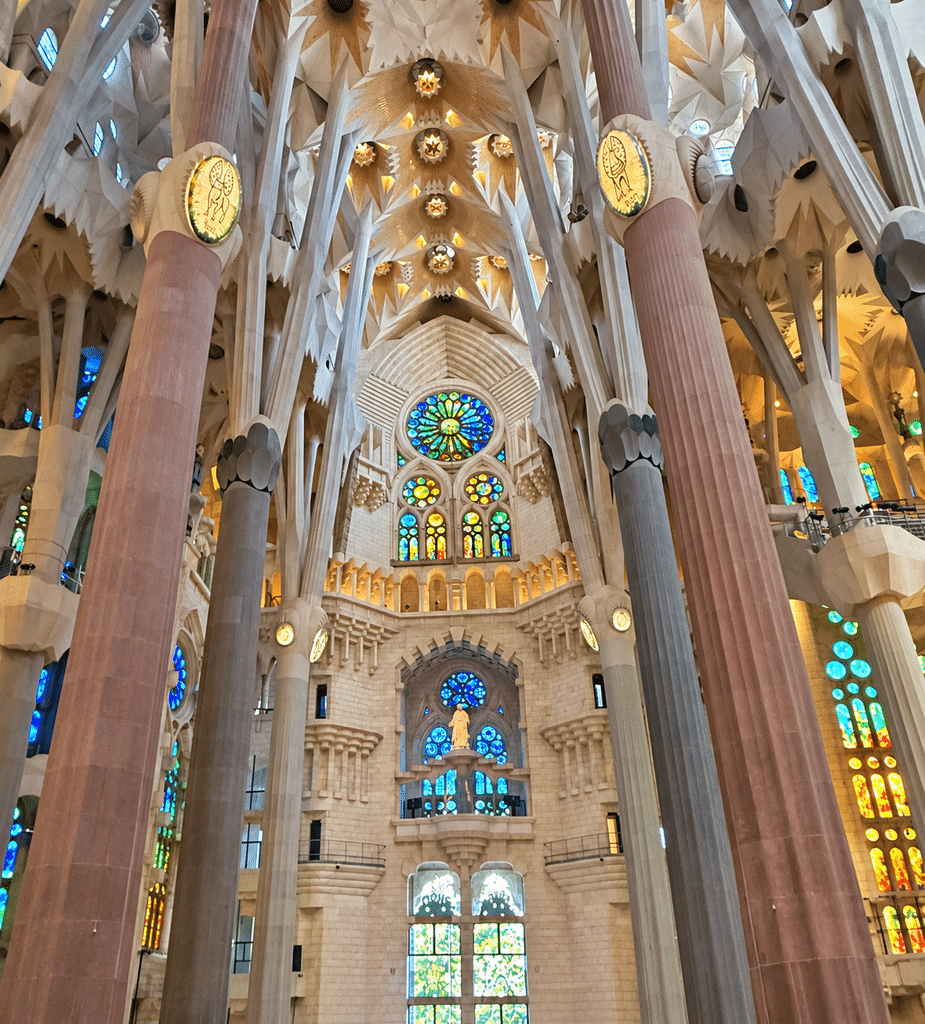
    Food-Focused Trips Tall columns and stained-glass windows inside Sagrada Família in Barcelona.
    Between meals, I make time to experience the city itself.

    I can help you plan a trip this way, too. If you’re deciding where to stay, which restaurants are worth reserving, or how to fit everything together without rushing, tell me what you’re planning.

    I Judge the Experience for Myself

    Luxury isn’t about spending the most. It’s attention to detail: service that feels effortless, a perfectly balanced cocktail, a hotel that lives up to the promise.

    Sometimes that means a Michelin-starred tasting menu. Sometimes it means a twelve-seat neighborhood wine bar. Price doesn’t impress me. Quality does.

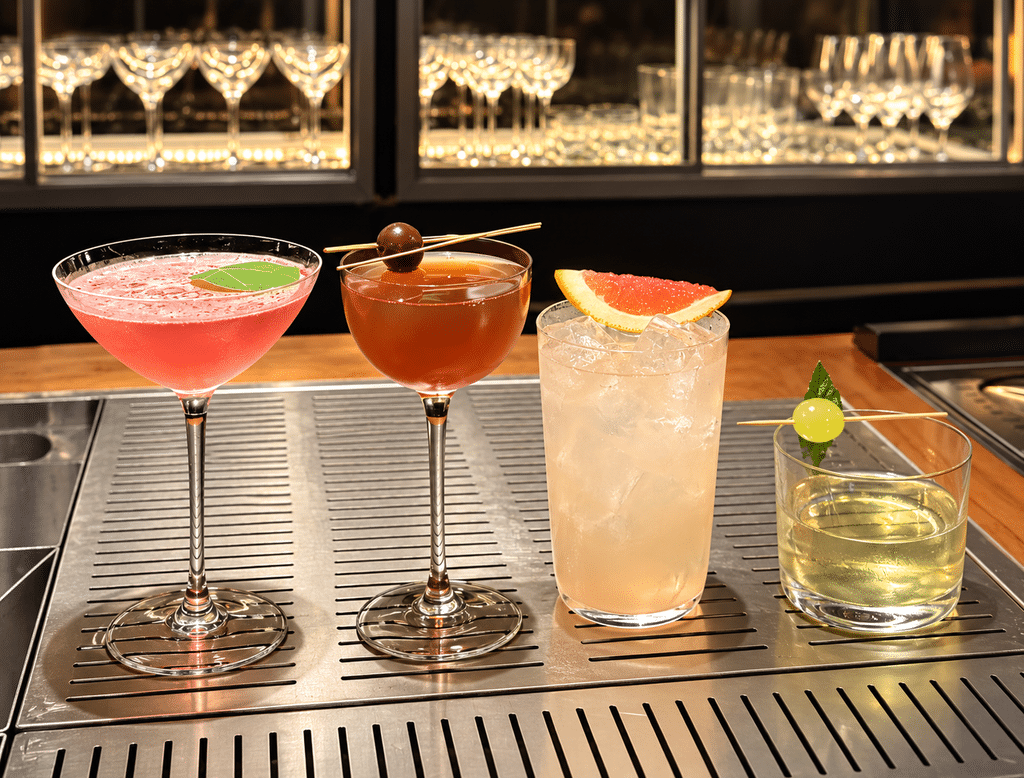
    Food-Focused Trips Four cocktails on the bar at Tan Tan in São Paulo.
    Cocktails at Tan Tan in São Paulo.

    That’s why I go beyond collecting recommendations. If I tell you a restaurant is worth visiting, I’ve eaten there. If I recommend a hotel, I’ve slept there. My own experience is what turns all that research into an opinion I can stand behind. No sponsored rankings. No recycled lists.

    I bring that same firsthand standard to travel and hospitality collaborations. I experience the place myself, and my opinion stays my own.

    Food-Focused Trips  Table setting, illustrated cards and dishes during a meal at Evvai in São Paulo.
    At Evvai, details around the meal stayed with me as much as the courses.

    The Research Never Stops

    Friends have always asked me where to eat, which hotel I’d book, and whether a place deserves the hype. This website is where I share what I learn from planning, going, asking questions, and sometimes going back again.

    Every trip adds something: a better restaurant, a hotel I’d return to, a hidden cocktail bar, a neighborhood I didn’t expect to love. The list keeps growing. So does the curiosity.

    If all those hours of research help you find one unforgettable meal, one perfect cocktail, or one place you might otherwise have missed, they were time well spent.

    Usually.

    Completely Unnecessary. Absolutely Worth It

    Need help planning food-focused trips, a city break, or a Grand Prix weekend? Send me your destination, dates, budget, and what matters most to you. We can talk through the hotels, meals, and experiences that make sense for your trip.

    More From My Travels

    Follow me on Instagram @Richard.Jarocki for more food, cocktails, hotels, and Formula 1 from my travels.

    Completely Unnecessary. Absolutely Worth It.

    Let’s Plan Your Next Trip

    Have a destination in mind—or a restaurant worth building a trip around? Tell me where you want to go, your dates, approximate budget, and what you enjoy. Whether it’s food, cocktails, hotels, or a Formula 1 weekend, I can help you work out how it all fits together.

    Fill out the form below, and I’ll get back to you to discuss your trip.