Tag: Grand Prix travel

  • How I Plan a Formula 1 Weekend Around the Race—and Dinner

    How I Plan a Formula 1 Weekend Around the Race—and Dinner

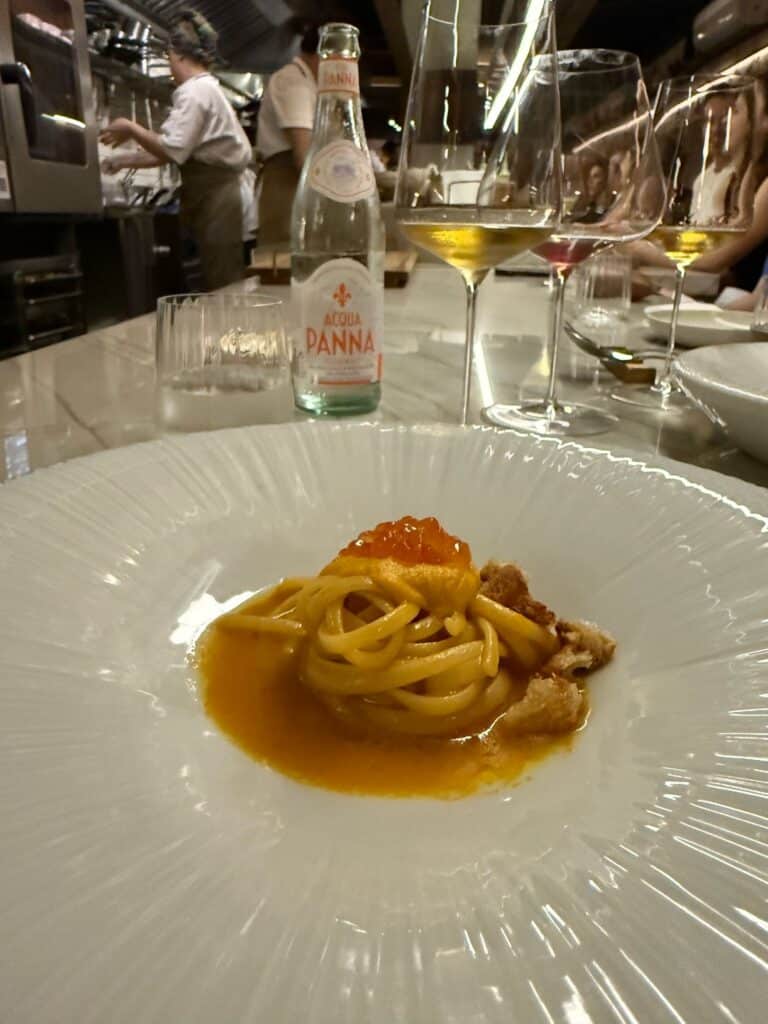
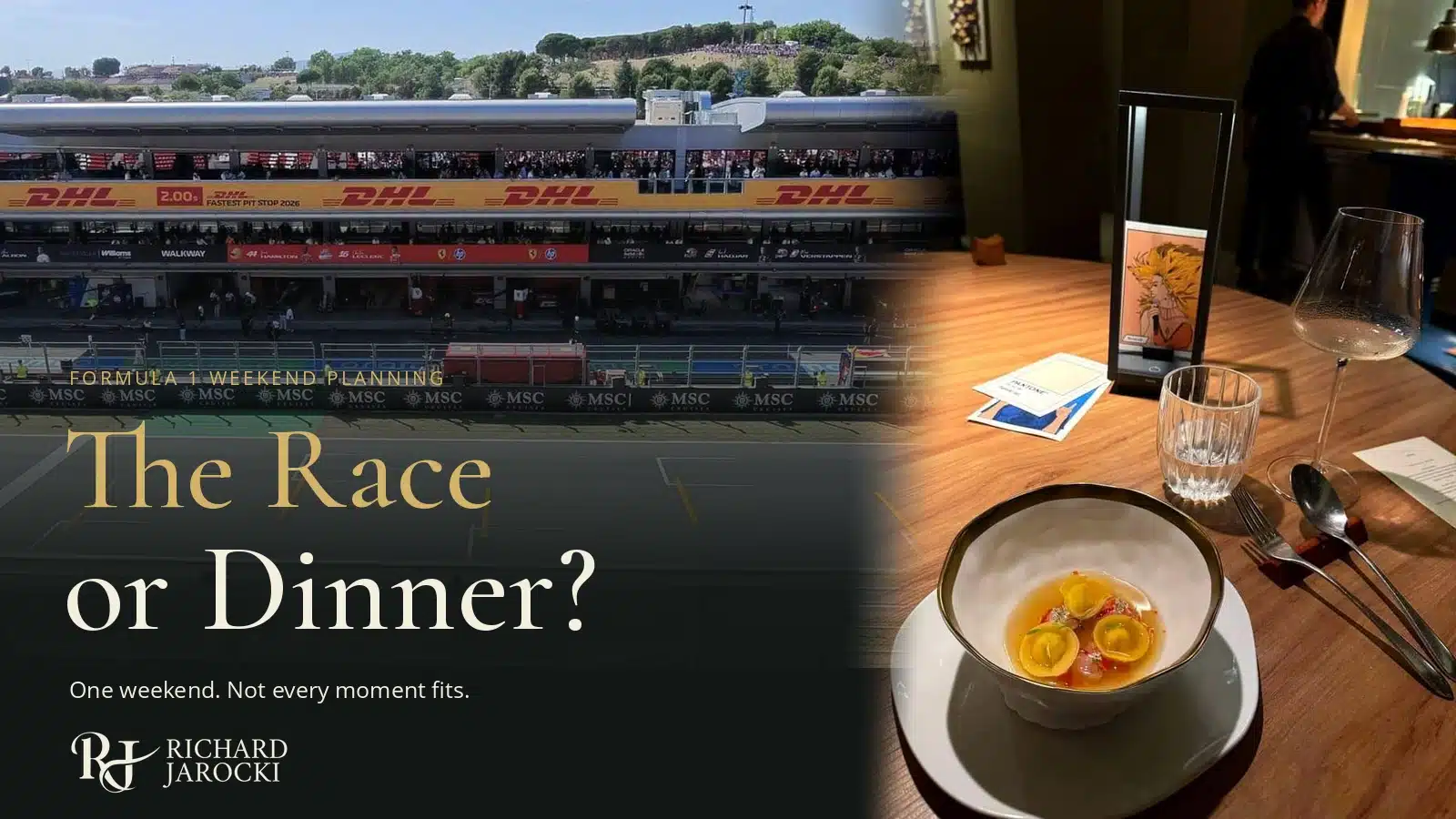
    Richard Jarocki’s Barcelona Formula 1 track photo beside a plated course at Evvai, with the headline “The Race or Dinner?”

    How I plan a Formula 1 weekend usually comes down to two things I refuse to treat as afterthoughts: the race and dinner. Getting both right takes a little more thought than putting a reservation underneath the race on a calendar.

    This year, I am planning to reserve Tan Tan for race night. My understanding is that 7:30 is the latest reservation time they offer, so that is the time I am working toward—not a confirmed booking yet. But what happens if the circuit gives me a reason to stay longer?

    Do you leave for the restaurant you have been looking forward to, or stay and accept that dinner might not happen?

    That is the part of Formula 1 travel I find interesting. You can research the transport, choose the hotel carefully, and allow time to get ready. You still have to decide what matters when two experiences compete for the same evening. Sometimes a simple race trip gets out of control for a very good reason.
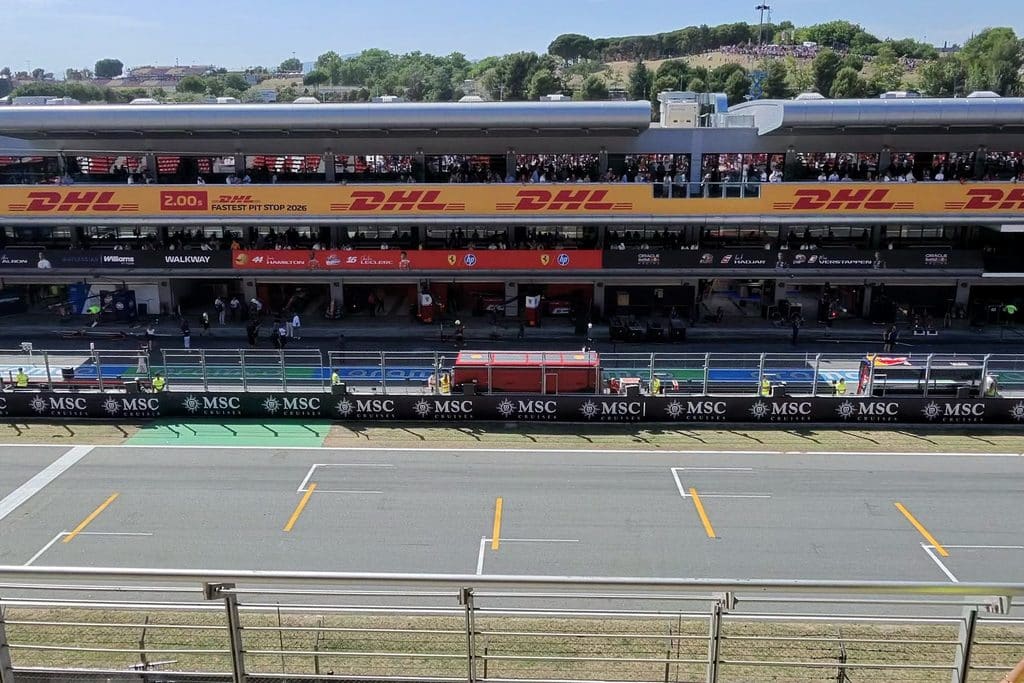
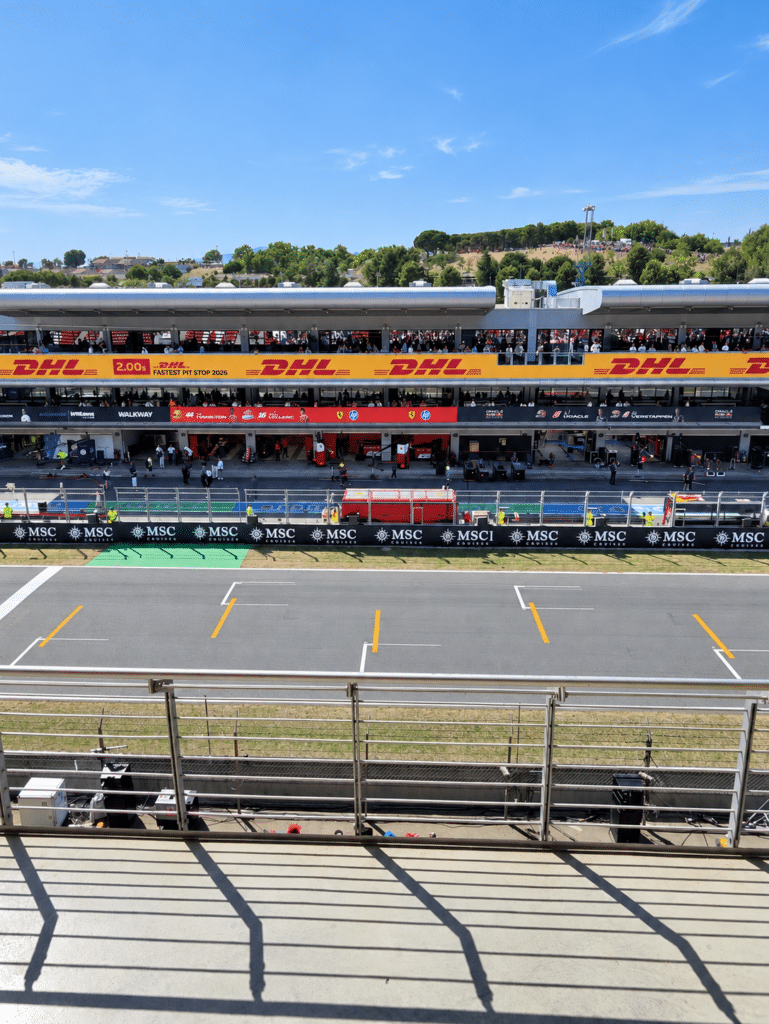
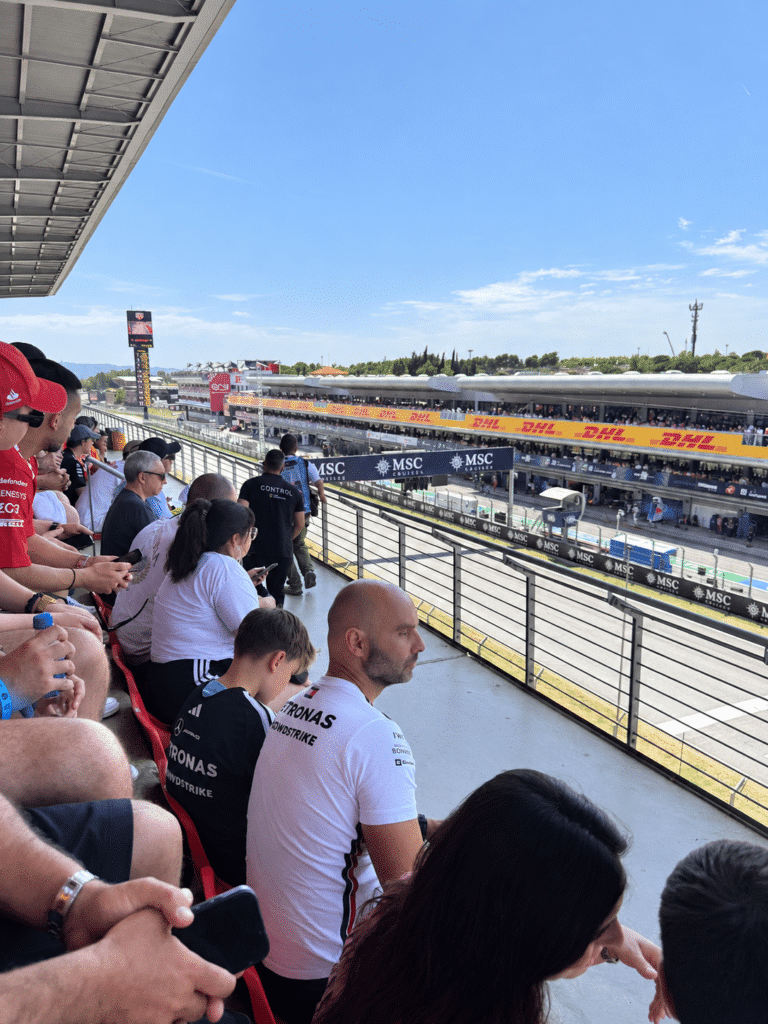
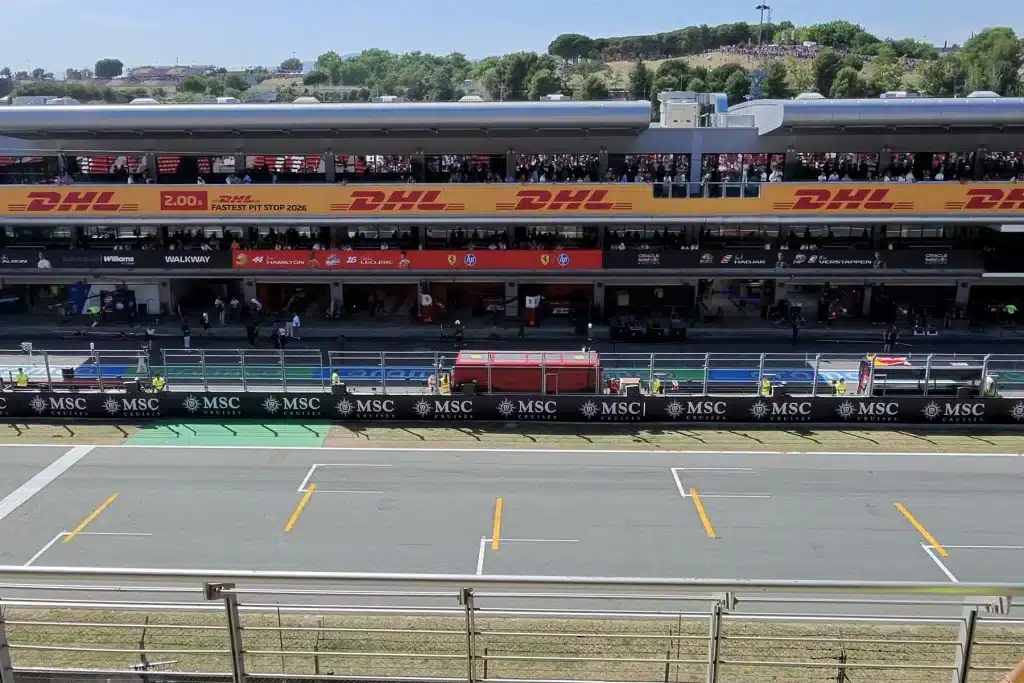
    Barcelona circuit main straight and pit buildings viewed from the grandstand
    The race anchors the weekend. Everything else has to fit around the time it really takes to enjoy it.

    The Plan Is Dinner at 7:30. The Moment May Never Happen Again.

    Imagine this: Kimi Antonelli wins the world championship in Brazil. This is a hypothetical, not a prediction or a claim about the championship standings. You are there, the atmosphere changes, and you have the chance to stay for the celebrations. If officials permit spectators onto the track, you might be able to be part of that too.

    Meanwhile, the Tan Tan reservation I am planning would be for 7:30. A restaurant booking and a championship celebration do not necessarily fit into the same evening, however much I want them to.

    Now the decision is much bigger than whether the car gets back quickly enough. You are choosing between a meal you deliberately built into the trip and a moment you could not have booked at any price. Leaving might mean missing something extraordinary. Staying might mean giving up a restaurant you cannot simply visit tomorrow.

    I do not think there is a neat answer that works for every race, every restaurant, or every person. That is why I want to ask the question before the weekend, rather than pretend the itinerary can guarantee both.

    What am I actually giving up?

    A dinner I can reasonably rebook is different from the one available table at a restaurant I have wanted to visit for years. Equally, lingering after an ordinary afternoon is different from being there when a driver wins a world championship. I would want to be honest about the specific experience on each side, not reduce it to “race versus food.”

    Is dinner prepaid? Is there a cancellation fee, or someone waiting for me? A choice that feels right can still carry a real loss.

    Stay in touch, rather than assume the table will wait

    If I am running late, my plan is to stay in touch with Tan Tan, explain what is happening, and hope they can accommodate me. That would be a favor, not something I am entitled to. Before booking, I will check the actual arrival and cancellation terms; sending a message does not extend any grace period. I would still need to respect their booking terms and accept it if the table could no longer be held.

    Spectators were permitted onto the track at Interlagos in 2025. That makes the possibility feel real to me, but it does not guarantee access this year. I would follow the event’s instructions and only enter if officials permit it.

    What I would actually tell the restaurant

    I would keep the message practical: I have a reservation, I am delayed leaving the circuit, and I want to know whether arriving later is still possible. If I have a realistic estimate, I can share it. If traffic is not moving, I would rather say that than promise an arrival time I cannot support.

    Then I need to listen to the answer. They may have another seating, a full bar, or a kitchen that cannot accommodate the change. Keeping them informed is basic consideration; it is not a way to negotiate an unlimited hold on a table.

    If they can still take me, I would confirm what we have agreed and keep them updated if that changes. If they cannot, I can thank them, deal with any applicable booking terms, and make another plan. The restaurant should not have to guess whether I am coming.

    I am not making two dinner reservations just in case

    If Tan Tan cannot accommodate me, I will have to figure it out. That might mean trying somewhere else and waiting for a table. It might mean changing the kind of dinner I had in mind altogether. A walk-in alternative is a possibility, not a guaranteed backup.

    What I do not want to do is make a second reservation while keeping the first one, just so I have options. That ties up two tables when I only intend to use one. I would rather accept some uncertainty than make my evening easier at the expense of a restaurant or another diner.

    The question is which choice I would regret more afterward. Not which one makes the original itinerary look successful. I can leave room for the answer to change when the moment actually arrives.

    How I Plan a Formula 1 Weekend: Decide What Cannot Move

    Before booking, I want to identify where that kind of choice could appear. What would I be genuinely disappointed to miss, and which two experiences might compete?

    On a Grand Prix trip, the race is an obvious answer. But the restaurant that made me excited about the city might be another. I want to see whether those two priorities can coexist before I add the rest. If they cannot, I want to know that I am taking a risk. A famous cocktail bar, a neighborhood walk, and an interesting lunch can all be worthwhile without every one of them becoming a fixed commitment.

    I would start by checking the official weekend schedule for the event I am attending, then looking at restaurant availability across the whole stay. I do not want to choose a dinner night simply because it is the first slot the booking page offers. I want to know what that slot would ask of the rest of the day.

    I have written separately about choosing Formula 1 grandstand seats. Here, I am assuming the circuit experience matters enough to protect. I do not want the dinner plan quietly making that decision for me without acknowledging the tradeoff.

    The Best Meal Deserves More Than the Only Empty Slot

    My first instinct is often to add the restaurant. The more useful second question is whether I will actually enjoy it on that particular night.

    A long tasting menu asks something of you. You want an appetite, some energy, and enough attention to notice what is happening. When a meal matters to me, I would rather give it a clear evening than arrive with half my attention still caught in the journey back from the track.

    That is why I would consider a non-track evening for the hardest-to-get or most anticipated reservation. Depending on the trip, that could mean arriving earlier or staying longer. It only makes sense if the extra time and expense work; adding another hotel night to justify a dinner is exactly the kind of logic that explains this website.

    Barcelona is a good example of why I care. Mont Bar was my favorite meal of that trip, even with some serious competition. I also went to Disfrutar. Those experiences deserve their own attention, rather than becoming accomplishments to tick off between race sessions.

    In São Paulo, Evvai is my favorite restaurant in the world. That does not mean every night should be an Evvai-sized commitment. It means I want to protect the night that is. A more flexible dinner on another evening can help make the important one better.
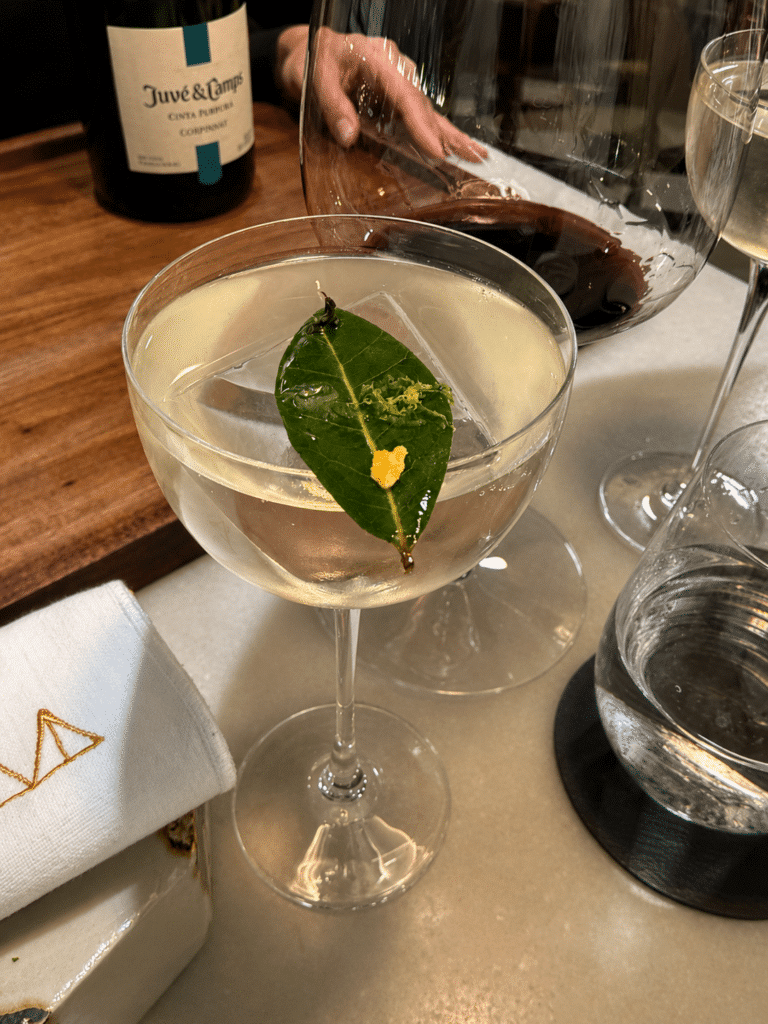
    Gin, bay leaf, lime and smoked black tea drink at Mont Bar in Barcelona
    Mont Bar: a meal I want time to enjoy, rather than another appointment to reach.
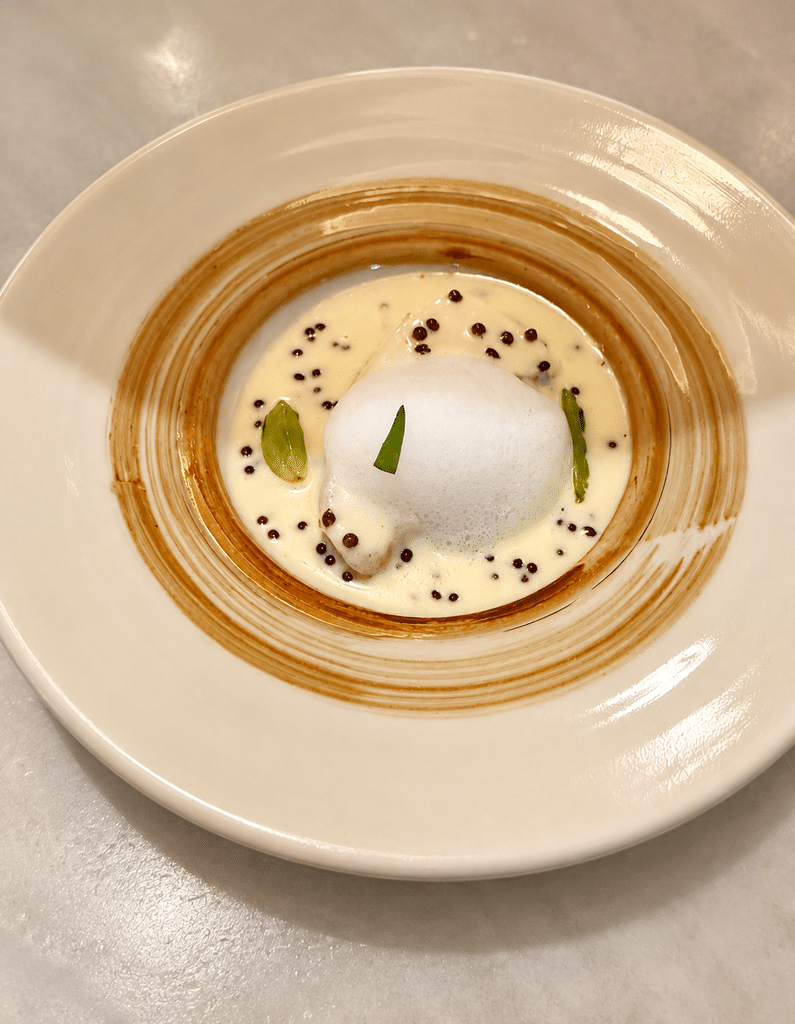
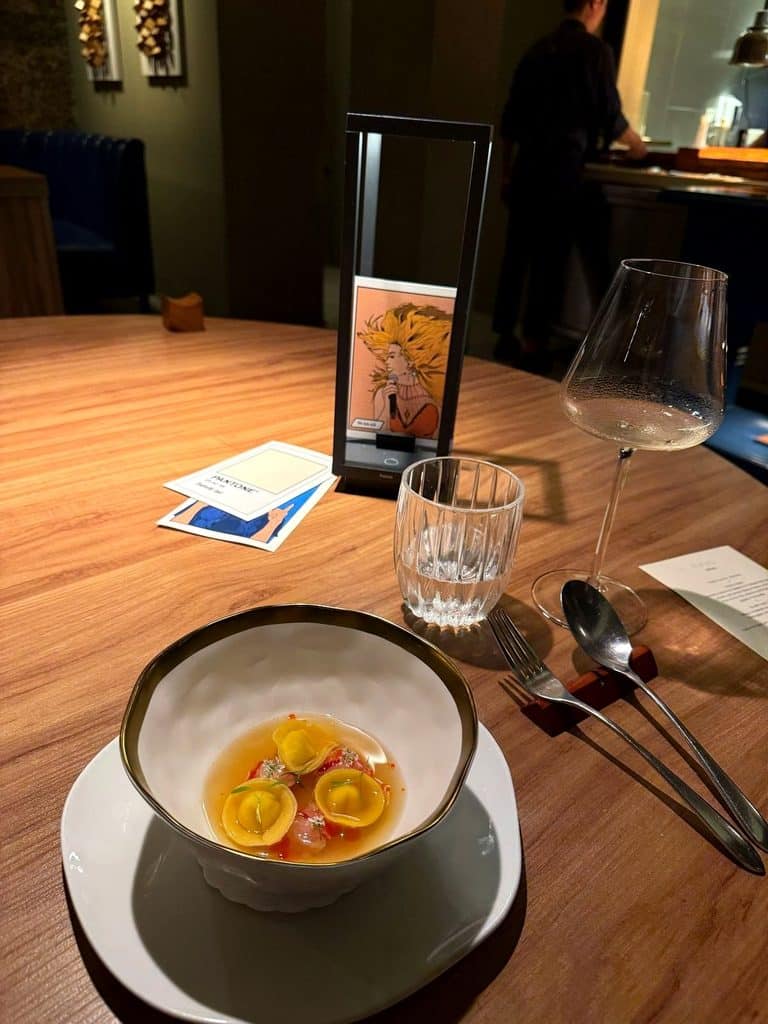
    Evvai tasting-menu course with an illustrated story card in São Paulo
    Evvai gives me a reason to leave a proper evening for dinner in São Paulo.

    I am not saying a good restaurant cannot work after the race. I am saying that “available” and “a good fit for the day” are different questions. If the reservation only works when everything else runs perfectly, I would look for another night. If there is no other night, I need to decide whether the possibility of missing dinner is worth accepting.

    Work Backward From Dinner, Without Planning Backward From Wishful Thinking

    Once I have a possible reservation, I would work backward: restaurant arrival, travel from the hotel, time to get ready, the return from the circuit, and getting out of the venue in the first place. Every part belongs in the plan.

    My own preference is about an hour at the hotel to get ready after the track. I want a shower, clean clothes, and enough time to feel like I am starting the evening rather than continuing the afternoon. That hour is easy to leave out when the calendar only shows the race and dinner.

    The drive back is another piece that deserves honesty. A normal map estimate can be useful for understanding distance, but I would not treat it as a promise for the end of a Grand Prix. Walking out, reaching the pickup point, finding the driver, and joining the traffic all sit between the grandstand and the hotel.

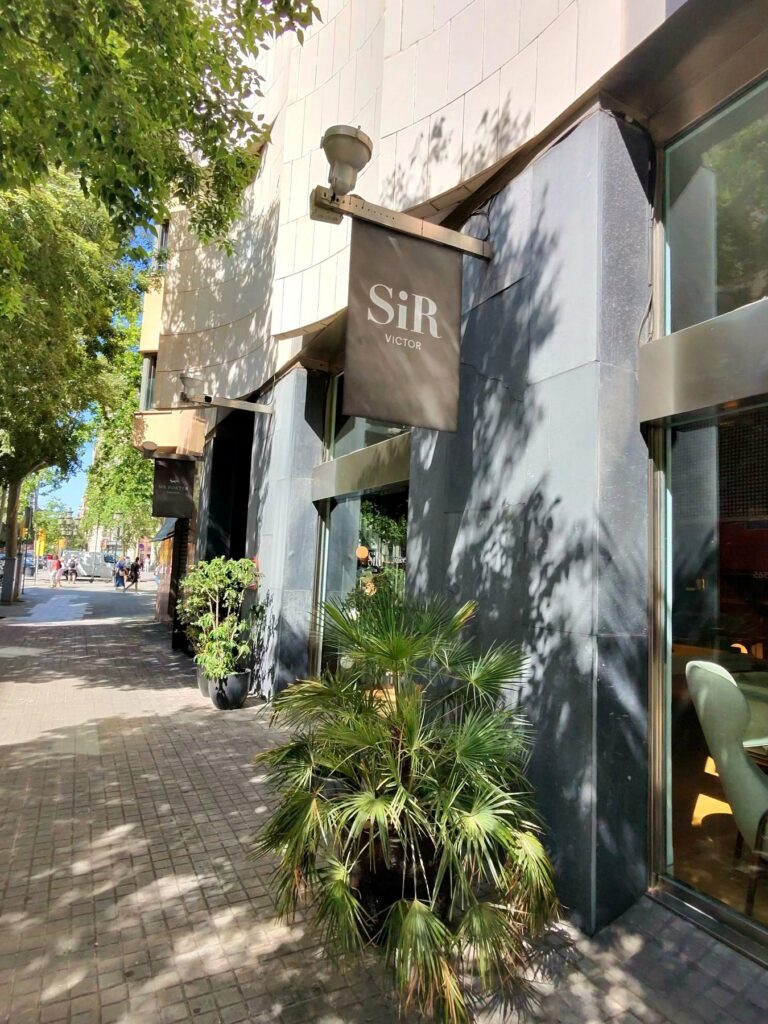
    Then there is the second journey, from the hotel to the restaurant. Staying somewhere that suits the city part of the trip can make that easier. I stayed at Sir Victor in Barcelona, and the hotel was part of the broader experience, not simply somewhere to sleep between track days.
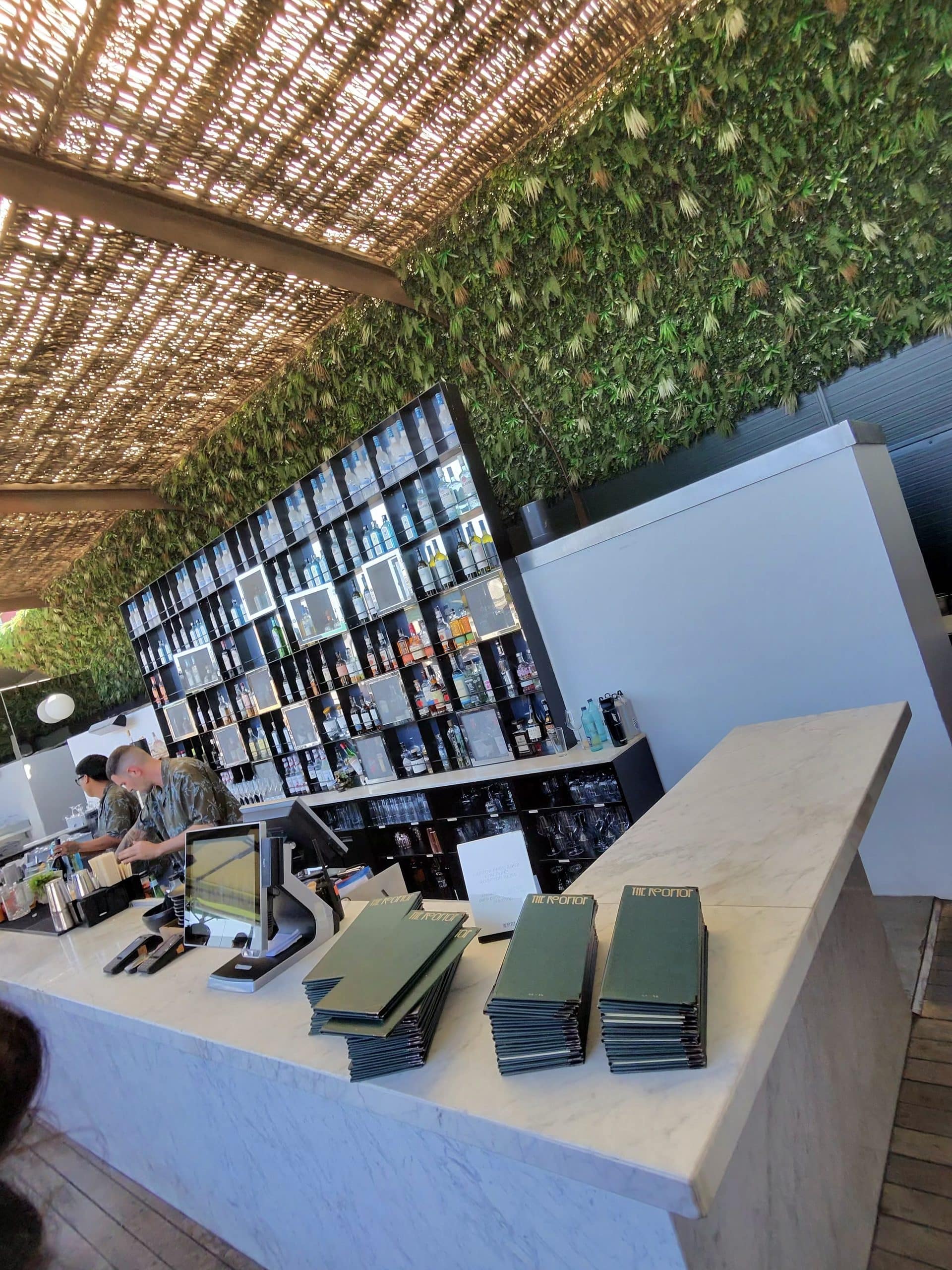
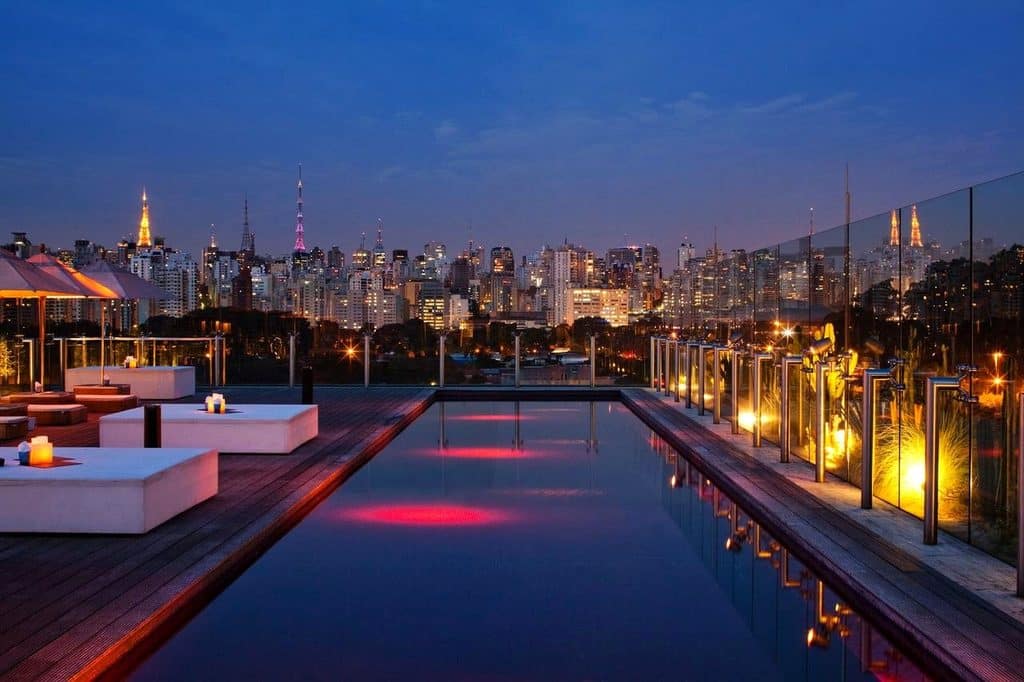
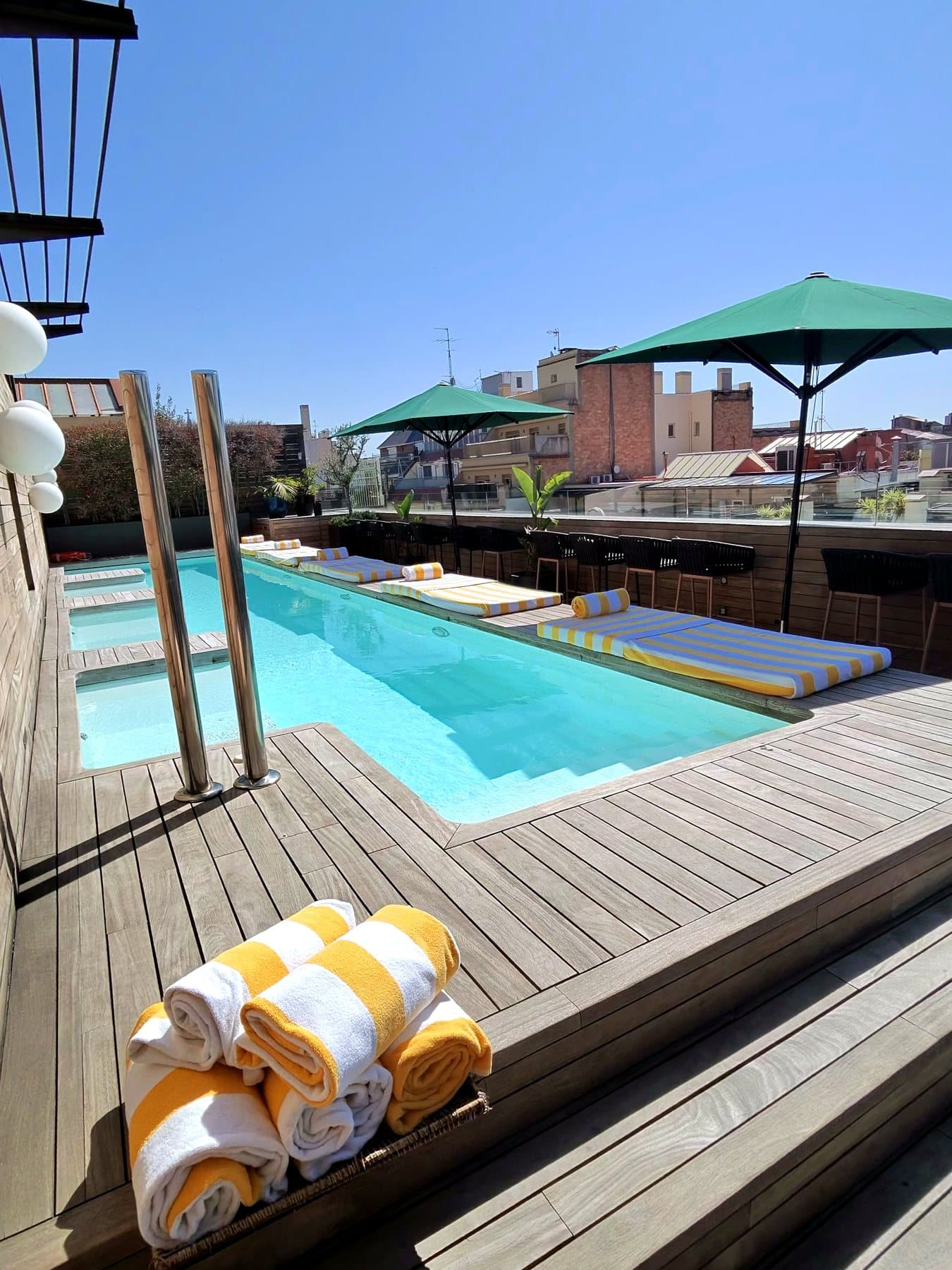
    Rooftop bar at Sir Victor in Barcelona
    A hotel belongs in the evening plan too, including time to get ready before going out.

    The test is straightforward: after allowing for the parts I know I want, is there still a comfortable margin? If the only way to make the reservation is to erase the hotel reset or assume a frictionless departure, I need to recognize the risk. With a plan like Tan Tan, that means accepting I may need to call, wait, or find something else—not pretending a second reservation solves it.

    São Paulo Made Me Take the Journey Back Seriously

    After the 2025 São Paulo Grand Prix, traffic was at a standstill. That experience belongs in my planning much more than a hopeful estimate of how quickly the trip ought to take.

    For that journey, I prefer the comfort of a prearranged Rhino ride and air conditioning over squeezing onto a packed subway. That is my preference, not a claim that a car is always faster or that everyone should make the same choice. Being comfortable while waiting and avoiding the wait are two different things.

    I recommend Rhino based on my experience with its armored cars and professional drivers. I have also had good experiences with Uber Black in São Paulo. The important point for this post is that choosing a service I like does not give me permission to make an unrealistic dinner reservation.

    I would check the pickup arrangements for the specific event, confirm where I need to meet the driver, and keep the restaurant plan realistic even after arranging the car. The detailed city and circuit advice belongs in my São Paulo Grand Prix travel guide; the lesson here is about what I book afterward.
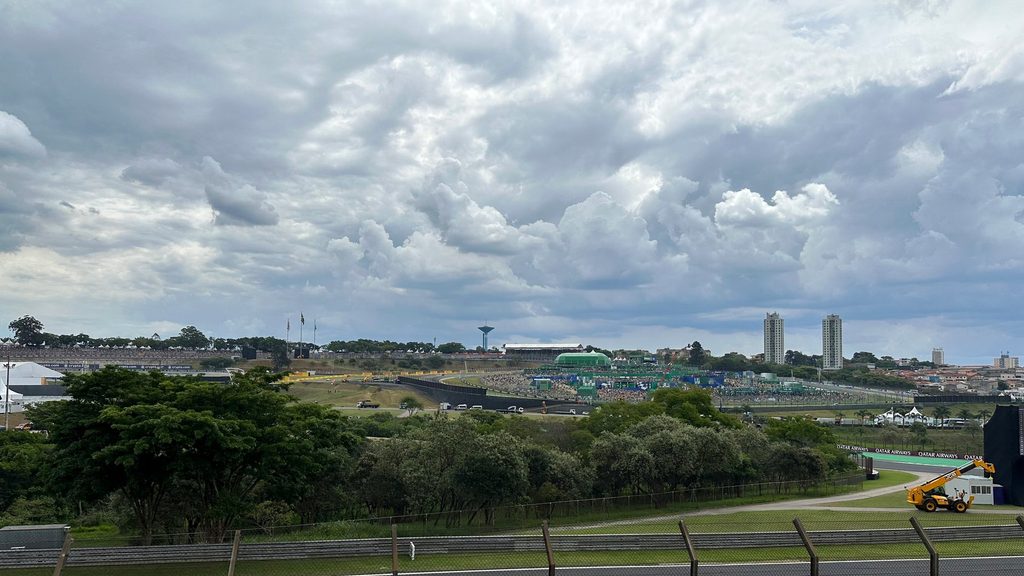
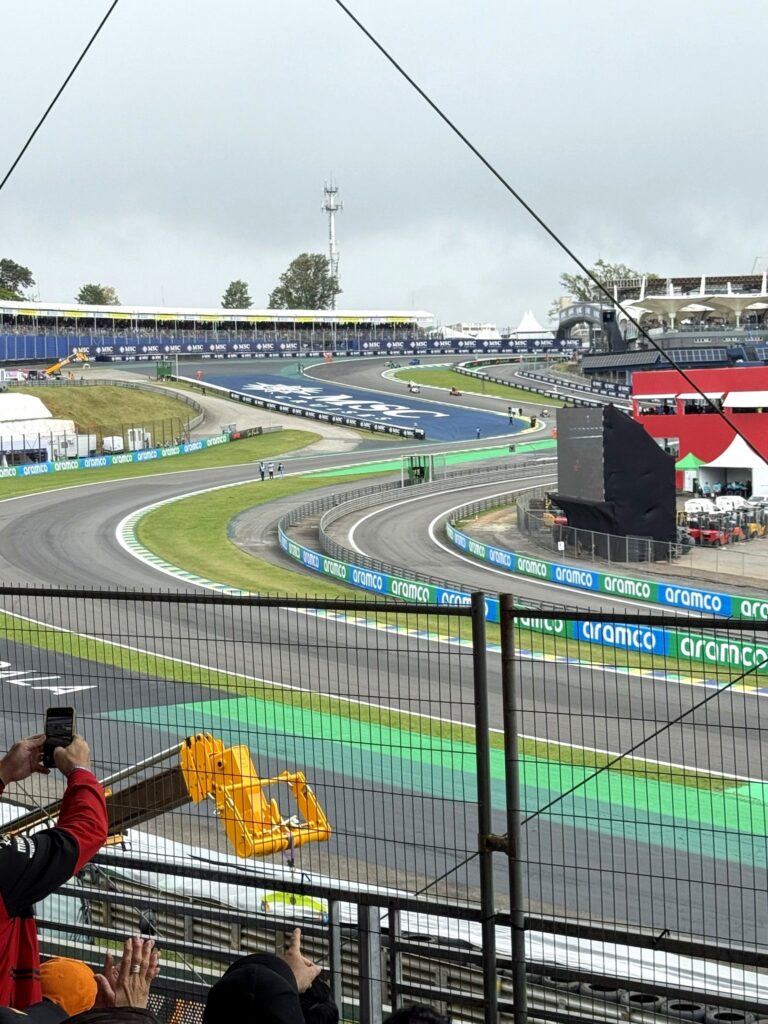
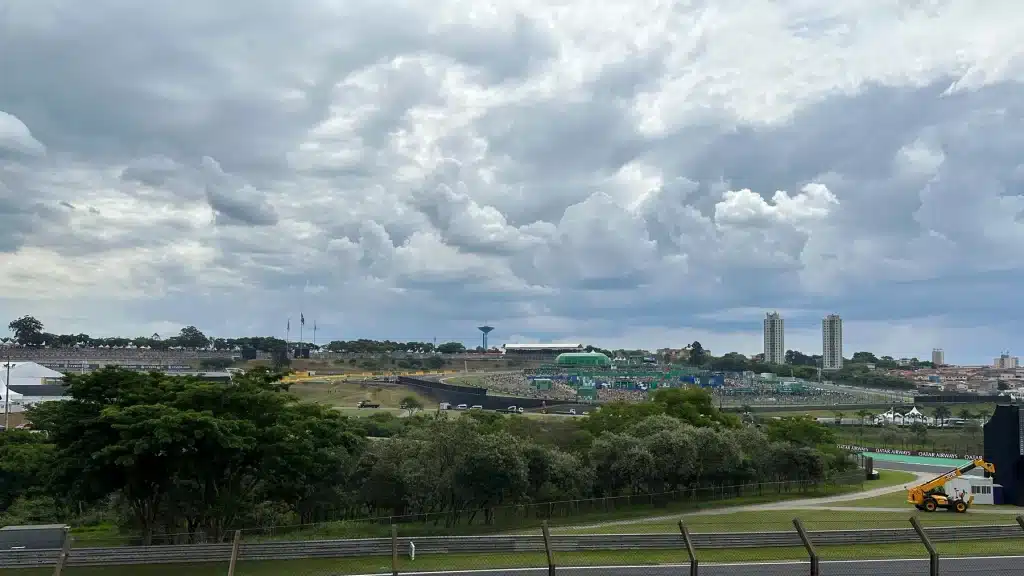
    Interlagos circuit seen during the 2024 São Paulo Grand Prix
    Interlagos: leaving the circuit is part of the day, not an instant jump back into the city.

    A restaurant cannot control the circuit exit, and the driver cannot make my preferred reservation time more sensible. That part is on me.

    What a Realistic Race Day Would Look Like

    I find a sequence more useful than a pretend-perfect timetable. This is a planning example, not a record of a particular day or a promise about how long an event will take.

    Before the circuit: Keep the morning simple

    I would leave room for breakfast and the journey without adding a destination brunch or a sightseeing stop that introduces another deadline. There will be plenty happening at the track. The morning does not need to prove that I am making the most of every minute.

    At the circuit: Be there for the experience

    I want to enjoy the racing without mentally leaving early for dinner. The time commitment includes getting in and out, not just the sessions themselves. I would also keep an eye on what I need for the conditions, rather than assume that feeling fine when I leave the hotel means I will feel the same later.

    After the circuit: Get back, then reset

    The departure comes first. Then the ride, the hotel, and time to get ready. This is the stretch I would leave deliberately loose. A delay here should use some margin, not immediately put a special dinner at risk.

    For dinner: Choose an evening that can stand on its own

    If the timing genuinely supports a reservation, great. Otherwise, I would choose a less demanding plan with realistic availability, checking hours and booking requirements rather than assuming somewhere will take me. Casual does not have to mean disappointing, and a shorter dinner does not have to be a consolation prize.

    After dinner: Let the extra stop stay extra

    A cocktail can be a great finish. It does not need to become compulsory. I love a good bar, but adding a second reservation simply because there is space on the screen can turn a satisfying day into a very long one.

    What I Would Move—and What I Might Have to Give Up

    When a plan feels crowded, removing an extra bar or a cross-town detour is easy compared with the 7:30 decision. Those smaller choices are still worth making. They leave more energy for the things I care about and fewer unnecessary deadlines.

    But I do not want to pretend every conflict can be fixed by becoming more organized. Sometimes the restaurant has one opening. Sometimes the circuit gives you a reason to stay. Sometimes you have done the planning properly and still have to choose.

    That is where checking booking terms, discussing the plan with anyone joining me, and knowing my alternatives helps. It does not make the decision for me. It makes the consequences clearer.

    I would rather make a conscious choice and accept the cost than spend the whole evening resenting whichever experience I chose. There may be another visit. There may not be another version of that particular race day.

    The Better Choice Depends on Why I Wanted Both Experiences

    Before deciding to leave the circuit, I would ask what staying adds. Am I waiting around because I cannot quite bring myself to leave, or is something happening that makes the extra time meaningful? Those are different reasons, and I do not want the fear of missing out to make every decision.

    I would ask the same question about dinner. Is this a meal I genuinely care about, or am I attached to the reservation because it took effort to get? Researching and booking something can make it feel more important than it will actually be. The point is to enjoy the evening, not protect the work I put into the calendar.

    That still leaves room for choosing dinner. Leaving the circuit does not mean I care less about Formula 1. Staying does not mean I suddenly care less about restaurants. It means that on this particular day, with these particular choices, one experience mattered more.

    If I am sharing the evening with someone, their expectations matter too. I would want that conversation before we reach the point of choosing. An itinerary is easier to change when everyone understands what was firm, what was hopeful, and what might depend on the race.

    Leave Something of the City Unscheduled

    I like researching trips. I like finding the place that makes the planning feel worthwhile. But I also want time to walk, look around, and follow an interesting street without checking whether I am now behind.

    My Barcelona travel guide covers more of the city beyond the circuit. A race weekend can lead into that wider trip, but it needs some room to happen. Booking every lunch and evening in advance would leave very little space for the discoveries I enjoy most.
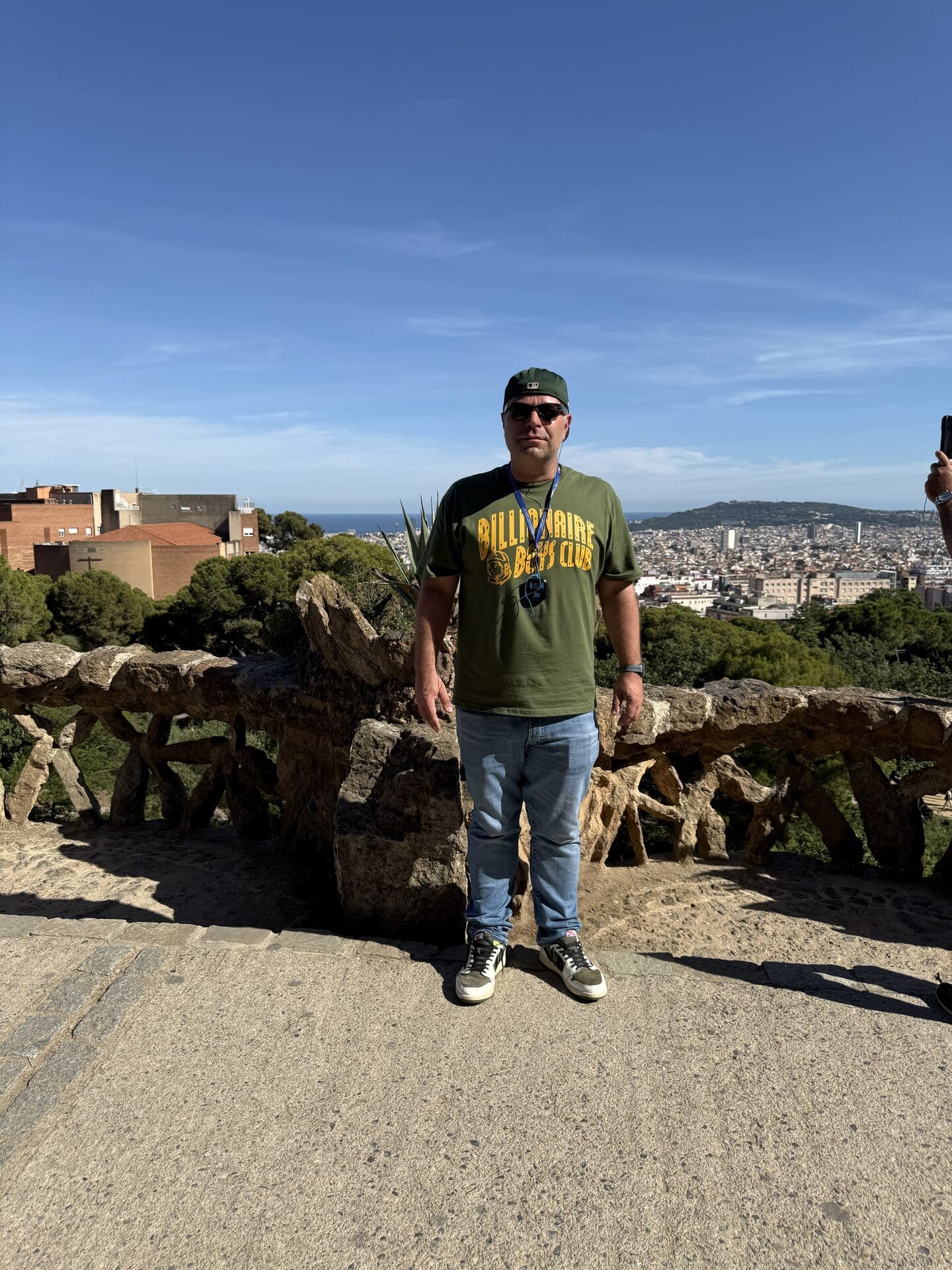
    Richard Jarocki at Park Güell in Barcelona
    There should still be time to see the city that brought the whole trip together.

    That is the balance I want from Formula 1 travel: enough planning to protect the race and the meals that matter, with enough freedom to enjoy the place around them. The reward for doing the work beforehand should be less clock-watching once I am there.

    The weekend can still get a little out of control. If it does, I want to know the difference between a bad plan and a moment worth changing a good plan for.

    Worth the effort. Usually.
  • Formula 1 Luxury Travel: 7 Reasons Every Grand Prix Is More Than Just a Race

    Formula 1 Luxury Travel: 7 Reasons Every Grand Prix Is More Than Just a Race

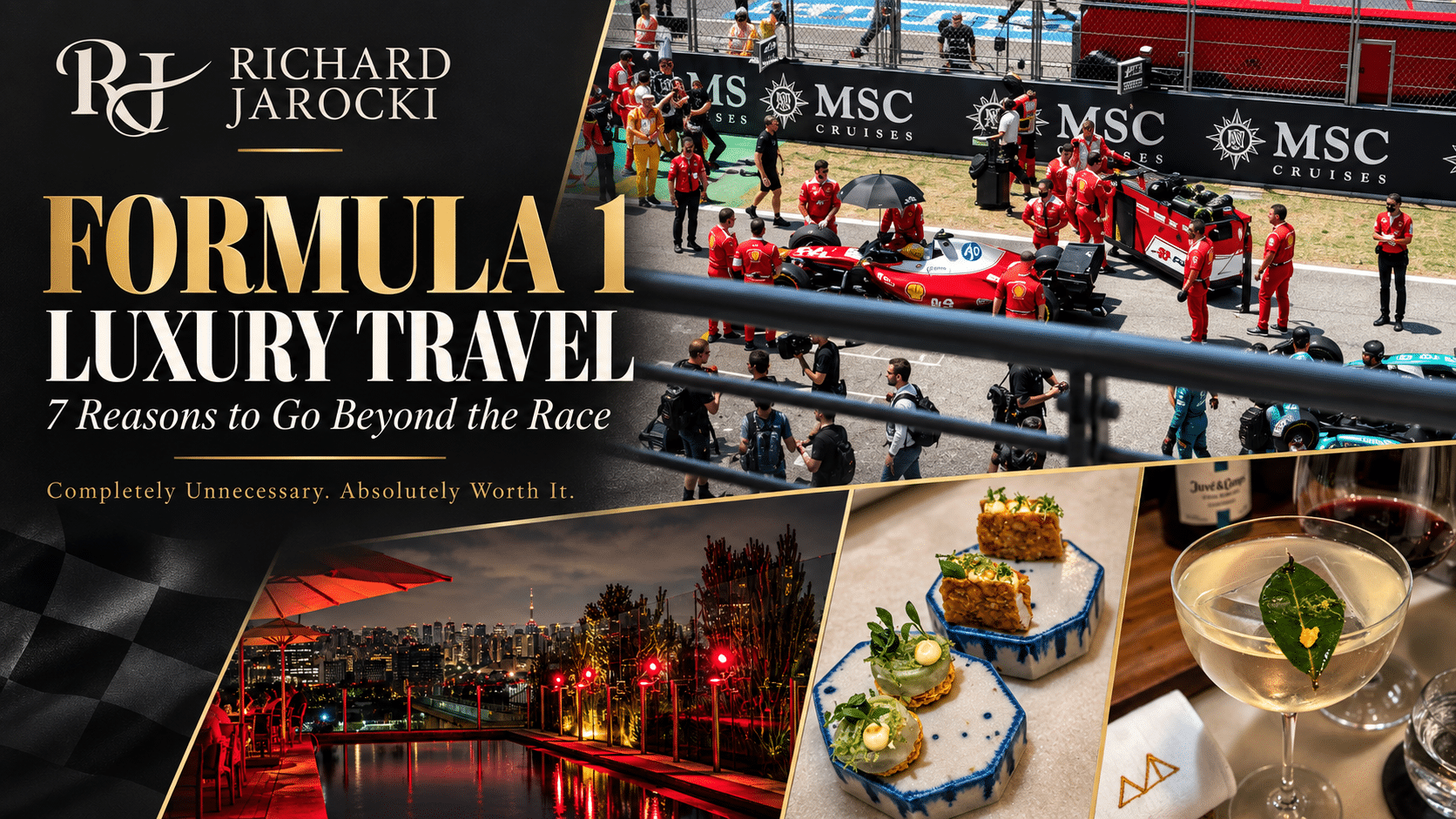
    Formula 1 Luxury Travel: 7 Reasons to Go Beyond the Race Formula 1 luxury travel collage featuring a Ferrari race-grid scene, Hotel Unique’s rooftop, Mont Bar dishes, and a cocktail.

    Formula 1 luxury travel started with an interest in racing and turned into a reason to explore whole cities. Working at Ferrari got me interested in Formula 1. Traveling for races turned that interest into something much bigger. Now, booking a Grand Prix means a lot more than choosing a flight and buying a ticket. I am researching restaurants, comparing hotels, figuring out which cocktail bars I can fit in, and deciding how many extra days I can justify taking off work. Usually, I can justify a few.

    Formula 1 luxury travel brings together most of the things I enjoy: racing, food, cocktails, hotels, and getting to know a city well enough that I want to come back.

    The race still matters. I care who wins. But when I look back on these trips, I remember much more than what happened on Sunday. I remember the meal I am still talking about months later. The bartender who took the time to explain a drink. The hotel that became part of the experience. The people sitting around me at the circuit.

    I collect watches, sneakers, T-shirts, and hats. I still enjoy all of them. But experiences have become my favorite thing to collect. The way I think about spending money has changed because of that. I still buy things, but now I find myself asking how much I want something compared with another trip, another dinner, or another few days somewhere I love. Travel has become a much bigger part of what I work for and what I look forward to.

    I also have a full-time job and a limited amount of time away from it. When I take a race trip, I want those days to count. That means thinking about where the money goes, what is actually worth paying for, and how much I can realistically fit into a week without turning a vacation into another job.

    Formula 1 gives me the reason to book the trip. Everything around it is what turns that trip into something I remember.

    If you want to understand where that really started for me, read The Trip That Changed Everything. My first São Paulo Grand Prix ended up changing much more than where I wanted to watch Formula 1.

    1. It Gives Me a Reason to Go Somewhere—and Go Back

    São Paulo helped renew my love of gastronomy. The city introduced me to restaurants that are now among my favorites anywhere in the world, and it quickly became somewhere I wanted to keep returning to. I have written much more about the city in my São Paulo restaurant guide and my São Paulo destination coverage.

    Barcelona taught me something different. It made me think more about the history behind the food and wine I was enjoying. You can sit down to dinner and have hundreds of years of tradition behind what ends up on the table. Then you walk outside and find yourself surrounded by buildings and neighborhoods that existed centuries before the United States was even a country. That puts things in perspective.

    I have always appreciated a great meal and a good glass of wine. Barcelona made me appreciate how much more there can be behind both—the people, the traditions, the history, and the culture that helped create them.

    That is one of the biggest reasons I like returning to places instead of treating every trip as a checklist. The second visit is different. There is less pressure to see everything. I can go back to a restaurant I already love, try somewhere new, spend more time in a neighborhood that interested me the first time, or simply leave part of the day open. Having favorites gives me a starting point without making me feel like I have finished exploring the city.

    I already have restaurants and places I am excited to return to, but I do not feel remotely finished with the city. Every trip becomes a decision between going back to somewhere I already know I love and making room for somewhere new.

    It is a good problem to have. My restaurant list just has very little respect for the number of days I actually have available.

    That is what Formula 1 luxury travel has become for me. The race gets me to the city, but everything I discover around it gives me a reason to return.

    2. The Food Can Be as Memorable as the Race

    I take restaurant reservations seriously. Anyone who has traveled with me—or looked at one of my itineraries—can probably figure that out.

    In Barcelona, Mont Bar became one of my favorite meals anywhere, while Disfrutar was a completely different kind of experience. I would not really compare the two directly. Mont Bar felt more relaxed, intimate and personal. Disfrutar was more theatrical, technical and built around a much longer progression of courses. Both stood out for very different reasons.

    In São Paulo, Evvai remains my favorite restaurant in the world. D.O.M., Tuju, A Casa do Porco and Tan Tan have all been part of the reason I keep wanting to explore more of the city’s food. These meals become things I look forward to for months.

    A meal that changes your mind

    I want to see what a chef is doing, try ingredients I might never order on my own, and understand why a dish works. Sometimes the kitchen puts something in front of me that I would have skipped on a menu, and it ends up being one of the best things I eat all trip.

    Evvai managed that with its take on feijoada. I do not generally like beans, yet I loved that dish. That is a pretty convincing argument for occasionally letting someone who knows what they are doing choose dinner.

    Staying with familiar ingredients would have cost me an experience I still remember. I explain more about that in my take on whether tasting menus are worth it.

    The explanation matters, too. Evvai’s pop-art course cards gave me something to connect with as the dishes arrived and something to take home afterward. I enjoy knowing what inspired a preparation and why the ingredients belong together. It makes me pay closer attention to what I am eating.

    Mont Bar also showed me how much the people and the room contribute to dinner. The team took time to talk with us, the music helped give the place personality, and the service felt comfortable. It was ambitious food without the experience ever feeling stiff.

    Returning favorites and the next reservation

    For my upcoming November 2026 trip to São Paulo, I am planning a little of both: returning to places I already know I love and making room for somewhere new. I am going back to Evvai and Tan Tan, and I want to try Goya Zushi and Jacó.

    If I can make the timing work, I also want to get back to A Casa do Porco. That may even end up being lunch before my flight home, which would be a pretty good way to finish the trip.

    I also plan to spend another evening at Rosewood São Paulo, even though I am staying elsewhere for this trip. Taraz and Rabo di Galo are both places I enjoyed enough to want to return to, and Rosewood has become one of those hotels where I am happy to spend an evening even when I am not staying there.

    I may also make my way back to Palácio Tangará during Grand Prix week.

    On my previous visits during Grand Prix week, the security presence at Palácio Tangará was noticeable. Race-week access is something I would confirm with the hotel before making plans. If I book dinner there, I will confirm the reservation, arrival instructions and any restrictions directly. A restaurant reservation should never be treated as a promise of access to teams, drivers or private areas.

    That gives me another excuse to go back, have dinner or a drink, enjoy the hotel, and take in some of the atmosphere surrounding race week.

    The race is obviously the center of the trip, but Formula 1 spills into the hotels, restaurants, bars, and the rest of the city. You start noticing teams, sponsors, and fans everywhere, and places that are already interesting take on a completely different energy for the week.

    A famous restaurant name may get me researching, but the full experience is what makes me want another reservation: the cooking, the drinks, the room, the people, and the feeling of being somewhere I know I will think about again after I get home.

    For me, food is a major part of Formula 1 luxury travel. A Grand Prix weekend might start with the race schedule, but some of the restaurant reservations become experiences I anticipate just as much.

    3. The Hotel Has to Earn Its Place in the Trip

    I enjoy a great hotel, but I also want it to make sense for the trip I am actually taking. São Paulo is a good example because I have stayed at several of the city’s top hotels, and they each offer something different.

    For a Formula 1 weekend, Hotel Unique is still my best overall pick. It has the atmosphere, the rooftop, the crowd, and the energy that fit the São Paulo Grand Prix weekend especially well.

    I have also been looking at Posh Club Grand Prix parties for my November 2026 trip. Before building an evening around one, I would check the organizer’s current venue, dates, ticket requirements and hotel access rules before booking.

    A future stay is not a finished review

    For my upcoming November 2026 trip, though, I decided to stay at W São Paulo. Part of the reason is the rooftop.

    I like having somewhere at the hotel where I can come back after a long day, have a drink, and still feel like the night is not over. But I also want to experience the W as a complete hotel and get to know it better.

    I have spent enough time comparing São Paulo hotels that sometimes the only real way to understand one is to stay there and see how it fits into the trip.

    That does not mean I think the W is the most luxurious hotel in São Paulo. If we are talking about pure luxury, Rosewood São Paulo is on another level. The rooms, design, and overall experience make it one of the most impressive hotels I have stayed at in the city.

    Palácio Tangará belongs in that conversation as well. It offers a very different kind of luxury—quieter, more traditional, and removed from some of the energy of the city center.

    And then there is Emiliano, which is still on my list. I have not stayed there yet, so I am not going to pretend I can rank it against hotels I have actually experienced. But based on its reputation and location, it is one I want to get to know for myself.

    The most luxurious hotel is not automatically the best hotel for every trip.

    That is especially true with Formula 1 luxury travel, where the right hotel can become part of the race-week experience rather than simply somewhere to sleep.

    A beautiful room matters. So do the service, the crowd, the bars, the location, and what happens when I come back at the end of the night. That is what I am really paying for.

    4. There Is Usually a Cocktail Worth Finding

    My research rarely ends with the restaurant. Cocktail bars become part of the trip too, but I do not choose every bar because it appears on a World’s 50 Best list or because someone considers it a temple of mixology. Sometimes I want that experience. Sometimes I just want a good drink and somewhere comfortable to sit down.

    In São Paulo, Tan Tan is one of the places I keep going back to. I like that it works as both a restaurant and a serious cocktail bar. The Tsukemono I enjoyed was a good example: tequila, wasabi, cucumber and orange bitters may not sound like an obvious combination, but it worked for me. That is a memory of the drink I had, rather than a promise about the current menu.

    The Liquor Store gave me something completely different. On my visit, it felt like a very small, intimate bar, and that changed the experience. The bartenders can spend more time talking with you, figuring out what you actually like, and adjusting drinks around your preferences.

    That is one of the things I appreciate most about a great cocktail bar. The drink matters, but so does the person making it.

    Destination bars and the hotel rooftop

    Paradiso in Barcelona was another kind of experience. The creativity, presentation, and atmosphere make the bar a destination in itself. It is the type of place I specifically plan around because I want to see what they are doing.

    But not every memorable drink needs that kind of production.

    While staying at Sir Victor in Barcelona, the rooftop became my go-to after a long day exploring the city. After walking all day, a few liters of water and a couple of drinks up there became part of the routine. It was not about chasing another famous cocktail bar or checking another place off a list. Sometimes I just wanted somewhere comfortable to sit, cool down, look out over Barcelona, and relax before deciding what came next.

    I found the same thing in São Paulo. After spending an entire day at Interlagos, sometimes the last thing I want to do is immediately rush somewhere else.

    The bar at the InterContinental São Paulo became a good place to sit down, have a drink, and relax for a while before getting ready for dinner. I have used the W São Paulo the same way. Sometimes a hotel bar is exactly what I need after a race day: somewhere comfortable, a good cocktail, and an hour when I do not have to be anywhere.

    Then there are places like Overstory in New York, where the setting becomes part of the experience. You are there for the cocktails, but being high above Manhattan with that view turns a drink into something bigger.

    I do not need every cocktail bar to have an award, a complicated concept, or a place on a global ranking.

    I also have to be realistic about how much I try to fit into one night. A cocktail before dinner, a long wine pairing, and several bars afterward can sound like a great plan when I am sitting at home building the itinerary. Then I remember there is usually another full day waiting for me.

    At this point, I would rather give one or two places enough time to enjoy them than spend the entire night watching the clock and rushing to the next reservation.

    The problem is that the list never gets shorter. There are only so many dinners, cocktails, and evenings in one trip, and somehow I always find more places than I have time for.

    5. I Want to See More Than the Circuit

    If I am taking time off work and flying to another country, I want time to experience the place beyond the race. That means leaving room for neighborhoods, architecture, museums, food, and sometimes just walking around without every hour assigned to something.

    Barcelona made that especially clear to me. There is so much history built into the city that even a normal walk can become part of the experience. Gaudí’s architecture, the Gothic Quarter, the old streets, the cafés, and the markets all gave me reasons to keep exploring beyond the race itself.

    São Paulo has been different, but just as interesting. I love the street art at Beco do Batman. I have spent time exploring Ibirapuera Park, one of the city’s major cultural and green spaces, and I have visited the Ayrton Senna memorial there. Ibirapuera is the kind of place where you can spend hours walking and still feel like you have only seen part of it.

    The places still on my list

    There are still parts of São Paulo I want to experience more deeply. One of them is Liberdade, the neighborhood most closely associated with São Paulo’s Japanese community. I especially want to experience it on a weekend, when the streets are busier and the neighborhood has more of that festival and street-market atmosphere.

    Another experience on my wish list is a Sunday morning exploring the car scene around Avenida Europa. Classic cars, Ferraris, Porsches and other exotics are very much my kind of Sunday morning.

    Of course, there is one problem. During Grand Prix weekend, Sunday morning is not going to happen. I will be at Interlagos.

    Every trip gives me another list of places I want to return to and things I still have not managed to fit in.

    Give yourself time to enjoy the city

    Race days themselves can take more out of you than the itinerary suggests. In Barcelona, I walked more than twelve miles on each of those days, including getting to the circuit and exploring once I was inside. I loved it, but that is a substantial day before dinner even enters the conversation.

    I wrote more about that weekend in Why I Love Formula 1: Racing, Travel & Belonging.

    So when I say to allow extra days, part of the reason is simply having enough energy to enjoy where you are. I do not want to fly to another country, spend every day at the circuit, eat dinner, go back to the hotel, and then head to the airport. That would feel like I attended a race in another country without really experiencing the country.

    I want time to stop for a coffee, walk into a shop, take a longer route because something caught my attention, or change the plan because someone gave me a recommendation that sounds better than what I had scheduled.

    But I also know there is a point where too much planning can start working against the trip. If every hour is assigned to something, then a spontaneous drink, an unexpected conversation, a neighborhood you want to keep exploring, or a restaurant you did not know about suddenly becomes a problem.

    The best version of these trips, for me, has both: enough planning that I do not miss the experiences I really care about, and enough open time that I can actually enjoy being somewhere new.

    To me, Formula 1 luxury travel should include enough time to experience the destination, not just the circuit.

    6. The Research Starts Long Before the Flight

    I spend a ridiculous amount of time planning these trips. And I mean hours. Possibly days.

    I search social media, read food blogs and travel sites, look through restaurant and bar accounts, ask chefs and bartenders for recommendations, and talk to other travelers about what they loved, what they would skip, and what they would actually do again.

    I also go through Reddit travel boards and local discussions, then use ChatGPT to keep researching the city’s restaurant, hotel, cocktail, and Formula 1 scenes from different angles.

    I want enough different sources and opinions that, by the time I start booking, I am not relying on one list or one person’s idea of what is worth doing. For dates, reservations, admission rules and package inclusions, I check the current information with the venue or official organizer.

    By the time I leave, I usually have a pretty good idea of what I want to do, what has to be booked in advance, and what can stay flexible.

    Build around the hardest bookings

    Restaurant reservations usually take the most attention. Some places open months ahead. Others release tables much closer to the date. Some require a credit card guarantee. Some disappear almost immediately. Wanting to eat somewhere and actually getting a reservation are two completely different things.

    Then there is the circuit. Getting there, getting back, deciding how early I need to leave, and figuring out what is realistic afterward all matter. A race day that looks simple on paper can become a very long day once transportation, walking, crowds, and weather are added to it.

    That is why I usually build the trip around the things that are hardest to move. The published race sessions are the starting point. A restaurant I really want may have only one reservation time available. A hotel event, party, or special experience may happen on one specific night.

    Once those pieces are in place, I can work the other meals, bars, neighborhoods, and sightseeing around them.

    The challenge is making those ideas work together. Every individual idea may sound easy enough on its own. Then I start putting everything on a map and matching it against race sessions, restaurant times, traffic, transportation, and how tired I am realistically going to be after a full day at the track.

    Geography, time and the whole budget

    Geography matters just as much as availability. Two reservations can both technically work and still make for a miserable evening if getting from one to the other takes too much time. I would rather spend that time enjoying where I am than sitting in traffic or watching the clock because I tried to force too much into one night.

    My time on the trip has value too.

    I also try to look at the full cost instead of convincing myself that every individual upgrade is reasonable. Flights, the hotel, race tickets, transportation, restaurants, drinks, shopping, and everything else all come out of the same budget.

    Looking at each purchase separately makes it very easy to say, “It is only a little more.” Then you add everything together. That is when the trip becomes expensive very quickly.

    The best itinerary protects the experiences I care about most while still leaving enough room to enjoy where I am.

    For me, good planning is part of Formula 1 luxury travel. I do all of that research so that once I get there, I can spend less time worrying about what I should be doing next.

    The goal is not to complete an itinerary. The goal is to enjoy the trip.

    7. The People Make the Weekend

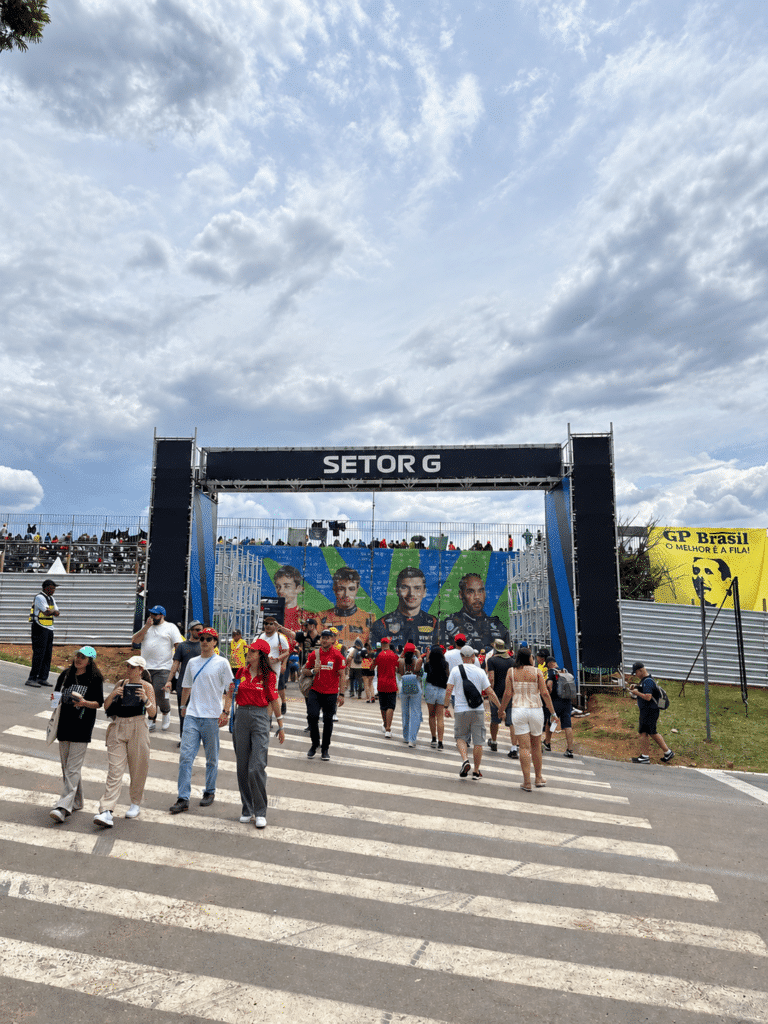
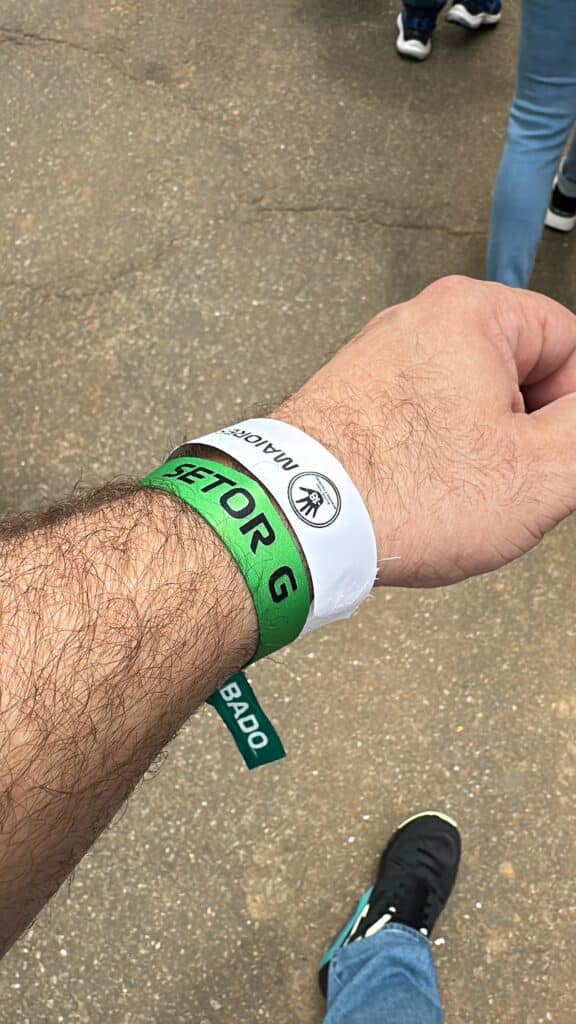
    Some of my strongest Formula 1 memories involve getting soaked in Sector G at Interlagos, drinking beer and canned Jack and Coke, and talking with people I had never met before. We were there for the same reason. Different teams. Different drivers. Different countries. Same sport.

    When people made room for me under shelter from the rain, that small gesture stayed with me. We did not all speak the same language, but it did not matter much. Formula 1 already gave us something to talk about.

    For someone who does not always find it easy to start a conversation, that shared interest makes a difference. I have written more about those connections in Why I Love Formula 1: Racing, Travel & Belonging.

    Hospitality is a choice, not a requirement

    I have also done hospitality and paddock experiences, and I enjoy them. In the experiences I tried, I appreciated the additional access. The added comfort, food and drinks were part of the appeal too. I would happily do those experiences again when they make sense for the trip.

    But I have also become more realistic about what I want to spend on them.

    If upgrading to hospitality means giving up a great hotel, several dinners, extra days in the city, or another trip entirely, then I have to decide what matters more. Sometimes the answer is hospitality. Sometimes it is not. And that does not make the grandstands feel like a compromise.

    I genuinely enjoy being surrounded by fans who care about what is happening on the track as much as I do. When an overtake happens, someone crashes, the weather changes, or a favorite driver comes past, the reaction around you becomes part of the race. That atmosphere is hard to recreate anywhere else.

    To me, that belongs in a conversation about luxury travel too. Luxury does not always mean being separated from everyone else.

    Sometimes it is a beautiful hotel, an exceptional tasting menu, and a great cocktail. Sometimes it is standing in a packed grandstand in the rain with thousands of people losing their minds over what just happened on track. A great Formula 1 trip can have both.

    That mix is one of the things I like most about Formula 1 luxury travel. Luxury can mean hospitality and five-star hotels, but it can also mean having the freedom to choose the experiences that matter most to me.

    I want to enjoy the whole trip and make the budget work across all of it.

    Hospitality is still on the wish list. But so is another great weekend in the grandstands.

    If you want more of my thinking on experiencing the city beyond the race itself, I wrote about that in Formula 1 Beyond the Circuit.

    The Race Gets Me There. The Whole Trip Brings Me Back.

    Formula 1 has changed where I travel, how I plan, and what I want from a trip. I still look forward to race day. But I also look forward to the dinner reservation I made months earlier, going back to a bar I loved, spending time in a hotel that became part of the experience, and finding another reason to return to a city I thought I already knew.

    That is also why I write about these trips. I want to give people more than a photograph of an expensive room, a beautiful plate, or a race ticket.

    What made the experience memorable? Would I spend the money again? Would I stay there again? Would I make the reservation again? Where would I sit at the circuit, and would I choose those seats again?

    What I would want to know before booking

    That last question is something I have learned to take much more seriously.

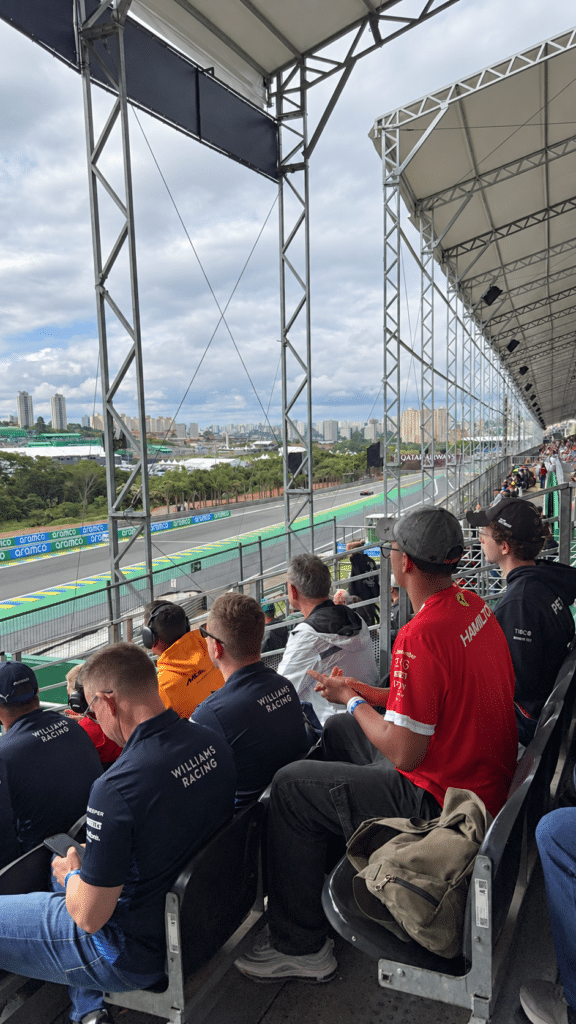
    At my first São Paulo Grand Prix, I learned the value of a covered grandstand. It does not rain every São Paulo Grand Prix, but São Paulo weather can be strange. You can go from looking at a sky without a cloud in it to standing in a downpour. I know that from experience.

    Getting soaked at Interlagos gave me some great memories, but it also taught me that when I am choosing seats there again, having a roof over my head matters.

    Barcelona taught me the opposite weather lesson. My grandstand seats there were directly in the sun during the race. After spending hours at the circuit, that makes a difference too.

    Those experiences changed how I look at tickets. I am not only asking whether a grandstand has a good view of the track anymore.

    Is it covered? Where will the sun be during the race? Can I see a screen? What section of the circuit am I actually watching? How easy is it to get in and out? And after experiencing it once, would I pay to sit there again?

    Those details can matter just as much as the section number printed on the ticket. They are also exactly the kind of details I want to include when I write about these trips, because they are the things I wish I knew before buying the ticket myself.

    If you are planning your first Grand Prix trip, give yourself time around the race if you can. Pick a few experiences you genuinely care about. Book the things that are hardest to replace, then leave some room to explore.

    And when you buy the race ticket, do not just look at a circuit map and assume every grandstand experience is the same.

    Your version of Formula 1 luxury travel should reflect what you actually enjoy. Mine usually involves a great hotel, too many restaurant reservations, a few good cocktails, a lot of walking, and plenty of time around people who love Formula 1 as much as I do.

    It adds up. I am very aware of that.

    But when I look back at the races, the cities, the meals, the hotels, the people I met—and even the lessons learned from getting soaked in Brazil or cooked by the sun in Barcelona—I usually come to the same conclusion.

    Completely Unnecessary. Absolutely Worth It.

    Planning your own Interlagos weekend? My São Paulo Grand Prix Travel Guide covers my experiences with grandstands, transport, rain, food at the circuit, and fitting dinner into a race weekend.

  • Formula 1: The Ultimate Live Experience – Speed, Power, and Pure Adrenaline

    Formula 1: The Ultimate Live Experience – Speed, Power, and Pure Adrenaline

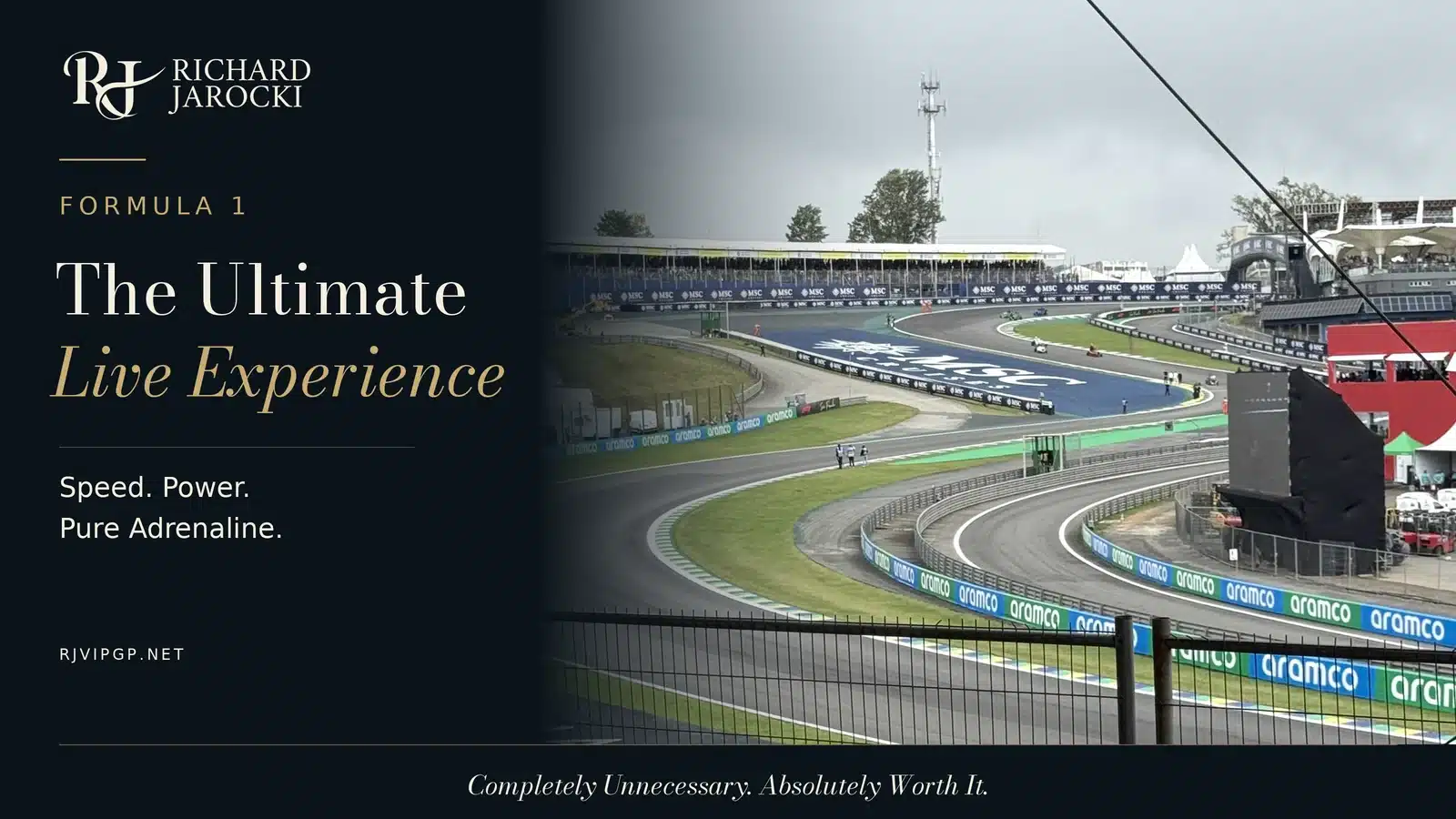
    Formula 1 live experience cover featuring Richard Jarocki’s photograph of the Senna S at Interlagos.

    Formula 1 live experience: Working at Ferrari got me interested in Formula 1. Traveling for races made it a much bigger part of my life. Now a Grand Prix gives me a reason to plan a trip, explore a city and spend a weekend around something I genuinely enjoy.

    The cars are the reason to go. Everything around them adds to the experience: the buildup before a session, the people in the stands, the uncertainty of the race and the conversations afterward. I want to understand what happens on track, but I also enjoy being there as a fan.

    I’ve watched from Grandstand G at Interlagos in 2024 and Grandstand N in 2025, and I went to Barcelona for the Grand Prix in June 2026. Those trips have given me very different weekends. They’ve also made it clear why I keep finding room for racing in my travel plans.

    The anticipation starts before the race

    A Formula 1 weekend gives you time to settle into the place. You find your section, get used to the view and start working out what you can follow from your seat. The track gradually becomes more familiar, even if you’ve watched races there for years.

    There’s plenty happening before Sunday’s start. Practice lets teams work through their preparations, and qualifying puts a different kind of pressure on the drivers. The exact schedule depends on the weekend, particularly when a Sprint is included, so I’d always check the official Formula 1 website before deciding which sessions to attend.

    I don’t think every minute has to be scheduled. There should be room to walk around, get something to eat and enjoy the fact that you’re there. A race weekend is a long day out, and trying to squeeze in absolutely everything can make it harder to appreciate any of it.

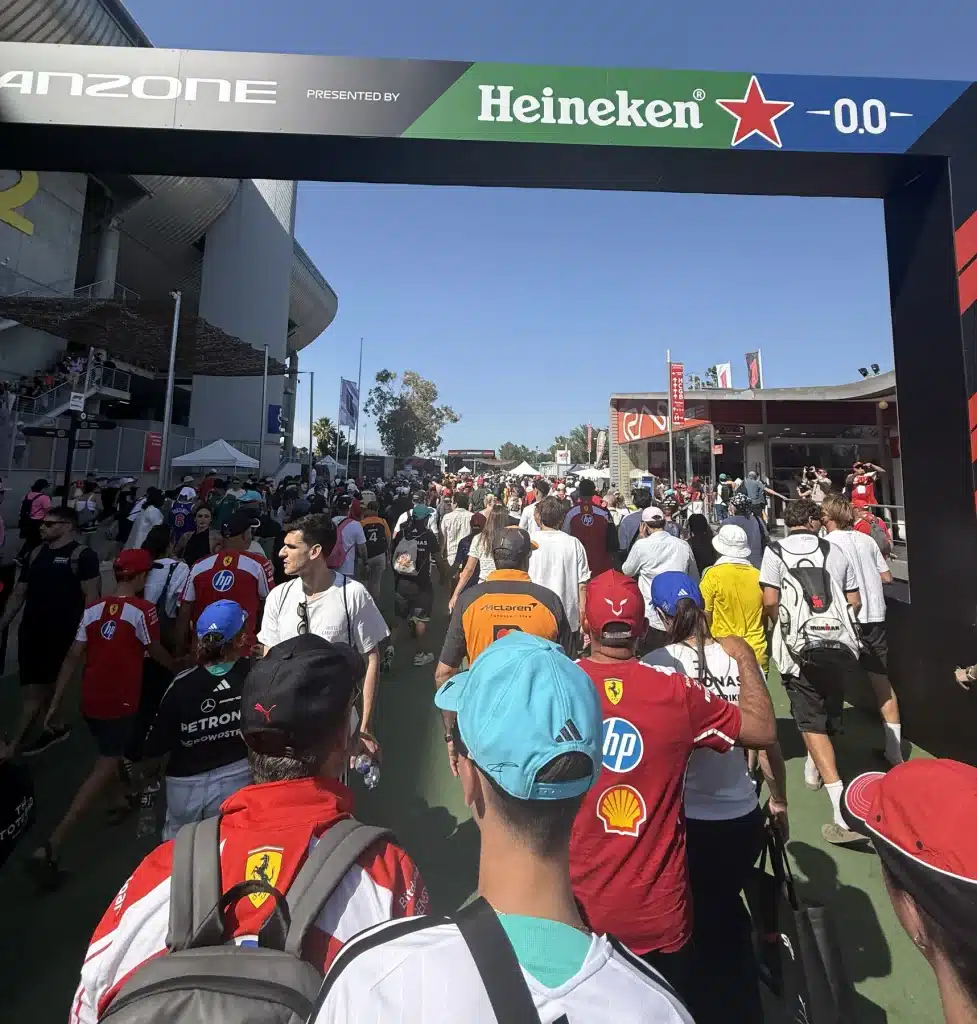
    Formula 1 live experience Fans wearing team clothing walk beneath the fan-zone entrance at the Barcelona circuit.
    The fan zone during my Barcelona Grand Prix trip in June 2026.

    Speed is only part of the appeal

    The speed gets your attention, but the control is just as interesting. Braking, turning and accelerating have to come together repeatedly, with very little room for error. A driver has to manage that while dealing with other cars, changing conditions and decisions from the team.

    That’s what makes Formula 1 worth following beyond the spectacle. I want to know why a strategy worked, why someone struggled and how one team found an advantage. The preparation behind a quick lap matters, even when most of that work happens far away from the seat I’m sitting in.

    From a grandstand, you get a particular view of that effort. A corner can show how the cars change direction. A straight gives you a different impression of their pace. You won’t see everything from one position, which is part of why choosing where to sit changes the experience so much.

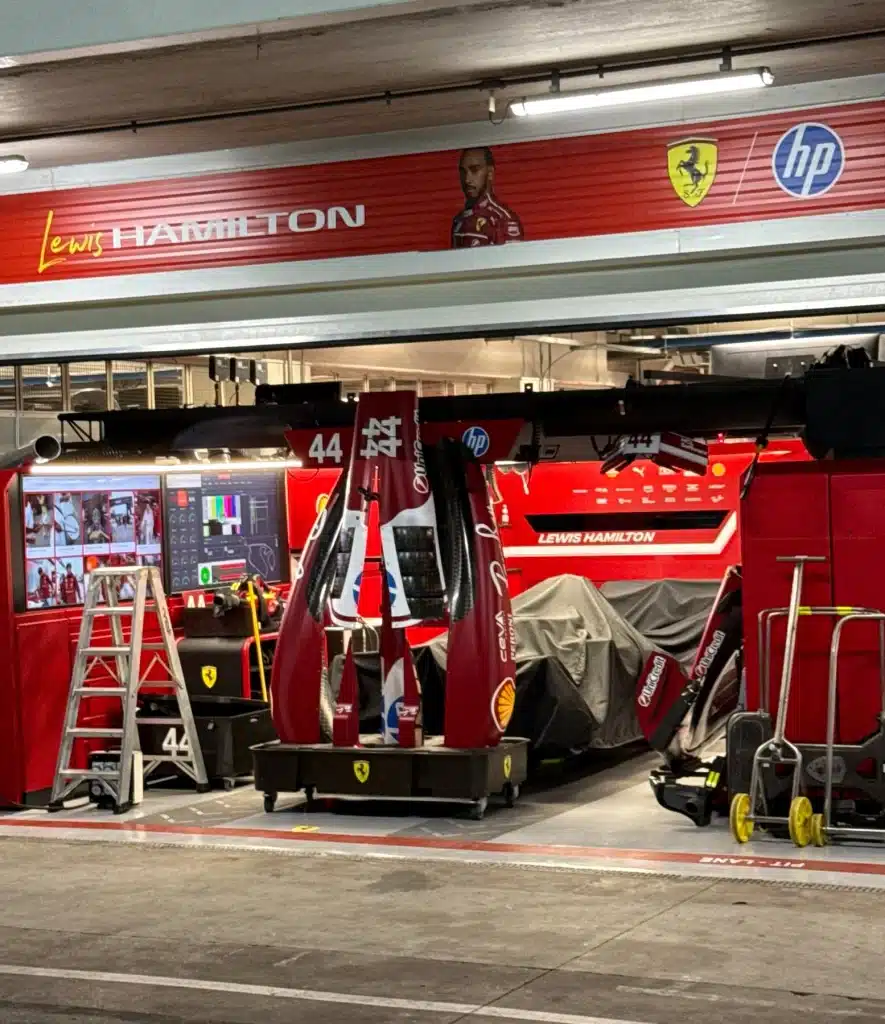
    Ferrari nose assemblies, team equipment and Lewis Hamilton signage inside the garage at Interlagos.
    A view into Lewis Hamilton’s Ferrari garage during my Thursday F1 Experiences visit at Interlagos in 2025.

    The start gives the weekend its focus

    By the time the race is about to begin, there’s a lot to watch for. Where did your driver qualify? Who has an opportunity at the first corner? What might the weather do? The opening laps begin answering those questions, sometimes very quickly.

    Then the race develops. Pit stops can change the order, tire choices can become important, and a gap that looked comfortable can start disappearing. Sometimes the most interesting contest is further down the field. A race doesn’t need a different leader every lap to give you something worth following.

    I like having a nearby screen because it helps connect the section in front of me with what’s happening elsewhere. At Interlagos, both G and N had screens I could use. I’d rather have that broader picture than spend the afternoon guessing why a car has moved up or dropped back.

    A grandstand view across the Barcelona circuit’s main straight toward the pit wall and team garages.
    The view across the main straight during my Barcelona Grand Prix trip in June 2026.

    Interlagos taught me that every weekend is different

    My 2024 São Paulo weekend involved a lot of rain. Grandstand G was uncovered, and I spent time in a poncho getting soaked. That’s part of my actual experience of attending a Grand Prix, along with the racing. The weather and the conditions around you become part of what you remember.

    In 2025, I had covered seating in N, with a view toward the Senna S. That section felt less crowded to me, and getting in was much easier. It was a different way to experience the same circuit.

    Those visits are why I’m careful about treating “being at the race” as one single experience. Your view, the crowd around you and the weather can change the day considerably. I’ve put the practical details in my São Paulo Grand Prix travel guide and my Formula 1 grandstand seats guide.

     Interlagos circuit, tree-lined infield and distant grandstands beneath a cloudy sky.
    The view across Interlagos during my 2024 São Paulo Grand Prix weekend.

    Formula 1 Live Experience: The weekend continues after the circuit

    For me, a Grand Prix is also a reason to spend time somewhere I want to explore. Barcelona meant racing and restaurants, with time around the city. São Paulo keeps bringing me back for the food and the people as well as Interlagos.

    That’s where my interests fit together naturally. I can spend the day at the circuit and still look forward to dinner afterward. It takes some planning, especially when leaving the track means sitting in traffic, but a good meal is very much part of the trip for me.

    It’s also why I enjoy Formula 1 luxury travel. I’m interested in the whole weekend: where I stay, what I eat and how much of the destination I get to experience alongside the race.

    Why I keep coming back

    Going to a Grand Prix costs money, takes vacation time and usually involves some inconvenience. I have a full-time job and a budget, so those things matter. I want the trip to be worth what I put into it.

    Formula 1 keeps giving me a reason to make that effort. There’s the racing itself, the chance to learn more about the sport and the opportunity to build a trip around it. I can follow a season from home, then choose a weekend to be there in person.

    I’d happily spend more of my time doing that. For now, I’m fitting races around work, planning the dinners and looking ahead to the next trip.

    Completely Unnecessary. Absolutely Worth It.