Tag: food

  • Formula 1 Luxury Travel: 7 Reasons Every Grand Prix Is More Than Just a Race

    Formula 1 Luxury Travel: 7 Reasons Every Grand Prix Is More Than Just a Race

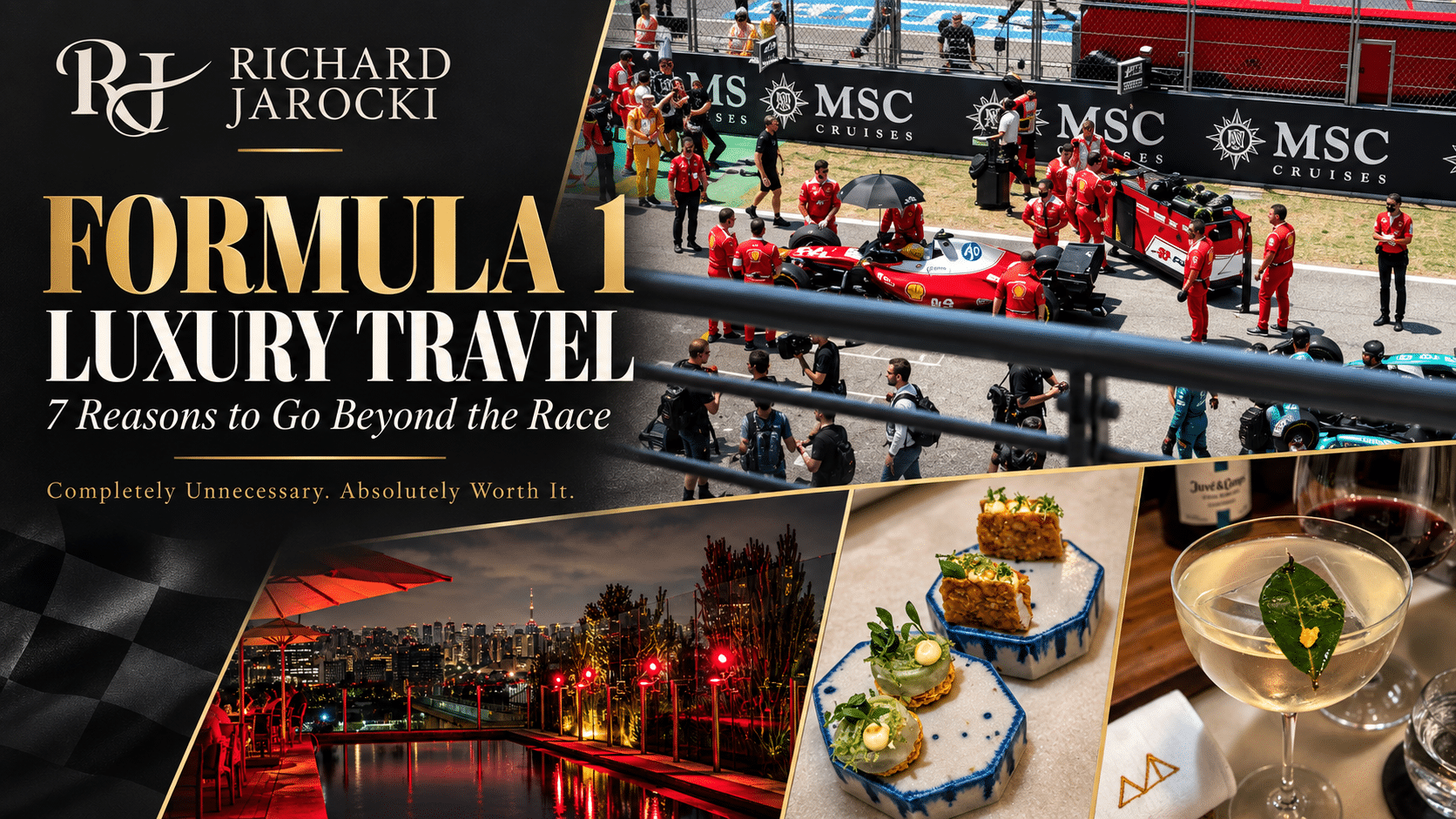
    Formula 1 Luxury Travel: 7 Reasons to Go Beyond the Race Formula 1 luxury travel collage featuring a Ferrari race-grid scene, Hotel Unique’s rooftop, Mont Bar dishes, and a cocktail.

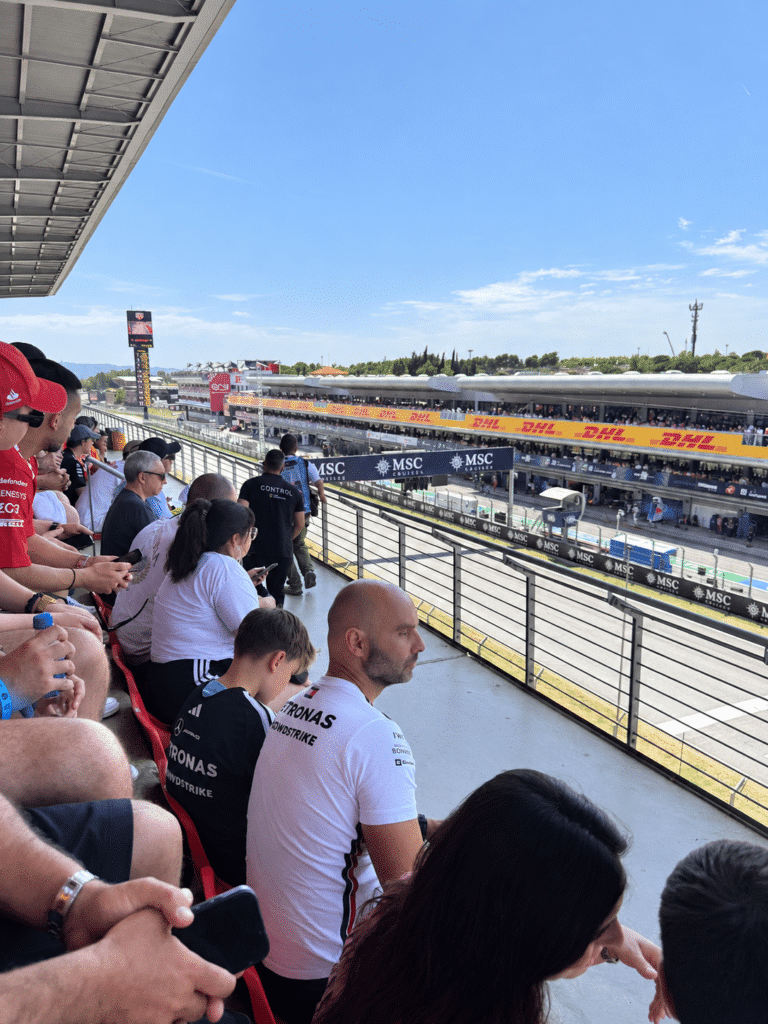
    Formula 1 luxury travel started with an interest in racing and turned into a reason to explore whole cities. Working at Ferrari got me interested in Formula 1. Traveling for races turned that interest into something much bigger. Now, booking a Grand Prix means a lot more than choosing a flight and buying a ticket. I am researching restaurants, comparing hotels, figuring out which cocktail bars I can fit in, and deciding how many extra days I can justify taking off work. Usually, I can justify a few.

    Formula 1 luxury travel brings together most of the things I enjoy: racing, food, cocktails, hotels, and getting to know a city well enough that I want to come back.

    The race still matters. I care who wins. But when I look back on these trips, I remember much more than what happened on Sunday. I remember the meal I am still talking about months later. The bartender who took the time to explain a drink. The hotel that became part of the experience. The people sitting around me at the circuit.

    I collect watches, sneakers, T-shirts, and hats. I still enjoy all of them. But experiences have become my favorite thing to collect. The way I think about spending money has changed because of that. I still buy things, but now I find myself asking how much I want something compared with another trip, another dinner, or another few days somewhere I love. Travel has become a much bigger part of what I work for and what I look forward to.

    I also have a full-time job and a limited amount of time away from it. When I take a race trip, I want those days to count. That means thinking about where the money goes, what is actually worth paying for, and how much I can realistically fit into a week without turning a vacation into another job.

    Formula 1 gives me the reason to book the trip. Everything around it is what turns that trip into something I remember.

    If you want to understand where that really started for me, read The Trip That Changed Everything. My first São Paulo Grand Prix ended up changing much more than where I wanted to watch Formula 1.

    1. It Gives Me a Reason to Go Somewhere—and Go Back

    São Paulo helped renew my love of gastronomy. The city introduced me to restaurants that are now among my favorites anywhere in the world, and it quickly became somewhere I wanted to keep returning to. I have written much more about the city in my São Paulo restaurant guide and my São Paulo destination coverage.

    Barcelona taught me something different. It made me think more about the history behind the food and wine I was enjoying. You can sit down to dinner and have hundreds of years of tradition behind what ends up on the table. Then you walk outside and find yourself surrounded by buildings and neighborhoods that existed centuries before the United States was even a country. That puts things in perspective.

    I have always appreciated a great meal and a good glass of wine. Barcelona made me appreciate how much more there can be behind both—the people, the traditions, the history, and the culture that helped create them.

    That is one of the biggest reasons I like returning to places instead of treating every trip as a checklist. The second visit is different. There is less pressure to see everything. I can go back to a restaurant I already love, try somewhere new, spend more time in a neighborhood that interested me the first time, or simply leave part of the day open. Having favorites gives me a starting point without making me feel like I have finished exploring the city.

    I already have restaurants and places I am excited to return to, but I do not feel remotely finished with the city. Every trip becomes a decision between going back to somewhere I already know I love and making room for somewhere new.

    It is a good problem to have. My restaurant list just has very little respect for the number of days I actually have available.

    That is what Formula 1 luxury travel has become for me. The race gets me to the city, but everything I discover around it gives me a reason to return.

    2. The Food Can Be as Memorable as the Race
    I take restaurant reservations seriously. Anyone who has traveled with me—or looked at one of my itineraries—can probably figure that out.

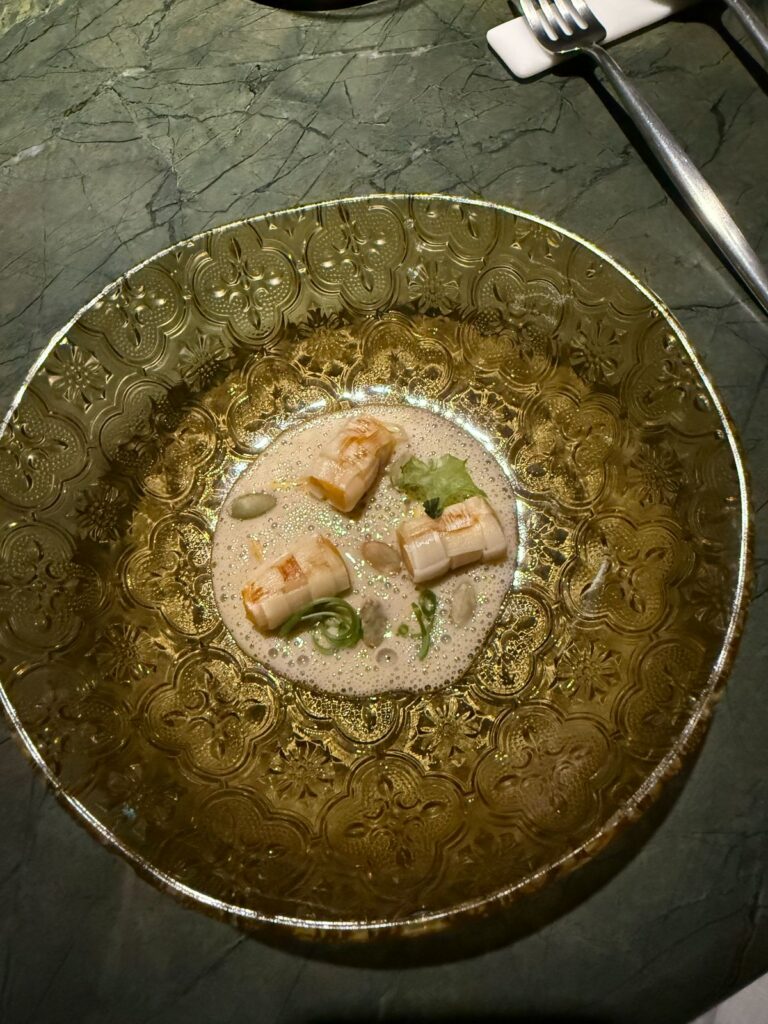
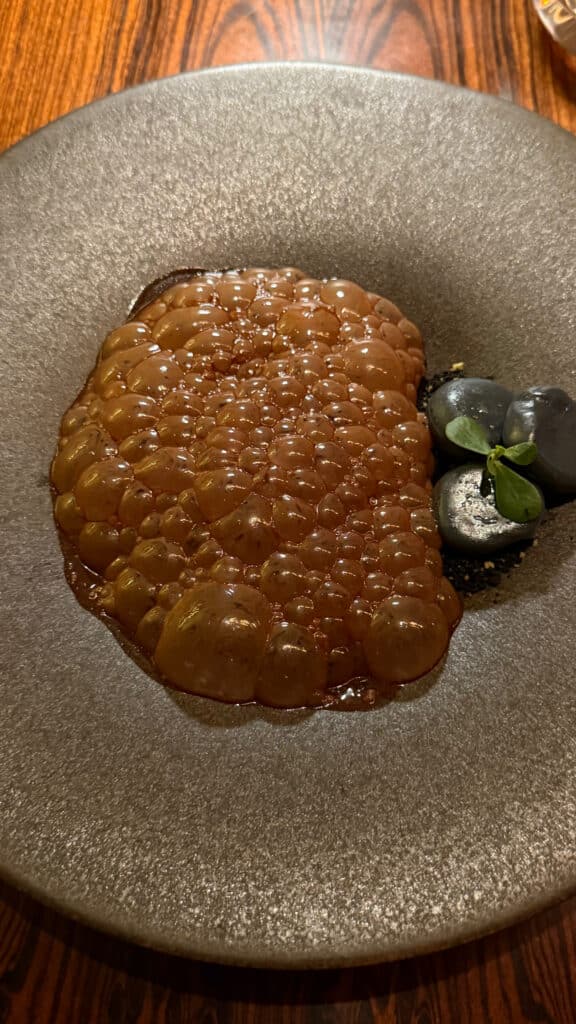
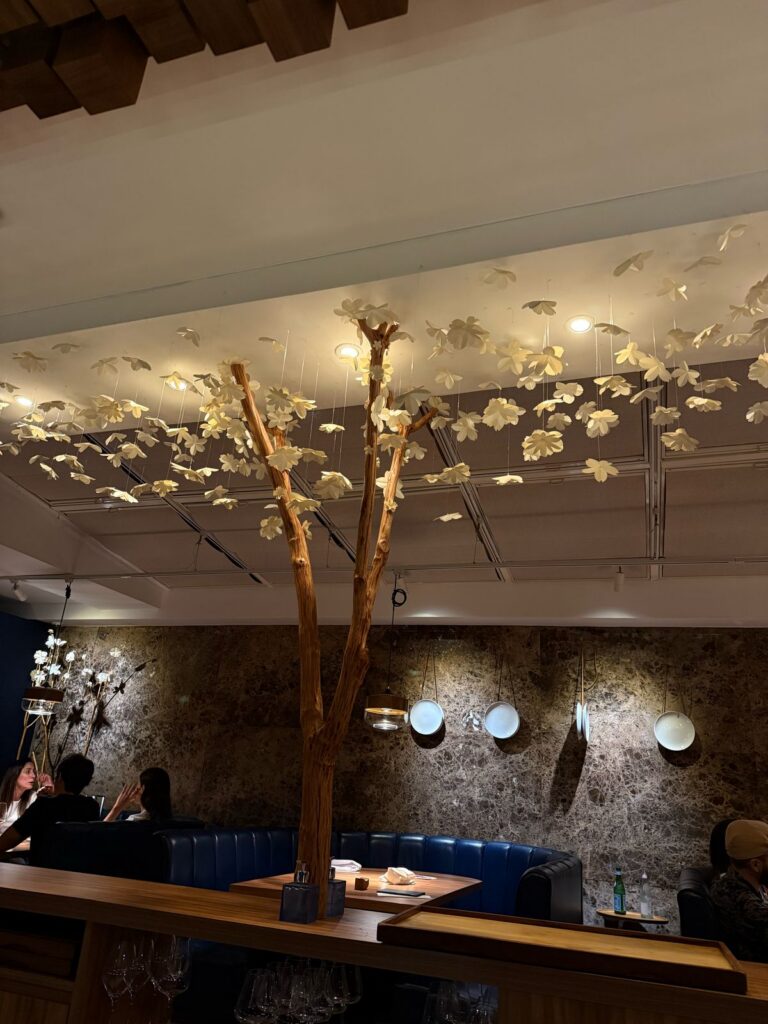
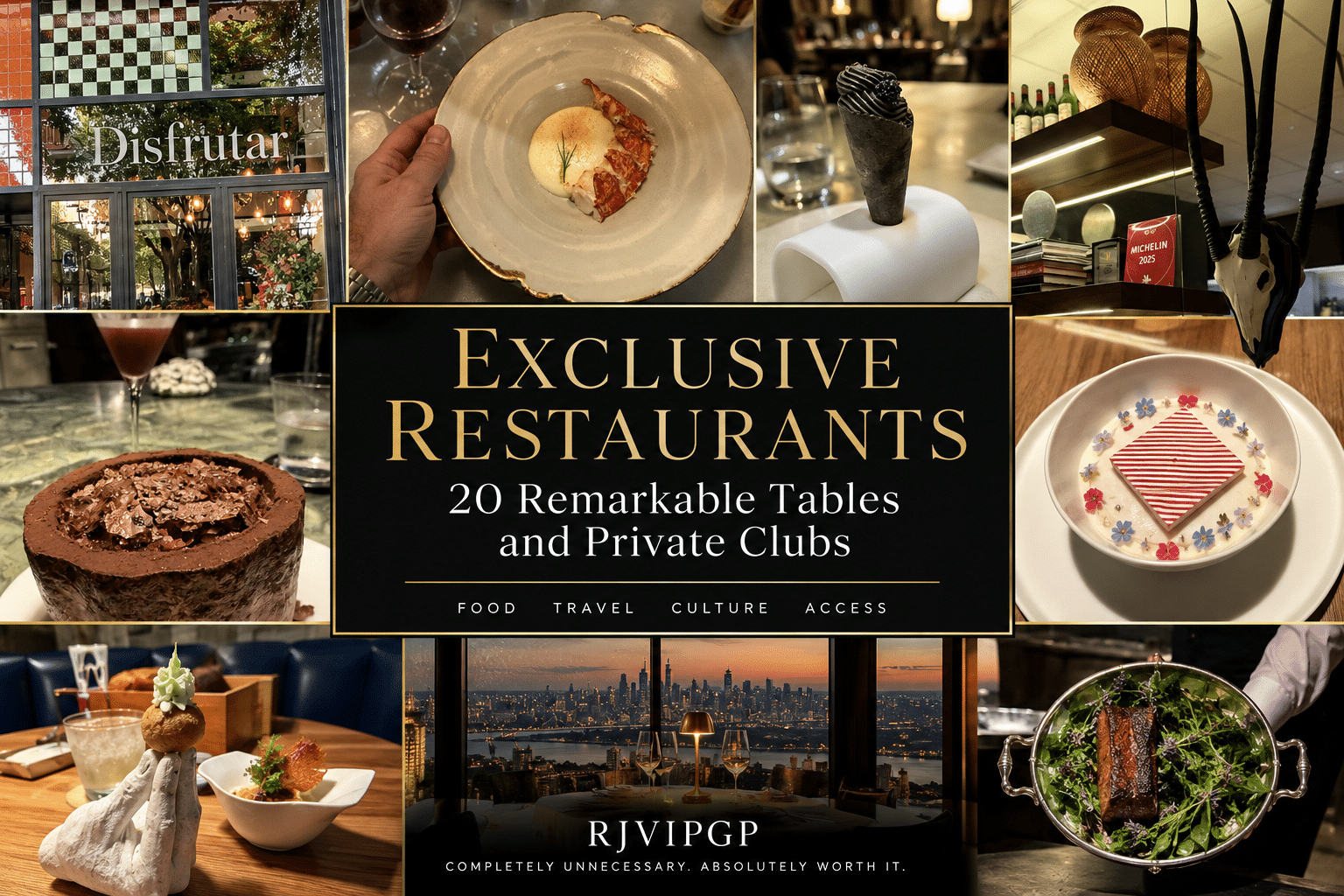
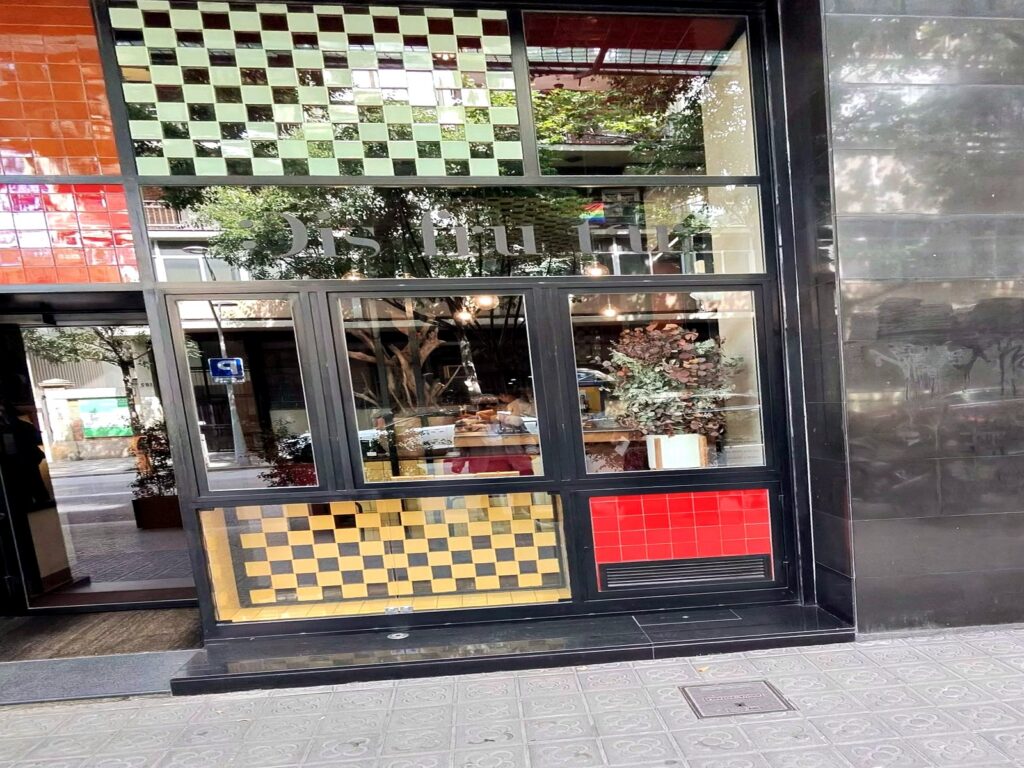
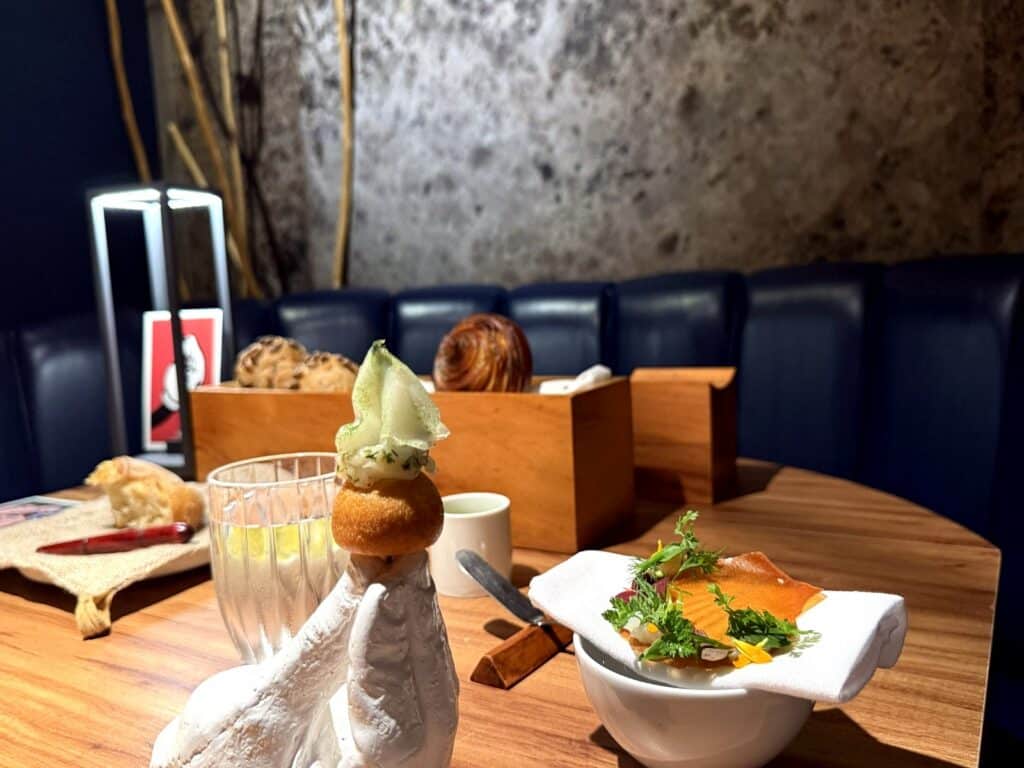
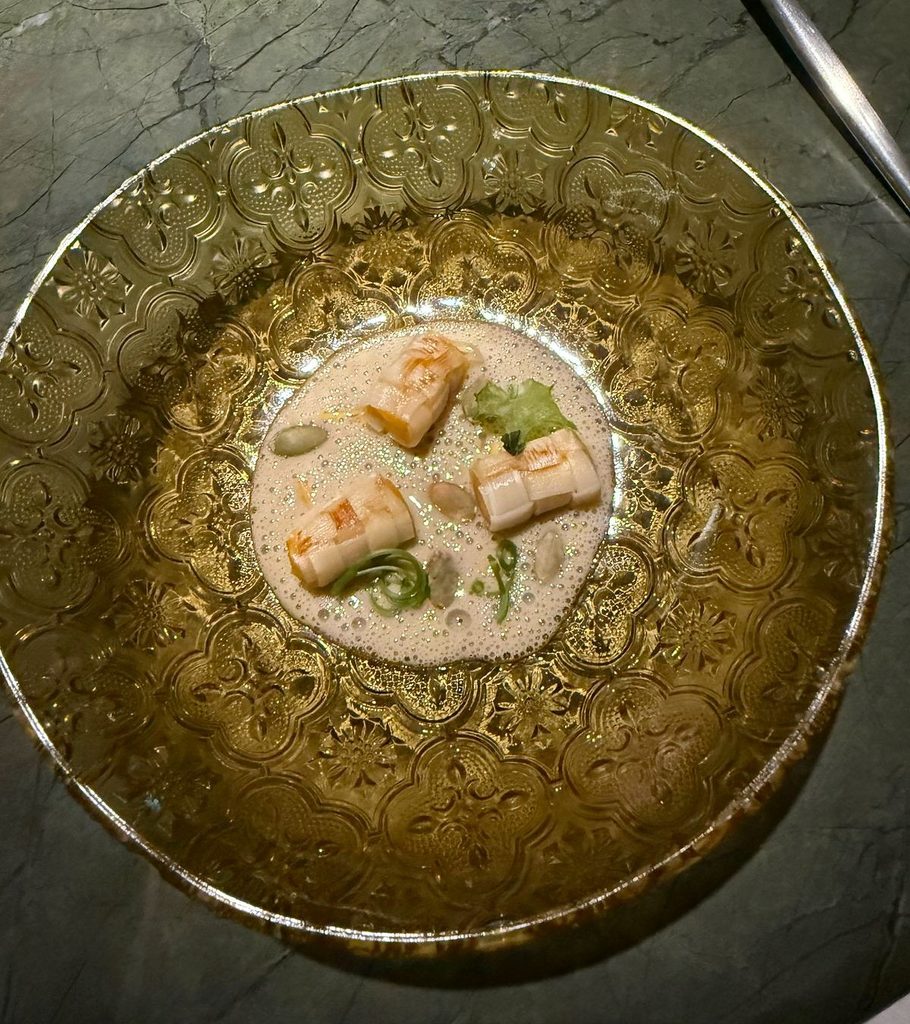
    In Barcelona, Mont Bar became one of my favorite meals anywhere, while Disfrutar was a completely different kind of experience. I would not really compare the two directly. Mont Bar felt more relaxed, intimate and personal. Disfrutar was more theatrical, technical and built around a much longer progression of courses. Both stood out for very different reasons.

    In São Paulo, Evvai remains my favorite restaurant in the world. D.O.M., Tuju, A Casa do Porco and Tan Tan have all been part of the reason I keep wanting to explore more of the city’s food. These meals become things I look forward to for months.

    A meal that changes your mind

    I want to see what a chef is doing, try ingredients I might never order on my own, and understand why a dish works. Sometimes the kitchen puts something in front of me that I would have skipped on a menu, and it ends up being one of the best things I eat all trip.

    Evvai managed that with its take on feijoada. I do not generally like beans, yet I loved that dish. That is a pretty convincing argument for occasionally letting someone who knows what they are doing choose dinner.

    Staying with familiar ingredients would have cost me an experience I still remember. I explain more about that in my take on whether tasting menus are worth it.

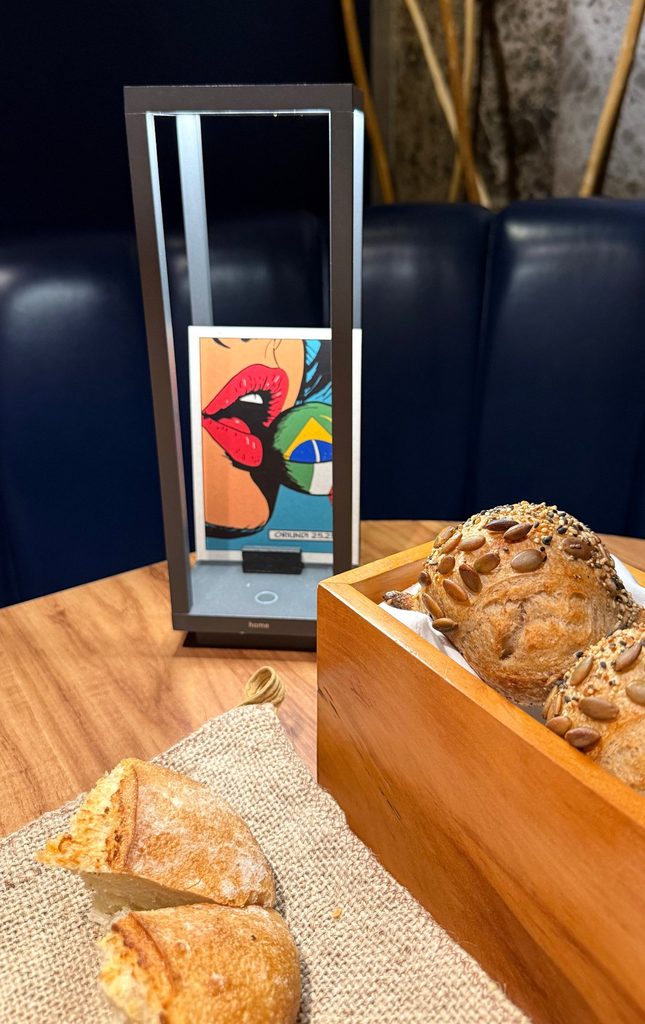
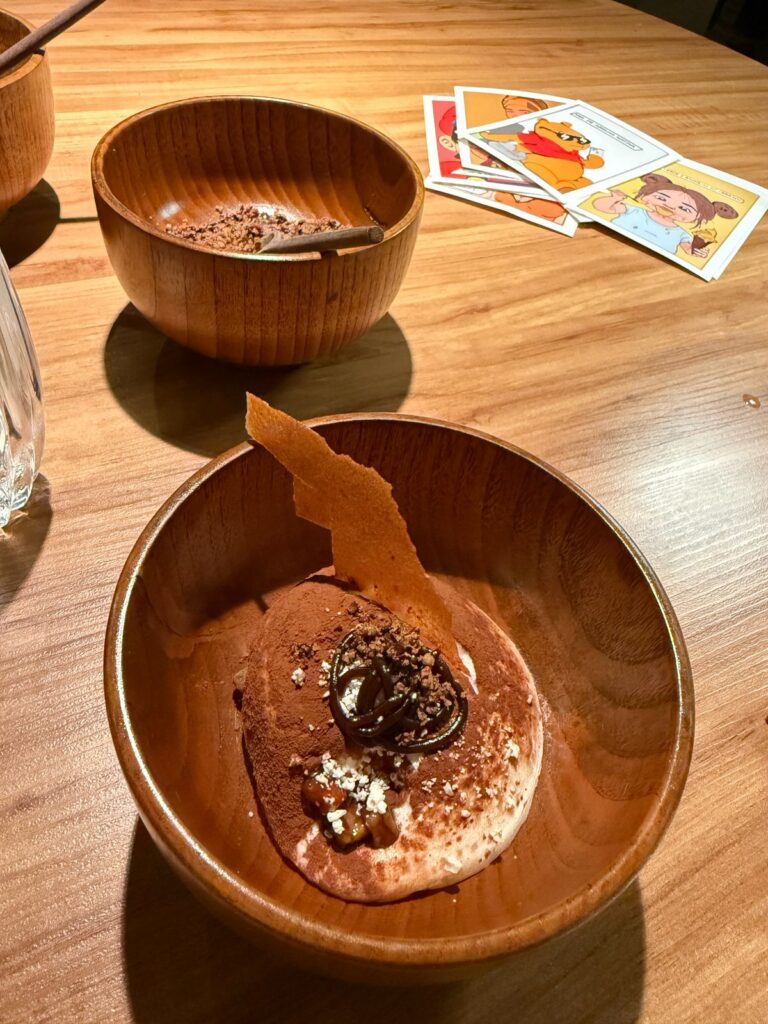
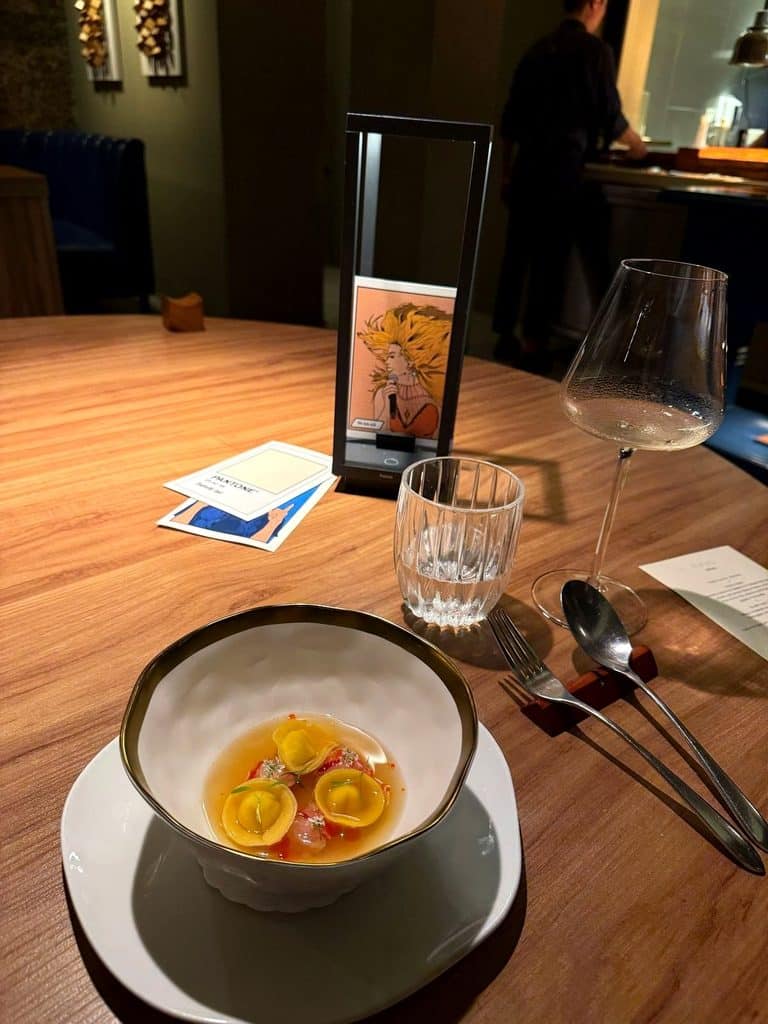
    The explanation matters, too. Evvai’s pop-art course cards gave me something to connect with as the dishes arrived and something to take home afterward. I enjoy knowing what inspired a preparation and why the ingredients belong together. It makes me pay closer attention to what I am eating.

    Mont Bar also showed me how much the people and the room contribute to dinner. The team took time to talk with us, the music helped give the place personality, and the service felt comfortable. It was ambitious food without the experience ever feeling stiff.

    Returning favorites and the next reservation

    For my upcoming November 2026 trip to São Paulo, I am planning a little of both: returning to places I already know I love and making room for somewhere new. I am going back to Evvai and Tan Tan, and I want to try Goya Zushi and Jacó.

    If I can make the timing work, I also want to get back to A Casa do Porco. That may even end up being lunch before my flight home, which would be a pretty good way to finish the trip.

    I also plan to spend another evening at Rosewood São Paulo, even though I am staying elsewhere for this trip. Taraz and Rabo di Galo are both places I enjoyed enough to want to return to, and Rosewood has become one of those hotels where I am happy to spend an evening even when I am not staying there.

    I may also make my way back to Palácio Tangará during Grand Prix week.

    On my previous visits during Grand Prix week, the security presence at Palácio Tangará was noticeable. Race-week access is something I would confirm with the hotel before making plans. If I book dinner there, I will confirm the reservation, arrival instructions and any restrictions directly. A restaurant reservation should never be treated as a promise of access to teams, drivers or private areas.

    That gives me another excuse to go back, have dinner or a drink, enjoy the hotel, and take in some of the atmosphere surrounding race week.

    The race is obviously the center of the trip, but Formula 1 spills into the hotels, restaurants, bars, and the rest of the city. You start noticing teams, sponsors, and fans everywhere, and places that are already interesting take on a completely different energy for the week.

    A famous restaurant name may get me researching, but the full experience is what makes me want another reservation: the cooking, the drinks, the room, the people, and the feeling of being somewhere I know I will think about again after I get home.

    For me, food is a major part of Formula 1 luxury travel. A Grand Prix weekend might start with the race schedule, but some of the restaurant reservations become experiences I anticipate just as much.

    3. The Hotel Has to Earn Its Place in the Trip
    I enjoy a great hotel, but I also want it to make sense for the trip I am actually taking. São Paulo is a good example because I have stayed at several of the city’s top hotels, and they each offer something different.

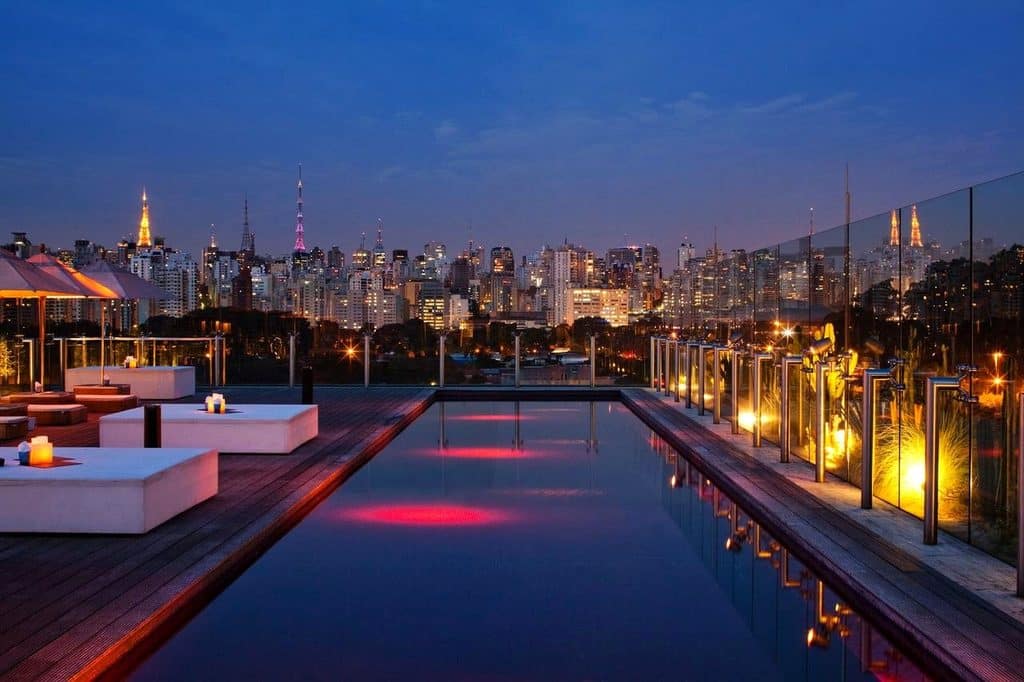
    For a Formula 1 weekend, Hotel Unique is still my best overall pick. It has the atmosphere, the rooftop, the crowd, and the energy that fit the São Paulo Grand Prix weekend especially well.

    I have also been looking at Posh Club Grand Prix parties for my November 2026 trip. Before building an evening around one, I would check the organizer’s current venue, dates, ticket requirements and hotel access rules before booking.

    A future stay is not a finished review

    For my upcoming November 2026 trip, though, I decided to stay at W São Paulo. Part of the reason is the rooftop.

    I like having somewhere at the hotel where I can come back after a long day, have a drink, and still feel like the night is not over. But I also want to experience the W as a complete hotel and get to know it better.

    I have spent enough time comparing São Paulo hotels that sometimes the only real way to understand one is to stay there and see how it fits into the trip.

    That does not mean I think the W is the most luxurious hotel in São Paulo. If we are talking about pure luxury, Rosewood São Paulo is on another level. The rooms, design, and overall experience make it one of the most impressive hotels I have stayed at in the city.

    Palácio Tangará belongs in that conversation as well. It offers a very different kind of luxury—quieter, more traditional, and removed from some of the energy of the city center.

    And then there is Emiliano, which is still on my list. I have not stayed there yet, so I am not going to pretend I can rank it against hotels I have actually experienced. But based on its reputation and location, it is one I want to get to know for myself.

    The most luxurious hotel is not automatically the best hotel for every trip.

    That is especially true with Formula 1 luxury travel, where the right hotel can become part of the race-week experience rather than simply somewhere to sleep.

    A beautiful room matters. So do the service, the crowd, the bars, the location, and what happens when I come back at the end of the night. That is what I am really paying for.

    4. There Is Usually a Cocktail Worth Finding
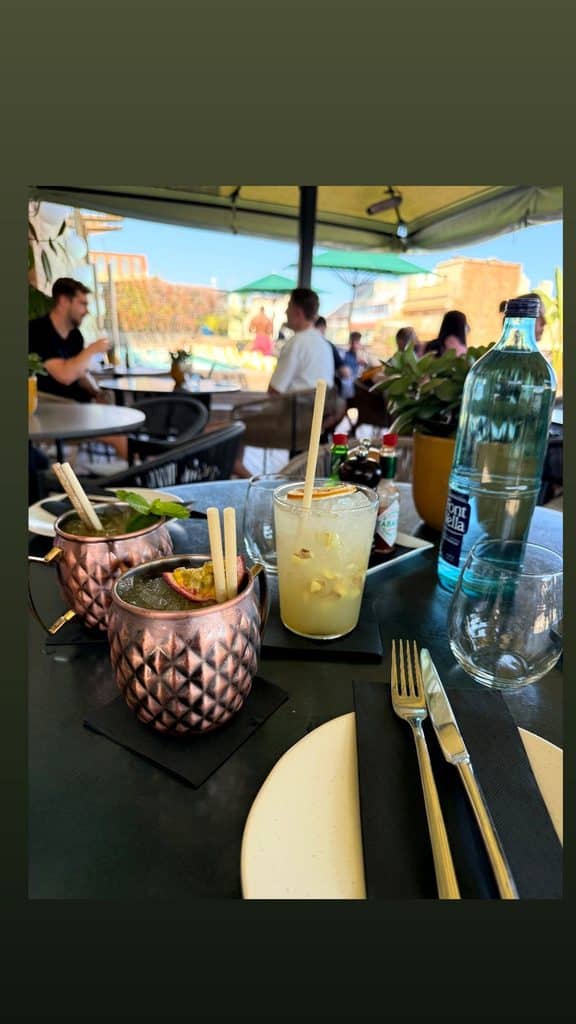
    My research rarely ends with the restaurant. Cocktail bars become part of the trip too, but I do not choose every bar because it appears on a World’s 50 Best list or because someone considers it a temple of mixology. Sometimes I want that experience. Sometimes I just want a good drink and somewhere comfortable to sit down.

    In São Paulo, Tan Tan is one of the places I keep going back to. I like that it works as both a restaurant and a serious cocktail bar. The Tsukemono I enjoyed was a good example: tequila, wasabi, cucumber and orange bitters may not sound like an obvious combination, but it worked for me. That is a memory of the drink I had, rather than a promise about the current menu.

    The Liquor Store gave me something completely different. On my visit, it felt like a very small, intimate bar, and that changed the experience. The bartenders can spend more time talking with you, figuring out what you actually like, and adjusting drinks around your preferences.

    That is one of the things I appreciate most about a great cocktail bar. The drink matters, but so does the person making it.

    Destination bars and the hotel rooftop

    Paradiso in Barcelona was another kind of experience. The creativity, presentation, and atmosphere make the bar a destination in itself. It is the type of place I specifically plan around because I want to see what they are doing.

    But not every memorable drink needs that kind of production.

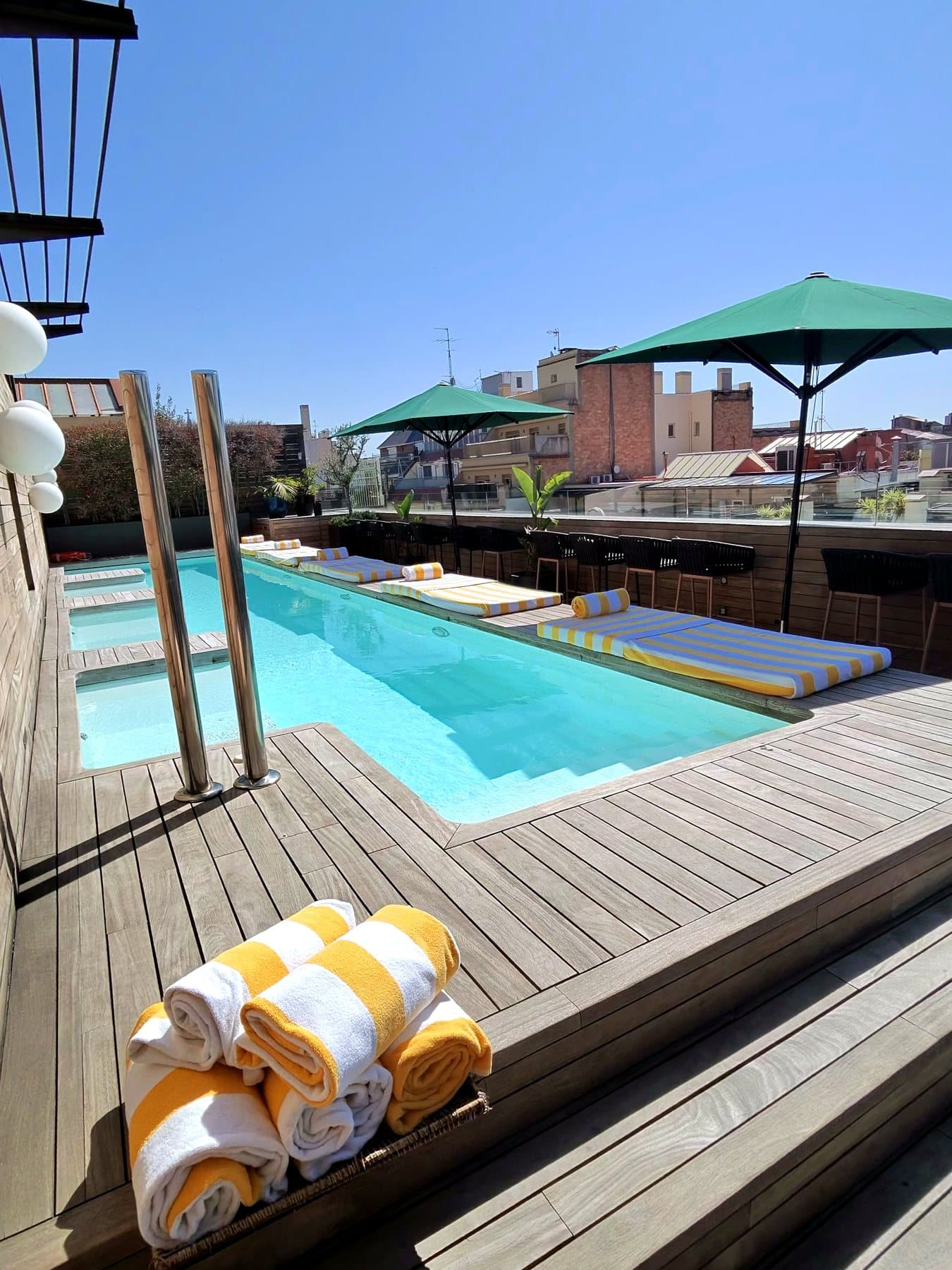
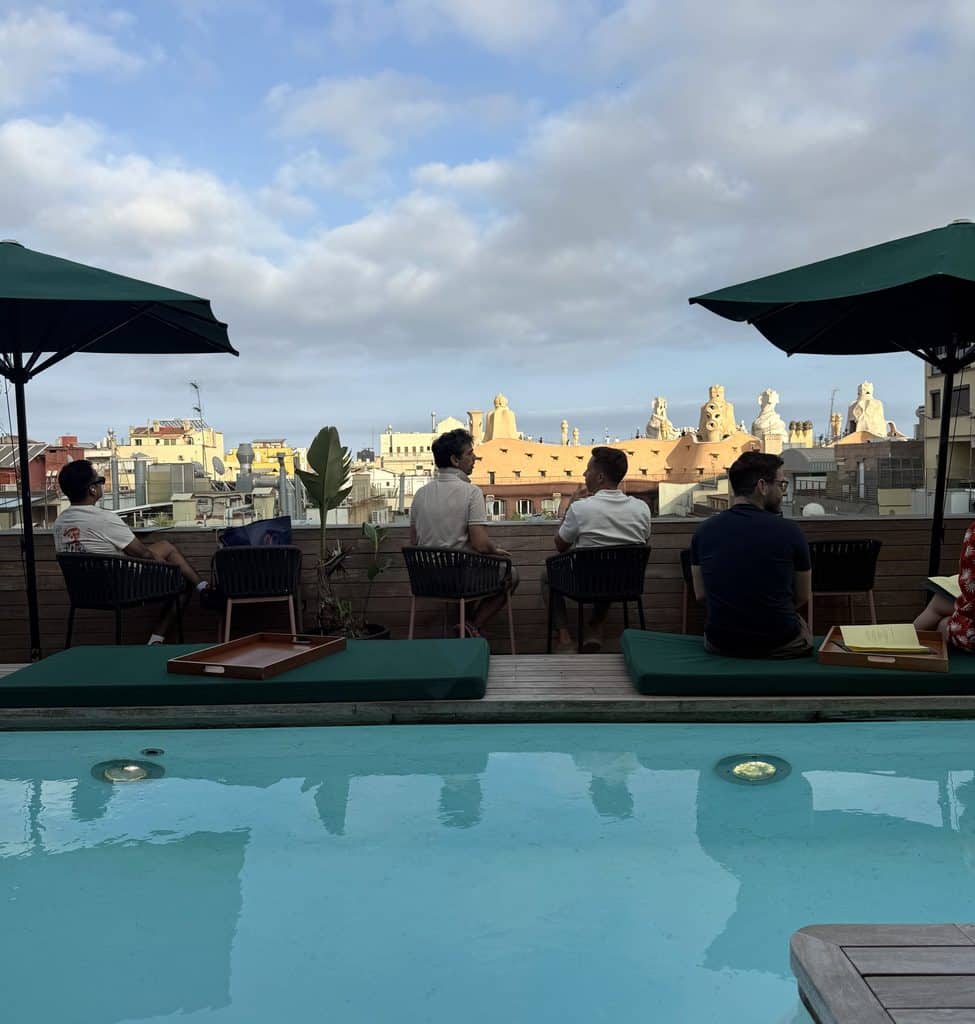
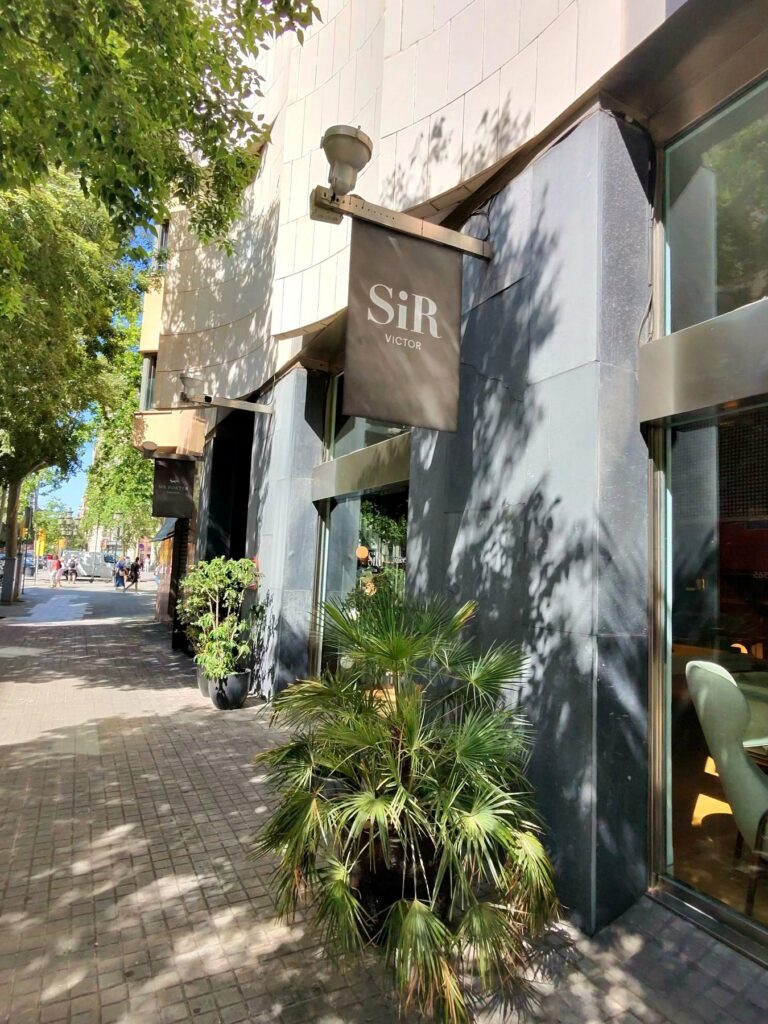
    While staying at Sir Victor in Barcelona, the rooftop became my go-to after a long day exploring the city. After walking all day, a few liters of water and a couple of drinks up there became part of the routine. It was not about chasing another famous cocktail bar or checking another place off a list. Sometimes I just wanted somewhere comfortable to sit, cool down, look out over Barcelona, and relax before deciding what came next.

    I found the same thing in São Paulo. After spending an entire day at Interlagos, sometimes the last thing I want to do is immediately rush somewhere else.

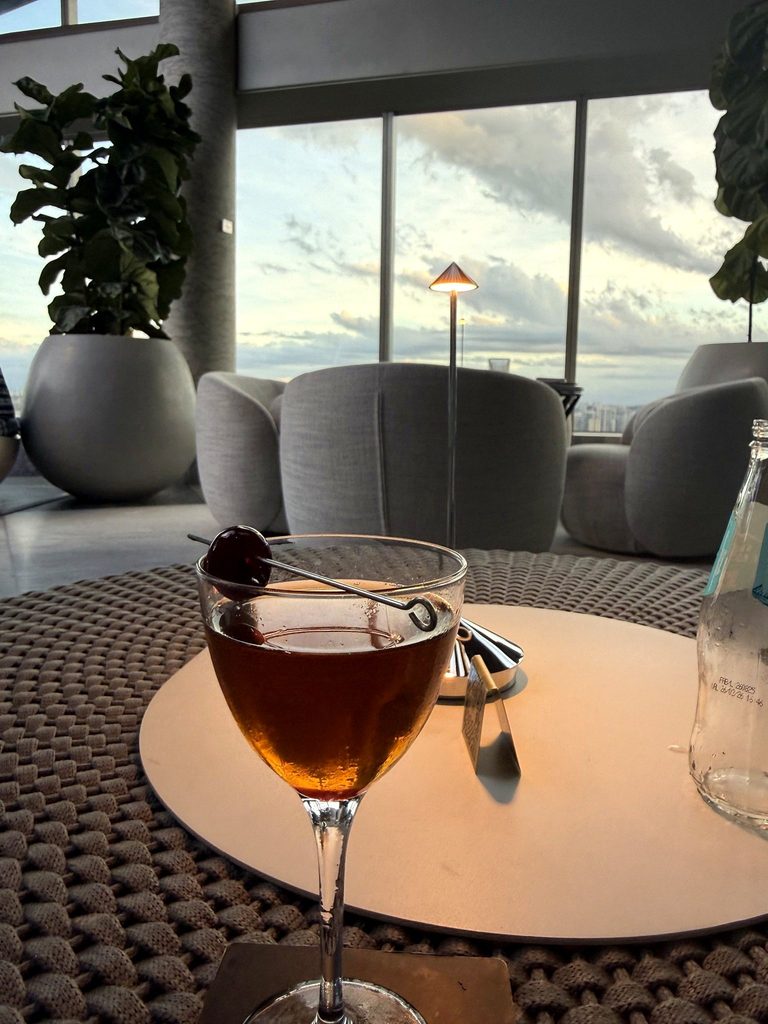
    The bar at the InterContinental São Paulo became a good place to sit down, have a drink, and relax for a while before getting ready for dinner. I have used the W São Paulo the same way. Sometimes a hotel bar is exactly what I need after a race day: somewhere comfortable, a good cocktail, and an hour when I do not have to be anywhere.

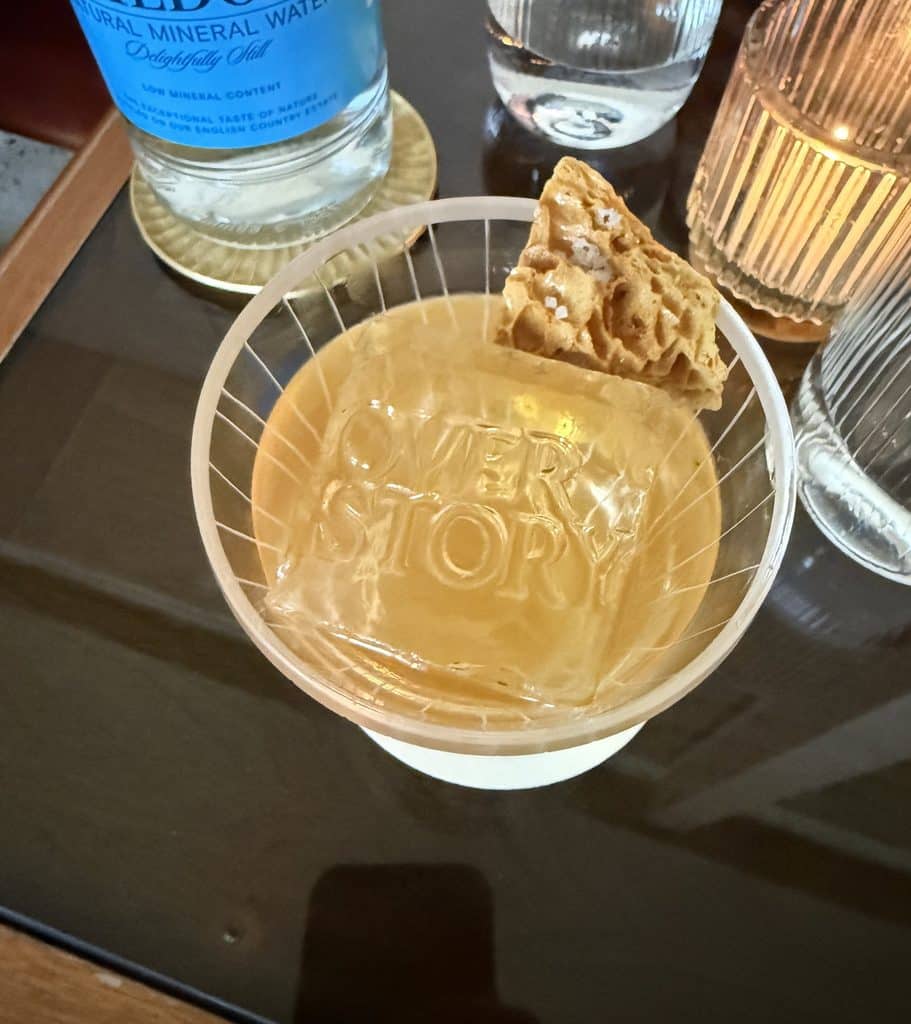
    Then there are places like Overstory in New York, where the setting becomes part of the experience. You are there for the cocktails, but being high above Manhattan with that view turns a drink into something bigger.

    I do not need every cocktail bar to have an award, a complicated concept, or a place on a global ranking.

    I also have to be realistic about how much I try to fit into one night. A cocktail before dinner, a long wine pairing, and several bars afterward can sound like a great plan when I am sitting at home building the itinerary. Then I remember there is usually another full day waiting for me.

    At this point, I would rather give one or two places enough time to enjoy them than spend the entire night watching the clock and rushing to the next reservation.

    The problem is that the list never gets shorter. There are only so many dinners, cocktails, and evenings in one trip, and somehow I always find more places than I have time for.

    5. I Want to See More Than the Circuit

    If I am taking time off work and flying to another country, I want time to experience the place beyond the race. That means leaving room for neighborhoods, architecture, museums, food, and sometimes just walking around without every hour assigned to something.

    Barcelona made that especially clear to me. There is so much history built into the city that even a normal walk can become part of the experience. Gaudí’s architecture, the Gothic Quarter, the old streets, the cafés, and the markets all gave me reasons to keep exploring beyond the race itself.

    São Paulo has been different, but just as interesting. I love the street art at Beco do Batman. I have spent time exploring Ibirapuera Park, one of the city’s major cultural and green spaces, and I have visited the Ayrton Senna memorial there. Ibirapuera is the kind of place where you can spend hours walking and still feel like you have only seen part of it.

    The places still on my list

    There are still parts of São Paulo I want to experience more deeply. One of them is Liberdade, the neighborhood most closely associated with São Paulo’s Japanese community. I especially want to experience it on a weekend, when the streets are busier and the neighborhood has more of that festival and street-market atmosphere.

    Another experience on my wish list is a Sunday morning exploring the car scene around Avenida Europa. Classic cars, Ferraris, Porsches and other exotics are very much my kind of Sunday morning.

    Of course, there is one problem. During Grand Prix weekend, Sunday morning is not going to happen. I will be at Interlagos.

    Every trip gives me another list of places I want to return to and things I still have not managed to fit in.

    Give yourself time to enjoy the city

    Race days themselves can take more out of you than the itinerary suggests. In Barcelona, I walked more than twelve miles on each of those days, including getting to the circuit and exploring once I was inside. I loved it, but that is a substantial day before dinner even enters the conversation.

    I wrote more about that weekend in Why I Love Formula 1: Racing, Travel & Belonging.

    So when I say to allow extra days, part of the reason is simply having enough energy to enjoy where you are. I do not want to fly to another country, spend every day at the circuit, eat dinner, go back to the hotel, and then head to the airport. That would feel like I attended a race in another country without really experiencing the country.

    I want time to stop for a coffee, walk into a shop, take a longer route because something caught my attention, or change the plan because someone gave me a recommendation that sounds better than what I had scheduled.

    But I also know there is a point where too much planning can start working against the trip. If every hour is assigned to something, then a spontaneous drink, an unexpected conversation, a neighborhood you want to keep exploring, or a restaurant you did not know about suddenly becomes a problem.

    The best version of these trips, for me, has both: enough planning that I do not miss the experiences I really care about, and enough open time that I can actually enjoy being somewhere new.

    To me, Formula 1 luxury travel should include enough time to experience the destination, not just the circuit.

    6. The Research Starts Long Before the Flight

    I spend a ridiculous amount of time planning these trips. And I mean hours. Possibly days.

    I search social media, read food blogs and travel sites, look through restaurant and bar accounts, ask chefs and bartenders for recommendations, and talk to other travelers about what they loved, what they would skip, and what they would actually do again.

    I also go through Reddit travel boards and local discussions, then use ChatGPT to keep researching the city’s restaurant, hotel, cocktail, and Formula 1 scenes from different angles.

    I want enough different sources and opinions that, by the time I start booking, I am not relying on one list or one person’s idea of what is worth doing. For dates, reservations, admission rules and package inclusions, I check the current information with the venue or official organizer.

    By the time I leave, I usually have a pretty good idea of what I want to do, what has to be booked in advance, and what can stay flexible.

    Build around the hardest bookings

    Restaurant reservations usually take the most attention. Some places open months ahead. Others release tables much closer to the date. Some require a credit card guarantee. Some disappear almost immediately. Wanting to eat somewhere and actually getting a reservation are two completely different things.

    Then there is the circuit. Getting there, getting back, deciding how early I need to leave, and figuring out what is realistic afterward all matter. A race day that looks simple on paper can become a very long day once transportation, walking, crowds, and weather are added to it.

    That is why I usually build the trip around the things that are hardest to move. The published race sessions are the starting point. A restaurant I really want may have only one reservation time available. A hotel event, party, or special experience may happen on one specific night.

    Once those pieces are in place, I can work the other meals, bars, neighborhoods, and sightseeing around them.

    The challenge is making those ideas work together. Every individual idea may sound easy enough on its own. Then I start putting everything on a map and matching it against race sessions, restaurant times, traffic, transportation, and how tired I am realistically going to be after a full day at the track.

    Geography, time and the whole budget

    Geography matters just as much as availability. Two reservations can both technically work and still make for a miserable evening if getting from one to the other takes too much time. I would rather spend that time enjoying where I am than sitting in traffic or watching the clock because I tried to force too much into one night.

    My time on the trip has value too.

    I also try to look at the full cost instead of convincing myself that every individual upgrade is reasonable. Flights, the hotel, race tickets, transportation, restaurants, drinks, shopping, and everything else all come out of the same budget.

    Looking at each purchase separately makes it very easy to say, “It is only a little more.” Then you add everything together. That is when the trip becomes expensive very quickly.

    The best itinerary protects the experiences I care about most while still leaving enough room to enjoy where I am.

    For me, good planning is part of Formula 1 luxury travel. I do all of that research so that once I get there, I can spend less time worrying about what I should be doing next.

    The goal is not to complete an itinerary. The goal is to enjoy the trip.

    7. The People Make the Weekend
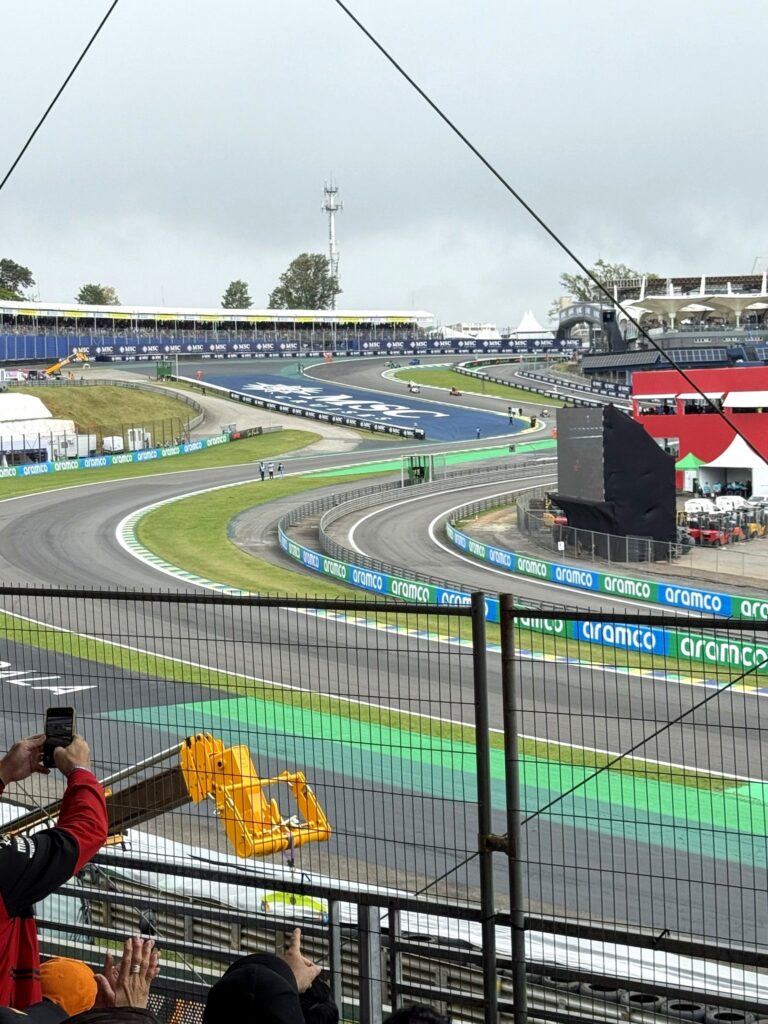
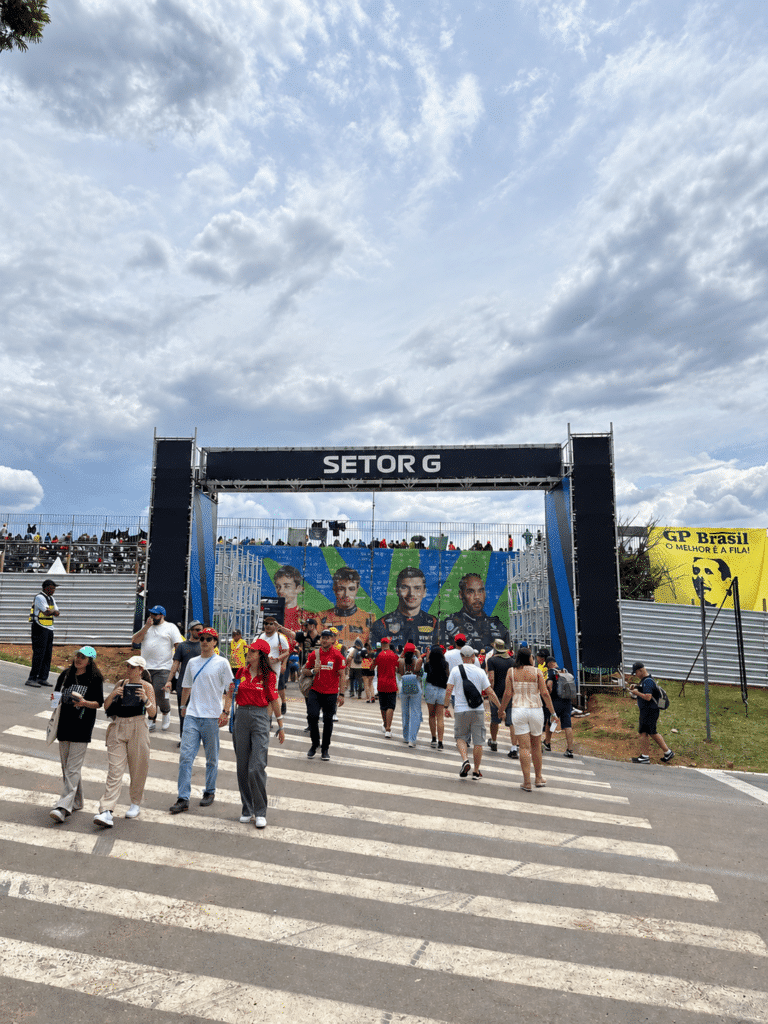
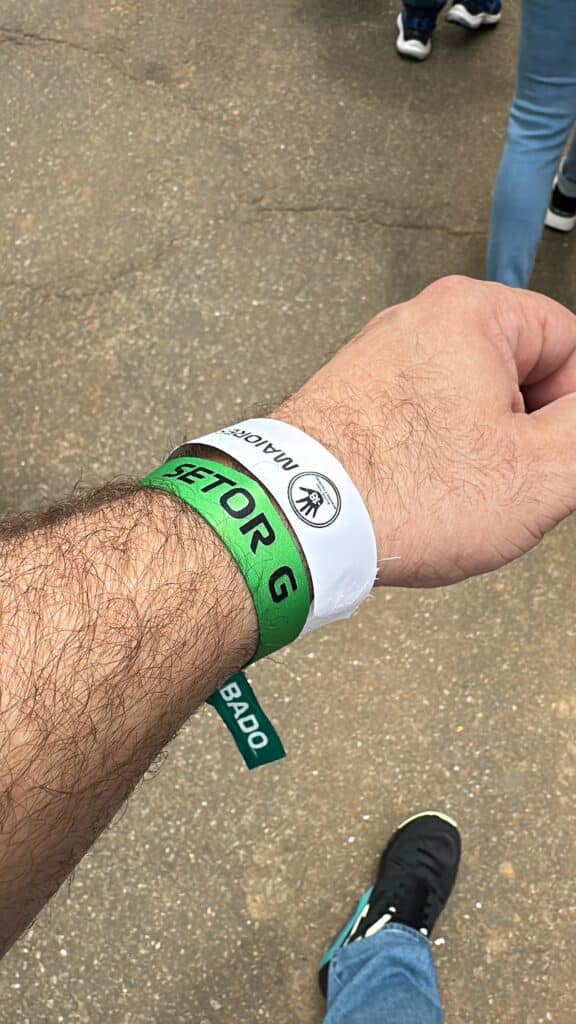
    Some of my strongest Formula 1 memories involve getting soaked in Sector G at Interlagos, drinking beer and canned Jack and Coke, and talking with people I had never met before. We were there for the same reason. Different teams. Different drivers. Different countries. Same sport.

    When people made room for me under shelter from the rain, that small gesture stayed with me. We did not all speak the same language, but it did not matter much. Formula 1 already gave us something to talk about.

    For someone who does not always find it easy to start a conversation, that shared interest makes a difference. I have written more about those connections in Why I Love Formula 1: Racing, Travel & Belonging.

    Hospitality is a choice, not a requirement

    I have also done hospitality and paddock experiences, and I enjoy them. In the experiences I tried, I appreciated the additional access. The added comfort, food and drinks were part of the appeal too. I would happily do those experiences again when they make sense for the trip.

    But I have also become more realistic about what I want to spend on them.

    If upgrading to hospitality means giving up a great hotel, several dinners, extra days in the city, or another trip entirely, then I have to decide what matters more. Sometimes the answer is hospitality. Sometimes it is not. And that does not make the grandstands feel like a compromise.

    I genuinely enjoy being surrounded by fans who care about what is happening on the track as much as I do. When an overtake happens, someone crashes, the weather changes, or a favorite driver comes past, the reaction around you becomes part of the race. That atmosphere is hard to recreate anywhere else.

    To me, that belongs in a conversation about luxury travel too. Luxury does not always mean being separated from everyone else.

    Sometimes it is a beautiful hotel, an exceptional tasting menu, and a great cocktail. Sometimes it is standing in a packed grandstand in the rain with thousands of people losing their minds over what just happened on track. A great Formula 1 trip can have both.

    That mix is one of the things I like most about Formula 1 luxury travel. Luxury can mean hospitality and five-star hotels, but it can also mean having the freedom to choose the experiences that matter most to me.

    I want to enjoy the whole trip and make the budget work across all of it.

    Hospitality is still on the wish list. But so is another great weekend in the grandstands.

    If you want more of my thinking on experiencing the city beyond the race itself, I wrote about that in Formula 1 Beyond the Circuit.

    The Race Gets Me There. The Whole Trip Brings Me Back.

    Formula 1 has changed where I travel, how I plan, and what I want from a trip. I still look forward to race day. But I also look forward to the dinner reservation I made months earlier, going back to a bar I loved, spending time in a hotel that became part of the experience, and finding another reason to return to a city I thought I already knew.

    That is also why I write about these trips. I want to give people more than a photograph of an expensive room, a beautiful plate, or a race ticket.

    What made the experience memorable? Would I spend the money again? Would I stay there again? Would I make the reservation again? Where would I sit at the circuit, and would I choose those seats again?

    What I would want to know before booking

    That last question is something I have learned to take much more seriously.

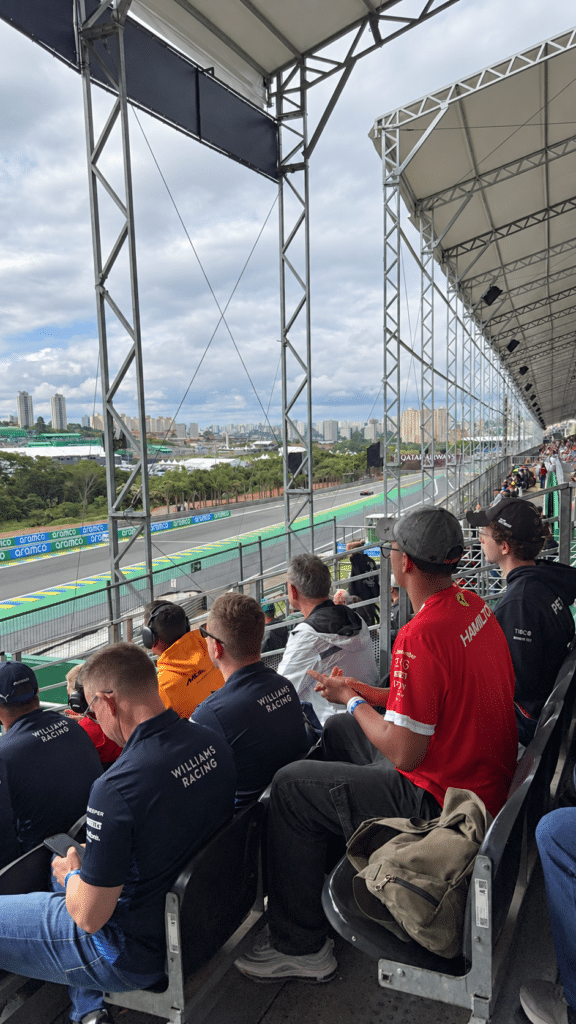
    At my first São Paulo Grand Prix, I learned the value of a covered grandstand. It does not rain every São Paulo Grand Prix, but São Paulo weather can be strange. You can go from looking at a sky without a cloud in it to standing in a downpour. I know that from experience.

    Getting soaked at Interlagos gave me some great memories, but it also taught me that when I am choosing seats there again, having a roof over my head matters.

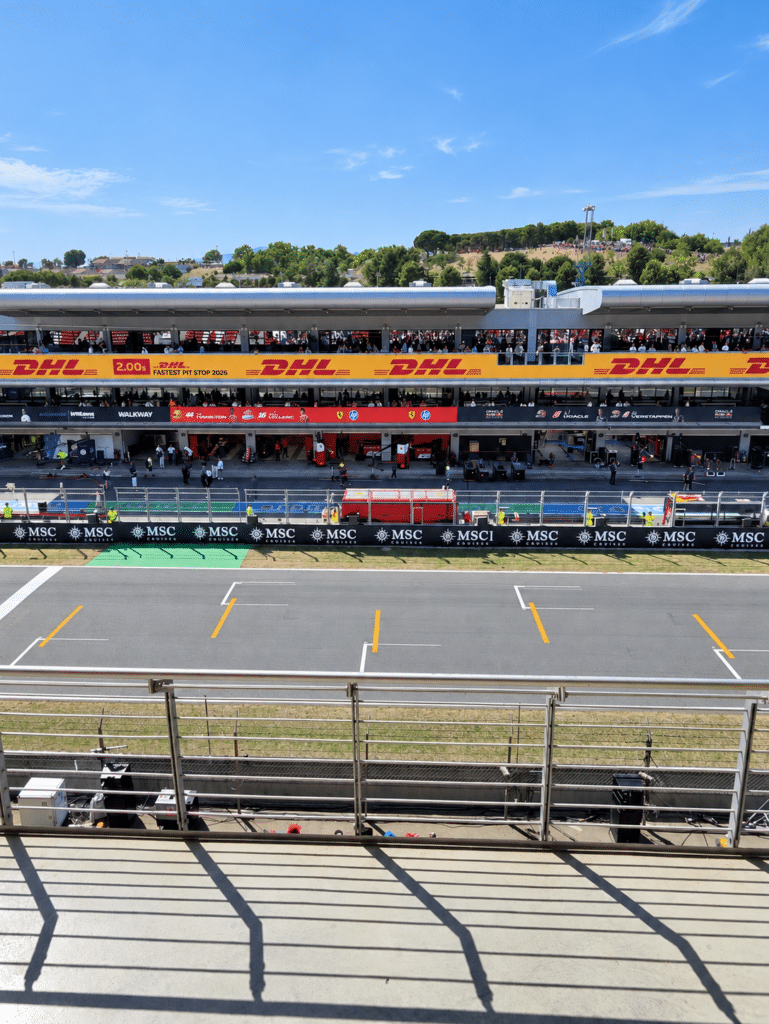
    Barcelona taught me the opposite weather lesson. My grandstand seats there were directly in the sun during the race. After spending hours at the circuit, that makes a difference too.

    Those experiences changed how I look at tickets. I am not only asking whether a grandstand has a good view of the track anymore.

    Is it covered? Where will the sun be during the race? Can I see a screen? What section of the circuit am I actually watching? How easy is it to get in and out? And after experiencing it once, would I pay to sit there again?

    Those details can matter just as much as the section number printed on the ticket. They are also exactly the kind of details I want to include when I write about these trips, because they are the things I wish I knew before buying the ticket myself.

    If you are planning your first Grand Prix trip, give yourself time around the race if you can. Pick a few experiences you genuinely care about. Book the things that are hardest to replace, then leave some room to explore.

    And when you buy the race ticket, do not just look at a circuit map and assume every grandstand experience is the same.

    Your version of Formula 1 luxury travel should reflect what you actually enjoy. Mine usually involves a great hotel, too many restaurant reservations, a few good cocktails, a lot of walking, and plenty of time around people who love Formula 1 as much as I do.

    It adds up. I am very aware of that.

    But when I look back at the races, the cities, the meals, the hotels, the people I met—and even the lessons learned from getting soaked in Brazil or cooked by the sun in Barcelona—I usually come to the same conclusion.

    Completely Unnecessary. Absolutely Worth It.

    Planning your own Interlagos weekend? My São Paulo Grand Prix Travel Guide covers my experiences with grandstands, transport, rain, food at the circuit, and fitting dinner into a race weekend.

  • Viaggio Ristorante Review: Is the Chef’s Counter in Wayne Worth It?

    Viaggio Ristorante Review: Is the Chef’s Counter in Wayne Worth It?

    Viaggio Ristorante review featuring a chef’s-counter dinner with Chef Rabbit

    Three handmade pastas, Sicilian influence, and a front-row dinner with Chef Matthew “Rabbit” McCormick in Wayne, New Jersey

    By Richard Jarocki
    August 13, 2026

    My Viaggio Ristorante Review

    I did not mean to book the chef’s counter at Viaggio Ristorante.

    The original plan was to order Viaggio’s pasta tasting, which was available throughout the dining room. Somewhere during the reservation process, I chose the chef’s counter instead.

    By the time we realized the mistake, we decided to keep the seats.

    Good decision.

    Earlier that afternoon, we had stopped at Bar Franco in Montclair to kill some time before dinner. Four cocktails later, that unplanned stop had nearly become the destination.

    Viaggio still had to follow it.

    Our accidental booking placed us directly in front of the kitchen, where Chef Matthew “Rabbit” McCormick cooked, plated, explained and served the tasting menu.

    It turned a dinner I was already looking forward to into one of the most personal restaurant experiences I have had in New Jersey.

    At a chef’s counter, there is nowhere for a restaurant to hide. You see the timing, communication, adjustments and hands finishing every plate. You also learn quickly whether the person cooking your food genuinely wants you there.

    Chef Rabbit did.

    He knew every ingredient, understood every decision behind the menu and seemed genuinely proud to share the food. There was no canned speech or forced performance. He cooked, answered our questions and allowed the meal to speak for itself.

    Viaggio means “journey,” which can sound like predictable restaurant marketing until the courses begin.

    This meal actually traveled: cured seafood, Spanish ham, octopus, three completely different pastas, swordfish, beef, layered chocolate and a final bowl of gelato that turned a simple kitchen snack into one of my favorite bites of the night.

    The quick verdict: Viaggio’s chef’s counter is worth booking for anyone who cares about handmade pasta, regional Italian cooking and direct interaction with the kitchen. The three pasta courses justified the $110 price, while Chef Rabbit made the evening memorable.

    Robbie Felice, Sicily and Viaggio’s Point of View

    Robbie Felice had recently returned from Sicily, and Viaggio was rebuilding parts of its menu around those roots.

    The influence was clear, but the kitchen was not treating tradition like a museum exhibit. The food looked backward while continuing to move forward.

    Felice’s restaurants have become my go-to choices for Italian food because he is not trying to reproduce the same red-sauce menu found throughout North Jersey.

    I grew up with that food and still love it. There is nothing wrong with chicken parm, baked ziti or a bowl of Sunday sauce.

    Viaggio is simply playing a different game.

    The restaurant focuses on handmade pasta, serious technique, excellent products and regional Italian flavors that remain generous and recognizable.

    Felice opened Viaggio with his father in 2016, when he was only 26. Osteria Crescendo followed in 2019, and Felice was named a 2020 James Beard Award semifinalist for Rising Star Chef of the Year.

    He later expanded his approach with pastaRAMEN, the Wafu-Italian concept created with partner Luck Sarabhayavanija, and Bar Mutz, his mozzarella and cocktail bar.

    The common thread is not one fixed style. It is Felice’s willingness to respect tradition without becoming trapped by it.

    Viaggio may be the purest expression of that idea: a neighborhood restaurant with ambitious cooking, a serious pasta program and enough warmth to keep a long tasting menu from feeling stiff.

    What Is Viaggio’s Chef’s Counter Like?

    The chef’s counter changes the rhythm of dinner.

    Instead of waiting for a finished plate to appear from somewhere behind a wall, you watch it become a dish.

    I watched Chef Rabbit move between preparation, flame, sauce, seasoning and plating before turning around to explain what he had made.

    That access never felt rehearsed.

    If I had a question, he answered it. When I wanted the exact dish descriptions later, he helped me identify every course.

    That may sound like a small detail, but it says a lot.

    A chef’s counter should offer more than an expensive seat near the stove. It should bring guests into the process and make the interaction feel worthwhile.

    This one did.

    The Opening Courses

    Cured Aquanaria Sea Bass Crostini

    Cured Aquanaria sea bass crostini served beside an Occidental wine bottle and glass at Viaggio Ristorante.
    Cured Aquanaria sea bass crostini opened the chef’s-counter tasting at Viaggio Ristorante.

    The first bite was cured Aquanaria sea bass on crostini: clean, salty and delicate.

    The toast provided exactly the crunch the fish needed and kept the bite from becoming too soft or precious. It was small, focused and a smart opening statement.

    Instead of beginning the tasting with something unnecessarily complicated, the kitchen started with a good product and gave it just enough support.

    Ibérico Prosciutto “5 Jotas”

    Next came Cinco Jotas Ibérico ham.

    I had recently returned from Spain, so the quality and freshness caught me by surprise. After eating excellent Ibérico in its home country, I did not expect a restaurant in Wayne to serve something that immediately brought me back there.

    The kitchen showed restraint and let the product do the work.

    The fat softened almost immediately on the tongue, leaving a flavor that was nutty, savory and deep without becoming heavy.

    When ham is this good, the smartest thing a chef can do is stay out of its way.

    Viaggio did.

    Olive Oil-Fried Octopus

    The octopus arrived with roasted fingerling potatoes, garlic, herbs and white wine.

    Its edges were crisp, the center stayed tender and the potatoes absorbed the sauce underneath.

    This was rustic food in the best sense of the word: direct, satisfying and free of unnecessary tricks.

    Octopus can become rubbery when it is mishandled or buried beneath too many competing flavors. Viaggio avoided both problems.

    The texture was right, and the supporting ingredients made the dish feel complete without distracting from the octopus.

    Three Handmade Pastas with Three Different Personalities

    Then came the heart of the tasting—not two pasta courses, but three.

    That could easily have become repetitive.

    It did not.

    Each pasta had a different shape, sauce, weight and personality. Together, they made the strongest argument of the night for why handmade pasta sits at the center of Robbie Felice’s restaurants.

    Braised Oxtail Tortellini

    The braised oxtail tortellini rested in a vibrant tomato passata.

    The filling was dark, rich and slow-cooked, while the tomato provided enough acidity to keep the dish moving. The pasta was tender but still had the structure required to contain both the filling and the sauce.

    This was the deepest and most comforting of the three pasta courses.

    In less careful hands, oxtail, stuffed pasta and tomato sauce could have become excessively heavy. This version delivered all the expected richness without stopping the progression of the meal.

    It was familiar enough to feel comforting but refined enough to justify its place in the tasting.

    House-Made Spaghetti with Summer Squash and Duck Prosciutto

    The house-made spaghetti with summer squash and duck prosciutto changed direction completely.

    The squash added sweetness and freshness, while the duck prosciutto provided salt and depth.

    This was the most relaxed pasta of the group and perhaps the most revealing.

    It demonstrated that the kitchen did not need a dozen ingredients or an elaborate presentation to make a plate feel complete. A few thoughtfully selected components, properly handled, were enough.

    The pasta remained the focus, which is exactly how it should be.

    Ravioli del Sol

    The Ravioli del Sol—the “sun ravioli”—was the visual showpiece.

    The five-cheese ravioli arrived surrounded by orange-lemon butter and basil oil. The citrus cut through the richness of the cheese, while the basil contributed fragrance, freshness and color.

    The dish landed somewhere between comfort food and fine dining.

    It looked dramatic, but it did not taste like a stunt. The flavors remained controlled, and that balance made the presentation worthwhile.

    A dish shaped like the sun and filled with five cheeses could easily become more about the photograph than the food.

    This one earned the photograph.

    The three pastas were different enough to avoid repetition but connected enough to feel like a deliberate sequence. If I had to identify the defining portion of the chef’s-counter experience, this was it.

    From Sea to Land to the Fire

    Fire-Roasted Swordfish

    After three pasta courses, the fire-roasted swordfish reset the meal.

    It arrived with heirloom cherry tomatoes, scallion and leek.

    Swordfish can become dry in a hurry. This did not. It remained moist and meaty, with acidity from the tomatoes and sweetness and smoke from the alliums.

    The plate gave the meal a second wind without feeling like an intermission.

    Following three consecutive pastas with another rich dish would have been a mistake. The swordfish provided contrast while maintaining the menu’s Sicilian direction.

    Involtini di Manzo

    The savory finale was involtini di manzo with provolone, garlic potato purée and jus.

    This was the richest plate of the night: beef wrapped around melted cheese, smooth potato underneath and a glossy sauce tying everything together.

    Subtle?

    No.

    Satisfying?

    Completely.

    The kitchen understood that the dish needed balance, not restraint. The result was indulgent without becoming clumsy.

    It also gave the savory portion of the tasting a decisive ending. After the lighter swordfish, the beef returned the menu to something deeper and more comforting before dessert.

    Dessert Was Not an Afterthought

    Seven Veils Cake

    The Seven Veils cake came with hazelnut crema and hot fudge poured tableside.

    Layered, chocolate-forward and unapologetically rich, it delivered exactly the kind of indulgence its name promised.

    The hazelnut crema softened the intensity of the chocolate, while the hot fudge pushed the plate firmly back toward decadence.

    I appreciated that the kitchen did not finish a generous meal with a tiny, overly intellectual dessert.

    This was polished, but it was still dessert.

    It was supposed to be pleasurable, and it was.

    The Chef’s Snack

    Just when we thought the tasting had ended, the kitchen sent out one final course: the “chef’s snack.”

    It was a scoop of vanilla gelato finished with Frantoia olive oil, fennel pollen and Maldon sea salt.

    On paper, it was the simplest dish of the night.

    At the counter, it was the perfect ending.

    The olive oil made the gelato taste rounder and more luxurious. The fennel pollen contributed a delicate floral note, while the sea salt sharpened everything around it.

    It proved that a memorable final bite does not need to be complicated.

    It only needs to be right.

    Viaggio Is BYOB

    Viaggio’s BYOB policy made the tasting feel even more personal.

    Our bottles, the open kitchen and the measured pace of service turned dinner into an extended conversation.

    Even as the cooking became more technical, the atmosphere remained warm because Chef Rabbit was directly in front of us, guiding the experience without dominating it.

    BYOB is especially useful during a tasting menu because you can bring bottles you already know and enjoy instead of navigating an unfamiliar restaurant list.

    The obvious tradeoff is that you need to plan ahead.

    Bring enough wine for the table, but remember that this is a long menu. You want bottles that can work across seafood, pasta, meat and dessert without overwhelming the early courses.

    The Advantage of Sitting at the Counter

    At the counter, the food does not arrive as a mystery.

    You see the work behind it and begin to understand how many small decisions must align before each plate reaches a guest.

    You also see the pressure.

    The kitchen must execute while diners watch from only a few feet away. Every delay, adjustment and moment of communication happens in front of you.

    Viaggio looked comfortable under that scrutiny.

    The experience never became dinner theater. Chef Rabbit did not perform for attention or interrupt every bite with a long explanation.

    He provided enough information to make each dish more meaningful and then allowed us to eat.

    That balance matters.

    Some chef’s counters become more about the chef than the guest. This one remained focused on the food while still creating a personal connection.

    Where Viaggio Fits in Robbie Felice’s Restaurant Group

    Viaggio reinforced something I already knew: Robbie Felice’s restaurants share a creative point of view, but each has its own identity.

    Osteria Crescendo is the more formal experience, complete with a bar and a serious cocktail program. It is polished and refined without losing the personality that makes Felice’s restaurants distinctive.

    Bar Mutz is more modern, experimental and energetic—a restaurant with a genuine bar scene rather than a dining room that merely happens to have a bar.

    Even though I do not usually tell restaurants I am lactose intolerant, Bar Mutz is one of those places where I knowingly accept the consequences.

    I will gladly suffer to eat there again.

    PastaRAMEN has become one of my essential restaurants. It is my Christmas Eve destination and somewhere I return two to four times a year.

    Its combination of the Italian food I grew up eating in North Jersey and the Japanese cooking I love makes it an easy choice whenever the menu changes.

    The concept could have been a gimmick in less capable hands. Instead, it feels natural, personal and endlessly creative.

    Then there is Viaggio: rooted in regional Italian cooking, driven by handmade pasta and brought to life by the intimacy of the chef’s counter.

    It may be the most revealing expression of the restaurant group because you can sit close enough to see the technique, pressure, discipline and personality behind every plate.

    Is Viaggio Ristorante Worth $110 Per Person?

    Yes.

    A $110 tasting menu is not inexpensive, but the experience delivered enough food, variety and direct interaction with the chef to justify the price.

    The three handmade pasta courses alone made this tasting worth remembering:

    • Braised oxtail tortellini in tomato passata
    • House-made spaghetti with summer squash and duck prosciutto
    • Five-cheese Ravioli del Sol with orange-lemon butter and basil oil

    Add the cured sea bass, Ibérico ham, octopus, fire-roasted swordfish, involtini di manzo and two desserts, and the menu felt complete rather than merely long.

    Every course had a reason to be there.

    The BYOB policy also adds value. We could bring wines we already wanted to drink without paying restaurant-list markups.

    Most importantly, the chef’s counter provided something beyond the food. Chef Rabbit prepared, explained and personally served the menu directly in front of us.

    That interaction turned a $110 tasting into an experience rather than simply a long dinner.

    Frequently Asked Questions

    Where is Viaggio Ristorante?

    Viaggio Ristorante is located at 1055 Hamburg Turnpike in Wayne, New Jersey.

    Is Viaggio Ristorante BYOB?

    Yes. Viaggio is a BYOB restaurant, so guests can bring their own wine.

    Does Viaggio offer a chef’s counter?

    Yes. Viaggio offers chef’s-counter tasting experiences, although availability and menus can change. Reserve the counter specifically when booking.

    How much does Viaggio’s chef’s counter cost?

    The chef’s-counter tasting menu cost $110 per person during my August 2, 2026 visit. Current pricing may vary, so confirm the price directly with Viaggio when booking.

    Does Viaggio serve handmade pasta?

    Yes. Handmade pasta is one of the restaurant’s defining strengths. Our tasting included three different pasta courses.

    Do you need a reservation?

    Reservations are strongly recommended, especially for weekends and the chef’s counter.

    Is Viaggio good for a special occasion?

    Yes. The chef’s counter works particularly well for a birthday, anniversary or dinner where direct interaction with the kitchen adds value to the experience.

    Would I choose the chef’s counter again?

    Absolutely. The interaction with Chef Rabbit transformed a very good tasting menu into a memorable evening.

    The Verdict

    Would I return?

    Absolutely—and I would sit at the chef’s counter again.

    Viaggio is the kind of Italian restaurant I want to see more of in New Jersey.

    It respects the food many of us grew up eating without repeating the same familiar menu forever. Robbie Felice and his team use handmade pasta, excellent ingredients and modern technique to present a broader vision of Italian cooking—one that can begin in Sicily, draw inspiration from elsewhere and still return home without losing its identity.

    The food was precise and confident, but Chef Rabbit’s presence prevented the counter from ever feeling formal or distant.

    We were not simply served by the chef.

    We were invited into the process.

    We could watch the kitchen work, understand the thinking behind each dish and experience the meal as a conversation instead of a one-way presentation.

    A sincere thank-you to Chef Rabbit for the food, hospitality and time he gave us throughout the evening.

    I followed him on Instagram before leaving because I want to see where his cooking goes next. Robbie Felice is already one of New Jersey’s standout chefs, while Chef Rabbit feels like an emerging talent ready to make his own mark.

    Put those two creative forces together, and it is easy to believe that more exciting things are coming.

    If you care about handmade pasta, serious Italian cooking and where New Jersey dining is heading beyond the classics, Viaggio belongs on your list.

    I will dine there again, and when I return, I hope Chef Rabbit is behind the counter.

    This is not the chicken parm many of us grew up eating.

    It is the next chapter.

    And I will be back.

    Sources and Useful Links

    Chef Rabbit pours hot fudge over layered Seven Veils chocolate cake with hazelnut crema and chopped hazelnuts at Viaggio Restaurant.

    My Viaggio Ristorante Review

    My Viaggio Ristorante Review

    My Viaggio Ristorante Review

    My Viaggio Ristorante Review

    My Viaggio Ristorante Review

    My Viaggio Ristorante Review

    My Viaggio Ristorante Review

    My Viaggio Ristorante Review

    My Viaggio Ristorante Review

  • The Modern NYC Review: Is MoMA’s Two-Michelin-Star Restaurant Worth It?

    The Modern NYC Review: Is MoMA’s Two-Michelin-Star Restaurant Worth It?

    The Modern NYC Review: Inside a two-Michelin-starred meal beside MoMA, where caviar, truffles, sculptural plates—and one very strange spoon—made fine dining feel less formal than expected.

    The Modern NYC review collage with tasting-menu dishes, black-truffle service and a tequila Old-Fashioned

    Location: 9 West 53rd Street, beside the Museum of Modern Art in Midtown Manhattan

    Cuisine: Contemporary American fine dining

    Price during my visit: The tasting menu cost $275 per person. The Discovery wine pairing was $195, the Reserve pairing was $350, and the black-truffle risotto supplement was $50. Prices and menus may have changed.

    Standout dishes: Eggs on Eggs on Eggs, lobster with shiso and radish, black-truffle risotto, sea bass with squid, and crusted venison with morels and bacon

    Best cocktail: The Kaleidoscopic—a reposado tequila Old-Fashioned with cacao, Calvados and chile

    Reservations: Strongly recommended for the main dining room. The Bar Room offers a more relaxed and less expensive introduction to The Modern.

    Best for: Special occasions, Michelin-starred dining and visitors who want a memorable meal beside MoMA’s sculpture garden

    My verdict: The Modern delivers precise cooking, impeccable service and enough playful moments to keep its formal dining room from feeling like a museum exhibit.

    Date visited: July 2026

    What to Expect at The Modern NYC

    The plaques outside The Modern do not leave much room for a casual entrance. Two Michelin stars are displayed before you sit down, and the message is clear: this is supposed to be serious food.

    Inside, the mood softens. The dining room overlooks MoMA’s Abby Aldrich Rockefeller Sculpture Garden, and Chef Thomas Allan’s cooking follows the same tension as the setting—clean and controlled, but never cold. The meal I photographed was meticulous without feeling trapped by its own prestige.

    Inside The Modern NYC Tasting Menu

    The tasting began with two compact bites: a smoked salmon tartlet and tuna with celery. From there came lobster with shiso and radish, presented on long black spoons over crushed ice. The menu names were spare, but the plates carried several textures and temperatures at once.

    Then came “eggs on eggs on eggs,” and I immediately understood why it is one of The Modern’s signature dishes. It arrived in a smooth, white, egg-shaped porcelain vessel with a crisp brioche “soldier” beside it. The presentation was so clean and sculptural that I almost did not want to disturb it. Almost. This is a dish you have to break into, stir together and scoop up, and that is where the fun begins.

    Inside was fried-egg sauce, a poached hen’s egg, Schrenckii caviar, dill oil and pickled shallots. The name sounds playful, but the cooking was serious. The egg was rich and creamy, the caviar added salt and that delicate pop, and the pickled shallots cut through everything at exactly the right moment. The brioche brought the crunch and made sure none of the sauce was left behind. It was luxurious without being ridiculous—although “eggs on eggs on eggs” is still a wonderfully ridiculous name.

    What I loved most was that the dish came from something so simple. Chef Thomas Allan based it on egg and soldiers, the childhood breakfast he ate growing up in Sarnia, Ontario. The Modern turns that memory into a two-Michelin-starred caviar course, but the basic pleasure has not changed: break the egg, dip the toast and get every last bit. That connection between comfort food and fine dining made the course feel personal instead of showy.

    The Modern NYC Review: Precision from chef to server

    The Modern is a restaurant of precision, from the chef in the kitchen to the server standing at the table. Before the meal even got going, I watched a staff member iron a tablecloth right on the table—I have the video to prove it. My server knew every dish inside and out. She could explain the ingredients, the technique and how each course fit into the menu, but it never sounded memorized. You could tell she took real pride in her job. That kind of knowledge changes the meal: it makes the service feel like part of the cooking rather than something happening around it.

    This is exactly what I would expect from Danny Meyer’s Union Square Hospitality Group. I have eaten my way through that family tree: Union Square Cafe, Gramercy Tavern, Shake Shack and Eleven Madison Park, which Meyer opened under USHG before selling it in 2011. Each restaurant has its own personality, but the same hospitality DNA runs through them. The range is the point—from a burger eaten outside in Madison Square Park to a tasting menu overlooking MoMA’s sculpture garden. The Modern is the museum version of that idea: more polished, more formal and more ceremonial.

    I even met Danny Meyer at the New York City Wine & Food Festival’s Burger Bash during Shake Shack’s early expansion years. I remembered it as the period when Shake Shack was first opening, but the records point most strongly to 2010: Shake Shack won the judges’ choice that year, while Bobby Flay won the people’s choice. The original Madison Square Park kiosk had opened in 2004, but in 2010 Shake Shack was just beginning to grow beyond its early New York footprint. That makes the memory feel even better now. I met Meyer when the little park burger stand was starting to become something much bigger, and the same idea was already there: take the food seriously, make people feel welcome and never confuse formality with hospitality.

    It also drew a line for me between dining downtown and uptown. Downtown can be laid-back, relaxed and fun while still taking the food completely seriously. Uptown, depending on the room, everything can become serious—the food, the service, the tablecloth and even the way people speak. The Modern runs right along that edge. It has become a fine-dining temple, and it has the screen presence to match: this is where Carrie tells Charlotte and Miranda she is marrying Big in the first Sex and the City movie. The restaurant can feel almost reverential, but the flavor, the pride of the staff and flashes of humor keep it from becoming a museum piece. It is in a museum, after all.

    Truffle Risotto and Tableside Theater

    The most memorable service moment belonged to the black truffle risotto, offered as a $50 supplement in place of dry-aged duck with mango and peanuts. A wooden truffle box arrived complete with its own gauge and a small metal slicer. The lid opened like a jewelry case, revealing dark, knobbly truffles. It was pure restaurant theater, but it also made the ingredient feel tangible before it reached the plate.

    That sense of play kept the meal from becoming stiff. My drink was the Kaleidoscopic: a Reposado Tequila Old-Fashioned with Cacao, Calvados and Chile. It arrived with a thin piece of chocolate painted like abstract art across the rim—an edible garnish that looked at home beside MoMA. It was amazing: the kind of cocktail that could hold its own beside the food. A smooth, egg-shaped vessel appeared at the table with no immediate explanation. The Modern clearly understands that anticipation is an ingredient too.

    The Best Dishes at The Modern

    As the meal progressed, the flavors deepened. Sea bass and squid arrived with the fish’s skin rendered into a crisp, burnished sheet, set in a savory broth edged with green oil. The menu then moved through dry-aged duck with mango and peanuts—or the truffle-risotto supplement—and crusted venison with morels and bacon. The plating stayed restrained, but the food became warmer, darker and more grounded.

    Dessert brought the focus back to flavor. The rhubarb and champagne was bright, tart and exact, with enough acidity to wake everything up after the heavier savory courses. Dark chocolate followed with deeper, richer flavors and the same level of control. Both plates were beautiful, but they were not just there to be admired—the flavors earned the presentation.

    About that spoon

    Fine dining is full of objects that make you wonder whether you are holding them correctly. At the end of the meal, I looked down at one of the spoons and realized it resembled my landscaper’s shovel. After paying fine-dining money, the comparison was impossible to ignore.

    It was ridiculous. It was also amazing.

    That is probably the best summary of the night. The precision was undeniable and the flavors delivered, but the experience ran right along the edge of stuffy. Imagine putting a fine-dining restaurant inside a library: quiet, polished and so controlled that everyone instinctively lowers their voice. Then remember that The Modern is actually inside a museum. Oh wait—of course the food looks like art. What saves it from becoming too precious are the moments that break the formality: the truffle box, the sculptural cocktail and, yes, the shovel spoon.

    The Modern NYC Review: Is It Worth It?

    The Modern is not simply a parade of expensive ingredients. It is a carefully paced experience built on contrast—cool and warm, crisp and soft, elegant and playful. The room may sit beside a museum, but the food does not feel like something you are only meant to admire from a distance.

    It invites attention, then rewards it. And by the time the final plate is cleared, the meal feels less like a checklist of courses than a collection of small, sharply composed memories.

    Absolutely—I would go back. The Modern is what a Michelin-starred restaurant should be. Yes, it can feel a little uptight and stuffy, but this is fine dining inside one of New York City’s most famous and prestigious museums. A certain level of seriousness comes with the territory.

    The food was precise, the service was impeccable, and every detail—from the cooking to the specialized flatware—felt intentional. The Modern should be a stop on any high-end foodie’s trip to New York City.

    If the full tasting menu feels like too much, visit the Bar Room for a more relaxed introduction. And if you have already experienced the main dining room, return to the bar for Simon Kim’s fried chicken or the hot dog topped with caviar. Pair it with the tequila-and-mezcal Old-Fashioned, which was one of the best Old-Fashioneds I have ever had.

    Whether it is for the full tasting menu or a more relaxed night at the bar, I will be back.

    Tuna and celery tartlets served as an opening course at The Modern restaurant inside MoMA in New York City.The Modern NYC Review featuring the lobster, shiso and radish course presented on spoons over crushed ice. Photo by Richard JarockiThe Modern NYC Review showing the closed ceramic egg presentation before the Eggs on Eggs on Eggs course is revealed.The Modern NYC Review featuring the revealed Eggs on Eggs on Eggs course with caviar, egg yolk, pickled onions, herbs and crisp toast.The Modern NYC Review featuring crisp-skinned sea bass and squid served in broth with bright green herb oil.
    Tuna and celery tartlets served as an opening course at The Modern restaurant inside MoMA in New York City.The Modern NYC Review featuring the lobster, shiso and radish course presented on spoons over crushed ice. Photo by Richard JarockiThe Modern NYC Review showing the closed ceramic egg presentation before the Eggs on Eggs on Eggs course is revealed.The Modern NYC Review featuring the revealed Eggs on Eggs on Eggs course with caviar, egg yolk, pickled onions, herbs and crisp toast.The Modern NYC Review featuring crisp-skinned sea bass and squid served in broth with bright green herb oil.
    Tuna and celery tartlets served as an opening course at The Modern restaurant inside MoMA in New York City.The Modern NYC Review featuring the lobster, shiso and radish course presented on spoons over crushed ice. Photo by Richard JarockiThe Modern NYC Review showing the closed ceramic egg presentation before the Eggs on Eggs on Eggs course is revealed.The Modern NYC Review featuring the revealed Eggs on Eggs on Eggs course with caviar, egg yolk, pickled onions, herbs and crisp toast.The Modern NYC Review featuring crisp-skinned sea bass and squid served in broth with bright green herb oil.
    Tuna and celery tartlets served as an opening course at The Modern restaurant inside MoMA in New York City.The Modern NYC Review featuring the lobster, shiso and radish course presented on spoons over crushed ice. Photo by Richard JarockiThe Modern NYC Review showing the closed ceramic egg presentation before the Eggs on Eggs on Eggs course is revealed.The Modern NYC Review featuring the revealed Eggs on Eggs on Eggs course with caviar, egg yolk, pickled onions, herbs and crisp toast.The Modern NYC Review featuring crisp-skinned sea bass and squid served in broth with bright green herb oil.
    Tuna and celery tartlets served as an opening course at The Modern restaurant inside MoMA in New York City.The Modern NYC Review featuring the lobster, shiso and radish course presented on spoons over crushed ice. Photo by Richard JarockiThe Modern NYC Review showing the closed ceramic egg presentation before the Eggs on Eggs on Eggs course is revealed.The Modern NYC Review featuring the revealed Eggs on Eggs on Eggs course with caviar, egg yolk, pickled onions, herbs and crisp toast.The Modern NYC Review featuring crisp-skinned sea bass and squid served in broth with bright green herb oil.
    Tuna and celery tartlets served as an opening course at The Modern restaurant inside MoMA in New York City.The Modern NYC Review featuring the lobster, shiso and radish course presented on spoons over crushed ice. Photo by Richard JarockiThe Modern NYC Review showing the closed ceramic egg presentation before the Eggs on Eggs on Eggs course is revealed.The Modern NYC Review featuring the revealed Eggs on Eggs on Eggs course with caviar, egg yolk, pickled onions, herbs and crisp toast.The Modern NYC Review featuring crisp-skinned sea bass and squid served in broth with bright green herb oil.
    The Modern NYC Review showing a server presenting whole black truffles tableside in a wooden display box.The Modern NYC Review featuring a Kaleidoscopic reposado tequila Old-Fashioned with cacao, Calvados, chile and an abstract chocolate card.The Modern NYC Review featuring dry-aged duck with mango and peanuts from The Modern tasting menu.The Modern NYC Review featuring lobster wrapped with translucent radish and shiso, served with yellow sauce.The Modern NYC Review featuring crusted venison with morels, bacon, glazed vegetables and a rich sauce.The Modern NYC Review showing a seeded bread loaf and sculpted butter served on white table linens.
    The Modern NYC Review showing a server presenting whole black truffles tableside in a wooden display box.The Modern NYC Review featuring a Kaleidoscopic reposado tequila Old-Fashioned with cacao, Calvados, chile and an abstract chocolate card.The Modern NYC Review featuring dry-aged duck with mango and peanuts from The Modern tasting menu.The Modern NYC Review featuring lobster wrapped with translucent radish and shiso, served with yellow sauce.The Modern NYC Review featuring crusted venison with morels, bacon, glazed vegetables and a rich sauce.The Modern NYC Review showing a seeded bread loaf and sculpted butter served on white table linens.
    The Modern NYC Review showing a server presenting whole black truffles tableside in a wooden display box.The Modern NYC Review featuring a Kaleidoscopic reposado tequila Old-Fashioned with cacao, Calvados, chile and an abstract chocolate card.The Modern NYC Review featuring dry-aged duck with mango and peanuts from The Modern tasting menu.The Modern NYC Review featuring lobster wrapped with translucent radish and shiso, served with yellow sauce.The Modern NYC Review featuring crusted venison with morels, bacon, glazed vegetables and a rich sauce.The Modern NYC Review showing a seeded bread loaf and sculpted butter served on white table linens.
    The Modern NYC Review showing a server presenting whole black truffles tableside in a wooden display box.The Modern NYC Review featuring a Kaleidoscopic reposado tequila Old-Fashioned with cacao, Calvados, chile and an abstract chocolate card.The Modern NYC Review featuring dry-aged duck with mango and peanuts from The Modern tasting menu.The Modern NYC Review featuring lobster wrapped with translucent radish and shiso, served with yellow sauce.The Modern NYC Review featuring crusted venison with morels, bacon, glazed vegetables and a rich sauce.The Modern NYC Review showing a seeded bread loaf and sculpted butter served on white table linens.
    The Modern NYC Review showing a server presenting whole black truffles tableside in a wooden display box.The Modern NYC Review featuring a Kaleidoscopic reposado tequila Old-Fashioned with cacao, Calvados, chile and an abstract chocolate card.The Modern NYC Review featuring dry-aged duck with mango and peanuts from The Modern tasting menu.The Modern NYC Review featuring lobster wrapped with translucent radish and shiso, served with yellow sauce.The Modern NYC Review featuring crusted venison with morels, bacon, glazed vegetables and a rich sauce.The Modern NYC Review showing a seeded bread loaf and sculpted butter served on white table linens.
    The Modern NYC Review showing a server presenting whole black truffles tableside in a wooden display box.The Modern NYC Review featuring a Kaleidoscopic reposado tequila Old-Fashioned with cacao, Calvados, chile and an abstract chocolate card.The Modern NYC Review featuring dry-aged duck with mango and peanuts from The Modern tasting menu.The Modern NYC Review featuring lobster wrapped with translucent radish and shiso, served with yellow sauce.The Modern NYC Review featuring crusted venison with morels, bacon, glazed vegetables and a rich sauce.The Modern NYC Review showing a seeded bread loaf and sculpted butter served on white table linens.
    The Modern NYC Review featuring a rhubarb and champagne dessert with pale green sorbet and jewel-toned rhubarb.The Modern NYC Review featuring a dark chocolate tart with cream, chocolate shards and glossy jewel-toned fruit.The Modern NYC Review featuring an assortment of colorful petits fours served at the end of the tasting menu.A distinctive flat sauce spoon set on the white tablecloth during dinner for The Modern NYC Review.Modern NYC Review showing the restaurant’s two-star Michelin plaque for 2025 and Relais & Châteaux recognition.Illuminated MoMA sign outside the museum near The Modern restaurant in Midtown Manhattan.The Modern NYC Review showing the restaurant’s Midtown location beside MoMA on a nighttime Manhattan street.The Modern NYC Review showing the illuminated restaurant and Bar Room menus displayed at the entrance.
    The Modern NYC Review featuring a rhubarb and champagne dessert with pale green sorbet and jewel-toned rhubarb.The Modern NYC Review featuring a dark chocolate tart with cream, chocolate shards and glossy jewel-toned fruit.The Modern NYC Review featuring an assortment of colorful petits fours served at the end of the tasting menu.A distinctive flat sauce spoon set on the white tablecloth during dinner for The Modern NYC Review.Modern NYC Review showing the restaurant’s two-star Michelin plaque for 2025 and Relais & Châteaux recognition.Illuminated MoMA sign outside the museum near The Modern restaurant in Midtown Manhattan.The Modern NYC Review showing the restaurant’s Midtown location beside MoMA on a nighttime Manhattan street.The Modern NYC Review showing the illuminated restaurant and Bar Room menus displayed at the entrance.
    The Modern NYC Review featuring a rhubarb and champagne dessert with pale green sorbet and jewel-toned rhubarb.The Modern NYC Review featuring a dark chocolate tart with cream, chocolate shards and glossy jewel-toned fruit.The Modern NYC Review featuring an assortment of colorful petits fours served at the end of the tasting menu.A distinctive flat sauce spoon set on the white tablecloth during dinner for The Modern NYC Review.Modern NYC Review showing the restaurant’s two-star Michelin plaque for 2025 and Relais & Châteaux recognition.Illuminated MoMA sign outside the museum near The Modern restaurant in Midtown Manhattan.The Modern NYC Review showing the restaurant’s Midtown location beside MoMA on a nighttime Manhattan street.The Modern NYC Review showing the illuminated restaurant and Bar Room menus displayed at the entrance.
    The Modern NYC Review featuring a rhubarb and champagne dessert with pale green sorbet and jewel-toned rhubarb.The Modern NYC Review featuring a dark chocolate tart with cream, chocolate shards and glossy jewel-toned fruit.The Modern NYC Review featuring an assortment of colorful petits fours served at the end of the tasting menu.A distinctive flat sauce spoon set on the white tablecloth during dinner for The Modern NYC Review.Modern NYC Review showing the restaurant’s two-star Michelin plaque for 2025 and Relais & Châteaux recognition.Illuminated MoMA sign outside the museum near The Modern restaurant in Midtown Manhattan.The Modern NYC Review showing the restaurant’s Midtown location beside MoMA on a nighttime Manhattan street.The Modern NYC Review showing the illuminated restaurant and Bar Room menus displayed at the entrance.
    The Modern NYC Review featuring a rhubarb and champagne dessert with pale green sorbet and jewel-toned rhubarb.The Modern NYC Review featuring a dark chocolate tart with cream, chocolate shards and glossy jewel-toned fruit.The Modern NYC Review featuring an assortment of colorful petits fours served at the end of the tasting menu.A distinctive flat sauce spoon set on the white tablecloth during dinner for The Modern NYC Review.Modern NYC Review showing the restaurant’s two-star Michelin plaque for 2025 and Relais & Châteaux recognition.Illuminated MoMA sign outside the museum near The Modern restaurant in Midtown Manhattan.The Modern NYC Review showing the restaurant’s Midtown location beside MoMA on a nighttime Manhattan street.The Modern NYC Review showing the illuminated restaurant and Bar Room menus displayed at the entrance.
    The Modern NYC Review featuring a rhubarb and champagne dessert with pale green sorbet and jewel-toned rhubarb.The Modern NYC Review featuring a dark chocolate tart with cream, chocolate shards and glossy jewel-toned fruit.The Modern NYC Review featuring an assortment of colorful petits fours served at the end of the tasting menu.A distinctive flat sauce spoon set on the white tablecloth during dinner for The Modern NYC Review.Modern NYC Review showing the restaurant’s two-star Michelin plaque for 2025 and Relais & Châteaux recognition.Illuminated MoMA sign outside the museum near The Modern restaurant in Midtown Manhattan.The Modern NYC Review showing the restaurant’s Midtown location beside MoMA on a nighttime Manhattan street.The Modern NYC Review showing the illuminated restaurant and Bar Room menus displayed at the entrance.

    Videos From The Modern NYC

    A server finishes The Modern’s sea bass and squid course by pouring the sauce tableside.
    At The Modern, precision extends beyond the plate—even the tablecloth is ironed before service.
    A server finishes The Modern’s dry-aged duck by pouring the sauce tableside.
    A server shaves fresh black truffle over the risotto tableside at The Modern.

    Frequently Asked Questions About The Modern NYC

    Is The Modern NYC worth it?

    The Modern is worth it for diners who appreciate precise cooking, polished service and a formal Michelin-starred experience. The price makes it a special-occasion restaurant, but the tasting menu, tableside presentations and sculpture-garden setting create an experience that goes beyond dinner. If you prefer something less formal, try the Bar Room.

    How much does dinner at The Modern NYC cost?

    During my visit, The Modern’s tasting menu cost $275 per person. The Discovery wine pairing was $195, the Reserve pairing was $350, and the black-truffle risotto supplement was $50. Menus and prices change, so confirm the current cost before booking.

    What should you order at The Modern?

    Eggs on Eggs on Eggs was the signature course and one of the clearest expressions of the restaurant’s style: luxurious, precise and playful. The black-truffle risotto was another standout, while the Kaleidoscopic tequila Old-Fashioned was one of the best cocktails of the evening.

    Is The Modern restaurant inside MoMA?

    The Modern is located at 9 West 53rd Street beside the Museum of Modern Art. Its main dining room overlooks MoMA’s Abby Aldrich Rockefeller Sculpture Garden, making the museum setting an important part of the experience.

    The Modern NYC Prices, Reservations and Location

    This The Modern NYC review covers the $275 tasting menu, two-Michelin-star cooking, Eggs on Eggs on Eggs, cocktails, service, the Bar Room and whether dining beside MoMA is worth the price.; the menu listed a $195 Discovery pairing and a $350 Reserve pairing.

    Follow my Instagram

    Reservations

    The Modern Website

    Sources

    The Modern official site

    The Modern’s Michelin Guide listing

    “Eggs on Eggs on Eggs” ingredients

    Chef Thomas Allan’s egg-and-soldiers inspiration

    Danny Meyer and Union Square Hospitality Group

    The Modern in Sex and the City

    Shake Shack’s origin story

    Shake Shack’s 2010 NYCWFF Burger Bash win

    Eleven Madison Park’s Danny Meyer-era history

    The Modern NYC Review

    The Modern NYC Review

    The Modern NYC Review

    The Modern NYC Review

    The Modern NYC Review

    The Modern NYC Review

    The Modern NYC Review

    The Modern NYC Review

    The Modern NYC Review

    The Modern NYC Review

    The Modern NYC Review

  • The Jobs I’d Do for Free: Motorsports, Cars, Travel & Food

    The Jobs I’d Do for Free: Motorsports, Cars, Travel & Food

    The Jobs I’d Do for Free cover featuring Machu Picchu, Interlagos, a silver Ferrari, two dishes and a cocktail.

    The jobs I’d do for free have a lot in common with how I already choose to spend my time. If I could spend a few years doing exactly what I wanted, I’d travel, eat and tell people about it. I’d try different cars along the way, and I’d definitely make time for some races.

    I wish I’d figured that out in my late teens or early twenties. I was already planning weekends around restaurants, looking for something new to taste and asking questions about what I was eating. I just never thought about where that interest could take me.

    A trip to São Paulo in 2024 finally helped me connect all of it.

    I’m a Finance Director in the automotive industry. I have a full-time job, a budget and a limited amount of vacation time. There are more places I want to visit than I can fit into that schedule, and more restaurants than I can reasonably afford to try.

    But if you asked me how I’d choose to spend my time, these would be the jobs I’d do for free. Getting paid would be welcome, too. I’d like to make a living doing work I already enjoy this much.

    The jobs I’d do for free

    After high school, I took my high school girlfriend to one of Daniel Boulud’s restaurants for her 19th birthday. Looking back, the signs were there.

    I started going to the New York City Wine & Food Festival in its second year, 2009. I went for the next three years, then returned a few more times after that. I also attended the Manhattan Cocktail Classic for two or three years, roughly between 2011 and 2013.

    I wasn’t working in restaurants or behind a bar. I was an outsider who wanted to taste more, ask questions and understand what people were making.

    When I wasn’t going into New York for the weekend, Harvest in Closter was my go-to. I still remember their oysters and pearls, which reminded me of The French Laundry’s dish. Years later, that meal is still in my head.

    I visited plenty of Zagat-rated and Michelin-recognized restaurants without thinking to document any of it. I wish I had more photographs and notes from those years. Then I bought a farm in 2013, and my attention went elsewhere.

    São Paulo brought me back to this in 2024. I enjoyed the research almost as much as the trip: finding restaurants, figuring out where to stay and learning about places I’d never heard of. Once I got there, the food and the people gave me even more reasons to keep exploring.

    Now, some of my friends in São Paulo ask me where they should go. They live there, but they know how much research I do before a visit and how much I keep doing between trips.

    I’ve also become friends with people in restaurants, hospitality and mixology. Sometimes they tell me about somewhere that has quietly opened, before a ranking or a trend brings it much attention. Just good food, good service and someone saying, “You should try this place.”

    I love that. I wish I’d understood sooner how much I’d enjoy sharing what I find.

    1. Motorsports reporting

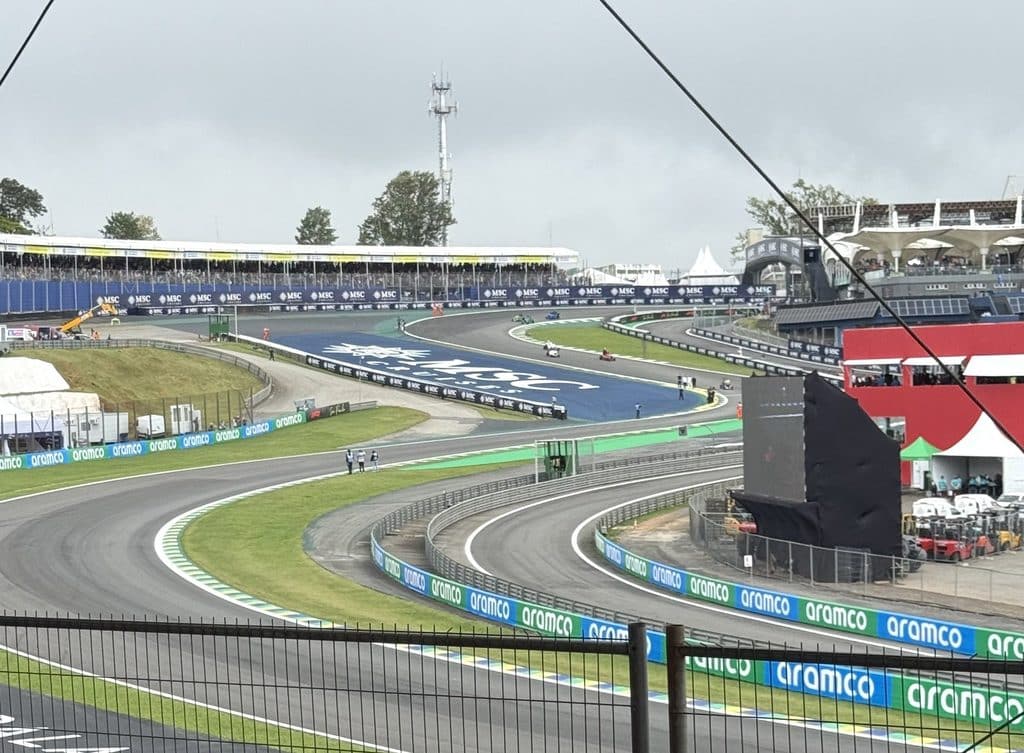
    The Senna S at Interlagos seen from the grandstand, with safety fencing in the foreground.
    The view toward the Senna S from the stands at Interlagos.

    Working at Ferrari got me interested in Formula 1. Traveling for races made it a much bigger part of my life.

    I care about what happens on the track. I want to understand why a strategy worked, why a driver struggled and how a team found something everyone else missed. Between Formula 1, WEC and IMSA, there’s always something to follow.

    I’d love to get closer to those stories and talk to the people doing the work, including the crew members whose names rarely make the headlines. Their preparation and decisions matter every weekend, and I’d like to understand more of what goes into them.

    I also enjoy writing from the perspective I already know: being a fan at the circuit.

    My São Paulo Grand Prix travel guide comes from attending Interlagos in 2024 and 2025. It covers what I learned by being there, including choosing a grandstand, dealing with rain and getting back to the hotel with enough time for dinner.

    With more freedom to travel, the race calendar would absolutely influence where I went next.

    2. Car reviews

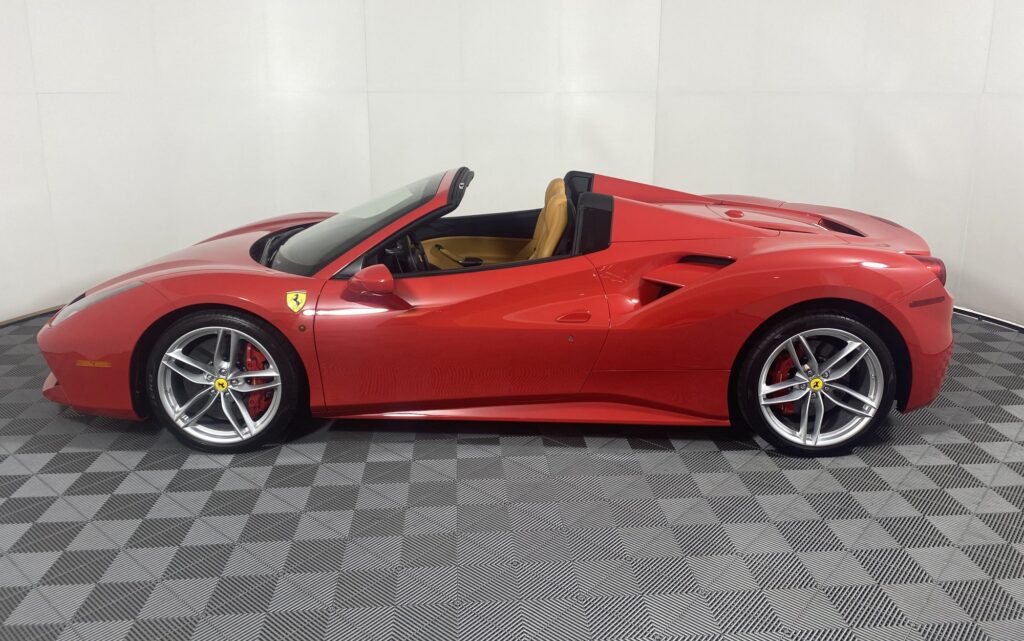
    A red Ferrari convertible in side profile, with its roof down and both wheels visible.
    A Ferrari from my automotive archive.

    Cars are still part of my working life, and I still enjoy them. Ferrari is part of that history, but my interest goes well beyond one badge.

    Give me time with an interesting car and I’ll want to understand what makes it worth driving. That could be a vintage Porsche, a McLaren or a sedan that looks ordinary until you get behind the wheel.

    The specifications are a starting point. I want to know how it responds, what it sounds like, how comfortable it is and whether I’d look forward to driving it again.

    I’d love to try different cars as I traveled and tell people what I thought. Some would be cars I’d dream about owning. Others might surprise me simply by being enjoyable to drive. There would always be another one I’d want to spend time with.

    3. Travel writing

    Barcelona gave me a good example of what I want more of.

    I went in June 2026 for the Grand Prix and spent the rest of the trip exploring the city and its restaurants. Mont Bar was my favorite meal there. The food, wine and relaxed service made it an evening I wanted to talk about afterward.

    Disfrutar was a very different experience, more theatrical and technical. I enjoyed having both on the same trip.

    Sir Victor’s rooftop became a daily stop. After being out in the city, I liked coming back, sitting down and having a drink. I also wanted to understand more about the food and wine, the neighborhoods and the history behind what I was seeing.

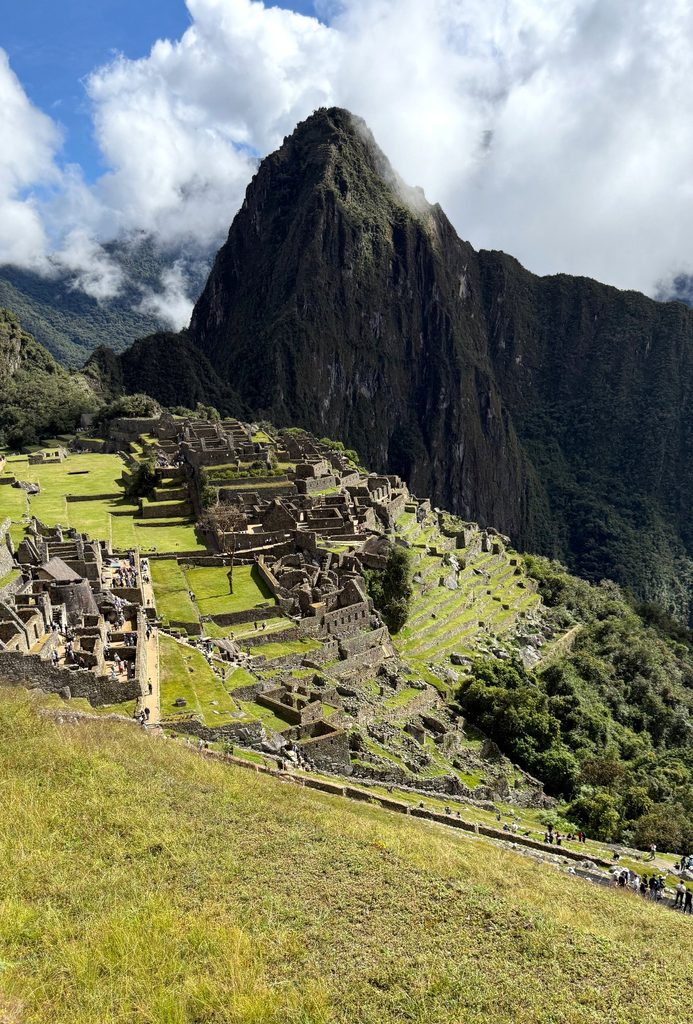
    Peru belongs in this story, too. Walking through Machu Picchu was as much a reason to travel as a restaurant reservation.

    In Lima, my research led me to Maido. I ate there in May 2025 and was home by May 15, before it was named The World’s Best Restaurant 2025 by The World’s 50 Best Restaurants that June. It was pretty cool to see a place I’d just experienced receive that recognition.

    I also came home thinking about what I’d missed. I wasn’t persistent enough about getting a reservation at Central. Around Cusco, I was so concerned about altitude sickness that I didn’t give the food research the attention I normally would. MIL is one of the places I wish I’d looked into properly.

    Eventually, I want to go back. That’s part of travel for me: enjoying what I did, learning from what I missed and thinking about the next visit.

    São Paulo keeps giving me reasons to return. I think about the view from Hotel Unique, the people I’ve met and the dinners I want to plan before I’ve even booked the flight. My São Paulo travel guide grew out of those experiences.

    It’s also what I enjoy about Formula 1 luxury travel. I can combine a race with a city I want to explore. I’d love to stay longer because I’m enjoying myself, without counting the days until I have to be back at work.

    4. Food and restaurant reviews

    I don’t need a vacation to go looking for a good meal. I regularly travel more than an hour into New York City to try a restaurant. Sometimes dinner is the entire reason for the trip, and I’m perfectly happy with that.

    Put me at a chef’s counter with a tasting menu and a thoughtful wine pairing, and I’ll spend the evening paying attention. But wine isn’t always my first choice. Sometimes I’d rather have creative cocktails, especially when someone behind the bar is doing work as interesting as what’s coming out of the kitchen.

    I wish there were more cocktail tasting menus like Carnaval in Lima. I enjoy giving the drinks that same attention: what’s in them, how they’re presented and why those ingredients work together.

    With food, I want to understand what the chef is trying to do. I’m also noticing the service, the pace and whether I feel comfortable in the room. Those things affect the evening just as much as an impressive plate.

    Evvai is my favorite restaurant in the world, partly because I enjoy being there so much. The cooking gives me plenty to think about, and the illustrated course cards explain the ideas behind the food while adding personality to the meal. It’s ambitious, but it’s also fun. That matters to me.

    Those are the details I want to share in my food and drink writing. What did I like? What surprised me? Would I go back? Was the evening worth the trip and the money?

    An expensive menu doesn’t get a free pass. A simple meal can be worth recommending without dressing it up as something more.

    What I’d like this work to make possible

    I’d love to find out what I could learn if this became my full-time work. How many places could I discover? Who could I meet? What could I introduce people to if I had more time to research, travel and write?

    I’m working toward making a career out of some combination of this website, travel consulting, a travel agency or a concierge service. I haven’t figured out exactly what that will look like yet. But I know the work I want to spend more of my life doing.

    Once I make that transition and can afford to do it properly, I’d also like to help people travel who otherwise wouldn’t have the opportunity.

    Maybe that becomes a charity. Maybe I quietly organize a couple of trips each year. I picture taking a group of 10 to 14 people who have never had a real vacation: single parents with their teenage kids, or families working hard just to keep up with everyday life.

    I’d want to give them the chance to see somewhere new, try food they’ve never tasted and spend time together without worrying about what the trip costs.

    I’d love to see their reactions. Maybe one meal or one conversation would introduce a kid to something they’d never considered. They might discover an interest in cooking, travel or writing. Maybe there’s a future chef in that group who just hasn’t had the opportunity to find out yet.

    That’s something I’d like this work to make possible.

    I can’t go back and figure this out earlier. I can keep moving toward it now. For the moment, that means fitting trips and meals around my job and budget, doing the research and sharing what I find.

    I know what I’d choose with more freedom. I’m already doing as much of it as I can.

    What job would you do for free?

    For more on how I put these trips together, read how I plan every trip. My Barcelona travel guide goes deeper into the restaurants, hotels and neighborhoods from that visit. You can also read my original Peru trip plans to see what I had in mind before visiting Lima, Cusco and Machu Picchu.

    Completely Unnecessary. Absolutely Worth It.

  • Tan Tan São Paulo: A Must-Visit Japanese Bar with World-Class Cocktails and Izakaya-Style Dining

    Looking for the best cocktail bar in São Paulo? If you appreciate high-quality mixology, Japanese-inspired cuisine, and a lively atmosphere with 90s hip-hop, Tan Tan Bar & Izakaya should be at the top of your list.

    Ranked No. 31 on The World’s 50 Best Bars in 2024, Tan Tan is one of the best bars in São Paulo, blending craft cocktails with bold, umami-packed dishes. Whether you’re a cocktail enthusiast, a foodie, or a traveler exploring São Paulo’s nightlife, Tan Tan offers an unforgettable experience.

    ## Why Tan Tan is One of São Paulo’s Best Bars

    Tan Tan is the brainchild of Thiago Bañares, a leading chef in São Paulo’s culinary scene. His expertise in Japanese cuisine and cocktail culture has resulted in three standout establishments in São Paulo:

    – Tan Tan Bar & Izakaya – A cocktail-forward izakaya with inventive small plates.
    – Kotori – A yakitori-focused restaurant specializing in grilled skewers.
    – The Liquor Store – A speakeasy-style bar with a refined selection of spirits and classic cocktails.

    By visiting Tan Tan, Kotori, and The Liquor Store, I’ve experienced firsthand the quality, innovation, and attention to detail that defines Bañares’ restaurants. If you’re a cocktail and food lover in São Paulo, Tan Tan is a must-visit.

    ## Cocktail Menu: A Fusion of Japanese and Brazilian Flavors

    One of the main reasons Tan Tan is among the best cocktail bars in São Paulo is its expert mixology. Their signature cocktails combine premium spirits with local Brazilian ingredients, resulting in unique, well-balanced drinks.

    ### Best Cocktails to Try at Tan Tan

    1. **Tsukemono (Citrus)**
    – Don Julio Blanco
    – Wasabi
    – Cucumber
    – Orange bitters

    2. **Ilha do Medo (Fruity)**
    – Princesa Isabel Amburana
    – Cocoa honey
    – Lime
    – Spices

    3. **Highball de Galo (Bitter)**
    – Princesa Isabel Amburana
    – Cynar
    – Red vermouth
    – Sparkling wine

    Tan Tan also offers expertly crafted classic cocktails like the Dry Martini, Black Manhattan, and Negroni.

    ## Food Menu: Japanese Comfort Food with a Brazilian Twist

    Beyond its cocktails, Tan Tan’s food menu features Japanese-inspired izakaya dishes, perfect for pairing with their drinks.

    ### Best Dishes to Try at Tan Tan São Paulo

    1. **Yardbird Katsu Sando**
    – Breaded pork burger
    – Chuno sauce
    – Served on fluffy shokupan bread

    2. **Kaki Ponzu**
    – Fresh Santa Catarina oysters
    – Ponzu and mignonette sauce

    3. **Aka Teba**
    – Crispy chicken wings
    – Sweet chili sauce, sesame, and peanuts

    4. **Ajillo**
    – Eryngii mushrooms
    – Garlic confit
    – Octopus in olive oil

    5. **Wonton Shio Ramen**
    – Chicken broth
    – Pork wonton
    – Chicken chashu and ajitama egg

    For dessert, try the Chocolate Pie or the Sorbet of the Day.

    ## The Atmosphere: Hip-Hop Vibes & Trendy São Paulo Nightlife

    Beyond the food and drinks, what sets Tan Tan apart from other São Paulo cocktail bars is its atmosphere.

    – **90s Hip-Hop Soundtrack** – Expect Nas, A Tribe Called Quest, Wu-Tang Clan, and more.
    – **Modern Izakaya Aesthetic** – Industrial-chic decor with warm wood, granite, and metal accents.
    – **Lively, Yet Intimate** – A perfect balance of upscale cocktail bar and laid-back izakaya.

    ## Why Tan Tan is One of the Best Bars in São Paulo

    ✔️ Ranked No. 31 on The World’s 50 Best Bars
    ✔️ Craft cocktails with premium ingredients
    ✔️ Authentic Japanese comfort food with a Brazilian twist
    ✔️ A top nightlife destination in São Paulo
    ✔️ A unique blend of mixology, fine dining, and hip-hop culture

    If you’re exploring São Paulo’s best cocktail bars, Tan Tan is an essential stop.

    ## Location

    📍 **Tan Tan Bar & Izakaya**
    📍 **Rua Fradique Coutinho, 153 – Pinheiros, São Paulo – SP**

    ## Final Thoughts: Is Tan Tan Worth Visiting?

    Absolutely. Whether you’re visiting São Paulo for the first time or you’re a local looking for a world-class cocktail experience, Tan Tan delivers.

    Between its expertly crafted drinks, inventive Japanese-Brazilian dishes, and nostalgic hip-hop playlist, this is one of the best bars in São Paulo for an unforgettable night out.

    Would I return? Without a doubt.

    If you’re a cocktail lover or foodie, Tan Tan is a must-visit São Paulo destination. Make a reservation and experience it for yourself!

  • São Paulo Restaurants: 10 Memorable Places I’ve Eaten

    São Paulo Restaurants: 10 Memorable Places I’ve Eaten

    Follow me on Instagram @Richard.Jarocki for more restaurant experiences, cocktails, travel and Formula 1 adventures—including my next trip to São Paulo.

    São Paulo restaurants guide featuring Kazuo’s dessert presentation and cocktail, a Nelita pastry, and Richard Jarocki’s logo.

    São Paulo · Food & Drink · Firsthand Reviews

    Updated September 2026

    Formula 1 brought me to São Paulo in 2024. The food became one of the reasons I kept returning. My reservations now get as much attention as my race tickets, sometimes more. Evvai alone has become a reason to get on a plane.

    When I first wrote about São Paulo restaurants, this article covered four places. I’ve spent a lot more time eating in the city since then, and that original list no longer tells the whole story.

    What keeps me interested is the range. I can spend an evening following a tasting menu, another working through cocktails and Japanese-inspired food, and another discovering how Mexican traditions and Brazilian ingredients fit together. Each meal gives me a different reason to come back.

    These are ten places from my own dining experiences. They serve different purposes, so this isn’t a ranking from best to worst. Evvai is my personal favorite, but choosing dinner also depends on the kind of evening you want. Kazuo was my first meal in São Paulo, and it opened my eyes to how much there was to discover.

    1. Evvai: My Favorite Restaurant in the World

    Caviar on a red-and-white striped centerpiece surrounded by colorful details at Evvai in São Paulo.
    A caviar-topped course from my November 2025 meal at Evvai.

    Evvai — Official Website

    Evvai is the easiest recommendation on this list for me to explain: it is my favorite restaurant in the world.

    In April 2026, Evvai earned its third Michelin star. Seeing that recognition go to a restaurant that means so much to me was particularly satisfying. In my opinion, it is thoroughly deserved.

    Chef Luiz Filipe Souza and his partner, pastry chef Bianca Mirabili, are central to what makes Evvai special. Partners in life and in the kitchen, both deserve recognition for the creativity and precision they bring to the experience.

    The food gives me plenty to talk about, but the personality keeps the experience with me. The illustrated course cards, the explanations from the team and the playful presentations make dinner feel like something I’m participating in. I still have the cards from my visits.

    There is a wonderful balance between the fun at the table and the almost military precision in the kitchen. You can laugh, ask questions and enjoy yourself while watching a team work with extraordinary concentration. The timing, coordination and attention to detail are serious.

    Yes, chef.

    Dishes such as duck tortellini with eel and tucupi, and the green corn ice cream cone with caviar, show how much imagination goes into the cooking. The playful presentations draw you in, and the flavors give you something to remember. These are examples from my visits; the menu continues to evolve.

    I’m going back in November, and that reservation is one of the parts of the trip I’m most looking forward to. Evvai has become a reason to return to São Paulo all on its own.

    Read why Evvai is my favorite restaurant in the world.

    Back to the restaurant shortlist ↑

    2. Tuju: A Temple of Gastronomy and Couture

    A plated course in a textured green glass bowl on a green marble table at Tuju.
    A course from my Tuju visit — January 2025.

    Tuju — Official Website

    Tuju felt like a temple of gastronomy and couture to me—a place where the care given to the food and its presentation became part of the experience itself. In a city I feel is too often misrepresented, it showed me another side of São Paulo’s creativity and sophistication.

    My January 2025 visit centered on the Rain Season menu. Oyster, yellowtail, crab, tomato, lamb and mango formed part of a meal with a clear seasonal identity. The presentation was sleek and precise, and the menu gave the evening a sense of purpose.

    Chef Ivan Ralston and his wife, Katherina Cordás, Tuju’s director of hospitality and research, bring an extraordinary combination of knowledge and care to the restaurant. Their understanding of ingredients and seasonality feels scientific in its precision. They give that same attention to hospitality, and for me, the way they look after their guests is every bit as impressive as the cooking.

    Couture is the word that comes to mind for the attention to detail: individual dishes carefully composed within a larger experience. That care extends beyond the plate to how the evening feels. It is how I remember Tuju, and why it deserves an evening of its own.

    When Tuju received its third Michelin star in April 2026, I wasn’t surprised. Having experienced the restaurant, that recognition made complete sense to me. Its Art of Hospitality Award from The 50 Best Restaurants 2026, announced in September, feels equally deserved. Ivan, Katherina and their team understand how much the people looking after you contribute to a memorable meal.

    Restaurants like this are part of why I wish more people would look beyond their assumptions about São Paulo. There is a depth of gastronomy here that has made the city a destination I return to with real anticipation.

    Read more about my January 2025 meal at Tuju.

    Read my comparison of Evvai and Tuju.

    Back to the restaurant shortlist ↑

    3. D.O.M.: Tasting Brazil and Understanding It a Little Better

    A golden textured course with a small garnish on a grey ceramic plate at D.O.M.
    A plated course at D.O.M., São Paulo.

    D.O.M. — Official Website

    Eating at D.O.M. helped me understand why Alex Atala has been such an influential figure in Brazilian fine dining. The restaurant opened in 1999 and has held two Michelin stars since 2015. That kind of longevity carries weight, and my meal gave me a clearer appreciation of the work behind it.

    The foundation is research into Brazil’s ingredients, biodiversity and food traditions. Atala and chef Geovane Carneiro develop the menus through exploration of the country’s different regions and biomes, working with producers and learning about the places those ingredients come from.

    As a diner, you get to taste some of that discovery. An unfamiliar ingredient becomes a reason to ask questions, hear its story and understand a little more about Brazil. That is a big part of why I travel to eat.

    I ate insects at both D.O.M. and Metzi during the same weekend. Those meals pushed me beyond familiar choices and reminded me how much there is to discover when I’m willing to try something different. Ingredients I might never have sought out became part of meals I still remember.

    And the food was deeply satisfying. The research and explanations gave it context, while the flavors made the experience worth remembering. I could learn something about the country and enjoy an exceptional dinner at the same time.

    D.O.M. broadened my understanding of what Brazilian cooking can be. After eating there, I could appreciate why Atala’s work has earned so much recognition—and why this restaurant has remained relevant for so long.

    Back to the restaurant shortlist ↑

    4. Nelita: Talent, Humility and a Meal Worth Remembering

    Pasta with an orange topping in a wide white bowl at Nelita, with wine glasses and the kitchen behind.
    Pasta at Nelita’s dining counter.

    My January 2025 meal at Nelita was one of the best I’ve had in São Paulo. Sitting at the counter directly in front of the kitchen made it even more memorable. Watching the team work, I could see the care that went into every plate.

    Chef Tássia Magalhães left as much of an impression as her cooking. I’ve never met someone who combines so much talent with so much humility. Her love of cooking and flavor comes through in the food, and her warmth makes you feel comfortable in a restaurant doing work at this level.

    The pão de queijo gougère set the tone. Pumpkin cappelletti, eggplant and smoked-tomato ravioli, and beef tongue with polenta gave me plenty to remember, while passionfruit sorbet brought a fresh finish. The Italian influences were clear, but the Brazilian ingredients and character gave the meal its own identity.

    Her husband, sommelier Danyel Steinle, helped make the experience complete. Watching them work together, you can feel their connection, and that teamwork carries through to the food and wine. The pairings brought out flavors in the dishes that I might not have appreciated as much on their own. Each glass had a purpose. This was a meal where choosing the right pairings genuinely added to the experience, and the attention given to the wine matched the care on the plate.

    The recognition they’ve received since my visit feels thoroughly deserved. Tássia was named Latin America’s Best Female Chef for 2025 and Chef of the Year at Prazeres da Mesa’s 2026 awards. Nelita also won Best Italian Restaurant in VEJA São Paulo’s 2026 COMER & BEBER awards, while Danyel took Sommelier of the Year. After experiencing their work firsthand, I expect there will be plenty more recognition to come.

    When I return in November, I also want to visit Lita, their wine bar across the street, which won Best Wine Bar in the same 2026 VEJA awards. After seeing how much the food and wine complemented each other at Nelita, I’m curious to experience what they’ve created there.

    Nelita — Official Website

    Back to the restaurant shortlist ↑

    5. Metzi: Mexico and Brazil on the Same Table

    Illuminated Metzi entrance sign beside tall cacti outside the restaurant at night.
    Arriving at Metzi in São Paulo.

    Metzi — Official Website

    I met chef Eduardo Ortiz before dining at Metzi. We connected over our ties to New York, and I was impressed by his energy and enjoyed our conversation. When I later ate at his restaurant, I felt that same personality coming through in the food.

    Metzi brings Mexican cooking and Brazilian ingredients together with an attention to detail that made the meal memorable. Pork belly tacos with fermented chili, seafood tostadas, smoky and acidic flavors, and agave-forward cocktails are part of what I remember. The execution showed how much care had gone into the experience.

    I haven’t had the opportunity to meet his co-chef, Luana Sabino, but the cooking she and Eduardo have developed—and the restaurant they have built together—left an impression. Both deserve credit for an excellent Mexican fine-dining experience with a clear personality of its own.

    The room felt relaxed and welcoming, with the ease of a neighborhood restaurant. That warmth was part of the appeal: I could appreciate the precision of the food while feeling comfortable enough to settle in and enjoy the evening.

    Metzi is one of the reasons I leave room for different styles of restaurant when planning a trip. The connection between the people, the food and the atmosphere gave me another reason to appreciate how much São Paulo has to offer.

    Back to the restaurant shortlist ↑

    6. Tan Tan: Give the Cocktails as Much Attention as the Food

    Food served in a black bowl beside a stemmed cocktail at the Tan Tan bar.
    A seat at the bar at Tan Tan.

    Tan Tan — Official Website

    I’ve been to Tan Tan every time I’ve visited São Paulo. It belongs on both my dining list and my cocktail list, and it has become a regular part of my trips.

    The Spring Rolls Royce, filled with tuna tartare, captures the playful side of the food. The Tsukemono cocktail, with tequila, wasabi, cucumber and orange bitters, is the kind of drink that makes me pay attention to what the bar is doing. Both give me reasons to look forward to another visit.

    Then there’s the music. The 1990s hip-hop soundtrack is very much my kind of atmosphere. The room feels lively without losing its intimacy, and the combination of music, food and drinks makes it easy to settle in.

    I’ve also been to The Liquor Store twice, another of Thiago Bañares’s venues. The personal service there has stayed with me. They remember me when I come back—or they have excellent record-keeping. Either way, it makes me feel special. Being welcomed like a familiar face in a city thousands of miles from home means something.

    As of this September 2026 update, The Liquor Store is still relocating and hasn’t reopened. I’m hoping that changes before I return to São Paulo in November, because I’d like another evening at its bar.

    I’ve been to Kotori once as well, and I want to go back. It’s another return visit to fit into a São Paulo itinerary that never seems to have enough room.

    Tan Tan is a place I look forward to returning to before I even land in São Paulo. Give yourself enough time for both the food and cocktails. For me, both are part of the reason to go.

    Read my full Tan Tan review

    Back to the restaurant shortlist ↑

    7. A Casa do Porco: Brazilian Food and Culture, from Nose to Tail

    Roasted pork and bowls of side dishes spread across a wooden table at A Casa do Porco in São Paulo.
    Brazilian food and culture, from nose to tail, at A Casa do Porco.

    A Casa do Porco — Official Website

    A Casa do Porco gives you a look into Brazilian food and culture through an ingredient the kitchen understands completely: pork. From nose to tail, the preparations show how much creativity, flavor and variety can come from using the whole animal.

    Founded by chefs Jefferson Rueda and Janaína Torres, the restaurant takes its cooking seriously while keeping the experience approachable. What I appreciate is the commitment to making exceptional food accessible to a broader audience, including the Brazilians who live there. A restaurant can earn international attention and still feel connected to its own people.

    In my opinion, the cooking is worthy of a Michelin star. But the part I respect just as much is that A Casa do Porco feels like a place built to feed people well. Tourists and destination diners are welcome, but the experience doesn’t feel designed exclusively for them.

    And the food is ridiculously good. It’s interesting, creative and full of flavor—the kind of meal that makes you pay attention to what you’re eating and appreciate the culture behind it. The whole-animal approach gives you plenty to think about, but the pleasure of eating it is what stays with me.

    A Casa do Porco absolutely belongs on this list.

    Read my full A Casa do Porco review.

    Back to the restaurant shortlist ↑

    8. Jean-Georges: A Great Meal That Changed the Mood

    Dish with fresh herbs and orange sauce on a black plate beside a candle at Tangará Jean-Georges.
    À la carte dining at Tangará Jean-Georges in Palácio Tangará.

    Tangará Jean-Georges — Official Website

    Jean-Georges Vongerichten is a chef whose cooking I’ve followed, studied and enjoyed for years. His name carries real weight with me, so I arrived at Tangará Jean-Georges with high expectations and my heart set on the tasting menu.

    Some personal drama within our party changed the plan. That had absolutely nothing to do with the restaurant or its team, but we decided to order à la carte instead.

    The food delivered. It lived up to what I expect from Jean-Georges and felt entirely worthy of the Palácio Tangará setting. Although the evening hadn’t started the way I’d hoped, it turned into a great meal.

    What I remember just as clearly is how the food changed the mood at our table. As we ate, the tension eased, people relaxed, and we could enjoy being there. Sometimes a good meal does more than satisfy your appetite. This one helped bring the evening back together.

    I’ve also stayed at Palácio Tangará, so the restaurant is part of my broader experience of the property. The greenery surrounding the hotel and the more formal dining atmosphere give the evening a different feel from many of the other places on this list.

    It deserves time in your itinerary. Check the journey from your hotel and give yourself room to enjoy dinner without rushing. I still want to return for the tasting menu, but ordering à la carte gave me plenty of reason to appreciate the kitchen.

    Back to the restaurant shortlist ↑

    9. Kazuo: The First Meal That Opened My Eyes

    Chef Kazuo Harada preparing sushi at the omakase counter at Kazuo in São Paulo.
    Chef Kazuo Harada preparing sushi at the counter at Kazuo in São Paulo.

    Kazuo — Instagram

    Kazuo was my first meal in São Paulo, and my first omakase in a few years. Looking back, it was quite an introduction to eating in this city.

    Chef Kazuo Harada kept putting courses and dishes on the counter, and I kept eating. By the end, I had practically eaten myself into a food coma. The freshness and flavor made it very easy to keep going.

    I’ve now been to Kazuo three times, including once for lunch, and my verdict is straightforward: it is on point. That first meal kept bringing me back, and the restaurant belongs in this guide for much more than sentimental reasons.

    What stands out is Kazuo’s range. His cooking extends beyond sushi into several Asian cuisines, including Thai and Malaysian influences. I see him as a master of different styles, and the variety is backed up by what matters most to me: how fresh the ingredients taste and how well the dishes come together.

    The drinks program can hold its own, too. It deserves attention alongside the food and adds another reason to settle in and enjoy the evening. Even dessert impressed me. It felt like a considered part of the meal, with the same care given to it as the courses that came before.

    I also like seeing Kazuo behind the counter. Having the chef right there is part of what makes the experience memorable, and he strikes me as someone I’d enjoy sitting down with over a few drinks and having a proper conversation.

    Before I had a list of São Paulo favorites or started planning return trips around reservations, there was Kazuo. It opened my eyes to what dining in this city could be. After three visits, it still gives me plenty of reasons to return.

    Explore Kazuo’s menu and reservations.

    Back to the restaurant shortlist ↑

    10. Jun Sakamoto: A True Sushi Master

    Nigiri on a dark serving block beside pickled ginger at Jun Sakamoto’s sushi counter in São Paulo.
    Sushi at Jun Sakamoto’s counter, where I could watch a master at work.

    Jun Sakamoto — Official Website & Reservations

    I’ve been to Jun Sakamoto once. After that meal, I understood why I think of him as something like the godfather of omakase in São Paulo.

    His namesake restaurant opened in September 2000, and he has spent decades establishing himself as one of Brazil’s leading sushi chefs. Sitting at his counter gave me a chance to appreciate the skill behind that reputation.

    I was lucky enough to sit beside a few regulars at the small counter, and Jun kept the conversation going as he worked. Being able to talk with him while watching him prepare the meal made the experience feel personal. That interaction became as much a part of my memory as the sushi itself.

    The freshness of the fish and his knife skills stood out. Watching him work at such close range gave me another level of appreciation for what arrived in front of me. You could see the experience in his hands, and the quality of the fish gave that work something worthy of the attention.

    My meal was largely focused on sushi, and that focus is part of what I appreciate about Jun Sakamoto. The fish, the preparation and the man behind the counter gave the evening its identity.

    One visit was enough to leave a lasting impression. Jun is a true sushi master in my eyes, and sharing that small counter with him and some of his regulars gave me another reason to appreciate the depth of São Paulo’s dining scene.

    Jun Sakamoto — Official Website & Reservations

    Back to the restaurant shortlist ↑

    Make the trip work

    Planning Meals Without Overloading the Trip

    Start with the restaurant you would be most disappointed to miss, then work outward. Check reservation release dates directly with each venue, and leave room for changes in the rest of the itinerary.

    Keep lunch lighter when dinner is a substantial tasting menu. Think about cocktails, wine pairings and supplements as part of the total experience and spend. You don’t have to order every optional extra to have a memorable meal.

    For Grand Prix trips, protect the evening after the circuit. Allow time to get back, change and arrive ready to enjoy dinner. I would rather appreciate one meal properly than squeeze two experiences together and rush both.

    For more on the race-weekend logistics, read my São Paulo Grand Prix travel guide before locking in a tightly timed dinner after Interlagos.

    Menus change. The dishes I describe are memories from my visits, so use them to understand what interested me rather than as a current ordering guide.

    Use the restaurants’ own websites below to confirm the current menu, price, booking policy and dietary accommodations. A dish I enjoyed on a past visit may not be on the menu when you go.

    Why This List Keeps Growing

    For hotels, neighborhoods and things to do between reservations, read my São Paulo travel guide.

    The more time I spend in São Paulo, the harder it becomes to fit everything into one trip. Returning to a favorite means one less opportunity to try somewhere new. That is a good problem to have.

    This expanded list reflects how much more of the city I have experienced since the original article. It will keep changing as I eat, learn and return.

    Some people collect watches. Some collect cars. I collect experiences.

    São Paulo keeps giving me reasons to add another.

    Completely Unnecessary. Absolutely Worth It.

    Follow me on Instagram @Richard.Jarocki for more restaurant experiences, cocktails, travel and Formula 1 adventures—including my next trip to São Paulo.

  • Evvai and Tuju: Two São Paulo Tasting Menus, Two Personalities

    Evvai and Tuju: Two São Paulo Tasting Menus, Two Personalities

    Evvai and Tuju Evvai dessert and Tuju lamb dish side by side with Richard Jarocki’s logo.

    Visits: Evvai in November 2024; Tuju in January 2025. Originally published March 23, 2025. Menus and prices below reflect those visits, not current offerings.

    Evvai and Tuju gave me two of the finest dining experiences I’ve ever had in São Paulo. Both delivered the ambition and creativity I look for in a tasting menu, but they left very different impressions.

    Tuju felt like a temple of high-end gastronomy: precise, sleek, and driven by experimentation. Evvai brought just as much refinement, with a dose of punk rock energy that connected with me on a more personal level.

    I slightly preferred Evvai. The difference wasn’t simply what arrived on the plate. It was the personality of the experience.

    Evvai and Tuju at a Glance

    EvvaiTuju
    LocationSão Paulo, BrazilSão Paulo, Brazil
    Visit dateNovember 2024January 2025
    ChefLuiz Filipe SouzaIvan Ralston
    Menu discussedOriundi, OR242Rain Season
    Culinary approachItalian traditions and Brazilian influencesBrazilian ingredients and seasonal experimentation
    Historical menu priceR$895; Japanese A5 Wagyu alternative +R$125R$1,100 plus 15% service
    My impressionRefined, playful, rebelliousPrecise, sleek, luxurious
    My preferenceA slight edge for its personalityAn exceptional experience in its own right

    Evvai: Italian Heritage, Brazilian Ingredients

    At Evvai, Chef Luiz Filipe Souza brings Italian traditions and Brazilian influences together through his Oriundi cuisine. The connection to immigrant heritage gives the menu a point of view beyond simply combining ingredients from two countries.

    During my November 2024 visit, the OR242 menu moved through bread, seafood, meat, pasta-inspired preparations, and desserts. Heart of palm became tagliatelle. Cotechino met black bean broth. Corn, vanilla, and caviar shared a course.

    Those combinations reflect what I enjoyed about Evvai: respect for tradition, with a willingness to reshape it. The experience was elegant and contemporary, but there was room for storytelling and playfulness.

    For more on my connection to the restaurant, read why Evvai is my favorite restaurant in the world.

    Evvai’s November 2024 Menu

    These are the dishes recorded in my original account, rather than a current menu or a ranking of my favorite courses:

    • Melon, Puxuri & Chickpea
    • Manioc Bread & Cheese Selection — my notes mention cheeses from Marajó Island, polvilho biscuit, and Grana Padano whey.
    • Pupunha Heart of Palm Tagliatelle & Bottarga
    • Fish of the Day with BORI Special Urucum & Pancetta
    • Xinxin Chicken & Marsala
    • Cotechino with Black Bean Broth & Goat Pepper
    • Green Corn & Cerrado Vanilla with Oscietra Caviar
    • Yellow Fruits, Soursop & Manduri Honey
    • Rebel, Rebel Tiramisu
    • Mignardises

    The photographed OR242 menu also includes a Wagyu bresaola preparation with smoked tea. One ingredient in that line is obscured by glare, so this is a partial description rather than an exact transcription.

    The menu was priced at R$895, with Japanese A5 Wagyu, manioc, and wild mustard offered as an alternative to the chicken course for an additional R$125. A separate cheese and melipona honey selection was listed at R$79. These are historical menu prices, not current prices or a record of which supplements I ordered.

    Tuju: Precision and Brazilian Biodiversity

    Chef Ivan Ralston’s Tuju offered a different expression of São Paulo dining. During my January 2025 visit, the Rain Season menu centered on Brazilian ingredients, with combinations that ranged from oyster and watermelon to lamb with scarlet eggplant and watercress.

    What stayed with me was the sense of precision and experimentation. I described the chef as a mad scientist in my original account, and I meant it with respect: someone constantly exploring what technique and ingredients can do together.

    The restaurant itself felt upscale, sleek, and luxurious. That setting suited the food and the overall impression of carefully controlled, ambitious cooking.

    Tuju’s January 2025 Rain Season Menu

    • Oyster with Watermelon & Cucurbitaceae
    • Yellowtail with Cambuci, Turnip & Seaweed
    • Crab with Corn & Avocado — the photographed menu offers an optional 10 g caviar supplement for R$450; it does not specify the caviar variety, and yes I ordered it.
    • Pumpkin with Palm Heart & White Curry
    • Tomato with Eggplant & Yuzu
    • Squid with Caruncho Pork & Shell Jus Gras
    • Fish of the Day with Fragrant-Pepper Pil Pil & Asparagus Bean
    • Lamb with Scarlet Eggplant & Watercress
    • Mango with Pesto & Mate
    • Cocoa with Cardamom & Baru Nut

    Historical Tuju Menu Prices

    The photographed Rain Season menu lists R$1,100 plus a 15% service charge. That makes the menu alone R$1,265 with the stated service charge, before drinks or supplements.

    The listed pairing options were:

    • Discoveries wine pairing: R$790
    • Classics wine pairing: R$1,790
    • Non-alcoholic pairing: R$420

    I added the R$450 caviar supplement to the crab course. The pairing prices above show the options available at the time; they aren’t a record of my drinks order. The menu photograph doesn’t make clear how the 15% service charge applied to drinks or supplements.

    Seasonality and Sourcing

    Tuju’s attention to seasonality is part of its identity. Michelin’s current description explains that the restaurant’s tasting menus follow climatic seasons and that its sourcing includes small-scale producers, particularly in São Paulo state.

    That gives more concrete context to the restaurant’s approach than the broad sustainability language in my original article. For current restaurant details, see Tuju in the Michelin Guide.

    Evvai vs. Tuju: Why Evvai Had the Edge for Me

    Both restaurants gave me some of the finest dining experiences I’ve had. Having a favorite doesn’t take anything away from the other.

    Tuju delivered the kind of luxury I’ve always enjoyed: precise cooking, experimentation and a polished setting. I admired the focus behind the food and the care that went into the experience.

    Evvai had that same ambition, with a rebellious streak that connected with me. Its personality reminded me of David Bowie’s willingness to experiment and Andy Warhol’s embrace of pop culture. The illustrated course cards, the storytelling and the playful presentations made the meal feel personal and fun.

    That gave Evvai the edge for me. I’ve always liked the idea of respecting tradition while questioning how things should be done. Fine dining can take the food seriously and still have a sense of humor. Evvai made that part of the experience.

    Evvai and Tuju: Which Would I Choose Again?

    If I had to choose one based on these experiences, I would choose Evvai, by a small margin. Its playful, rebellious personality was the deciding factor.

    For someone drawn to a sleek setting and cooking that emphasizes precision and experimentation, Tuju would be a compelling choice. I have immense respect for both chefs and their different approaches.

    The photographed menus list R$895 at Evvai and R$1,100 at Tuju, a R$205 difference before Tuju’s stated 15% service charge. Evvai’s photographed menu does not state its service charge, so these are base-menu comparisons, not final-bill comparisons. Without the full bills and beverage choices, I won’t claim one delivered better value for money. My preference here is about the dining experience and how each restaurant made its personality felt.

    Both gave me more reasons to keep exploring São Paulo through its restaurants.

    More São Paulo Dining and Evvai-Inspired Cooking

  • São Paulo’s Michelin-Starred & 50 Best Restaurants: The Complete 2026 Dining Guide

    By Richard Jarocki | Updated September 2026

    São Paulo Michelin Starred & 50 Best Restaurants 2026 guide: .São Paulo is one of the best food cities I have ever visited. I say that after eating my way through plenty of cities that get much more attention internationally. What keeps bringing me back is the range: you can have a serious three-star tasting menu one night, sushi at a tiny counter the next, a pork-focused tasting menu in Centro the night after that, and then finish the trip with cocktails and izakaya-style food somewhere completely different.

    This guide started as a list of Michelin-starred and World’s 50 Best restaurants in São Paulo. It needed a full update. The city’s restaurant scene has changed, the Michelin rankings have changed, and the 50 Best lists need to be separated correctly. Michelin, The World’s 50 Best Restaurants and Latin America’s 50 Best Restaurants are three different systems, and they should not be mixed together.

    I have personally eaten at many of the restaurants in this guide, including Evvai, Tuju, D.O.M., A Casa do Porco, Nelita, Kazuo, Jun Sakamoto, Metzi, Kotori and Tangará Jean-Georges. Where I have been, I will tell you what stood out to me. Where I have not been, I will keep it factual and let the rankings speak for themselves.

    Michelin-Starred Restaurants in São Paulo — 2026

    The 2026 Michelin Guide was a major moment for São Paulo. Evvai and Tuju became the first restaurants in Brazil — and the first in Latin America — to receive three Michelin stars. D.O.M. holds two stars, and São Paulo currently has 13 one-star restaurants.

    Three Michelin Stars

    Evvai

    Official website: Evvai

    Chef Luiz Filipe Souza’s Evvai is my favorite restaurant in São Paulo and, at this point, one of my favorite restaurants anywhere. I have been more than once, and I am returning again because the experience keeps evolving instead of feeling like a tasting menu that simply repeats its greatest hits.

    The Oriundi menu connects Brazil and Italy without making either side feel forced. The technical precision is obvious, but what I remember most is that the food still has personality. The Bomba de Vieira — the scallop course served directly onto your hand — is playful without becoming a gimmick. On another visit, dishes like duck tortellini with eel and tucupi and a green-corn ice cream cone with caviar showed exactly why this restaurant is operating at such a high level.

    The illustrated cards that accompany the courses are another detail I love. They give you context without turning dinner into a lecture. Evvai feels serious about food while still remembering that dinner is supposed to be fun.

    Tuju

    Official website: Tuju

    Tuju is a completely different experience from Evvai, which is exactly why I do not like comparing the two as if one needs to beat the other. Tuju feels like a temple of gastronomy. The building, service, pacing and menu are designed as one experience rather than a dining room with a tasting menu dropped into it.

    Chef Ivan Ralston builds the menu around São Paulo’s seasons and rainfall patterns. When I visited, the Rain Season menu felt highly considered from beginning to end. The presentations were some of the most polished I have seen anywhere — almost couture-level — but the experience never felt cold. The restaurant’s three-floor progression, open kitchen and hospitality program are a major part of what makes Tuju different.

    Two Michelin Stars

    D.O.M.

    Official website: D.O.M.

    D.O.M. is one of the restaurants that helped put modern Brazilian fine dining on the international map. Chef Alex Atala built a restaurant around ingredients, traditions and ideas that many international diners had never encountered before.

    My meal at D.O.M. felt more like discovery than simple luxury. I tried ingredients I would not normally order on my own, including insects, and I came away feeling like I understood a little more about Brazil than I did when I walked in. That is what makes D.O.M. important to me. It is not just about refinement; it is about teaching you something through the meal.

    One Michelin Star

    São Paulo’s current one-star restaurants are:

    Fame Osteria

    Jun Sakamoto

    Kan Suke

    KANOE

    Kazuo

    Kinoshita

    Kuro

    Maní

    Murakami

    Oizumi Sushi

    Picchi

    Ryo Gastronomia

    Tangará Jean-Georges

    Jun Sakamoto

    Official website: Jun Sakamoto

    I have been to Jun Sakamoto once, and the easiest way I can describe it is that you understand very quickly why he has the reputation he does. He is one of the names that comes up when people talk about the foundation of serious omakase in São Paulo. The counter is small, the focus is tight and the experience is about sushi craft rather than spectacle.

    Kazuo

    Official website: Kazuo

    Kazuo was my first meal in São Paulo, which gives it a permanent place in my memory of the city. I have returned multiple times, including for lunch. What makes Kazuo different from Jun Sakamoto is range. Kazuo is not only about sushi; the menu moves across several Asian cooking traditions, and the kitchen is comfortable doing much more than one thing well. Even dessert surprised me there.

    Tangará Jean-Georges

    Official website: Tangará Jean-Georges

    Tangará Jean-Georges is the more formal hotel dining experience on this list. I have followed Jean-Georges restaurants for years, so I wanted to experience his São Paulo restaurant inside Palácio Tangará. I ended up ordering à la carte rather than doing the tasting menu because of a table issue during that visit, but the setting and level of service are exactly what you would expect from a restaurant inside one of the city’s grandest hotels.

    The World’s 50 Best Restaurants — São Paulo

    The World’s 50 Best Restaurants global list is separate from Latin America’s 50 Best. That distinction matters because older articles — including the previous version of this one — can make it look like a restaurant’s Latin American ranking is its global ranking.

    As of September 2026, the latest global list published by The World’s 50 Best Restaurants is the 2025 edition. No São Paulo restaurant appears in the global top 50, but two São Paulo restaurants appear in the extended 51–100 list:

    A Casa do Porco — No. 83

    Evvai — No. 95

    A Casa do Porco

    Official website: A Casa do Porco

    A Casa do Porco is one of the clearest examples of why São Paulo dining is so interesting. It has international recognition, but it does not behave like an inaccessible luxury restaurant. Jefferson Rueda built the restaurant around pork and whole-animal cooking, and the experience is energetic, fun and approachable.

    I visited in November 2024 and sat at the bar. There was a cachaça welcome, a full tasting menu and one of the most memorable presentations of the trip: crispy pork belly revealed beneath the restaurant’s colorful pig-head cloche. The point of the restaurant is not luxury for luxury’s sake. It is taking an ingredient many people think they know and showing how much can actually be done with it.

    Latin America’s 50 Best Restaurants — São Paulo

    For someone planning a food trip to São Paulo, the Latin America list is just as useful as the global ranking because it captures more of the city’s depth. The latest published Latin America ranking includes four São Paulo restaurants in the top 50:

    No. 8 — Tuju

    No. 12 — Nelita

    No. 20 — Evvai

    No. 25 — A Casa do Porco

    São Paulo also has six restaurants in the extended 51–100 list:

    No. 55 — Kotori

    No. 56 — Metzi

    No. 67 — Maní

    No. 73 — Cepa

    No. 74 — D.O.M.

    No. 93 — Notiê

    Nelita

    Official website: Nelita

    Nelita is one of the São Paulo restaurants I recommend often because it feels personal. Chef Tássia Magalhães is especially strong with pasta, but the meal I had there was not limited to one style. Beef tongue was one of the courses that stood out, and I still remember the passion-fruit sorbet at the end.

    The hospitality also mattered. Tássia and her husband, sommelier Daniel, made the restaurant feel connected to the people behind it rather than like a concept created in a boardroom. That matters to me more and more as I travel.

    Metzi

    Official website: Metzi

    Metzi brings Mexican and Brazilian cooking together in a way that feels natural rather than like fusion for the sake of calling something fusion. I remember the pork-belly tacos, seafood tostadas and agave-based cocktails. I also had the chance to meet chef Eduardo Ortiz, which added another layer to the experience.

    Kotori

    Official website: Kotori

    Kotori is smaller and more casual than several restaurants above it on this page, and that is part of the appeal. I have been once, and it fits perfectly into a São Paulo trip when you want excellent food without another long formal tasting menu.

    How I Would Actually Plan a São Paulo Fine-Dining Trip

    I would not book seven tasting menus in seven nights. I have made versions of that mistake before. At some point the meals start competing with one another, and you stop appreciating what is in front of you.

    If this were a first serious food trip to São Paulo, I would build it around contrast. One night at Evvai or Tuju. One meal at D.O.M. for the Brazilian and Amazonian discovery side of the city. A Casa do Porco for something completely different. Then add a Japanese meal — Kazuo, Jun Sakamoto or another strong sushi counter — and leave room for places like Nelita, Metzi, Kotori or Tan Tan.

    Tan Tan official website

    That mix gives you a much better picture of São Paulo than simply chasing stars.

    Michelin vs. 50 Best: Which Ranking Matters More?

    I do not think one ranking is automatically better than the other. Michelin is built around anonymous inspections and evaluates the cooking through a defined set of criteria. The 50 Best lists are voting-based and tend to capture restaurants generating excitement across the international dining community.

    For me, they are both useful tools, not commandments. A star does not guarantee that you personally will love a meal, and a high ranking does not mean a restaurant is automatically better than the one below it. Some of my favorite restaurant memories came from places where the food, hospitality, city and timing all came together. That is impossible to reduce to a number.

    Final Thoughts

    São Paulo has become one of the cities I return to for the food as much as anything else. It now has Latin America’s first three-Michelin-star restaurants, a deep bench of one-star restaurants, and a strong presence across the 50 Best rankings. More importantly, it has range.

    You can have military-level precision at Evvai, move through the different floors of Tuju, learn about Amazonian ingredients at D.O.M., sit at the counter at A Casa do Porco, eat pasta at Nelita, have sushi from Jun Sakamoto and finish another night at Tan Tan with a cocktail and 1990s hip-hop.

    That is why I keep going back.

    If you are planning a São Paulo food trip, Formula 1 weekend or a trip built around restaurants, I can help you narrow the list, balance the reservations and build the experience around how you actually like to travel.

    Plan your trip with me: https://rjvipgp.net/work-with-me/

    Completely Unnecessary. Absolutely Worth It.

  • The Best Michelin-Starred & World’s 50 Best Restaurants in Latin America

    The Best Michelin-Starred & World’s 50 Best Restaurants in Latin America

    Latin America is a culinary paradise, boasting some of the most innovative and highly acclaimed restaurants in the world. Across the region, chefs are redefining fine dining by blending local traditions with modern techniques, creating unique gastronomic experiences. Whether you’re traveling for an F1 Grand Prix or indulging in a luxury getaway, these Michelin-starred and World’s 50 Best restaurants in São Paulo, Buenos Aires, Lima, Mexico City, and Santiago offer unforgettable dining experiences.

    São Paulo, Brazil

    D.O.M. (🌟🌟 Michelin Stars | World’s 50 Best #11)

    • Chef: Alex Atala
    • Why Go: A globally recognized fine dining institution that highlights indigenous Brazilian ingredients with avant-garde techniques.
    • Must-Try Dish: Tapioca with Amazonian ants and native herbs.

    Evvai (🌟🌟 Michelin Stars | World’s 50 Best #16)

    • Chef: Luiz Filipe Souza
    • Why Go: A masterful fusion of Italian and Brazilian flavors, showcasing innovation and elegance in every dish.
    • Must-Try Dish: Oriundi Menu – a refined tasting experience highlighting Brazilian ingredients with Italian influences.

    A Casa do Porco (World’s 50 Best #4)

    • Chef: Jefferson Rueda
    • Why Go: A revolutionary pork-centric concept that elevates Brazilian cuisine with inventive, flavorful dishes.
    • Must-Try Dish: Pork sushi – an unexpected yet outstanding creation.

    Buenos Aires, Argentina

    Don Julio (🌟 Michelin Star | World’s 50 Best #10)

    • Chef: Pablo Rivero
    • Why Go: An iconic Argentinian steakhouse that offers some of the best grass-fed beef in the world.
    • Must-Try Dish: Bife de chorizo (sirloin steak) cooked over wood fire.

    Chila (🌟 Michelin Star | World’s 50 Best #33)

    • Chef: Pedro Bargero
    • Why Go: A contemporary Argentine dining experience featuring seasonal, ingredient-driven tasting menus.
    • Must-Try Dish: Patagonia lamb with black garlic and native herbs.

    Tegui (🌟 Michelin Star)

    • Chef: Germán Martitegui
    • Why Go: A refined yet bold take on Argentine flavors, offering a sleek and intimate setting.
    • Must-Try Dish: Patagonian lamb with Malbec reduction.

    Lima, Peru

    Central (🌟🌟 Michelin Stars | World’s 50 Best #1)

    • Chef: Virgilio Martínez
    • Why Go: The reigning #1 restaurant in the world, offering a tasting menu inspired by Peru’s diverse landscapes and ecosystems.
    • Must-Try Dish: “Altitude Tasting Menu” – featuring ingredients sourced from the Amazon to the Andes.

    Kjolle (🌟 Michelin Star | World’s 50 Best #8)

    • Chef: Pía León
    • Why Go: A fresh, ingredient-focused perspective on Peruvian cuisine from the former head chef of Central.
    • Must-Try Dish: Seasonal tasting menu inspired by Peru’s diverse ecosystems.

    Maido (🌟🌟 Michelin Stars | World’s 50 Best #6)

    • Chef: Mitsuharu Tsumura
    • Why Go: The pinnacle of Nikkei cuisine, seamlessly blending Japanese techniques with bold Peruvian flavors.
    • Must-Try Dish: “Cuy San” – a creative fusion of Peruvian guinea pig with Japanese culinary artistry.

    Mexico City, Mexico

    Pujol (🌟🌟 Michelin Stars | World’s 50 Best #5)

    • Chef: Enrique Olvera
    • Why Go: A legendary restaurant that reinvents Mexican cuisine with a focus on sustainability and tradition.
    • Must-Try Dish: “Mole Madre, Mole Nuevo” – a 2,000-day-aged mole sauce.

    Rosetta (🌟 Michelin Star | World’s 50 Best #49)

    • Chef: Elena Reygadas
    • Why Go: A charming, ingredient-driven restaurant where Mexican flavors meet European refinement.
    • Must-Try Dish: Hoja santa ravioli with requesón cheese.

    Quintonil (🌟 Michelin Star | World’s 50 Best #9)

    • Chef: Jorge Vallejo
    • Why Go: A cutting-edge take on contemporary Mexican cuisine, celebrating hyper-local ingredients and sustainability.
    • Must-Try Dish: Avocado tartare with escamoles (ant larvae).

    Santiago, Chile

    Boragó (🌟 Michelin Star | World’s 50 Best #29)

    • Chef: Rodolfo Guzmán
    • Why Go: Hyper-local cuisine inspired by Chile’s diverse ecosystems, using native ingredients in groundbreaking ways.
    • Must-Try Dish: “Endemic menu” featuring Patagonian ingredients.

    Ambrosía (🌟 Michelin Star | World’s 50 Best #38)

    • Chef: Carolina Bazán
    • Why Go: A French-Chilean fusion that brings a relaxed yet refined take on contemporary dining.
    • Must-Try Dish: Seafood ceviche with indigenous Mapuche spices.

    99 Restaurante (🌟 Michelin Star)

    • Chef: Kurt Schmidt
    • Why Go: A forward-thinking restaurant that blends Chilean flavors with international techniques.
    • Must-Try Dish: Sea urchin tart with crispy quinoa.

    Final Thoughts

    In May, I will be in Lima, Peru, and I am excited to experience these world-class dining establishments firsthand. Latin America’s fine dining scene is unlike any other, offering bold flavors, innovative techniques, and immersive culinary storytelling. Whether you’re craving a Michelin-starred steakhouse in Buenos Aires, a Nikkei masterpiece in Lima, or an avant-garde dining adventure in Mexico City, these restaurants define what it means to dine in luxury.

  • Exclusive Restaurants: 20 Remarkable Tables and Private Clubs

    Exclusive Restaurants: 20 Remarkable Tables and Private Clubs

    Collage of exclusive restaurant experiences, tasting-menu dishes, private dining settings, and Michelin-level dining featured in Richard Jarocki’s RJVIPGP guide.

    By Richard Jarocki | Research and booking information checked Sep 27, 2026

    Exclusive restaurants interest me because of what can happen once you sit down: the cooking, the attention to detail, the room, and the way the evening comes together.

    I have eaten at Disfrutar in Barcelona and at Evvai and Tuju in São Paulo. Those experiences give me a personal starting point. I also share what happened when I tried to book Cote and ended up at Bar Chimera. For places I have not visited, the profiles draw on research into what makes them distinctive and how their published booking or membership arrangements work.

    A reservation at a small tasting-menu restaurant and an invitation to a private club involve different kinds of access. Understanding that difference makes planning much easier.

    This guide profiles 20 restaurants and clubs across Europe, the Americas and Asia, without ranking them. It also looks at hotel connections, card benefits and culinary events that can open up other ways to experience their food and meet the teams behind it. Prices below retain the restaurant’s or club’s local currency, with approximate U.S. dollar equivalents beside foreign-currency amounts. Restaurant prices are per person, and drinks are separate unless stated. Check the current menu and terms before committing.

    Currency note: USD estimates use Sep 25, 2026 reference rates, checked Sep 27, 2026, and are rounded to the nearest dollar. They help with planning; your card’s exchange rate and any fees may change the amount you pay. Sources: European Central Bank and Central Reserve Bank of Peru.

    How Access to Exclusive Restaurants Actually Works

    There are four main access arrangements to understand:

    Public reservations: You book through the restaurant or its designated platform, subject to availability.

    Tickets or deposits: You secure a specific experience under the restaurant’s payment and cancellation terms.

    Private membership or hosted access: A club approves membership, admits a member’s guests, or offers another explicitly documented route.

    Established table arrangements: A restaurant such as Rao’s allocates recurring tables to longstanding patrons. An invitation through that circle is a different proposition from a public reservation release.

    A famous name does not automatically mean a private club. For example, The Polo Bar’s restaurant listing publishes a telephone reservation process. Describing it as members-only gives readers the wrong starting point.

    For exclusive restaurants, the useful questions are when reservations open, which booking channel is official, and how flexible you can be.

    Exclusive Restaurants Worth Knowing

    Disfrutar — Barcelona, Spain

    Exclusive Restaurants The colorful tiled entrance to Disfrutar in Barcelona, one of the exclusive restaurants in this guide.
    Entrance to Disfrutar in Barcelona, photographed by Richard Jarocki in June 2026 for his guide to exclusive restaurants and remarkable dining experiences.

    Disfrutar is one of the restaurants in this guide that I have experienced personally. The cooking of Mateu Casañas, Oriol Castro and Eduard Xatruch makes it a compelling choice for someone interested in inventive tasting menus and the possibilities of food.

    The restaurant offers a Classic menu built around established creations and a Festival menu focused on seasonal work. Its separate Living Table experience takes place in the research and development kitchen.

    Published menu price: €325 (about US$371) for either main tasting menu; the listed wine pairing is €180 (about US$205).

    Getting into Disfrutar took persistence. When I was trying to book, it was booked almost a year ahead. I kept calling the reservations team, stayed polite and eventually they found me a spot. That is how I got in. It is a good reason to speak to the people handling reservations when the online calendar seems to have ruled you out.

    How to book: Reservations open up to 12 months ahead, and the restaurant offers a waiting list. Start with the official website; its booking information also provides a telephone contact for the reservations team. Ask about your dates and whether they welcome follow-up calls.

    Explore Disfrutar’s menus · Official reservations · Booking conditions

    Evvai — São Paulo, Brazil

    Exclusive Restaurants Chef Luiz Filipe Souza’s signature Bomba de Vieira, or Scallop Bomb, served directly onto the diner’s hand at three-Michelin-starred Evvai in São Paulo.
    Evvai’s playful Bomba de Vieira — a signature scallop course served directly onto the diner’s hand.

    Evvai is my favorite restaurant in the world. That is my personal opinion, built on the meals I have had there.

    Chef Luiz Filipe Souza’s Oriundi approach connects Italian heritage with Brazilian ingredients and influences. What stays with me includes the illustrated dish cards, the playfulness of the food and the precision of the service. The details give the meal a personality of its own.

    Evvai received three Michelin stars in the 2026 Brazil selection.

    Published menu price: R$1,650 (about US$318). Pairings and supplements are additional; confirm service charges and the complete total when booking.

    How to book: Use the Meitre reservation link on the restaurant’s official website.

    Official Evvai website and reservations · Published menu PDF · Michelin’s 2026 announcement

    Tuju — São Paulo, Brazil

    Exclusive Restaurants  A plated course in an ornate gold-toned glass bowl on a green marble table at Tuju.
    A course from Richard Jarocki’s Rain Season visit to Tuju. Photograph by Richard Jarocki.

    Tuju feels like couture applied to gastronomy. The presentation, architecture and attention to detail give it a character that deserves its own place in a conversation about destination dining.

    My visit was during its Rain Season menu. Chef Ivan Ralston’s approach draws on Brazilian ingredients and the changing climate, with research playing a central role in the kitchen.

    Tuju also received three Michelin stars in 2026. Alongside Evvai, it helped make that year a landmark for Brazilian dining.

    How to book: Follow the reservation link from Tuju’s website to Tock. Confirm the menu price, beverage options and terms for your chosen service.

    Official Tuju website and reservations · Michelin’s Tuju profile

    Frantzén — Stockholm, Sweden

    Frantzén combines three Michelin stars with a deliberately small setting: the restaurant describes 23 seats spread within a three-floor townhouse experience.

    That scale is a useful reason to research it early. It is also a clear example of a celebrated restaurant with a published public reservation system.

    Published menu price: SEK 5,500 (about US$556), with the same menu at lunch and dinner. Beverages are additional.

    How to book: Tables for the following month open on the first of each month at 10 a.m. Stockholm time. Frantzén states that it does not require advance payment for reservations.

    For larger occasions, the separate Frantzén Group Test Kitchen advertises private dining for 8–16 guests. Request that experience directly.

    Official Frantzén menus, reservations and private dining

    Alchemist — Copenhagen, Denmark

    Alchemist belongs on the list for the format as much as the food. The experience combines up to 50 “impressions,” including edible and other experiential elements, across an evening lasting approximately four to six hours.

    That is a substantial commitment of time and attention. Consider it when you want the restaurant to be the main event of the evening.

    Published menu price: DKK 5,600 (about US$854). Listed pairings begin at DKK 3,000 (about US$458), including the nonalcoholic option.

    How to book: Tickets are generally released about every three months for the next two to three months. Join the official release newsletter or waiting list. Tables are offered for parties of two, four and six; the restaurant itself notes that larger groups may find availability more easily.

    The Alchemist experience and prices · Official ticket information

    Noma — Copenhagen, Denmark

    Collage of ingredients and produce associated with Noma’s 2026 Los Angeles residency, including seafood, heirloom tomatoes, and botanical ingredients.
    Ingredients from Noma’s 2026 Los Angeles residency, where the Copenhagen team built a menu around Southern California produce, seafood, and local landscapes.

    Noma’s 2026 story includes a costly Los Angeles residency, serious scrutiny of its workplace culture and a return to Copenhagen.

    The Los Angeles pop-up: Noma’s residency ran from Mar 11, 2026 to Jun 26, 2026. The advertised package cost US$1,500 per person, including the menu, beverage pairing, hospitality and tax. That put dinner for two at US$3,000 before travel or accommodation. The LA run has ended; those dates and prices describe that residency.

    The reporting about staff and interns: Its opening coincided with renewed scrutiny of working conditions. In March 2026, The New York Times published former employees’ allegations of physical and psychological abuse by René Redzepi, including accounts concerning 2009–2017. Eater reported protests outside the LA venue and the withdrawal of sponsors American Express and Blackbird. Earlier reporting had also examined Noma’s reliance on unpaid interns, or stagiaires. Associated Press reported that Noma began fully paying interns in 2022.

    Redzepi said he did not recognize every detail in the reports, while acknowledging that his actions had harmed employees and apologizing. He stepped back from daily operations. Noma now identifies Pablo Soto as executive head chef, with Mette Brink Søberg leading research and development and Annika de Las Heras as CEO.

    That history is part of the context for deciding whether to dine there, alongside the food, reputation and price.

    Current Copenhagen experience: Noma reopened on Aug 5, 2026, with a menu designed to evolve through twelve seasons over the year. Its published menu is DKK 4,500 (about US$686), with wine pairing at DKK 2,000 (about US$305) or juice pairing at DKK 1,500 (about US$229).

    How to book: Use the Copenhagen reservation link on Noma’s official website and follow its newsletter for releases. Read the current terms: Noma explicitly restricts commercial use of reservations by travel or concierge services.

    Official LA dates and package price · Current Copenhagen reservations and prices · Noma’s leadership announcement

    Reporting on the LA protests and staff allegations · Reuters on Redzepi’s response and the new leadership · Associated Press on the reopening and paid internships

    Atomix — New York City, United States

    Exclusive Restaurants  Intimate counter dining room at Atomix in New York City, with guests seated around the open kitchen during service.
    Atomix in New York City, where the intimate counter and open-kitchen format make the dining experience feel highly personal.

    Atomix gives this guide a New York restaurant centered on contemporary Korean cooking. Chef Junghyun Park and Ellia Park’s restaurant builds its tasting-menu identity around Korean traditions and technique.

    The Chef’s Counter is arranged around a U-shaped counter with views into the kitchen. It has two Michelin stars in the guide reviewed for this article.

    How to book: Check Atomix’s official Tock listing for current releases and payment terms. For a private counter dinner, the restaurant requests at least two months’ notice. If you have Amex Platinum, you can also ask its concierge about assistance for your dates; the card-access section below explains what is currently verified.

    Before committing: Its published dietary policy is restrictive, including exclusions involving seafood, dairy, gluten and other ingredients. Check compatibility with your entire party before paying.

    Chef’s Counter and booking · About Atomix · Michelin listing

    Tatiana by Kwame Onwuachi — New York City, United States

    I want to eat at Tatiana. Every time I’m in New York City and look for a table, it’s booked. It remains on my list.

    Chef Kwame Onwuachi’s restaurant is inside David Geffen Hall at Lincoln Center. Named for his sister, it draws on his Afro-Caribbean heritage and New York upbringing, bringing influences from neighborhood bakeries, takeout shops, Caribbean kitchens and bodegas into the dining room.

    The published menu includes Egusi Tortellini, Curried Goat Patties and Short Rib Pastrami Suya. Those dishes give a sense of its cooking; I’ll have my own verdict when I finally get there.

    How to book: Reservations open on Resy 28 days ahead at noon New York time, according to Resy’s current booking guide. Put that release in your calendar before your planned visit and use Resy Notify for cancellations.

    Another possibility: Resy says bar seats are held for walk-ins for parties of up to two people, with outdoor seating also available for walk-ins when weather permits. Its advice is to arrive at the 5 p.m. opening and ask about the waiting list. Availability still depends on the evening.

    Official Tatiana website · The restaurant’s story · Current menu · Resy reservations · Resy’s booking and walk-in guidance

    Rao’s — New York City, United States

    The original Rao’s in East Harlem belongs in a conversation about exclusive restaurants. Open since 1896, it combines Southern Italian cooking with a dining room shaped by generations of regulars. Lemon chicken and meatballs are part of its identity; so are its jukebox and Christmas decorations.

    Its scarcity comes from the way tables are allocated. Rao’s own history describes “table rights” granted to longstanding patrons. Recurring table arrangements have stayed within the same circles for decades and can pass down through generations. When people say they “own” a table, they mean that longstanding access.

    The demand is enormous relative to the tiny dining room, and those established arrangements leave very little room for newcomers. Acquiring a recurring spot depends on an exceptional opening or an arrangement being relinquished and reassigned. There is no ordinary public queue for that privilege.

    How access works: Hopefully, you have a friend—or a friend of a friend—with access who can invite you along. That is the most realistic route. The Infatuation’s 2025 firsthand report confirms that there is no online reservation platform or walk-in waiting list.

    A polite inquiry through the restaurant’s published contact channels can establish whether it is willing to consider a request. Respect the answer. Any exceptional opening remains at the restaurant’s discretion; the cancellation strategy that can work at publicly bookable restaurants should not be mistaken for a standard route into Rao’s.

    Know which Rao’s you mean: This profile concerns the original at 455 East 114th Street. A booking at another Rao’s location is a separate dining experience with its own access arrangements.

    Official Rao’s history and table-rights explanation · Reported experience of securing a table · September 2026 reporting on tables passed through generations

    Blue Hill at Stone Barns — Pocantico Hills, New York, United States

    Exclusive Restaurants  Stone Barns Center in Pocantico Hills, home to Blue Hill at Stone Barns and its celebrated farm-driven dining experience.
    Blue Hill at Stone Barns in Pocantico Hills, where the restaurant experience is rooted in the surrounding farm and landscape.

    Blue Hill at Stone Barns makes sense when the meal is the reason for the trip. Chef Dan Barber’s restaurant sits within the Stone Barns Center for Food and Agriculture, drawing on its fields, pasture and other local farms for a tasting experience shaped by what they produce.

    The restaurant holds two Michelin stars and a Green Star in the 2025 New York selection. Its connection between farming and cooking gives it a distinctive place among destination restaurants.

    Published menu price: US$458 per person, plus tax and a 22% administrative fee. Beverages cost extra. The administrative fee is not a gratuity; the restaurant does not accept tips.

    How to book: Reserve through Tock. New reservations for each month are released on the 15th of the previous month. The menu is prepaid, and the published terms say sales are final and reservations cannot be canceled. A waiting list is available.

    Most reservations include a property tour before the meal. Allow time for the visit and travel from Manhattan. For a group, the separate private dining room accommodates up to 12 guests and is also offered through Tock.

    Official Blue Hill facts, prices and booking terms · Tock reservations · Michelin’s 2025 New York awards

    Maido — Lima, Peru

    Maido earned the No. 1 position in The World’s 50 Best Restaurants 2025. The year matters: it is a specific award, rather than a permanent claim to being the best restaurant on earth.

    Chef Mitsuharu “Micha” Tsumura’s Nikkei cooking brings together Japanese techniques and Peruvian ingredients. For someone planning a trip around food, that cultural relationship gives the restaurant a clear reason to be on the itinerary.

    Published menu price: S/1,295 (about US$378) for the 12-course Maido Experience without beverages, including tax and service. A nonalcoholic pairing package is listed at S/1,659 (about US$485).

    How to book: The restaurant says reservations open two months ahead on the first day of each month. Its website handles parties of 1–10, subject to availability.

    Official Maido menus and reservations · The World’s 50 Best Restaurants 2025 profile

    Sorn — Bangkok, Thailand

    Sorn’s appeal is its focus on Southern Thai food: regional ingredients, traditional techniques and the work of chef Supaksorn “Ice” Jongsiri. Its three-star status is confirmed in the Michelin Guide Thailand 2026.

    The booking details are particularly useful because the restaurant publishes a separate route for international guests.

    How to book: International reservation requests open by email at midnight Bangkok time on the 15th of each month for the following month. Online bookings open through TableCheck at noon Bangkok time on the 25th; when the 25th falls on a Saturday, the published rule moves that release to the 24th.

    Use the exact instructions on Sorn’s reservation page and ask the team to confirm the current menu price and requirements.

    Official Sorn reservation instructions · Michelin’s 2026 Thailand selection

    Sézanne — Tokyo, Japan

    Sézanne, at Four Seasons Hotel Tokyo at Marunouchi, combines French technique with Japanese ingredients and offers a separate Chef’s Table private dining room.

    It also illustrates why current research matters. Stephen Lancaster became executive chef in April 2026. Older accounts of Daniel Calvert’s cooking describe an earlier chapter, so read them with that distinction in mind.

    Published menu prices: JPY 56,925 (about US$361) for Menu Sézanne and JPY 27,830 (about US$177) for the shorter lunch menu. The restaurant’s TableCheck listing identifies these amounts as including service and tax.

    How to book: Follow the current reservation link from Sézanne’s own website, which directs diners to OMAKASE. Contact the restaurant for private dining. Its published dietary restrictions are substantial, so check those first.

    Official Sézanne website · Current menus · Chef appointment announcement · Published dietary and price information

    Private Dining Clubs With Distinct Reasons to Visit

    A private club’s appeal can include its dining rooms, wine collection, music, privacy and the ability to return regularly. Membership deserves consideration in that wider context. An expensive application does not tell you whether the food or the club will suit you.

    These are researched club profiles. Access always depends on the club’s current rules and approval.

    Annabel’s — London, England

    The exterior of 46 Berkeley Square, home to Annabels private members club in London, photographed in January 2022. Use beside the Annabels profile. Photo: No Swan So Fine / Wikimedia Commons, CC BY-SA 4.0. Cropped; tone and color adjusted; sharpened and optimized for web. https://commons.wikimedia.org/wiki/File:46_Berkeley_Square,_Mayfair,_January_2022_02.jpg

    Annabel’s offers several dining and drinking settings within its Berkeley Square home. Its published rulebook describes the Mediterranean Brasserie, Italian restaurant Matteo’s and South American-inspired Bolívar, alongside its bars and nightclub.

    How access works: Apply through the club’s official membership channel or visit as a member’s guest under its rules.

    A particularly important detail: the published rulebook prohibits selling access and obtaining entry or membership through third-party concierge services. It also generally prohibits photography and video, with limited event exceptions announced by the club.

    Confirm current fees directly; I would not build a budget around an old magazine’s membership figure.

    Official Annabel’s website · Published Birley Clubs rulebook

    Casa Cipriani — New York City, United States

    The Battery Maritime Building in New York City, home to Casa Cipriani, photographed in May 2026. This is an exterior view for the private clubs section. Photo: Ajay Suresh / Wikimedia Commons, CC BY 4.0. tone and color adjusted; sharpened and optimized for web. https://commons.wikimedia.org/wiki/File:Battery_Maritime_Building_-_Casa_Cipriani_(55313844251).jpg

    Casa Cipriani pairs waterfront views with Cipriani dining, terraces and a Jazz Café. Its formal restaurant draws on Harry’s Bar classics, including carpaccio and baked tagliolini with ham.

    The combination of dinner, music and the waterfront makes it a useful example of a club offering a complete evening.

    How access works: Membership is one route; the club also publishes policies for members’ guests and guests staying in its hotel. Standard room and suite guests may bring a total party of up to four, including the room occupants, under the published policy.

    Know before you go: Photography and video are prohibited throughout the club. Confirm hotel-related access and dining arrangements before booking a stay specifically for that purpose.

    Dining at Casa Cipriani · Membership, hotel guest and photography policies

    ZZ’s Club — New York City, United States

    ZZ’s is Major Food Group’s private membership club. Its New York location at Hudson Yards includes a private Carbone restaurant, giving it a particularly clear connection to the group’s dining identity.

    It is a relevant choice for readers interested in a restaurant-led club rather than membership built primarily around accommodation or workspace.

    How access works: This is private membership dining. Confirm current eligibility, fees and guest privileges directly with the club. The public official pages reviewed did not provide a complete current fee schedule.

    Take care to distinguish the New York club from its Miami counterpart when making inquiries.

    Official ZZ’s Club overview · Official club locations

    Flyfish Club — New York City, United States

    Flyfish is the New York dining club co-founded by Gary Vaynerchuk alongside David Rodolitz, Josh Capon and Conor Hanlon through VCR Group. It gives this list a contemporary Lower East Side club built around food and social life.

    The club occupies three levels and more than 12,000 square feet, with a main restaurant, a speakeasy lounge, a private dining room and an omakase counter reserved for select members. That last distinction matters when choosing a membership category.

    Published membership fees: Individual membership lists a US$2,500 initiation fee and US$3,500 annual dues. The Omakase category lists a US$2,500 initiation fee and US$5,500 annual dues, with preferred rates and food-and-beverage credits in the omakase room.

    How access works: At the time of research, Flyfish states that memberships are at capacity and applications are accepted for waitlist consideration. Its current website offers conventional membership categories alongside a separate blockchain membership process. Older descriptions of an NFT-only club are incomplete.

    Confirm admission, guest privileges, dining charges and the precise benefits of your category directly before committing.

    Official club overview · Current membership fees and waitlist · Founding team

    67 Pall Mall — London, England

    67 Pall Mall has a specific purpose: wine. Its London club advertises more than 1,000 wines by the glass and nearly 5,000 bottles, alongside dining, tastings and masterclasses.

    For a wine enthusiast, that is a more useful basis for evaluating membership than celebrity sightings.

    Published London fees: Standard annual membership is £2,750 (about US$3,644) with a £2,000 (about US$2,650) joining fee. An overseas category is listed at £1,250 (about US$1,657) annually, also with a £2,000 (about US$2,650) joining fee, and allows 15 visits in total across the group’s clubs.

    How access works: Applicants need a proposer and seconder, but the club says its membership team can help identify sponsors. Members may host guests under the club’s rules.

    London club, wine offering and membership fees · Guest rules

    The Arts Club — London, England

    The Arts Club combines art and cultural programming with several dining and drinking options. These include the Brasserie, Japanese restaurant Kyubi, Ofelia and the late-night music and cocktail setting of Leo’s.

    That variety makes it worth examining for someone who would use a club across different occasions.

    Published fees: Full membership for applicants aged 33 and above lists an annual subscription of £3,200 (about US$4,241) and a £1,600 (about US$2,120) member assessment fee. Other membership categories have different rates.

    How access works: Begin with the official membership inquiry. Existing London members can also explore the separately priced international option for access to The Arts Club Dubai.

    Official membership categories and fees · Dining and bars

    Mandala Club — Singapore

    Mandala Club adds a Singapore option with a social and cultural focus. Its dining spaces include POPI’s, with Mediterranean-inspired food, and BAR MORI, its Japanese concept, alongside spaces for music and member events.

    Its appeal is the mix of dining and club life. Readers should assess the current venues and calendar against the way they would actually use membership.

    How access works: The club reviews membership applications. Its FAQ states that nonmembers can use members’ areas only when accompanied by a member, and that there is no guest fee for entertaining a guest.

    Confirm the current membership tier, dues and any event charges directly.

    Official Mandala Club website · Membership and guest FAQ

    How Hotel Connections Can Help With Exclusive Restaurants

    Some hotels house destination restaurants or work with prominent chefs, making the hotel team a useful place to start when planning a special meal. A concierge can coordinate a dining request with your stay, explain the restaurant’s booking process and tell you whether a specific package or guest arrangement is available.

    The useful question is what the hotel can actually confirm for your dates. Send your party size, preferred services, dietary requirements and flexibility before arrival. If your stay includes a butler, that person can help coordinate the request too.

    There are several concrete connections worth understanding:

    Ritz Paris and Espadon: Chef Eugénie Béziat’s restaurant is inside the hotel and is listed with one Michelin star. Contact the hotel or restaurant about dining alongside your stay and watch its calendar for visiting-chef dinners. Official Espadon information

    Mandarin Oriental, Tokyo and Sushi Shin by Miyakawa: The hotel’s current sushi restaurant is on the 38th floor, with its own reservation contact and TableCheck link. Ask the hotel team to help coordinate the arrangements. Official Sushi Shin information

    Le Bristol Paris and Epicure: The hotel sells a gastronomic-stay gift package combining a Deluxe Room for two, breakfast and an eight-course dinner for two at three-Michelin-starred Epicure. Beverages are excluded, and the offer is subject to availability. Confirm both the room and dining date before purchasing for a specific trip. Official gastronomic-stay package

    Sézanne’s home at Four Seasons Hotel Tokyo at Marunouchi, and Casa Cipriani’s published hotel-guest club access, are further examples already covered in this guide.

    Ask directly whether the restaurant keeps any inventory for hotel guests and whether your booking includes a confirmed table. A room reservation on its own should never be treated as a dining confirmation.

    Use Amex Dining Benefits and Understand What You Still Pay

    Eligible American Express Platinum Card Members can add their card to a Resy profile to access Global Dining Access reservations and Priority Notify at participating restaurants. Platinum Nights by Resy is another route, with reservations on selected dates reserved for eligible Platinum Card Members.

    These benefits can create opportunities beyond the ordinary reservation search. You still pay for the meal and must complete any required deposit or prepayment. Read the restaurant’s cancellation terms before confirming; a statement credit, where eligible, has separate rules.

    Atomix needs a specific distinction. Its published booking route is Tock. Resy’s current FAQ says Tock venues are not part of Global Dining Access, do not receive Priority Notify and have no nightly tables allocated to Amex Card Members. An Amex Concierge inquiry may still be worth making, but any Atomix-specific offer needs confirmation for your date. The current evidence does not support promising a standing Platinum-only table there.

    A documented example from this guide is Tatiana, which appeared in Resy’s published Platinum Nights schedule for Mar 5, 2026. That date has passed, but it shows why checking the current Platinum calendar can be worthwhile alongside the normal reservation release.

    Official Platinum dining-benefit explanation · Current Resy and Tock benefit FAQ · Published 2026 Platinum Nights examples

    Chef Collaborations, Pop-Ups and Food Events

    Buying a ticket to a collaboration dinner or culinary event can give you another way to experience a chef’s work. Depending on the format, it can also create an opportunity to speak with the chef, sommelier or restaurant team and begin a relationship.

    Look for events that identify who will actually attend and what is included. A hosted dinner, chef conversation or small tasting can offer different opportunities from a large walk-around festival.

    Four-Hands Dinners and Signature Sessions

    A four-hands dinner brings two chefs together for a shared menu; larger collaborations can involve several kitchens. Many are offered through public reservations or ticket sales.

    One current example is Espadon’s advertised dinner with Anne-Sophie Pic and Eugénie Béziat on Oct 23, 2026 at the Ritz Paris. Its official page publishes the event and its prepayment cancellation terms. Check directly for remaining availability. Espadon’s collaboration dinner

    The 50 Signature Sessions are another useful series to follow. The organiser describes ticketed collaborations between visiting chefs and local restaurants, with public dining events planned around the November 2026 programme in Lima. Watch the official experience page for the announced chefs, releases and prices. The 50’s dining experiences · Lima programme announcement

    For Madrid Fusión, look closely at the pass and programme. Its 2026 registration included access to chef presentations, wine and pastry programming and exhibition areas. That is a different format from a seated collaboration dinner, so choose according to whether you want a meal, a demonstration or a broader industry event. Official congress registration and inclusions

    Theodora Beach Club on Governors Island

    Theodora Beach Club is a useful New York example of this approach. The summer 2026 pop-up brought Theodora and Taco Vista together on Governors Island, presented by Resy with VinePair as media partner. Its programme ran Fridays and Saturdays from Jun 5, 2026 through Aug 29, 2026, combining cooking over live fire with ticketed events and guest-chef collaborations.

    VinePair also documented guest-bar collaborations involving names such as Sip & Guzzle and Bar Bambi. That mix offered another way to encounter the food, drinks and teams behind established restaurants and bars.

    There was a card-access connection too: Resy advertised Platinum Nights on Jul 24, 2026 and Jul 25, 2026, plus early access for Global Dining Access members to the first chef collaboration. These were opportunities to book; guests still needed to buy their tickets.

    The 2026 season has ended. Follow Theodora and Resy for future announcements rather than assuming the same dates or format will return.

    Official Governors Island event record · Resy’s ticket and Platinum-access announcement · VinePair’s account of the collaborations

    Building a Relationship With the People Behind the Meal

    If there is a natural moment to introduce yourself, take it. Ask a thoughtful question about a dish or ingredient, listen, and respect the team’s time during service. If you enjoy their work, return, attend another event or send a brief thank-you through the restaurant’s public contact channel.

    Over time, being a considerate, interested guest can make the relationship more personal. You learn the team’s approach, and they may come to recognise yours. Sometimes the first visit is the hardest one to arrange. Being known to the team can make the conversation about returning easier.

    That might mean a note attached to your guest profile, a direct reservations contact or, if a staff member chooses to share it, a mobile number for future booking requests. Use any personal contact in the way they invite you to. The relationship still needs care, and the next table still needs confirmation.

    What Cote and Bar Chimera Taught Me About Being a Returning Guest

    I wanted to try Cote but could not get a reservation. I was able to secure bar seats at Bar Chimera instead. The team then emailed me, recognised that I had visited their restaurants before and indicated that, if Cote was what I wanted, they would find a way to help.

    I chose to keep the Bar Chimera booking because I wanted to experience it, and it was great. I still need to try Cote.

    That exchange showed me how a previous visit within a restaurant group can matter. My dining history had been recognised, and it opened a conversation that the reservation calendar alone had not offered. It also gave me a reason to want to return.

    Official Cote and Bar Chimera information

    How I Would Plan a Dinner at an Exclusive Restaurant

    Start With the Meal You Actually Want

    Choose the cooking, format and atmosphere before deciding how much effort to put into access.

    A four-to-six-hour evening at Alchemist requires a different plan from dinner and jazz at Casa Cipriani. Think about who you are traveling with, what they enjoy and how much time you want to spend at the table.

    For an important dinner during a Formula 1 trip, allow enough room between leaving the circuit and arriving at the restaurant. A reservation should fit the day you can realistically have.

    Put the Release Date in Your Calendar

    Record the restaurant’s local time zone, booking platform, party size and any payment requirements. Recheck the official instructions close to the release.

    Join a waiting list if one is offered. Flexibility can help, but the restaurant’s own guidance should determine the approach. Alchemist’s note about larger parties is a good reminder that the smallest table is not always the easiest to obtain.

    Be Persistent, Polite and Ready to Change Your Plans

    If the restaurant accepts reservation inquiries by phone or email, use them. Give the team your dates, party size and any genuine flexibility. Ask whether they keep a cancellation list, whether they welcome a follow-up and when it would be useful to check again.

    You can be relentless about pursuing a meal while remaining considerate of the person answering the phone. Keep follow-ups brief, use the channel they prefer and respect a request to wait. You want the reservations team to remember you as someone they would enjoy helping. My Disfrutar experience is why I take that approach seriously.

    Then be ready when an opening appears. A cancellation might come through that afternoon for dinner that night, leaving you very little time to decide. You may have to change the evening’s plans, take an earlier or later sitting and confirm promptly with whatever payment the restaurant requires. Give an honest arrival time and handle any existing booking under its cancellation terms.

    For a restaurant you have wanted to experience for years, that flexibility can be the difference between another sold-out search and sitting down at the table of a lifetime.

    Understand the Whole Bill

    Add up the menu, drinks, supplements, service, tax and transportation wherever applicable.

    Pairings and premium ingredients can change the total substantially. Decide what you actually want before the excitement of the evening makes every extra sound essential.

    For clubs, work out how often you would visit and what the membership gives you. Keep joining costs, annual dues and dining spend separate in your budget.

    Check the Conditions Before You Commit

    Read cancellation rules, dietary restrictions, dress codes and guest policies.

    Private clubs may also have strict rules about photographs and filming. A beautiful room can be a place to enjoy quietly; any content plans need to fit the venue’s policy.

    If you use a hotel concierge or a service already available to you, ask what it is permitted to arrange. A request is only a request until the venue confirms it.

    Ask About Private Dining When the Occasion Justifies It

    A private room can make sense for a celebration or a group that wants time together.

    Confirm the actual setup, capacity, menu, minimum spend and cancellation terms. A chef’s table description alone does not promise a private room or a meal personally cooked by the head chef.

    For a concrete example beyond the 20 profiles above, The French Laundry publishes private dining and full restaurant options, with separate instructions for room bookings and larger inquiries.

    Is the Effort Worth It?

    I am willing to make room in a trip and in my budget for a meal that matters to me. The food, service and feeling of the evening need to justify that decision.

    Evvai has done that for me. Tuju has its own place in my memory. Those are personal judgments earned at the table.

    For the places I am still researching, the next step is the same: understand the current experience, check the practical details and decide whether it fits the trip.

    If you want help choosing a special dinner or building meals into a larger itinerary, work with me on your travel and dining plans. Share your destination, dates, party size, budget and the kind of experience you want. I can help you build a considered shortlist and a workable plan; reservations remain subject to the venue’s availability and approval.

    Completely Unnecessary. Absolutely Worth It.