This is what shaped Richard Jarocki into who he is Today
Long before I ever stepped into a car dealership…
Long before Formula 1…
Long before Michelin stars, cocktail bars, and international travel…
There were my grandparents’ kitchens.
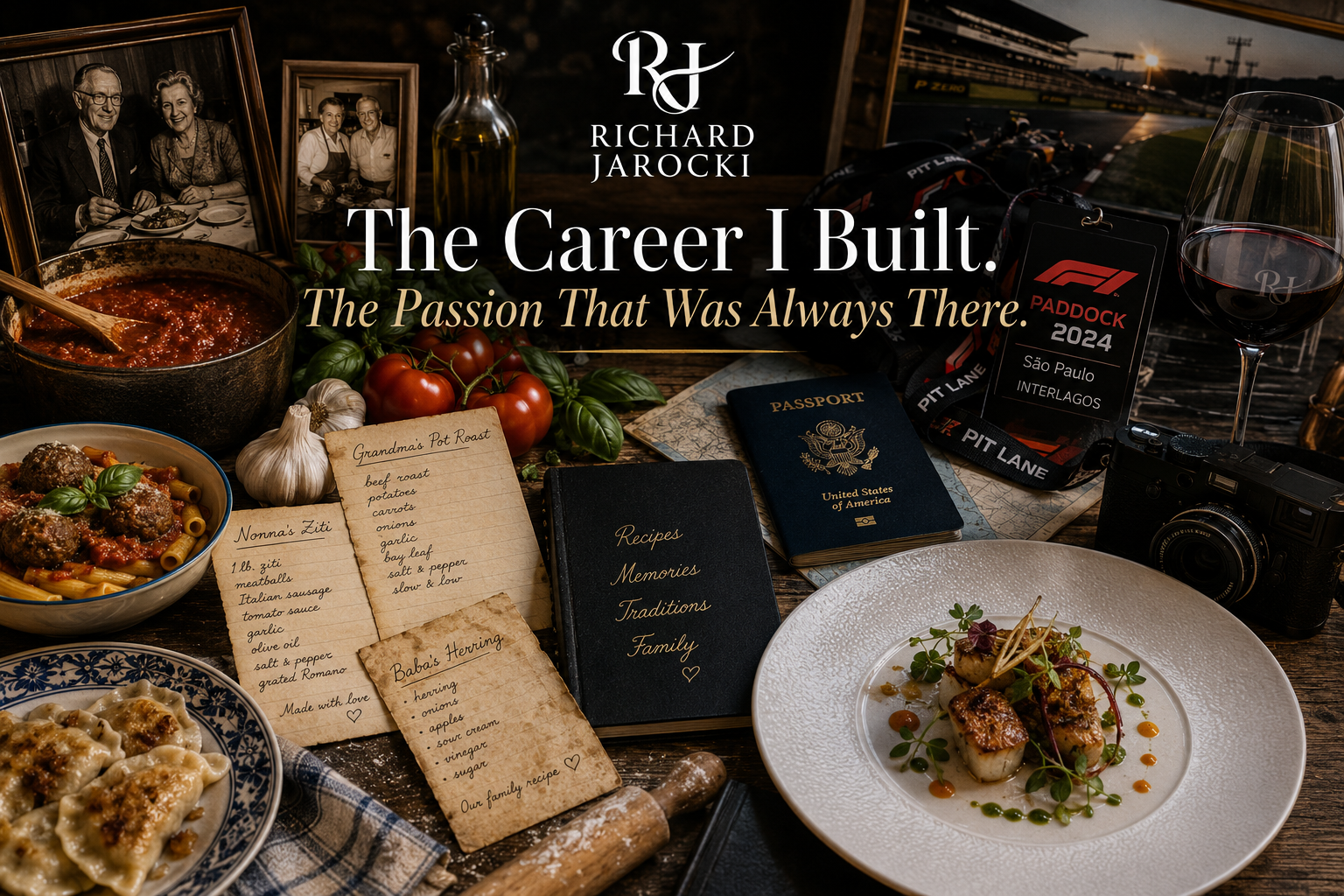
My maternal grandparents lived just a few blocks from where I grew up, and I spent countless hours at their house.
My grandfather was a retired attorney, but in my eyes, he was also an incredible home cook.
Whenever he was in the kitchen, I wanted to be there too.
I wasn’t the chef.
I was his helper.
He taught me the basics that every cook should know.
How to fry an egg properly.
How to make scrambled eggs.
How to cook bacon… even if I burned more than a few slices while I was learning.
At the time, they seemed like simple lessons.
Looking back, they were the foundation of everything that came later.
He taught me that cooking wasn’t something to rush.
It was something to enjoy.
Going out to dinner was part of their routine too. They weren’t chasing the newest restaurant in town or the latest trend. They had their favorite places—restaurants where everyone knew them, where they knew the staff, and where every visit felt familiar.
It wasn’t about finding something new.
It was about enjoying good food with the people you loved.
My grandmother was Italian, and her cooking is still the standard I compare comfort food against today.
Her ziti.
Her meatballs.
Her sausage.
Her pot roast.
Those weren’t just family dinners.
They became family traditions.
As I got older, I realized those recipes wouldn’t last forever unless someone learned them.
So instead of just showing up to eat, I started showing up to cook.
I wanted to learn exactly how she made the meatballs.
How she seasoned the sauce.
How she knew the pot roast was finished without ever looking at a recipe.
Today, those recipes are among my most treasured possessions.
Not because they’re complicated.
Because every time I make them, I’m back in her kitchen.
My father’s side of the family shaped me in a different way.
They were Polish, and family gatherings meant homemade pierogies, traditional Polish dishes, and incredible baked desserts.
My Polish grandmother loved to bake.
Today, our family still has many of her handwritten recipes.
My Polish grandfather had a family herring recipe that had been passed down through generations. Before he passed away, he made sure my father received it.
I have a copy too.
When I was younger, I didn’t understand why both of my grandmothers spent so much time cooking and baking.
Now I do.
It was never just about the food.
It was how they showed love.
Looking back, I realize my appreciation for food didn’t begin in a Michelin-starred restaurant.
It didn’t begin while traveling.
It began around my grandparents’ tables.
Then Life Took Me Somewhere Else
Like most people, I needed to build a career.
I never planned on selling cars.
I walked into a dealership looking for a bookkeeping position. Instead, I was offered a sales position. I took a chance, and that decision changed the course of my life.
The majority of my career was spent with Nissan, where I worked my way from salesperson to Finance Manager, then General Sales Manager, and eventually General Manager.
Along the way, I also had the opportunity to work with Ford, BMW, and Ferrari.
I’ve always loved cars.
I still do.
But after twenty-five years in the automotive industry, something changed.
Cars gradually became more of a commodity than a hobby.
Instead of admiring them simply as incredible machines, I found myself thinking about inventory, financing, deliveries, staffing, month-end objectives, and everything that comes with running a dealership.
Cars became my profession.
Food never stopped being my passion.
Building Something That Gave Me Time
Throughout my automotive career, I was also building another business.
Year after year, it continued to grow.
Eventually, it reached a point where it gave me something I hadn’t had in a very long time.
Time.
For the first time in years, I was able to step back from many of the day-to-day responsibilities that came with managing a dealership.
I wasn’t leaving the automotive industry.
I was creating the freedom to pursue another part of who I had always been.
The Trip That Changed Everything
A few years ago, I traveled to São Paulo for my first Brazilian Grand Prix.
Like every Formula 1 fan, I couldn’t wait to experience the race.
The speed.
The atmosphere.
The history.
But when I came home and looked through my photos, something surprised me.
Some of my favorite memories weren’t from Interlagos.
They were from the restaurants.
The cocktail bars.
The conversations around the table.
The neighborhoods I explored because I had a reservation there.
The race brought me to São Paulo.
The food helped me understand it.
That’s when I realized something I’d been doing for years without ever thinking about it.
I wasn’t planning vacations around attractions.
I was planning them around restaurants.
Before I booked a hotel, I researched where I wanted to eat.
Before I picked a neighborhood, I looked at the restaurants, cocktail bars, cafés, and markets nearby.
Reservations came first.
Everything else fit around them.
Without realizing it, food had quietly become the center of almost every trip I’d ever planned.
Why I Usually Choose the Tasting Menu
People often ask why I order tasting menus so often.
The answer has very little to do with luxury.
It’s because I want the chef to challenge me.
When I visit a restaurant for the first time, I don’t want to order only the dishes that sound familiar or comfortable.
I want to experience the restaurant the way the chef envisioned it.
A tasting menu removes that decision.
It forces me to trust the chef.
It introduces me to ingredients I probably never would have ordered on my own.
Some of the best dishes I’ve ever eaten are things I would have skipped if I had been ordering à la carte.
That doesn’t mean I only enjoy tasting menus.
If money—and my stomach—weren’t factors, I’d happily order almost the entire menu at many restaurants.
I genuinely want to know what a kitchen is capable of.
But ordering every dish becomes expensive, and after a certain point you’re simply too full to appreciate what you’re eating.
A well-designed tasting menu solves that problem.
The chef has already decided the progression, the pacing, and the portions.
Every course tells part of the story.
That’s why, whenever I visit a restaurant for the first time, I usually let the chef decide.
Because some of the best meals I’ve ever had weren’t the dishes I wanted to order.
They were the dishes I never would have ordered at all.
More Than Great Food
People sometimes assume I chase Michelin stars or expensive restaurants.
That’s never been the point.
Some of the best meals I’ve ever had weren’t the most expensive.
What fascinates me is the story.
The chef.
The history.
The ingredients.
The culture.
A restaurant can teach you as much about a city as any museum or famous landmark.
Food isn’t just something I eat while I travel.
It’s how I experience a destination.
Why I’m Sharing My Journey
When I first started posting photos online, I wasn’t trying to become a food blogger.
I simply wanted to remember the places I’d been.
Then people started asking questions.
Where should I eat?
Which restaurant is actually worth the reservation?
What cocktail bar shouldn’t I miss?
Over time, I realized I wasn’t just sharing restaurants.
I was helping people experience destinations through food.
That’s what RichardJarocki.com is becoming.
A place where I can share honest stories about restaurants, cocktail bars, luxury hotels, Formula 1 destinations, and the people who make them special.
Not just telling you where to eat.
Helping you understand why it’s worth going.
Looking Ahead
I’m still in the automotive industry.
I still love cars.
I always will.
But today they’re no longer the only thing that defines me.
For twenty-five years, I built a career that gave me stability, opportunity, and experiences I’ll always be grateful for.
Now I’m investing in the passion that has quietly been part of my life since I was standing beside my grandfather learning how to fry an egg.
Because I finally realized something.
Food has never just been about eating.
It’s about family.
It’s about culture.
It’s about travel.
It’s about memories.
It’s about the people sitting around the table.
If my stories inspire someone to learn a family recipe before it’s too late, book the restaurant they’ve been debating, or discover a city through its food instead of a checklist of attractions, then every mile I’ve traveled and every article I’ve written has been worth it.
Because the greatest meals aren’t always the most expensive.
Sometimes they’re the ones that remind you where your story began.
Simon Kim’s Most Ambitious Restaurant Might Not Be a Restaurant at All
By Richard Jarocki
I’ve spent years chasing great bars.
Not just famous bars.
Bars where the people behind them obsess over every detail. Places where cocktails aren’t simply mixed—they’re engineered. Where the wine list isn’t there because it has to be, but because someone genuinely loves wine. Where whiskey isn’t an afterthought sitting on a back shelf.
Over the past several years, I’ve made it a point to seek out some of the world’s most respected cocktail bars. Whether they’ve earned a place on the World’s 50 Best Bars list or built their reputation another way, the best ones all have something in common.
They know exactly what they want to be.
Some are martini bars.
Some are whiskey bars.
Some are wine destinations.
Bar Chimera asks a different question.
Why choose?
Instead of dedicating itself to one beverage program, Simon Kim and the Gracious Hospitality team built a concept around three completely different ones.
After spending an evening there, I don’t think Bar Chimera is trying to become New York’s next great cocktail bar.
I think it’s trying to redefine what a luxury bar can be.
Three Bars. One Philosophy.
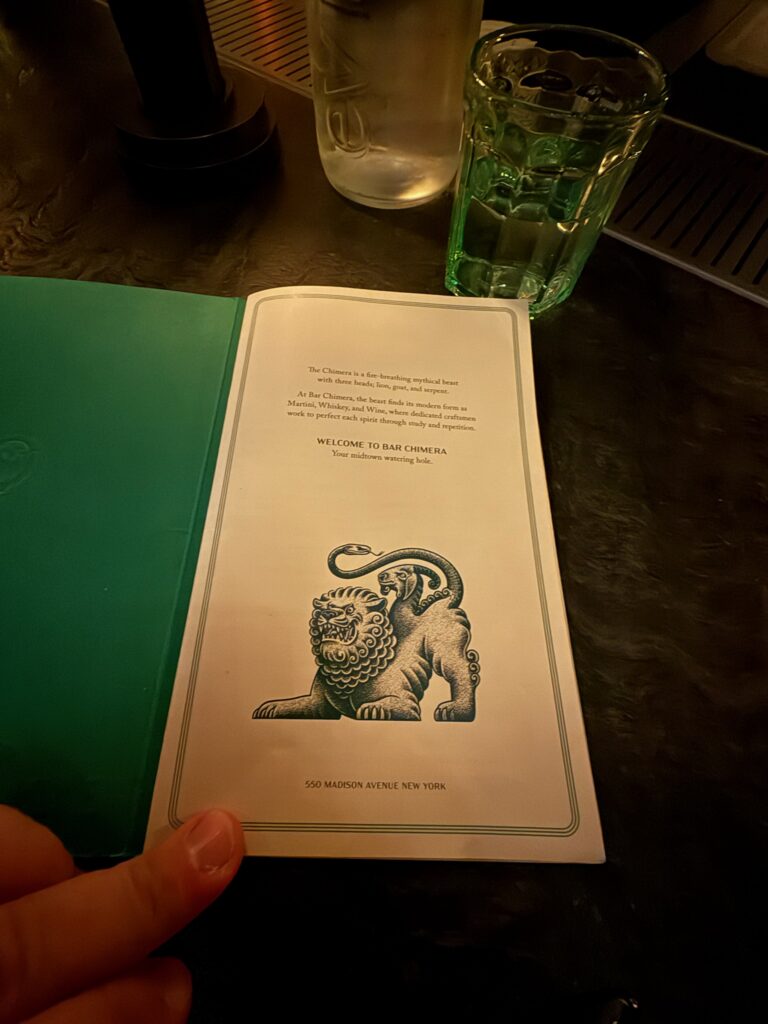
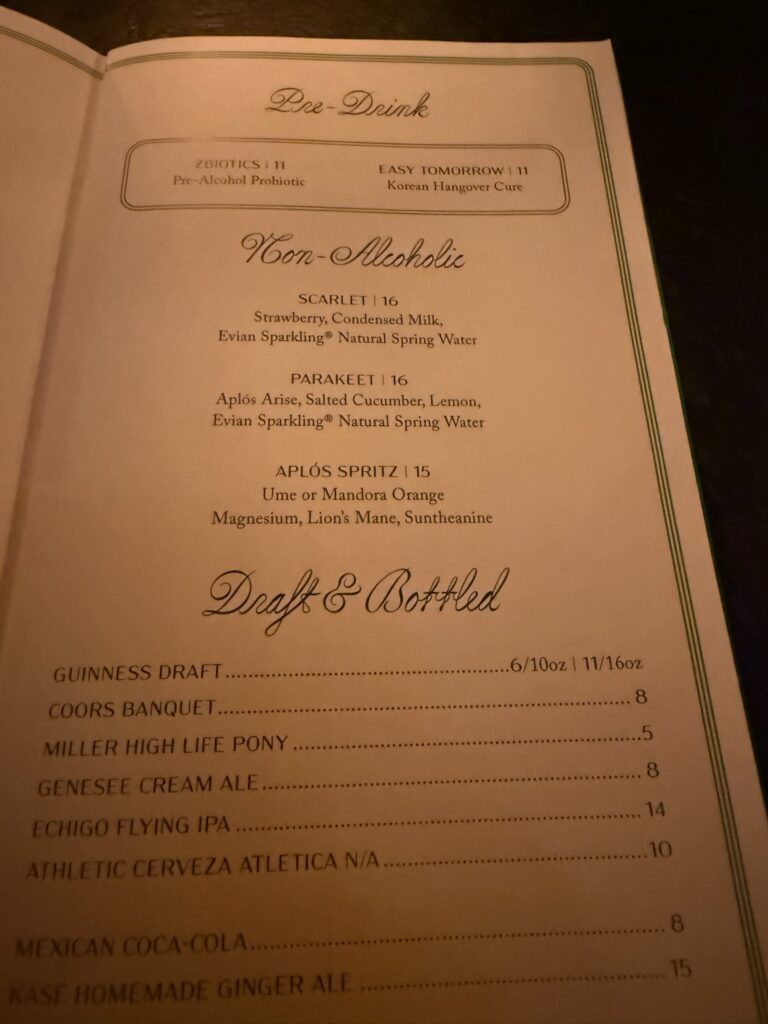
Before I even ordered my first drink, the menu explained exactly what Bar Chimera wanted to be.
The Chimera is a mythical creature with three heads.
At Bar Chimera, those three heads become Martini. Whiskey. Wine.
Three completely independent beverage programs.
One room.
One philosophy.
Study.
Practice.
Repetition.
I don’t normally spend much time reading the introduction inside a menu.
This one was different.
It wasn’t trying to sell me anything.
It was explaining the philosophy behind the room I was sitting in.
After spending several hours there, I realized it wasn’t just clever writing.
Everything about Bar Chimera reflects that philosophy.
Nothing feels accidental.
Nothing feels added simply because guests expect it.
Every bottle, every drink, every detail feels intentional.
More Than a Beautiful Space
Great restaurants and bars don’t happen by accident.
The room matters.
The neighborhood matters.
The building matters.
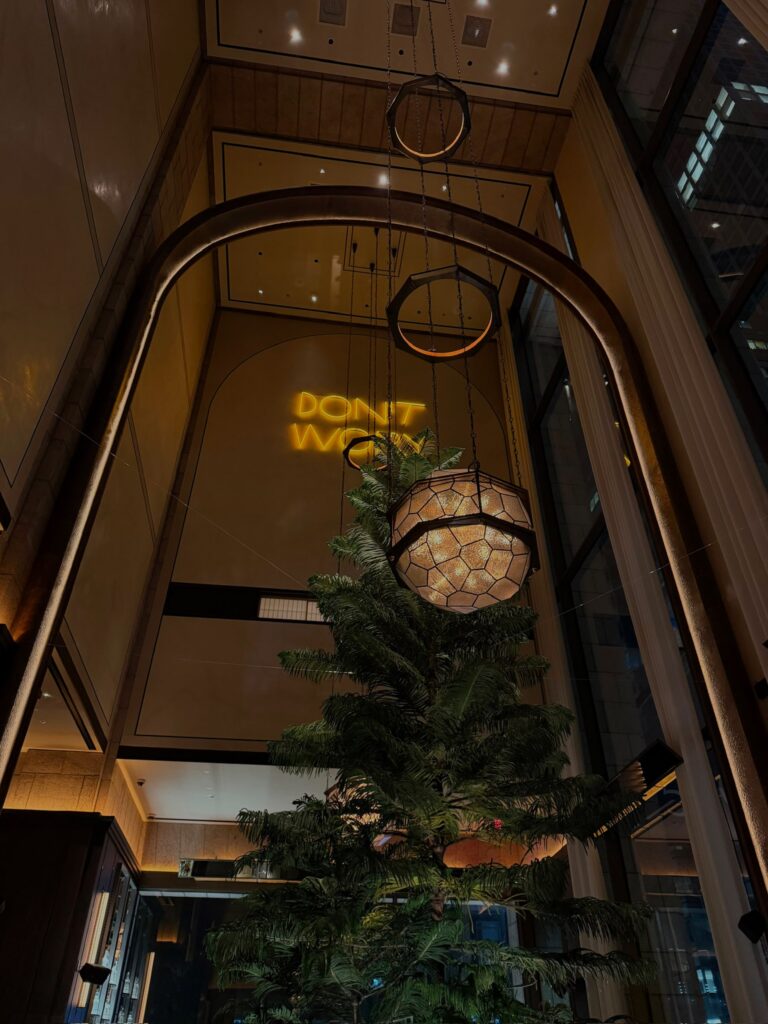
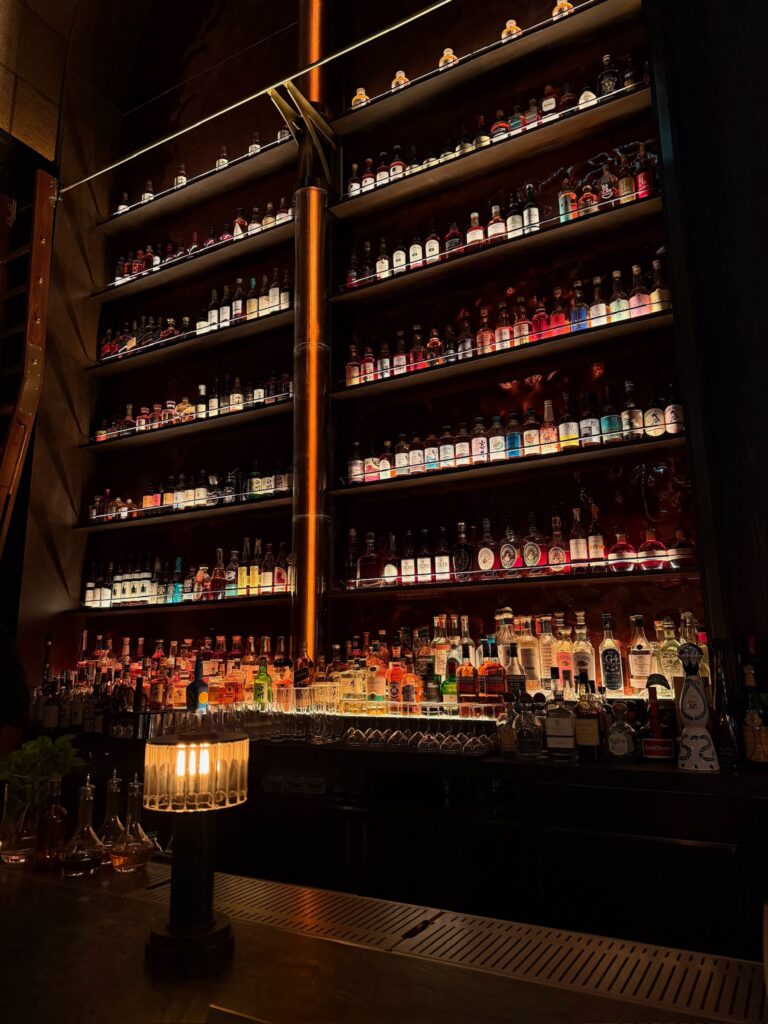
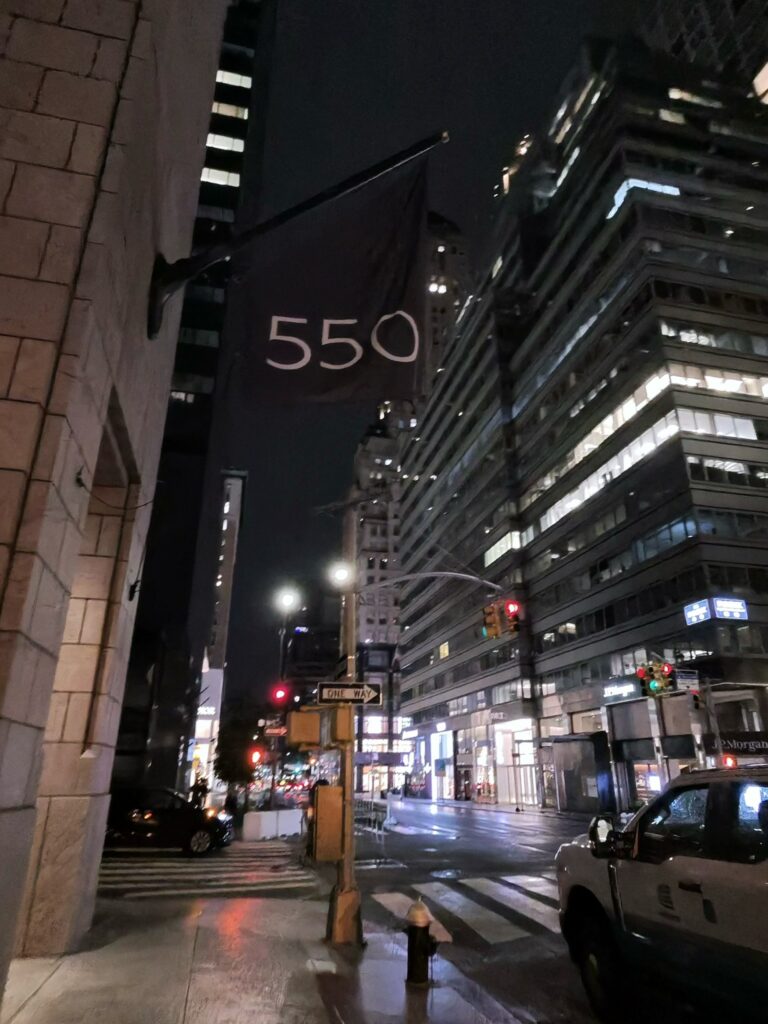
Bar Chimera occupies the ground floor of 550 Madison Avenue, one of Manhattan’s most recognizable office towers.
Originally designed by architect Philip Johnson and completed in 1984, the building helped define the postmodern movement in architecture. After an extensive restoration, it has become one of Midtown’s most impressive addresses once again.
Walking into Bar Chimera, it’s easy to understand why Simon Kim chose this location.
The soaring ceilings immediately change the atmosphere.
Instead of feeling tucked away inside another dark cocktail bar, the room feels open.
Relaxed.
Confident.
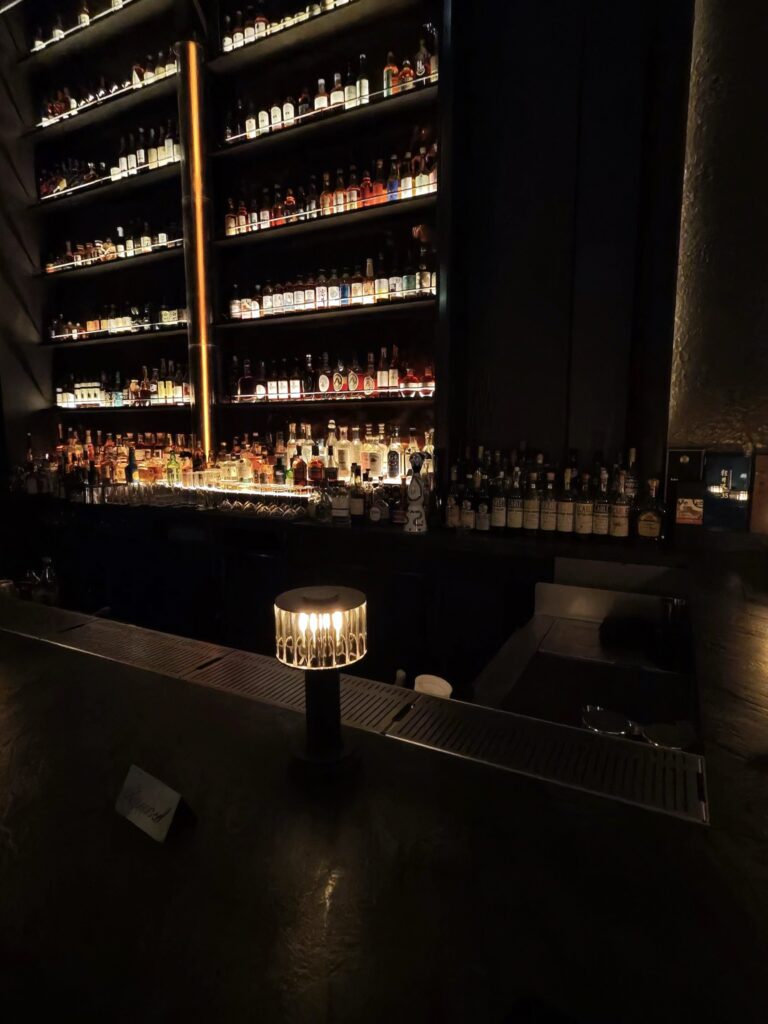
Towering shelves display hundreds of bottles without overwhelming the space.
Warm lighting replaces the dark speakeasy aesthetic that has become almost expected in New York.
I found myself looking around the room almost as much as I looked at the menu.
That’s rare.
Most bars are designed around what happens behind the bar.
Bar Chimera feels like it was designed around the entire experience.
The architecture.
The lighting.
The service.
The beverage programs.
The food.
Everything works together.
For me, luxury isn’t defined by marble floors or expensive bottles sitting on shelves.
It’s about creating an environment where every detail feels considered.
Bar Chimera accomplishes that before your first drink ever reaches the table.
This Isn’t Just Another Cocktail Bar
I’ve visited bars where the cocktails are the entire attraction.
I’ve visited others where the wine program overshadows everything else.
I’ve been to whiskey bars where the back wall alone is enough to keep you occupied for an hour.
Bar Chimera somehow combines all three.
That’s much harder than it sounds.
Building an excellent cocktail menu is difficult.
Building one of New York’s deepest wine programs is difficult.
Building a whiskey collection that serious collectors can appreciate is difficult.
Trying to do all of them under one roof usually means something gets overlooked.
That never happened during my visit.
Every beverage program feels like it could stand on its own.
Together, they create something that doesn’t really fit into a single category.
Restaurant.
Cocktail bar.
Wine destination.
Whiskey bar.
Bar Chimera manages to be all of them.
The Martini Program
Bar Chimera takes martinis more seriously than almost anywhere I’ve visited.
The menu explains something most people never think about.
Nearly twenty-five percent of every martini is water from melting ice.
Instead of accepting whatever dilution naturally occurs, Bar Chimera filters and re-mineralizes the water used for its martini ice to achieve exactly the balance they want.
That tells you everything you need to know.
This isn’t a place trying to make a good martini.
It’s trying to perfect one.
Then comes the customization.
Different spirits.
Different vermouths.
Different garnishes.
Every decision feels intentional.
If you’re looking for something truly extravagant, the full cocktail menu includes the Vintage Vault Martini, priced at $275.
Whiskey drinkers aren’t left out either.
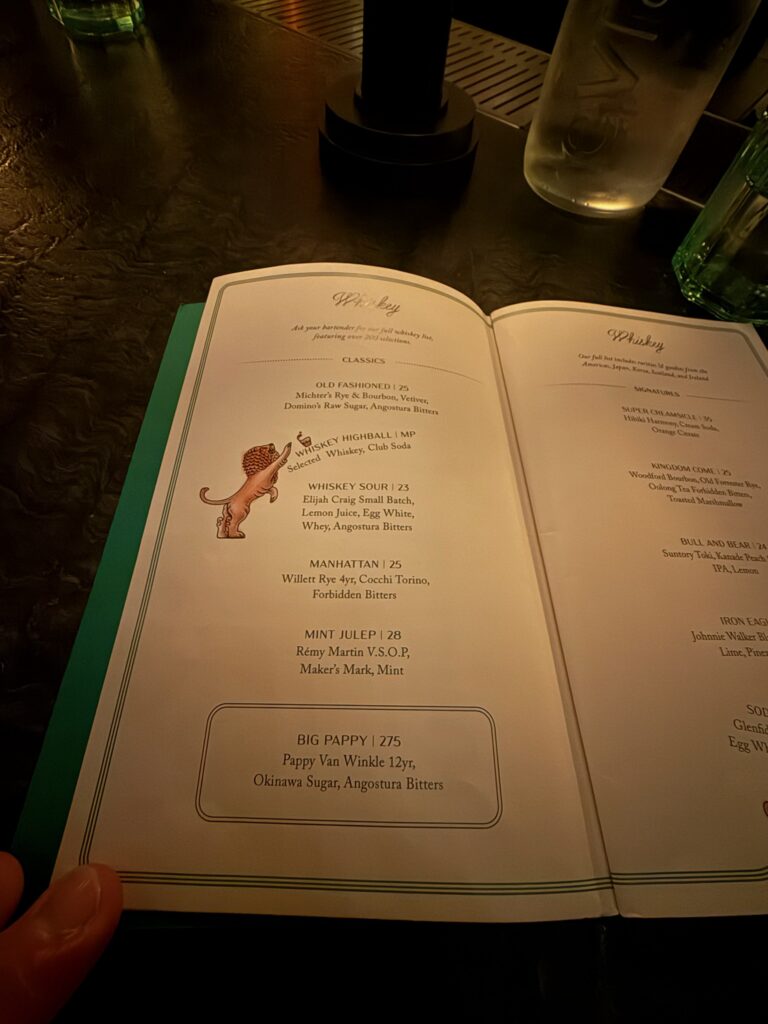
The Big Pappy, built around Pappy Van Winkle 12 Year, also commands a $275 price tag.
Most guests won’t order either one.
That’s not really the point.
They’re there because Bar Chimera isn’t trying to build an ordinary beverage program.
It’s building one with virtually no ceiling.
And somehow, after spending time with the martini menu, I found myself just as excited to turn the page and see the wine list.
Then Comes the Wine
Most cocktail bars have a respectable wine list.
Bar Chimera has one of the most serious wine programs in New York.
More than 50 wines by the glass.
More than 1,200 bottles.
Champagne.
Burgundy.
Bordeaux.
Piedmont.
Tuscany.
California.
Whether you’re looking for a grower Champagne, a mature Bordeaux, or a Barolo you’ve only read about, there’s a good chance it’s somewhere on this list.
Even if you never order a glass, reading through the wine program tells you what kind of establishment this is.
They aren’t trying to satisfy wine drinkers.
They’re trying to impress them.
Then I turned another page.
Madeira.
Not one bottle.
Not a small section.
An actual Madeira program featuring vintages dating back to 1835.
That’s the kind of detail most guests will never notice.
To me, it says everything.
Nobody builds a Madeira collection like that because they think it will sell every night.
They build it because they love wine.
That’s the difference.
The $95 Dinner Is Calling Me Back
One thing I appreciated is that Bar Chimera gives guests another option besides ordering everything à la carte.
For $95 per person, they offer a curated dinner that includes freshly baked salt bread with whipped honey butter, a selection of hors d’oeuvres, your choice of entrée, and sides.
Considering the quality of the kitchen and the ingredients being used throughout the menu, I actually think it’s one of the best values in the restaurant.
I wasn’t particularly hungry that evening.
Instead of committing to the full dinner, I decided to order a handful of dishes that had been on my list since Bar Chimera opened.
Looking back…
That may have been my biggest mistake.
Because after tasting what I did, I immediately started thinking about everything I wanted to come back and try.
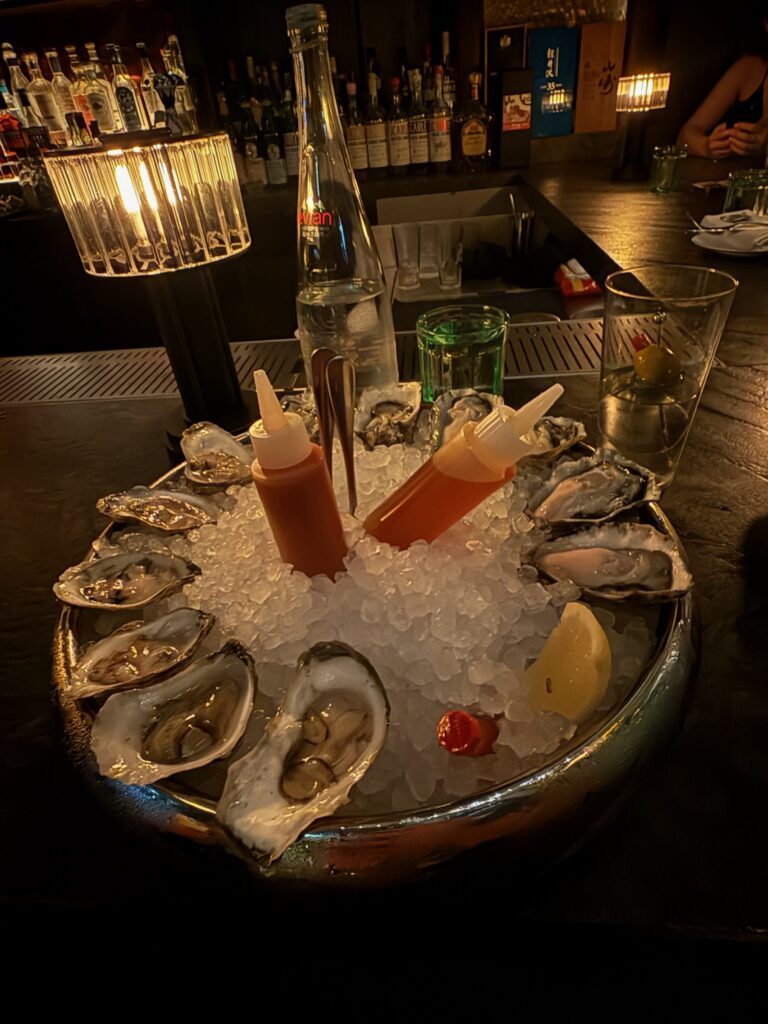
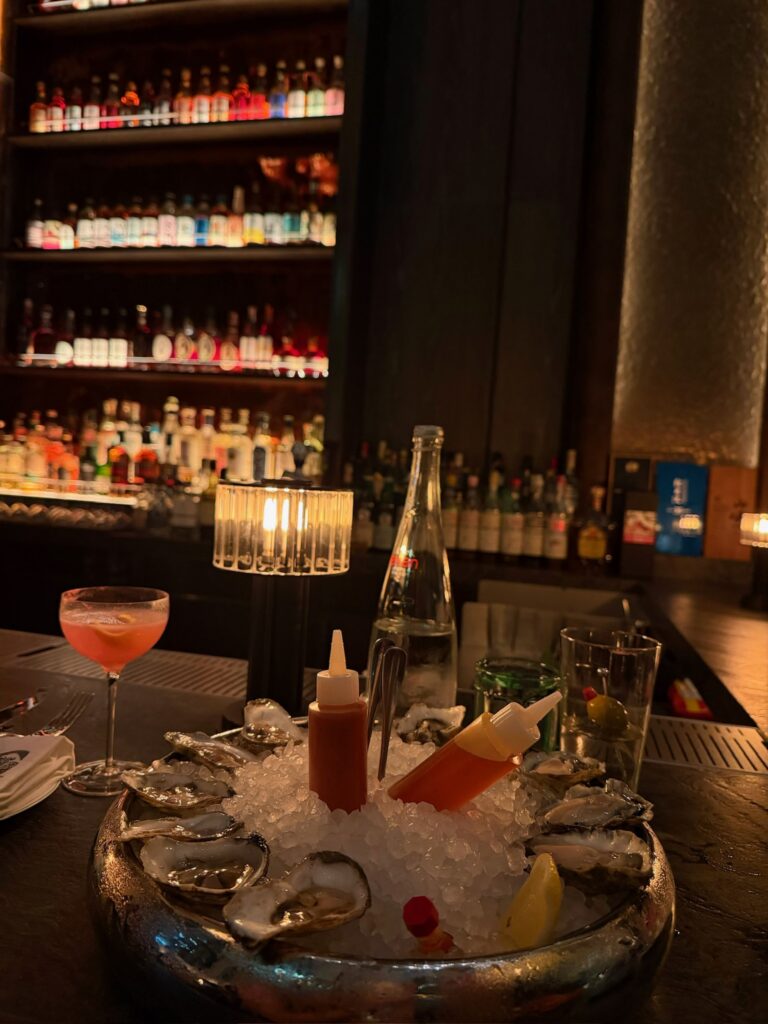
A Dozen Oysters
Whenever I visit a restaurant that takes seafood seriously, oysters are almost always my first order.
This night was no different.
I ordered a dozen.
Six East Coast.
Six West Coast.
I’ve always enjoyed comparing the two side by side.
The East Coast oysters delivered exactly what I expected.
Bright.
Briny.
Clean.
With a firmer texture that I usually gravitate toward.
The West Coast oysters were noticeably creamier.
Slightly sweeter.
More delicate.
Neither style is better.
They’re simply different expressions of exceptional oysters.
Sometimes luxury isn’t about adding expensive ingredients.
Sometimes it’s about finding pristine ingredients and letting them speak for themselves.
Bar Chimera understands that.
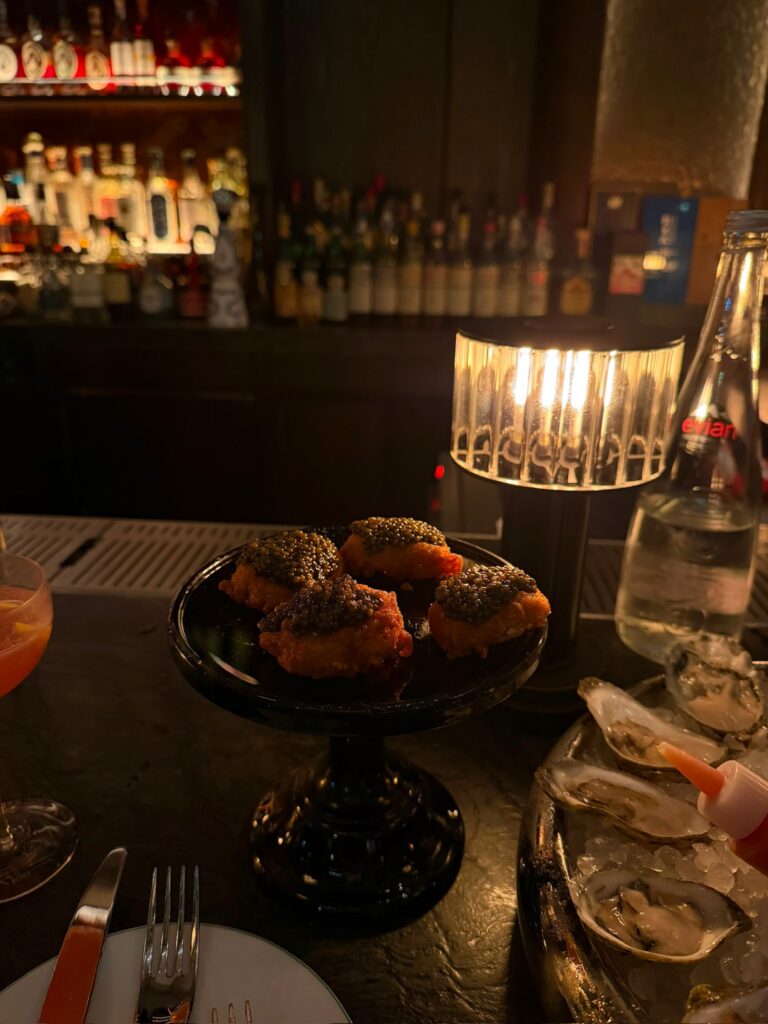
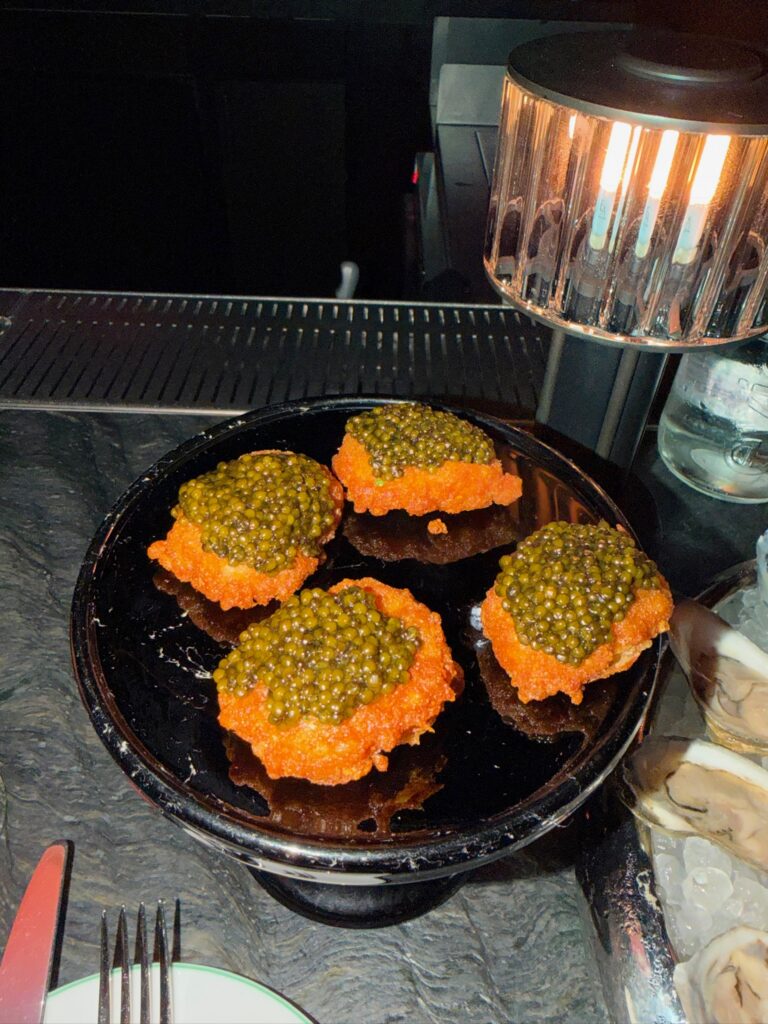
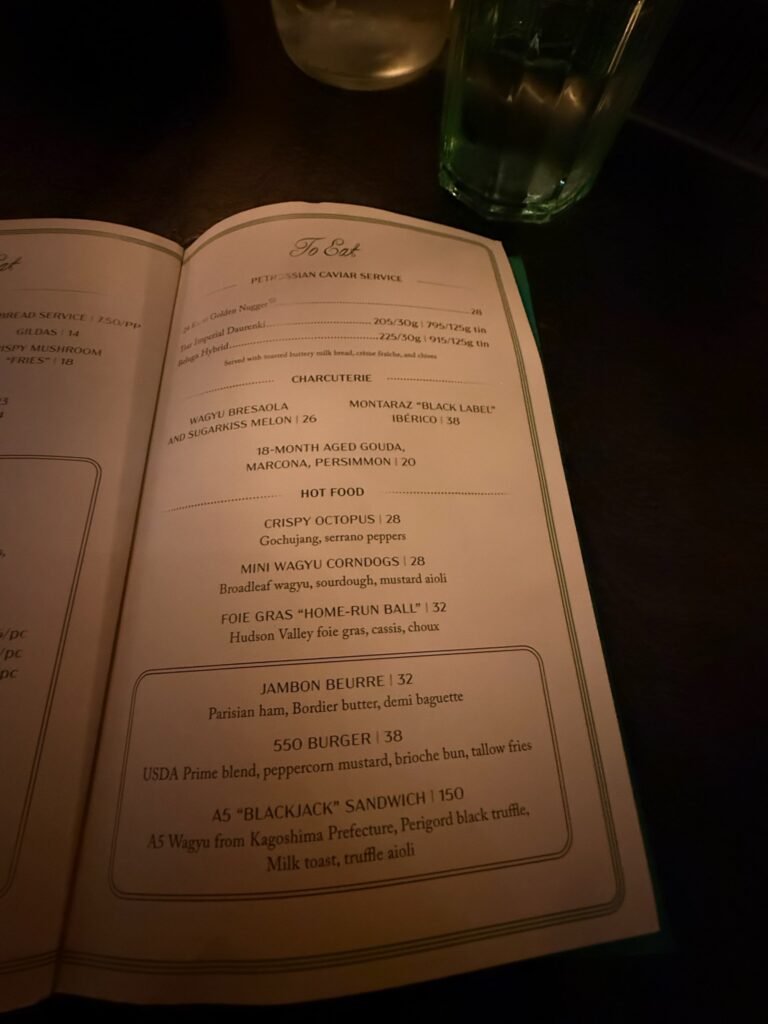
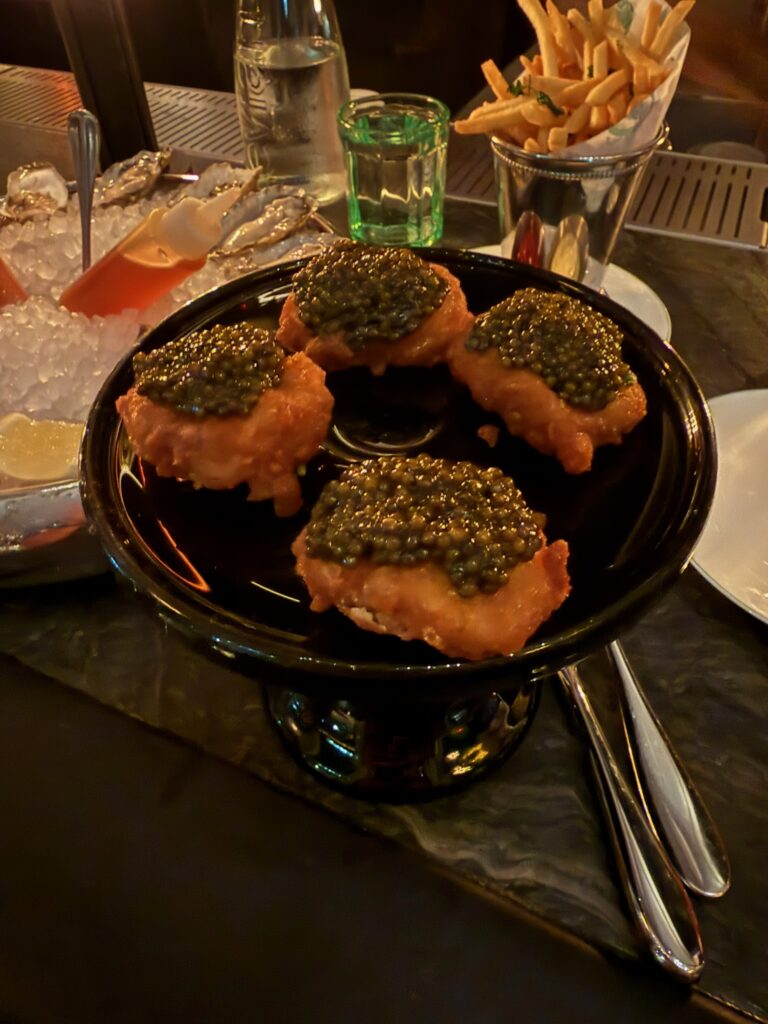
The 24 Karat Golden Nuggets
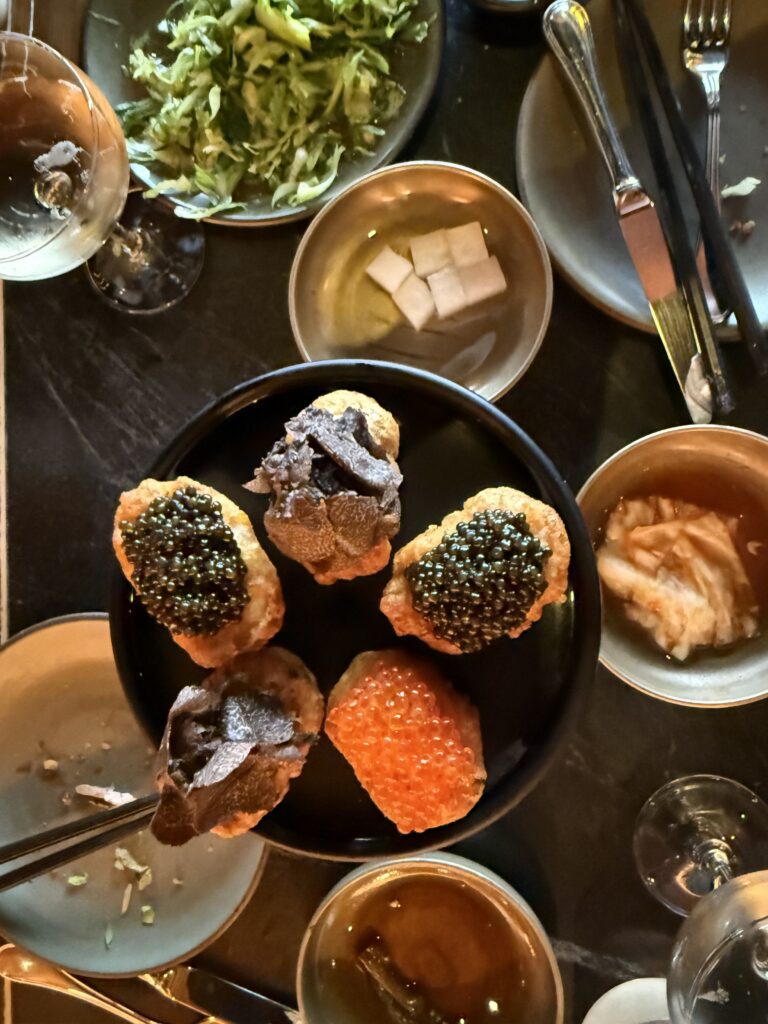
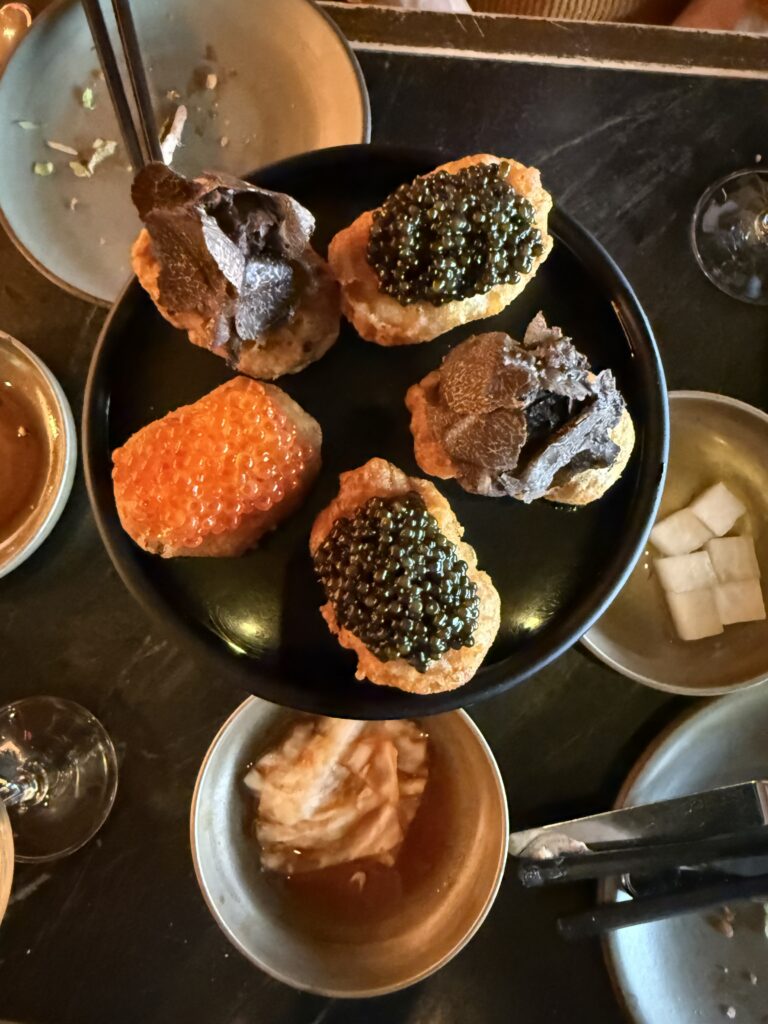
Then came one of Simon Kim’s most recognizable dishes.
The 24 Karat Golden Nuggets.
Originally introduced at COQODAQ, they’ve become one of the signature dishes guests associate with his restaurants.
When you first hear the description, it almost sounds ridiculous.
Chicken nuggets.
Crème fraîche.
Caviar.
Then you take a bite.
The chicken is unbelievably crisp.
The crème fraîche adds richness without becoming heavy.
The caviar provides bursts of salinity that somehow make the entire dish work.
It’s playful.
It’s luxurious.
Most importantly…
It’s fun.
That’s something Simon Kim consistently does well.
He isn’t afraid to take familiar comfort food and elevate it, but he never loses what made it enjoyable in the first place.
I’d order them again without hesitation.
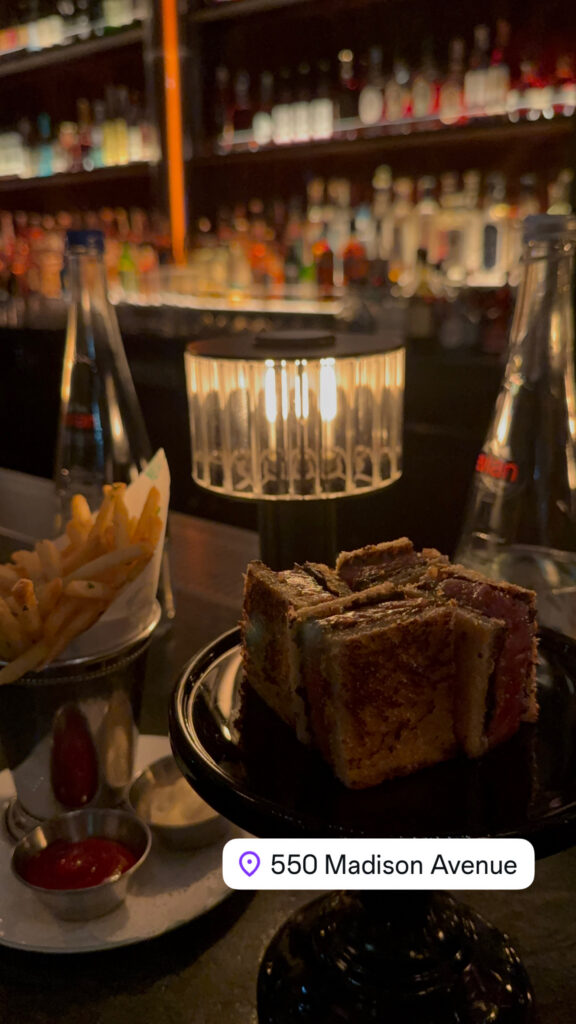
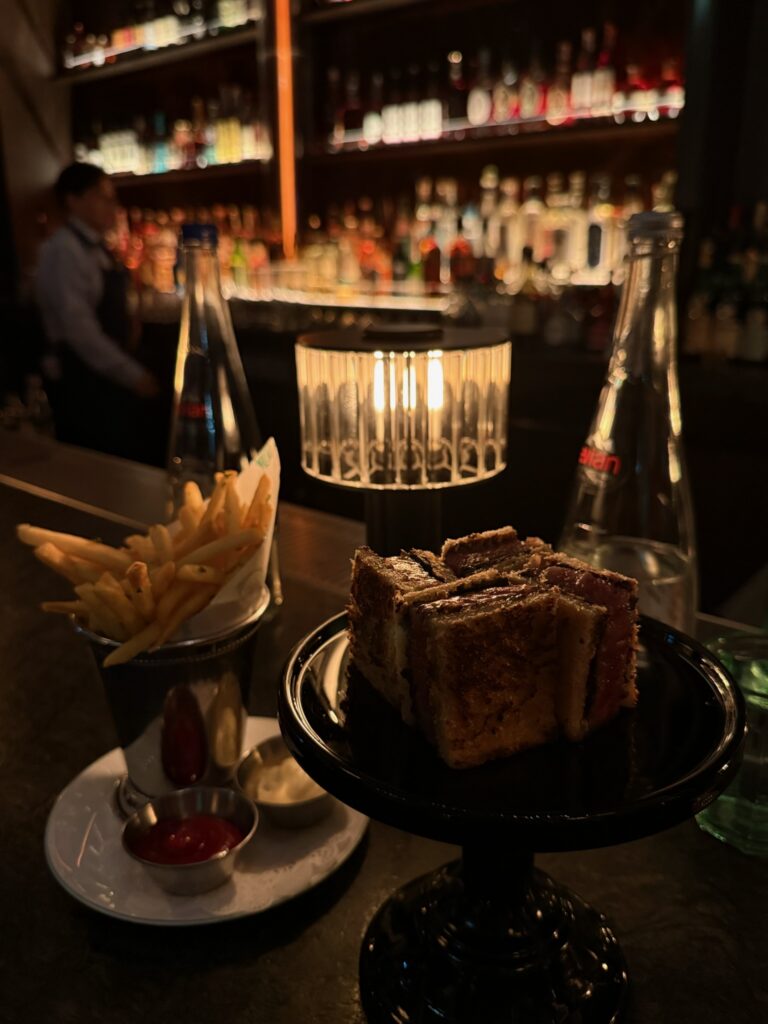
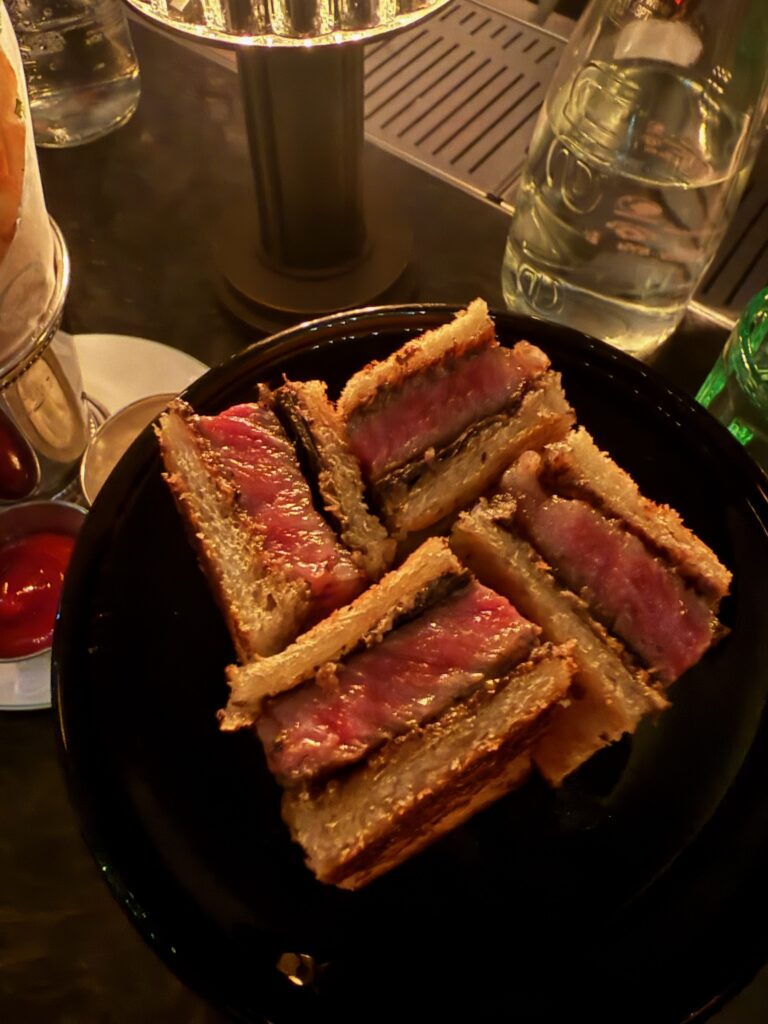
The A5 Blackjack Sandwich
Then came the dish I’d been looking forward to the most.
The A5 Blackjack Sandwich.
Kagoshima A5 Wagyu.
Périgord black truffle.
Milk bread.
Truffle aioli.
At $150, it isn’t cheap.
Nor should it be.
The obvious question is…
Is it worth it?
For me…
Absolutely.
But it also depends on what you’re looking for.
If you’re comparing it to the best steak sandwich at your local restaurant, you’ll probably never understand the price.
That’s not what this is.
You’re paying for some of the finest beef produced anywhere in the world.
Fresh Périgord black truffle.
Excellent bread.
And a kitchen with the confidence not to overcomplicate ingredients that don’t need improving.
Every bite is unbelievably rich.
The milk bread somehow manages to support the intensely marbled Wagyu without disappearing beneath it.
The truffle enhances the beef instead of competing with it.
Luxury dining isn’t always about making food more complicated.
Sometimes it’s about sourcing ingredients that are almost impossible to improve upon.
If you’ve experienced A5 Wagyu before, the price starts to make sense.
If you haven’t…
$150 for a sandwich will probably sound crazy.
Neither opinion is wrong.
I just know this…
If I walked back into Bar Chimera tomorrow…
I’d order the Blackjack Sandwich again.
Without hesitation.
That’s probably the biggest compliment I can give it.
Not because I left hungry—I didn’t.
Because after tasting what I did, I wanted to keep exploring the menu.
I wanted the charcuterie.
The crispy octopus.
The crispy mushroom fries.
The $95 Dinner at Chimera.
And another Blackjack Sandwich.
To me, that’s the sign of a great kitchen.
Not one dish that gets all the attention.
A menu that makes you want to keep coming back.
Simon Kim’s Formula
One thing I’ve noticed after visiting Simon Kim’s restaurants is that they all share the same philosophy.
Whether it’s COTE, COQODAQ, or now Bar Chimera, none of them are trying to reinvent fine dining simply to be different.
Instead, they take familiar ideas and execute them at an exceptionally high level.
A Korean steakhouse becomes the first Korean steakhouse in the United States to earn a Michelin star.
Chicken nuggets become Golden Nuggets topped with crème fraîche and caviar.
A cocktail bar becomes three completely independent beverage programs under one roof.
Nothing feels forced.
Nothing feels gimmicky.
Every concept has a clear identity.
That may sound simple, but it’s surprisingly difficult to pull off.
Too often, restaurants try to be everything to everyone and end up excelling at nothing.
Bar Chimera takes the opposite approach.
It builds three world-class beverage programs and gives each one enough attention to stand on its own.
After spending an evening there, I don’t think Bar Chimera is trying to be New York’s best martini bar.
Or its best whiskey bar.
Or its best wine bar.
It’s trying to prove those three experiences can exist together without compromising any of them.
From where I was sitting…
I think Simon Kim accomplished exactly that.
Why I’ll Be Back
The funny thing about Bar Chimera is that I never felt like I finished the experience.
I felt like I had just started it.
That’s rare.
Most restaurants give you the feeling that you’ve seen the highlights after one visit.
Bar Chimera does the opposite.
It makes you curious about what you missed.
The next time I go back, I’m doing it differently.
I’m ordering the $95 Dinner at Chimera and letting the kitchen show me more of what it can do.
I want to spend more time with the martini program.
I want to work my way through more of the wines by the glass.
I want to order the charcuterie.
The crispy octopus.
The crispy mushroom fries.
Maybe even spend a little more time exploring the whiskey program.
And yes…
I’m ordering another Blackjack Sandwich.
Without hesitation.
Some dishes live up to the hype.
Very few make you want to order them again before you’ve even left the restaurant.
The Blackjack did exactly that.
Final Thoughts
New York doesn’t need another cocktail bar.
It already has some of the best in the world.
It doesn’t need another restaurant with an impressive wine list.
Or another place with rare whiskey behind the bar.
What makes Bar Chimera interesting isn’t any one of those things by itself.
It’s the fact that all three exist together.
And none of them feel like an afterthought.
The drinks are as carefully considered as the food.
The wine program deserves as much attention as the cocktails.
The whiskey collection isn’t there simply to impress collectors.
Everything has a purpose.
Everything has an identity.
After one visit, I know I barely scratched the surface.
I sampled twelve exceptional oysters.
Tried the Golden Nuggets that have become one of Simon Kim’s signature dishes.
Ordered an A5 Blackjack Sandwich that completely justified its reputation.
Spent time admiring one of the most ambitious beverage programs I’ve seen in New York.
And left with a list of reasons to come back.
For me, that’s the highest compliment I can give Bar Chimera.
Not that it served one unforgettable meal.
Not that it made one outstanding cocktail.
But that it made me excited about the next visit before the first one was even over.
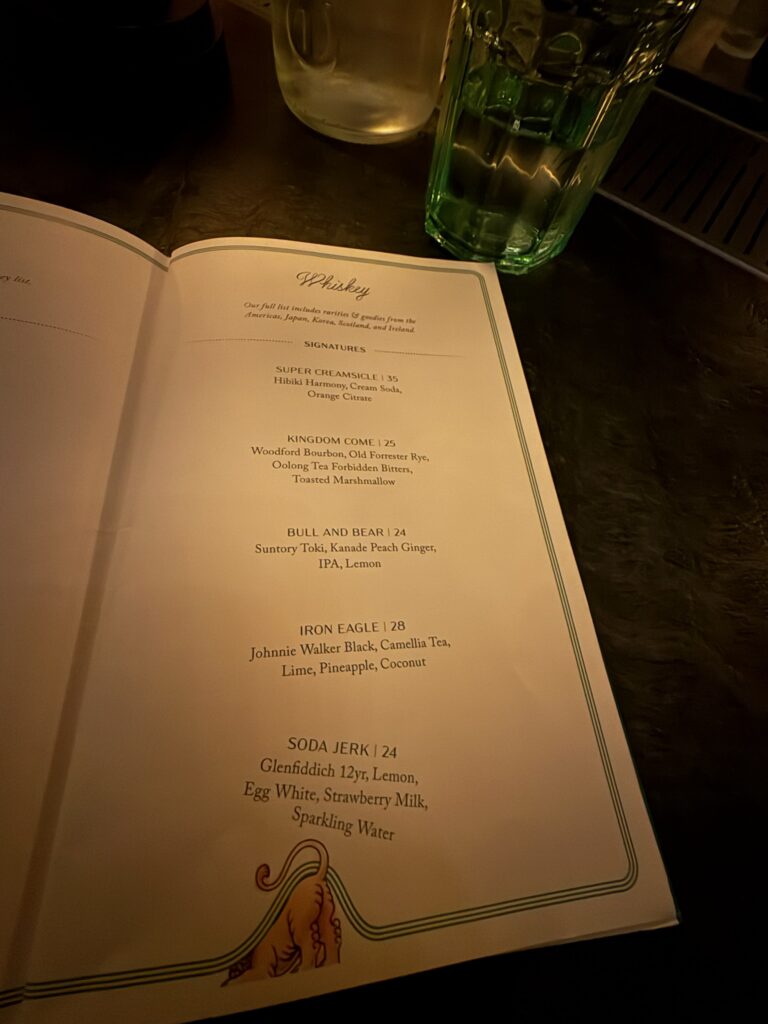
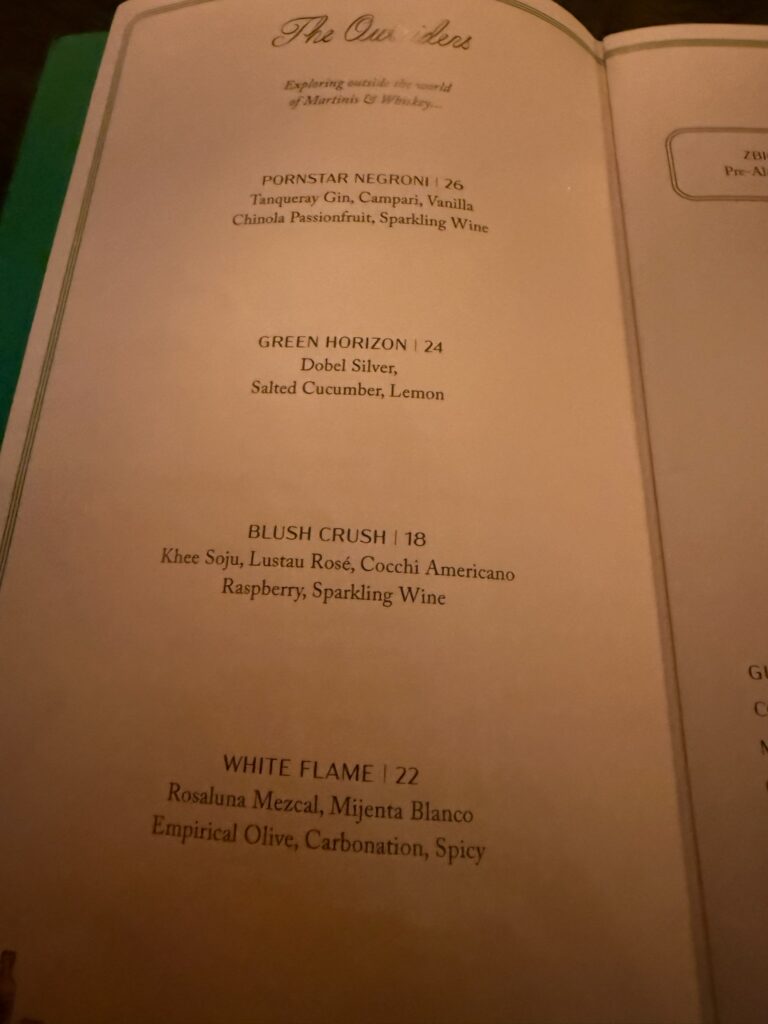
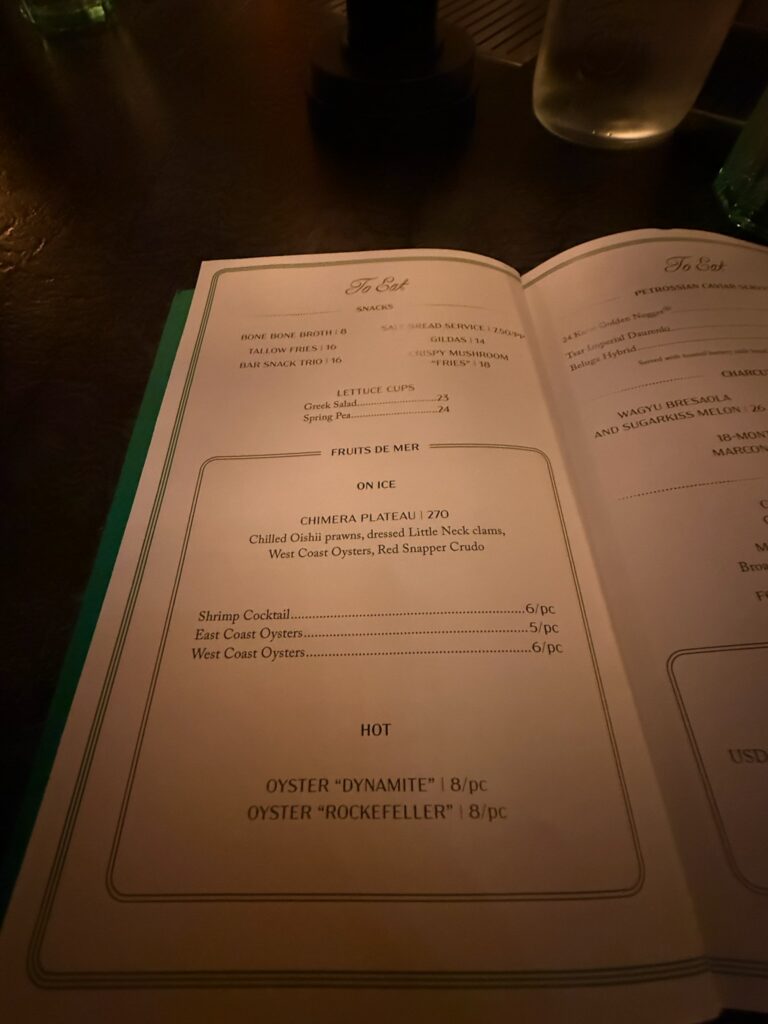
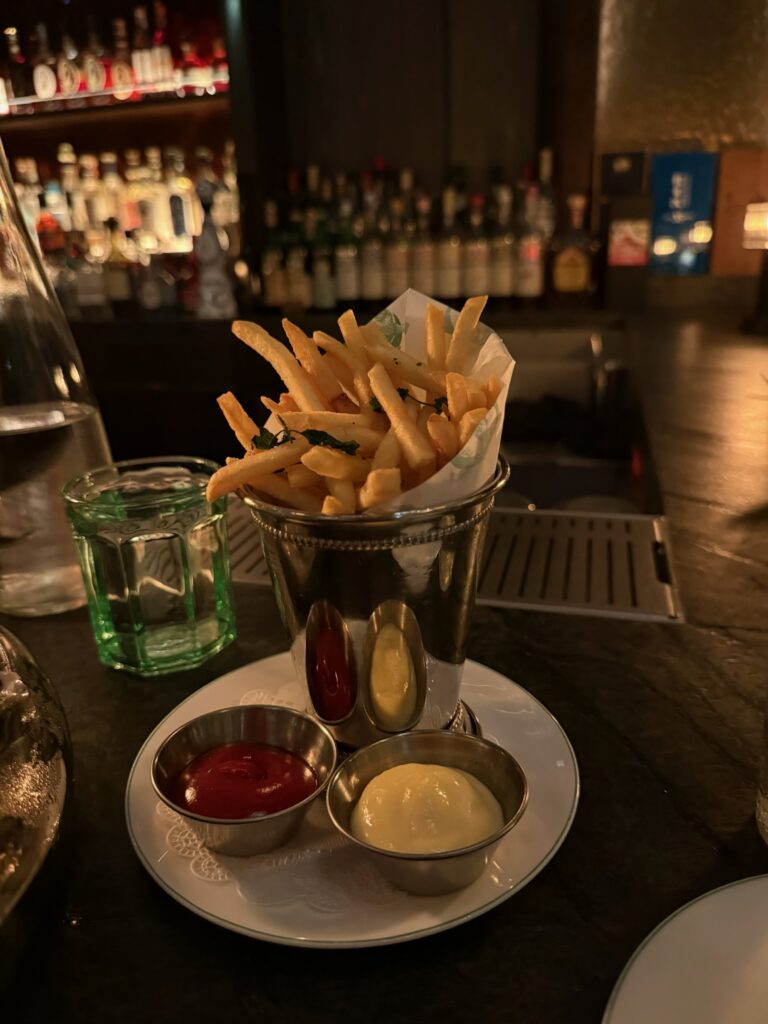
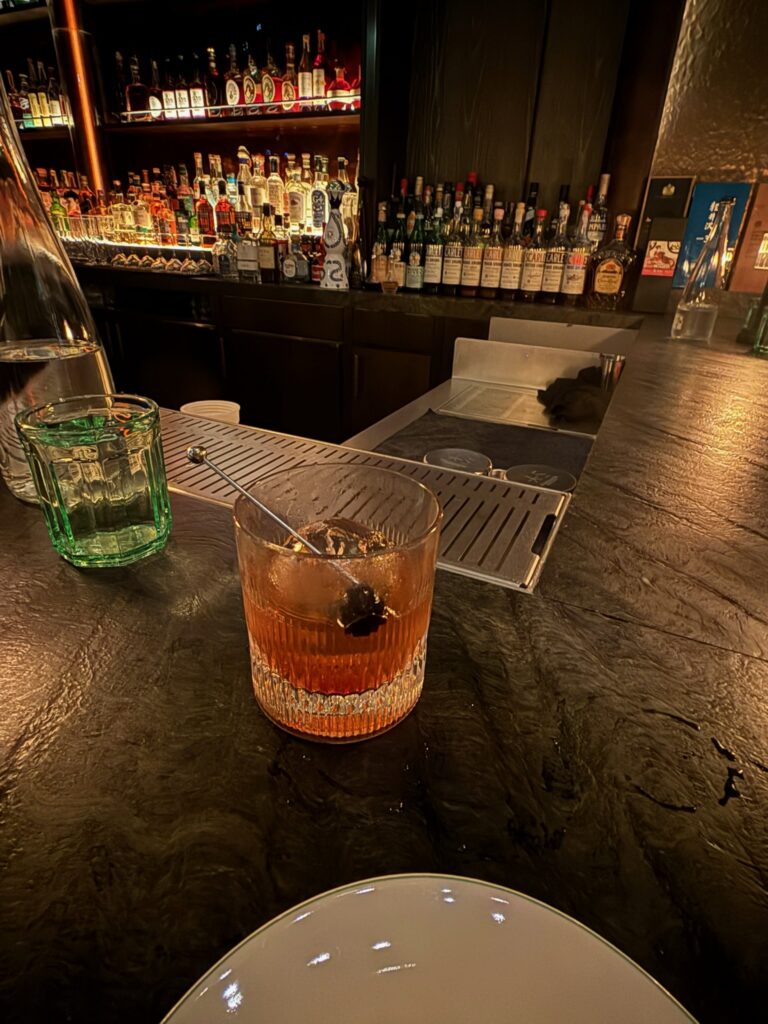
Freshly shucked oysters enjoyed at the Whiskey Bar inside Bar Chimera at 550 Madison in Midtown Manhattan.The dramatic architecture and soaring interior of the Whiskey Bar at Bar Chimera inside 550 Madison in Midtown Manhattan.The signature A5 Blackjack Sandwich paired with crispy tallow fries at the Whiskey Bar inside Bar Chimera in Midtown Manhattan.Bar Chimera’s Golden Nuggets topped with caviar, served alongside fresh oysters at the Whiskey Bar inside 550 Madison.Bar Chimera’s signature Golden Nuggets topped with premium caviar, served at the Whiskey Bar inside 550 Madison.The Whiskey Bar at Bar Chimera showcases hundreds of premium whiskey and spirits beneath the soaring architecture of 550 Madison.The opening page of the Bar Chimera menu at the Whiskey Bar inside 550 Madison in Midtown Manhattan.The Whiskey Bar cocktail menu at Bar Chimera highlights classic whiskey drinks alongside signature creations, including the Big Pappy.The Whiskey Bar’s signature cocktail menu showcases original whiskey creations crafted with premium spirits from around the world.Bar Chimera’s signature cocktail menu features original creations that extend beyond its dedicated martini and whiskey programs.Bar Chimera offers a curated selection of non-alcoholic cocktails, pre-drink options, and craft beers alongside its martini, whiskey, and wine programs.The Whiskey Bar food menu at Bar Chimera highlights oysters, chilled seafood, bar snacks, and signature dishes.Bar Chimera’s food menu features signature dishes including the A5 Blackjack Sandwich, caviar service, charcuterie, and elevated bar plates.Freshly shucked oysters paired with a Cosmopolitan at Bar Chimera inside 550 Madison in Midtown Manhattan.Bar Chimera’s signature Golden Nuggets served with premium caviar, fresh oysters, and tallow fries at 550 Madison.Bar Chimera’s crispy tallow fries served with house-made dipping sauces at 550 Madison in Midtown Manhattan.An Old Fashioned enjoyed at the Whiskey Bar inside Bar Chimera at 550 Madison in Midtown Manhattan.Bar Chimera’s signature A5 Blackjack Sandwich served with crispy tallow fries at 550 Madison in Midtown Manhattan.The A5 Blackjack Sandwich at Bar Chimera features Kagoshima A5 Wagyu, Périgord black truffle, milk toast, and truffle aioli.The iconic 550 Madison building in Midtown Manhattan, home to Simon Kim’s Bar Chimera.The Whiskey Bar at Bar Chimera showcases an extensive collection of premium whiskey beneath the dramatic architecture of 550 Madison.
“Luxury isn’t always white tablecloths and whispered conversations. Sometimes it’s Champagne, an egg-shaped cocktail, and a chicken nugget topped with black truffle.”
COQODAQ brunch review
There are restaurants you visit because everyone is talking about them.
Then there are restaurants you visit because you want to understand why everyone is talking about them.
COQODAQ was the second one.
Like many people, the first thing that caught my attention wasn’t the dining room or the menu. It was a chicken nugget covered in caviar.
I’ll admit it—I was skeptical.
Luxury ingredients piled onto comfort food can easily become a gimmick. Too often, restaurants rely on expensive toppings to create a viral moment instead of building a memorable meal. I wondered whether COQODAQ was another restaurant designed for Instagram or whether there was a genuinely great kitchen behind all the attention.
The more I learned, the more curious I became.
This wasn’t just another restaurant opening in New York. It was another concept from the hospitality group behind some of the city’s most sought-after reservations. Rather than simply creating places to eat, they were building destinations—restaurants and bars that people planned their evenings around.
That curiosity eventually led me to brunch.
Dinner often receives the headlines. It’s where chefs showcase tasting menus, rare ingredients, and elaborate presentations.
Brunch is different.
Brunch exposes the fundamentals.
There are fewer places to hide when you’re serving fried chicken, French toast, hash browns, soft scrambled eggs, and cocktails before noon. Either the kitchen executes the basics exceptionally well, or it doesn’t.
After spending nearly three hours working through almost the entire brunch menu, I walked away with a very different impression than I expected.
Yes, the Golden Nuggets deserve the attention they’ve received.
But they aren’t the reason I’d come back.
More Than a Restaurant
One thing I’ve come to appreciate while traveling is that the restaurants I remember most aren’t always the most expensive or the most technically ambitious.
They’re the ones where every detail feels intentional.
From the moment I walked into COQODAQ, that intention was obvious.
The dining room is understated in a way that’s increasingly rare in New York. Warm lighting reflects off dark wood tables and amber glassware, creating a space that feels refined without becoming formal. There isn’t an oversized floral display begging to be photographed or a dining room designed purely for social media.
Instead, the restaurant feels comfortable.
Confident.
Purposeful.
Even as brunch service picked up, the room never became chaotic. Conversations remained at a comfortable volume, courses arrived with thoughtful pacing, and at no point did I feel like the staff was trying to rush us through the meal to turn the table.
That’s something I notice more and more when I travel.
The best restaurants understand that hospitality isn’t measured by how quickly food arrives. It’s measured by how a guest feels throughout the experience.
COQODAQ encourages you to settle in.
To order another drink.
To have another conversation.
To enjoy one more bite before the next course arrives.
That slower rhythm set the tone for everything that followed.
A Restaurant Built on Obsession, Not Hype
Before my visit, I spent some time reading about COQODAQ’s philosophy.
The restaurant describes its mission as an “obsession with doing better.”
Normally, I take statements like that with a healthy amount of skepticism.
Every restaurant talks about sourcing.
Every restaurant talks about quality.
Every restaurant claims to care about hospitality.
The difference is whether you can actually taste those decisions.
COQODAQ’s philosophy touches almost every part of the experience.
They source slower-grown, pasture-raised chickens.
They use a gluten-free rice flour batter designed to produce a lighter crust.
They fry exclusively in organic fruit oil instead of conventional seed oils.
Even their beverage program has a purpose, encouraging guests to pair fried chicken with Champagne because of the way the acidity and bubbles refresh the palate between bites.
Those details could easily become marketing.
Instead, they became noticeable.
The first thing that struck me wasn’t the seasoning.
It was how incredibly clean everything tasted.
Despite eating multiple fried dishes, nothing felt greasy. The crust remained remarkably crisp without becoming heavy, and every bite finished cleanly enough that I immediately wanted another.
Whether that’s because of the batter, the oil, or simply excellent technique doesn’t really matter to the guest.
What matters is the result.
And the result speaks for itself.
The Brucket List: The Best Way to Experience COQODAQ
One thing I appreciate about restaurants is when they make it easy for first-time guests to understand what they’re trying to accomplish.
COQODAQ does exactly that with the Brucket List™.
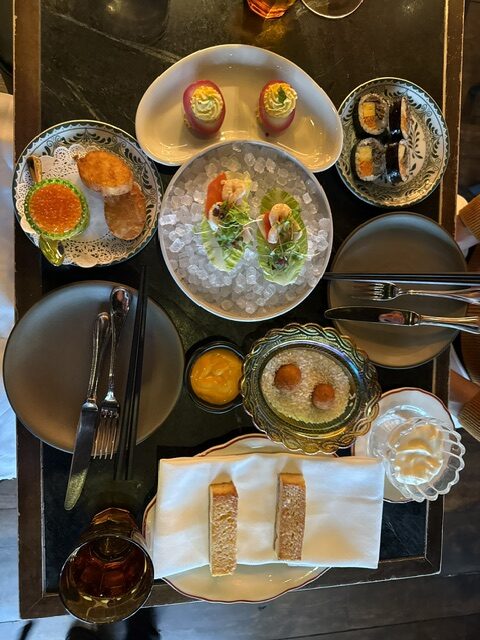
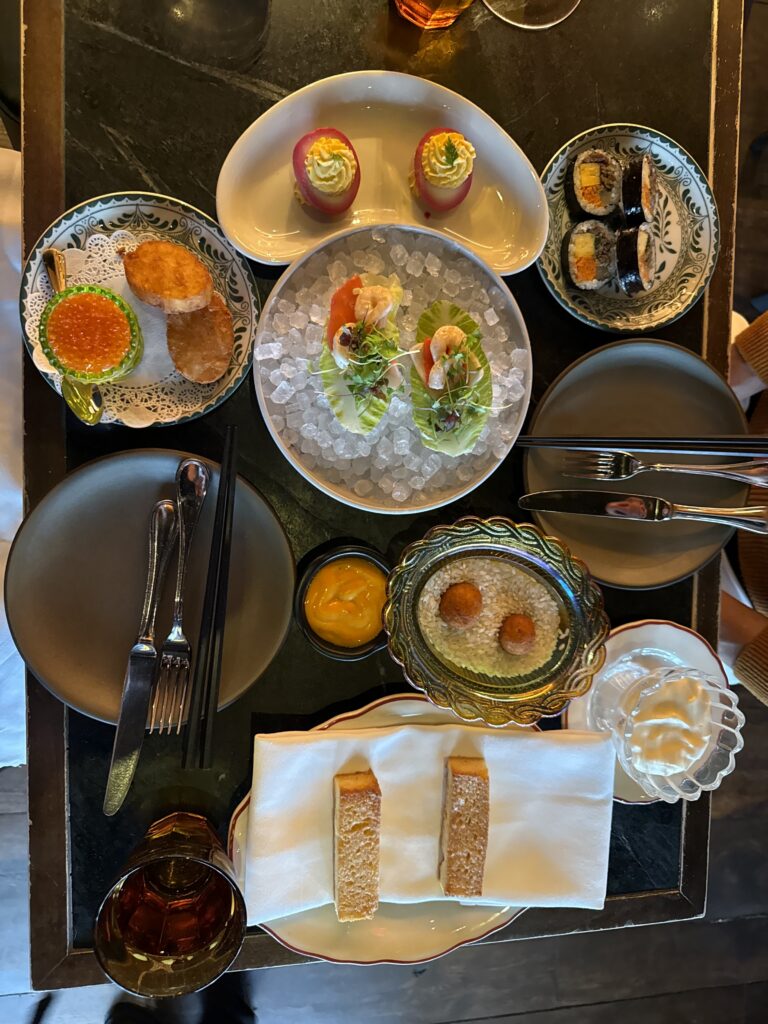
For $58 per person, the restaurant serves its entire selection of COQO D’OEUVRES before allowing each guest to choose an entrée. Rather than forcing you to guess which dishes define the restaurant, the kitchen simply says, “Try everything.”
That’s exactly what I wanted.
By the time the first round of plates arrived, our table looked less like brunch and more like the opening courses of a tasting menu.
Every dish was thoughtfully plated.
Every course arrived at the right pace.
Nothing felt rushed.
This wasn’t simply brunch.
It was an introduction to the restaurant’s philosophy.
French Toast Soldiers
I’ll be honest.
I expected these to be an afterthought.
When you’re visiting a restaurant known for fried chicken and caviar, French toast isn’t usually what excites you.
I was wrong.
The outside was beautifully crisp while the inside stayed rich and custardy without becoming soggy. The vanilla anglaise added sweetness, but it never overwhelmed the dish.
There was restraint here.
It wasn’t trying to become dessert.
It was simply excellent French toast.
By the end of brunch, it had become one of my favorite dishes on the table.
Sometimes the biggest surprise isn’t the most expensive item.
It’s the one you almost overlooked.
Hash Brown & Salmon Rillettes
If I had to choose the most underrated bite of brunch, this would be it.
The hash brown was everything a hash brown should be.
Golden.
Thin.
Perfectly crisp.
No grease.
No sogginess.
Just an incredibly satisfying crunch that supported the smoked salmon rillettes without collapsing underneath it.
The richness of the salmon and the crispness of the potato created one of those bites where every texture works together.
Simple food executed exceptionally well is often harder than complicated food.
This dish proved it.
Shrimp Salad Lettuce Cups
Every menu built around fried food needs something that resets your palate.
This was that dish.
Cold shrimp.
Bright citrus.
Fresh lettuce.
Clean flavors.
After several richer bites, it provided exactly the contrast the meal needed.
Not every memorable course has to be indulgent.
Sometimes balance is what you remember.
Umma’s Kimbap
One thing I appreciated throughout brunch was that COQODAQ never forgot its Korean identity.
The kimbap isn’t there to chase trends.
It’s there because it belongs.
That authenticity gives the menu depth.
Crispy Chicken Croquettes
By this point, one thing had become obvious.
The consistency of the frying.
Whether it was the French toast, the hash brown, or the croquettes, every fried element arrived remarkably light and crisp.
Nothing felt greasy.
Nothing tasted like it had spent too long in the fryer.
That’s not luck.
That’s discipline.
The croquettes reinforced what I was beginning to realize about COQODAQ.
The famous dishes weren’t exceptional because they were expensive.
They were exceptional because the fundamentals were already in place.
Chicken Consommé
The smallest course on the table may have said the most about the kitchen.
A clear chicken consommé doesn’t leave much room for error.
Every flavor is exposed.
It was clean.
Comforting.
Focused.
A quiet reminder that technical cooking doesn’t always need elaborate presentation.
Sometimes clarity is the point.
The First Thing I Learned
Before the fried chicken even arrived, I realized something.
The Golden Nugget may be the restaurant’s most photographed dish.
But it isn’t carrying the restaurant.
If COQODAQ removed every ounce of caviar and truffle from the menu tomorrow, there would still be an exceptionally talented kitchen behind it.
That’s what separates a restaurant from a gimmick.
The luxury ingredients get your attention.
The execution earns your respect.
“The Brucket List transforms brunch into a tasting experience, allowing first-time guests to explore the full range of COQODAQ’s small plates before choosing an entrée.”
The Main Event: Signature Fried Chicken
Eventually, the dish the restaurant is built around arrived.
Signature Fried Chicken.
By this point, I’d already seen enough to know the kitchen could cook.
The question now wasn’t whether the chicken would be good.
It was whether it deserved the reputation that had made COQODAQ one of New York City’s hardest reservations.
The answer came after the first bite.
Yes.
But probably not for the reason most people expect.
Luxury restaurants often rely on premium ingredients to justify premium prices.
COQODAQ does the opposite.
Before adding caviar.
Before shaving truffle.
Before pouring Champagne.
It makes sure the chicken itself is exceptional.
That’s where everything begins.
Three Styles. One Foundation.
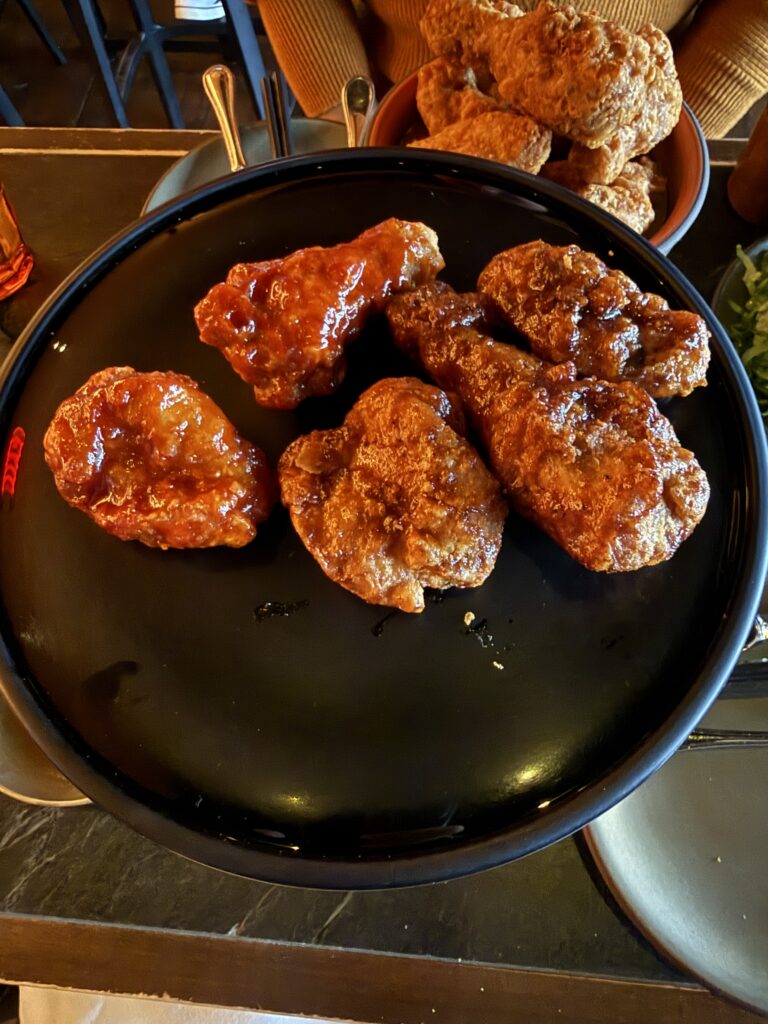
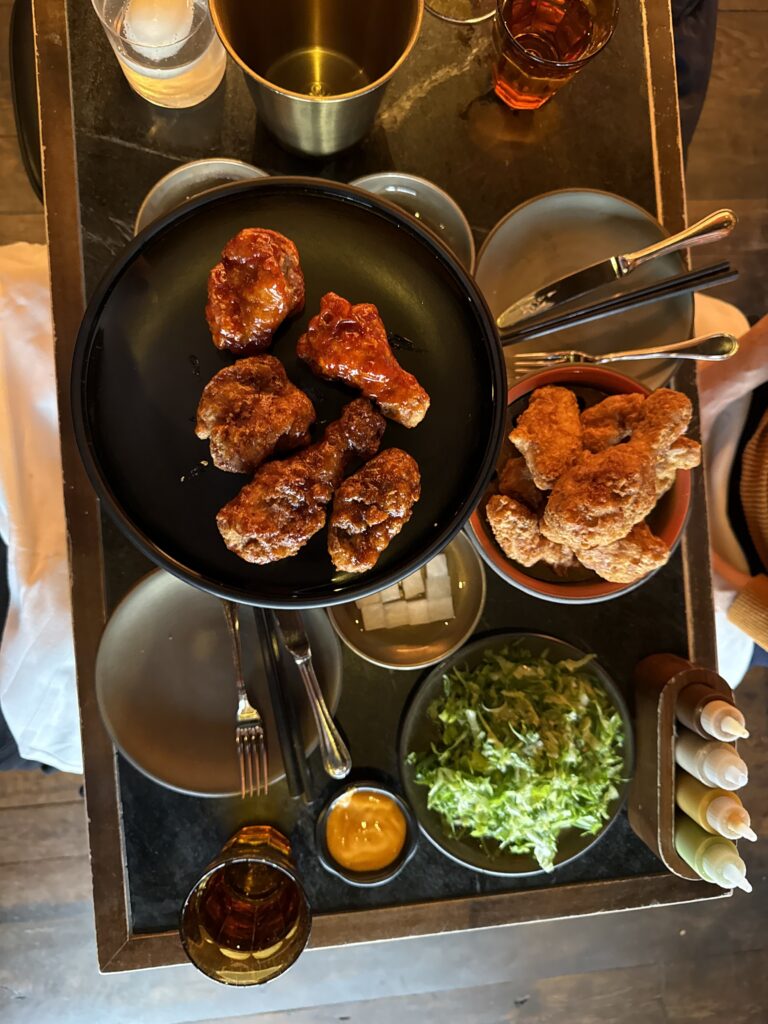
The Signature Fried Chicken allows you to choose two of three preparations:
OG
Soy Sauce-Garlic
Gochujang
Fortunately, I was able to try all three.
What impressed me most wasn’t the seasoning.
It was the consistency.
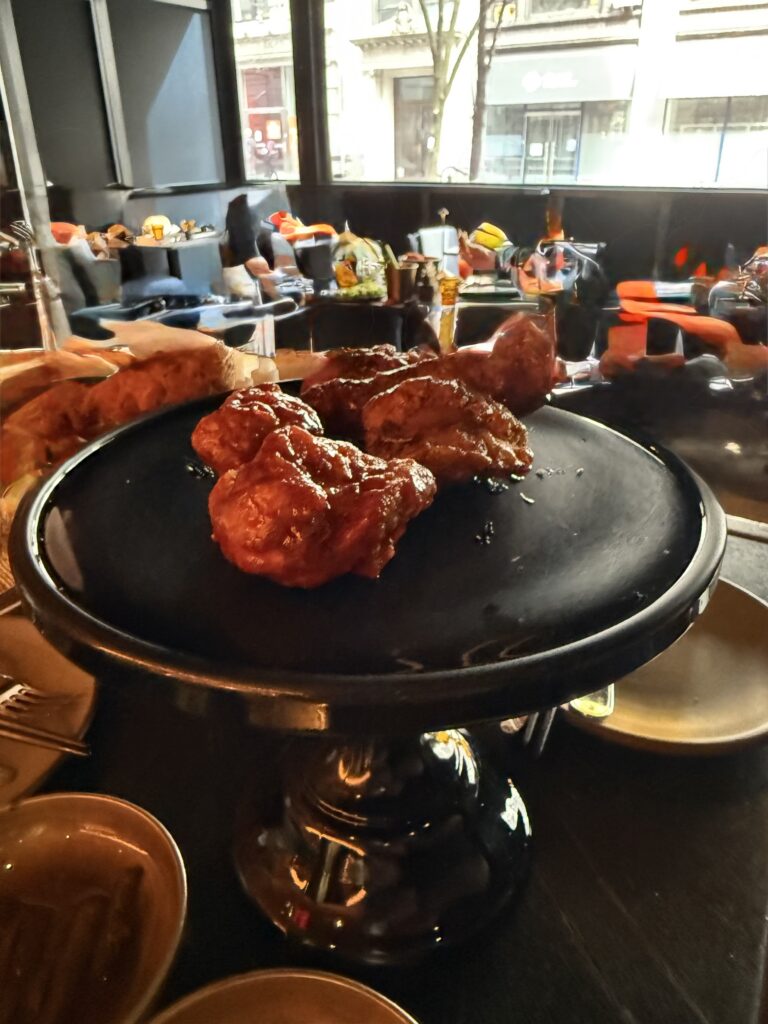
Every piece shared the same incredibly light crust, juicy interior, and clean finish. Nothing felt greasy or overly breaded. The coating shattered with each bite before giving way to remarkably tender chicken.
I’ve had fried chicken that was crisp.
I’ve had fried chicken that was juicy.
It’s much harder to find both at the same time.
COQODAQ manages to do exactly that.
My Favorite
If I were ordering again tomorrow, this is how I’d rank them.
🥇 Soy Sauce-Garlic
This was the standout.
The glaze added just enough sweetness to balance the savory flavors without masking the chicken itself. Every bite felt complete, and it quickly became the style I kept reaching for.
🥈 OG
Sometimes the simplest version tells you everything you need to know.
Without a glaze or extra seasoning competing for attention, the OG allows the quality of the chicken and the precision of the fry to shine. If you appreciate classic fried chicken, don’t overlook it.
🥉 Gochujang
The Gochujang brought the most heat and the boldest personality of the three.
It was flavorful and well executed, but compared to the balance of the Soy Sauce-Garlic and the purity of the OG, it was the one I found myself reaching for the least.
That’s not a criticism.
It’s simply a reminder of how strong the other two were.
Then Came the Golden Nuggets
I’ll admit it.
This was the dish I came to try.
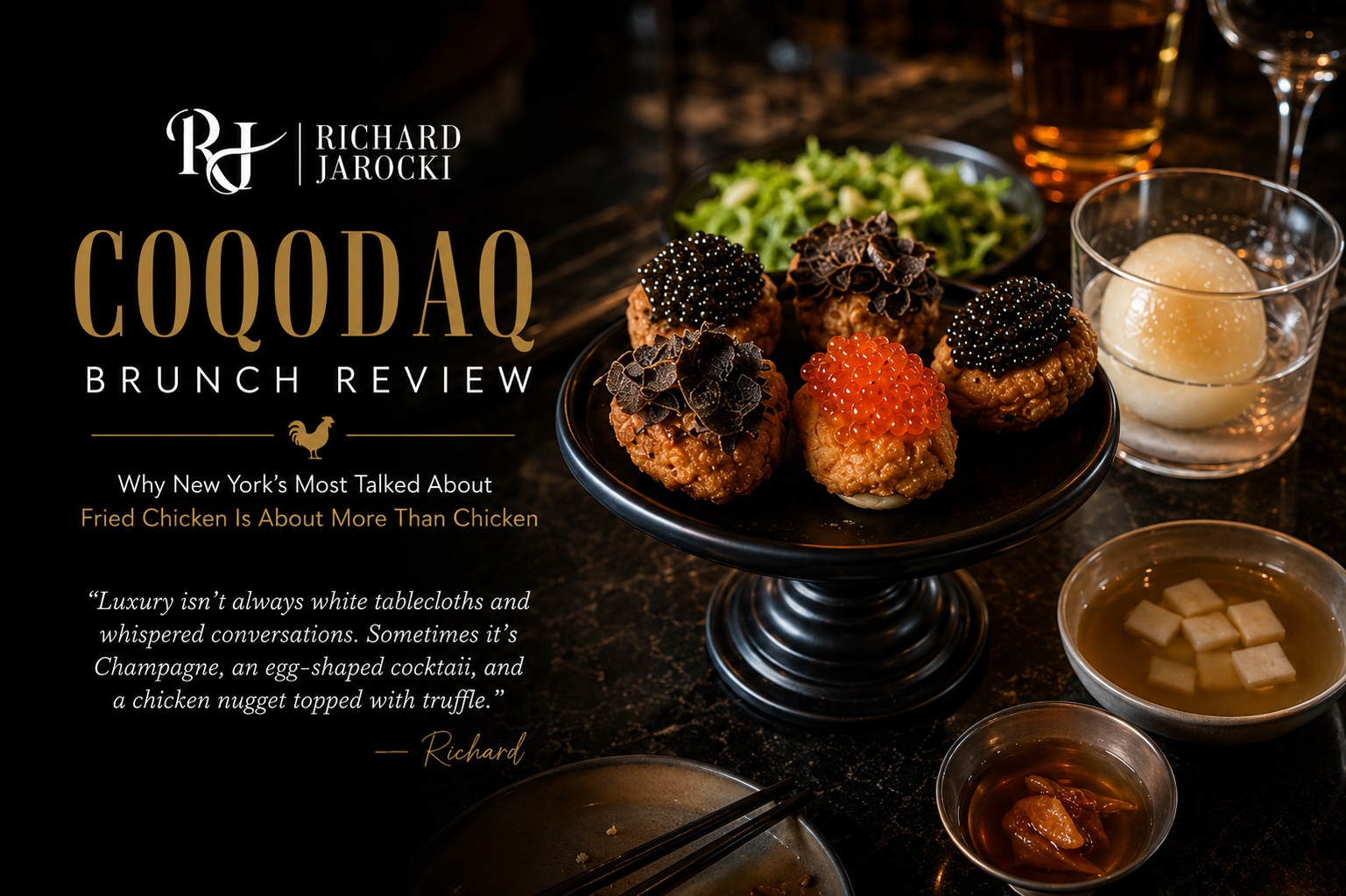
The Golden Nugget has become COQODAQ’s signature for good reason. It takes something universally familiar—a chicken nugget—and transforms it into something unexpectedly luxurious.
Available in three versions, each starts with the same perfectly fried nugget.
The difference is what comes next.
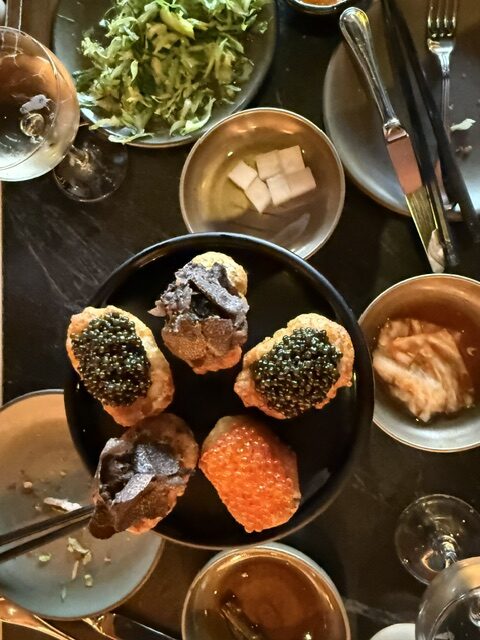
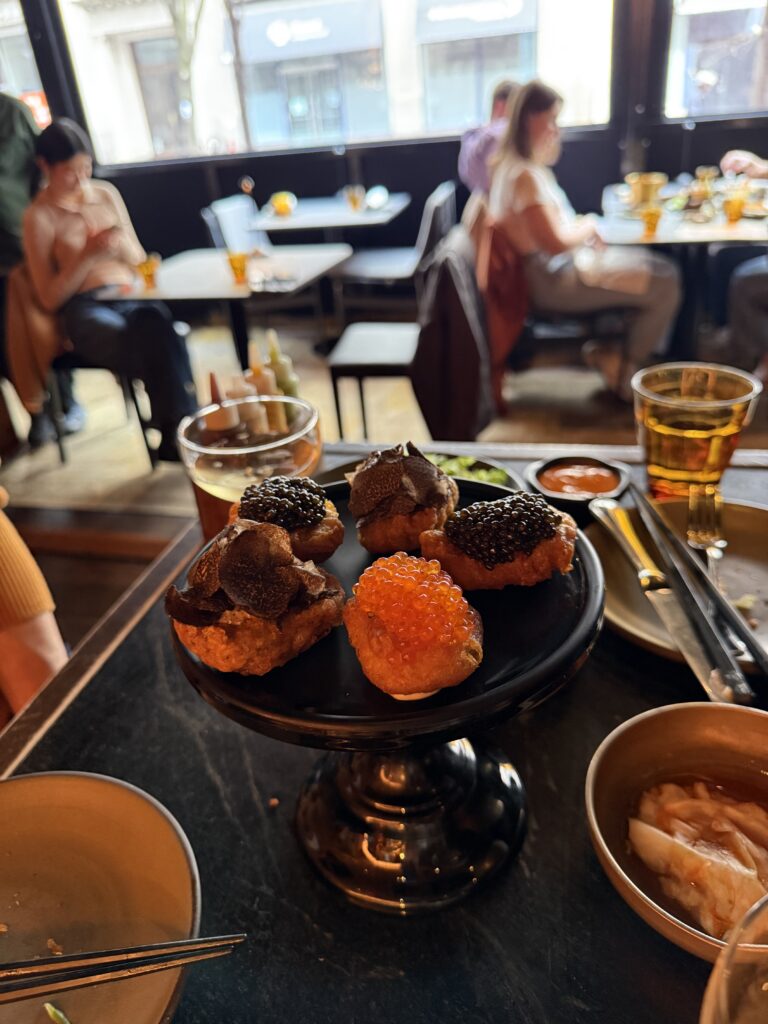
18 Karat with Ocean Trout Roe
24 Karat with Tsar Imperial Daurenki Caviar
Black Gold with Seasonal Truffle
At first glance, it almost feels ridiculous.
A chicken nugget topped with caviar?
Chicken and truffle?
It sounds like the kind of idea that exists to generate headlines.
Then you taste it.
And suddenly it makes sense.
The Nugget Matters More Than the Topping
Here’s what surprised me most.
The toppings weren’t the star.
The nugget was.
The crust was impossibly thin and crisp.
The seasoning was restrained.
The interior remained juicy without becoming soft.
Strip away the caviar.
Remove the truffle.
Forget the roe.
You’re still left with one of the best chicken nuggets I’ve ever had.
That’s why the dish works.
The luxury ingredients enhance it.
They don’t rescue it.
My Ranking
🥇 Black Gold with Seasonal Truffle
Without question, my favorite.
The warmth of the nugget releases the aroma of the truffle almost immediately, creating a bite that feels rich without becoming overwhelming.
Every element worked together.
Every bite made me want another.
In fact, I kept telling myself, “Just one more.”
Then I’d reach for another.
That’s usually a good sign.
If I could make one request, it would be this:
I’d love to see the Black Gold Nugget make its way onto the menu at Bar Chimera during truffle season.
Paired with one of their cocktails, I think it would become one of New York’s best bar snacks.
🥈 24 Karat with Tsar Imperial Daurenki Caviar
The caviar version felt effortlessly elegant.
The salinity of the caviar paired beautifully with the crisp chicken, while the Champagne brought everything into balance.
This is probably the version most people associate with COQODAQ.
For good reason.
🥉 18 Karat with Ocean Trout Roe
Bright.
Fresh.
Playful.
The roe delivered a satisfying burst of texture and salinity, but compared with the depth of the truffle and the elegance of the caviar, it finished third for me.
Still excellent.
Just competing against two extraordinary bites.
A Restaurant That Doesn’t Take Luxury Too Seriously
One thing I appreciated most about COQODAQ is that it never asks you to take luxury too seriously.
Caviar is served on a chicken nugget.
Champagne is poured alongside fried chicken.
The menu encourages curiosity instead of intimidation.
Luxury here isn’t about exclusivity.
It’s about having fun with exceptional ingredients.
That’s a philosophy I can get behind.
“The Golden Nuggets may be COQODAQ’s signature dish, but what impressed me most wasn’t the caviar or truffle—it was the quality of the chicken underneath.”
Don’t Skip the Champagne. And Definitely Don’t Skip the Bar.
Before I arrived, I thought Champagne and fried chicken sounded like one of those combinations designed to make headlines.
After brunch, I completely understood it.
COQODAQ actively encourages guests to pair its fried chicken with Champagne, and after the first few bites it became obvious why.
The bright acidity cuts through the richness of the chicken.
The bubbles refresh your palate.
Instead of feeling weighed down after several fried dishes, every sip prepares you for the next bite.
It’s not about luxury for the sake of luxury.
It’s about balance.
If you’re visiting COQODAQ for the first time, don’t skip the Champagne.
It’s part of the experience.
But here’s the mistake I think a lot of people make…
They stop there.
The Bar Program Deserves Just As Much Attention
While the food usually gets all the headlines, I walked away equally impressed by the beverage program.
One cocktail immediately caught my attention.
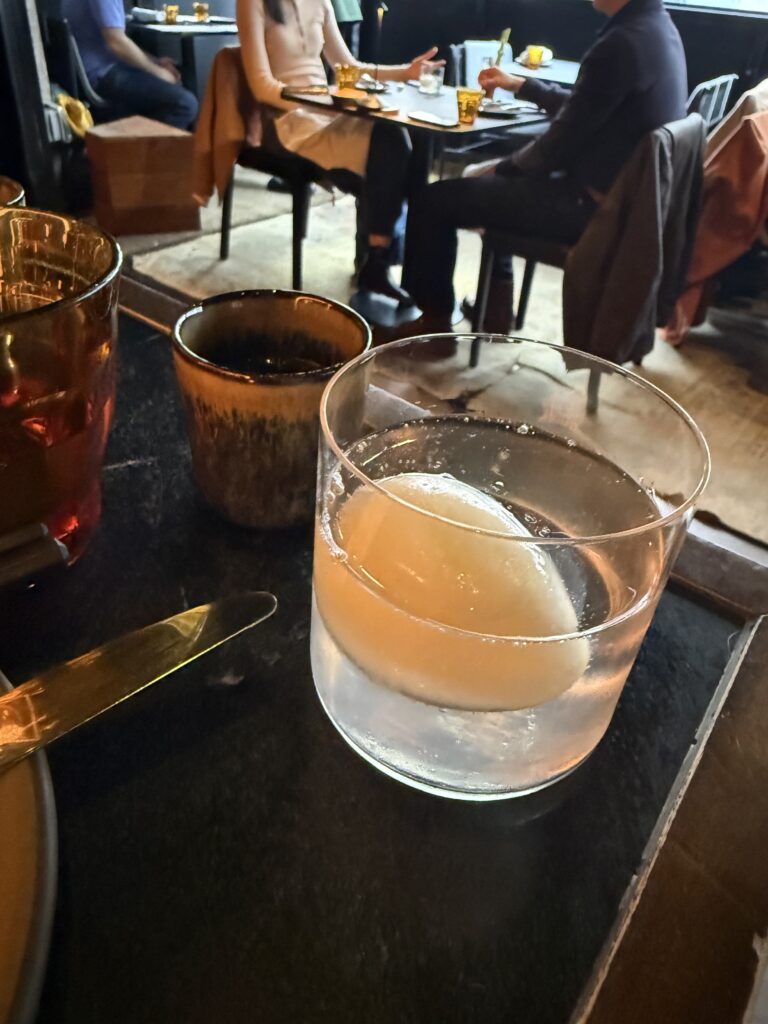
The Egg Cocktail.
When it arrived at the table, I actually laughed.
At first glance, it looks almost like a perfectly cooked egg floating inside the glass.
It’s playful.
Unexpected.
Exactly the kind of presentation that makes everyone at the table stop and ask,
“What is that?”
Fortunately, the drink isn’t relying on presentation alone.
The cocktail was incredibly smooth with a silky texture that felt rich without becoming heavy. Every ingredient felt intentional. It wasn’t trying to shock you with unusual flavors—it was simply an exceptionally well-balanced cocktail that happened to be beautifully presented.
It’s the kind of drink that starts conversations.
And that’s exactly what great cocktails should do.
The more I travel, the more I appreciate restaurants that treat their beverage program as more than an afterthought.
Too often, restaurants build an incredible kitchen and then hand guests a predictable cocktail list.
COQODAQ doesn’t do that.
The drinks feel like an extension of the food rather than something separate from it.
That consistency is one of the reasons the entire experience feels so complete.
Hospitality Is What You’ll Remember
People often judge restaurants by what happens when everything goes perfectly.
I prefer judging them by what happens when something doesn’t.
Halfway through brunch, our order of Golden Nuggets never arrived.
Somewhere between the table and the kitchen, it had simply been missed.
It happens.
Every restaurant makes mistakes.
The difference between a good restaurant and a great one is what happens next.
The team immediately acknowledged the mistake.
No excuses.
No awkward explanations.
No attempt to pretend everything was fine.
Instead, they made it right.
They brought us double the order of Golden Nuggets and surprised us with two glasses of Champagne on the house.
That moment told me more about COQODAQ than a flawless meal ever could.
Great hospitality isn’t about never making mistakes.
It’s about making guests feel cared for when mistakes happen.
That’s exactly what they did.
The People Behind the Experience
One thing I’ve started paying closer attention to as I travel isn’t just the food.
It’s the people behind it.
Restaurants don’t become destinations by accident.
They’re built by teams that obsess over countless details guests never notice.
That mindset is obvious at COQODAQ.
The hospitality group behind COQODAQ has created several of New York City’s most sought-after dining experiences, and after spending time here and later visiting Bar Chimera, it’s easy to recognize a common thread.
Every concept has its own personality.
None of them feel copied from one another.
Yet they all share the same commitment to hospitality, thoughtful design, and memorable experiences.
One thing that particularly impressed me was seeing members of the leadership team present in the dining room.
Not hidden in an office.
Not detached from the operation.
Present.
Greeting guests.
Supporting the staff.
Watching service unfold.
That culture doesn’t happen by accident.
It starts at the top.
You can build a beautiful restaurant.
You can hire talented chefs.
You can source exceptional ingredients.
But if hospitality isn’t part of the culture, guests notice.
At COQODAQ, hospitality feels woven into everything they do.
Why Restaurants Like This Matter
I’ve been fortunate to dine at incredible restaurants around the world.
Some are memorable because of a single extraordinary dish.
Others because of an unforgettable dining room.
A few because of exceptional service.
The restaurants I return to combine all of those things.
COQODAQ isn’t trying to be the most formal restaurant in New York.
It isn’t trying to be the cheapest.
It isn’t trying to reinvent fine dining.
Instead, it takes something as familiar as fried chicken and asks a simple question.
“What if we obsessed over every single detail?”
Better chicken.
Better batter.
Better oil.
Better drinks.
Better hospitality.
Better experience.
When those details come together, something interesting happens.
You stop thinking about fried chicken.
You start remembering the afternoon.
And that’s the difference between a restaurant you visit once…
…and one you begin recommending to everyone you know.
Richard’s Standouts
🏆 Best Bite Black Gold Golden Nugget — The warmth of the nugget and the aroma of fresh truffle created the most complete bite of the afternoon.
🥂 Best Pairing Champagne with the Signature Fried Chicken. It sounds unconventional until you try it.
🍸 Best Cocktail The Egg Cocktail. Beautifully presented, silky, balanced, and worth ordering even if you plan on drinking Champagne later.
🥔 Most Surprising Dish French Toast Soldiers. I expected them to be good. I didn’t expect them to become one of my favorite dishes.
⭐ Most Underrated Hash Brown & Salmon Rillettes. One of the best bites on the table.
📅 Already Planning My Next Order
Golden English Muffin with Smoked Salmon and Black Truffle
Black Gold Golden Nugget
Another Egg Cocktail
Champagne
Why COQODAQ Belongs on Your New York Itinerary
New York City has no shortage of great restaurants.
You can spend weeks here chasing Michelin stars, iconic steakhouses, neighborhood gems, and impossible-to-book tasting menus without ever running out of places to eat.
That’s what makes recommending a restaurant like COQODAQ significant.
It has to compete not only with other fried chicken restaurants but with some of the best dining experiences in one of the world’s greatest food cities.
And yet, I’d tell people to book it without hesitation.
Not because it’s trendy.
Not because you can order a chicken nugget topped with caviar.
And not because social media says it’s the place to be.
I’d recommend it because it’s fun.
That’s a word that sometimes gets lost in fine dining.
Restaurants can become so focused on precision and perfection that they forget dining is supposed to be enjoyable. COQODAQ manages to take its craft seriously without taking itself too seriously. It delivers technical precision while keeping the atmosphere relaxed, welcoming, and full of personality.
That’s a difficult balance to achieve.
More Than a Meal
The older I get, the more I realize I don’t travel for meals.
I travel for experiences.
The meals simply become part of the story.
Years from now, I probably won’t remember every ingredient in the French Toast Soldiers or exactly how many pieces of chicken were in the basket.
I’ll remember laughing over an Egg Cocktail that looked too perfect to drink.
I’ll remember comparing Golden Nuggets topped with truffle, caviar, and trout roe to decide which one deserved another order.
I’ll remember Champagne with fried chicken—and wondering why more restaurants don’t do it.
Most of all, I’ll remember how the staff handled a simple mistake with generosity and professionalism, turning what could have been a forgettable moment into one that reinforced exactly why people speak so highly of the restaurant.
Those are the moments that stay with you.
Hospitality You Can Feel
I’ve visited restaurants where every plate was technically flawless, yet I walked out feeling like just another reservation.
I’ve also been to places where a genuine welcome, thoughtful service, and attention to detail elevated the entire experience.
COQODAQ belongs in the second group.
The food is exceptional.
The cocktails deserve attention.
The Champagne pairing works.
But what ties everything together is the hospitality.
You leave feeling that the people working there genuinely want you to have a memorable afternoon—not simply finish another meal.
That feeling is difficult to manufacture.
It’s built through culture, consistency, and leadership.
I’ll Be Back
Whenever I finish a meal, I usually ask myself one question.
Would I come back?
For COQODAQ, the answer is immediate.
Absolutely.
Not because I need another Golden Nugget.
Not because I want another Egg Cocktail.
Not even because I want another basket of fried chicken.
I’ll come back because restaurants like this are rare.
They understand that great dining isn’t just about recipes.
It’s about creating an experience people genuinely look forward to repeating.
And that’s exactly what COQODAQ has done.
Richard’s Rating
⭐⭐⭐⭐⭐ 5.0 / 5
Food: ★★★★★ Every dish felt intentional, from the smallest amuse-bouche to the signature fried chicken. The quality of the ingredients and precision of the execution were evident throughout the meal.
Creativity: ★★★★★ Luxury and comfort food rarely coexist this naturally. COQODAQ manages to make playful ideas feel thoughtful rather than gimmicky.
Cocktails: ★★★★★ The Egg Cocktail alone is worth ordering, and the beverage program complements the food instead of competing with it.
Service: ★★★★★ Professional, attentive, and polished. More importantly, when a mistake occurred, the team handled it with grace, generosity, and genuine hospitality.
Atmosphere: ★★★★★ Elegant without being intimidating. Refined, energetic, and comfortable enough to encourage a long brunch rather than a quick meal.
Value: ★★★★★ At first glance, brunch may seem like a splurge. After experiencing the quality of the food, drinks, service, and hospitality, it feels entirely justified.
Final Thoughts
COQODAQ isn’t trying to redefine fine dining.
It isn’t trying to convince you that fried chicken should replace tasting menus.
Instead, it proves something far more interesting.
When exceptional ingredients, disciplined technique, imaginative cocktails, and genuine hospitality come together, even one of the world’s most familiar comfort foods can become a destination worth traveling for.
For me, that’s what luxury dining is really about.
Not exclusivity.
Not extravagance.
Not chasing the next viral dish.
It’s about discovering places where every detail has been considered, every guest is made to feel welcome, and every meal becomes part of the journey.
COQODAQ delivered exactly that.
And in a city with thousands of restaurants competing for your attention, that’s perhaps the highest compliment I can give.
Travel Information
Restaurant: COQODAQ Cuisine: Korean-inspired fried chicken, Champagne, and contemporary hospitality Neighborhood: Flatiron, New York City Best For: Brunch, date nights, celebrations, visitors looking for a uniquely New York dining experience Reservations: Strongly recommended—especially for weekends. Book as early as possible. Reservations fill out far in advance. Reservations are strongly recommended, especially for weekend brunch. Book as early as possible, join the Resy Notify waitlist if no tables are available, or call the restaurant directly to ask about cancellations.
The Egg, COQODAQ’s signature cocktail and one of the restaurant’s most recognizable drinks.COQODAQ’s Brucket List Appetizers showcase a selection of the restaurant’s signature starters and small plates.COQODAQ’s signature Korean fried chicken, prepared with a crisp, golden exterior and served as the centerpiece of the dining experience.COQODAQ’s signature Korean fried chicken is served with multiple seasoning styles, allowing guests to experience different flavors in one meal.COQODAQ’s signature Korean fried chicken is served with four house-made sauces and traditional accompaniments for a customizable dining experience.COQODAQ’s Golden Nuggets are offered in three signature variations: 18 Karat with ocean trout roe, 24 Karat with Tsar Imperial® Daurenki caviar, and Black Gold with seasonal truffle.COQODAQ’s signature Golden Nuggets trio showcases three luxury toppings: ocean trout roe, Tsar Imperial® Daurenki caviar, and seasonal truffle.COQODAQ’s signature Golden Nuggets feature three luxurious variations: 24 Karat with Tsar Imperial® Daurenki caviar, Black Gold with seasonal truffle, and 18 Karat with ocean trout roe.
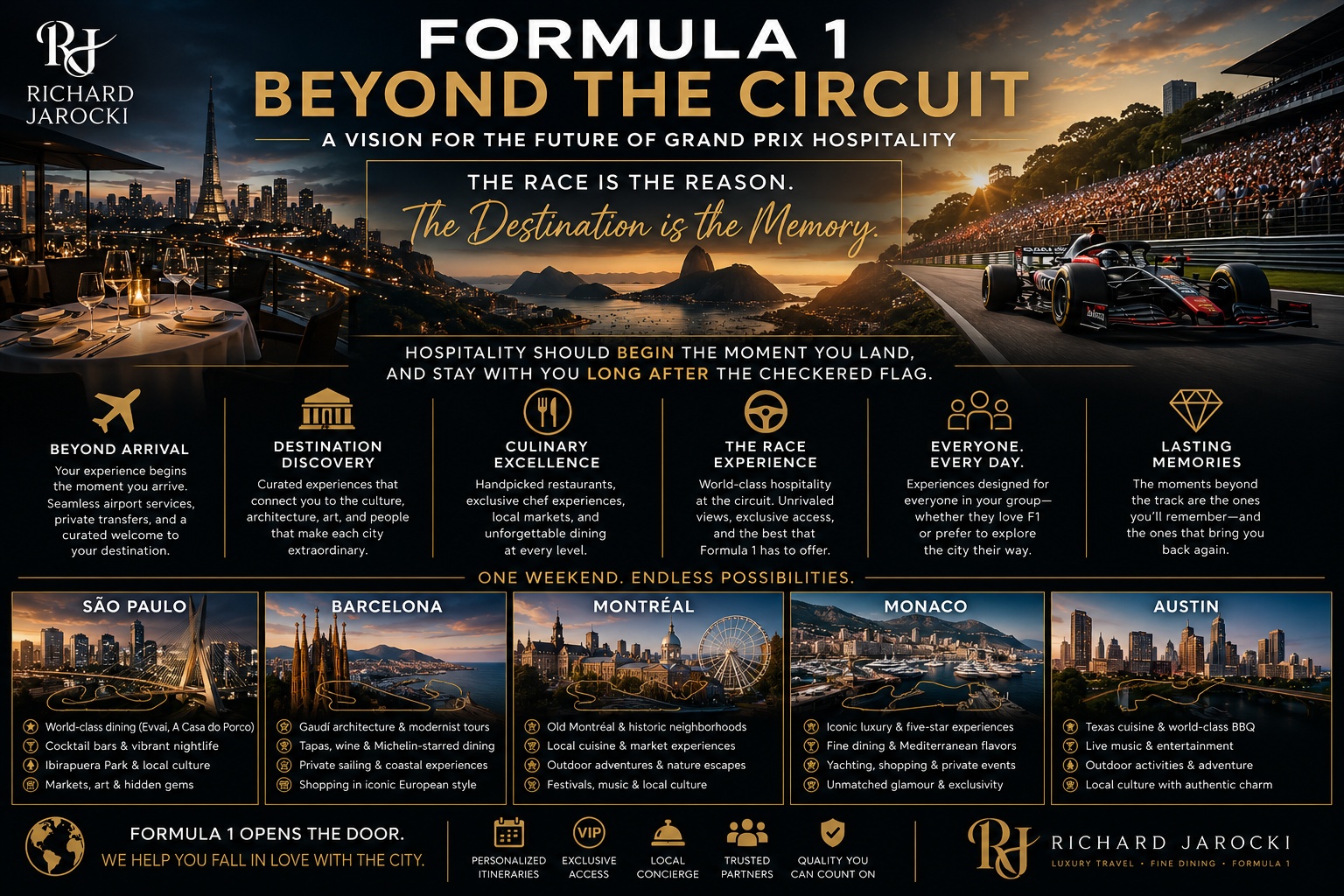
Over the past several years, I’ve traveled to Formula 1 destinations around the world—not simply to attend races, but to experience the cities that host them.
Long before I purchase a race ticket, I’m researching restaurants, cocktail bars, hotels, neighborhoods, architecture, museums, and local culture. Sometimes I know where I’ll have dinner months before I know where I’ll be sitting on race day.
Along the way, I realized something.
Formula 1 has become one of the world’s greatest reasons to travel.
But we’re still treating the destination as a backdrop rather than part of the experience.
Every Grand Prix introduces hundreds of thousands of people to cities they may never have otherwise visited. The racing is extraordinary, yet the opportunity to connect guests with the destination often begins and ends at the circuit gates.
I believe there’s an opportunity to expand what Formula 1 hospitality means—not by replacing what’s already exceptional, but by extending it beyond the track.
Formula 1 Isn’t Selling Three Days
This is where I think the article becomes more interesting.
People often describe Formula 1 as a weekend event.
I don’t think that’s true anymore.
When someone travels from New York to São Paulo, London to Singapore, or Sydney to Montréal, they’re not buying a three-day sporting event.
They’re planning an international vacation.
The race may be the reason they booked the flight, but it’s rarely the only reason they’re traveling.
For many guests, the Grand Prix is one chapter in a much larger story.
Hospitality should reflect that.
Hospitality Should Begin Before the First Practice Session
Today’s hospitality programs are exceptional once guests arrive at the circuit.
But what happens before Friday morning?
Imagine arriving in Barcelona.
Instead of simply receiving your race credentials, you receive a curated itinerary tailored to your interests.
Perhaps you’re passionate about architecture. Your first afternoon explores Gaudí’s masterpieces before dinner at one of Barcelona’s most celebrated restaurants.
Maybe food is your passion. Your itinerary introduces you to neighborhood tapas bars, a market tour, and one of the city’s Michelin-starred tasting menus.
Or perhaps you’re visiting with your family. While you’re at the circuit, your spouse and children spend the day on experiences designed specifically for them, all curated under the same standard of excellence associated with Formula 1.
Now hospitality isn’t confined to the paddock.
It’s woven into the entire journey.
One Trip. Different Experiences.
This, in my opinion, is where Formula 1 has its biggest opportunity.
Not everyone who travels to a Grand Prix is a Formula 1 fan.
Some are spouses.
Some are children.
Some are parents.
Some are corporate guests.
Some are clients invited by sponsors.
Some simply want to experience a new city.
Yet too often they’re treated as an afterthought.
Imagine asking one simple question during booking:
“Who is traveling with you?”
That single question changes everything.
One guest spends the afternoon inside the Paddock Club.
Their partner spends the afternoon exploring São Paulo’s art museums with a private guide before enjoying cocktails at one of Latin America’s best bars.
Their children participate in an FIA-inspired STEM program where they learn how aerodynamics, engineering, and sustainability shape modern motorsport through hands-on activities.
Everyone reconvenes for dinner.
Everyone has stories to tell.
Nobody spent the day waiting for someone else.
Every Grand Prix Should Feel Like Its Host City
One of Formula 1’s greatest strengths is its global calendar.
No two cities are alike.
So why should hospitality feel the same?
The experience in Japan should celebrate Japanese craftsmanship, precision, and cuisine.
Montréal should showcase Québec’s culinary scene, history, and neighborhoods.
São Paulo should introduce guests to one of the world’s most exciting food cities.
Melbourne should embrace its coffee culture, laneways, and coastal lifestyle.
Monaco should feel unmistakably Monaco.
The destination itself should shape the experience.
Because guests don’t simply remember where they watched the race.
They remember where they had the best meal of their lives.
They remember the bartender who introduced them to a local spirit.
They remember wandering neighborhoods they would never have discovered on their own.
Those memories become inseparable from the Grand Prix itself.
A New Standard: FIA-Endorsed Destination Experiences
This doesn’t require Formula 1 to become a tour operator.
Instead, it could become a trusted curator.
Working alongside tourism boards, Michelin Guide restaurants, museums, luxury hotels, local guides, and cultural institutions, every Grand Prix could offer an official collection of experiences carrying the same quality standards associated with the championship.
Guests would know these aren’t generic excursions.
They’re experiences chosen because they represent the very best of that city.
That distinction matters.
Technology Makes This Possible
Imagine the official Formula 1 app evolving beyond schedules and timing.
After purchasing your ticket, guests complete a short profile.
Are you traveling alone?
With family?
With children?
Are you interested in food?
Architecture?
Shopping?
Wine?
Photography?
Wellness?
Adventure?
Artificial intelligence could build a personalized itinerary around the race weekend, integrating official experiences, restaurant reservations, transportation, and local recommendations into one seamless journey.
Every guest leaves with an experience unique to them.
Why This Makes Business Sense
This isn’t simply about improving hospitality.
It’s about increasing value for everyone involved.
When visitors extend their stay from three nights to six, everyone benefits.
Hotels see higher occupancy.
Restaurants welcome more guests.
Museums and attractions gain additional visitors.
Local businesses generate more revenue.
Sponsors gain more opportunities to engage with guests beyond the circuit.
Host cities strengthen the economic case for investing in Formula 1.
Formula 1 itself becomes associated with world-class travel, not just world-class racing.
Hospitality becomes an economic engine rather than simply an event offering.
A Framework for Destination Hospitality
If I were designing hospitality for a Grand Prix, I’d build it around five principles.
1. Arrival
The guest experience begins at the airport—not at the circuit.
2. Discovery
Introduce visitors to the city’s neighborhoods, culture, history, and people.
3. Culinary
Use restaurants, markets, cafés, and bars to tell the story of the destination.
4. Circuit
Deliver the exceptional race-day experience Formula 1 already excels at.
5. Legacy
Leave guests wanting to return to the city, even when there isn’t a race.
When these five elements work together, a Grand Prix becomes more than a sporting event.
It becomes one of the world’s great travel experiences.
Beyond Hospitality
Ultimately, this isn’t just about hospitality.
It’s about strengthening the relationship between Formula 1 and the cities that welcome it.
The championship already inspires millions of people to travel.
The next evolution is ensuring they fall in love not only with the race, but with the destination itself.
Because the most memorable Grand Prix weekends don’t end when the checkered flag falls.
They continue every time someone remembers the café where they had breakfast, the neighborhood they wandered through, the restaurant they’ll spend years recommending to friends, or the city they can’t wait to return to.
Formula 1 has already become a global lifestyle brand.
I believe its next chapter is becoming the world’s greatest gateway to travel.